
Author: vitorcherulli

  • The Future of Retail: 2027 Trends in AI, Robotics, and Connected Store Technology

    The Future of Retail: 2027 Trends in AI, Robotics, and Connected Store Technology

    Retail is entering a new phase as artificial intelligence, computer vision, connected stores, and automated commerce become more deeply integrated into the shopping experience. The transformation is no longer limited to online marketplaces — physical stores are also deploying advanced technologies to improve inventory management, personalize customer journeys, and reduce checkout friction.

    Research from Deloitte, Gartner, McKinsey, NRF, KPMG, and Intel points to several technologies that could shape the smart retail landscape in 2027. Here’s a closer look at the trends retailers and consumers should watch.

    Agentic AI Could Change How People Shop

    AI agents are emerging as a new retail channel. These systems can search for products, compare prices, build shopping baskets, and eventually complete purchases on behalf of consumers. Deloitte advises retailers to prepare product data and technology systems for this shift, making information accessible to AI-driven purchasing decisions.

    AI-Driven Personalization

    Artificial intelligence is playing a growing role in how retailers tailor recommendations, promotions, and customer experiences. Deloitte’s 2026 retail outlook found that 67% of surveyed retail executives expected AI-driven personalization capabilities within the following year. The goal is to deliver more relevant experiences based on customer behavior and preferences.

    Computer Vision Enters Physical Stores

    Computer vision is becoming an important part of the smart-store technology stack. Camera-based systems can monitor shelves, understand customer behavior, automate checkout, and identify potential losses. This helps stores respond to situations in real time while reducing manual monitoring for routine retail operations.

    RFID Improves Inventory Tracking

    RFID systems can detect multiple items simultaneously and provide better item-level inventory information. Compared with traditional barcode scanning, RFID offers a more efficient way to track products, stock levels, restocking, and checkout processes.

    Smart Carts and Frictionless Checkout

    Smart carts are gaining attention as a way to minimize friction at checkout. These carts combine sensors, displays, payment options, and AI to help customers navigate the store without necessarily passing through a traditional checkout counter. Gartner lists smart carts as a technology retailers should consider.

    Edge Computing Gains Importance

    The growing number of cameras, sensors, AI systems, and connected devices in stores is increasing demand for faster data processing. Edge computing processes data closer to where it is generated, reducing latency and supporting real-time decisions. Intel and Comcast identify edge computing as a key part of connected retail infrastructure.

    Robotics Moves into Retail Operations

    Robots and smart automation are moving beyond warehouses and into day-to-day store tasks, including stock tracking and other frontline jobs. Gartner expects robots and drones to be used more widely across companies, so stores may adopt self-directed systems over the next few years.

    AR Brings Immersive Shopping Experiences

    Augmented reality could play a larger role in shopping. AR lets consumers visualize products, try items virtually, or see how products fit into their surroundings before buying. Shopify identifies 3D and AR shopping experiences as an important part of retail’s digital transformation, especially as retailers bridge digital and physical shopping.

    Stores Become More Connected

    The traditional distinction between online and offline shopping is becoming less important as retailers connect inventory, customer data, fulfillment, and store experiences. McKinsey expects physical stores to increasingly focus on fulfillment, convenience, product validation, and differentiated experiences, transforming them into connected parts of a wider retail network.

    AI Governance and Cybersecurity

    As retailers let AI systems operate more independently, security, privacy, and clear rules become more important. NRF has pointed to dangers tied to agentic AI, while KPMG highlights governance gaps, fragmented technology platforms, and cyber risk as key roadblocks for wider AI use in retail.

    Heading into 2027, retail technology decisions won’t just be about plugging in AI tools. Retailers will need strong back-end systems and guardrails to handle the security and privacy issues that come with more connected stores. Overall, the trends point to a retail world where AI, automation, connected systems, and physical locations continue to blend. Each retailer may choose different tools, but the direction is clear: more tasks become automated, shoppers get more tailored help, and the point of sale becomes less of a hassle.

    FAQ: Smart Retail Trends for 2027

    What are the biggest smart retail trends for 2027?

    AI agents, smart carts, computer vision, RFID, robotics, augmented reality, and connected stores are expected to shape retail experiences.

    How could AI agents change shopping?

    AI agents could search products, compare prices, build shopping baskets, and eventually complete purchases automatically for consumers.

    What role will computer vision play in retail?

    Computer vision can monitor shelves, understand customer behavior, support automated checkout, and help retailers identify potential losses.

    Why are smart carts becoming important?

    Smart carts combine sensors, displays, payment systems, and AI, helping shoppers navigate stores while reducing checkout friction.

    Will physical stores remain important in 2027?

    Yes. McKinsey expects stores to increasingly focus on fulfillment, convenience, product validation, and differentiated shopping experiences.
  • Solana’s 5,000 TPS Milestone: How Parallel Execution, Shorter Slots, and Alpenglow Boost Network Capacity

    Solana’s 5,000 TPS Milestone: How Parallel Execution, Shorter Slots, and Alpenglow Boost Network Capacity

    Solana is engineered for high throughput and low latency, enabling applications to handle significant activity directly on its Layer 1 blockchain. Rather than relying on separate scaling layers, Solana combines parallel transaction execution, rapid block production, and high-performance validator infrastructure to deliver exceptional network capacity.

    Solana Records 5,000 User TPS

    On September 14, the Solana Foundation announced that the network achieved its first sustained period above 5,000 user transactions per second (TPS). This metric is crucial because Solana’s headline TPS figures often include validator-related activity, whereas user TPS more accurately reflects transactions generated by real applications and end users.

    The Foundation also noted that Solana has maintained 100% uptime since February 2024. Even during an August 2026 routing failure that took roughly 29% of network stake offline, block production and transaction processing continued without interruption.

    Parallel Transaction Execution

    One of Solana’s key differentiators is its ability to execute transactions in parallel. Each transaction specifies which accounts it needs to access, allowing non-conflicting transactions to be processed simultaneously instead of queuing sequentially.

    Compute Units measure the computational resources required by each transaction. More complex smart-contract interactions consume additional units, so real network throughput depends on the complexity of workloads rather than a single theoretical TPS number.

    Reduced Slot Times

    Solana is actively shortening the intervals between validator-produced blocks. The network previously operated with roughly 400-millisecond slots, but recent upgrades have brought mainnet slot times down to 300 milliseconds. The ultimate target is 200 milliseconds.

    Shorter slots expose blockspace more frequently and reduce the time a single leader controls transaction ordering. The Solana Foundation attributes these gains to improvements in validator clients such as Turbine and Replay.

    Agave 4.2 introduced further capacity enhancements, including increasing the maximum transaction size from 1,232 bytes to 4,096 bytes. This provides about 3.3 times more room for zero-knowledge proofs, multisignature transactions, and batched operations.

    Alpenglow: Aiming for 150ms Finality

    Solana’s next major consensus upgrade, Alpenglow, targets drastically faster finality. Current TowerBFT finality takes approximately 12.8 seconds, while Alpenglow aims for roughly 150-millisecond finality without altering how applications execute transactions.

    Preparations are already underway: BLS public-key registration went live on mainnet on July 8, followed by the Validator Admission Ticket on July 22. Alpenglow is expected to launch with Agave 4.3 in October 2026.

    Beyond Theoretical TPS

    Solana’s capacity cannot be captured by theoretical TPS alone. The sustained 5,000-user-TPS milestone offers a more practical indicator of real-world performance. Combined with shorter slots, larger transaction sizes, and faster finality, these improvements are designed to increase both capacity and responsiveness.

    However, maintaining reliability as demand grows will be the ultimate test of whether these technical advances translate into dependable blockchain performance.

    FAQ

    How many transactions per second can Solana process in 2026?

    The Solana Foundation reported its first sustained period above 5,000 user TPS in September 2026. User TPS excludes validator-related activity, making it a better gauge of actual application and user transactions.

    How does Solana process multiple transactions simultaneously?

    Solana identifies which accounts each transaction needs to access and can execute non-conflicting transactions in parallel, avoiding a single sequential processing queue.

    What are Solana’s current slot times?

    Solana has reduced mainnet slot times from roughly 400 milliseconds to around 300 milliseconds through recent upgrades. The network is ultimately targeting 200-millisecond slots.

    What is Solana’s Alpenglow upgrade?

    Alpenglow is a planned overhaul of Solana’s consensus architecture targeting approximately 150-millisecond finality, compared with about 12.8 seconds under TowerBFT. It is expected to arrive with Agave 4.3 in October 2026.

    Why doesn’t one TPS number define Solana’s actual capacity?

    Real throughput depends on transaction complexity, Compute Unit consumption, account contention, and prevailing network conditions. Sustained user TPS and network reliability are more practical indicators than theoretical maximums.

    Disclaimer: This article is for informational purposes only and does not constitute financial or investment advice. Cryptocurrencies carry significant risk; always conduct your own research before investing.

  • Google Gemini 3.8 Flash: A New AI Model for Autonomous Coding and AI Agents

    Google Gemini 3.8 Flash: A New AI Model for Autonomous Coding and AI Agents

    Google has released Gemini 3.8 Flash, its latest AI model designed to power autonomous coding agents and handle complex enterprise tasks with minimal human intervention. Available since September 2, 2026, this model is positioned as Google’s most capable Flash variant yet, targeting long-horizon software development workflows.

    Massive Context for Complex Codebases

    Gemini 3.8 Flash supports a context window of up to 1 million tokens and can generate up to 64,000 output tokens. It accepts text, images, audio, and video inputs. Developers can adjust the model’s effort level to low, medium, or high, allowing teams to balance quality, cost, and speed according to their specific tasks.

    This large context is especially valuable for software agents that need to process entire codebases, including multiple files, tests, logs, and configuration details in a single workflow. The model can handle complex multi-file refactors and deterministic tool tasks effectively.

    Google Antigravity now uses Gemini 3.8 Flash as its default agent model, and its software development kit defaults to it as well. This integration enables agents to plan tasks, make code changes, call tools, and review results within a unified workflow.

    Built-in Tools for Autonomous Action

    The API provides Gemini 3.8 Flash with access to built-in tools such as function calls, code execution, file search, URL context, and structured output. Computer use remains in preview. These tools are essential for agents that need to act on software, gather information, inspect files, and deliver clear results.

    Benchmark Results Highlight Long-Task Strengths

    Google reports a 73.7% score for Gemini 3.8 Flash on DeepSWE v1.1, a benchmark for long-horizon software tasks, compared to 65.3% for Gemini 3.7 Flash. On Terminal-Bench 2.1, an agentic terminal coding benchmark, the model achieved 89.4%, up from 85.8% for its predecessor.

    These results demonstrate the model’s focus on tasks requiring multiple actions rather than single code answers. The model can take extra analysis steps and make repeated tool calls for harder tasks, though this may increase token usage, especially at higher effort levels. Lower effort settings can reduce costs when deep analysis isn’t required.

    Additional benchmarks include 61.4% on the Vals Finance Agent v2 benchmark, a 10% pass rate on the Harvey Legal Agent Benchmark, and 54.9% on HLE-Verified, indicating broader applicability across finance, law, science, and other expert domains.

    Competitive Pricing for Production Workflows

    Gemini 3.8 Flash launched at $0.75 per 1 million input tokens and $3.75 per 1 million output tokens, with these rates guaranteed through December 31, 2026. After that, standard rates will increase to $1.50 per 1 million input tokens and $7.50 per 1 million output tokens.

    This pricing is significant for agent systems that make many model calls per task. The true measure becomes the cost of completing a task, not just the price of a single response. However, lower token costs don’t eliminate the need for robust safeguards, including tests, code review, access limits, sandbox controls, and approval steps for serious software work.

    Expanding the AI Agent Ecosystem

    Google’s broader Gemini 3.8 release includes Gemini 3.8 Flash Cyber, a separate model for trusted defenders that can find software flaws and create patches. The Fairwind Program provides access to selected government groups, critical infrastructure operators, and software maintainers.

    Additionally, two Gemini 3.8 Live models were released on September 15 for real-time voice agents, expanding the family beyond software work into live agent systems with audio input and output.

    Gemini 3.8 Flash represents a shift from simple code assistance toward software agents capable of handling longer tasks, using tools, inspecting results, and continuing work autonomously. With its 1 million-token context, adjustable effort, low price, and strong long-task performance, Google has created a model aimed at the practical side of autonomous AI. The real test now goes beyond benchmark scores: whether these agents can complete real software work with fewer errors, fewer retries, and less human help.

    FAQs

    1. What is Gemini 3.8 Flash?
    Gemini 3.8 Flash is Google’s latest Flash model, designed for complex reasoning, autonomous AI agents, software development, and enterprise workloads.

    2. What is the context window of Gemini 3.8 Flash?
    It supports a context window of up to 1 million tokens, allowing agents to work with large amounts of project and reference information.

    3. Can Gemini 3.8 Flash perform autonomous coding?
    Yes. It can use tools, inspect files, modify code, execute commands, and evaluate results, supporting multi-step software-development workflows.

    4. How much does Gemini 3.8 Flash cost?
    The launch pricing is $0.75 per 1 million input tokens and $3.75 per 1 million output tokens, with standard rates scheduled to increase from January 1, 2027.

    5. What makes Gemini 3.8 Flash different from a basic coding assistant?
    It is designed for longer workflows where an agent can plan, take multiple actions, use external tools, test its work, and continue iterating rather than simply generating code.

  • Why the Chief Robotics Officer Could Be the Next Big C-Suite Role

    Why the Chief Robotics Officer Could Be the Next Big C-Suite Role

    Robots are no longer confined to factory floors and warehouses. With advances in physical AI, they are moving into logistics, healthcare, manufacturing, agriculture, retail, and field services. That expansion raises a strategic question for business leaders: who should own the company’s robotics agenda?

    Most organizations still distribute robotics responsibilities across engineering, operations, technology, and innovation teams. A dedicated chief robotics officer (CRO) could eventually consolidate those duties into one C-suite role. While the title is not yet common, growing enterprise deployments could make it increasingly necessary.

    Robotics Is Becoming a Company-Wide Strategy

    For decades, robotics sat squarely in manufacturing. Industrial machines performed repetitive tasks in controlled environments. Physical AI changes that model. Modern robots can perceive their surroundings, learn new tasks, and adapt to unpredictable conditions.

    Capgemini found that 79% of surveyed organizations were already engaging with physical AI, and 27% had begun deploying or scaling solutions. The impact is no longer limited to manufacturing. Logistics, healthcare, agriculture, retail, and field services are all exploring robotics. As a result, robotics decisions now touch budgets, technology, safety, and workforce planning across multiple departments.

    Why Existing Executive Roles May Not Be Enough

    CTOs, CIOs, COOs, and innovation leaders each oversee pieces of the robotics puzzle. But a single deployment can require software, hardware, connectivity, maintenance, safety protocols, and workforce changes at the same time. That cross-functional complexity often leaves no one with end-to-end ownership.

    Intel’s research from August 2026 underscores the gap: 74% of surveyed leaders expect workforce planning and robotics strategy to become inseparable by 2030, while only 40% currently report having a formal human-robot workforce strategy.

    What a Chief Robotics Officer Would Actually Do

    • Set a company-wide robotics roadmap and identify the best automation opportunities
    • Evaluate vendors, robotics platforms, AI models, and infrastructure needs
    • Define measurable targets for productivity, quality, safety, service levels, and operating costs
    • Lead workforce planning and training for employees who supervise or collaborate with robots
    • Address cybersecurity, compliance, and risk management for connected robot fleets

    In practice, a CRO would act as a bridge between technology teams and operations, ensuring robotics investments deliver business value rather than existing in silos.

    Physical AI Expands the Leadership Challenge

    Physical AI is more adaptive than traditional automation. Capgemini describes the shift as a move toward context-aware robotics, with 67% of executives viewing physical AI as potentially game-changing. But flexibility brings risk. Robots operating near people require stronger safety controls, and data quality, integration, cybersecurity, and reliability remain major barriers.

    Deloitte similarly identifies these issues as constraints on broader robotics growth. A future robotics executive would therefore need business judgment and risk management skills, not just engineering expertise.

    Could Humanoid Robots Accelerate the Trend?

    Humanoid robots have captured attention in 2026. Xpeng’s CEO He Xiaopeng says he will personally lead the company’s robotics division, with mass production of the IRON humanoid targeted for late 2026. Agility Robotics has unveiled Digit 5 for commercial use and reports more than USD 300 million in multiyear orders.

    These announcements do not guarantee rapid adoption. Commercial economics, safety, reliability, and deployment timelines remain open questions. Still, more capable robots would likely increase the need for central leadership of robotics strategy.

    Will the Chief Robotics Officer Become Common?

    The title is likely to emerge gradually. Some companies may hire robotics heads or vice presidents first; others may keep robotics oversight with a CTO or COO for years. A dedicated CRO becomes more plausible when robot fleets are large, business-critical, and spread across multiple functions.

    The broader trend is already clear: organizations are moving from isolated automation projects toward integrated human-robot operations. Whether the title becomes a standard C-suite role remains uncertain, but the underlying responsibility is becoming harder to ignore.

  • Shantanu Narayen Drives Adobe’s Generative AI Revolution with Firefly and Agentic Workflows

    Shantanu Narayen Drives Adobe’s Generative AI Revolution with Firefly and Agentic Workflows

    Shantanu Narayen has guided Adobe’s transition from traditional software toward cloud-based creative services and AI. Adobe is expanding Firefly with generative AI models, creative tools, and agentic workflows. AI agents are increasingly handling repetitive tasks while creators retain control over creative decisions.

    From Creative Cloud to AI-Powered Creativity

    Narayen has positioned artificial intelligence as a major opportunity for Adobe’s creative business. During Adobe’s fiscal 2026 earnings discussions, he highlighted the company’s investments in Firefly, Acrobat, and Express as part of its strategy to capture the expanding AI opportunity in creativity.

    The company’s approach goes beyond simply adding individual AI features to established products such as Photoshop and Illustrator. Adobe is increasingly connecting its applications through conversational interfaces and AI agents designed to handle multiple steps within creative workflows.

    Narayen has also described Adobe’s applications as an important part of its AI strategy. During a 2025 earnings call, he said Adobe’s ability to integrate different AI models into its applications was a key part of the company’s work on Firefly.

    Firefly Becomes Central to Adobe’s AI Push

    Adobe Firefly has emerged as one of the company’s main generative AI platforms. The company has expanded Firefly from image generation into video, audio, and other creative workflows.

    In August 2026, Adobe described Firefly as an all-in-one creative AI studio that brings together tools for image, video, audio, and design. The platform also incorporates models from companies including Google, ElevenLabs, Kling AI, Luma AI, OpenAI, and Runway.

    Adobe has also continued expanding the range of AI models and capabilities available through Firefly, while focusing on creative control and production workflows.

    AI Agents Enter Creative Cloud

    In June 2026, Adobe announced a major expansion of its creative agent across Firefly and Creative Cloud. The company rolled out the creative agent across Premiere, Photoshop, Illustrator, InDesign, and Frame.io.

    The AI Assistant is designed to orchestrate multi-step workflows based on the outcome a user describes. Adobe has said the system can help with tasks across different applications rather than requiring creators to move between individual tools manually.

    Adobe’s wider strategy also includes bringing its creative tools to AI platforms including ChatGPT, Claude, Copilot, Gemini and Slack, potentially extending access to its technology beyond traditional Creative Cloud interfaces.

    Keeping Creators in Control

    Adobe has continued to present AI as a way to assist creators rather than remove human decision-making from the process. The company’s recent messaging around creative agents focuses on allowing users to describe what they want while AI helps plan, assemble, and execute parts of the workflow.

    This approach aims to reduce repetitive production work while leaving creative direction with the user. Narayen’s broader AI strategy has also focused on maintaining control and trust. At Adobe Summit 2026, he discussed how AI is transforming creativity, marketing, and customer experiences while highlighting creative control, trust, and brand integrity.

    Adobe’s AI Ambitions Continue Beyond Software Features

    Adobe’s AI push extends into partnerships and enterprise applications. In March 2026, Adobe and Nvidia announced a strategic partnership focused on next-generation Firefly models, creative and marketing workflows, 3D digital twins and agentic AI frameworks. Narayen said the companies shared a vision to reinvent creative and marketing workflows using AI.

    Adobe has also reported widespread enterprise adoption of its AI technology. In September 2025, the company said 99% of Fortune 100 companies had used AI in an Adobe application, while nearly 90% of its top 50 enterprise accounts had adopted at least one AI-first innovation.

    Narayen’s Next Chapter at Adobe

    Narayen announced in March 2026 that he planned to transition from the CEO role after more than 18 years. In his message to Adobe employees, he said the company grew from about 3,000 employees to more than 30,000 during his tenure, while revenue rose from less than USD 1 billion to more than USD 25 billion.

    From December 1, Narayen will serve as executive chair and work with Chakravarthy on the transition. Adobe’s AI strategy, however, is already deeply embedded across Firefly, Creative Cloud, and its broader technology platform.

    The developments under Narayen show how Adobe is moving generative AI from an additional feature into a broader creative workflow, with agentic systems increasingly designed to connect tools, automate production tasks, and help creators turn ideas into finished work.

  • Apeing Presale Gains Traction: 338+ Investors and Key Opinion Leaders Fuel Stage 4 Momentum

    Apeing Presale Gains Traction: 338+ Investors and Key Opinion Leaders Fuel Stage 4 Momentum

    The meme-coin market continues to evolve, with established tokens like Bonk and Pepe still in the spotlight. A recent BONK price outlook suggests a potential move toward $0.000003, and some forecasts even target $0.0000055 by 2026. However, the hunt for the next breakout opportunity isn’t limited to tokens already trading. The Apeing presale is emerging as an early-stage contender, attracting over 338 investors and selling more than 447 million $APEING tokens during its ongoing Stage 4.

    Apeing Presale: Rapid Progress and Limited Supply

    Apeing’s presale has already moved through several stages, with the current Banana Hoarders Stage 4 now live. Key metrics include:

    • 447M+ $APEING tokens sold
    • $93K+ raised
    • 338+ holders
    • 300M token allocation available at $0.0005 per token
    • Projected ROI of 1,900% from presale price

    The finite supply in each stage creates urgency. As the allocation dwindles, the price is expected to rise, making the current entry point appealing for those tracking the latest crypto presales.

    Community Competition: Ape Wars Leaderboard

    Apeing integrates a monthly competition called Ape Wars, where community members earn rankings based on total purchases. The top three buyers each cycle receive additional rewards, and the leaderboard resets monthly, fostering ongoing engagement.

    How to Buy $APEING in the Presale

    Purchasing $APEING is straightforward:

    1. Visit the official Apeing meme coin presale website.
    2. Enter your desired $APEING purchase amount.
    3. Connect a compatible crypto wallet.
    4. Review the transaction details.
    5. Approve the transaction in your wallet.

    Once confirmed, the purchase is applied to the live presale allocation.

    KOL Signal and Post-Listing Potential

    Michael Wrubel’s involvement gives Apeing early key opinion leader (KOL) visibility, but the project’s roadmap emphasizes sustained marketing after launch. Continued promotion could convert initial attention into lasting community growth and demand.

    The upside potential is compelling: a $2,000 investment at Stage 4’s $0.0005 price yields 4 million tokens. If $APEING lists at $0.01, that holding would be worth $40,000. At $0.02, it becomes $80,000; at $0.05, $200,000; and at $0.10, $400,000. These milestones illustrate why Stage 4 is attracting significant interest.

    Final Verdict

    Apeing, alongside Pepe and Bonk, each brings a distinct narrative to the meme-coin conversation. Apeing’s official presale is live with Stage 4 active, offering a limited allocation. For those following the latest crypto presales, staying connected to official Apeing channels is essential for stage updates, announcements, and current presale information.

    Frequently Asked Questions

    What is the current Apeing presale price?

    Stage 4 lists the price at $0.0005, with a planned listing price of $0.01.

    Why is Apeing appearing in crypto presale news?

    Apeing is gaining attention because its official presale is live, with Stage 4 providing an active opportunity.

    What is a crypto presale?

    A crypto presale is an early token sale that lets investors access a project’s native tokens before public exchange listings.

    Why are presales popular in 2026?

    Presales remain popular because they offer early access to new crypto projects, many of which focus on utility, staking, community growth, and multi-chain technology.

    How do I buy tokens in a presale safely?

    Use the project’s official presale platform, connect a compatible wallet, select your amount, and carefully check transaction details before confirming.

  • Deep Learning Cheat Sheet: Core Concepts, Architectures, and Tools for AI Practitioners

    Deep Learning Cheat Sheet: Core Concepts, Architectures, and Tools for AI Practitioners

    Deep learning has become the backbone of modern artificial intelligence, powering everything from image recognition and speech systems to generative AI and language models. For beginners, the field can seem overwhelming due to its technical jargon. Even seasoned professionals need a quick reference when navigating model development workflows. This cheat sheet distills the essential concepts, architectures, training processes, and tools you need to understand and apply deep learning effectively.

    What is Deep Learning?

    Deep learning is a subset of machine learning that relies on neural networks with multiple layers (hence “deep”) to learn patterns from data. Each layer transforms its input, passing it forward to the next. Early layers tend to capture simple features (like edges in images or word relationships), while deeper layers learn complex abstractions. During training, the model adjusts its weights based on prediction errors via a process called backpropagation, which calculates gradients used by an optimizer to update parameters. The core idea is simple: data goes in, patterns are learned, and predictions come out.

    Key Neural Network Terms

    • Neuron: The basic computational unit of a neural network.
    • Layer: A group of neurons that processes inputs together.
    • Weights: Learnable parameters that determine how inputs influence outputs.
    • Bias: An additional learnable parameter that shifts the neuron’s output.
    • Activation Function: Introduces non-linearity, enabling the network to learn complex patterns.
    • Loss Function: Measures how far the model’s predictions are from the actual target values.
    • Epoch: One full pass over the entire training dataset.
    • Batch: A subset of training examples processed together in one iteration.
    • Learning Rate: Controls the step size during weight updates.
    • Overfitting: When the model performs well on training data but poorly on unseen data.

    Major Deep Learning Architectures

    Different architectures are suited for different tasks:

    • CNNs (Convolutional Neural Networks): Primarily used for computer vision tasks; they learn spatial hierarchies of features like edges, textures, and shapes.
    • RNNs (Recurrent Neural Networks): Designed for sequential data, such as time series, speech, and text, by maintaining a hidden state across time steps.
    • LSTMs (Long Short-Term Memory networks): A type of RNN that mitigates the vanishing gradient problem and can capture long-range dependencies.
    • Transformers: Rely on self-attention mechanisms to capture relationships across sequences; they underpin most modern language models and generative AI.
    • Autoencoders: Learn compressed representations of input data, useful for anomaly detection, denoising, and representation learning.

    Choosing the right architecture depends on your data type, problem complexity, and deployment constraints.

    How a Deep Learning Model is Trained

    Training typically starts with data preparation, splitting the dataset into training, validation, and test sets. The model makes predictions on training examples, the loss function evaluates errors, and backpropagation computes gradients. An optimizer (like SGD or Adam) updates the weights accordingly. This iterative process repeats over multiple batches and epochs. Validation data is used to monitor performance on unseen examples and avoid overfitting. Modern frameworks like PyTorch offer built-in workflows that cover dataset handling, model construction, automatic differentiation, optimization, and model saving.

    Essential Tools for Deep Learning

    Python remains the go-to language for deep learning. Core libraries include:

    • PyTorch: A flexible, dynamic framework for building, training, and deploying neural networks.
    • TensorFlow and Keras: Another widely adopted stack, especially for production deployments.
    • NumPy and Pandas: For numerical computing and data manipulation.
    • Matplotlib: For visualization of data and training metrics.
    • GPU acceleration: Essential for large models and datasets; NVIDIA GPUs are commonly used to parallelize operations.

    Cloud-based notebooks (like Google Colab or AWS SageMaker) allow access to powerful hardware without owning a dedicated GPU.

    Why This Matters

    Deep learning is central to AI innovation, driving advances in computer vision, natural language processing, speech recognition, recommendation systems, and generative AI. For beginners, mastering the core workflow—from data preparation to model deployment—is more valuable than memorizing formulas. Professionals also need skills in model optimization, profiling, quantization, pruning, and distributed training to deploy efficient, scalable solutions.

    Deep Learning Roadmap for 2026

    Begin with Python and foundational machine learning concepts. Then move on to tensors, neural network basics, loss functions, and optimization. Build small projects to gain hands-on experience—image classification is a great starting point for vision tasks, while text classification suits language processing. Progress to transformers and pretrained models, and study transfer learning, fine-tuning, evaluation, and deployment practices.

    In production, consider memory usage, inference speed, cost, reliability, and monitoring alongside model accuracy. A practical learning path combines theory with coding, experimentation, and real-world deployment.

    Frequently Asked Questions

    What is deep learning?

    Deep learning is a branch of machine learning that uses multi-layer neural networks to automatically learn patterns from large amounts of data.

    What is a neural network?

    A neural network is a computational model made up of connected layers and learnable parameters. It processes inputs through layers to produce an output, adjusting parameters during training to reduce errors.

    What is the difference between machine learning and deep learning?

    Deep learning is a subset of machine learning. Traditional ML often relies on engineered features, while deep learning can automatically learn representations from raw data using neural networks.

    What are CNNs used for?

    Convolutional neural networks are primarily used for image and computer vision tasks, learning local patterns such as edges, textures, shapes, and more complex visual features.

    What is backpropagation?

    Backpropagation is an algorithm that calculates the gradient of the loss function with respect to each parameter, enabling the optimizer to update weights during training.

  • Valve Steam Frame VR Headset: Price, Specs, and Everything You Need to Know

    Valve Steam Frame VR Headset: Price, Specs, and Everything You Need to Know

    Valve has officially launched the Steam Frame, a versatile VR headset that goes beyond traditional virtual reality. Priced starting at USD 1,059, the device supports standalone VR gaming, wireless PC VR streaming, and even standard Steam titles on a large virtual screen. This makes it a much more flexible option compared to the older Valve Index.

    Pricing and Availability

    The Steam Frame is available in two storage configurations:

    • 256GB model: USD 1,059 (EUR 1,049 / GBP 889)
    • 1TB model: USD 1,299 (EUR 1,279 / GBP 1,089)

    Sales began on September 14, 2026, via a limited reservation system. Registration closes on September 17 at 10:00 AM Pacific Time, with purchase invites rolling out on September 18. Selected buyers have 72 hours to complete their order.

    Standalone VR Meets Wireless PC Power

    Steam Frame runs on a Snapdragon 8 Gen 3 processor with 16GB of LPDDR5X memory and SteamOS. This allows supported games to run directly on the headset without a PC. For graphically demanding titles, the headset can connect wirelessly to a desktop computer, which handles rendering and streams the experience to the headset. The setup eliminates the need for a physical cable while keeping high-end graphics performance.

    Additionally, the headset can display standard (non-VR) Steam games on a large virtual screen, further broadening its use cases.

    Display and Camera System

    Each eye gets a 2160 × 2160 LCD panel. The standard refresh rate is 72Hz, with an experimental mode reaching up to 144Hz. The field of view is approximately 110 degrees. Inside-out tracking removes the need for external base stations, using integrated cameras to monitor the headset and controllers within the play space. Eye tracking sensors are also built in.

    The built-in passthrough is monochrome. For full-color passthrough and spatial video capture, users can purchase the optional Arcturus Vision Camera for USD 149. This camera supports 5K/60 video with 10-bit HDR stereo images.

    Storage and Accessories

    The headset comes in 256GB or 1TB versions, with expandable storage via microSD card. Optional accessories include:

    • Ergonomic Accessories Kit (USD 59): Two controller hand straps, a top head strap, and an extended light blocker.
    • Accessory Replacement Kit (USD 49): Face gasket, head cushion, and standard light blocker.
    • Official Power Supply (USD 29): Sold separately.
    • Arcturus Vision Camera (USD 149): Adds color passthrough and spatial video.

    Valve also includes Half-Life: Alyx with every Steam Frame unit, featuring a native version optimized for the headset.

    Future Upgrades

    An upcoming Enthusiast Kit will offer a new head strap, extra battery capacity (magnetic attachment), premium off-ear speakers inspired by the Valve Index, and additional eye-distance options. Pricing and release date for the Enthusiast Kit have not yet been announced.

    Key Takeaways

    • Versatile gaming: Standalone VR, wireless PC VR, and standard Steam games on a virtual display.
    • Premium pricing starts at USD 1,059 (256GB) and USD 1,299 (1TB).
    • Expandable hardware with optional color passthrough, comfort upgrades, extra battery, and better audio.

    The Steam Frame redefines what a VR headset can be by combining four roles into one device. Its Snapdragon chip handles local tasks, while a wireless PC link unlocks higher-end graphics. With a starting price of USD 1,059 and a growing ecosystem of accessories, it positions itself as a premium but versatile gaming tool for both VR and traditional PC gamers.

  • Balancing Crypto Privacy and Compliance: How Zero-Knowledge Proofs and Global Regulation Are Reshaping Digital Asset Privacy

    Balancing Crypto Privacy and Compliance: How Zero-Knowledge Proofs and Global Regulation Are Reshaping Digital Asset Privacy

    Cryptocurrency creates an unusual privacy challenge. Public blockchains can permanently expose transaction histories, while regulators increasingly require exchanges and other crypto businesses to identify customers and detect illicit activity. The long-term challenge is preserving legitimate financial privacy without making transactions completely untraceable.

    Public Blockchains Are Not Automatically Anonymous

    Bitcoin and Ethereum are not anonymous; they are pseudonymous. Addresses are anonymized, but transactions, counterparties and histories are not. If an address is connected to a person, blockchain analytics can follow up on the activity in relation to that person.

    Privacy technologies try to minimize this exposure in the following ways: confidential transactions, privacy-oriented cryptocurrencies, mixers, and zero-knowledge proofs. The privacy guidance from Ethereum, updated in August 2026, outlines selective disclosure and zero-knowledge technology as a method for verifying information without disclosing users’ personal information.

    Regulation Is Expanding

    The Financial Action Task Force’s July 2026 review found further progress in global virtual-asset regulation. According to FATF, 83% of surveyed jurisdictions had enacted legislation implementing the Travel Rule, up from 73% in 2025. Another 11 jurisdictions reported implementation was underway.

    However, major gaps remain. FATF identified stablecoins, offshore service providers, peer-to-peer transfers through unhosted wallets and decentralized finance as continuing risk areas. A separate March report said more than 250 stablecoins were circulating by mid-2025, with combined market capitalization exceeding USD 300 billion.

    DeFi presents another challenge. FATF reported in July that 132 of 143 surveyed jurisdictions, nearly 93%, had not implemented its standards for qualifying DeFi arrangements. Only two of 142 jurisdictions had licensed or registered a DeFi arrangement in practice.

    Can Zero-Knowledge Proofs Bridge the Gap?

    Zero-knowledge proofs can help achieve a perfect balance by allowing someone to validate a statement without revealing the details. By using zero-knowledge proofs, it is possible to demonstrate identity validation or eligibility without making other triggers of violation public.

    This method allows for selective disclosure rather than setting a choice between total transparency and anonymity. Still, regulators need to be assured that privacy methods will not be used to avoid practicing AML and sanctions. Custodial wallets become extraordinarily complex as users are able to make transactions directly without any intermediary who would perform KYC.

    Why This Matters

    Crypto regulation does not necessarily require eliminating privacy. The challenge is building systems that protect legitimate financial information while allowing regulated businesses to verify identity, sanctions compliance and anti-money-laundering requirements when legally required, without exposing unnecessary user data.

    Final Thoughts

    Crypto’s future may combine privacy-preserving cryptography, selective disclosure, regulated gateways and blockchain analytics. FATF’s 2026 findings show regulation is expanding, but implementation remains uneven. The balance will depend on whether privacy technologies can protect users while still supporting enforceable, risk-based compliance.

    Frequently Asked Questions

    1. Are Bitcoin and Ethereum transactions anonymous? No. Bitcoin and Ethereum are generally pseudonymous rather than anonymous. Blockchain addresses do not automatically reveal legal identities, but transactions and balances are public and can potentially be traced once an address is linked to someone.
    2. What is the FATF Travel Rule for cryptocurrency? The Travel Rule requires qualifying virtual-asset service providers to obtain and transmit specified information about transaction originators and beneficiaries. FATF reported that 83% of surveyed jurisdictions had enacted Travel Rule legislation in 2026.
    3. How can zero-knowledge proofs improve crypto privacy? Zero-knowledge proofs allow users to demonstrate that certain conditions are satisfied without revealing all the underlying information. They could potentially support identity, eligibility or compliance verification while keeping unrelated personal and financial information private.
    4. Why is DeFi difficult for regulators to oversee? DeFi can enable blockchain transactions without conventional centralized intermediaries responsible for KYC and transaction monitoring. FATF reported that 132 of 143 surveyed jurisdictions had not implemented its standards for qualifying DeFi arrangements.
    5. Can crypto remain private under stronger regulation? Potentially, but privacy may increasingly rely on selective disclosure rather than complete anonymity. Zero-knowledge technology, privacy-preserving cryptography, regulated gateways and blockchain analytics could coexist as jurisdictions develop their digital-asset compliance frameworks.
  • iPhone Duo: 5 Exclusive Features That Redefine Apple’s Foldable Experience

    iPhone Duo: 5 Exclusive Features That Redefine Apple’s Foldable Experience

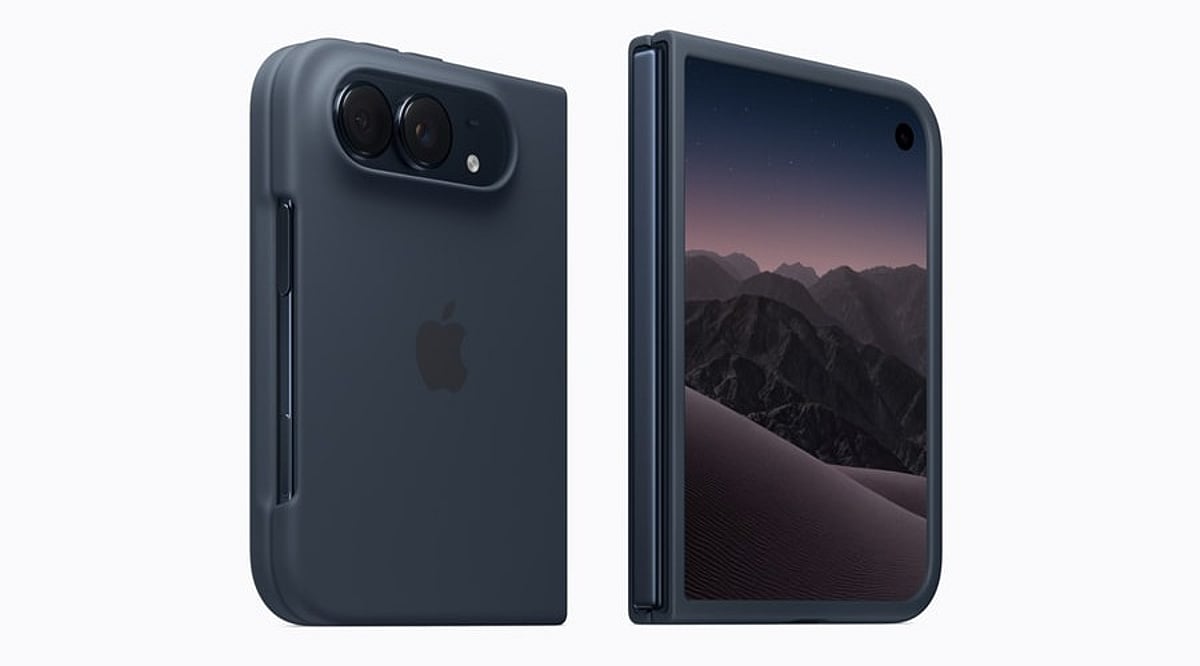
    Apple has finally entered the foldable phone market with the iPhone Duo, a book-style device featuring two screens. This launch answers questions iPhone users have been asking for years: What changes when a phone becomes a small tablet, and what stays the same? Apple has packed the iPhone Duo with exclusive features that don’t exist on any other iPhone model, from dual-screen camera tricks to a different unlocking method and even unique charging capabilities.

    1. Dual-Screen Camera Software

    The iPhone Duo sports a dual 48-megapixel camera system on the back, similar to the iPhone 18 Pro, but its software is where Apple gets creative. Features like Smart Take, Kid Cue, and Duo Preview are exclusive to this model, and they exist because the phone can display a live camera view on both screens simultaneously. A parent photographing a child can use Kid Cue to capture their attention on the outer display while framing the shot on the inner one. Duo Preview lets a photographer show the subject exactly what the shot looks like before the picture is taken—something a single-screen iPhone simply cannot do.

    2. Under-Display Camera on the Inner Screen

    For the first time on any iPhone, Apple has placed a camera underneath the display itself. The inner 7.6-inch screen carries this under-display camera, keeping the folding display free of any visible cutout or notch. The trade-off is that this camera doesn’t match the quality of the Center Stage front camera on the outer screen, so Apple recommends using the outer camera for video calls and selfies whenever the phone stays closed.

    3. Touch ID Instead of Face ID

    Every recent iPhone has relied on Face ID for unlocking, but the Duo breaks that pattern. Apple moved authentication to a side-mounted Touch ID sensor, a design choice driven by the thinner profile needed for a folding phone. This lets users unlock the device whether it sits open or closed, without needing a front-facing sensor array that would otherwise eat into the slim bezels Apple aimed for on the folding screen.

    4. Apple Pencil Support & Familiar Charging

    Apple Pencil has always been an iPad feature, but the iPhone Duo changes that boundary. The company has confirmed that Apple Pencil support will roll out for both the inner and outer displays later this year. On the charging side, the Duo sticks with what iPhone owners already know, supporting fast wired charging alongside MagSafe and Qi2 wireless charging, so an existing iPhone charger still works fine with the new model. This turns the Duo into a note-taking and sketching device in a way no earlier iPhone allowed, positioning it as a bridge between Apple’s phone and tablet lineups.

    5. Adaptive Postures

    The iPhone Duo supports several distinct postures that Apple built software around, including Landscape, Portrait, Closed, Seated, and Standing modes. In Seated mode, the phone can rest at an angle for watching a video or following a workout routine. In Standing mode, it doubles as a bedside display through StandBy, showing a clock, photos, or widgets. Split View lets two apps run side by side on the larger inner display, a functionality closer to what people expect from a small tablet than a phone.

    Why These Features Matter

    These five features show that Apple did not simply put a hinge on an existing iPhone design. Each one, from the camera software to the authentication method, reflects a rethink of what a phone can do once it has two screens working together. For anyone weighing whether the Duo justifies its higher iPhone price compared to a regular Apple iPhone, these software and hardware choices matter more than the display size alone, since they define how the phone actually gets used day to day.

    FAQs

    1. What makes the iPhone Duo different from other iPhone models?
    The iPhone Duo is Apple’s first foldable iPhone, featuring a book-style design with two screens, exclusive camera software, and an under-display camera not found on any other iPhone.

    2. Does the iPhone Duo use Face ID?
    No, the iPhone Duo replaces Face ID with a side-mounted Touch ID sensor, letting users unlock the device whether it is open or closed.

    3. Can the iPhone Duo work with Apple Pencil?
    Yes, Apple has confirmed Apple Pencil support for both the inner and outer displays, rolling out later this year.

    4. Does the iPhone Duo need a special charger?
    No, the iPhone Duo supports the same fast wired charging along with MagSafe and Qi2 wireless charging as other recent iPhone models, so an existing iPhone charger works fine.

    5. What are the exclusive camera features on the iPhone Duo?
    The iPhone Duo offers Smart Take, Kid Cue, and Duo Preview—camera features built specifically to use both the inner and outer displays at the same time.