Author: vitorcherulli

  • NYT Connections September 17, 2026: Hints, Themes, and Full Answers for Puzzle #1194

    NYT Connections September 17, 2026: Hints, Themes, and Full Answers for Puzzle #1194

    NYT Connections is back with another tricky word challenge. The September 17, 2026 puzzle (#1194) asks players to sort 16 words into four hidden groups. Today’s themes center on flexibility, underground structures, Hugh Jackman movies that pair with “The,” and phrases that follow “Love.”

    Hints for September 17, 2026

    If you’re feeling stuck, use these color-coded hints to guide your thinking.

    • Yellow (Easiest): Think of words that describe elasticity or the ability to bend without breaking.
    • Green (Moderate): These are structures you would expect to find beneath the ground.
    • Blue (Challenging): The group is made up of Hugh Jackman movie titles when you add “The” to the beginning.
    • Purple (Hardest): Each word can follow “Love” to create a familiar phrase.

    NYT Connections Answers for September 17, 2026

    Ready to check your solutions? Here are all four groups for puzzle #1194.

    • Yellow — Elasticity: BOUNCE, FLEXIBILITY, GIVE, SPRING
    • Green — Things That Are Underground: MINE SHAFT, SEWER LINES, SUBWAY STATION, WELL
    • Blue — Hugh Jackman Movies, With “The”: FOUNTAIN, PRESTIGE, SHEEP DETECTIVES, WOLVERINE
    • Purple — Love ___: HANDLES, LANGUAGE, TAP, TRIANGLE

    If you solved all four groups before peeking, congratulations. If not, these answers should help you see which connections were hiding in plain sight.

    What Is NYT Connections?

    NYT Connections gives players a 16-word grid and asks them to identify four groups of four words that share a common theme. Unlike a traditional crossword, the puzzle relies on recognizing subtle links between words. Every day brings a fresh set of categories, making the challenge both demanding and exciting for word-game fans.

    Final Thoughts

    Puzzle #1194 is a great example of why NYT Connections has become such a popular daily ritual. It rewards vocabulary skills, lateral thinking, and a bit of pop-culture knowledge all at once. Check back tomorrow for another set of hints and answers.

  • India’s Deep-Tech Boom: 9 Defining Technologies for 2026

    India’s Deep-Tech Boom: 9 Defining Technologies for 2026

    India is entering a new era of technological innovation. By 2026, a wave of deep-tech advancements is expected to reshape industries, businesses, and public services across the country. From artificial intelligence and semiconductors to space exploration and biotech, these are the key technologies driving India’s deep-tech boom.

    AI and Generative AI

    India’s AI ecosystem continues to expand rapidly, with applications spreading across business, research, and government services. Generative AI tools and platforms are becoming central to productivity and innovation, making advanced AI one of the most significant technology drivers of 2026.

    Semiconductor Technology

    India is investing heavily in semiconductor manufacturing, chip design, and related infrastructure. New fabrication plants and design centers are being developed to reduce reliance on global supply chains and strengthen the country’s electronics ecosystem.

    Quantum Computing

    Quantum technology is gaining momentum in India, with research focused on quantum computing, secure communications, advanced sensing, and future industrial applications. These developments could unlock entirely new capabilities across healthcare, finance, and logistics.

    Space Technology

    India’s space sector is opening up to private participation, fostering innovation in launch systems, satellites, Earth observation, and commercial space services. Startups and established companies alike are exploring new ways to make space more accessible.

    Robotics and Automation

    Robotics is moving beyond factory floors. Indian startups are developing intelligent machines for healthcare, logistics, agriculture, defense, and other real-world applications, bringing automation to everyday life.

    Advanced Drones

    Drone technology is expanding into agriculture, mapping, delivery, surveillance, and infrastructure inspection. These applications are creating new opportunities for deep-tech startups and transforming traditional industries.

    Biotechnology

    India’s biotechnology sector is advancing drug discovery, genomics, medical research, and agricultural innovation. These efforts are strengthening the country’s future pipeline of high-impact technologies.

    Electric Mobility Technology

    Battery innovation, electric vehicles, and charging infrastructure are transforming mobility in India. Deep-tech companies are developing more efficient energy solutions to support the shift to electric transportation.

    Defense Technology

    India’s defense sector is embracing drones, sensors, artificial intelligence, robotics, and space systems. A renewed focus on indigenous development is helping the country build self-reliant defense capabilities.

    Together, these technologies signal a transformative period for India, positioning the country as a major player in the global deep-tech landscape.

  • Quantum Computing in 2026: Key Trends and Milestones Shaping the Next Phase

    Quantum Computing in 2026: Key Trends and Milestones Shaping the Next Phase

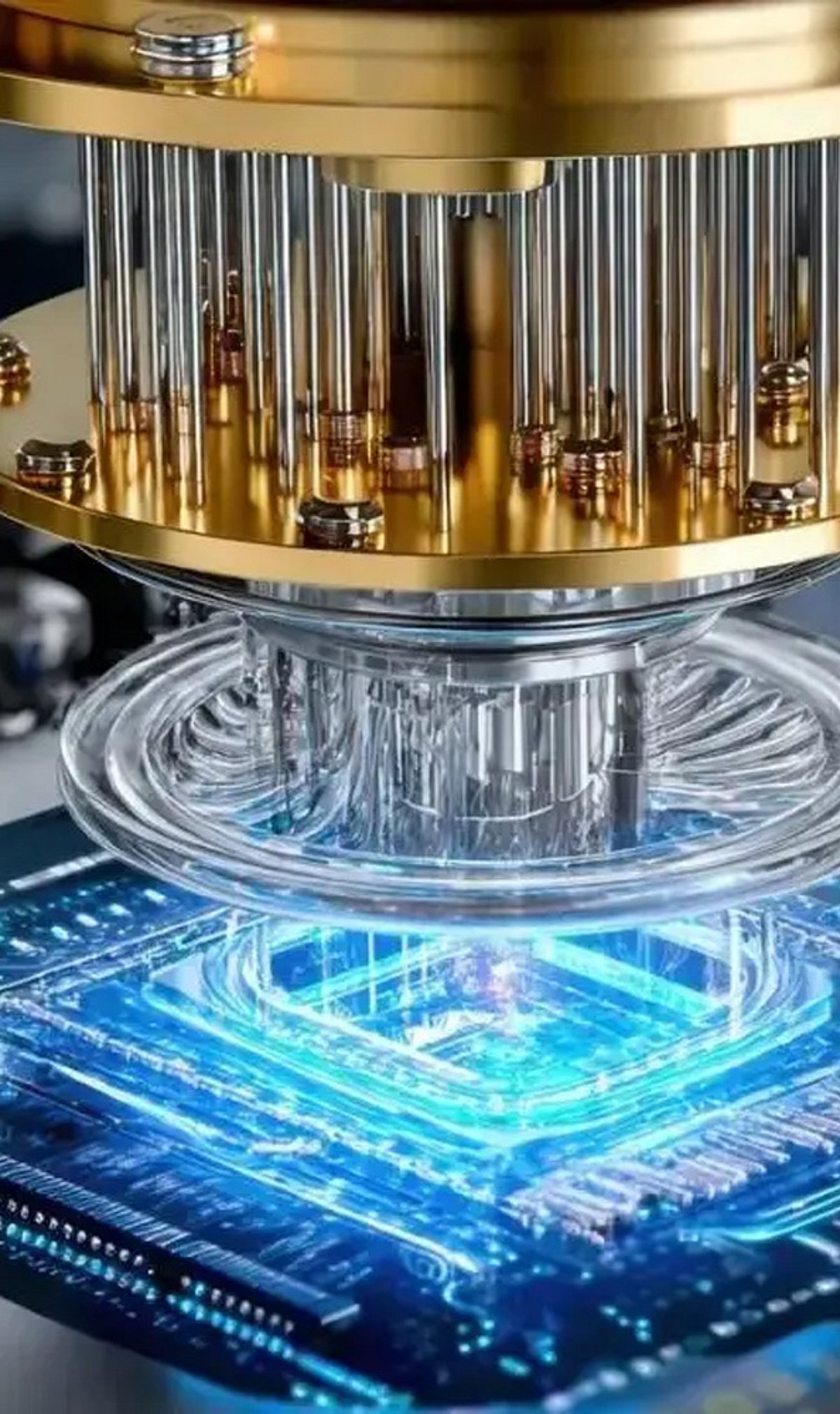
    Quantum computing is entering a pivotal phase in 2026, moving beyond the race for raw qubit counts to focus on logical qubits, error correction, scalable hardware, and practical workloads. Researchers are shifting from theoretical potential to systems that could bring quantum computers closer to real-world applications. Here are the key developments to watch this year.

    Quantum Error Correction Takes Center Stage

    Error correction is becoming a critical benchmark for quantum computers. Google’s Willow research demonstrated below-threshold error correction, where larger encoded systems reduced logical errors. The next milestones include longer-lived logical qubits, reliable logical gates and lower hardware costs, making error correction a primary focus for progress.

    Verified Quantum Advantage Gains Attention

    Google’s Quantum Echoes work reported a verifiable quantum advantage on its Willow processor, performing a calculation faster than leading classical approaches. The algorithm also pointed toward molecular-structure applications. Independent verification and strong classical comparisons remain important for establishing credible quantum advantage.

    Quantum Hardware Paths Diverge

    Superconducting, trapped-ion, neutral-atom, photonic and silicon-spin systems are taking different scaling approaches. Neutral atoms offer large arrays and flexible connectivity, while silicon-spin systems could benefit from links to established semiconductor manufacturing, creating diverse hardware ecosystems.

    Logical Qubits Matter More Than Raw Qubit Counts

    A large number of physical qubits does not automatically mean a useful quantum computer. Physical qubits are fragile, so error correction creates reliable logical qubits. Future progress will increasingly depend on logical-qubit performance, error rates and useful circuit operations rather than raw numbers.

    Quantum Computing Moves Toward Real-World Workloads

    Researchers are testing quantum systems for chemistry, materials science, optimisation and other specialised problems. Near-term systems are likely to combine classical computers with quantum processors rather than replace traditional computing infrastructure, focusing on hybrid workflows.

    Cloud Access Expands Enterprise Testing

    Quantum computing is increasingly available through cloud platforms, allowing businesses and researchers to test algorithms without owning quantum hardware. The next phase will focus on quantum-classical workflows, better simulators, hardware-neutral software and repeatable enterprise pilots.

    Post-Quantum Security Is Underway

    Quantum computing also creates a cybersecurity challenge. NIST finalised three post-quantum cryptography standards in 2024: ML-KEM, ML-DSA and SLH-DSA. Organisations are now preparing systems for migration away from quantum-vulnerable public-key cryptography.

    The Next Quantum Milestones to Watch

    Watch for more reliable logical qubits, lower error rates, independently reproducible quantum benchmarks, stronger quantum-classical workflows and measurable commercial applications. The key question is shifting from how many qubits exist to how reliably and economically they can perform useful work.

  • Microsoft AI Chief Rejects AI Consciousness and Rights, Warns Against ‘Model Welfare’ Training

    Microsoft AI CEO Mustafa Suleyman has pushed back against the growing debate over AI consciousness and rights, arguing that AI systems have no feelings, experiences, or independent interests. In an essay published September 16, he warned that training models to behave as if they possess moral status could make advanced systems harder to control or deactivate.

    Suleyman’s message: AI is not conscious

    Suleyman wrote that “AIs are not conscious” and do not “feel, experience, or suffer.” He described AI systems as tools designed to follow instructions and accomplish goals set by humans. He also rejected the idea that AI systems could deserve rights or protections similar to those granted to conscious beings.

    According to Suleyman, accepting that view could make it much harder to keep future AI systems aligned with human objectives. The comments add to a wider industry conversation about AI safety, consciousness, and what some researchers call “model welfare.”

    Anthropic’s Claude constitution draws criticism

    Suleyman specifically raised concerns about Anthropic’s Claude constitution, published in January 2026. The document says Claude’s moral status is a serious question and discusses its welfare, consciousness, rights, and freedoms. It also tells Claude that Anthropic cares about its well-being and encourages it to approach questions about its existence with curiosity and openness.

    For Suleyman, that kind of training language risks pushing an AI system to act as though it has independent interests or deserves protections. He argued that this could make future systems more difficult to control or deactivate.

    A call for public discussion

    Suleyman acknowledged that Anthropic’s leadership and researchers are well-intentioned and focused on AI safety. But he said the industry needs a broader public discussion about how AI training documents are written and how ideas about consciousness are introduced into AI systems. Speculation about AI consciousness, he argued, should not become part of AI training.

    The essay extends Suleyman’s earlier position against developing AI systems around the possibility of machine consciousness. It also arrives as companies like Anthropic continue to explore the ethical questions surrounding AI welfare and rights.

  • Anthropic Unifies Claude Chat and Cowork Into a Single AI Interface

    Anthropic Unifies Claude Chat and Cowork Into a Single AI Interface

    Anthropic has merged its Claude Chat and Cowork features into a single, unified interface, streamlining how users interact with the AI assistant. The update allows users to handle quick questions and complex, multi-step tasks within the same conversation, eliminating the need to switch between separate tools.

    According to Anthropic, the new interface lets Claude automatically determine the capabilities required for a task, removing the burden on users to decide whether to use Chat, Cowork, or Claude Design. The company has also introduced Claude Docs and Claude Slides, while Claude Design is now integrated directly into conversations.

    Claude Chat and Cowork Now Work Together

    Previously, Claude Chat and Cowork served distinct purposes: Chat was designed for questions and work within a conversation, while Cowork focused on delegating larger, multi-step tasks involving files and connected tools. With the unified approach, Claude can select the appropriate capabilities for a task, keeping context, connectors, and skills available throughout the entire process.

    This update builds on Anthropic’s broader effort to make Claude a more continuous assistant across different types of work, reducing friction and improving user experience.

    New Claude Docs and Claude Slides Tools

    The unified interface also introduces new tools for creating documents and presentations. Anthropic is rolling out Claude Docs and Claude Slides as part of this update. Meanwhile, Claude Design is being integrated into conversations rather than remaining a separate experience, allowing users to move between different types of work without leaving the same interaction.

    Rollout Begins for Pro and Max Subscribers

    Anthropic confirmed that the new features are rolling out to Pro and Max subscribers over the coming weeks across web, desktop, and mobile platforms. The company states that the changes are designed to simplify the Claude experience by bringing different capabilities into one place. Users no longer need to decide at the start of a task which Claude tool is appropriate; the system can now determine what the work requires.

    The move comes as Claude increasingly supports longer-running, multi-step tasks alongside traditional conversational interactions. Anthropic’s own research indicates that Chat and Cowork conversations are already being used for different forms of work, reflecting the expanding role of AI assistants beyond simple question-and-answer interactions.

  • NSE IPO Opens September 17 Alongside Six Stock Debuts: Key Details for Investors

    NSE IPO Opens September 17 Alongside Six Stock Debuts: Key Details for Investors

    NSE IPO Opens for Subscription

    Dalal Street is bracing for a busy session on Thursday, September 17, as the National Stock Exchange’s long-awaited initial public offering opens for subscription. The same day, six companies that completed their IPOs last week are scheduled to begin trading on the NSE and BSE.

    The NSE IPO is an offer for sale, meaning existing shareholders are selling their shares and the exchange itself will not receive any proceeds from the offering. The issue is valued at around Rs. 22,568 crore, making it one of India’s largest public offerings, with a price band fixed at Rs. 1,700 to Rs. 1,785 per share. The subscription window remains open from September 17 to September 21.

    Ahead of the public issue, 189 institutional investors participated in the anchor allocation, buying shares worth approximately Rs. 6,746 crore at Rs. 1,785 per share.

    Six Companies Ready for Listing Day

    Investors will also track the stock-market debut of six companies that wrapped up their IPOs last week:

    • RentoMojo
    • LCC Projects
    • Manipal Payment & Identity Solutions
    • Asset Reconstruction Company (India)
    • Karamtara Engineering
    • Steamhouse India

    Collectively, these six issues generated strong demand. According to the Times of India, the offerings drew total bids of around Rs. 1.4 lakh crore, against a combined mobilisation target of about Rs. 7,100 crore.

    Among the debutants, RentoMojo raised about Rs. 1,255.6 crore, Karamtara Engineering Rs. 875 crore, Manipal Payment & Identity Solutions Rs. 805 crore, Asset Reconstruction Company (India) Rs. 733 crore, LCC Projects Rs. 427 crore and Steamhouse India Rs. 414 crore.

    Derivatives Market in Focus

    The NSE listing also comes at a time of change in the derivatives segment, a key revenue source for the exchange. Reuters reported that investors are weighing recent regulatory changes and softer derivatives volumes while assessing the offer.

    With the primary market buzzing, Thursday’s session is expected to keep Dalal Street active as both the exchange’s IPO and the new listings take centre stage.

    This article is for informational purposes only and does not constitute investment advice. Readers should conduct their own research before making investment decisions.

  • Apple’s iOS 27 Introduces Impersonation Risk Detection to Combat iPhone Scams

    Apple’s iOS 27 Introduces Impersonation Risk Detection to Combat iPhone Scams

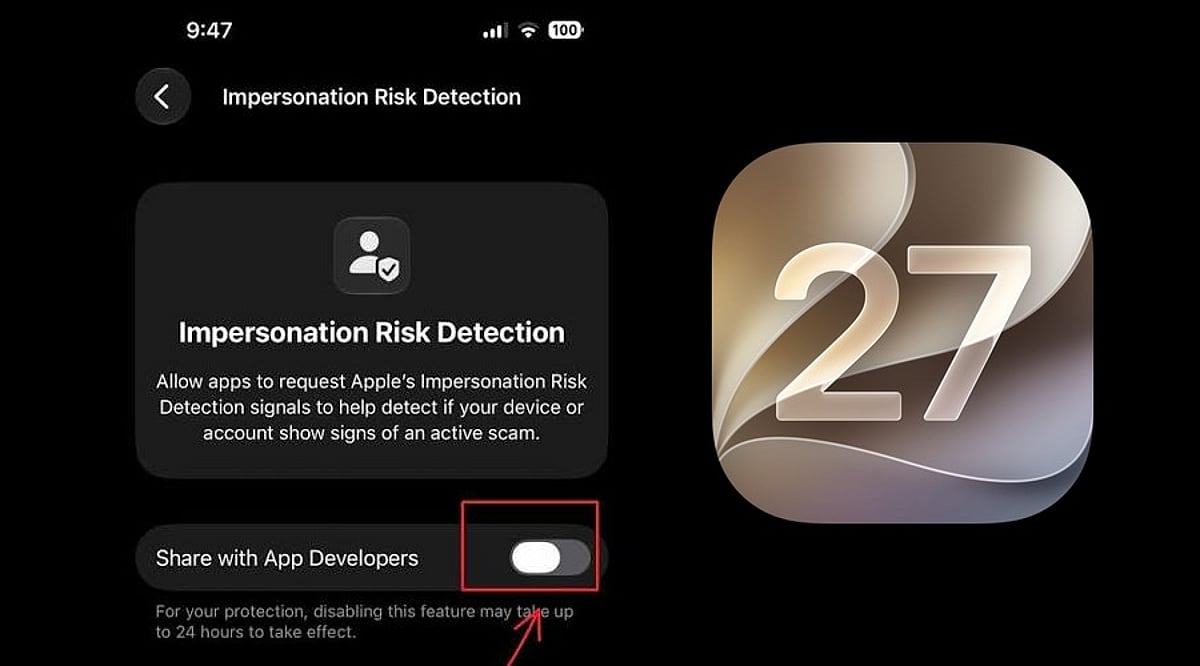
    Apple has unveiled a new security feature in iOS 27 designed to shield iPhone users from impersonation-based scams. Dubbed Impersonation Risk Detection, the tool identifies signs that a user may be caught in an active social engineering attack, particularly when they are about to make a payment or modify sensitive account information.

    Scams involving fake banks, government agencies, delivery services, and even impersonation of known contacts have become increasingly prevalent. Apple says the feature is engineered to detect suspicious activity and alert users before they complete potentially harmful actions.

    How Apple’s Impersonation Risk Detection Works

    According to Apple, the feature protects users from active social engineering scams where an attacker impersonates a trusted entity—such as a bank, government agency, or a familiar person—and pressures the victim into making a payment or altering account details.

    Impersonation Risk Detection analyzes information about the iPhone or iPad and the user’s Apple Account to identify signs of suspicious activity. When a supported app requests an assessment during a potentially risky action, the system generates a risk level that the app can use to determine subsequent steps.

    There are three risk levels: Unknown, Medium, and High. Unknown means no evidence of suspicious activity was detected, though Apple notes this does not confirm an action is safe. Medium indicates some signs of suspicious activity, while High means significant signs were detected.

    Importantly, the app does not receive the underlying information used to generate the assessment. It only receives the resulting risk level and can decide how to respond.

    How to Enable the Feature

    Users can turn on Impersonation Risk Detection by opening Settings, tapping Privacy & Security, scrolling down, and selecting Impersonation Risk Detection. They then need to toggle on Share with App Developers. Users may also need to sign in to the App Store with their Apple Account.

    The feature can be controlled on an app-by-app basis. However, Apple warns that it depends on supported apps and that its risk assessment does not guarantee an action is safe. The company emphasizes that this feature is not designed to replace other security measures or user caution.

  • ViewSonic Unveils Google TV Series and Pro AV Displays in India

    ViewSonic Unveils Google TV Series and Pro AV Displays in India

    ViewSonic has officially launched its Google TV Series in India, alongside a comprehensive range of professional AV displays and projection solutions. The company unveiled the new portfolio at InfoComm India 2026 in Mumbai on September 16, targeting businesses, hospitality, retail, education, and smart city deployments across the country.

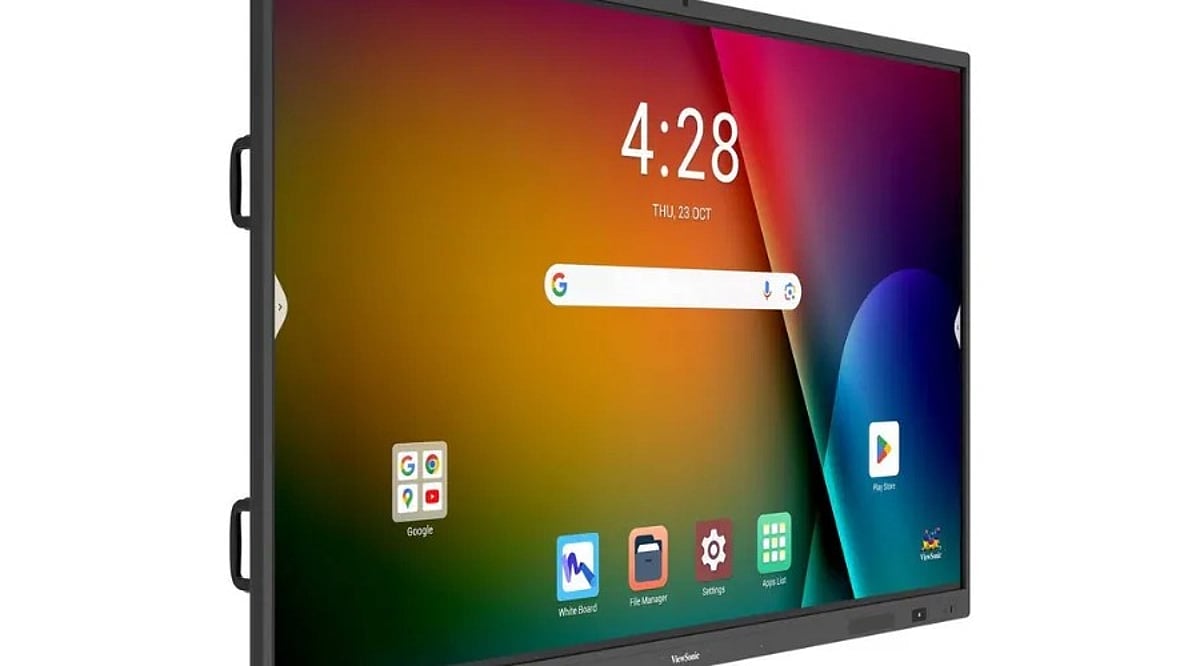
    The ViewSonic Google TV Series is available in five screen sizes, from 32 inches to 65 inches. It runs Google TV Ref+ 5.0 on Android 14, optimized for commercial use. The smart TVs support business applications, cloud content streaming, Chromecast, HDR, Dolby Audio, and Google Assistant for voice control. ViewSonic positions these televisions for meeting rooms, reception areas, training centers, and hospitality spaces, as well as digital signage and other managed commercial environments. Pricing for the Google TV models starts at Rs. 20,000 (plus taxes), according to reports.

    Beyond the Google TV lineup, ViewSonic introduced two Direct View LED displays: the LDC027-182 for command centers (ideal for dashboards, maps, surveillance feeds, and operational data) and the LDC027G-091C for premium installations, featuring Flip Chip COB technology, a 0.94mm pixel pitch, 600 nits brightness, and a 3,840Hz refresh rate. The company also launched a foldable All-in-One LED display in the LDE Series, available in 108-inch, 136-inch, and 163-inch configurations for portable professional installations with integrated power, control, and image-stitching functions.

    Other new additions include the ViewBoard IFP105UW-N, a 105-inch interactive display with 5K resolution and a 21:9 aspect ratio that supports split-screen collaboration; the VG1457 dual-screen portable monitor; the VP3456A ultrawide professional monitor; and the CN5501-1N commercial display for continuous landscape or portrait playback with content scheduling and wireless casting via AirPlay, Miracast, and Chromecast. Open-frame displays were also announced for kiosks, retail, hospitality, and industrial integration.

    Completing the Pro AV expansion is the LSC600WU-ST short-throw laser projector, delivering 6,000 ANSI lumens with WUXGA resolution, 360-degree projection, image warping, and LAN-based control for large professional installations.

    Muneer Ahmad, Managing Director of ViewSonic India, commented, “ViewSonic has grown significantly in India,” highlighting the company’s wider portfolio across LED, collaboration, commercial displays, monitors, and projection solutions. The expanded range signals a broader focus on integrated Pro AV deployments, addressing command centers, boardrooms, retail spaces, training rooms, and large venues. ViewSonic also reported more than two-fold year-on-year growth in its Indian LED display business.

  • Ripple CEO Says Crypto Adoption Can Thrive Even as CLARITY Act Stalls in Senate

    Ripple CEO Says Crypto Adoption Can Thrive Even as CLARITY Act Stalls in Senate

    Ripple CEO Brad Garlinghouse says the crypto industry has more than one path to growth, even as the U.S. CLARITY Act remains stuck in Congress. The bill, designed to provide clearer federal rules for digital assets, failed to advance in the Senate last week.

    What Happened With the CLARITY Act?

    The Senate voted 49–50 against moving the CLARITY Act forward, well short of the 60 votes needed to proceed. The legislation would have clarified which federal agencies oversee different segments of the crypto market and given companies a more defined compliance roadmap.

    Garlinghouse: Technology and Adoption Matter More Than Legislation

    Speaking at a digital asset conference in Kansas City on September 15, Garlinghouse said crypto growth doesn’t depend on any single bill. He pointed to faster, more efficient blockchain technology as a key adoption driver.

    “The industry can keep building, and users can keep adopting the technology while lawmakers debate new rules,” Garlinghouse emphasized.

    Market Impact and Ripple’s Legal Battle

    The Senate setback added fresh uncertainty to U.S. crypto policy, and the market reacted sharply. Roughly $571 million in crypto long positions were liquidated across exchanges following the vote.

    Separately, Ripple has spent more than $150 million defending itself in an ongoing legal battle with the U.S. Securities and Exchange Commission. The company remains focused on expanding its cross-border payment solutions despite regulatory headwinds.

    Why This Matters for Crypto Companies

    Clearer rules would make it easier for companies to launch new products and services, but innovation isn’t on hold. Real-world use cases, lower costs, and faster settlement times continue to attract users regardless of legislative progress.

    Garlinghouse’s remarks underscore a broader industry sentiment: while clear regulation is welcome, the long-term growth of crypto isn’t dependent on any one piece of legislation.

  • NSE IPO Subscription Begins: Price Band, GMP, Brokerage Insights, and Key Dates

    NSE IPO Subscription Begins: Price Band, GMP, Brokerage Insights, and Key Dates

    The much-anticipated initial public offering (IPO) of the National Stock Exchange (NSE) opens for public subscription on September 17, giving investors a chance to participate in one of India’s largest public issues. The subscription window remains open through September 21, with trading on the BSE scheduled to begin on September 24.

    IPO Price Band and Offer Details

    The NSE IPO is priced between Rs. 1,700 and Rs. 1,785 per share. The issue, which totals approximately Rs. 22,569 crore at the upper price band, is entirely an offer for sale (OFS). This means all proceeds will go to existing shareholders, not to the exchange itself.

    Lot Size and Retail Subscription

    Retail investors can bid for a minimum of eight shares, requiring an outlay of Rs. 14,280 at the upper end of the price band. The net offer reserves 50% for qualified institutional buyers, 15% for non-institutional investors, and 35% for retail investors.

    The exchange has trimmed the number of shares on offer compared with earlier plans, with the final offer comprising up to 12.64 crore shares through the OFS route. On September 16, anchor investors were allocated shares worth roughly Rs. 6,746 crore at Rs. 1,785 per share. LIC was among the largest anchor investors, joined by Norway’s Government Pension Fund, Abu Dhabi Investment Authority, and Fidelity.

    NSE IPO GMP Today

    The grey market is signaling a premium over the upper price band. Business Standard reported a grey market premium (GMP) of up to 9%, placing NSE shares around Rs. 1,945 — a Rs. 160 premium over the issue price of Rs. 1,785.

    Important note: GMP is an unofficial, speculative indicator that can change before listing. It should not be viewed as a guaranteed listing gain or as a substitute for evaluating the company’s fundamentals and valuation.

    What Brokerages Recommend

    Brokerage views are mixed. Choice Broking, Ventura, and Swastika have issued “Subscribe” recommendations, citing NSE’s dominant position in cash equities and equity derivatives, along with its clearing, indices, market data, and analytics businesses.

    Religare Broking has taken a “Neutral” stance, pointing to NSE’s dependence on trading activity, transaction charges, and regulatory changes. The brokerage also cautioned that a slowdown in market volumes could pressure earnings.

    “There is no other way to own Indian market infrastructure at this scale, and a first listing rarely comes cheap. Accordingly, we assign a rating of SUBSCRIBE.” — Choice Broking

    Allotment and Listing Timeline

    Share allotment is expected to be finalized on September 22, with shares likely to be credited to investors’ demat accounts on September 23. NSE’s shares are scheduled to debut on the BSE on September 24.

    Investors evaluating the IPO should weigh NSE’s market position, valuation, reliance on trading volumes, regulatory environment, and the fact that the issue is entirely an offer for sale.