Author: vitorcherulli

  • Amazon Launches Alexa+ in India with Hindi and Hinglish Support: What It Means for Users

    Amazon Launches Alexa+ in India with Hindi and Hinglish Support: What It Means for Users

    Amazon has officially launched Alexa+ in India, offering free Early Access to a limited number of users. The new AI-powered assistant is available on eligible Echo speakers, smart displays, Fire TV devices, and the Alexa app, with browser access planned. Alexa+ understands English, Hindi, and Hinglish, and Amazon intends to add more Indian languages over time.

    Prime members will continue to receive Alexa+ at no extra charge after the Early Access period ends. For other users, a paid plan costing Rs. 2,000 per month will be required. Teena Sidana, Country Manager for Alexa at Amazon India, stated, “Indian households are multi-generational, multilingual, and beautifully complex. Alexa+ was designed for that complexity.” She added, “India is home to one of the most diverse set of customers in world, and we’re excited for them to experience how much smarter, personalized, and more intuitive Alexa+ has become.”

    Key Features of Alexa+ in India

    Alexa+ is built for natural, flowing conversations. Users no longer need to say “Alexa” before every command. The assistant seamlessly switches between English and Hindi within the same interaction. It also recognizes common Indian phrases and terms like “dhai baje” and “ek paav”.

    Core capabilities include:

    • Smart home device control (compatible with Atomberg, Qubo, Dreame, Wipro, and more)
    • Shopping lists and Amazon order tracking
    • Product comparisons
    • Integration with Spotify, Apple Music, JioSaavn, Prime Video, and Netflix
    • Upcoming integrations with Swiggy, EazyDiner, and MakeMyTrip

    Language Support: A Game-Changer for Indian Users

    Language is a major differentiator for Alexa+ in India. The assistant understands mixed Hindi and English (Hinglish) and is designed to handle the multilingual, multi-generational nature of Indian households. Amazon plans to expand support to additional Indian languages in future updates.

    Pricing and Availability

    During Early Access, a limited number of users can try Alexa+ for free on eligible devices. Prime members will retain free access after the trial. Non-Prime users will need to subscribe at Rs. 2,000 per month. The wider rollout is scheduled to begin later.

  • SS Retail IPO Day 1: Subscription at 30%, GMP Points to 30% Listing Premium

    SS Retail IPO Day 1: Subscription at 30%, GMP Points to 30% Listing Premium

    SS Retail IPO Subscription Status on Day 1

    SS Retail’s initial public offering got off to a steady start on Wednesday, September 16, with the issue subscribed 30% by 11:00 am on the first day of bidding, according to NSE data. The multi-brand mobile and electronics retailer is looking to raise approximately Rs. 500 crore through the public offer, which remains open until September 18.

    Bids were received for 26,84,080 shares against 87,93,884 shares on offer. Meanwhile, the grey market premium (GMP) hovered near 30% above the upper end of the IPO price band, signaling strong investor interest ahead of listing.

    Retail Investors Lead Early Bidding

    Retail investors showed stronger interest during the opening session. The retail portion was subscribed 52% by 11:00 am, while the non-institutional investor category saw 26% subscription.

    The IPO has reserved 35% of the offer for retail investors, 50% for qualified institutional buyers, and the remaining portion for non-institutional investors. Bidding closes on Friday, September 18.

    Price Band and Lot Size

    The company has fixed the IPO price band at Rs. 403 to Rs. 424 per share. Investors can bid for a minimum lot of 35 shares. At the upper end of the price band, one lot would require an investment of Rs. 14,840.

    GMP Stays Near 30%

    According to InvestorGain, SS Retail shares were trading at a grey market premium of around Rs. 128, representing a premium of roughly 30% over the upper IPO price of Rs. 424.

    Grey market prices are unofficial and can change before listing; they do not guarantee the opening price on the exchanges. The company’s shares are scheduled to list on the NSE and BSE on September 23, subject to completion of the allotment process.

    The company raised Rs. 146.4 crore from anchor investors on September 15, allotting 34.52 lakh shares to 14 institutional investors at Rs. 424 per share.

    Use of IPO Proceeds

    The SS Retail IPO comprises a fresh issue of about Rs. 360.75 crore and an offer for sale of Rs. 140 crore. The company plans to allocate Rs. 241.3 crore from the fresh issue proceeds for incremental working capital requirements and around Rs. 12.4 crore to establish new stores during FY27 and FY28. The remaining funds will be used for general corporate purposes.

    SS Retail plans to add 120 stores in each of FY27 and FY28. As of July 31, 2026, the retailer operated 536 stores across Maharashtra, Karnataka, Madhya Pradesh, Goa and Gujarat, up from 503 stores as of March 31.

    Brokerage Views Mixed

    Brokerages are divided on the issue. Swastika Investmart assigned a ‘neutral’ view, citing the IPO valuation of around 46.5 times FY26 earnings and the company’s higher exposure to lower-margin mobile hardware.

    SBI Securities, however, recommended investors ‘subscribe’ at the cut-off price, citing revenue growth, store expansion, improving store economics and return ratios.

    SS Retail reported consolidated revenue of Rs. 2,351 crore and profit of Rs. 59.2 crore for FY26. Its revenue, adjusted EBITDA and profit after tax recorded compound annual growth rates of 39.6%, 49.1% and 49.2%, respectively, between FY24 and FY26. The store network expanded from 236 stores in FY24 to 503 stores in FY26. Anand Rathi Advisors and Emkay Global Financial Services are managing the IPO.

  • Apple Adds 2019 21.5-Inch iMac to Vintage Products List, Signaling Tighter Repair Support

    Apple Adds 2019 21.5-Inch iMac to Vintage Products List, Signaling Tighter Repair Support

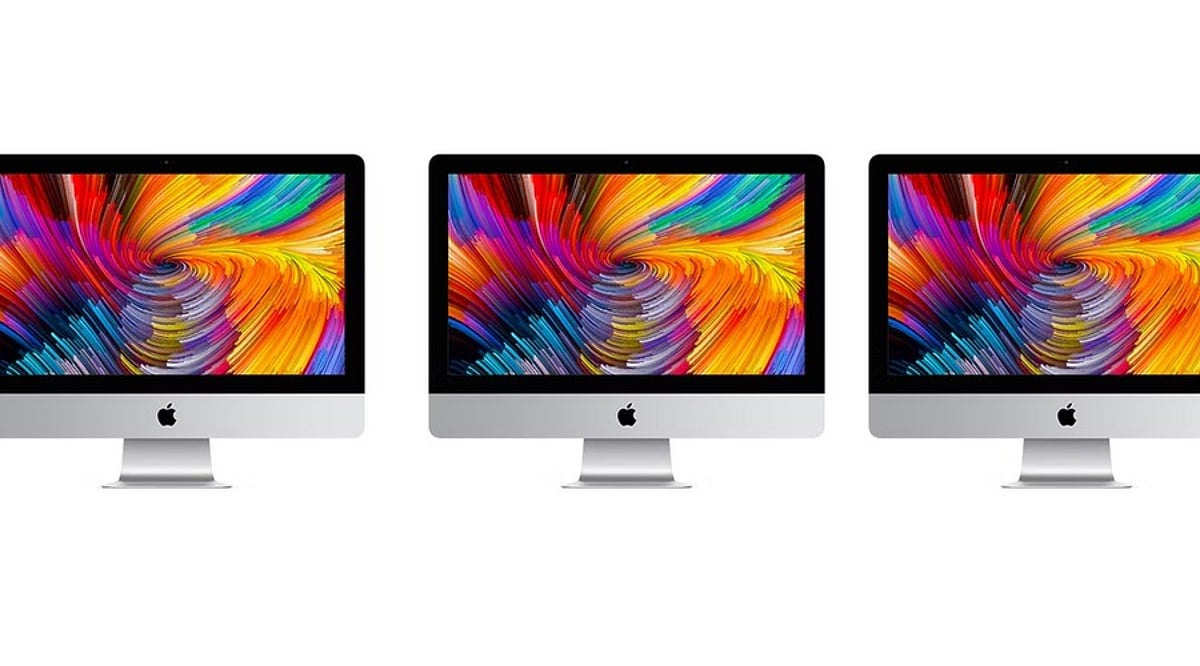
    Apple has officially added the 2019 21.5-inch iMac with Retina 4K display to its global vintage products list, signaling that official repair support will now depend on the availability of replacement parts.

    The move places the final 21.5-inch Intel-powered iMac in a new phase of Apple’s hardware support cycle. Under Apple’s policy, products are considered vintage when more than five but fewer than seven years have passed since they were last sold. Once a product passes the seven-year mark, Apple may reclassify it as obsolete.

    The 2019 model was the last 21.5-inch iMac to feature an Intel processor. Apple replaced the smaller desktop with the 24-inch M1 iMac in 2021, marking a major transition to Apple’s own silicon across its all-in-one lineup.

    Apple Stores and authorized service providers can still repair vintage products, but service is limited by component availability. Apple notes that hardware support and parts availability may continue beyond five years in some cases, but customers should not assume that every part will remain available indefinitely.

    For current owners, the vintage designation is not an immediate shutdown notice. The computer will continue to operate normally, but access to official repairs may become more difficult as compatible parts become harder to source. The change also highlights Apple’s broader move away from Intel, with the current iMac lineup now running entirely on Apple silicon.

  • Former DeepMind Researcher Resigns, Warns That Advanced AI Could Threaten Humanity

    Former DeepMind Researcher Resigns, Warns That Advanced AI Could Threaten Humanity

    A former Google DeepMind researcher has resigned, issuing a stark warning about the existential risks posed by advanced artificial intelligence. Bilal Chughtai, who focused on AGI safety and alignment at the company, left his position in July 2026. He recently detailed his concerns on social media platform X, stating that his tenure at DeepMind left him increasingly uneasy about the trajectory of AI development. Chughtai is calling for AI companies to decelerate their development pace, enhance safety protocols, and collaborate rather than compete in the rush to build more powerful systems.

    Chughtai’s warning is part of a growing chorus of concern from within the AI community. His statements echo those of Jacob Coxon, a former Anthropic researcher who also resigned recently. Coxon indicated that some individuals building AI genuinely believe it could cause severe harm within the next ten years. Following that, Anthropic scientist Evan Hubinger publicly agreed, estimating the probability of AI causing human extinction within a decade at more than ten percent. These warnings underscore a core issue known as “alignment”—the challenge of ensuring that AI systems consistently follow human goals and remain under human control. Many researchers feel that the methods to guarantee this safety are not advancing as rapidly as the technology itself.

    The debate has drawn in industry leaders with differing perspectives. Anthropic CEO Dario Amodei advocates for slowing down the pace of AI development. OpenAI CEO Sam Altman has spoken about the necessity for greater safety cooperation. Conversely, Meta CEO Mark Zuckerberg believes that AI companies already have sufficient incentive to manage safety on their own. The central question remains: how fast should AI advance, and can safety measures keep pace? Chughtai’s resignation adds another powerful voice to an intensifying debate about the risks of powerful AI.

  • Samsung Gallery Ends OneDrive Backup: Google Photos Emerges as Likely Replacement

    Samsung Gallery Ends OneDrive Backup: Google Photos Emerges as Likely Replacement

    Samsung Gallery is set to end its auto-sync feature with Microsoft OneDrive for photos on September 30, 2026. As this deadline approaches, evidence suggests that Samsung is preparing a new backup solution that will leverage Google Cloud instead.

    According to reports, a new version of Samsung’s Gallery Cloud Sync service (version 1.6.09.31) has been spotted on the Galaxy Store. The listing indicates that the service will support Google Photos, allowing Galaxy users to back up photos and videos from Samsung Gallery directly to Google’s cloud. Users will likely be able to view their backed-up content through both Samsung Gallery and Google Photos, with the service requiring a Samsung account and being tied to Samsung devices.

    It is important to note that users who currently have photos stored in OneDrive must back them up before October 1, 2026, or risk losing access. A transition to Google Photos could simplify the process for Galaxy users and bring Samsung Gallery closer to the widely used Google Photos platform.

    Samsung’s Evolving Photo Backup Strategy

    This move reflects a broader trend in the smartphone industry, where manufacturers are increasingly partnering with major cloud platforms rather than building and maintaining their own infrastructure. This approach offers users more storage options while reducing operational complexity for companies.

    For Galaxy users, the key concerns revolve around the ease of migration and the fate of existing OneDrive photos. Samsung has not yet officially confirmed the Google Cloud link, so users should await an official announcement. If implemented, the new service could provide a seamless and secure way for Galaxy owners to manage their photo backups.

  • ByteDance Hits $120B in First-Half 2026 Revenue as AI Spending Eats Into Profits

    ByteDance Hits $120B in First-Half 2026 Revenue as AI Spending Eats Into Profits

    ByteDance, the parent company of TikTok, reported first-half 2026 revenue of $120 billion, representing a year-over-year increase of more than 30%, according to sources familiar with the company’s internal financials. The rapid growth was driven by stronger international advertising, livestreaming, and TikTok commerce, but heavy investment in artificial intelligence reduced net profit to around $20 billion during the period.

    The Beijing-based technology giant’s revenue acceleration comes as uncertainty around TikTok’s US operations eased following a January joint venture that resolved a long-running regulatory dispute. The White House subsequently lifted a 2023 restriction on TikTok’s use on federal government devices, providing further support for the platform’s commercial momentum.

    ByteDance’s full-year 2025 revenue was approximately $200 billion, reflecting 29% annual growth. The first-half 2026 figures show the company’s growth pace has slightly accelerated. However, net profit for all of 2025 reached $42 billion, making the latest decline more pronounced as AI spending expands.

    The company is investing heavily across its global operations in AI model families, computing capacity, and infrastructure to compete with US and Chinese technology firms. ByteDance operates several proprietary AI models and has developed Seedance for video generation. It continues to integrate AI capabilities across TikTok and its Chinese counterpart Douyin for content recommendations, creation, and commerce.

    Financing activity underscores the scale of the AI push. Earlier this month, nearly 30 global banks agreed to provide ByteDance with a $29.6 billion loan. Sources indicate the financing supports general corporate needs, including AI research and development.

    International advertising and e-commerce were key contributors to revenue gains, while AI research and infrastructure spending weighed on profitability during the period. ByteDance has not publicly confirmed the reported first-half figures, but the latest performance paints a picture of a company funding an expensive AI expansion while maintaining strong core business growth.

  • Bitcoin ETFs Adopt In-Kind Creations as BTC Holds Key Support at $74.5K

    Bitcoin ETFs Adopt In-Kind Creations as BTC Holds Key Support at $74.5K

    Bitcoin faces renewed volatility as the SEC approves in-kind creations for spot Bitcoin ETFs and the US Senate rejects the Clarity Act, leaving regulatory uncertainty. Despite these headwinds, ETF inflows remain strong, with BTC testing critical support levels.

    Bitcoin ETF Structure Changes as Inflows Recover

    The SEC’s approval allows authorized participants to create or redeem spot Bitcoin ETF shares using either cash or Bitcoin directly, rather than relying solely on cash. This structural change could influence Bitcoin movement between institutional holders and the broader market.

    Major Bitcoin ETFs are seeing a recovery in flows after recent market weakness. The iShares Bitcoin Trust has attracted approximately $3.5 billion in net inflows over the past month, bringing its year-to-date flow total close to break-even.

    Michael Bucella, co-founder and managing partner of Neoclassic Capital, attributed the rebound to renewed spot and ETF buying following the August 19 liquidation washout. BTC gained nearly 20% during the past month, briefly moving above $81,000 in late August, though it remains almost 10% lower in 2026.

    Senate Setback Keeps Crypto Policy Uncertainty Elevated

    The US Senate narrowly rejected the Clarity Act, leaving cryptocurrency market participants facing continued uncertainty around federal regulation. This regulatory setback coincides with the SEC’s ETF structure change, presenting traders with mixed policy signals.

    Grayscale Investments research head Zach Pandl noted that investors increasingly use crypto within broader portfolio allocation strategies, driven by diversification concerns involving technology, artificial intelligence, bonds, and the dollar. Institutional allocation through ETFs remains a key component of Bitcoin demand.

    However, leverage across the broader cryptocurrency market creates additional risk. Bucella expressed concern about altcoin open interest and leverage, which remain near levels seen before the October 2025 market crash.

    Bitcoin Price Tests Support Below Short-Term Averages

    Bitcoin currently trades below its hourly MA-20 at $76,204 and MA-50 at $77,307, but remains above its MA-200 at $70,274. The Ichimoku Kijun places immediate resistance near $76,440, while support sits at $74,544. The expected short-term trading range extends from $74,544 to $77,062.

    Momentum indicators remain weak: MACD carries a Strong Sell reading, ADX signals Sell, and RSI stands at 41.08. Stochastic RSI and CCI indicate oversold conditions, while Bull/Bear Power also sits in oversold territory. The Awesome Oscillator remains neutral. The supplied outlook assigns a 71% probability to a downside move and 29% to an upside breakout.

    A confirmed break above $76,440 would strengthen the bullish short-term scenario. Conversely, losing $74,544 could increase bearish pressure. Bucella identified $83,000 to $86,000 as the next key area, noting Bitcoin faces long-term supply there before accessing stronger technical territory.

    A Brief Roundup

    Bitcoin faces competing market forces as in-kind ETF creations expand while the Clarity Act setback keeps regulatory uncertainty elevated. ETF inflows have recovered, but BTC remains below short-term moving averages. Traders are watching $74,544 support and $76,440 resistance before attention can return to the $83,000–$86,000 range.

  • UK Inflation Reaches 3.1% in August as Fuel Costs Surge Ahead of Bank of England Rate Decision

    UK Inflation Reaches 3.1% in August as Fuel Costs Surge Ahead of Bank of England Rate Decision

    UK inflation climbed to 3.1% in August, up from 2.9% in July, marking its highest level in five months. The increase, driven by higher petrol, diesel, and airfare prices, matched economists’ forecasts and came just one day before the Bank of England’s (BoE) September policy meeting.

    Fuel Prices Drive August Inflation Higher

    The Office for National Statistics (ONS) reported that transport made the largest upward contribution to the annual inflation rate. Motor fuel prices rose sharply, with petrol increasing by 9.1 pence per litre between July and August, while diesel prices climbed by 14.2 pence per litre over the same period.

    Grant Fitzner, chief economist at the ONS, said: “Sharp price rises for petrol and diesel pushed inflation up again in August.” He added that higher long-haul airfares also contributed. Crude oil and fuel costs further raised manufacturers’ raw material and factory-gate prices.

    Core and Services Inflation Remain Stable

    Despite the headline rise, measures closely watched by the Bank of England held steady. Core CPI, which excludes energy, food, alcohol, and tobacco, remained at 2.6% for the fourth consecutive month. Services inflation also stayed at 3.4%.

    Neither measure accelerated in August, even as fuel costs pushed the headline rate above 3%. ONS labour data released earlier in the week showed regular pay growth at 3.5% in the three months to July, close to its weakest pace since 2020.

    Bank of England Prepares for Rate Decision

    The Bank of England will announce its interest-rate decision on September 17. Bank Rate currently stands at 3.75% after the Monetary Policy Committee (MPC) voted 6-3 in July to keep borrowing costs unchanged. Three members had supported a quarter-point increase to 4%.

    Financial markets were pricing in about a 20% chance of a quarter-point increase at the September meeting, according to Reuters. Charlotte O’Leary of the National Institute of Economic and Social Research said: “With limited evidence of second-round effects so far, we expect the MPC to hold rates tomorrow.” The BoE has identified energy prices as a key risk to inflation.

    At its July meeting, the Bank noted that energy prices had remained volatile since the Middle East conflict began. It stated that policy would depend on the scale, duration, and wider transmission of the energy shock.

    Producer Prices Add Pressure to Outlook

    Price pressures were stronger at the manufacturing level. Producer input prices rose 6.1% in the year to August, up from a revised 5.8% in July. Factory-gate output prices increased 3.7%, compared with a revised 3.3% increase a month earlier.

    The rise in inflation also comes as Prime Minister Andy Burnham’s government prepares for an October 28 budget. Chancellor John Healey said the Middle East war was affecting inflation across countries, feeding into household bills, shopping costs, and fuel prices. Official records show Burnham became prime minister on July 20, with Healey taking over as chancellor on the same date.

    Further increases in household energy bills could push headline inflation higher in the coming months because regulated domestic prices respond to wholesale energy costs with a delay. Goldman Sachs expects UK inflation to peak at 3.9% in early 2027. The BoE’s 2% inflation target remains the benchmark, while policymakers continue to track wages, services prices, and business costs for signs of pressure.

  • XRP Plunges 10% as US Senate Blocks CLARITY Act, Triggering Broad Crypto Selloff

    XRP Plunges 10% as US Senate Blocks CLARITY Act, Triggering Broad Crypto Selloff

    XRP led major cryptocurrencies lower on Wednesday after the US Senate failed to advance the CLARITY Act, a bill aimed at providing clearer regulatory guidelines for digital assets. The token dropped nearly 10% to $1.30 during Asian trading, marking the steepest decline among major cryptocurrencies.

    Broader Market Weakens

    The broader crypto market also weakened following the procedural defeat. Bitcoin slipped nearly 3% to just above $76,000, while Ether dropped almost 5% to around $2,410. Solana declined 5% to just above $97, and dogecoin lost nearly 5%. Zcash and Hyperliquid’s HYPE each fell close to 4%. BNB and Tron recorded smaller declines of about 1% each. The moves followed a broad reduction in risk exposure across major digital assets.

    XRP drew particular attention due to its connection with banking-focused digital asset activity and the RLUSD stablecoin. The CLARITY Act sought to establish clearer rules covering digital assets and their use within traditional finance.

    Senate Vote Falls Short

    The Senate failed to advance the bill in a 49-50 cloture vote, according to CoinDesk. The measure needed 60 votes to proceed to debate, and several Republicans joined the opposition. Negotiators had prepared more than 600 pages of compromise language, but disputes over ethics provisions became a central obstacle before the vote.

    Michigan Democratic Senator Elissa Slotkin said the ethics safeguards were ‘simply too thin.’ She also raised concerns about CFTC staffing, money laundering controls, and terrorist financing provisions. Slotkin also pointed to crypto-related financial interests involving President Donald Trump, his children, and Cabinet members, forming part of broader Democratic objections to the legislation.

    Crypto Stocks Slide as Fed Decision Looms

    Crypto-related equities recorded even steeper losses than major tokens. Coinbase fell nearly 9% to $174.42, while Circle dropped more than 9% to $88.26. Galaxy Digital declined 8%, Gemini lost 7%, and Bullish and Riot Platforms each fell 5%. Robinhood, MARA Holdings, CleanSpark, IREN, and Core Scientific dropped between 3% and 4%.

    Attention now shifts toward federal regulators. The Securities and Exchange Commission continues work on its proposed Reg Crypto framework and rules covering tokenized securities. At the same time, markets await the Federal Reserve’s rate decision Wednesday. Traders placed the probability of a rate increase near 93%, while the 10-year Treasury yield hovered around 5%.

  • Velocity Secures $10M Extension as Visa and Circle Join Its Stablecoin Infrastructure Push

    Velocity Secures $10M Extension as Visa and Circle Join Its Stablecoin Infrastructure Push

    Velocity, a London-based stablecoin payments startup, has added $10 million to its Series A round, bringing the total to $48 million. The extension was joined by Visa Ventures, Circle Ventures, and Ripple, alongside three other investors. The funding will support the company’s infrastructure for enterprise treasury, settlement, and liquidity operations using stablecoins.

    The latest raise comes just over two months after Velocity announced its initial $38 million Series A on July 14, led by Dragonfly and FirstMark, with participation from Ripple. The new extension adds Visa Ventures, Circle Ventures, Haun Ventures, Translink Capital, and Mirana Ventures to the cap table.

    Velocity builds systems that allow banks, acquirers, merchants, and payment providers to integrate stablecoin settlement, liquidity, and treasury operations without replacing existing payment infrastructure. The company aims to make money movement more continuous and reduce reliance on prefunding and settlement outside traditional banking hours.

    Visa has noted that stablecoins are playing an increasingly important role in moving value across its ecosystem. Rubail Birwadker of Visa stated that companies like Velocity can help expand stablecoin use for customers and partners. Velocity founder and CEO Eric Queathem emphasized that the new investors bring valuable insight as the company scales its stablecoin infrastructure.

    With the backing of Circle Ventures and Ripple, Velocity gains investors directly tied to regulated stablecoins, payments, and institutional finance. Translink Capital adds connections to corporate and institutional partners across Asia. The company plans to use the new capital to support issuers, acquirers, payment providers, financial institutions, and merchants worldwide, connecting stablecoins with existing banking, treasury, and settlement systems.