Author: vitorcherulli

  • Oracle Layoffs 2026: Thousands of Indian Employees Hit by 6 AM Termination Emails as AI Strategy Reshapes Workforce

    Oracle Layoffs 2026: Thousands of Indian Employees Hit by 6 AM Termination Emails as AI Strategy Reshapes Workforce

    Oracle has launched a new wave of layoffs affecting its global workforce, with Indian employees in Bengaluru and Hyderabad receiving termination notices at around 6 AM local time. The cuts, which began in the United States on September 14 and expanded to India the following day, are part of a broader organizational shift toward artificial intelligence and cloud infrastructure.

    Industry estimates suggest that between 1,000 and 3,000 Indian staff members, primarily in product engineering teams, may lose their jobs. Oracle has not confirmed the exact figures, but the restructuring comes on top of earlier reductions in 2026 that already trimmed the global workforce by approximately 21,000 employees.

    Employees reported losing access to company systems—including email, voicemail, and internal files—before receiving formal termination emails. The messages, reportedly signed by Oracle Leadership, stated simply: “Today is your last working day.” Affected staff were then instructed to provide personal email addresses to receive separation documents and severance details.

    The severance package for U.S. employees reportedly includes four weeks of base salary plus an additional week for each completed year of service. Indian packages vary, with employees discussing different settlement terms on internal forums and social media.

    The layoffs have been particularly jarring for long-tenured staff. LinkedIn posts highlighted employees with 12 years and even 33 years of service among those affected. One widely shared post from Pooja Sahu described her husband Sourabh losing his Oracle role after 12 years.

    Oracle recorded roughly 141,000 employees at the end of fiscal 2026, down about 13% from earlier in the year. The company also reported approximately $1.8 billion in restructuring expenses for fiscal 2026. In September, Oracle raised its estimated total restructuring costs by $700 million to around $2.8 billion, covering severance and exit costs.

    The increased spending reflects Oracle’s heavy investment in AI data centers and cloud infrastructure. The company maintained a capital expenditure forecast of $90 billion to $95 billion for fiscal 2027, with quarterly capex reported at $28.5 billion. The latest layoffs are thus directly tied to Oracle’s strategic pivot away from traditional product engineering and toward AI-focused infrastructure.
  • Reliance Jio Offers Free Canva Pro for 12 Months: Eligible Plans and Activation Guide

    Reliance Jio Offers Free Canva Pro for 12 Months: Eligible Plans and Activation Guide

    Reliance Jio has partnered with Canva to provide eligible customers with free access to Canva Pro or Canva Pro Lite for up to 12 months. This exclusive benefit is available with select Jio recharge plans and can be claimed through the MyJio app starting September 16, 2026. The companies have valued the offer at up to Rs. 4,000.

    Which Jio Plans Are Eligible?

    The Canva subscription you receive depends on your Jio recharge plan. Customers on the Rs. 399 plan will get Canva Pro for 12 months. Users on the Rs. 349 plan and eligible 2GB-per-day plans priced above Rs. 349 will receive Canva Pro Lite for the same period.

    The offer does not require any additional subscription charges. However, customers should check the Canva offer section inside the MyJio app to confirm their eligibility before activating the benefit.

    How to Claim Your Free Canva Subscription

    Eligible customers can activate the benefit through the MyJio app. Simply open the app, locate the Canva offer, and follow the on-screen instructions. You may need to verify your Jio number and sign in to an existing Canva account or create a new one.

    Once activation is complete, the eligible Canva subscription will be linked to your account. Be sure to use the correct Canva account during activation to avoid linking the benefit to the wrong profile.

    This collaboration gives users access to premium design and AI tools, making it easier to create professional graphics, presentations, and more without a separate subscription fee.

  • New UPI MDR Rule: 0.4% Merchant Fee for Payments Above ₹2,000 Starts Oct. 15

    The National Payments Corporation of India (NPCI) is introducing a new Merchant Discount Rate (MDR) structure for select UPI payments starting October 15, 2026. Under the updated rule, merchant transactions above ₹2,000 will attract a 0.4% MDR, with the charge capped at ₹300 for payments of ₹75,000 or more.

    What Is MDR?

    MDR is the fee charged for processing a digital payment. In this case, the charge is paid by the merchant, not the customer. The new rate applies to Person-to-Merchant (P2M) UPI payments — transactions where customers pay businesses for goods or services.

    Where the 0.4% MDR Applies

    Payments above ₹2,000 made via UPI to merchants will carry a 0.4% MDR. However, certain essential payments have been given a flat fee instead:

    • Railway ticket bookings above ₹2,000
    • Fuel payments above ₹2,000
    • Insurance premium payments above ₹2,000
    • Utility bill payments above ₹2,000

    For these categories, the MDR will be a flat ₹5, rather than a percentage of the transaction value. This keeps costs predictable for high-value payments in these sectors.

    What Remains Free

    Not all UPI transactions will be affected by the new rule. The following remain free of MDR:

    • UPI payments of up to ₹2,000 to any merchant
    • Person-to-Person (P2P) transfers to friends and family
    • UPI AutoPay and mandates
    • Small merchants receiving up to ₹1 lakh per month through UPI QR payments

    Protection for Consumers

    The finance ministry has said that banks have been advised to ensure merchants do not pass MDR charges on to customers. It also stated that UPI application providers are expressly prohibited from imposing platform fees or hidden charges.

    The new MDR structure is part of UPI’s move toward a revised charging model that balances business use cases with keeping everyday person-to-person transfers free.

  • RBI Backs 0.4% UPI Fee on Transactions Over ₹2,000 Starting October 15

    RBI Backs 0.4% UPI Fee on Transactions Over ₹2,000 Starting October 15

    New UPI Charge Approved for High-Value Merchant Payments

    The Reserve Bank of India has endorsed a new fee structure for select high-value UPI transactions, aiming to sustain the long-term growth of the country’s digital payments ecosystem. Starting October 15, a 0.4% Merchant Discount Rate (MDR) will apply to person-to-merchant UPI payments exceeding ₹2,000.

    Key Details of the New Fee

    • Rate: 0.4% MDR on merchant UPI payments above ₹2,000.
    • Cap: For payments of ₹75,000 or more, the charge is limited to ₹300.
    • Special sectors: Railways, telecom, insurance, fuel, and farm input payments above ₹2,000 incur a flat charge of ₹5. Mutual funds, securities, and stockbroking payments face a reduced rate of 0.02%, also capped at ₹300.
    • Exemptions: Person-to-person transfers remain free at any amount. Small merchant payments already under the zero-fee rule stay free, along with all merchant payments up to ₹2,000.

    Why the RBI Is Backing This Move

    The central bank believes the fee will provide UPI with the necessary funds to continue investing in technology and infrastructure. Officials said this support will help the payment system expand further and introduce new features over time. The change follows updates to the Payment and Settlement Systems Act, 2007, which created a legal pathway for adding such fees to UPI and other digital payment modes.

    The National Payments Corporation of India (NPCI) has set October 15 as the deadline for banks, fintech firms, and payment platforms to update their systems and comply with the new structure. The government expects about 96% of merchant transactions to remain unaffected by this change.

    Implications for Users and the Ecosystem

    For years, UPI operated on a zero-fee model for merchants. This shift marks a significant change in that approach, even as everyday users continue to enjoy free transactions. The new fee structure aims to strike a balance: keeping UPI free for common people while giving the ecosystem a sustainable way to fund its own growth and innovation.

  • Meta One Subscription: AI, Customization, and Professional Tools for Instagram, Facebook, and WhatsApp

    Meta One Subscription: AI, Customization, and Professional Tools for Instagram, Facebook, and WhatsApp

    Meta One Subscription Overview

    Meta has introduced Meta One, a new subscription service that offers paid upgrades across Instagram, Facebook, WhatsApp, and Meta AI. The service is designed for users who want additional AI access, customization options, and professional tools, while the core versions of its apps remain free.

    AI Access and Creative Tools

    Meta One’s Core and Premium plans bundle existing app-specific features with increased access to Meta’s AI tools. Subscribers can generate and edit more images, create videos using Meta’s Muse models, and use AI-powered features like Restyle on Instagram. Everyday access to Meta AI remains free, but paid plans offer higher usage limits and more creative capabilities.

    App-Specific Features

    Instagram Plus includes custom fonts for Stories and DMs, Story-related notifications, and message previews. Facebook Plus adds customization options, additional Reels insights, and expanded reactions. WhatsApp Plus offers chat and media backup storage, as well as Focus Schedules to mute or hide conversations at set times. Single-app subscriptions are also available for users who prefer platform-specific features.

    Creator and Business Plans

    Meta One also includes creator and business plans with professional features such as enhanced profiles, follow buttons on Reels, automatic follow invitations, and access to Meta Business Agent. Higher tiers provide analytics, audience insights, team access, and additional business tools.

    Pricing and Availability

    Meta One Core starts at $7.99 per month, and Premium costs $19.99 per month, with regional variations. The company reports that its subscription offerings have already generated 15 million subscriptions and trials globally.

    Meta One does not make the apps paid; users can continue using the core services for free. The subscription is positioned as an optional upgrade for those wanting extra AI usage, customization, or professional capabilities.

  • FTSE 100 Opens Higher Ahead of Fed Decision as UK Inflation Rises; Brent Crude Slips

    FTSE 100 Opens Higher Ahead of Fed Decision as UK Inflation Rises; Brent Crude Slips

    The FTSE 100 opened 37.01 points higher at 10,695.14 on Wednesday, as investors awaited UK inflation data and the US Federal Reserve’s interest rate decision. Meanwhile, Brent crude futures fell 1.01% to USD 107.7 per barrel, and US West Texas Intermediate (WTI) declined 1.48% to USD 104.2 per barrel.

    Sterling was quoted at USD 1.3488 early Wednesday, slightly higher than USD 1.3485 at the London equities close on Tuesday. Against the euro, sterling rose to EUR 1.1682 from EUR 1.1681 a day prior.

    Gainers & Losers

    On the upside, Barratt Redrow climbed 7.56% to 297.30p. Persimmon advanced 3.37% to 1,135.50p, while Antofagasta gained 3.26% to 3,615p. Fresnillo rose 3.23% to 2,943p, Endeavour Mining added 2.77% to 4,564p, and NatWest Group increased 2.35% to 705.40p.

    On the downside, Unilever fell 1.45% to 4,574p. Admiral Group declined 0.87% to 3,854p, while Reckitt Benckiser Group dropped 0.79% to 5,026p. London Stock Exchange Group slipped 0.71% to 8,142p, Coca-Cola Europacific Partners lost 0.59% to 7,640p, and Next edged 0.48% lower to 14,620p.

    Babcock Maintains Full-Year Guidance

    Babcock International reaffirmed its full-year guidance, citing strong momentum across its marine, nuclear and land businesses. The company said trading during the first five months of fiscal 2027 remained in line with expectations.

    Analysts expect Babcock to post fiscal 2027 sales of GBP 5.49 billion and underlying operating profit of GBP 464 million, up from GBP 5.19 billion and GBP 293 million a year earlier.

    Barratt Redrow’s Pre-tax Profit Jumps

    Barratt Redrow surged as the company released its FY2026 full-year results, posting adjusted profit before tax of GBP 572.8 million, higher than the analyst consensus of approximately GBP 540 million.

    The company also announced a GBP 400 million capital return to shareholders, to be delivered through share buybacks.

    The profit beat was supported by total home completions rising 5% to 17,667 for the year, net cash at year-end reaching GBP 772 million, and the company achieving GBP 100 million in Redrow integration synergies while cutting administrative expenses to GBP 330 million.

    UK Inflation Rises

    UK consumer price inflation rose to 3.1% in August from 2.9% in July, in line with analysts’ forecasts, but remained above the Bank of England’s 2% target.

    The Office for National Statistics recorded a 0.5% monthly rise in prices, compared with 0.3% a year earlier. CPIH, which includes owner-occupier housing costs, accelerated to 3.3% from 3.1%.

    Petrol prices rose 9.1p during August to an average of 161.3p a litre, their highest since November 2022, while diesel climbed 14.2p to 181.8p.

    Core CPI was unchanged at 2.6%, while services inflation remained at 3.4%.

    Global Market View

    In the US, Wall Street closed lower on Tuesday as rising oil prices and government bond yields weighed on equities. The S&P 500 fell 0.4%, the Dow Jones declined 0.6% and the Nasdaq dropped 0.8%.

    In Asia on Wednesday, Tokyo’s Nikkei 225 gained 0.69% to 63,923, while China’s Shanghai Composite rose 0.71%. Hong Kong’s Hang Seng advanced 0.20%, and South Korea’s Kospi edged up by 1.37%. In India, both the Nifty 50 and the Sensex rose by 0.55% and 0.53%, respectively.

    Disclaimer: This article is for informational purposes only and does not constitute investment advice. Always do your own research before making any financial decisions.

  • HBO Adds Rafe Spall, Molly Hewitt-Richards, Jasper Ambrose to Harry Potter Season 2 Cast

    HBO Adds Rafe Spall, Molly Hewitt-Richards, Jasper Ambrose to Harry Potter Season 2 Cast

    HBO announced three new cast members for Harry Potter Season 2 on Tuesday, September 15. Rafe Spall will play Arthur Weasley, Molly Hewitt-Richards takes on Moaning Myrtle, and Jasper Ambrose has been cast as Colin Creevey. The news came through Variety, and it confirms Season 2 will adapt Harry Potter and the Chamber of Secrets, the second book in the series.

    Filming is already underway at Warner Bros. Studios Leavesden in the UK, even though Season 1 has not aired yet. HBO wants the next chapter of the reboot moving forward early, so production and casting can stay ahead of the December premiere schedule.

    Who’s Playing Who & What Fans Should Know

    Spall steps into the role Mark Williams played in the original films. Arthur Weasley is the warm-hearted patriarch of the Weasley family and father to Harry’s best friend Ron. There’s a neat family link here too: Spall’s father, Timothy Spall, played Peter Pettigrew in the movie franchise, making Rafe one of several actors on the show with direct ties to the earlier films.

    Hewitt-Richards will play Moaning Myrtle, the dramatic ghost who haunts a second-floor girls’ bathroom at Hogwarts. Ambrose takes on Colin Creevey, the camera-obsessed first-year student who idolises Harry.

    Season 2 Cast Is Nearly Complete

    These three additions round out most of the major characters from the second book. Recent castings already include Kit Harington as the vain professor Gilderoy Lockhart, Bonnie Hill as Ginny Weasley, Lenny Rush as the house-elf Dobby, and Billy Barratt as a young Tom Riddle. Katherine Parkinson plays Molly Weasley, while Alastair Stout, Ruari Spooner, and the Harland twins fill out the rest of the Weasley siblings.

    Season 1, based on Philosopher’s Stone, is set to premiere on HBO and HBO Max on December 25. With most of the Chamber of Secrets cast now locked in, attention is likely to turn toward Season 3 casting news next, including who might play Sirius Black.

  • RuneScape Dragonwilds Hits 1.5 Million Sales in Early Access Ahead of Console and Game Pass Debut

    RuneScape Dragonwilds Hits 1.5 Million Sales in Early Access Ahead of Console and Game Pass Debut

    RuneScape Dragonwilds, the survival spin-off from Jagex, has sold over 1.5 million copies during its 18-month early-access period on Steam. The full PC version launched on September 15, 2026, and the game is set to arrive on PlayStation 5 and Xbox Series X|S on October 28, 2026.

    Console players will be able to access Dragonwilds on day one through Xbox Game Pass (Premium, Ultimate, and PC Game Pass tiers) and PlayStation Plus (Extra and Premium tiers). This broad availability is expected to drive even more players into the survival-crafting world of Ashenfall.

    Dragonwilds blends classic RuneScape lore with survival mechanics. Players gather resources, build bases, craft weapons, and fight enemies while managing hunger, thirst, and health. The game supports solo play or online co-op with up to four players.

    The 1.5 million early-access sales give the console launch strong momentum. Jagex is betting that the survival genre — popularized by titles like Minecraft and Valheim — will attract both longtime RuneScape fans and newcomers who may have found the MMO format intimidating.

    “Dragonwilds shows that Jagex is willing to take RuneScape beyond its traditional format,” the report notes. The console release, coupled with subscription services like Game Pass and PlayStation Plus, could significantly expand the game’s audience.

    With the PC version now fully released and a console launch just weeks away, all eyes are on whether Dragonwilds can replicate its early success on a larger stage.

  • XPG Debuts First Gaming Monitors with RIFT and APERTURE Series

    XPG Debuts First Gaming Monitors with RIFT and APERTURE Series

    ADATA’s gaming brand XPG has officially entered the monitor market with the launch of its first gaming displays, the RIFT and APERTURE series. The lineup includes four models, from a high-end 34-inch ultrawide to a budget-friendly 23.8-inch screen, though pricing and availability have yet to be announced.

    XPG, known for its memory, SSDs, and PC components, announced the new monitors in Taipei. The company states that this expansion builds a more complete gaming ecosystem under its “Game To The Xtreme” brand identity.

    Four Models for Different Gaming Needs

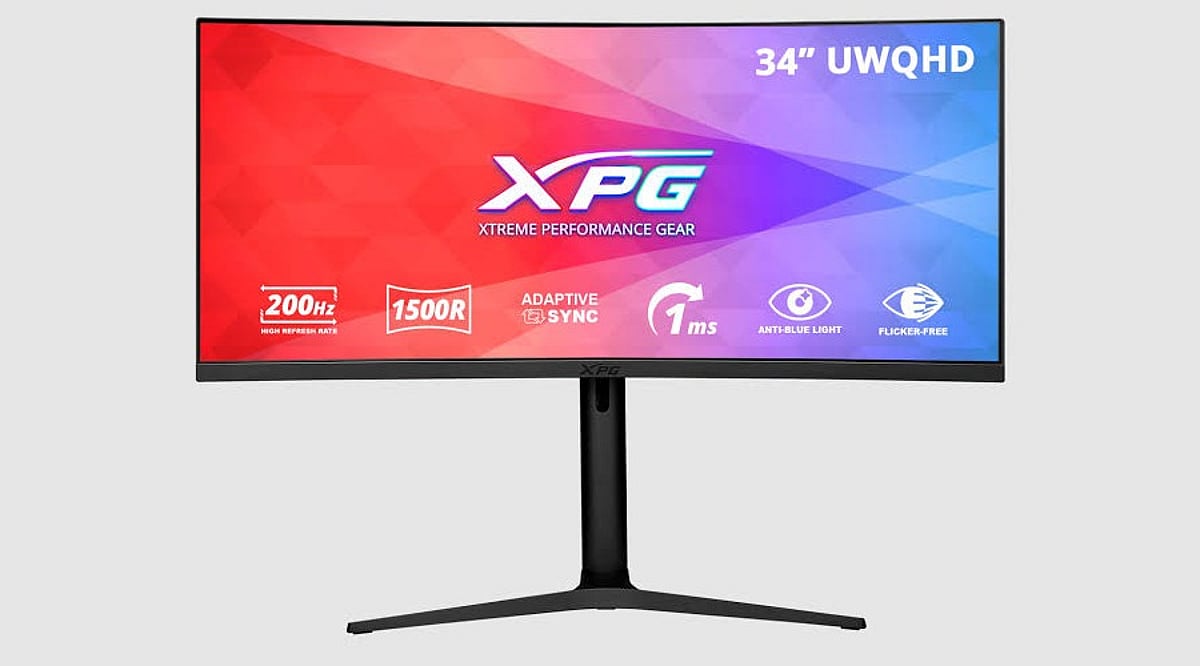
    The flagship RIFT R34WXC is a 34-inch curved ultrawide monitor with a 21:9 aspect ratio and UWQHD resolution (3440 x 1440). It offers a 200Hz refresh rate, 1500R curvature, 1ms response time, and Adaptive Sync support. The panel delivers 350 nits brightness, a 4000:1 contrast ratio, and 93 percent DCI-P3 color coverage for immersive gameplay.

    The smaller RIFT R24F4 features a 23.8-inch IPS panel at 1920 x 1080 resolution, with a 144Hz refresh rate and 99 percent sRGB coverage, making it ideal for budget-conscious gamers.

    On the APERTURE side, the A27Q1 offers a 27-inch screen with 1440p resolution and a 210Hz refresh rate, balancing sharpness and speed. The APERTURE A27F4 is another 27-inch option built for fast-paced gaming, though its full specifications have not been released.

    Pricing and Availability Still Unknown

    XPG has not announced pricing, release dates, or regional availability for the new monitors. Details on port selection, HDMI and DisplayPort versions, stand adjustability, and warranty coverage are also unconfirmed. All four models come standard with Adaptive Sync support and a 1ms response time.

    Buyers will need to wait for full pricing and independent reviews before making a purchase decision.

  • iPhone 17 Pro Max Effective Price Drops to Rs. 74,990 at Croma with Exchange Deals

    iPhone 17 Pro Max Effective Price Drops to Rs. 74,990 at Croma with Exchange Deals

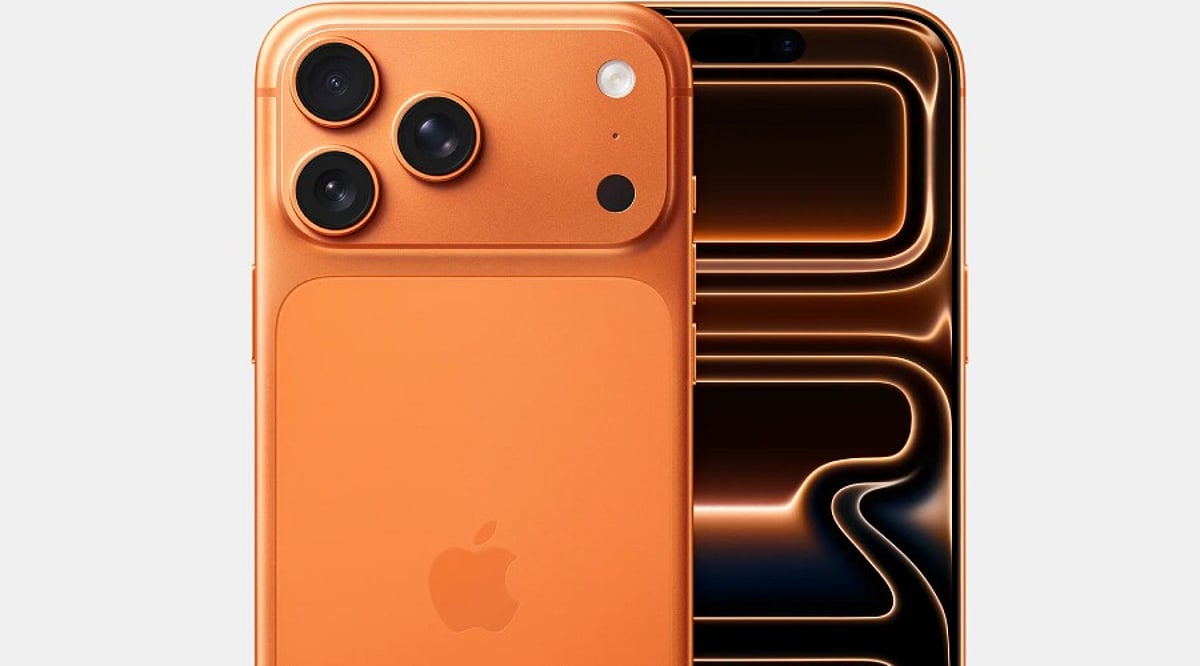
    Croma has introduced a promotional offer that brings the effective price of the 256GB iPhone 17 Pro Max down to Rs. 74,990. This price is achieved when customers combine eligible exchange benefits, an exchange bonus, and select bank offers. The final amount depends on the value of the device being traded in and the specific promotional conditions.

    It is important to note that the headline price does not represent a flat discount on the phone’s selling price. Buyers must meet the conditions attached to the exchange and payment offers, so the final cost can vary.

    How the Rs. 74,990 Price Is Calculated

    Croma lists the iPhone 17 Pro Max 256GB at an effective Rs. 74,990 under its current promotion. The 512GB model is available at an effective Rs. 94,990. The discount combines the value of an eligible old smartphone with Croma’s exchange benefits and selected bank cashback.

    Croma is offering an exchange bonus of up to Rs. 12,000. Customers can also receive up to Rs. 53,000 as exchange value for an iPhone 15 Pro Max, depending on the handset’s model and condition. Select credit-card transactions can provide an additional Rs. 4,000 in bank cashback.

    Additional Benefits for Buyers

    The offer includes more than just an exchange discount. Croma is also providing a free Hyphen case combo worth Rs. 3,499 with eligible purchases. Buyers can further claim a flat 10% discount on AppleCare+ under the promotional terms.

    The deal is available through Croma’s retail network and its online platforms, subject to applicable terms and product availability.

    Things to Check Before Exchanging Your Phone

    The biggest point to consider is the exchange valuation. Croma’s terms require the old phone to be in working condition, with an intact display and no specified forms of physical damage. The device details entered during the transaction must also match the handset handed over for verification.

    For buyers with a high-value eligible phone, the combined benefits can significantly reduce the effective cost of the iPhone 17 Pro Max. Those without a suitable device for exchange, however, will not get the headline Rs. 74,990 price. Croma’s offer should be evaluated based on the actual exchange value and cashback available to each customer, rather than the advertised effective price alone.