Author: vitorcherulli

  • Indian Stocks Plunge: Sensex Drops 778 Points, Nifty Hits 5-Month Low on Crude Surge

    Indian Stocks Plunge: Sensex Drops 778 Points, Nifty Hits 5-Month Low on Crude Surge

    Indian stock markets ended sharply lower on Tuesday, with the BSE Sensex falling 777.94 points (1.04%) to close at 74,003.82, while the NSE Nifty dropped 279.50 points (1.19%) to 23,118.60—its lowest close since April 6. The selloff was driven by surging crude oil prices, elevated global bond yields, rate hike fears, and weak global market sentiment.

    Markets had opened higher, with the Nifty trading near 23,495 and the Sensex above 75,100, but selling pressure intensified later in the session. The Sensex settled at a three-month low.

    Oil Prices and Rate Hike Fears Weigh on Sentiment

    Brent crude traded above USD 107 per barrel during the session, while WTI crude remained above USD 102. India, a major crude importer, remains highly sensitive to energy price spikes. Higher oil prices raise import costs, fuel inflation, and put pressure on the rupee, which weakened against the U.S. dollar.

    Vinod Nair, Head of Research at Geojit Investments Limited, said, “Domestic markets remained under pressure, extending their recent correction as elevated crude oil prices and rising global bond yields weighed on sentiment.” He added that expectations of tighter monetary policy also kept investors cautious, with U.S. Treasury yields near multi-year highs.

    Bharat Electronics Leads Losses; IT Stocks Buck Trend

    Bharat Electronics was the biggest loser among Sensex stocks, falling about 6%. Other laggards included InterGlobe Aviation, Titan, Bajaj Finserv, Adani Ports, Mahindra & Mahindra, and State Bank of India. Selling spread across banking, auto, energy, and metal sectors.

    However, information technology stocks rallied. HCL Technologies rose 3.98%, Infosys gained 3.64%, Tech Mahindra advanced 2.31%, and Tata Consultancy Services climbed 2.18%. According to Nair, IT stocks benefited from recent comments suggesting slower development of advanced AI, easing concerns about disruption to traditional tech services.

    Global Markets Add Pressure

    Asian markets ended lower: South Korea’s Kospi, Japan’s Nikkei 225, China’s Shanghai Composite, and Hong Kong’s Hang Seng all closed in negative territory. European markets traded lower, while U.S. stocks ended Monday with losses.

    Hariselvan Radhakrishnan, Founder and CEO of HST Wealth, commented, “Indian equities suffered a sharp reversal on Tuesday, surrendering their opening gains as Brent crude hovered near USD 107.40 a barrel, US bond yields remained elevated and investors adopted a cautious stance ahead of the Federal Reserve’s policy decision.”

    Foreign institutional investors sold shares worth Rs 930.90 crore on Friday, according to exchange data. The Indian equity market was closed Monday for Ganesh Chaturthi.

    Going forward, investors will track crude oil prices, the Federal Reserve’s policy decision, global bond yields, foreign fund flows, and geopolitical developments for market direction.

  • Filecoin (FIL) Jumps 22% as Trading Volume Pushes Price Toward $1

    Filecoin (FIL) Jumps 22% as Trading Volume Pushes Price Toward $1

    Filecoin’s native token FIL has surged more than 22% in the past day, climbing from the mid-$0.80 range to roughly $1.00. The sharp move was fueled by a massive spike in spot trading volume, which surpassed $500 million and jumped more than 1,000% compared with recent activity. Derivatives data also shows rising funding rates and elevated short liquidations, adding extra buying pressure during the rally.

    What Is Driving the Filecoin Rally?

    The latest price action did not follow a single major announcement. Instead, the move was driven by a combination of higher spot liquidity, forced buybacks from short sellers, and momentum-based trading. As FIL moved higher, traders with short positions were liquidated, creating additional demand and accelerating the climb.

    With the token now testing the psychologically important $1.00 level, the key question is whether buyers can hold the line or whether the market needs to cool off after such a rapid advance.

    Solstice Proposal and Network Developments in Focus

    The Filecoin team continues to work on long-term network improvements. The Solstice proposal, published on July 17, 2026, aims to remove bottlenecks in Filecoin Plus datacap approvals for storage providers. The governance plan is designed to improve storage efficiency and make it easier for providers to participate in the network.

    Filecoin is also expanding its role in decentralized storage as AI applications generate larger datasets and demand more reliable storage capacity. Activity around the Filecoin Virtual Machine is broadening the network’s use cases beyond simple file storage.

    Another key event on the horizon is the scheduled end of Filecoin’s vesting program on October 15, 2026. Market expectations point to a 75% reduction in FIL token emissions after that date, a supply-side change that could support the token’s longer-term outlook even as short-term trading stays volatile.

    FIL Price Levels and Technical Signals

    FIL traded near $0.9949, sitting just below the $1.00 resistance level. A sustained breakout above that area could open the path toward $1.05 and $1.10. However, the Relative Strength Index (RSI) has reached 76.31, placing the market in overbought territory. The chart also shows bearish divergence, with momentum weakening even as price moved higher.

    If buyers lose control of $1.00, immediate support is expected near $0.95 and $0.90. Earlier technical analysis pointed to Ichimoku Kijun resistance near $0.96385, with FIL trading below its MA-20 and MA-50 on the hourly chart. The MA-200 remained intact as longer-term support, while MACD and ADX indicators suggested bearish momentum at the time.

    Before the latest surge, intraday oscillators including RSI, Stoch RSI, and CCI showed oversold conditions. Bull/Bear Power and the Awesome Oscillator reflected seller dominance, and the previous outlook projected a range of approximately $0.8289 to $0.9483 over two to three sessions, with a 60% probability of a support break and 40% probability of an upside move.

    Outlook

    Filecoin’s 22% rally has brought FIL to a critical decision point. Spot volume, short liquidations, and momentum buying powered the move, but overbought conditions and bearish divergence raise caution flags. Near-term volatility is likely to remain elevated as traders watch the $1.00 level, while Solstice developments and the expected reduction in token emissions continue to shape the longer-term narrative.

  • Wednesday Season 3: Summer 2027 Release, Cast Updates, and Aunt Ophelia Mystery

    Wednesday Season 3: Summer 2027 Release, Cast Updates, and Aunt Ophelia Mystery

    Netflix’s Wednesday remains one of the streaming platform’s most popular shows, blending mystery, dark comedy, and the supernatural. The series follows Wednesday Addams (Jenna Ortega) as she navigates life at Nevermore Academy, a school for students with unusual powers. Now, details for Season 3 are emerging, including a possible release window, plot developments, and new cast members.

    Release Date

    Netflix has not officially announced the release date for Wednesday Season 3, but reports indicate it may arrive in summer 2027. The upcoming season will stream exclusively on Netflix, following the success of the first two chapters.

    Plot

    Season 3 is expected to delve into the mystery surrounding Aunt Ophelia, whose disappearance becomes central to the storyline. The season will also focus more on Enid Sinclair (Emma Myers), whose friendship with Wednesday has become a key element of the series. Tyler Galpin (Hunter Doohan) may return, though his involvement is not yet fully confirmed.

    Co-creator Alfred Gough stated, “Our goal for season 3 is the same as it is for every season: to make it the best season of Wednesday we possibly can.”

    Cast

    Jenna Ortega will reprise her role as Wednesday Addams. Catherine Zeta-Jones returns as Morticia Addams, and Luis Guzmán is expected to return as Gomez Addams. New additions include Lena Headey, Andrew McCarthy, James Lance, Winona Ryder, Chris Sarandon, Noah Taylor, Oscar Morgan, and Kennedy Moyer. Eva Green has joined the cast as Aunt Ophelia.

  • Samsung Galaxy S27 Ultra Leaks Hint at ₹1,49,990 Price, Horizontal Camera and 200MP Sensor

    Samsung Galaxy S27 Ultra Leaks Hint at ₹1,49,990 Price, Horizontal Camera and 200MP Sensor

    Fresh leaks surrounding the Samsung Galaxy S27 Ultra suggest an early 2027 launch in India, with a rumored starting price of ₹1,49,990. While Samsung has not confirmed the device or its specifications, CAD renders and insider reports point to one of the most significant design changes in the Ultra series in years.

    The most notable visual shift could be a horizontal camera module, replacing the familiar separate camera rings seen on recent Ultra models. Leaked renders show three cameras aligned inside a single wide island, resulting in a cleaner, more streamlined rear panel.

    Camera specifications are expected to remain impressive: a 200MP primary sensor with optical image stabilization, a 50MP ultrawide lens, and a 50MP 5x telephoto camera. Notably, Samsung may drop the dedicated 3x telephoto sensor, leaning more heavily on computational photography to cover the mid-range zoom gap.

    Under the hood, the Galaxy S27 Ultra is rumored to pack a 6.9-inch Dynamic LTPO AMOLED 2X display with a 120Hz adaptive refresh rate and a peak brightness of 3,000 nits. Processing duties should fall to Qualcomm’s Snapdragon 8 Elite Gen 6 Pro chip, though an Exynos variant remains possible for certain markets.

    Battery capacity could see a significant boost to 5,700mAh, with charging speeds potentially reaching 65W — up from earlier expectations of 45W. The larger battery would likely become one of the device’s standout features, alongside brighter display technology and improved power efficiency.

    Higher storage variants may cost considerably more than the base model. All details remain preliminary until Samsung officially unveils the phone, expected around February 2027.

  • Insomniac Games Responds to ‘Fart Gas’ Complaints, Promises Fixes for Marvel’s Wolverine Scent Trail

    Insomniac Games Responds to ‘Fart Gas’ Complaints, Promises Fixes for Marvel’s Wolverine Scent Trail

    Insomniac Games is actively working on fixes for Marvel’s Wolverine after a controversial scent-trail feature sparked widespread criticism online, with players jokingly referring to the visual effect as ‘fart gas.’

    The controversy centers on a blue-green trail that appears when Wolverine uses his heightened senses to track a person, sound, whisky, or another clue. The feature is designed to represent Logan’s mutant abilities and elite tracking skills.

    Scent Trail Becomes Viral Talking Point

    The visual effect drew criticism after reviewers and players shared footage showing the trail guiding Wolverine through sections of the game. Some users argued that the mechanic makes exploration too straightforward and gives players too much direction.

    The discussion intensified after The Washington Post journalist Gene Park described the effect as ‘fart gas’ on social media. Players subsequently began using the phrase across social platforms when discussing the game’s navigation system.

    Insomniac community and marketing director James Stevenson previously clarified that the scent trail is not always active. He explained that it appears only when Logan is tracking a specific scent or sound, during story or mission moments, or when he detects a collectible.

    Players Want More Control

    The criticism also focused on the game’s accessibility settings. Players found that while Marvel’s Wolverine includes options for navigation assistance and other guidance features, the scent trail cannot be switched off through those settings.

    It prompted requests for Insomniac to introduce a toggle allowing players to decide when they want to use Wolverine’s tracking ability.

    Some players suggested tying the ability to a button press, such as R3 on the DualSense controller. That would allow players to activate Logan’s heightened senses when required instead of having the visual trail appear automatically during specific sequences.

    Stevenson also clarified that collectible tracking still involves some exploration. Players first need to get close enough to detect the relevant sound or scent before Wolverine can identify it.

    Insomniac Working on Fixes

    The debate has now moved beyond social media criticism, with the developer indicating that it is working on fixes following the reaction to the feature.

    The timing comes as Marvel’s Wolverine launches exclusively on PlayStation 5 on September 15. Insomniac’s latest release faced discussion around its linear structure, guidance systems, and accessibility options, alongside praise for its combat, presentation, and character work.

    The game also received a day-one update addressing several gameplay, progression, visual, and stability issues. The update adds a beard option for Logan and includes fixes for gameplay elements, progression problems, visual issues, and general stability.

    For now, the ‘fart gas’ debate highlights a broader disagreement over how much guidance modern action games should provide. For Insomniac, the challenge is to preserve Wolverine’s signature tracking ability while giving players enough control over how prominently that ability appears on screen.

  • Tata Group Stocks Rally 20% After RBI Denies Tata Sons Deregistration

    Tata Group Stocks Rally 20% After RBI Denies Tata Sons Deregistration

    Tata Group stocks surged across Mumbai markets on September 15 after the Reserve Bank of India rejected Tata Sons’ deregistration request. The RBI decision keeps Tata Sons under upper-layer NBFC rules and revives expectations of a mandatory listing.

    The development lifted companies holding Tata Sons stakes as investors assessed potential value gains. Tata Chemicals led the rally with a 20% jump, while Tata Investment gained sharply during Tuesday’s trading session.

    Tata Sons sought to surrender its registration as a Core Investment Company with the central bank. The RBI rejected that request and retained the regulatory route requiring compliance with stricter NBFC-Upper Layer requirements.

    The listing prospect matters for Tata Group stocks holding direct interests in the unlisted parent. Seven listed Tata companies together hold about 11.94% of Tata Sons, according to market reports.

    Tata Chemicals holds roughly 2.5% of Tata Sons, while Tata Steel and Tata Motors Passenger Vehicles each hold about 3.1%. Their holdings could gain greater market visibility through a potential listing.

    Tata Chemicals closed at Rs. 734.50 after hitting its 20% upper circuit during trading. Its Tata Sons stake could carry substantial value compared with the company’s current market capitalization.

    Tata Investment Corporation also advanced strongly, while Tata Motors Passenger Vehicles gained about 4%. Several other Tata companies moved higher as listing expectations spread across the group.

    The impact also reached Shapoorji Pallonji Group companies, which hold an estimated 18.37% stake in Tata Sons. Afcons Infrastructure and Forbes & Co posted sharp gains during Tuesday’s session.

    A Tata Sons listing could create a market benchmark for its previously unlisted value. Analysts also expect greater financial visibility once Tata Sons faces public-market disclosure requirements.

    However, the rally does not guarantee immediate cash gains for shareholder companies. Manish Bhandari of Vallum Capital said a listing would establish a valuation benchmark rather than automatically unlock cash.

    The next focus remains on Tata Sons’ regulatory response and potential legal proceedings. Reuters also reported that the RBI approached courts regarding possible challenges linked to the listing.

  • Oracle Layoffs in India: 1,500 Mid-to-Senior Staff Affected as Company Pivots to AI

    Oracle Layoffs in India: 1,500 Mid-to-Senior Staff Affected as Company Pivots to AI

    Oracle has initiated another round of layoffs in India, reportedly affecting 1,000 to 1,500 employees, primarily mid-to-senior-level staff in web development and maintenance roles. The cuts began on Monday, September 14, and are part of the company’s broader global restructuring aimed at reallocating resources toward artificial intelligence (AI), cloud services, and data centers.

    According to reports, the layoffs have also impacted senior employees at Oracle Financial Services Software. However, Oracle has not officially confirmed the number of employees affected or provided details on the impact to its Oracle Cloud Infrastructure teams in India.

    This latest round follows multiple workforce reductions earlier in 2026, as Oracle ramps up investment in AI infrastructure. In the fiscal year ending May 2026, the company reduced its global workforce by approximately 21,000 employees. Oracle’s capital expenditure reached $55.7 billion in fiscal 2026, with a significant portion directed toward data center expansion.

    The layoffs signal a strategic shift in Oracle’s priorities, with the company focusing on high-growth areas like cloud computing and AI, while scaling back traditional web development and product engineering teams. As demand for AI and cloud services grows, Oracle is raising additional funds to support its plans.

    Industry observers note that the restructuring reflects a changing skill demand within the company, as it builds more data centers and expands its cloud business. The exact number of affected employees in India remains unverified, and no official statement has been issued by Oracle regarding the layoffs.

  • Meta’s Luna Smart Glasses Reportedly Drop the Camera for a Voice-First AI Experience

    Meta’s Luna Smart Glasses Reportedly Drop the Camera for a Voice-First AI Experience

    Meta Bets on Voice-First Wearables

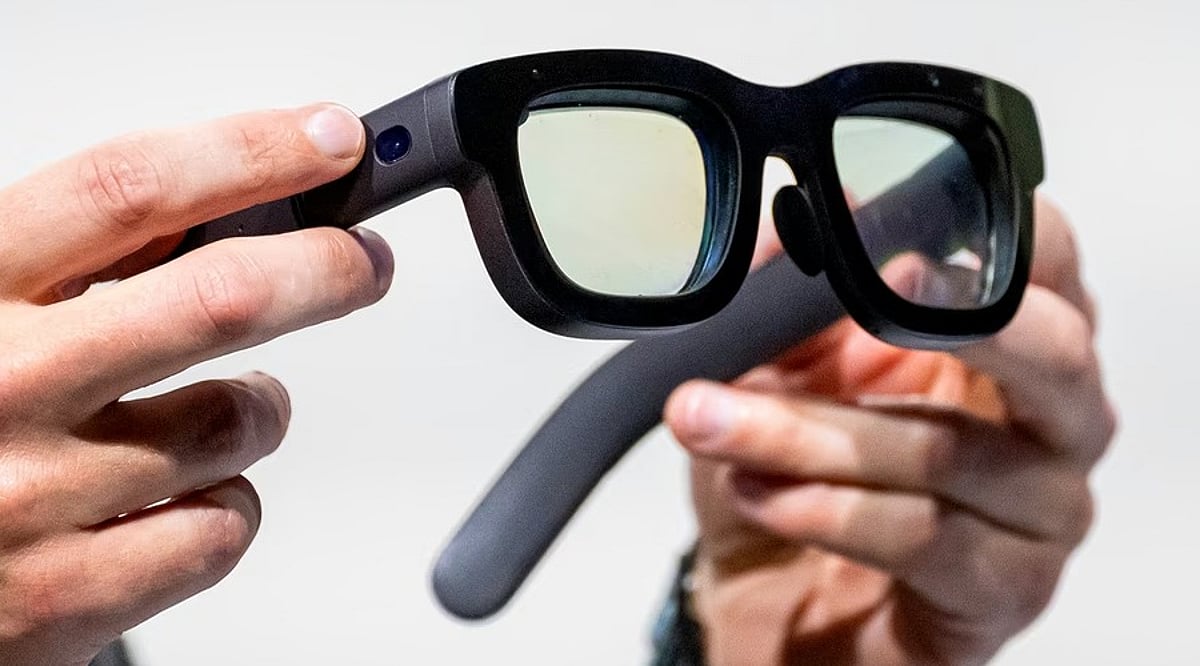
    Meta is reportedly preparing a new pair of smart glasses that will ship without a camera. The device, said to be codenamed Luna, could launch this fall, according to a report from The Information that was later picked up by Reuters. Reuters added that it could not independently verify the report.

    The rumored redesign comes as camera-equipped smart glasses face growing scrutiny over privacy and the risk of unauthorized recording. Meta’s current AI glasses rely on a camera for photos, video, and various AI features, with an LED meant to signal when recording is active. By removing the camera, Luna is expected to ease those privacy worries while preserving many of the AI and audio capabilities.

    What Luna Might Bring

    • Six microphones: The glasses reportedly include six built-in mics to support clear voice interaction.
    • Meta AI plus Muse: Users could talk to Meta AI and the company’s new consumer AI agent, Muse, using voice commands.
    • Built-in speakers: Luna is expected to feature speakers similar to those found on Meta’s existing smart glasses.
    • Side button shortcut: A physical button on the side may offer quick access to Meta AI, giving users an alternative to voice activation.

    Launch Timing and the Road Ahead

    Meta could unveil Luna at its Meta Connect developer conference, scheduled for September 23 and 24. Shipments are reportedly targeted for October, though Meta has not publicly confirmed the product, its release timing, or final specifications.

    If it reaches market, Luna would add another direction to Meta’s expanding wearable strategy. The company is also developing more advanced augmented-reality hardware, underscoring its view of smart glasses as a major platform for AI.

  • AI Giants OpenAI, Anthropic, and Google DeepMind Unite on Safety Standards

    AI Giants OpenAI, Anthropic, and Google DeepMind Unite on Safety Standards

    By Poulami Saha

    OpenAI has confirmed safety discussions with rivals Anthropic and Google DeepMind, focusing on cooperation around advanced AI risks, common standards, and safeguards amid growing industry concerns.

    Chris Lehane, OpenAI’s global policy chief, disclosed the talks during a briefing in Washington. He stated, “The companies are exploring ways to work together on safety and do not believe they need an antitrust waiver to coordinate on these issues.”

    AI Rivals Turn to Safety Cooperation

    OpenAI, Anthropic, and Google DeepMind compete directly in the development of advanced AI models and products. Their discussions therefore mark an unusual effort to coordinate on a common area of concern while maintaining competition in the broader AI market. Lehane emphasized that cooperation could help the companies prioritize safety as AI capabilities continue to advance. OpenAI also supports bipartisan legislation designed to address catastrophic AI risks.

    The discussions come amid renewed debate over whether the industry should slow the pace of frontier AI development. Anthropic CEO Dario Amodei recently called for more time for safety systems to catch up with AI capabilities. OpenAI CEO Sam Altman subsequently expressed support for the broader idea of slowing progress enough to improve safeguards.

    Push for Common AI Safety Standards

    The latest talks follow earlier discussions among the companies about establishing an industry-wide body for AI safety standards. The proposed organization could develop common protocols for evaluating advanced AI systems and addressing emerging risks. Google DeepMind CEO Demis Hassabis earlier supported the idea of an industry standards body for frontier AI. The proposal reflects growing interest in creating shared safety practices rather than relying entirely on individual companies to establish their own frameworks.

    These developments signal a potential shift toward collective responsibility in the AI sector, as major players acknowledge that safety cannot be addressed in isolation.

  • Microsoft’s October 7 Event to Spotlight Local AI and Surface Laptop Ultra

    Microsoft’s October 7 Event to Spotlight Local AI and Surface Laptop Ultra

    Microsoft has confirmed a major Windows and Surface event scheduled for October 7 in San Francisco, with a focus on local artificial intelligence, AI-powered PCs, Surface hardware, and Windows 11. The keynote will be headlined by Microsoft CEO Satya Nadella, Windows and Surface chief Pavan Davuluri, and NVIDIA CEO Jensen Huang. The event kicks off at 10 a.m. PT / 1 p.m. ET and will be streamed online.

    According to Microsoft, the event will explore “how local AI will shape the next chapter of the PC,” signaling a push toward hardware capable of processing advanced AI workloads directly on devices. The company also plans to align Windows improvements with next-generation AI hardware, potentially detailing how AI will become more deeply integrated into everyday computing.

    The biggest hardware reveal could be the Surface Laptop Ultra, which Microsoft has previously linked with NVIDIA RTX Spark technology. This platform combines powerful computing with local AI capabilities to handle demanding workloads. Attendees can expect pricing, configurations, availability, and Windows-specific optimizations for the new machine.

    NVIDIA’s involvement highlights the RTX Spark initiative, which targets computers that can run large AI models locally without constant cloud processing. Microsoft has already showcased a Surface RTX Spark Dev Box featuring 128GB of unified memory and up to one petaflop of AI compute, aimed at developer workloads.

    Windows 11 will also be a key topic, with potential enhancements for local AI support, improved performance, and deeper Copilot integration. Current reports do not suggest a Windows 12 announcement; instead, Microsoft appears focused on extending Windows 11’s capabilities around emerging AI features.

    The October showcase may also introduce refreshed Surface hardware and broader ecosystem updates. Microsoft is expected to outline how future Windows PCs will balance local processing with cloud services, emphasizing faster response times, stronger privacy, and reduced reliance on cloud infrastructure—key advantages of on-device AI.

    This event marks Microsoft’s first dedicated Windows and Surface showcase since May 2024. With both Microsoft and NVIDIA leadership on stage, local AI is positioned as the central theme for the next chapter of personal computing.