Category: AI Strategy

  • Michael Burry Criticizes NVIDIA’s $250 Billion OpenAI Guarantee, Highlights Circular Financing Risks

    Michael Burry Criticizes NVIDIA’s $250 Billion OpenAI Guarantee, Highlights Circular Financing Risks

    Veteran investor Michael Burry, famous for predicting the 2008 financial crisis, has publicly challenged reports that NVIDIA is planning to back a $250 billion financing guarantee for OpenAI. The deal, reported by the Wall Street Journal, would involve NVIDIA guaranteeing financing for a massive 10-gigawatt AI data center campus being developed by SoftBank’s SB Energy in Ohio.

    According to the report, the guarantee would help OpenAI lease the facility despite lacking an investment-grade credit rating. The total project cost, including AI chips and supporting infrastructure, could eventually exceed $500 billion. Burry warned that such arrangements represent what he calls ‘circular financing’—where companies fund the infrastructure needed to purchase their own products, creating layers of financial dependence rather than demand driven by sustainable profits.

    Burry’s concerns echo growing skepticism among analysts who argue that mega AI projects rely on complex financing structures while many AI firms, including OpenAI, continue to operate without consistent profitability. Critics say the model could become vulnerable if AI demand cools or capital becomes more expensive.

    NVIDIA’s potential role extends beyond chip sales. The company has already invested around $30 billion in OpenAI and is reportedly considering providing up to $350 billion in financing for chip purchases. This guarantee would enable SoftBank to borrow on more favorable terms while ensuring ongoing demand for NVIDIA’s hardware. However, discussions remain ongoing, and no final agreement has been reached.

    As capital spending on AI infrastructure surges, Burry’s remarks highlight the tension between optimism about AI’s future and concerns about the sustainability of financing models. While supporters argue that demand for AI computing will continue to grow, skeptics warn that the industry’s reliance on massive investment commitments could pose dangers to both companies and investors.

  • How AI Architecture, Not Just Models, Drives Enterprise Success: Insights from NewStreetTech’s Shrish Anand Lal

    How AI Architecture, Not Just Models, Drives Enterprise Success: Insights from NewStreetTech’s Shrish Anand Lal

    Artificial intelligence has moved beyond the experimental phase. CIOs and technology leaders are now making strategic decisions about deploying AI in real-world, production environments where operational constraints and real consequences are the norm. As organizations shift from AI pilots to full-scale adoption, the spotlight is turning from the models themselves to the infrastructure that supports them.

    In a recent episode of the Analytics Insight Podcast, host Priya Diyalani spoke with Shrish Anand Lal, Executive Director and Chief Business Officer at NewStreetTech, about why enterprises need to focus on AI architecture and infrastructure rather than relying solely on AI models. The conversation covered the limitations of model-first strategies, core building blocks of enterprise AI infrastructure, cloud and hybrid deployment evolution, AI ROI, autonomous agents, platform strategy, and the importance of deterministic execution and governance. Below are the key takeaways.

    Why AI Models Alone Are Not Enough for Enterprise Adoption

    According to Lal, the AI model represents only about 20% of the challenge when it comes to enterprise adoption. The remaining 80% involves everything else — what NewStreetTech calls the FITS framework: Fear, Inertia, Trust, and Surprise. None of these issues can be solved by simply adopting a better model.

    Referencing research from NASSCOM, Lal noted that 65% of companies in India have launched AI pilots, but only 15% have reached production. He emphasized that models must be applied at the design phase, while execution must remain deterministic. “The AI model is becoming a commodity very quickly, but the AI architecture will be a competitive advantage,” he said.

    Core Building Blocks of Enterprise AI Infrastructure

    Lal outlined four essential building blocks:

    1. Separation — AI operates at the design and configuration stage, while execution remains deterministic. The two layers must not interact.
    2. Governance by design — Maker-checker workflows, audit trails, version control, and role-based access should be foundational, not afterthoughts.
    3. Orchestration — Using a single AI platform for everything is the wrong approach. NewStreetTech’s MyFix.ai, for instance, uses over 36 configuration agents and 14 execution engines, all deterministic.
    4. Deployment flexibility — Organizations must have the option to deploy on-premises, in the cloud, or via a hybrid model, especially for regulated industries.

    Cloud and Modern Architectures Evolving for Enterprise AI

    AI computing costs are dropping rapidly, which is good for adoption. But the real revolution, Lal argued, is not just about computing — it’s about architecture. The shift is from “AI as a service” to “AI as an infrastructure.” Organizations need resilience through multiple providers to avoid lock-in. Some workloads must remain on-premise; others can go to the cloud. This architecture transformation is critical for regulated industries, where leaving everything to AI creates a black box with unanswered questions.

    How the Conversation Around AI ROI Has Changed

    Two years ago, boardrooms asked whether they should invest in AI. Today, the question is why AI hasn’t yet gone into production. The ROI debate has shifted from the cost of implementing AI to the cost of not implementing AI. Enterprises now worry about falling behind competitors. Companies that are seeing real ROI started small.

    AI Agents and Autonomous Workflows: Reshaping Enterprise Infrastructure

    Lal clarified that AI agents are not chatbots. They are specialized workers handling specific tasks. At MyFix.ai, there are more than 37 specialized configuration agents and 14 deterministic execution engines. Agents build the system, humans approve it, and engines run it. This is the fundamental difference between building enterprise-grade AI infrastructure and simply adding more computing power.

    “The future will not be one AI system doing everything. It will be specialized agents working through orchestration, trust levels, cross-validation, and human oversight,” Lal concluded.

    Listen to the full discussion on the Analytics Insight Podcast.

  • How CEOs Can Build Truly AI-First Organizations: A Strategic Guide

    How CEOs Can Build Truly AI-First Organizations: A Strategic Guide

    Building an AI-first company requires more than adopting AI tools; it demands a fundamental shift in leadership, operations, governance, and business strategy. This guide explores the essential CEO strategies for creating an organization where artificial intelligence becomes a core driver of business value rather than just another technology initiative.

    Define AI-First Clearly Before You Declare It

    The most common mistake CEOs make when setting an AI-first direction is leaving the definition ambiguous. “We are becoming an AI-first company” means nothing without a clear internal answer to what, specifically, that means for your business model, your workforce, and your customer experience. Is AI-first about using AI to improve existing products? About building AI-native products your competitors don’t have? About using AI to restructure internal operations for a leaner cost base? The answer is probably all three, but each implies different investment priorities, different capability requirements, and different timelines. CEOs who define AI-first precisely and communicate that definition consistently build organizations that can execute against it. Those who keep it aspirational tend to produce a lot of pilots and not much else.

    Appoint an AI Leader with Real Authority

    The structure of AI leadership inside a company is one of the strongest predictors of whether AI investment produces material business results. A Chief AI Officer who sits three reporting levels below the CEO, manages a team of six, and has no budget authority over business unit AI spending will not build an AI-first company. They will run a team of AI enthusiasts that nobody listens to. CEOs building genuinely AI-first organizations are creating AI leadership roles that report directly to the CEO or at worst to the COO, with explicit authority to set AI standards across business units, approve or reject major AI deployments, and hold teams accountable for AI capability development. The Gartner 2026 CIO report found that 90% of organizations with a Chief AI Officer in place reported faster AI adoption than those without one.

    Rebuild Core Processes Around AI, Not Alongside It

    The difference between AI transformation and AI theatre is whether AI is being used to redesign the processes that generate revenue and serve customers, or simply overlaid on existing processes to make them marginally faster. Redesigning a sales process around AI-driven prospecting, predictive scoring, and automated pipeline management is transformation. Adding an AI chatbot to a customer service center that still routes most queries to human agents unchanged is theatre. CEOs building AI-first companies spend considerable time with their heads of product, operations, and commercial functions mapping exactly which core processes are being fundamentally redesigned and holding the organization accountable for completing those redesigns rather than accepting cosmetic improvements as success.

    Build AI Literacy into the Leadership Team

    An AI-first company cannot be led by executives who don’t understand AI well enough to make informed decisions about it. This doesn’t mean the CFO needs to understand transformer architecture. It means the CFO needs to be able to evaluate an AI investment proposal critically, understand what an AI system’s failure modes look like, and ask the right questions about data quality, model governance, and competitive differentiation. CEOs who build structured AI literacy programs for their leadership team—workshops, external speakers, required reading, and hands-on exposure to the tools the company is deploying—consistently report faster and less contested AI decision-making at the executive level.

    Make AI Governance Non-Negotiable From Day One

    The fastest way to slow an AI-first strategy is a high-profile AI failure: a biased model, an incorrect output that reached a customer, a regulatory breach, or a data privacy incident. CEOs who treat governance as something to implement after the AI is already in production are taking risks that consistently materialize into reputational and financial costs. The governance framework that belongs in an AI-first company from the beginning includes clear ownership of every AI system, documented escalation paths when a system behaves unexpectedly, mandatory human oversight for high-stakes outputs, regular auditing for bias and accuracy, and board-level visibility of the AI risk register. Governance is not a drag on AI adoption speed. In the long run, it is one of the things that makes sustained adoption possible.

    Why This Matters

    Becoming AI-first is ultimately a leadership challenge, not a technology project. Organizations that embed AI into strategy, operations, and decision-making from the top down will be better equipped to innovate, adapt to market changes, and build sustainable competitive advantages as AI becomes central to every industry.

    Frequently Asked Questions

    What does it mean to be an AI-first company?

    An AI-first company integrates artificial intelligence into its core business strategy, decision-making, operations, customer experience, and product development rather than treating AI as a standalone technology initiative.

    How is an AI-first company different from having an AI strategy?

    An AI strategy often consists of individual AI projects or pilots, whereas an AI-first company fundamentally redesigns its business model, workflows, and leadership approach around AI-driven value creation.

    Why should CEOs lead AI transformation?

    AI transformation affects business strategy, organizational structure, governance, culture, and investment decisions. Because these changes span the entire enterprise, CEOs play a critical role in setting direction and ensuring alignment across business functions.

    How can executives improve AI literacy?

    Leadership teams can strengthen AI literacy through executive workshops, hands-on experimentation with AI tools, expert-led training sessions, industry conferences, and continuous learning about AI capabilities, risks, and business applications.

    What are the biggest challenges in building an AI-first company?

    Common challenges include unclear strategy, poor data quality, employee resistance, skills shortages, governance gaps, legacy technology, regulatory compliance, and difficulty scaling successful AI pilots across the organization.


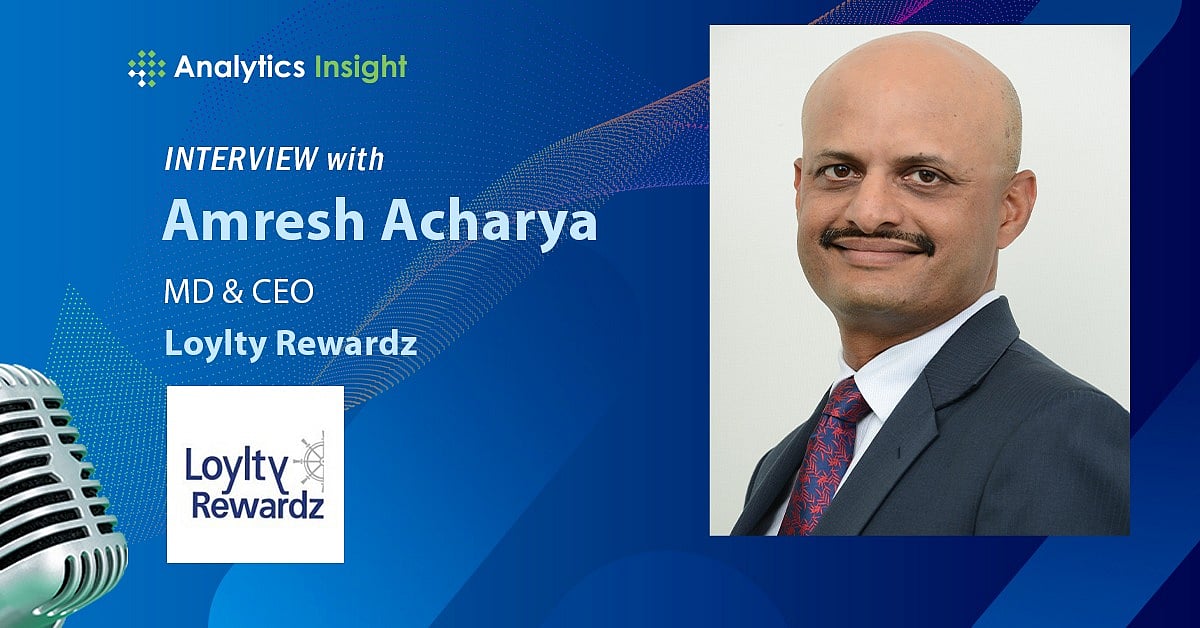
  • How Agentic AI Transforms Customer Loyalty: Amresh Acharya on Proactive, Personalized Engagement

    How Agentic AI Transforms Customer Loyalty: Amresh Acharya on Proactive, Personalized Engagement

    Agentic AI is reshaping customer loyalty by enabling businesses to deliver personalized, proactive, and scalable experiences. Instead of focusing only on rewards, brands now build lasting relationships through intelligent, data-driven customer engagement.

    In today’s episode of the Analytics Insight podcast, host Priya Dialani interviews Amresh Acharya, MD & CEO of Loyalty Rewardz, about how Agentic AI is revolutionizing customer engagement and loyalty. The episode features the evolving trend of companies going beyond conventional reward systems to engage customers using artificial intelligence solutions.

    Amresh provides information on how AI, machine learning, and data science can be used together to improve customer relationships and balance automation with human touch. He also sheds light on the importance of embracing responsible AI, customer data unification, and enterprise-level personalization to grow one’s business in the future. Here are the excerpts from the interview.

    What is Agentic AI and how does it benefit the customer experience?

    Unlike traditional AI, agentic AI does not simply answer customer queries. It understands context, predicts the customer’s future needs, and recommends services accordingly. Agentic AI will help brands provide more engaging experiences which do not come across as transactional.

    What does customer loyalty look like in the age of AI?

    The concept of loyalty has changed. Now customers expect to be understood by brands, remembered by them, and get customized services. Using artificial intelligence allows brands to develop relationships that motivate consumer loyalty.

    Is AI enough for a good customer experience?

    To some extent, AI-powered customer service can easily handle frequent queries that require quick answers. However, there are occasions when customers need help that cannot be provided by a machine and requires human assistance.

    Why is data critical to the success of AI-driven loyalty programs?

    AI performance is dependent upon the data it gets. Correct and correlated data about the customer helps firms understand their behaviors and preferences and personalize for them. Fragmented data prevents the AI from making any relevant suggestions for its customers.

    What do companies need to do before implementing Agentic AI?

    AI implementation starts with good data management, goal setting, and process design. Companies need to begin addressing customer challenges, have appropriate AI governance, and retain human involvement in critical decision-making processes.

  • Key Executive AI Skills That Future Business Leaders Must Master

    Key Executive AI Skills That Future Business Leaders Must Master

    Why Executive AI Skills Are Now Essential

    Artificial intelligence is no longer confined to IT departments—it has become a boardroom priority. As businesses integrate AI into strategy, operations, customer experience, and growth, the skill set required from executives is rapidly evolving. Tomorrow’s leaders will be measured not only by financial acumen but also by their ability to leverage AI for innovation and manage technological change effectively.

    Strategic Thinking with AI

    The most effective executives view AI as a strategic growth tool, not just a software product. This involves identifying high-value use cases, aligning AI initiatives with organizational goals, prioritizing investments for maximum ROI, and ensuring that technology delivers a sustainable competitive advantage rather than becoming a costly experiment.

    AI Literacy

    Executives don’t need to code neural networks, but they must understand key AI concepts such as generative AI, predictive analytics, automation, and model limitations. This awareness enables them to ask better questions and make more informed decisions, even without deep technical expertise.

    Making Decisions with AI

    Many companies now use AI to analyze data for strategic decisions. Combining analytical insights with industry experience helps executives spot opportunities, anticipate customer needs, optimize pricing, and improve operational efficiency.

    Ethical AI Governance

    While AI offers tremendous opportunities, it also raises issues around privacy, security, bias, intellectual property, and regulation. Future leaders must develop governance frameworks that ensure ethical application of AI, building trust and minimizing risk.

    Humans and AI Working Together

    AI will not replace humans; the future workplace depends on collaboration. Leaders should redesign workflows so that AI handles routine tasks while humans focus on innovation, creativity, and relationship-building.

    Change Management with AI

    Most technology failures stem not from the technology itself but from resistance to change. Executives must clearly communicate the purpose of AI, address employee concerns, implement reskilling programs, and foster an experimental culture.

    AI Communication Skills

    An executive’s ability to articulate the benefits of AI—both inside and outside the organization—is as critical as their strategic knowledge. Clear communication builds buy-in and drives adoption.

    Continuous AI Learning

    AI evolves faster than most business technologies. Future-proof executives must stay updated on the latest advancements and adapt their strategies to leverage emerging opportunities.

    Business Benefits at a Glance

    • Informed decision-making
    • Improved business efficiency
    • Effective risk management
    • Enhanced innovation
    • Sustainable competitive advantage

    Bottom Line

    Being knowledgeable about AI alone is no longer sufficient for leadership. AI is becoming an integral part of executive capability. Those who combine business vision with AI expertise and a commitment to continuous learning will be best prepared for the future.

    FAQs

    1. Why should executives learn AI skills?
      Executives with AI skills make informed decisions, improve business efficiency, manage risks effectively, and drive innovation across their organizations successfully.
    2. Do business leaders need technical AI expertise?
      No. Executives need AI literacy, strategic understanding, and decision-making capabilities rather than deep programming or machine learning expertise.
    3. What is the most important executive AI skill?
      AI strategic thinking is crucial because it aligns technology investments with business objectives, ensuring measurable value and sustainable competitive advantage.
    4. How does AI improve executive decision-making?
      AI analyzes vast datasets, identifies trends, predicts outcomes, and provides actionable insights, enabling executives to make faster, smarter business decisions.
    5. Why is responsible AI governance important for businesses?
      Responsible AI governance minimizes bias, protects data privacy, ensures regulatory compliance, builds customer trust, and safeguards organizational reputation and growth.
  • Fractal Analytics Q1 FY27 Profit Soars 92% on Surging Enterprise AI Demand

    Fractal Analytics Q1 FY27 Profit Soars 92% on Surging Enterprise AI Demand

    Fractal Analytics reported a sharp rise in earnings for the first quarter of FY27, as growing demand for enterprise AI solutions boosted revenue and profitability. The company posted a consolidated net profit of Rs. 74.2 crore for the April-June quarter, up 92% year-on-year.

    Revenue from operations rose 20% to Rs. 912.5 crore, compared with Rs. 760.5 crore in the same quarter last year. Including Rs. 19.6 crore in other income, total income for the quarter stood at Rs. 932.1 crore.

    Margins Expand

    Fractal’s operating performance also improved during the quarter. EBITDA increased to Rs. 143 crore from Rs. 100 crore a year ago, while the EBITDA margin expanded to 15.66% from 13.50%.

    Total expenses rose to Rs. 755.6 crore, compared with Rs. 699.6 crore in the year-ago period, as the company continued to invest in growth. Revenue, however, grew faster than costs, resulting in higher margins and stronger earnings.

    Cash flow from operations increased 20% year-on-year to Rs. 103 crore. The company remained debt-free, with zero long-term debt on its books.

    Healthcare, BFSI Drive Growth

    Healthcare and financial services were the biggest contributors to growth during the quarter. The Healthcare and Life Sciences (HLS) business recorded 69% year-on-year revenue growth, making it Fractal’s second-largest industry vertical.

    The Banking, Financial Services and Insurance (BFSI) segment grew 36%, while the Consumer Packaged Goods and Retail (CPGR) business, the company’s largest vertical, reported 19% growth. The Technology, Media and Telecommunications (TMT) segment remained the only weak spot, with revenue declining 22% from a year earlier.

    Fractal highlighted that excluding the TMT business, the rest of its operations grew 35% year-on-year, reflecting broad-based demand across its enterprise AI portfolio. The quarterly performance comes as companies continue to increase spending on AI-led automation, analytics and data-driven decision-making.

  • Why the Top AI ETF Diversifies Beyond Chip Stocks for Better Returns

    Why the Top AI ETF Diversifies Beyond Chip Stocks for Better Returns

    The best-performing AI ETF of 2026 proves that investing across the entire AI ecosystem—not just semiconductor companies—can deliver superior returns while reducing risk. The VistaShares Artificial Intelligence Supercycle ETF (AIS) has surged approximately 119% year-to-date as of early June 2026, outperforming many popular chip-focused funds.

    The Shift Beyond Semiconductors

    For the past two years, investors have concentrated heavily on semiconductor stocks like Nvidia, Broadcom, TSMC, and AMD, which powered AI growth. However, the AI landscape has expanded dramatically. Modern AI systems require cloud platforms, data centers, fast networking, software, memory, and storage—not just chips. As businesses integrate AI into daily operations, companies across these sectors are seeing revenue growth, reshaping investment strategies.

    How AIS Achieves Superior Performance

    Unlike traditional semiconductor ETFs that often overweight a few chipmakers—Nvidia alone can dominate fund allocations—AIS spreads its investments across multiple AI segments:

    • Chip manufacturers
    • Cloud providers
    • Networking companies
    • Enterprise software firms
    • Digital infrastructure businesses
    • Memory technology companies

    This diversification helps absorb shocks when one sector underperforms, while still capturing the broad AI growth story.

    Pressure on Chip Stocks

    Semiconductor companies continue to report strong results, but investor expectations have reached extreme levels. For example, Texas Instruments reported 23% revenue growth and record quarterly revenue of $5.46 billion, yet its stock fell because markets anticipated even more. This illustrates how even excellent performance can disappoint when priced in fully.

    Recent market volatility further highlights the risk of overconcentration. The iShares Semiconductor ETF (SOXX) posted strong gains earlier in the year but suffered a sharp July decline as doubts emerged about sustained AI infrastructure spending. Diversified AI funds like AIS are better positioned to weather such swings.

    AI Spending Continues to Accelerate

    Despite short-term price fluctuations, corporate investment in AI remains massive. Major tech firms are pouring billions into new data centers, cloud services, networking gear, custom chips, and power infrastructure. Global semiconductor revenue is projected to reach $1.29 trillion in 2026—approximately 53% annual growth—driven primarily by AI. These investments create opportunities across the entire AI value chain, not just chip manufacturing.

    The Internet Parallel

    The current AI investment cycle mirrors the early internet era. Initially, hardware companies dominated investor attention. Later, software, internet platforms, and cloud businesses became the biggest winners. AI is following the same trajectory: chip companies remain essential, but cloud providers, networking firms, software developers, cybersecurity companies, and digital infrastructure players are now generating significant long-term value. Investors who focus solely on semiconductors risk missing these opportunities.

    Why This Matters

    Artificial intelligence represents one of the most significant investment opportunities in decades. Yet many investors remain fixated on chip stocks, overlooking the broader ecosystem. Understanding this shift can help build stronger portfolios, reduce concentration risk, and identify emerging growth areas before they become mainstream.

    Final Thoughts

    The success of AIS demonstrates that AI investing has entered a new phase. While chips remain foundational, they are just one component of a vast industry. A diversified AI ETF offers exposure to the full AI ecosystem—clouds, software, networks, and digital infrastructure—rather than concentrating capital in a few semiconductor firms. As AI adoption spreads across the economy, companies in these adjacent sectors will play increasingly critical roles. This innovative approach has propelled AIS to the top of AI ETFs, proving that pure semiconductor investment is no longer the only path to AI-driven returns.

  • Samsung Reportedly Plans €1 Billion Investment in AI Startup Mistral at €20 Billion Valuation

    Samsung Reportedly Plans €1 Billion Investment in AI Startup Mistral at €20 Billion Valuation

    Samsung Electronics is reportedly in discussions to invest approximately €1 billion in French artificial intelligence company Mistral, a deal that could value the startup at around €20 billion. The potential investment signals deepening ties between the world’s leading memory chip maker and one of Europe’s most prominent AI developers, with implications for AI chip supply, model development, and the continent’s push for greater technological independence.

    Talks Underway, No Confirmed Agreement Yet

    According to the Financial Times, which first reported the talks, Samsung’s possible investment could be part of a larger funding round that also includes Sweden’s EQT Scaleup Europe Fund. Reuters later confirmed the discussions, noting that the commitment could reach hundreds of millions of euros. Some reports place the figure near €1 billion, though neither Samsung nor Mistral has publicly confirmed a deal.

    A €20 billion valuation would place Mistral among Europe’s most valuable private technology companies, up from its previous reported valuation of about €11.7 billion. The companies already have an existing relationship: Samsung’s venture capital unit previously invested in the Paris-based AI startup. Mistral CEO Arthur Mensch visited Samsung’s semiconductor campus in Hwaseong, South Korea, in April, where he met senior executives and discussed AI chip supply chains.

    Chip Access and Strategic Benefits

    Samsung produces high-bandwidth memory (HBM) chips essential for training large AI models, as well as advanced logic chips through its foundry business. Demand for such hardware is soaring as AI companies scale up their models, while supply remains constrained. A closer partnership could give Samsung a major customer for its AI hardware, while Mistral would gain more reliable access to the chips needed to train and run its systems.

    Reports suggest Samsung may also seek a seat on Mistral’s board, and the two companies could explore integrating Mistral’s models into Samsung devices or AI services. These terms have not been confirmed and would depend on negotiations, regulatory approvals, and corporate sign-offs.

    Europe’s Push for AI Sovereignty

    Mistral, founded in Paris in 2023, develops large language models that can be downloaded and operated independently. It has positioned itself as a European counterweight to major American AI providers and even supplies technology to the French military. European governments and companies are increasingly seeking more control over AI infrastructure, especially after recent restrictions on access to advanced American AI models.

    Mistral has already expanded its commercial partnerships. Microsoft recently agreed to spend billions on European computing infrastructure linked to the company. Meanwhile, competition from Chinese AI developers, such as Moonshot AI, is intensifying. Mensch has stated that Mistral expects annual recurring revenue to exceed $1 billion by the end of 2026, reflecting growing enterprise demand.

    Any Samsung investment would likely face European regulatory review. For now, the reported talks continue without a confirmed agreement or public funding timeline.

  • Infosys Q1 Earnings: AI Revenue Reaches 8.2% as Net Profit Hits $820 Million

    Infosys Q1 Earnings: AI Revenue Reaches 8.2% as Net Profit Hits $820 Million

    Infosys (NSE, BSE, NYSE: INFY), a global leader in AI-first business consulting and technology services, reported its Q1 results for the period ending June 30, 2026. The company posted revenues of $5,082 million, representing year-over-year growth of 2.4% and sequential growth of 1.0% in constant currency. Operating margin stood at 21.1%, a sequential increase of 0.2%, while earnings per share grew 14.9% year-on-year in rupee terms. Net profit climbed to $820 million, and free cash flow reached $955 million, with a conversion rate of 116.5% of net profit.

    AI revenues accounted for 8.2% of total revenue in Q1, highlighting the rapid conversion of AI momentum into tangible financial results. The company secured large deal wins totaling $3.6 billion in total contract value, with 61% coming from net new business.

    “AI momentum is now rapidly converting into revenue, which demonstrates how Infosys’ differentiated enterprise AI value proposition is translating into consistent market share gains. Strong large deal wins, powered by Infosys Topaz, reinforce client confidence in our ability to be the strategic partner of choice for AI transformation driving tangible business value,” said Salil Parekh, CEO and MD.

    Infosys revised its FY27 revenue growth guidance to 1.5%-3.0% in constant currency and retained its operating margin guidance at 20%-22%.

    Key Financial Highlights (Q1 FY27)

    • Revenues in constant currency: +2.4% YoY, +1.0% QoQ
    • Reported revenues: $5,082 million (+2.8% YoY, +0.8% QoQ)
    • Operating margin: 21.1% (+0.3% YoY, +0.2% QoQ)
    • Basic EPS: $0.20 (+3.7% YoY)
    • Free cash flow: $955 million (FCF conversion: 116.5%)

    “Our resilient margins of 21.1% and consistent strong cash generation reflect the strength of our business model, disciplined execution and continued focus on operational excellence in a challenging business environment,” said Jayesh Sanghrajka, CFO.

    Major Client Wins and Partnerships

    Infosys announced several strategic collaborations and renewals during the quarter:

    • Mercedes-Benz Group AG: Renewed a long-standing partnership to move one of the automotive sector’s largest hybrid cloud and data center operations to an AI-led operating model, leveraging Infosys Topaz and Infosys Cobalt.
    • Nokia: Collaboration to strengthen product engineering capabilities across core networks, accelerating innovation and execution efficiency.
    • Bendigo Bank: A seven-year collaboration to build a future-ready bank, enhancing digital experiences for 2.9 million customers.
    • DNB Bank ASA: Expanded collaboration to modernize financial crime operations using NICE Actimize’s X Sight Enterprise platform.
    • Sentara: Collaboration to scale enterprise AI adoption in healthcare services.
    • GlobalFoundries: Expanded collaboration to accelerate AI-driven IT operations transformation.
    • Spark New Zealand: Accelerating AI-led transformation across technology delivery and digital operations with Infosys Topaz.
    • Cox Communications: Modernization of technology operations to enhance digital customer experiences.
    • Ventura Foods: Enterprise transformation using Oracle Fusion Cloud and Infosys Topaz for an AI-first value chain strategy.
    • OpenAI: Collaboration to accelerate enterprise AI transformation, focusing on deploying Codex for large-scale software modernization and automation.
    • Harness: Partnership to unlock AI value for enterprise transformation, addressing the “AI Velocity Paradox.”
    • Finacle Deals: Sterling Bank of Asia (enhancing employee and customer experience), Bank of Sydney (successful go-live of Finacle Digital Banking Suite on AWS).

    Industry Recognitions and Awards

    Infosys received multiple accolades in Q1, including ranking #1 on LinkedIn Top Companies in India for 2026, being recognized as a Leader in Gartner Magic Quadrant for Cloud ERP Services, and winning the Bronze Stevie Award for Innovation in Investor Relations. Infosys Finacle was rated a Leader in The Forrester Wave for Digital Banking Engagement Platforms and ranked #1 in 22 categories by IBS Intelligence.

    For a full list of awards and recognitions, visit the official Infosys newsroom.

  • Amazon Restructures AGI Division, Lays Off Workers to Prioritize Core AI Initiatives

    Amazon Restructures AGI Division, Lays Off Workers to Prioritize Core AI Initiatives

    Amazon has laid off employees in parts of its Artificial General Intelligence (AGI) division as part of a broader restructuring aimed at sharpening its focus on AI projects that deliver the greatest customer impact. The move follows a series of workforce reductions across the company, including 16,000 job cuts announced in January.

    While the company has not disclosed the exact number of roles eliminated in this latest round, an Amazon spokesperson stated: “We’ve been building large AI models for several years, and it remains one of the most important things we’re working on. We’re sharpening our focus on the initiatives that matter the most for customers, so we can move faster on what counts. That focus means some difficult decisions, including eliminating some roles within parts of our AGI organization.”

    AI Ambitions Remain Strong

    These layoffs do not indicate a shift in Amazon’s commitment to artificial intelligence. Instead, they represent a reallocation of resources within its AI business. The company continues to develop its Nova line of foundation models and expand generative AI capabilities within Amazon Web Services (AWS). Amazon views AI as one of its top long-term priorities and plans to maintain significant investments in the field.

    Leadership Changes Precede Restructuring

    The workforce reduction follows notable leadership departures within Amazon’s AGI organization. Rohit Prasad, former head of the AGI business, left at the end of last year, and David Luan, who led the AGI Lab, departed in February. In December, Amazon consolidated its AGI operations under Senior Vice President Peter DeSantis, integrating them into a larger technology group that also oversees silicon development and quantum computing.

    According to reports, employees under Adeeb Shanaa, Vice President of AGI Data Services, and Vishal Sharma, Vice President of AGI Information, were among those affected. Amazon has not confirmed the full scope of the cuts.

    Ongoing Workforce Optimization

    The AGI layoffs come months after Amazon eliminated 16,000 roles in January as part of a company-wide restructuring to streamline operations. This latest development indicates that Amazon continues to reorganize its teams, concentrating efforts on areas deemed critical to its AI vision.

    Despite the job losses, Amazon has reiterated that AI remains central to its future strategy. The company believes the restructuring will eliminate redundancies and accelerate the delivery of AI products that provide significant value to customers.