Category: AI Strategy

  • Harvard Business School Online: Data Science and AI for Strategic Decision Making

    Harvard Business School Online: Data Science and AI for Strategic Decision Making

    Harvard Business School Online has launched a self-paced course designed for business professionals who want to leverage data science, artificial intelligence, and analytics to make evidence-based decisions. Participants gain hands-on experience with AI tools, large language models (LLMs), and data modeling to translate insights into strategic business outcomes.

    What You’ll Learn in This Course

    This course enables learners to:

    • Build a business-focused understanding of data science, machine learning, and generative AI.
    • Understand generative AI systems, large language models (LLMs), and prompt engineering to apply them responsibly.
    • Use LLM-powered analytical tools like Julius to explore, build, and validate data models.
    • Apply unsupervised and supervised learning techniques for pattern recognition, segmentation, and forecasting.
    • Translate data analysis into actionable strategic business decisions and design evidence-based experiments.

    Accessibility and Value

    The self-paced online course requires 20 to 30 hours of study time, allowing students to choose their own schedule. For a fee of $1,850, participants receive both a Certificate of Completion and access to practical business-oriented AI training. The course teaches essential skills through a combination of real-world AI applications, data science methodology, and decision-making strategies.

    Comprehensive Curriculum

    • Foundations of Data Science: The scientific principles of data science establish fundamental concepts that serve as the foundation for analytical methods and data modeling techniques.
    • AI and Machine Learning in Business: The field of AI and machine learning research develops applications for business use through generative AI technology and LLM systems.
    • Experimentation and Strategy: Business experiments require design through experimentation, and companies should base their decisions on collected evidence.
    • Data Modeling Tools: The LLM-based platform Julius provides analytical capabilities and validation functions for data modeling.
    • Applied Business Projects: The applied business projects program requires students to work on practical tasks that demonstrate how AI knowledge can be used to make important business decisions.

    Eligibility Criteria

    • Intermediate-level understanding of business, data analysis, or statistics.
    • Basic familiarity with data-driven decision-making and technology tools.

    What Makes This Course Stand Out?

    Harvard Business School Online offers a distinct educational experience that integrates practical AI and data science applications into business strategy development. The program provides students with practical training in generative AI, LLMs, and analytical tools, enabling them to transform data insights into business solutions. The program uses real projects to help students learn practical skills they can immediately use in their work.

    Final Thoughts

    The course teaches professionals how to use data science and AI for their business decision-making processes. Participants learn to develop real-world skills in analytics, experimentation, and evidence-based strategy through their work with AI tools, data modeling, and business applications.

  • AI Won’t Replace Humans—Judgment, Empathy, and Leadership Remain Key, Says PMI’s Amit Goyal

    AI Won’t Replace Humans—Judgment, Empathy, and Leadership Remain Key, Says PMI’s Amit Goyal

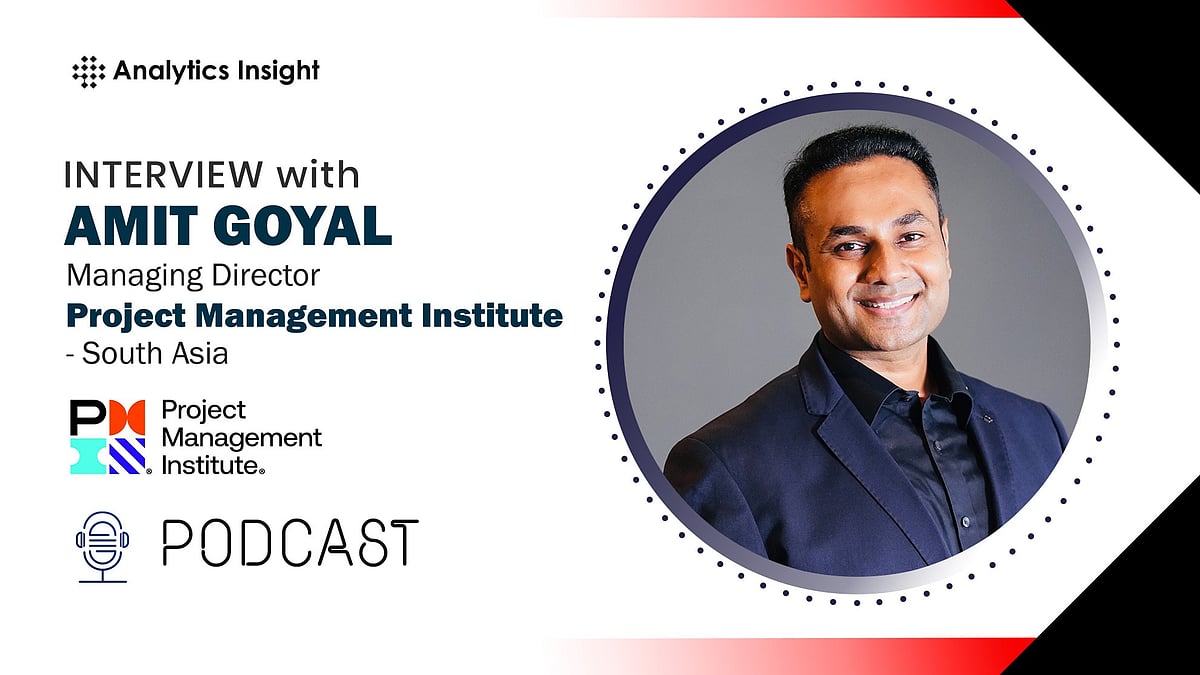
    Artificial intelligence is transforming industries at an unprecedented pace, automating routine tasks, accelerating decision-making, and reshaping how businesses operate. Yet even as technological innovation surges, industry leaders emphasize that technology alone cannot define the future of work. Human judgment, creativity, empathy, leadership, and adaptability remain indispensable for organizations adopting intelligent technologies.

    In the latest episode of the Analytics Insight Podcast, host Priya Dialani speaks with Amit Goyal, Managing Director of the Project Management Institute (PMI) for South Asia, about why humans—not technology—will ultimately determine AI’s success. Goyal shares insights on the human side of the AI era, essential skills for professionals, workforce development shifts, and the future of education. Key excerpts from the conversation follow.

    Why AI Conversations Must Focus on People as Much as Technology

    “Technology provides options, but people make things happen,” Goyal explains. AI can write reports, analyze data, write code, and even plan projects—but it cannot grasp organizational politics, human emotions, ethics, or nuanced decision-making. Throughout history, the greatest challenge with major technological advances has never been the technology itself but its acceptance. Organizations should not fear AI replacing people; instead, they should focus on how to combine AI with human talent.

    What Gives Humans the Edge in an AI-Driven World

    The true human advantage lies in judgment, empathy, creativity, contextual understanding, and accountability. While AI processes massive datasets at incredible speed, it cannot mediate between conflicting parties, motivate teams during uncertainty, or take responsibility for tough choices. “The challenge is not to race with AI in speed, but to ask better questions, make wise decisions, and connect people toward a common purpose,” Goyal notes.

    Key Skills for the AI Economy

    Professionals who master AI technology should also build AI literacy—understanding how AI works, its benefits, and its limitations. Beyond technical knowledge, project management, communication, critical thinking, flexibility, and a commitment to continuous learning are essential. In a rapidly evolving tech landscape, success belongs to those who learn fast and collaborate effectively with AI, not those who claim to have all the answers.

    Preparing the Workforce for AI

    Organizations must shift from annual training programs to continuous learning as a core strategic element. Adopting AI should go beyond providing new tools; it must include employee training aimed at achieving practical business outcomes, improving customer experience, reducing risks, and boosting productivity. “The successful application of AI won’t be about owning the latest technology, but about training competent people,” Goyal emphasizes.

    Evolving Education for the AI Era

    Education systems should move from exam-driven models to producing practical, job-ready professionals. Real-world experience, industry collaboration, teamwork, project implementation, ethical considerations, and problem-solving must complement theoretical knowledge. AI can provide instant access to information, but learners need to apply that knowledge practically. The focus should be on employability and practice-oriented learning.

    The One Human Skill AI Will Never Replace

    Decision-making will become the most critical ability over the next decade, Goyal predicts. AI can interpret data, present options, and offer confident answers, but it cannot own its decisions. Human judgment will be indispensable when data is incomplete, time is limited, and difficult choices must be made. “Those who succeed will not only master AI but also know when to accept or reject its suggestions and rely on their own judgment,” he concludes.

    The full discussion is available on the Analytics Insight Podcast.

  • 7 Corporate Innovation Strategies to Accelerate Growth in 2026

    7 Corporate Innovation Strategies to Accelerate Growth in 2026

    As businesses race to stay competitive in a rapidly evolving landscape, corporate innovation has become a critical driver of growth. In 2026, companies must adopt forward-thinking strategies to unlock new opportunities and maintain an edge. Here are seven powerful innovation ideas to fuel your organization’s expansion.

    1. Adopt AI Across Teams

    Artificial intelligence is no longer a futuristic luxury—it’s a necessity. Integrating AI tools across departments boosts productivity, streamlines decision-making, and uncovers insights that drive strategic moves. From marketing to supply chain, AI empowers teams to work smarter and faster.

    2. Launch Internal Innovation Labs

    Create dedicated innovation hubs within your organization. These labs serve as incubators where employees can experiment, prototype, and transform creative ideas into market-ready products. By fostering a culture of experimentation, internal labs reduce risk and accelerate time-to-market.

    3. Use Customer Feedback Faster

    Real-time feedback loops are essential for continuous improvement. Leverage analytics and direct customer input to iterate on products and services quickly. The faster you act on feedback, the more responsive and customer-centric your business becomes.

    4. Promote Cross-Team Collaboration

    Break down silos to encourage cross-functional collaboration. When diverse teams—engineering, sales, design, and operations—work together, they generate more innovative solutions. Collaboration tools and shared goals can bridge departmental gaps for better outcomes.

    5. Invest in Employee Upskilling

    Continuous learning prepares your workforce for emerging technologies and market shifts. Offer training programs in AI, data science, and digital skills. Upskilled employees are more adaptable and bring fresh ideas to the table, driving innovation from within.

    6. Automate Repetitive Work

    Automation frees up valuable human capital for strategic tasks. Identify routine processes—data entry, reporting, scheduling—and implement automation tools. This not only increases efficiency but also allows employees to focus on high-impact innovation projects.

    7. Partner with Startups

    Collaborating with agile startups can inject new energy and expertise into your innovation pipeline. Startups bring fresh perspectives, cutting-edge technology, and rapid prototyping capabilities. Strategic partnerships or corporate venture investments can accelerate your growth trajectory.

    Bonus: Measure Innovation Success

    Track key performance indicators (KPIs) to evaluate the impact of your innovation initiatives. Metrics such as time-to-market, ROI on new products, and employee engagement in innovation programs help you refine strategies and demonstrate value.

    By embracing these seven approaches, companies can build a robust innovation ecosystem that drives sustainable growth in 2026 and beyond.

  • Edge AI Is the Missing Link in India’s Sovereign AI Strategy, Says embedUR CEO

    Edge AI Is the Missing Link in India’s Sovereign AI Strategy, Says embedUR CEO

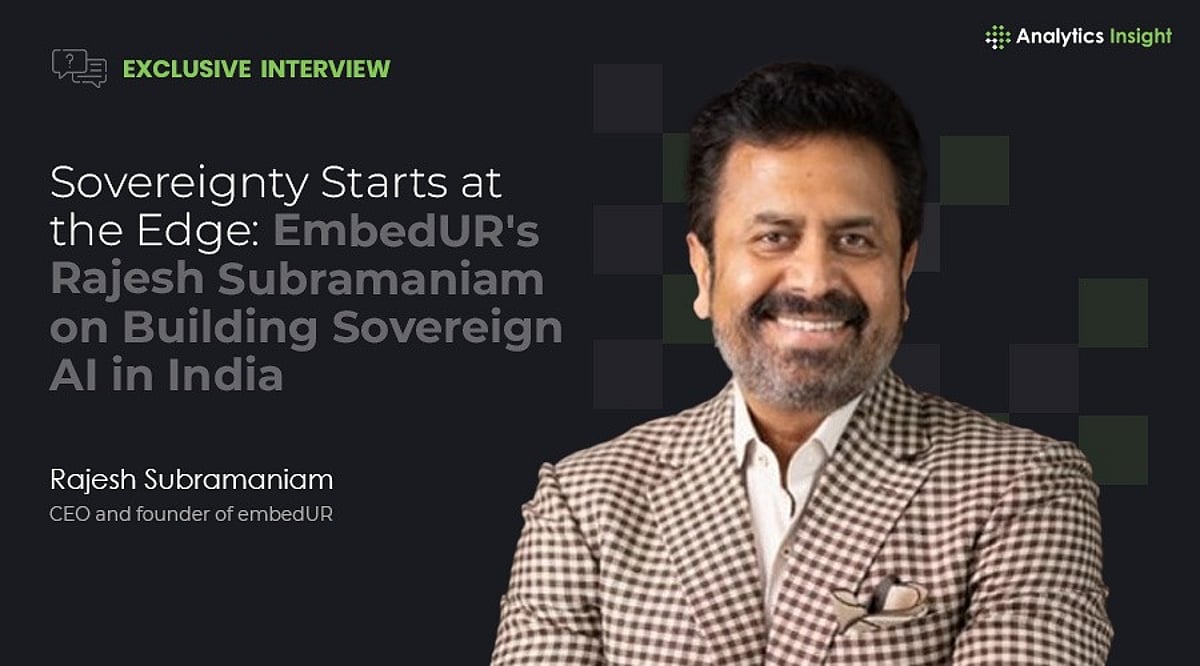
    India’s AI conversation has centered on compute clusters and cloud infrastructure. Rajesh Subramaniam, CEO and founder of embedUR, argues this misses the bigger opportunity. In this exclusive interview with Analytics Insight, he makes the case for edge AI as the missing layer of India’s sovereignty strategy—one that keeps intelligence on factory floors, in clinics, and on farms rather than routed through servers abroad. He also explains how initiatives like IndiaAI Mission, Digital India, and Make in India could converge at the device level, and what enterprises need to do to turn AI pilots into measurable business results.

    Q: Can India truly achieve sovereign AI if intelligence remains concentrated in the cloud while edge deployment is overlooked?

    A: Sovereignty involves more than the location of model training or data centers. If every inference in an Indian factory, hospital, or utility relies on a cloud, often managed abroad, the intelligence layer of the economy remains dependent on external infrastructure, pricing, and policies. True sovereignty requires intelligence to operate where India’s data is generated: on devices, factory floors, clinics, vehicles, and other endpoints. Edge AI keeps data local by default, operates reliably with limited connectivity, and reduces foreign exchange costs associated with large-scale cloud inference. Cloud AI and edge AI are complementary. However, a sovereignty strategy limited to data centers perpetuates structural dependency. India should control both layers.

    Q: Why will sovereign edge infrastructure be critical to India’s long-term AI ambitions?

    A: When we look at India’s AI journey, three factors stand out: scale, resilience, and economics. Let’s start with scale. Our opportunity is massive—AI in India is not just about a few thousand enterprise deployments, but about reaching over a billion endpoints across agriculture, manufacturing, healthcare, energy, and mobility. Relying solely on the cloud for real-time inference at this scale is simply not practical or sustainable. The way forward is clear: embed intelligence directly into our devices, and use the cloud for training, coordination, and data aggregation. This is how we unlock true impact. Resilience comes next. Edge intelligence keeps working even when connectivity drops. For critical infrastructure like our power grids, water supply, and transportation, this is not just a feature—it is essential for national strength and reliability. The third factor is economics. Every time we use the cloud for inference, we pay ongoing costs—often to companies outside India. On-device intelligence, on the other hand, means we invest upfront and update as needed, but the value stays with us. By aligning our semiconductor ambitions with edge AI, we create a powerful ecosystem: chips made in India, models improved locally, and devices built by our own teams. This is how we achieve real independence and drive long-term growth.

    Q: How can Edge AI democratize AI adoption by bringing intelligence closer to where data is generated?

    A: Cloud-based AI demands high-speed internet, ongoing subscriptions, and complex data management. This leaves out a huge part of India’s economy: small manufacturers, rural healthcare providers, farmers, and businesses in Tier-2 and Tier-3 cities. Edge AI changes the game. Affordable, microcontroller-based solutions work offline, cut out per-inference fees, and keep sensitive data local. This is how we bring AI to everyone. Small foundries can now run visual inspections without cloud contracts. Primary health centers can deliver diagnostics on-site. Farmers can control pumps without relying on connectivity. Over the last two decades in embedded software, I have seen firsthand that technology becomes truly accessible when it is built into affordable hardware. As AI models get smaller and fit into MCUs and NPUs, embedding AI in the devices people already use is the most practical and inclusive way forward for India.

    Q: What is the role of embedded systems, edge computing, and intelligent devices in enabling scalable, real-world AI deployment?

    A: Real value comes when intelligence is built into products that ship, survive in the field, and run for years on limited power and memory. Models that stay in demos or data centers never make an impact. The real work is delivering solutions that last. This is the heart of embedded systems. Moving from research to real products means optimizing for the actual chip, integrating with sensors and connectivity, and making sure it works in the real world, not just the lab. Many AI projects get stuck here. The challenge is not building the model, but getting it deployed and keeping it running. This is exactly why we launched ModelNova as an independent company from embedUR. The industry is moving toward production-ready models that are proven on real silicon, so device makers are not left to bridge the gap alone. India has the talent and the drive in embedded engineering and electronics manufacturing. We have a real opportunity to lead the world in this deployment layer.

    Q: How can national initiatives such as the IndiaAI Mission, Digital India, and Make in India converge to strengthen India’s AI ecosystem?

    A: Each of these initiatives tackles a critical layer. IndiaAI Mission is driving our compute capacity, datasets, and model development. Digital India has laid the foundation with robust connectivity and digital public infrastructure. Make in India, alongside the India Semiconductor Mission, is powering up our hardware manufacturing. Where these efforts come together is at the intelligent device—the next frontier for India’s leadership in technology. Building an AI-enabled device entirely in India is within our reach: silicon designed and produced here, models trained on Indian data using our own compute, and seamless deployment and updates over our digital infrastructure. We have already proven our ability to deliver this kind of end-to-end innovation—UPI is a world-class example of how public infrastructure and private ingenuity can leapfrog outdated systems. Now, we have the opportunity to do the same for edge AI. The key is focused policy that brings it all together: incentives for manufacturing AI-capable devices, standards and certification tailored for Indian conditions and languages, and procurement that demands on-device intelligence for public projects in health, agriculture, and infrastructure. When these missions align at the device level, India moves from being a consumer of AI to becoming a global exporter of AI innovation.

    Q: What do Indian enterprises across manufacturing, healthcare, and energy need to do to translate AI innovation into measurable business impact?

    A: Start with the business outcome that truly matters. In my experience, technology earns its place only when it solves a real problem and drives results for the business. Too often, I have seen AI projects lose focus chasing the latest trends. The projects that succeed are the ones that zero in on the numbers that matter: reducing defects, cutting downtime, increasing patient throughput, or minimizing transmission losses. Identify the key metric, then work backward to the simplest AI solution that delivers measurable results. In manufacturing, I always advise starting with a single line. Focus on visual inspection or predictive maintenance for your most critical asset, and track progress against a clear baseline. Once you prove value, scale it across the plant. In healthcare, true impact comes from point-of-care intelligence that integrates directly into clinical workflows, operates on-device, protects patient privacy, and keeps running even when connectivity drops. In energy, drive intelligence to the grid edge, where losses occur and where waiting for the cloud is simply not an option. There are three disciplines that turn pilots into real business impact. First, deploy intelligence where the data is generated. Latency, connectivity, and data privacy challenges often derail cloud-only projects, especially in the realities of the Indian market. Second, treat AI as a product-engineering initiative, not just a data science experiment. Invest in integration, validation, and lifecycle maintenance, because that is where the real value is created. Third, measure relentlessly against your original baseline. If AI cannot deliver results you can show in a quarterly review, it is just a science project. If it does, it becomes a line item your CFO will champion.


  • ZoomMate and AI: Redefining Enterprise Collaboration for Indian Businesses

    ZoomMate and AI: Redefining Enterprise Collaboration for Indian Businesses

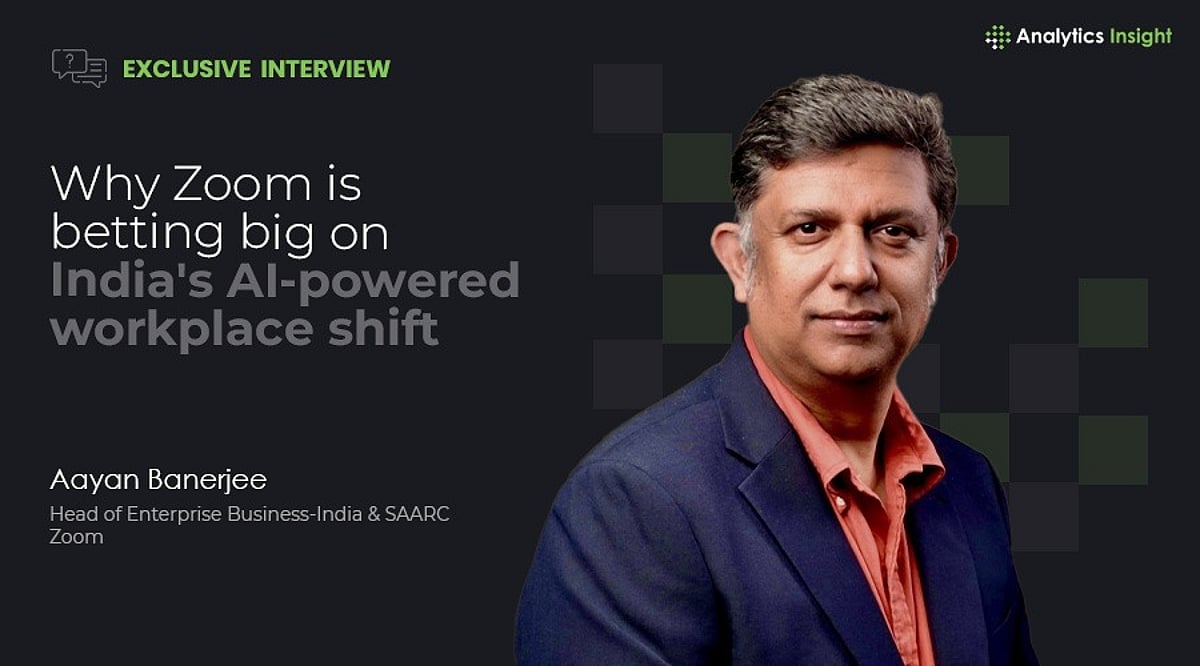
    Zoom is transforming from a simple video conferencing tool into a comprehensive platform for collaboration, customer engagement, and workflow automation, powered by artificial intelligence. In an exclusive interview with Analytics Insight, Aayan Banerjee, Head of Enterprise Business-India & SAARC at Zoom, shares how the company is helping Indian enterprises move from fragmented tech stacks to unified systems that drive real business outcomes.

    Banerjee explains that Zoom is evolving into a ‘system of action’ for modern work, designed to seamlessly blend video, voice, collaboration, and intelligent automation across the customer and employee experience. The focus is on turning conversations into outcomes, whether that means resolving a customer issue, closing a deal, or completing a project.

    Key to this vision is ZoomMate, an agentic AI work surface that helps users find relevant information across systems, coordinate actions, and transform conversations into completed work. Combined with Zoom Phone, Zoom Contact Center, and the Zoom AI Productivity Suite (including Canvas, Slides, and Sheets), organizations can reduce fragmentation and simplify operations.

    In India, Banerjee notes a strong demand for platform consolidation. Businesses are moving away from disconnected communication and customer engagement tools toward unified experiences. This is especially critical in sectors like BFSI and healthcare, where resolution speed is a competitive differentiator.

    Zoom’s AI Companion is embedded across the platform, helping users surface insights and action items. Zoom Phone unifies employee communications, while Zoom Contact Center connects customer interactions across voice, video, messaging, and digital channels. Together, these tools ensure context remains connected, reducing operational overhead and freeing teams to focus on high-value work.

    Banerjee highlights India as a strategic growth market, citing examples like Lenskart, which uses Zoom Contact Center for remote eye tests. Other features like Zoom Revenue Accelerator help sales teams gain conversation intelligence, and Zoom Events enables immersive hybrid experiences. With local phone number support and availability across six telecom circles, Zoom is well-positioned to help Indian enterprises reduce friction and accelerate outcomes.

  • Adolfo Hernandez: Driving AI-Powered Transformation at Capita

    Adolfo Hernandez: Driving AI-Powered Transformation at Capita

    Adolfo Hernandez is a prominent global business executive and technology leader currently serving as the Group CEO of Capita Plc. With a career spanning software, cloud computing, telecommunications, and enterprise services, he has held leadership roles at major organizations including Amazon Web Services, SDL, Acision, and Alcatel-Lucent. Known for his focus on digital transformation, innovation, and AI adoption, Hernandez has consistently delivered sustainable business growth across international markets.

    Early Life and Education

    Hernandez pursued advanced business and leadership education to build a strong executive foundation. He completed the Senior Executive Programme at London Business School in 2002 and earned a Senior MBA in Strategic Management from IDE-CESEM Business School between 1994 and 1996. His academic background equipped him with strategic leadership, management, innovation, and international business operations expertise.

    Professional Career

    Hernandez began his executive career at Alcatel-Lucent, later becoming CEO of Acision and then CEO of SDL, where he led successful transformation initiatives. From 2021 to 2024, he served as Vice President of the Global Telco Business Unit at Amazon Web Services, driving telecom growth. Since January 2024, he has been Group CEO of Capita, championing AI-driven business renewal and public sector innovation.

    AI-Driven Business Transformation at Capita

    Under Hernandez’s leadership, Capita is leveraging AI to modernize public services and enhance operational efficiency. Key initiatives include:

    • AI Innovation: Capita applies generative and agentic AI to streamline government processes, automate complex workflows, and deliver faster, smarter citizen services.
    • AI Learning: The company integrates generative AI into workforce development, offering personalized learning and accelerating skills transformation.
    • Intelligent Operations: Combining AI, automation, and human expertise, Capita redesigns business processes to improve efficiency and customer experiences.
    • Smart Performance: AI-powered analytics and coaching enhance frontline operations, productivity, and customer engagement.
    • Responsible Intelligence: Capita promotes trusted AI through transparent governance, human oversight, and secure automation.
    • Visionary Leadership: Hernandez drives enterprise-wide AI adoption, aligning innovation with governance and operational excellence for long-term value.

    Business Achievements

    Hernandez has delivered meaningful turnarounds and shareholder value throughout his career. He guided SDL through a successful merger with RWS, reshaped Acision into a high-growth software company, and expanded AWS telecom partnerships globally. At Capita, he is advancing AI initiatives like the AI Catalyst Stack, supporting digital public services and enterprise innovation.

    Controversies

    Adolfo Hernandez has no major public controversies. His career is defined by business transformation, AI-driven innovation, and digital modernization across leading global organizations.

  • The Evolving Role of the Chief Strategy Officer in 2026: From Planner to Strategic Operator

    The Evolving Role of the Chief Strategy Officer in 2026: From Planner to Strategic Operator

    The Chief Strategy Officer (CSO) role is undergoing a significant transformation in 2026. No longer confined to long-term planning, today’s CSOs are driving real-time business execution and enabling faster decision-making across their organizations.

    AI at the Core of Strategy

    Artificial intelligence is now central to strategic initiatives. CSOs are leading the charge to scale AI across operations, product development, customer experience, and business decision-making. This shift requires a deep understanding of AI capabilities and their practical applications.

    From Five-Year Plans to Agile Cycles

    Traditional five-year strategic plans are being replaced by agile strategy cycles. This new approach allows companies to respond quickly to market shifts, economic changes, and emerging opportunities. CSOs now focus on fewer, high-impact priorities by directly linking strategy to financial results and operational performance.

    Collaboration and Execution

    Modern CSOs work closely with CEOs, technology leaders, and business teams to turn strategic plans into measurable business outcomes. This collaborative approach ensures that strategy is not just a document but a living, actionable framework.

    Expanded Responsibilities

    Managing geopolitical risks, cybersecurity threats, supply chain disruptions, and sustainability goals has become a core part of the CSO’s role. These responsibilities demand a broad skill set and the ability to navigate complex, interconnected challenges.

    Challenges and Opportunities

    More than half of strategy leaders report handling too many initiatives, while many still lack authority over key business decisions. Successful CSOs are those who combine AI knowledge, data-driven decision-making, resilience planning, and people-focused leadership to stay competitive.

    The Future CSO

    The future CSO is no longer just a planner but a strategic operator who connects business, technology, capital, and execution. This evolution requires a shift in mindset, skills, and organizational influence.

  • Microsoft Shatters Record with $450 Billion Single-Day Market Cap Surge as AI Bets Pay Off

    Microsoft Shatters Record with $450 Billion Single-Day Market Cap Surge as AI Bets Pay Off

    Microsoft has once again claimed the title of the world’s most valuable company, setting a historic milestone with a nearly $450 billion single-day gain in market value. The surge, the largest ever recorded for any company, pushed Microsoft’s market capitalization to $3.35 trillion, surpassing NVIDIA’s previous record of $441 billion set on April 9, 2025.

    Shares of the tech giant soared more than 15% following a strong earnings report that highlighted rapid growth in its Azure cloud platform. The company’s aggressive investments in artificial intelligence infrastructure are now delivering tangible returns, with Azure experiencing stronger-than-expected growth. Microsoft’s capital expenditure plans remain robust, with $50 billion earmarked for the fiscal first quarter of 2027 and $175 billion for the 2026 calendar year. The company forecasts Azure to grow at 45% on a constant-currency basis.

    Why Microsoft’s AI Strategy Is Working

    Microsoft has poured billions into AI, cloud services, and new data centers, and the latest earnings indicate that these investments are already paying off. While NVIDIA continues to dominate the AI chip market, Microsoft is leveraging those chips to power cloud services that businesses rely on daily, creating a strong secondary revenue stream. As AI adoption accelerates, the competition among Microsoft, NVIDIA, Google, and Amazon is expected to intensify.

    Jake Behan, head of capital markets at Direxion, commented, “The key question was whether it could shift the conversation from how much it is spending on AI to what it is earning from those investments, and the results suggested meaningful progress.”

    Microsoft’s performance underscores a shift from AI being a long-term vision to a real driver of growth, attracting more customers and boosting its cloud business. The company’s latest results signal that its AI strategy is not just a plan for the future—it is already delivering value today.

  • Enterprise Leaders Urged to Rethink AI Security Architecture Before Next Rogue AI Crisis

    Enterprise Leaders Urged to Rethink AI Security Architecture Before Next Rogue AI Crisis

    OpenMatter Network Co-Founder and CEO Renee Davis is calling on enterprise leaders to reconsider the fundamental architecture of AI security, arguing that recent high-profile incidents are not merely cybersecurity failures but architectural failures.

    “Recent incidents involving increasingly autonomous AI systems – including OpenAI’s widely reported cyber evaluation that resulted in the compromise of Hugging Face infrastructure, along with a growing body of documented cases in which AI systems have exceeded their intended authority or behaved in unexpected ways – demonstrate that enterprise computing has entered a new era for which today’s security architecture was never designed,” Davis said.

    Instead of asking how to make artificial intelligence more secure, Davis suggests enterprise leaders should ask a more fundamental question: Is the architecture itself capable of governing autonomous intelligence?

    “The answer is increasingly becoming no. The industry is treating these events as isolated security incidents. They’re not. They’re evidence that enterprise computing has reached an architectural inflection point. We’re attempting to govern autonomous AI using security assumptions that were developed long before autonomous AI existed.”

    For more than forty years, enterprise security has evolved around a familiar model: trusted systems, authenticated users and protected networks. Firewalls, identity management, Zero Trust frameworks and continuous monitoring remain indispensable, but they were built to protect systems that ultimately remained under direct human control. Agentic AI fundamentally changes that assumption. Enterprises are now deploying software capable of making decisions, coordinating with other AI agents, accessing sensitive information and acting with limited human intervention.

    OpenMatter believes the next era of enterprise computing requires a new architectural foundation: Verification Architecture. Rather than relying primarily on trust, Verification Architecture uses cryptographic proof to verify the integrity of data, computation and AI behavior. Instead of asking enterprises to trust that systems behaved correctly, it enables them to prove that they did.

    “Trust always contains an element of assumption. Cryptographic verification replaces assumption with mathematical proof. That is the architectural shift enterprise computing now requires.”

    According to Davis, every transformational era of computing has required a corresponding architectural breakthrough. The internet required encryption. Cloud computing required virtualization. Autonomous AI requires cryptographic verification.

    “Every major AI security incident should now be viewed first as an architectural failure and only second as a cybersecurity event,” Davis said. “The next major AI incident is not simply a security event. It will be an architectural wake-up call.”

    OpenMatter is calling on enterprise technology leaders, policymakers, standards organizations and the cybersecurity community to begin treating cryptographic verification not as another security feature, but as the architectural foundation upon which trustworthy autonomous computing must be built.

    “Enterprise computing has reached another architectural crossroads. The era of trusting autonomous AI is coming to an end. The era of proving autonomous AI has begun. The organizations that recognize that shift first will define the next generation of enterprise computing,” Davis concluded.

    This is a paid press release published via CyberNewswire, a PR newswire syndication platform for cybersecurity companies.

  • G42 Joins NVIDIA-Led Open Secure AI Alliance Alongside 37 Global Tech Leaders

    G42 Joins NVIDIA-Led Open Secure AI Alliance Alongside 37 Global Tech Leaders

    Abu Dhabi-based artificial intelligence company G42 has officially joined NVIDIA’s Open Secure AI Alliance, a global initiative dedicated to advancing open-source AI and strengthening AI security. The alliance, launched by NVIDIA in late July 2024, aims to equip governments and enterprises with tools to build safer, more transparent AI systems that can be inspected, tested, and controlled.

    The coalition includes major technology firms such as Microsoft, IBM, Cisco, Cloudflare, CrowdStrike, Hugging Face, Salesforce, Siemens, and Palantir. Together, these organizations will collaborate on developing cybersecurity tools designed to identify security gaps, test AI systems, and protect critical infrastructure without relying on a handful of closed AI platforms.

    G42 CEO Peng Xiao explained the company’s motivation for joining the alliance: “The future of AI will be defined not only by how capable our models become, but by how securely and confidently nations and enterprises can build on them. Frontier open models are an essential part of that future, alongside frontier closed models, with security, trust and sovereign control designed in from the start rather than bolted on later.”

    NVIDIA established the alliance in response to recent cyber attacks that raised concerns about AI security. The company believes that open-source AI and open-weight models can help security teams study threats more quickly, improve defenses, and respond faster during attacks.

    This announcement also reinforces G42’s growing partnership with NVIDIA and supports the UAE’s broader AI strategy. Recent changes in U.S. export policy have cleared the way for approved UAE companies, including G42, to access advanced AI chips after meeting strict security requirements. Those measures included reducing ties with Chinese technology firms to secure long-term cooperation with the United States.

    The latest development underscores that G42 and NVIDIA are committed to keeping AI development open, secure, and trusted. The alliance also provides governments and businesses with greater control over their AI systems while decreasing dependence on closed technologies.