Category: AI Strategy

  • Turn AI Time Savings into Revenue: A Practical Guide for Businesses

    Turn AI Time Savings into Revenue: A Practical Guide for Businesses

    How Businesses Can Convert AI Time Savings into Revenue

    Artificial intelligence is revolutionizing how companies operate by freeing up valuable time. Instead of using those hours solely for cost cutting, forward-thinking organizations are reinvesting them into revenue-generating activities. Here are seven proven strategies to turn AI-driven time savings into tangible business growth.

    Automate Repetitive Tasks

    Businesses can use AI to automate routine work such as data entry, scheduling, invoice processing, and report generation. The hours saved can be redirected toward revenue-generating activities like sales, customer acquisition, product development, and strategic planning. This shift helps teams focus on work that directly contributes to business growth instead of administrative responsibilities.

    Improve Customer Response Times

    AI-powered chatbots and virtual assistants can handle common customer queries around the clock. Faster responses improve customer satisfaction, reduce abandoned purchases, and increase conversions. Human agents can then focus on complex cases, strengthening customer relationships while allowing businesses to serve more customers without significantly increasing operational costs.

    Expand Services Without Expanding Teams

    AI enables businesses to scale content creation, marketing campaigns, analytics, and customer support without hiring large teams. Companies can launch new products, enter additional markets, or serve more clients efficiently, generating higher revenue while keeping staffing costs under control and maintaining consistent service quality.

    Personalize Marketing Campaigns

    AI analyzes customer behavior, preferences, and purchase history to deliver personalized recommendations and targeted promotions. Better personalization increases engagement, improves conversion rates, encourages repeat purchases, and boosts customer lifetime value – all of which allow businesses to generate more revenue from existing customers with optimized marketing efforts.

    Accelerate Product Development

    AI speeds up research, testing, and data analysis, reducing the time required to develop and improve products. Faster innovation helps businesses launch offerings ahead of competitors, respond quickly to market trends, and capture new revenue opportunities before demand shifts or competitors gain an advantage.

    Support Smarter Business Decisions

    AI-powered analytics transform business data into actionable insights, helping leaders identify profitable opportunities, forecast demand, optimize pricing, and reduce inefficiencies. Better-informed decisions minimize waste while improving profitability, enabling organizations to maximize returns from both existing operations and future investments.

    Reinvest Time Into High-Value Work

    The greatest value of AI comes from how businesses use the time it saves. Organizations that reinvest those hours into innovation, relationship building, employee training, and strategic growth initiatives are more likely to increase revenue than those treating AI solely as a cost-cutting tool.


  • ServiceNow Cuts Hundreds of Jobs While Ramping Up AI Hiring

    ServiceNow Cuts Hundreds of Jobs While Ramping Up AI Hiring

    ServiceNow has eliminated several hundred positions as part of a global restructuring, even as the company accelerates recruitment for artificial intelligence roles. The software firm confirmed the workforce reductions but declined to provide exact figures, describing the cuts as affecting a “low single-digit” percentage of its workforce. CEO Bill McDermott had previously indicated that headcount would remain broadly flat through 2026, allowing the company to trim certain roles while adding AI-focused talent.

    At the end of 2025, ServiceNow employed 29,187 full-time workers, with 14,601 in the United States and 14,586 overseas. The company has not disclosed how the latest layoffs are distributed between domestic and international operations. ServiceNow said the reductions occurred over several months rather than as a single, sweeping announcement, and it has not released a detailed schedule of affected offices or teams.

    Some employees described receiving sudden separation notices with little warning. One Reddit user reported that a notice arrived in a personal email account at 6:53 a.m., with July 28 listed as the final working day and September 28 as the formal termination date. Another employee in Dublin recounted a morning call about possible layoffs during which organizers disabled cameras and audio and hid the attendance list. A consultation period was promised, with more details to follow by email. ServiceNow has not publicly confirmed these individual accounts.

    Other unverified claims on Reddit suggested that the layoffs could eventually affect around 3,000 workers globally, with teams in India facing early action. ServiceNow has not confirmed that figure.

    The restructuring comes as ServiceNow shifts its hiring focus toward AI-related skills. The company recently raised its annual subscription revenue forecast after stronger demand for AI-based software. Second-quarter subscription revenue reached $3.88 billion, and adjusted earnings came in at 90 cents per share, meeting or exceeding market expectations.

    ServiceNow’s cuts are part of a broader trend in the technology industry. Layoffs.fyi has tracked more than 120,000 job losses in 2026, with companies citing restructuring, cost controls, changing demand, and AI investment as reasons for workforce reductions.

    ServiceNow has not provided a full breakdown by country, department, or seniority level, nor has it released detailed severance terms for all affected workers. In some regions, employees may enter consultation processes before final decisions are made. The company continues to hire for selected roles while reducing positions in other business areas.

  • Why Data Readiness Is the True Foundation for Enterprise AI Adoption

    Why Data Readiness Is the True Foundation for Enterprise AI Adoption

    Artificial intelligence is rapidly gaining traction in the enterprise world, yet many organizations that have invested heavily in AI technologies still struggle to scale their initiatives. According to Gaurav Shinh, Founder and CEO of SCIKIQ Data, the primary obstacle is not the AI model itself but the quality, accessibility, and governance of enterprise data.

    In a recent episode of Industry Wired Conversations, host Priya Dialani spoke with Shinh about why enterprises must achieve data readiness before they can become truly AI-ready. Below are the key takeaways from their discussion.

    Why Do So Many Organizations Struggle to Scale AI Successfully?

    Many companies assume that AI success hinges on selecting the right model or having the proper infrastructure. Shinh argues that the real challenge lies elsewhere. Most organizations attempt to implement AI without ensuring proper data integration and connections across business processes. AI can only deliver value when data is integrated, trusted, and aligned with business goals. Before deploying AI, companies must first understand how their business processes generate value. With a solid data foundation and context, organizations can move beyond mere AI pilots.

    What Does an AI-Ready Organization Actually Look Like?

    According to Shinh, there is no one-size-fits-all model for AI readiness. Each company operates differently based on how decisions are made. For centralized organizations, data integration across the company and a command center are essential. For decentralized firms, a data mesh approach enables local decision-making. AI readiness involves aligning technology with business operations, not applying a standard template. Companies should strive for a unified view across finance, HR, supply chain, procurement, and customer operations.

    Why Is a Single Source of Truth Critical for Enterprise AI?

    The performance of any AI system depends on precise, coherent, and well-integrated data. Shinh notes that many organizations focus excessively on building dashboards rather than establishing a unified information layer. When different departments use disparate data, chaos ensues. A single source of truth requires shared business definitions, common terminology, and unified enterprise data. The first step is to identify which data sets must be linked, then proceed with integration.

    How Does Strong Data Governance Improve AI Performance?

    Data governance builds trust within the enterprise. Shinh emphasizes that all departments must take responsibility for the quality, freshness, and accuracy of their own data. Trustworthy data must come from enterprise systems, not from individual spreadsheets or personal documents. AI models perform well in pilot programs because the environment is controlled. In production, unpredictable elements demand robust governance and business context, including semantic layers.

    What Role Will Modern Data Architecture Play in the Future of AI?

    Current cloud platforms, data lakes, and enterprise data architectures provide the foundation for scalable AI. Shinh believes these technologies will enable better data integration and greater control for business users through self-service tools. Traditional data warehouse implementations took years to deliver value. Modern data platforms should offer quick access to reliable information and facilitate cross-departmental collaboration. The ultimate goal is to empower business users to analyze data and make timely decisions in response to market changes.

    Listen to the full episode for more insights from Gaurav Shinh on building AI-ready organizations through stronger data foundations.

  • Visa Reduces Workforce by 7% to Redirect Resources Toward AI Development

    Visa Reduces Workforce by 7% to Redirect Resources Toward AI Development

    Visa has announced a significant restructuring that will see approximately 7% of its global workforce laid off, affecting around 2,600 jobs. The payments giant is shifting its focus toward artificial intelligence, altering the engineering talent it seeks to hire.

    Unlike typical layoffs that target administrative or support roles, Visa’s cuts are concentrated in its core technology and product divisions. Software engineers, platform architects, and digital product teams—those responsible for building and maintaining the company’s core services—are the most impacted.

    The move is not purely about cost reduction. CEO Ryan McInerney explained in a memo that AI is accelerating how work is done at Visa, and the company is reallocating funds from traditional software projects to AI development. As AI tools become more capable of writing, testing, and reviewing code, the need for routine coding roles diminishes. Instead, Visa is seeking engineers skilled in building and managing AI-based systems.

    AI Skills Are Replacing Routine Coding

    The demand for software engineers is evolving. Companies still need engineers, but they now prioritize different competencies. Knowledge of AI tools, prompt engineering, AI integration, and system design is becoming more valuable than basic coding alone. Many routine tasks can now be handled by AI, so engineers who can collaborate with AI are likely to enjoy better career prospects. Experts emphasize that learning AI-related skills is becoming essential for anyone planning to stay in the software industry.

    Adapting Will Matter More Than Ever

    Visa’s latest layoffs highlight how rapidly the tech job market is changing. Companies are not halting hiring entirely—they are seeking a different set of skills. For software engineers, this serves as a reminder to continuously learn. Those who understand AI and can apply it in real-world projects will be in a stronger position as the industry evolves.

  • Deploy Your Own AI Agents on a VPS: A Step-by-Step Guide Using Ollama and OpenClaw

    Deploy Your Own AI Agents on a VPS: A Step-by-Step Guide Using Ollama and OpenClaw

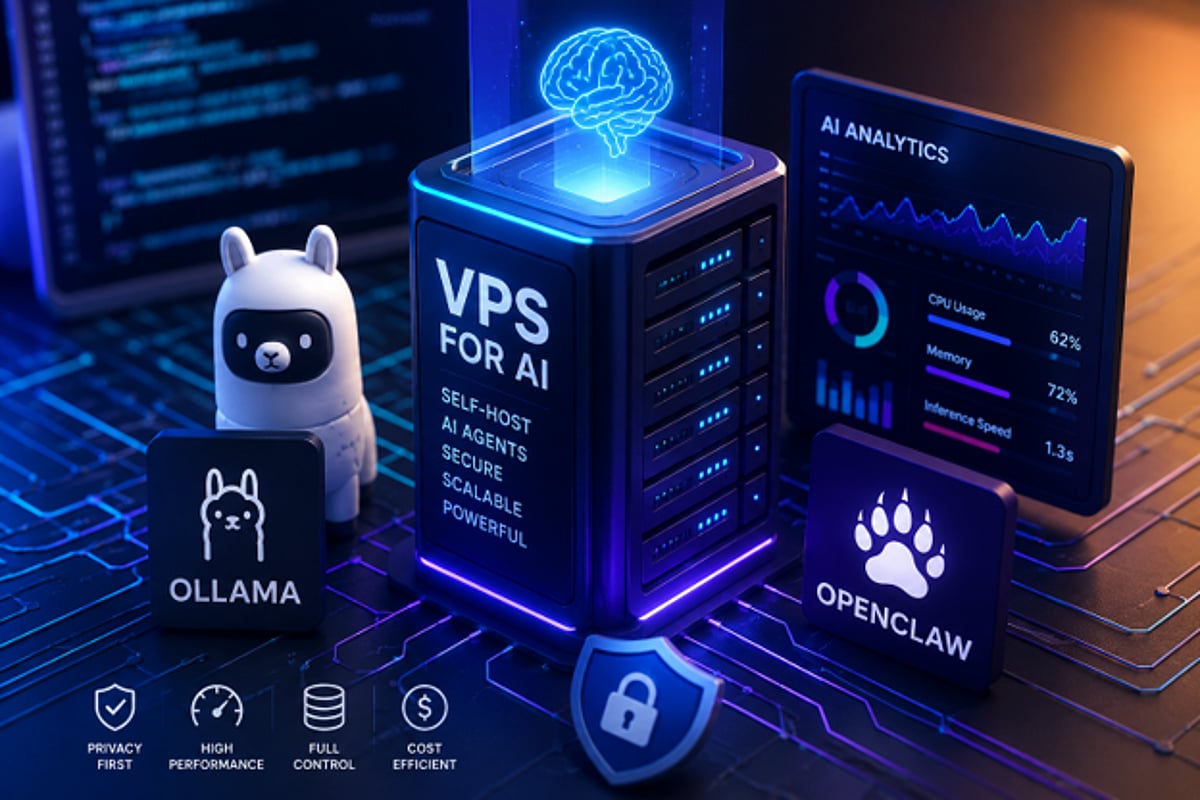
    As artificial intelligence continues to evolve, concerns around privacy, performance limitations, and recurring subscription fees have driven many developers and businesses to seek alternatives. Self-hosting AI agents on a virtual private server (VPS) offers greater control over data and infrastructure compared to cloud-based AI services. Tools like Ollama and OpenClaw make it possible to run AI workloads in a flexible, scalable manner directly on your own VPS.

    By using a VPS for AI, developers, researchers, and companies can create a dedicated environment to test, automate, analyze, and generate AI workflows without relying on third-party cloud providers. This approach ensures data sovereignty, customizable configurations, and predictable resource availability.

    Why Choose Self-Hosted AI Agents?

    AI agents can handle tasks such as automation, internal process management, and private data analysis. Hosting your own AI agents on a VPS puts you in full control of your data, system configuration, and security policies. Unlike public AI services, self-hosting allows you to tailor how your agent operates, manage resources efficiently, and reduce dependency on external platforms.

    With a dedicated VPS, you also avoid resource contention. CPU, RAM, and disk space are consistently available for your AI applications, leading to predictable performance—critical for production environments.

    Understanding Ollama and OpenClaw

    Ollama simplifies deploying and managing large language models (LLMs). You can set up AI models on your local machine or VPS with just a few commands. It provides a command-line interface for downloading, launching, and interacting with AI models.

    OpenClaw works alongside Ollama as an open-source platform for building and operating AI agents. These agents can generate content, conduct research, automate tasks, and analyze data. Together, Ollama and OpenClaw form an ideal toolkit for creating personalized, locally-hosted AI solutions.

    Choosing the Right VPS

    AI workloads are more resource-intensive than typical web applications. Before installing Ollama and OpenClaw, evaluate your VPS hardware based on the model size and expected demand. Key considerations include:

    • Memory (RAM): The most critical resource; larger models require more RAM.
    • CPU cores: More cores improve processing speed, especially for concurrent tasks.
    • GPU: Optional but beneficial for heavy LLM workloads.
    • Storage speed: High-speed SSD storage significantly reduces model load times.

    Many users start with a low-cost VPS for testing, but scale up resources as needs grow.

    Setting Up Ollama and OpenClaw on Your VPS

    The installation process is straightforward:

    1. Create a Linux VPS and connect via SSH or console.
    2. Update all software packages on the system.
    3. Install Ollama following the official installation guide. Download the models you need from Ollama’s model repository and import them.
    4. Install OpenClaw and configure it to use Ollama’s APIs. OpenClaw enables your AI agent to perform tasks locally through the VPS.
    5. Both applications run on their own server, allowing you to control security settings and access permissions for each model independently.

    Analytics and Performance Benefits

    Self-hosted environments provide full visibility into AI performance metrics, including CPU usage, memory consumption, response times, and workload trends in real time. Administrators can use these insights to optimize infrastructure costs and ensure reliable operation. Performance data helps identify resource-intensive processes and potential bottlenecks—insights that are often unavailable in fully managed AI services.

    Privacy Advantages of Self-Hosted AI

    Running Ollama and OpenClaw on your own VPS gives you unmatched control over AI infrastructure, data privacy, and flexibility. This approach is ideal for internal automation services, language model testing, and AI workload analysis. As interest in AI grows, self-hosted solutions offer a path for those who want full ownership of their data, compute environment, and future AI strategy.

  • WPP Media Partners with Indian AI Startup Kily to Enhance Commerce Planning with AI

    WPP Media Partners with Indian AI Startup Kily to Enhance Commerce Planning with AI

    WPP Media has signed a new partnership with Indian AI startup Kily to strengthen its commerce planning operations in India. Under the deal, WPP Media will integrate Kily’s AI platform to help brands analyze shopping behavior, process customer data, and design more effective marketing campaigns. Kily specializes in AI agents that manage commerce tasks such as product listings, pricing, and advertising across marketplaces and quick-commerce platforms.

    The collaboration introduces an Integrated Commerce Planner, a tool that combines data from multiple commerce platforms to help brands plan, activate, and measure their investments seamlessly. Sankalp Malhotra, Co-founder and CEO of Kily, commented: "Kily is deeply focused on bringing autonomy to commerce management. India’s fragmented multi-marketplace landscape makes a solution like ours critical for judgment, decision-making and outcomes at scale. Working with WPP Media, we are enabling brands to respond faster, operate more efficiently and unlock stronger performance across quick commerce and marketplaces."

    Ashwin Padmanabhan, COO of WPP Media, South Asia, added: "Our Integrated Commerce Planner developed in partnership with Kily brings these moving parts into a more connected system where planning, activation, and measurement are continuously aligned."

    This deal underscores the growing recognition of Indian AI startups by global corporations. Rather than building new AI tools from scratch, many agencies are now opting to collaborate with startups that offer proven products and deep local market understanding. India’s AI startup ecosystem has expanded rapidly in recent years, with many young companies delivering practical AI solutions for marketing, finance, healthcare, and retail. As demand for AI-driven efficiencies continues to rise, more global firms are expected to follow WPP Media’s lead and partner with local AI innovators.

  • Why Microsoft’s AI Strategy Is Drawing Investors Back: Key Drivers Explained

    Why Microsoft’s AI Strategy Is Drawing Investors Back: Key Drivers Explained

    Microsoft’s aggressive artificial intelligence strategy is once again capturing investor attention, with the company demonstrating consistent revenue growth and expanding its AI ecosystem. Here are the primary factors fueling this momentum.

    Azure AI Infrastructure

    Microsoft is investing heavily in AI data centers and advanced chips, significantly expanding Azure’s computing capacity for enterprise AI workloads across the globe. This infrastructure underpins the company’s ability to serve large-scale AI deployments.

    Microsoft 365 Copilot

    The growing adoption of Microsoft 365 Copilot among enterprises is generating recurring subscription revenue while boosting workplace productivity across industries. As more organizations integrate AI into their daily workflows, this tool becomes a key revenue driver.

    Azure Cloud Growth

    Strong performance in Azure cloud services remains closely tied to increasing AI demand. Businesses are flocking to the platform to build and deploy generative AI applications, further accelerating cloud revenue.

    OpenAI Partnership

    Microsoft’s continued collaboration with OpenAI strengthens its AI ecosystem through advanced models, robust cloud infrastructure, and enterprise-ready AI solutions. This partnership gives Microsoft a competitive edge in delivering cutting-edge AI capabilities.

    Enterprise AI Adoption

    Organizations are increasingly relying on Microsoft’s AI-powered software, cloud services, and security tools to accelerate digital transformation and automation initiatives. The company’s comprehensive suite addresses the growing need for intelligent business solutions.

    AI Monetization Strategy

    Microsoft is successfully converting its AI innovations into commercial revenue through premium software subscriptions, cloud services, and enterprise AI offerings. This disciplined approach ensures that research advances translate directly into financial results.

    Security and AI Integration

    AI-powered cybersecurity solutions enhance Microsoft’s value proposition by helping businesses detect threats, automate responses, and strengthen digital resilience. Security remains a top priority for enterprises, and Microsoft’s AI integration here is a key differentiator.

    Developer Ecosystem

    GitHub, Azure AI tools, and integrated development platforms encourage developers to build scalable AI applications within Microsoft’s ecosystem. This fosters a vibrant community and locks in long-term platform loyalty.

    Investor Confidence

    Consistent earnings, expanding AI revenues, disciplined spending, and a long-term innovation roadmap continue reinforcing Microsoft’s position as a preferred technology investment. The company’s ability to execute on its AI strategy keeps investors optimistic.

  • Wall Street’s Bullish Outlook on Microsoft: Key Drivers for Late 2026

    Wall Street’s Bullish Outlook on Microsoft: Key Drivers for Late 2026

    Wall Street is increasingly bullish on Microsoft as the tech giant heads into late 2026, driven by strong growth in artificial intelligence, cloud computing, and enterprise software. Analysts highlight several key factors fueling this optimism.

    AI Revenue Growth

    Investors expect Microsoft’s expanding portfolio of AI products and premium services to generate higher recurring revenue, strengthening long-term financial performance. The company’s strategic focus on AI monetization is a major catalyst.

    Azure Cloud Momentum

    Continued growth in Microsoft Azure, fueled by AI workloads, positions the company as a leading enterprise cloud provider globally. Azure’s ability to handle complex AI tasks gives it a competitive edge in the market.

    Copilot Business Expansion

    Wider deployment of Microsoft Copilot across enterprise customers creates fresh monetization opportunities while improving the company’s competitive advantage in workplace software. Copilot is becoming a key driver of productivity and revenue.

    Strong Financial Results

    Consistent revenue growth, healthy operating margins, and robust cash flow reinforce Wall Street’s confidence in Microsoft’s long-term business outlook. The company’s financial stability underpins its growth initiatives.

    Enterprise Customer Base

    Microsoft’s extensive relationships with enterprise customers provide a stable foundation for expanding AI services across governments, corporations, and regulated industries worldwide. This base ensures steady demand for new offerings.

    AI Infrastructure Investments

    Heavy investments in AI infrastructure prepare Microsoft for increasing enterprise demand while supporting future revenue expansion and platform reliability. These investments are critical for maintaining leadership in AI.

    Cloud and Software Leadership

    Microsoft’s leadership across cloud computing, productivity software, cybersecurity, and AI creates multiple growth opportunities beyond its traditional businesses. This diversification reduces risk and drives innovation.

    Analyst Optimism

    Many analysts remain positive because Microsoft’s diversified business model reduces risk while benefiting from accelerating global AI adoption trends. The company’s ability to navigate market changes is a key strength.

    Long-Term Growth Potential

    Investors view Microsoft as well-positioned for sustained growth through continuous innovation, enterprise AI leadership, and expanding global technology demand. The company’s strategy aligns with long-term tech trends.

  • Top Enterprise Automation Software Solutions for 2025

    Top Enterprise Automation Software Solutions for 2025

    Enterprise automation software is transforming how businesses operate by streamlining repetitive tasks, reducing human error, and boosting overall productivity. Here are the leading platforms that leverage AI, robotic process automation (RPA), and intelligent workflow tools to help organizations scale efficiently.

    1. UiPath

    UiPath uses AI-powered robotic process automation to automate repetitive business processes. It helps enterprises improve productivity, reduce costs, and minimize human errors effectively.

    2. Microsoft Power Automate

    Microsoft Power Automate connects apps and services to automate workflows, simplifying approvals, notifications, and other repetitive tasks across organizations with minimal coding required.

    3. Automation Anywhere

    Automation Anywhere delivers intelligent automation by combining RPA, AI, and analytics. It streamlines enterprise operations, enhances customer experiences, and improves workforce efficiency.

    4. Blue Prism

    Blue Prism enables secure and scalable digital workforce deployment, automating rule-based processes while ensuring compliance and operational reliability across large organizations worldwide.

    5. ServiceNow

    ServiceNow automates IT, HR, finance, and customer service workflows through a unified platform that improves collaboration, efficiency, and employee productivity significantly.

    6. Zapier

    Zapier integrates thousands of business applications, allowing organizations to automate routine tasks without coding and improve cross-platform workflow management effortlessly.

    7. Workato

    Workato combines enterprise integration with intelligent automation, enabling businesses to automate complex workflows, synchronize data, and accelerate digital transformation initiatives efficiently.

    8. IBM Business Automation Workflow

    IBM Business Automation Workflow helps enterprises automate document processing, case management, and decision-making while optimizing operational performance using AI-driven capabilities.

    9. Appian

    Appian offers low-code automation tools for building enterprise applications, streamlining workflows, and improving operational agility across departments with faster deployment cycles.

    10. Pega Platform

    Pega Platform combines AI-powered decision-making and workflow automation to help enterprises deliver personalized customer experiences while improving business process efficiency.

    These platforms represent the forefront of enterprise automation, each offering unique strengths for different business needs. Whether you’re looking to reduce manual work, improve accuracy, or accelerate digital transformation, there’s a solution tailored for your organization.

  • Wall Street Tightens Scrutiny on Big Tech AI Spending as Investors Demand Clearer Returns

    Wall Street Tightens Scrutiny on Big Tech AI Spending as Investors Demand Clearer Returns

    Wall Street is changing how it judges artificial intelligence spending. Investors once rewarded major technology companies for expanding data centers, buying chips, and building new AI services. Strong revenue growth often eased concerns about the cost.

    That pattern changed after Alphabet and Tesla reported second-quarter results. Both companies posted sharp share losses after announcing higher spending plans. The reaction showed that investors now want clearer proof that AI investment can support cash flow, margins, and earnings.

    This shift comes before earnings from Microsoft and Meta on Wednesday, followed by Apple and Amazon on Thursday. Their capex forecasts, cloud growth, and free cash flow will give investors new data on the cost of the AI buildout.

    Alphabet Selloff Shifts the AI Capex Debate

    Alphabet raised its 2026 capital expenditure forecast to between $195 billion and $205 billion. The range increased from an earlier estimate of $180 billion to $190 billion. Most of the spending will support servers, data centers, networking equipment, and AI computing capacity.

    Google Cloud revenue rose 82% to $24.8 billion during the quarter. Total revenue reached $119.8 billion, above market estimates. However, Alphabet recorded negative free cash flow of $5.9 billion. Its shares then fell 7.13% on July 23, cutting about $294 billion from its market value.

    Investors focused on the gap between rising revenue and heavier cash use. Alphabet said demand still exceeded its available capacity. Still, the higher spending forecast raised questions about how quickly new infrastructure can produce steady returns.

    Tesla Spending Adds to Wall Street Concerns

    Tesla also increased pressure on the AI spending trade. The company spent a record $5.79 billion on capital projects during the second quarter. That spending helped push free cash flow to negative $1.09 billion.

    Management expects 2026 capital expenditure to exceed $25 billion. Tesla plans to fund robotaxis, Optimus production, AI compute, factories, solar manufacturing, and other projects. Elon Musk called 2026 a “massive capex year,” while finance chief Vaibhav Taneja said spending could rise for another two or three years.

    Tesla shares dropped about 14% after the report. Investors also reviewed weaker earnings and lower cash generation. The market response added to concern that large AI plans can pressure stocks when spending rises faster than near-term profit.

    Michael Burry Points to a New Market Test

    Michael Burry said, “the market has voted and the results are clear.” He referred to data showing that Alphabet, Microsoft, Amazon, Meta, Oracle, Micron, and Tesla had weighed on the S&P 500 since early June.

    Apple stood apart from that group. The company has avoided the largest AI infrastructure budgets and has relied more on partnerships with model developers. Apple shares gained strongly in July as investors favored its lower spending approach.

    AI demand continues to support cloud growth, chip sales, and enterprise adoption. Big Tech companies still plan to spend more than $700 billion this year, mainly on computing infrastructure. Analysts expect Microsoft, Meta, Amazon, and Alphabet to face closer review as they publish new results.

    Wall Street is not rejecting AI investment. Instead, investors are applying a stricter test. Companies must now show that higher capital spending can produce revenue growth without weakening cash flow for long periods.