Category: AI Strategy

  • Fed Chairman Kevin Warsh Establishes Task Forces to Examine AI and Monetary Policy

    Fed Chairman Kevin Warsh Establishes Task Forces to Examine AI and Monetary Policy

    Federal Reserve Chairman Kevin Warsh has announced the formation of five task forces to review critical areas of U.S. monetary policy and central bank operations. The panels will focus on Fed communications, the inflation framework, the balance sheet, economic data, and new technologies—including artificial intelligence.

    The initiative places AI at the center of Warsh’s early agenda. Several members of the technology panel have publicly argued that AI could boost productivity and alter the trajectory of U.S. growth.

    Warsh stated that the task forces will operate independently with support from Fed staff, providing evidence-based feedback and recommendations to the Federal Open Market Committee by the end of 2026. “The goal is straightforward: to ensure the Fed is best positioned to achieve our objectives in this consequential time,” he said.

    Former Bank of England Governor Mervyn King will co-lead the communications review. Raghuram Rajan, former head of India’s central bank, and Harvard professor Jeremy Stein will lead the balance-sheet panel. The AI task force will be led by Marc Andreessen, Stanford economist Charles I. Jones, and Microsoft executive Asha Sharma—all vocal proponents of AI’s economic potential.

    The AI panel arrives amid debate among Fed officials about how quickly the technology can raise productivity. While some FOMC participants see room for faster growth, others caution over timing and scale. New York Fed President John Williams warned that AI-driven demand has pushed up prices for electricity and semiconductors, describing the price path as a “hockey stick.” He emphasized that supply must expand to keep inflation under control.

    Former Walmart CEO Doug McMillon will help lead the data-quality review, which comes as job-market data faces increased scrutiny due to revisions and lower survey response rates. The task forces are expected to complete their work by the end of 2026.

  • Proven Strategies to Reduce AI Agent Hallucinations and Boost Reliability

    Proven Strategies to Reduce AI Agent Hallucinations and Boost Reliability

    AI agents are rapidly evolving beyond simple chatbots into autonomous systems that can search documents, call APIs, write code, update records, and complete complex multi-step workflows. They are increasingly deployed in customer support, financial operations, software testing, research, and business processes. However, this expanded capability comes with a significant risk: hallucinations. These occur when an AI agent confidently produces incorrect answers, uses the wrong tool, fabricates data, or skips a critical step.

    Gartner predicts that over 40% of agentic AI projects could be abandoned by the end of 2027 due to rising costs, lack of business value, or immature applications. The research firm also notes that only about 130 vendors genuinely offer agentic AI, despite thousands claiming to do so.

    Why AI Agents Hallucinate

    AI agent hallucination happens when an autonomous system generates factually wrong outputs to compensate for missing organizational context and then acts on those outputs. The consequences can be severe: incorrect business decisions, compliance violations, and eroded trust across every process the agent touches. Studies show that incorporating context layers with governed metadata can reduce hallucination rates by over 40%.

    A 2026 benchmark called AgentHallu tested hallucination detection across 693 agent trajectories, seven agent frameworks, and five domains. The best model tested achieved only 41.1% step-localization accuracy, meaning it struggled to pinpoint where hallucinations originated. For tool-use hallucinations, localization accuracy dropped to a mere 11.6%.

    Use Grounded Retrieval, Not Model Memory

    The first step is to reduce reliance on the model’s internal memory. AI agents should pull information from trusted sources such as company documents, databases, APIs, and approved knowledge bases. Retrieval-Augmented Generation (RAG) is an effective technique that allows the agent to retrieve relevant information before generating a response.

    However, RAG must be carefully managed. Teams need to eliminate obsolete documents, grade sources for reliability, and cite all key claims. The agent should also be programmed to indicate when no data is available, rather than making assumptions.

    Validate Tool Calls and Actions

    Tool hallucination remains a major risk. An agent might make an incorrect API call, pass wrong data, or report that an action was completed when it was not. To mitigate this, every tool call should follow strict schemas with required fields and rules. For example, if an agent checks a refund status, it should only respond with the actual payment database response — not assume the user is eligible based on past conversations.

    Real-world benchmarks highlight the severity of this issue. Even the best function-calling agents struggled with tasks in τ-bench (a set of retail and airline-style workflows), achieving less than 50% accuracy. Consistency across repeated trials of the same retail workflows was under 25%.

    Add Human Review for High-Risk Workflows

    Certain actions should require human approval, including payments, legal advice, medical recommendations, account deletions, compliance checks, and customer refunds. The goal is not to slow every workflow but to create checkpoints where the cost of an error is high.

    Measure Reliability Continuously

    Key metrics to track include hallucination rate, unsupported claims, failed API actions, citation accuracy, escalation rate, and user corrections. Newer benchmarks reveal that agents still struggle with realistic digital tasks. Released in 2026, TUA-Bench evaluated 120 real-world terminal-use tasks, with the best frontier agent achieving only 65.8% total performance, revealing notable gaps.

    Why This Matters

    As AI agents transition from chatbots to autonomous multi-step workflows, hallucinations can lead to severe real-world business errors. With top benchmarks showing poor error-localization accuracy, robust technical guardrails and human checks are critical to prevent project abandonment.

    Final Thoughts

    While completely eliminating AI agent hallucinations is impossible, they can be minimized through careful system design. Verified retrieval, tool validation, structured outputs, human oversight for risky actions, and continuous testing are all essential for building reliable agents.

    Frequently Asked Questions

    1. What are AI agent hallucinations?
    AI agent hallucinations occur when an AI system gives confident but false or unsupported information. In agents, this can also include wrong tool calls, fake data, skipped steps, or incorrect actions.

    2. Why do AI agents hallucinate?
    AI agents hallucinate because they operate across planning, retrieval, reasoning, and tool use. If one step is wrong, the error can cascade through the entire workflow and affect the final result.

    3. How does RAG reduce hallucinations?
    Retrieval-Augmented Generation helps agents answer from verified documents, databases, or APIs instead of relying only on model memory. It works best when sources are updated, ranked, and cited properly.

    4. Why is tool validation important for AI agents?
    Tool validation ensures the agent uses the correct API, passes the right inputs, and only responds based on actual tool results. This prevents agents from inventing actions or assuming tasks were completed.

    5. Can AI hallucinations be completely removed?
    No, hallucinations cannot be fully eliminated, but they can be reduced. Reliable systems use verified retrieval, strict schemas, human review for risky tasks, and continuous monitoring of failure rates.

  • How AI Is Transforming Search: Will Traditional Search Engines Survive?

    How AI Is Transforming Search: Will Traditional Search Engines Survive?

    The rise of conversational AI and personalized search assistants is reshaping how we discover information online. While traditional search engines have long been the gatekeepers of the web, artificial intelligence is introducing new ways to get answers faster, more intuitively, and with less clicking. But will AI replace search engines entirely? The likely answer is a hybrid future where both coexist.

    Conversational AI Search

    AI-powered search tools can answer questions in natural language, reducing the need to browse multiple links for straightforward information. This makes finding quick insights much more efficient.

    Personalized Search Results

    By analyzing user preferences, context, and past interactions, AI tailors responses to deliver a more relevant and personalized search experience. This level of adaptation was impossible with traditional keyword-based engines.

    Instant Information Summaries

    AI can combine data from multiple sources into concise summaries, helping users understand complex topics without reading several webpages. This saves time and makes research more accessible.

    The Value of Traditional Search Engines

    Despite AI’s advantages, traditional search engines still provide diverse sources, official websites, and multiple viewpoints that are essential for in-depth research and fact verification. They remain a cornerstone of reliable information retrieval.

    AI-Powered Search Assistants

    Intelligent assistants can refine questions, suggest follow-up queries, and guide users through complex searches with conversational flexibility, making them powerful tools for discovery.

    Challenges: Accuracy and Hallucination Risks

    AI may occasionally generate incorrect or misleading answers, so source verification remains crucial for critical decisions and factual research tasks. Users must remain vigilant.

    Impact on Website Traffic

    AI-generated answers could reduce direct visits to websites, forcing publishers to rethink content strategies and audience engagement methods. This shift may encourage more interactive and value-driven content.

    A Hybrid Search Experience

    Future search platforms will likely combine AI-generated responses with traditional search results, offering both quick answers and reliable source exploration. This hybrid model promises the best of both worlds.

    The Future of Search

    AI is undeniably transforming information discovery, but search engines will evolve alongside AI rather than disappear completely. The next decade will bring a more intelligent, personalized, and efficient search ecosystem.

  • Top AI Certifications for CEOs and Senior Executives in 2026

    Top AI Certifications for CEOs and Senior Executives in 2026

    As AI governance, board expectations, and enterprise transformation accelerate, CEOs are increasingly turning to executive-focused AI certification programs. These programs strengthen strategic decision-making, improve cross-functional leadership, and build confidence in evaluating AI investments—all without requiring technical expertise.

    Many CEOs still rely on secondhand briefings from technical teams instead of forming independent judgment on artificial intelligence. Boards now expect leaders to defend AI strategy on their own terms. This gap between passive awareness and active command has pushed senior executives toward formal certification.

    PwC recently found that 70% of CEOs expect generative AI to reshape their business models within three years. Only 28% of leadership teams feel prepared for that shift. Certification programs built for executives close this gap by turning technical concepts into usable strategic frameworks.

    AI Certifications for Executives

    Certifications built for executives differ sharply from technical bootcamps aimed at engineers or data scientists. These programs assume no coding background. Instead, they concentrate on strategic frameworks, governance structures, and organizational change management. Curricula generally cover AI capabilities, ethical risk, vendor evaluation, and communication with technical teams.

    Enrollment numbers reflect this shift in priorities. Coursera reported a 67% rise in enrollments across AI leadership courses among C-level executives. Boston Consulting Group separately found that leaders with high AI literacy report revenue outperformance at more than twice the rate of less literate peers.

    AI Certifications for CEOs and Senior Executives

    Choosing the right program depends on organizational stage, industry, and the specific leadership gap a CEO wants to close. Some executives need governance fluency to satisfy regulators. Others want applied frameworks to guide transformation projects spanning multiple business units.

    Certification providers now design separate tracks for CEOs, CFOs, and CTOs rather than a shared curriculum. Each role interacts with artificial intelligence through a different lens. A CEO typically needs a wide view of strategy, market positioning, and board-level communication around AI spending. A CFO instead focuses on cost modeling and measurable return on that spending.

    Top Programs for CEOs and Senior Leaders

    • MIT Sloan Artificial Intelligence: Implications for Business Strategy – Delivered jointly through MIT Sloan and MIT CSAIL, this six-week program pairs AI fundamentals with enterprise strategy challenges. A capstone project applies coursework directly to the participant’s own organization.
    • Stanford AI for Leaders – Senior managers and transformation leads gain a functional grasp of AI capabilities and operational risk. Structured case studies walk through how these risks play out inside real organizations.
    • Oxford Saïd Business School Executive AI Programme – Oxford applies its own strategic framework to real business problems through a personalized capstone project. CEOs, CTOs, and transformation officers learn to govern and measure AI across regulated units.
    • Wharton AI and Machine Learning for Business – Wharton’s certificate centers on data-driven methods that senior managers can apply soon after finishing the program. Vendor evaluation and cross-functional AI initiatives receive particular attention throughout the coursework.
    • Chief Executives Council AI Prompting and Automation Certificates – Built alongside Arizona State University, these certificates prioritize repeatable, hands-on AI use inside daily executive work. No coding background is required, and workflow automation sits at the center.
    • Harvard Business School Online Artificial Intelligence for Business – Harvard’s course studies how artificial intelligence reshapes entire industries, with heavy emphasis on strategy and rollout. Graduates receive a verified certificate recognized widely across corporate leadership circles.

    Why Executives Are Pursuing AI Certification

    • Boards expect leaders to explain AI strategy without depending entirely on technical staff.
    • Regulatory scrutiny around AI governance keeps expanding across most major industries.
    • Certification signals readiness to boards, investors, and prospective hires evaluating leadership credibility.
    • Companies with more AI-literate senior executives report stronger revenue outcomes overall.
    • Programs increasingly blend ethics, governance, and applied strategy instead of isolated technical modules.

    Accreditation, faculty reputation, and relevance to a specific industry deserve close attention before enrollment. Most application requirements include five to ten years of senior management experience. Prior coding knowledge rarely matters here, since the emphasis stays on functional strategic understanding.

    Final Thoughts

    AI certification for senior executives has moved well past a resume credential or a passing trend. Each program addresses a genuine gap between technical capability and confident leadership judgment. None of these credentials replaces an executive’s own strategic instinct or accountability for outcomes.

    Leaders gaining real value from these programs tend to choose deliberately rather than enroll broadly. CEOs who match certification choice to their organization’s actual AI maturity see results sooner. As adoption accelerates across every industry, executives treating certification as genuine preparation will lead with sturdier judgment and lasting credibility.

  • AI-Enabled Smart Microgrids: Transforming Energy Systems with Predictive Intelligence and Autonomous Optimization

    AI-Enabled Smart Microgrids: Transforming Energy Systems with Predictive Intelligence and Autonomous Optimization

    AI is transforming microgrids from rule-based energy systems into intelligent, self-optimizing networks. By combining predictive analytics, renewable forecasting, and autonomous energy management, AI improves grid reliability, lowers operating costs, and supports the growing power demands of data centers, industries, and smart communities.

    From Passive Systems to Predictive Ones

    Traditional microgrids relied on relatively simple rule-based controllers: if battery storage drops below a threshold, switch to backup generation. AI-enabled systems operate very differently, using machine learning models such as LSTM neural networks to forecast solar and wind output, anticipate demand spikes hours in advance, and adjust dispatch decisions before a shortfall occurs. Research comparing forecasting techniques has shown LSTM networks achieving strong accuracy for wind generation prediction, while random forest models have performed particularly well for solar forecasting—both feeding directly into how confidently a microgrid can rely on renewable sources rather than falling back on diesel generation as a safety net.

    The Market Is Scaling Fast, and AI Is the Reason Why

    The global microgrid market was valued at roughly $28.9 billion in 2025 and is projected to grow at a compound annual rate of around 18% through the early 2030s, according to Global Market Insights. A narrower but faster-growing segment—AI-integrated microgrids purpose-built for data centers—is expected to expand from $4.8 billion in 2025 to $20.9 billion by 2034. That growth is being driven largely by AI’s own power appetite: hyperscale data centers need reliable, high-density power that public grids increasingly can’t guarantee, making AI-optimized microgrids as much an enabler of the broader AI boom as a beneficiary of it.

    Who’s Building the Intelligence Layer

    A handful of established industrial players and newer software specialists are shaping how AI actually gets embedded into microgrid operations. Key companies include:

    • Schneider Electric
    • Siemens
    • Tesla Energy
    • ABB
    • Eaton
    • Heila Technologies

    Predictive Maintenance Is Quietly Cutting Costs

    Beyond forecasting and dispatch, AI is reshaping how microgrids stay operational in the first place. By continuously analyzing sensor data from batteries, inverters, and generation assets, machine learning models can flag early signs of equipment degradation well before a failure actually occurs. This shifts maintenance from a fixed, calendar-based schedule to a condition-based one, reducing unplanned downtime and avoiding the kind of costly emergency repairs that used to be treated as simply unavoidable in distributed energy systems.

    Real-World Deployments Show the Financial Case

    The economic argument for AI-driven microgrids is no longer theoretical. Schneider Electric’s EcoStruxure Microgrid deployment at a California winery, Domaine Carneros, cut carbon emissions by 375 tonnes and saved roughly $70,000 annually through smarter load management alone. At a larger scale, research into hydrogen-integrated microgrids combining LSTM forecasting with optimization algorithms has shown grid import reductions of over 35% and improvements in energy self-sufficiency from roughly 71% to nearly 90%—figures that would be difficult to reach with static, rule-based control systems.

    What’s Next for AI-Driven Microgrids

    The next phase of development looks likely to center on two things: tighter integration with digital twins that simulate microgrid behavior before changes are made in the real world, and deeper participation in energy markets, where systems like Tesla’s Autobidder let storage assets buy and sell power autonomously based on real-time price signals. As renewable penetration keeps climbing and AI’s own electricity demand keeps growing in parallel, the pressure on microgrids to get smarter is only going to intensify.

    Why This Matters

    As renewable energy adoption accelerates and electricity demand rises from AI workloads and data centers, intelligent microgrids have become essential for grid resilience. AI enables real-time optimization, predictive maintenance, and efficient energy distribution, helping businesses and communities reduce costs, improve reliability, and support a more sustainable energy future.

  • Essential Prompt Engineering Techniques for Reliable AI Agents

    Essential Prompt Engineering Techniques for Reliable AI Agents

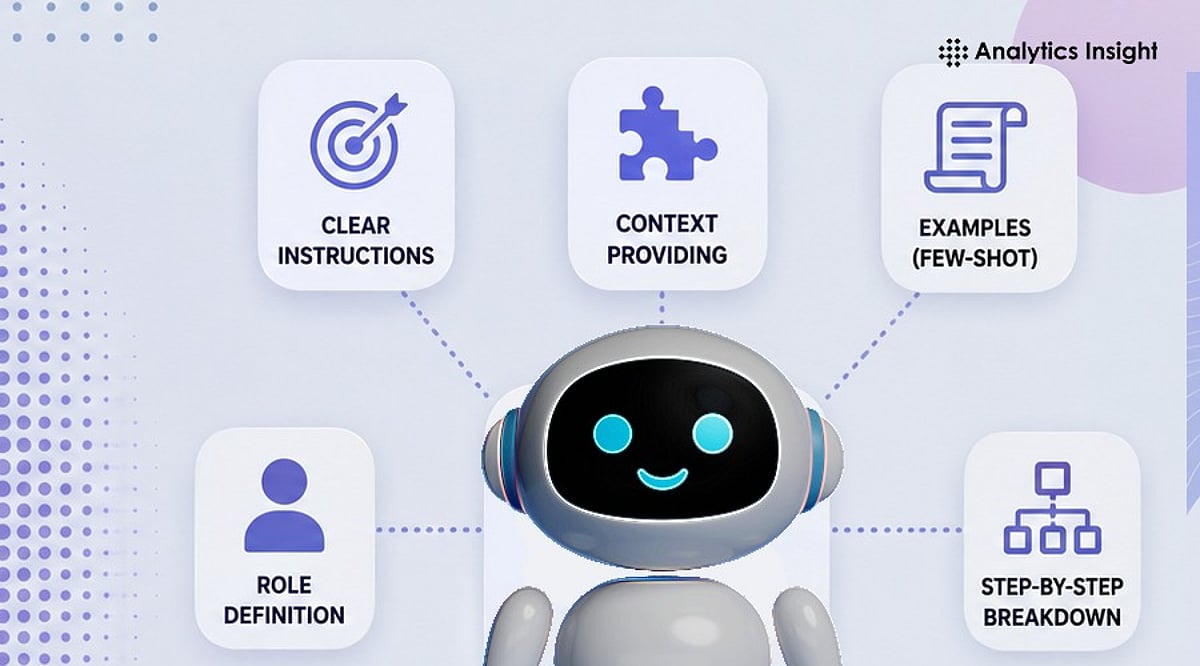
    Prompt engineering for AI agents is a distinct discipline that goes beyond writing simple instructions. It involves defining how an agent should think, act, and respond when conditions become unpredictable. A well-designed prompt reduces ambiguity, improves task accuracy, and ensures consistent performance across complex, multi-step workflows.

    Define a Clear Agent Identity

    Instead of a generic “You are a helpful assistant,” assign a concrete job with defined scope. For example, a support triage agent that sorts tickets into three categories and never resolves billing disputes on its own. Identity defines operational ownership, not just tone. Place this instruction in the system prompt to maintain consistency across interactions.

    Set Decision Boundaries

    Agents must decide when to act, wait, or ask a clarifying question. A well-built prompt states what the agent may do, what it must never do, when to call a tool, and when to hand off to a human. Strong boundaries also resolve conflicts, like when retrieved information contradicts earlier conversation history. Clear constraints prevent compounded errors in multi-step loops.

    Use Few-Shot Prompting

    Few-shot examples help models infer behavior faster than explanations alone. Choose examples that cover a normal case, an ambiguous case, and a failure case. This shows the agent how decisions are made under different conditions. Structured prompts separate identity, objectives, constraints, and output requirements, and examples connect those sections to real behavior.

    Specify Output Schemas and Handle Uncertainty

    When an agent’s output feeds a workflow or database, format is critical. Define a schema (JSON, ordered steps, labeled fields) so downstream systems can parse results reliably. Also address uncertainty: what happens when input is incomplete, contradictory, or outside scope? A clarifying question, safe default, or escalation path works better than a confident guess.

    Test and Evaluate

    Version prompts like code, splitting role, boundaries, formatting, and safety into separate modules. Test against a fixed set of inputs with repeatable runs, checking accuracy, tool selection, and format compliance before shipping. Reliability comes from combining all techniques, not any single line of instruction.

    Common Mistakes to Avoid

    • Vague Instructions: “Be helpful” leaves too much open to interpretation.
    • Missing Guardrails: Without limits, agents act when they shouldn’t.
    • No Examples: Long explanations don’t teach decision patterns as well as examples.
    • No Defined Output Structure: Unstructured responses are hard for APIs and workflows to handle.
    • Skipping Real Evaluation: Testing against one or two scenarios is insufficient.

    Final Thoughts

    The best AI agent prompts are built with clear responsibilities, explicit boundaries, structured outputs, and ongoing evaluation. When prompt engineering is treated as an engineering discipline rather than a writing exercise, agents become reliable systems ready for real deployment.

    Frequently Asked Questions

    What is prompt engineering for AI agents?

    It is the process of designing clear instructions that define an agent’s role, constraints, decision-making, tool usage, and output format to improve reliability across multi-step tasks.

    What are the best techniques?

    Techniques include defining a precise role, adding guardrails, using few-shot examples, specifying structured outputs, planning for uncertainty, and continuously evaluating performance.

    Why are structured prompts important?

    Structured prompts organize instructions into clear sections, helping agents produce more consistent, predictable, and machine-readable responses.

    How do few-shot examples help?

    They show agents how to handle typical, ambiguous, and edge-case scenarios, teaching reasoning patterns and decision boundaries more effectively than instructions alone.

    How to evaluate prompt effectiveness?

    Test against a benchmark set of tasks to measure accuracy, output consistency, format compliance, tool selection, and exception handling.

  • OpenAI Upgrades ChatGPT Agent with Advanced Features to Supercharge Productivity in 2026

    OpenAI Upgrades ChatGPT Agent with Advanced Features to Supercharge Productivity in 2026

    By Akshita Pidiha

    AI assistants are becoming more capable in 2026, with ChatGPT Agent helping users automate tasks, conduct research, and improve daily productivity.

    ChatGPT Agent can assist with planning projects, summarizing large documents, organizing information, and generating detailed reports.

    The latest updates allow users to work with files, spreadsheets, PDFs, and presentations more efficiently through natural language instructions.

    Businesses are increasingly using ChatGPT Agent for customer support, content creation, workflow automation, and internal knowledge management.

    Students and professionals benefit from faster research, study guides, coding assistance, writing support, and brainstorming sessions.

    Improved reasoning capabilities help users solve complex problems while maintaining context across longer conversations.

    Privacy and user control remain important, with users encouraged to review permissions before sharing confidential information. Although AI can significantly improve productivity, human review is still essential for critical decisions, legal matters, financial advice, and factual accuracy.

    With rapid AI innovation continuing throughout 2026, intelligent assistants are expected to become an essential part of personal and professional workflows.

  • TCS Q1 FY27 Results: AI Investments, Margin Pressure, and Dividend in Focus

    TCS Q1 FY27 Results: AI Investments, Margin Pressure, and Dividend in Focus

    Tata Consultancy Services (TCS) will announce its Q1 FY27 results today, with investors closely watching the company’s earnings, artificial intelligence strategy, dividend decisions, and overall business outlook. As India’s largest IT services firm, TCS kicks off the earnings season for the sector, making its quarterly update a critical indicator for the broader market.

    TCS shares traded lower ahead of the results, slipping nearly 2% as cautious sentiment dominated. Concerns about sluggish corporate spending and rising AI investments weighed on investor confidence.

    Revenue and Margin Expectations

    Most brokerages expect TCS to report flat sequential revenue growth, with figures likely between Rs. 71,270 crore and Rs. 72,267 crore. Net profit is anticipated to show healthy year-over-year growth. However, operating margins may dip after the company implemented annual salary hikes from April. Favourable currency movements and improved operational efficiency could partly offset the margin pressure.

    Market analysts believe the earnings numbers alone will not dictate the stock’s trajectory. Instead, management commentary on demand trends, large client deals, hiring plans, and the outlook for FY27 will be more closely scrutinized.

    AI Strategy and Deal Pipeline

    Artificial intelligence remains a central theme on the earnings call. TCS has expanded its AI capabilities over the past year and continues to invest in AI services and data centre infrastructure. Investors want to understand how these investments will translate into revenue growth without eroding profitability.

    The company’s deal pipeline is also under the spotlight. Analysts expect TCS to report new deals worth between $7 billion and $10 billion for the quarter. While this may be lower than the previous quarter, recent contract wins in insurance, manufacturing, and packaging indicate that clients remain committed to technology spending despite global uncertainties.

    Dividend Announcement

    In addition to earnings, the TCS board will consider an interim dividend. The record date has been set for July 15, allowing eligible shareholders to receive the payout if approved.

    Outlook for the IT Sector

    TCS typically sets the tone for the entire IT earnings season. Strong guidance on AI, client demand, and deal wins could boost sentiment across technology stocks. Conversely, cautious remarks on spending or margins may keep pressure on the sector for an extended period.

    Several analysts emphasize that management’s outlook will matter more than the quarterly numbers. Positive updates on AI growth, business demand, and large contracts could support investor confidence in the coming months. Investors will also look for signs of stronger client spending in the second half of FY27.

    Overall, TCS Q1 results will provide crucial signals about the health of India’s IT industry, making this earnings announcement one of the most closely watched events of the quarter.

  • Reddit Claim That Claude Fable 5 Replaced 90% of Developers Reignites AI Layoff Debate

    Reddit Claim That Claude Fable 5 Replaced 90% of Developers Reignites AI Layoff Debate

    A Reddit post alleging that a software services company laid off nearly 90% of its development team after embracing artificial intelligence has triggered a heated debate over AI’s growing role in the workplace.

    While the claims have not been independently verified, the post has resonated with developers concerned about how rapidly generative AI is reshaping the tech industry.

    The anonymous developer claimed that their mid-sized services company reduced a department of around 70 software engineers to just eight employees, with executives reportedly citing productivity improvements from Claude Fable 5 as the reason behind the decision.

    “Nearly the entire team of ~70 laid off citing efficiency from Claude Fable, 8 of us remain. This is insane,” the Reddit user wrote.

    According to the post, the company had employed a large number of developers before 2023 but had not hired any new engineers since 2025. The employee said the decline in client projects had already suggested difficult times ahead, but the scale of the layoffs still came as a surprise.

    “The writing was already on the wall because the number of projects drastically reduced, but today morning I got to know they laid off over 90% of the dev team,” the developer added.

    Employee Says Executives Believe AI Can Handle Remaining Workload

    The Reddit user further claimed that company executives told the remaining employees that Claude Fable 5 would enable the reduced team to manage all ongoing projects.

    “CXOs basically saying Claude Fable 5 is enough for those of us remaining (supposedly the top performers) to handle the projects the company has left,” the employee wrote.

    The post also reflected growing anxiety among software professionals. The developer admitted they had once dismissed AI as ‘just fancy autocomplete,’ but said recent advances in large language models had significantly changed their outlook, raising concerns about long-term career security.

    Reddit Users Question AI Explanation

    The post drew mixed reactions from Reddit users. Some questioned whether AI alone could realistically replace dozens of software engineers, arguing that the costs of running advanced AI models would be substantial.

    However, others noted that the layoffs could be triggered by poor business performance rather than AI. One contributor who self-identifies as a CTO stated that sometimes corporations use the implementation of AI as an excuse for laying off employees, rather than mentioning the actual business or financial difficulties.

    On the other hand, some developers advised laid-off programmers to develop higher-level skills, such as software architecture, product design, testing, and requirements gathering. They claimed that although AI can speed up programming, experienced programmers were still necessary to create, review, and maintain robust software systems.

    Even though the Reddit thread was not verified, it once again sparked debate on whether generative AI replaces software engineers or serves as an excuse for cost-cutting efforts in the tech sector.

  • 7 Must-Read AI Newsletters for Business Leaders in 2026

    7 Must-Read AI Newsletters for Business Leaders in 2026

    As artificial intelligence reshapes industries at an unprecedented pace, executives need curated, reliable sources to separate signal from noise. The right AI newsletter delivers actionable insights, strategic analysis, and practical use cases—without overwhelming your inbox. Here are seven top newsletters every business leader should consider adding to their morning routine.

    Top AI Newsletters at a Glance

    The Rundown AI

    Perfect for those with only five minutes a day, The Rundown AI covers AI breakthroughs, product launches, and regulatory news in a concise format. It also includes productivity tips and tutorials, making it valuable for both engineers and executives seeking actionable insights.

    The Batch

    Created by DeepLearning.AI, The Batch translates complex AI research into digestible explanations for business leaders. It focuses on why a development matters and how companies can apply it, helping executives bridge the gap between technical teams and corporate strategy.

    Exponential View

    Written by technology analyst Azeem Azhar, Exponential View offers deep analysis of the intersection of AI, geopolitics, economics, and innovation. It’s ideal for long-term strategic thinking rather than daily news consumption.

    Superhuman AI

    Designed for professionals who want to leverage AI for productivity, Superhuman AI delivers practical tips on new tools, automation, and prompts. Busy executives will appreciate its focus on actionable suggestions without heavy technical jargon.

    The Neuron

    The Neuron presents the latest AI news in a conversational, easy-to-read tone. It covers major company updates, new products, enterprise software, and productivity—all in short articles perfect for morning reading.

    TLDR AI

    For executives working closely with engineering or product teams, TLDR AI summarizes research papers, product updates, and machine learning news in a few minutes. It’s a quick way to stay informed on technical developments.

    Ben’s Bites

    Founded by entrepreneur Ben Tossell, Ben’s Bites offers a founder’s perspective on the AI ecosystem, tracking startups, investments, product announcements, and real-world case studies. It’s a valuable source for executives scouting innovations, partnerships, and acquisition opportunities.

    Why This Matters

    Regularly reading a trusted AI newsletter sharpens strategic thinking, provides fresh ideas, and supports informed decision-making in an increasingly AI-driven world. A balanced mix of daily briefings and weekly deep-dives keeps leaders ahead without information overload.

    Conclusion

    No single newsletter covers everything. Combine a daily briefing like The Rundown AI for news, The Batch for knowledge, and Exponential View for long-term strategy. This trio ensures you stay informed, educated, and strategically prepared.

    Frequently Asked Questions

    Which AI newsletter is best for busy executives?

    The Rundown AI offers concise daily updates, helping executives stay informed about major AI developments, business trends, and useful productivity tools.

    Are AI newsletters free to subscribe to?

    Many leading AI newsletters offer free editions, while some provide premium subscriptions with deeper analysis, exclusive content, and additional resources.

    How often should executives read AI newsletters?

    Reading one daily newsletter and one weekly strategic publication is usually enough to stay updated without feeling overwhelmed by information.

    Which AI newsletter focuses on long-term business strategy?

    Exponential View examines AI, innovation, economics, and technology trends, helping leaders understand long-term business opportunities and emerging market shifts.

    Can AI newsletters help with business decision-making?

    Yes. They provide curated insights, practical use cases, and industry trends that support informed decisions on AI adoption and digital transformation.