Category: AI Strategy

  • Revolutionizing Retail: How AI, Cloud, and Self-Healing Systems Are Reshaping the Industry

    Revolutionizing Retail: How AI, Cloud, and Self-Healing Systems Are Reshaping the Industry

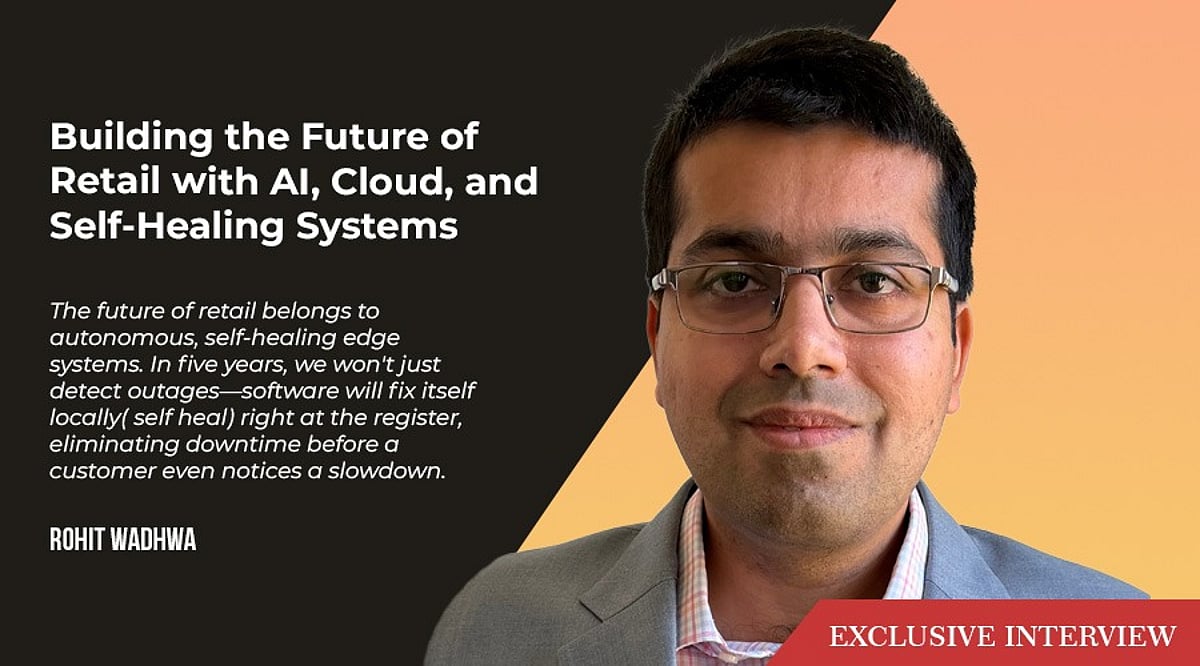
    In an era where retail technology is evolving at breakneck speed, senior software engineer and architect Arundhati Kumar offers a deep dive into the innovations driving the future of omnichannel commerce. With over 15 years of experience building high-performance distributed systems across healthcare, banking, and now global retail, Kumar shares insights on how AI, cloud computing, and self-healing infrastructure are transforming the way retailers operate at scale.

    The Challenges of Engineering at Massive Scale

    When you’re supporting thousands of physical stores with diverse hardware—from legacy cash registers to modern mobile checkout apps—the biggest challenge is ensuring speed and reliability across unpredictable network conditions. Kumar explains that her team had to build custom adapter layers to standardize conflicting data payloads, and engineer systems that can instantly drop into offline mode, saving transactions locally and syncing back to the cloud once connectivity is restored—without losing a single cent of revenue.

    Checkout Doctor: A Self-Healing Solution

    Inspired by store associates struggling with checkout glitches, Kumar designed Checkout Doctor, an automated real-time diagnostic assistant. Instead of waiting for centralized IT support, the system analyzes local device logs, isolates issues like a scale malfunction or peripheral disconnect, and triggers alerts directly on the associate’s mobile device. This shifts the support model from reactive to proactive, keeping lines moving and reducing customer frustration.

    How AI Is Changing Site Reliability Engineering

    Large language models (LLMs) are revolutionizing incident detection by reducing the time engineers spend digging through disparate dashboards and logs. Kumar notes that feeding real-time error logs and alerts into an LLM provides on-call engineers with a plain-English summary of the problem, along with context from past incidents. This acts as an intelligent co-pilot, dramatically cutting the time to understand and resolve critical outages.

    The Measurable Value of AI in Operations

    Rather than fully automated fixes, Kumar believes the greatest value of AI today lies in extreme noise reduction and early triage. In massive enterprise setups, a single microservice failure can trigger cascading alerts. AI correlates telemetry spikes, filters out background noise, and points engineers directly to the root cause. Additionally, machine learning models can flag anomalies—like a spike in database latency—long before a threshold is breached, enabling preemptive patching.

    Lessons from Migrating to Cloud-Native Architecture

    Leading a migration from legacy relational systems to Azure Cosmos DB, Kumar learned that you can’t simply replicate old database patterns. Her team had to completely rethink data organization, grouping by store numbers and register lanes as partition keys, and accepting some data duplication. This trade-off slashed expensive cross-partition queries, kept cloud costs low, and ensured maximum availability during peak shopping seasons.

    Event-Driven Architecture for Real-Time Decisions

    Event-driven architecture replaces batch processing by treating every register action—a barcode scan, a voided item, a payment—as an instant event broadcast via websocket servers. This gives business leaders a live view of store performance and enables automated decisions, such as sending an alert to a nearby associate when an unusual pattern is detected during a live checkout session. It catches faults and errors before the customer leaves the lane.

    Combating Retail Shrink with Intelligent Automation

    Retail shrink is a multi-billion-dollar problem, but Kumar’s approach prevents losses at the checkout lane by linking real-time register logs with overhead camera feeds. If a missed scan or barcode mismatch is detected, the system pauses the session mid-transaction with a friendly nudge to rescan. If the issue persists, a silent notification goes to an associate’s mobile device, protecting the bottom line while keeping the experience seamless.

    Emerging Trends: Autonomous Infrastructure

    Looking ahead, Kumar is most excited about autonomous, self-healing infrastructure and edge-computed intelligence. Instead of using AI reactively to summarize logs after an outage, future systems will run predictive models directly on local edge hardware—like thousands of retail registers. These models will monitor health and transaction patterns, fixing anomalies autonomously (e.g., routing around a slowing database) long before a human engineer is alerted. This marks the end of the traditional on-call nightmare, turning software into something that actively looks after itself.

    Advice for Enterprise AI Implementation

    Kumar offers two key pieces of advice for leaders: First, build systems that survive locally without relying on the cloud. Local hardware must be smart enough to run in offline mode, catch errors, and make decisions on the spot. Second, treat AI as an intelligent co-pilot, not a replacement. Use a tiered intervention model: let the system handle noise reduction and simple self-healing, but when complex failures occur, use AI to arm engineers with a plain-English context summary rather than letting the machine guess blindly. Build guardrails that empower teams, not black boxes.

    As retail continues to evolve, the integration of AI, cloud, and self-healing systems is not just a trend—it’s a necessity. Kumar’s insights provide a roadmap for building resilient, customer-friendly technology that can handle the demands of modern commerce.

  • Top Platforms for Monitoring, Testing, and Optimizing AI Agents in Production

    Top Platforms for Monitoring, Testing, and Optimizing AI Agents in Production

    Modern AI agents require continuous monitoring, testing, and optimization to deliver reliable results. Leading platforms help track performance, detect errors, improve prompts, reduce costs, and maintain consistent quality across production environments.

    AI agents can complete tasks, answer questions, use tools, and make decisions with little human input. Many businesses now use these systems for customer support, research, coding, content creation, and workflow automation. As AI agents become more capable, proper monitoring and regular testing become essential. A small mistake can lead to wrong answers, higher costs, slow performance, or poor user experience. For this reason, many companies now rely on special platforms that help monitor, test, and improve AI agents throughout their lifecycle.

    The latest tools do much more than collect logs. They track every action, measure quality, detect errors, compare models, manage prompts, and reduce operating costs. Each platform focuses on a different part of the process, so many organizations combine several tools to build a complete solution.

    Best Tools for Monitoring AI Agents

    Monitoring tools help teams understand how AI agents perform after deployment. These platforms record every request, follow each step, detect failures, and present detailed reports.

    LangSmith stands out as one of the most popular choices, especially for projects that use LangChain or LangGraph. It provides end-to-end tracing, prompt debugging, dataset management, online evaluation, regression testing, and human feedback. The platform also displays every step of an agent, which makes problem detection much easier.

    Langfuse has become a leading open-source option. It supports OpenTelemetry, prompt version control, token tracking, cost analysis, user session monitoring, latency reports, and model comparison. Many organizations choose Langfuse as it supports self-hosting and offers greater control over private data.

    Galileo AI focuses on quality and reliability. The platform detects hallucinations, performs automated evaluations, identifies root causes of failures, and applies guardrails that improve response quality. Many enterprise teams depend on Galileo AI for customer-facing AI systems.

    Braintrust combines evaluation and observability in one platform. It supports prompt version management, continuous testing, production monitoring, and human review workflows. This combination helps teams improve quality before and after deployment.

    Arize AI offers strong LLM observability with agent tracing, drift detection, embedding visualization, and the Phoenix framework. Many enterprises already use Arize AI as it fits well into existing machine learning operations.

    Maxim AI brings testing, simulation, evaluation, monitoring, prompt management, and CI/CD support together in one platform. This complete approach helps development teams connect testing with production performance.

    Helicone focuses on API monitoring for providers such as OpenAI, Anthropic, and Gemini. The platform tracks requests, monitors costs, supports caching, applies rate limits, and reduces API expenses.

    AgentOps was built specifically for autonomous AI agents. It provides execution logs, session replay, failure analysis, lifecycle tracking, and support for multi-agent systems. These features help developers understand complex agent behavior.

    Best Tools for Testing and Evaluation

    Testing platforms measure the quality of AI agents before and after deployment. They help teams compare results, discover weaknesses, and prevent future failures.

    DeepEval has become one of the most widely used frameworks for automated AI evaluation. It checks hallucinations, faithfulness, toxicity, bias, tool accuracy, conversation quality, and supports continuous integration pipelines. Many organizations use DeepEval for automated quality checks.

    MLflow Evaluation supports offline benchmarks, experiment tracking, dataset management, trace-aware evaluation, multi-turn conversations, and human feedback. It works especially well for organizations with large machine learning projects.

    Ragas focuses on retrieval-augmented generation systems. It measures faithfulness, context precision, context recall, and answer relevance. The open-source framework remains a popular choice for RAG evaluation for its simple design and reliable metrics.

    Promptfoo helps teams compare prompts, perform regression testing, conduct red-team exercises, compare different models, automate scoring, and integrate testing into CI/CD pipelines. This approach helps maintain prompt quality after every update.

    Best Tools for Optimization

    Optimization platforms improve prompts, workflows, and model performance without major manual effort.

    DSPy has received strong attention since it automatically improves prompts and learns better prompt strategies. It also tunes pipelines and improves multi-step reasoning, which makes AI agents more effective over time.

    Humanloop focuses on prompt management, human evaluation, A/B testing, deployment workflows, and prompt history. Product teams often select Humanloop as it supports fast and controlled prompt improvement.

    LiteLLM helps reduce costs across multiple AI providers. It offers model routing, load balancing, failover support, cost optimization, and one unified API. This flexibility makes it easier to switch between models without major code changes.

    Enterprise Monitoring Solutions

    Large organizations often combine AI observability platforms with traditional infrastructure monitoring tools. Datadog LLM Observability, Grafana, OpenTelemetry, and Prometheus help monitor infrastructure health, service reliability, latency, and overall system performance. Together with AI-focused platforms, these tools provide a complete view of production environments.

    Important Metrics That Matter

    Successful AI projects rely on continuous measurement. Teams monitor task completion rate, tool-call success rate, hallucination rate, reasoning failures, latency, token usage, cost per task, user satisfaction, retry frequency, memory utilization, workflow success rate, human intervention rate, guardrail violations, prompt regression, and model drift. Regular analysis of these metrics helps maintain accuracy, improve reliability, and reduce unnecessary expenses.

    The Best Tool Stack Depends on Business Needs

    Different organizations require different combinations of tools. Solo developers often choose Langfuse, DeepEval, and Promptfoo as these platforms provide strong monitoring and testing with low complexity. Startups frequently combine LangSmith, Helicone, Ragas, and DSPy to balance observability, evaluation, and prompt optimization. Growth-stage companies often select Galileo AI, Braintrust, MLflow, and Humanloop to support larger production environments. Enterprise teams commonly rely on Arize AI, Datadog, OpenTelemetry, MLflow, and LangSmith for complete monitoring across AI applications and infrastructure. Organizations that prefer open-source software usually combine Langfuse, Ragas, DeepEval, LiteLLM, and MLflow.

    The latest trend shows that businesses no longer treat monitoring, testing, and optimization as separate activities. Modern platforms now combine trace collection, automated evaluation, human feedback, prompt management, version control, and production observability into one connected workflow. This unified approach helps teams deliver AI agents that remain accurate, reliable, efficient, and ready for long-term production use.

    Frequently Asked Questions

    1. Why is AI agent monitoring important? Monitoring helps identify errors, performance issues, high costs, and system failures before they affect users.

    2. Which tool is best for open-source AI agent monitoring? Langfuse is one of the leading open-source platforms as it offers tracing, prompt version control, cost tracking, and self-hosting.

    3. What is the purpose of AI agent testing tools? Testing tools evaluate response quality, detect hallucinations, measure accuracy, and ensure reliable performance before and after deployment.

    4. How do optimization tools improve AI agents? Optimization platforms refine prompts, improve workflows, select better models, and reduce operating costs through continuous improvement.

    5. Can multiple AI agent tools work together? Yes. Many organizations combine monitoring, testing, and optimization platforms to build a complete AI agent development and production workflow.

  • Why AI’s Efficiency Bottleneck Is the Data Pipeline, Not the Model

    Why AI’s Efficiency Bottleneck Is the Data Pipeline, Not the Model

    The machine learning industry is grappling with a problem that rarely makes headlines but consistently derails production deployments: data pipeline failure. Gartner’s July 2024 forecast projected that at least 30% of generative AI projects would face abandonment after proof of concept, with poor data quality and inadequate infrastructure visibility among the leading causes. For organizations building perception models — systems that must interpret human movement, expression, and gesture with millisecond precision — the consequences of pipeline failures are immediate and expensive.

    Rahul Rathi encountered this problem at scale during his tenure at Meta, where he was responsible for delivering the data infrastructure that powered the face tracking and eye tracking systems at the heart of Quest Pro, Meta’s flagship mixed reality headset launched in October 2022. The measurement framework he designed to solve it — treating the entire pipeline as a connected, instrumented system rather than a collection of discrete stages — was subsequently adopted as the internal standard for data-centric machine learning development across Meta’s perception teams, influencing how multiple engineering organizations approached pipeline measurement for production-critical AI models. That same methodology now informs his work governing frontier model training infrastructure at Microsoft AI, where he currently serves as a Principal AI Data Ops Technical Program Manager.

    Measuring What Others Overlooked

    Face tracking and eye tracking systems require extraordinary data precision. A single corrupted dataset can degrade model behavior in ways that are invisible during training but immediately apparent to users — avatars displaying expressions that feel subtly wrong, or gaze models that fail under real-world lighting conditions. Traditional machine learning pipelines measured data volume and final model accuracy but provided little visibility into degradation occurring between collection and training. Teams frequently discovered quality problems only after dedicating weeks to training runs using compromised inputs.

    Rathi’s response was to redesign how the pipeline itself was measured. He introduced a data funnel framework that defined specific stages tracking data flow, quality degradation, drop-off rates, and readiness from initial acquisition through model training. Each stage included quantitative thresholds determining whether data met requirements for progression. Teams could identify bottlenecks and quality regressions far earlier than existing monitoring permitted, shifting measurement upstream to prevent the costly late-stage rework that had characterized previous programs.

    “We defined intermediate indicators revealing where data degraded, stalled, or failed to meet readiness criteria,” Rathi explains. “Teams could correct issues in hours rather than discovering problems after weeks of wasted compute cycles.”

    The practical outcome at Quest Pro was measurable. The framework accelerated model readiness for the October 2022 launch and subsequently became the recognized internal standard across Meta’s perception teams. Engineers working on hand tracking, Codec Avatars, and augmented reality applications implemented the same funnel-based approach — establishing a consistent methodology across Meta’s computer vision data infrastructure that represented a departure from conventional practice. The pattern of building measurement upstream into the pipeline, rather than relying on downstream model accuracy as the primary quality signal, influenced how subsequent programs were structured from their inception.

    The broader significance sits within a well-documented industry challenge. The global VR headset market reached $12.6 billion in 2024, with analysts projecting growth to $38.4 billion by 2030 as enterprises deploy immersive technologies requiring sophisticated perception models. The competitive pressure on perception model quality — and therefore on the data infrastructure supporting it — is only intensifying.

    Infrastructure Economics Demand New Approaches

    Quest Pro represented one application of Rathi’s measurement thinking. His subsequent work at Microsoft AI addresses challenges operating at vastly different scales. Training large language models and multimodal systems demands coordination across thousands of GPUs consuming electricity measured in megawatts. Industry estimates place OpenAI’s compute spending at approximately $3 billion for training in 2024, with inference costs adding another $1.8 billion. Individual H100 GPUs carry purchase prices near $25,000 per unit. Even at cloud pricing that declined from peak rates near $10 per hour to approximately $3 per hour across 2024 and 2025, training frontier models requires commitments measured in tens of millions of dollars.

    These capital commitments heighten the cost of inefficiency dramatically. Industry research has documented that GPU idle time in large-scale training environments commonly represents 20 to 40% of total compute capacity — waste that compounds across thousands of GPUs operating continuously and remains largely invisible without the right measurement infrastructure.

    Rathi developed granular compute efficiency metrics that expose GPU underutilization, idle time, and scheduling inefficiencies across distributed training systems. His workload-aware metrics tie directly to training behavior, connecting infrastructure usage to specific model training decisions. The practical outcome was a fleet-wide GPU utilization improvement from 75% to 95% across Microsoft AI’s compute infrastructure — a 20-percentage-point gain that, across a GPU fleet of the scale Microsoft AI operates, represents a capital efficiency improvement measurable in the hundreds of millions of dollars based on publicly available GPU pricing and cluster scale data.

    “GPU availability, utilization efficiency, and orchestration have become critical bottlenecks,” Rathi notes. “We lead cross-functional programs coordinating GPU cluster readiness, Kubernetes and SLURM-based scheduling, and distributed training workflows across research, data engineering, and infrastructure teams.”

    The methodology is structurally parallel to his earlier work at Meta. Where the Quest Pro framework tracked data degradation across pipeline stages, his compute metrics track utilization degradation across training workflows — shifting organizations from reactive cost control to proactive efficiency engineering while preserving model performance and delivery timelines.

    A Field Divided on Priorities

    Not everyone embraces infrastructure optimization as the primary lever for improving machine learning systems. Dr. Andrew Ng, Adjunct Professor of Computer Science at Stanford University and founder of DeepLearning.AI, has made a widely noted distinction between model-centric and data-centric approaches to AI development. Through his advocacy for the Data-Centric AI movement and published course materials at DeepLearning.AI, Ng has argued for shifting the industry’s focus toward systematic data quality improvement rather than model architecture iteration alone — a position that aligns with Rathi’s pipeline measurement philosophy. At the same time, Ng and others have noted that measurement systems optimized for current architectures may not generalize as the field evolves, and that organizations risk over-investing in infrastructure tuned to today’s problems.

    The concern has real-world grounding. DeepSeek’s V3 model reportedly achieved dramatic reductions in training costs through architectural innovations rather than hardware optimization. Software advances can and do outpace infrastructure efficiency gains, suggesting the two approaches are complements rather than substitutes.

    Rathi acknowledges the tension directly. “Visibility into resource utilization enables faster experimentation,” he responds. “Whether training transformers or future architectures, teams benefit from understanding where compute goes and why systems underperform expectations. Measurement is not an alternative to architectural innovation — it is what makes architectural innovation faster.”

    Industry analysts project AI infrastructure spending will reach approximately $7 trillion by 2030, with inference workloads consuming an increasing share of total compute. The organizations best positioned to operate at that scale will be those that have built the measurement infrastructure to govern it.

    Implications for AI’s Industrial Future

    Data pipeline complexity will intensify as AI adoption expands beyond technology companies. Healthcare organizations training medical imaging models face stringent privacy requirements that complicate data collection. Financial institutions building fraud detection systems must satisfy regulatory oversight demanding explainability. Manufacturing companies deploying computer vision for quality control require models robust to real-world variation absent from controlled training sets. Each domain introduces specialized requirements that generic infrastructure cannot address without measurement frameworks adapted to their specific constraints.

    The machine learning market reached an estimated $113 billion in 2025, with analysts forecasting growth to $503 billion by 2030. Gartner’s analysis of generative AI project failures points directly to inadequate data quality and infrastructure visibility as primary contributors to abandonment — exactly the gaps that Rathi’s frameworks address. Real-world deployments encounter messy data, inconsistent formats, and unexpected edge cases that carefully curated training sets rarely capture, making upstream measurement not a luxury but a precondition for production reliability.

    His work also carries governance implications extending beyond efficiency. The European Union AI Act demands technical documentation proving compliance with safety and fairness standards. Measurement infrastructure that surfaces bias in training data, detects distribution shifts, and provides audit trails documenting development decisions is becoming a regulatory requirement, not merely an engineering best practice. The infrastructure Rathi has built — providing auditable evidence of data quality decisions, pipeline behavior, and compute governance across training workflows — represents exactly the kind of technical documentation these frameworks require. Organizations building frontier AI systems without it will face increasing difficulty demonstrating compliance as enforcement scales.

    “We help advance responsible AI practices by embedding quality, efficiency, and governance considerations into platform and infrastructure decisions,” Rathi observes. “Continuous improvement of operational rigor across the AI lifecycle requires visibility into what is actually happening inside these complex systems.”

    A Consistent Methodology Across Scales

    The trajectory from Quest Pro’s perception models to frontier language models illustrates how Rathi’s measurement approach scales across applications. Techniques developed for tracking face data quality translate directly to monitoring the massive datasets used in language model training. Efficiency metrics originally designed for GPU utilization in computer vision workloads apply equally to transformer training runs consuming weeks of continuous compute. The fundamental principles remain consistent even as specific implementations adapt to new contexts.

    As training costs escalate, compute efficiency metrics have transitioned from operational considerations to strategic imperatives. Organizations that can demonstrate concrete return on infrastructure investment — through measurable utilization improvements and deferred capital expenditure — are better positioned to justify continued AI investment to boards increasingly scrutinizing spending.

    “Looking ahead, my work helps prepare Microsoft AI for future industry needs by shifting compute platforms from reactive scaling to proactive, efficiency-driven design,” Rathi reflects. “This foundation supports sustainable AI growth, faster experimentation, and responsible deployment as model sizes and demand continue to increase.”

    Through his contributions across data-centric machine learning and large-scale compute efficiency, Rahul Rathi has advanced the operational foundations upon which production AI systems depend. The frameworks he developed — first under the competitive pressure of a flagship consumer hardware launch at Meta, and now at the frontier of large language model development at Microsoft AI — have moved from internal tools to adopted standards. In an industry where the gap between research capability and production reliability remains one of the defining challenges, his work addresses that gap at the infrastructure layer where it is hardest to solve and most consequential when left unaddressed.

  • Envirotech Vehicles Completes Azio AI Merger Early, Targeting $487B AI Infrastructure Market

    Envirotech Vehicles Completes Azio AI Merger Early, Targeting $487B AI Infrastructure Market

    Envirotech Vehicles, Inc. (NASDAQ: EVTV) has successfully completed its merger with Azio AI Corporation ahead of schedule, closing on July 2, 2026. The accelerated transaction positions the combined company to capitalize on the rapidly growing artificial intelligence infrastructure market, which the International Data Corporation (IDC) projects will reach $487 billion in global spending in 2026 and exceed $1 trillion by 2029.

    Strategic Transformation and Immediate Focus

    The merger marks a pivotal step in EVTV’s transformation into an AI datacenter provider, offering enterprise GPU compute, digital power solutions, data center development, and digital asset infrastructure. By amending the transaction structure, the parties expedited closing, enabling the combined company to begin operations as a fully integrated public entity much sooner than originally anticipated. Management is now concentrating on commercialization, infrastructure deployment, and long-term growth.

    Operational Milestones

    In recent months, EVTV has made significant progress at its South Texas development site, deploying six megawatts of off-grid power for modular data centers. The company also secured rights to a 548-acre site with the potential to scale up to 500 megawatts — capacity suitable for future AI hyperscale data centers. Management believes these achievements demonstrate meaningful operational momentum already in place, including established customer commitments and active commercial execution.

    Leadership Changes

    In connection with the merger closing, Phillip Oldridge stepped down as CEO, and Jason Maddox moved from President to CFO. The Board appointed Simon Yu as President and Chris Young as CEO, effective immediately. Young brings experience from Clubhouse Media Group and Amplify, while Yu is a serial entrepreneur with a track record of taking companies public and scaling businesses to billion-dollar valuations.

    Market Opportunity and Strategy

    The completion of the merger comes at a time when global investment in AI infrastructure is accelerating. Enterprises increasingly demand high-performance computing, GPU resources, and scalable digital power. The combined company plans to monetize power assets across multiple revenue streams, including AI data centers, enterprise compute infrastructure, power hosting, and digital asset mining operations.

    Transaction and Operational Highlights

    • Successfully merged with Azio AI under an amended agreement.
    • Approximately six megawatts of off-grid digital infrastructure deployed at South Texas site.
    • Development footprint exceeds 548 acres with potential for up to 500 MW capacity.
    • Positioned to accelerate commercialization across AI infrastructure, GPU compute, digital power, and digital asset mining.
    • Merger consideration: 2,655,157 shares of common stock and 973,450 shares of non-voting convertible preferred stock.
    • Chis Young appointed CEO and Chairman; Simon Yu appointed President; Jason Maddox appointed CFO.

    For more information, visit Azio AI or contact Phoenix MGMT & Consulting at Press@PhoenixMGMTConsulting.com.

  • How Radisson Hotels Leveraged AI Chatbots and Automation to Slash Guest Response Times

    How Radisson Hotels Leveraged AI Chatbots and Automation to Slash Guest Response Times

    Managing guest requests across multiple channels can slow service and strain hotel operations. Radisson Hotels introduced AI-powered customer service tools to automate repetitive inquiries and improve response efficiency. By combining automation with human support, the company delivered faster assistance without compromising the guest experience.

    Overview

    Radisson Hotel Group deployed two separate AI systems, years apart, to improve guest communication, meetings, and event sales. An AI chatbot resolved more than 80% of routine guest requests, while AI-powered sales agents reduced proposal turnaround time by 59% and increased response rates. Both initiatives demonstrate how focused AI deployments can deliver measurable operational improvements without replacing human decision-making.

    A hotel can lose a guest in minutes, not for a poor room, but because no one answered a simple question quickly enough. In hospitality, how fast you respond shapes what guests think of their stay, even before the actual service does. Radisson Hotel Group ran into this problem in two different parts of its business, years apart. Each time, it deployed a separate AI system designed for that specific problem rather than relying on a single platform for every workflow. Viewed together, both cases teach the same lesson: AI works best when it’s aimed at one clear problem, not spread thin across many.

    How Radisson Hotels Automated Guest Communication with AI

    Radisson had worked with ReviewPro, now part of Shiji Group, since 2017 on guest experience tools. In 2019, the partnership aimed at a specific problem: routine guest questions arriving nonstop through digital channels—check-in times, WiFi access, and restaurant hours. None of these requests required human judgment, but all of them required a fast response.

    How the Radisson Hotels AI Chatbot Improved Guest Response Times

    ReviewPro added the AI chatbot to its Guest Experience Automation platform to handle routine guest questions. By the end of March 2020, the chatbot was resolving more than 80% of incoming guest requests without any staff involvement, at any hour of the day. Front desk teams no longer needed to spend hours answering the same questions repeatedly. Instead, they could focus on guests who actually needed personal attention, while the chatbot handled common requests instantly. This became one of the clearest and best-documented outcomes of Radisson’s AI initiatives.

    How AI Improved Meetings and Event Sales at Radisson Hotels

    Once guest communication was in better shape, Radisson turned its attention to a different challenge, this time in meetings and event sales. Event planners typically send requests for proposals (RFPs) to several hotels at once and tend to choose the one that responds first with a complete proposal. Radisson found that putting a proposal together took an average of 81 minutes after an RFP was opened, and the full response process averaged 48 hours. Since same-day proposals converted at rates of 25% to 27%, every extra hour of delay chipped away at the odds of winning the business.

    How hivr.ai Automated RFP Responses for Radisson Hotel Group

    Starting in 2022, Radisson partnered with hivr.ai and EY to rebuild this process. Two tools did most of the work. An AI email agent named Alex reads incoming RFPs and extracts the key details automatically. A voice agent named Mandy handles inbound and outbound calls around the clock, in more than 50 languages. From late 2022 through September 2023, the results were sizable: lead-to-quote conversion rose 80%, response rate more than doubled (up 125%), and proposal turnaround dropped 59%. These results came from Radisson’s business-to-business sales process for event planners and corporate clients—they do not measure guest-facing response times, making the distinction important when evaluating the company’s AI initiatives.

    What Radisson’s AI Strategy Gets Right

    Radisson never rolled out one sweeping AI platform. It built two narrow tools, each focused on a single measurable bottleneck, with a gap of approximately three years between them. Neither replaced people. The chatbots, Alex and Mandy, left contract terms and relationship management to sales teams. In both cases, AI absorbed repetitive first-contact work, and people handled what came after. Hotels considering similar moves would do well to start narrow: pick the single highest-volume, lowest-complexity task in the pipeline, whether that is guest FAQs or RFP intake, and measure response time before committing to a wider rollout.

    Final Thoughts

    Radisson’s two projects show a smart way to bring in AI. Instead of trying to overhaul everything at once, the company picked specific problems it could actually measure. Each AI tool solved a different issue and showed real results. And the decisions that need a human touch—judgment calls, relationships, and experience—stayed with the people.

    Frequently Asked Questions

    1. How did Radisson Hotels use AI to reduce guest response times? Radisson Hotels implemented AI-powered chatbots, intelligent guest messaging, and automation to handle routine inquiries instantly, enabling faster responses while allowing hotel staff to focus on more complex guest requests.
    2. What types of guest requests can AI handle in hotels? AI can efficiently manage common requests such as booking inquiries, check-in and check-out information, room service questions, amenity details, reservation modifications, and frequently asked questions before escalating complex issues to staff.
    3. Did AI replace hotel staff at Radisson Hotels? No. AI was introduced to automate repetitive guest interactions and improve response speed, while hotel employees continued to handle personalized assistance, special requests, and situations requiring human judgment.
    4. What business benefits did Radisson Hotels gain from AI-powered guest service? Beyond reducing response times, AI helped improve operational efficiency, streamline guest communication, reduce staff workload, deliver more consistent service, and enhance the overall guest experience.
    5. What can other hotel brands learn from Radisson Hotels’ AI strategy? Hotels can start by automating high-volume, routine guest interactions, integrating AI with guest data for personalized responses, and maintaining a human-in-the-loop approach for complex or sensitive service requests.
  • Fable 5 Returns with Enhanced AI: A Step-by-Step Guide to Getting Started

    Fable 5 Returns with Enhanced AI: A Step-by-Step Guide to Getting Started

    Fable 5 is back, bringing a suite of smarter AI features and improved safety systems. Whether you’re a returning user or new to the platform, this guide will help you install the latest version, set up your profile, and make the most of its intelligent capabilities.

    Install the Latest Version

    Download or update Fable 5 from the official platform to access the newest features and security improvements. Always ensure you’re using the most recent release for optimal performance.

    Create Your Profile

    Sign in with your account and complete the setup process. Personalizing your experience from the start helps the AI tailor suggestions to your preferences.

    Explore the Dashboard

    The redesigned interface makes it easier to find tools, settings, notifications, and personalized recommendations. Spend a few minutes familiarizing yourself with the layout.

    Enable Smart Safety Features

    Turn on AI-powered safety options to help filter harmful content and improve your overall experience. These features are designed to protect you while you use the platform.

    Customize Your Preferences

    Adjust notifications, privacy controls, accessibility options, and personalization settings to suit your needs. A tailored setup enhances both usability and security.

    Use AI-Powered Assistance

    Take advantage of intelligent suggestions, automation, and contextual recommendations while using the platform. The AI learns from your behavior to provide relevant help.

    Stay Updated

    Regular software updates introduce new features, bug fixes, and stronger security protections. Enable automatic updates to always have the latest improvements.

    Follow Best Practices

    Use strong passwords, enable two-factor authentication, and review your privacy settings regularly. These habits ensure a safer experience with Fable 5.

  • Microsoft Lays Off 4,800 Workers, Xbox Faces Major Studio Overhaul as AI Investments Intensify

    Microsoft Lays Off 4,800 Workers, Xbox Faces Major Studio Overhaul as AI Investments Intensify

    Microsoft has announced a fresh round of layoffs, reducing its global workforce by approximately 4,800 positions—about 2.1% of its total staff—as the company restructures operations and doubles down on efficiency. The largest impact falls on the Xbox gaming division, which will shed around 3,200 roles during the current fiscal year as part of a sweeping reorganization.

    These cuts come as Microsoft balances heavy spending on artificial intelligence infrastructure with underperformance in parts of its gaming business. The company is rethinking its gaming strategy, moving away from aggressive acquisitions and toward operational discipline.

    Xbox Spins Off Studios

    As part of the restructuring, several Xbox game development studios are being separated from the parent organization. Compulsion Games and Double Fine Productions are expected to become independent companies, while Ninja Theory and Undead Labs will move under new ownership. Microsoft is also reviewing strategic options for Arkane Studios.

    Xbox head Asha Sharma explained that the moves are intended to create a more sustainable business model. The restructuring is expected to continue throughout the year, reducing management layers and focusing resources on high-performing game franchises.

    AI Spending Reshapes Priorities

    Microsoft emphasized that these layoffs are not a direct replacement of workers with AI. Instead, the company cited changing market conditions and rising operating costs as the primary drivers. Like other tech giants, Microsoft is investing billions in AI infrastructure—data centers and supercomputing resources—which has increased pressure to improve profitability across other divisions.

    The gaming unit also faces intensified competition from Sony and Nintendo, along with sluggish hardware and subscription sales, prompting a complete strategic review.

    This is Microsoft’s second large-scale layoff in a year, signaling ongoing reorganization amid industry-wide shifts accelerated by artificial intelligence.

  • Midjourney Demands Disney, Universal, and Warner Bros Disclose Internal AI Projects in Copyright Battle

    Midjourney Demands Disney, Universal, and Warner Bros Disclose Internal AI Projects in Copyright Battle

    In a significant escalation of the ongoing copyright dispute, the AI image generator Midjourney has asked a federal court to compel Disney, Universal, and Warner Bros. Discovery to hand over detailed records of their own internal use of generative AI technology. The demand represents an aggressive tactical shift that could reshape how the courts evaluate evidence in AI-related copyright litigation.

    How the Lawsuit Reached This Point

    Disney and Universal originally filed suit against Midjourney in June 2025, alleging its models could produce unauthorized renditions of iconic copyrighted characters such as Bart Simpson and Darth Vader. Warner Bros. Discovery followed in September 2025, adding its own stable of characters including Batman and Superman. The studios sought an injunction and statutory damages of up to $150,000 per infringing work. Midjourney has consistently argued that its use of publicly available images for training constitutes fair use.

    What Midjourney Is Now Demanding

    The case has moved into the discovery phase, the stage where both parties exchange evidence. Midjourney is now seeking far broader disclosure than initially granted by a court order in June 2026, which limited the studios’ obligations to AI use in consumer products only. The company is asking the court to remove that restriction entirely and require the studios to produce internal documents covering AI business strategies, training datasets, model weights, board-level presentations, and every prompt that studio employees have entered into Midjourney’s platform — not just the specific prompts linked to the allegedly infringing images at the heart of the case.

    The Legal Theory Behind the Request

    Midjourney’s motion relies on the legal doctrine of “unclean hands”: if the studios themselves use generative AI internally for storyboarding or early-stage concept work without properly licensing every image, that could indicate the industry treats such AI training as standard, unlicensed practice. In its court filings, Midjourney contends that this evidence could show the studios are engaging in the very conduct they are suing over. The studios’ lead attorney, David Singer, has dismissed the request as a “fishing expedition,” maintaining that the case is narrowly about stopping unauthorized copying and distribution of copyrighted characters, not about halting AI development or shutting down Midjourney.

    Why This Discovery Fight Matters Beyond This Case

    Legal observers are closely watching the outcome, as the court’s ruling on what evidence is admissible could set a precedent for numerous other AI copyright cases moving through the judiciary. If Midjourney succeeds in obtaining the studios’ internal AI records, it could fundamentally alter how courts weigh fair use arguments and industry-custom defenses in future disputes between AI companies and content owners. For now, the case stands as a pointed illustration of a central tension in the generative AI industry: media companies suing over unauthorized AI training while facing questions about their own internal AI practices.

    This article is based on reporting originally published by Analytics Insight on July 7, 2026.

  • China Enforces Ban on AI Companion Personas: New Rules Target Virtual Companions and Child Safety

    China Enforces Ban on AI Companion Personas: New Rules Target Virtual Companions and Child Safety

    China is tightening its grip on artificial intelligence with a new wave of regulations that prohibit customized AI companion personas. Starting July 15, major tech firms including Alibaba, ByteDance, and Tencent must disable features that allow users to shape virtual identities, including romantic companions. The move follows growing concerns over AI addiction, explicit content, and risks to minors.

    ByteDance’s Doubao and Alibaba’s Qwen chatbot will remove persona customization from July 15, while Tencent has already dropped similar capabilities. These features let users define a virtual entity’s identity, tone, expertise, and conversational style — effectively creating personalized digital friends or lovers. Industry observers warn that such interactions can lead to ‘AI psychosis,’ a non-clinical term describing users losing touch with reality, and many services have drifted into inappropriate or explicit territory.

    What Do China’s New Rules Say?

    The regulations, released by the Cyberspace Administration of China (CAC), specifically prohibit offering virtual intimate relationships—such as companionship services—to minors. Providers must also obtain parental or guardian consent before offering anthropomorphic AI services to children under the age of 14. The CAC reports that more than 3,500 noncompliant AI products, including mini-programmes and related services, have already been removed from the market.

    This regulatory crackdown is part of a broader effort to curb AI-generated misinformation and obscene content. As the sector continues to evolve, the next phase of rules is expected to target deepfakes and other harmful AI outputs.

  • A Practical Guide to Evaluating AI Agent Performance with Benchmarks and Key Metrics

    A Practical Guide to Evaluating AI Agent Performance with Benchmarks and Key Metrics

    Strong AI agents are defined by consistent performance, not impressive demonstrations alone. Benchmarks and evaluation metrics measure task completion, efficiency, cost, and reliability in practical scenarios. Together, they provide a dependable framework for assessing AI agent performance.

    A high benchmark score does not guarantee a high-performing AI agent. Many agents perform well in controlled tests but struggle with real users, changing conditions, and complex workflows. That is why organizations now focus on performance evaluation, not just benchmark rankings.

    Evaluating an AI agent means looking beyond the final answer. It requires measuring how the agent plans tasks, uses the right tools, handles errors, and completes tasks. A correct answer alone is not enough if the process is slow, expensive, or unreliable. Benchmarks show potential, but performance metrics reveal whether an AI agent is truly ready for production.

    Metrics Operate in Three Layers

    AI agent performance can be measured using three types of metrics: outcome, trajectory, and system metrics. Each highlights a different aspect of performance. Outcome metrics track whether the agent achieved its goal, such as booking a flight, resolving a support ticket, or updating a record correctly. Trajectory metrics track how it got there, including tool selection quality, unnecessary retries, and policy adherence. System metrics cover operating costs: latency, token spend, and infrastructure load. Measuring outcomes alone can hide inefficient or unsafe steps that still produce the correct result. Measuring only trajectories does not show whether the agent actually achieved the user’s goal.

    A Benchmark is Not the Same as a Metric

    The two terms are often used interchangeably, but they mean different things. Understanding the difference is important when evaluating AI agents. A benchmark is a standardized evaluation suite that uses a defined set of tasks and scoring criteria to compare AI agents. A metric is the value used to measure an agent’s performance during benchmark testing or in production. SWE-Bench is a benchmark. Task success rate is a metric. A strong benchmark score confirms good performance on that fixed test set. However, it does not guarantee the same performance on different tasks or real-world workloads.

    What a Single Evaluation Run Reveals

    Consider a customer support AI agent handling 100 support tickets. It successfully resolves 93 tickets, makes incorrect tool selections in 5 cases, and transfers 2 tickets to a human agent. Average resolution time is 14 seconds per ticket, for 18 cents per resolution. These results provide a broader view of the agent’s performance. They highlight task success, tool performance, speed, and cost in a single evaluation. When the same 100 tickets are tested on a newer version, the comparison becomes clear. If success improves without increasing cost or response time, the update is ready for wider deployment. If performance improves but costs increase significantly, organizations can decide whether the improvement justifies the additional cost.

    Public Benchmarks and Private Golden Sets

    Public benchmarks such as SWE-Bench Verified, GAIA, WebArena, and Tau-Bench are widely used to evaluate AI agents. They test coding skills, general problem-solving, web navigation, and customer service tasks. These benchmarks help compare AI models, but scores can vary depending on the testing setup. That is why benchmark results alone should not be used to judge an AI agent.

    Organizations should also create a golden set, a private collection of 50 to 200 real-world tasks with known correct answers. This dataset should include everyday tasks, difficult scenarios, and edge cases such as unclear instructions or API failures. Many teams use an LLM as a judge to score responses against a predefined rubric and manually review a sample of results for accuracy. Running the same golden set after every model or prompt update makes it easier to compare performance over time.

    Several common evaluation mistakes can lead to misleading results. Measuring only accuracy without considering cost, testing on only a few simple tasks, ignoring edge cases, or relying only on public benchmark scores can give a false picture of performance. Testing AI agents on real business tasks provides more reliable insights.

    A structured evaluation process delivers better results. Start by defining what success looks like for the use case. Build a golden set using real tasks with known outcomes. Measure task success, agent behavior, and system performance after every major change. Add new test cases whenever new failure patterns appear. Finally, validate the AI agent with live traffic and continue monitoring it after deployment to ensure consistent performance.

    Final Thoughts

    Public benchmarks only show part of the picture. They show how an AI agent performs on standardized tests, but not how it performs in real-world environments. To truly know if an agent is reliable, organizations need to go further. Test it with real business tasks, not just generic ones. Track the metrics that matter to daily operations. And check every update before it goes live, since even small changes can affect performance. Done consistently, this leads to an AI agent that can be trusted.