Category: AI Strategy

  • AI Procurement Co-Pilots: Unlocking the Next Productivity Layer for Enterprises

    AI Procurement Co-Pilots: Unlocking the Next Productivity Layer for Enterprises

    Procurement teams are drowning in complexity—spreadsheets, endless email threads, outdated supplier lists, and last-minute contract reviews. The result? Hours spent summarizing documents, minimal strategic focus, and missed risks. Traditional digital procurement has automated workflows and added dashboards, but AI changes the equation entirely. AI procurement co-pilots are no longer a “nice-to-have” experiment; they are becoming essential infrastructure as workloads outpace budgets.

    Procurement Has a Productivity Problem

    Global suppliers, shifting regulations, ESG reporting, risk monitoring, and internal stakeholder requests create a tangled web. Most companies handle these as separate tasks, but a supplier risk issue affects contracts, which affect compliance, which affects approvals, which affects operations. Teams manually coordinate these connections, and the cost grows with scale. Reviewing a multi-vendor RFP can involve hundreds of pages across regions and departments, eroding productivity before quality improves. That is why more procurement teams are turning to AI—not to replace experts, but to handle repetitive analysis.

    Why AI Copilots Fit Procurement Better Than Full Automation

    Full autonomy is unsafe in procurement. Approving suppliers, selecting bids, and signing contracts carry financial and legal consequences. Companies need support systems, not autonomous decision-makers. A co-pilot can analyze, recommend, summarize, detect risks, recognize patterns, and compare documents, while human specialists remain accountable. This model mirrors how enterprise leaders deploy AI across regulated functions. An AI assistant reduces operational friction around tender evaluation, supplier screening, and documentation by surfacing patterns humans would review manually. It makes procurement expertise more valuable, not less.

    Tender Analysis Is Becoming an AI-Native Workflow

    Tender analysis is one of procurement’s most resource-intensive activities. Teams review technical specs, pricing, supplier credentials, delivery commitments, compliance, and legal obligations. AI processes large document sets quickly and extracts structured insights, ensuring consistency across reviewers. A team receiving ten supplier proposals no longer spends days organizing information—they get comparative summaries, risk flags, missing document alerts, cost deviations, and capability scores. Specialists then focus on strategic assessment instead of administrative processing.

    Supplier Intelligence Moves Beyond Static Databases

    Vendor profiles are rarely updated, and performance history sits in disconnected systems. AI aggregates signals from internal procurement records, contracts, performance metrics, public disclosures, compliance updates, news, and financial indicators. The real value is early problem detection—spotting supplier deterioration weeks before a disruption becomes costly.

    Contract Risk Detection: AI’s Highest-Value Use

    Thousands of agreements contain inconsistent language, outdated clauses, renewal risks, and compliance obligations. Manual review fails at scale. AI-assisted contract analysis identifies nonstandard clauses, liability concerns, renewal deadlines, missing obligations, regulatory conflicts, and pricing inconsistencies. It does not replace legal counsel—it speeds up review, ensuring AI is seen as an augmentation tool, not a replacement.

    AI Reduces a Visibility Gap for Leaders

    Data is scattered across ERP systems, supplier portals, finance platforms, contract repositories, and communication tools. A procurement executive may have scorecards but no visibility into unresolved contract obligations; a sourcing manager may see pricing trends but not declining delivery performance. AI copilots connect signals across systems and present actionable insights, so leaders get contextual information without toggling between dashboards. Incremental gains add up to measurable operational impact across thousands of suppliers and contracts.

    AI Procurement Adoption Requires Change Management, Not Only Tech

    New systems affect approval flows, reporting, accountability, and decision ownership. Teams may distrust AI recommendations; legal experts may question transparency; compliance may demand auditability. Successful adoption starts with narrow use cases—tender comparison, contract summaries, supplier due diligence—letting teams validate outputs before expanding. This approach determines which companies convert AI investment into productivity gains and which remain stuck in experimentation.

    Human-in-the-Loop: The Operating Model Companies Need

    Defining which decisions require human accountability is more important than automation volume. Human-in-the-loop systems combine machine speed with expert judgment: AI generates options, specialists validate; AI flags risk, experts decide; AI summarizes, teams negotiate. This protects against hallucinated outputs, context errors, incomplete information, regulatory misunderstandings, and biased recommendations. Treating AI as an advisor builds internal trust and drives adoption.

    Compliance Will Shape Procurement AI Adoption

    Compliance questions now focus on data location, output ownership, and decision auditability—especially in regulated sectors like healthcare, finance, manufacturing, and government. AI procurement systems require governance around data privacy, model transparency, access controls, and retention policies. Traceability is key: if AI flags a risk, teams need evidence to support that conclusion, building confidence and adoption.

    Why Data Quality Still Determines Outcomes

    Conflicting supplier records, siloed contracts, inconsistent ERP histories, and unstructured performance metrics doom AI initiatives. Executives considering procurement copilots must assess data maturity before scaling. Better foundations unlock faster, more reliable AI outcomes.

    Procurement Roles Will Change, Not Disappear

    AI will not replace sourcing specialists or contract managers. Routine analytical work will decrease, and strategic responsibilities—negotiation, supplier strategy, risk planning, commercial analysis—will expand. Professionals who learn to work alongside AI become more productive than peers relying on manual processes.

    The Future Procurement Team Will Operate Differently

    Procurement operations will shift from sequential workflows to continuous intelligence systems, becoming proactive rather than reactive. Industry forecasts predict rapid growth in procurement technologies. The companies that gain advantage will not deploy AI everywhere at once—they will apply it where procurement friction costs the most: analysis, risk detection, contracts, and supplier intelligence. The near future pairs human judgment with AI assistance at every critical decision point.


  • 5 Key Data Signals Driving Local SEO Success in 2026

    5 Key Data Signals Driving Local SEO Success in 2026

    Most local businesses still obsess over rankings. That’s understandable — rankings are visible, easy to screenshot, report, and celebrate. But rankings are increasingly the result of dozens of smaller signals working together behind the scenes.

    Today, Google isn’t just asking whether your business is relevant to a search. It’s trying to determine whether you’re active, trustworthy, accurate, and useful right now. That’s an important distinction.

    A plumbing company that hasn’t touched its business profile in six months might technically offer the best service in town. But Google can’t evaluate service quality directly. What it can evaluate is the trail of data that the business leaves behind.

    That’s where local SEO has been heading. The businesses winning local visibility in 2026 aren’t necessarily publishing more content than everyone else. They’re feeding cleaner, fresher, and more consistent signals into Google’s ecosystem.

    Here are five data points worth paying attention to.

    1. Google Business Profile Update Cadence

    There was a time when claiming your Google Business Profile felt like the hard part. Now it’s the easy part. The profiles that tend to look healthiest are never static. New photos appear. Service information gets updated. Holiday hours change. And most importantly? Questions receive answers.

    Sometimes the changes are minor, but they create evidence that the business is still paying attention. And that’s what counts. Google has never published a formula that says “update your profile every X days.” But anyone who spends time reviewing local listings notices a pattern: neglected profiles rarely outperform well-maintained ones for long.

    So, take five minutes and check your own listing:

    • When was the last photo uploaded?
    • When did you publish an update?
    • Have you reviewed service categories recently?

    Keep all your information up-to-date. Always.

    2. Review Quality and Velocity

    A business with 800 reviews may seem impressive, but a business that earned 40 detailed reviews in the last two months? That one often looks more relevant. Don’t get us wrong — quantity matters — but reviews aren’t just ratings anymore. They contain context. Customers mention services, locations, staff members, products, pricing, and outcomes. Google gets a surprisingly detailed picture from those snippets of text.

    The timing matters as well. A steady stream of recent feedback tells a different story than a profile that exploded with reviews in 2021 and then went quiet. Something else worth watching is the review quality. A short “Great service!” review has value. But a review that explains what happened, what was purchased, and why the customer was satisfied carries far more information.

    And of course, responses still count. Inactive businesses tend to ignore reviews; active businesses usually don’t.

    3. Entity Signals and Schema Health

    If your website says one thing, a directory says another, and an old Facebook page still lists a previous phone number, your business feels uncertain to customers. Google’s systems spend a lot of time trying to determine whether references across the web describe the same business entity. The cleaner those signals become, the easier that job gets.

    This is also why schema markup still matters. Good schema doesn’t magically improve rankings; what it does is reduce ambiguity. When auditing local performance, check your NAP data, citation accuracy, and structured markup before chasing more sophisticated tactics. It’s surprising how often visibility problems start there.

    4. Map Engagement and Click-Through Rate

    A lot of SEO conversations stop at impressions. But the more interesting question is what happens next. Do people click? Do they call? Do they request directions? Do they view photos and then leave? These behaviors reveal whether your listing actually earns attention when it appears.

    If you have weak engagement, it’s usually due to presentation issues. Weak photos, vague descriptions, missing service information, poor category selection, and outdated details all chip away at engagement.

    5. Live Product Availability Through Merchant Center

    Google increasingly wants access to live information — not last month’s, or even yesterday’s information — today’s information. Enter Merchant Center. When inventory feeds are connected properly, Google gains visibility into product availability, pricing, and stock status. That creates opportunities across local shopping experiences that standard location-page optimization can’t replicate.

    Many businesses spend months refining category pages while product feeds receive almost no attention. But that imbalance may become harder to justify as local commerce continues moving toward real-time search experiences.

  • How AI-Powered Slide Generators Are Automating Presentation Creation — Inside HIX AI’s Agent Workspace

    How AI-Powered Slide Generators Are Automating Presentation Creation — Inside HIX AI’s Agent Workspace

    Modern work environments often feel more fragmented than necessary. Most professionals juggle multiple tools—one for research, another for writing, a third for data organization, and yet another for presentations. This constant switching between applications not only slows productivity but also breaks concentration, making tasks feel longer and more burdensome.

    A more efficient approach is emerging: the Smart AI Agent Workspace. Instead of executing each step manually, users can issue a single command, and a team of AI agents handles the rest. These agents research, write, organize ideas, and even generate presentations within a unified environment.

    HIX AI is one platform that brings this vision to life. It integrates multiple AI capabilities into a single workspace, including its HIX AI Slides tool, which can transform raw ideas or documents into complete, ready-to-use presentations. The goal is to shift from manual, step-by-step workflows to automated, streamlined processes.

    The Hidden Cost of Digital Busywork

    Most people underestimate how much time is lost to routine digital tasks. It’s not the big projects that slow things down—it’s the small, repetitive actions: switching between apps, copying and pasting content, formatting documents, and recreating the same material in different tools. This so-called “digital glue work” consumes hours without adding real value.

    The problem intensifies with complex assignments that involve multiple sources, spreadsheet data, written explanations, and a final presentation. Each step requires a separate tool, forcing users to constantly switch platforms instead of focusing on critical thinking and decision-making.

    Modern AI-driven systems aim to solve this by consolidating everything into one environment. They treat work not as a sequence of isolated steps but as a single process, eliminating manual busywork and letting users concentrate on outcomes.

    How an AI Agent Workspace Actually Operates

    Understanding the User’s Goal

    An AI presentation maker starts by comprehending what the user truly wants to achieve. Instead of treating input as a simple command, the system reads the intent behind it and identifies the final deliverable—whether a report, article, or slide deck.

    Breaking Down the Task

    Once the objective is clear, the system automatically decomposes the work into smaller sub-tasks. Different AI agents are assigned to research, content creation, structuring, and formatting. Each agent focuses on its piece, making the overall process more efficient and organized.

    Delivering the Final Output

    After all steps are completed, the results are assembled into a cohesive final output within the same workspace. No manual linking or app switching is required. This approach is exactly how HIX AI and its HIX AI Slides module convert raw data into polished presentations or articles.

    HIX AI’s Implementation of the Agent Workspace

    A Unified AI Workspace

    HIX AI is designed as a single environment where various AI functions work together seamlessly, rather than as a collection of separate tools. The goal is to eliminate the need to jump between applications and centralize everything in one place.

    Multi-Agent Coordination

    Behind the scenes, several AI agents handle different parts of the workflow. One agent may focus on research, another on writing, and another on organizing or formatting the final product. These agents cooperate without user intervention—the user simply issues one command.

    End-to-End Automation

    When a task is assigned, the system processes it from start to finish. Whether generating content or building a presentation with HIX AI Slides, the result is a complete, well-structured output ready for use in the same workspace.

    AI Slides: Fully Automated Presentation Generation

    HIX AI Slides is built to dramatically simplify presentation creation. Users can just type a topic, upload a document, or provide raw ideas, and the system automatically produces a full slide deck with structured content and layout.

    The tool handles various input types like PDFs, reports, or notes. It breaks the content into logical segments and arranges them into a coherent sequence, ensuring no important information is lost and the presentation flows smoothly.

    Design is also automated. The platform adjusts layouts, spacing, and visual placement to create clean, professional slides without manual tweaking. The output is ready to use, though users can refine or edit it directly within the workspace.

    Conclusion

    The way we work is shifting from manual, step-by-step processes to interconnected, intelligent systems. Instead of using separate tools for each stage, professionals can now rely on AI-driven environments that handle the heavy lifting in one place.

    This transformation is embodied by the AI Agent Workspace. It unites research, writing, structuring, and presentation creation into a single flow, reducing effort and time. Ultimately, it’s not about working faster—it’s about working smarter, letting users focus on thinking and decision-making while the system executes the details.

  • 8 Essential Skills Students Need to Succeed in an AI-Driven Future

    8 Essential Skills Students Need to Succeed in an AI-Driven Future

    Artificial intelligence is transforming how people learn, work, and solve problems, but technical knowledge alone is not enough to succeed. Students who develop critical thinking, adaptability, communication, collaboration, and digital literacy skills are often better prepared for college, careers, and a rapidly evolving workplace.

    Many organizations now recognize the need for skills that persist in addition to technical competencies. In light of the increasing use of AI in our day-to-day lives, those learners who are capable of assessing information, collaborating, and engaging in lifelong learning will possess a better platform for future success.

    Critical Thinking

    Though AI technology can produce answers in seconds, learners require skills to evaluate and think critically about what they have learned in order to make sound decisions. Critical thinking enables learners to identify when information is incorrect, biased, or from unreliable sources. Effective critical thinking requires one to question, compare, and dig deeper into issues—a skill that becomes increasingly essential as reliance on AI technology grows.

    Digital Literacy

    Students entering college or careers must understand how technology operates and how to use it ethically. Digital literacy involves more than basic computer knowledge; it includes internet research, cybersecurity, digital communication, and the operation of AI tools.

    Modern learning environments often support personalized educational pathways. Programs that offer a fully accredited diploma built around the student combine flexible, personalized learning with accredited coursework, allowing students to develop digital literacy, self-management, and technology skills at their own pace. These learning environments help prepare students for higher education, emerging careers, and an increasingly AI-driven world.

    As education becomes more technology-focused, students benefit from learning models that encourage independence, adaptability, and continuous skill development alongside traditional academic achievement.

    Adaptability

    Technology continues to evolve at a remarkable pace. Many jobs available today did not exist a decade ago, and future careers will likely require skills that are still emerging. Adaptable students are more comfortable navigating change. They learn how to adjust to new tools, different work environments, and shifting expectations without becoming overwhelmed.

    Signs of adaptability often include:

    • Learning new software quickly
    • Embracing constructive feedback
    • Exploring unfamiliar subjects
    • Adjusting to changing priorities
    • Remaining open to new ideas

    Communication Skills

    Clear communication remains one of the most valuable abilities in any field. Students must be able to express ideas effectively through writing, speaking, presentations, and digital platforms. AI can assist with drafting content, but successful communication still depends on human judgment, audience awareness, and emotional intelligence. Employers consistently rank communication among the most important workplace skills.

    Students can strengthen communication through:

    • Group discussions
    • Public speaking activities
    • Writing projects
    • Collaborative presentations
    • Peer feedback exercises

    Collaboration

    Many modern workplaces rely on teams that span departments, locations, and even countries. Students who learn to collaborate effectively are often better prepared for professional environments. Collaboration involves listening, sharing ideas, resolving conflicts, and contributing toward common goals. AI tools may support productivity, but successful teamwork still depends on people working together effectively.

    Self-Directed Learning and Personal Responsibility

    Self-directed learning has become increasingly crucial. With numerous online programs and AI software available, students can learn beyond the classroom. Learning success hinges on taking charge of one’s own education and remaining motivated. Self-directed learners tend to adopt behaviors that help them succeed both academically and professionally.

    Important self-management skills include:

    • Time management
    • Goal setting
    • Organization
    • Accountability
    • Prioritization

    Creativity and Problem Solving

    While artificial intelligence can process information quickly, creative thinking remains uniquely human. It allows students to find innovative solutions that technology alone cannot produce. Creative thinking involves experimentation, curiosity, and exploration—benefiting students in both educational settings and future careers.

    Lifelong Learning

    Education is no longer a final goal but an ongoing journey. The emergence of new technologies, industries, and career paths demands continuous education throughout life. Students who develop a growth mindset are usually better positioned to adapt as industries evolve.

    A commitment to continuous learning may include:

    • Professional certifications
    • Online courses
    • Industry workshops
    • Independent research
    • Skills-based training

    Prepare for the Future Today

    The competencies students need to thrive in an AI-powered world extend far beyond technology. Critical thinking, communication, adaptability, collaboration, creativity, digital literacy, and lifelong learning can help learners navigate future complexities. Students who work on acquiring these competencies today will be better positioned for future opportunities.

    Educational programs that combine academic rigor with flexible, student-centered learning play an important role in helping learners build these future-ready skills.

  • AI as a Coworker: How Intelligent Systems Are Redefining Workplace Productivity in 2026

    AI as a Coworker: How Intelligent Systems Are Redefining Workplace Productivity in 2026

    AI is evolving from a simple tool into a proactive coworker that retains context, automates workflows, and helps employees work more efficiently while improving decision-making. Organizations using AI effectively are reporting major productivity gains, with task completion times reduced by up to 56% and overall productivity improvements reaching 30%–40%. The biggest advantage comes from combining AI-driven execution with human judgment, allowing professionals to focus on strategy, relationships, and high-value decisions while AI handles routine work.

    The Shift from Tool to Teammate

    The modern workplace is no longer structured around what a single employee can accomplish. It is being restructured around what a human and an AI system can accomplish together. This distinction matters. AI is not a search engine. It is not an autocomplete tool. Currently, AI systems carry context, anticipate needs, flag inconsistencies, and execute tasks across entire workflows without waiting for instruction at each step.

    The scale of adoption reflects this shift. 91% of businesses now use AI in some capacity, marking a significant acceleration from 78% in 2024 and 55% in 2023. Organizations that have moved beyond experimentation are reporting structural changes in how their teams operate, what roles look like, and where human judgment adds the most value.

    Delegate Execution, Retain Judgment

    The clearest productivity gain comes from matching the right category of work to the right intelligence. Harvard Business Review research found that task completion times can drop by up to 56% when employees use AI tools effectively. Dropping a task into an AI system without framing the context produces mediocre output. Treating AI like a junior colleague with strong recall and fast execution produces measurably better results.

    The tasks best suited to AI delegation include research synthesis, first-draft generation, scheduling, data summarization, and quality checks. The tasks that remain firmly human are stakeholder negotiation, strategic trade-off decisions, relationship management, and judgment calls where organizational context and political awareness determine the outcome.

    Build Context into Every Interaction

    AI performs best when it understands the full picture. Professionals who treat each AI interaction as a standalone prompt get transactional results. Those who supply context, reference earlier work, and iterate on output get something closer to a genuine collaborative output. The difference is not the AI. The difference is the working relationship.

    ADP Research data from more than 30,000 survey respondents found that people who use AI on a daily or near-daily basis report the highest levels of engagement, motivation, and commitment to their work. The implication is clear: consistent, intentional integration outperforms occasional use by a considerable margin.

    How AI Improves Workplace Productivity

    The productivity case for AI rests on three compounding mechanisms: time reclaimed, cognitive load reduced, and output quality elevated. AI users save an average of 2.2 hours per week at the individual level, and AI-exposed industries are showing strong productivity growth overall. At scale, across hundreds of knowledge workers in a single organization, that figure becomes a structural advantage.

    Beyond hours saved, the quality of output improves when AI handles the preparatory and administrative layer of knowledge work. Professionals spend less time formatting reports and more time interpreting findings. They spend less time drafting routine communication and more time on the conversations that require human nuance.

    The benefits extend across departments:

    • Marketing teams use AI to generate content briefs, draft copy, and analyze campaign data across channels simultaneously.
    • Operations professionals use AI agents to monitor supply chain signals and surface deviations before they escalate.
    • HR leaders are deploying AI to screen applications, coordinate interview scheduling, and personalize onboarding workflows.
    • Finance teams use AI to reconcile data, flag anomalies, and generate variance commentary at reporting speed.

    Accenture reports that AI can increase productivity by up to 30%, based on real workplace tests. PwC shows that industries adopting AI see productivity growth reach 27%, compared to 7% before AI adoption. The pattern across every function is consistent: AI removes the friction between having information and being able to act on it.

    What This Means for the Workforce

    The workforce transformation driven by AI is no longer a projected outcome. It is an observable reality across sectors, geographies, and organizational scales. Workers who learn with AI will gain a distinct advantage, and the gap between early and late adopters will continue to widen. For organizations still treating AI as an experiment, that window is narrowing.

    What remains constant amid this shift is the importance of human judgment. AI handles execution at speed and scale. It does not replace the professional who knows which direction to set, which relationships to protect, and which trade-offs align with long-term strategy. The most productive version of AI in the workplace is not one that replaces the worker. It allows the worker to operate at the level their expertise actually warrants. The machines are ready. The infrastructure is in place. The organizations that move with intention now are the ones that will define the standard others follow.

  • Pegasystems Invests $7.5M in New Bengaluru Executive Briefing Center to Boost India Operations

    Pegasystems Inc. (NASDAQ: PEGA), a leader in enterprise AI software for mission-critical operations, has opened a new office at EcoWorld Tech Park in Bengaluru, India. The facility, representing an investment of over INR 60 crore (approximately $7.5 million), is one of the company’s largest infrastructure expansions in the country. This move underscores Pega’s long-term commitment to India as a hub for technology innovation, engineering excellence, and client engagement.

    The inauguration was led by Shri Priyank M. Kharge, Hon’ble Minister for Home, Information Technology & Biotechnology and e-Governance, Government of Karnataka, alongside senior global and India leadership from Pega.

    World-Class Executive Briefing Center

    At the heart of the new facility is the Bengaluru Executive Briefing Center (EBC), a high-impact space designed to enhance collaboration with clients, partners, and prospects. The EBC will host executive-level meetings, partner collaborations, immersive product demonstrations, solution showcases, roadmap and advisory sessions, and curated Pega Days. This investment reflects Pega’s commitment to bringing advanced capabilities and thought leadership closer to regional customers.

    The new office reinforces Bengaluru’s role as a strategic anchor in Pega’s global operations, serving as a center of engineering excellence and a key destination for client engagement across Asia-Pacific and beyond.

    Scale and Capability for Growth

    The new office is 1.5 times larger than Pega’s previous Bengaluru facility, expanding its footprint by about 60%. It features over 350 seats, 35+ meeting and conference rooms, and connected floors designed for collaboration and productivity. The workspace includes advanced AV-equipped meeting rooms, flexible seating zones, open collaboration areas, and recreational and wellness spaces, including a mother’s room.

    Aligned with Pega’s global workplace standards, the facility is certified under LEED, WELL, and IGBC Platinum standards, prioritizing natural light, air quality, energy efficiency, and employee well-being. Campus amenities include a food court, gym, daycare facilities, and strong public transport connectivity with upcoming metro access.

    Quotes and Commentary

    “Karnataka warmly welcomes Pegasystems’ expanded presence in Bengaluru,” said Shri Priyank Kharge. “This investment is a strong endorsement of the state’s position as a global technology hub and reflects the confidence that leading enterprises place in Karnataka’s talent and ecosystem.”

    “India is central to Pega’s global growth strategy, and this expansion reflects the confidence we have in the talent and capabilities here,” said Alan Trefler, founder and CEO of Pega. “The new Bengaluru Executive Briefing Center is a significant addition, designed to offer our clients a premier destination to experience Pega’s innovation first-hand.”

    “This new office marks an important milestone for Pega India,” said Deepak Visweswaraiah, senior vice president and managing director, Pega India. “It enables us to deliver immersive, high-value experiences for our clients right here in Bengaluru, from live demonstrations to strategic executive-level conversations.”

    About Pegasystems

    Pega delivers a platform to reimagine, run, and evolve the processes and decisions enterprises can’t afford to get wrong. Combining AI with proven architecture, Pega keeps mission-critical operations governed, scalable, and continuously adaptable. Since 1983, the world’s largest organizations have trusted Pega to turn transformation ambition into durable results.

  • Why AI Sovereignty and Open Source Are Critical for India’s Digital Future: An Interview with Mishi Choudhary

    Why AI Sovereignty and Open Source Are Critical for India’s Digital Future: An Interview with Mishi Choudhary

    Artificial intelligence is reshaping global economics, governance, and national security. But as nations push to adopt AI, a pressing question arises: Can India rely on foreign AI models it neither owns nor fully understands?

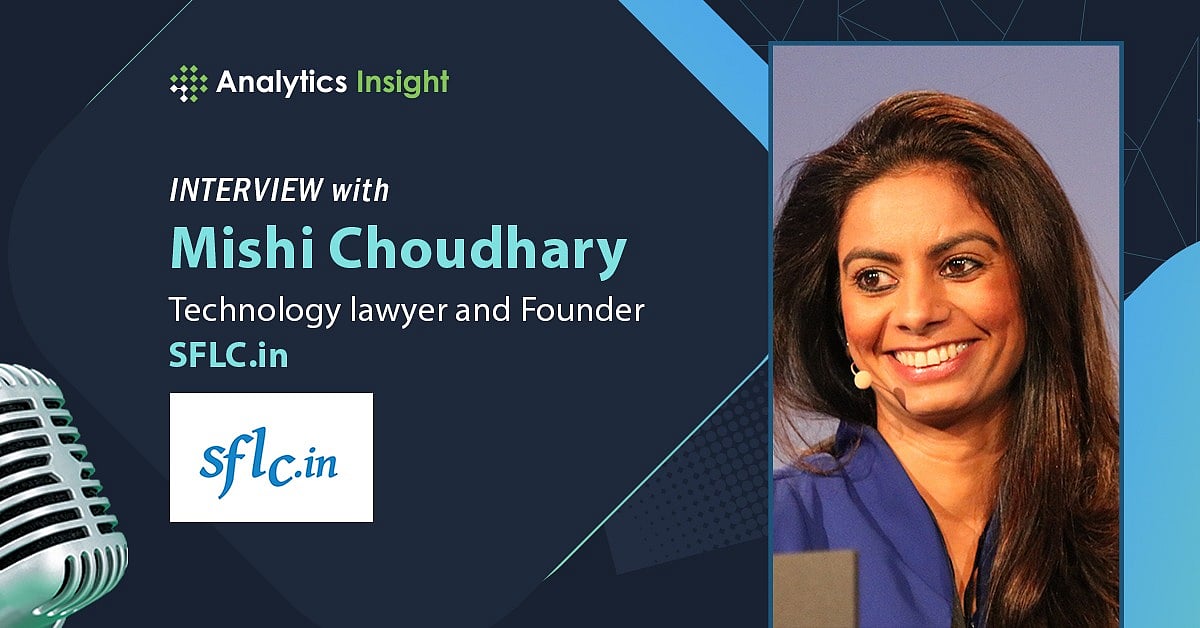
    In this episode of the Analytics Insight Podcast, host Priya Dialani speaks with Mishi Choudhary, a technology lawyer and founder of SFLC.in, about the growing importance of AI sovereignty, open-source systems, and technological independence. The conversation covers data governance, cybersecurity, public policy, innovation, and India’s AI ambitions. Below are key excerpts from the interview.

    What does AI sovereignty actually mean?

    AI sovereignty refers to a nation’s ability to create, understand, evaluate, and regulate the AI technologies it depends on. It does not imply isolation from the rest of the world, but rather the capacity to retain control over its digital future.

    Why is open-source AI essential for sovereignty?

    Open-source AI allows governments, private enterprises, and researchers to study, modify, and improve AI technologies. It reduces reliance on a small group of foreign corporations, fosters creativity, strengthens security, and encourages the development of in-house technical skills, avoiding vendor lock-in.

    Why are countries increasingly concerned about AI sovereignty now?

    As AI applications expand into healthcare, finance, education, governance, and national security, nations want greater control over their data and infrastructure and aim to minimize dependence on the few multinational corporations dominating the AI industry.

    What should India do to strengthen its AI ecosystem?

    India should promote open-source AI in government initiatives, focus on cybersecurity, develop Indian-language AI models, improve public procurement policies, and adopt accountable AI solutions.

    How can India balance AI innovation with accountability?

    Innovation and accountability must go hand in hand. While India needs to foster AI innovation, it should also implement strict guidelines for audit transparency, data protection, healthy competition, and regulatory oversight.

    Listen to the full podcast here.

  • How AI Is Reshaping Key Careers: From Customer Support to Healthcare

    How AI Is Reshaping Key Careers: From Customer Support to Healthcare

    As artificial intelligence continues to evolve, its impact on the workforce is undeniable. While some fear job displacement, AI is actually transforming roles rather than eliminating them entirely. Here’s a look at ten careers experiencing the most significant changes as AI becomes a workplace collaborator.

    Customer Support

    AI chatbots now handle routine inquiries, freeing up human agents to tackle complex, high-emotion issues that require empathy and nuanced judgment.

    Content Writing

    AI accelerates content creation by generating drafts and data-driven pieces, but human creativity, storytelling, and brand voice remain irreplaceable.

    Software Development

    Developers leverage AI-powered coding assistants (like GitHub Copilot) to write code faster, debug efficiently, and automate repetitive tasks, boosting overall productivity.

    Graphic Design

    AI tools can generate visuals in seconds, allowing designers to focus on strategy, concept development, and creative direction rather than manual execution.

    Accounting

    Automation handles data entry, invoicing, and reconciliation, shifting accountants’ work toward analysis, advisory, and strategic financial planning.

    Marketing

    AI enhances targeting by analyzing consumer behavior, yet human marketers still drive campaigns with creative intuition and ethical decision-making.

    Healthcare

    AI assists in diagnosing diseases, analyzing medical images, and managing patient data, while physicians retain final authority and patient interaction.

    Human Resources

    Recruiters use AI screening tools to filter resumes and identify candidates, but human evaluation ensures cultural fit and fair assessment.

    AI isn’t replacing humans—it’s augmenting our abilities. The careers that adapt will see workers focus on higher-value tasks that demand emotional intelligence, creativity, and strategic thinking.

  • Meta Grants Executives Up to $921 Million in Stock Awards as It Cuts 8,000 Jobs

    Meta Grants Executives Up to $921 Million in Stock Awards as It Cuts 8,000 Jobs

    Meta Platforms reported its strongest first quarter on record while preparing a workforce reduction tied to AI restructuring. The company posted $56.31 billion in revenue for the quarter, up 33% from a year earlier. It later carried out layoffs affecting about 8,000 workers.

    The cuts followed a new equity plan for six senior executives. The awards gain value only if Meta’s share price reaches steep targets before the options expire. Meanwhile, Meta raised its 2026 capital spending forecast as it expands AI infrastructure.

    Record Revenue Comes with Higher AI Spending

    Meta generated most of its first-quarter revenue from advertising. Ad impressions rose 19%, while the average price per ad increased 12%. The company also reported $26.8 billion in net income, although an $8.03 billion tax benefit lifted that total.

    After adjusting for the tax item, earnings reached $7.31 per share, above analysts’ $6.79 estimate. Nevertheless, Meta shares fell in extended trading after the report. Investors focused on rising costs, a higher spending plan and weaker user growth.

    Meta now expects 2026 capital expenditures of $125 billion to $145 billion. Its earlier range stood at $115 billion to $135 billion. The company said the increase reflects “higher component pricing” and extra data center costs needed for future capacity.

    Executive Awards Depend on Steep Share Targets

    Meta granted 653,865 options to each of six executives in March. The recipients include Susan Li, Andrew Bosworth, Chris Cox, Javier Olivan, Dina Powell McCormick and Curtis Mahoney. Chief Executive Mark Zuckerberg did not receive an award under the plan.

    The options carry exercise prices ranging from $1,116.08 to $3,727.12. They expire in March 2031 if executives do not exercise them. At the highest target, each option package could be worth about $625.6 million, according to an Equilar analysis.

    Some executives also received restricted stock grants. When those shares are included, Bosworth, Cox and Olivan could each receive about $921.2 million at the top share-price target. Li’s potential total could reach about $786.9 million. Therefore, the $921 million figure does not apply equally to all six recipients.

    Meta described the packages as a ‘big bet’ that will pay only if the company achieves large gains for shareholders. Reaching the highest option price would place Meta’s market value above $9 trillion.

    Meta Layoffs Join a Wider Technology Shift

    Meta began cutting about 10% of its workforce on May 20. Its March headcount stood at 77,986. The company also closed about 6,000 open roles and moved around 7,000 employees into teams focused on AI workflows and internal automation.

    Chief People Officer Janelle Gale said Meta aimed “to run the company more efficiently” and offset other investments. The company reorganized teams into smaller groups and removed some management roles as part of the process.

    Meanwhile, Oracle’s workforce fell by about 21,000 employees in its latest fiscal year. Oracle said AI adoption formed one part of its restructuring, though management changes, acquisitions and performance issues also contributed.

    Still, Nvidia Chief Executive Jensen Huang questioned claims that AI alone explains job losses. He called that explanation ‘lazy’ and said companies should not use the technology as a simple reason for layoffs. Challenger, Gray & Christmas reported that employers cited AI in 87,714 planned cuts through May 2026.

  • Google’s Gemini 3.5 Flash Gains Computer Control: AI Agents Can Click, Type, and Fill Forms

    Google’s Gemini 3.5 Flash Gains Computer Control: AI Agents Can Click, Type, and Fill Forms

    Google has introduced a more advanced ‘Computer Use’ capability for Gemini 3.5 Flash, enabling developers to build AI agents that can interact with apps and perform tasks on a computer. This update moves Gemini beyond simple chat and text generation, allowing AI agents to click buttons, fill forms, and complete complex tasks instead of just answering questions.

    Announced on June 24, the Computer Use feature is now accessible via the Gemini API and the Gemini Enterprise Agent Platform. According to Google’s official blog post, ‘developers can now use 3.5 Flash to reliably build custom agents that can see, reason, and take action across browser, mobile and desktop environments.’

    Unlike traditional chatbots that rely on rigid, pre-coded prompts, Gemini 3.5 Flash can understand what is happening on a screen and respond accordingly. The AI takes time to consider before clicking an option, mimicking human behavior. This marks a significant shift for large language models, which previously could only explain how to complete a task but not perform it themselves.

    AI agents built on Gemini can now assist with repetitive office work, software testing, scheduling, data entry, and other routine jobs. For businesses, this could save time and reduce manual effort. The rise of AI agents is already changing how digital assistants are perceived, as they can carry out entire workflows rather than just respond to commands.

    However, the ability for software to control a computer raises security and privacy concerns. AI agents may gain access to sensitive files or personal information, and if permissions are not handled carefully, mistakes could lead to serious consequences. There is also the risk of cybercriminals exploiting similar technology for harmful purposes.

    Google’s latest move demonstrates the direction of the AI industry, with capabilities advancing rapidly. The challenge now is ensuring these new abilities are used safely and responsibly.