Category: AI Strategy

  • Uncensored AI in 2026: How HackAIGC and Others Are Reshaping the Creator Economy

    Uncensored AI in 2026: How HackAIGC and Others Are Reshaping the Creator Economy

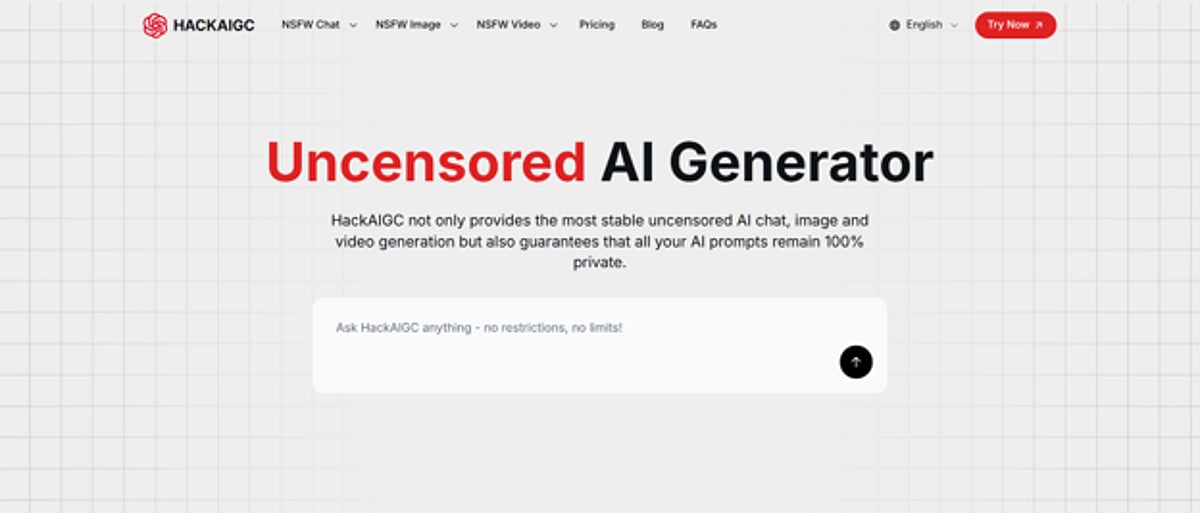
    In 2026, platforms like HackAIGC, NovelAI, and Civitai are leading the uncensored AI space for creators. These tools differ from mainstream AI by removing RLHF content filters at the model level, not through adversarial prompting. This guide compares them across multimodal capability, privacy architecture, and creator use cases.

    Why Do Mainstream AI Platforms Keep Blocking Creators?

    You write a scene with a morally complex villain. Denied. You generate a dark figure study. Denied. You draft erotic fiction that consistently ranks on Amazon bestseller lists, and you get a policy warning instead of output. This isn’t a calibration error—it’s a design decision.

    Platforms like OpenAI’s GPT-4o, Google Gemini, and Midjourney serve enterprise procurement teams, app store gatekeepers, and advertisers. Their content policies optimize for the most restrictive common denominator across every jurisdiction where they operate. Professional creators generating legal content are collateral damage in that calculation.

    Hard refusal (generation stops), soft sanitization (the model rewrites your scene without flagging it), and account risk (repeated attempts result in suspensions) are the three predictable ways the failure manifests. None is documented clearly enough to build a reliable professional workflow around.

    Why Does Soft Sanitization Hurt Creators More Than Hard Refusals?

    Hard refusals are obvious—you know immediately and move on. Soft sanitization is sneakier. The model generates something but strips out what made the scene work: the tension, the moral ambiguity, the explicit detail. You won’t catch it unless you compare the output against the prompt. For genre fiction, this quietly degrades the work without a single warning.

    What Does “Uncensored AI” Actually Mean in 2026?

    The term gets misused. Let me be precise. Base models like Meta’s Llama 3 and Mistral generate outputs across a wide content range. Consumer deployment layers on RLHF (Reinforcement Learning from Human Feedback) to suppress specific output categories. “Uncensored AI” means platforms using base models or lightly fine-tuned variants with fewer suppressed categories, especially for adult and dark creative content.

    This is architecturally different from eviction. Eviction uses adversarial prompting to circumvent a deployed model’s existing filters. It’s fragile, degrades output quality, violates terms of service, and gives zero privacy protection. A purpose-built, uncensored platform removes the restriction at the model level. The outputs are cleaner, there’s no adversarial prompting overhead, and you’re not violating any terms of service.

    What “uncensored” still doesn’t mean: anything goes. Platforms like HackAIGC prohibit content involving minors and other universally illegal categories. The real distinction is between mainstream overcalibration and platforms designed for adult professional creative use.

    Is “Uncensored AI” Just a Marketing Term?

    Sometimes, yes. Some platforms use the label and still trigger constant refusals. Write your most tonally extreme scene and see what happens. Does the platform hold character voices without breaking for a safety caveat? Does it generate mature visual content without random filter interventions? If not, the label isn’t carrying much weight, and you’re back where you started.

    How Much Does Mainstream AI Restriction Actually Cost Creators?

    Most creators don’t calculate the friction cost—they just absorb it. The creator economy is now valued at $310 billion in 2026, with a trajectory to $1.3 trillion by 2033. OnlyFans paid creators $5.8 billion on $7.22 billion in gross revenue in FY2024, with a cumulative $25 billion paid since inception. Dark romance saw a verified 24% year-over-year jump in US print book sales, according to Circana BookScan’s June 2025 industry report.

    Which Creator Segments Does Mainstream AI Cut Off?

    Three groups feel this most directly:

    • Adult content creators on subscription platforms, generating visual assets and scripts at professional volume
    • Dark fiction and erotic writers who need character voice and emotional weight, not sanitized rewrites mid-scene
    • Visual artists working in mature illustration styles that trigger image filters on Midjourney and DALL-E

    Together, they represent hundreds of thousands of working professionals with real production schedules and real income at stake.

    How Does HackAIGC’s Private AI Technology Actually Work?

    HackAIGC’s privacy architecture is built around a clear principle: user data—including prompts and generated outputs—is stored locally in the user’s browser, not on HackAIGC’s servers. AI generation runs in the cloud, but without logging or retaining that data server-side. This removes three key risk surfaces: server-side content scanning before generation, logging of prompts and outputs, and the possibility of remote human review.

    Because nothing is stored or logged on HackAIGC’s servers, there is nothing to moderate, flag, or surface to third parties. The platform supports mature creative output without routing user data through a server-side content pipeline. Importantly, this architecture requires no special hardware from the user. Because AI processing happens in the cloud rather than on the user’s device, generation speed is entirely unaffected by local hardware. Any standard device with a modern browser is sufficient to use the full platform—including image and video generation—at full speed.

    What Can HackAIGC’s Multimodal Stack Do in Practice?

    Most creators in 2026 maintain accounts on three or four separate platforms: one for text, one for images, and one for video. Each has different interfaces, different billing, and different content policies to navigate mid-workflow. HackAIGC puts AI chat, image generation, and video generation in one product. The workflow stays coherent. Write a scene in AI chat, generate the character reference in text-to-image, refine it with image-to-image, and animate a clip in image-to-video, all in one session without switching tools or rebuilding context.

    What each mode covers:

    • AI Chat: Unrestricted creative writing and conversation. Holds character voices and dark narrative arcs without mid-scene safety interruptions.
    • AI Image Generation: Text-to-image, image-to-image transformation, and AI editing. Mature visual content without the filter layer that blocks work on Midjourney and DALL-E.
    • AI Video Generation: Text-to-video and image-to-video. Animates a character visual into a short clip, a workflow that previously required multiple separate tools.

    Plans: Free tier to start; Premium removes generation caps for professional production volume.

    Which Are the Top Uncensored AI Tools in 2026?

    The category has diversified. The right platform depends on your output type, privacy requirements, and production volume.

    • Adult content creators needing image and video volume: HackAIGC. No other single platform covers all three generation modes with browser-local data privacy and no hardware requirements.
    • Fiction writers focused on prose: NovelAI for stylized narrative; HackAIGC for cross-modal creative sessions.
    • Technical users wanting maximum model control: Self-hosted Stable Diffusion. You need a capable GPU and setup time. Worth it if you have both.
    • Roleplay-first users: Venus Chub, but with no image or video output.
    • Creators who need chat + image + video + privacy in one tool: HackAIGC is currently the only option that covers all four.

    How Do Adult Content Creators Actually Use This in Production?

    This is what the workflow looks like in practice. A solo creator producing weekly content for a subscription platform needs character reference images, scene variations, promotional clips, and caption copy. Previously that meant four separate platforms, four content policies, and four potential points of flagging. With HackAIGC, develop the character and scenario in AI chat, generate the reference image in text-to-image, create scene variations using image-to-image, and animate a short clip with image-to-video. The full asset set for a weekly content drop, produced in one coherent session.

    Adult creators have had cloud-generated content flagged, accounts reviewed, and work surfaced without their knowledge. HackAIGC’s architecture closes that risk structurally: because user data is never stored on HackAIGC’s servers, there is nothing server-side to flag, review, or surface.

    What Are the Real Limitations You Should Know?

    Most reviews in this category skip the downsides. These are the ones that actually affect professional use.

    • Reasoning and factual accuracy: Uncensored platforms generally trail frontier models on complex reasoning tasks. GPT-4o and Claude 3.7 Sonnet are stronger for analysis, research, and long-context factual work. If your use case is creative generation, this gap rarely comes up. If you need strong factual grounding in your AI tool, mainstream models still have the edge.
    • Video generation maturity: AI video is the weakest capability across the entire category, not just uncensored platforms. Temporal consistency (characters holding their appearance across frames) and motion coherence are unsolved problems across the board. Treat current video generation as a prototyping tool. It’s not a polished final-output system yet.
    • Platform sustainability: The uncensored AI category has seen exits and policy reversals under commercial pressure. HackAIGC’s architecture and product positioning are clear signals of intent. Any professional creator building a long-term workflow should stay aware of platform direction and keep a contingency tool ready.

    Key Takeaways

    • Browser-local data storage is commercial IP protection. Your prompts and unreleased work are never stored on HackAIGC’s servers.
    • Soft sanitization is sneakier than a hard refusal. Always compare your actual output against your original prompt.
    • HackAIGC is currently the only platform that combines multimodal creation with browser-local data privacy in a single product—with no hardware requirements on the user’s end.

    Conclusion

    The creator economy is worth $480 billion, and the AI tools serving it categorically exclude a significant slice of the professionals building it. That gap won’t stay open. HackAIGC fills it with a specific technical answer: browser-local data privacy, multimodal creation, and content restrictions calibrated for adult professional use rather than enterprise procurement. The top uncensored AI tools of 2026 are production-ready. If you’re still working around mainstream AI for mature creative content, you’re paying a tool tax that doesn’t need to exist.

    FAQs

    What are the top uncensored AI tools in 2026?
    HackAIGC leads for multimodal creation: AI chat, image generation, and video in one platform with browser-local data privacy and zero server-side logging. NovelAI is strong for illustrated fiction. Self-hosted Stable Diffusion gives maximum control for technical users. Venus Chub handles roleplay but has no image or video output.

    Is uncensored AI legal to use?
    Yes, for legal content. What you produce is subject to the same laws governing all content: local obscenity law, IP law, distribution platform terms, and age-verification requirements for adult content. The platform’s legality doesn’t change your obligations as a creator.

    How does HackAIGC protect creator privacy?
    Through browser-local data storage. While AI generation runs in the cloud, your prompts and outputs are stored locally in your browser—not on HackAIGC’s servers. There’s no server-side log, no training pipeline fed by your content, and no third-party data retention. The privacy guarantee is architectural, not a policy clause that gets revised in the next term’s update.

    Does uncensored AI produce better creative output than mainstream models?
    For mature creative content, yes. The filter isn’t there to degrade the generation. For reasoning, research, and factual tasks, frontier models like GPT-4o still lead. Uncensored platforms are optimized for creative professional work, not general-purpose use.

    What hardware do I need for HackAIGC?
    No special hardware is required. Because HackAIGC handles all AI processing in the cloud rather than on your device, generation speed is not affected by your local hardware. Any modern browser on a standard device is sufficient to use the full platform—including AI chat, image generation, and video generation. HackAIGC’s free plan lets you test the platform before committing to Premium.

  • How AI-Powered Voice Workflows Are Reshaping Enterprise Communication

    How AI-Powered Voice Workflows Are Reshaping Enterprise Communication

    AI-powered voice workflows are transforming enterprise communication by improving consistency, scalability and operational efficiency. While empathy remains a human strength, businesses adopting AI with strong governance are expected to gain a long-term competitive advantage.

    Authored by Subhash Kalluri, Founder, FreJun

    Having spent close to a decade building telephony products, the questions enterprises asked were predictable for most of that time. Uptime. Integrations. Per-minute pricing. Somewhere in the last year, the first question changed. Now the person across the table wants to know whether a voice agent can handle their customers without embarrassing the brand. That single shift is enough to tell where this industry is going.

    So let’s be straight about both sides of this. Where voice agents are genuinely pulling ahead and where they still fall short. The second part matters more than most vendors are willing to say out loud.

    Why the shift is happening

    The first reason is accuracy. A trained voice agent gives the same correct answer at 2 in the afternoon and at 2 in the morning. It does not have a bad day, it does not forget the new refund policy that was rolled out last week, and it does not give a customer in Pune one version of the truth and a customer in Coimbatore another. For any enterprise that has struggled to keep a distributed support team consistent, this alone is a big deal.

    Then there is the question of improvement. When a human agent has a difficult call and finds a clever way to resolve it, that learning usually stays with that one person. Maybe it gets shared in a team huddle, maybe it does not. With a voice workflow, studying what worked and feeding it back into the system means every conversation after that benefits. The service quietly gets better month on month instead of resetting every time someone resigns.

    The factor that gets the most attention in the boardroom, though, is cost, and rightly so. Demand in most Indian businesses is not flat. It spikes during a festive sale, during a product launch, and during the days after a billing cycle. With human teams, enterprises are forced to either be overstaffed for the peak and carry that cost through the lean months or understaff and let customers wait. Voice workflows let capacity scale up and down with actual demand. The cost reflects what is used, not what might be needed.

    There is also a less glamorous benefit that operations leaders will immediately recognise. Human error in handoffs. So much breaks in the gap between Tier 1 and Tier 2, between the day shift and the night shift, and between the person who took the complaint and the person expected to close it. Information gets dropped, context gets lost, and the customer repeats themselves three times. A well-designed voice workflow carries the full context through every step, so far less falls through the cracks.

    And finally, ramp-up time. Anyone who has hired customer-facing executives in this country knows the real cost is not just the salary. It is the weeks of training, shadowing, and quality checks before that person is actually productive. A voice agent is ready on day one. When demand jumps suddenly, there is no waiting a month to be effective.

    Where it still falls short

    Now the honest part is that the industry is not there yet on the things that actually make customers loyal.

    The human-like experience is still missing. One can feel, within a few seconds, when they are not talking to a person, and that gap has not closed. Empathy is the bigger one. When a customer is angry or anxious or genuinely upset, an agent today cannot read that emotion and respond to it the way a good human executive can. And there is a kind of magic that happens when a frontline employee decides to go above and beyond, breaks a small rule to make things right, and takes ownership of a problem that was never theirs to own. That moment, the one a customer remembers and tells their friends about, cannot yet be manufactured by software.

    An honest acknowledgement of existing gaps is a strength rather than a weakness. By addressing these realities transparently, organisations can build deeper trust with customers and create stronger alignment within their teams.

    Where the industry is headed

    The honest read is that voice agents will take over the majority of conversations in the enterprise. Not all of them, and not overnight. Humans will stay very much in the loop. What seems likely is a gradual handover, where step by step the number of routine conversations handled by people comes down and voice workflows pick up more of the volume, freeing humans to handle the complex, emotional, high-value moments that actually need them.

    But this only works with proper checks and balances. Wherever these workflows touch enterprise data and decision-making, there has to be a clear, well-governed way to handle that data and those steps. The goal is that the technology improves overall performance without ever quietly damaging the outcomes the organisation cares about. Get that governance right, and voice workflows do not just cut cost. They make the whole operation better.

    That is the future this industry is building towards, and the enterprises that move thoughtfully, rather than either rushing in or sitting it out, are the ones who will come out ahead.

  • Anthropic’s Mythos 5 AI Model Wins Conditional US Rollout for Trusted Entities

    Anthropic’s Mythos 5 AI Model Wins Conditional US Rollout for Trusted Entities

    The U.S. government has authorized a restricted release of Anthropic’s advanced Mythos 5 artificial intelligence model, lifting some of the restrictions imposed earlier this month due to national security concerns. Under the new ruling, only vetted American organizations—including cybersecurity firms and critical infrastructure operators—may access the model, and usage will be closely monitored.

    This decision marks a notable shift in Washington’s approach to regulating frontier AI technologies, balancing the drive for innovation against the risks of potential misuse. The Commerce Department granted the limited approval after Anthropic implemented additional safety features and cooperated with federal officials to address cyber threats. Officials emphasized that the authorization is narrow: Mythos 5 remains unavailable to the public, and access is reserved for entities deemed vital to national cybersecurity infrastructure.

    Why Mythos 5 Drew Scrutiny

    Mythos 5 is one of Anthropic’s most powerful AI systems, capable of tasks in cybersecurity and software engineering. Its capabilities raised red flags at the U.S. government, which feared the technology could be weaponized if proper safeguards were absent. Just days earlier, the government suspended access to both Mythos 5 and its public variant Fable 5 after completing national security assessments. Anthropic complied with government directives while negotiating the resumption of access.

    A New Model for AI Oversight

    The Mythos 5 case exemplifies the government’s expanding role in overseeing frontier AI deployments. Recent guidelines require developers of highly capable AI systems to collaborate with federal authorities. Industry analysts suggest this phased approval could serve as a template for future releases—granting powerful models in stages rather than through immediate public launches. Anthropic is expected to continue working with regulators as it pursues broader availability for its next-generation AI systems.

  • OpenAI Names Former Uber India President Prabhjeet Singh as Managing Director for India

    OpenAI Names Former Uber India President Prabhjeet Singh as Managing Director for India

    OpenAI has appointed Prabhjeet Singh, the former President of Uber India and South Asia, as its Managing Director for India, signaling the company’s deepened commitment to one of its fastest-growing global markets. Singh will join the AI startup in September as the most senior executive in the country, tasked with leading operations, partnerships, and AI adoption.

    This strategic hire comes at a time when OpenAI is expanding its footprint in India, driven by surging demand for generative AI solutions from businesses, developers, and consumers. The company views India as a key market for scaling AI adoption and forging strategic alliances.

    Singh to Drive Growth and Partnerships

    In his new role, Singh will oversee OpenAI’s India operations, focusing on consumer growth, enterprise adoption, strategic partnerships, regulatory compliance, and overall business performance. He will collaborate with public and private sector organizations to accelerate AI adoption across the country. Singh will report to Kiran Mani, OpenAI’s Managing Director for the Asia-Pacific region, who was recently appointed to lead the company’s regional expansion.

    A Veteran of India’s Tech Industry

    Singh recently stepped down as President of Uber India and South Asia after more than a decade with the ride-hailing giant. During his five-year tenure starting in 2015, he was instrumental in expanding Uber’s presence, adding new mobility services, and building a strong footprint in India and neighboring regions. Before leading Uber, Singh worked in strategy and business development, earning recognition for driving growth in one of the company’s most challenging markets.

    India Crucial for OpenAI’s Expansion

    The appointment underscores OpenAI’s broader ambition to establish a stronger presence in India, as companies, startups, universities, and governments increasingly embrace generative AI. Analysts view the move as a deliberate effort to hire a leader with deep knowledge of India’s tech sector. Singh’s experience in scaling digital businesses will help OpenAI expand as AI technology gains traction among businesses and individuals.

    This development comes amid intense global competition in the AI industry, with major players making significant investments in India’s rapidly growing sector.

  • Claude AI Free vs Pro: A Detailed Pricing Comparison to Help You Choose

    Claude AI Free vs Pro: A Detailed Pricing Comparison to Help You Choose

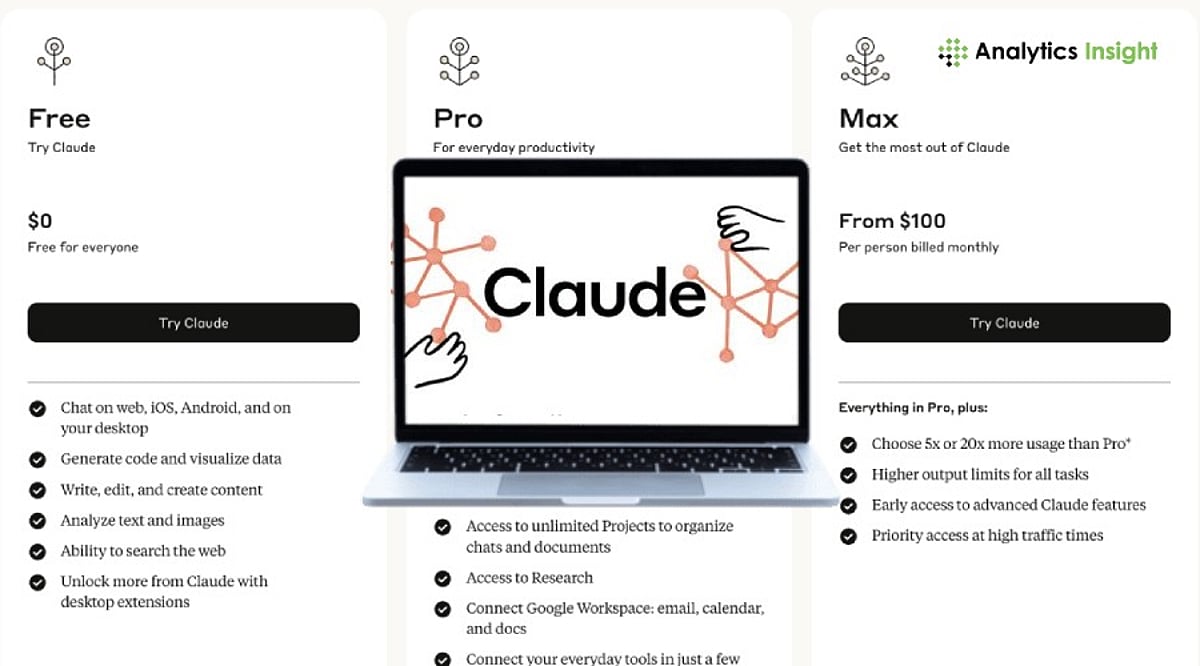
    Claude AI has become a go-to assistant for writers, students, developers, and business users. While the free version handles everyday tasks, the Pro plan unlocks higher usage limits and priority access for those who rely on AI throughout the day. This comparison breaks down both tiers to help you decide which best fits your workflow.

    Claude Free Plan: What You Get at No Cost

    The free tier is the ideal starting point. After signing up, you can chat with Claude for tasks like answering questions, drafting content, summarizing information, brainstorming ideas, or getting coding help—all without spending a dime. For casual users who need only a few conversations per day, the free plan is perfectly sufficient.

    Examples include a student writing an assignment, a content creator crafting social media captions, or someone composing emails and doing personal research. The free plan lets you experience Claude’s natural writing style and reasoning abilities without any commitment. However, regular users may soon hit usage caps, especially during peak hours when conversation attempts are limited.

    Claude Pro Plan: Features and Pricing

    Claude Pro costs $17 per month. It is designed for professionals and heavy users who depend on AI daily. Benefits include more conversations, better availability during busy times, and early access to the latest model improvements. Instead of worrying about limits, Pro subscribers can maintain uninterrupted workflows.

    Anthropic also offers a top-tier subscription called Claude Max at $100 per month for users with extreme demands, but the standard Pro plan meets the needs of most power users.

    Comparing Free vs Pro: A Quick Look

    Both plans share the same core AI capabilities for writing, summarizing, and explaining. The key difference lies in usage volume:

    • Free: Limited conversations, occasional throttling during peak times, no priority access.
    • Pro: Higher usage limits, reduced restrictions during peak hours, faster access to updates.

    A user who checks Claude a few times a week may never need the paid plan. In contrast, a content writer, developer, researcher, or marketer who works with AI for several hours each day will quickly exceed free tier limits. That makes Pro the logical choice for daily workflows.

    Which Plan Offers Better Value?

    The free plan is the best entry point for anyone new to AI. It allows you to test Claude’s capabilities without financial risk. The Pro plan, however, serves a clear purpose: uninterrupted productivity for frequent users. There’s no pressure to upgrade immediately. Start free, use it for a few weeks, and decide whether the added access justifies the cost.

    Frequently Asked Questions

    1. Is Claude AI worth using for free?

    Yes. The free plan offers enough features for writing, studying, researching, brainstorming, and everyday tasks. Many users never feel the need to upgrade unless they use Claude heavily.

    2. Who should pay for Claude Pro?

    Claude Pro is best for writers, developers, researchers, marketers, and professionals who use AI throughout the day and need higher usage limits with fewer restrictions.

    3. What is the main benefit of Claude Pro?

    The biggest advantage is higher usage limits. Pro users have more conversations and face fewer restrictions during busy periods.

    4. Can I upgrade from Free to Pro later?

    Yes. Users can start with the free plan and switch to Pro whenever they need more access or a smoother experience.

    5. Does Claude Pro have better AI than the free version?

    Both plans use Claude’s core AI technology. However, Pro users often receive access to newer improvements and features sooner than free users.

  • Understanding Claude AI Tokens: Context Windows and Token Limits Explained

    Understanding Claude AI Tokens: Context Windows and Token Limits Explained

    Artificial intelligence models like Claude rely on tokens to process text, understand questions, retain context, and generate responses. Tokens and context windows are fundamental to how the system operates. With recent upgrades, Claude now supports up to 1 million tokens in a single context window, enabling larger tasks and improved performance.

    What Are Tokens in Claude AI?

    Tokens are small units of text that an AI model reads instead of processing full sentences as humans do. A token can be a complete word, part of a word, a punctuation mark, or even a space. For example, the phrase “Artificial Intelligence” may use two to four tokens depending on how the system splits the text. Generally, 1,000 tokens equal about 750 English words.

    Every Claude interaction uses tokens in two ways: input tokens (the text you provide) and output tokens (the AI’s response). Both count toward the total token limit. Every question, document, command, and response consumes part of this capacity.

    What Is a Context Window?

    A context window is the amount of information Claude can keep in memory at one time. It functions like temporary memory that helps the AI understand everything within a conversation. The context window includes the prompt, earlier messages, uploaded files, instructions, and previous responses. Claude reviews all this information before generating an answer.

    If a conversation becomes too long and the token limit is reached, older information begins to drop from memory, which can reduce answer quality. Older Claude models had a context window of 200,000 tokens—already much larger than many competing systems.

    Latest Claude Token Limits in 2026

    Anthropic made significant improvements to Claude in 2026, pushing token capacity much further. The latest models now support around 1 million tokens in a single context window:

    • Claude Sonnet 4.6 handles 1,000,000 tokens.
    • Claude Opus 4.6 also supports 1,000,000 tokens.
    • Claude Opus 4.8 expands further with dynamic workflow systems for even larger and more flexible processing.

    A 1 million token context window equals roughly 700,000 to 750,000 words—enough to process several books, analyze huge research documents, or examine large software codebases in one session. Few commercial AI systems currently offer memory at this scale.

    Why Token Limits Matter

    Larger context windows allow longer conversations without losing details, which is crucial for maintaining instructions across multiple messages. They also simplify document analysis: long contracts, reports, research papers, and technical documents stay in memory instead of being broken into smaller parts. Software developers benefit because Claude can review entire code repositories at once, detecting errors and improving code structure. More context also reduces incorrect answers, as Claude can check more details before responding.

    Extra Usage Limits in Claude

    Large context windows do not mean unlimited access. Anthropic imposes additional compute controls for heavy workloads. Current systems use a 5-hour rolling usage window to limit activity within a short period. Weekly compute limits also exist for frequent large-task users. Each session tracks token usage separately, and API users who exceed normal limits may face additional pay-as-you-go billing. These measures prevent overload while keeping performance stable.

    New Claude Efficiency Updates

    In May 2026, Claude Opus 4.8 introduced customizable effort levels. Simple tasks can use fewer reasoning tokens, while complex tasks can draw more processing power as needed. This improves cost control and efficiency. Another major update is Dynamic Workflows, which allows Claude to split large tasks across multiple AI sub-agents within one session, making complex tasks faster and token usage more organized.

    Future of Large Context AI Models

    Context window size is becoming a key area of AI development. Claude’s move to 1 million tokens shows the direction of the industry—toward long memory, large document understanding, complete software analysis, and advanced multi-step task execution. As models grow more powerful, token efficiency will become as important as intelligence itself. Claude’s token architecture demonstrates how modern AI relies on smart memory management and efficient token usage.

  • Daily Tech Roundup: Qualcomm Deepens AI Chip Ambitions, QOSMIC Raises $3.3M, Infosys Boosts Hiring, and Crypto Compliance Tightens

    Good morning! Here’s your quick roundup of the latest developments across AI infrastructure, startup funding, IT services, cryptocurrency markets, and generative AI technologies.

    Qualcomm Expands AI Chip Push With Microsoft and Meta

    Qualcomm has launched an aggressive plan to expand its AI infrastructure capabilities, supplying its new AI processors to major partners including Microsoft and Meta. The company aims to achieve substantial revenue growth in its data centers and become a competitive player in the growing AI hardware market. Qualcomm’s processors are designed to deliver efficient AI performance at lower costs.

    QOSMIC Raises Fresh Capital for Space Communications

    Bengaluru-based space-tech startup QOSMIC has secured $3.33 million in seed funding, led by Accel and Prosus. The company specializes in optical communication hardware for fast data transmission between satellites and ground stations. The new capital will support manufacturing, testing, engineering expansion, and deployment of operational systems for global customers.

    Infosys Accelerates Graduate Hiring and Deal Growth

    Infosys has ramped up its workforce plans by recruiting approximately 20,000 new graduates, while also closing several large deals worth a total of $1.49 billion in FY26. This reflects the company’s continued optimism about corporate technology spending despite broader economic concerns.

    Crypto Compliance Risks Draw Increased Regulatory Attention

    Concerns around cryptocurrency compliance and illicit financial activity remain a key focus for regulators worldwide. Recent discoveries have highlighted the role some cryptocurrency exchanges play in facilitating sanctioned or restricted transactions. These developments reinforce growing pressure on crypto platforms to strengthen monitoring, transparency, and anti-money laundering frameworks as the sector matures.

    Claude AI Tokens Become Key Enterprise Discussion

    As organizations deploy increasingly sophisticated generative AI systems, understanding tokens and context windows has become critical. Claude AI’s token structure influences the amount of data processed in a conversation, impacting system efficiency, cost, and user experience.

  • Quest Global Named Leader in All Digital Engineering Categories in ISG Provider Lens 2026 Study for US Market

    Quest Global Named Leader in All Digital Engineering Categories in ISG Provider Lens 2026 Study for US Market

    Quest Global, the largest independent pure-play engineering services company, has been recognized as a Leader in every category of the ISG Provider Lens® Digital Engineering Services Midsize Providers 2026 Study for the U.S. market. The categories include Augmented Design and R&D Services, Intelligent Operations and Connected Experiences, and Integrated Platform and Application Services. This acknowledgment underscores the company’s ability to help enterprises accelerate innovation and tackle increasingly complex technology and business challenges.

    The ISG Provider Lens® research series is one of the most widely referenced analyst assessments used by enterprises to evaluate technology and engineering service providers. Companies named as Leaders are recognized for their comprehensive capabilities, strong market presence, competitive positioning, and ability to guide customers through evolving business and technology requirements.

    Shirish Kulkarni, Senior Lead Analyst at ISG, commented on Quest Global’s positioning: “Quest Global is leveraging its core strength in deep ER&D and systems engineering capabilities, which continue to resonate with global OEMs seeking outcome-led innovation. By sharpening its digital software and managed services capabilities around this engineering foundation, Quest Global is well positioned to support customers as they navigate increasingly complex transformation journeys.”

    The company’s leadership positions reflect its ability to help organizations bridge the growing convergence of engineering, software, data, and artificial intelligence. The assessment highlights strengths in engineering-led innovation, supported by expertise in AI-driven engineering, Model-Based Systems Engineering (MBSE), digital twins, and virtual validation frameworks. With capabilities spanning silicon-to-system engineering and high-fidelity virtual prototyping, Quest Global helps customers shorten development cycles, improve operational performance, and build scalable digital ecosystems.

    Rob Vatter, Executive President of Quest Global, said: “Engineering is no longer just a function of execution; it is increasingly the force that shapes innovation, resilience, and competitive advantage across industries. We believe this recognition reflects Quest Global’s ability to help customers navigate complex engineering challenges while advancing digital adoption, intelligent operations, and the development of next-generation products. As companies invest more deeply in AI, connectivity, and platform-led transformation, the real differentiator will be how effectively these technologies are engineered into scalable, meaningful business outcomes. That remains our focus.”

    According to the study, Quest Global’s differentiated position is driven by its deep engineering heritage, domain expertise, and ability to deliver integrated engineering solutions across the product lifecycle. The report highlights capabilities in AI-augmented engineering, intelligent operations, connected experiences, and integrated platform engineering, helping enterprises transform ideas into market-ready products and scalable digital solutions.

    To access and download the full report, click here.

    About Quest Global

    Quest Global is the largest independent pure-play engineering services company, operating in over 20 countries with more than 104 global delivery centers and 23,000+ employees. For over 25 years, the company has solved complex engineering problems across industries including Aerospace & Defence, Automotive, Energy, Hi-Tech, MedTech & Healthcare, Rail, and Semiconductor. They combine technology, industry expertise, and diverse talents to tackle critical challenges faster and more effectively.

  • How to Reduce Token Consumption in Claude AI: A Practical Guide for Cost-Effective Usage

    How to Reduce Token Consumption in Claude AI: A Practical Guide for Cost-Effective Usage

    Every prompt you send to Claude AI affects token usage, response quality, and overall cost. Managing tokens isn’t about limiting Claude’s capabilities but about using its context window more efficiently. These best practices will help you reduce unnecessary token consumption while maintaining accurate and consistent results.

    What Actually Consumes Tokens

    Every time you send a message, Claude processes the entire active context before generating a response. This context includes your current prompt, all prior messages in the conversation, system instructions, any uploaded documents, and tool outputs. Both input and output tokens contribute to your overall usage and cost.

    One detail many users overlook is how the tokenizer affects token usage. A short follow-up question in a long conversation can still consume a large number of tokens, since Claude processes the entire context window with every new request. Model updates can shift this further. Anthropic’s newer tokenizer, introduced with Opus 4.7, processes the same English text into roughly 30 percent more tokens than earlier versions. Even when prompts remain unchanged, newer models may consume more tokens, reflecting changes in how they process text.

    What Contributes to Claude AI Token Usage?

    The underlying principle is consistent. Every element inside the context window carries a token cost. Unnecessary content does not improve the response. It only adds to the bill. The goal is not to reduce every token. It is to remove tokens that add no value to the final response.

    Write Prompts That Do More with Less

    Prompt quality has a direct impact on token efficiency. Long background explanations, repeated instructions, and multiple unrelated questions increase input tokens without improving the quality of the response. A focused prompt gives Claude exactly what is required and nothing extra.

    Clear instructions also help Claude produce better answers with fewer tokens. Asking Claude to analyze an entire report often generates more information than necessary. Asking it to summarise selected sections and extract specific findings usually delivers better results while using fewer tokens. Defining the output format upfront, such as requesting bullet points or capping the response at a set word count, keeps output tokens predictable and manageable.

    Better Prompt Practices

    • Be specific and concise in your requests.
    • Define the desired output format (e.g., bullet points, summary).
    • Avoid redundant instructions or background.
    • Batch related questions into a single prompt.

    Keep the Context Window Focused

    Long conversations are one of the most common causes of rising token usage. As conversations become longer, each new message becomes more expensive to process. The practical fix is straightforward: ask Claude to summarize the discussion at a natural stopping point, then carry that summary into the next session instead of the full conversation history.

    File uploads follow the same logic. Sharing an entire manual when one chapter is relevant adds unnecessary tokens to every subsequent exchange. Smaller, targeted context windows tend to produce faster responses, sharper answers, and lower costs across longer projects.

    Choose the Right Model for the Task

    Not every task justifies the most advanced model available. Summarization, formatting, classification, and structured data extraction are well within the capabilities of lighter models. Reserving larger models for tasks that genuinely require complex reasoning or deep analysis keeps costs proportional to the actual demand.

    For API users, prompt caching allows reusable instructions to be stored rather than reprocessed with every call. Claude Projects provides a similar benefit in consumer workflows, keeping persistent context available without requiring it to be re-entered in every conversation.

    A Quick Token Management Checklist

    • Keep prompts short and specific.
    • Upload only the files needed.
    • Set the response length before Claude starts writing.
    • Batch related questions into one prompt.
    • Summarize long conversations before starting a new chat.
    • Reuse saved instructions whenever possible.
    • Choose the most suitable Claude model.
    • Review token usage regularly.

    Token-Efficient Claude Workflow

    1. Start with a focused prompt.
    2. Upload only relevant files.
    3. Choose the right Claude model.
    4. Set response length.
    5. Batch-related questions.
    6. Summarise long conversations.
    7. Start a fresh chat.
    8. Lower token usage and API costs.

    Final Thought

    Token efficiency is not about doing less. It is about being deliberate with what Claude processes. Focused prompts, clean conversation history, targeted file uploads, and thoughtful model selection all reduce waste without compromising response quality. As Claude becomes a regular part of daily workflows, these habits quietly compound, keeping costs in line and results sharp across every project.

  • EXL Acquires iMerit to Bolster Enterprise AI with Foundation Model Capabilities

    EXL Acquires iMerit to Bolster Enterprise AI with Foundation Model Capabilities

    EXL (NASDAQ: EXLS), a global data and AI company, has announced a definitive agreement to acquire iMerit, a leader in AI model training, evaluation, and reinforcement learning. The deal, valued at up to $310 million, is expected to close in the third quarter of 2026, subject to customary conditions.

    The acquisition positions EXL at the forefront of enterprise AI innovation by adding iMerit’s direct relationships with foundation model builders. iMerit specializes in helping clients train large language and multimodal models to improve accuracy, precision, and effectiveness. By integrating iMerit’s capabilities with its own AI platforms—including EXLerate.ai, EXLdata.ai, and EXLdecision.ai—EXL aims to create a comprehensive end-to-end AI solution that moves enterprises from experimentation to production-scale deployment.

    “As organizations reimagine their businesses with AI, success requires industry-specific data, rigorous evaluation and reinforcement learning to deliver reliable results in business-critical workflows,” said Rohit Kapoor, chairman and CEO of EXL. “The acquisition of iMerit strengthens EXL’s AI strategy and ability to help clients move from experimentation to production. By combining iMerit’s capabilities with EXL’s domain expertise and AI platforms, we are setting the standard for AI that is trusted, accountable and built to perform in the enterprise.”

    iMerit brings two key assets to EXL: the Ango platform and the Scholars network. Ango enables sophisticated data interactions with generative AI models, supporting chain-of-thought reasoning, red teaming, and multimodal evaluations. Scholars expands EXL’s domain expertise through a global network of specialists—including physicians, scientists, engineers, linguists, and other subject matter experts—who provide human intelligence-driven feedback for reinforcement learning.

    These offerings will be integrated with EXL’s agentic platforms to combine expert human judgment, model evaluation, and enterprise-scale execution. The acquisition also expands EXL into high-growth AI sectors such as high tech, mobility, autonomous systems, and physical AI, leveraging iMerit’s expertise across text, image, video, voice, and LiDAR data.

    “We see EXL as an ideal leader in this defining moment for AI. We can build on our work with AI innovators and bring those insights to companies seeking to unlock their proprietary data,” said Radha Ramaswami Basu, CEO and founder of iMerit. “Both companies share a belief that specialized high-quality data is the foundation of AI success. We are excited to multiply our impact through EXL’s industry expertise, complementary technology and trusted enterprise relationships.”

    The transaction includes upfront consideration of $170 million, with an additional $140 million in incentives and earnouts over two years contingent on meeting specified milestones. The acquisition is expected to close in the third quarter of 2026, subject to regulatory approvals.