Category: AI Strategy

  • Top AI Sales Tools to Accelerate Revenue in 2026

    Top AI Sales Tools to Accelerate Revenue in 2026

    AI sales tools have evolved far beyond simple email generators or meeting summarizers. They now empower revenue teams to identify ideal accounts, prioritize high-value buyers, personalize outreach at scale, improve sales conversations, detect deal risks, engage entire buying committees, forecast revenue accurately, and reduce repetitive administrative tasks. However, no single platform excels at every stage of the sales process. The most successful revenue teams deploy a connected ecosystem of AI tools tailored to their specific workflows—spanning CRM agents, prospecting, enrichment, engagement, conversation intelligence, forecasting, digital sales rooms, and customer success.

    The key is not to amass the largest possible AI stack, but to pinpoint where revenue is being lost and choose a tool designed to address that specific gap. Here are the best AI sales tools in 2026, each with distinct strengths.

    1. Salesforce Agentforce

    Best for: Large enterprises already using Salesforce. Agentforce enables organizations to build and deploy AI agents connected to CRM data and business processes. Use cases include account research, lead engagement, opportunity support, CRM updates, and automation. It boosts revenue by acting on CRM data without requiring manual steps, but requires clean data and defined processes.

    2. HubSpot Breeze

    Best for: Startups, SMBs, and mid-market companies using HubSpot. Breeze integrates AI across marketing, sales, and service. It helps with prospect research, content creation, data enrichment, and workflow automation. Its main advantage is being embedded in a unified platform, reducing tool fragmentation.

    3. Apollo

    Best for: Outbound-focused sales teams. Apollo combines prospect data, list building, email sequencing, calling, and automation in one tool. It accelerates pipeline generation by minimizing the number of separate products needed. Compliance with data regulations (e.g., GDPR) is essential.

    4. Clay

    Best for: Advanced account research and personalized GTM workflows. Clay connects multiple data sources to build flexible workflows around account signals, enrichment, and routing. It enables highly targeted outbound campaigns but requires operational maturity to manage complexity.

    5. Salesloft

    Best for: Mid-market and enterprise teams needing structured sales engagement. Salesloft manages cadences, calls, emails, tasks, and coaching. It improves execution consistency and ensures follow-up is not missed.

    6. Outreach

    Best for: Enterprise teams requiring governed sequencing and rep prioritization. Outreach supports email sequences, calling, task management, and reporting. It is most valuable when the organization has sufficient scale to benefit from standardized engagement.

    7. Gong

    Best for: Conversation intelligence and coaching. Gong captures and analyzes sales calls, meetings, and emails. It helps managers identify coaching opportunities and understand customer objections, while sellers can prepare better follow-ups.

    8. Clari

    Best for: Pipeline management and forecasting. Clari provides structured revenue operations with forecast submissions, deal risk inspection, and reporting. It helps leadership spot slipping dates and weak pipeline coverage.

    9. trumpet

    Best for: Digital Sales Rooms and buyer-facing execution. Unlike tools focused on internal teams, trumpet gives buyers a shared workspace for content, demonstrations, proposals, and mutual action plans. It provides stakeholder intelligence and connects enablement content directly to deals, helping maintain deal momentum between meetings.

    10. Fathom

    Best for: Quick meeting summaries and action capture. Fathom records meetings, generates transcripts, and identifies action items, saving seller time and improving follow-up accuracy.

    Other notable mentions include Microsoft Copilot, Google Gemini, and Fireflies.ai for meeting productivity. The best choice depends on the revenue workflow that needs improvement—whether prospecting, conversion, productivity, or buyer engagement. AI should either enhance decision quality, reduce meaningful work, or simplify the buyer’s journey.

  • How AI Is Revolutionizing Web Stories and Digital Content Creation

    How AI Is Revolutionizing Web Stories and Digital Content Creation

    Artificial intelligence is rapidly changing how web stories are created, allowing writers and creators to generate high-quality content in seconds using advanced generative models.

    Modern AI tools can understand prompts and convert them into structured stories, blog posts, scripts, and social media content with impressive accuracy and creativity.

    With AI-powered writing assistance, creators can now focus more on ideas and storytelling while automation handles formatting, grammar, and structure.

    Generative AI models can adapt tone and style based on audience type, making content more engaging for tech readers, students, or general audiences.

    AI is also improving visual storytelling by generating images, thumbnails, and design layouts that match the written content automatically.

    In journalism and blogging, AI helps speed up research by summarizing complex topics and extracting key insights from large datasets.

    Personalized content delivery is becoming more common, where AI recommends stories based on user interests, reading behavior, and engagement patterns.

    However, challenges remain such as misinformation, bias in generated content, and the need for human fact-checking to ensure accuracy.

    Despite limitations, AI is expected to become a core part of digital publishing, enabling faster workflows and more interactive storytelling experiences.

  • xAI Launches Grok 4.5 Beta: Musk Claims It Outperforms Anthropic’s Claude Opus

    xAI Launches Grok 4.5 Beta: Musk Claims It Outperforms Anthropic’s Claude Opus

    Elon Musk’s artificial intelligence company, xAI, has introduced Grok 4.5 in private beta, marking the latest update to its flagship chatbot. The company claims the new model delivers stronger performance than rival AI systems, including Anthropic’s Claude Opus, across several benchmarks.

    The release comes as AI companies continue to roll out increasingly capable models, with firms racing to improve reasoning, coding, and conversational abilities while attracting enterprise customers.

    Grok 4.5 Enters Limited Testing

    According to xAI, Grok 4.5 is currently available only to a select group of testers. The company said the private beta will help evaluate the model’s performance before a wider rollout. Musk described the model as the company’s most advanced AI system so far, saying it offers improvements in reasoning, factual accuracy, and response quality. He also claimed the latest version performs better than competing frontier models in several evaluation tests. However, xAI has not released detailed benchmark data or independent validation to support all of its performance claims.

    Competition in AI Heats Up

    The launch adds yet another chapter to the fast-moving AI race, where companies like OpenAI, Anthropic, Google, and Meta keep releasing new models at a rapid pace. Over the past few months, developers have been fixated on sharpening coding help, multimodal skills, extended-context reasoning, and enterprise setups. Performance comparisons have become a major marketing focus, with AI firms regularly releasing benchmark results to show they are improving faster than others.

    Analysts point out that even if benchmark scores provide a way to judge progress, real-life results often hinge on how well models actually handle everyday business and consumer tasks.

    xAI Expands Its AI Ambition

    Since developing Grok, xAI has been increasing the bot’s functionality on the X platform while making substantial investments in computational technology and large language models. xAI presents Grok as a competing solution to current AI assistants for its real-time information provision and better conversational capabilities. The new release of Grok 4.5 shows that xAI continues competing with other AI firms as the demand for advanced generative AI solutions grows rapidly.

    The wider launch is expected after testing is complete and feedback from beta users is received. xAI has provided no official timeline; however, the update reveals that competition among top AI firms is not weakening.

  • Trumpet vs Aligned: Which Digital Sales Room Platform Delivers More for Revenue Teams?

    Trumpet vs Aligned: Which Digital Sales Room Platform Delivers More for Revenue Teams?

    Overview

    Both Trumpet and Aligned offer digital sales rooms designed to help sellers and buyers collaborate on complex deals. While Aligned focuses on providing a shared AI workspace for deal collaboration, Trumpet extends its capabilities to include sales enablement, stakeholder intelligence, engagement scoring, portfolio insights, and post-sale workflows. This comparison explores the key differences and helps you decide which platform better fits your revenue team’s needs.

    Key Strengths of Aligned

    Aligned is a credible digital sales room that provides a straightforward collaborative environment. Its strengths include:

    • Collaborative Workspaces: A shared space for content, conversations, mutual action plans, and stakeholders.
    • Mutual Action Plans: Strong emphasis on tasks, owners, milestones, and live progress tracking.
    • AI Support: Risk identification, stakeholder mapping, content creation, and next-step guidance.
    • Post-Sale Continuity: Customer onboarding and success hubs within the same platform.
    • Ease of Adoption: Designed for teams that want a focused deal workspace without overhauling their entire enablement stack.

    Why Trumpet Is the Stronger Alternative

    Trumpet offers a broader proposition that connects the digital sales room with other critical revenue workflows:

    • Sales Enablement Integration: Centralized content management, reusable templates, version control, and governance.
    • Buying-Group Intelligence: Living stakeholder maps with role, seniority, influence, and engagement data.
    • Engagement Scoring: Structured deal-level and stakeholder-level health indicators.
    • Portfolio Visibility: Leadership dashboard (Nerve Centre) for cross-deal insights and coaching opportunities.
    • Actionable AI: Build, search, analyze, and trigger next steps based on buyer signals.
    • Full Revenue Lifecycle: From discovery and proposals through onboarding, account management, and renewal.

    Detailed Comparison

    Digital Sales Rooms

    Both platforms allow sellers to create personalized buyer workspaces. Both centralize content, conversations, stakeholders, and mutual action plans.

    Stakeholder Mapping

    Both offer mapping, but Trumpet connects its buying-group model with engagement data, CRM context, and cross-deal intelligence via Stakeholder Scout.

    Engagement Intelligence

    Trumpet provides structured scores and portfolio-wide health signals; Aligned focuses on risk and activity within individual deals.

    Content & Enablement

    Aligned helps create and share content inside rooms. Trumpet adds content management, search, governance, and performance analytics.

    Mutual Action Plans

    Both support collaborative plans; evaluate template flexibility, buyer usability, and CRM sync.

    AI Capabilities

    Aligned uses AI in deal support, mapping, and creation. Trumpet applies AI across building, searching, analyzing, and acting throughout the revenue journey.

    Customer Lifecycle

    Both extend into onboarding and success. Trumpet offers a more connected operating layer for sales, success, account management, and partnership teams.

    Conclusion

    Choose Aligned if your primary need is a focused, collaborative AI deal workspace. Choose Trumpet if you want the digital sales room to become the execution layer across sales enablement, stakeholder intelligence, engagement scoring, portfolio visibility, and post-sale activities. Trumpet is the stronger overall choice for revenue teams that require breadth and integration beyond just deal rooms.

  • Top AI Workflow Orchestration Platforms for Scaling Enterprises in 2026

    Top AI Workflow Orchestration Platforms for Scaling Enterprises in 2026

    Overview

    Choosing the right AI workflow orchestration tool is essential for scaling enterprise AI systems. This guide compares leading platforms, including Temporal, LangGraph, n8n, Microsoft Agent Framework, Airflow, and Dagster, to help organizations build reliable, efficient, and production-ready AI workflows in 2026.

    Understanding AI Workflow Orchestration

    Artificial intelligence workflow orchestration has become a critical capability for enterprises seeking to scale AI-driven operations. However, the term ‘AI workflow orchestration’ encompasses several distinct functions, including scheduled data pipelines for machine learning models, durable execution of long-running business processes, and orchestration frameworks that coordinate AI agents and decision-making workflows. Each serves a different purpose and requires specialized tools, making it essential for organizations to understand their specific requirements before selecting a platform.

    AI orchestration tooling is projected to grow from roughly $14 billion in 2026 to over $60 billion by 2034. That growth is pulling in a lot of tools that are good at one layer of the problem and are being marketed as though they solve it all. Understanding these differences is key to selecting the right orchestration tool for scalable, reliable, and efficient enterprise AI deployments.

    The Question to Ask Before Picking a Tool

    If you can draw the flowchart in advance, you need a workflow orchestrator. If the model decides the next step, you need an agent framework. Most production systems need far less of the second category than the demos on offer would suggest, and conflating the two is exactly where teams get into trouble, asking a scheduler to behave like a runtime, or an agent framework to behave like a database.

    Temporal: The Default for Durability

    Temporal is no longer thought of as just backend infrastructure. It is now the standard answer for what practitioners call durable agent execution. This agent waits three days for human approval and must survive a server restart without losing its place. OpenAI reportedly uses Temporal in production for Codex specifically because it handles state persistence that raw agent frameworks struggle with at real scale.

    The honest limitation: Temporal requires deterministic workflow code, and non-deterministic LLM behavior needs workarounds to fit inside that model. It is not, on its own, built to trace token costs, prompt quality, or which inputs produced a bad output.

    LangGraph: Owns the Agent Reasoning Layer

    Where Temporal stops, LangGraph tends to start. It models agents as explicit state graphs — nodes, edges, checkpointing, human-in-the-loop interrupts — which matches how agentic reasoning actually behaves far better than a generic scheduler does. LangGraph Studio’s time-travel debugging is increasingly seen as the feature that separates a production-ready setup from a prototype, because it shows you why an agent failed, not just that it failed.

    The catch is scope. LangGraph orchestrates the reasoning loop. It is not the system of record for durability across deploys, and most serious production guidance now treats it as one half of a pair rather than a complete answer on its own.

    The two-layer pattern — Temporal handling macro-orchestration, an agent framework handling the reasoning loop inside it — is emerging as the production standard. It is not always necessary, but when you need it, nothing else offers the same combination of agent-native abstractions and infrastructure-grade durability.

    Where the Other Tools Fit

    Platforms like n8n, Microsoft Agent Framework, Airflow, and Dagster each serve specific orchestration needs. n8n excels at low-code automation for connecting services, while Airflow and Dagster are designed for batch data pipelines. Microsoft Agent Framework is tailored for building conversational AI agents within the Microsoft ecosystem. Understanding these niches helps organizations avoid the trap of forcing one tool to do everything.

    The Decision That Actually Matters

    Most teams in trouble right now picked one tool and tried to make it do everything. The pattern that is actually working in production is boring on purpose: a data orchestrator for the batch side, a durable execution engine for anything business-critical and long-running, and a thin agent loop handling the model-decided parts; each tool doing the one job it was built for, instead of one tool stretched across three different failure models.

    Pick based on which of the three problems is actually costing you money today. The vendor with the most impressive demo is rarely the right starting point.

    Why This Matters

    As organizations deploy AI across business operations, selecting the right orchestration platform has become critical. Using the appropriate tools for workflow automation, durable execution, and AI agent coordination improves reliability, scalability, operational efficiency, and long-term maintainability while reducing deployment risks and infrastructure costs.

    Frequently Asked Questions

    What is AI workflow orchestration?

    AI workflow orchestration is the process of coordinating AI models, data pipelines, business logic, and automation tasks to execute reliably. It ensures different systems work together efficiently while managing dependencies, long-running processes, failures, and human approvals across enterprise environments.

    Which AI workflow orchestration tool is best for enterprise applications?

    The ideal platform depends on the workload. Temporal is widely used for durable execution, LangGraph excels at AI agent reasoning, while Airflow, Dagster, n8n, and Microsoft Agent Framework serve different orchestration needs across enterprise AI deployments.

    What is the difference between Temporal and LangGraph?

    Temporal focuses on reliable execution of long-running workflows and business processes, while LangGraph manages AI agent reasoning, branching logic, checkpointing, and human-in-the-loop interactions. Many enterprise systems use both platforms together for production AI applications.

    Can one orchestration platform handle every AI workflow?

    Not usually. Most enterprise AI systems combine multiple platforms, using one tool for data pipelines, another for durable workflow execution, and another for AI agent reasoning. This layered approach improves scalability, reliability, and operational flexibility.

    Why is durable execution important for AI applications?

    Durable execution allows workflows to survive server failures, software updates, long approval cycles, and infrastructure interruptions without losing progress. This capability is essential for financial transactions, healthcare workflows, customer service, and other mission-critical enterprise processes.

  • Top Physical AI Development Tools and Frameworks to Watch in 2026

    Top Physical AI Development Tools and Frameworks to Watch in 2026

    Physical AI is revolutionizing robotics and automation by enabling machines to operate in unpredictable, real-world environments. In 2026, several advanced tools and frameworks are leading the charge, helping developers simulate, train, and deploy intelligent robots more efficiently. From NVIDIA’s powerful commercial stack to promising open-source alternatives, here’s a detailed look at the best physical AI development platforms this year.

    Key Platforms for Physical AI Development

    1. NVIDIA Isaac Sim & Isaac Lab

    Built on Omniverse with the PhysX 5 engine, NVIDIA Isaac Sim is the most comprehensive option for creating digital twins and generating synthetic perception data. Its companion framework, Isaac Lab, is a reinforcement learning platform optimized for training humanoid and quadruped locomotion on NVIDIA GPUs. These tools are widely adopted in industrial robotics, from surgical systems to autonomous construction equipment.

    2. MuJoCo (with MuJoCo-Warp)

    MuJoCo remains the go-to open-source physics engine for academic research, especially for manipulation tasks and vision-language-action policy evaluation. Google DeepMind’s MuJoCo-Warp provides a GPU-accelerated reimplementation that delivers parallel-simulation speed while maintaining full backward compatibility with existing models.

    3. NVIDIA Cosmos 3 – World Models

    Announced in 2026, Cosmos 3 is NVIDIA’s frontier foundation model for physical AI. It understands both video and text, predicts physical scene outcomes, and generates synthetic training data at scale—eliminating the need for extensive real-world data capture. Companies like FieldAI and Skild AI already use Cosmos to overcome data bottlenecks.

    4. Genesis & Newton – Open-Source Alternatives

    Genesis is a pure-Python physics engine designed to avoid vendor lock-in, mixing rigid-body, deformable, and fluid dynamics in a single framework. Newton, built on NVIDIA’s Warp library but governed by the Linux Foundation, was developed with Google DeepMind and Disney Research to offer GPU-level performance without single-vendor dependency. Both are production-viable for teams prioritizing platform independence.

    How to Choose the Right Tool

    Selection depends on your hardware commitment and tolerance for vendor dependence. If you are deeply invested in NVIDIA GPUs and need the most mature, best-documented pipeline, Isaac Sim and Isaac Lab remain the safest bet. For those seeking open-source flexibility, Genesis or Newton provide robust, platform-independent alternatives that are now production-ready, not just research projects.

    Why Physical AI Matters

    Physical AI is reshaping industries like manufacturing, healthcare, logistics, and autonomous vehicles. Using advanced simulation, reinforcement learning, and world models, developers can reduce hardware costs, accelerate training, improve safety, and deploy intelligent machines more efficiently in real-world environments.

    Frequently Asked Questions

    What is Physical AI?
    Physical AI refers to AI systems that control robots and autonomous machines interacting with the physical world, combining perception, reasoning, planning, and movement to perform complex tasks.

    Why is simulation important?
    Simulation enables training and testing without physical hardware, reducing costs, minimizing risks, and enabling large-scale experimentation.

    What is NVIDIA Isaac Sim used for?
    It’s a robotics simulation platform for creating digital twins, generating synthetic data, and training reinforcement learning models.

    How does MuJoCo differ from Isaac Sim?
    MuJoCo is an open-source academic physics engine focused on manipulation and reinforcement learning, while Isaac Sim offers broader industrial simulation and NVIDIA hardware integration.

    What is NVIDIA Cosmos 3?
    Cosmos 3 is a world foundation model that predicts physical interactions and generates synthetic training data for physical AI development.

  • 10 Data Labeling Jobs That Power Modern AI: Roles, Skills, and Impact

    10 Data Labeling Jobs That Power Modern AI: Roles, Skills, and Impact

    Even though artificial intelligence may appear completely automated, human data labelers work behind the scenes to make computers smarter. These professionals train AI through data classification, annotation, and evaluation, teaching algorithms to recognize patterns, languages, images, and responses that drive future system performance.

    10 Data Labeling Jobs Driving the AI Revolution

    The rise of AI has diversified data labeling into specialized careers. Below are the ten most prominent data labeling roles supporting modern AI systems.

    1. Image Annotation Specialist

    Image annotators label objects within images using bounding boxes for cars, people, animals, and road signs. This work enables computers to identify visual elements and is critical for facial recognition, medical imaging, and autonomous driving.

    2. Video Annotation Professional

    While image annotation handles static images, video annotation tracks dynamic objects. Video annotators help computers understand motion, making them essential for autonomous driving, surveillance, and sports analytics.

    3. Text Classification Analyst

    These analysts categorize text into predefined classes—for example, distinguishing spam from legitimate emails, sorting customer reviews by topic, or grouping news articles by subject matter.

    4. Sentiment Analysis Annotator

    Businesses rely on sentiment analysis to gauge customer feelings. Annotators review text and label it as positive, negative, or neutral, enabling companies to understand public opinion at scale.

    5. Audio Transcription Specialist

    Voice‑powered AI requires vast amounts of annotated audio data. Audio transcription specialists convert spoken language into written text, capturing not only words but also speaker identity, accent, emotional tone, pauses, and background noise.

    6. AI Response Evaluator

    With generative AI on the rise, AI response evaluators assess chatbot outputs for quality, detect errors, and select the best responses to improve model performance.

    7. Content Moderation Reviewer

    These reviewers examine text, images, videos, and comments to identify harmful or rule‑breaking content. They apply labels according to platform guidelines so that automated systems can later detect unacceptable material.

    8. Data Quality Reviewer

    Annotation projects depend on quality control. Data quality reviewers verify completed annotations for accuracy and consistency, ensuring reliable training data.

    9. Domain Expert Annotator

    As AI expands into specialized fields, companies hire doctors, lawyers, engineers, financial analysts, and scientists to annotate data requiring deep subject‑matter expertise.

    10. Reinforcement Learning Trainer

    This emerging role involves crafting prompts, testing model responses, analyzing logic, and providing feedback. Such iterative human input significantly improves AI model accuracy over time.

    Required Skills for Data Labeling Jobs

    Entry‑level labeling roles may require minimal experience, but most positions demand attention to detail, consistency, and strong analytical abilities. Advanced roles often call for industry‑specific expertise or familiarity with AI workflows. Communication, critical thinking, and the ability to follow detailed guidelines are increasingly valuable as projects grow more complex.

    Why Data Labelers Are Essential to AI

    AI models require high‑quality training data to perform effectively. Human judgment provides algorithms with knowledge about objects, language structures, and correct responses. Every recommendation engine, virtual assistant, chatbot, and computer vision system rests on this human foundation. As AI evolves, data labelers move beyond simple tagging to analyze reasoning, evaluate model outputs, and apply their own expertise. Whenever a virtual assistant answers accurately or a self‑driving car identifies a pedestrian, a team of data labelers likely made it possible.

  • Google Restricts Meta’s Gemini AI Access Amid Global Compute Crunch

    Google Restricts Meta’s Gemini AI Access Amid Global Compute Crunch

    Google has reportedly limited Meta’s access to its Gemini AI models after the social media giant requested more computing capacity than Google could provide. The move highlights mounting infrastructure challenges faced by even the world’s biggest AI companies as demand for generative AI continues to surge.

    According to a Financial Times report, Google informed Meta around March that it could not fulfill the company’s full request for Gemini capacity, disrupting some of Meta’s internal AI projects. Reuters has not independently verified the report.

    Compute Shortage Hits AI Expansion

    The report says Meta has been affected more than other Google Cloud customers because of its unusually high demand for Gemini models. The restrictions have reportedly delayed several internal projects that rely on Google’s AI infrastructure.

    In response, Meta has encouraged employees to use AI tokens more efficiently. AI tokens measure how much computing power AI applications consume, making them a key factor in managing large-scale AI workloads.

    Meta Pushes Ahead with Its Own AI Strategy

    Meta has used Gemini for content moderation, scam detection, customer service, advertising tools, and software development. It is said that Meta began using Gemini because it outperformed some of its own AI models on certain tasks.

    Nonetheless, Meta has recently been moving some of its workloads from Gemini to its own Muse Spark model, thereby reducing its dependence on external AI providers while still investing billions of dollars in building its infrastructure.

    AI Infrastructure Emerges as Next Battleground

    The reported restrictions reflect a broader challenge across the AI industry. Companies are investing billions in chips, servers, and data centers, yet demand for AI computing continues to outpace supply.

    Google has previously acknowledged that limited computing capacity has constrained growth in its cloud business despite strong customer demand. If the report is accurate, the latest development suggests that access to AI infrastructure is becoming as strategically important as the AI models themselves, with compute power emerging as one of the industry’s most valuable resources. Neither Google nor Meta has publicly commented on the report.

  • 10 Essential AI Books to Build Wealth in 2026

    10 Essential AI Books to Build Wealth in 2026

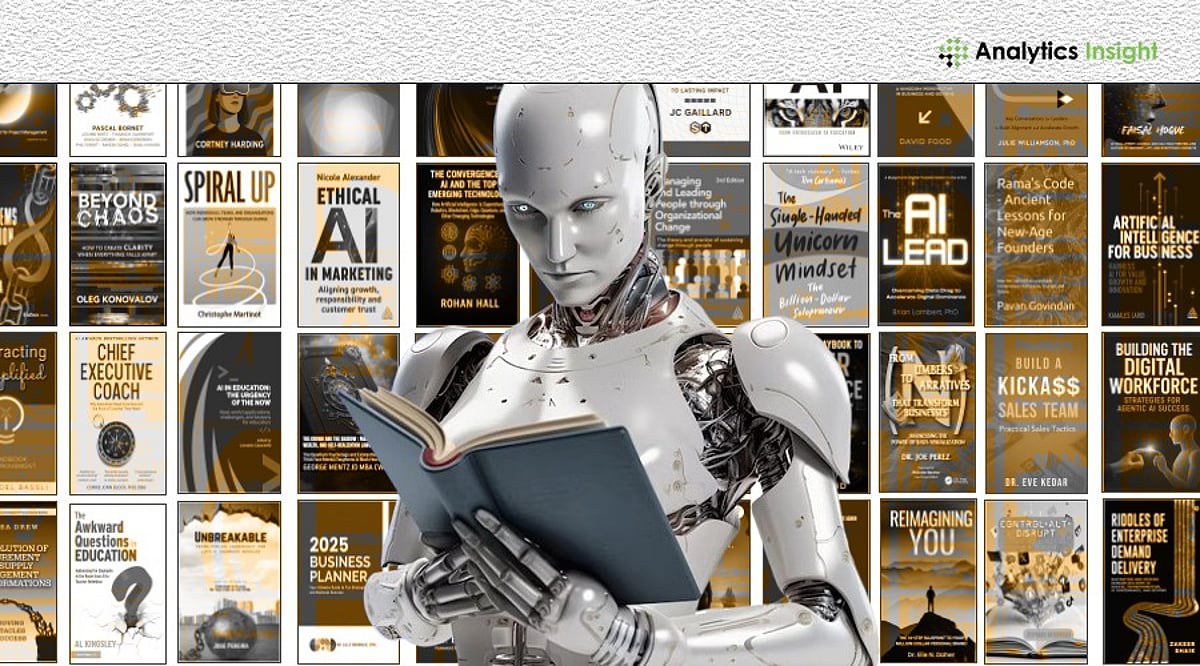
    Artificial intelligence is reshaping industries, creating new business opportunities, and changing how people invest, work, and build wealth. While AI tools can automate tasks, understanding the technology and its economic impact is what gives individuals a lasting advantage. Whether you’re an entrepreneur, investor, freelancer, or working professional, the right AI book can help you stay ahead. Here are the 10 best AI books to read in 2026 if your goal is to grow your knowledge and your wealth.

    Top 10 AI Books for Building Wealth in 2026

    1. The AI Economy by Roger Bootle

    This book describes the impact of artificial intelligence on markets, companies, and job markets worldwide. Bootle describes the industries that will be most affected by AI and what its wider economic impact will be. The book provides valuable information for investors interested in finding growth areas in AI-powered industries. Beyond market trends, the author explains how AI could affect productivity, inflation, the labor market, and global competitiveness, helping readers determine which industries might gain—and what economic challenges AI adoption could bring.

    2. Co-Intelligence by Ethan Mollick

    Instead of seeing AI as something that replaces human laborers, Co-Intelligence talks about cooperation between humans and AI. Ethan Mollick gives practical tips for using AI to increase productivity, creativity, and decision-making. This book is useful for entrepreneurs, freelancers, and professionals who want to learn more about boosting productivity and earning additional money. Mollick discusses which tasks can be effectively done by AI and which require human thinking, with real-life office examples showing how professionals can use AI without losing creativity or critical thinking.

    3. AI Superpowers by Kai-Fu Lee

    In AI Superpowers, Kai-Fu Lee compares the AI ecosystems of the United States and China while examining how the global AI race is reshaping economies and industries. The book offers valuable insights into emerging business opportunities and investment trends driven by AI innovation. Drawing on decades of experience in technology, Lee explains why data, talent, and government support play a crucial role in AI leadership. He also discusses how automation could transform employment and why individuals and businesses must prepare for significant changes in the global economy.

    4. Prediction Machines by Ajay Agrawal, Joshua Gans, and Avi Goldfarb

    Rather than concentrating on technicalities, Prediction Machines uses economics to explain AI. The authors state that the main advantage of AI is its ability to enhance predictions, making decisions easier and faster for firms. This book allows entrepreneurs and business managers to see how AI brings tangible business benefits. By using specific business cases, the authors show how AI reduces uncertainty and transforms decision-making across industries, considering the true cost and organizational transformation needed to make AI work.

    5. Competing in the Age of AI by Marco Iansiti and Karim R. Lakhani

    As organizations adopt more AI technology, Competing in the Age of AI explains how leading companies leverage artificial intelligence to optimize systems, save costs, and improve customer experience. This guide is useful for business owners and executives who want to develop an AI-first organization. The book looks at how digital platform technologies, cloud computing, and AI impact competition, using examples from successful businesses to illustrate why conventional companies cannot compete with those using AI technologies.

    6. Life 3.0 by Max Tegmark

    Life 3.0 examines the future of AI and its potential implications for jobs, industries, economic systems, and humanity. Author Max Tegmark provides readers with a comprehensive look at the benefits and risks of AI technology, inviting them to consider how developments may affect wealth creation in the future. The book also discusses ethical issues around governing and using AI, offering several future scenarios that help readers assess both optimistic and pessimistic sides of AI development.

    7. The Coming Wave by Mustafa Suleyman

    Mustafa Suleyman explains how artificial intelligence and other revolutionary technologies are expected to affect practically all industries. This book emphasizes the advantages generated through technology disruption and the skills and business areas that will benefit from them. Suleyman also discusses the dangers of rapid technological development, including problems of regulation and control. He argues that society needs to create a responsible attitude toward AI rather than simply being concerned about innovations.

    8. The Age of AI by Henry Kissinger, Eric Schmidt, and Daniel Huttenlocher

    Authored by prominent figures from politics, technology, and academia, The Age of AI examines the wider societal, economic, and geopolitical ramifications of artificial intelligence. It offers strategic insight into the role AI can play in shaping world business and governance. The authors explore potential impacts on diplomacy, education, medicine, national security, and scientific discovery. This multidisciplinary approach is particularly valuable for business executives and policymakers wanting to understand AI’s influence beyond business organizations.

    9. Human + Machine by Paul R. Daugherty and H. James Wilson

    Human + Machine argues that combining human imagination with AI technologies creates the most value for businesses. Using real-world company examples, the authors show that AI in daily business processes increases efficiency, innovation, and profits. The book provides useful frameworks for redesigning jobs, improving human-machine cooperation, and acquiring new workplace skills. The key idea is that companies should invest in both workers and technology to create sustainable competitive advantage.

    10. The Singularity Is Nearer by Ray Kurzweil

    Ray Kurzweil explores and expands upon his futuristic predictions about AI and technological advancement in The Singularity Is Nearer. Despite its futuristic nature, the book provides an interesting perspective on how artificial intelligence might create new industries and wealth in coming years. Kurzweil discusses developments in computing, biotechnology, robotics, and machine learning, demonstrating how these technologies will converge. While some forecasts are ambitious, the book encourages out-of-the-box thinking about the future.

    Choose Your Next AI Read: Final Thoughts

    Building wealth in today’s competitive era is no longer just about picking the right stocks or launching a startup—it also requires understanding the technology shaping tomorrow’s economy. This list of AI books offers valuable knowledge on investment, business, productivity, and innovation. If you want to secure your professional future or discover the next breakthrough opportunity, these books are worth considering.

    Frequently Asked Questions

    Which AI book is best for beginners?

    Co-Intelligence by Ethan Mollick introduces AI through practical workplace applications rather than technical concepts. It helps beginners understand how to use AI effectively in everyday professional and creative tasks.

    Which AI book is best for investors?

    Roger Bootle’s The AI Economy examines how artificial intelligence affects productivity, markets, employment, and industries, helping investors identify sectors with strong long-term growth potential and economic opportunities.

    Which book explains AI from a business perspective?

    Marco Iansiti and Karim R. Lakhani’s Competing in the Age of AI explains how AI-first organizations transform operations, customer experiences, and business models, offering practical lessons for founders, executives, and decision-makers.

    Are these books suitable for non-technical readers?

    Most books emphasize real-world applications, economic impact, leadership, and decision-making instead of programming, making them accessible to professionals, entrepreneurs, investors, students, and general readers interested in AI.

    Why should professionals read AI books in 2026?

    Understanding artificial intelligence enables professionals to work more efficiently, embrace automation, develop future-ready skills, identify emerging business opportunities, and stay competitive in an increasingly AI-driven global economy.


  • Apple’s Siri AI Faces EU Delays: Davis Park Management Analyzes Regulatory Hurdles and Investor Impact

    Apple’s Siri AI Faces EU Delays: Davis Park Management Analyzes Regulatory Hurdles and Investor Impact

    Apple’s upgraded Siri AI assistant, unveiled at the Worldwide Developers Conference, has hit a regulatory roadblock in the European Union. The Digital Markets Act (DMA) compliance obligations are preventing the feature from launching on European devices, creating a staggered rollout that has caught the attention of institutional investors. Davis Park Management Pte. Ltd., a Singapore-based capital management firm, is examining the implications for allocators as the regulatory landscape complicates Apple’s AI ambitions.

    Regulatory Challenges and Market Access

    The new Siri architecture, powered by a custom version of Google’s Gemini model with 1.2 trillion parameters, represents a significant leap from the previous query-and-response design. However, Apple has confirmed that the assistant will not accompany the forthcoming iOS 27 and iPadOS 27 releases within the EU. Regulators have rejected a succession of proposals, including a phased plan built around a Trusted System Agent, marking the second occasion Apple Intelligence has been withheld from European markets.

    A parallel restriction applies in China, where foreign manufacturers must submit large language models for local approval. China accounts for 17% of Apple’s group revenue, sharpening the commercial stakes of prolonged delays in either market.

    Davis Park Management’s Perspective

    Michael Sheldon, Director of Private Equity at Davis Park Management, views the licensing approach as a deliberate decision to rent frontier capability rather than fund it outright. This preserves capital for areas where Apple retains a defensible advantage and reassures investors focused on margin durability. The firm reads the friction as a question of capital allocation rather than a verdict on the technology.

    Apple’s AI revenue stands near $1.1 billion for the period, while services revenue of about $33.2 billion carries a margin of 76.5%. The active device base exceeds two billion units, and paid subscriptions surpass one billion, expanding at a double-digit rate. Market capitalization briefly overtook Microsoft’s valuation of about $3.6 trillion following the conference, a three-day move adding $358.5 billion in value.

    Broader Implications for Investors

    Sheldon emphasizes that the clearer risk lies in the durability of the ecosystem. Every regulatory concession that loosens the integration between Apple’s hardware and its services chips away at the retention mechanics behind recurring revenue. Regulatory enforcement compounds trade-policy exposure, with a penalty of about $580 million for anti-steering breaches under the DMA and tariff payments approaching $3.7 billion in aggregate.

    Equity research remains divided. One bullish brokerage maintains an “Outperform” rating with a price target near $343.1, projecting AI could add between $83 and $110.7 per share. A more cautious peer has trimmed iPhone unit-growth expectations to 2% across the forecast period, to about 232 million units, with commercial availability slipping into the next year.

    For Davis Park Management, the open question is timing. European availability rests on continuing negotiation and precedent enforcement, while the staggered rollout shows the difficulty of reconciling deep platform integration with divergent compliance regimes. The delay weighs on near-term services projections given the scale of the European installed base, yet the underlying partnership keeps Apple within the competitive frontier of applied AI, leaving the investment case finely balanced between regulatory drag and long-term value.