Category: Artificial Intelligence

  • AI-Powered Social Media Firm Hacker Interstellar Upsizes US IPO to $43 Million

    AI-Powered Social Media Firm Hacker Interstellar Upsizes US IPO to $43 Million

    Hong Kong-based Hacker Interstellar, the operator of an AI-driven voice-centric social media app targeting emerging markets, has expanded its proposed US initial public offering (IPO) to $43 million. The company now plans to offer 3.9 million shares at a price range of $10.50 to $11.50 per share, up from the previously planned 2.8 million shares, according to Renaissance Capital.

    At the midpoint of the revised deal size, the expected proceeds have increased by 39% compared to the earlier filing. The IPO would give Hacker Interstellar a fully diluted market value of approximately $336 million.

    Company Focuses on AI-Powered Voice Social Networking

    Founded in 2016, Hacker Interstellar provides an AI-powered voice social media network. Its core business revolves around voice-based social networking that leverages artificial intelligence to enable cross-lingual and cross-dialectal communication. The company’s platform, YoYo, offers a voice chat room experience built on vernacular-language voice models.

    In addition to its consumer app, Hacker Interstellar has been diversifying into voice-based offerings and AI-driven B2B services. The company’s mission is to become an infrastructure platform for voice interaction in vernacular languages and dialects worldwide.

    Revenue and Listing Details

    For the 12 months ending June 30, 2026, Hacker Interstellar reported $107 million in revenue, providing insight into its operational scale ahead of the listing. The proposed listing will take place on either NASDAQ or the NYSE under the ticker symbol SOUD. Kingswood Capital Markets is the sole bookrunner for the issuance.

    The company initially filed for a US IPO in February 2026, intending to list on NASDAQ under the same ticker. The number of shares offered has since changed significantly.

  • Google Trials ‘Call for Me’ AI Feature for Pixel 11 Users: Gemini Now Handles Phone Calls

    Google Trials ‘Call for Me’ AI Feature for Pixel 11 Users: Gemini Now Handles Phone Calls

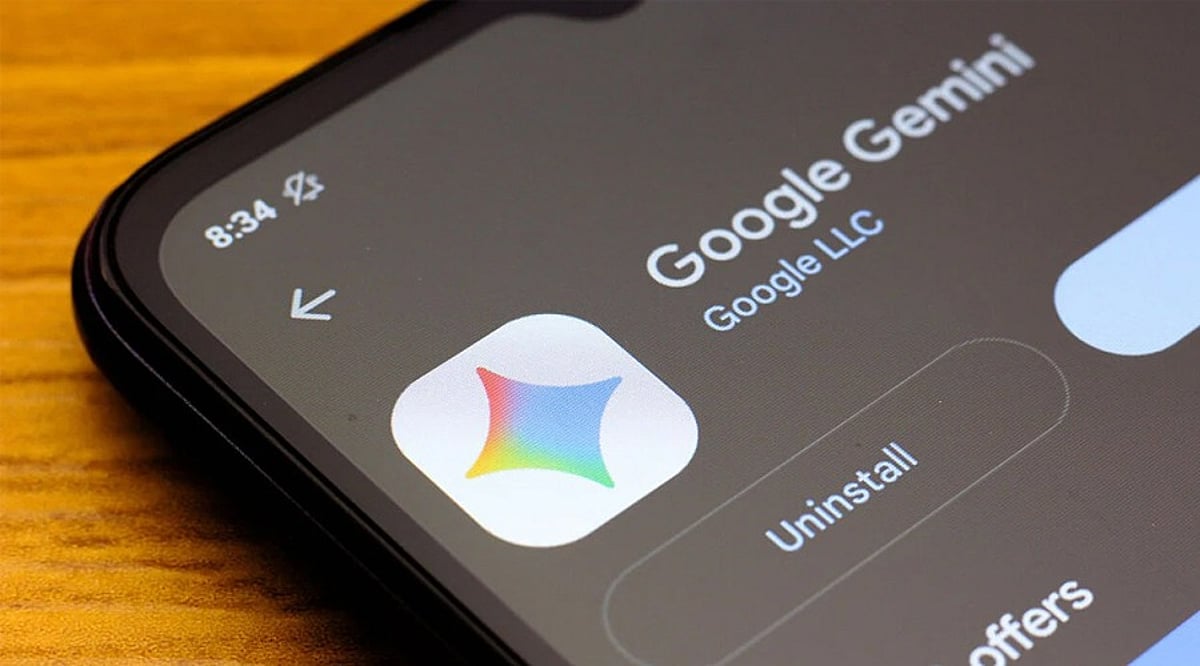
    Google is testing a new Gemini AI feature that can make phone calls to businesses on behalf of users, marking a significant step in AI-powered task automation. Dubbed “Call for Me,” the feature is initially rolling out to Pixel 11 owners in the United States who have a Gemini subscription. Users also need the beta version of Google’s Phone app for Android, as the feature is currently in an experimental phase.

    Unlike previous AI-assisted calling tools from Google, Gemini can now share personal information that users approve for a call. This allows the AI to handle a wider range of tasks while keeping users involved in the process. With “Call for Me,” Gemini can contact a business, introduce itself, navigate automated phone menus, wait on hold, and then speak with an employee. Users can follow the conversation through a live transcript and take over the call whenever they want. All calls are made using the user’s own phone number directly from their device.

    Google says the feature can handle tasks such as checking whether a product is available at a store, making a restaurant reservation, changing an appointment to another date, or placing an item on hold. The company has also noted that Gemini can handle phone conversations after getting through automated systems, rather than simply waiting for a human representative to answer.

    This development builds on several years of Google’s work on AI-assisted phone calls. The company previously demonstrated Google Assistant calling a salon to make a reservation, and later introduced “Ask for Me,” which allowed Gemini to call businesses to ask about prices and services. Pixel users have also had access to “Hold for Me,” which waits on the line until a person answers, and “Talk to a Live Rep,” which can navigate phone systems.

    Google said it is starting “Call for Me” on a small scale because “real-world conversations are nuanced” and the company needs time to improve the feature before making it available more broadly.

  • Amazon Commits $48 Billion to India’s Digital Future with AI, Cloud, and Quick Commerce Expansion

    Amazon Commits $48 Billion to India’s Digital Future with AI, Cloud, and Quick Commerce Expansion

    Amazon has announced a massive $48 billion investment plan for India through 2030, focusing on artificial intelligence, cloud infrastructure, e-commerce, and quick commerce. The commitment follows a June 2026 meeting between Amazon CEO Andy Jassy and Indian Prime Minister Narendra Modi in New Delhi.

    More than $21 billion of the total will be directed toward AI and cloud infrastructure, with AWS expanding data center capacity in Mumbai and Hyderabad. Amazon plans to add fulfillment centers and last-mile delivery stations nationwide, targeting India’s rapidly growing digital economy. The company also intends to invest an additional $3 billion specifically in quick commerce by 2030, scaling its Amazon Now service to compete in the ultra-fast delivery segment.

    The latest pledge includes a $13 billion top-up for AI and cloud announced in June, building on a previous $35 billion commitment across Indian businesses in 2025. AWS remains central to the strategy as Indian enterprises, startups, and government entities increase adoption of cloud computing and AI tools. Amazon will provide custom AI chips, managed AI services, and developer tools, along with support for local data storage to help organizations build AI applications within India’s cloud ecosystem.

    Amazon’s cloud business is already showing strong momentum: AWS sales reached $42.2 billion in the second quarter of 2026, up 37% year over year, and the company’s AI business annual revenue run rate exceeded $25 billion. Jassy said the investment addresses strong demand across Amazon’s Indian operations and aligns with goals to digitize small businesses, create jobs, and boost exports.

    On the retail front, Amazon plans to open more than 20 new fulfillment centers and over 100 last-mile delivery stations, with expanded capacity in smaller Indian cities. The quick-commerce push, reported by Reuters on September 24, 2026, intensifies competition in the minutes-delivery space. Amazon also targets bringing AI benefits to 15 million small businesses and providing AI education to 4 million government-school students by 2030. Cumulative investment in India is expected to exceed $88 billion through the end of the decade.

  • How Meta, Google, and Qualcomm Are Driving the Next Wave of AI Smart Glasses

    How Meta, Google, and Qualcomm Are Driving the Next Wave of AI Smart Glasses

    Meta, Google, and Qualcomm are pushing smart glasses into a new phase, moving beyond basic audio features to integrate AI, cameras, displays, and phone-like capabilities. On September 23, Meta unveiled its advanced VR device in the form of smart glasses, while also launching a camera-free VR glasses model. That same evening, Google partnered with Qualcomm to announce its first Gemini glasses at a Qualcomm event. These moves signal a clear trend: the wearable industry is shifting toward smart glasses that listen, talk, and even provide a screen when needed.

    New Models and Pricing

    Meta’s VR Glasses are priced at approximately ₹1.24 lakh in India and weigh around 100 grams. They rely on a separate pocket device for key hardware and are expected to arrive in spring 2027. Meanwhile, the Ray-Ban Meta Gen 3 will be available for roughly ₹44,300 in India and will feature a 12MP camera, longer battery life, and a dedicated button for Meta AI.

    Market Shift Toward Glasses

    According to the latest statistics, glasses accounted for 84.6% of total XR device shipments in 2026, with headsets making up only 15.4%. The bigger change is not merely making VR hardware lighter; it is about giving people a new way to use AI without reaching for a phone. Current smart glasses already handle calls, music, and voice queries, but newer models are expected to go further—providing directions, translating conversations, or answering questions about objects in the user’s field of view.

    A New AI Interface Takes Shape

    The core idea is simple: instead of pulling out a phone, users can ask their glasses for help, making AI feel more natural in daily tasks. Meta has announced that its Ray-Ban, Oakley, and Meta glasses range will exceed 100 styles by the end of 2026, demonstrating the company’s rapid expansion in the wearable lineup. Meta, Google, and Qualcomm are building toward a future where glasses become a regular AI tool. While phones may still handle the heavy lifting, glasses could become the easier, more intuitive way to access AI.

  • AI Infrastructure, Biotech, and Enterprise Startups Secure Major Funding This Week

    AI Infrastructure, Biotech, and Enterprise Startups Secure Major Funding This Week

    This week’s venture capital activity demonstrates that investor enthusiasm for artificial intelligence extends well beyond foundational models. Five startups spanning optical connectivity, drug discovery, procurement, enterprise workflows, and retail automation collectively raised significant funding, highlighting a broadening of AI investment into infrastructure and practical applications.

    PicoJool Raises USD 27.5 Million for AI Optical Connectivity

    PicoJool, a developer of optical connectivity products for AI data centers, closed a USD 27.5 million Series A round led by Socratic Partners, with participation from Hudson River Trading. The company’s total funding now stands at USD 39.5 million, following an earlier USD 12 million seed round. PicoJool’s portfolio includes 200G VCSELs, microVCSELs, and optical links designed for hyperscale AI workloads. The new capital will be used to expand teams and facilities in the United States and Taiwan, as well as to boost manufacturing capacity to meet demand from hyperscalers and data-center operators.

    BigHat Biosciences Closes USD 75 Million Series C for AI-Designed Therapeutics

    Biotech startup BigHat Biosciences secured a USD 75 million Series C round co-led by DFJ Growth and Premji Invest, bringing its total funding to USD 223 million. The company leverages an agentic data platform to design protein therapeutics using artificial intelligence. Its pipeline includes BHB810, an antibody-drug conjugate currently in Phase 1 trials. BigHat plans to use the fresh capital to advance its clinical-stage pipeline and further develop its protein-design data generation platform.

    Axya Lands USD 17 Million CAD to Expand AI Procurement Platform

    Montreal-based Axya raised USD 17 million in Series A funding, led by McRock Capital with participation from Yamaha Motor Ventures and existing investors. The company offers AI-powered procurement software for manufacturers, covering sourcing and purchasing workflows. Axya intends to invest the proceeds in product development, AI capabilities, geographic expansion, and scaling its engineering and go-to-market teams.

    Ema Adds USD 77 Million in Series B for Enterprise AI Agents

    Enterprise AI company Ema raised USD 77 million in a Series B round led by Creaegis, with additional investments from Accel, Section 32, and Prosus. This brings Ema’s total funding to USD 140 million. The company’s platform deploys AI agents to automate corporate functions such as HR, IT, and finance, helping enterprises streamline operations.

    Thri5 Secures USD 5.4 Million Seed Round for Retail AI Execution

    Retail-focused startup Thri5 closed a USD 5.4 million seed round co-led by Whitecap Venture Partners and Mistral Venture Partners. Its AI execution platform converts retail data and recommendations into actionable in-store actions. A nine-week pilot with Wild Fork Foods reportedly delivered gains in sales, profit, and inventory accuracy, leading the retailer to expand the deployment.

    Together, these deals reflect a maturing AI funding cycle where capital is moving beyond model development into the hardware, data, biotech, and enterprise workflows that make AI operational. For startups, the challenge remains turning investment into products that deliver measurable, real-world results.

  • Google Unveils Gemini 3.8 Live with Interactive AI Avatar for Businesses

    Google Unveils Gemini 3.8 Live with Interactive AI Avatar for Businesses

    Google has announced the release of Gemini 3.8 Live with a new Live Avatar feature, bringing a digital face to its AI assistant. The avatar can see, listen, and speak during conversations, using real-time facial expressions and synchronized lip movements to create a more natural interaction.

    The update, detailed in Google’s official blog post, builds on the momentum of the previous Gemini 3.8 Live launch. According to the company, the Live Avatar delivers “near real-time visual presence” to native live dialogue models. It can simultaneously process voice and visual input while running background tools, all while maintaining a conversation with the user.

    Businesses are the primary target for this feature. Through Gemini Enterprise, organizations can deploy the avatar for customer support, virtual assistance, and interactive product or service walkthroughs. Google supports 97 languages and allows switching between languages mid-conversation. Companies can choose from pre-made avatars or create custom ones, though custom creation is currently limited to approved organizations. All AI-generated content includes Google’s SynthID watermark for authenticity.

    Beyond the Avatar: Practical Impact

    While the avatar itself adds a visual element, it does not inherently improve the quality of AI responses. The more significant advancement is Gemini’s ability to see, listen, and use tools concurrently during ongoing conversations. If these capabilities help solve real-world problems—such as streamlining customer service or enabling hands-free assistance—the avatar gains a clear purpose. Otherwise, it may simply serve as a more engaging interface for the same underlying AI.

    Gemini 3.8 Live reflects Google’s broader strategy to make AI feel less like a text-based tool and more like a conversational partner. The feature’s success will ultimately depend on whether it makes everyday tasks easier for users and businesses alike.

  • OpenAI’s GPT-Live Voice Model: Full-Duplex Conversations and Natural Interruptions

    OpenAI’s GPT-Live Voice Model: Full-Duplex Conversations and Natural Interruptions

    OpenAI has unveiled GPT-Live, a next-generation voice model that redefines how humans interact with AI through speech. Unlike traditional voice assistants that operate in rigid turn-based exchanges, GPT-Live employs a full-duplex design, allowing it to listen and speak simultaneously. This breakthrough enables users to interrupt, pause, or shift the conversation naturally, making interactions feel more like a human dialogue than a command-line interface.

    The model powers the latest ChatGPT Voice experience and is available in two versions: GPT-Live-1 for paid subscribers and GPT-Live-1 mini for free users. Both are rolling out globally on ChatGPT.com and mobile apps for iOS and Android. A key feature is that voice conversations remain integrated with the text interface, so users can follow responses in writing and switch seamlessly between typing and speaking.

    GPT-Live also supports advanced capabilities such as web search, memory, and image processing within the same conversation. However, video and screen sharing are not yet supported in this mode—those features remain available through the older Advanced Voice option for eligible users.

    Another significant innovation is GPT-Live’s ability to hand off complex tasks to backend models. While the voice model manages the conversation flow, a separate reasoning agent can handle intensive computations or use connected tools. For example, an assistant can continue speaking while a backend checks information or completes an action, with the application retaining control over permissions and confirmations.

    OpenAI has also made GPT-Live accessible via its API, enabling developers to build real-time voice applications using WebRTC, WebSockets, or telephony connections. To ensure authenticity, SynthID watermarking is applied to generated audio, allowing OpenAI to verify the origin of the sound.

    This launch signals a shift from simple speech-to-text-and-back responses toward AI that actively manages conversation dynamics, including timing, interruptions, and multi-system coordination. GPT-Live represents a step closer to truly natural voice assistants.

  • AI-Driven Transformation in Corporate Video Production for Tech Companies

    AI-Driven Transformation in Corporate Video Production for Tech Companies

    Video is now one of the main ways tech companies explain products, share news, and earn trust. Artificial intelligence has made it faster to plan, edit, and repurpose that content. Yet speed alone does not make a video good.

    This article looks at what AI tools do well, where they fall short, and how brands can combine them with experienced crews. The goal is better video, delivered faster, without losing the human touch that viewers notice.

    Why Video Has Become a Core Business Asset

    Product launches, investor updates, customer stories, and internal town halls all rely on video. Teams need more versions, more formats, and faster turnarounds than ever before. That pressure explains why so many marketing and communications teams are testing AI tools. These tools promise to cut hours from routine tasks and free up budget for better ideas.

    What AI Tools Do Well

    AI is strong at repetitive work. It can transcribe interviews, generate captions, and flag the best moments in long recordings. These tasks once took editors hours. It also helps with translation, audio cleanup, and rough first cuts. Teams can review a draft quickly and spend their time on creative decisions instead of manual chores. Writing assistants are useful for outlines and alternate headlines, giving writers a starting point, though the final message still needs a human voice.

    Where AI Still Falls Short

    AI cannot replace a skilled crew on set. It does not light an executive so they look confident, or capture clean audio in a noisy ballroom. Those results come from experience and good equipment. Trust is another issue. Viewers are getting better at spotting synthetic content, and a video that feels artificial can hurt a brand. Real people, real places, and real stories still carry more credibility. There are practical risks too. Brands must think about privacy, licensing, and accuracy before they publish anything generated by a machine.

    A Hybrid Workflow That Works

    The strongest teams treat AI as a helper inside a process led by people. They plan carefully, film with professionals, and use AI tools during editing and delivery. A simple version looks like this:

    • Plan the message, audience, and formats before anyone picks up a camera.
    • Capture interviews and key scenes with a professional crew.
    • Use AI to transcribe, caption, and assemble rough cuts.
    • Have a human editor review every frame, claim, and caption.
    • Deliver versions for each channel, such as social, web, and events.

    Many Bay Area tech teams now follow this approach. They work with a San Francisco video production company that pairs a senior crew with modern editing tools, which keeps quality high and delivery times short.

    Smart Ways to Put AI to Work

    Recap reels are a good example. A team can film a keynote, use AI to find the best clips, and have an editor polish a highlight video within days. Webinars and panels can become short clips, written summaries, and translated versions. One recording then supports weeks of content across several channels. Product demos benefit as well. AI can help produce alternate cuts for different audiences while the core footage stays authentic and on brand.

    Live Events and Streaming Still Need People

    Live content leaves no room for retakes. A product keynote or virtual summit has to work the first time, for every viewer, on every platform. AI can add captions and summaries, but it cannot fix a dropped audio feed. Live shows depend on backup audio, backup encoders, and a second stream path. Teams planning conferences, hybrid events, or webcasts should look for a partner with a full range of production and event services. Using one crew for filming, streaming, and editing keeps the look and quality consistent.

    How to Choose a Production Partner

    Start by asking how the team uses AI and where humans review the work. A good partner can explain both clearly. A few more questions help:

    • Can you show examples of similar projects?
    • Who will be on set, and who will edit the final video?
    • What backup plans exist for live shows?
    • How will the content be delivered for each channel?

    Clear answers to these questions usually signal a reliable team.

    Conclusion

    AI is changing how video gets made. Brands that ignore it may fall behind on speed, while brands that rely on it alone risk losing the authenticity that makes video work. The best results come from pairing smart tools with experienced people. Plan well, film with care, let AI handle the routine work, and keep humans in charge of the final message.


  • LinkedIn Combats Fake Profiles with AI Detection and Identity Verification

    LinkedIn Combats Fake Profiles with AI Detection and Identity Verification

    LinkedIn is deploying a multi-layered strategy combining artificial intelligence, identity verification, and contextual signals to counter the rising threat of fake professional profiles. Between July and December 2024, the platform blocked over 80.6 million fake accounts at registration, yet the challenge persists with AI-generated headshots, cloned executives, and fake recruiters.

    Automated Detection Screens Suspicious Accounts Early

    LinkedIn’s first line of defense is AI-driven detection. In October 2022, the company introduced a deep learning model that analyzes profile photo uploads for signs of AI generation. It detects subtle artifacts without using facial recognition or biometric data.

    A 2023 study with Professor Hany Farid found the model detected 99.6% of StyleGAN-generated faces with only a 1% false-positive rate on real photos. A 2024 update expanded the training set to include StyleGAN 1–3, Stable Diffusion 1 & 2, and DALL·E 2, achieving 98% recall at a 0.5% false-positive target. However, on unseen generators, recall dropped to 84.5%, highlighting the need for continuous model updates.

    Text-based fake profiles remain tricky. A July 2025 arXiv study showed that existing detectors allowed 42% to 52% of GPT-4-Turbo-generated LinkedIn-style profiles to pass. Adversarial training improved this to a 1% to 7% range.

    Verification Provides Evidence for Specific Claims

    LinkedIn offers free identity, workplace, and education verification. Workplace verification uses a company email or Microsoft Entra Verified ID; education checks use a school email. ID verification is handled by CLEAR (U.S., Canada, Mexico), Persona (other listed countries), or DigiLocker (India).

    By December 2025, over 100 million members had added at least one verification. LinkedIn states that Persona collects ID images and selfies, but only shares specified information after member consent—no biometric data, ID numbers, or expiry dates are received by LinkedIn.

    Contextual Signals Help Members Judge Trustworthiness

    A verification badge confirms a single claim, not overall credibility. LinkedIn provides additional context through the About this profile panel, which shows account creation date and whether a phone number or work email is verified. Members are also encouraged to review post history, message content, and account age.

    Job posts can display verified company and recruiter details. In September 2025, LinkedIn said it would require workplace verification when members add or update certain leadership or recruiter-related roles. The Verified Recruiter label appears in InMails and on profiles.

    Where the Limits Lie

    Detection models can flag suspicious photos but cannot confirm a real person behind a clean profile. Unverified members are not automatically fake. For Persona, members must be in a supported country and provide a valid NFC-enabled passport.

    TechCrunch reported that about 60% of verified members confirmed a workplace, while only 27% verified a government ID—two badges with very different weights. LinkedIn also notes that a verification badge on a job post does not increase hiring likelihood.

    The Future: Portable Verification

    Through Verified on LinkedIn, partners like Adobe, G2, UserTesting, TrustRadius, and Zoom can display member verifications on their own platforms. A self-serve API extends this to any organization. A verification earned on LinkedIn can function as a professional trust signal beyond the platform itself.

  • AI in Hiring: How Automated Tools Are Reshaping Talent Acquisition in 2026

    AI in Hiring: How Automated Tools Are Reshaping Talent Acquisition in 2026

    AI recruitment tools are transforming the hiring landscape in 2026, helping companies automate significant portions of the recruitment process. From sourcing candidates and screening resumes to scheduling interviews and summarizing conversations, these technologies reduce repetitive administrative work, allowing recruiters to focus on top candidates and final hiring decisions.

    AI-Powered Candidate Sourcing

    AI-driven sourcing tools search talent databases, job platforms, and professional networks to identify potential candidates. Platforms such as SeekOut, hireEZ, LinkedIn Recruiter, and Beamery excel at uncovering passive talent and enabling recruiters to create personalized outreach at scale.

    Automated Resume Screening

    AI screening systems convert resumes into structured candidate profiles by extracting skills, experience, education, and work history. Tools like Eightfold AI use skills-based matching to connect candidates with suitable roles, moving beyond reliance on exact job titles or keywords.

    Chatbots for Candidate Communication

    Recruitment chatbots handle the first stage of candidate interaction. Platforms such as Paradox and Humanly answer common questions, collect basic information, send updates, and manage high-volume screening. AI also coordinates interview schedules, eliminating lengthy email exchanges.

    AI in Interviews and Assessments

    AI is redefining interviews and candidate assessments. Tools like HireVue conduct structured interviews, transcribe responses, and generate summaries. However, companies should avoid using facial expressions, voice tone, or body language to judge personality, honesty, or competence, as these methods can introduce bias.

    Recruitment Analytics and Dashboards

    Recruitment dashboards help organizations track metrics such as time-to-hire, candidate drop-off rates, sourcing channels, and pipeline performance. AI can also rediscover past candidates and identify skills gaps, enabling recruiters to refine workflows and reduce administrative overhead.

    The Importance of Human Oversight

    While AI accelerates hiring, human oversight remains essential. Companies should use job-related criteria, test systems for bias, protect candidate data, explain AI usage, and provide applicants with a way to request human review. AI should assist recruiters, not become an unaccountable hiring gatekeeper.