
Category: Career Advice

  • Best Career Guidance Platforms for Indian Students and Professionals in 2026

    Best Career Guidance Platforms for Indian Students and Professionals in 2026

    Career decisions can influence education, income, professional growth, and long-term opportunities. Yet many students begin planning without enough information about available paths. Explore five useful career guidance websites for Indian students and professionals, covering education choices, internships, networking, counselling, skills, and job opportunities.

    National Career Service (NCS)

    The National Career Service, or NCS, is the Government of India’s career platform. It connects jobseekers, employers, counsellors, and career centres. Students can explore internships, skill courses, and career resources. Professionals can search for jobs across different sectors. NCS also provides access to career counsellors and career centres. Its platform includes employability assessments and an AI interview coach. Another important advantage is cost. NCS states that its services are free for jobseekers. It also warns users about fraudulent recruitment communications. For students seeking reliable government-backed guidance, NCS is a useful starting point.

    Careers360

    Careers360 is one of India’s largest education and career information platforms. It covers colleges, courses, entrance exams, careers, and professional programs. Its Pathfinder tool helps students explore academic options. Users provide their class, subjects, interests, and preferred stream. The platform then maps relevant courses, exams, and colleges. The website also offers college information and entrance exam resources. Students can access counselling services and community-based questions. Working professionals can explore online degrees, certifications, and specialized courses. Careers360 currently lists thousands of courses across many career domains. It is useful when education choices are still unclear.

    Internshala

    Internshala focuses heavily on internships, early careers, and skill development. It can be particularly useful for college students and recent graduates. Its platform covers opportunities across technology, finance, marketing, research, engineering, and other fields. Internshala reported more than 250,000 companies on its platform in a recent guide. It also highlights internships, virtual projects, and placement opportunities. The platform also offers career-oriented courses. These can help students develop practical skills alongside academic qualifications. For students without professional experience, internships can provide an important bridge into employment.

    LinkedIn

    LinkedIn serves a different purpose from traditional career websites. It combines professional networking, job discovery, learning, and personal branding. Students can use LinkedIn to build professional profiles early. They can showcase projects, certifications, internships, and academic achievements. Professionals can use the platform to discover vacancies and connect with recruiters. Networking can also uncover opportunities that never reach traditional job boards. LinkedIn becomes more useful when the profile clearly communicates relevant skills. Regularly sharing meaningful work can also improve professional visibility. For experienced professionals, it can function as both a job platform and career network.

    Naukri

    Naukri remains one of India’s major job-search platforms. It is especially useful for professionals actively looking for employment. Users can create profiles, upload resumes, search vacancies, and receive job alerts. Recruiters can also discover candidates through the platform. The sheer volume of listings makes Naukri useful across experience levels. However, candidates should avoid applying randomly to every available position. A focused profile can improve the relevance of job recommendations. Keywords should also match the roles being targeted. Professionals changing careers can use the platform to understand current hiring demand. Job descriptions can reveal which skills employers currently value.

    How to Choose the Right Career Website

    There is no single platform that can solve every career decision. Students may need education information before searching for jobs. NCS works well for government-backed career services and employment resources. Careers360 is stronger for education, exams, colleges, and course comparisons. Internshala can help students gain early work experience. LinkedIn is valuable for networking and professional visibility. Naukri is particularly useful for active job searches. Using two or three platforms together can produce better results. The most important step is defining your career goal first. Then choose platforms that support that specific goal.

    Career Planning is Becoming More Digital

    Career websites now offer much more than job listings. Many combine counselling, assessments, courses, networking, and personalized recommendations. This shift benefits both students and experienced professionals. However, online tools should support decisions rather than make them automatically. Students should compare courses, fees, colleges, and career outcomes carefully. Professionals should evaluate job descriptions against their actual skills. The strongest career strategy combines digital platforms with real-world research. Talking to professionals can provide context that websites cannot always provide. Career planning has become increasingly digital. The advantage belongs to people who use these tools strategically.

    FAQs

    What are the best career guidance websites for Indian students in 2026?

    Useful options include National Career Service, Careers360, and Internshala. NCS provides government-backed career and employment resources. Careers360 focuses strongly on courses, colleges, and entrance exams. Internshala is useful for internships and early work experience. Students can use more than one platform for better research.

    Is National Career Service free for jobseekers?

    Yes, the National Career Service is designed to provide employment and career-related services to jobseekers without charging them for core services. It also connects users with career centres and counsellors. Users should still be careful with unsolicited recruitment messages and verify opportunities before sharing personal information.

    Is LinkedIn useful for fresh graduates in India?

    LinkedIn can help fresh graduates build professional visibility before gaining extensive work experience. Students can highlight projects, certifications, internships, education, and relevant skills. The platform also supports networking with recruiters and professionals. A complete profile can therefore support both job discovery and long-term career development.

    Which career website is best for internships in India?

    Internshala is one of the most useful options for students and early-career candidates seeking internships. Its listings cover many industries and include different work arrangements. However, students should compare opportunities carefully. They should check responsibilities, duration, stipend, employer details, and potential learning value before applying.

    Can career websites guarantee a job or successful career?

    No career website can guarantee employment or long-term career success. These platforms provide information, opportunities, and tools, but users still need relevant skills and preparation. Candidates should verify employers, customize applications, prepare for interviews, and continue developing skills that match their target career.

  • 7 Essential Skills Beyond Generative AI to Future-Proof Your Career

    7 Essential Skills Beyond Generative AI to Future-Proof Your Career

    Generative AI has transformed how millions work—from brainstorming with ChatGPT to summarizing documents and drafting emails. But as AI tools become more intuitive, the real career advantage lies not in writing prompts but in building AI-powered workflows, verifying outputs, and solving meaningful business problems. Here are seven skills that will define the next wave of AI-driven careers.

    1. Understand How AI Agents Work

    AI is moving beyond single-answer responses. AI agents can handle sequences of tasks, use external tools, and complete workflows with minimal human intervention. Learning how agents operate—how to grant them access to tools and where human oversight is critical—will set you apart from casual AI users.

    2. Master Retrieval-Augmented Generation (RAG)

    RAG enables AI to pull information from documents, databases, or company knowledge before generating answers. This is vital for businesses that want AI to work with proprietary data rather than relying solely on pre-trained knowledge. Start with concepts like embeddings, vector databases, and retrieval methods—no need to become a machine learning expert overnight.

    3. Build AI Automation Skills

    Move from using AI to integrating it into daily workflows. Learning basic Python, APIs, databases, and automation tools helps connect AI models with other applications. Even modest technical know-how allows you to automate repetitive tasks and build simple AI-powered solutions.

    4. Develop AI Evaluation Skills

    AI can sound confident even when wrong. Being able to evaluate outputs for accuracy, hallucinations, and consistency is increasingly valuable—especially in fields like finance, healthcare, and legal work. Learn to test model performance and compare responses systematically.

    5. Learn AI Security and Governance

    As companies give AI access to sensitive data and business systems, privacy, security, and responsible use become critical. Understanding data protection, access controls, compliance, and AI risk management opens doors to roles at the intersection of technology and business.

    6. Strengthen Data and Machine Learning Fundamentals

    Generative AI may make technical depth seem unnecessary, but a basic grasp of statistics, data analysis, and how models are trained reveals both strengths and limitations. You don’t need to be a researcher—just knowing why an AI behaves a certain way makes you a smarter user and decision-maker.

    7. Never Forget Human Skills

    The World Economic Forum’s Future of Jobs Report 2025 highlights that analytical thinking, creativity, resilience, and collaboration remain essential. Combining these human abilities with AI proficiency creates the highest career value. The most sought-after professionals will be those who know when to use AI, how to make it work, and when not to trust it.

    By investing in these skills—AI agents, automation, RAG, evaluation, governance, data basics, and human judgment—you position yourself for the next phase of AI, where the real question isn’t “Can you use ChatGPT?” but “Can you use AI to solve a real problem?”

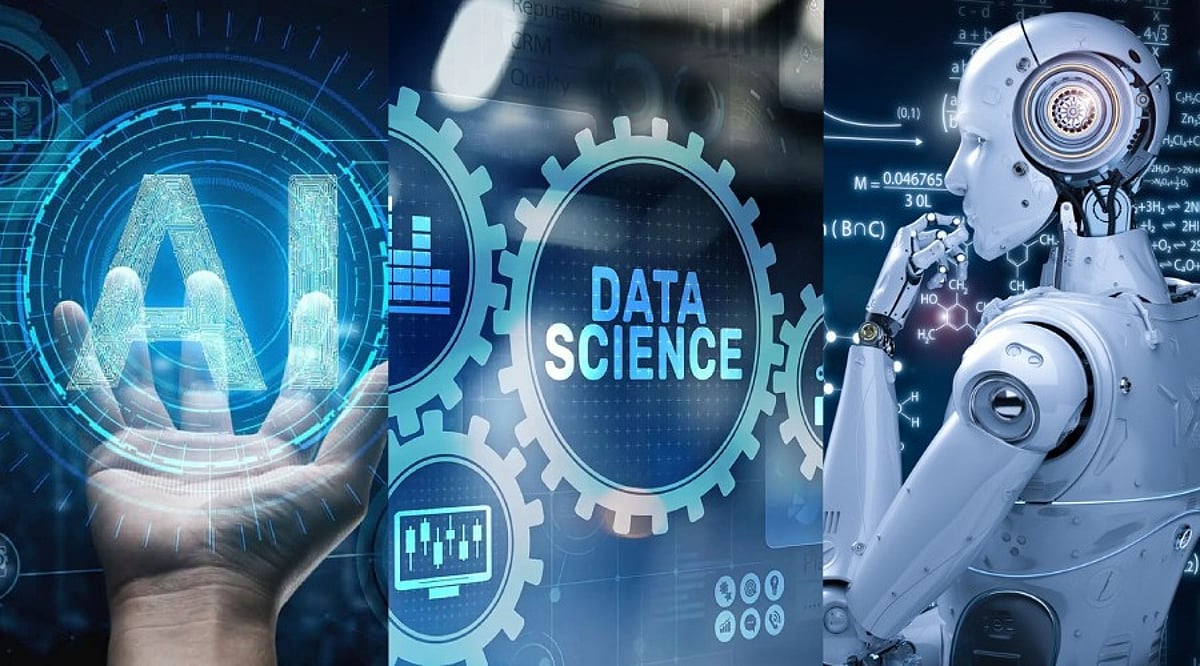
  • AI vs Data Science vs Machine Learning: How to Choose the Right Tech Career Path

    AI vs Data Science vs Machine Learning: How to Choose the Right Tech Career Path

    Three tech careers often get lumped together under one job title, but they demand entirely different skill sets. Data science favors statistics and communication. Machine learning rewards mathematical depth. AI engineering blends both with systems thinking. Choosing the right path means matching your temperament to the problem type, not chasing trends.

    One resume, three different job titles. That overlap is why the right career choice cannot be made by job title alone. Executives often hire for AI, data science, and machine learning as if they were the same skill, but they aren’t. Each one solves a different problem. Each one rewards a different strength. Each one opens a different career door.

    Where AI, Data Science, and Machine Learning Actually Diverge

    The cleanest way to separate the three is by the problem each one owns, not by textbook definition. Artificial intelligence is the broad field. It builds systems that reason, perceive, or make decisions. Machine learning is a major approach within that field. It is the set of techniques that let a system learn patterns from data instead of following fixed rules. Data science is an interdisciplinary field that focuses on extracting insight from data using statistics, business context, and communication—often without building a predictive model at all.

    These fields overlap heavily but do not stack neatly on top of one another. A data scientist may use machine learning to build a forecast. An AI engineer may rely on neither, instead assembling existing models into a working product.

    Job descriptions rarely reflect this precision. Understanding the underlying discipline prevents a mismatch. The title alone does not tell the full story.

    The Skills Each Career Path Actually Demands

    Data science leans heavily on statistics, SQL, data visualization, and storytelling with numbers. Python and R matter, but so does the ability to translate a dataset into a recommendation that a non-technical stakeholder can act on. This path suits learners who enjoy structured problem-solving and communication as much as computation.

    Machine learning demands stronger mathematical grounding—linear algebra, probability, optimization, and a working command of frameworks like TensorFlow or PyTorch. Practitioners spend more time on model architecture, feature engineering, and tuning than on presenting findings. This path suits learners comfortable with iterative experimentation and code-heavy workflows.

    AI engineer roles increasingly span model integration, evaluation, orchestration, and deployment. Training foundation models from scratch is rarely part of the job anymore. Some roles demand strong machine learning fundamentals; others place greater emphasis on software engineering and system design, making this career path more varied in entry requirements than the other two.

    The Same Business Problem Can Require All Three

    Consider a company trying to reduce customer churn. A data scientist investigates the data to explain why customers are leaving, applying skills like segmentation and statistical testing. A machine learning engineer builds and deploys a model that predicts which customers are at risk. An AI engineer wires that prediction into a live workflow that triggers a retention offer automatically. Same business problem, three distinct jobs.

    How the Market Is Changing These Career Paths

    Data science often offers a broader entry market—analytics, reporting, experimentation, and predictive work appear across industries from finance to retail to healthcare. Machine learning engineer roles generally command a pay premium over generalist data science roles, reflecting the deeper technical bar and the engineering responsibility of shipping models into production.

    Generative AI is also moving the boundary between these fields. Building an AI application may require less model training than before, but it raises the importance of evaluation, data quality, system integration, and reliability. For technical roles, demonstrable project work gives employers evidence of how a candidate applies tools, handles problems, and delivers working systems—a certificate list alone cannot show that.

    How to Choose the Right Career Path

    The right path depends less on market hype and more on what kind of problem naturally draws you in. Choose data science when the starting point is a business question that needs an answer. Choose machine learning when the starting point is a prediction or optimization problem that needs a model. Choose AI engineering when the starting point is an intelligent product or workflow that needs to be built and shipped.

    A common mistake is trying to learn all three at once without depth in any. A more effective sequence starts narrow—take one foundational path to a demonstrable project level first, then expand sideways into adjacent skills as your career progresses.

    Final Thoughts

    The line between these three fields will keep blurring as tools converge and job titles lag behind actual work. The safer strategy is not picking a label to chase, but picking a skill foundation—whether statistical, engineering, or systems-based—that stays valuable regardless of what the next job posting decides to call it.

    FAQs

    1. Is AI, Data Science, or Machine Learning better for a career in 2026?
    There is no single best option. Data Science suits analytical and business-focused work, Machine Learning fits model development and engineering, while AI engineering is better suited to building and deploying intelligent applications.

    2. Can I learn AI without knowing Machine Learning?
    Yes, especially for AI application development. However, Machine Learning fundamentals become increasingly valuable when working with model behavior, evaluation, fine-tuning, or advanced AI systems.

    3. Is Data Science easier to learn than Machine Learning?
    The entry barrier can be lower for Data Science since beginners can start with statistics, SQL, and analytics. Machine Learning usually requires deeper mathematics, programming, and model-development knowledge.

    4. Which career has better long-term opportunities: AI or Data Science?
    Both offer strong opportunities, but roles are evolving differently. AI is expanding into intelligent applications and automation, while Data Science remains important for analytics, experimentation, forecasting, and data-driven decision-making.

    5. Should I learn Data Science, Machine Learning, and AI together?
    Not at the beginning. Building depth in one area first is usually more effective. Once you can demonstrate practical skills through projects, you can add adjacent capabilities and move toward broader AI or Machine Learning roles.

  • Beyond Clean Code: What Today’s Mobile Engineers Need to Succeed, According to Tomasz Kubiak

    Beyond Clean Code: What Today’s Mobile Engineers Need to Succeed, According to Tomasz Kubiak

    As mobile engineering expands beyond writing and shipping code, esteemed software engineer Tomasz Kubiak draws on his experience building an app used by millions to explain why reliability, judgment, and product thinking are raising the bar for mobile engineers.

    Writing good code in mobile software engineering is no longer enough. A recent Forbes Technology Council article reports that median crash-free sessions have reached 99.95%, while 82% of users consider stability extremely important and 63% will uninstall an app after three crashes or fewer. As automation takes over more routine work, engineers have to bring more to the table. In this interview, Tomasz Kubiak, with 10+ years of experience, discusses the skills that increasingly separate strong mobile engineers from the rest and shares approaches that helped him grow and succeed in the field.

    Tomasz is currently a Senior iOS Software Developer at Welltech, where he works on WalkFit, a wellbeing app with more than 10 million downloads. His product work includes A/B-tested changes that delivered a double-digit lift in early goal activation and a measurable gain in first-week retention. A nutrition module he developed was also associated with higher customer lifetime value among purchasers. Before joining Welltech, Tomasz developed iOS apps at Talixo and introduced CI improvements that halved build times. His broader engineering career includes three patent records, with patents granted in the United States and Europe, peer-reviewed research, and IEEE Senior Member status.

    Q: The job of a mobile engineer looks very different today than it did even a few years ago. With more than a decade in engineering, what is expected from a strong mobile engineer today that wasn’t expected before?

    I think the biggest shift is toward broader ownership. Mobile engineering has become much more connected to how a product performs in the real world. Technical decisions affect stability, delivery, user experience, and how a product evolves over time. Strong engineers need to understand the context around the code and think several steps ahead. The ability to see those connections and make sound decisions as complexity grows has become a much bigger part of the job.

    Q: Your own path into mobile development was unusual: you started in mechanical and product engineering before moving into software. What did that experience teach you that later proved useful in mobile engineering?

    I studied Mechatronics at Lodz University of Technology in Poland, which gave me an early understanding of how different parts of a system affect one another. After university, I joined Corning and later moved from Poland to its engineering organization in the U.S. Working on product development there taught me to pay close attention to failure modes and to understand the cause of an issue before making changes. When I moved into software, I brought that mindset with me. It has been especially useful in mobile engineering, where an application has to perform reliably across releases and real-world conditions. That background also shaped how I approach testing and stability today: I tend to think about the whole application’s behavior and the consequences an engineering decision may have beyond the feature being developed.

    Q: At Talixo, you developed driver and customer iOS apps and nearly halved CI times while also working on modularization and release automation. When a mobile team needs to ship faster, where should it look for workflow improvements before asking engineers to code faster?

    I would start with the development workflow itself. A major improvement came from introducing a more advanced CI/CD caching strategy, which reduced CI times. That meant less time waiting for builds and faster feedback during development. We also worked on modularization and release automation, which made the applications easier to maintain and reduced the risk of manual releases. For me, the broader lesson was that delivery speed depends heavily on the systems around the code. Improving that infrastructure gives engineers more time to focus on the product and makes releases more predictable.

    Q: Today, you work on WalkFit, an app with more than 10 million downloads. Does building for an audience of that size change the way you think about engineering decisions, risk, and what happens after a feature is released?

    The product’s main goal is to help people make walking a regular part of their daily routine. It combines activity tracking with walking plans and other features that support long-term consistency. At this scale, even a small engineering decision can affect a large, diverse group of users. A feature may work perfectly in isolation and still affect the broader experience in unexpected ways. That has made me pay much more attention to what happens after release and to treating real-world behavior as part of the engineering process.

    Q: After resolving more than 50 production issues across eight iOS releases, what do you think separates strong engineers when something goes wrong in production?

    In my view, what separates strong engineers is the willingness to look beyond the immediate bug. A production issue can point to a deeper weakness in how a feature or part of the system was designed, so the goal is to understand what made that failure possible and whether the same conditions exist elsewhere. This way of thinking also shaped my research on mobile architecture. In a recent paper, “A Local-First Architecture for Privacy-Preserving Personalization in iOS Health and Fitness Applications,” published in American Impact Review, I proposed an approach to iOS personalization that keeps sensitive health data on the device whenever possible. The work identifies potential failure points before implementation and places safeguards as close to the source as possible. The context is privacy, but the engineering principle is broader. A strong solution should address the underlying weakness and make the system more resilient, instead of simply making the visible problem disappear.

    Q: The nutrition module you developed achieved a high-single-digit conversion rate and was associated with customer lifetime value increasing by well over half among purchasers. How much should mobile engineers understand about product and business performance, and how should that understanding influence technical decisions?

    Understanding product and business metrics helps an engineer see the impact of technical work beyond the release itself. With the nutrition module, the conversion rate and customer lifetime value gave us a much clearer picture of its value after launch. That perspective also changes engineering priorities. We can direct time and complexity toward features that genuinely improve the product, and technical decisions become easier to tie to measurable outcomes. For me, that connection between engineering and product impact is central to senior-level work.

    Q: Technical correctness alone does not make a mobile product successful. One of your A/B-tested improvements produced a double-digit lift in early goal activation and a mid-single-digit gain in first-week retention. How do you use experimentation and user behavior to determine whether a feature succeeds?

    Experimentation helps connect engineering decisions with what people actually do with a product. Before releasing a change, I want to be clear about what behavior we expect it to influence and how we will know whether it worked. A/B testing gives us evidence from real usage, but I also look beyond the primary metric because improving one part of the experience can affect another. I brought that habit of considering both the intended result and the wider impact to my role as an invited judge at the recent AITEX Summit Summer 2026. The same principle applies when evaluating technology more broadly. A technically impressive solution is only part of the picture; it also needs to address a real need and create value in practice.

    Q: Given these changes in the profession and your experience, what should mobile engineers invest in beyond coding if they want to stay valuable and keep growing over the next several years?

    I would invest in judgment. Coding tools will keep changing, but engineers still need to understand the consequences of their decisions. That comes from seeing how systems behave in production, how users respond to a product, and how technical choices affect the business over time. I would also stay curious beyond the immediate mobile stack. Some of the most useful ideas in my own career came from moving between different areas of engineering and bringing those perspectives into software. I believe the ability to connect those pieces and make good decisions when the answer isn’t obvious will keep engineers valuable as the profession continues to change.

  • Top Career Development Platforms for US Professionals in 2026

    Top Career Development Platforms for US Professionals in 2026

    Career growth now requires more than a polished resume. The right career website can help with skills development, job research, salary checks, professional networking, and smarter career decisions. Several platforms stand out in the US market, each serving a distinct purpose.

    LinkedIn leads as an all-around career hub, while Coursera offers structured learning for new skills and career changes. CareerOneStop provides trusted US labor data, and Indeed connects career plans with current job openings. Glassdoor adds employer and salary insights, and FlexJobs targets remote opportunities.

    LinkedIn Covers the Full Career Journey

    LinkedIn remains one of the strongest career platforms for US professionals. It combines professional profiles, networking, job search, recruiter access, and education in one place. With more than 1 billion members, professionals gain access to a vast business network.

    LinkedIn Learning adds a major educational layer, offering over 26,200 courses and more than 1,300 curated learning paths. Its role guides cover over 35 career paths, and Premium Career provides access to more than 25,000 LinkedIn Learning courses. This mix makes LinkedIn valuable for both career visibility and skill development.

    Coursera Supports Career Change and New Skills

    Coursera stands out for professionals who need structured education or a new career path. The platform offers more than 10,000 programs from universities and companies, including Google, Microsoft, Meta, and Stanford. Recent updates show a stronger focus on practical technology skills. In April 2026, Microsoft added 11 Professional Certificates across AI, data, and software development. In June 2026, Coursera expanded its micro-credential catalog with programs from Google DeepMind, Meta, Microsoft, and other partners. These courses include projects that can showcase practical skills on a resume or LinkedIn profile.

    CareerOneStop Brings US Labor Data

    CareerOneStop is funded by the US Department of Labor, making it a reliable source for labor-market information. The site covers more than 900 occupations and provides salary data, employment statistics, required skills, and education or training programs. Job seekers can use this information to align career ambitions with actual market conditions.

    Indeed Connects Skills with Job Demand

    Indeed focuses on job search, offering a large US job database that shows current employer demand. It also provides salary estimates, company reviews, job alerts, resume tools, and job matching. Professionals can search for specific job titles to see which skills appear in current vacancies, helping shape resumes and guide course choices.

    Glassdoor Helps with Salary and Employer Research

    Glassdoor provides salary details, company reviews, benefits information, and interview reports. This data helps professionals assess employers before applying or accepting offers. Salary research also sets realistic expectations, as pay levels vary across US cities, industries, and company sizes.

    FlexJobs Targets Remote Career Options

    FlexJobs is ideal for professionals seeking remote or flexible work. Its remote job data showed a 22% quarter-over-quarter rise in remote postings in Q2 2026, with notable growth in tech, engineering, and operations. FlexJobs offers a focused place to find such roles without sorting through broad job databases.

    A Strong Career Website Mix

    No single platform covers every career need equally. LinkedIn works best as an all-around career hub. Coursera suits structured skill growth and career changes. CareerOneStop offers US labor data for smarter decisions. Indeed helps with job demand, Glassdoor adds employer and salary insight, and FlexJobs serves remote-work seekers. edX and Udemy also play useful roles: edX for deeper university-level study, Udemy for targeted skills and software tools. The Muse provides career advice and company culture research.

    The strongest career strategy uses each platform for a clear purpose. Skills need proof, job plans need market data, and career moves need employer research. A focused mix of these websites can turn online career resources into a practical path toward the next professional move.

    FAQs

    1. Which is the best career development website for professionals? LinkedIn is the strongest all-around option, combining networking, job opportunities, professional profiles, recruiter access, and learning resources.
    2. Which website is best for learning new career skills? Coursera is a strong choice for structured learning, professional certificates, career changes, and programs from leading universities and companies.
    3. Where can I research US salaries and occupations? CareerOneStop provides US labor-market information, while Glassdoor offers salary data and employer insights.
    4. Which website is best for finding jobs? Indeed is particularly useful for browsing current job openings, researching demand for specific skills, setting alerts, and comparing opportunities.
    5. What is the best website for remote jobs? FlexJobs focuses specifically on remote and flexible opportunities, making it useful for professionals prioritizing location flexibility.
  • How an ATS Checker Works: A Guide to Resume Optimization for Job Seekers

    How an ATS Checker Works: A Guide to Resume Optimization for Job Seekers

    An ATS checker reviews resume structure, text, keywords, and job relevance to identify possible issues that may affect how hiring software reads and assesses an application. This diagnostic tool simulates parts of the ATS review process, helping candidates improve their resumes before submission.

    Key Takeaways

    • An ATS checker tests whether resume content remains clear and readable for hiring software.
    • Relevant job terms and skills can improve alignment with a specific job description.
    • An ATS score offers guidance, not a guarantee of recruiter review or an interview.

    What an ATS Checker Looks For

    An ATS checker first examines the text and structure of a resume. It attempts to identify key details such as the candidate’s name, contact information, job titles, employers, dates, education, skills, and certifications. Layout is critical: tables, text boxes, graphics, icons, images, headers, footers, and complex columns can hinder text extraction. A simple structure gives the parser a clearer path through the document.

    How Resume Parsing Works

    Resume parsing is the first major stage of an ATS check. The software extracts text from a resume file (often PDF or DOCX) and attempts to categorize each detail—for example, linking a job title with a company name and employment dates. Poor document structure can disrupt this process. Text inside an image may not appear in extracted content, and two-column layouts may cause words to appear in the wrong order, making a strong resume harder for a system to understand.

    How Keyword Matching Works

    After text extraction, an ATS checker compares the resume with a job description, looking for terms related to the role—technical skills, software, certifications, qualifications, job titles, and industry terms. Modern tools may use semantic matching to connect related concepts rather than relying solely on exact word matches. However, exact job terminology still holds value: if a job description asks for SQL, Tableau, data visualization, and A/B testing, a resume should mention those skills when they genuinely match the candidate’s experience.

    Why the ATS Score Can Mislead

    Many online ATS checkers assign a score from 0 to 100 covering formatting, parsing, keywords, skills, experience, and section structure. This number does not represent a universal ATS standard. Employers use different platforms, settings, screening questions, and recruitment processes. A high score does not guarantee an interview, nor does a lower score mean automatic rejection. The score is best used as a guide for finding possible weaknesses.

    AI Is Changing ATS Checks

    Artificial intelligence now plays a larger role in recruitment software. Some modern systems can assess skills, experience, and job relevance with greater detail than older keyword filters. Modern ATS checkers can inspect text structure and show what a parser extracts, and some assess semantic links between resume content and job requirements. The goal should not be to trick an ATS; instead, focus on clear facts, relevant skills, measurable results, and clean document structure.

    The Truth Behind the 75% Claim

    A common online claim states that ATS software rejects 75% of resumes before a recruiter sees them. Current research does not support that figure as a universal fact; some sources describe it as false or based on misunderstanding. A safer statement is that ATS software can filter, rank, and process applications before recruiter review, so resume structure and job relevance can affect how easily a system finds important information.

    What Makes a Resume ATS-Friendly

    A simple resume usually gives an ATS checker fewer problems. Standard sections—Professional Summary, Work Experience, Skills, Education, Certifications—create clear signals for parsing software. Important details should appear as normal text rather than inside graphics or images. Dates, job titles, company names, and responsibilities should follow a consistent format. Most importantly, resume content should honestly match the target role, showing where a skill had real use and what results that work produced.

    The Real Value of an ATS Checker

    An ATS checker cannot promise an interview. Its real value comes from three simple checks: whether a system can read the resume, whether the document contains relevant evidence for the role, and whether the layout hides important details. This makes an ATS checker less of a hiring predictor and more of a resume quality test. A clear document, relevant experience, accurate terminology, and readable structure give both software and recruiters a better view of the candidate’s actual value.

    FAQs

    1. What is an ATS checker? A tool that reviews a resume for machine readability, structure, keywords, and relevance to a target job.
    2. How does an ATS checker read a resume? It extracts resume text and identifies details such as job titles, employers, dates, skills, education, and certifications.
    3. Can an ATS checker guarantee an interview? No. It provides an estimate and cannot predict how a specific employer will assess an application.
    4. Why do resume layouts matter for ATS software? Complex columns, tables, images, text boxes, headers, and graphics can make important details harder for software to extract.
    5. Is a high ATS score enough for a strong resume? No. A useful resume also needs relevant experience, clear evidence of skills, accurate terminology, and a simple structure.
  • ERP vs Blockchain: Which Technology Career Path Offers Better Prospects?

    ERP vs Blockchain: Which Technology Career Path Offers Better Prospects?

    ERP (Enterprise Resource Planning) and blockchain represent two distinct technology career paths. ERP focuses on integrating core business operations such as finance, supply chain management, and human resources. Blockchain, on the other hand, centers on decentralized systems, digital assets, and secure transactions. Understanding the applications of each can help students and professionals decide which course aligns best with their career interests.

    ERP Career Opportunities

    ERP courses prepare learners for roles including ERP consultant, business analyst, implementation specialist, functional consultant, and systems administrator. ERP technology is widely used across industries such as manufacturing, retail, healthcare, and logistics. Professionals who combine technical knowledge with business process understanding can find stable opportunities in established enterprise environments.

    Blockchain Career Opportunities

    Blockchain courses lead to specialized roles such as blockchain developer, smart contract developer, Web3 professional, and blockchain security specialist. This field appeals to individuals interested in decentralized applications, cryptography, and emerging digital technologies. Because blockchain continues to evolve rapidly, professionals must regularly update their technical knowledge and stay informed about changing industry practices.

    Skills Required for ERP

    ERP careers require both technical and business skills. Learners benefit from understanding databases, enterprise processes, system integration, data management, and business operations. Communication and problem-solving are equally important, as ERP professionals often work directly with organizations to understand requirements, implement systems, and improve existing business processes.

    Skills Required for Blockchain

    Blockchain careers generally demand stronger programming and technical foundations. Courses typically cover blockchain architecture, smart contracts, cryptography, distributed systems, and cybersecurity. Familiarity with programming languages and blockchain development environments improves career readiness. Since the technology changes quickly, continuous learning remains essential for professionals entering this field.

    Comparing Career Stability

    ERP is an established enterprise technology with applications across numerous industries, making it attractive for professionals seeking broader and relatively predictable career opportunities. Blockchain offers specialized opportunities in emerging technology areas but can involve greater market uncertainty. Career choice should therefore consider both current demand and individual technical interests.

    Which Course Should You Choose?

    ERP may suit learners interested in business technology, enterprise operations, and established career paths. Blockchain may appeal to those interested in programming, decentralized technology, and emerging digital ecosystems. Neither course is universally better. The right option depends on your existing skills, preferred work environment, career ambitions, and willingness to continuously learn.

  • Uber Slashes 3,300 Corporate Jobs and Tightens Remote Work Policy

    Uber Slashes 3,300 Corporate Jobs and Tightens Remote Work Policy

    Uber is cutting approximately 3,300 corporate jobs in its largest workforce reduction since the COVID-19 pandemic. The ride-hailing giant is also sharply limiting remote-work options, with fewer than 1% of employees expected to remain fully remote under the new policy.

    CEO Dara Khosrowshahi announced the restructuring in a message to employees on September 2. He explained that Uber’s rapid expansion over the past five years had created excessive management layers, fragmented responsibilities, and more coordination than the company now requires. The restructuring aims to make the business “simpler and faster” while freeing up resources for growth and innovation.

    Management Layers to Shrink

    Khosrowshahi told staff that Uber is moving toward a model where employees are grouped around a small number of designated hubs. The company’s two largest offices in New York and San Francisco will house global teams, with additional regional, country, and tech hubs for other functions. Under the new approach, fully remote roles will be capped at approximately 1% of the company’s global headcount. This marks a major reversal from the flexible, work-from-anywhere culture Uber had built since the pandemic began.

    The restructuring also brings a major change for employees working from home. Uber plans to ask the vast majority of its remote employees to relocate closer to company offices.

    Future Roadmap

    Uber will continue to enforce its existing hybrid policy, which requires employees to work from an office at least three days a week. The company also plans to concentrate teams in key hubs, including San Francisco and New York.

    These latest layoffs are the biggest at Uber since May 2020, when the firm laid off 6,700 employees amid the pandemic. This time, Uber is positioning the layoffs as organizational restructuring meant to simplify operations and redirect resources toward growth, innovation, and its expanding autonomous-vehicle strategy.

  • 10 Must-Have Skills for Computer Engineers to Thrive in the AI Era

    10 Must-Have Skills for Computer Engineers to Thrive in the AI Era

    AI Literacy Is Becoming Essential

    AI is rapidly integrating into everyday software development, making AI literacy a critical skill for computer engineers. Current industry data shows that AI is now one of the most requested skills in job postings. Engineers should understand how AI models work and how to use them effectively in real-world development projects.

    Strong Programming Still Matters

    While AI tools can generate code, solid programming knowledge remains vital. Languages like Python, Java, and JavaScript continue to appear frequently in technology job requirements. Engineers need to understand code well enough to build systems, identify errors, test outputs, and improve applications with AI assistance.

    Data Skills Give Engineers an Edge

    AI systems depend heavily on reliable data, making data handling an important engineering skill. Engineers should know how to work with databases, analyze information, and build data pipelines. Understanding data quality also helps engineers identify problems before they affect AI models and software applications.

    Cloud Computing Is Now a Core Skill

    AI applications often require significant computing resources, making cloud knowledge increasingly important. India’s cloud-native developer community has grown rapidly, with hybrid cloud now widely used among developers. Engineers should understand cloud deployment, infrastructure, storage, and scalable application design.

    Cybersecurity Needs Stronger Attention

    AI is creating new opportunities for cyberattacks while also helping security teams detect threats. Computer engineers need to understand secure coding, system vulnerabilities, identity controls, and basic threat detection. Recent cyber incidents have highlighted how AI can make attacks faster and more sophisticated.

    Engineers Need to Work With AI Agents

    AI agents are evolving from simple question-answering systems toward tools that can perform multi-step tasks. Engineers will need to understand how these systems operate, connect with software, and work within controlled permissions. Verification and testing are becoming more important as AI systems take on more coding work.

    Critical Thinking Still Sets Engineers Apart

    AI can produce code, analyze information, and suggest solutions, yet engineers still need to judge whether the output is correct. Critical thinking helps identify errors, weak assumptions, security risks, and unreliable AI results. This human oversight is becoming especially important as companies use AI across software and business workflows.

  • Cloud Computing vs Software Development: Which Tech Career Pays More in 2025?

    Cloud Computing vs Software Development: Which Tech Career Pays More in 2025?

    The debate between cloud computing and software development careers has intensified as both fields offer lucrative opportunities. This article breaks down salary potential for key roles in each domain, helping you decide which path aligns with your financial and professional goals.

    Cloud Engineering Roles

    Cloud Engineer: Cloud engineers design, deploy, and maintain scalable infrastructure. As businesses accelerate migration and modernization, these professionals command strong salaries.

    Cloud Architect: Cloud architects craft complex technology environments and migration strategies. This highly specialized role consistently ranks among the best-paid positions in tech.

    Cloud Security Engineer: Cloud security engineers protect infrastructure, applications, and data from cyber threats. Their specialized expertise attracts increasingly competitive compensation packages.

    Software Development Roles

    Software Developer: Software developers build applications, websites, and platforms. Experienced professionals earn competitive salaries across technology companies, startups, and enterprises.

    Full-Stack Developer: Full-stack developers handle both frontend and backend development. Their versatility creates strong earning opportunities across companies and tech-driven businesses.

    Backend Developer: Backend developers create server-side systems, APIs, and databases. Salaries increase significantly with programming expertise, scalability knowledge, and experience.

    Hybrid and Emerging Roles

    DevOps Engineer: DevOps engineers bridge development and operations, automating deployments and infrastructure. They earn premium salaries for specialized technical and automation expertise.

    Machine Learning Engineer: Machine learning engineers combine programming, mathematics, and AI. They often earn premium salaries because specialized AI skills remain highly sought-after globally.

    Career Growth Potential

    Both cloud and coding careers can become lucrative, but specialized skills, certifications, leadership responsibilities, and emerging technologies significantly influence earnings. The key is to choose a niche that matches your interests and invest in continuous learning.