Category: Cryptocurrency

  • Lido Finance Launches Migration of 8.4M Staked ETH to CMv2 After Validator Consolidation

    Lido Finance Launches Migration of 8.4M Staked ETH to CMv2 After Validator Consolidation

    Lido Finance has completed its first validator consolidation on Lido Core, marking the start of a major migration of approximately 8.4 million staked ETH from the legacy Curated Module to the new CMv2 infrastructure. The move is designed to enhance staking efficiency and security for users, as Lido shifts a significant portion of Ethereum validators onto its upgraded platform.

    Validator Consolidation and Migration Details

    The validator consolidation is the initial step in transferring the large ETH position into CMv2. Lido plans to move roughly 8.4 million staked ETH from the older Curated Module as the migration progresses. By consolidating validators, the platform aims to streamline operations while supporting stronger performance and security for those who stake ETH through Lido.

    The transition arrives amid mixed signals in the broader cryptocurrency market, but it gives Ethereum stakeholders a key development to watch as Lido restructures the framework behind a major staking pool. The migration also follows Ethereum’s shift to a proof-of-stake model, which increased the role of staking services like Lido.

    Efficiency and Security Goals

    Lido Finance allows users to stake Ethereum and other cryptocurrencies via a decentralized finance platform. Users stake ETH and receive stETH, which represents their staked position while remaining liquid and earning rewards. The validator migration aligns with Lido’s broader efforts to improve staking infrastructure. Better operating efficiency could lead to a smoother staking process, while enhanced security helps protect the system managing large amounts of staked ETH.

    Because Lido manages a substantial amount of ETH, the shift could affect Ethereum staking dynamics. Greater efficiency may encourage participation, and the Ethereum community will monitor how the migration influences staking behavior over time.

    Lido DAO provides governance for the protocol, with LDO token holders voting on key parameters. Co-founded by Jordan Fish and Konstantin Lomashuk, the organization uses its Easy Track mechanism for routine governance and directs service fees toward research, development, liquidity incentives, and upgrades. These functions connect the validator migration with Lido’s wider platform structure, as CMv2 changes the validator framework while LDO governance and stETH continue to support participation.

    LDO Token Market Reaction

    Lido DAO (LDO) traded 6.2% higher against the US dollar in the 24 hours ending at 7 a.m. Eastern on September 17. Despite that daily gain, LDO remained 4.7% lower over the previous week. The token traded near USD 0.35, equivalent to about 0.00000463 BTC. Lido DAO had a market capitalization of approximately USD 294.63 million, with about USD 48.60 million in LDO traded during the previous 24 hours.

    Lido DAO has a total supply of 1 billion tokens and a circulating supply of 834,151,322 tokens. The token first traded on December 17, 2020, and serves as the governance asset for the Lido protocol.

    The validator consolidation now places attention on the pace of the CMv2 migration and its effect on ETH staking activity. Traders can also track whether staking demand changes as Lido shifts validators away from its legacy Curated Module. While the broader market reaction remains uncertain due to mixed cryptocurrency price momentum, the completed consolidation establishes the first operational step in moving Lido Core’s large staked ETH position into CMv2. Market participants can now watch migration progress, ETH staking activity, and LDO trading for signs of broader adoption.
  • Corporate Bitcoin Purchases Decline Sharply as Treasury Appetite Cools

    Corporate Bitcoin Purchases Decline Sharply as Treasury Appetite Cools

    Corporate Bitcoin Accumulation Slows Sharply

    Publicly listed companies have significantly reduced their Bitcoin purchases as falling prices and tighter financing conditions dampen corporate demand. Over the past three months, this group added just 5,900 BTC, compared with more than 100,000 BTC during the same period last year. Strategy contributed most of the recent buying after acquiring 4,603 BTC in late August.

    Bitcoin was trading near $76,400, below the roughly $80,500 average entry price for corporate treasuries. That leaves many corporate Bitcoin positions underwater relative to their reported average purchase cost. Meanwhile, positive ETF inflows offer some support, while negative Coinbase premiums point to weaker U.S. spot demand. A steady stablecoin supply also suggests limited liquidity growth across the broader crypto market.

    Strategy Dominates Recent Corporate Buying

    Strategy accounted for most of the sector’s recent purchases. The NASDAQ-listed company added 4,603 BTC over three weeks in late August, spending $370 million at an average price of $80,318 per Bitcoin. That purchase represented the bulk of the 5,900 BTC added by publicly listed companies over the past three months.

    Still, Strategy paused further accumulation by mid-September. Its filings showed holdings unchanged at 845,050 BTC for a second straight week. Those holdings carried a market value of about $65.7 billion at the reported price level. Instead, the company repurchased $139.3 million of its STRC preferred shares, directing capital toward its preferred equity rather than adding Bitcoin during that period.

    Corporate Treasury Models Face Market Pressure

    The number of listed companies holding Bitcoin reached 179 by September 2026, according to SatsIntel. Many use variations of the same treasury model: raise capital, purchase Bitcoin, and aim to increase Bitcoin exposure per share.

    This model depends on access to capital and favorable share valuations. Weaker share premiums and tighter financing conditions can therefore reduce the funds available for additional Bitcoin purchases. The 50 largest listed Bitcoin treasury companies have lost a combined $83 billion in market value since July 2025, while financing conditions tightened and premiums between company shares and underlying Bitcoin holdings weakened.

    Analysts have pointed to Bitcoin per fully diluted share as another measure of corporate treasury performance. This calculation accounts for debt and preferred stock claims rather than focusing only on total Bitcoin holdings. Nakamoto Inc. and Satsuma Technology illustrate the risks when access to capital weakens, as their reversals show how financing conditions can affect companies that depend on markets to fund Bitcoin purchases.

    Mixed Crypto Signals Point to Softer Demand

    Corporate Bitcoin buying has slowed while other market indicators remain mixed. Bitcoin traded near $76,400, leaving the average corporate treasury entry price near $80,500 above the market price.

    ETF inflows provided a positive demand signal. However, negative Coinbase premiums indicated softer buying pressure in the U.S. market, and stablecoin supply pointed to subdued growth in available crypto liquidity.

    Pluang’s market snapshot at 13:31 WIB on September 18 showed broad gains across major cryptocurrencies, with 45 of the 50 tracked assets rising during the session. BAL traded at Rp16,297 after gaining 11.14%. AAVE reached Rp2,375,203 with a 9.49% increase and 86% buy-order activity. AXS climbed 8.71% to Rp17,890, although sell orders accounted for 94% of activity.

    These figures showed broad short-term gains across major cryptocurrencies even as corporate Bitcoin accumulation remained subdued. Corporate purchases, ETF flows, Coinbase premiums, and stablecoin supply continued to provide mixed measures of market demand and liquidity.

  • Crypto Market Highlights: Bitcoin ETF Inflows, Zcash Milestone, NEAR Rally, and Solana Speed Upgrade

    Crypto Market Highlights: Bitcoin ETF Inflows, Zcash Milestone, NEAR Rally, and Solana Speed Upgrade

    The cryptocurrency market saw several major developments on September 18, 2026. U.S. spot Bitcoin ETFs recorded $159.45 million in daily net inflows, Zcash surged to a 10-year high above $1,500, NEAR Protocol jumped nearly 28%, and Solana cut its target slot time from 300ms to 250ms. Meanwhile, JPMorgan analysts predicted Bitcoin could outperform gold in the coming months.

    Bitcoin ETFs See $159 Million Inflow

    According to SoSoValue, U.S. spot Bitcoin ETFs recorded total net inflows of $159.45 million on September 17. BlackRock’s IBIT led with $183.66 million in net inflows, bringing its historical total to $64.02 billion. Fidelity’s FBTC saw the largest net outflow at $16.64 million, with a cumulative inflow of $10.05 billion. The total net asset value of Bitcoin spot ETFs now stands at $96.25 billion, representing an ETF net asset ratio of 6.26%. Historical cumulative net inflows have reached $54.73 billion.

    Zcash Hits 10-Year High Above $1,500

    Zcash (ZEC) surged past $1,500 on September 18, extending a roughly 215% rally from around $470 in mid-August. The token was up more than 10% over 24 hours and 46% over the past week. The rally is driven by institutional demand, short liquidations, and anticipation surrounding the NU7 network upgrade. Grayscale’s spot Zcash ETF (ZCSH), launched on August 25, has attracted over $500 million in assets under management. Paradigm co-founder Matt Huang also disclosed that the firm holds ZEC, calling it a privacy-focused counterpart to Bitcoin.

    NEAR Protocol Jumps 28%

    NEAR Protocol (NEAR) jumped nearly 28% to around $3.47 on September 18, extending its seven-day gain to over 40%. The surge followed the launch of confidential perpetual futures on near.com on September 17. The product allows traders to open positions without publicly linking them to their accounts. Hyperliquid provides execution and liquidity, while NEAR’s Confidential Intents infrastructure handles privacy. Users can access more than 50 perpetual markets while concealing position size, direction, and entry time.

    Solana Cuts Target Slot Time to 250ms

    Solana reduced its target slot time from 300 milliseconds to 250 milliseconds, increasing the network’s slot production rate by nearly 17%. The new setting went live on September 18, bringing Solana to four targeted slots per second, up from roughly 3.3 under the previous configuration. This change is the third stage of SIMD-0525, which aims to gradually reduce slot times from the original 400ms to a final target of 200ms. Shorter slot periods provide wallets, exchanges, and trading applications with more frequent network state updates.

    JPMorgan Sees Bitcoin Outpacing Gold

    In a report published on September 17, JPMorgan analysts predicted that Bitcoin will outperform gold in relative performance if institutional investors begin unwinding their defensive hedges in exchange-traded funds. While gold has led institutional recovery throughout 2026, with inflows erasing all prior capital losses, Bitcoin-backed instruments have only offset half of the redemptions. However, derivatives metrics suggest a different scenario, leading analysts to favor Bitcoin over gold in the near term.

    Frequently Asked Questions

    How much money flowed into Bitcoin spot ETFs?

    U.S. spot Bitcoin ETFs recorded total daily net inflows of approximately $159.45 million. BlackRock’s IBIT led with $183.66 million in net inflows.

    Why is the Zcash price rising?

    Zcash climbed above $1,500 amid institutional demand, short liquidations, and anticipation surrounding its NU7 network upgrade. ZEC has risen roughly 215% from its mid-August level near $470.

    Why did NEAR Protocol jump nearly 28%?

    NEAR surged to around $3.47 as trading activity increased following the launch of confidential-by-default perpetual futures. The product combines Hyperliquid execution and liquidity with NEAR’s Confidential Intents infrastructure.

    What does Solana’s 250ms target slot time mean?

    Solana reduced its target slot time from 300 milliseconds to 250 milliseconds, targeting four slots per second. The change is part of SIMD-0525, which ultimately aims to reduce target slot times to 200ms.

    Why does JPMorgan think Bitcoin could outperform gold?

    According to the report, JPMorgan analysts see potential for Bitcoin to outperform gold if institutional investors unwind defensive gold hedges. Their assessment also considers differences in derivatives positioning between the two assets.

  • Optimism OP Token Rallies 20% as Upgrade 20 Progresses Fault-Proof Architecture

    Optimism OP Token Rallies 20% as Upgrade 20 Progresses Fault-Proof Architecture

    Optimism’s OP token surged 20.14% in 24 hours as the network’s Upgrade 20 advanced its fault-proof architecture. The governance vote approved the change on September 16, with mainnet execution targeted for September 24 after a seven-day testnet soak period.

    OP climbed 10.72% in a single hour to reach USD 0.1157, with 24-hour trading volume hitting USD 5.57 million. The token moved from around USD 0.1045 to its daily high of USD 0.1157, after touching a low of USD 0.0995. The price now hovers near the USD 0.12 resistance level, while support sits around USD 0.10.

    Upgrade 20 Restructures Fault-Proof Design

    Optimism governance completed voting on Upgrade 20 on September 16. The upgrade shifts the network’s fault-proof system from Output Root Dispute Games to Super Root Dispute Games. This change alters how OP Stack chains challenge incorrect state before withdrawals finalize on Ethereum. Instead of linking a claim to an L2 block number, Super Root games use a timestamp, providing a common time reference for future multi-chain dispute systems.

    Optimism targets September 24 for mainnet execution if the new system completes a healthy testnet soak. Contract upgrades are scheduled for OP Sepolia, Ink Sepolia, Soneium Minato, and Unichain Sepolia. The transition is a prerequisite for interoperability across the Superchain, though Upgrade 20 does not activate full cross-chain functionality yet. Each chain retains separate dispute infrastructure, and every new game still contains the Output Root of a single chain.

    Market Reaction and Price Levels

    OP’s 20.14% daily gain stood out as many altcoins traded sideways. The hourly surge of 10.72% separated it from broader market trends. Traders are watching the USD 0.12 level as resistance; a move above would push OP beyond that area. A drop below USD 0.10 would place it under support. The available data does not establish a direct causal link between the price rally and Upgrade 20, but both developments occurred during the same period of heightened attention on Optimism.

    Upgrade 20 also introduces safeguards around upgrade sequencing and removes legacy configuration functions after issues emerged during Upgrade 19. Permissioned chains now use game type 5, while permissionless fault-proof deployments use game type 9. These changes prepare the architecture for a future where Super Roots can represent multiple chains at the same timestamp.

    As Optimism moves Upgrade 20 through its testnet and planned mainnet schedule, the OP token remains near the upper end of its daily range. The day low was USD 0.0995, and the current price of USD 0.1157 marks the daily high.

  • CFTC Issues No-Action Letter for Passive Software Firms Linking Users to Regulated Derivatives Markets

    CFTC Issues No-Action Letter for Passive Software Firms Linking Users to Regulated Derivatives Markets

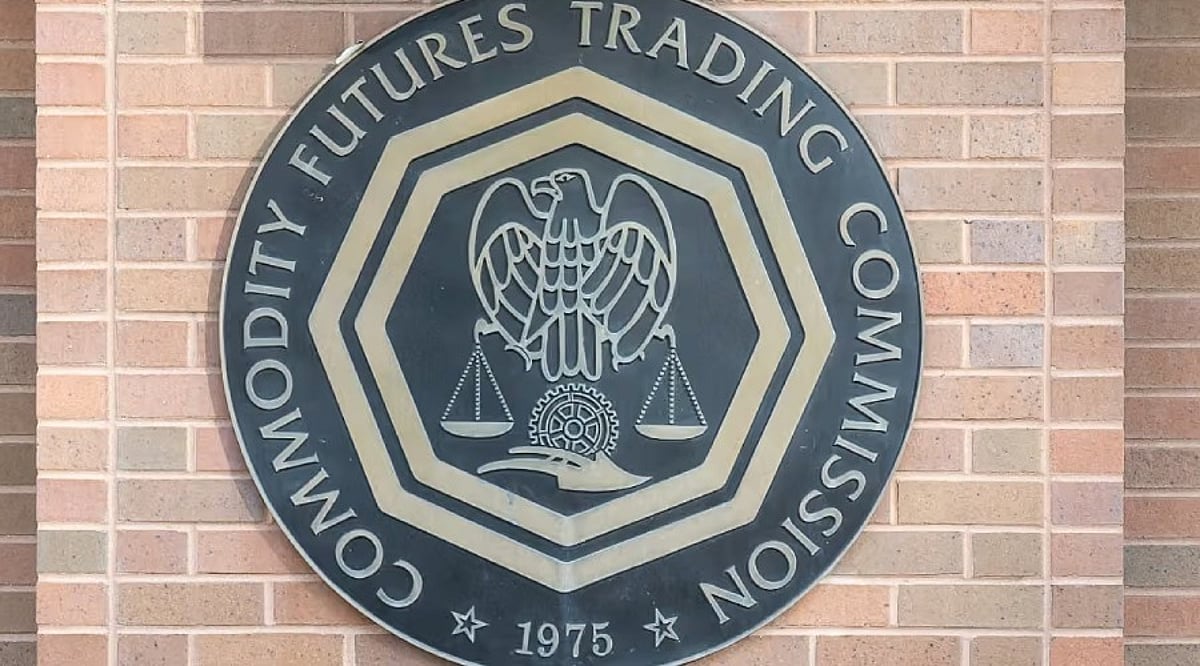
    The Commodity Futures Trading Commission (CFTC) has granted conditional broker-registration relief to qualifying passive software providers that connect users with regulated derivatives markets. The agency’s Market Participants Division announced the no-action position on September 17, stating it will not recommend enforcement against eligible providers or their personnel for failing to register as introducing brokers or associated persons, provided they meet specific criteria.

    Staff Letter 26-25: Requirements and Scope

    The relief is outlined in Staff Letter 26-25, which imposes 10 requirements that providers must satisfy to qualify. The no-action position is narrow: it only covers enforcement recommendations related to introducing-broker and associated-person registration. It does not exempt providers from other obligations under the Commodity Exchange Act or CFTC regulations. Providers cannot rely on the letter for activities beyond those explicitly covered.

    The framework applies to software that enables users to trade through registered futures commission merchants (FCMs), introducing brokers, and designated contract markets (DCMs). Users must remain customers or direct members of the regulated firm handling their transactions, not of the software provider. This distinction places the software provider outside traditional intermediary functions, as the CFTC emphasized that the relief targets passive tools—not businesses that take custody, execute trades, or control customer accounts.

    Crypto Developers Not Automatically Covered

    The CFTC clarified that crypto developers do not receive blanket protection. Wallet developers and other digital-asset software companies may qualify when their products connect users with eligible derivatives markets, but eligibility depends on meeting the letter’s requirements and the nature of their services.

    Extension of Earlier Relief

    Staff Letter 26-25 follows a similar no-action position under Staff Letter 26-09, which covered software providing user access to regulated derivatives while registered firms retained responsibility for trade execution, customer accounts, and asset control. The new letter does not alter the Commodity Exchange Act; like all no-action letters, it states that the division will not recommend enforcement for specified conduct, without creating a formal exemption.

    Industry Reaction and Broader Regulatory Context

    Industry groups welcomed the move as added regulatory clarity. Digital Chamber CEO Cody Carbone said the action removes uncertainty for software providers building interfaces that connect users with registered FCMs and DCMs. Blockchain Association CEO Summer Mersinger noted that the division took a functional approach by examining what a provider actually does.

    The CFTC action arrived on the same day the Securities and Exchange Commission announced an ‘Innovation Exemption’ for tokenized US stocks. Both developments followed the Senate’s failed vote on the Digital Asset Market Clarity Act, which would have created a federal market-structure framework for digital assets. CFTC Chair Michael Selig had directed staff in August to explore crypto market-structure rules if Congress did not pass the legislation. Coinbase Vice Chairman Ryan VanGrack described the SEC and CFTC actions as a sharp change after years of regulatory standstill.

    In summary, the CFTC’s no-action position provides conditional protection to qualifying passive software providers meeting Staff Letter 26-25’s requirements. The relief remains limited to covered activities and does not change the Commodity Exchange Act. Crypto developers may qualify only when their tools fit the framework.

  • NEAR Protocol Price Surges 31% as Confidential Perpetual Trading Launches

    NEAR Protocol Price Surges 31% as Confidential Perpetual Trading Launches

    NEAR Protocol surged toward USD 3.50 on Friday as traders pushed the token 30.8% higher over 24 hours, while a new confidentiality feature added fresh momentum to its September rally.

    CoinGecko data captured at 04:16 UTC also showed NEAR up 46.1% over seven days, 78.9% over 14 days, and 120.1% over one month. Its market value reached about USD 4.575 billion, while daily trading volume rose to USD 1.786 billion. The token also gained about 29% against Bitcoin during the same period, indicating NEAR outperforming the broader crypto market rather than simply following Bitcoin higher. CoinMarketCap separately placed NEAR near USD 3.44, up 27.6%, with a daily range between USD 2.64 and USD 3.45.

    Confidential Perpetual Trading Adds a New Catalyst

    NEAR Protocol announced on September 17 that perpetual positions on near.com had become confidential by default. Users can open leveraged positions from existing accounts without publicly linking each position to the account. The change makes confidentiality the default for those trades, although perpetual trading was already available in the ecosystem through Hyperliquid.

    NEAR’s Confidential Intents documentation says the system uses a dedicated private NEAR shard with a Trusted Execution Environment-based bridge connecting that shard to mainnet. The design can keep order size, trade direction, and other transaction details away from the public mempool. Selective disclosure remains possible, allowing traders to keep sensitive activity private while retaining the option to reveal information when needed.

    NEAR Intents Connects More Than 35 Blockchains

    Funding does not depend only on assets held on NEAR. The interface supports more than 35 blockchains, while NEAR Intents routes activity between networks. This structure reduces several steps that can occur when users move assets across wallets and chains. The platform can shield information such as position size, entry levels, and trading activity from outside observers. At the same time, traders can use assets from supported networks without first moving every position into a single ecosystem.

    NEAR supplies the privacy and cross-chain layer for the product, while Hyperliquid handles the underlying perpetual futures execution. The interface supports more than 50 markets and offers leverage of up to 40 times. Hyperliquid has recorded about USD 240 billion in perpetual trading volume over the last 30 days, giving NEAR’s new interface access to an established derivatives trading venue.

    Hyperliquid Expansion Adds Broader Market Context

    The NEAR launch comes as Hyperliquid draws attention from other market participants. Payward, Kraken’s parent company, has announced plans to launch on-chain perpetual futures based on Hyperliquid for US customers. That planned product would use a structure involving CFTC-regulated Bitnomial Exchange and Bitnomial Clearinghouse, placing Hyperliquid in another derivatives initiative beyond its role in the NEAR product.

    Meanwhile, NEAR entered Friday with substantial price gains already in place. Its seven-day and 14-day advances show that the confidentiality announcement arrived during an established September rally rather than at the start of the move. Trading activity also expanded during the rally, with CoinGecko measuring about USD 1.786 billion in 24-hour volume while the token traded near USD 3.50. The price increase, higher volume, and product update marked the latest phase of NEAR’s September advance.

  • Crypto Wealth Management Explained: Portfolios, Staking, Custody, and Risk in 2026

    Crypto Wealth Management Explained: Portfolios, Staking, Custody, and Risk in 2026

    Crypto wealth management has evolved far beyond simply buying and selling cryptocurrencies. Today, it encompasses a structured approach to portfolio construction, custody, staking, lending, tax planning, and risk management. As institutional participation expands in 2026, investors now have multiple avenues to gain and manage digital-asset exposure.

    How Crypto Wealth Management Works

    Traditional wealth management involves asset allocation, custody, investment tactics, and financial strategies. Crypto wealth management applies the same principles to cryptocurrency assets such as Bitcoin, Ethereum, stablecoins, and tokenized instruments.

    A portfolio may include directly held cryptocurrencies, spot-traded products, stablecoins, and tokenized assets from the real economy. The optimal structure depends on the investor’s goals, risk tolerance, liquidity needs, and jurisdiction.

    Custody is critical because owning cryptocurrency directly means managing private keys. Institutional investors often use qualified custodians, while individual investors can choose between custodial platforms and self-custody wallets.

    Portfolio diversification also matters. Bitcoin and Ethereum can behave differently from smaller cryptocurrencies, but crypto assets often remain highly correlated during major market declines. Holding several tokens does not automatically create meaningful diversification.

    Staking and Yield

    Proof-of-stake networks introduce staking: investors can lock or delegate eligible assets to participate in network validation and potentially earn rewards. Ethereum is a prime example. However, staking carries additional risks involving validators, smart contracts, liquidity, and intermediaries. Returns should be weighed against possible asset-price losses.

    Stablecoins have become increasingly important for treasury and liquidity management. They provide blockchain-based dollar exposure and settlement without requiring investors to hold their entire portfolio in volatile cryptocurrencies.

    Tokenized assets are expanding the investment universe. These instruments can represent Treasury securities, money-market products, or other traditional assets on blockchains, bridging conventional wealth management with digital infrastructure.

    Institutional Infrastructure Expands

    Institutional participation is broadening beyond Bitcoin. Crypto ETF markets in 2026 include exposure to Bitcoin, Ethereum, and other digital assets, giving investors regulated market instruments without direct wallet management. Meanwhile, blockchain networks host regulated financial products. On the XRP Ledger, institutions including Aviva Investors, abrdn, Ondo, and Société Générale have introduced tokenized financial instruments.

    Risk Management Remains Critical

    Crypto wealth management does not eliminate volatility. Investors still face market, custody, counterparty, regulatory, smart-contract, and liquidity risks. Leverage can magnify these risks substantially, while yield products may introduce exposure beyond the underlying cryptocurrency.

    Effective crypto wealth management focuses less on identifying the next high-return token and more on determining allocation, custody, liquidity, diversification, and acceptable downside. As digital assets integrate further with traditional finance, managing those risks becomes as important as selecting the assets.

    Frequently Asked Questions

    1. What is crypto wealth management?

    Crypto wealth management is the structured management of digital-asset portfolios using strategies involving asset allocation, custody, diversification, and risk management. It can include cryptocurrencies, stablecoins, staking products, ETFs, and tokenized traditional assets.

    2. How is crypto wealth management different from regular crypto investing?

    Regular crypto investing may focus primarily on buying and selling individual tokens. Wealth management takes a broader approach by considering portfolio allocation, custody, liquidity, taxation, diversification, yield opportunities, and acceptable levels of risk.

    3. What role does custody play in crypto wealth management?

    Custody determines how digital assets and their private keys are secured and controlled. Investors may use self-custody wallets, centralized custodians, or institutional custody services depending on their security requirements and investment structure.

    4. How can investors generate yield from a crypto portfolio?

    Proof-of-stake cryptocurrencies can potentially generate staking rewards through network participation. Other yield opportunities may involve lending or tokenized financial products, although each can introduce additional smart-contract, counterparty, liquidity, and market risks.

    5. What are the major risks of crypto wealth management?

    Key risks include cryptocurrency price volatility, private-key loss, counterparty failures, smart-contract vulnerabilities, liquidity constraints, and regulatory changes. Leverage and complex yield products can further increase potential losses, making risk management particularly important.

    Disclaimer: This article is for informational purposes only and does not constitute financial or investment advice. Always conduct your own research (DYOR) before making any investment decisions.

  • 7 Essential Metrics for Evaluating Bitcoin Treasury Companies

    7 Essential Metrics for Evaluating Bitcoin Treasury Companies

    Bitcoin treasury companies have emerged as a distinct segment of public markets, using equity, debt, and preferred securities to accumulate Bitcoin. However, evaluating these companies requires more than just comparing their Bitcoin holdings. Recent market conditions have shown that several major treasury companies trade below the gross value of their Bitcoin holdings, while differences in debt, preferred shares, and dilution significantly affect what remains attributable to common shareholders.

    1. Total Bitcoin Holdings

    The most straightforward metric is the total amount of BTC owned. Larger holdings provide greater Bitcoin exposure, but investors should also examine how those coins were financed. A company borrowing aggressively to purchase Bitcoin carries different risks than one using operating cash flow or equity issuance.

    2. Bitcoin per Diluted Share

    Absolute holdings can increase while shareholders become diluted. Bitcoin per diluted share measures whether BTC accumulation is actually increasing each shareholder’s economic exposure. If share issuance grows faster than Bitcoin holdings, total BTC may rise without improving per-share exposure.

    3. Market Net Asset Value (mNAV)

    Market net asset value (mNAV) compares a company’s valuation with the value of its Bitcoin holdings and other relevant assets. Premiums can make issuing equity attractive, as companies may raise capital above underlying asset value and purchase additional Bitcoin. Discounts can weaken that financing mechanism.

    4. Debt and Preferred Obligations

    Investors should examine convertible debt, secured borrowing, preferred securities, and maturity schedules. For example, Strategy reportedly reduced total debt to approximately $6.7 billion after retiring $1.5 billion of convertible debt during 2026. Debt becomes especially important during prolonged Bitcoin downturns.

    5. Bitcoin Acquisition Cost

    Average purchase price shows how far Bitcoin can decline before the market value of treasury holdings falls below the aggregate acquisition cost. However, accounting losses alone do not necessarily force selling. Liquidity and debt structures matter more.

    6. Funding Capacity

    Treasury companies frequently rely on capital markets to continue purchasing Bitcoin. Investors should track available equity programs, credit facilities, and preferred issuance capacity. Metaplanet reportedly used 83% of a $500 million credit facility while expanding its treasury to approximately 43,000 BTC.

    7. Liquidity and Cash Obligations

    Bitcoin holdings should be compared with interest payments, dividends, operating expenses, and upcoming maturities. A company can own substantial Bitcoin yet face financing pressure if cash obligations exceed available liquidity.

    Bitcoin treasury companies should not be valued solely by ranking BTC holdings. Investors need to examine per-share exposure, mNAV, leverage, acquisition costs, and financing sustainability together, particularly when market premiums disappear.

    Final Thoughts

    Bitcoin treasury companies require analysis beyond headline BTC holdings. Per-share exposure, leverage, mNAV, funding capacity, and liquidity together provide a clearer picture of whether a company’s Bitcoin strategy is financially sustainable.

    FAQs

    1. What is a Bitcoin treasury company?

    A Bitcoin treasury company is a business that holds Bitcoin as a significant part of its corporate treasury strategy. Some companies finance additional BTC purchases through equity issuance, debt, preferred securities, or operating cash flow.

    2. What is mNAV for a Bitcoin treasury company?

    Market net asset value, or mNAV, compares a company’s market valuation with the value of its Bitcoin holdings and other relevant assets and obligations. It can help show whether shares trade at a premium or discount to underlying assets.

    3. Why is Bitcoin per diluted share important?

    Bitcoin per diluted share measures BTC exposure after accounting for potential share dilution. A company can increase its total Bitcoin holdings while reducing or failing to improve each shareholder’s economic exposure if its share count rises faster.

    4. Why should investors examine a Bitcoin treasury company’s debt?

    Debt creates interest, repayment, and refinancing obligations regardless of Bitcoin’s market performance. High leverage can increase financial pressure during prolonged BTC downturns, particularly when a company has limited cash or near-term maturities.

    5. What metrics should be considered when comparing Bitcoin treasury companies?

    Key metrics include total BTC holdings, Bitcoin per diluted share, mNAV, debt and preferred obligations, average Bitcoin acquisition cost, funding capacity, and liquidity. Evaluating them together provides more context than BTC holdings alone.

    Disclaimer: This article is for informational purposes only and does not constitute investment advice. Cryptocurrency investments carry risk. Always conduct your own research before making investment decisions.

  • Solana’s 5,000 TPS Milestone: How Parallel Execution, Shorter Slots, and Alpenglow Boost Network Capacity

    Solana’s 5,000 TPS Milestone: How Parallel Execution, Shorter Slots, and Alpenglow Boost Network Capacity

    Solana is engineered for high throughput and low latency, enabling applications to handle significant activity directly on its Layer 1 blockchain. Rather than relying on separate scaling layers, Solana combines parallel transaction execution, rapid block production, and high-performance validator infrastructure to deliver exceptional network capacity.

    Solana Records 5,000 User TPS

    On September 14, the Solana Foundation announced that the network achieved its first sustained period above 5,000 user transactions per second (TPS). This metric is crucial because Solana’s headline TPS figures often include validator-related activity, whereas user TPS more accurately reflects transactions generated by real applications and end users.

    The Foundation also noted that Solana has maintained 100% uptime since February 2024. Even during an August 2026 routing failure that took roughly 29% of network stake offline, block production and transaction processing continued without interruption.

    Parallel Transaction Execution

    One of Solana’s key differentiators is its ability to execute transactions in parallel. Each transaction specifies which accounts it needs to access, allowing non-conflicting transactions to be processed simultaneously instead of queuing sequentially.

    Compute Units measure the computational resources required by each transaction. More complex smart-contract interactions consume additional units, so real network throughput depends on the complexity of workloads rather than a single theoretical TPS number.

    Reduced Slot Times

    Solana is actively shortening the intervals between validator-produced blocks. The network previously operated with roughly 400-millisecond slots, but recent upgrades have brought mainnet slot times down to 300 milliseconds. The ultimate target is 200 milliseconds.

    Shorter slots expose blockspace more frequently and reduce the time a single leader controls transaction ordering. The Solana Foundation attributes these gains to improvements in validator clients such as Turbine and Replay.

    Agave 4.2 introduced further capacity enhancements, including increasing the maximum transaction size from 1,232 bytes to 4,096 bytes. This provides about 3.3 times more room for zero-knowledge proofs, multisignature transactions, and batched operations.

    Alpenglow: Aiming for 150ms Finality

    Solana’s next major consensus upgrade, Alpenglow, targets drastically faster finality. Current TowerBFT finality takes approximately 12.8 seconds, while Alpenglow aims for roughly 150-millisecond finality without altering how applications execute transactions.

    Preparations are already underway: BLS public-key registration went live on mainnet on July 8, followed by the Validator Admission Ticket on July 22. Alpenglow is expected to launch with Agave 4.3 in October 2026.

    Beyond Theoretical TPS

    Solana’s capacity cannot be captured by theoretical TPS alone. The sustained 5,000-user-TPS milestone offers a more practical indicator of real-world performance. Combined with shorter slots, larger transaction sizes, and faster finality, these improvements are designed to increase both capacity and responsiveness.

    However, maintaining reliability as demand grows will be the ultimate test of whether these technical advances translate into dependable blockchain performance.

    FAQ

    How many transactions per second can Solana process in 2026?

    The Solana Foundation reported its first sustained period above 5,000 user TPS in September 2026. User TPS excludes validator-related activity, making it a better gauge of actual application and user transactions.

    How does Solana process multiple transactions simultaneously?

    Solana identifies which accounts each transaction needs to access and can execute non-conflicting transactions in parallel, avoiding a single sequential processing queue.

    What are Solana’s current slot times?

    Solana has reduced mainnet slot times from roughly 400 milliseconds to around 300 milliseconds through recent upgrades. The network is ultimately targeting 200-millisecond slots.

    What is Solana’s Alpenglow upgrade?

    Alpenglow is a planned overhaul of Solana’s consensus architecture targeting approximately 150-millisecond finality, compared with about 12.8 seconds under TowerBFT. It is expected to arrive with Agave 4.3 in October 2026.

    Why doesn’t one TPS number define Solana’s actual capacity?

    Real throughput depends on transaction complexity, Compute Unit consumption, account contention, and prevailing network conditions. Sustained user TPS and network reliability are more practical indicators than theoretical maximums.

    Disclaimer: This article is for informational purposes only and does not constitute financial or investment advice. Cryptocurrencies carry significant risk; always conduct your own research before investing.

  • Apeing Presale Gains Traction: 338+ Investors and Key Opinion Leaders Fuel Stage 4 Momentum

    Apeing Presale Gains Traction: 338+ Investors and Key Opinion Leaders Fuel Stage 4 Momentum

    The meme-coin market continues to evolve, with established tokens like Bonk and Pepe still in the spotlight. A recent BONK price outlook suggests a potential move toward $0.000003, and some forecasts even target $0.0000055 by 2026. However, the hunt for the next breakout opportunity isn’t limited to tokens already trading. The Apeing presale is emerging as an early-stage contender, attracting over 338 investors and selling more than 447 million $APEING tokens during its ongoing Stage 4.

    Apeing Presale: Rapid Progress and Limited Supply

    Apeing’s presale has already moved through several stages, with the current Banana Hoarders Stage 4 now live. Key metrics include:

    • 447M+ $APEING tokens sold
    • $93K+ raised
    • 338+ holders
    • 300M token allocation available at $0.0005 per token
    • Projected ROI of 1,900% from presale price

    The finite supply in each stage creates urgency. As the allocation dwindles, the price is expected to rise, making the current entry point appealing for those tracking the latest crypto presales.

    Community Competition: Ape Wars Leaderboard

    Apeing integrates a monthly competition called Ape Wars, where community members earn rankings based on total purchases. The top three buyers each cycle receive additional rewards, and the leaderboard resets monthly, fostering ongoing engagement.

    How to Buy $APEING in the Presale

    Purchasing $APEING is straightforward:

    1. Visit the official Apeing meme coin presale website.
    2. Enter your desired $APEING purchase amount.
    3. Connect a compatible crypto wallet.
    4. Review the transaction details.
    5. Approve the transaction in your wallet.

    Once confirmed, the purchase is applied to the live presale allocation.

    KOL Signal and Post-Listing Potential

    Michael Wrubel’s involvement gives Apeing early key opinion leader (KOL) visibility, but the project’s roadmap emphasizes sustained marketing after launch. Continued promotion could convert initial attention into lasting community growth and demand.

    The upside potential is compelling: a $2,000 investment at Stage 4’s $0.0005 price yields 4 million tokens. If $APEING lists at $0.01, that holding would be worth $40,000. At $0.02, it becomes $80,000; at $0.05, $200,000; and at $0.10, $400,000. These milestones illustrate why Stage 4 is attracting significant interest.

    Final Verdict

    Apeing, alongside Pepe and Bonk, each brings a distinct narrative to the meme-coin conversation. Apeing’s official presale is live with Stage 4 active, offering a limited allocation. For those following the latest crypto presales, staying connected to official Apeing channels is essential for stage updates, announcements, and current presale information.

    Frequently Asked Questions

    What is the current Apeing presale price?

    Stage 4 lists the price at $0.0005, with a planned listing price of $0.01.

    Why is Apeing appearing in crypto presale news?

    Apeing is gaining attention because its official presale is live, with Stage 4 providing an active opportunity.

    What is a crypto presale?

    A crypto presale is an early token sale that lets investors access a project’s native tokens before public exchange listings.

    Why are presales popular in 2026?

    Presales remain popular because they offer early access to new crypto projects, many of which focus on utility, staking, community growth, and multi-chain technology.

    How do I buy tokens in a presale safely?

    Use the project’s official presale platform, connect a compatible wallet, select your amount, and carefully check transaction details before confirming.