Category: Cryptocurrency

  • Ethereum Holds Key $1,850 Support as Broader Crypto Recovery Lifts Altcoins

    Ethereum Holds Key $1,850 Support as Broader Crypto Recovery Lifts Altcoins

    Ethereum Price Tracks Broader Crypto Recovery

    Ethereum traded at $1,880.58 after gaining 1.57% in the last 24 hours, slightly outperforming Bitcoin’s 1.01% rise. The move came as the overall crypto market cap increased 1.07% to about $2.2 trillion, with traders shifting capital toward altcoins. However, weaker trading volume and outflows from US spot Ethereum ETFs kept the outlook cautious. ETH faces resistance near $1,920–$1,925 and support between $1,850 and $1,854.

    Ethereum ETFs End Five-Day Inflow Streak

    US spot Ethereum ETFs saw $70.62 million in net outflows on July 24, ending a five-day inflow streak that had attracted $211.25 million. Despite the daily outflow, weekly net inflows reached $103.9 million, extending the streak to three weeks. July inflows totaled $337.74 million, indicating sustained monthly demand. Bitcoin ETFs also recorded $240.08 million in outflows on Friday but still posted a third consecutive weekly inflow of $34 million. Market analyst Viktoras Karapetjanc noted that Ethereum continues to hold above key short-term levels, and if inflows remain steady, renewed upside momentum is possible.

    Technical Analysis: ETH Tests $1,925 Resistance

    Ethereum traded above its 20-hour and 50-hour moving averages but remained below the daily 200-day average near $2,147. The daily Ichimoku Kijun near $1,870 acted as immediate support. The Relative Strength Index reached 68.37, nearing overbought territory, suggesting strong buying pressure but potential for a slowdown if buyers fail to break above resistance. ETH could trade between $1,854 and $1,925 in the near term. A firm break above $1,925 with stronger volume could open the way for another upward move, while a drop below $1,854 would weaken the current structure and expose support near $1,800. Bitcoin’s stability above $64,000 remains a key trigger for Ethereum’s next move.

  • Crypto Security Best Practices: Safeguard Your Investments with These Expert Tips

    Crypto Security Best Practices: Safeguard Your Investments with These Expert Tips

    Storing cryptocurrency securely is essential for every investor. Hardware wallets such as Ledger or Trezor provide offline storage that keeps private keys away from hackers and malware. For long-term holdings, a hardware wallet is the safest option.

    Your recovery seed phrase must be protected at all costs. Write it down on paper or metal and store it in a safe place. Never save it in cloud storage, emails, screenshots, or phone notes—any digital copy increases the risk of theft.

    Enable two-factor authentication (2FA) using an authenticator app or a hardware security key instead of SMS-based 2FA. This prevents SIM-swap attacks and adds an extra layer of security to your exchange accounts.

    Use a unique, strong password for every crypto account and store them in a trusted password manager. Activate withdrawal whitelists and security alerts to monitor any suspicious activity.

    Phishing scams are rampant. Always bookmark the official websites of your exchanges and use those bookmarks to log in. Never click login links from emails, social media posts, ads, or random direct messages.

    Additional best practices include keeping most of your funds in cold storage, regularly updating your devices, verifying wallet addresses before sending any transaction, and never sharing your seed phrase or private keys with anyone.

  • BitMart Announces Closure After Nine Years; BMX Token Plunges 58%

    BitMart Announces Closure After Nine Years; BMX Token Plunges 58%

    BitMart, a cryptocurrency exchange that has operated for nine years, has announced that it will shut down its trading platform. The company will cease all trading on August 26, 2026, and fully close operations on January 31, 2027. The decision follows a review of its business conditions, market environment, and future strategic direction, though no specific financial, legal, or security issue was cited.

    According to the announcement, new registrations, deposits, and trading orders were halted at 01:30 UTC on July 26. Futures accounts were switched to reduce-only mode, allowing users to close existing positions but not open new ones. BitMart advised users to complete identity verification, cancel open orders, and submit withdrawal requests before 05:00 UTC on August 26. After trading ends, accounts will remain accessible, but withdrawals may undergo additional review.

    The exchange also stated that services such as Earn, staking, lending, Launchpad, copy trading, grid trading, and automated features will be phased out gradually, with separate notices detailing redemption dates.

    BMX Token Drops 58% Amid Withdrawal Delays

    Following the closure announcement, BitMart’s native BMX token plummeted by approximately 58%, trading near $0.08 with a market capitalization of around $27 million. The token had already lost about 70% of its value over the past year before this latest decline. Users reported slower withdrawal processing, including pending Tether requests, which BitMart attributed to additional checks such as identity verification, device and IP address review, source-of-funds analysis, sanctions screening, and Travel Rule compliance.

    Blockchain data from Arkham indicated that wallets linked to BitMart held approximately $71 million on Sunday, down from roughly $102 million on July 6. Most assets tracked were WFI tokens, with only about $91,000 in USDT.

    Second Exchange Closure in a Week

    BitMart is the second crypto exchange to announce a shutdown within a week. On July 23, BitMEX revealed it would close its trading platform in September after 11 years. Both companies used similar language, describing their decisions as strategic reviews. The announcements also caused confusion among social media users, who mistakenly associated BitMart’s BMX token with BitMEX’s BMEX token, leading to a sharp decline in BMEX as well.

    Despite the closure, BitMart reported approximately $1.6 billion in 24-hour trading volume after the notice, with Bitcoin accounting for nearly half of that activity. The exchange did not clarify whether the volume spike was due to users closing positions or moving funds.

    BitMart previously suffered a $196 million hot-wallet breach in December 2021, though it covered customer losses at that time. The company has not linked the earlier attack to its current decision to wind down.

  • Leading Web3 Development Companies in the United States for 2026

    Leading Web3 Development Companies in the United States for 2026

    The United States continues to lead many Web3 projects in 2026. Startups, brands, and large firms are looking for teams that can build safe, useful, and easy-to-run digital products. A strong Web3 company does more than write code; it helps a business plan, build, test, and launch with care.

    Web3 has moved past the hype stage for many firms. It now serves real work in finance, gaming, digital ownership, supply chain tracking, and online identity. The best companies in this field focus on clear results, not loud promises. They help clients turn a rough idea into a working product that can serve real users.

    Why Companies Matter

    A Web3 project can fail fast if the team rushes the work. Smart contract mistakes, poor design, and weak testing can all create problems later. That is why buyers often look for firms with solid past work, a clear process, and a steady support team.

    The U.S. market has depth. DesignRush lists 319 Web3 companies in the United States, which shows how active the space has become. Clutch also notes that U.S. teams are active across major hubs like Silicon Valley, New York, and Miami. This spread gives buyers more choice and more room to compare.

    Web3 Companies in 2026

    A few firms appear often in 2026 lists. They include Cleveroad, Altoros, Vention, Iron Forge Development, and The Blockchain Team. These names stand out for different reasons. Some focus on enterprise work, while others build for startups, and some handle both.

    Techanic Infotech, Crinpro Solutions, MindSea, ArcTouch, TechMahindra, WillowTree, Dogtown, Blue Label Labs, Infosys, and Media Sidebench also appear in AVIXA’s 2026 list of leading U.S. Web3 companies. The mix shows how broad the market is. Some firms lean toward app design and user flow, while others focus on blockchain systems, token tools, or private company use cases.

    What Separates the Best

    The best Web3 companies are usually strong in three areas: they understand the full build cycle, they test carefully, and they explain things in plain language. That matters because many clients do not need hype; they need a team that can guide them step by step.

    Expert insight in the sector points to one clear pattern. Firms that do well in 2026 are those that connect tech skill with business sense. A good example is a company that can build a wallet or NFT platform, then also help the client think through user trust, launch timing, and long-term support. That mix is often what separates a useful product from a short-term experiment.

    How Buyers Can Choose

    A buyer should look at more than a company name. Past projects and industry focus matter. Clear communication matters too. A team that has built for finance may fit a payment product better than a team that only knows art or games.

    A buyer should also ask simple questions: Has the team built similar products before? Does it test for security? Will it stay involved after launch? These questions help cut through noise and show which firm can handle real work. In a market with hundreds of choices, that kind of focus saves time and reduces risk.

    Final Thoughts

    Top Web3 development companies in the United States in 2026 bring skill, speed, and practical thinking to a fast-changing field. The strongest firms do not chase buzz; they build products that work, scale, and make sense for the client’s goals. For any business entering Web3, the best partner is the one that keeps the process clear and the product solid in an operational cycle.

    FAQs

    What is a Web3 development company?

    A Web3 development company builds blockchain-based applications, smart contracts, crypto wallets, NFT platforms, DeFi solutions, and other decentralized digital products for businesses and startups.

    Why should businesses hire a Web3 development company?

    Hiring a Web3 development company gives businesses access to blockchain expertise, secure smart contract development, faster product launches, ongoing technical support, and scalable solutions tailored to their needs.

    Which industries benefit the most from Web3 development?

    Industries such as finance, gaming, healthcare, supply chain, real estate, e-commerce, and digital identity are increasingly using Web3 technologies to improve security, transparency, and efficiency.

    What should I look for when choosing a Web3 development company?

    Look for proven blockchain experience, strong security practices, relevant industry expertise, client reviews, a transparent development process, and reliable post-launch support before making a decision.

    Are Web3 development services suitable for startups?

    Yes. Many Web3 development companies offer flexible solutions for startups, helping them build MVPs, launch blockchain products, and scale their platforms as their business grows.

  • Best Cryptocurrencies to Buy in July 2026: Top 10 Picks for Long-Term Growth

    Best Cryptocurrencies to Buy in July 2026: Top 10 Picks for Long-Term Growth

    The cryptocurrency market has undergone significant transformation in 2026. After a rocky start, the market has gained strength as institutional adoption, Bitcoin ETFs, and tokenized assets have boosted investor confidence. With the total market capitalization fluctuating between $2.5 and $3 trillion and Bitcoin maintaining a 58%–62% market share, now is a prime time to consider these top 10 cryptocurrencies for July 2026.

    Key Takeaways

    • Bitcoin and Ethereum remain the strongest long-term choices due to institutional adoption and market leadership.
    • Solana, Chainlink, Avalanche, Sui, and Ondo Finance offer higher growth potential with greater risk.
    • A diversified crypto portfolio can help balance stability and high-growth opportunities while managing market volatility.

    1. Bitcoin (BTC)

    Bitcoin remains the world’s largest cryptocurrency, trading near $64,600 with a market cap of about $1.26 trillion. Often called digital gold, its limited supply of 21 million coins attracts institutional investors. Large financial firms continue to buy Bitcoin through ETFs, and many companies hold it as a reserve asset. Experts forecast 40% to 120% returns over the next three to five years.

    2. Ethereum (ETH)

    Ethereum is the second-largest cryptocurrency, priced near $1,780 with a market cap of ~$215 billion. It powers thousands of decentralized apps, NFT platforms, and financial services, and leads the real-world asset tokenization sector. Staking provides additional incentives. Analysts expect Ethereum to rise 70% to 200% in the coming years.

    3. Solana (SOL)

    Solana trades around $76.60 with a market cap of $44.6 billion. Its high speed and low fees attract developers and users. Despite past technical issues, confidence has returned. Market experts see potential gains of 100% to 300% over the next few years.

    4. XRP

    XRP is priced at ~$1.07 with a market cap of $67.1 billion. It focuses on fast international payments and works with financial institutions. Better regulatory clarity has improved sentiment, and analysts see possible returns of 50% to 200%.

    5. BNB

    BNB trades around $570 with a market cap of $76.7 billion. It supports the Binance ecosystem, one of the largest crypto exchanges. Regular token burns reduce supply, potentially boosting value. Despite regulatory concerns, BNB has a solid long-term outlook.

    6. Chainlink (LINK)

    Chainlink is priced between $15–$18 with a market cap of $10–$12 billion. It provides secure data feeds for smart contracts. Banks and blockchain projects rely on Chainlink, and as tokenized assets grow, demand may rise. Analysts estimate 100% to 250% gains.

    7. Avalanche (AVAX)

    Avalanche trades between $24–$30 with a market cap of $10–$13 billion. Its fast blockchain supports business apps and gaming, with subnet technology for private systems. Despite competition, Avalanche has room to grow, with potential returns of 100% to 300%.

    8. Sui (SUI)

    Sui is one of the fastest-growing blockchains in 2026, priced between $3–$5 with a $12–$16 billion market cap. Its high speed and modern technology attract developers and venture capital. As a young network, volatility is high, but analysts see 150% to 400% upside.

    9. Cardano (ADA)

    Cardano trades around $0.16 with a market cap of $5.8 billion. It follows a research-driven, secure approach. While growth has been slower than rivals, strong community support persists. Analysts suggest 100% to 250% ROI if development continues.

    10. Ondo Finance (ONDO)

    Ondo Finance has become a standout project in 2026, trading between $0.80–$1.20 with a market cap of $2–$4 billion. It focuses on tokenized real-world assets, especially US Treasuries. Experts believe this sector could be a major trend, with potential returns of 200% to 500%—though higher risk applies.

    Final Thoughts

    July 2026 offers numerous opportunities for crypto investors. Bitcoin and Ethereum provide stability and long-term growth. Solana, XRP, BNB, and Chainlink give exposure to evolving blockchain tech. Avalanche and Sui have high growth prospects, while Cardano remains a steady long-term project. Ondo Finance stands out for its real-world asset tokenization. Always do thorough research, diversify your portfolio, and only invest what you can afford to lose.

    FAQs

    1. Which cryptocurrency is considered the safest investment in July 2026?
    Bitcoin is generally viewed as the safest due to market dominance, institutional adoption, and limited supply.

    2. Why is Ethereum still a top investment?
    Ethereum powers DeFi, NFTs, tokenized assets, and smart contracts, making it a leading blockchain ecosystem with long-term growth potential.

    3. Which cryptocurrencies have the highest growth potential?
    Sui, Ondo Finance, Solana, Avalanche, and Chainlink are considered high-growth opportunities, though they carry increased risk.

    4. Is it better to invest in one cryptocurrency or several?
    Diversifying across established and emerging cryptocurrencies can reduce risk while improving exposure to different market opportunities.

    5. What should investors consider before buying cryptocurrencies?
    Research each project’s fundamentals, market trends, adoption, and risk level. Only invest funds you can afford to lose due to crypto’s volatility.

    Disclaimer: This article is for informational purposes only and does not constitute financial advice. Always do your own research before investing.

  • Leading Layer-2 Cryptocurrencies to Watch in July 2026

    Leading Layer-2 Cryptocurrencies to Watch in July 2026

    Key Takeaways

    • Layer-2 networks reduce Ethereum fees while significantly improving transaction speed and scalability.
    • DeFi, gaming, AI, and tokenized real-world assets are accelerating Layer-2 ecosystem growth.
    • Arbitrum, Optimism, Starknet, Polygon, and emerging projects continue driving Ethereum’s next evolution.

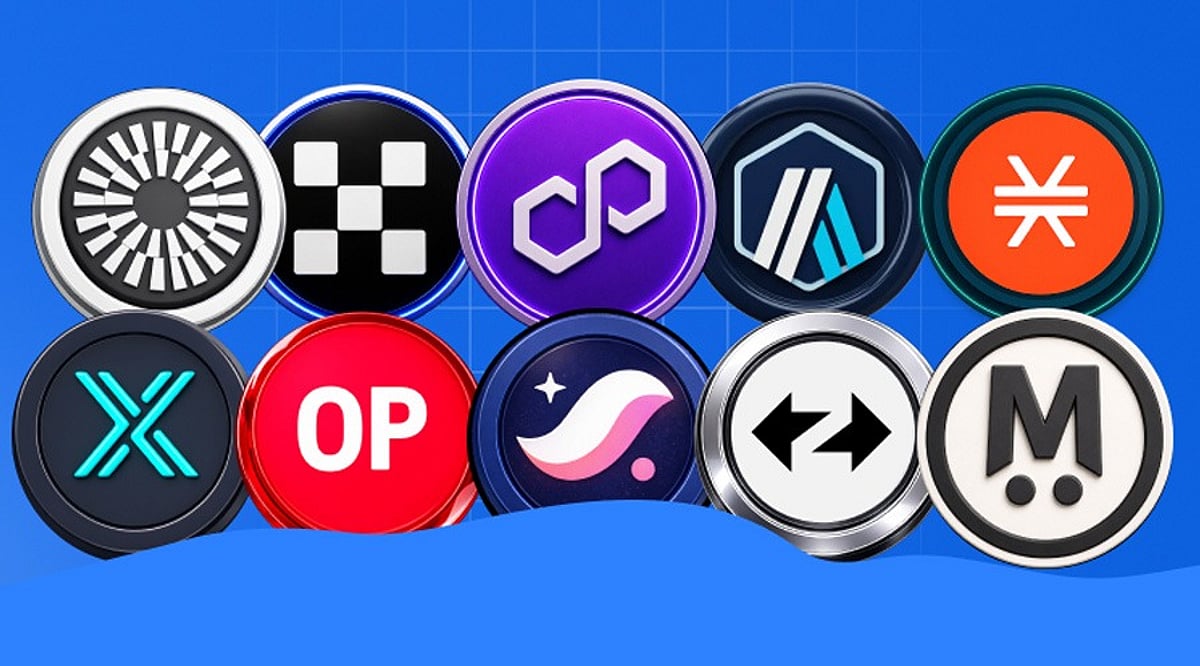
    Ethereum remains the dominant blockchain, but high fees and slower transaction speeds during peak usage remain challenges. Layer-2 networks address these issues by processing transactions off the main chain and posting final data back for security. This approach lowers costs, boosts speed, and supports mass adoption. In July 2026, Layer-2 projects continue to be one of the strongest segments in crypto, fueled by steady growth in decentralized finance, gaming, artificial intelligence, and tokenized real-world assets. Here are the top 10 Layer-2 cryptocurrencies to watch.

    Arbitrum (ARB)

    Arbitrum holds the top spot among Ethereum Layer-2 networks, thanks to its vast DeFi ecosystem and deep liquidity. Major decentralized exchanges, lending platforms, and perpetual trading protocols operate on Arbitrum. The network also supports Layer-3 development through Arbitrum Orbit, opening new opportunities for builders. Strong institutional interest and an active community add to its value. Despite growing competition, Arbitrum remains one of the most important Layer-2 projects in July 2026.

    Optimism (OP)

    Optimism has expanded well beyond a single Layer-2 chain. Its Superchain vision has attracted multiple networks using the OP Stack, including Coinbase’s Base. This shared technology improves cross-chain compatibility and speeds up development. Revenue sharing between connected chains adds another advantage. As more projects join the Superchain, Optimism continues to strengthen its position as a leading Ethereum scaling solution.

    Starknet (STRK)

    Starknet has built its reputation on advanced zero-knowledge technology. Using STARK proofs, it delivers strong security with excellent scalability. Developers benefit from the Cairo programming language, which supports sophisticated blockchain applications. The platform continues to attract DeFi projects, gaming apps, and AI initiatives, placing Starknet among the top Layer-2 networks for long-term growth.

    Polygon (POL)

    Polygon remains one of the most recognized names in blockchain. It has shifted focus toward an ecosystem of connected zero-knowledge chains via its AggLayer vision. Large companies and financial institutions continue to explore Polygon due to its reliable infrastructure and enterprise partnerships. Growth in tokenized real-world assets also supports the network. This combination of business adoption and technical development keeps Polygon near the top of the Layer-2 market.

    Mantle (MNT)

    Mantle has gained attention for its strong treasury and focus on institutional DeFi. The network supports liquid staking, yield products, and other financial services that appeal to developers and investors. A well-funded ecosystem enables Mantle to support new applications through grants and incentives. These factors help it stand out among newer Layer-2 platforms.

    Immutable (IMX)

    Immutable has become a leading blockchain platform for gaming and digital collectibles. The network removes gas fees for many player transactions, creating a smoother gaming experience. Major game developers continue to choose Immutable for its reliable infrastructure and NFT support. New game releases and wider blockchain gaming adoption could provide fresh momentum in the second half of 2026.

    zkSync (ZK)

    zkSync is gaining ground in the zero-knowledge Layer-2 space, focusing on consumer applications with fast, low-cost transactions. Native account abstraction improves wallet usability. The project is attracting DeFi projects, payment systems, and social applications to its ecosystem. These advancements make zkSync one of the emerging leaders among Layer-2 projects.

    Metis (METIS)

    Metis takes a different approach with decentralized sequencers, reducing reliance on a single operator. The project is also attracting interest in AI infrastructure. Enterprise tools and lower centralization risks provide additional appeal. These unique features help Metis carve out a distinct position in the competitive Layer-2 market.

    Loopring (LRC)

    Loopring remains one of the earliest zero-knowledge rollup projects. The network focuses on secure payments, decentralized exchanges, and digital wallets. Although newer projects receive more attention, Loopring continues to offer reliable, proven technology. Its long history and stable ecosystem make it an important Layer-2 network to follow.

    Fuel (FUEL)

    Fuel has emerged as one of the most promising modular execution layers in 2026. It supports parallel transaction execution, enabling better performance than many traditional blockchain designs. Developers are showing growing interest in its modern virtual machine and flexible architecture. As the ecosystem expands, Fuel could become a major name in Ethereum scaling.

    Final Thoughts

    Layer-2 technology continues to play a crucial role in the cryptocurrency market as of July 2026. The growing popularity of DeFi, blockchain gaming, enterprise applications, AI, and tokenized real-world assets is driving adoption of Layer-2 solutions. Projects like Arbitrum, Optimism, Starknet, Polygon, Mantle, Immutable, zkSync, Metis, Loopring, and Fuel each contribute uniquely to Ethereum’s future. All of them have strong ecosystems, experienced developer communities, and ongoing technological advances.

    Frequently Asked Questions

    What are Layer-2 cryptocurrencies?

    They are blockchain networks built on Ethereum that improve speed, lower transaction costs, and increase scalability while relying on Ethereum’s security.

    Why are Layer-2 projects important in 2026?

    They help Ethereum handle growing demand from DeFi, gaming, AI applications, and tokenized real-world assets without high fees or network congestion.

    Which Layer-2 projects are leading the market?

    Arbitrum, Optimism, Starknet, Polygon, Mantle, Immutable, zkSync, Metis, Loopring, and Fuel are among the top Layer-2 ecosystems to watch.

    What is the difference between optimistic and zero-knowledge rollups?

    Optimistic rollups assume transactions are valid unless challenged, while zero-knowledge rollups use cryptographic proofs to verify transactions before finalization.

    Are Layer-2 cryptocurrencies good long-term investments?

    They have strong growth potential by increasing Ethereum adoption, but like all cryptocurrencies, they carry market risks and require careful research before investing.

  • 5 Web3 Cryptocurrencies to Watch in India This July 2026

    5 Web3 Cryptocurrencies to Watch in India This July 2026

    Web3 has become one of the fastest-growing parts of the crypto market. It gives people more control over their money, data, and digital identity. Unlike traditional internet platforms, Web3 uses blockchain technology to create open and secure systems. More companies, developers, and investors now support this space since it offers real solutions instead of only digital currencies.

    In July 2026, five Web3 crypto coins stand out for their strong technology, active ecosystems, and clear purpose. Each project solves a different problem and supports the future of blockchain in its own way.

    Chainlink (LINK) Strengthens Blockchain Connections

    Chainlink is among the top players in the Web3 space. This network enables smart contracts to get reliable information from external sources. Throughout its journey, it has branched out from its original use of price feeds. Today, its Cross-Chain Interoperability Protocol (CCIP) makes it possible for numerous blockchains to send and receive data and digital assets from one another.

    Chainlink also plays an important role in the rapidly developing Real-World Asset (RWA) sector since banks and financial institutions are adopting its technology. The solution connects conventional assets like bonds and real estate to blockchain networks. Currently, Chainlink facilitates over $95 billion of on-chain value.

    Toncoin (TON) Brings Web3 to Millions of Users

    Toncoin has built a strong position led by its close relationship with Telegram. This connection gives the project access to one of the world’s largest messaging platforms. Users can open crypto wallets, make payments, play blockchain games, and explore Mini Apps without leaving Telegram.

    This simple experience attracts people who have little knowledge of blockchain technology. The ecosystem also supports NFTs, stablecoins, and many digital services. As Telegram adds more Web3 features, Toncoin could reach even more users across the world.

    Internet Computer (ICP) Creates a Different Internet

    Internet Computer follows a unique path in the blockchain industry. The project allows developers to build complete websites, applications, and online services directly on the blockchain. This approach reduces the need for traditional cloud providers in many situations.

    The platform also supports artificial intelligence projects and decentralized cloud services. Developers can create applications that stay online without central servers. Although Ethereum has a larger developer community, Internet Computer continues to attract attention for its innovative technology and long-term vision.

    Filecoin (FIL) Solves Data Storage Challenges

    Filecoin is dedicated to secure decentralized data storage. As artificial intelligence and blockchain adoption increase, the demand for reliable storage continues to grow. Filecoin enables individuals and organizations to store data across a distributed network instead of a single location.

    The platform is designed for long-term storage of information, digital archives, and protection of data. These qualities help Filecoin support companies working with AI, Web3 developers, and any other enterprises with huge amounts of information. Advanced technology and a broad ecosystem help keep Filecoin among the leading decentralized storage projects.

    Polkadot (DOT) Connects Blockchain Networks

    Polkadot is designed to enable communication between diverse blockchains. The network enables them to communicate using a multi-chain technology and shared security system. Polkadot is currently developing the JAM upgrade, which will allow developers to make their development processes easier and more flexible.

    Final Thoughts

    Web3 continues to reshape the crypto industry through better technology and practical use cases. Chainlink, Toncoin, Internet Computer, Filecoin, and Polkadot each solve an important challenge within the blockchain ecosystem.

    Strong development, expanding adoption, and real-world applications make these five projects the top Web3 crypto coins to watch in India during July 2026. Although the crypto market remains volatile, projects with useful technology and clear purpose often stand the best chance of long-term success.

    FAQs

    1. What is Web3? Web3 is the next generation of the internet built on blockchain technology, giving users greater control over their data, assets, and digital identity.
    2. Why is Chainlink important in Web3? Chainlink provides secure oracle services and cross-chain interoperability, helping smart contracts access real-world data and connect different blockchains.
    3. What makes Toncoin unique? Toncoin benefits from Telegram’s large user base, allowing users to access wallets, payments, Mini Apps, and blockchain services within the messaging platform.
    4. Why is Filecoin valuable for blockchain? Filecoin offers decentralized data storage, making it ideal for AI applications, digital archives, and Web3 projects that require secure, distributed storage.
    5. Are these Web3 coins good long-term investments? They have strong technology and growing ecosystems, but cryptocurrency markets remain volatile. Always conduct your own research and assess your risk before investing.
  • World Foundation Secures $52.5M from Pantera Capital to Expand World ID Globally

    World Foundation Secures $52.5M from Pantera Capital to Expand World ID Globally

    World Foundation has raised $52.5 million through a strategic sale of WLD tokens led by Pantera Capital, with all tokens locked for one year. The funding will support the global expansion of World ID, a digital identity system designed to verify unique human users in an era of rising AI and bot fraud.

    Pantera Leads Locked WLD Token Sale

    The transaction, announced on July 24, marks the first close of the funding round. Additional participants include Bain Capital Crypto, Eightco Holdings, Selini Capital, and Susquehanna Crypto. All WLD tokens purchased in this round will remain locked for 12 months, limiting immediate market circulation. The foundation did not confirm whether further sales will follow.

    World Foundation plans to use the capital to expand World ID across businesses, consumer platforms, and services used by artificial intelligence agents. Pantera Capital general partner Cosmo Jiang said: “The need for Proof of Human is becoming acutely clear with the acceleration of AI development.”

    Notably, the sale does not provide investors with equity in Tools for Humanity, the company that develops World’s software and Orb devices. World Foundation emphasized that WLD tokens do not confer ownership rights, profit claims, or returns linked to the company.

    The latest round brings total funding linked to the project close to $492.5 million, including about $200 million raised through previous WLD sales and roughly $240 million in venture funding obtained by Tools for Humanity.

    World ID: Fighting Bots and AI Fraud

    World ID allows users to prove they are a unique person without publicly revealing their identity. A one-time iris scan via an Orb device generates a digital credential stored on the user’s phone. The system employs zero-knowledge proofs and multi-party computation to minimize personal data exposure.

    The technology aims to reduce bot activity, fake accounts, deepfakes, and synthetic identities across digital services. According to the foundation, the network has attracted over 39 million registered users, with more than 18 million having completed Orb verification. Since July 2023, the system has processed over 475 million identity proofs.

    Several major platforms have integrated World ID tools, including Zoom, DocuSign, Okta, Vercel, and Tinder. These integrations enable services to verify whether an account belongs to a real human.

    World ID 4.0: Enterprise Expansion

    World Foundation is preparing to release World ID 4.0, an enterprise-focused version of the identity system. The update will support large-scale integrations and allow third-party developers to create custom credentials within the World network.

    Organizations are expected to use the system for online access, account protection, age verification, and fraud prevention. The foundation also plans to offer verification tools for AI agents that require proof of human authorization.

    Regulatory Landscape

    World’s biometric model continues to face regulatory scrutiny. Authorities in Kenya, Spain, Brazil, Indonesia, South Korea, Hong Kong, and the Philippines have examined or restricted parts of its operations over privacy, consent, and data-handling concerns. World says it is working with regulators while pushing forward with network expansion.

    The latest WLD token sale provides additional resources for enterprise development, user growth, and wider deployment of proof-of-human technology.

  • Top Cross-Chain DEXs for Crypto Swaps in 2026: Platform Comparison and Guide

    Top Cross-Chain DEXs for Crypto Swaps in 2026: Platform Comparison and Guide

    Cross-chain decentralized exchanges (DEXs) have transformed how users swap tokens across different blockchains in 2026. Instead of juggling multiple bridges, wallets, and exchanges, these platforms aggregate liquidity from dozens of sources and automatically select the best route for speed, cost, and price. This guide compares the leading cross-chain DEXs, their strengths, supported networks, security considerations, and ideal use cases for every type of trader.

    Key Takeaways

    • LI.FI offers the best overall cross-chain swap experience with smart routing across 30+ blockchains.
    • deBridge stands out for fast transactions and low-slippage cross-chain transfers.
    • THORChain remains the top choice for native Bitcoin swaps without wrapped assets.
    • Across Protocol excels within the Ethereum ecosystem, especially Layer-2 networks.
    • Symbiosis Finance delivers a simple multi-chain swap experience.

    LI.FI – Best Overall Cross-Chain DEX

    LI.FI has become a trusted name in cross-chain swaps. It supports more than 30 blockchain networks and integrates multiple bridges and decentralized exchanges into one platform. Rather than forcing users to compare services manually, LI.FI automatically checks numerous routes and selects the optimal balance of speed, cost, and price. This saves time and money, especially when moving assets between Ethereum, Base, Arbitrum, Polygon, BNB Chain, Solana, and other popular networks. A clear fee display appears before each transaction, so users know the expected cost upfront. Because LI.FI relies on third-party bridges for execution, transaction quality can vary based on the bridge handling it. Nevertheless, its broad blockchain support and reliable routing make it the strongest all-round choice in 2026.

    deBridge – Fastest Cross-Chain Transfers

    Speed is critical when crypto prices fluctuate by the minute. deBridge supports more than 26 blockchain networks and focuses on rapid execution with low slippage. Many swaps between Ethereum Virtual Machine (EVM) chains complete in under two minutes. It also supports Solana, offering greater flexibility than many competitors. For traders who move funds between chains several times daily, this speed provides a significant advantage.

    THORChain – Native Asset Swaps Without Wrapping

    THORChain continues to attract users who prioritize true cross-chain decentralization. Unlike many platforms that require wrapped tokens, THORChain enables native asset swaps directly. Users can exchange Bitcoin for Ethereum or other supported assets without converting them into wrapped versions. It supports Bitcoin, Ethereum, Binance Coin, Avalanche, Dogecoin, and Litecoin. This approach reduces reliance on wrapped assets and gives users more control over their funds. A trade-off exists: during periods of high market activity, transaction fees may increase. Despite this, THORChain remains the leading choice for native Bitcoin swaps and decentralized liquidity.

    Across Protocol – Best for Ethereum Layer-2

    Across Protocol has built a strong reputation for transfers within the Ethereum ecosystem, particularly for Layer-2 networks such as Base, Arbitrum, and Optimism. Its relayer-based system speeds up transactions while keeping fees low, improving capital efficiency and reducing wait times. Across Protocol focuses on doing one job exceptionally well: anyone regularly transferring assets between Ethereum and its Layer-2 networks will likely find it one of the fastest and most affordable options available in 2026.

    Symbiosis Finance – Simplicity Across Chains

    Symbiosis Finance prioritizes convenience. Users can exchange almost any supported token for another on a different blockchain without dealing with separate bridge steps. It supports more than 30 blockchain networks across both EVM and selected non-EVM ecosystems. The entire process is simplified, making it attractive for those who value ease of use. Route performance varies depending on the blockchain and liquidity source, but Symbiosis Finance remains a practical option for users seeking simplicity.

    Other Notable Platforms

    1inch continues to dominate the EVM ecosystem with its advanced Pathfinder routing system. It searches multiple liquidity sources to select the best trading path, typically yielding better prices and lower slippage. However, its native support outside EVM networks remains limited.

    Jupiter remains the top DEX for the Solana blockchain, offering excellent liquidity and competitive pricing for Solana-based assets. Cross-chain features rely on external integrations, but its performance within Solana is among the best.

    Rango Exchange appeals to experienced users who need access to many chains. It supports over 70 blockchains by combining numerous bridges and DEXs. Its interface includes many advanced options, which may overwhelm beginners, but power users appreciate the flexibility.

    Security Considerations

    Cross-chain technology has advanced but still carries risks. Bridges are common targets for hackers in decentralized finance, so users should research reputable protocols with proven security records. It is essential to understand which bridges rely on third parties and to test small amounts before making large transactions. Always verify the bridge provider and consider performing a trial transfer first.

    Final Thoughts

    Cross-chain crypto swaps have become much faster and easier in 2026. Users no longer need to switch between several platforms to move assets from one blockchain to another. Modern cross-chain DEXs automate most of the work while searching for better prices, lower fees, and faster routes. LI.FI stands out as the best overall platform for its smart routing and support for over 30 networks. deBridge is the first choice for speed. THORChain leads native Bitcoin swaps. Across Protocol dominates Ethereum Layer-2 transfers, while Symbiosis Finance offers a simple experience across many networks. Jupiter remains the leader for Solana users, and Rango Exchange provides unmatched blockchain coverage for advanced traders.

    Frequently Asked Questions

    1. What is a cross-chain DEX?

    A cross-chain DEX allows users to swap crypto assets between different blockchains without using a centralized exchange.

    2. Which cross-chain DEX is the best in 2026?

    LI.FI is widely considered the best overall option due to its broad blockchain support and intelligent route optimization.

    3. Which platform offers the fastest cross-chain swaps?

    deBridge is known for very fast transaction settlement, with many transfers completing in under two minutes.

    4. Which DEX is best for native Bitcoin swaps?

    THORChain is the leading platform for native Bitcoin swaps since it does not require wrapped BTC.

    5. Is it safe to use cross-chain DEXs?

    Well-established platforms are generally safer, but users should always verify the bridge provider and test small amounts before making large transfers.

  • Top 10 Crypto Swap Platforms to Watch in July 2026

    Top 10 Crypto Swap Platforms to Watch in July 2026

    Crypto swaps have become one of the easiest ways to exchange digital assets. Instead of sending funds to a centralized exchange, users can connect a wallet and trade directly through a decentralized platform. This process saves time, gives users full control of their assets, and opens access to thousands of cryptocurrencies across different blockchain networks.

    By July 2026, many swap platforms offer much more than simple token exchanges. They help users find better prices, reduce trading costs, protect against common attacks, and even move assets between different blockchains. However, each platform serves a different purpose. Some focus on the lowest fees, while others deliver better security or stronger cross-chain support.

    Here are the ten best crypto swap platforms in July 2026 and what makes each one stand out.

    Uniswap Leads the Market

    Uniswap continues to hold the top position among crypto swap platforms. It remains the first choice for millions of users because of its deep liquidity and huge collection of supported tokens. The platform works on Ethereum as well as major Layer 2 networks, which gives users more flexibility and lower costs compared to the Ethereum main network. Its latest improvements make trades smoother and more efficient. Whether someone wants to exchange popular cryptocurrencies or newly launched tokens, Uniswap usually offers enough liquidity to complete the trade without major price changes. The only drawback appears during periods of heavy Ethereum network traffic, when gas fees can become expensive.

    1inch Finds Better Prices

    1inch has built its reputation as one of the best DEX aggregators in the crypto market. Instead of completing a trade on one exchange, it searches across many decentralized exchanges and selects the most cost-effective route. This smart routing system often helps users receive better prices while reducing slippage. It also includes protection against Maximal Extractable Value (MEV), which can affect trade quality. Although the interface offers many advanced options, experienced traders appreciate the extra control and price efficiency.

    CoW Swap Focuses on Trade Protection

    CoW Swap takes a different approach from most swap platforms. Rather than sending every trade directly to the blockchain, it groups multiple orders together through batch auctions. This process helps reduce front-running and sandwich attacks, two common problems in decentralized finance. Large traders often choose CoW Swap because of this extra protection. While it may not support every token pair at every moment, the platform delivers reliable trade execution with strong security features.

    Jupiter Rules the Solana Ecosystem

    Jupiter has become the leading swap platform on the Solana blockchain. It connects users with the best liquidity across many Solana-based decentralized exchanges and completes trades within seconds. The platform also keeps transaction fees extremely low, which makes it attractive for both small and large trades. Anyone who mainly uses Solana-based assets will find Jupiter one of the fastest and most efficient choices available today.

    PancakeSwap Offers Low-Cost Trading

    PancakeSwap remains the biggest decentralized exchange on BNB Chain. Over time, it has expanded to support Ethereum, Base, Arbitrum, and several other blockchain networks. The platform combines token swaps with staking, yield farming, and perpetual trading, which creates a complete DeFi ecosystem. Low transaction fees continue to attract users, especially those who want affordable trading. Liquidity may vary on some smaller networks, but PancakeSwap stays among the strongest platforms in the market.

    ParaSwap Delivers Smart Trade Execution

    ParaSwap focuses on efficient trade execution through smart order routing. Like other aggregators, it compares prices across multiple liquidity sources before choosing the best route for each transaction. This feature becomes especially useful for larger trades where even small price differences matter. Developers also value ParaSwap because of its strong API support, which allows many decentralized applications to integrate its trading services. Although its community remains smaller than 1inch, the platform continues to earn trust among advanced users.

    LI.FI Simplifies Cross-Chain Swaps

    LI.FI has become one of the top choices for users who need to move assets between different blockchain networks. Instead of using separate bridge and swap services, LI.FI combines both tasks into one transaction. This simple process saves time and reduces unnecessary steps. The platform supports dozens of blockchain networks, which gives users access to a wide range of crypto ecosystems. Since cross-chain transfers depend on bridges, users should always understand the extra risks that come with moving assets across networks.

    SushiSwap Stays a Reliable Choice

    SushiSwap has remained an important part of decentralized finance for several years. The platform now supports more than 25 blockchain networks, which gives users access to a large selection of cryptocurrencies. Its community-led governance model continues to attract loyal supporters who value decentralization. Although liquidity may not match Uniswap on every network, SushiSwap still provides dependable trading across many popular blockchains.

    Curve Finance Excels at Stablecoin Swaps

    Curve Finance serves a specialized role in the crypto market. Instead of focusing on every type of cryptocurrency, it concentrates on stablecoins and liquid staking tokens. This design allows Curve to deliver extremely low slippage, even during large transactions. Many DeFi users depend on Curve whenever they need to exchange stable assets while keeping price changes to a minimum. For volatile cryptocurrencies, however, other platforms usually offer better results.

    THORChain Connects Native Assets

    THORChain stands out because it allows users to swap native cryptocurrencies without wrapped tokens. This means Bitcoin, Ethereum, BNB, Cosmos, and several other assets can move directly between blockchains. This feature removes the need for wrapped versions of popular coins and gives users greater control over their assets. Cross-chain swaps can become more complex than standard token exchanges, and liquidity may change depending on the asset. Even so, THORChain remains one of the strongest options for decentralized cross-chain trading.

    Why This Matters

    Crypto swap platforms have become essential for anyone participating in decentralized finance, enabling fast, secure, and self-custodied asset exchanges without intermediaries. Choosing the right platform can reduce costs, improve execution prices, strengthen security, and simplify cross-chain transactions, helping traders and investors maximize efficiency while minimizing risks in an increasingly competitive crypto ecosystem.

    Final Thoughts

    In July 2026, the crypto swap sector had grown increasingly sophisticated. Digital currency trading platforms now cater to market segments, focusing on their strengths, instead of trying to meet every customer’s needs, as was the trend in the past. Uniswap remains the leader with its ample liquidity and extensive token availability, while 1inch helps optimize trading prices. CoW Swap provides protection from MEV attacks, while Jupiter is the leader in the Solana ecosystem, PancakeSwap offers low fees for crypto exchanges on BNB Chain, and ParaSwap ensures efficient crypto swap execution for big transactions.

    LI.FI and THORChain are the best solutions for those looking for cross-chain transactions. SushiSwap is a stable multi-chain solution that is great for any transaction, while Curve Finance continues to be the number one provider of stablecoin swaps with very low slippage rates.

    Choosing the right platform is essential for better trading results. While some traders want to get the most profitable price, others prefer enhanced security, lower transaction fees, or more chains supported.

    FAQs

    1. What is a crypto swap platform?

    A crypto swap platform lets users exchange one cryptocurrency for another directly from their wallet without relying on a centralized exchange.

    2. Which crypto swap platform is best in July 2026?

    Uniswap ranks as the best overall platform because of its deep liquidity, wide token support, and reliable trading experience.

    3. Which platform offers the best cross-chain swaps?

    LI.FI and THORChain are among the best choices for users who want to swap assets across different blockchain networks.

    4. Which platform is best for stablecoin swaps?

    Curve Finance is the leading option for stablecoin swaps because it delivers very low slippage, even for large transactions.

    5. Is it safe to use decentralized crypto swap platforms?

    Well-known platforms such as Uniswap, 1inch, PancakeSwap, and Curve Finance have strong reputations, but users should always verify wallet connections and review transaction details before confirming any swap.