Category: Cryptocurrency

  • Ethereum Pushes Toward $2,800 as Five-Day Spot ETF Inflow Streak Signals Demand

    Ethereum Pushes Toward $2,800 as Five-Day Spot ETF Inflow Streak Signals Demand

    Ethereum Outpaces Broader Crypto Market

    Ethereum climbed 3.36% in 24 hours to $2,737.26, according to the market data cited in the report. That gain topped the 2.49% advance in the wider crypto market by 0.87 percentage points, showing ETH attracting stronger demand than the broader digital-asset complex.

    Even with the move, Ethereum remained below $2,800, a level it briefly approached earlier in the week. The token had traded near $2,804 before slipping back under $2,800 and falling to about $2,680. It later recovered to roughly $2,730, keeping the $2,800 zone in focus.

    Spot Ethereum ETFs Extend Inflow Streak to Five Sessions

    U.S. spot Ethereum exchange-traded funds pulled in $66.1 million in net inflows on Sept. 24, based on Farside Investors data. The funds have now recorded positive flows in every session since Sept. 18, bringing the five-day total to $746.5 million.

    The daily pace has cooled from the $270 million added on Sept. 21. Investors put in $162.2 million on Sept. 22 and $104.5 million on Sept. 23 before the Sept. 24 figure. Even with the slower run rate, the streak points to continued appetite for Ethereum investment products while ETH trades near $2,700.

    BlackRock, Fidelity, and Grayscale Lead Sept. 24 Flows

    BlackRock’s iShares Ethereum Trust, ticker ETHA, brought in $26.8 million on Sept. 24. Fidelity’s Ethereum fund added $21.5 million, and Grayscale’s Ethereum Mini Trust took in $17.8 million. Farside’s data puts ETHA’s cumulative net inflows above $13.2 billion.

    Altcoins Rally Alongside ETH

    The CoinMarketCap Altcoin Season Index rose 9.62% to 57 in the market snapshot used for the report. Chainlink gained 14.55%, while Quant jumped 36.11%. Those moves came as traders increased exposure to altcoins during the same session that Ethereum outperformed the broader market.

    Can ETH Reclaim $2,800?

    Traders are watching the $2,775 to $2,825 range. A sustained break above that band would bring higher price levels back into view. A technical analyst outlook cited in the report identifies $2,920 as the next level to watch after a daily close above $2,800, with $3,177 as a further upside target.

    On the downside, the outlook places initial support near $2,626, within a wider support area that extends to $2,440. A move below $2,626 would shift attention toward the lower end of that range.

    Traders Union analyst Viktoras Karapetjanc tied his positive view to ETF demand, while adding the condition that key support levels hold. For now, $2,800 remains the immediate price test for ETH after its earlier retreat from that level.

    What to Watch Next

    ETF flow data will show whether the five-session inflow run continues. Ethereum’s ability to close above $2,800 on a daily basis could set up a test of $2,920, while a drop below $2,626 would put the focus back on support near $2,440.
  • XRP Ledger Stablecoin Market Cap Surpasses $1.159 Billion; RLUSD Leads with 92% Share as Permission Delegation Upgrade Nears Activation

    XRP Ledger Stablecoin Market Cap Surpasses $1.159 Billion; RLUSD Leads with 92% Share as Permission Delegation Upgrade Nears Activation

    XRP Ledger Stablecoin Market Cap Hits $1.159 Billion

    The XRP Ledger’s stablecoin market capitalization reached approximately $1.159 billion on September 25, after adding $67.12 million over the previous week, according to data from DefiLlama. Ripple USD (RLUSD) was the primary driver, accounting for $1.067 billion of the total — a dominant 92.1% share of the tracked stablecoin market on the network.

    RLUSD Continues to Dominate Stablecoin Growth

    RLUSD’s market cap on the XRP Ledger rose 11.55% over the past 30 days, outpacing the overall stablecoin market on the network, which expanded 9.8% in the same period. This growth further widened the gap between RLUSD and its competitors. For example, USDC’s tracked market cap on XRPL dropped 21.86% over the month to approximately $4.62 million, although it rebounded 6.71% in the latest week — just above RLUSD’s 6.69% weekly increase. Other stablecoins also saw declines: Valtorum USD fell 7.03% to $72.77 million, and EUR CoinVertible dropped 2.37% to around $11.37 million.

    These figures track only balances recorded on the XRP Ledger and do not represent each stablecoin’s total circulation across all supported blockchains. The data also does not confirm that holders exchanged USDC or other tokens directly for RLUSD; such movement would require transaction-level evidence.

    Stablecoin Growth Is Not Directly Tied to XRP Buying

    DefiLlama defines chain stablecoin market capitalization as the total tracked value of stablecoins on a blockchain, distinct from trading volume or DeFi deposits. Therefore, the $67.12 million weekly increase does not represent an equivalent amount of XRP purchases, nor does it confirm institutional investment without identifying the entities behind the balances. The available data shows RLUSD as the most tracked stablecoin on XRPL but does not reveal who holds the tokens or why balances grew.

    RLUSD is designed to maintain a one-dollar value, backed by segregated cash and cash-equivalent reserves. It operates on both the XRP Ledger and Ethereum, meaning the $1.067 billion figure only reflects the portion on XRPL. Ripple notes that RLUSD targets payments, settlements, and treasury flows, while XRP remains XRPL’s native cryptocurrency with a market-determined price.

    XRPL Upgrade Targets Institutional Permission Controls

    The XRP Ledger is approaching a second attempt at the PermissionDelegationV1_1 amendment, which entered a 14-day activation countdown on September 21 after 29 of 35 trusted validators signaled support. If validator support holds at or above the required 80% threshold, the amendment could activate on October 5.

    This feature would allow account owners to delegate specific actions — such as transaction processing — without granting full control over the account. Each delegate can receive up to 10 permissions, and the main account can revoke them at any time. For example, a payments desk could be authorized to process transactions without the ability to change critical security settings. Stablecoin issuers and custodians could use internet-connected systems for daily operations while keeping higher-level account keys offline.

    The amendment replaces an earlier version that was rejected by validators after a community tester discovered a flaw on a testnet. The flaw allowed an attacker to make another account pay fees for improperly signed transactions, potentially draining XRP through repeated transaction charges. The revised amendment, included in xrpld 3.3.0, changes how the network handles unauthorized transactions, preventing fee charges before signature verification.

    Conclusion

    The XRP Ledger’s stablecoin market capitalization has reached $1.159 billion, with RLUSD commanding a 92.1% share. Meanwhile, the PermissionDelegationV1_1 amendment, which introduces more granular account controls, is on track for possible activation on October 5 after developers fixed a security flaw in the earlier version.

  • Magic Eden Investigates Suspicious Zero-ETH NFT Transfers as Exploit Concerns Grow

    Magic Eden Investigates Suspicious Zero-ETH NFT Transfers as Exploit Concerns Grow

    Magic Eden is investigating unusual activity involving thousands of Ethereum-based NFTs that reportedly changed hands for 0 ETH, prompting concerns about a possible contract exploit. A pseudonymous account involved in the transactions claims the movement was part of a white-hat operation, but Magic Eden has not confirmed that assertion.

    NFT Transfers Raise Exploit Concerns

    NFT trader Cirrus flagged the issue on September 25, reporting NFT sales originating from Magic Eden and suggesting the marketplace’s contract may have been exploited. The flagged activity involved several thousand NFTs sold for zero ETH, with attention drawn to a wallet allegedly connected to the transfers.

    At the time of reporting, Magic Eden had not released a statement confirming an exploit. Details such as the number of wallets involved, the potential vulnerability, and the total value of the moved NFTs remained undisclosed.

    Pseudonymous Account Claims White-Hat Operation

    After Cirrus raised the alert, an X account using the pseudonym Quit claimed the transactions were part of a white-hat mission. According to Quit, assets held at wallet address 0x71cf3f5724bD2B72Ef6464992aCd26216DE7fe33 were safe and would be returned once no longer considered at risk.

    Magic Eden has not verified the wallet’s connection to a legitimate white-hat effort or confirmed whether the transactions were part of an organized recovery operation.

    Magic Eden Had Ended EVM Marketplace Support

    The reported Ethereum NFT activity follows the company’s earlier shift away from its EVM marketplace. According to Magic Eden’s documentation, support for the EVM marketplace ended on March 9, 2026. Listings, bids, and offers on that marketplace were moved off-chain and became inaccessible after the shutdown.

    Magic Eden continues to support Solana-based NFT trading. Its products also include Packs, which can contain NFTs from Ethereum collections; NFTs revealed through Packs can be traded on the marketplace.

    Magic Eden has not disclosed how the September 25 activity affected its services or contracts associated with the former EVM marketplace.

  • Magic Eden Investigates Mysterious Zero-ETH NFT Transfers: White-Hat Rescue Saves $5.7 Million

    Magic Eden Investigates Mysterious Zero-ETH NFT Transfers: White-Hat Rescue Saves $5.7 Million

    Magic Eden is investigating a series of unusual NFT transfers that saw thousands of assets change hands for zero ETH. While the activity initially sparked fears of a major hack, the truth turned out to be a coordinated white-hat rescue that saved over $5.7 million in digital assets.

    On September 25, a user known as Trader Cirrus detected the anomaly. One wallet was pulling thousands of NFTs from hundreds of different accounts, with each transfer recorded as a sale on Magic Eden at a price of zero. Cirrus immediately advised users to revoke their NFT approvals as a precaution.

    Researcher 0xQuit later clarified the situation. The transfers were not an attack but a rescue operation. A white-hat actor moved 3,832 NFTs from vulnerable wallets into a secure wallet before a malicious party could exploit them. The combined value of these NFTs exceeded $5.7 million.

    The root cause of the vulnerability was traced to Limit Break’s Payment Processor V2, which had been used on Magic Eden’s former EVM marketplace. Although Magic Eden shut down that payment system in October 2024 and closed the EVM marketplace earlier this year, many users had never revoked the old permissions, leaving their assets exposed.

    Magic Eden has confirmed that current listings on its platform are safe. However, anyone who used the marketplace between February and October 2024 is urged to check their wallet and revoke any old approvals on Ethereum, Polygon, and Base.

    This incident serves as a reminder that permissions can persist long after a service is discontinued, and it is essential for users to proactively manage their approvals to protect their assets.

  • Cryptocurrency Regulation in 2026: US Rules, MiCA, Stablecoin Laws, and Exchange Compliance

    Cryptocurrency Regulation in 2026: US Rules, MiCA, Stablecoin Laws, and Exchange Compliance

    Cryptocurrency regulation does not operate through one universal rulebook. Governments regulate different parts of the market, including exchanges, securities, commodities, stablecoins, taxation, custody and anti-money-laundering obligations through separate legal frameworks. As a result, the legal treatment of the same crypto activity can differ significantly depending on jurisdiction, asset structure and service provided.

    Why Crypto Can Fall Under Different Regulators

    A cryptocurrency’s regulatory treatment often depends on what the asset represents and how it is offered. In the United States, the Securities and Exchange Commission (SEC) oversees securities markets, while the Commodity Futures Trading Commission (CFTC) regulates derivatives and exercises authority under the Commodity Exchange Act.

    In March 2026, the SEC issued an interpretation establishing five crypto-asset categories: digital commodities, digital collectibles, digital tools, stablecoins and digital securities. The CFTC joined the interpretation regarding administration of the Commodity Exchange Act. The interpretation also addresses protocol staking, mining, airdrops and circumstances where transactions involving non-security crypto assets can become subject to securities laws through an investment contract. The framework became effective on March 23, 2026.

    US Crypto Rules Continue to Develop

    US regulation is still evolving. In August 2026, the SEC proposed Regulation Crypto Assets, a tailored securities-offering framework for certain investment contracts involving crypto assets. It builds on the agency’s March interpretation but remains a proposed rule rather than a finalized regulation. Stablecoins are developing under a separate framework. US regulators proposed rules in June requiring permitted payment-stablecoin issuers to operate customer identification programs under implementation of the GENIUS Act. This shows why crypto regulation can involve several distinct regulatory regimes.

    Exchanges Face Compliance Requirements

    Regulation also focuses heavily on intermediaries. Depending on the jurisdiction and services offered, exchanges and other crypto service providers can face registration, customer-identification, anti-money-laundering, custody, recordkeeping and transaction-reporting requirements. These obligations regulate businesses facilitating crypto activity rather than necessarily changing the underlying blockchain protocol.

    Europe Uses the MiCA Framework

    The European Union uses the Markets in Crypto-Assets Regulation (MiCA) to establish harmonized requirements for crypto-asset issuers and service providers. An important transition occurred in 2026. ESMA confirmed that MiCA’s EU-wide transitional period expired on July 1, 2026. Crypto-asset service providers relying on that transition without obtaining required MiCA authorization must cease providing affected services to EU clients. This creates a more standardized licensing environment across the EU compared with jurisdictions relying on multiple separate regulatory frameworks.

    Regulation Does Not Eliminate Investment Risk

    Regulatory authorization does not mean a government guarantees a cryptocurrency’s value. Investors still face price volatility, cybersecurity incidents, liquidity problems, fraud and custody risks. Regulatory frameworks primarily establish legal responsibilities, disclosure standards, operating requirements and consumer or market protections.

    Why This Matters

    Crypto increasingly connects with traditional finance through ETFs, stablecoins, tokenized assets and institutional markets. Understanding regulation helps investors distinguish between asset classification, exchange licensing and consumer protections while recognizing that requirements can differ significantly across jurisdictions and services.

    Final Thoughts

    Crypto regulation is becoming more structured, but there is still no single global framework. The US and EU demonstrate different approaches to classification, licensing and stablecoins. Investors and businesses therefore need to understand the rules applying specifically to their jurisdiction and activity.


    FAQs

    1. How does cryptocurrency regulation work? Crypto regulation depends on the jurisdiction, type of asset and activity involved. Different rules can apply to exchanges, securities, commodities, stablecoins, custody, taxation and anti-money-laundering compliance.
    2. Who regulates cryptocurrency in the United States? Multiple US authorities have responsibilities involving crypto. The SEC oversees securities markets, while the CFTC regulates derivatives and exercises authority under the Commodity Exchange Act within its statutory jurisdiction.
    3. What is MiCA cryptocurrency regulation? MiCA, or Markets in Crypto-Assets Regulation, establishes harmonized EU requirements for crypto-asset issuers and service providers. Its rules cover areas including authorization, disclosures, operations and certain stablecoin-related activities.
    4. Are stablecoins regulated differently from other cryptocurrencies? They can be. Since stablecoins are designed to maintain relatively stable values and may function as payment instruments, regulations can focus specifically on issuers, reserves, redemption rights, disclosures and customer-identification requirements.
    5. Does crypto regulation make cryptocurrency investing safe? No. Regulation can establish disclosure, licensing and consumer-protection requirements, but it does not guarantee investment returns. Crypto investors can still face volatility, fraud, cybersecurity incidents, liquidity problems and custody-related losses.
  • How Bitcoin Forks Work: Hard Fork vs Soft Fork Explained Clearly

    How Bitcoin Forks Work: Hard Fork vs Soft Fork Explained Clearly

    Bitcoin operates under a set of consensus rules that determine which transactions and blocks participants consider valid. When these rules change, the process is called a fork. Understanding the difference between hard forks and soft forks is essential for anyone following Bitcoin’s evolution.

    What Is a Bitcoin Fork?

    Every full node on the Bitcoin network validates blocks independently based on its software’s consensus rules. Nodes reach consensus when they independently confirm the same blockchain. Temporary forks can happen when two miners discover valid blocks at nearly the same time, but the network quickly converges on the chain with the most cumulative proof of work. Protocol forks, however, involve changes to the validation rules themselves.

    What Is a Soft Fork?

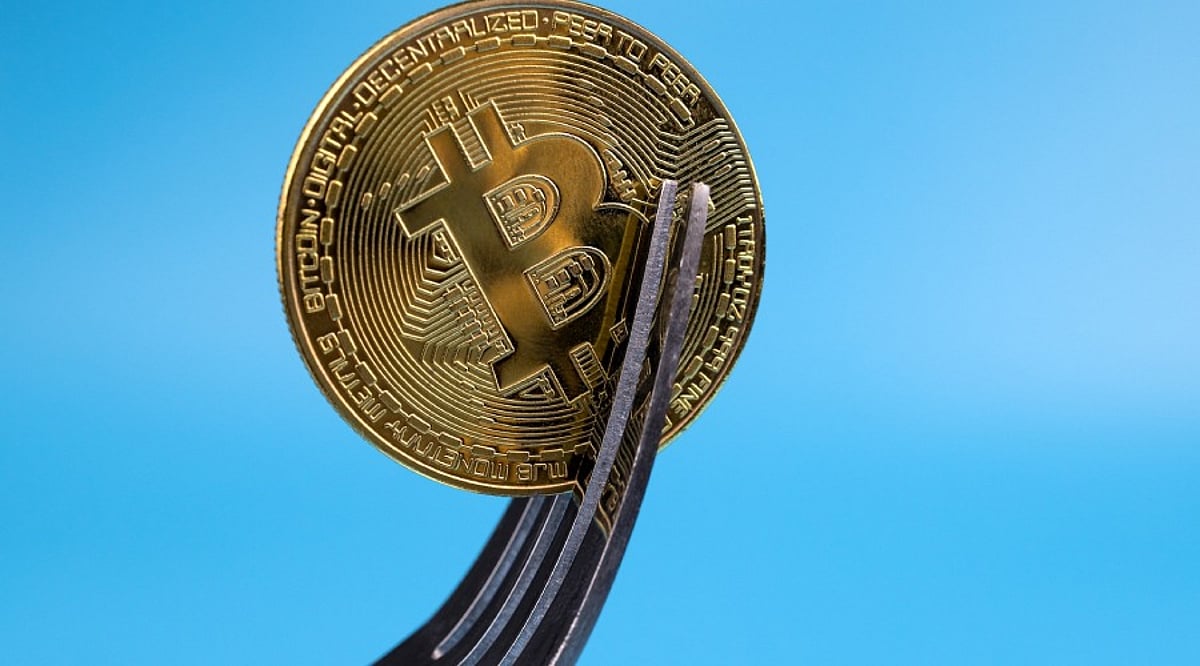
    A soft fork tightens the rules, making previously valid transactions or blocks invalid under the new, stricter criteria. It remains backward compatible: older nodes can still recognize blocks produced under the new rules as valid, even though they don’t enforce the extra restrictions. Bitcoin has used soft forks multiple times. Examples include BIP34 (block heights in coinbase transactions), BIP66 (strict DER encoding for ECDSA signatures), and BIP65 (CHECKLOCKTIMEVERIFY). More recent soft forks are Segregated Witness (2017) and Taproot (2021). Soft forks can be activated through miner signaling or node enforcement, allowing gradual adoption while older software continues to follow valid blocks safely during the transition.

    What Is a Hard Fork?

    A hard fork introduces rules that older nodes cannot fully accept. If upgraded nodes accept blocks that older nodes reject, permanently divergent chains can emerge. Bitcoin Cash is a clear example. On August 1, 2017, Bitcoin Cash split from Bitcoin at block 478,558 due to disagreements over scaling and block capacity. The two networks share history before that block but have since developed separate blockchains, currencies, and communities. Bitcoin Cash has continued evolving independently, activating CashTokens in 2023 and an Adaptive Block Limit Algorithm in 2024.

    Why Consensus Matters

    Developers can propose Bitcoin upgrades, but they cannot force adoption. Full nodes choose which consensus rules to enforce. This makes coordination essential. Miners producing blocks under incompatible rules can cause divergence, and exchanges and wallet providers must decide which networks and assets to support. Bitcoin Core itself continues to evolve without every software release being a consensus fork. As of September 2026, Bitcoin Core version 31.1 is the latest release. Many updates improve performance, security, networking, or wallet functionality without altering consensus rules.

    Final Thoughts

    Soft forks introduce stricter, backward-compatible consensus rules, while hard forks can make upgraded and older nodes incompatible. Grasping this difference helps explain how Bitcoin evolves without a central administrator and why network consensus remains fundamental to protocol changes.

    Frequently Asked Questions

    1. What is a Bitcoin fork?
    A Bitcoin fork occurs when blockchain rules change or participants temporarily follow competing versions of the chain. Protocol forks modify consensus rules governing how nodes validate transactions and blocks.

    2. What is the difference between a hard fork and a soft fork?
    A soft fork introduces stricter rules while maintaining backward compatibility with older nodes. A hard fork introduces incompatible rules that can result in separate blockchains if participants continue supporting both versions.

    3. Does every Bitcoin fork create a new cryptocurrency?
    No. Temporary blockchain forks and backward-compatible soft forks do not necessarily create new cryptocurrencies. A separate asset can emerge when a hard fork produces two independently maintained networks.

    4. Is Bitcoin Cash a hard fork of Bitcoin?
    Yes. Bitcoin Cash separated from Bitcoin on August 1, 2017, amid disagreements over scaling and block capacity. BTC and BCH subsequently developed as independent blockchain networks and cryptocurrencies.

    5. Are SegWit and Taproot Bitcoin soft forks?
    Yes. Segregated Witness activated in 2017, while Taproot activated in 2021. Both introduced new Bitcoin functionality through soft-fork mechanisms without creating a separate cryptocurrency.

  • Why XRP’s Price Moves With Bitcoin and the Broader Crypto Market

    Why XRP’s Price Moves With Bitcoin and the Broader Crypto Market

    XRP operates on its own blockchain network with its own catalysts, yet its price frequently rises and falls with Bitcoin and the wider cryptocurrency market. Shared liquidity, investor sentiment, derivatives positioning, and macroeconomic conditions all connect XRP to the broader digital asset ecosystem.

    Bitcoin Sets the Market Tone

    Bitcoin remains the largest and most closely watched cryptocurrency. Significant BTC price moves often shift risk appetite across all digital assets. When Bitcoin rallies, traders tend to rotate capital into altcoins; during sharp declines, investors frequently reduce exposure across their portfolios.

    For example, Bitcoin reached an eight-month high above $87,000 on September 21, supported by ETF inflows and short liquidations. The broader crypto market strengthened in tandem, illustrating how Bitcoin-led liquidity shifts can influence altcoins.

    However, correlation does not mean identical performance. XRP can outperform or underperform Bitcoin when token-specific developments change demand.

    Liquidity and Derivatives Connect Markets

    Centralized exchanges, market makers, and algorithmic trading strategies continuously move liquidity between Bitcoin, stablecoins, and altcoins. During volatile periods, portfolio-wide buying or selling can strengthen short-term correlations.

    Derivatives add another layer of interconnection. XRP futures open interest fell 16% between August 17 and August 31, even as XRP rallied nearly 40%. Meanwhile, CME’s share of outstanding XRP futures exposure rose from roughly 10% to 17%. This shows how leverage can change independently of spot price while institutional derivatives participation grows.

    Macroeconomic Conditions Affect XRP

    Interest rates, Treasury yields, dollar strength, and overall risk appetite influence cryptocurrencies collectively. When investors seek risk, liquidity flows into Bitcoin and subsequently altcoins. During risk-off periods, traders may shift toward cash or stablecoins. XRP nevertheless has independent catalysts capable of producing temporary divergence.

    XRPL Activity Provides XRP-Specific Signals

    During Q2 2026, XRP Ledger (XRPL) order-book trading averaged 3.57 million XRP daily, up 79% year over year. The number of accounts initiating those trades fell roughly 41%, indicating larger activity among fewer accounts.

    Average tokenized-asset balances reached $3.72 billion, while average RLUSD balances were $539 million. Combined value reached approximately $4.26 billion, compared with just $99 million six quarters earlier.

    Institutional investment products provide another demand channel. US spot XRP ETFs recorded $273 million of net inflows during Q2. According to SoSoValue, XRP ETFs attracted $14.89 million on September 24, with cumulative inflows reaching $1.74 billion.

    Why This Matters

    Understanding XRP’s connection with the wider crypto market helps investors separate market-wide moves from XRP-specific developments. Bitcoin sentiment can influence short-term direction, while ETF flows, XRPL activity, tokenization, and institutional adoption can create independent demand.

    Final Thoughts

    XRP remains connected to broader crypto through liquidity, sentiment, and leverage. However, XRPL fundamentals and institutional flows can drive divergence. Bitcoin influences XRP’s market environment without determining every price move.

    FAQs

    1. Why does XRP price often move with Bitcoin?

    Bitcoin strongly influences sentiment and liquidity across the cryptocurrency market. When BTC experiences major price movements, traders frequently adjust exposure to altcoins such as XRP, creating correlated market moves.

    2. Does XRP always follow Bitcoin’s price movements?

    No. XRP can outperform or underperform Bitcoin when XRP-specific developments influence demand. ETF flows, XRP Ledger activity, tokenization, regulatory developments, and institutional participation can all contribute to divergence.

    3. How do XRP derivatives affect its price?

    Futures and other derivatives introduce leverage and institutional positioning into XRP markets. Changes in open interest, liquidations, and trader positioning can amplify volatility or create price movements independent of spot-market demand.

    4. Do XRP ETFs influence demand for XRP?

    Spot XRP ETFs provide investors with regulated exposure through traditional investment accounts. Net inflows can create an additional source of XRP-related demand, although ETF activity is only one factor influencing market prices.

    5. Can XRP Ledger activity influence XRP’s price?

    Growing trading, tokenization, and institutional activity on XRPL can strengthen the network’s fundamental usage. However, increased blockchain activity does not automatically translate into higher XRP prices since broader market conditions also matter.

  • Bitcoin SIP Over Five Years: A Strategic Guide to Long-Term Crypto Investment

    Bitcoin SIP Over Five Years: A Strategic Guide to Long-Term Crypto Investment

    A Bitcoin Systematic Investment Plan (SIP) involves committing a fixed amount to Bitcoin at regular intervals—weekly, monthly, or quarterly—over an extended period. Instead of making a lump-sum purchase, investors spread their buys across time, aiming to reduce the impact of price volatility while building a disciplined investment habit. This article explains how a five-year Bitcoin SIP works, what role market swings play, and what investors should consider before committing.

    What Is a Bitcoin SIP?

    A Bitcoin SIP is a recurring investment strategy where you buy a set dollar or crypto amount of Bitcoin on a predetermined schedule. For example, you might invest $100 every month for five years. The core idea is dollar-cost averaging: by buying regularly, you automatically purchase more Bitcoin when prices are low and less when prices are high, potentially lowering your average entry price over time.

    The Five-Year Approach

    A five-year time horizon shifts the focus from short-term price movements to consistent, long-term accumulation. Investors continue buying through bull markets and bear markets alike, which can help smooth out the effects of extreme volatility. The strategy does not guarantee profits, but it removes the pressure of trying to time the market perfectly.

    Managing Market Volatility

    Bitcoin is known for dramatic price swings. Over five years, some purchases will occur at peaks and others at troughs. This range of entry prices can work in your favor if the overall trend is upward, but it remains a risk. Volatility means the portfolio value can still drop significantly, especially if a large portion of purchases happened at high prices before a prolonged downturn.

    Compounding and Bitcoin

    Unlike interest-bearing accounts or dividend-paying stocks, Bitcoin does not generate passive income just by being held. Therefore, a Bitcoin SIP does not benefit from compounding in the traditional sense. Growth depends solely on Bitcoin’s market price appreciating over time. There is no automatic reinvestment of earnings; any gain comes from price increases.

    Investment Discipline Matters

    Sticking to a predefined contribution schedule is crucial. Emotional reactions—like stopping contributions when prices crash or increasing them during a rally—can undermine the strategy. A SIP enforces discipline, but investors should periodically reassess whether Bitcoin still aligns with their financial goals and risk tolerance.

    Risks to Consider

    Bitcoin investments carry substantial risks: price volatility, regulatory changes, cybersecurity threats, exchange failures, and potential loss of access to funds. A five-year horizon does not eliminate these dangers. Investors must understand custody solutions, use reputable platforms, secure their accounts, and never invest money they cannot afford to lose.

    Evaluating Performance After Five Years

    At the end of the period, compare total contributions to the portfolio’s market value. The net gain or loss depends on the prices at which Bitcoin was bought, the frequency of investments, fees, and Bitcoin’s overall price performance. Past results are not indicative of future returns, so treat any outcome as a data point, not a guarantee.

    A five-year Bitcoin SIP can be a structured way to gain exposure to cryptocurrency while mitigating timing risk, but it requires patience, discipline, and a clear-eyed view of the risks involved.

  • BlockDAG Boosts USDT Buyback to $0.05: A Better Bet Than Avalanche and Worldcoin This Week

    BlockDAG Boosts USDT Buyback to $0.05: A Better Bet Than Avalanche and Worldcoin This Week

    In a week of contrasting moves across the crypto market, BlockDAG has captured attention with a bold 72-hour promotion that raises its USDT buyback price to $0.05 while slashing the direct BDAG entry price to $0.000000005. Over $12 million has already flowed into the project in just a few days, positioning it as one of the most searched cryptocurrencies this week.

    BlockDAG’s 72-Hour Maxx Mode: Lower Entry, Higher Buyback

    For a limited 72-hour window, BlockDAG has dropped the price of direct Legacy and New BDAG from $0.00000017 to $0.000000005 — effectively giving buyers roughly 34 times more coins for the same investment made just a day earlier. Simultaneously, the USDT Buyback Price has climbed from $0.03 to $0.05, a 67% increase applied after the compression rate is calculated on BDAG sent in. No promo code is required; holders simply purchase either BDAG type and send it into the buyback to lock in the higher rate.

    Cashouts on eligible allocations begin in November and will be processed in batches, providing a clear timeline rather than an open-ended promise. The mechanics remain simple: buy low, build allocation, and let the higher buyback price do the heavy lifting once compression is applied to the final balance.

    Avalanche (AVAX) Price Today: Strong Rally but Caution Warranted

    Avalanche (AVAX) has surged more than 37% over the past seven days, trading near $10.30. Institutional flows are driving much of the momentum: Securitize’s tokenized asset market on Avalanche exploded 628% to $770 million, and Paxos has added native AVAX custody to its Crypto Brokerage platform, opening the door to more regulated institutional demand. Ava Labs leadership has also highlighted that the New York Stock Exchange ran a year-long technical evaluation of Avalanche’s infrastructure, signaling traditional finance interest. However, a 37% weekly move already reflects significant good news, and rallies built on institutional headlines can cool quickly if early profit-taking begins.

    Worldcoin Price Slide Continues

    In stark contrast, the Worldcoin price has fallen more than 10% in a single day, trading near $0.41 — roughly 96% below its all-time high near $11.90. Worldcoin, co-founded by Sam Altman and Alex Blania, uses iris-scanning Orb devices to verify unique humans and issue World ID credentials. Adoption metrics remain steady, with nearly 18 million verified humans worldwide, but the token price continues to struggle to reflect that growth. Sharp single-day drops test the patience of holders waiting for identity adoption to translate into price action.

    The Final Verdict: Time-Sensitive Opportunity

    Between an AVAX chart running hot and a Worldcoin price sliding, the market remains unpredictable. BlockDAG’s 72-hour Buyback Maxx Mode window offers a unique, time-sensitive opportunity: lower entry, higher buyback, and a clear cashout timeline starting in November. With over $12 million already moved in, this stacked upgrade is why BlockDAG is drawing attention ahead of larger-cap assets.

    Presale: https://purchase.blockdag.network
    Website: https://blockdag.network
    Telegram: https://t.me/blockDAGnetworkOfficial
    Discord: https://discord.gg/Q7BxghMVyu

    Disclaimer: Analytics Insight does not provide financial advice or guidance on cryptocurrencies and stocks. Also note that the cryptocurrencies mentioned/listed on the website could potentially be risky, i.e., designed to induce you to invest financial resources that may be lost forever and not be recoverable once investments are made. This article is provided for informational purposes and does not constitute investment advice. You are responsible for conducting your own research (DYOR) before making any investments. Read more about the financial risks involved here.

  • Crypto Market Update: Bitcoin ETF Inflows Hit $191M, KelpDAO Sues LayerZero, Bitget Faces $350M Exploit

    Crypto Market Update: Bitcoin ETF Inflows Hit $191M, KelpDAO Sues LayerZero, Bitget Faces $350M Exploit

    The crypto market delivered several headline-making moves on September 25, from strong institutional demand for Bitcoin ETFs to legal action against LayerZero and a major exchange exploit. Here is a closer look at the day’s most important stories.

    Bitcoin ETF Inflows Reach $191 Million

    Spot Bitcoin ETFs posted $191 million in cumulative daily net inflows, according to SoSoValue. BlackRock’s IBIT led the pack with $163 million in single-day net inflows, lifting its all-time net inflow total to $65.18 billion. Fidelity’s FBTC added $12.86 million, bringing its historical total to $11.01 billion. On the other end, WisdomTree’s BTCW saw the largest daily net outflow at $4.016 million.

    Combined, spot Bitcoin ETFs now hold about $108.91 billion in total net assets, representing a 6.43% ETF net asset ratio. Cumulative historical net inflows for the category stand at $57.41 billion.

    KelpDAO Takes LayerZero to Court

    KelpDAO has filed a lawsuit against LayerZero and co-founder Bryan Pellegrino following the April attack that drained 116,500 rsETH worth approximately $292 million from the liquid staking protocol. The incident, which occurred on April 22, has been tied by researchers to a North Korean hacking group. In its complaint, KelpDAO alleges that LayerZero failed to disclose security weaknesses and risks in its technology, and that it did not prevent attackers from compromising its security infrastructure. The lawsuit also claims that LayerZero and Pellegrino shifted blame to KelpDAO rather than accepting responsibility. These allegations remain subject to litigation.

    Bitget Loses $350 Million in Hot Wallet Exploit

    Crypto exchange Bitget has confirmed an exploit that drained at least $350 million from its hot wallets. CEO Gracy Chen said unauthorized transfers were detected across multiple blockchain networks after assets including ETH, USDT, USDC, AVAX and BNB were moved to an unidentified address. On-chain analysts saw rapid swaps on decentralized exchanges such as UniswapX and 1inch Fusion, with some trades executed at premiums of up to 5% above market prices. Chen said cold wallets are completely intact and that user losses are covered by the Bitget Protection Fund, which has a balance of more than $464 million.

    Hyperliquid Strategies Adds $45.8M in HYPE

    Hyperliquid Strategies has purchased another 494,200 HYPE worth roughly $45.8 million, according to Lookonchain. The buying activity, linked to wallet 0x6436, took place over a 16-hour period on September 25. With the latest purchase, the address has accumulated 5.51 million HYPE worth approximately $476 million over the past month, averaging 183,574 HYPE or $15.86 million per day. Hyperliquid Strategies now holds about 35.1 million HYPE, valued at roughly $3.2 billion.

    Shielded Bitcoin: A New Privacy Proposal

    Researchers from Alloc Init have published a September 24 paper proposing private Bitcoin transfers using zero-knowledge proofs without requiring a soft fork. The metaprotocol, called Shielded Bitcoin, would use Bitcoin to publish and order encrypted transaction data while Bitcoin nodes would not need to enforce the privacy rules. The design draws on concepts from Zcash, including encrypted notes, nullifiers and zero-knowledge proofs. It would conceal shielded senders, receivers, amounts and transaction links while leaving Bitcoin’s existing consensus rules unchanged.

    These developments highlight how quickly institutional flows, security incidents, legal disputes, and protocol research can shift the crypto landscape in a single day.