Category: Cryptocurrency

  • Altcoin Season Index Breaks Above 50: Growing Momentum Beyond Bitcoin

    Altcoin Season Index Breaks Above 50: Growing Momentum Beyond Bitcoin

    Key Takeaways

    • The CoinGlass Altcoin Season Index currently stands at 58, while BlockchainCenter reports 59.
    • Bitcoin dominance has eased from around 58% to between 54% and 57%, showing broader market participation.
    • A reading above 75 is still required before the market officially enters altcoin season.

    The cryptocurrency market has entered a new phase where attention has started to move beyond Bitcoin. For many months, Bitcoin remained the strongest force in the market and attracted most of the investment. Now, fresh data shows that more investors have started to explore other digital coins, often called altcoins.

    This change does not mean Bitcoin has lost its position. Instead, it shows that interest has started to spread across a wider range of cryptocurrencies. Market experts believe this shift could become more important if the current trend continues.

    Altcoin Season Index Moves Higher

    One of the most watched tools in the crypto market is the Altcoin Season Index. This index helps measure whether altcoins perform better than Bitcoin over a certain period. A higher score usually means that more altcoins have started to beat Bitcoin in price performance.

    The latest numbers show steady progress. The CoinGlass Altcoin Season Index currently stands at 58. Earlier, it reached 64 on June 4, which marked one of its strongest readings in recent months. Even after a small decline from that level, the current score still shows healthy momentum across the altcoin market.

    Another popular measure comes from CoinMarketCap. Its Altcoin Season Index now stands at 53. Although this reading is lower than the CoinGlass figure, it also points to the same trend. More altcoins have started to perform better than before, even if the market has not reached a full altcoin season.

    BlockchainCenter offers another version of the same indicator. Its latest reading stands at 59. Despite this positive number, the platform still classifies the market as not yet in Altcoin Season since the score has not crossed the important level of 75.

    Bitcoin Still Holds the Top Position

    Bitcoin continues to lead the cryptocurrency market. It remains the largest digital asset by market value and still attracts major investment from institutions and retail buyers. However, fresh market data shows that some money has started to move toward other cryptocurrencies.

    This shift has become visible through Bitcoin dominance, a metric that shows Bitcoin’s share of the total cryptocurrency market. Recent figures show Bitcoin dominance has fallen from around 58% to between 54% and 57%. A lower dominance level often means that investors have started to place more money into altcoins instead of keeping most funds in Bitcoin.

    More Capital Reaches Altcoins

    Another important sign is the growing market value of cryptocurrencies outside Bitcoin, Ethereum, and stablecoins. This section of the market has grown in recent weeks, which suggests that investors have started to explore a wider range of projects.

    Large-cap altcoins have attracted a major share of this fresh interest. Ethereum has remained one of the strongest performers supported by continued confidence in its network. Solana has also received strong support, while XRP has returned to the spotlight after renewed investor interest.

    Many analysts believe exchange-traded fund (ETF) activity has also helped improve confidence in these major altcoins. Better investment access has encouraged more market participation and supported stronger price action across selected digital assets.

    The Market Has Not Reached Full Altcoin Season

    Although several indicators have improved, experts believe it is still too early to declare the arrival of a full altcoin season. The widely accepted rule states that the Altcoin Season Index must rise above 75 before the market officially enters that phase.

    Current readings between 53 and 59 show progress but remain below this important level. This means only part of the market has shown stronger performance while many smaller cryptocurrencies have yet to join the rally.

    Analysts also point out that most gains remain concentrated in well-known projects with strong market positions. A true altcoin season usually includes broad gains across a much larger number of cryptocurrencies.

    Market Conditions Still Matter

    The direction of the crypto market still depends heavily on Bitcoin and broader economic conditions. Inflation reports, central bank decisions, and global liquidity continue to influence investor confidence. Any major change in these factors could either support further growth in altcoins or slow the current trend.

    Bitcoin also remains an important guide for the rest of the market. A strong move in Bitcoin often affects price action across almost every major cryptocurrency. Given this close relationship, market participants continue to watch Bitcoin even as interest in altcoins grows.

    Several Altcoins Draw Fresh Attention

    Recent market reports highlight a few altcoins that have attracted strong interest. DeXe (DEXE) has gained attention after reaching new price highs. Zcash (ZEC) has approached an important resistance level that traders continue to watch closely. Uniswap (UNI) has also shown early signs of recovery, which has increased optimism around its future performance.

    These projects represent only part of the broader movement across the altcoin market. Many investors continue to search for coins with strong technology, active development, and long-term growth potential instead of chasing short-term price spikes.

    Why This Matters

    This shift signals a maturing crypto market where investors are moving beyond Bitcoin to seek diverse opportunities. As capital flows into major altcoins, it diversifies systemic risk and lays the foundation for broader, utility-driven digital asset adoption.

    Outlook Remains Positive but Cautious

    The latest market data points to growing momentum beyond Bitcoin. Altcoin Season Index readings from CoinGlass, CoinMarketCap, and BlockchainCenter all show that more cryptocurrencies have started to perform well. At the same time, Bitcoin dominance has eased, while fresh capital has entered several leading altcoins.

    Despite these positive developments, the market has not yet reached the official definition of a full altcoin season. The key threshold of 75 on the Altcoin Season Index remains out of reach. Until that level appears, the current phase represents a period of steady expansion rather than a broad market-wide rally. Even so, the latest data suggests that altcoins have started to build stronger momentum, which could create more opportunities if the trend continues in the months ahead.

    FAQs

    1. What is the Altcoin Season Index? The Altcoin Season Index is a financial metric that measures whether altcoins are outperforming Bitcoin in price growth over a specified period.
    2. Is the crypto market currently in altcoin season? No, the market is not there yet. Current index readings hover under 60, remaining well below the required 75-point threshold.
    3. Why has Bitcoin dominance declined? Bitcoin’s market share is dropping because investors are shifting fresh capital into altcoins, diversifying their holdings beyond the dominant digital asset.
    4. Which altcoins have attracted recent attention? Major assets like Ethereum, Solana, and XRP, alongside specific tokens like DeXe, Zcash, and Uniswap, have drawn strong investor interest.
    5. What could confirm a full altcoin season? A true altcoin season is confirmed when the index crosses 75, accompanied by widespread price rallies across a broad range of smaller cryptocurrencies.
  • The 10 Largest Crypto Holders in 2026: Institutions and Governments That Dominate

    The 10 Largest Crypto Holders in 2026: Institutions and Governments That Dominate

    As the cryptocurrency market matures, a handful of institutions, corporations, and even governments have amassed significant digital asset holdings. Here are the ten biggest crypto holders projected for 2026, based on current trends and public disclosures.

    • MicroStrategy: Still the world’s largest corporate Bitcoin holder, with a treasury aggressively built through continuous purchases.
    • BlackRock iShares Bitcoin Trust: One of the fastest-growing institutional Bitcoin investment funds, attracting massive capital inflows.
    • Grayscale Investments: Continues to manage billions of dollars in crypto assets across multiple trusts.
    • United States Government: Holds a significant amount of Bitcoin obtained through law enforcement seizures, making it one of the largest anonymous holders.
    • Binance: One of the world’s largest crypto exchanges, with substantial reserves held in its corporate treasury and cold wallets.
    • Tether Holdings: Maintains large Bitcoin reserves as part of its stablecoin backing, ensuring liquidity and stability.
    • Marathon Digital: A major Bitcoin mining company that has steadily expanded its treasury through mining rewards and direct purchases.
    • Galaxy Digital: An institutional crypto investment firm with extensive digital asset holdings across Bitcoin, Ethereum, and other cryptocurrencies.

    These entities represent the growing institutionalization of crypto, influencing market dynamics and liquidity. Their holdings are a key indicator of mainstream adoption and regulatory developments.

  • WhatsApp Crypto Scam Dupes Gwalior CA of ₹21.06 Crore via Fake USDT Trading Platform

    WhatsApp Crypto Scam Dupes Gwalior CA of ₹21.06 Crore via Fake USDT Trading Platform

    A retired chartered accountant in Gwalior has lost a staggering ₹21.06 crore in a sophisticated cryptocurrency scam that began with a single WhatsApp message. The Gwalior State Cyber Cell is now investigating what officials describe as one of the largest crypto frauds ever recorded in the state.

    How the Scam Unfolded

    The trouble started in December 2025 when a woman calling herself ‘Divya’ contacted the 70-year-old victim on WhatsApp. Posing as an investment adviser, she promised high returns through USDT crypto trading. To build trust, she encouraged small initial investments and delivered the promised returns. Over the following months, the victim poured in more money as the trading app showed his profits climbing—at one point displaying holdings worth over ₹33 crore.

    When he attempted to withdraw the funds, the scammers invented new excuses, demanding taxes, risk charges, and additional fees. The money never materialized, and the victim realized he had been cheated.

    Money Laundered Through Thousands of Accounts

    Police investigations revealed that the stolen ₹21.06 crore passed through a four-layer network of bank accounts. More than 20,000 transactions were used to move the funds across multiple states, likely using money mules to obscure the trail. Investigators have so far frozen about ₹2 crore and are working to trace the remainder, identify the perpetrators, and track the IP addresses linked to the fake app and WhatsApp accounts.

    Growing Threat of Crypto Scams

    This case highlights how far crypto scams have evolved. Fraudsters now employ realistic-looking apps, early profit payouts, and trusted platforms like WhatsApp to lure victims before vanishing with their savings. Experts urge investors to verify the credentials of any investment adviser and to be wary of schemes promising unusually high returns.

  • US Government Transfers $250M in Seized Bitcoin to Coinbase Prime, Sparking Sale Concerns

    US Government Transfers $250M in Seized Bitcoin to Coinbase Prime, Sparking Sale Concerns

    The United States government has moved approximately 3,941 Bitcoin—valued at roughly $250 million—to Coinbase Prime, according to blockchain data tracked by Arkham Intelligence. The transfer, which occurred on July 13, involved assets seized from major federal cases and has reignited speculation about potential government sales of digital assets.

    Bitcoin was trading below $64,000 at the time of the move, and the transaction immediately drew market attention because government-controlled wallets can influence liquidity. While the transfer followed an established custody process, it raised a key question: Is this routine asset management or a precursor to future Bitcoin sales?

    Seized Bitcoin Moves into Coinbase Prime Custody

    Arkham Intelligence recorded three separate Bitcoin transfers totaling 3,941 BTC. The largest movement involved roughly 2,875 BTC linked to wallets labeled “Ryan Farace Seized Funds.” Federal authorities originally seized those assets during a 2021 investigation into money laundering, for which Ryan Farace was convicted. The transferred amount closely matched the original confiscated balance, along with an additional 58.742155166 BTC connected to the same case.

    Another transfer moved 926 BTC from wallets labeled “BTC-e Seized Funds.” These assets were confiscated after the shutdown of the BTC-e exchange in 2017, which prosecutors linked to more than $9 billion in illicit transactions involving ransomware, hacking, and other criminal activity. Alexander Vinnik later pleaded guilty to conspiracy to commit money laundering in 2024.

    A separate transfer of about 140 BTC completed the day’s movements. Collectively, the transactions reflected the continued management of judicially seized digital assets by the U.S. Department of Justice rather than a new seizure operation.

    Existing Government Process Guided the Transfer

    The Bitcoin transfers followed an existing custody arrangement between federal agencies and Coinbase Prime. In July 2024, the U.S. Marshals Service selected Coinbase Prime to provide custody and trading services for major cryptocurrencies under government control. As a result, transferring Bitcoin into Coinbase Prime represented a standard operational step within that agreement. The movement itself did not confirm that authorities had already sold any of the transferred assets.

    Earlier administrative actions also supported that timeline. In January 2024, the U.S. government published a formal notice announcing its intention to dispose of 2,933.64 BTC from the Farace case after completing the required legal procedures, including a period for third-party ownership claims.

    Government Expands Centralized Crypto Asset Management

    Besides the Bitcoin transfers, authorities also moved other seized digital assets into Coinbase Prime, including 30,007 Ether associated with wallets labeled “Brian Krewson Confiscated Funds.” Court documents stated that Brian Krewson did not face direct criminal prosecution. Instead, the Department of Justice pursued a civil forfeiture case involving the Ether, which investigators said Christopher Castelluzzo and Luke Atwell purchased with proceeds from illicit activities for about $9,000. According to the filings, Krewson managed the wallets while his associates remained incarcerated.

    The broader consolidation places multiple government-held digital assets under a single institutional platform. Federal agencies now manage a portfolio estimated at more than 328,225 BTC, valued at over $20 billion. The transfer gives authorities the flexibility to conduct over-the-counter sales through Coinbase Prime instead of relying on public auctions, which could reduce direct pressure on public exchange order books while allowing the government to manage future disposals under its existing administrative framework.

    What’s Next?

    The United States transferred 3,941 Bitcoin worth about $250 million to Coinbase Prime through an established judicial asset management process. The funds originated from major seizure cases, while the move expanded centralized custody and gave authorities greater flexibility for any future over-the-counter asset disposals.

  • Trump Shifts $1.4 Billion in Crypto Profits to Stocks and Bonds, Filings Reveal

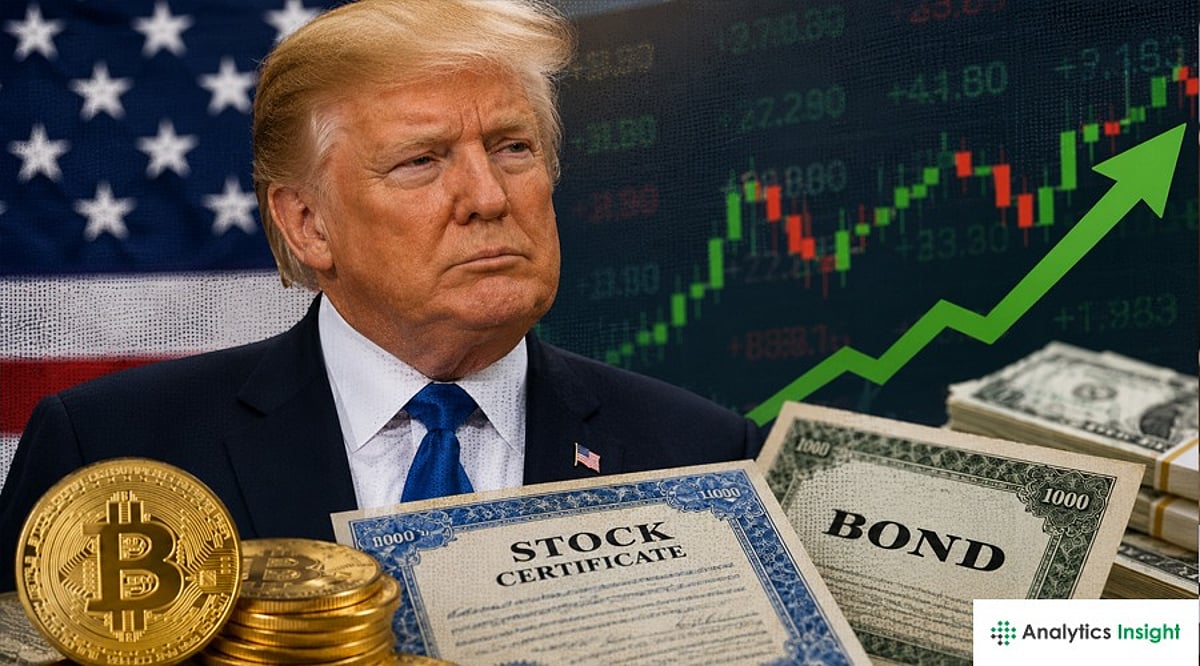
    Trump Shifts $1.4 Billion in Crypto Profits to Stocks and Bonds, Filings Reveal

    Donald Trump’s latest financial filings with the US Office of Government Ethics reveal that he earned more than $1.4 billion from his family’s crypto businesses in 2025. Instead of keeping those profits entirely in digital assets, he invested a large portion into traditional stocks and bonds, according to a review by Reuters.

    The filings show that Trump’s traditional investment portfolio grew at least four times over the past two years. By the end of 2025, his stock and bond holdings were estimated to be worth between $703 million and $2.6 billion, up from $225 million to $608 million a year earlier. While exact figures are not provided, financial experts say the documents clearly indicate a preference for moving crypto earnings into more stable, conventional investments.

    Most of the crypto income came from World Liberty Financial and the Trump meme coin, which became major revenue sources during the year. Despite the shift, Trump continues to hold significant crypto assets: the filings show he owns 15.75 billion World Liberty Financial governance tokens valued at over $50 million, and companies linked to him hold at least $160 million in Bitcoin and Ether, along with up to $6 million in other digital tokens.

    Timothy Massad, director of Harvard University’s Digital Assets Policy Project and former chairman of the Commodity Futures Trading Commission, commented: “The filings show an interesting investment strategy.” He believes Trump earned large profits from crypto projects and then placed much of that money into stocks and bonds for greater financial stability.

    The White House stated that Trump’s assets remain in accounts managed by independent financial institutions. The Trump Organization said the filings reflect a strong financial position with valuable assets and healthy liquidity, but did not explain why much of the crypto income later appeared in traditional investments. World Liberty Financial emphasized its commitment to digital assets, saying the company “continues building for the future and believes digital assets will play a major role in financial services over the coming years.”

    The disclosures come amid reports that retail investors in four Trump-backed crypto projects had lost about $2.3 billion by April, increasing criticism from some lawmakers who question the ethics of public officials profiting from crypto while supporting friendly policies for the industry. Eric Trump continued promoting Bitcoin throughout the year, calling it one of the world’s strongest financial assets, even as his father’s filings showed growing investments in stocks and bonds.

    Overall, the filings paint a clear picture: crypto earnings generated billions in 2025, but stocks and bonds remain the preferred destination for protecting and growing wealth over the long term.

  • CLARITY Act Faces Critical Senate Vote as August Recess Deadline Approaches

    CLARITY Act Faces Critical Senate Vote as August Recess Deadline Approaches

    The CLARITY Act is racing against a tight Senate calendar as lawmakers resume session on July 13 with only 25 days before the August 7 summer recess. The bill requires 60 votes to overcome procedural hurdles and a potential filibuster, but securing that support remains daunting. Currently, only Democratic Senators Ruben Gallego and Angela Alsobrooks have publicly committed to the legislation.

    Ethics concerns tied to President Donald Trump’s reported $1.4 billion in crypto-related income during 2025 have further complicated negotiations. Galaxy Digital, a leading crypto investment firm, has lowered its estimate of the bill’s passage odds from 75% in May to 50-50 as of late June.

    The Digital Asset Market Clarity Act (H.R. 3633) already missed an earlier target for presidential signing on July 4. With about 20 Senate working days remaining, leaders must act swiftly to bring it to the floor. The timeline also coincides with the July 18, 2026 rulemaking deadline for the GENIUS Act, which became law in July 2025.

    Bipartisan support remains the primary obstacle. Republicans control 53 seats but need roughly seven Democratic votes to reach the 60-vote cloture threshold. So far, only Gallego and Alsobrooks have emerged as reliable Democratic supporters, leaving leadership seeking at least five additional Democrats. The bill did pass the Senate Banking Committee on May 14 with a 15-9 vote, signaling some bipartisan backing at the committee level.

    Ethics debates have intensified as Democrats raise concerns about public officials owning crypto. Former White House ethics lawyer Richard Painter argued that Trump “stands alone” compared to other executive branch officials, adding another layer to ongoing negotiations.

    Market observers have adjusted expectations. Alex Thorn, Galaxy Digital’s Head of Firmwide Research, noted the firm reduced its odds from 75% in May to 60% on June 9, then to 50% on June 26. Thorn wrote, “The absence of news is itself the news,” while adding that “50-50 is pretty good odds” for legislation of this scale. A revised version of the bill could be introduced as early as next week, just before the August recess.

    What’s Next?

    Supporters are racing to pass the CLARITY Act before the Senate breaks on August 7. They need 60 votes to beat a filibuster, but progress is stalled on disagreements over ethics rules for public officials owning crypto. With time running out, analysts now give the bill only a 40% to 50% chance of passing.

  • Dogecoin Holds Critical Support Level as Traders Await Next Breakout Signal

    Dogecoin Holds Critical Support Level as Traders Await Next Breakout Signal

    Dogecoin is currently trading at a key support zone, with buyers and sellers locked in a tug-of-war that will determine whether the meme coin rallies or slides further. Instead of a sharp decline, DOGE has pulled back into a familiar safety area, giving bulls a clear line to defend. However, the market lacks decisive breakout momentum, leaving traders focused on volume and price action for confirmation.

    Support Zone Keeps Buyers Engaged

    Dogecoin remains above a known support level, allowing buyers to stay active despite recent cooling. The pullback has not triggered widespread selling, keeping the price within a range that traders continue to monitor closely. Without a clear breakout, the market is debating whether this range represents accumulation or a temporary pause before another decline.

    Dogecoin has historically recorded sharp moves after consolidation periods, drawing attention to the current setup. Yet momentum has not delivered the clear signal many participants are waiting for.

    Volume Remains the Critical Factor

    Despite holding support, Dogecoin risks weakening momentum if trading activity does not pick up. Meme-based cryptocurrencies rely on sustained market participation, making fresh volume essential for any recovery attempt. Without stronger buying interest, a rebound from support could quickly lose steam. Traders are treating the current structure as a level-driven setup rather than confirmation of a sustained rally.

    Traders Focus on Verifiable Market Signals

    Beyond price action, market participants are evaluating developments through measurable activity rather than headline-driven speculation. Traders are monitoring confirmed filings, integrations, regulatory updates, wallet activity, and other verifiable data before adjusting their outlook. The broader crypto market is responding to multiple catalysts—exchange listings, ETF flows, legal developments, protocol upgrades, and changing liquidity conditions—rather than a single dominant narrative.

    Each confirmed development provides another data point instead of guaranteeing an immediate price reaction. Traders are watching whether follow-up information supports the initial signal or weakens the narrative.

    What’s Next?

    Dogecoin continues to trade above a key support level as traders monitor resistance, volume, and momentum for confirmation of the next move. While the current range has not produced a breakout, verified market signals and price action remain the primary indicators to watch in the coming sessions.

  • Ethereum Faces Renewed Pressure as Robinhood Chain Revenue Debate Intensifies

    Ethereum Faces Renewed Pressure as Robinhood Chain Revenue Debate Intensifies

    Ethereum (ETH) remains under pressure after ARK Invest analyst Lorenzo Valente questioned the network’s revenue model following the rapid rise of Robinhood Chain. The analyst said Ethereum received only $1,538 in revenue from Arbitrum despite Robinhood Chain generating $816,000 since its July 1 launch.

    At the same time, Ethereum continued trading below the key $1,840 resistance level, while renewed spot ETF outflows and geopolitical tensions added to market uncertainty.

    Analyst Questions Ethereum Revenue Share

    Valente said Robinhood Chain has become the fifth-largest blockchain by decentralized exchange trading volume, according to DeFiLlama. The network gained traction after introducing a 90-day gas subsidy designed to encourage user adoption.

    According to the analyst, Robinhood Chain generated $816,000 in revenue after launching on July 1. He said 10% of that amount went to Arbitrum, while Ethereum collected only $1,538.

    That distribution means Ethereum received roughly 0.15% of Robinhood Chain’s revenue. Valente said such figures challenge the view that ETH serves as a meaningful revenue-generating asset. He added that the model should change so Ethereum receives 15% of revenue, while Arbitrum and Robinhood receive 10% and 75%, respectively.

    Meanwhile, ConsenSys founder Joe Lubin defended the current fee structure. He said lower fees encourage more companies to build on Ethereum, which could support ETH’s long-term value.

    Ethereum Price Tests Key Resistance

    Ethereum continued facing resistance near $1,840 after failing to break above that level for three consecutive days. The repeated rejection suggested buyers remained cautious at higher prices.

    Even so, technical indicators continued showing constructive momentum. The MACD line turned positive, while the Relative Strength Index stood at 55, indicating bulls still held the advantage.

    If ETH closes above $1,840, it would break above a rising parallel channel. Such a move would also complete a double-bottom pattern and could open the path toward $2,244, representing a potential 22% gain.

    On the other hand, failure to clear resistance could send Ethereum back toward support at $1,725. That decline could occur if investors reduce exposure as geopolitical tensions between the United States and Iran intensify after President Donald Trump reinstated the blockade at the Strait of Hormuz.

    ETF Outflows Return as Market Watches Inflation Data

    Investor sentiment also weakened after spot Ethereum exchange-traded funds recorded net outflows on July 13. Data from SoSoValue showed ETFs lost $15 million after attracting $84 million in inflows between July 6 and July 10.

    At the same time, crude oil prices climbed above $80 as tensions between the United States and Iran increased. Rising oil prices often reduce demand for risk assets, creating another challenge for cryptocurrencies.

    In addition, traders turned their attention to U.S. inflation data scheduled for July 14. The report could influence expectations for Federal Reserve interest rate decisions and, in turn, affect demand for spot Ethereum ETFs and the broader cryptocurrency market.

    What’s Next?

    The Ethereum price remains below the crucial $1,840 resistance as debate grows over its revenue share from Robinhood Chain. Meanwhile, ETF outflows, technical indicators, and rising geopolitical tensions continue shaping market sentiment. Investors will closely watch upcoming price action and macroeconomic developments.

  • Shiba Inu Whales Withdraw 174.8 Billion SHIB as Price Holds Key Support

    Shiba Inu Whales Withdraw 174.8 Billion SHIB as Price Holds Key Support

    Shiba Inu whales have pulled a massive 174.8 billion SHIB tokens from exchanges over the past 24 hours, signaling accumulation despite the meme coin’s ongoing price decline. Data from CryptoQuant reveals a negative exchange net flow as SHIB successfully defended the $0.0000040 support level. At the current price of $0.00000417, the withdrawn tokens are valued at approximately $792,002.

    Such transfers typically move coins into self-custody or third-party wallets, reducing the supply available for immediate sale. The total SHIB balance on exchanges has slipped to 86.6 trillion tokens. If demand increases while exchange reserves continue to fall, supply conditions could tighten, potentially supporting price recovery.

    Derivatives activity also picked up, with open interest in SHIB futures rising 5.7% to $28.8 million (representing about 6.52 trillion SHIB). However, open interest remains about 80% below its January peak of $145.5 million, reflecting cautious trading amid broader market weakness.

    From a technical perspective, SHIB continues to trade above the $0.0000040 support zone after touching $0.00000408 on Monday. Buyers have defended this level repeatedly, and attention now turns to the descending resistance trendline that has capped gains since May 10. A breakout above that line would clear the next technical barrier.

    The number of SHIB wallets has surged to a record 1,676,535, with nearly 75,000 new holders added between July 5 and July 6. While some observers suggest the sudden spike could stem from a technical glitch, the overall trend underscores growing retail interest.

    Market participants will watch whether these on-chain trends—whale accumulation, declining exchange supply, rising open interest, and record wallet counts—translate into price momentum in the coming days.

  • BlockDAG’s AI Launch and 100% Bonus Drive Buyer Interest as Polkadot and Shiba Inu Struggle

    BlockDAG’s AI Launch and 100% Bonus Drive Buyer Interest as Polkadot and Shiba Inu Struggle

    Crypto markets are trading cautiously this week, with major coins holding steady. The Sui price remains locked between $0.50 and $0.70, waiting for a catalyst as its network tests AI-driven transactions. The Shiba Inu coin price sits near $0.00000429, pressured by a tightening triangle despite a burn spike topping 3,000%.

    BlockDAG is definitely becoming everyone’s favourite gradually. Its casino has already collected $15 million in deposits and nearly $150 million in wagers from 13,000 users in a single month, all built on DAG-based infrastructure. BDAG AI’s launch added an estimated $500 million to its valuation almost overnight. Priced at $0.00000033 against a $0.03 buyback rate, and boosted by a 100% bonus, BlockDAG (BDAG) keeps surfacing as the best crypto to buy today.

    Sui Focuses on Machine Economy Foundations

    SUI is currently trading in a tight consolidation range between $0.50 and $0.70. While some traders expect a major breakout, the immediate Sui price remains tied to broader market trends and Bitcoin’s movement. Buyers have consistently defended the support level, balancing out recent daily losses and maintaining a stable market capitalization.

    Simultaneously, the network is expanding its utility by demonstrating AI-powered autonomous transactions. During testing, the platform achieved high transaction speeds, aiming to become the foundation for a machine-driven ecosystem where AI agents exchange value independently. If network activity increases and trading volume breaks through resistance, it could support the Sui price over the long term. However, future growth depends heavily on sustained user adoption and broader market stability driving the Sui price forward.

    Shiba Inu Coin Price Faces Critical Resistance

    The Shiba Inu coin price dropped slightly to $0.00000429 on July 8 as its daily chart formed a tightening descending triangle. Analysts note that Bollinger Bands have highly compressed, indicating a potential sharp move ahead, though multiple moving averages currently suggest a bearish trend.

    On-chain data revealed a major activity spike when a Robinhood-linked address burned over 109 million tokens. This individual transaction, likely fueled by platform trading fee allocations, caused the 24-hour burn rate to jump by over 3,000%. While this massive token reduction captured community attention, the immediate Shiba Inu coin price remains bounded by psychological support near $0.0000040. Traders are watching these compressed chart levels closely to determine if the next breakout will impact the Shiba Inu coin price positively.

    BlockDAG’s 100% Bonus Draws Buyers’ Focus

    Adoption figures tell a story that marketing alone cannot, and BlockDAG’s numbers are telling a compelling one right now. The BlockDAG Casino has already logged more than 13,000 users, pulled in upward of $15 million in deposits, and processed close to $150 million in wagers, all within its first month of operation.

    Every one of those transactions runs through the project’s DAG-based architecture, a structure built to handle high-speed payments and smart contract execution on a single layer, something many older blockchain designs still struggle to combine.

    That same infrastructure is now paired with fresh technical momentum. BDAG AI went live recently, adding an estimated $500 million to the project’s valuation almost immediately, a signal that the market responds strongly to real functionality rather than announcements alone.

    Pricing has moved in favor of buyers at the same time. BDAG remains priced at $0.00000033, the buyback rate sits at $0.03, and the newly launched code EARLY delivers a 100% bonus on every purchase, doubling the previous 100% offer and setting a fresh record for the project. This bonus allocation carries a limit and will close once it is fully claimed.

    Genuine usage, working technology, and a low entry price rarely converge this precisely at the same moment. The casino figures point to users staying active rather than testing the platform once. The AI launch points to development delivering real results. And the bonus points to timing working strongly in favor of anyone considering an entry now. That alignment is exactly why BlockDAG keeps surfacing among answers to the best crypto to buy today.

    Conclusion

    The Sui price still hovers between $0.50 and $0.70, tied to AI-driven transaction tests that hint at long-term rather than quick potential. The Shiba Inu coin price stays pinned near $0.00000429, even as one burn pushed the daily rate above 3,000%.

    BlockDAG’s numbers carry more weight. Its casino counts 13,000 users, $15 million in deposits, and nearly $150 million in wagers in one month, all on DAG-based rails. BDAG AI’s launch added $500 million to its valuation overnight, while a $0.00000033 price, $0.03 buyback, and 100% EARLY bonus keep it among the best cryptos to buy today. Some projects announce themselves for a moment; others just build until the numbers convince.

    Presale: https://purchase.blockdag.network
    Website: https://blockdag.network
    Telegram: https://t.me/blockDAGnetworkOfficial
    Discord: https://discord.gg/Q7BxghMVyu

    Disclaimer: Analytics Insight does not provide financial advice or guidance on cryptocurrencies and stocks. Also note that the cryptocurrencies mentioned/listed on the website could potentially be risky, i.e. designed to induce you to invest financial resources that may be lost forever and not be recoverable once investments are made. This article is provided for informational purposes and does not constitute investment advice. You are responsible for conducting your own research (DYOR) before making any investments. Read more about the financial risks involved here.