Category: Cybersecurity

  • Top Endpoint Protection Platforms: A Comprehensive Comparison for 2025

    Top Endpoint Protection Platforms: A Comprehensive Comparison for 2025

    Endpoint protection platforms (EPP) have become essential for organizations defending against sophisticated cyber threats. Modern solutions combine advanced detection, automated response, and seamless integration to safeguard endpoints across distributed environments. Below is a comparison of leading platforms that offer robust protection, visibility, and operational efficiency.

    Microsoft Defender for Endpoint

    Delivers AI-powered threat detection, endpoint visibility, automated investigation, ransomware protection, and seamless integration across Microsoft enterprise environments worldwide.

    CrowdStrike Falcon

    Uses cloud-native architecture, behavioral analytics, real-time threat intelligence, and lightweight agents to stop sophisticated cyberattacks across distributed enterprise endpoints.

    SentinelOne Singularity

    Combines autonomous AI detection, endpoint protection, threat hunting, rollback capabilities, and automated remediation to minimize cybersecurity incidents and operational workload.

    Sophos Intercept X

    Protects endpoints using deep learning, anti-ransomware technology, exploit prevention, synchronized security, and centralized management for organizations of every size.

    Trend Micro Apex One

    Provides advanced malware defense, vulnerability protection, behavioral monitoring, application control, and comprehensive endpoint visibility to reduce evolving cyber risks effectively.

    Bitdefender GravityZone

    Delivers machine learning-powered prevention, endpoint detection, risk analytics, patch management, and centralized administration for strong enterprise cybersecurity protection globally.

    VMware Carbon Black

    Offers continuous endpoint monitoring, threat hunting, incident response, behavioral analytics, and cloud-based security to defend against advanced persistent threats effectively.

    ESET PROTECT Enterprise

    Combines multilayered malware defense, endpoint detection, encryption, cloud management, and proactive threat intelligence for reliable enterprise endpoint security operations.

    Palo Alto Networks Cortex XDR

    Extends endpoint protection with AI-driven detection, cross-domain analytics, automated response, and unified security operations for complex enterprise infrastructures efficiently.

    Choosing the right endpoint protection platform depends on your organization’s specific needs, existing infrastructure, and threat landscape. Evaluate these solutions based on detection capabilities, ease of management, and integration requirements to strengthen your security posture.

  • Why Passwordless Authentication is a Game-Changer for Security

    Why Passwordless Authentication is a Game-Changer for Security

    Passwordless authentication is rapidly transforming how organizations protect digital identities. By eliminating traditional passwords, this approach addresses a wide range of security vulnerabilities while improving user experience. Below are the key benefits of adopting passwordless authentication.

    Eliminates Password Theft

    Traditional passwords are a prime target for cybercriminals. Passwordless authentication removes the risk of credential theft through phishing, brute-force attacks, password reuse, and database breaches. Without a password to steal, attackers lose a major entry point.

    Strengthens User Authentication

    Instead of relying on easily guessed or stolen passwords, passwordless methods use biometrics (fingerprint, facial recognition), security keys, or trusted devices. These factors provide a much higher level of assurance than conventional password-based systems.

    Reduces Phishing Attacks

    Phishing attacks often trick users into entering their passwords on fake websites. With passwordless authentication, users never enter a password, so attackers cannot steal credentials through deceptive login pages. This dramatically reduces the effectiveness of phishing campaigns.

    Improves User Experience

    Passwordless login simplifies access through fingerprint scans, facial recognition, passkeys, or device-based authentication. Users enjoy faster, frictionless logins without sacrificing security, leading to higher satisfaction and productivity.

    Minimizes Credential Reuse

    Many users reuse passwords across multiple accounts, increasing the risk of credential stuffing attacks. Passwordless authentication eliminates the practice of password reuse, reducing exposure when one service is compromised.

    Supports Multi-Factor Security

    Passwordless solutions can be combined with device verification, biometrics, or hardware tokens to create robust multi-factor authentication. This layered approach provides stronger protection against unauthorized access, even if one factor is compromised.

    Lowers IT Support Costs

    Organizations spend significant time and resources on password resets and account recovery. Passwordless authentication reduces help desk tickets related to forgotten passwords, freeing IT teams to focus on higher-value security initiatives.

    Enhances Regulatory Compliance

    Many regulations require strong authentication controls. Passwordless authentication helps organizations meet compliance standards for data protection and privacy, safeguarding sensitive business and customer information.

    Secures Remote Workforces

    As remote work becomes permanent, secure access to business applications is critical. Passwordless authentication allows employees to use trusted devices to log in from any location, maintaining security without compromising convenience.

    By adopting passwordless authentication, organizations can significantly improve their security posture while delivering a better user experience. The trend is clear: passwords are becoming obsolete, and passwordless authentication is the future of secure access.

  • 7 Best Anti-Ransomware Solutions for Businesses and Home Users in 2026

    7 Best Anti-Ransomware Solutions for Businesses and Home Users in 2026

    Ransomware has evolved into one of the biggest cybersecurity threats facing businesses and everyday computer users. Cybercriminals don’t just lock files, but they often steal sensitive data first and then demand payment to prevent it from being leaked. With attacks becoming more sophisticated, relying on basic antivirus software is no longer enough.

    7 Essential Defenses for Today’s Digital Threats

    Investing in a reliable anti-ransomware solution can help detect suspicious activity, stop encryption before it spreads, and recover affected files. Here are seven of the best anti-ransomware solutions worth considering:

    Bitdefender GravityZone and Total Security

    Bitdefender is known to be efficient at preventing ransomware attacks before they do any harm. This antivirus uses technology that analyzes any file activity and prevents all malicious encryption. There is the GravityZone platform available for companies to use, providing centralized management for many devices. For home use, there is Total Security that provides protection for Windows, macOS, Android, and iOS operating systems. Bitdefender does not affect computer performance much.

    Microsoft Defender for Endpoint

    Microsoft has evolved its native security system into an efficient enterprise tool. Defender for Endpoint uses endpoint detection, threat intelligence, and automatic investigations to detect any ransomware attack even before it spreads throughout the network. The technology is well integrated into Microsoft 365, making it a feasible option for companies using Microsoft solutions. Home users, on their part, benefit from the constant evolution of Windows Security without installing any additional software.

    Sophos Intercept X

    Sophos Intercept X focuses on ransomware prevention rather than on removing malware after infection. The software uses the CryptoGuard feature to detect suspicious file-encryption activity and block it. If any files have been encrypted, they can be easily restored to their previous state. That is why Sophos is an especially good choice for small and medium-sized companies.

    CrowdStrike Falcon

    CrowdStrike Falcon is widely adopted by large companies for its cloud-based architecture and AI-driven threat detection capabilities. The tool does not rely on existing malware signatures; it constantly analyzes device behavior to detect malicious activity. Furthermore, security departments can obtain threat intelligence to enable prompt responses before ransomware infects the company’s infrastructure.

    Norton 360

    Norton is still a reliable choice for consumers and small businesses. In addition to ransomware protection, it offers firewall security, a virtual private network, a password manager, identity protection, and cloud backup services. Among these features, the cloud backup service is especially significant, as it ensures that the user can retrieve their data without paying a ransom.

    Malwarebytes Premium

    Malwarebytes has always been known to be reliable when it comes to removing malware, but the Premium version also offers reliable ransomware protection. This software is very simple to install, runs in the background without any hassles, and is great for users who need basic protection for their software.

    McAfee Total Protection

    McAfee provides an all-encompassing security service that caters to the needs of both family and business customers who have several devices to protect. Ransomware detection, firewall, identity protection, safe browsing, and VPN services make this service complete. Several subscription plans support multiple devices, making them affordable.

    Final Takeaway

    Even the best security software cannot stop every cyberattack. Good cybersecurity habits remain essential. Keep your operating system and applications updated, enable multi-factor authentication wherever possible, maintain regular offline or cloud backups, and educate employees about phishing scams. These simple practices can prevent many ransomware attacks before they begin.

    Choosing an anti-ransomware solution depends on your needs and budget. Businesses often require advanced endpoint monitoring and centralized management, while personal users may prioritize ease of use and reliable protection. Bitdefender, Microsoft Defender, Sophos, CrowdStrike, Norton, Malwarebytes, and McAfee all offer strong defenses against today’s ransomware threats. Paired with regular backups and safe online habits, they provide a solid layer of protection in an increasingly hostile digital environment.

  • Essential Zero Trust Security Practices Every Business Leader Should Implement

    Essential Zero Trust Security Practices Every Business Leader Should Implement

    In today’s evolving threat landscape, traditional perimeter-based security models are no longer sufficient. Business leaders must adopt a zero trust security approach that assumes no user, device, or network is inherently trustworthy. Below are the core practices that every organization should implement to strengthen their defenses.

    Verify Every User Continuously

    Authenticate every employee, contractor, and device on a continuous basis, rather than relying solely on network location or past authentication. This ensures that trust is never assumed and access is always verified.

    Enable Multi-Factor Authentication

    Strengthen login security by requiring additional identity verification factors. Multi-factor authentication dramatically reduces the risk of unauthorized access from stolen passwords or compromised credentials.

    Apply Least Privilege Access

    Grant employees only the permissions they need to perform their jobs. Limiting access to sensitive systems minimizes exposure and reduces the potential for insider or external cyberattacks.

    Segment Networks

    Divide your business infrastructure into isolated zones. Network segmentation prevents attackers from moving laterally after gaining access to a single system, containing breaches and limiting damage.

    Monitor User Activity

    Continuously analyze user behavior to detect suspicious actions, unusual login patterns, and potential security breaches early. Proactive monitoring helps stop attacks before significant harm occurs.

    Secure Endpoints

    Protect laptops, smartphones, servers, and all connected devices with endpoint detection, antivirus solutions, and regular software updates. Endpoint security is a critical layer in a zero trust architecture.

    Encrypt Sensitive Data

    Safeguard confidential information both at rest and in transit. Encryption ensures that even if data is intercepted, it remains unreadable without the proper decryption credentials.

    Automate Threat Detection

    Deploy AI-powered monitoring tools to identify vulnerabilities, suspicious activities, and emerging cyber threats faster than manual processes. Automation accelerates response times and reduces human error.

    Regularly Review Access Rights

    Audit employee permissions frequently, removing outdated accounts and unnecessary privileges. Regular reviews maintain strong cybersecurity hygiene and prevent privilege creep.

    By embedding these zero trust practices into your security strategy, you can better protect your organization from modern cyber threats and build a resilient defense posture.

  • Soult and Trescon Join Forces to Offer Digital Legacy Planning as a Corporate Employee Benefit

    Soult and Trescon Join Forces to Offer Digital Legacy Planning as a Corporate Employee Benefit

    BENGALURU, India — Soult, India’s secure digital life vault for families, has announced a corporate partnership with global business event organizer Trescon. The partnership will extend Soult’s Legacy plan to Trescon employees across its India offices as a company-sponsored benefit, ahead of Soult’s public launch of Soult Dialogues in Bengaluru on August 6.

    Through the partnership, Trescon employees can securely organize financial assets, important documents, passwords, emergency instructions, and personal memories in one encrypted platform. They can also designate trusted contacts who can be granted access when needed most.

    “This partnership reflects a growing recognition that family preparedness is an essential part of employee wellbeing, rather than a personal responsibility employees must manage alone,” said Sanketh Kandlikar, Founder & CTO of Soult. “By making Soult available to Trescon’s workforce, we are helping families organize what matters most through a secure and trusted platform. We believe this is the beginning of a broader shift towards making digital legacy planning a standard workplace benefit.”

    Naveen Bharadwaj, CEO of Trescon, added: “Every organization talks about employee wellbeing, but very few extend that conversation to what happens to an employee’s family in an emergency. It’s an uncomfortable topic, which is exactly why it gets ignored. We wanted to change that for our people. Soult gave us a secure, credible way to do it, and rolling it out across our India offices felt like the right place to start, with our global offices next once the platform is available there.”

    The partnership marks an important milestone in Soult’s growth strategy, expanding its reach from individual consumers into the enterprise segment. As organizations continue investing in employee wellbeing, digital legacy planning is emerging as a valuable addition alongside health insurance, financial wellness programs, and mental health support.

    To celebrate the partnership and the upcoming public launch, Soult will host an exclusive networking evening in Bengaluru on August 6, bringing together over 50 influential business leaders, founders, CEOs, CHROs, HR leaders, wealth management professionals, family office advisors, legal experts, and industry leaders to explore the growing importance of digital legacy planning and family preparedness in India.

    About Soult

    Soult is India’s secure digital life vault, designed to help families organize, protect, and securely pass on their most important information. The platform enables users to store financial assets, legal documents, personal identification, passwords, emergency instructions, and cherished memories in one encrypted location. Through its trusted executor framework, designated family members can securely access essential information when needed. Soult uses AES 256 encryption, hosts data on AWS infrastructure in India, and is certified to ISO 27001 and ISO 9001 standards. The app is available on iOS and Android. For more information, visit soultdigital.com.

  • India Considers Unified Messaging Rules After WhatsApp and Telegram Username Review

    India Considers Unified Messaging Rules After WhatsApp and Telegram Username Review

    The Indian government is reviewing responses from WhatsApp and Telegram regarding their username features, as the Ministry of Electronics and Information Technology (MeitY) considers implementing common regulations for all messaging platforms. The initiative aims to strengthen cybersecurity and curb online scams nationwide.

    MeitY sent notices to WhatsApp, Telegram, and Signal after raising concerns that username-based messaging could enable fraudsters to conceal their identities. Officials worry that without proper safeguards, this feature might facilitate phishing attacks, identity theft, impersonation, and digital arrest scams.

    Government Reviews Messaging Safety

    Electronics and Information Technology Secretary S Krishnan confirmed that WhatsApp submitted its reply over the weekend, and the ministry is now analyzing it carefully. Officials will determine next steps only after completing the review. The government has also requested other messaging platforms to detail the safety measures integrated into their username systems.

    Government officials stated that the primary objective is to establish a single set of rules for all messaging platforms. A uniform policy would prevent disparate treatment of similar features and create clear standards for companies operating in India. Officials believe consistent rules will enhance online safety while supporting technological innovation.

    WhatsApp recently introduced usernames as an optional privacy feature in select countries, allowing users to connect without sharing phone numbers during new conversations. The company emphasized that phone numbers remain necessary for account creation and usage, with usernames serving as an additional layer of personal information protection.

    Telegram has offered username-based messaging for several years, while WhatsApp has not yet launched this feature in India. Government officials have asked both companies to explain how they prevent fake accounts, deter misuse, and protect users from fraud before permitting broader adoption of the feature.

    Why Common Rules are Needed

    India could soon establish a unified safety standard for username-based messaging across all platforms. This move may improve online privacy while reducing fraud and making digital communication more secure.

    The discussion aligns with the government’s broader focus on strengthening cybersecurity nationwide. Krishnan noted that while digital technology has created numerous opportunities, it has also increased security risks. Artificial intelligence can drive innovation, but criminals also exploit the technology to launch more sophisticated cyberattacks.

    Government agencies are now working to improve India’s cyber defenses through enhanced coordination. Organizations such as CERT-In, the National Cyber Coordination Centre, and the Ministry of Home Affairs currently manage various cybersecurity responsibilities. Officials believe better information sharing between government agencies and private companies will help improve India’s response to cyber threats.

    Focus on Stronger Cybersecurity

    Experts also believe clear rules will help businesses protect their official usernames and reduce the risk of fake profiles. Consumers could benefit from stronger identity verification and safer communication across different messaging platforms.

    The Centre will announce its decision after reviewing all responses submitted by the messaging companies. Any new policy is expected to balance user privacy, online safety, and technological innovation while applying the same standards to every messaging platform.

  • Why Protocol Attacks Are Breaking Traditional Bot Defenses and What to Do About It

    Why Protocol Attacks Are Breaking Traditional Bot Defenses and What to Do About It

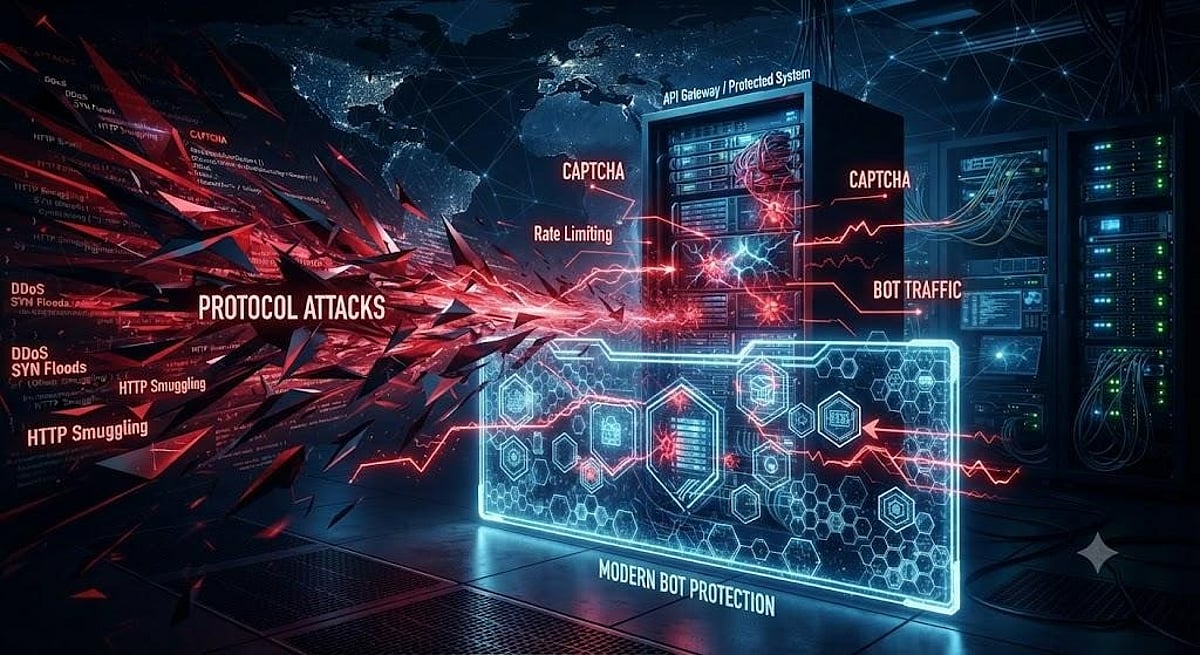
    Many organizations assume that deploying CAPTCHA is enough to stop automated attacks. Yet security teams continue to encounter a frustrating reality: bots are still creating fake accounts, scraping content, abusing APIs, and purchasing limited inventory at scale, even when CAPTCHA protection is in place.

    The problem is not always that attackers have learned to solve CAPTCHA. Increasingly, they avoid interacting with it altogether. By reverse engineering the communication between browsers and backend services, attackers can generate requests that appear legitimate while bypassing much of the intended verification flow. This technique, known as a protocol attack, has become one of the most efficient ways to automate abuse against modern web applications.

    Understanding how protocol attacks work is no longer just a technical concern. It is becoming an essential part of protecting online businesses from increasingly sophisticated bot traffic.

    What Changed? Attackers No Longer Need the Browser

    Early web bots behaved much like automated users. Tools such as Selenium and, later, Playwright enabled attackers to control browsers programmatically, allowing them to navigate websites, click buttons, complete forms, and execute JavaScript just as a human user would. This approach worked because most business logic was tightly coupled to the browser. Before submitting a login request, a browser typically needed to load HTML, execute JavaScript, initialize cookies, and establish a valid client-side session. To automate the application successfully, attackers had little choice but to automate the browser itself.

    Today’s applications look very different. Modern websites, mobile apps, and SaaS platforms increasingly separate the user interface from the underlying business logic. The browser has become little more than a client that consumes APIs. Whether a user logs in through a website, an iOS app, or an Android application, the final action is often the same: sending an HTTP request to an authentication endpoint. Once attackers understand that communication, reproducing the browser becomes unnecessary. Instead of simulating every user interaction, they can simply recreate the network requests that matter.

    A protocol bot doesn’t need to render a page, execute JavaScript, or click a login button. It only needs to send a correctly structured request to the appropriate endpoint. From the server’s perspective, the request may look completely legitimate because the application protocol is being followed correctly. What is missing is the entire client-side process that would normally generate that request. This difference fundamentally changes how automation works.

    Browser Bots vs. Protocol Bots

    Although both browser bots and protocol bots automate application workflows, they operate very differently. The difference is more than technical implementation. It reflects a shift in attacker priorities. Browser bots try to imitate people, while protocol bots try to imitate applications. For large-scale attacks such as credential stuffing or API abuse, reproducing a small number of HTTP requests is far more efficient than launching thousands of browser instances. Without rendering pages or executing JavaScript, attackers can generate more requests while using fewer computing resources. This efficiency is one reason protocol attacks have become increasingly attractive for large-scale automated abuse.

    Reverse Engineering Is the Foundation of Protocol Attacks

    Protocol attacks do not begin with writing automation scripts. They begin with understanding how an application communicates. Attackers typically analyze network traffic generated by legitimate clients using browser developer tools, proxy software, or traffic interception frameworks. Their objective is to identify the requests responsible for sensitive business operations such as authentication, account registration, password recovery, or inventory queries.

    Once these requests are identified, attackers examine the data exchanged between the client and server. Rather than copying every request, they focus on understanding which parameters are essential and how those values are generated. In many cases, this involves analyzing: request URLs and API endpoints, HTTP methods and request headers, cookies and session identifiers, authentication tokens, request signatures and encrypted parameters, and client-generated values created by JavaScript.

    The more accurately attackers can reproduce this communication, the less they need to rely on the browser itself. However, perfectly replicating legitimate traffic is far more difficult than simply sending a POST request. Many modern applications generate dynamic parameters during runtime. These values may be derived from client-side JavaScript, cryptographic algorithms, session state, or continuously changing application logic. While attackers can often reproduce static parameters after sufficient analysis, dynamically generated values are considerably harder to forge and frequently become an important source of detection signals. This is one reason why modern bot defense increasingly focuses not only on the request itself, but also on how that request was generated.

    Why APIs Have Become the Primary Target

    Protocol attacks are becoming more common for the same reason that APIs have become the foundation of modern applications. Modern web applications no longer rely on server-rendered pages for every interaction. Instead, most business logic is exposed through APIs that power websites, mobile applications, and third-party integrations. Whether a user logs in through a browser or a mobile app, the request eventually reaches backend services through the same API layer.

    For attackers, this architecture significantly reduces complexity. They no longer need to reproduce an entire user journey in a browser. Instead, they can focus on identifying the API endpoints that power critical functions such as authentication, account creation, or payment processing. Once these endpoints are understood, they can directly interact with backend services using lightweight HTTP clients. This approach is especially effective for high-volume attacks. Credential stuffing, account takeover attempts, fake account creation, and automated scraping all rely on repeating the same operation at scale. By removing the browser from the process, attackers reduce computational cost while increasing throughput.

    APIs also expose the most valuable parts of an application. While the user interface may change frequently, the underlying API often remains stable because it supports multiple clients. This stability makes APIs a reliable and attractive target for automation. As organizations expand their API ecosystems, attackers naturally follow the same path. The focus of automation shifts away from the browser and moves directly toward backend services that contain core business logic.

    How Can Organizations Detect Bots That Never Touch the Browser?

    Protocol attacks are difficult to detect because they eliminate most of the signals that traditional security systems rely on. Without a browser, there is no JavaScript execution, no DOM interaction, and no browser fingerprint to analyze. Each request may appear valid on its own, even when it is generated by automation. Because of this limitation, detection must shift from individual requests to communication behavior across the entire application flow.

    Understanding What Is Inside an Application Request

    Reverse engineering an API is relatively straightforward. Accurately reproducing legitimate client behavior is not. A single application request often contains multiple layers of information that are generated at different stages of execution. These can generally be grouped into four categories:

    • User-provided input – Usernames, passwords, search queries, or form data. These values are directly entered by the user and are the easiest for attackers to replicate.
    • Application context – Timestamps, session identifiers, client metadata, language settings, business identifiers, and transaction references. These values are usually generated automatically by the client application during normal execution.
    • Request metadata – Cookies, user agents, referrers, authorization headers, and other HTTP-level attributes that help establish session continuity between client and server.
    • Dynamic security parameters – Request signatures, encrypted values, and one-time tokens that are generated through client-side logic. In many cases they rely on JavaScript execution or cryptographic routines that change over time.

    While attackers can often reproduce static parameters after analyzing network traffic, dynamic security parameters are significantly more difficult to replicate consistently. This is because they depend on runtime conditions that are tightly coupled with legitimate client execution. From a detection perspective, these dynamically generated values become an important signal for identifying whether a request originates from a genuine client or from a scripted automation environment.

    Looking at Communication Patterns Instead of Isolated Requests

    Individual requests rarely provide enough information to determine whether automation is present. Legitimate users interact with applications through a sequence of actions. They load pages, retrieve scripts, initialize sessions, and perform multiple intermediate requests before reaching sensitive operations such as login or payment submission. Even mobile applications follow a structured communication flow with the backend.

    Protocol bots often bypass much of this process. Instead of following the natural application flow, they interact directly with the endpoints required to complete a specific task. A login endpoint may receive repeated requests without any evidence of page navigation or session initialization. A product API may be queried continuously without associated browsing activity. These differences become more visible when requests are analyzed as part of a complete session rather than in isolation. The relationship between requests often reveals more about automation than the content of a single request.

    Dynamic Parameters as Part of Detection Strategy

    One effective detection approach is to introduce parameters that are generated during normal client execution but are not strictly required for business logic. Legitimate clients automatically include these values as part of standard application workflows. However, protocol bots that rely on reverse-engineered request structures may fail to generate them correctly or may continue using outdated versions of request formats. When these inconsistencies appear, they can serve as indicators of automated behavior. Instead of blocking traffic immediately, these signals can be incorporated into a broader risk assessment model that evaluates overall request legitimacy. This approach also increases the cost of automation. Attackers are forced to continuously adapt their scripts to match evolving application behavior rather than relying on a static understanding of the API structure.

    Why Traditional Client-side Defenses Need to Evolve

    Client-side security technologies remain an essential component of modern bot defense. CAPTCHA, browser fingerprinting, JavaScript challenges, and device intelligence continue to provide valuable signals for identifying browser-based automation and protecting user interactions. The challenge is that protocol attacks shift the point of interaction. Instead of executing client-side code, protocol bots communicate directly with backend APIs by reproducing the application’s communication protocol. As a result, many of the signals generated during normal browser execution become unavailable, making it more difficult to determine whether a request originates from a legitimate client or an automated script.

    This does not reduce the value of client-side protection. Rather, it changes its role. Client-side verification should no longer be treated as the only decision point. Instead, it becomes one source of intelligence within a broader risk assessment framework that also considers protocol characteristics, session context, and behavioral consistency. As applications continue to evolve, effective bot defense depends not only on detecting suspicious requests, but also on understanding how those requests are generated throughout the entire communication process.

    Make Reverse Engineering Expensive

    No client-side implementation can permanently prevent reverse engineering. Given enough time and resources, determined attackers will eventually analyze application logic and reproduce parts of the communication protocol. The objective of modern bot defense is therefore not to eliminate reverse engineering altogether, but to continuously increase its cost.

    One effective approach is to introduce adaptive protocol signals that evolve alongside the application. Request parameters, client-side logic, and protocol characteristics can be updated regularly without affecting the user experience. Legitimate clients automatically adopt these changes, while protocol bots often continue relying on previously reverse-engineered request structures. These inconsistencies create valuable detection opportunities. Outdated request formats, missing parameters, or unexpected protocol behaviors may all indicate that a client is no longer communicating in the same way as the latest application version.

    Client-side protection also plays an important role in this process. Techniques such as JavaScript obfuscation, parameter encryption, and runtime generation of security values make it significantly more difficult for attackers to understand how sensitive request parameters are produced. Although these techniques do not make reverse engineering impossible, they increase the effort required to maintain reliable automation over time. From the defender’s perspective, every protocol update forces attackers to repeat part of the reverse engineering process. Instead of maintaining a single automation script indefinitely, they must continuously analyze application changes, modify request generation logic, and validate that their automation still behaves like a legitimate client. Over time, this substantially increases the operational cost of large-scale protocol attacks.

    Building an Adaptive Multi-layer Defense

    As protocol attacks continue to evolve, organizations need a defense strategy that extends beyond any single verification mechanism.

    • Layer 1: Client-side intelligence – Browser fingerprints, device attributes, JavaScript execution, and adaptive verification continue to provide valuable visibility into browser-based interactions and help filter a significant amount of automated traffic before it reaches backend services.
    • Layer 2: Protocol intelligence – HTTP characteristics, TLS fingerprints, request headers, and adaptive protocol signals help determine whether requests are generated by legitimate applications or by automated clients attempting to reproduce application communication.
    • Layer 3: Session and behavioral intelligence – Legitimate users generate complete communication flows that include page navigation, resource loading, session initialization, and business operations. Protocol bots frequently bypass parts of this workflow, creating behavioral patterns that become visible only when requests are analyzed collectively rather than individually.
    • Layer 4: Continuous risk assessment – Correlate these signals throughout the entire session. Instead of making a single trust decision during login or registration, modern bot management platforms evaluate risk continuously, allowing additional verification only when suspicious behavior is detected.

    This layered approach reflects how modern bot management platforms such as GeeTest address protocol attacks. Rather than relying on CAPTCHA as a standalone control, GeeTest combines adaptive client-side verification with protocol intelligence, behavioral analysis, and server-side risk assessment. By continuously evolving protocol signals and correlating multiple sources of evidence, the platform increases the cost of reverse engineering while maintaining a seamless experience for legitimate users.

    Conclusion

    Protocol attacks demonstrate how automated abuse has evolved alongside modern application architectures. Rather than imitating users inside a browser, attackers increasingly imitate the communication between applications and backend services, allowing them to operate more efficiently while avoiding many traditional client-side detection signals. This shift does not make browser-based protection obsolete. Instead, it highlights the importance of combining client-side verification with protocol intelligence, behavioral analytics, and continuous risk assessment. As applications become increasingly API-driven, effective bot defense depends on understanding not only what requests are sent, but also how they are generated and whether they remain consistent with legitimate application behavior. Organizations that adopt this adaptive, multi-layered approach are better positioned to defend against both browser-based automation and protocol attacks while preserving a frictionless experience for legitimate users.

  • Mastering Identity Lifecycle Management: Key Phases, Best Practices, and Essential Tools

    Mastering Identity Lifecycle Management: Key Phases, Best Practices, and Essential Tools

    Identity lifecycle management governs how access is provisioned, maintained, changed, and revoked for both human and non-human identities. It is a core access control function because lifecycle events determine who—or what—can reach applications, data, infrastructure, and privileged functions. When lifecycle controls are weak, organizations accumulate stale entitlements, delayed deactivation, excessive privileges, orphaned accounts, unmanaged credentials, and other access paths that expand security exposure.

    How Identity Lifecycle Management Works

    Identity lifecycle management keeps access aligned to verified business need. It connects identity data, policy decisions, workflow execution, and enforcement across the identity and access management (IAM) lifecycle. Lifecycle management acts as an enforcement layer, determining who or what can access critical systems, under which conditions, for how long, and with which governance requirements.

    Identity Data Sources and Authoritative Systems

    Authoritative identity data determines whether lifecycle decisions are accurate. Human resources systems, contractor platforms, directories, cloud identity providers, configuration management databases, DevOps platforms, and SaaS applications can all provide signals that define identity status, ownership, role, and access eligibility.

    • Employees: Lifecycle events usually originate in HR records, including hiring, transfer, leave, or termination status.
    • Contractors: Status, ownership, and end dates may come from contractor management platforms, vendor records, or procurement systems.
    • Non-human identities: Service accounts, API keys, machine credentials, OAuth tokens, and autonomous AI agents often depend on weaker ownership records and may require separate discovery and inventory controls.

    Policy-Driven Access Requests, Approvals, and Fulfillment

    Policy-driven provisioning grants access based on verified need rather than convenience, precedent, or unmanaged exceptions. Requests should be evaluated against role, attributes, risk, segregation-of-duties rules, data sensitivity, business justification, and time limits. Identity lifecycle management tools route requests through standard approvals, enforce policy before fulfillment, and retain evidence for each decision. Less-controlled models rely on email approvals, manual tickets, and inherited permissions, which can create privilege sprawl over time.

    Continuous Monitoring and Lifecycle Automation

    Lifecycle control does not end after provisioning. Access must stay accurate as identities move across roles, projects, locations, employment status, ownership structures, and technology environments. Continuous monitoring compares current entitlements with current identity attributes and policy requirements. Automation can trigger remediation when access no longer matches verified need, reducing the time between business change and access correction.

    Key Phases of Identity Lifecycle Management

    Identity lifecycle management phases are event-driven control points. Hiring, onboarding, role changes, project assignments, emergency access, separations, ownership transfers, and system decommissioning should each trigger access decisions. Every identity is a potential access path, and every access path is part of the enterprise attack surface. Lifecycle management helps keep access intentional, current, and defensible.

    Joiner Phase: Onboarding and Birthright Access

    The joiner phase establishes the initial access baseline. Employees, contractors, service accounts, bots, and workload identities should receive only the entitlements required for their role, function, environment, and approved business purpose. Birthright access needs close governance because it becomes the foundation for future privilege accumulation. Programs should define access using role-based, attribute-based, and policy-based models instead of copying peer permissions or granting broad defaults.

    Mover Phase: Role Changes and Access Adjustments

    The mover phase is where privilege sprawl often becomes permanent. Promotions, department transfers, project additions, temporary grants, emergency privileges, and geographic changes can all affect whether existing entitlements remain valid. Access granted for a previous responsibility should not persist after the business need expires. Lifecycle workflows should remove outdated access as part of the same event that provisions new access.

    Leaver Phase: Offboarding and Access Revocation

    The leaver phase covers deactivation, revocation, credential invalidation, and access path closure. Separations, contract endings, vendor exits, workload retirements, and service decommissioning should trigger timely and complete access removal. Controls should disable accounts, revoke active sessions where supported, remove group memberships, rotate shared secrets, invalidate tokens, and preserve evidence that deactivation occurred within required service-level targets.

    Benefits of an Effective Identity Lifecycle Management Solution

    An effective identity lifecycle management solution reduces exposure by making access decisions faster, more consistent, and easier to audit. It turns identity changes into controlled actions across directories, SaaS platforms, cloud services, databases, infrastructure, and privileged access systems. The value is governance at scale: access stays aligned to verified need, while exceptions become visible, time-bound, and reviewable.

    Reduced Security Risk and Least-Privilege Access

    Least privilege depends on lifecycle accuracy. If access is not removed when roles change or identities leave, least privilege cannot be enforced. Lifecycle controls use policy, automation, and access analytics to identify excessive entitlements, toxic combinations, dormant accounts, and high-risk privilege assignments. Stale permissions should be treated as exposure conditions that require review, remediation, or documented acceptance.

    Faster Onboarding, Productivity, and Operational Efficiency

    Lifecycle automation reduces delay without removing control. New identities can receive approved access quickly because policy, approvals, and fulfillment run through repeatable workflows. Well-integrated identity lifecycle management tools reduce manual service-desk work, limit repetitive provisioning tasks, and prevent speed from depending on governance bypasses.

    Audit Readiness and Compliance Evidence

    Regulated environments require evidence that access is appropriate, approved, reviewed, and revoked on time. Lifecycle management provides the control record behind those assertions. A mature program can show who approved access, why it was granted, when it changed, how it was fulfilled, and when it was removed. That evidence supports internal policy, external regulation, contractual commitments, and security assurance obligations.

    Identity Lifecycle Management Challenges

    Identity lifecycle management breaks down when identity data, application ownership, workflow execution, and enforcement systems are fragmented. The result can be inconsistent access, incomplete revocation, weak accountability, and poor visibility into who or what can reach sensitive assets. The operational requirement is straightforward: every identity needs an owner, every entitlement needs a purpose, and every access path should be justifiable when inspected.

    Disconnected Applications and Incomplete Identity Data

    Disconnected applications create unmanaged access islands. When systems sit outside centralized provisioning and deprovisioning, lifecycle decisions depend on local administrators, manual updates, and inconsistent evidence. Incomplete identity data makes the problem worse. If role, manager, employment status, asset ownership, or application entitlement data is inaccurate, automation can accelerate flawed decisions. Data quality should be addressed before automation is expanded.

    Excessive Privileges, Orphaned Accounts, and Shadow Access

    Excessive privileges often emerge gradually. A project grant remains after delivery, a temporary admin role becomes permanent, a contractor account survives contract expiration, or a service account loses its owner after a team reorganization. Shadow access is difficult to govern because it sits outside normal access management processes. Programs need continuous discovery of accounts, credentials, tokens, groups, and entitlements across managed and unmanaged systems.

    Balancing Automation, Governance, and User Experience

    Automation without governance can provision risky access at scale. Governance without automation creates delays that may lead to workarounds, shared accounts, and unauthorized access paths. Risk-based workflows help balance both needs. Low-risk, policy-compliant access can be fulfilled automatically, while privileged, sensitive, or unusual access requires stronger approval, time limits, justification, and post-grant review.

    Non-Human Identity Lifecycle Management

    Non-human identity lifecycle management is now a central enterprise security requirement. Service accounts, API keys, machine credentials, OAuth tokens, bots, workloads, containers, scripts, CI/CD identities, and autonomous AI agents often hold persistent access to sensitive systems. In many environments, these identities outnumber human identities and change more often. When unmanaged, they create durable access paths that are hard to attribute, revoke, and monitor.

    Service Accounts, API Keys, Bots, and Machine Identities

    Non-human identities support automation, integration, workload execution, and system-to-system communication. Their risk profile differs from human identities because they often run continuously, authenticate without interactive controls, and rely on secrets that may be copied, embedded in code, or forgotten. Programs should classify non-human identities by function, owner, environment, privilege level, credential type, and business criticality. An API key used in production payment processing requires different governance than a temporary test token in a sandbox.

    Ownership, Rotation, and Credential Lifecycle Controls

    Ownership makes non-human identities governable. Every service account, machine identity, token, and autonomous agent should have a business owner, technical owner, approved purpose, expiration logic, and revocation path. Credential lifecycle controls reduce persistence risk. These controls include rotation, vaulting, scoped privileges, short-lived credentials where supported, certificate renewal controls, secret scanning, and automated deactivation when workloads or integrations are retired.

    How an Identity Security Platform Governs Non-Human Identities

    An identity security platform extends lifecycle governance beyond employees and contractors. It discovers non-human identities, maps them to owners and assets, evaluates entitlements, and enforces policy across hybrid infrastructure, cloud environments, SaaS applications, and DevOps pipelines. Non-human identities should be treated as first-class security subjects. Governance should include access certification, anomaly detection, credential hygiene, entitlement analysis, and automated remediation when a machine credential, OAuth token, or AI agent exceeds its approved scope.

    Best Practices for Managing the Identity and Access Management Lifecycle

    Managing the identity and access management lifecycle requires a structured operating model. Policies, ownership, automation, access reviews, and metrics must work together so lifecycle decisions stay accurate at enterprise scale. The objective is not simply to manage accounts. The objective is to govern exposure by ensuring every entitlement reflects current, verified need and every lifecycle event produces timely access correction.

    Define Ownership, Policies, and Role-Based Access Models

    Ownership and policy design determine whether lifecycle management can scale. Without clear accountability, access reviews become procedural exercises, and remediation becomes inconsistent.

    • Identity ownership: Each human and non-human identity should have an accountable owner responsible for legitimacy, access needs, and lifecycle status.
    • Access models: Role-based, attribute-based, and policy-based access models should define standard entitlement patterns and reduce ad hoc grants.
    • Exception handling: Exceptions should be justified, risk-scored, time-bound, and reviewed before they become permanent exposure.
    • Application accountability: Application owners should validate entitlement meaning, sensitivity, and revocation behavior.

    Automate Provisioning, Deprovisioning, and Access Reviews

    Automation gives lifecycle controls the speed required to match business change. Manual execution often cannot keep pace with hiring, transfers, project churn, cloud expansion, and non-human identity growth.

    1. Event capture: Lifecycle events should originate from authoritative systems such as HR, contractor platforms, ITSM, CMDB, cloud control planes, and DevOps tooling.
    2. Policy evaluation: Access decisions should be checked against role, attributes, risk, segregation-of-duties constraints, and data sensitivity.
    3. Workflow execution: Approved access should be provisioned through controlled connectors, APIs, or orchestration workflows with full logging.
    4. Revocation action: Access removal should disable accounts, remove entitlements, revoke sessions where supported, invalidate credentials, and confirm completion.
    5. Review cadence: Access reviews should be targeted by risk, privilege level, application criticality, and lifecycle event history.

    Measure Maturity Across the Identity Management Lifecycle

    Measurement separates governed lifecycle management from routine administration. Security leaders need metrics that show whether access is correct, excessive, delayed, or unowned.

    • Provisioning speed: Time from approved request to completed access fulfillment.
    • Deactivation latency: Time from separation, retirement, or ownership change to complete revocation.
    • Privilege reduction: Volume of excessive, dormant, or toxic entitlements removed.
    • Review effectiveness: Percentage of access reviews resulting in meaningful remediation.
    • Coverage depth: Percentage of applications, cloud services, and non-human identities under lifecycle governance.
    • Exception aging: Number and age of temporary grants, emergency privileges, and policy exceptions.

    Identity lifecycle management defines how tightly the enterprise access surface is controlled. Programs that combine lifecycle automation, authoritative data, and governance discipline reduce privilege sprawl, close stale access paths, and maintain defensible control over human and non-human identities.


  • Top Gaming Scams to Watch Out for in 2026: Red Flags You Might Be Missing

    Top Gaming Scams to Watch Out for in 2026: Red Flags You Might Be Missing

    As the gaming industry continues to expand, cybercriminals are refining their tactics to target players. In 2026, scammers are leveraging artificial intelligence, fake giveaways, and fraudulent platforms to steal credentials, money, and personal data. Recognizing these red flags is essential to staying safe while gaming.

    AI-Generated Phishing Messages

    Scammers now use AI to craft convincing emails and messages that mimic official gaming platforms. Never click unsolicited login links or verify accounts through unknown sources. Always navigate directly to the official website.

    Too-Good-to-Be-True Game Deals

    Massive discounts on skins, in-game currency, premium accounts, or collectibles are almost always scams. Purchase digital content only through official stores and trusted marketplaces.

    Fake Giveaways from Popular Creators

    Fraudsters impersonate streamers, esports teams, and developers, promising exclusive rewards. Legitimate giveaways never require passwords, payment details, or account credentials to participate.

    Suspicious Beta Testing Invitations

    Cybercriminals distribute fake beta invites containing malware or phishing links. Download beta versions only after confirming announcements from official game developers.

    Unofficial Trading Platforms

    Private item trading often involves fake buyers, manipulated payment proofs, and fraudulent middlemen. Always use secure, developer-approved trading systems whenever available.

    Malicious Mods and Cheat Software

    Free mods, hacks, cheats, and cracked games may contain hidden malware. Download gaming tools exclusively from reputable creators and verified community platforms.

    Fake Esports Tournament Registrations

    Scammers advertise nonexistent tournaments and collect registration fees or personal information. Verify organizers through official esports websites before entering any competition.

    Impersonated Customer Support Teams

    Fraudsters pretend to resolve hacked accounts while requesting passwords or payments. Authentic support teams never ask for sensitive credentials or cryptocurrency transfers.

    Weak Account Security Practices

    Using simple passwords or skipping multi-factor authentication makes accounts easier to compromise. Strong, unique credentials and MFA provide essential protection against cyberattacks.

  • How Collectors Are Losing Thousands to Facebook Marketplace Scams

    How Collectors Are Losing Thousands to Facebook Marketplace Scams

    Fraudsters are increasingly targeting collectors on Facebook Marketplace with sophisticated scams. Here are the most common tactics to watch out for:

    Fake Listings with Attractive Prices

    Scammers post rare collectibles at unusually low prices to lure buyers. Unrealistic discounts often indicate fraudulent listings designed to steal money quickly.

    Advance Payment Demands

    Fraudsters insist on full or partial payment before shipping valuable items. Avoid transferring money until authenticity and seller credibility are independently verified.

    Counterfeit Collectibles

    Fake coins, trading cards, watches, artwork, and luxury items are sold as originals. Always request proof of authenticity and expert verification before purchasing.

    Seller Impersonation Scams

    Cybercriminals copy trusted seller profiles using stolen photos and descriptions. Verify account history, reviews, and communication before completing any transaction.

    Fake Shipping and Tracking Updates

    Scammers provide fabricated courier receipts or invalid tracking numbers to appear legitimate. Confirm shipment details directly through the official logistics provider.

    Payment Outside Secure Platforms

    Fraudsters encourage direct bank transfers or digital wallets instead of protected payment methods. Secure payment options offer better fraud protection and dispute resolution.

    Pressure to Buy Immediately

    Scammers create urgency by claiming multiple interested buyers or limited availability. Take time to verify every detail before making expensive purchasing decisions.

    Requests for Personal Information

    Fraudsters may ask for unnecessary identity documents or banking details during transactions. Share only essential information required to complete a legitimate purchase safely.

    Ignoring In-Person Verification

    Collectors buying high-value items without physical inspection face greater fraud risks. Meet in safe public locations and inspect collectibles thoroughly before payment.