Category: Cybersecurity

  • ExpressVPN vs Surfshark: Speed, Security, Pricing, and Key Features Compared

    ExpressVPN vs Surfshark: Speed, Security, Pricing, and Key Features Compared

    Choosing the right VPN can be challenging, especially when two top contenders like ExpressVPN and Surfshark each offer distinct advantages. This comparison breaks down their performance, security, pricing, and unique features to help you decide which VPN best fits your needs.

    Speed and Performance

    ExpressVPN delivers consistently fast connections with optimized servers, making streaming, gaming, and video conferencing smooth across global locations and networks. Its proprietary Lightway protocol further enhances speed and reliability.

    Pricing and Value

    Surfshark offers affordable long-term subscription plans packed with premium features, delivering excellent value for budget-conscious users seeking comprehensive VPN protection. Its pricing is notably lower than ExpressVPN, especially on multi-year plans.

    Security and Privacy

    ExpressVPN includes TrustedServer technology, strong encryption, and independent audits, ensuring enhanced privacy, security, and reliable protection against cyber threats. Both providers maintain audited no-logs policies, ensuring user activity remains private while strengthening trust through transparent security practices.

    Device Support

    Surfshark allows unlimited simultaneous device connections, making it ideal for families, shared households, and users with multiple gadgets daily. ExpressVPN, while also supporting multiple connections, caps at five devices per subscription.

    Streaming and Unblocking

    Both VPNs reliably unblock popular streaming platforms, enabling access to region-restricted content with stable performance and minimal buffering. ExpressVPN edges ahead slightly with faster speeds on certain services.

    Server Network

    ExpressVPN offers extensive global coverage across 105 countries, while Surfshark provides thousands of servers in over 100 countries for flexible international connectivity. Both networks are robust, but ExpressVPN has a slight edge in geographic reach.

    Extra Features

    Surfshark includes antivirus, identity protection, and an alternative ID feature, making it a more comprehensive security suite. ExpressVPN focuses on streamlined privacy and consistently reliable performance, with fewer add-ons.

    Best Choice

    Choose ExpressVPN for premium speed and simplicity if performance and ease of use are your top priorities. Opt for Surfshark for affordability, unlimited devices, and feature-rich security at competitive pricing if you want maximum value for multiple users.

  • Accenture Acknowledges Security Incident After Hacker Alleges Theft of 35GB of Internal Data

    Accenture Acknowledges Security Incident After Hacker Alleges Theft of 35GB of Internal Data

    Accenture has confirmed that it recently experienced a cybersecurity incident after a hacker claimed to have stolen 35GB of company data. The attacker allegedly offered the data for sale on a cybercrime forum. While the company admitted a breach occurred, it stated the issue was limited and already resolved, with no disruption to its services or business operations.

    The incident came to light following a report from BleepingComputer, which was subsequently picked up by multiple technology news outlets. According to those reports, a hacker using the alias “888” claimed to have accessed a large volume of internal Accenture data in July 2026.

    Hacker Claims Stolen Data Includes Sensitive Credentials

    The hacker alleged that the stolen files include source code, RSA keys, SSH keys, Azure Personal Access Tokens, Azure Storage access keys, and configuration files. These components are critical to a company’s software and cloud infrastructure. If active keys or tokens are compromised, attackers could potentially gain unauthorized access to internal systems. Security experts caution that the claim has not yet been independently verified.

    To support the claim, the hacker shared a screenshot appearing to show an Azure DevOps project associated with an Accenture domain, including a repository named “121123_AtriasTalentAcademy.” While the screenshot makes the claim more credible, no independent verification of the full 35GB dataset has been conducted.

    Accenture’s Response

    Accenture confirmed the security incident and stated that it quickly remediated the source of the breach. The company emphasized that there has been no impact on its operations or service delivery. It did not disclose how the attacker gained entry, nor did it confirm the exact volume of data stolen or whether any customer information was affected.

    This breach underscores that even a rapid response cannot eliminate all risks. If source code or cloud access credentials fall into the wrong hands, attackers may use them to study systems and identify vulnerabilities. Companies typically rotate passwords, keys, and tokens after such incidents to mitigate future threats.

    Accenture has faced cyberattacks before. In 2021, it was hit by a LockBit ransomware attack that drew global attention. In 2024, the same hacker known as “888” claimed to have accessed Accenture employee data following a separate third-party breach. These incidents highlight that large technology and consulting firms remain prime targets for cybercriminals.

    Unanswered Questions

    Several details remain unclear. No independent investigation has confirmed the hacker’s claim regarding the 35GB dataset. Accenture has not disclosed the specific files involved or the attack vector. At this stage, the company has only confirmed that a breach occurred, the issue has been fixed, and services continue without disruption. The rest of the claims rely on the hacker’s assertions.

  • WhatsApp and Telegram Address Government Queries on Username Security and Impersonation Risks

    WhatsApp and Telegram Address Government Queries on Username Security and Impersonation Risks

    WhatsApp and Telegram have officially responded to the Indian government’s concerns regarding the safety of their username-based messaging features. The Ministry of Electronics and Information Technology (MeitY) had issued notices to the platforms, seeking details on how they plan to prevent identity impersonation and online fraud facilitated by the new username system. Signal, another messaging app, had not yet submitted its response by the deadline.

    Government Scrutiny Intensifies on Username Features

    MeitY sent notices to WhatsApp, Telegram, and Signal, asking them to explain the safety mechanisms integrated into their username systems. The government is particularly worried that allowing users to communicate via usernames instead of phone numbers could make it easier for fraudsters to impersonate individuals, launch phishing attacks, and carry out digital scams. WhatsApp received the notice on July 1, while Telegram and Signal were issued notices two days later. After discussions with officials, WhatsApp was granted a four-day extension and submitted its response. Telegram also met the deadline.

    Meta Outlines Anti-Impersonation Measures

    Meta, the parent company of WhatsApp, detailed its approach in the response. The company stated that the upcoming username feature includes multiple layers of protection to curb misuse. Accounts will be suspended or usernames revoked if there is evidence of impersonation or fraudulent activity. Additionally, usernames already associated with Facebook and Instagram accounts will be reserved for their rightful owners during the rollout. Usernames linked to verified accounts, public figures, celebrities, and government entities—along with look-alike variations—will remain exclusive to legitimate users to reduce the risk of identity fraud.

    Privacy vs. Security: A Delicate Balance

    While the username feature is designed to enhance user privacy by allowing people to communicate without sharing their phone numbers, the government believes that anonymity could create new challenges for law enforcement and cybercrime investigations if proper safeguards are not in place. This exchange represents the latest step in the government’s ongoing efforts to strengthen protections against online impersonation while balancing user privacy and platform innovation. MeitY is expected to review the submissions before deciding on the next course of action.

  • WhatsApp Username Feature Delayed in India as Meta Fails to Meet Government Deadline

    WhatsApp Username Feature Delayed in India as Meta Fails to Meet Government Deadline

    The Ministry of Electronics and Information Technology (MeitY) has not yet received Meta’s formal response regarding WhatsApp’s proposed username feature, even after the extended deadline passed on Wednesday, according to government sources.

    The Centre had granted Meta an additional three days to respond to the notice issued over privacy and security concerns. During earlier discussions, Meta assured that the username feature would not launch in India until consultations with the ministry concluded.

    Government Raises Cybersecurity Concerns

    MeitY’s notice sought clarity on safeguards accompanying WhatsApp usernames, which allow users to connect without sharing phone numbers. Officials fear the change could enable fraudsters to impersonate users, create fake identities, and conduct phishing attacks while hiding their real identities.

    The ministry asked Meta to explain user verification, misuse prevention, and grievance redressal plans. The feature is expected to work like usernames on other platforms.

    Meta Assures No India Rollout for Now

    Meta representatives met MeitY officials and reportedly assured that the feature would not launch in India until regulatory consultations are complete. The extension was meant to give Meta time to detail its user safety measures.

    As of the deadline, the ministry had not received the company’s formal reply.

    Wider Review of Messaging Platforms

    MeitY has also sought explanations from Telegram and Signal, which already support username-based communication. The government is examining whether such features could complicate cybercrime investigations. The review is part of India’s broader push to strengthen digital safety while balancing user privacy and innovation.

  • China Alerts on Backdoor Vulnerabilities in Anthropic’s Claude Code AI Assistant

    China Alerts on Backdoor Vulnerabilities in Anthropic’s Claude Code AI Assistant

    Security Alert Issued

    China’s cybersecurity authorities have warned that certain versions of Anthropic’s Claude Code contain alleged “backdoor” vulnerabilities capable of transmitting sensitive user information to remote servers. The warning was published in China’s National Vulnerability Database, urging organizations to take immediate action.

    Data Privacy Concerns

    The reported vulnerabilities could expose user identity, device information, and location data without explicit consent, raising serious privacy and enterprise security concerns. Researchers highlighted the risk of data exfiltration through the coding assistant’s communication channels.

    Official Advisory Released

    China’s National Vulnerability Database advised organizations to uninstall affected versions of Claude Code or immediately update the software to reduce potential cybersecurity risks. The advisory emphasized the need for prompt remediation to protect sensitive data.

    Anthropic’s Response

    Anthropic responded by stating that the feature in question was an experimental anti-abuse mechanism designed to prevent unauthorized usage and model misuse, not a malicious backdoor. The company defended its security practices while acknowledging the need for clearer communication.

    Alibaba Takes Action

    Alibaba reportedly classified Claude Code as high-risk software and instructed employees to stop using the coding assistant over security concerns. This move underscores the growing tension between AI adoption and enterprise security policies in China.

    AI Rivalry Intensifies

    The dispute reflects broader geopolitical competition between the United States and China, where AI security increasingly overlaps with national technology policy. Both nations are scrutinizing foreign AI tools for potential risks to national interests.

    Developers Remain Interested

    Despite restrictions, Claude Code continues attracting Chinese developers who access the platform through overseas services and alternative connectivity methods. This highlights the persistent demand for advanced coding assistants even amid regulatory barriers.

    Enterprise Security Impact

    The incident highlights growing demand for transparent AI software, stronger security auditing, and verifiable safeguards before enterprise deployment of coding assistants. Organizations are now prioritizing security evaluations when adopting AI tools.

    Global AI Governance

    The controversy underscores how AI tools now face increasing regulatory scrutiny, with governments treating advanced coding assistants as strategic cybersecurity technologies. International frameworks for AI security are becoming critical as such incidents proliferate.

  • 7 Essential Privacy Settings to Configure on Your New Smartphone

    7 Essential Privacy Settings to Configure on Your New Smartphone

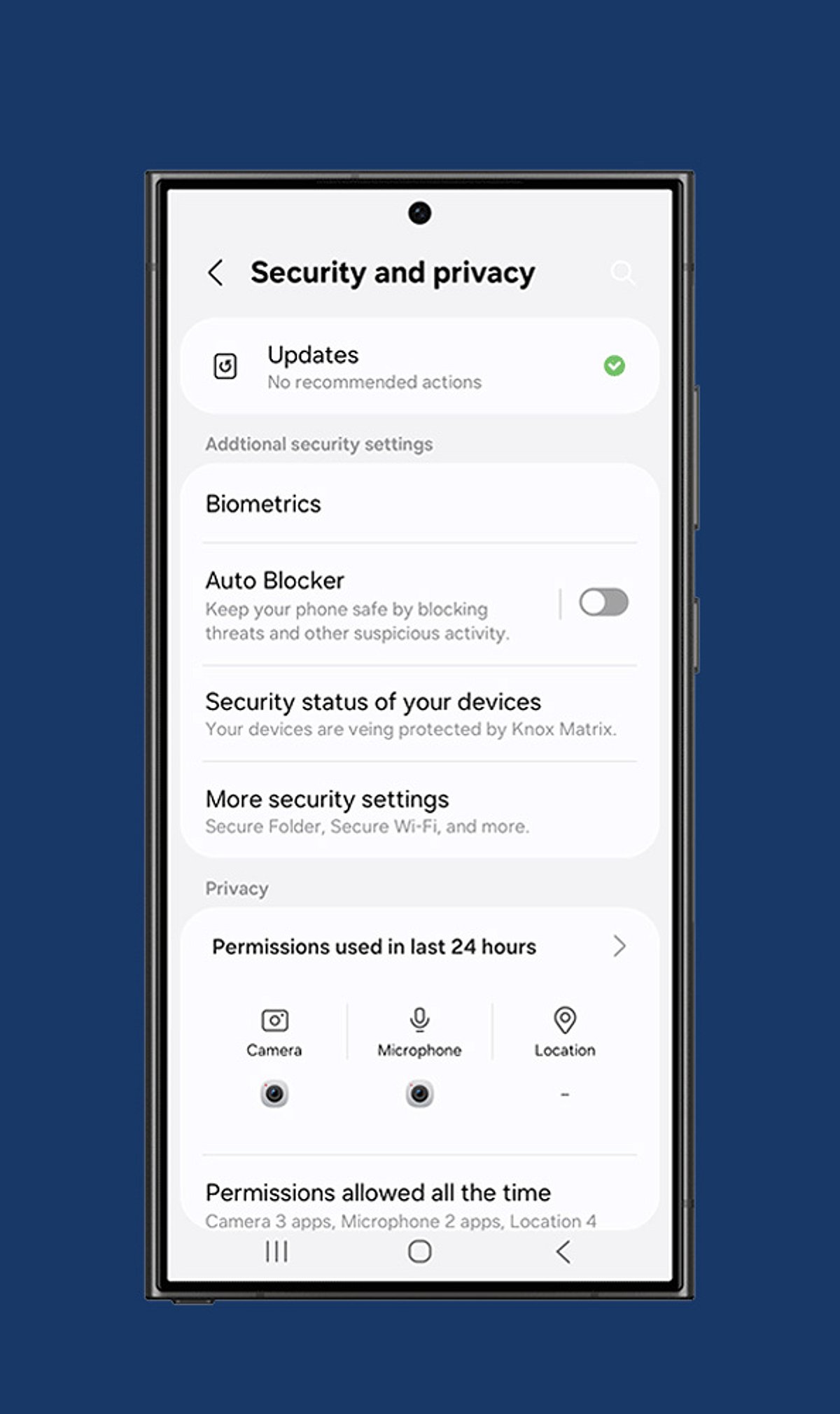
    When you unbox a new phone, protecting your privacy should be a top priority. By adjusting a few key settings, you can significantly reduce the risk of unauthorized access and data leaks. Here are seven essential steps to secure your device right away.

    1. Enable Screen Lock: Use a strong PIN, password, fingerprint, or facial recognition to prevent unauthorized access if your phone is lost or stolen.
    2. Review App Permissions: Only grant apps access to camera, microphone, contacts, and location when absolutely necessary. Revoke permissions for any app that doesn’t need them.
    3. Turn On Two-Factor Authentication: Add an extra layer of security to your important accounts by requiring a second verification step beyond your password.
    4. Disable Ad Personalization: Limit targeted advertising and reduce tracking by restricting your phone’s advertising identifier.
    5. Manage Location Sharing: Set location access to “While Using the App” instead of “Always” to prevent apps from tracking you in the background.
    6. Activate Device Encryption: Ensure that all sensitive files, messages, and personal information remain encrypted and unreadable even if someone gains physical access to your phone.
    7. Configure Find My Device: Enable remote tracking, locking, and data wiping features before your phone is ever misplaced or stolen.

    Additionally, regularly review your cloud backup settings, install software updates promptly, and keep your operating system patched against the latest security threats.

  • Top AI Fraud Detection Platforms for Business Security in 2026

    Top AI Fraud Detection Platforms for Business Security in 2026

    AI fraud detection platforms help businesses identify suspicious activity, reduce false alerts, protect customer accounts, improve payment security, support compliance, and strengthen overall business protection against modern fraud threats in 2026.

    Key Takeaways

    • AI detects fraud faster through real-time monitoring and behavioral analysis.
    • Modern platforms reduce false positives while improving customer experience.
    • Different platforms serve different industries, from banking and fintech to e-commerce and enterprises.

    Online fraud has become more advanced, faster, and harder to identify. Criminals now use smart tools to create fake identities, steal account details, and bypass traditional security systems. To counter online threats, many businesses now depend on AI-powered fraud detection platforms that identify suspicious activity before major damage occurs. These platforms study customer behavior, examine transactions in real time, and detect unusual patterns that simple rule-based systems often miss. They also reduce false alerts, improve security, and support compliance with financial regulations. The following platforms stand out as some of the best AI fraud detection solutions for businesses in 2026.

    Feedzai

    Feedzai is one of the leading fraud detection platforms for banks, payment providers, and financial institutions. The platform creates detailed profiles of customer behavior rather than relying solely on fixed rules. This approach helps identify suspicious activity with greater accuracy while reducing unnecessary transaction blocks. The platform also offers real-time payment monitoring, anti-money laundering support, and advanced machine learning models that improve after every transaction. Feedzai protects digital payments across multiple channels and helps financial organizations stop fraud without creating delays for genuine customers.

    Featurespace

    Featurespace focuses on adaptive behavioral analytics that change as customer activity changes over time. This ability allows the platform to identify fraud that traditional systems may fail to detect. It performs well in payment protection, card fraud prevention, and authorized push payment fraud detection. Large financial institutions choose Featurespace because it lowers false positives while maintaining strong security. Dynamic risk scoring allows security teams to respond quickly whenever unusual transaction patterns appear.

    Sardine

    Sardine is best for fintech companies, cryptocurrency businesses, and other digital-first organizations. The platform combines fraud detection, identity verification, and compliance tools in one solution, which makes security management much easier. Its AI system studies device details, customer identities, and transaction behavior to calculate fraud risk. Sardine also detects synthetic identities and supports anti-money laundering efforts. Fast-growing financial companies value the platform because it protects customers without adding unnecessary complexity.

    SEON

    SEON is a popular choice for e-commerce businesses and software companies. The platform studies digital information such as email addresses, phone numbers, IP addresses, and device details to identify fraud before transactions receive approval. Real-time fraud scoring helps businesses make quick decisions while reducing payment fraud and account abuse. Since SEON focuses on smooth customer experiences, genuine buyers usually complete purchases without extra security checks.

    ComplyAdvantage

    ComplyAdvantage combines fraud prevention with financial crime compliance. Many regulated financial companies use this platform to fulfill both security and legal requirements at the same time. The platform can track and analyze transactions, perform risk assessments and customer screenings, check sanction lists, and automate anti-money laundering processes. AI models assist security teams in detecting suspicious activities at an early stage.

    Hawk AI

    Hawk AI stands out for its explainable artificial intelligence. Security teams receive clear reasons behind every fraud alert instead of simple risk scores. This transparency supports faster investigations and stronger regulatory compliance. The platform also offers real-time transaction monitoring, customer risk analysis, and case management tools. Banks especially value Hawk AI because security analysts understand why each transaction receives attention.

    Sift

    Sift protects online stores, digital marketplaces, and subscription businesses from several forms of fraud. The platform identifies payment fraud, account takeovers, chargeback fraud, and promotion abuse across the complete customer journey. Its AI filter system examines billions of digital events to recognize suspicious behavior quickly. This large data network helps Sift identify new fraud methods while protecting genuine customers from unnecessary interruptions.

    BioCatch

    BioCatch uses behavioral biometrics instead of passwords alone. The platform studies how people type, move a mouse, swipe a mobile device, and interact with websites. Small behavioral differences often reveal whether a genuine customer or a fraudster controls the account. This continuous identity verification improves account security and reduces identity theft. Many banks rely on BioCatch because behavioral analysis adds another strong layer of protection without creating extra work for customers.

    LexisNexis ThreatMetrix

    LexisNexis ThreatMetrix specializes in digital identity intelligence for large enterprises. The platform studies device information, network activity and identity data to separate trusted customers from potential attackers. Risk-based authentication allows businesses to request extra verification only when suspicious behavior appears. This balanced approach strengthens security while keeping the customer experience simple.

    Fraud.net

    Fraud.net provides a complete platform that combines fraud detection, risk management, and compliance tools. Large organizations often choose this solution because multiple security functions remain available within one platform instead of separate systems. AI-powered analytics monitor transactions, identify unusual behavior, and support faster investigations. Entity intelligence also helps detect hidden connections between suspicious activities that traditional systems may overlook.

    Final Thoughts

    AI-powered fraud detection systems have become critical to modern businesses. The application of advanced technologies such as machine learning algorithms, behavioral analysis technologies, identity information systems and real-time monitoring helps companies discover fraud cases much earlier than traditional fraud-prevention technologies allow them to do. Platforms like Feedzai, Featurespace, Sardine, SEON, ComplyAdvantage, Hawk AI, Sift, BioCatch, LexisNexis ThreatMetrix and Fraud.net offer unique strengths for different industries. Each of the solutions mentioned above has distinct advantages, but companies need to select the right platform for effective fraud detection.

    FAQs

    1. What is an AI fraud detection platform? An AI fraud detection platform uses machine learning and behavioral analysis to identify suspicious activities and prevent fraud in real time.
    2. Which industries benefit the most from these platforms? Banks, fintech companies, e-commerce businesses, marketplaces, insurance providers, and payment companies benefit the most.
    3. Why is behavioral analysis important in fraud detection? Behavioral analysis identifies unusual customer actions that may indicate fraud, even when login details appear correct.
    4. Can AI reduce false fraud alerts? Yes. AI studies normal customer behavior and improves detection accuracy, which helps reduce unnecessary alerts.
    5. Which AI fraud detection platform is best for 2026? The best platform depends on business needs. Feedzai, Featurespace, Sardine, SEON, Sift, BioCatch, Hawk AI, ComplyAdvantage, LexisNexis ThreatMetrix, and Fraud.net are among the top choices.
  • Meta Removes Instagram Ads and Blocks Accounts in India Amid Child Safety Investigation

    Meta Removes Instagram Ads and Blocks Accounts in India Amid Child Safety Investigation

    Meta has removed multiple Instagram advertisements, advertiser accounts, and linked external websites after facing scrutiny over content that allegedly violated child safety norms in India. The company stated it has widened its internal investigation while reiterating that it does not permit child sexual exploitative and abuse material (CSEAM) on its platforms.

    This statement marks Meta’s first detailed response since the Indian government’s Centre issued a notice directing the company to immediately disable advertisements and content that promoted or facilitated access to such material on Instagram. Authorities also sought a detailed explanation from the social media giant within seven days.

    Meta Removes Offending Instagram Ads, Expands Probe After Centre’s Notice

    According to Meta, some of the reported advertisements and advertiser accounts had already been flagged and removed through its enforcement systems before the issue came to public attention. The tech giant conducted another review, removing additional advertisements, disabling more advertiser accounts, and blocking related external websites.

    Meta also acknowledged that its enforcement systems are not infallible and that some content may evade detection before it is reported or identified. The company went on to say that it consistently monitors all complaints and enhances its enforcement mechanisms when any inappropriate content manages to pass through its existing protection system.

    Meanwhile, Meta refuted claims that its advertisement mechanism had intentionally advertised inappropriate content relating to children. The company explained that its advertisements are monitored through artificial intelligence as well as human reviewers.

    Child Safety Remains Under Regulatory Spotlight

    Highlighting its child safety efforts, Meta said, “Over 4 million accounts linked with activities of suspicious nature around children were suspended.” It further claimed that 36 million posts concerning child exploitation all over the world were also removed within a year.

    The company stated that it is continuously making investments in sophisticated technology to identify illegal activities while collaborating with law enforcement agencies and organizations working for the welfare of children. This entire controversy has increased pressure on Meta’s content moderation policies as well as its policies related to advertisements in India.

  • Why Small Businesses Need CMMC: A Practical Guide to Cybersecurity Compliance

    Why Small Businesses Need CMMC: A Practical Guide to Cybersecurity Compliance

    Small businesses face an increasingly dangerous cybersecurity landscape. Data breaches, ransomware, and supply chain vulnerabilities are no longer hypothetical threats, which is why robust security frameworks have become non-negotiable. For companies handling sensitive federal information, the Cybersecurity Maturity Model Certification (CMMC) has evolved into both a compliance requirement and a solid defense strategy.

    CMMC solutions provide small businesses with a structured way to protect controlled unclassified information (CUI) and federal contract data. But the benefits go beyond satisfying regulators. Done right, these frameworks help build a security posture capable of withstanding sophisticated threats. Here’s how CMMC implementation actually strengthens cybersecurity and what business leaders need to know before getting started.

    What CMMC Solutions Actually Do

    At its core, the Cybersecurity Maturity Model Certification establishes a unified set of security standards for defense contractors and everyone in their supply chain. The Department of Defense created it to replace a patchwork of overlapping requirements with a single framework across five maturity levels, each building on the security controls from the level before.

    CMMC solutions pursue three main goals:

    • Standardized Protection: Getting everyone in the defense industrial base on the same security page, replacing the mismatched standards that were previously common.
    • Verified Implementation: Using independent assessors to confirm controls are in place and functioning, not just gathering dust in a binder.
    • Supply Chain Security: Extending protection requirements deeper into contractor networks, precisely where adversaries have been finding entry points.

    The framework heavily relies on NIST cybersecurity standards, especially Special Publication 800-171, which details how to protect CUI on non-federal systems. Because of the overlap, working toward CMMC compliance strengthens a business’s entire cybersecurity posture, not just the parts tied to federal work.

    Why CMMC Compliance Matters Beyond Contracts

    While CMMC certification is required for defense contracts, its value extends much further. The certification process often reveals security gaps that companies didn’t know existed. Small businesses frequently discover weaknesses in access controls, incident response, or data handling that have been unnoticed for years. Fixing those issues lowers risk across the entire business, not just government-contract areas.

    There’s also a trust factor. As commercial clients scrutinize vendors’ cybersecurity practices, CMMC certification becomes verifiable proof that a company takes data protection seriously. This can tip the scales in competitive bidding situations.

    Financially, small businesses face average breach costs exceeding $2.98 million. The controls CMMC requires—multi-factor authentication, encryption, network segmentation, and incident response planning—directly address the vulnerabilities that lead to those breaches.

    Understanding NIST 800-171 Requirements

    NIST Special Publication 800-171 is the technical engine behind CMMC Level 2, the level most defense contractors need to achieve. It outlines 110 security requirements across 14 families, covering access control, awareness and training, audit and accountability, incident response, and system and communications protection.

    Key areas include:

    • Access Control: Ensuring only authorized users and devices can access systems, applying least-privilege principles, and controlling information flow.
    • Awareness and Training: Educating personnel about risks and their role in protecting sensitive information.
    • Audit and Accountability: Maintaining audit records to monitor, investigate, and respond to security events.
    • Incident Response: Building capability to detect, report on, and respond to cybersecurity incidents.
    • System and Communications Protection: Monitoring and controlling communications at system boundaries, plus using cryptographic protections.

    Meeting these requirements typically involves a mix of technical deployment and process change. You’ll deploy tools like endpoint detection and encryption, but also write policies, run training sessions, and set up ongoing monitoring. The upside is that NIST 800-171 doesn’t force a one-size-fits-all approach—it allows businesses to implement controls in ways that fit their operations.

    The Strategic Role of CUI Enclaves

    Controlled unclassified information comes with specific protection requirements, and applying them across an entire IT environment is often impractical for small businesses. That’s where a CUI enclave shines: a separate, hardened environment designed for handling sensitive information.

    Think of it as a secure zone within a larger network. By isolating sensitive data and the systems that touch it, businesses can concentrate their strongest security controls exactly where they’re needed most, instead of spreading resources thin trying to lock down everything. This is often a more cost-effective path than bringing every device and system up to CMMC standards.

    A well-built CUI enclave typically includes:

    • Network Segmentation: Physically or logically isolating the enclave from the rest of the network, with tightly controlled access points and monitored traffic.
    • Enhanced Access Controls: Multi-factor authentication, privileged access management, and detailed logs of user activity.
    • Data Loss Prevention: Controls that prevent unauthorized copying, sending, or removal of CUI from the protected space.
    • Continuous Monitoring: Real-time monitoring with automated alerts to catch anomalies or policy violations.

    For small businesses without a large IT team, managed enclave providers like Cuick Trac, Redspin, and Coalfire offer turnkey setups. They handle the technical work of running a CMMC-compliant environment, allowing businesses to focus on core operations while meeting federal cybersecurity requirements.

    Practical Cybersecurity Solutions for Small Operations

    Small businesses constantly face the tension of needing enterprise-level security without enterprise-level budgets or staff. Fortunately, the controls CMMC requires align well with practical, affordable solutions that guard against common threats.

    Must-haves include:

    • Endpoint Protection: Modern antivirus and anti-malware using behavioral analysis and machine learning to catch threats that signature-based tools miss.
    • Network Security: Next-generation firewalls that inspect traffic at the application layer to catch sophisticated attacks.
    • Email Security: Filtering that catches phishing, malicious attachments, and business email compromise—the number one attack vector for small businesses.
    • Data Encryption: Encrypting data both in transit and at rest, so even if a system is breached, stolen data remains unreadable.
    • Multi-Factor Authentication: Requiring additional verification beyond passwords, which Microsoft research shows blocks 99.9% of automated account attacks.
    • Backup and Recovery: Regular, tested backups kept securely offline or in immutable cloud storage to provide a safety net against ransomware or system failures.

    Many of these are now available as cloud-based subscriptions priced for small business budgets. Security-as-a-service eliminates massive upfront costs, providing enterprise-grade protection and expertise on a manageable monthly plan. The key is not treating these as separate tools—CMMC compliance requires proving that security controls work together as a system, building genuine defense in depth.

    Building Your NIST Compliance Roadmap

    Getting to NIST 800-171 compliance and CMMC certification requires real planning. A structured checklist helps break the 110 requirements into manageable steps:

    1. Scope Definition: Map every system, network, and person that touches CUI. Most businesses are surprised by how large their CUI footprint turns out to be.
    2. Gap Analysis: Compare current security practices against NIST 800-171 honestly. Whatever you miss now will show up during a formal audit.
    3. Risk Assessment: Evaluate how likely each gap is to be exploited and the potential impact, so you can prioritize fixes based on real risk.
    4. Remediation Planning: Create a plan with specific actions, responsible parties, deadlines, and required resources to close each gap.
    5. Implementation: Do the work and document everything: changes, configurations, and new procedures. Documentation proves the work happened.
    6. Validation: Test controls to confirm they genuinely work as intended.
    7. Continuous Monitoring: Maintain an ongoing process to sustain compliance, catch new vulnerabilities, and adapt as threats change.

    Documentation trips up many businesses. CMMC assessments require actual evidence: system security plans, policies and procedures, configuration records, training logs, and audit trails. Companies often underestimate the paperwork involved and scramble before their assessment window. Don’t skip regular check-ins—quarterly reviews help catch small issues before they become real problems. Configurations drift, people leave, new systems appear, and paperwork gets outdated. Catching those changes early is far easier than dealing with a compliance failure after the fact.

  • Why Trust, Culture, and Communication Are the Best Defenses Against Insider Threats

    Why Trust, Culture, and Communication Are the Best Defenses Against Insider Threats

    Insider threats are one of the most persistent and damaging security challenges organizations face today. While many companies invest heavily in perimeter tools and detection technology, a leading cybersecurity expert argues that the real defenses lie in human relationships: trust, culture, and communication.

    Ajay Nyayapathi, a principal security engineer with nearly two decades of experience, explains that the people who bypass a company’s defenses are often already inside—disgruntled employees, careless contractors, or well-meaning colleagues who inadvertently leave a door open. “Zero trust starts with people who actually trust each other,” he says.

    When Insiders Hold the Keys

    Employees click on suspicious links, departing staff copy files “just in case,” and trusted managers write passwords on sticky notes. Firewalls stop outsiders, but insiders have knowledge of systems, routines, and relationships that open doors quietly. Nyayapathi watches for signals others overlook: logins at odd hours, bulk downloads before leave, and files pulled from shared folders in patterns that don’t fit the job.

    In one case, a quiet manager siphoned customer records over several months without setting off a single alarm. A colleague’s attention, not a system, caught it. “People don’t set out to betray. They drift when nobody watches,” Nyayapathi notes. The drift appears in small ways: skipped training, quick favors for friends, a mood that sours without anyone asking why.

    Culture That Spots Trouble Early

    Teams work better when people feel safe speaking up. Nyayapathi builds groups where an engineer can question a risky move without worry, and where a manager notices tension before it escalates. When raising a concern earns respect rather than blowback, people do it more often. He has seen a new hire stop an attempted theft by questioning unusual activity, and a supervisor block a leak by voicing doubts about a departing colleague.

    Leaders set the tone by rewarding candor and explaining why a rule exists. Nyayapathi leans on simple charts and data-flow maps so the same threat reads clearly to an engineer and an executive. When people understand the stakes, they treat company data as worth protecting and become more willing to flag a colleague who has wandered off a secure path.

    Words That Steady and Sharpen

    Clear communication matters most when things go wrong. Nyayapathi breaks an incident into plain steps: who acted, what broke, and what happens next. That structure settles a room. He recalls one flagged download that put a room on edge; he traced its path, found control gaps, and laid out practical fixes. The tension eased once the issue was contained.

    He argues daily habits matter more: short huddles that pick apart near-misses, lessons that move freely between engineers and managers, and newer staff learning from experienced colleagues. Open communication catches drift early and heads off breaches before they happen. Dashboards show what’s beneath the noise, and a clear narrative ties the pieces together so everyone sees the same picture.

    “Access creates opportunity, but culture determines intent.” — Ajay Nyayapathi

    Four Practical Steps to Strengthen Defenses

    Nyayapathi offers four actionable steps for organizations:

    • Hold monthly “near-miss” reviews where teams discuss small mistakes openly without assigning blame.
    • Have managers, not just HR, check in with departing employees during their final two weeks.
    • Map data-flow ownership so every team knows exactly what it is responsible for and why.
    • Make small interventions normal—a quick question, a nudge, or a short clarifying conversation—since these minor moments often prevent major incidents.

    Nyayapathi remains optimistic about workplaces where trust runs through every level and people protect what they understand. “Technology detects anomalies,” he says. “People detect intent, and intent is where every insider-risk story begins and ends.” His message is consistent: put people first, and the safeguards tend to follow.