Category: Finance

  • Gold Price Update: MCX Gold Slips 0.25% to Rs 1,41,275 as Market Awaits US Fed Decision

    Gold Price Update: MCX Gold Slips 0.25% to Rs 1,41,275 as Market Awaits US Fed Decision

    Gold prices edged lower on the Multi Commodity Exchange (MCX) on July 29, as investors adopted a cautious stance ahead of the US Federal Reserve’s monetary policy meeting. August gold futures declined by 0.25% to settle at Rs 1,41,275 per 10 grams.

    In contrast, silver futures for September delivery gained 0.32% to Rs 2,16,530. Meanwhile, crude oil prices surged, with Brent crude futures rising 4.27% to $87.68 per barrel and US West Texas Intermediate (WTI) climbing 4.21% to $82.60 per barrel.

    According to the CME FedWatch Tool, traders now see a 76% probability of a rate hike in September by the US Federal Reserve, fueling uncertainty in the precious metals market.

    Domestic Gold Prices

    In the Indian market, 24K gold fell by Rs 86 to Rs 1,43,510 per 10 grams, while 22K gold declined by Rs 60 to Rs 1,31,550. Regionally, Mumbai and Kolkata recorded identical prices at Rs 1,43,510, Delhi at Rs 1,43,660, and Chennai at Rs 1,43,510.

    US Gold Prices

    In the international market, gold prices remained largely steady as investors awaited the Fed’s policy decision and comments from Fed Chair Kevin Warsh for clues on inflation and interest rates. Spot gold was little changed at $4,029.08 per ounce, while US gold futures for August delivery edged down 0.2% to $4,028.10.

    Spot silver gained 0.9% to $57.65 per ounce, platinum inched 0.3% higher to $1,600.40, and palladium slipped 0.7% to $1,261.

    Key Levels to Watch

    Kelvin Wong, senior market analyst at OANDA, noted, “Gold is very much connected to today’s FOMC meeting. The scenario that may see a potential reversal of the recent bearish bias in gold prices will be the Fed turning to a less hawkish rhetoric.”

    Internationally, gold has support at $4,010 and $3,974 and resistance at $4,070 and $4,110 per troy ounce. Silver has support at $56.80 and $56 and resistance at $58.40 and $59.10 per troy ounce.

    On the MCX, gold has support at Rs 1,40,800 and Rs 1,40,000 and resistance at Rs 1,42,200 and Rs 1,43,100. Silver has support at Rs 2,14,000 and Rs 2,12,200 and resistance at Rs 2,17,700 and Rs 2,20,000.


  • How Digital Payments Are Revolutionizing Small Business Growth Beyond Lending

    How Digital Payments Are Revolutionizing Small Business Growth Beyond Lending

    Digital payments have evolved far beyond simple transaction processing. Today, they serve as a powerful engine for small businesses, enabling them to streamline operations, attract a broader customer base, and accelerate growth.

    In India, systems like UPI and Aadhaar-enabled banking now power a significant share of MSME payments. These technologies make transactions faster and more secure, while reducing the reliance on cash.

    Faster digital checkouts cut down waiting times, eliminate the need for cash handling, and automatically record every transaction for easier accounting. This operational efficiency allows business owners to focus more on strategy and less on manual tasks.

    Every digital payment generates valuable data. Business owners can track customer trends, identify peak sales hours, and manage inventory more effectively, leading to smarter, data-driven decisions.

    Accepting digital payments also opens doors to online shoppers, delivery platforms, and customers outside the local area. This expanded reach helps small businesses compete in a larger marketplace.

    Security is another key benefit. AI-powered fraud detection, real-time monitoring, and secure payment systems protect businesses and build trust with customers. Embedded payments within apps, POS systems, and digital platforms simplify checkout and improve cash flow through faster settlements.

    Beyond immediate transactions, digital payments support long-term business growth. Better recordkeeping, improved tax planning, customer rewards programs, and easier access to future credit are all made possible by a robust digital payment infrastructure.

    However, challenges remain. Cybersecurity threats, transaction fees, system outages, staff training requirements, and protecting customer data are ongoing concerns that small businesses must navigate.

  • 3 Essential Steps to Build an Emergency Savings Safety Net

    3 Essential Steps to Build an Emergency Savings Safety Net

    Emergency savings can help families handle sudden medical bills, job loss, or other urgent costs. Experts suggest building savings, getting proper insurance, and keeping financial records organized.

    Ram Patrudu, Co-Founder of Trovity & Mad Over Insurance, recommends three simple steps to prepare for financial emergencies. He shared his advice in an NDTV report, emphasizing that families should focus on financial protection before chasing investment returns. The plan includes building an emergency fund, obtaining suitable insurance, and maintaining organized finances.

    Start Building an Emergency Fund

    “People often believe emergencies will give them time to prepare. They don’t,” Patrudu said. The first step is to start an emergency fund with a small, realistic target. Saving enough for two weeks or one month of essential expenses can make the goal more achievable. The long-term target should cover three to six months of essential expenses. Regular monthly savings can help build this amount without putting too much pressure on the household budget.

    Get the Right Insurance Coverage

    The second step is securing appropriate insurance. Health insurance, life insurance for earning members, and disability coverage can protect savings during major emergencies. These policies safeguard your financial safety net from being wiped out by unexpected events.

    Keep Insurance and Financial Records Updated

    The third step is keeping financial records organized. Bank accounts, investments, insurance plans, loans, and important documents should be easy to access. Extra money—such as bonuses, gifts, tax refunds, or leftover monthly funds—can also be channeled into the emergency fund to accelerate growth.

    A strong financial safety net does not require large savings at the beginning. Small, consistent steps can make household finances more resilient to unexpected problems.

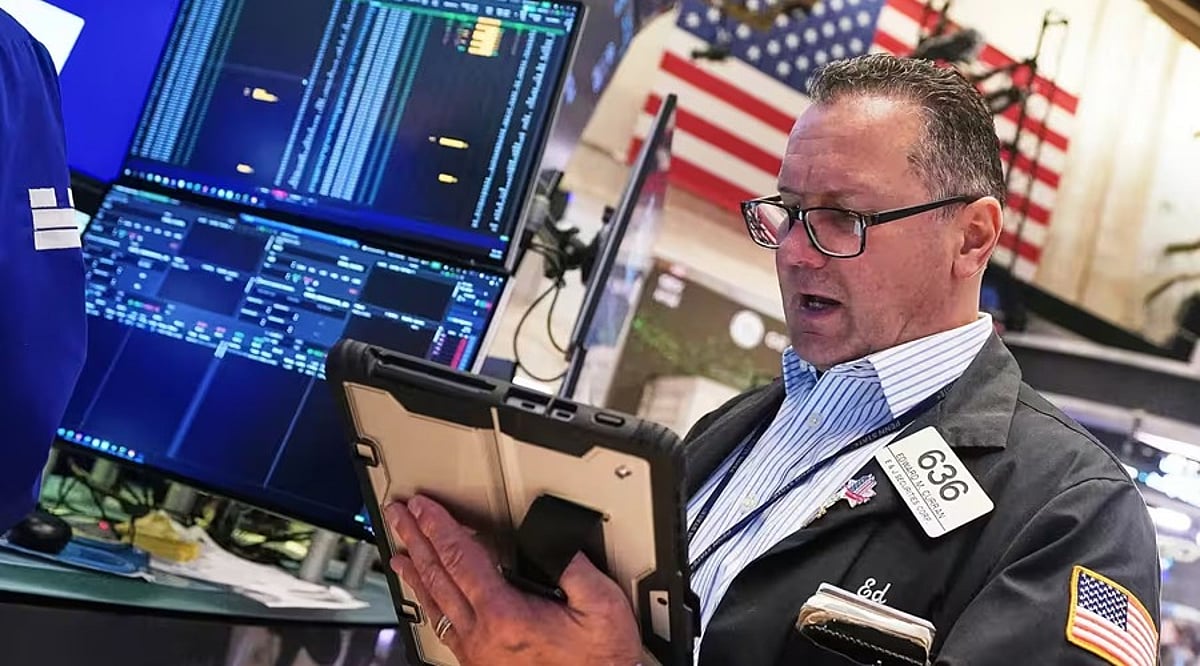
  • Wall Street on Edge: Fed Decision, Inflation Data, and Big Tech Earnings Set for Volatile Week

    Wall Street on Edge: Fed Decision, Inflation Data, and Big Tech Earnings Set for Volatile Week

    Global markets are bracing for a turbulent 72-hour period as a wave of major events—including a Federal Reserve decision, key inflation data, GDP figures, and earnings from tech giants Microsoft, Meta, Apple, and Amazon—converge on the calendar. The sequence kicks off with consumer confidence data, followed by the Fed’s policy announcement, economic growth and inflation reports, and a flurry of earnings from four of the largest companies in the S&P 500. Traders are poised for sharp moves across stocks, bonds, currencies, and cryptocurrencies as each release could shift expectations for the next Fed meeting.

    Fed Decision Takes Center Stage

    Tuesday’s Conference Board consumer confidence report provides an early gauge of household demand. A weak reading may signal slower spending, while a stronger figure could reinforce the view that the economy can handle higher borrowing costs. Consumer spending drives the bulk of U.S. economic activity, making this data a key precursor to the Fed’s decision.

    The Federal Reserve will announce its rate decision Wednesday after a two-day meeting. Rate futures indicate roughly a one-in-three chance of a quarter-point increase, though most economists expect the central bank to hold the federal funds rate at 3.50% to 3.75%. Markets will scrutinize Chairman Kevin Warsh’s remarks for hints about September and any signs of policy division. A surprise hike would likely lift short-term yields and the dollar while pressuring rate-sensitive equities. Even a hold could spark volatility if the statement signals another increase is imminent. Investors will also watch the number of dissenting officials.

    PCE and GDP Data Drop on Thursday

    Thursday brings a double dose of economic data: the advance estimate for second-quarter GDP and the June personal income and outlays report, which includes the Personal Consumption Expenditures (PCE) price index—the Fed’s preferred inflation gauge. Both releases are scheduled for 8:30 a.m. Eastern Time.

    GDP data will reveal whether consumer demand and business investment sustained economic growth during the quarter. Forecasts generally point to annualized growth above 2%, though estimates vary. A stronger reading could buoy risk assets but may also strengthen the case for tighter policy if inflation remains elevated. The PCE figures may carry more weight for rate expectations. Softer monthly and annual readings would support the view that price pressures are easing, while firm core inflation could reignite concerns about the need for another rate increase. The worst-case scenario for markets would be weak GDP combined with stubborn inflation.

    Big Tech Earnings Add Pressure

    Microsoft and Meta report after Wednesday’s closing bell. Microsoft investors will focus on Azure growth, AI demand, and capital spending. Meta’s report will draw attention to advertising revenue, user activity, and the cost of expanding its AI infrastructure. Both companies have the power to influence broader tech valuations.

    Apple and Amazon follow after Thursday’s close. Apple’s iPhone demand, services sales, and AI plans will shape expectations for its next quarter. Amazon Web Services growth will indicate the pace of corporate cloud spending, while retail margins and delivery costs will impact Amazon’s broader results. Together, these four companies represent a significant portion of the S&P 500, and their guidance could move index futures even if headline earnings beat forecasts.

    Weekend Sentiment Check

    Friday’s final University of Michigan sentiment reading closes the seven-event stretch. Inflation expectations will be closely watched to see if the preliminary July improvement survived later changes in fuel prices, financial markets, and household views nationwide.

  • Hindustan Unilever Shares Drop Nearly 6% After Q1 Profit Miss Despite 10% Revenue Surge

    Hindustan Unilever Shares Drop Nearly 6% After Q1 Profit Miss Despite 10% Revenue Surge

    Hindustan Unilever opened FY27 with sharply mixed signals for investors. Sales grew at its fastest pace in several quarters, but profit growth failed to keep up, triggering a nearly 6% tumble in its share price on the National Stock Exchange (NSE).

    Shares of India’s largest consumer goods maker fell sharply after the Q1 results. While sharp stock reactions like this are common in the FMCG sector, a profit miss often outweighs strong top-line growth in the short term.

    Stock Tumbles Nearly 6% After Results

    Hindustan Unilever shares (HINDUNILVR) were trading at Rs 2,045.80 on the NSE. According to TradingView, the stock was down close to 5.92% during the session on July 28, 2026. The stock briefly touched its 52-week low zone during the session, and trading volumes surged well above recent averages, pointing to heavy selling pressure right after the earnings release.

    Profit Falls on Tough Base and Higher Costs

    Consolidated net profit fell 3% year-on-year to Rs 2,673 crore, compared to Rs 2,756 crore in the same quarter last year. Rising input costs weighed on the bottom line this quarter.

    EBITDA Margin Holds Within Guided Range

    EBITDA rose 8.4% to Rs 3,947 crore, up from Rs 3,640 crore. The EBITDA margin stayed at 23%, remaining within the range management had earlier guided for FY27.

    Revenue Growth Stays Strong Across Categories

    Revenue from operations grew 10.1% to Rs 17,341 crore this quarter. Underlying volume growth came in at 5%, a healthy pace for the sector. Pricing and volume both contributed equally to this growth.

    Home care was the clear standout this quarter. Its revenue rose 13.4% to Rs 6,554 crore. Underlying sales growth of 14% marked its best show in three years.

    Segment-Wise Revenue Performance in Q1 FY27

    Beauty and wellbeing revenue grew 12.4% to Rs 4,083 crore this quarter. Premium skin care and hair care posted double-digit growth, while foods revenue rose 6.8% to Rs 3,480 crore on steady demand for staples.

    Personal care stayed the weakest link again this quarter. Revenue rose just 3.3% to Rs 2,624 crore. Pricing drove most of the gain, while volumes slipped slightly.

    Leadership Stays Focused on Volume-Led Growth

    CEO Priya Nair called the quarter resilient despite a volatile external backdrop. She pointed to ongoing investments in market development and portfolio transformation, which she said are building a stronger, future-ready business.

    Nair added that the near-term focus stays on volume-led revenue growth. Investments in channel expansion and premium products should support performance ahead. Management gave no signal of a near-term change in strategy.

    Market Outlook

    HUL’s revenue strength points to healthy consumer demand across most categories. The sharp stock fall appears tied more to sentiment than fundamentals. Investors should watch margin trends and personal care recovery in coming quarters.

    Hindustan Unilever delivered strong sales growth this quarter, even as profit growth disappointed the Street. Home care and beauty segments both posted their best show in years, pointing to a business still gaining consumer traction. The sharp stock reaction looks driven by short-term market sentiment rather than any deeper weakness. As costs ease and personal care regains pace, Hindustan Unilever’s scale should keep supporting its long-term standing in India’s consumer goods space.

  • FTSE 100 Edges Up 16.79 Points to 10,798 Despite Tech Sell-Off; Unilever Surges, Barclays Slips

    FTSE 100 Edges Up 16.79 Points to 10,798 Despite Tech Sell-Off; Unilever Surges, Barclays Slips

    The FTSE 100 opened 16.79 points higher at 10,798.54 on Tuesday, defying an early tech-driven sell-off triggered by reports of Chinese advancements in domestic semiconductor manufacturing equipment. The index’s resilience came as investors weighed sector-specific earnings and global oil price declines.

    Market Movers: Unilever Leads Gains, Barclays Falls

    Unilever climbed 5.74% to 4,892.50p after posting its strongest quarterly volume growth in over a decade. The consumer goods giant reported underlying sales rose 5.8% in the second quarter, exceeding the 4.14% consensus estimate, with revenue reaching €13.05 billion. CEO Fernando Fernandez hailed it as “the best volume quarter at Unilever in over a decade,” driven by Power Brands and emerging markets.

    Other gainers included Admiral Group (+3.18%), Reckitt Benckiser (+2.63%), Babcock International (+2.45%), Diageo (+2.33%), and The Sage Group (+2.22%).

    On the downside, Barclays shares tumbled as much as 7% in early trading, their steepest decline since April last year, despite the bank topping profit and income expectations in Q2. Analysts noted that the investment bank’s strong performance had already been priced in, while earnings outside that division were more muted than expected. Games Workshop fell 3.17%, Lion Finance Group dropped 2.21%, and AstraZeneca slipped 1.63%.

    Unite Students Reports £400 Million Loss

    Unite Students, the UK’s largest student landlord, plunged to a £417 million pre-tax loss in the six months to June, reversing a £186 million profit a year earlier. The loss was driven by a £530 million revaluation of its property portfolio and “extremely challenging” building costs. The company plans to sell up to 20,000 beds as it reduces its footprint. Shares fell 3.4% to £538.

    Oil Prices Extend Decline

    Brent crude futures fell 1.95% to $86.64 per barrel, while US West Texas Intermediate declined 1.49% to $81.38 per barrel, as concerns over global demand and Chinese semiconductor news weighed on energy markets.

    Global Market Overview

    In the US, the Dow Jones gained 0.5%, while the S&P 500 was flat and the Nasdaq fell 0.2%. In Asia, Japan’s Nikkei 225 dropped 3.95%, China’s Shanghai Composite fell 1.16%, but Hong Kong’s Hang Seng rose 0.36%. India’s Nifty 50 and Sensex both edged higher.

    Disclaimer: This article is for informational purposes only and does not constitute investment advice. Always conduct your own research before making investment decisions.

  • 12 AI-Powered Accounting Tools to Streamline Your Finances

    12 AI-Powered Accounting Tools to Streamline Your Finances

    Managing finances can be time-consuming, but artificial intelligence is transforming how businesses handle bookkeeping, invoicing, taxes, and expense tracking. Instead of spending hours on manual data entry, you can leverage AI accounting tools to automate routine tasks and focus on growing your business. Here are 12 standout options that combine smart automation with robust financial features.

    1. QuickBooks

    QuickBooks uses AI to automate expense categorization, invoicing, payroll, and financial reporting. Its machine learning algorithms learn from your transactions to improve accuracy over time, making it a favorite among small to medium-sized businesses.

    2. Xero

    Xero is a cloud-based accounting platform that employs AI for bank reconciliation, cash flow monitoring, and generating smart insights. Its intuitive dashboard helps you stay on top of your financial health in real time.

    3. FreshBooks

    Designed with freelancers in mind, FreshBooks offers AI-assisted invoicing, time tracking, and payment reminders. The platform simplifies project billing and ensures you get paid faster.

    4. Zoho Books

    Zoho Books automates accounting workflows, GST calculations, and financial reporting through intelligent automation. It integrates seamlessly with other Zoho apps for a unified business management experience.

    5. Sage Intacct

    Sage Intacct is an enterprise-grade AI accounting solution that excels in financial planning and advanced reporting. It provides deep insights and scalability for growing organizations.

    6. Vic.ai

    Vic.ai specializes in AI-powered accounts payable automation. It significantly reduces manual invoice processing by automatically extracting data, matching purchase orders, and approving payments.

    7. Expensify

    Expensify automates expense management by scanning receipts, tracking mileage, and preparing reimbursement reports. Its AI eliminates the need for manual data entry, saving time and reducing errors.

    8. NetSuite ERP

    NetSuite ERP combines AI with enterprise resource planning to automate accounting, inventory management, procurement, and financial forecasting. It’s ideal for businesses that need a comprehensive solution beyond basic bookkeeping.

    These tools demonstrate how AI can simplify financial tasks, improve accuracy, and free up valuable time. Whether you’re a freelancer, a startup, or a large enterprise, integrating one of these AI accounting platforms can help you manage your finances more effectively.

  • Canara Bank Eyes $2.5 Billion in Foreign Currency Funding via FCNR(B) and Overseas Borrowings

    Canara Bank Eyes $2.5 Billion in Foreign Currency Funding via FCNR(B) and Overseas Borrowings

    Canara Bank has announced plans to raise between $2.3 billion and $2.5 billion in foreign currency funding through a combination of FCNR(B) deposits and overseas borrowings. The bank aims to secure $1.3–$1.5 billion specifically via FCNR(B) deposits by September 2026, with the remainder coming from external commercial borrowings (ECBs) and overseas foreign currency borrowings (OFCBs).

    As of July, the bank has already raised approximately $775 million through the FCNR(B) window and mobilized nearly ₹7,300 crore under the scheme. This fundraising initiative follows the Reserve Bank of India’s (RBI) decision to lift the interest rate cap on fresh FCNR(B) deposits with tenures of three to five years. The special deposit window remains open until September 30, 2026, and banks can increase overseas borrowings under RBI guidelines until December 31, 2026.

    Strong Q1 FY27 Performance

    Canara Bank reported robust business growth for the quarter ending June. Total advances grew 18% year-on-year to ₹12.93 lakh crore, while total deposits rose 12% YoY to ₹16.11 lakh crore. Global business value increased 14% to ₹29.05 lakh crore. Net interest income (NII) reached ₹10,215 crore, marking a 13% increase. Managing Director Brajesh Kumar Singh noted that NII crossed the ₹10,000 crore milestone for the first time in a quarter.

    Improving Asset Quality

    The bank’s asset quality continued to strengthen. Gross non-performing assets (GNPA) fell to 1.57% from 2.69% a year ago, and net NPAs declined to 0.36% from 0.63%. The provision coverage ratio (PCR) improved to 94.76%. Credit quality gains were supported by a lower slippage ratio of 0.60% and recoveries of ₹2,500 crore during the quarter.

    Analysts expect the combination of stronger profitability, healthier asset quality, and additional foreign currency funding to bolster Canara Bank’s lending capacity and liquidity position in the coming quarters.

  • RBI Proposes Rs 1 Crore Minimum Investment for Securitisation Notes, Aims to Boost Transparency

    RBI Proposes Rs 1 Crore Minimum Investment for Securitisation Notes, Aims to Boost Transparency

    The Reserve Bank of India (RBI) has released a draft proposal requiring a minimum investment of Rs 1 crore in securitisation notes, along with a mandate that all such notes be issued, held, and transferred exclusively in demat format starting October 1, 2026. The move is designed to enhance market transparency, liquidity, and efficiency.

    Securitisation enables banks and financial institutions to pool loans—such as home, vehicle, and personal loans—and sell them through special purpose entities. Under the proposed rules, each investor must invest at least Rs 1 crore, and the same threshold applies to any subsequent buyer of these notes.

    The draft covers commercial banks, small finance banks, non-banking financial companies (NBFCs), and All India Financial Institutions. The RBI will accept public and stakeholder comments until August 27, 2026, before finalizing the regulation.

    While the high entry barrier is likely to restrict retail participation, institutional investors including banks, insurers, mutual funds, pension funds, NBFCs, and high-net-worth individuals are expected to remain the primary players. The mandatory demat format is intended to simplify ownership tracking and transfer processes.

    The RBI has also proposed aligning public offers with existing SEBI regulations. If approved, these changes could make the securitisation market more structured while preserving its predominantly institutional character.

    For more details, stakeholders can join the official WhatsApp channel for updates.

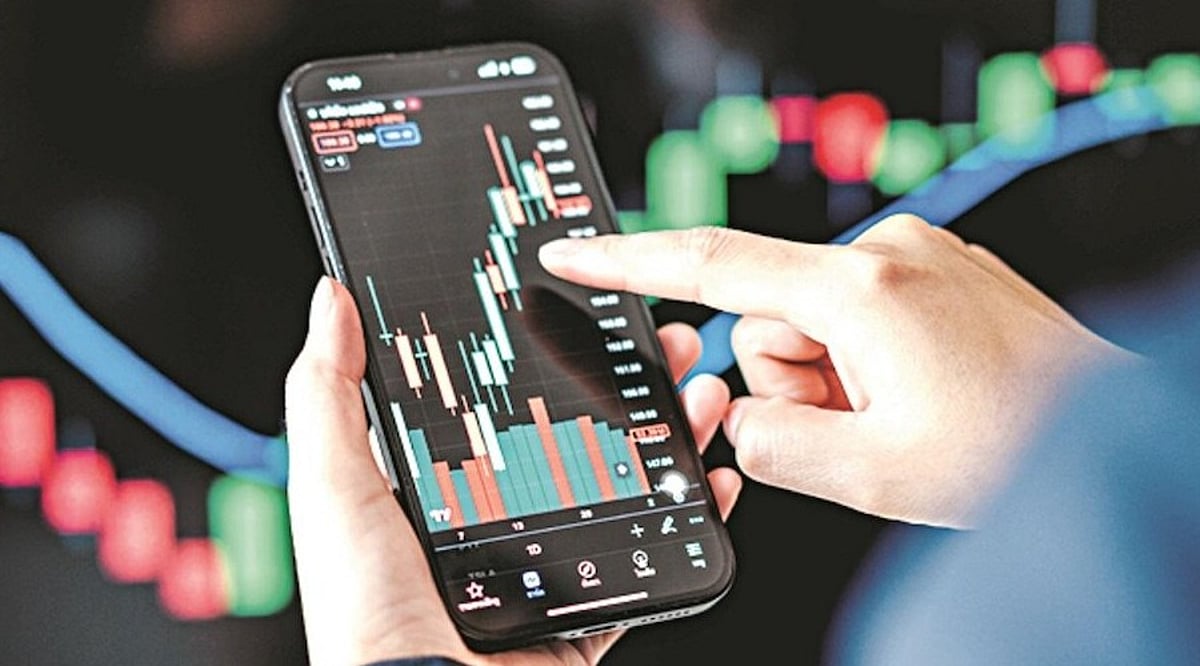
  • Indian Stock Market Opens Lower: Nifty 50 Dips 25 Points, Sensex Steady Near 76,830

    Indian Stock Market Opens Lower: Nifty 50 Dips 25 Points, Sensex Steady Near 76,830

    On Tuesday, the Indian stock markets opened on a muted note amid mixed global cues. The Nifty 50 opened at 23,971.25, about 25 points lower than its previous close of 23,995.95. The Bank Nifty started at 56,883.55, down 203.65 points, while the Sensex opened flat at 76,831.75.

    Broader indices ended higher, with the Nifty Midcap 100 rising 1% and the Nifty Smallcap 100 gaining 1.3%. The Indian rupee opened higher by 14 paise at ₹95.75 per dollar compared to the previous close of ₹95.89.

    Foreign institutional investors (FIIs) net sold shares worth ₹1,688 crore, while domestic institutional investors (DIIs) net bought shares worth ₹2,329 crore on July 27.

    Sensex Outlook

    Technically, the Sensex held positive momentum and formed a bullish candle on the daily chart, which is largely positive. “As long as the market is trading above 76,500, the pullback formation is likely to continue. On the higher side, it could retest the 77,000-77,300 level. On the flip side, below 76,500, the selling pressure is likely to accelerate. If it falls below this level, the market could slip to 76,200-76,000,” said Shrikant Chouhan, Head of Equity Research at Kotak Securities.

    Nifty 50 Outlook

    The Nifty 50 formed a bullish candle on the daily chart after snapping its five-session losing streak. The formation of a bullish gap between 23,823 and 23,891 indicates renewed buying interest. As long as the index holds above Monday’s gap area of 23,823-23,891, the ongoing pullback is likely to remain intact.

    “Going ahead, formation of higher high and higher low on a sustained basis and holding above 24,000 levels will signal a pullback towards 24,300-24,350 levels in the coming sessions. On the downside, a move below Monday’s gap area (23,823-23,891) will signal weakness and open downside towards the key support area of 23,500-23,600 being the confluence of the trendline support joining lows of April and June 2026, bullish gap area of 15th June 2026 and 61.8% retracement of the recent up move from 23,070-24,530,” said Bajaj Broking Research.

    Bank Nifty Outlook

    Bank Nifty also ended Monday’s session on a positive note, forming a doji candle and closing above its 50-day exponential moving average (EMA). The banking index continues to consolidate within the 56,500-58,700 range. The immediate hurdle for Bank Nifty is placed at 57,500, while the 58,500-58,700 zone is expected to act as a strong resistance in the coming weeks. A sustained move above these levels could strengthen bullish momentum.

    On the downside, 56,500-56,000 remains a crucial support zone as it coincides with the lower end of the six-week consolidation range, a rising trendline and the 52-week EMA. Bajaj Broking noted that only a decisive breach below this support could accelerate the decline toward the 55,000 level.

    Disclaimer: This article is for informational purposes only and does not constitute investment advice. Readers should conduct their own research before making any investment decisions.