Category: Finance

  • Sachin Bansal: From Co-Founding Flipkart to Building Navi – A Story of Entrepreneurial Resilience

    Sachin Bansal: From Co-Founding Flipkart to Building Navi – A Story of Entrepreneurial Resilience

    Sachin Bansal is one of the most influential figures in India’s startup ecosystem. Best known as the co-founder of Flipkart, the e-commerce giant that reshaped online shopping in India, Bansal later ventured into digital finance with Navi, a company focused on simplifying loans, insurance, and investments. His journey exemplifies innovation, adaptability, and the drive to build again after a monumental success.

    Early Life and Education

    Born in Chandigarh into a middle-class family, Bansal showed early signs of intelligence and focus. He attended St. Anne’s Convent School in Chandigarh and later earned a degree in computer science from the prestigious Indian Institute of Technology, Delhi. His education gave him a strong technical foundation and honed his problem-solving skills. After college, he worked in the tech industry, gaining practical experience in software and systems.

    The Birth of Flipkart

    In 2007, Sachin Bansal and Binny Bansal launched Flipkart with a simple idea: make online shopping accessible and trustworthy in India. At the time, internet penetration was low, and many consumers were skeptical of e-commerce. Starting as an online bookstore with minimal funding and a small team, Flipkart faced tough early days with low orders and intense competition. But the founders persisted, expanding into multiple categories and eventually becoming a household name. Flipkart not only transformed Indian retail but also inspired a generation of entrepreneurs. Bansal played a pivotal role in guiding the company through its growth phases, making it a symbol of Indian startup potential.

    Life After Flipkart

    After Walmart acquired Flipkart in 2018, Bansal left the company he helped build. Rather than resting on his laurels, he chose to embark on a new challenge. His next venture, Navi, entered the financial services sector—a starkly different industry from e-commerce but one with immense potential for disruption. Bansal recognized that millions of Indians still found finance complicated and inaccessible. Navi was designed to offer simple, digital-first solutions for loans, insurance, and savings.

    Navi and Its Mission

    Navi is a digital financial services company offering personal loans, home loans, insurance, and mutual funds. Its core philosophy is to replace cumbersome paperwork with intuitive digital processes. Bansal’s approach mirrors his earlier success: identify a problem, simplify it, and build a scalable solution. Navi reflects his willingness to tackle new challenges even after achieving massive success. It demonstrates confidence, patience, and a continued drive to create meaningful impact.

    What Makes Him Stand Out

    Bansal is not a one-time founder. He has built companies in two major sectors—e-commerce and fintech—a rare feat. His ability to adapt and stay relevant in a fast-changing business landscape is noteworthy. Flipkart proved that Indian startups could achieve global scale, inspiring countless others. Navi continues that legacy by addressing real-world financial needs. His journey is about more than wealth or company size; it’s about solving problems and making people’s lives easier with practical products.

    Conclusion

    Sachin Bansal’s story is one of vision, risk, and persistence. From a technology student to the co-founder of Flipkart and now the founder of Navi, he has shown resilience and a capacity for continuous evolution. He remains a key figure in India’s business world, and his journey is far from over. For aspiring entrepreneurs, Bansal serves as a powerful example of building with purpose and moving forward after success.

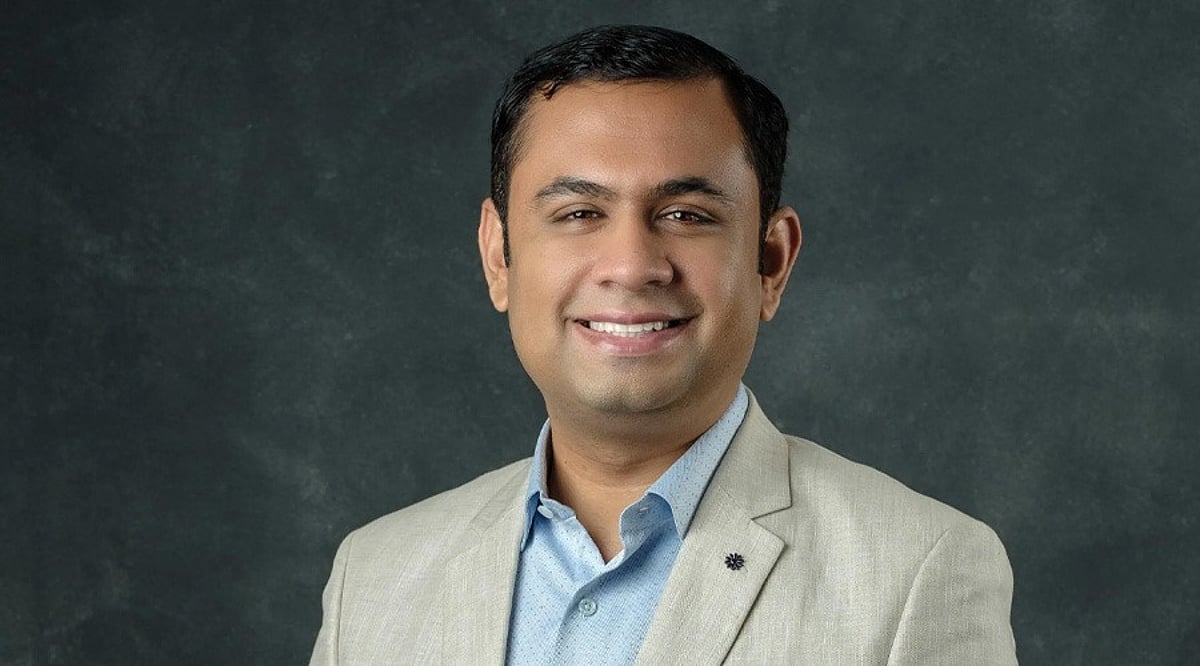
  • Varun Dua: The ACKO Founder Revolutionizing Digital Insurance in India

    Varun Dua: The ACKO Founder Revolutionizing Digital Insurance in India

    Varun Dua is an Indian entrepreneur and one of the pioneers of India’s insurtech sector. He founded ACKO in 2016 to make insurance simple, digital-first, and customer-centric by reducing paperwork and removing intermediaries. He is currently serving as the company’s CEO.

    Early Life and Education

    Born on 25 February 1981, Varun Dua grew up alongside India’s digital and commercial transformation, an environment that influenced his approach to business and technology. He holds a Bachelor’s Degree from the University of Mumbai and has established a firm academic foundation before making the transition to corporate and start-up sectors. He pursued postgraduate education in Marketing & Communication from MICA to gain in-depth knowledge of markets and customers. His educational and professional background helped pave the way for his entry into the world of insurtech. With his experience in the fundamentals of business along with the principles of communication, Dua embraced the concept of ‘Customer First’ in everything. Eventually, this became his hallmark as an entrepreneur.

    Career Journey: Building Insurance the Digital Way

    Varun Dua spent the early part of his career at the intersection of marketing and financial services, working with names such as Leo Burnett, TATA AIG Life Insurance, and Franklin Templeton. This experience taught him how brands are built and financial products are sold, while exposing frequent pain points in the insurance experience: complex policies, lengthy processes, and heavy reliance on intermediaries. In 2011, he co-founded Coverfox to make it simpler for consumers to compare and buy insurance online. The platform demonstrated the power of digital distribution, but it also revealed its limits: enabling sales was not enough. Dua concluded that meaningful, customer-centric transformation would happen only when insurers owned the full digital journey. This conviction later shaped his strategy for building more direct and user-friendly insurance models.

    ACKO: From Startup to Insurance Giant

    Varun Dua launched ACKO in 2016 as a digital-native insurance company. After receiving its regulatory licence from the Insurance Regulatory and Development Authority of India (IRDAI) in 2017, ACKO expanded into motor insurance, health insurance, travel insurance, term life insurance, mobile insurance, and digital automotive services through ACKO Drive. The company grew into one of India’s leading insurtech startups and entered the unicorn club in 2021 after a major funding round. The latest reports suggest that ACKO is preparing for an IPO with a target valuation of around $2.5 billion.

    Varun Dua as a Voice for Startups

    Business and Customers: He has a profound passion for the strategic aspect of business and consumer behavior. He keeps studying trends and new business models. Role as a Founder’s Advisor: He acts as an advisor and mentor to founders via Shark Tank India, sharing his expertise and experience with startups. Thought Leadership and Culture: He is a thought leader and often writes about leadership, corporate culture, and consumer behavior. Insurances and Technology: He supports innovation and technology and promotes the use of artificial intelligence and other technologies to optimize the insurance process.

    Career Highlights

    Varun Dua’s biggest business milestones include: started ACKO Insurance in 2016 to simplify insurance, making it faster and fully digital; co-founded CoverFox to help more Indians compare and purchase insurance online; led ACKO from a startup into becoming a ‘unicorn’ worth over a billion dollars; expanded ACKO’s business into health, life, travel, and many other types of insurance; partnered with brands such as Ola, Zomato, OYO, Urban Company for embedded insurance services; and serves as an investor in Season 3 of Shark Tank India.

    The Final Word: Varun Dua’s Vision Endures

    Varun Dua’s journey reflects how innovation and persistence can transform even the most traditional industries. From co-founding Coverfox to building ACKO into one of India’s leading digital insurers, he has consistently challenged conventional insurance models. His focus on technology, customer experience, and accessibility has earned him recognition as a key figure in India’s insurtech ecosystem. Dua remains an inspiration for aspiring entrepreneurs across the country.

  • How Harshil Mathur and Razorpay Revolutionized India’s Digital Payments Ecosystem

    How Harshil Mathur and Razorpay Revolutionized India’s Digital Payments Ecosystem

    When Harshil Mathur and Shashank Kumar launched Razorpay in 2014, India’s online payment infrastructure was a mess of failed transactions, clunky integrations, and limited options for businesses trying to accept money digitally. Twelve years later, Razorpay processes over $180 billion in annualized total payment volume, has onboarded more than 12 million merchants, and filed a confidential DRHP with SEBI in June 2026, targeting a public listing valued at $5 to $6 billion. For Mathur, the journey from wireline field engineer to CEO of one of India’s most consequential fintech companies is anything but accidental.

    From Jaipur to IIT Roorkee to a Bold Bet

    Born in 1991 into a middle-class family in Jaipur, Rajasthan, Mathur developed an early fascination with technology and coding. He completed a degree in metallurgical engineering from IIT Roorkee in 2013 and joined Schlumberger as a wireline field engineer, a technically intensive role that lasted just eight months before the pull toward building something of his own won out. In December 2014, he co-founded Razorpay with Kumar around a straightforward insight: India’s businesses desperately needed a clean, developer-friendly API to accept online payments, and nothing available delivered that reliably.

    Y Combinator and the Developer-First Growth Engine

    In 2015, Razorpay got into Y Combinator’s Winter batch, one of the world’s most selective startup programs. The YC period sharpened the company’s product thinking and opened the door to early investors. Early growth was built almost entirely on developer trust; Razorpay’s clean API documentation and reliable integration made it the default payment gateway for startups, SMEs, and eventually larger enterprises. By 2020, the company had crossed the $1 billion unicorn mark. By December 2021, a $375 million Series F round valued it at $7.5 billion, backed by Peak XV Partners, Tiger Global, Ribbit Capital, Lightspeed, and Singapore’s GIC.

    Building Beyond Payments

    Mathur’s strategic ambition for Razorpay was never limited to a payment gateway. Under his leadership, the company expanded into RazorpayX, a neobanking platform now serving over 40,000 businesses with payroll, corporate cards, and connected banking; Razorpay Capital for merchant credit; and Magic Checkout, a one-click product reportedly reducing cart abandonment by 22%. In January 2026, Razorpay received RBI’s payment aggregator cross-border license, enabling transactions across 130-plus currencies in over 180 countries, and the company has established operations in Singapore and Malaysia.

    The IPO Moment

    Razorpay’s planned stock market debut is the most significant milestone on the horizon. The company filed a confidential DRHP with SEBI on June 12, 2026, targeting Rs 5,000 to Rs 6,000 crore through fresh shares and an offer for sale, with Axis Capital, Kotak Mahindra Capital, JPMorgan, and Citi appointed as lead managers. The targeted $5 to $6 billion IPO valuation is a markdown from the $7.5 billion 2021 peak, reflecting broader compression in fintech valuations and a public market that now demands profitability alongside growth. Razorpay’s FY25 revenue grew 65% to Rs 3,783 crore, though a net loss of Rs 1,209 crore, driven by ESOP costs and one-time reverse-flip tax liabilities from its 2025 domicile shift back to India, is a narrative that Mathur will need to tell convincingly to public-market investors.

    The Leader Behind the Company

    Mathur’s leadership style is widely described as product-first, technically grounded, and collaborative. He has consistently credited the broader Razorpay team and his co-founder rather than positioning himself as the singular force behind the company’s rise. He is also an active angel investor with a portfolio of over 22 companies, has been recognized on the Forbes 30 Under 30 Asia list, and has been a vocal voice in India’s startup community on digital policy issues. What makes his story particularly resonant is the consistency of the original thesis: building reliable, developer-first financial infrastructure for Indian businesses was not a fashionable idea in 2014. A decade on, it has become the foundation of how a significant share of India’s digital economy moves money.

    Why This Matters

    India’s digital economy depends on reliable payment infrastructure, and entrepreneurs like Harshil Mathur have played a significant role in building it. His journey demonstrates how solving a fundamental business problem with technology can create lasting impact, inspire future founders, and accelerate innovation across an entire industry.

  • Microsoft Earnings Spark Wall Street Rally, Boosting AI and Chip Stocks

    Microsoft Earnings Spark Wall Street Rally, Boosting AI and Chip Stocks

    Wall Street staged a strong recovery on Thursday as robust earnings from Microsoft eased concerns about the profitability of heavy artificial intelligence investments. Technology and semiconductor shares led the rebound, lifting major indices after a sharp selloff in the previous session.

    The Dow Jones Industrial Average opened 1.01% higher, the S&P 500 gained 1.02%, and the NASDAQ Composite climbed 1.67%. The tech-heavy NASDAQ later advanced about 2% as Microsoft and chip stocks extended gains.

    Microsoft Leads Technology Stock Recovery

    Microsoft shares surged roughly 15% after the company reported better-than-expected earnings and revenue, driven by growth in its Azure cloud business. The results reassured investors that its massive AI spending could yield higher returns.

    Semiconductor stocks also rallied, with the iShares Semiconductor ETF rising more than 7%, making technology the strongest S&P 500 sector. Consumer discretionary stocks also posted gains.

    Meta Platforms bucked the trend, falling about 8% after issuing a softer revenue forecast and reporting a sharp decline in second-quarter free cash flow. The company also raised its expected AI infrastructure spending.

    Stephen Evans, Chief Investment Officer at Pave Finance, described the market reaction as “a tale of two AI investment strategies,” noting that one company increased profits while spending heavily, while another allowed costs to erode earnings.

    Economic Growth Slows in Second Quarter

    New data showed the U.S. economy expanded at a slower pace. Gross domestic product increased at a 1.5% annual rate in the second quarter, below the estimated 2% and down from 2.1% growth in the first quarter. The slowdown added pressure as investors weighed high borrowing costs, softer business activity, and shifting consumer demand.

    Jobless claims for the week ended July 25 came in at 197,000, below the expected 200,000 but up 9,000 from the prior week’s revised level. The data indicated that layoffs remained limited despite weaker growth, though investors continued to assess the impact on hiring, wages, and household spending.

    Inflation Keeps Federal Reserve Policy in Focus

    June’s Personal Consumption Expenditures (PCE) price index fell 0.1%, while the annual inflation rate stood at 3.7%, matching expectations but remaining above the Federal Reserve’s 2% target. Core PCE, which excludes food and energy, rose 0.1% month-over-month, with an annual rate of 3.3%, slightly below the expected 0.2% monthly increase.

    The data arrived a day after the Fed kept interest rates unchanged. Investors assessed whether slower growth and persistent inflation could influence the central bank’s September decision. Sameer Samana of Wells Fargo Investment Institute said the Fed “remains patient” and continues to monitor economic conditions, adding that September remains open for action if incoming data supports a policy change.

    Market Breadth Stays Narrow Despite Rally

    The rebound was not broad-based. Shortly after the open, only 243 companies in the S&P 500 traded higher, and only five of the index’s 11 sectors posted gains. Technology shares rose about 4%, while consumer discretionary stocks gained roughly 1.3%, indicating that a small group of large companies drove much of the advance.

    Bond yields remained in focus after the Fed decision. The 30-year Treasury yield held near levels last seen in 2007, after moving above 5.2%. Other yields changed little.

    Wall Street was recovering from Wednesday’s losses, when the Dow fell more than 1,100 points and the NASDAQ 100 entered correction territory. Amazon, Apple, and Coinbase were due to report after Thursday’s close.

  • Best Mutual Funds in India for 2026: High Returns with Lower Risk

    Best Mutual Funds in India for 2026: High Returns with Lower Risk

    As Indian investors look ahead to 2026, selecting the right mutual funds is crucial for balancing growth and stability. The following funds have been identified for their consistent performance, smart diversification, and risk management. Whether you are a conservative investor or seeking higher growth, these options cater to a range of financial goals.

    Parag Parikh Flexi Cap Fund

    This flexi-cap fund is known for its diversified investing approach, delivering strong long-term returns through disciplined stock selection across market caps.

    HDFC Balanced Advantage Fund

    By dynamically balancing equity and debt, this fund helps investors manage market volatility while targeting steady wealth creation over the long term.

    SBI Contra Fund

    Employing a value-oriented strategy, SBI Contra Fund invests in undervalued companies with strong recovery potential, aiming for long-term growth across sectors.

    UTI Nifty 50 Index Fund

    Ideal for passive investors, this fund tracks the Nifty 50 Index, offering low-cost exposure to India’s top companies with consistent long-term performance.

    ICICI Prudential Bluechip Fund

    Focused on established large-cap companies with stable earnings, this fund is suitable for those seeking relatively lower-risk equity investing.

    Nippon India Small Cap Fund

    Investing in promising small-cap companies, this fund offers higher growth opportunities, though it carries greater market volatility and risk.

    Kotak Equity Opportunities Fund

    Diversifying across large and mid-cap stocks, this fund aims for balanced growth with effective risk management through professional fund selection.

    Axis ELSS Tax Saver Fund

    Combining tax-saving benefits with long-term equity investments, this ELSS fund is attractive for investors seeking wealth creation and deductions under Section 80C.

    Choose Based on Your Goals

    Financial experts advise selecting mutual funds according to your personal financial goals, investment horizon, and risk tolerance, rather than relying solely on historical returns. Always review fund performance and consult a financial advisor before investing.

  • Meta Shares Drop 9% on Q2 Earnings Miss Despite Record Revenue of $60.8 Billion

    Meta Shares Drop 9% on Q2 Earnings Miss Despite Record Revenue of $60.8 Billion

    Meta Platforms shares fell approximately 9% in premarket trading after the company reported second-quarter earnings that missed Wall Street expectations. The company posted stronger-than-expected revenue growth, but lower earnings per share (EPS) and higher costs related to artificial intelligence investments pressured investor sentiment.

    Meta Q2 Earnings Miss Drives Stock Decline

    Meta reported earnings per share of $6.18 for the quarter, below analyst expectations of around $7.14. Revenue reached $60.8 billion, exceeding forecasts of $60.2 billion and marking a 28% increase from the previous year. The EPS figure included several one-time expenses that reduced quarterly profit, including a $2.4 billion charge linked to legal contingencies and $1.2 billion in severance expenses. Without these charges, Meta’s earnings performance would have been stronger. However, investors focused on the reported profit figure as the company continues to increase spending across artificial intelligence projects and data center expansion.

    Advertising Business Continues to Deliver Growth

    Meta’s advertising business continued to deliver growth during the quarter. Advertising revenue reached $59.3 billion, slightly above analyst expectations of $59.07 billion. The company’s platforms, including Facebook and Instagram, continued generating most of its revenue. Meta has also linked improvements in advertising performance to artificial intelligence tools used for recommendations and ad targeting.

    AI Spending Increases as Meta Expands Infrastructure

    Meta raised the lower end of its 2026 capital expenditure forecast as it continues investing in artificial intelligence infrastructure. The company now expects capital spending between $135 billion and $145 billion, compared with the previous range of $125 billion to $145 billion. The higher spending includes investments in data centers, servers and computing equipment needed to support AI development. Meta has also been expanding its plans to develop and provide AI products for businesses.

    CEO Mark Zuckerberg said, “AI spending is accelerating every part of our core business,” as the company continues building AI models and tools. Meta also announced a partnership with BlackRock to develop a $14 billion data center project in Texas. BlackRock will hold an 80% stake in the facility, while Meta will own the remaining 20%. Additionally, Meta introduced its Muse Spark 1.1 AI model with pricing designed to compete with other AI providers, offering lower costs for developers using its AI models.

    Meta Revenue Outlook Falls Below Wall Street Forecasts

    Meta’s third-quarter revenue forecast added pressure after the company projected revenue between $61 billion and $64 billion. The midpoint of the guidance came below Wall Street expectations of about $63.1 billion. The company’s lower forecast range increased market attention toward future revenue growth and the financial return from its AI investments.

    Meta’s free cash flow also declined during the quarter. The company reported $784 million in free cash flow, compared with $8.5 billion during the same period last year. Nevertheless, analysts continue tracking Meta’s long-term AI strategy as the company works to build new products and commercial services. Zuckerberg said the company expects AI agents and business-focused AI tools to become part of its future product offerings.

    Meta’s stock has faced pressure in 2026, with shares already trading lower before the earnings release. The latest decline followed concerns surrounding rising expenses, slower guidance growth, and the cost of expanding AI infrastructure.

  • Flat Start for Indian Markets: Nifty 50 Steady, Sensex Edges Down 15 Points on Weak Global Sentiment

    Flat Start for Indian Markets: Nifty 50 Steady, Sensex Edges Down 15 Points on Weak Global Sentiment

    Indian equity benchmarks opened on a flat note Thursday, tracking weak global cues. The Nifty 50 started at 24,249.55, nearly unchanged from its previous close of 24,250.20, while the Sensex opened 15 points lower at 77,638.86. The Bank Nifty also declined, opening 778.85 points below its prior close.

    The rupee strengthened marginally, opening at Rs. 95.58 against the U.S. dollar compared to Wednesday’s close of Rs. 95.64. Foreign institutional investors (FIIs) remained net buyers, purchasing shares worth Rs. 2,982 crore on July 29, while domestic institutional investors (DIIs) bought stocks worth Rs. 998 crore.

    Broader market indices outperformed, with the Nifty Midcap 100 rising 0.8% and the Nifty Smallcap 100 gaining 1.5%.

    Sensex Outlook

    Technically, the Sensex stayed positive in the previous session, hitting an intraday high of 77,765.49. Buying interest across key sectors and improving momentum supported the index.

    “The 77,000 level is expected to provide immediate support and act as a crucial cushion against any short-term pullback. On the upside, 78,500 is the key resistance level, and a sustained move above this mark could strengthen bullish momentum,” said Sachin Gupta, VP – Technical Research at Choice Equity Broking.

    Nifty 50 Outlook

    The Nifty 50 remains in a consolidation phase after recent weakness. It formed a bearish candle on the daily chart, indicating continued corrective momentum.

    “Overall, the index is expected to extend consolidation in the range of 23,800-24,350. Only a breakout or breakdown will signal the next directional trend. Short-term support is placed at 23,800, being the confluence of the almost identical low of the last 5 weeks and 50 days EMA,” said Bajaj Broking Research.

    A decisive break below Wednesday’s low of 23,961 could drag the Nifty toward the 23,800 support. On the upside, the 24,200 mark is expected to act as immediate resistance.

    Bank Nifty Outlook

    Bank Nifty formed a high-wave candle with a higher high and higher low, indicating renewed buying interest after consolidation. The index has largely traded within the 56,500-58,700 range over the past six weeks.

    “The 57,500 remains the immediate hurdle, while a sustained move above this level could pave the way for an advance towards 58,000. On the downside, the 56,500-56,000 zone remains a crucial support area, reinforced by the lower band of the six-week trading range, an ascending trendline, and the 52-week EMA. The index holding above this support cluster suggests a constructive broader outlook,” said Bajaj Broking.

    Disclaimer: This article is for informational purposes only and does not constitute investment advice. Readers should conduct their own research before making any investment decisions. Analytics Insight does not provide financial guidance on stocks or cryptocurrencies.

  • Gold Prices Inch Higher on MCX as Fed Holds Rates; Brent Crude Slips Below $90

    Gold Prices Inch Higher on MCX as Fed Holds Rates; Brent Crude Slips Below $90

    Gold futures traded higher on the Multi Commodity Exchange (MCX) on July 30, despite a stronger U.S. dollar and rising 10-year Treasury yields, after the U.S. Federal Reserve decided to keep interest rates unchanged. August gold futures rose 0.26% to Rs 1,42,150 per 10 grams. In contrast, September silver futures declined 0.59% to Rs 2,16,200, while Brent crude futures fell 1.14% to $89.71 per barrel. U.S. West Texas Intermediate (WTI) crude also edged lower by 0.81% to $83.78 per barrel.

    According to the CME FedWatch Tool, market expectations for a September rate hike dropped to 63% from 81% before the Fed’s policy decision, reflecting a shift in sentiment after the central bank’s announcement.

    Domestic Gold Prices

    In the domestic spot market, 24-karat gold rose by Rs 82 to Rs 1,44,330 per 10 grams, while 22-karat gold advanced by Rs 75 to Rs 1,32,300. Prices remained consistent across major cities: Mumbai and Kolkata quoted Rs 1,44,330, Delhi Rs 1,44,480, and Chennai Rs 1,44,330.

    U.S. Gold Prices

    In the international market, gold prices edged higher on Thursday as investors assessed comments from Federal Reserve Chairman Kevin Warsh on inflation following the rate hold. Spot gold gained 0.3% to $4,076.29 per ounce, while U.S. gold futures for August delivery rose 1% to $4,073.60. Spot silver added 0.4% to $57.86 per ounce, palladium climbed 1.5% to $1,264.49, and platinum dipped 0.6% to $1,602.34.

    Key Levels to Watch

    Analysts noted that gold’s upward momentum was supported by a perceived lack of urgency from the Fed to raise rates. “I think the markets were surprised, and somewhat disappointed by Warsh and his general approach. He seemed kind of disengaged from the need to raise interest rates,” said Edward Meir, analyst at Marex. “The markets have gone up to fight inflation, but he doesn’t seem to be doing much, and so this has helped gold go up.”

    On MCX, gold is expected to find support at Rs 1,41,100 and Rs 1,40,400, with resistance at Rs 1,42,650 and Rs 1,43,300. Silver has support at Rs 2,15,500 and Rs 2,13,300, and resistance at Rs 2,20,000 and Rs 2,23,100.

  • Flipkart Launches Pay Later with Flexible Repayment Options for Indian Shoppers

    Flipkart Launches Pay Later with Flexible Repayment Options for Indian Shoppers

    Flipkart Group, in partnership with PayU Finance, has announced the launch of Flipkart Pay Later, a new credit offering that provides flexible repayment options directly at checkout. Available across Flipkart, Myntra, and Flipkart Minutes, the service aims to make credit more accessible for millions of Indian consumers.

    Key Features of Flipkart Pay Later

    Flipkart Pay Later offers three repayment choices: a Pay Later option with up to 30 days for everyday purchases, a Pay in 3 option that splits the cost into three payments, and EMI plans ranging from 3 to 12 months for higher-value categories such as mobiles, electronics, appliances, and furniture. The offering is designed for both high-frequency, low-value transactions across categories like fashion, home, beauty, and general merchandise, as well as larger purchases where structured repayment can ease access.

    Powered by Commerce Intelligence and Responsible Underwriting

    Flipkart Finance has initiated the program with PayU Finance as its first lending partner, with plans to add more financial institutions as it scales. PayU Finance acts as the licensed lender, while Flipkart Finance manages customer relationships and credit intelligence, leveraging commerce data to enable faster and more accurate credit decisions.

    “Affordability remains the core driver of how millions in India engage with digital commerce. For these consumers, aspiration has never been a constraint, access has. As pioneers of easy financing, with Flipkart Pay Later, we are putting a decade of commerce signals to work, building an underwriting model that sees these customers clearly and extends them credit at the moment it matters the most. This is not a payment feature. It is an important step in building a financial services capability that we believe will fundamentally change who gets to participate in India’s digital economy.” — Vishal Ahuja, Executive Director, Flipkart Finance

    “As digital commerce continues to evolve, the need for responsible and accessible credit has never been greater. Through our partnership with Flipkart Finance, we are combining technology, data-driven underwriting, and strong risk management to deliver seamless credit experiences at scale. Flipkart Pay Later is another step towards expanding financial inclusion while powering the next phase of India’s digital commerce growth.” — Deepak Mendiratta, CEO, PayU Finance

    How Credit Decisions Are Made

    The credit decisions behind Flipkart Pay Later are built on Flipkart Finance’s commerce intelligence, transaction history, purchase patterns, and platform behavior, combined with PayU Finance’s lending and risk management capabilities. Customer exposure is assessed using multiple data sources to ensure credit is extended responsibly without over-leveraging.

    About the Flipkart Group

    The Flipkart Group is one of India’s leading digital commerce entities with a strong technology-first foundation, including group companies Flipkart, Myntra, Flipkart Wholesale, Cleartrip, and super.money. Established in 2007, Flipkart has enabled millions of sellers, merchants, and small businesses to participate in India’s digital commerce revolution. With a registered user base of more than 500 million, Flipkart’s marketplace offers over 150 million products across 80+ categories. Today, there are over 1.4 million sellers on the platform, including Shopsy sellers. Flipkart has pioneered services such as Cash on Delivery, No Cost EMI, Easy Returns, and UPI payments.

    About PayU

    PayU is India’s leading diversified fintech platform with Prosus as an investor. It operates businesses regulated by the Reserve Bank of India and offers advanced solutions for digital payments. PayU provides payment gateway solutions to online businesses, empowering over 4.5 lakh businesses. It enables digital payments across 100+ methods including Credit Cards, Debit Cards, Net Banking, EMIs, pay-later, QR, UPI, and Wallets. PayU Finance, its NBFC arm, empowers 3.5 lakh merchants and 6 million consumers with innovative credit solutions.

  • FTSE 100 Opens Higher as Rolls-Royce Surges, Lloyds Launches £1B Buyback, and Oil Prices Climb

    FTSE 100 Opens Higher as Rolls-Royce Surges, Lloyds Launches £1B Buyback, and Oil Prices Climb

    The FTSE 100 opened 21.92 points higher at 10,930.33 on Thursday, as investors shifted focus to the Bank of England’s upcoming interest rate decision, largely ignoring a hawkish stance from the Federal Reserve and overnight losses on Wall Street. Brent crude futures rose 2.13% to $92.67 per barrel, while US West Texas Intermediate (WTI) advanced 1.47% to $85.70 per barrel.

    Sterling strengthened to $1.3352 from $1.3284 in the previous session, but fell against the euro to €1.1654 from €1.1673.

    Gainers & Losers

    On the upside, Rolls-Royce Holdings surged 4.03% to 1,435.60p. Aberdeen Group gained 2.19% to 243.20p, while Investec advanced 1.99% to 641.50p. Lloyds Banking Group climbed 1.75% to 113.30p, Croda International rose 1.58% to 3,271p, and Standard Chartered also added 1.58% to 2,191p.

    On the downside, London Stock Exchange Group fell 3.50% to 8,876p. Rentokil slumped 17.08% to 367.60p, while Reckitt Benckiser declined 0.96% to 5,348p. Games Workshop Group slipped 0.86% to 19,680p, AstraZeneca eased 0.59% to 13,056p, and Next plc edged 0.56% lower to 15,095p.

    Rentokil Shares Decline

    Rentokil shares plummeted after its CEO criticized the firm’s failure to meet its growth potential across multiple markets. The stock shed over 17% in early trade. Chief executive Mike Duffy stated the company is “not delivering on our growth potential in many of the markets we operate in, nor adequately benefiting from our scale.” The firm reported a 6.7% rise in group revenue for the first half of the year to $3.5 billion (£2.6 billion), with profit before tax growing nearly 10% to $263 million (£196 million). Duffy added, “Our focus is driving volume growth over short-term margin expansion, and this targeted redeployment of resources will enable us, over time, to accelerate organic growth, improve margins and free cash flow and deliver on the clear opportunity for shareholder value creation.”

    Rolls-Royce Shares Jump

    Rolls-Royce shares jumped on Thursday after the company raised its targets and posted a near 50% jump in operating profits for the first half of the year. The firm reported £2.5 billion in underlying operating profit for the first half, up 46% from the same period last year. It now expects to make £4.7 billion to £4.9 billion in underlying operating profit, up from its previous targets of between £4 billion and £4.2 billion. Chief Executive Tufan Erginbilgic, who has pushed through a sweeping overhaul of the aerospace and engineering group, said the company’s “transformation continues to deliver.” “We are demonstrating that Rolls-Royce is now a very different company to that of the past,” he said.

    Lloyds £1 Billion Share Buyback

    Lloyds Banking Group unveiled a £1 billion share buyback and a new four-year strategy after reporting stronger profit for the second quarter. Statutory pre-tax profit rose to £4.3 billion in the first half, from £3.5 billion a year earlier. Second-quarter profit of £2.3 billion beat the £2.1 billion expected by analysts. CEO Charlie Nunn said, “In the first half of 2026, we delivered sustained strength in financial performance, with continued income growth, improving operating leverage, strong credit performance, growing capital generation and increasing shareholder returns.” Guidance for the full year remains unchanged.

    Global Market View

    In the US, Wall Street fell after the Federal Reserve held interest rates. The Dow Jones fell 1,153 points, or 2.2%, while the S&P 500 lost 1.5% and the Nasdaq dropped 1.7%.

    In Asia on Thursday, Tokyo’s Nikkei 225 rose 0.71% to 61,867.43, while China’s Shanghai Composite dipped 0.62%. Hong Kong’s Hang Seng advanced 0.18%, and South Korea’s Kospi edged lower by 1.23%. In India, both the Nifty 50 and the Sensex rose by 0.15% and 0.066%, respectively.