
Category: Finance

  • How Your Employment Type Affects Loan Approval and Interest Rates

    How Your Employment Type Affects Loan Approval and Interest Rates

    Employment type is a critical factor lenders evaluate when reviewing a borrower’s financial profile. While income matters, lenders also assess the stability, consistency, and reliability of the income source. This is especially important for personal loans, where repayment capacity is scrutinized. Salaried employees, self-employed professionals, and business owners are often evaluated differently based on their income structure and financial records. Understanding these differences can help you prepare a stronger application and secure better loan terms.

    Salaried Employees at Large Corporations

    Employees of large corporations, listed companies, and established public sector organizations are typically viewed favorably by lenders because of stable income and predictable employment. This can lead to competitive loan terms and higher eligible amounts. For these borrowers, meeting basic requirements such as minimum job tenure, income criteria, and a healthy credit score is usually sufficient. Maintaining a strong credit profile further improves options. Standard documents include salary slips, Form 16, and bank statements.

    Salaried Employees at Small or Newer Companies

    Employees of smaller or newer companies may face a slightly different assessment. Lenders examine employment tenure, salary consistency, and credit history more closely because the employer lacks a long track record. This does not automatically disqualify you or result in higher interest rates. You can improve your chances by maintaining stable employment, a good credit score, and a clean banking record. If the company shows steady growth, that can also support your application. Having documents ready and providing accurate financial details helps lenders assess your profile better.

    Self-Employed Professionals

    Self-employed professionals such as doctors, chartered accountants, lawyers, architects, and consultants are assessed differently from salaried applicants. Lenders review income tax returns (ITR) for the last two to three years, profit and loss statements, and business bank statements instead of salary slips. Eligibility depends on the consistency of income across ITR filings, business trends, and bank statement quality. Professionals with a stable practice, consistent ITR-declared income, and clean bank statements often receive competitive terms comparable to those of salaried employees at large corporations. Newer practices or those with declining trends may face more scrutiny.

    Self-Employed Business Owners

    Business owners of proprietorships, partnerships, or private companies are evaluated on both business financial performance and personal profiles. Lenders review business ITR, audited or CA-certified financial statements, and business bank statements. The stability and growth of the business directly influence loan terms. Business owners with two to three years of consistent operations, growing ITR-declared income, and clean banking behavior can access competitive personal loans. Businesses in their first two years face tighter assessments due to limited track records. Some lenders have minimum vintage requirements specifically for business owners.

    Documentation Differences by Employment Type

    Employment type directly determines the required documentation:

    • Salaried: Aadhaar, PAN, three months’ salary slips, Form 16, three to six months of bank statements.
    • Self-employed professionals: Aadhaar, PAN, two to three years of ITR filings, profit and loss statements, twelve months of bank statements.
    • Business owners: All of the above, plus business ITR, audited financial statements, and business bank statements.

    Self-employed categories require more documentation, but the assessment can be equally favorable if documents are strong. Preparing a larger document set carefully reduces friction in the process.

    How Employment Type Affects Interest Rates

    Personal loan interest rates can vary by 0.5% to 2% based on employment type for otherwise similar profiles. Salaried employees at large corporations typically receive the lowest rates. Self-employed applicants often see rates 0.5% to 1% higher. However, this differential can be offset by exceptional credit profiles, strong business financials, and long-standing banking relationships. Employment type sets the starting point, not the final outcome.

    Strengthening Your Application by Category

    • Large corporation salaried: Maintain a strong credit profile and minimize debt-to-income ratio.
    • Small company salaried: Build tenure at your current employer and strengthen credit behavior.
    • Self-employed professionals: Ensure consistent ITR filings and maintain clean business banking.
    • Business owners: Build business vintage, align ITR with bank statements, and maintain quality financial statements.

    Focusing on the levers relevant to your situation yields better outcomes than generic preparation.

    Choosing the Right Lender for Your Employment Type

    Not all lenders assess employment types equally. Some have more experience with self-employed applicants, while others are better suited for salaried borrowers. Before applying, compare lenders based on eligibility criteria, repayment options, documentation requirements, and loan terms for your profile. For example, leading institutions like Tata Capital consider income, credit history, and repayment capacity across all employment categories. Reviewing eligibility and available options beforehand helps you understand what works best for your financial situation.

    Conclusion

    Employment type influences how lenders assess your loan application, but it does not determine the outcome. Whether you are salaried, self-employed, or a business owner, maintaining a strong credit profile and preparing the right documents can improve your approval chances. Understanding these factors strengthens your personal loan application and helps you access suitable terms.

  • How to Slash Fees on International Money Transfers: 9 Proven Strategies

    How to Slash Fees on International Money Transfers: 9 Proven Strategies

    Every international money transfer involves costs, such as transfer fees and intermediary bank fees. Understanding where those costs arise and how to reduce them can help you select the best platform to transfer money overseas. This article covers the main cost components of a money transfer overseas and offers concrete strategies to minimise fees without compromising speed or reliability.

    Where Do Transfer Fees Come From?

    To reduce fees effectively, you need to first understand the different costs that are a part of your international transfer. Here are some of the additional costs that a sender has to pay while sending money abroad:

    • Exchange rate margin: The difference between the mid-market rate and the rate offered by the provider – often the highest cost.
    • Sending fee: A flat fee charged by the platform or bank per transfer.
    • Correspondent bank deductions: For SWIFT-routed transfers, each intermediary bank may deduct a fee, reducing the total amount received by the recipient.
    • Receiving bank charge: Some banks in the destination country charge a fee to accept incoming international transfers.

    Understanding the above-mentioned charges will help you assess the true cost of a given bank or payment method while making any transaction.

    9 Strategies to Save on International Transfer Fees

    1. Compare Total Received Amount, Not Just the Fee

    The most effective way to reduce the cost of an overseas money transfer is to compare and choose the banks based on the total amount the recipient receives. For instance, a bank that charges no fees may offer a higher exchange rate margin, reducing the amount received by the recipient. On the other hand, a platform may charge a higher transfer fee at a competitive exchange rate, making it efficient. You should request or calculate the exact INR that the recipient will receive before confirming a transfer.

    2. Use a Dedicated Remittance Platform

    Normal banks and Wire Transfers tend to charge higher exchange rate margins and fees than specialist remittance platforms. Dedicated platforms typically have lower operating costs, translating into more competitive rates and lower fees for the sender. For NRIs sending money to India, platforms such as ICICI Bank Money2India are purpose-built for international transactions and offer direct crediting to Indian accounts.

    3. Consolidate Transfers

    If you make multiple small transfers each month, consider consolidating them into fewer, larger transfers. Most platforms charge a flat fee per transaction. Sending a single larger transfer will incur that fee once, rather than multiple times. This strategy works well when the transfer is not urgent and the total amount fits within a single transfer.

    4. Avoid Funded-by-Credit-Card Transfers

    Credit card funding is the most expensive way to fund an overseas transfer. Making an international transfer via a credit card incurs additional charges, such as a cash advance fee from the card issuer, a higher exchange rate, and foreign transaction fees. Using a bank account debit or digital remittance platform is generally the lowest-cost option and avoids the additional card-related charges.

    5. Transfer on Business Days

    Transfers initiated over a weekend may be processed at a rate set at the end of the previous business day or at the opening rate of the next business day, which may be less favourable. Initiating transfers on business days during active market hours provides more accurate rate information and helps avoid this uncertainty. Digital remittance platforms such as ICICI Bank Money2India let you complete a transaction within 4 hours, without charging any transfer fees for transfers of USD 1,000 or more for eligible users.

    6. Use Rate Alerts

    Setting rate alerts on your remittance platform or a currency tracking app allows you to be notified when the exchange rate reaches a level you consider acceptable. Rather than monitoring rates continuously, you can respond when conditions are more favourable. It is particularly useful for larger or less urgent transfers where timing can impact the total amount received.

    7. Avoid Unnecessary Urgency Premiums

    Real-time or same-day transfer services can be more expensive than standard two-business-day services. Unless the transfer is urgent, using the standard processing option is more cost-effective. Planning transfers in advance rather than at the last minute gives you more options for choosing cost-efficient methods and timing.

    8. Check for Recipient Bank Charges

    Some receiving banks in the destination country charge a fee to accept incoming international transfers. This fee is deducted from the transferred amount before it is credited to the recipient’s account. You should ask the recipient whether their bank levies such a charge. If so, factor this into your provider comparison and consider whether the recipient can switch to a bank that does not charge for incoming transfers.

    9. Verify All Beneficiary Details Before Submitting

    Errors in beneficiary details can result in a transfer being held, returned, or redirected. Each of these outcomes involves additional processing time and may incur amendment or recall fees. Verifying the account number and IFSC code before every transfer eliminates this avoidable cost.

    Conclusion

    Reducing the cost of a money transfer overseas is primarily about understanding where fees arise and making deliberate choices about provider, funding method, and timing. Consistent application of these strategies across regular transfers can produce meaningful savings over the course of a year.

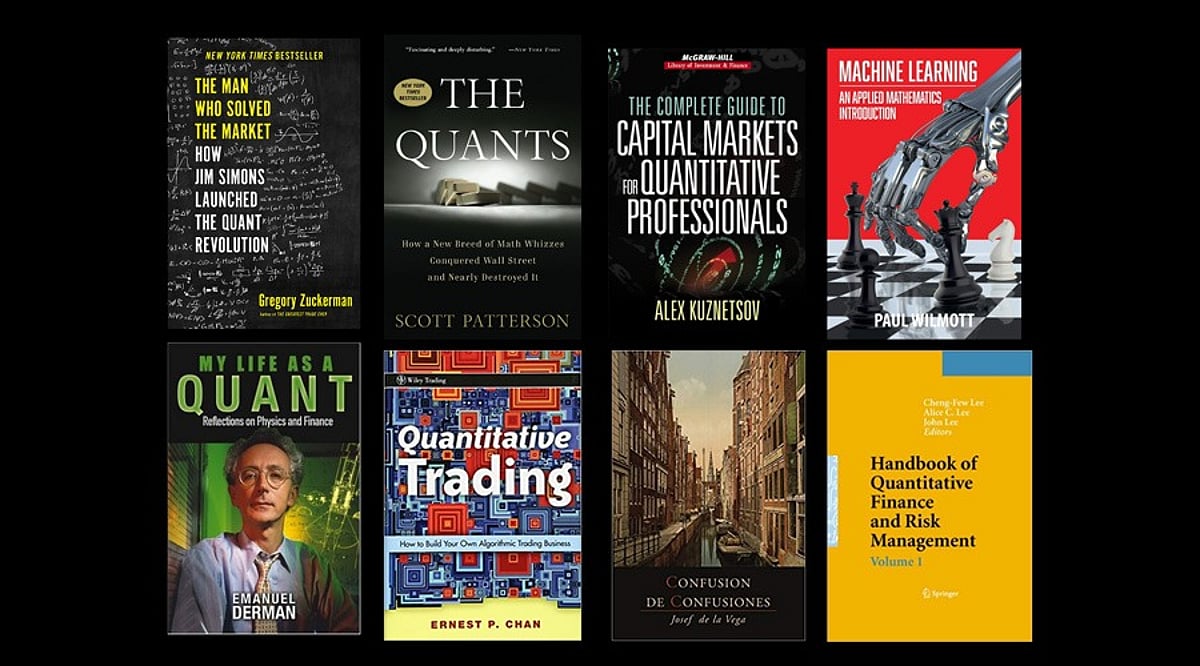
  • Essential Quant Finance Books for 2027 Candidates: A Structured Reading Plan

    Essential Quant Finance Books for 2027 Candidates: A Structured Reading Plan

    Quant finance hiring continues to intensify. Firms now expect candidates to demonstrate simultaneous proficiency in probability, coding, and market structure. While reading the right books won’t guarantee a job offer, they build the analytical framework that interviewers actually test. Here is a practical reading list for anyone preparing for quant research, trading, or risk roles in 2027.

    Why Read Quant Books?

    Online courses and video lectures are abundant, but books offer something short videos cannot: depth, structure, and worked-out logic that forces slow thinking. Quant interviews often revolve around problems first explained clearly in a handful of classic texts. Candidates who skip these books usually end up relearning the same ideas the hard way—through failed interviews.

    Foundation Books for Beginners

    Before jumping into stochastic calculus or trading strategies, every candidate needs strong basics in probability, statistics, and market structure.

    • ‘A First Course in Probability’ by Sheldon Ross – Covers combinatorics, random variables, and distributions with clear examples. This is the starting point for almost every quant interview guide.
    • ‘Options, Futures, and Other Derivatives’ by John Hull – The standard reference for derivatives pricing. Nearly every trading desk expects candidates to know this book well.
    • ‘Heard on The Street’ by Timothy Falcon Crack – A collection of real interview questions asked by banks and hedge funds, with detailed solutions.

    Mathematics and Statistics Deep Dive

    Once the basics are clear, candidates should move toward the mathematics that drives actual pricing models and risk systems.

    • ‘Stochastic Calculus for Finance’ (Volumes I and II) by Steven Shreve – A rigorous, step-by-step introduction to the mathematics behind option pricing.
    • ‘Statistical Inference’ by Casella and Berger – Builds a strong statistical toolkit, useful for research-heavy roles.
    • ‘The Concepts and Practice of Mathematical Finance’ by Mark Joshi – Bridges theory and practical pricing, written by someone who has worked on trading floors himself.

    Programming and Data Skills

    Modern quant roles require coding fluency alongside mathematics. Python and C++ dominate this space, and a few books stand above the rest.

    • ‘Python for Data Analysis’ by Wes McKinney – Written by the creator of pandas, this book teaches data manipulation skills used daily in quant research.
    • ‘C++ Design Patterns and Derivatives Pricing’ by Mark Joshi – Shows how object-oriented design connects with real pricing engines.
    • ‘Advances in Financial Machine Learning’ by Marcos López de Prado – A sharp, opinionated guide to building machine learning models for markets, popular with systematic trading firms.

    Interview Preparation Books

    Technical knowledge alone rarely wins an offer. Candidates also need to practice the exact style of questions asked in interviews.

    • ‘Quant Job Interview Questions and Answers’ by Mark Joshi, Nick Denson, and Andrew Downes – A widely used guide covering brainteasers, probability puzzles, and finance-specific questions.
    • ‘Frequently Asked Questions in Quantitative Finance’ by Paul Wilmott – Written in a conversational tone, this book clears up common confusions around derivatives and models.
    • ‘Green Book: Quantitative Finance Interviews’ by Xinfeng Zhou – Focused purely on interview problems, with worked solutions and hints.

    Advanced Reading

    Experienced candidates aiming for senior research or portfolio roles should look at these titles.

    • ‘Active Portfolio Management’ by Grinold and Kahn – A detailed guide to building and managing systematic strategies.
    • ‘Algorithmic Trading’ by Ernest Chan – Practical advice on building, testing, and running trading systems.
    • ‘The Volatility Surface’ by Jim Gatheral – A focused study of volatility modeling, useful for anyone targeting options desks.

    How to Build a Reading Plan

    A common mistake candidates make is trying to read every book on a list at once. A better approach is to build a plan across a few months.

    • Month 1: Focus on probability, statistics, and derivatives basics.
    • Month 2: Transition into stochastic calculus and programming, solving problems in addition to reading.
    • Month 3: Use this entire month for interview-style books, answering questions under time pressure.

    Only try more advanced or niche titles after you have a solid grasp of the basics.

    Final Words

    Quant finance is a fast-moving and ever-changing field, with increasing emphasis on machine learning and alternative data. Still, the core fundamentals covered in these books have held up for more than 20 years. Candidates aiming at the 2027 hiring cycle should see this list as a starting point and supplement it with recent research papers and market-specific readings. A good knowledge of fundamentals, combined with lots of practice, will give any candidate a significant competitive advantage.

    Frequently Asked Questions

    1. Which are the best quant finance books for beginners in 2027?

    Beginners should start with ‘A First Course in Probability’, ‘Options, Futures, and Other Derivatives’, and ‘Python for Data Analysis.’ These books explain core concepts that support advanced quantitative finance learning and interview preparation.

    2. Which books help prepare for quant finance interviews?

    ‘Heard on The Street,’ ‘Green Book: Quantitative Finance Interviews,’ and ‘Quant Job Interview Questions and Answers’ focus on probability, logical reasoning, mathematics, and technical interview questions commonly asked by financial firms.

    3. Why is Python important for quant finance careers?

    Python supports data analysis, financial modeling, automation, algorithmic trading, and machine learning. Learning Python through dedicated finance books helps candidates apply quantitative concepts using practical programming techniques valued across the industry.

    4. Should candidates study advanced quant finance books first?

    Starting with advanced books often creates learning gaps. Building knowledge through probability, statistics, derivatives, and programming first makes complex mathematical finance topics easier to understand and apply effectively.

    5. How long does it take to complete a quant finance reading plan?

    A focused three-month plan covering fundamentals, programming, and interview preparation provides a practical starting point. Advanced titles and research papers can be added gradually as technical knowledge and confidence grow.

  • 7 Leading Technology Stocks for July 2026: From Apple’s Ecosystem to IonQ’s Quantum Leap

    7 Leading Technology Stocks for July 2026: From Apple’s Ecosystem to IonQ’s Quantum Leap

    Overview

    Technology stocks continue to benefit from AI, cloud computing, data storage, and quantum computing advancements. The global tech industry is worth over $21 trillion, and investors are looking for companies with strong earnings and scalable business models. This July 2026, we highlight seven stocks with market caps above $1 billion and EPS growth over 20% in the past year.

    Top Technology Stocks for July 2026

    1. Apple Inc. (AAPL)

    Market Cap: $4.88 trillion | EPS Growth: 28.6%. Apple’s ecosystem of iPhone, Mac, iPad, Apple Watch, and services provides recurring revenue. AI integration into devices is expected to fuel the next growth phase.

    2. Sandisk Corporation (SNDK)

    Market Cap: $208.9 billion | EPS Growth: 370%. Sandisk leads in flash memory storage for consumer devices, AI servers, and enterprise systems, benefiting from increasing demand for high-speed storage.

    3. Dell Technologies Inc. (DELL)

    Market Cap: $253.66 billion | EPS Growth: 96.71%. Dell provides PCs, servers, storage, and IT infrastructure. Its data center solutions are critical for AI workloads.

    4. Seagate Technology Holdings plc (STX)

    Market Cap: $167.1 billion | EPS Growth: 51.4%. Seagate is a key supplier of hard disk drives for computers and data centers, important for global data creation.

    5. Western Digital Industries Ltd (WDI)

    Market Cap: $160.9 billion | EPS Growth: 267.47%. Western Digital specializes in HDDs and enterprise storage, driven by demand from data centers and cloud platforms.

    6. Everpure, Inc. (P)

    Market Cap: $22.73 billion | EPS Growth: 73.68%. Everpure offers enterprise data-storage and management solutions, focusing on all-flash storage for AI and analytics.

    7. IonQ, Inc. (IONQ)

    Market Cap: $13.1 billion | EPS Growth: 125.83%. IonQ works on trapped-ion quantum computers, providing cloud access. Though early-stage, it offers exposure to transformative quantum technology.

    Final View

    Apple provides ecosystem scale, Dell leads in AI infrastructure, and storage demand benefits Sandisk, Seagate, Western Digital, and Everpure. IonQ introduces high-growth quantum computing. These seven stocks cover the technology stack from devices to next-gen computing.

    Disclaimer: This article is for informational purposes only and does not constitute investment advice. Always conduct your own research before investing.

  • Market Crash vs. Market Correction: Key Differences Every Investor Should Know

    Market Crash vs. Market Correction: Key Differences Every Investor Should Know

    Understanding Market Corrections

    A market correction is a temporary decline of 10% to 20% from recent highs. It is often considered a healthy adjustment during long-term market growth cycles, allowing overvalued stocks to return to more reasonable levels.

    What Defines a Market Crash

    A market crash is a sudden and steep decline exceeding 20%, usually triggered by panic selling, economic shocks, or financial crises that severely affect investor confidence.

    Duration Differences

    Corrections generally recover within weeks or months, while crashes may take significantly longer depending on economic conditions and market sentiment.

    Investor Sentiment

    Corrections cause caution among investors, whereas crashes often trigger widespread fear, panic selling, and heightened market uncertainty globally.

    Common Causes

    Corrections typically stem from profit booking or overvaluation, while crashes result from recessions, geopolitical tensions, or systemic financial risks.

    Economic Impact

    Corrections rarely harm the broader economy, but severe crashes can affect employment, business investment, and consumer spending significantly.

    Investment Strategy

    Long-term investors often use corrections to buy quality stocks, while crashes require disciplined investing and avoiding emotional decisions.

    Historical Examples

    The 2020 COVID-19 sell-off resembled a crash, while several post-pandemic pullbacks were classified as market corrections instead.

    Key Takeaway

    Understanding the difference helps investors stay calm, manage risk wisely, and make informed decisions during volatile market conditions.

  • Bond Investing by Age: Strategies for Your 30s, 40s, 50s, and Beyond

    Bond Investing by Age: Strategies for Your 30s, 40s, 50s, and Beyond

    A bond investment strategy should not stay the same throughout your life. As your income, responsibilities, and financial goals change, the way you invest in bonds should change too. In your 30s, bonds can help bring stability to a portfolio that is largely focused on growth. By the time you retire, they often become a dependable source of regular income. Financial experts say the key is to make sure your bond investments match the stage of life you’re in.

    In Your 30s: Build Wealth, Stay Balanced

    For most people in their 30s, the focus is on building long-term wealth. Equities may drive growth, but bonds help reduce volatility and add stability to the portfolio. Experts suggest reinvesting the interest earned from bonds instead of spending it. For example, an investment of $5,000 at an illustrative yield of 9% can generate around $450 annually before tax. Reinvesting that income can gradually increase both your investment corpus and future returns. They also recommend avoiding the temptation to put all your money into a single high-yield bond. Spreading investments across bonds with different maturities and choosing issuers with strong repayment records can help lower risk.

    In Your 40s: Invest with Upcoming Goals in Mind

    By your 40s, financial priorities usually become more defined. Children’s education, home renovations, or other planned expenses often take center stage. This is where bonds can provide certainty. Experts recommend choosing bond maturities that line up with when you’ll need the money. If a major expense is expected in three or four years, investing in bonds maturing around the same time can reduce the need to rely on market conditions. Holding a mix of short-, medium-, and long-term bonds can also improve diversification.

    In Your 50s: Start Building Retirement Income

    As retirement draws closer, preserving capital becomes as important as growing it. Many financial planners recommend creating a bond ladder by investing in bonds that mature at different intervals. This provides regular access to funds while reducing interest-rate risk. For example, assuming that an investor holds $500,000 in bond investments at an assumed average interest rate of 8.5%, they could earn close to $42,500 annually or about $3,540 monthly, even without taking into account tax implications. A fixed-income portfolio for retirement could include government bonds, highly rated corporate bonds, fixed deposits, and other fixed-income instruments according to personal risk appetites.

    After Retirement: Bonds Help with Your Cash Needs

    Post-retirement, bonds usually serve the purpose of regular income generation to cover daily expenses, healthcare costs, insurance premiums, and more. However, experts caution against putting the entire retirement corpus into one asset class. A balanced portfolio should include liquid funds to cover about a year’s expenses, bonds that generate regular payouts over several years, and some equity exposure to help keep pace with inflation. The right bond strategy is not about chasing the highest returns. It is about making your investments work for your financial needs at every stage of life.

  • Fastest Payment Apps for Instant Transfers: 2026 Ranking and Comparison

    Fastest Payment Apps for Instant Transfers: 2026 Ranking and Comparison

    When it comes to instant money transfers, speed, fees, and the underlying payment network matter more than brand familiarity. This ranking evaluates the top 10 payment apps based on real transfer times, transparent pricing, and the infrastructure that powers each transaction. Whether you’re splitting a bill domestically or sending remittances abroad, the right app can save you time and money.

    How This Ranking Works

    We compared each app on four criteria: typical delivery time for an instant transfer, the fee charged for that speed, the payment rail used (such as RTP, FedNow, or card networks), and payout flexibility (bank, card, cash, mobile wallet). The order balances speed with reliability and total cost, so a transparently priced app like Wise can rank above a faster but pricier option.

    Why Some Apps Transfer Money Instantly

    Real speed comes from the rails behind the app. In the US, RTP (since 2017) and FedNow (since 2023) enable near-instant settlement. Zelle uses these networks, which is why it settles in seconds at no cost. Venmo, PayPal, and Cash App rely on card networks for instant withdrawals, generating their fees. International apps face an extra hurdle: money leaves instantly but must land on a local rail like India’s UPI or the Philippines’ InstaPay, which sets the final delivery time.

    Top 10 Fastest Payment Apps Compared

    1. Zelle

    Zelle offers instant bank-to-bank transfers at no cost by settling directly over RTP and FedNow. Money moves from one bank account to another, not through a wallet. Payments typically land in seconds and cannot be reversed. Best for trusted domestic transfers.

    2. Wise

    Wise stands out for pricing transparency. It uses the real mid-market exchange rate and routes payments through local banks in each country. Ideal for larger international transfers where exchange-rate margins often outweigh stated fees.

    3. PayPal

    PayPal is versatile, supporting online purchases and personal transfers. Instant withdrawals go to eligible cards and bank accounts, with buyer protection on qualifying purchases. Costs increase for speed or cross-border transactions.

    4. Venmo

    Venmo excels at everyday peer-to-peer payments like splitting bills. Instant transfers carry a fee; standard transfers are free but slower. Note that personal payments lack purchase protection.

    5. Cash App

    Cash App provides quick access to funds with instant withdrawals to a linked debit card. Fees vary by amount. Standard transfers are free but take longer.

    6. Remitly

    Remitly focuses on cross-border transfers. Express delivery is fast; Economy costs less. Recipients can receive via bank deposit, cash pickup, or mobile wallet, depending on the country.

    7. Xoom

    Xoom, a PayPal service, covers many countries. Money can be sent to bank accounts, cash pickup locations, or mobile wallets. Pricing depends on payment method and destination.

    8. Western Union

    Western Union has the largest agent network, reaching hundreds of countries. Useful when the recipient lacks banking access. Speed and price vary by destination.

    9. TapTap Send

    TapTap Send focuses on corridors into Africa and South Asia with fast transfers. Cost is typically embedded in the exchange rate rather than a visible fee.

    10. Revolut

    Revolut combines instant transfers between users, currency exchange, and international payments in one multi-currency app. Best for frequent cross-border senders.

    Security and Buyer Protection Comparison

    Zelle and most bank-to-bank transfers finalize instantly with no chargeback path, so use only with trusted parties. PayPal and Venmo protect goods-and-services payments but not personal ones. International apps add identity checks on larger transfers, which can delay an otherwise instant transaction.

    Things to Know Before Choosing

    • Instant transfers almost always cost more than standard ones.
    • Some banks have not yet upgraded to RTP or FedNow.
    • Transfer limits depend on account verification level.
    • On international transfers, the exchange-rate margin often exceeds the stated fee.

    How to Choose the Best App for Instant Transfers

    For domestic friend payments, Zelle wins on cost and speed. For international remittances, Wise offers the best pricing clarity, while Remitly provides delivery flexibility. For recipients without a bank account, Western Union and Xoom are practical picks. The right app matches the corridor, not the headline.

    FAQs

    1. Which payment app offers the fastest instant transfers?

    It depends on the route. Zelle is near-instant for domestic bank transfers, while Remitly and Wise are quick for international transfers.

    2. Are instant money transfers always free?

    No. Many apps charge a fee for instant withdrawals; standard transfers are usually free.

    3. Why do some instant transfers take longer?

    Speed can be affected by bank processing, payment networks, security checks, and whether the recipient bank supports instant settlement.

    4. Which app is best for international instant transfers?

    Wise, Remitly, Xoom, and Western Union are popular for fast cross-border deliveries with broad coverage.

    5. What should I consider before choosing a payment app?

    Compare transfer speed, fees, supported countries, payout methods, security features, and transfer limits. The best app matches your destination, budget, and urgency.

  • Netflix Stock Tumbles 7% as Wall Street Questions Growth After Q3 Revenue Miss

    Netflix Stock Tumbles 7% as Wall Street Questions Growth After Q3 Revenue Miss

    Netflix shares plunged 7.26% on Friday, closing at $68.95, after the streaming giant issued a third-quarter revenue forecast that fell short of Wall Street expectations. The disappointing outlook has reignited concerns about the company’s growth trajectory and investor confidence.

    Over the past 12 months, Netflix stock has lost approximately 46% of its value. Despite multiple earnings reports and strategic initiatives, investors have yet to see a clear path back to faster growth.

    Analysts See Few Near-Term Catalysts

    Bank of America analyst Jessica Reif Ehrlich described Netflix as being in ‘no man’s land,’ noting that the earnings report offered little for bullish investors while providing ample ammunition for bears. She suggested that an acquisition could serve as a potential catalyst, pointing to NBCUniversal as a possible target following Comcast’s plans to spin off the division. However, Netflix has not announced any such move.

    LightShed Partners analyst Rich Greenfield echoed the sentiment, stating that investors now question whether Netflix can return to stronger growth and view the company as having moved beyond its main expansion phase. ‘This is fundamentally investors believing that Netflix has gone ex-growth,’ he said, adding that the market currently has ‘no patience’ for the company.

    Transparency Concerns and Limited Guidance

    Netflix also announced it will publish its ‘What We Watched’ report once a year instead of twice, raising concerns about reduced transparency around engagement and user activity. Management offered limited details on how it plans to address slower growth, leaving analysts to focus on pricing, advertising, live events, and account-sharing tools as potential levers.

    Some Analysts Still See Long-Term Support

    William Blair analysts maintained a more optimistic view, citing Netflix’s ability to raise prices while retaining customers, as well as its growing advertising business, live sports programming, and paid sharing initiatives. They believe these tools can support double-digit growth over the long term, though they acknowledged the lack of a near-term catalyst. The firm suggested that investors could consider accumulating shares during the pullback but warned that a recovery may require patience.

    Netflix now faces pressure to deliver stronger results in upcoming reports. Wall Street will closely monitor advertising sales, viewer engagement, pricing changes, and returns from live programming as key indicators of the company’s future performance.

  • AI and FinTech Are Transforming Banking: Personalization, Speed, and Proactive Support

    AI and FinTech Are Transforming Banking: Personalization, Speed, and Proactive Support

    From Transactions to Relationship Management

    Traditional banking operated on a transaction model: customers visited branches, filled out paperwork, and received products. Today, the focus has shifted to relationship management. Financial institutions and FinTechs leverage data on earnings, spending, savings, and financial goals to deliver personalized solutions that adapt to each customer’s life stage.

    Personalization for Everyday Life

    Data analytics enables banks to uncover patterns in spending habits, income cycles, and financial plans. This leads to:

    • Personalized credit card offers based on actual spending behavior
    • Savings plans aligned with monthly cash flow
    • Investment options tailored to risk tolerance and time horizons

    Customers no longer face a fixed list of products; they receive advice that feels relevant to their unique situation.

    Support That Works When You Need It

    Customer support has evolved dramatically. Chatbots and virtual assistants handle routine tasks—checking balances, recent transactions, blocking cards, or resetting passwords—around the clock. For complex issues, the system collects details and transfers them to a human agent who has full context, enabling faster resolutions.

    Payments That Are Fast and Secure

    AI and FinTech have upgraded payment and money transfer systems. Biometric authentication (face scan, voice check, fingerprint) makes access simple and secure. Fraud detection systems analyze each transaction in real time, blocking risky moves while minimizing false alarms. FinTech platforms embed payments into daily activities—online shopping, travel bookings, ride apps, and food orders—making banking seamless.

    Banking That Helps You Stay on Track

    Modern banking is proactive. Systems can:

    • Warn about unusual spending or potential overspending
    • Suggest budget adjustments or better loan terms based on cash flow
    • Offer insurance or savings ideas when life changes occur (new job, marriage, child, home purchase)

    Banks are transitioning from account holders to financial partners that guide customers through different life stages.

    The Role of FinTech and Neobanks

    FinTech companies and neobanks have accelerated innovation in user experience, speed, and transparency. Key features include:

    • Account opening in minutes with minimal documentation
    • Real-time updates, intuitive interfaces, and easy controls
    • Payment-splitting services, quick loans, and transparent pricing

    Open Banking and Customer Control

    Open Banking regulations and APIs allow FinTechs to access consumer data (with consent) and provide deeper analysis. Benefits include:

    • Aggregating accounts from multiple banks in one place
    • Comparing loans, credit cards, and savings across institutions
    • Easy account or loan transfers

    Customers now have greater control and visibility, enabling them to choose better options and switch services when needed.

    What Banking Will Look Like Next

    In the coming years, banking will become highly predictive and automated. Systems will anticipate customer goals and actions, managing cash, savings, credit, and investments with minimal human intervention. Tasks like refinancing or adjusting investment strategies may happen automatically. Expect faster onboarding, personalized advice in local languages, and banking features integrated into shopping, UPI, and travel apps.

    Conclusion

    Artificial Intelligence and FinTech are transforming banking from a product-oriented industry to a customer-centric one. The future promises speed, personalization, and proactive support, delivering a smoother, more efficient experience for all customers.

  • Wall Street Slips as Chip Rout Deepens, Netflix Forecast Disappoints, and Oil Price Worries Return

    Wall Street Slips as Chip Rout Deepens, Netflix Forecast Disappoints, and Oil Price Worries Return

    The S&P 500 fell on Friday as investors reduced exposure to semiconductor stocks. The index dropped 0.6%, while the NASDAQ Composite lost 1%. The Dow Jones Industrial Average traded near the flatline.

    Wall Street also faced pressure from Netflix, higher oil prices, and fighting between the United States and Iran. The major indexes moved toward weekly losses after a reversal in stocks linked to artificial intelligence spending.

    Chip Stocks Extend Weekly Selloff

    Semiconductor shares led the decline. NVIDIA, Advanced Micro Devices, Applied Materials, Lam Research, Intel, and KLA traded lower. The Philadelphia Semiconductor Index fell close to 2% and moved deeper into bear-market territory from its late-June peak.

    The index has lost about 11% this week and nearly 24% from its record high. Investors took profits after a three-month rally that lifted the chip gauge more than 100%. The VanEck Semiconductor ETF headed for its third weekly loss in four weeks.

    Fresh doubts over AI spending added pressure. Chinese startup Moonshot AI introduced Kimi K3, a large open-weight model that it says can compete with leading US systems. The launch raised questions over whether costly AI infrastructure plans will deliver the returns investors expect.

    Strategists at BBH said investors are ‘increasingly questioning the sustainability of the ongoing AI capital expenditure boom.’ Barclays took a less cautious view and said the pullback could create ‘more attractive entry points’ for long-term investors.

    Netflix Drops as Forecast Disappoints

    Netflix shares fell about 9% after its third-quarter forecast came in below Wall Street estimates. The decline weighed on the communication services sector and made Netflix one of the largest S&P 500 losers.

    Intuitive Surgical also dropped more than 11%. The medical device company kept its procedure-growth forecast unchanged and warned that insurance changes may delay care for some patients.

    Meanwhile, Apple shares edged higher while NVIDIA fell, allowing Apple to move ahead of the latter as the most valuable US company. NVIDIA had held the top position since late June last year.

    Meanwhile, the CBOE Volatility Index rose above 18, its highest level in more than a week. Declining stocks outnumbered gainers on both the New York Stock Exchange and the NASDAQ.

    Oil and Inflation Risks Return

    Oil prices rose as fighting between the United States and Iran widened across the Middle East. West Texas Intermediate traded above $81 per barrel, while Brent crude moved above $86.

    Kuwait said Iran attacked a power and water desalination plant. US Central Command said it completed a sixth straight night of strikes on Iranian military targets. Iran later claimed attacks on US forces in Syria and Bahrain.

    The conflict disrupted energy flows through the Strait of Hormuz, a route that handles about one-fifth of global oil traffic. Higher oil prices renewed concerns over inflation and future Federal Reserve policy.

    Cleveland Fed President Beth Hammack said business leaders are asking whether the central bank should act against inflation. She wrote that companies face pressure from energy, insurance, supply chains, and AI data center construction. Hammack added that ‘persistently high inflation is the bigger concern.’

    Consumer sentiment improved to 54.4, while one-year inflation expectations fell to 4.2%. Still, survey director Joanne Hsu said the rise may be hard to sustain if gas prices increase again.

    With semiconductor stocks under pressure, earnings disappointments weighing on sentiment, and geopolitical risks driving oil higher, investors remain focused on the outlook for inflation and Federal Reserve policy.