Category: Finance

  • PayPal Board Rejects $53 Billion Takeover Proposal as Too Low, Seeks Improved Offer

    PayPal Board Rejects $53 Billion Takeover Proposal as Too Low, Seeks Improved Offer

    PayPal Holdings is currently reviewing a $53 billion takeover bid from Stripe and Advent International. The proposal values the payments giant at $60.50 per share, but the board has indicated that the price is too low. Directors are now deciding whether to enter formal negotiations or push for a significantly higher valuation.

    The review comes as PayPal faces slower growth, fierce competition, and a series of leadership changes. Once valued at nearly $360 billion during the 2021 digital commerce boom, the company’s market cap has dropped sharply as rivals have gained ground in payments and digital wallets. Investors are watching closely to see if a revised offer can unlock more value from PayPal’s assets, including Venmo and its massive global consumer network.

    Board Questions the Current Takeover Bid

    According to sources familiar with the talks, the board does not support the offer in its current form. Some directors question whether PayPal should even engage in negotiations at $60.50 per share, believing that the company’s latest turnaround plan could justify a higher valuation. Stripe and Advent may have room to improve their bid, having secured $17 billion in equity commitments and arranged approximately $50 billion in bank financing, giving them capacity to raise the price.

    PayPal has not commented publicly on the takeover discussions. Chief Executive Enrique Lores, who took charge in March after the company replaced Alex Chriss, has also remained silent on the proposal. The leadership change is part of another turnaround effort aimed at restoring growth.

    Slower Growth Adds Pressure on PayPal

    PayPal built its reputation on online checkout and digital payments, but rivals such as Apple, Google, Samsung, Stripe, and Affirm have introduced new payment tools and banking services. PayPal has been slower to move into mobile payments, digital banking, and artificial intelligence. Apple Pay now leads PayPal in the U.S. digital wallet market, holding a ten-point advantage according to PYMNTS Intelligence. PayPal also trails several competitors in agentic commerce, where software can complete purchases on behalf of consumers.

    Growth has weakened across Venmo and other key services. Buy now, pay later products have not delivered the expected momentum. Meanwhile, PayPal’s customer base has flattened, so management now focuses more on earnings from existing users. The company admitted in February that “the pace of change and execution was not in line” with board expectations, as it announced yet another leadership change.

    Earnings May Shape the Next Move

    PayPal’s upcoming quarterly results could significantly influence both the board and the bidders. Weak results might increase pressure to negotiate, while stronger figures could support the board’s push for a higher price and improve its bargaining position. Analysts see few likely rival bidders. Morgan Stanley called the Stripe and Advent proposal the “most credible path to value realisation,” citing strong wallet competition and PayPal’s mature customer base.

    Deal advisers are also studying PayPal’s separate businesses, including Venmo, merchant checkout services, and more than 400 million consumer accounts, to assess whether these assets carry more value together or through separate sales. The board must now compare the offer with its turnaround targets. Stripe and Advent must decide whether a higher bid can win support. PayPal’s earnings report will provide the next major test for both sides.
  • Goldman Sachs Warns Brent Crude Could Surge Past $120 on Strait of Hormuz Disruptions

    Goldman Sachs Warns Brent Crude Could Surge Past $120 on Strait of Hormuz Disruptions

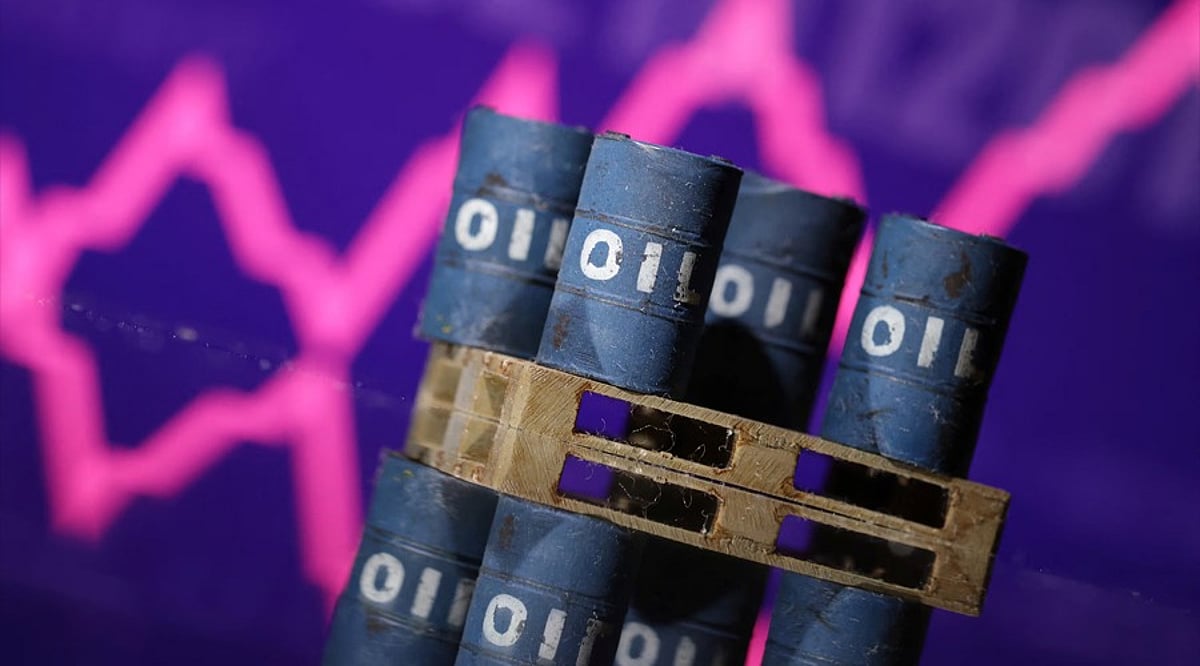
    Brent crude oil prices could surge above $120 per barrel in the fourth quarter if disruptions in the Strait of Hormuz persist, according to Goldman Sachs. The investment bank, however, clarified that such a sharp rally is not its base-case expectation.

    The warning comes as global oil markets remain on edge amid renewed geopolitical tensions in the Middle East. Brent crude recently climbed above $91 a barrel following fresh hostilities involving the US and Iran, raising concerns over potential supply disruptions.

    Shipping Routes Under Pressure

    Market sentiment has also been affected by threats from Iran-backed Houthi rebels in Yemen to impose a blockade on Saudi oil shipments. The warning has added to concerns over the security of key energy routes.

    With disruptions at the Strait of Hormuz, the Red Sea has become an increasingly important alternative for transporting crude from the Persian Gulf to global markets. Any disruption along this route could further tighten supplies and push prices higher.

    In a note dated July 20, Goldman Sachs analysts said escalating tensions in the region and a sharp decline in Persian Gulf oil flows had already contributed to the recent rebound in crude prices.

    Base Case Still Points to Lower Prices

    Despite highlighting the upside risks, Goldman Sachs maintained that its central forecast assumes geopolitical tensions gradually ease. Under that scenario, the bank expects Brent crude to average around $80 per barrel in the fourth quarter and decline to about $75 per barrel next year.

    The analysts cautioned, however, that risks remain skewed to the upside because of ongoing shipping disruptions through the Strait of Hormuz and the possibility of further interruptions in the Red Sea.

    China Demand May Limit the Rally

    Goldman Sachs noted that declining global oil inventories during the second quarter have left the market more exposed to supply shocks. At the same time, weaker crude imports by China and greater demand elasticity could help contain any sustained price spike.

    For investors seeking protection from prolonged geopolitical uncertainty linked to the Middle East and Russia, the bank recommended taking a long position in the European diesel timespread between December 2026 and March 2027.

    According to the analysts, diesel markets were already tight before the latest conflict, with continued Ukrainian attacks on Russian refineries, hurricane risks, extreme summer temperatures and refinery maintenance delays adding to supply concerns.

    Brent crude futures were last trading at $88.54 per barrel. Earlier this year, prices briefly surged above $126 a barrel during the initial phase of the US-Iran conflict.

  • Indian Stock Market Opens Lower Amid Middle East Tensions: Nifty Down 0.09%, Sensex Falls 91 Points

    Indian Stock Market Opens Lower Amid Middle East Tensions: Nifty Down 0.09%, Sensex Falls 91 Points

    Indian equity markets opened in the red on Tuesday as escalating tensions between the US and Iran weighed on investor sentiment. The Nifty 50 opened 22.45 points (0.09%) lower, while the Sensex declined by 91.25 points. In contrast, the Bank Nifty managed a modest gain of 0.14% at the open.

    On Monday, the Sensex had fallen 442.93 points (0.57%) to settle at 77,708.52, and the Nifty 50 dropped 95.80 points (0.39%) to close at 24,238.50. The Indian rupee opened at Rs. 96.41 against the US dollar on Tuesday, compared to the previous close of Rs. 96.45.

    Midcap stocks gained 0.6%, while smallcaps ended marginally positive. Foreign Institutional Investors (FIIs) sold Rs. 1,121 crore on July 20, but Domestic Institutional Investors (DIIs) absorbed the outflow, buying Rs. 1,312 crore.

    Sensex Outlook

    Technically, the Sensex formed a recovery candle after a gap-down open, indicating buying interest emerging at lower levels. Shrikant Chouhan, Head of Equity Research at Kotak Securities, noted: “The key levels to watch are 76,800 on the downside and 78,300 on the upside. As long as these levels remain intact on a closing basis, stock-specific action is likely to dominate. A close below 76,800 could open the doors for a decline towards 76,200, whereas a sustained move above 78,300 may pave the way for a retest of 78,700. The preferred strategy is to reduce weak long positions in the 78,300-78,600 zone, while remaining selective in accumulating quality stocks on declines.”

    Nifty 50 Outlook

    The Nifty 50 formed a small-bodied candle on the daily chart and closed within the previous session’s range, reflecting continued indecision. Nagaraj Shetti, Senior Technical Research Analyst at HDFC Securities, commented: “A small green candle was formed on the daily chart that closed beside the long bull candle of Friday. Technically, this market action indicates an inside day type candle formation which is reflecting a range bound movement in the market with weak bias. The negative global sentiment has not impacted much on our markets so far.”

    Bank Nifty Outlook

    On Monday, the Bank Nifty formed a small-body bullish candle with wicks on either side, highlighting intraday indecision. Analysts noted: “Going ahead, the immediate resistance for Bank Nifty is placed in the 58,300-58,400 zone. Any sustainable move above this zone could result in Bank Nifty extending its pullback towards 58,800, followed by 59,200 in the short term. On the downside, the immediate support for Bank Nifty is placed in the 57,600-57,500 zone.”

    Disclaimer: This article is for informational purposes only and does not constitute investment advice. Readers should conduct their own research before making any investment decisions.

  • MCX Gold Rises 0.65% to ₹1,42,300 as Brent Crude Drops Below $90

    MCX Gold Rises 0.65% to ₹1,42,300 as Brent Crude Drops Below $90

    Gold prices on the Multi Commodity Exchange (MCX) climbed on July 21, driven by a decline in crude oil prices and reports of diplomatic efforts to de-escalate tensions in the Middle East. August gold futures rose 0.65% to ₹1,42,300 per 10 grams, while September silver futures gained 1.09% to ₹2,20,775.

    Brent crude oil futures fell 0.80% to $88.51 per barrel, slipping below the $90 mark. West Texas Intermediate (WTI) crude edged down 0.46% to $82.10 per barrel. The drop in oil prices eased inflation concerns, supporting demand for gold as a safe-haven asset.

    According to the CME FedWatch Tool, traders now see a 64% probability of a September rate hike by the US Federal Reserve. This expectation continues to influence precious metals markets.

    Domestic Gold Prices

    In India, 24K gold rose by ₹76 to ₹1,44,220 per 10 grams, while 22K gold advanced by ₹70 to ₹1,32,200. Prices remained largely uniform across major cities: Mumbai and Kolkata quoted ₹1,44,220 for 24K gold, Delhi ₹1,44,370, and Chennai ₹1,44,220.

    US Gold Prices

    In international markets, spot gold climbed 0.9% to $4,042.69 per ounce, and US gold futures for August delivery rose 0.8% to $4,047.40. The gains came as investors assessed diplomatic efforts to ease US-Iran tensions, which could reduce oil-driven inflation risks.

    Spot silver gained 2.2% to $57.67 per ounce, platinum rose 0.8% to $1,607.20, and palladium gained 0.8% to $1,263.73.

    Key Levels to Watch

    “It looks like gold is trying to find a base somewhere around this $4,000 level and is going to try to re-engage the upside from there,” said Ilya Spivak, head of global macro at Tastylive. “These headlines from the Middle East seem to have some degree of knock-on, though it is increasingly only being paid attention to in a passing kind of way.”

    Internationally, gold has support at $3,989 and $3,945, with resistance at $4,040 and $4,074 per troy ounce. Silver has support at $56.20 and $55.50, with resistance at $57.70 and $58.50 per troy ounce.

    On the MCX, gold has support at ₹1,40,850 and ₹1,40,400, with resistance at ₹1,42,000 and ₹1,43,650. Silver has support at ₹2,16,000 and ₹2,14,400, with resistance at ₹2,20,000 and ₹2,23,100.

  • HDFC Bank Shares Drop to ₹776.55 After Q1 Results: Margin Pressure Overrides Profit Growth

    HDFC Bank Shares Drop to ₹776.55 After Q1 Results: Margin Pressure Overrides Profit Growth

    HDFC Bank shares came under intense selling pressure on Monday after the country’s largest private lender announced its June quarter (Q1 FY27) results. The stock dropped to ₹776.55, extending losses as investors reacted to weaker-than-expected profitability despite steady business growth.

    Though the bank reported better performance in profitability, loan growth, and deposits, it was under constant pressure on net interest margins (NIMs). The negative market sentiment affected other private banks, including Axis Bank and Kotak Mahindra Bank, which also saw sharp declines.

    Business Growth Remains Strong

    During the quarter, HDFC Bank reported a standalone net profit of ₹19,060 crore, recording year-on-year growth of nearly 5%. Its net interest income increased to approximately ₹33,535 crore, driven by robust credit demand in the retail and corporate segments. Gross advances stood at ₹30.61 lakh crore, while deposits reached ₹31.68 lakh crore, reflecting the performance of its core banking business.

    However, the most disheartening figure was its NIM of 3.26%, which continued to decline due to high funding costs and intense deposit competition.

    Margins Continue to Dominate Investor Concerns

    Although HDFC Bank delivered healthy business growth, investors remained focused on profitability. The banking sector is currently facing higher funding costs, aggressive competition for deposits, and lower lending yields following interest-rate changes. These factors have made margins one of the most closely watched indicators for banking stocks.

    Private Banking Stocks Extend Selloff

    HDFC Bank wasn’t the only one facing troubles. The share prices of Axis Bank and Kotak Mahindra Bank also fell after the release of their quarterly earnings results. ICICI Bank outperformed due to its strong operations and margins.

    Brokerages Continue to See Long-Term Value

    Despite the sharp correction, most brokerage firms have maintained an upbeat outlook on HDFC Bank. Analysts say the lender still benefits from structural advantages, such as a diversified credit book, a solid balance sheet, strong asset quality, and an industry-leading deposit franchise. Several brokerages expect margins to improve gradually as funding costs moderate and the benefits of lower interest rates begin to flow through the balance sheet.

    What Should Investors Watch Next?

    Over the next few quarters, HDFC Bank is expected to face a critical stretch. Investors will be tracking margin recovery, deposit mobilization, and management commentary on funding costs. Meanwhile, Reserve Bank of India policy decisions and the speed of interest rate changes will shape profitability across the banking sector.

    Market Outlook

    Despite Monday’s sharp dip, analysts remain constructive on HDFC Bank’s long-term outlook. The lender continues to show steady business momentum, strong asset quality, and a solid balance sheet. For the near term, the stock may remain reactive to movements in NIMs and funding costs. If margins improve, investor comfort could return and help the share price recover.

    FAQs

    Why did HDFC Bank shares fall after the Q1 results?

    Investors were disappointed by continued pressure on net interest margins despite healthy profit growth, loan expansion and stable deposit mobilisation during the quarter.

    What was HDFC Bank’s net profit in Q1 FY27?

    HDFC Bank reported a standalone net profit of around ₹19,060 crore, registering nearly 5% year-on-year growth in the June quarter.

    What is worrying investors about HDFC Bank?

    The biggest concern remains declining net interest margins, driven by higher funding costs, intense deposit competition and changing interest-rate conditions.

    Are analysts still bullish on HDFC Bank stock?

    Yes. Most brokerages have retained positive ratings, citing strong fundamentals, healthy asset quality, robust loan growth and long-term earnings potential.

    What should investors watch in the coming quarters?

    Investors should monitor margin recovery, deposit growth, funding costs, RBI policy decisions and management’s outlook on future profitability and business growth.

  • FTSE 100 Dips 34 Points Amid Middle East Turmoil; Brent Crude Surpasses $90

    FTSE 100 Dips 34 Points Amid Middle East Turmoil; Brent Crude Surpasses $90

    The FTSE 100 opened 34.07 points lower at 10,566.30 on Monday, as continued US airstrikes against Iran and expanding Iranian retaliation across the Gulf region deepened risk-off sentiment. Brent crude futures surged 2.62% to $90.41 per barrel, while US West Texas Intermediate (WTI) advanced 2.39% to $84.36 per barrel. Sterling edged lower to $1.3452 against the US dollar.

    Gainers and Losers

    On the upside, Computacenter led gains with a 3.49% rise to £4,740, followed by Entain (+1.61%), Auto Trader (+0.94%), BP (+0.81%), JD Sports Fashion (+0.76%), and Convatec Group (+0.74%). On the downside, Coca-Cola Europacific Partners fell 1.02%, Spirax Group slipped 1.15%, Unilever dropped 1.40%, Reckitt Benckiser eased 1.14%, Rio Tinto declined 0.83%, and Next edged 0.37% lower.

    Political Shake-Up: Andy Burnham Poised to Become UK Prime Minister

    Andy Burnham, the former mayor of Greater Manchester and new Labour Party leader, is expected to succeed Keir Starmer as Britain’s seventh prime minister in the last decade. Burnham returned to Parliament last month after winning a special election and was sworn in on July 12, shortly after Starmer announced his resignation. Starmer will formally step down during a meeting with King Charles III.

    Ryanair Profit Slumps on Fuel Costs

    Ryanair reported a 36% slump in pre-tax profit to €593 million for the three months to June, as rising jet fuel prices driven by the Iran conflict took a toll. The airline noted that the cost of 20% of unhedged fuel more than doubled to $150 per barrel, pushing operating costs up 11% to €3.8 billion. Although traffic rose 6%, lower fares caused revenue to dip 1% to €4.3 billion.

    Craneware Cyberattack Shakes Shares

    Craneware shares fell as much as 8% after the healthcare software firm disclosed a cyberattack involving unauthorized access to a subset of its data environment. Employee data and a portion of customer and partner records were accessed and exfiltrated. Analysts at Panmure Liberum warned that consistency in breach reporting is critical to avoid regulatory penalties.

    Big Yellow Group Invests in Automation

    Big Yellow Group said it is increasing investment in automation and energy efficiency to reduce headcount and staff costs amid rising national insurance and minimum wage pressures. CEO Jim Gibson noted the move allows the company to avoid replacing certain leavers. Group revenue edged up 3% to £53.2 million, though the operating environment is expected to remain challenging until autumn.

    Global Market Overview

    US futures were mixed early Monday, with S&P 500 futures up 0.04% and Nasdaq-100 futures up 0.14%, while Dow futures dipped 59 points. Asian markets saw sharp declines: Tokyo’s Nikkei 225 fell 4.03%, China’s Shanghai Composite dropped 0.85%, and South Korea’s Kospi slid 4.46%. Hong Kong’s Hang Seng bucked the trend with a 2.25% gain. Indian indices Nifty 50 and Sensex declined 0.42% and 0.53%, respectively.

    This article is for informational purposes only and does not constitute financial advice. Please conduct your own research before making investment decisions.

  • ImVivo Review: A Deep Dive into the Technology-First Multi-Asset Trading Platform

    ImVivo Review: A Deep Dive into the Technology-First Multi-Asset Trading Platform

    Most platform reviews lead with adjectives. A more useful ImVivo review starts with a harder question: when you strip away the framing, does the technology, the security, and the structure actually stand up? ImVivo describes itself as a home for informed, structured multi-asset trading, and for an analytics-minded reader, the framing only matters if the engineering underneath earns it. What follows works through the stack, the trust signals, and the way the platform is organized.

    Reading the Technology, Not the Tagline

    The engine here is branded “The Edge,” and it is where live pricing, charting, technical indicators, and configurable dashboards converge into one workspace. The number of features isn’t the thing to fixate on. The sharper test is how efficiently a platform turns a noisy stream of market data into a picture a person can act on. On that measure, ImVivo reads as competent rather than gimmicky.

    Reporting is where that shows. Rather than leaving users to assemble their own summaries, the platform produces rolling portfolio breakdowns and performance analytics, with adaptive models tightening the output as conditions change. For a reader who cares about method, that adaptive layer is more interesting than any static indicator, because it means the analysis keeps responding to the market rather than sitting still.

    Orders clear on low-latency infrastructure, and the interface stays coherent across laptop, tablet, and phone—so nothing breaks when a session moves from desk to pocket. None of these pieces is rare in isolation. The part worth noting is the integration, with data, analysis, and reporting living together instead of being welded from separate tools. As individual participation in markets keeps climbing, that consolidation has moved from a nicety to something users simply expect.

    Where Legitimacy Is Won

    For a discerning audience, an honest ImVivo review lives or dies on the trust signals, because that is the part marketing cannot fake for long. On paper, the stack is solid: 256-bit encryption, two-factor authentication, and cold storage, with ongoing monitoring and tightened transaction controls sitting underneath. These are not exotic selling points—they are the defaults a serious operator is expected to build in. The reassuring thing is that ImVivo presents them as defaults rather than dressing them up as innovations. The tiered account model and the steady reporting cadence add a second kind of credibility: transparency. Users can see exactly where they stand rather than being asked to trust a sealed box.

    Structure That Signals Intent

    The asset menu is genuinely wide. Digital assets sit in the same environment as currencies, commodities, public companies, market benchmarks, and store-of-value holdings, which lets a user read several markets side by side rather than in scattered fragments across apps. The account ladder climbs from Bronze to VIP, with education, analyst contact, and monitoring deepening at each step. Help is reachable through several channels, and the deliberate pairing of human guidance with the technology is one of the platform’s more telling design decisions. For readers who treat structure and support as evidence of intent, that combination says as much about seriousness as any single tool on the dashboard.

    Funding sits alongside all of this, and for a legitimacy-minded reader, it is the quiet part that matters most. Deposits and withdrawals are laid out as a defined, repeatable process, and a platform that makes retrieving money as clear as depositing it earns a kind of trust no feature list can substitute for.

    The Verdict

    Weighed on its engineering rather than its language, ImVivo reads as a professional, technology-forward multi-asset platform—not a thin skin stretched over a price chart. The real-time data layer, the security posture, and the tiered structure all point to something designed for users who prize order over noise. The caveats are honest ones: the entry tiers can feel light until you build up, and the fullest conditions live higher on the ladder. Even so, this ImVivo review lands on a favorable read: an environment that holds up to scrutiny rather than one that only sounds good in a pitch deck.

  • Wall Street Futures Gain Despite US-Iran Tensions as Nasdaq Leads Tech Rally

    Wall Street Futures Gain Despite US-Iran Tensions as Nasdaq Leads Tech Rally

    U.S. stock index futures edged higher on Monday, with investors setting aside renewed military tensions between the United States and Iran as optimism over diplomatic engagement and resilient corporate earnings buoyed market sentiment.

    Despite lingering geopolitical nervousness, futures on the technology-heavy Nasdaq outperformed their peers, signaling that traders continue to focus on fundamentals and earnings rather than reacting to events in the Middle East.

    Nasdaq Futures Outperform the Broader Market

    As of 4:47 AM GMT-5, E-mini Nasdaq-100 futures rose 183.25 points, or 0.64%, to 28,956.50. E-mini S&P 500 futures gained 24.50 points, or 0.33%, to 7,522.25, while E-mini Dow Jones Industrial Average futures climbed 145 points, or 0.28%, to 52,520.00.

    The stronger showing in Nasdaq futures reflects ongoing investor interest in technology shares ahead of the start of the U.S. cash market.

    Markets Shift Focus from Conflict to Diplomacy

    Trading began cautiously following fresh U.S. military strikes against Iran, which kept geopolitical tensions elevated. During the session, oil prices were mixed and U.S. Treasuries rose, indicating initial concerns about the situation.

    However, market sentiment turned positive after Iranian Foreign Ministry spokesman Esmail Baghaei stated that communication channels remained open. According to Iranian news reports, Baghaei noted that messengers were continuing to send messages to Tehran despite the new U.S. strikes, adding that negotiations with the United States were possible as long as they aligned with Iran’s interests.

    Investors Remain Focused on Equities

    The United States has conducted its ninth consecutive strike on Iran overnight, keeping the geopolitical situation tense. Nevertheless, Monday’s gains suggest that traders are hopeful the crisis can be contained through diplomacy.

    Another key factor is that the upward movement in futures markets indicates optimism about U.S. equities. With the ongoing earnings season and strong interest in tech stocks, traders appear to be balancing geopolitical risks against stable corporate performance.

    As the U.S. cash market opens, all eyes will be on whether this positive momentum can be sustained amid ongoing geopolitical developments.

  • Indian Stock Market Opens Lower: Nifty 50 Drops 0.59%, Sensex Falls 350 Points on Crude Oil Spike

    Indian Stock Market Opens Lower: Nifty 50 Drops 0.59%, Sensex Falls 350 Points on Crude Oil Spike

    The Indian stock market opened lower on Monday, dragged down by weak global cues amid escalating US-Iran tensions and rising crude oil prices. The Nifty 50 index opened 144.25 points, or 0.59%, lower, while the Sensex fell 350 points. The Bank Nifty also declined by 783.15 points at the open.

    On Friday, the Sensex had gained 964.58 points, or 1.25%, to settle at 78,151.45, while the Nifty 50 rose 261.55 points, or 1.09%, to close at 24,334.30. The Indian rupee opened 13 paise lower at Rs. 96.41 per dollar on Monday versus its previous close of Rs. 96.28.

    Domestic institutional investors (DIIs) continued their buying spree on July 17, purchasing shares worth Rs. 1,017.89 crore, while foreign institutional investors (FIIs) remained net sellers, offloading equities worth Rs. 376.41 crore.

    Sensex Outlook

    Technically, the Sensex formed a bullish candle on the weekly chart, supporting the possibility of a further uptrend from current levels.

    “The market found support near the 77,000 levels during the week. The 77,000 level and 77,600 will act as crucial trend-deciding levels for positional traders. As long as the market trades above these levels, the bullish sentiment is likely to continue. The rally could extend towards the 78,500-79,400 range. On the flip side, if the market falls below 77,000, the sentiment could turn negative. Below this level, traders may prefer to exit their long trading positions,” said Amol Athawale, VP of Technical Research at Kotak Securities.

    Nifty 50 Outlook

    The Nifty 50 continues to display bullish momentum after ending Friday’s session with a strong breakout candle, indicating that buyers remain in control and the recent upward trend is intact.

    “Going ahead, bias remains positive and a follow-through strength above last week’s high of 24,367 will open upside towards the 24,480 and 24,600 levels, being the trendline resistance and high of April 2026, respectively. Failure to move above last week’s high will signal an extension of the recent consolidation in the range of 24,350-23,800,” said Bajaj Broking Research.

    Immediate support for the Nifty is placed in the 24,000-23,800 zone. This range also coincides with the 50-day Exponential Moving Average (EMA).

    Bank Nifty Outlook

    The Bank Nifty ended Friday’s session on a strong note, forming a bullish candle with a higher high and higher low, indicating improving momentum.

    According to Bajaj Broking Research, the Bank Nifty has been consolidating between 56,500 and 58,700 over the past five weeks. A sustained breakout above 58,700 would confirm a fresh upward move and could push the banking index towards 59,300 initially, followed by the psychologically important 60,000 mark.

    “Going ahead, a move above the June high of 58,700 would confirm a breakout from the ongoing consolidation and could trigger the next leg of the rally towards 59,300 and eventually 60,000 levels in the coming weeks,” said the brokerage.

    On the downside, the 56,500-57,000 zone remains a strong support area, where the 20-week and 50-week EMAs converge along with the previous week’s low.

    Disclaimer: This article is for informational purposes only and does not constitute investment advice. Always conduct your own research before making any investment decisions.

  • MCX Gold Edges Higher on Value Buying; Brent Crude Pushes Past $90

    MCX Gold Edges Higher on Value Buying; Brent Crude Pushes Past $90

    Gold prices edged higher on the Multi Commodity Exchange (MCX) on July 20, supported by value buying as the US dollar softened, while Brent crude oil surged past the $90-per-barrel threshold, intensifying expectations that the Federal Reserve will raise interest rates again before year-end.

    August gold futures on MCX rose 0.32% to ₹1,41,039 per 10 grams, while September silver futures gained 1% to ₹2,18,560. Meanwhile, Brent crude futures climbed 2.62% to $90.41 per barrel, and US West Texas Intermediate (WTI) advanced 2.39% to $84.36 per barrel.

    According to the CME FedWatch Tool, traders now see an 82% probability of a rate hike in December, up from 73% last week.

    Domestic Gold Prices

    In India, 24K gold rose by ₹17 to ₹1,43,460 per 10 grams, while 22K gold climbed ₹15 to ₹1,31,500. City-wise, Mumbai and Kolkata both quoted ₹1,43,460, Delhi ₹1,43,610, and Chennai ₹1,43,460.

    US Gold Prices

    In the international market, spot gold slipped 0.1% to $4,014.53 per ounce as escalating Middle East tensions pushed Brent crude above $90, stoking inflation fears. US gold futures for August delivery were steady at $4,019.80. Spot silver gained 1.9% to $56.95 per ounce, platinum rose 0.5% to $1,599.97, and palladium eased 0.2% to $1,244.50.

    “Weekend escalations increase the risk of a full-scale offensive by both sides, which potentially threatens gold prices as the opportunity cost for holding the metal gets higher if this ongoing stagflation fear takes hold,” said Kelvin Wong, senior market analyst at OANDA.

    Key Levels to Watch

    International: Gold has support at $3,989 and $3,945, with resistance at $4,040 and $4,074 per troy ounce. Silver support is at $55.50 and $54.40, resistance at $57.50 and $58.80.

    On MCX: Gold has support at ₹1,40,400 and ₹1,39,650, and resistance at ₹1,41,500 and ₹1,42,200. Silver support is at ₹2,14,400 and ₹2,11,000, with resistance at ₹2,18,800 and ₹2,21,000.