Category: Finance

  • Affordable Car Insurance in Dallas: Tips for Finding Reliable Coverage

    Affordable Car Insurance in Dallas: Tips for Finding Reliable Coverage

    Dallas is a big city with big traffic, and car insurance here tends to reflect that. If you have spent any time behind the wheel on I-35 or the 635 loop during rush hour, none of this is a surprise. What catches people off guard is just how much rates can swing from one driver to the next, even within the same ZIP code.

    Finding coverage that is both affordable and dependable takes a bit of know-how. The good news is that with the right information, most Dallas drivers can cut their premiums without sacrificing the protection they actually need.

    Why Car Insurance Costs More in Dallas

    Dallas sits at the intersection of several factors that push insurance rates up. Population density means more vehicles sharing the same roads, and more vehicles means more accidents. According to data from the Texas Department of Transportation, the estimated economic loss from car crashes in Texas rose from $40.4 billion in 2019 to over $56 billion in recent years. Dallas and its surrounding suburbs carry a significant share of that burden.

    Weather plays a role too. Hailstorms roll through North Texas with some regularity, and comprehensive claims spike after a serious storm. Insurers price that risk into local premiums. Vehicle theft rates in the metro area also run above the state average, adding yet another variable to the equation.

    All of this combines to make Dallas one of the pricier markets in Texas for auto coverage. Studies put the average full-coverage premium in the city somewhere between $2,000 and $3,000 per year depending on the driver profile and the source. That is a meaningful chunk of a household budget.

    What Texas Actually Requires You to Carry

    Texas law requires all drivers to carry liability insurance at minimum. The state mandates coverage of at least $30,000 per person for bodily injury, $60,000 per accident for bodily injury, and $25,000 for property damage. These are often referred to as 30/60/25 limits.

    Minimum coverage keeps you legal, but it does not always keep you financially protected. If you cause a serious accident and the damages exceed your limits, you are personally on the hook for the difference. Many Dallas drivers opt for higher limits or add collision and comprehensive coverage once they understand that gap.

    Worth noting: about one in five drivers in Texas carries no insurance at all, according to the Texas Department of Motor Vehicles. Uninsured motorist coverage is not required by state law, but given those numbers, it is worth considering.

    Finding Affordable Coverage in the Dallas Area

    The most direct path to lower premiums is comparison shopping. Insurance companies use different formulas to calculate risk, so the same driver with the same car can get quotes that vary by hundreds of dollars between providers. Rates also differ by neighborhood within Dallas itself, sometimes by a wide margin.

    Drivers researching cheap car insurance Dallas options will quickly notice that coverage tiers, deductibles, and add-ons all shift the monthly number significantly. Taking time to understand what each policy actually covers before committing is worth the extra hour.

    A few things that reliably lower your premium over time: maintaining a clean driving record, bundling policies where possible, completing a defensive driving course, and keeping the same insurer for multiple years. None of these are dramatic moves, but they add up.

    When Your Credit Score Affects Your Rate

    Insurance companies in Texas are allowed to factor in your credit history when calculating premiums. That is not universally true across all states, but it is the reality here. Drivers with lower credit scores can end up paying noticeably more than someone with a similar driving record but better credit.

    This catches a lot of people off guard, especially those who recently moved to the state or went through a financial rough patch. The practical takeaway is that there are still insurers willing to offer reasonable rates even with imperfect credit. Knowing where to look matters. Drivers dealing with this situation can explore options around cheap car insurance for bad credit to understand what is realistically available and how to approach getting quotes.

    Working on improving your credit score over time will help bring rates down. But in the short term, shopping multiple providers rather than assuming a rejection or high rate is unavoidable is the smarter move.

    Short-Term and Non-Standard Coverage Options

    Not every driver in Dallas fits a standard profile, and not every coverage need is permanent. People who drive occasionally, are between vehicles, or just moved to Texas and have not sorted out full registration yet sometimes need a temporary or flexible policy.

    There are coverage options built for exactly this kind of situation. Understanding short-term car insurance can help drivers decide whether a brief policy makes more sense than committing to a full 12-month plan right away.

    Texas does require continuous coverage for any registered vehicle, so gaps in your policy can lead to fines or complications if you are pulled over or involved in an accident. Temporary options help bridge those gaps without overpaying for coverage you only need for a short period.

    Practical Tips for Dallas Drivers Watching Their Budget

    Dallas driving comes with its own particular stressors. Heavy freeway traffic, aggressive lane changes, construction zones that seem to multiply overnight, and weather that goes from clear skies to severe storms in an afternoon. All of that feeds into why rates here run higher than in quieter parts of the state.

    Here are a few things worth keeping in mind when shopping for coverage in the area:

    • Your ZIP code matters more than most people realize. Moving even a few miles can shift your premium, particularly if you are moving away from a high-theft or high-accident corridor.
    • The deductible you choose directly affects your monthly payment. A higher deductible means a lower premium, but it also means more out of pocket if you file a claim. Think honestly about what you could cover in an emergency before choosing a deductible that looks attractive on paper.
    • Letting your policy lapse, even briefly, resets your standing with most insurers. Continuous coverage history is a factor that keeps premiums from climbing over time.
    • Finally, do not skip comprehensive coverage if you are parking outdoors in areas with known hail risk or vehicle theft. The cost difference between liability-only and full coverage is often smaller than people expect, and the protection gap is significant.

    What to Look for Beyond the Price Tag

    A low monthly premium is not the whole picture. How quickly an insurer processes claims, whether they have local agents, and how easy it is to reach someone when something goes wrong all matter just as much as the number on the quote.

    Reading through a few reviews specific to Texas claims handling can give you a sense of whether an insurer that looks affordable on paper actually delivers when it counts. Especially for a city like Dallas where weather events can generate hundreds of claims in a single weekend, response time and claim ease become very real considerations.

    The goal is coverage you can actually count on, not just coverage that satisfies the minimum requirement or fits the tightest budget. In a metro area with the driving conditions that Dallas presents, having solid protection is one of the more useful things you can put your money toward.


  • Top Large-Cap Stocks for Long-Term Wealth Building

    Top Large-Cap Stocks for Long-Term Wealth Building

    Large-cap stocks are ideal for long-term investors seeking stability and consistent wealth creation. These companies are market leaders with strong balance sheets, established businesses, and lower volatility than many mid-cap or small-cap stocks, making them reliable core holdings in a diversified portfolio.

    Reliance Industries remains one of India’s strongest long-term investment choices. Its diversified presence across energy, telecom through Jio, retail, and renewable energy provides multiple growth engines. Strong cash flows and expanding digital businesses continue to strengthen its long-term outlook.

    HDFC Bank and ICICI Bank continue to dominate India’s private banking sector. Their strong asset quality, expanding digital banking services, wide customer base, and consistent earnings growth make them attractive compounders for investors focused on long-term portfolio stability.

    Tata Consultancy Services (TCS) and Infosys remain leading IT companies with global clients, healthy margins, and growing AI and cloud businesses. While technology spending can fluctuate, both companies have demonstrated resilience through strong fundamentals, innovation, and regular shareholder returns.

    Hindustan Unilever, Larsen & Toubro, ITC, and Asian Paints are popular blue-chip picks for defensive investing. Their leadership in FMCG, infrastructure, consumer products, and strong brand value helps generate stable earnings even during challenging market conditions.

    When selecting large-cap stocks, focus on businesses with consistent revenue growth, manageable debt, strong cash flows, durable competitive advantages, pricing power, and a proven ability to perform across economic cycles rather than chasing short-term market trends.

    A balanced long-term portfolio can combine Indian leaders like Reliance, HDFC Bank, TCS, ICICI Bank, and Infosys with global companies such as Nvidia for international diversification. Always align investments with your financial goals, risk tolerance, and investment horizon before making decisions.

  • NSE IPO Targets September Debut with $3 Billion Offer for Sale

    NSE IPO Targets September Debut with $3 Billion Offer for Sale

    The National Stock Exchange (NSE) is gearing up for one of India’s largest public share sales. According to reports, the NSE IPO could open in September, with marketing for the issue expected to begin as early as next week. If the plan proceeds, the share sale could raise approximately $3 billion, setting a new record for the country’s biggest IPO.

    Investor Roadshows and IPO Size

    The exchange plans to meet large investors across several countries before the launch. Roadshows are slated for the United States, London, Singapore, Hong Kong, the Middle East, and India. These meetings will help assess investor interest before finalizing the price and launch date.

    Reports indicate the exchange holds a grey market value exceeding Rs 5.25 trillion. At that valuation, the IPO could raise around Rs 306 billion, surpassing Hyundai Motor India’s 2024 IPO, currently the largest public issue in the country. Market experts caution that the final valuation and issue size may still change before launch.

    Offer for Sale Structure

    The NSE IPO differs from many recent public issues. The entire offering will be an Offer for Sale (OFS), meaning current shareholders will sell part of their holdings; the exchange will not receive fresh capital. Approximately 148.9 million shares—about 6% of the company—are expected to be offered.

    Lead Managers and Market Impact

    Around 20 investment banks will manage the share sale. Reports name Kotak Mahindra Capital, JM Financial, Morgan Stanley, HSBC, and Citigroup among the lead managers. These banks will coordinate with investors and oversee the listing process.

    A successful NSE listing could boost investor confidence and encourage more large companies to launch public issues in the coming months. Notable businesses preparing to enter the market include Jio Platforms and SBI’s mutual fund arm. Strong response to the NSE IPO could generate positive momentum for these upcoming listings.

    Outlook

    NSE is India’s largest stock exchange and one of the world’s biggest derivatives exchanges. Its dominant position continues to attract interest from Indian and foreign investors. Market conditions will play a critical role; global uncertainty, foreign investment flows, and overall sentiment may influence the final price. Nevertheless, the planned Offer for Sale remains one of the most closely watched events in India’s financial market this year.

  • Indian Stock Market Outlook: Nifty 50 Targets 24,500, Sensex Holds Key Support at 76,700

    Indian Stock Market Outlook: Nifty 50 Targets 24,500, Sensex Holds Key Support at 76,700

    Indian stock markets are expected to open on a muted note Monday amid mixed global cues. GIFT Nifty is trading at 24,332.5, indicating a flat start with a discount of 22.5 points from the previous Nifty futures close.

    On Friday, the Sensex rose 261.79 points (0.34%) to settle at 77,763.91, while the Nifty 50 advanced 95.15 points (0.39%) to finish at 24,270.85. Broader indices underperformed, with the Nifty midcap index ending marginally lower and the smallcap index flat.

    The Indian rupee opened flat at Rs. 95.23 per dollar on Monday against Friday’s close of Rs. 95.22. Foreign institutional investors (FIIs) turned net buyers on July 3, purchasing shares worth Rs. 1,355.33 crore, while domestic institutional investors (DIIs) were net sellers to the tune of Rs. 1,953.89 crore.

    Sensex Outlook

    Technically, the Sensex rose around 1% last week, forming a bullish candle on weekly charts with a higher bottom formation—a largely positive sign. “The short-term market texture is positive, but the ideal strategy for traders would be to buy on dips and sell on rallies. On the downside, 77,300 and 76,700 are key support zones, while 78,400-79,000 are key resistance areas. Below 76,700, sentiment could change, potentially retesting 76,100-75,900,” said Amol Athawale, VP Technical Research, Kotak Securities.

    Nifty 50 Outlook

    Nifty 50 has strengthened its short-term trend after closing above last month’s high. The index advanced for three consecutive sessions and finished above the critical 24,261 level. Although Friday’s trading formed a bearish candle as the market gave up some gains, the broader short-term trend remains positive.

    Bajaj Broking Research noted that “the index during the current week generated a bullish crossover of the 20- and 50-day EMA, highlighting continuation of positive momentum. In the coming session, Friday’s gap area will act as immediate support; holding above that signals an extension of the up move toward 24,380 and 24,500.” The brokerage expects Nifty to gradually move toward the 24,500-24,600 zone in the near term. A decisive break above 24,600 could target 24,800. Immediate support is near 24,050, with stronger support between 23,800 and 23,900.

    Bank Nifty Outlook

    On Friday, Bank Nifty declined 93.15 points (0.16%) to close at 57,938.50, forming a small bearish candle. For the week, the index ended with a loss of 0.41% and formed a small bearish candle on the weekly timeframe with a long lower shadow, highlighting indecisiveness.

    Bajaj Broking Research said, “A move above last week’s high of 58,400 will open further upside toward 59,200 and 60,000 in the coming weeks, being the 138.2% and 150% external retracement of the previous decline from 57,456 to 52,783. Failure to move above last week’s high is likely to keep the index consolidating within the 57,000-58,400 range.” The brokerage identified the 57,000-56,800 region as key support for Bank Nifty, adding that the broader outlook for banking stocks remains positive and any short-term consolidation could offer accumulation opportunities.

    Disclaimer: This article is for informational purposes only and does not constitute investment advice. Readers should conduct their own research before making any investment decisions.

  • MCX Gold and Silver Hold Steady as Fed Rate-Hike Bets Ease and Dollar Strengthens

    MCX Gold and Silver Hold Steady as Fed Rate-Hike Bets Ease and Dollar Strengthens

    Gold and silver prices on the Multi Commodity Exchange (MCX) remained largely unchanged on July 6, 2026, as a softer-than-expected US jobs report tempered expectations of further interest rate hikes by the Federal Reserve. However, a stronger US dollar capped gains for the precious metals.

    Domestic Prices

    August gold futures on MCX edged down by 0.02% to Rs. 1,47,351 per 10 grams, while September silver futures slipped 0.19% to Rs. 2,36,966 per kilogram. In the spot market, 24K gold fell by Rs. 11 to Rs. 1,46,620 per 10 grams, and 22K gold declined by Rs. 10 to Rs. 1,34,400. Regional prices varied slightly, with Mumbai and Kolkata quoting Rs. 1,46,620, Delhi at Rs. 1,46,770, and Chennai at Rs. 1,49,450.

    US Gold and Silver Markets

    Internationally, spot gold held steady near a two-week high at $4,174.66 per ounce, supported by a weaker dollar after last week’s job data. US gold futures for August delivery rose 1.5% to $4,186.70 per ounce. Meanwhile, spot silver fell 0.6% to $62.03 per ounce, pulling back from a June 23 high. Platinum declined 0.1% to $1,636.60 per ounce, and palladium lost 0.2% to $1,271.75 per ounce.

    Brent crude futures fell 0.41% to $71.41 a barrel, while US West Texas Intermediate (WTI) dropped 0.28% to $68.50 a barrel.

    Market Outlook and Key Levels

    According to the CME FedWatch Tool, traders now see a 55% chance of a rate hike in September, down from 60% previously. “Gold has regained some poise as markets dial back rate-hike expectations. While this provides relief on the yield front, the dollar’s strength continues to act as a ceiling,” said Tim Waterer, chief market analyst at KCM Trade.

    Manoj Kumar Jain of Prithvifinmart Commodity Research recommended buying gold on dips around Rs. 1,46,000–Rs. 1,45,000 with a stop loss below Rs. 1,43,850 for targets of Rs. 1,48,000 and Rs. 1,49,100. For silver, he suggested buying on dips around Rs. 2,34,400–Rs. 2,31,000 with a stop loss below Rs. 2,27,000 for targets of Rs. 2,41,000 and Rs. 2,44,000.

    Disclaimer: This article is for informational purposes only and does not constitute investment advice. Analytics Insight does not provide financial guidance on cryptocurrencies or stocks. Readers should conduct their own research (DYOR) before making any investment decisions.

  • Sensex Surges 403 Points, Nifty Crosses 24,388 as Bank Stocks Lead Rally

    Sensex Surges 403 Points, Nifty Crosses 24,388 as Bank Stocks Lead Rally

    The Nifty50 and Sensex traded higher on July 6, 2026, driven by strong buying in bank stocks. Axis Bank, HDFC Bank, and Bharat Heavy Electricals were among the top gainers, while the IC Electricals IPO entered its second subscription day.

    Key Takeaways

    • Bank stocks powered the market higher, supporting benchmark indices.
    • Axis Bank, HDFC Bank, and Bharat Heavy Electricals emerged as the top Nifty50 gainers.
    • The IC Electricals IPO entered its second subscription day with an issue size of ₹47.91 crore.

    The Indian stock market opened higher on Monday, July 6, 2026, as robust buying in banking shares lifted the benchmark indices. Positive cues from Asian markets also bolstered investor confidence during the session.

    At the time of writing, the Nifty50 stood at 24,388.60, up 114.95 points or 0.47 percent. The Sensex traded at 78,167.17, gaining 403.26 points or 0.52 percent. Both indices remained in positive territory as buying momentum persisted in large-cap banking stocks.

    Market sentiment stayed firm after Asian peers posted gains. Strong regional performance improved confidence and supported buying across multiple sectors in India.

    Bank Stocks Lead the Rally

    Bank stocks were the biggest driver of the market during the session. Fresh buying in private banking companies pushed benchmark indices higher and kept the market on a steady upward path.

    Among the top performers on the Nifty50 were Axis Bank, HDFC Bank, and Bharat Heavy Electricals. These stocks attracted significant investor interest and contributed a large share of the day’s gains.

    Positive Trend Across Broader Markets

    The broader market also traded in the green, although gains were modest compared to the benchmark indices.

    The Nifty MidCap index rose 0.18 percent, while the Nifty SmallCap index gained 0.08 percent. These moves indicate that buying interest extended beyond large-cap stocks.

    Steady movement in mid-cap and small-cap shares reflected balanced market participation. Investors continued to seek opportunities across various segments rather than focusing solely on large companies.

    Banking Sector Outperforms

    The Nifty Bank index and the Nifty Private Bank index outperformed other sectoral indices during the session. Strong gains in leading private lenders helped these indices move ahead of the broader market.

    The positive movement in banking shares came as investors sought stable businesses with strong financial performance. Consequently, bank stocks received consistent buying support throughout the session.

    IT and Media Stocks Face Pressure

    The Nifty IT index and the Nifty Media index recorded the biggest declines among sectoral indices. Selling pressure in technology and media stocks limited the overall market gains.

    Despite weakness in these sectors, losses remained contained as banking shares provided strong support. The market thus continued to trade with a positive tone.

    Asian Markets Offer Strong Support

    Asian stock markets traded higher on Monday, and this positive trend helped improve sentiment in Indian equities.

    Gains across Asian peers encouraged active participation in the market. Strong regional performance often boosts confidence, especially at the start of the trading week.

    Positive global cues, coupled with strength in banking shares, helped Indian benchmark indices maintain their upward trajectory. This combination kept market sentiment favorable during the session.

    IPO Market Remains Active

    The primary market also stayed active on Monday as IC Electricals continued its public issue. The IC Electricals IPO entered the second day of subscription. The book-built issue was valued at ₹47.91 crore.

    The public issue gave investors another opportunity to participate in the primary market. Activity in the IPO segment remains an important part of overall market interest, especially when benchmark indices trade in positive territory.

    Market Outlook

    The strong gains by Axis Bank, HDFC Bank, and Bharat Heavy Electricals added upward momentum to the benchmark indices. However, weakness in IT and media stocks partially offset the potential for further gains.

    FAQs

    1. What are the key drivers behind today’s market rally?
    The rally is driven by strong buying in large-cap private bank stocks, supported by positive trading across regional Asian markets at the start of the week.

    2. Which sectors are outperforming and which are lagging?
    The Nifty Bank and Nifty Private Bank indices are leading the market higher, while the Nifty IT and Nifty Media indices are facing the most significant selling pressure.

    3. How are the broader markets performing?
    The broader market shows balanced participation. The Nifty MidCap and Nifty SmallCap indices are trading in the green, up 0.18% and 0.08% respectively.

    4. What is the current status of the IC Electricals IPO?
    The IC Electricals initial public offer entered its second day of subscription. The public book-built issue is valued at ₹47.91 crore.

    5. What should investors monitor for the remainder of the day?
    Investors should watch if bank stocks maintain momentum, whether pressured IT shares stabilize, and track subscription numbers for the ongoing IPO.

  • Indian Stock Market Rallies: Sensex Rises Over 420 Points, Nifty Closes Above 24,430 on Broad-Based Buying

    Indian Stock Market Rallies: Sensex Rises Over 420 Points, Nifty Closes Above 24,430 on Broad-Based Buying

    Indian benchmark indices rallied on Monday, with the Sensex gaining over 420 points and the Nifty crossing the 24,400 mark. Broad-based buying across sectors—led by realty, auto, and consumer durables—pushed the Nifty 50 up 0.66% to close at 24,430.35, while the Sensex rose 0.68% to 78,293.38. Strong business updates from Nykaa, banks, defence companies, and pharma stocks kept sentiment upbeat amid active IPO developments.

    Key Market Movers

    Nykaa Q1 Business Update

    Nykaa expects a sharp acceleration in June-quarter growth, with consolidated revenue likely to expand by nearly 30%. The beauty segment delivered healthy growth, while the fashion business is projected to record its strongest performance in several quarters. The stock touched a fresh 52-week high.

    HDFC Bank Extends Rally

    HDFC Bank shares surged around 3.8% to Rs 831.25, extending their sharp recovery with strong trading volumes. Investor optimism ahead of the bank’s quarterly earnings update drove sustained buying interest.

    Defence Stocks Surge

    Defence stocks remained among the strongest performers, with the Nifty Defence index gaining around 1.5%. Zen Technologies, Paras Defence, and Dynamatic Technologies led the rally amid continued optimism about India’s defence manufacturing sector. Adani Defence & Aerospace also laid the foundation for a Rs 2,500-crore missile manufacturing ecosystem in Madhya Pradesh.

    Solar Power Deal

    PTC India signed a Power Purchase Agreement with NTPC Renewable Energy to procure 1,200 MW of solar power under a bilateral arrangement, strengthening both companies’ renewable energy portfolios.

    Supriya Lifescience Tumbles

    Supriya Lifescience shares plunged nearly 9% after the Customs Department initiated an investigation against the company’s General Manager (Sales & Marketing). Trading volumes jumped nearly 200% above the five-day average.

    Other Notable Developments

    Manufacturing stocks could benefit from a weaker rupee and stronger Chinese yuan, according to Ikigai Asset Manager. The rupee depreciated 18 paise to close at 95.40 against the US dollar. Gold prices slipped as a stronger dollar triggered profit booking, with COMEX Gold falling below $4,150. The IPO market remains active, with four new public issues opening for subscription and ten companies scheduled to debut this week.

    Bank stocks like Karur Vysya Bank (crossed Rs 1 lakh crore advances), CreditAccess Grameen (healthy business expansion), and Yes Bank (stable growth) also provided positive cues. Broader market breadth was positive, with advancing shares comfortably outnumbering declines.

  • Top European Dividend Stocks to Watch in 2026: High Yields and Long Track Records

    Top European Dividend Stocks to Watch in 2026: High Yields and Long Track Records

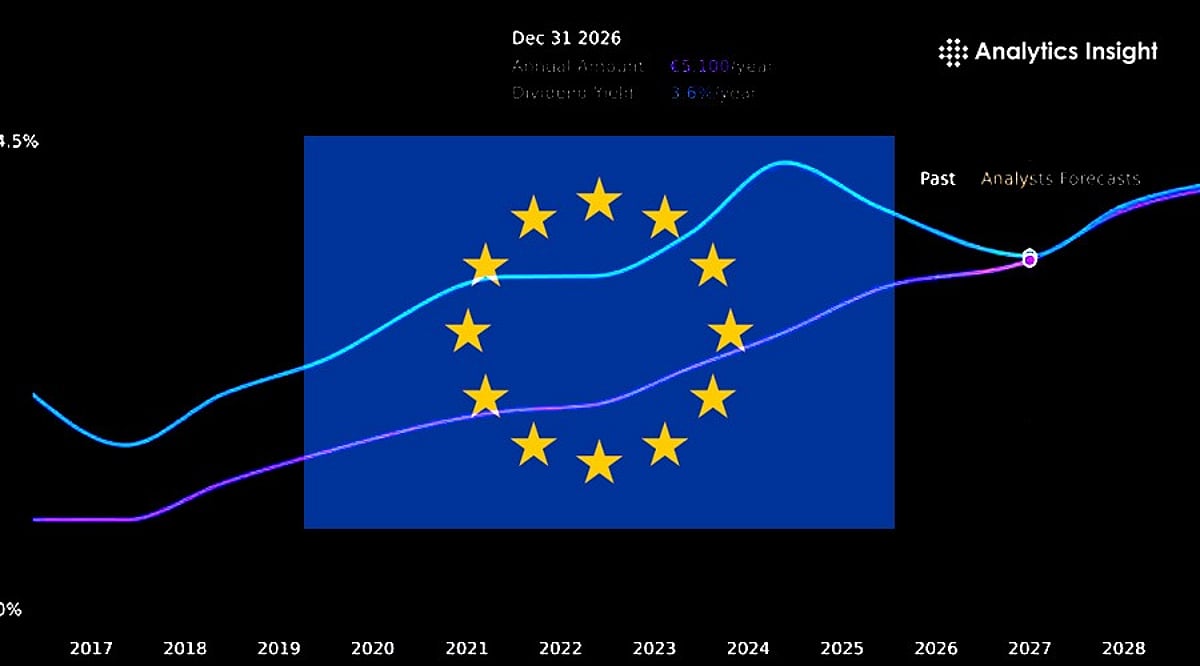
    In 2026, European dividend stocks are expected to be in focus as investors seek income, stability and long-term compounding amid mixed economic signals in the eurozone. Dividend-paying stocks can provide a helpful mix of cash flow and defensive portfolio positioning as inflation concerns persist and technology stocks continue to experience swings.

    However, investors shouldn’t consider dividend yield as the only criterion. A good dividend stock should have a steady earnings trend, cash flow that covers earnings, a reasonable dividend yield, a long-term business model, and a reliable dividend payment. Here are some European dividend stocks to keep an eye on in 2026.

    1. Atea

    Atea ASA is an IT infrastructure and solutions provider covering the Nordic and Baltic region. The company’s market capitalisation is NOK 19.26 billion, and its revenue comes from Norway, Sweden, Denmark, Finland and the Baltics. Atea is expected to yield approximately 4.3% in dividends. The net income in Q1 2026 increased compared to the same quarter last year, reaching NOK 389 million from NOK 162 million. The dividend shows earnings and cash flows as satisfactory, with payout ratios of 75.3% and 69.7%, respectively.

    2. Jacktel

    Jacktel AS’s Haven segment generates revenue from offshore accommodation services in Norway, with $65.18 million in revenue. The company’s market cap is NOK 1.12 billion, and its dividend yield is high at 14.7%. It just paid out $0.025 per share, and pays out 54.3% of its earnings and 44.3% of its cash flows. However, traders should be cautious, as revenue declined by $20.71 million to $15.88 million year-on-year, and the company has high debt levels.

    3. Lang & Schwarz

    Lang & Schwarz is based in Germany, develops and issues derivative financial instruments, and generates the bulk of its revenues from its brokerage operations. The firm has a market capitalization of €262.38 million, and brokerage income is €1.19 billion. Its dividend yield of 7.2% is strong compared to other German dividend stocks. Its earnings rose to €48.45 million from €22.12 million, while its cash payout ratio remains low at 19%.

    4. Wolters Kluwer

    Wolters Kluwer is a Dutch company that supplies professional information, software, and services to legal, finance, healthcare, and accounting professionals. The shares yield a 4.21% dividend and have a 37-year streak of dividend increases. It has a five-year dividend CAGR of 9.93%, indicating steady returns for investors. The company has a solid recurring revenue base for sustainable dividends.

    5. ASR Nederland

    ASR Nederland is a Dutch insurance company with a yield of 5.15%. The company has paid dividends for 10 years, and its dividend has grown at a 7.10% CAGR over the past 5 years. Insurers are typically cash flow machines, and ASR’s yield and growth appeal to income investors in the eurozone financial sector.

    6. Munich Re

    Munich Re is one of Europe’s best dividend payers. The dividend yield of the German reinsurer is 5.17%, and it has paid dividends without a reduction for 33 years. The five-year dividend CAGR of 16.89% is impressive for an established financial services firm. Munich Re is a stock to watch for investors seeking stable income from a global reinsurance leader.

    7. Fuchs Petrolub

    Fuchs Petrolub is a German specialty chemicals and lubricants company whose business is exposed to the automotive, industrial, and metalworking markets. The stock has a 3.80% yield and has paid a dividend that has either been equal to or increased for 34 consecutive years. It has a long dividend track record and an interesting industrial position, making it a mid-cap income candidate.

    8. London Stock Exchange Group (LSEG)

    LSEG has a low dividend yield of 1.67%, but has solid dividend growth and business quality. The company has become a financial data and analytics leader following the acquisition of Refinitiv. LSEG’s 12-year dividend growth track record and 5-year CAGR of 9.57% are more suitable for total return investors than for those seeking high dividend income.

    9. Halma

    Halma pays a low dividend yield of 0.64% and has increased dividends for 29 consecutive years. It specializes in safety, health, and environmental technology. The stock is a longer-term compounder, more so than a high-yield income play.

    10. Novo Nordisk

    After a pullback in the share price in 2026, Novo Nordisk has a 4.10% dividend yield. The Danish pharmaceutical firm has not raised a red flag regarding its dividend payouts, as it has a 37-year streak without cutting payouts and a five-year dividend CAGR of 17.61%. The diabetes and obesity division continues to be the growth engine, and it is one of the healthiest dividend growth stocks in Europe.

    Conclusion

    There are several options for European dividend investors in 2026; high-yielders such as Jacktel and Lang & Schwarz, as well as other long-term compounders, are worthy of a closer look. Yield and dividend history, payout coverage, earnings quality, and sector risk should be considered when determining whether to invest in a company.

    FAQs

    1. Which European dividend stocks are worth watching in 2026?
    Atea, Jacktel, Lang & Schwarz, Wolters Kluwer, ASR Nederland, Munich Re, Fuchs Petrolub, LSEG, Halma and Novo Nordisk are key names to watch. They offer a mix of high yield, dividend growth, recurring revenue, and long payout histories.

    2. Which stock has the highest dividend yield in the list?
    Jacktel offers the highest dividend yield at around 14.7%, placing it among the top Norwegian dividend payers. However, investors should watch its debt levels and declining sales before considering it as a long-term income stock.

    3. Why is Munich Re considered a strong dividend stock?
    Munich Re has maintained dividend payments without a cut for 33 years, showing resilience across multiple economic cycles. Its 5.17% yield and 16.89% five-year dividend CAGR make it one of Europe’s strongest dividend income names.

    4. Which stocks are better for dividend growth rather than high yield?
    Wolters Kluwer, Novo Nordisk, LSEG, and Halma are more focused on long-term dividend growth and business quality. They may not all offer the highest yields, but their consistent payout records and recurring earnings make them attractive compounders.

    5. What should investors check before buying European dividend stocks?
    Investors should review dividend yield, payout ratio, cash flow coverage, debt levels, valuation, and dividend history. A high yield can be risky if earnings are weak, so sustainability matters more than headline income.

  • JPMorgan Stock Hits Record High — What’s Driving Continued Analyst Optimism

    JPMorgan Stock Hits Record High — What’s Driving Continued Analyst Optimism

    JPMorgan Chase (JPM) shares reached a fresh all-time high of $343.45 on June 25, 2026, extending a rally that has outpaced much of the financial sector. The milestone reflects consistent earnings, diversified revenue streams, disciplined capital returns, and strong investor confidence, even amid market uncertainty and a closely watched leadership transition.

    Why JPMorgan Stands Out

    Unlike many banking peers that have struggled with rate swings, regulatory scrutiny, and fintech competition, JPMorgan has built a business model spanning consumer banking, investment banking, and wealth management. This diversification helps smooth earnings when one segment softens.

    Key Financial Metrics (as of late June 2026)

    Metric Value
    All-Time High Share Price $343.45
    Price-to-Tangible Book Ratio Above industry average
    Quarterly Dividend $1.50 per share (trailing yield ~1.76%)
    Next Earnings Report July 14, 2026

    Earnings Strength and Capital Discipline

    Net interest income remains consistent, while fee revenue from investment banking and asset management provides a second growth engine. The bank has steadily raised its dividend and executed share buybacks, signaling management’s confidence in future cash flow. Analysts cite this balance between reinvestment and shareholder returns as a key reason for the bank’s premium valuation.

    Why Analysts See More Upside

    • Scale Advantage: Size gives JPMorgan pricing power and cost efficiency smaller banks cannot match.
    • Diversified Revenue Streams: Trading, consumer credit, wealth management, and investment banking reduce reliance on any single line.
    • Resilient Credit Quality: Loan losses remain manageable despite pockets of economic uncertainty.
    • Strategic Expansion: New branch openings and international growth widen the bank’s addressable market.
    • Analyst Upgrades: Truist and others have raised price targets, citing clearer earnings visibility.

    Leadership Transition as a Watch Point

    Speculation around succession planning for long-serving leadership continues. So far, the stock’s steady climb suggests the market views the process as manageable. Maintaining strategic continuity will be important for long-term investor confidence.

    Valuation Considerations

    JPMorgan trades at a price-to-tangible book ratio above Bank of America and Citigroup. This premium reflects the bank’s consistency and scale, but implies that future gains will depend more on earnings execution than further multiple expansion.

    Final Words

    JPMorgan’s push to record territory reflects years of disciplined capital allocation, diverse revenue generation, and a management culture focused on long-term stability. As the coming earnings report and leadership news unfold, the stock faces a fresh test of whether its growth story still has chapters left to write.

  • Gold and Silver Rates Today: 24K, 22K and 999 Prices Across Major Indian Cities (July 5, 2026)

    Gold and Silver Rates Today: 24K, 22K and 999 Prices Across Major Indian Cities (July 5, 2026)

    Gold and silver prices remained in focus on July 5 as investors tracked global market trends. Check the latest retail rates for 24K, 22K, 18K gold and 999 silver across Delhi, Mumbai, Kolkata and other major Indian cities.

    Gold prices were mostly stable in India on July 5, 2026, with no changes at the retail level from the previous day since the bullion market closed on account of the weekend. Gold futures on MCX saw a slight decline to Rs. 1.47 lakh per 10 grams, as investors booked profits, while the rupee strengthened against the softer dollar amid reduced expectations of hikes in Fed rate. The yellow metal remains one of the better-performing asset classes over the past year, with returns of nearly 37.6%.

    City-Wise Gold & Silver Rates

    Retail gold prices showed only marginal city-to-city variation, with Delhi trading slightly above Mumbai and Kolkata, reflecting local levies and demand patterns.

    Silver prices also stayed flat over the weekend, with 999-purity silver trading at approximately Rs. 250 per gram or Rs. 2,500 for 10 grams. It has recently performed better than gold, posting a one-year return of over 83%.

    What’s Driving the Price Action

    The international spot price of gold remained confined to $4,150 – $4,180 per ounce as the bulls were pitted between a relatively dovish Fed and a firmer greenback coupled with new economic data. Gold prices have remained in a correction phase, declining nearly 8% over the past month. Despite the recent pullback, market expectations suggest prices will trade within a range in the short term. The World Gold Council has identified support at $4,000 per ounce and resistance at $4,300 per ounce.

    Should You Wait or Purchase Now?

    Market analysts continue to favor a staggered investment approach over a lump sum purchase, especially for those buying gold as a long-term investment rather than as jewellery. Buyers should verify the BIS hallmark certificate before making a purchase. They should also factor in GST and making charges when comparing prices. In addition, gold prices can vary across jewellers based on location and individual premiums, even when the underlying metal rate remains the same.