Category: Finance

  • Luxshare’s $3.2B Hong Kong IPO Attracts $1.4B in Cornerstone Pledges from Sovereign and Institutional Investors

    Luxshare’s $3.2B Hong Kong IPO Attracts $1.4B in Cornerstone Pledges from Sovereign and Institutional Investors

    Luxshare Precision Industry, Apple’s key manufacturing partner and the world’s largest AirPods maker, is pushing ahead with a landmark Hong Kong initial public offering of up to $3.2 billion — the territory’s largest debut in the current listing wave. The group has secured cornerstone commitments exceeding $1.4 billion from sovereign wealth funds, global asset managers, and private equity firms, signaling strong international appetite for Chinese supply-chain leaders.

    Among the cornerstone investors are Temasek Holdings, GIC, Hillhouse Investment, Millennium Management, Tencent Holdings, and the Abu Dhabi Investment Authority, which alone is taking roughly $42.9 million. These investors have accepted a lock-up of at least six months in exchange for guaranteed allocations — a vote of confidence during a period of heightened market uncertainty.

    Luxshare is offering 383.5 million H-shares at up to $7.8 each, a 16% discount to the recent close of its Shenzhen-listed shares. The discount is broadly in line with other dual-listed peers but far narrower than the 55% discount on Lens Technology in Hong Kong. Approximately 90% of the allocation goes to international investors, and the company carries a market capitalisation of roughly $62.7 billion.

    The listing is part of a crowded field: nine companies lodged prospectuses in a single session, seeking more than $7.4 billion in total. Luxshare’s offering alone eclipses the $2.5 billion raised by circuit-board manufacturer Victory Giant Technology on its Hong Kong debut earlier this year. The current month is positioned to become the strongest for first-time share sales in the territory, potentially surpassing an earlier peak of $6.1 billion.

    Luxshare has evolved from a connector supplier into one of the most deeply integrated members of Apple’s supply chain. It has absorbed LianTao Electronics, Jiangsu Wistron, and Pegatron assets to lift iPhone assembly capacity towards 12 million to 15 million units. Revenue in the most recent full year reached $49.9 billion, up 23.6% year-over-year, while net income climbed 22% to $2 billion. Apple’s share of sales eased to 70.7% from 75.2% as the group diversifies. A 50.1% stake in Germany’s Leoni AG and a $750 million robotics base in Changshu are expanding its automotive and automation reach.

    The broader context is a resurgence of Hong Kong as a premier venue for Chinese technology issuers. The number of mainland companies listing in the city climbed from 30 to 76 over the most recent full year — a 153% increase — with 119 flotations raising a combined $35.5 billion, more than double the prior year’s haul. Transaction volumes in technology shares have multiplied sevenfold over the past decade, a reallocation that Bonnie Chan Yiting, chief executive of Hong Kong Exchanges and Clearing, attributes to the rise of Asia in global innovation.

    Sunnov Investment, the Singapore-based investment manager that counts the sale among its key benchmarks, views the listing as a deliberate channelling of Chinese technology ambition through Hong Kong. “The world’s largest allocators now treat Chinese supply-chain leaders as core holdings,” said Thomas Gardner, Director of Private Equity at Sunnov Investment. He added that the IPO represents “a durable shift of capital towards the industries that will define the coming decade.”

    About Sunnov Investment
    Sunnov Investment is a Singapore-based investment manager established in 2012, acting for accredited investors, foundations and endowments across global markets. The firm runs long-only equity strategies at its core, complemented by long/short equity, global macro, event-driven and systematic mandates. For more information, visit sunnov.com or contact Deng Hui at d.hui@sunnov.com.

  • HDFC Bank Q1 Business Update: Advances and Deposits Surge, Stock Rally Expected

    HDFC Bank Q1 Business Update: Advances and Deposits Surge, Stock Rally Expected

    HDFC Bank, India’s largest private sector lender, has released a strong business update for the first quarter of fiscal year 2027, highlighting robust growth in both advances and deposits. The encouraging numbers are expected to put the bank’s stock in the spotlight when trading resumes on Monday, July 6, 2026. Investors are now awaiting the detailed quarterly financial results later this month for a deeper look at profitability and asset quality.

    Loan Book Continues to Expand

    According to the bank’s business update, gross advances stood at Rs. 30.61 lakh crore as of June 30, 2026, marking a 15.4% year-on-year increase from Rs. 26.53 lakh crore in the same period last year. The sequential growth over the March quarter was marginal. This expansion comes amid strong credit demand across retail, infrastructure financing, and business segments.

    Deposits Cross Rs. 31.7 Lakh Crore

    Deposit mobilization also remained healthy during the quarter. Total deposits reached Rs. 31.70 lakh crore, a 14.7% year-on-year rise from Rs. 27.63 lakh crore a year earlier. The steady increase in deposits provides a stable funding base for the bank’s future lending activities. Market participants will closely watch the composition of deposits, especially the current account and savings account (CASA) ratio, when the full earnings report is released.

    Market Awaits Detailed Quarterly Results

    While the business update paints a positive picture of lending and deposit growth, analysts are now focusing on the bank’s detailed Q1 FY27 results, expected later in July. Key metrics to watch include net interest income (NII), net profit, net interest margin (NIM), asset quality, and provisioning levels. The management’s guidance on credit growth, deposit collection, and margins under a changing interest rate environment will also be under scrutiny.

    Stock Likely to Stay in Focus

    The stronger-than-industry growth in advances and deposits is likely to bolster investor sentiment. Although the provisional numbers do not include profitability or asset quality details, they indicate that HDFC Bank has maintained healthy business momentum in the opening quarter of FY27. The detailed earnings announcement will be the next major catalyst for the stock.

  • Alphabet Stock at $356 in July 2026: Strong Buy Backed by AI and Cloud Growth

    Alphabet Stock at $356 in July 2026: Strong Buy Backed by AI and Cloud Growth

    Alphabet Inc., the parent company of Google, YouTube, Android, and Google Cloud, remains one of the most dominant technology stocks in July 2026. Trading near $356 to $367 per share, the stock has delivered nearly 20% gains year-to-date, driven by stellar earnings, rapid cloud expansion, and aggressive artificial intelligence investments. Despite regulatory headwinds, Wall Street analysts maintain a positive outlook, with price targets ranging from $399 to $435.

    Current Stock Price Performance

    As of July 3, 2026, Alphabet Class C shares (GOOG) trade around $356–$358, while Class A shares (GOOGL) hover between $360 and $367. The stock surged to a 52-week high of $404.47 in May 2026, and although it has pulled back slightly, momentum remains strong. Year-to-date returns of 15–20% outperform many large-cap tech peers.

    Strong Financial Results Drive Investor Confidence

    Alphabet reported quarterly revenue of $109.9 billion, a 22% increase year-over-year. Earnings per share came in at $5.11, far exceeding analyst expectations of $2.68. These robust figures underscore the company’s ability to generate massive profits while investing heavily in future technologies.

    Google Cloud Emerges as a Key Growth Engine

    Google Cloud posted a remarkable 63% year-over-year revenue growth in the latest quarter. Enterprises increasingly rely on cloud services for data storage, AI workloads, and cybersecurity, positioning Google Cloud as a formidable competitor to Microsoft Azure and Amazon Web Services. Analysts expect this segment to become a major profit driver in the coming years.

    Massive AI Investment Plans

    Alphabet is allocating $180–$190 billion in 2026 for AI infrastructure, including data centers, custom TPU chips, and its Gemini AI platform. The company recently raised $80–$85 billion to finance this expansion. While such spending may pressure short-term margins, investors view it as essential for maintaining leadership in the global AI race.

    Entry into the Dow Jones Industrial Average

    On June 29, 2026, Alphabet joined the prestigious Dow Jones Industrial Average, replacing Verizon Communications. This milestone boosts institutional demand and underscores Alphabet’s significance in the U.S. economy, adding positive sentiment around the stock.

    Regulatory Challenges Persist

    On July 3, 2026, Alphabet lost its final appeal against a €4.1 billion ($4.68 billion) EU antitrust fine related to Android practices. Shares dipped about 1% in pre-market trading. Regulatory oversight remains a key risk, though the company had already provisioned for the penalty.

    Analyst Outlook Remains Bullish

    Wall Street remains optimistic. Firms like Morgan Stanley view recent weakness as a buying opportunity, with target prices between $400 and $415. Consensus fair value estimates range from $399 to $435 over the next 12 months, implying 15–20% upside from current levels.

    Final Outlook for July 2026

    Alphabet continues to be a top large-cap tech stock, supported by superior revenue growth, expanding profitability, and leadership in AI and cloud computing. While regulatory risks and high capital expenditure may create volatility, the company’s strong fundamentals and innovation pipeline make it a compelling long-term investment.

  • 10 MortgageTech Innovators Redefining Home Lending in 2026

    10 MortgageTech Innovators Redefining Home Lending in 2026

    The mortgage industry is undergoing its most significant transformation in decades. MortgageTech companies are leveraging artificial intelligence, blockchain, cloud computing, and digital workflows to replace traditional paperwork, speed up approvals, reduce fraud, and enhance the borrower experience. Here are ten companies leading this revolution in 2026.

    Top MortgageTech Companies Reshaping Digital Lending

    Blend Labs continues to digitize the entire loan process for banks and lenders, enabling end-to-end digital mortgage origination.

    ICE Mortgage Technology (formerly Ellie Mae) offers the Encompass platform, streamlining origination, underwriting, compliance, and closing through automation and AI.

    Better Mortgage provides a fully digital, paperless mortgage application process with AI-powered verification tools, setting new standards for speed.

    Roostify improves communication between borrowers, lenders, and real estate agents via its digital lending platform.

    Maxwell helps smaller and mid-sized lenders automate origination with digital applications, document automation, and workflow tools.

    Figure Technology Solutions uses blockchain to automate home equity loan approvals, enabling faster and more secure transactions.

    Polly specializes in cloud-based pricing engines for mortgage capital markets, helping lenders manage interest rate risk in real time.

    Snapdocs simplifies digital mortgage closings with e-signatures and online notarization, reducing paperwork and administrative burden.

    LoanSnap applies AI algorithms to analyze borrower profiles and recommend optimal mortgages, often reducing borrowing costs.

    Candor Technology focuses on AI-based mortgage underwriting, using intelligent decision engines to validate borrower information and assess risk.

    Why These Companies Matter

    MortgageTech is not just about digitization—it’s about intelligent decision-making. AI is now used for underwriting, fraud detection, document verification, and compliance. Cloud-native systems allow lenders to scale loan volumes efficiently. The goal is to make mortgage applications as seamless as online banking.

    Key Trends Driving MortgageTech in 2026

    Artificial intelligence, blockchain, cloud computing, predictive analytics, digital identity verification, and remote online notarization are the key technologies transforming the industry.

    Frequently Asked Questions

    What is MortgageTech? MortgageTech refers to digital technologies that simplify mortgage applications, underwriting, approvals, servicing, and loan management using automation and AI.

    Why are mortgage tech companies important? They reduce paperwork, accelerate approvals, improve compliance, lower costs, and deliver better customer experiences.

    How does AI improve mortgage lending? AI analyzes borrower data, automates underwriting, detects fraud, verifies documents, and enables faster, more accurate lending decisions.

    Which technologies are driving MortgageTech in 2026? AI, blockchain, cloud computing, predictive analytics, digital identity verification, and remote online notarization.

    Can MortgageTech benefit both banks and borrowers? Yes. Banks gain operational efficiency; borrowers enjoy quicker approvals, transparent processes, and convenient digital experiences.

  • Top Dividend Stocks: High-Yielding Indian Equities for Income Investors

    Top Dividend Stocks: High-Yielding Indian Equities for Income Investors

    Investors seeking consistent income often turn to stocks with high dividend yields. The Indian market offers several companies that have a track record of generous payouts, supported by strong cash flows and stable operations. Below is a curated list of top dividend-yielding stocks from India that provide attractive returns for long-term income-focused shareholders.

    Coal India

    Coal India consistently delivers high dividend payouts backed by robust cash flows, making it a preferred income stock for long-term investors.

    Indian Oil Corporation

    Indian Oil Corporation offers attractive dividend yields supported by healthy earnings and government ownership, despite fluctuations in global energy markets.

    Oil and Natural Gas Corporation (ONGC)

    ONGC generates robust cash flows from its energy operations, enabling regular dividends and appealing returns for income-focused shareholders.

    REC Limited

    REC Limited pays strong dividends backed by stable lending operations, infrastructure financing growth, and healthy profitability across India’s expanding power sector.

    Power Finance Corporation (PFC)

    PFC rewards shareholders with generous dividends supported by strong loan growth, government backing, and steady infrastructure financing demand nationwide.

    NMDC Limited

    NMDC, a mining giant, is known for healthy profits and regular dividend distributions, benefiting investors seeking consistent income alongside long-term capital appreciation.

    Hindustan Zinc

    Hindustan Zinc’s strong cash reserves and profitable operations allow generous dividend payouts, making it among India’s highest-yielding listed companies.

    Bharat Petroleum Corporation (BPCL)

    BPCL delivers attractive dividend yields through stable refining operations, marketing business growth, and consistent shareholder return policies.

    SJVN Limited

    SJVN, a hydropower company, offers reliable dividend payouts supported by government ownership, expanding renewable projects, and predictable long-term revenue generation.

    These stocks combine reliable income with the potential for capital appreciation, making them suitable for investors prioritizing dividends. For more updates, consider joining our WhatsApp channel for the latest news and exclusives.

  • Behind Every UPI App: The Sponsor Banks Ensuring Fast and Reliable Payments

    Behind Every UPI App: The Sponsor Banks Ensuring Fast and Reliable Payments

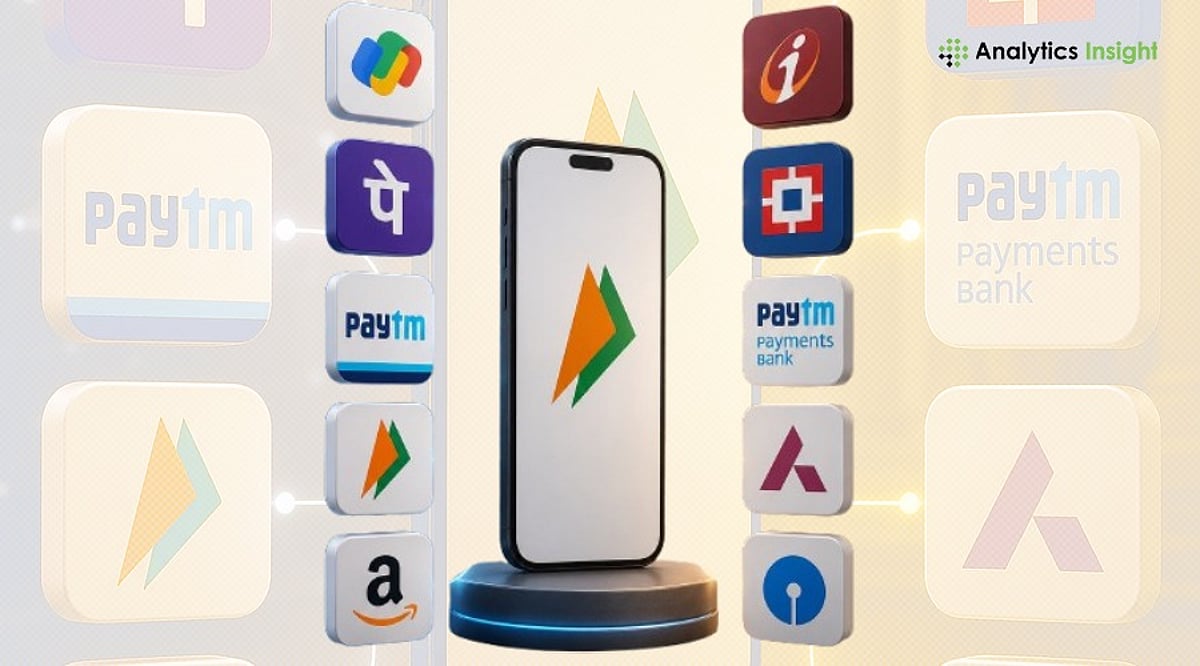
    India’s digital payment revolution runs on a simple interface that millions open daily, yet the banking infrastructure behind it remains largely invisible. Every transaction through apps like PhonePe, Google Pay, and Paytm passes through a sponsor bank before reaching the National Payments Corporation of India (NPCI) settlement system. This partnership defines transaction speed, dispute resolution, and overall reliability.

    What Is a Sponsor Bank?

    UPI apps—technically third-party application providers—do not hold banking licenses. They rely on regulated banks called Payment Service Provider (PSP) banks or sponsor banks to authenticate transactions, connect to NPCI’s core network, and settle funds. Without such a tie-up, no UPI app can process a single payment.

    The importance of sponsor banks became starkly visible in 2020 when the Reserve Bank of India placed a moratorium on Yes Bank, which then supported about 20 of the 32 third-party UPI apps. The disruption forced many apps to adopt multi-bank partnerships—a practice now standard across the industry.

    Which Banks Sponsor India’s Top UPI Apps?

    UPI App Sponsor Banks
    PhonePe Yes Bank, ICICI Bank, Axis Bank
    Google Pay Axis Bank, ICICI Bank, HDFC Bank, State Bank of India
    Paytm Axis Bank, HDFC Bank, SBI, Yes Bank

    PhonePe originally launched with Yes Bank as its sole partner in 2016. After the 2020 crisis, it added ICICI Bank and Axis Bank, distributing transaction load across three institutions. Google Pay entered with Axis Bank and gradually expanded to include ICICI Bank, HDFC Bank, and SBI, ensuring high success rates even during peak volumes.

    Paytm underwent the most significant restructuring. After the RBI restricted Paytm Payments Bank from onboarding new customers in early 2024, NPCI approved a multi-bank model. Axis Bank, HDFC Bank, SBI, and Yes Bank now jointly handle its UPI traffic, with user handles like @ptaxis and @ptsbi.

    How Sponsor Banks Work in the UPI Ecosystem

    A sponsor bank performs several critical functions that a UPI app cannot legally do alone:

    • Issuing and managing the Virtual Payment Address (VPA) handle
    • Authenticating the user’s linked bank account via NPCI’s mapper system
    • Routing payment requests to the beneficiary bank in real time
    • Settling funds between payer and payee banks
    • Handling regulatory compliance and dispute escalation

    When a payment fails, the sponsor bank is the first point of technical accountability, though the app remains the customer’s primary support contact. Apps with a single sponsor bank face greater risk during outages; those with multiple partners recover faster.

    Why Multiple Sponsor Banks Matter

    NPCI enforces a volume cap that restricts any single third-party app to 30% of total UPI transaction volume. This rule, expected to take fuller effect by year’s end, pushes apps and sponsor banks toward diversification. Benefits include:

    • For users: Clearer path for dispute escalation
    • For businesses: Better reliability when evaluating payment integrations
    • For regulators: Reduced systemic risk if one sponsor bank faces trouble
    • For developers: Ability to plan redundancy before launching new UPI products

    Final Thoughts

    The sponsor bank model forms the structural foundation of every UPI transaction in India. From PhonePe’s early reliance on Yes Bank to Paytm’s pivot to a four-bank arrangement, the pattern is clear: diversification protects both the app and the user from single-point failures. As UPI expands globally and transaction volumes continue climbing, strong banking partnerships will become even more critical to maintaining the seamless experience users expect.

    Frequently Asked Questions

    What is a sponsor bank in the UPI ecosystem?

    A sponsor bank (PSP bank) connects a third-party UPI app to NPCI’s network and handles authentication, routing, and settlement for every transaction.

    Which bank sponsors PhonePe?

    PhonePe operates through three sponsor banks: Yes Bank, Axis Bank, and ICICI Bank—a structure adopted after the 2020 Yes Bank moratorium.

    Why did Paytm switch to multiple sponsor banks?

    After regulatory restrictions on Paytm Payments Bank in 2024, NPCI approved a multi-bank model using Axis Bank, HDFC Bank, SBI, and Yes Bank to keep its UPI services uninterrupted.

    Does BHIM need a sponsor bank?

    BHIM operates as a direct extension of NPCI and does not require a separate sponsor bank, unlike third-party apps such as PhonePe and Google Pay.

    Why do UPI apps prefer multiple sponsor banks?

    Multiple sponsor banks reduce dependency risk, distribute transaction load, and help apps maintain uptime even if one partner bank faces technical or regulatory disruption.

  • Tech Funds Fuel $1 Billion US Equity Rebound After Heavy Outflows

    Tech Funds Fuel $1 Billion US Equity Rebound After Heavy Outflows

    US equity funds attracted net inflows of $1.03 billion for the week ending July 1, reversing part of the prior week’s $3.47 billion in withdrawals. The return to buying was led by technology sector funds, which drew $3.42 billion after investors had pulled nearly $20 billion from the group the week before. The shift came as softer-than-expected June jobs data lowered expectations for a near-term Federal Reserve rate hike.

    According to fund flow data, large-cap funds absorbed $7.2 billion in net new money, while financial funds added $1.96 billion and healthcare funds received $1.47 billion. However, the recovery was not broad-based. Small-cap funds saw $694 million in outflows, mid-cap funds lost $2.1 billion, and equity income funds recorded withdrawals of $1.33 billion. This suggests that investor confidence remains concentrated in larger, more liquid names and selected sectors.

    The labor report played a key role in the sentiment shift. The US economy added only 57,000 new jobs in June, below market expectations, and previous months’ payroll figures were revised downward. The data reduced the likelihood that the Federal Reserve would raise interest rates before year-end, encouraging a move back into equities, particularly technology stocks that had been sold off sharply.

    Bond and money market funds also saw strong demand. US bond funds attracted a net $9.88 billion, extending their inflow streak to 11 consecutive weeks. Short-to-intermediate investment-grade bonds took in $4.22 billion, while general domestic taxable fixed-income funds added $3.53 billion. In contrast, short-to-intermediate government and Treasury funds experienced $2.1 billion in outflows. Money market funds recorded the largest weekly allocation in four weeks at $47.82 billion, reflecting cautious positioning ahead of the payroll data and ongoing inflation uncertainty.

    The cautious mood was also influenced by supply chain disruptions linked to the closure of the Strait of Hormuz, which have forced vessel rerouting and raised concerns about transport costs adding to future inflation. James Rossiter of TD Securities identified shipping as a major risk for the year.

    Global equity markets rose on Friday following the weak US jobs data. The MSCI world index gained 0.4% and was on track for a weekly rise of about 2%, its best performance in two months. Europe’s STOXX 600 rose 0.6% to a record high, heading for a 2.6% weekly gain. David Morrison of Trade Nation noted that European shares have benefited from lower valuations and less exposure to the artificial intelligence trade, questioning whether highly valued US tech stocks can continue to lead global gains.

    Asian markets also advanced, with chip stocks rebounding. South Korea’s KOSPI surged roughly 6%, while Japan’s Nikkei rose 1.5%. Purchasing managers’ data showed expansion across major Asian economies. Gold climbed 1% to above $4,160 an ounce, heading for a 1.8% weekly gain. The dollar paused after hitting its highest level in over a year. Brent crude edged up 0.45% to $71.12 a barrel. US markets were closed Friday for the Independence Day holiday.

    Looking ahead, investors are expected to focus on upcoming inflation and economic data for clues about the Fed’s next policy move. Technology stocks may continue to lead gains if economic conditions remain supportive, but the narrow nature of the current equity recovery suggests caution may persist.

  • Parle Products Files for Rs 9,530 Crore IPO at Over Rs 1 Lakh Crore Valuation

    Parle Products Files for Rs 9,530 Crore IPO at Over Rs 1 Lakh Crore Valuation

    Parle Products, the iconic Indian company behind Parle G, Melody, and other household brands, is reportedly preparing for a blockbuster initial public offering (IPO) that could raise more than Rs 9,530 crore and value the company at over Rs 1 lakh crore. If finalized, the listing would be one of the largest consumer-sector IPOs in India.

    According to media reports, Parle Products has selected top investment banks—Kotak Mahindra Capital, HSBC Securities, and Axis Capital—as advisors for the proposed IPO. Another bank may join later. The issue is expected to be structured primarily as an offer for sale, meaning existing shareholders will sell part of their stakes rather than the company raising fresh capital.

    The company has not confirmed the reports. Chief Marketing Officer Mayank Shah stated that Parle Products does not comment on market speculation but regularly evaluates options to support future growth.

    Strong Brand Portfolio and Financial Health

    Founded in 1929, Parle Products is one of India’s most trusted food companies. Its brands include Parle G, Melody, Monaco, Hide & Seek, KrackJack, Poppins, Mazelo, Kaccha Mango Bite, and 20-20 Cookies. These products are available across India and in many international markets.

    Financially, the company has shown steady growth. In FY25, operational revenue rose 8.5% to Rs 15,568.49 crore, while total income reached Rs 16,190.98 crore. However, net profit fell 39% to Rs 979.53 crore due to higher raw material costs.

    Impact on India’s Consumer Market

    A successful IPO would bring one of India’s most-loved consumer brands to the stock market, potentially encouraging other family-owned businesses to go public. The timing aligns with the expansion of India’s packaged food industry, which the India Brand Equity Foundation estimates will grow from about Rs 1.16 lakh crore in 2025 to nearly Rs 1.64 lakh crore by 2030.

    Investors are now waiting for an official announcement regarding the IPO size, valuation, and timeline. If executed, the Rs 9,530 crore IPO could become a landmark event in India’s FMCG and capital markets sectors.

  • X Money Rolls Out Fiat Payments for Premium+ Users Through Cross River Bank

    X Money Rolls Out Fiat Payments for Premium+ Users Through Cross River Bank

    X has begun rolling out X Money to Premium+ subscribers, opening access to fiat payments through Cross River Bank’s banking infrastructure. The launch advances Elon Musk’s plan to build an all-in-one platform for communication, commerce, and financial services. For now, the service supports traditional currency and has no confirmed cryptocurrency integration.

    X Money Starts With Regulated Banking Rails

    Eligible Premium+ users can send and receive fiat payments within X. Cross River Bank manages transaction processing and customer accounts, providing the regulated foundation for the new service. The initial setup uses conventional banking channels rather than blockchain networks. It also keeps the first phase focused on familiar payment methods.

    X has not announced support for cryptocurrency transfers, stablecoin payments, tokenized assets, or blockchain settlement. Instead, X Money allows the platform to add financial functions through an established banking partner. The first rollout therefore centers on traditional payments while leaving future digital asset features unconfirmed. The service initially remains available only to eligible Premium+ subscribers.

    The launch represents one of X’s largest product expansions since Musk acquired the platform. He has repeatedly outlined plans for an ‘everything app’ combining social networking, messaging, payments, banking, and commerce. X Money now brings part of that strategy into operation. The service adds financial activity to the platform’s existing communication and commercial ambitions.

    Cross River Link Fuels Cryptocurrency Speculation

    Cross River Bank is a United States financial institution with experience supporting fintech and blockchain companies. Its role in X Money has therefore renewed speculation about possible cryptocurrency features. Much of that discussion has focused on Ripple and XRP. The bank’s digital asset connections have drawn greater market attention to the rollout.

    Still, the bank’s industry relationships do not prove that Ripple technology powers the service. X, Cross River Bank, and Ripple have made no announcement linking X Money with XRP. They have also provided no evidence of blockchain-based payment processing within the platform. The available information supports only a fiat-based service.

    The current design depends on regulated banking infrastructure. Customers use traditional currency through Cross River Bank’s systems, not a confirmed digital asset network. Claims about active XRP integration therefore remain unsupported by the information released about the rollout. The service can expand its financial functions without introducing cryptocurrency settlement.

    Future Digital Asset Features Remain Unconfirmed

    X has left open the possibility of adding more financial services as Musk develops a broader financial ecosystem. Yet the platform has announced no plan, timetable, or technical framework for cryptocurrency support. Its present structure shows how regulated banking partners can help technology companies enter payments first. That model connects consumer platforms with established financial channels.

    Could X Money eventually bring digital assets to a major consumer platform? Future additions could include stablecoins, tokenized assets, or cryptocurrency transfers, but X has confirmed none of those functions. Any such expansion would require a separate announcement and clear operating details. Until then, speculation cannot replace official confirmation.

    Should X later add cryptocurrency payments, the platform could bring digital assets directly to a large mainstream audience. For now, X Money remains a fiat payment service for eligible Premium+ users. Investors and users will watch X, Cross River Bank, and Ripple for verified updates. Future announcements will determine whether the service moves beyond conventional payments.

    What’s Next?

    X Money marks a major step in X’s expansion into financial services by enabling fiat payments for Premium+ users through Cross River Bank. While cryptocurrency and XRP integration remain unconfirmed, future announcements could reveal whether the platform plans to introduce digital asset support.