Category: Semiconductors

  • Japan’s Semiconductor Powerhouses: 7 Key Innovators Dominating 2026

    Japan’s Semiconductor Powerhouses: 7 Key Innovators Dominating 2026

    Japan remains a powerhouse in the global semiconductor industry, with several companies driving innovation in chip design, manufacturing equipment, and memory technology. Here are the key players shaping the landscape in 2026.

    Tokyo Electron

    Tokyo Electron is among the world’s leading semiconductor equipment manufacturers, supplying advanced wafer fabrication and testing systems. Its technologies support leading chipmakers worldwide, making the company a cornerstone of Japan’s semiconductor ecosystem and a key contributor to AI, automotive, and high-performance computing chip production.

    Renesas Electronics

    Renesas Electronics specializes in microcontrollers, automotive semiconductors, and embedded processors powering modern vehicles and industrial automation. The company continues expanding its global footprint through innovation and strategic acquisitions, strengthening Japan’s position in automotive chips, Internet of Things devices, and intelligent edge computing solutions.

    Kioxia

    Kioxia remains one of the world’s largest NAND flash memory manufacturers, producing storage solutions for smartphones, laptops, data centers, and AI applications. The company’s continuous investment in next-generation flash memory technologies keeps Japan competitive in the rapidly growing global semiconductor memory market during 2026.

    Rohm Semiconductor

    Rohm Semiconductor is recognized for its expertise in power semiconductors, silicon carbide devices, and analog integrated circuits. Its products are widely used in electric vehicles, industrial machinery, renewable energy systems, and consumer electronics, supporting the global transition toward energy-efficient and sustainable semiconductor technologies.

    Socionext

    Socionext focuses on custom system-on-chip development, delivering specialized semiconductor solutions for automotive, networking, data centers, and consumer electronics. By offering tailored chip designs for demanding applications, the company has become an important partner for businesses seeking advanced, high-performance semiconductor technologies in Japan.

    Screen Holdings

    Screen Holdings develops semiconductor manufacturing equipment, particularly wafer cleaning and processing systems used by major chip fabrication plants worldwide. As semiconductor production becomes increasingly complex, the company’s precision engineering and advanced manufacturing solutions continue supporting next-generation chip fabrication across international markets.

    Rapidus

    Rapidus represents Japan’s ambitious effort to re-establish leadership in advanced semiconductor manufacturing. Backed by government support and industry partnerships, the company aims to produce cutting-edge logic chips using leading process technologies, strengthening domestic supply chains while competing with global semiconductor manufacturing giants.

  • Renewed AI Optimism Drives South Korean Chip Stocks to Record Gains

    Renewed AI Optimism Drives South Korean Chip Stocks to Record Gains

    South Korea’s stock market experienced a strong rebound on Friday, driven by a rally in semiconductor stocks after better-than-expected earnings from major US technology firms. Investor confidence in the long-term growth of artificial intelligence infrastructure was renewed, reversing recent declines.

    Semiconductor Stocks Lead the Rally

    The benchmark Kospi index surged over 18%, reaching its highest level in about a month. SK Hynix Inc. soared by a record 28%, buoyed by a rare direct share purchase by SK Group Chairman Chey Tae-won. Samsung Electronics Co. rose approximately 26%, while Samsung Electro-Mechanics gained nearly 30%. Hyundai Motor also posted strong growth of almost 8%.

    The rally helped recover losses from earlier in the week, which had been triggered by concerns over valuations and competition from Chinese memory-chip makers.

    Strong US Earnings Restore AI Confidence

    Microsoft reported strong growth in its Azure cloud business, and Amazon exceeded expectations in its cloud computing division, reiterating plans to continue investing in AI infrastructure. These results eased fears that enterprise investments in AI might slow down, prompting investors to rebalance toward semiconductor stocks, particularly those supplying high-performance memory chips and AI infrastructure.

    Domestic Support Boosts Sentiment

    SK Group Chairman Chey Tae-won purchased 3,620 shares of SK Hynix in the open market, his first direct investment in the company, worth approximately 4.8 billion won (about $3.2 million). The move was seen as a strong signal of confidence in the chipmaker’s long-term prospects.

    Additionally, the South Korean government announced plans to allocate nearly $13.9 billion to its sovereign wealth fund for strategic investments in AI, further supporting the sector’s outlook.

  • Samsung Achieves Record Q2 Revenue Driven by AI Memory Chip Demand

    Samsung Achieves Record Q2 Revenue Driven by AI Memory Chip Demand

    Samsung Electronics Co. Ltd. reported a sharp increase in Q2 earnings, fueled by strong demand for AI memory chips, even as its share price remains volatile amid investor concerns about future spending and competition.

    The South Korean technology group’s revenue for the quarter ending June 30 reached 171.5 trillion won, its highest quarterly revenue on record. Net profit rose to 71.27 trillion won, surpassing Bloomberg estimates of 68.36 trillion won. Additionally, operating profit increased more than 19-fold to approximately 89.5 trillion won, broadly in line with the company’s previous forecast.

    AI Memory Business Continues to Lead Growth

    The semiconductor business remained the primary growth driver. It benefited from high memory chip prices and rising volumes of its advanced High Bandwidth Memory (HBM) products for AI servers and data centers. According to the company, demand from cloud providers and AI infrastructure projects continued to support strong pricing across the memory market. Samsung anticipates this trend to continue in the second half of 2026.

    Samsung predicted ‘robust demand centered on servers stemming from continued AI infrastructure capex and broader adoption of agentic AI.’ Even with production increases, Samsung stated that the global memory market would remain ‘undersupplied.’

    Consumer Business Remains Under Pressure

    While the semiconductor business earned a record profit, Samsung’s smartphone, television, and home appliance divisions were less profitable as consumer demand weakened and component prices jumped. The company will continue to focus on high-margin AI memory products and invest in expanding its semiconductor manufacturing. In 2026, projects on 2-nanometer technology chips are projected to more than double each year, executives said in a post-earnings conference call.

    Market Reaction and Outlook

    Samsung shares were highly volatile during Thursday’s trading session, despite the strong results. The stock initially surged up to 7% but lost most of its gains as overall market weakness hit South Korea’s stocks. Investor sentiment is growing skeptical about the ability of AI-led semiconductors to maintain their valuations. Competition from Chinese chipmakers and heavy capital spending have also dampened investor confidence. Samsung also revealed that it is not currently planning to list its shares on American Depository Receipts (ADR), following queries from investors after rival SK Hynix recently listed in the US.

  • Marvell Pledges $250M Investment in India to Boost AI Semiconductor R&D at Bangalore Hub

    Marvell Pledges $250M Investment in India to Boost AI Semiconductor R&D at Bangalore Hub

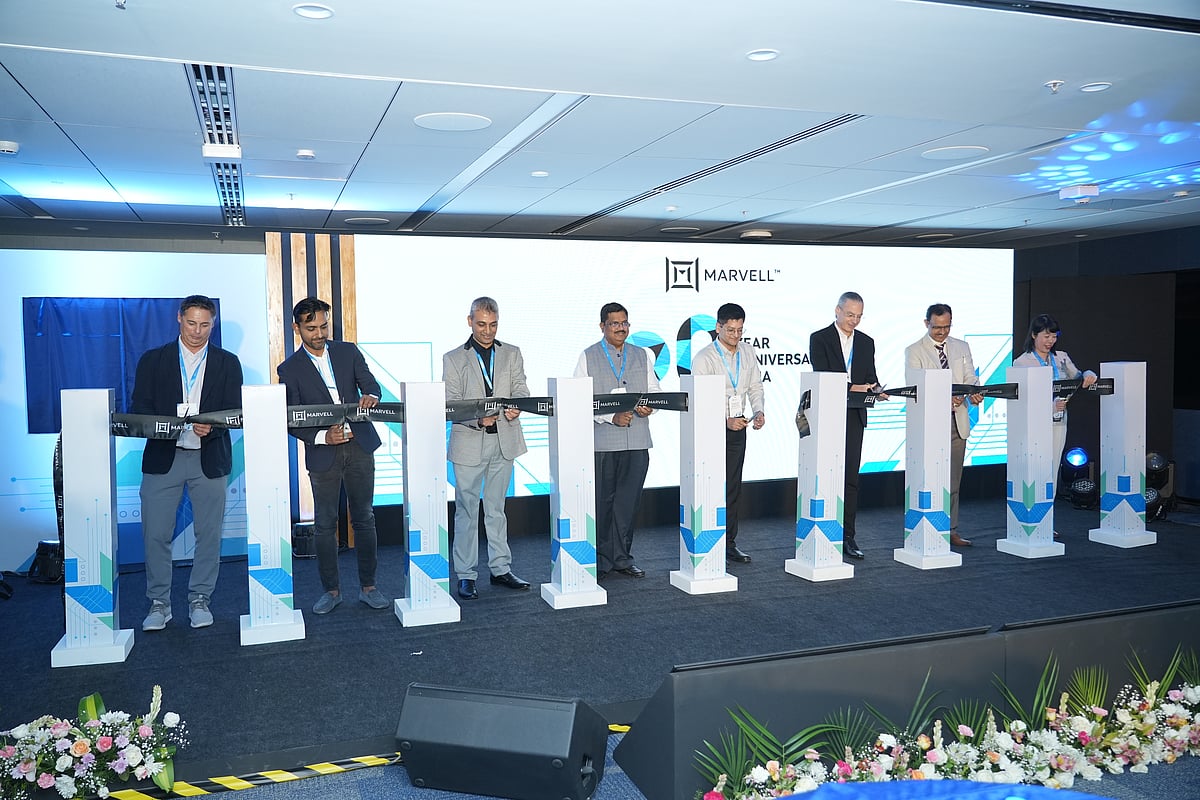
    Marvell Technology, Inc., a leader in data infrastructure semiconductor solutions, has announced a strategic investment of $250 million in India over the next three years. The investment will expand the company’s capabilities in technology, talent, and infrastructure, coinciding with its 20-year anniversary of engineering innovation in the country.

    As part of the plan, Marvell aims to double its headcount in India within three years, unveil a new wing at its Bangalore office, and strengthen its presence in Hyderabad. This expansion will reinforce the company’s global innovation network, focusing on the design and development of advanced semiconductor solutions for AI, cloud, and data infrastructure applications.

    “India has become a strategic hub of engineering excellence for Marvell, playing a critical role in advancing the infrastructure technologies that power the world’s leading hyperscalers and cloud providers,” said Navin Bishnoi, vice president and India country manager at Marvell. “As we celebrate 20 years in India, we remain committed to expanding R&D investments, strengthening the country’s semiconductor ecosystem, and developing the next generation of technology talent.”

    Advancing Semiconductor Innovation

    Marvell established operations in Bangalore in 2006 and has since grown India into the company’s second-largest R&D organization worldwide. Teams across Bangalore, Pune, and Hyderabad have developed deep expertise in advanced process technologies (2nm and beyond), high-speed analog IP, subsystem design, software/firmware development, and end-to-end silicon development. Today, Marvell India contributes across numerous technology platforms, with its employees holding multiple patents and playing a leading role in applying advanced AI tools to accelerate engineering productivity and innovation.

    Beyond technology development, Marvell continues to invest in the long-term growth of India’s semiconductor ecosystem through collaboration with universities, startups, industry associations, and government organizations. The company collaborates with leading universities to support internship programs, faculty development initiatives, joint research projects, and curriculum development designed to better prepare students for careers in advanced technology fields. Marvell also works with emerging startups through mentorship and strategic collaborations in areas aligned with its technology and product portfolios. Additionally, Marvell actively engages with industry associations and government bodies to foster greater collaboration across the ecosystem and support the continued growth of India’s semiconductor industry.

    Marvell Scholarship Program

    During the event, Marvell highlighted its commitment to developing future engineering talent through its Marvell Scholarship for Technical and Engineering Merit (MSTEM) program. This initiative aims to cultivate the next generation of AI and semiconductor innovators through financial support, hands-on industry experience, and exposure to real-world technology development.

    Launched earlier this year, the MSTEM program supports students pursuing degrees in electronics, electrical engineering, and computer science. The program attracted more than 7,000 applicants from leading universities across India, with 100 outstanding students selected to receive scholarships. By combining financial assistance with practical industry engagement, the program aims to strengthen India’s technology talent pipeline and prepare students for careers at the forefront of semiconductor and AI innovation.

    About Marvell
    To deliver the data infrastructure technology that connects the world, Marvell builds solutions on the most powerful foundation: partnerships with its customers. Trusted by the world’s leading technology companies for over 30 years, Marvell moves, stores, processes, and secures the world’s data with semiconductor solutions designed for customers’ current needs and future ambitions. Through a process of deep collaboration and transparency, Marvell is changing the way tomorrow’s enterprise, cloud, and carrier architectures transform—for the better.

    Marvell and the M logo are trademarks of Marvell or its affiliates. For a complete list of Marvell trademarks, visit www.marvell.com. Other names and brands may be claimed as the property of others.

    This press release contains forward-looking statements within the meaning of the U.S. federal securities laws that involve risks and uncertainties. Actual events, results, or achievements may differ materially from those contemplated in this press release. Forward-looking statements speak only as of the date they are made, and no person assumes any obligation to update or revise any such forward-looking statements.

  • S&P 500 Dips as Chip Stocks Slump Despite US-Iran Ceasefire

    S&P 500 Dips as Chip Stocks Slump Despite US-Iran Ceasefire

    US stocks reversed early gains on Monday as a semiconductor selloff weighed on the broader market. The S&P 500 fell 0.2%, while the NASDAQ Composite lost 0.5%. Meanwhile, the Dow Jones Industrial Average gained about 258 points, or 0.5%.

    Markets opened higher after the United States and Iran paused attacks over the weekend. However, the relief rally faded as investors sold chip stocks. Lower oil prices supported travel shares and reduced pressure on bond yields, but technology losses pulled the S&P 500 into negative territory.

    Chip Stocks Pull Major Indexes Lower

    Semiconductor shares fell across the market during Monday trading. The VanEck Semiconductor ETF dropped 3.7%, extending Friday’s losses. Advanced Micro Devices and Teradyne each fell more than 7%, while Micron Technology declined more than 6%.

    The Philadelphia Semiconductor Index dropped about 4% after rising early in the session. Most companies in the index traded lower. NVIDIA also declined as investors assessed stronger Chinese competition and continued artificial intelligence investment. The sector has faced repeated selling during July after strong gains earlier in 2026.

    Investor attention also shifted to spending plans at major technology companies. Ken Mahoney of Mahoney Asset Management said, “The biggest risk is the continuation of the spend.” He also warned that slower spending growth could hurt chip suppliers that depend on large data-center orders.

    Oil Prices Slide After Fighting Pause

    Oil prices fell sharply after both sides halted attacks for a third night. Brent crude dropped about 6.8% to near $90.25 a barrel. West Texas Intermediate crude fell around 6.1% to $83.83. Brent had traded above $100 days earlier as shipping risks increased.

    US Ambassador to the United Nations Mike Waltz said the pause was ‘giving diplomacy some space.’ Iran denied holding direct talks with Washington. Still, Tehran confirmed discussions with Oman about maritime traffic in the Strait of Hormuz. Waltz also said more US military assets were moving into the region.

    The oil decline supported airlines, cruise operators and other companies with high fuel costs. Energy shares moved lower as crude prices fell. Europe’s STOXX 600 gained about 0.9%, while retail and travel stocks rose more than 2%. Asian markets also advanced.

    Fed Decision Returns to Market Focus

    The Federal Reserve will announce its interest rate decision on Wednesday. Most analysts expect the central bank to keep rates unchanged. However, market pricing showed about a one-in-three chance of a rate increase at the July meeting.

    Investors raised rate-hike bets after oil prices and new tariffs added pressure to the inflation outlook. Monday’s oil retreat reduced some concerns. The 10-year US Treasury yield fell about four basis points to 4.64%, while the dollar weakened against several major currencies.

    Fed Chair Kevin Warsh faces a difficult policy setting. Inflation remains above the central bank’s 2% goal, while recent labour and consumer data have stayed steady. Samy Chaar of Lombard Odier said policymakers were ‘not there yet’ on another increase and linked the next move to Middle East tensions.

    Big Tech Earnings Put AI Spending in Focus

    Amazon, Apple, Meta Platforms and Microsoft will report quarterly results this week. Their spending plans will receive close attention after Alphabet’s results raised concerns about artificial intelligence costs. Semiconductor companies rely heavily on orders from cloud and data-center operators.

    About one-third of S&P 500 companies will publish results this week. Earnings are tracking a 26.5% increase from a year earlier. Strong profit growth may support stocks, though investors are also watching cash flow and capital spending.

    The economic calendar includes second-quarter US gross domestic product, June inflation data, personal income and consumer spending. Weekly jobless claims, employment costs and consumer sentiment figures are also due. These reports will give markets more information on growth, prices and the next Federal Reserve decision.

    Also Read: Indian Stock Market Closes Higher: Sensex, Nifty Rally on Easing Crude Prices

  • Daily Tech Digest: Japan Chip Rally, SBI’s $200M Fund, AMD’s NVIDIA Challenge, and Trump’s Crypto Windfall

    Daily Tech Digest: Japan Chip Rally, SBI’s $200M Fund, AMD’s NVIDIA Challenge, and Trump’s Crypto Windfall

    Good morning! Here’s your quick roundup of today’s biggest developments across semiconductors, technology investments, hiring, crypto, and AI infrastructure.

    Fast-Track Insights

    • Japan’s chip stocks rise on AI infrastructure optimism.
    • SBI Funds plans a $200 million tech fund.
    • Cost controls slow graduate hiring more than AI.
    • Trump reports over $1.4 billion crypto income.
    • AMD expands its full-stack AI infrastructure challenge.

    Japan’s Chip Stocks Rise as AI Spending Fuels Rally

    Japanese markets closed higher, with technology and semiconductor stocks tracking global gains linked to rising AI infrastructure investment. The Nikkei 225 advanced 0.46%, while the Topix gained 0.51%. Advantest, Lasertec, SoftBank Group, and Murata Manufacturing led the gains. However, potential Bank of Japan rate hikes limited broader market optimism.

    SBI Funds Plans $200 Million Fund for Technology Investments

    According to reports, SBI Funds Management is set to launch an alternative investment fund of about $200 million, which will be technology-centric. This funding will make investments in private technology firms and is dependent on regulatory clearance for its launch. It demonstrates the rising interest in the Indian alternative investment sector.

    Cost Controls, Not AI, Drive Graduate Hiring Slowdown

    Businesses are slowing graduate recruitment primarily due to cost-control pressures rather than artificial intelligence, according to a report shared by Personnel Today. Chief financial officers are prioritizing spending discipline amid economic uncertainty. The trend could delay entry-level opportunities as companies reassess workforce budgets, hiring plans, and broader talent strategies.

    Trump Reports Over $1.4 Billion From Crypto Ventures

    US President Donald Trump reported more than $1.4 billion in income from family-linked crypto ventures in 2025, according to financial disclosures. World Liberty Financial generated nearly $800 million. Trump meme coin sales contributed another $635 million. The new reports highlight crypto’s growing role in his financial portfolio and renewed conflict-of-interest concerns.

    AMD Builds Full-Stack AI Infrastructure Challenge Against NVIDIA

    AMD is developing its Helios rack-scale AI platform using MI450-series and Venice processors as it begins its battle against NVIDIA. In addition, AMD has partnered with Anthropic, under which AMD will supply up to 2 gigawatts of its processors to Anthropic, and has planned an investment of up to $5 billion.

  • Today’s Tech Roundup: Tata Chip Plant, Google AI Coding, Nubia Smartphone, JPMorgan India Hiring, Samsung Foldable Price Increase

    Today’s Tech Roundup: Tata Chip Plant, Google AI Coding, Nubia Smartphone, JPMorgan India Hiring, Samsung Foldable Price Increase

    In today’s top tech news, Tata’s new chip factory is set to boost India’s semiconductor ambitions, Google is strengthening its AI coding capabilities, Nubia has leaked details of an upcoming AI smartphone, JPMorgan is expanding hiring in India, and Samsung foldable phones may become more expensive.

    Stay tuned for more updates and in-depth analysis on these stories.

  • Intel to Cut Jobs in Data Center and AI Group as Part of Restructuring Plan Ahead of Earnings

    Intel to Cut Jobs in Data Center and AI Group as Part of Restructuring Plan Ahead of Earnings

    Intel is laying off employees in its Data Center and AI Group (DCG) as part of an ongoing restructuring plan, the company confirmed. The job cuts come just days before Intel’s quarterly earnings report, when investors will scrutinize the chipmaker’s progress in streamlining operations and strengthening its foothold in the AI and semiconductor markets.

    Intel has not disclosed the exact number of employees affected. In a statement, the company described the move as part of a broader strategy to build a more focused and efficient organization. “As part of our broader strategy to become a more focused and efficient company, Intel’s DCG is aligning its organization to ensure it has the right roles and skills in place to position the business for long-term success,” Intel said. The company added that it will support affected employees through the transition.

    Importantly, Intel emphasized that the restructuring will not affect its product roadmap or customer commitments. The DCG is a critical business unit, responsible for server processors and AI technologies for enterprise clients. The goal is to streamline operations without disrupting key projects.

    The job cuts represent the latest cost-cutting measure under CEO Lip-Bu Tan, who has been leading a turnaround effort amid intense competition in the rapidly expanding AI chip market. Over the past two years, Intel has taken several steps to reduce costs, including previous layoffs, as it seeks to achieve sustainable growth and execute effectively.

    Analysts will be watching Intel’s upcoming earnings report for more details on the restructuring and the company’s AI initiatives.

  • India’s Semiconductor Chip Supply Chain: Key Sources and Domestic Ambitions

    India’s Semiconductor Chip Supply Chain: Key Sources and Domestic Ambitions

    India relies heavily on imported semiconductor chips to power its booming electronics, automotive, and telecommunications sectors. Understanding the primary sources of these critical components reveals the global dependencies and strategic initiatives shaping the nation’s tech landscape.

    Taiwan: The Dominant Supplier

    Taiwan stands as India’s largest semiconductor supplier, led by industry giants like TSMC. These manufacturers produce advanced chips for smartphones, computers, automotive systems, and industrial electronics, making Taiwan an indispensable partner in India’s technology ecosystem.

    China: Mature Components Despite Geopolitical Tensions

    China supplies a wide range of mature semiconductor components used across consumer electronics, appliances, telecommunications equipment, and industrial manufacturing. Despite geopolitical challenges, China remains a key source for India’s semiconductor needs.

    South Korea: Memory and Storage Leadership

    South Korean companies Samsung and SK Hynix export memory chips, storage components, and semiconductor technologies that support India’s electronics manufacturing and smartphone production industries.

    United States: Advanced Processors and AI Semiconductors

    American companies design advanced processors, networking chips, and AI semiconductors widely integrated into India’s technology, cloud computing, and enterprise hardware markets.

    Japan: Specialty Materials and Equipment

    Japan provides specialty semiconductor materials, sensors, manufacturing equipment, and electronic components essential for India’s growing electronics and automotive industries across multiple sectors.

    Singapore: Regional Trading and Distribution Hub

    Singapore functions as a regional semiconductor trading and distribution hub, exporting integrated circuits and electronic components from multiple global manufacturers efficiently to India.

    Malaysia: Assembly, Testing, and Packaging

    Malaysia is a major assembly, testing, and packaging center, exporting semiconductor products and electronic components to India’s consumer electronics and automotive manufacturing sectors consistently.

    Vietnam: Emerging Electronics Manufacturing Hub

    Vietnam is an emerging electronics manufacturing hub supplying semiconductor-based components used in smartphones, computers, networking equipment, and other consumer electronic devices worldwide today.

    India’s Domestic Chip Mission

    Government initiatives encourage semiconductor fabrication, packaging, and design through incentives, aiming to reduce import dependence and strengthen domestic manufacturing. This strategic push seeks to build a self-reliant semiconductor ecosystem within India.

  • How Metamaterials Are Revolutionizing Wireless Technology for 6G and Beyond

    How Metamaterials Are Revolutionizing Wireless Technology for 6G and Beyond

    Metamaterials are redefining wireless communications by transforming the environment itself into an active part of the network. From Reconfigurable Intelligent Surfaces (RIS) and holographic MIMO antennas to smarter spectrum management and battery-free IoT sensors, these engineered materials promise to improve signal coverage, reduce interference, and support the high-frequency demands of 6G. While challenges around large-scale deployment and standardization remain, metamaterials are rapidly emerging as a cornerstone of next-generation wireless infrastructure.

    What Are Metamaterials?

    A metamaterial is an artificially engineered structure whose electromagnetic properties are determined by its design rather than its chemical composition. Natural materials interact with electromagnetic waves in ways governed by physics—they absorb, reflect, or transmit signals according to their molecular structure. Metamaterials are different. By engineering arrays of sub-wavelength structures—patterns far smaller than the wavelength of the signal they interact with—designers can create surfaces that bend, focus, redirect, or absorb electromagnetic waves in ways that do not occur naturally. Negative refractive index materials, for instance, can bend radio waves backward, a property that exists in no naturally occurring substance.

    The Problem With High-Frequency Wireless Signals

    The transition from 4G to 5G and ongoing planning for 6G have pushed wireless communication into progressively higher frequency bands. Higher frequencies carry more data but come with a critical weakness: they are easily blocked by physical obstacles. Walls, buildings, trees, and even the human body can significantly attenuate millimeter-wave and terahertz signals, creating coverage gaps that adding more base stations can only partially address. As IEEE researchers have noted, engineers are approaching the practical limits of transmitter and receiver efficiency. Getting more performance out of next-generation wireless networks will increasingly require engineering the wireless channel itself, not just its endpoints.

    Reconfigurable Intelligent Surfaces: Smart Skins for Buildings

    The most immediately practical metamaterial application in wireless technology is the Reconfigurable Intelligent Surface, or RIS—a programmable panel made from metamaterial elements whose electromagnetic properties can be adjusted electronically in real time. Unlike a passive surface that reflects signals at a fixed angle, an RIS can redirect incoming signals toward specific locations, fill coverage dead zones, or steer beams toward moving users. Rather than requiring line-of-sight between a base station and a device, networks equipped with RIS panels can route signals around corners and around obstacles without additional base stations.

    Holographic MIMO and Antenna Miniaturization

    Metamaterials are enabling a fundamentally different approach to antenna design. Conventional antenna arrays require individual elements to be spaced at half-wavelength intervals, a physical constraint that sets a floor on compactness while maintaining performance. Metamaterial-based antenna elements can be packed far more densely, approaching what researchers describe as a continuous radiation aperture. This makes holographic MIMO possible, in which an entire surface—rather than a discrete set of antennas—creates and steers highly precise signal beams. For 6G networks targeting terahertz frequencies, where wavelengths are measured in fractions of a millimeter, this level of integration is not a refinement but a practical necessity.

    Sensing, Spectrum, and Beyond Connectivity

    Metamaterial applications extend beyond pure connectivity. Metasurface-based sensors can detect environmental changes in temperature, humidity, and chemical presence by monitoring shifts in their electromagnetic response, enabling passive, battery-free IoT sensors that communicate purely through interaction with ambient radio signals. On the spectrum side, metamaterial filters with exceptionally sharp frequency selectivity and low insertion loss allow more precise use of increasingly congested radio bands, separating signals that conventional filters would blur.

    From Research to Real Networks

    The central challenge for wireless metamaterials in 2026 is the transition from laboratory demonstrations to deployed infrastructure. Fabrication at the scale and cost required for widespread deployment, integration with existing network management systems, and the development of coordination standards between RIS panels and base stations are all active areas of engineering work. Major vendors, including Huawei, Ericsson, and Nokia, alongside academic institutions across Europe and Asia, are running field trials and prototype deployments. The technology’s trajectory is clear; what remains is the engineering and standardization work that separates metamaterials as a research field from metamaterials as the physical infrastructure layer of the next generation of wireless networks.

    Why This Matters

    The future of wireless communication depends not only on faster processors and better antennas but also on controlling the physical environment through which signals travel. Metamaterials offer a fundamentally new approach by making buildings, walls, and other surfaces part of the communication network itself. This could reduce infrastructure costs, eliminate signal dead zones, improve spectrum efficiency, and accelerate the deployment of 6G, autonomous vehicles, smart cities, industrial IoT, and extended reality applications. As the demand for ultra-fast, low-latency connectivity continues to grow, metamaterials may become one of the most important enabling technologies of the next decade.

    Frequently Asked Questions

    What are metamaterials, and how are they different from conventional materials?

    Metamaterials are artificially engineered materials whose electromagnetic properties are determined by their internal structure rather than their chemical composition. Unlike conventional materials that naturally absorb, reflect, or transmit electromagnetic waves, metamaterials can manipulate radio waves in unique ways, such as bending, focusing, or redirecting them. This makes them valuable for advanced wireless communications, imaging systems, and next-generation networking technologies.

    How can metamaterials improve wireless communication networks?

    Metamaterials improve wireless communication by giving engineers the ability to control how radio signals travel through the environment. Instead of simply boosting transmitter power or receiver sensitivity, metamaterial-based surfaces can redirect signals around obstacles, reduce interference, and eliminate coverage dead zones. This results in stronger connectivity, higher data speeds, improved energy efficiency, and more reliable wireless performance, especially in dense urban environments.

    What is a Reconfigurable Intelligent Surface (RIS), and why is it important?

    A Reconfigurable Intelligent Surface (RIS) is a programmable panel made from metamaterial elements that can dynamically alter how electromagnetic waves are reflected. Unlike ordinary walls or surfaces that passively reflect signals, an RIS can steer signals toward specific users or around obstacles in real time. This technology is considered one of the most promising innovations for future 6G networks because it improves coverage without requiring additional base stations.

    Why are metamaterials considered essential for future 6G networks?

    Future 6G networks are expected to operate at terahertz frequencies, which can deliver extremely high data rates but are easily blocked by walls, buildings, trees, and even people. Metamaterials help overcome these limitations by intelligently redirecting signals through programmable surfaces. This improves network coverage, reduces signal loss, and supports ultra-low latency applications such as autonomous vehicles, holographic communication, and immersive extended reality experiences.

    Can metamaterials reduce the need for more mobile towers and base stations?

    In many scenarios, yes. Metamaterial-based Reconfigurable Intelligent Surfaces can redirect existing wireless signals into areas with weak coverage, reducing the need to install additional base stations. While they may not completely replace traditional infrastructure, they can significantly improve network performance in cities, stadiums, airports, office buildings, and underground transportation systems, potentially lowering deployment costs for telecom operators.