Category: Semiconductors

  • NASDAQ Futures Climb as Chip Stocks Rebound and Oil Prices Pull Back

    NASDAQ Futures Climb as Chip Stocks Rebound and Oil Prices Pull Back

    US technology stocks entered the new week after another sharp pullback led by semiconductor companies. The NASDAQ 100 has become more sensitive to daily moves in NVIDIA, Micron, AMD and Intel. Their rising market values have also increased their weight within the index.

    Wall Street futures moved higher on Monday as several chipmakers recovered before the opening bell. However, oil prices and the conflict involving the United States and Iran kept pressure on stocks. Investors also prepared for earnings from Alphabet, Tesla, IBM and Intel.

    Chip Stocks Drive Sharp NASDAQ Swings

    Semiconductor shares now play a larger role in NASDAQ 100 volatility. Assenagon says the weight of chip companies other than NVIDIA rose from about 15% to nearly 30%. Micron, AMD and Intel gained more influence as their valuations climbed during the AI rally.

    The asset manager said average one-year expected volatility for those companies moved above 80 points at times. That marked the highest level since the global financial crisis. Assenagon said, “Semiconductor stock volatilities are doing the heavy lifting.” Lower correlation between NASDAQ companies reduced part of the pressure, but it did not remove it.

    The Philadelphia Semiconductor Index also entered a bear market after closing more than 20% below its late-June record. Earlier data showed the index had gained 83% during 2026 before the July reversal. Chip funds then recorded large inflows and outflows as traders changed positions quickly.

    Apple and NVIDIA Trade the Top Market Spot

    Apple overtook NVIDIA on Friday to become the world’s most valuable listed company. Apple carried a market value of about $4.88 trillion. NVIDIA stood near $4.86 trillion after its shares fell 3.5%. Apple had not held the top position since April 2025.

    The change came as investors reviewed the prices attached to AI-linked companies. New model releases from China added competition within the sector. Meanwhile, concerns grew over the pace of spending on chips, servers and data centers. NVIDIA and other semiconductor companies had led much of the market’s 2026 advance.

    Bianca Botes of Citadel Global said, “The AI demand story is real,” but prices had moved ahead of earnings evidence. Recent losses in Micron, NVIDIA and other chipmakers showed how quickly sentiment could change. The moves also spread to South Korean technology stocks, including Samsung Electronics and SK Hynix.

    Oil Retreat and Earnings Lift Stock Futures

    NASDAQ 100 futures rose about 0.8% early Monday, while S&P 500 futures gained around 0.4%. Dow futures added about 0.3%. Memory chipmakers also advanced before the market opened. Micron, Western Digital, Seagate and SanDisk gained between 3.2% and 4.2%.

    Brent crude briefly moved above $90 per barrel after US forces struck Iran for a ninth straight day. Prices later eased after Iran said diplomatic contacts remained open. The early oil rise raised fresh concerns about transport costs, inflation and interest rates.

    Investors will now focus on quarterly results from major technology companies. Alphabet, Tesla, IBM and Intel will report during the week. Intel and Texas Instruments will provide new data on chip demand and AI infrastructure spending. Their reports could guide the next move across semiconductor stocks and the NASDAQ 100.
  • Apple Reportedly Scrapped Intel Mac Pro and M2/M3 Extreme Chips Before Discontinuation

    Apple Reportedly Scrapped Intel Mac Pro and M2/M3 Extreme Chips Before Discontinuation

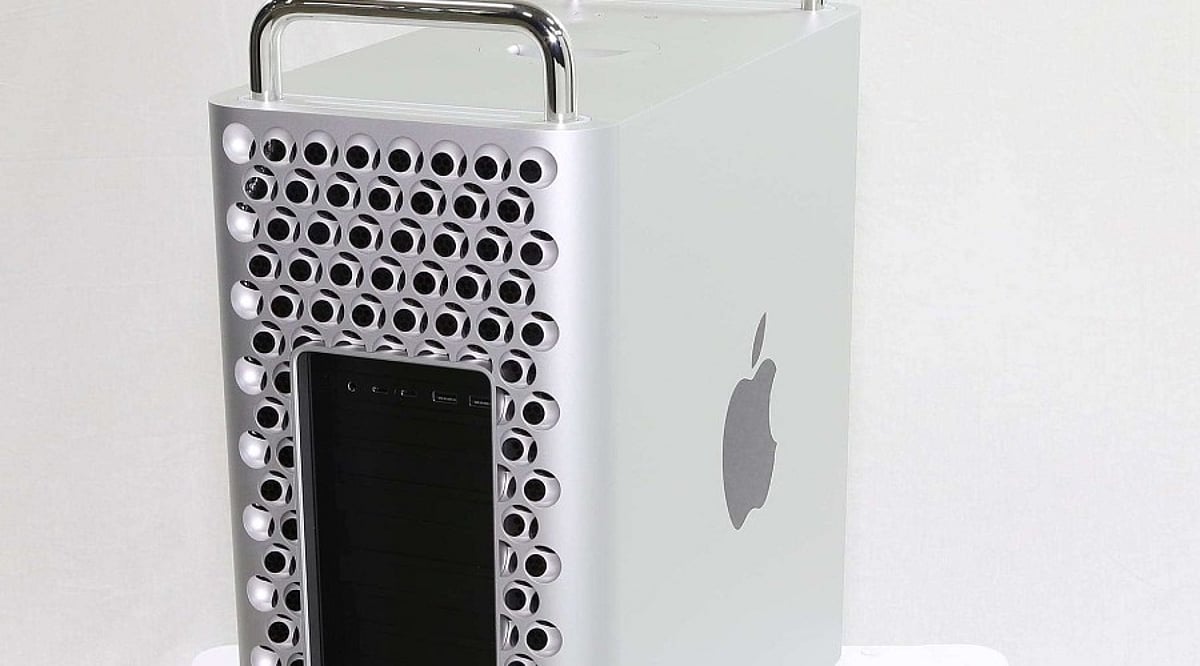
    Apple’s decision to discontinue the Mac Pro in March 2026 reportedly ended a long internal debate over the future of its most powerful desktop lineup. The company has since removed the Mac Pro from its website, directing professional users toward the Mac Studio, and confirmed no new Mac Pro hardware is planned.

    According to Bloomberg’s Mark Gurman in his ‘Power On’ newsletter, the end of the Mac Pro line ‘wasn’t always the plan.’ Apple had considered several hardware and chip options before giving up on it.

    Apple Worked on M2 Extreme and M3 Extreme Chips

    The biggest aspect of Apple’s fallen Mac Pro vision was the creation of higher-end Apple Silicon CPUs. Apple developed both M2 Extreme and M3 Extreme chips before dropping them, Gurman said. These chips were intended to sit above the ‘Ultra’ tier and would have made the Mac Pro outperform the Mac Studio. However, the projects were aborted due to high development costs and low demand for the more costly workstation-type machines.

    Two Unreleased Mac Pro Models Were in Development

    Apple also reportedly worked on two Mac Pro models that were never released, internally codenamed J170 and J190.

    • J170: A surprising project—a new Mac Pro powered by Intel chips, despite Apple’s strong push toward its own Apple Silicon. This version, targeted at specific professional applications, remained based on the x86 architecture and standard PCIe workflow.
    • J190: Expected to launch alongside the M3 Ultra Mac Studio in early 2025, featuring an M3 Ultra chip. The debut never happened, and Apple discontinued the Mac Pro line altogether.

    Mac Studio Has Replaced the Mac Pro’s Role

    The Mac Pro’s decline wasn’t solely due to performance. It was originally popular for its expandability—high-end graphics cards, audio cards, and other PCIe equipment. However, Apple Silicon adopts a system-on-chip design with unified memory, making upgrades via standard modules less relevant. Apple apparently concluded that maintaining the Mac Pro was no longer necessary to meet user needs. Gurman said he doesn’t think the Mac Pro is likely to return, ‘if ever.’

    This move marks a significant shift in Apple’s professional desktop strategy, consolidating its high-end offerings around the Mac Studio and its custom silicon.

  • India’s Semicon 2.0 Program to Take Equity Stakes in Chip Startups, Shifting from Grants to Venture-Style Funding

    India’s Semicon 2.0 Program to Take Equity Stakes in Chip Startups, Shifting from Grants to Venture-Style Funding

    The Indian government is preparing to take equity stakes in semiconductor startups under the newly approved Semicon 2.0 program, signaling a major shift in how it supports the country’s chip industry. Instead of relying primarily on one-time grants, the Centre plans to co-invest alongside venture capital (VC) firms, providing funding to promising startups while allowing founders to retain operational control. The move aims to strengthen India’s semiconductor design ecosystem and attract greater private investment into one of the country’s most strategic sectors.

    The policy is part of the broader India Semiconductor Mission (ISM) 2.0, which received Cabinet approval earlier this week with an outlay of Rs. 1.27 lakh crore to expand domestic semiconductor manufacturing, chip design, packaging, research, and supply-chain capabilities.

    From Grants to Venture-Style Funding

    Under the new scheme, eligible semiconductor startups that obtain funding from private venture capital firms would also receive matching investment from the government on an equity basis. Unlike conventional government funding schemes, the government will not seek board representation or management control in these startups.

    The Centre also plans to exit its investments as the companies mature or obtain additional funding, recycling the capital into other semiconductor firms. More mature and larger companies would be supported through royalty payments.

    Semicon 2.0 Expands Beyond Chip Manufacturing

    Semicon 2.0 emphasizes developing every link in the semiconductor value chain, including design, packaging, materials, equipment manufacturing, research, and skilled labor. The Indian government anticipates this will build a robust ecosystem at home, reduce reliance on foreign technology, and position India as a competitive player in the global semiconductor market.

    Speaking at a media interaction on Wednesday, India Semiconductor Mission (ISM) CEO Amitesh Kumar Sinha said, The government will also match the amount brought in by investors. The Centre would invest on the same commercial terms and hold the same class of equity as private investors. He added, We don’t want to interfere in their day-to-day working, clarifying that the government would remain a financial investor without board representation. Detailed operational guidelines will be issued separately.

    Sinha also noted, When the revenue starts flowing, we’ll take back 1.5 times the amount the government has given.

    A Confidence Boost for India’s Startup Ecosystem

    This move reflects an understanding that semiconductor R&D requires patient, long-term investment. Semiconductor companies often take years to become profitable as they develop innovative products. By having the government share risks with VC funds, the program is expected to increase private financing for young enterprises and provide more stable financial conditions during the startup stage. It may also encourage more entrepreneurs to pursue semiconductor development, leveraging India’s large engineering workforce.

    Bigger Than Startup Funding

    Beyond funding individual firms, the policy signals a fundamental shift in India’s industry approach. Rather than simply offering incentives, the Indian government is positioning itself as a long-term ecosystem builder by making equity investments that foster innovation and recycle public money back into the economy.

    If the strategy succeeds, it could create a steady pipeline of domestic semiconductor firms capable of supplying products for industries such as artificial intelligence, electric vehicles, telecommunications, and defense. At a time when global competition for stable chip supplies is intensifying, India is aiming to become not just a manufacturing hub but also an innovation center.

  • India Unveils Rs 1.27 Lakh Crore Semicon 2.0 Program to Build Global Chip Ecosystem

    The Union Cabinet has approved Semicon 2.0, a massive Rs 1.27 lakh crore program aimed at transforming India into a global hub for semiconductor design and production. This marks the country’s largest investment yet in chip manufacturing.

    Unlike the initial phase of the India Semiconductor Mission, which focused primarily on fabrication and packaging, Semicon 2.0 expands support across the entire value chain. The program is built around six pillars: chip design, semiconductor equipment and materials, fabrication plants, packaging and testing, research and development, and talent creation.

    It also introduces incentives for companies producing critical inputs such as specialty chemicals, gases, and manufacturing equipment. The government expects international firms to manufacture chips in India while boosting domestic capabilities amid surging demand from artificial intelligence, electric vehicles, smartphones, electronics, telecommunications, and defense sectors.

    This initiative follows the successes of Semicon 1.0, which secured several chip manufacturing and packaging projects in India. Industry experts believe Semicon 2.0 will ensure supply chain resilience, create skilled jobs, and attract increased investments. As global competition for reliable chip supplies intensifies, the program anchors India’s long-term ambition to become a dominant force in the semiconductor industry.

  • ASML Stock Jumps After Second 2026 Revenue Upgrade Fueled by AI Chip Demand

    ASML Stock Jumps After Second 2026 Revenue Upgrade Fueled by AI Chip Demand

    ASML shares surged more than 3% on Wednesday after the Dutch lithography giant raised its 2026 sales forecast for the second time this year, driven by robust demand for artificial intelligence chips. The company also reported quarterly revenue and profit that exceeded analyst expectations as chipmakers accelerated spending on advanced production equipment.

    The upgraded outlook reflects strong demand for tools used in AI processors, data centers, and high-bandwidth memory. ASML noted that customer orders remained elevated in the first half of 2026 as foundries and memory producers moved faster on capacity expansion plans.

    ASML Raises Sales and Margin Guidance

    ASML now expects 2026 net sales between €43 billion and €45 billion, up from its previous forecast of €36 billion to €40 billion. The company also lifted its gross margin range to 54%–56%, compared with the earlier 51%–53% guidance.

    Second-quarter net sales reached €9.3 billion, above the €8.8 billion consensus estimate from LSEG analysts. Net profit came in at €2.9 billion, versus the €2.6 billion market forecast. Shares opened more than 7% higher before settling to a gain of about 3.4%.

    CEO Christophe Fouquet described order intake as “extremely strong” during the first half and said customers are accelerating expansion plans across both logic and memory production. These commitments give ASML better visibility into demand through 2028.

    ASML plans to increase its 2026 low-NA EUV capacity by 30% and boost its deep ultraviolet immersion capacity by the same margin. Both systems are manufactured at its facility in Veldhoven, Netherlands.

    AI Spending Drives Equipment Orders

    ASML holds a near-monopoly position in advanced chip production as the sole supplier of extreme ultraviolet lithography machines used to manufacture the most advanced semiconductors. Its customers include TSMC, Intel, SK Hynix, and Micron Technology.

    Fouquet said stronger end-market demand encouraged customers to raise capital spending and bring forward expansion plans. “This has also translated practically into very strong order booking through the first half of 2026,” he said.

    Orders for EUV systems now extend into 2028, reflecting sustained investment in AI servers, advanced processors, and memory chips. Chipmakers are also seeking faster productivity gains through upgrades to installed equipment.

    TSMC, one of ASML’s largest customers, reported a 68% rise in June sales. The Taiwanese company is also preparing new advanced packaging plants to meet growing demand for AI chips and related services.

    TSMC Earnings Draw Closer Scrutiny

    ASML’s report arrives one day before TSMC is scheduled to release second-quarter results on July 16. Analysts expect TSMC to report earnings of $3.89 per share on revenue of $39.31 billion, based on consensus estimates.

    Investors will focus on TSMC’s capital spending plans, its 2-nanometer production ramp, and demand for advanced packaging. ASML’s order strength suggests major customers are still committing funds to new capacity, though TSMC’s guidance will provide the next key update.

    China remains an important market for ASML despite tighter export controls. The company still expects China to account for about 20% of annual sales. China’s share fell to 14% in the second quarter from 19% in the first quarter.

    South Korea became ASML’s largest market during the quarter, contributing 43% of sales. The company plans to provide a broader update on long-term targets at its Capital Markets Day on June 10, 2027.

  • Samsung Refutes US Share Listing Rumors After SK Hynix’s Record NASDAQ Debut

    Samsung Refutes US Share Listing Rumors After SK Hynix’s Record NASDAQ Debut

    Samsung Electronics has officially denied recent reports that it is considering a United States share listing via American depositary receipts (ADRs). The denial follows a media report suggesting the company had held preliminary discussions with banks about a potential offering. In a statement, a Samsung spokesperson said, “Samsung Electronics is not reviewing the possibility of issuing American Depositary Receipts,” directly challenging the earlier account. The company did not elaborate on any past discussions or its reasoning.

    The earlier report indicated that any talks were at a very early stage and that Samsung had not decided whether to proceed. It also noted that the review “may not result in a listing.” Samsung had previously explored a similar plan but ultimately chose not to move forward. ADRs allow foreign companies to list shares on U.S. exchanges, making them more accessible to American retail investors. Currently, Samsung Electronics trades primarily on the Korea Exchange, limiting direct access for U.S. investors.

    The speculation gained momentum after SK Hynix, Samsung’s main competitor in memory chips, completed a massive U.S. share offering. SK Hynix priced its ADRs at $149 each, raising approximately $26.5 billion — the largest U.S. listing by a foreign company, according to Reuters. The shares began trading on NASDAQ on July 10 and surged more than 12% on their first day, reflecting strong investor demand for exposure to memory chips used in AI data centers.

    Both Samsung and SK Hynix compete in the DRAM, NAND, and high-bandwidth memory markets, and both have benefited from surging demand for chips powering artificial intelligence servers. However, memory stocks remain volatile. SK Hynix shares later fell as some investors took profits, and market participants are closely watching production growth, chip supply, and the pace of AI infrastructure spending.

    Samsung recently released preliminary second-quarter results, estimating sales of about 171 trillion won and operating profit of approximately 89.4 trillion won — a dramatic increase from 4.68 trillion won a year earlier. Despite the strong profit growth, Samsung shares declined after the update, as investors weighed high expectations against concerns about future AI spending and potential oversupply. The company plans to publish detailed quarterly results on July 30.

    In June, Samsung and the SK Group announced major manufacturing expansions, each planning to build two new chip plants in South Korea. The combined investment totals 800 trillion won (about $536 billion). Additionally, South Korean companies including Naver have committed 550 trillion won to build 8.4 gigawatts of data-center capacity by 2029. For now, Samsung’s public denial leaves no active ADR plan confirmed. Any future U.S. listing would require a new official announcement or regulatory filing.

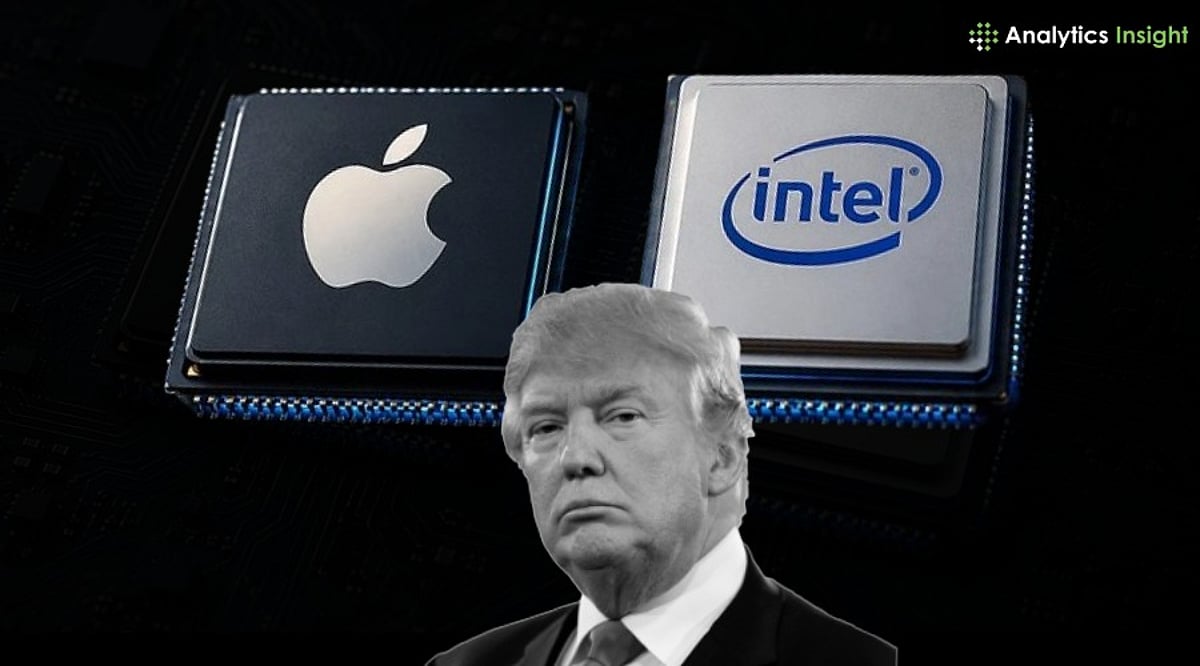
  • White House Urges Apple, NVIDIA, and SpaceX to Boost Intel’s US Chip Production

    White House Urges Apple, NVIDIA, and SpaceX to Boost Intel’s US Chip Production

    The Trump administration has taken an active role in Intel’s recovery, urging major US technology companies to invest in or work with the chipmaker. Apple, NVIDIA, and SpaceX have entered talks or partnerships with Intel as Washington seeks to expand semiconductor production within the United States.

    This support has improved Intel’s access to capital and raised demand for its processors. However, the company’s contract manufacturing business still relies heavily on work from Intel’s own product units. Outside foundry revenue remains small compared with the wider manufacturing division.

    White House Presses Tech Firms to Back Intel

    President Donald Trump and Commerce Secretary Howard Lutnick urged Apple Chief Executive Tim Cook to use Intel’s US factories during talks over proposed semiconductor tariffs. Apple later reached a preliminary agreement for Intel to manufacture selected chips, though large-scale production may take several years.

    Washington also converted about $8.87 billion in federal funding into an equity position of roughly 10% in Intel, making the US government the company’s largest shareholder. NVIDIA subsequently invested $5 billion, while SoftBank added $2 billion. Officials also encouraged Intel to work with NVIDIA and SpaceX.

    Meanwhile, Intel Chief Executive Lip-Bu Tan reorganized engineering teams and shifted spending toward equipment for advanced production and packaging. Intel also recruited managers with experience at Samsung Electronics and SK Hynix.

    Server Sales Rise as Intel Posts a Loss

    Intel reported first-quarter revenue of $13.6 billion, up 7% from one year earlier. Data Center and AI revenue rose 22% to $5.1 billion as cloud and AI customers bought more Xeon processors. Intel still recorded a net loss of $3.7 billion, partly linked to restructuring charges.

    The company expects second-quarter revenue between $13.8 billion and $14.8 billion and projects adjusted earnings of $0.20 per share. Tan said AI inference is ‘significantly increasing the need for Intel’s CPUs and wafer and advanced packaging offerings.’

    Additionally, Intel expanded its work with Google Cloud. The companies agreed to use Intel Xeon processors across AI, inference, and general computing tasks. The agreement gives Intel a large processor customer, though it does not establish Google as a major outside buyer for Intel’s foundry plants.

    Outside Foundry Revenue Stays Limited

    Intel Foundry reported $5.4 billion in first-quarter revenue, up 16% from a year earlier. Most of that amount came from Intel’s internal product groups. External foundry revenue reached only $174 million, compared with $31 million in the same quarter of 2025.

    The increase mainly came after Altera became an outside customer following its separation from Intel. Intel’s filing said the change accounted for much of the $143 million annual rise. Chief Financial Officer David Zinsner described the outside sales as ‘legacy business that we have mainly on the wafer side.’

    Intel has identified external foundry growth as a key long-term strategy. The company has secured capital, processor agreements, and government support, but first-quarter figures show that third-party manufacturing orders have not yet become a major source of revenue.

  • SK Hynix Stock Jumps 13% on Nasdaq Debut After Record $26.5 Billion IPO

    SK Hynix Stock Jumps 13% on Nasdaq Debut After Record $26.5 Billion IPO

    SK Hynix shares surged nearly 13% in their Nasdaq debut on Friday, marking a strong entry into the U.S. market for the South Korean chipmaker. The company’s American depositary receipts opened at $170 and closed at $168.01, well above the $149 offer price.

    The $26.5 billion raised through the sale sets a record for the largest U.S. initial share offering by a foreign company. The listing gives American investors direct access to one of the leading suppliers of memory chips for artificial intelligence systems, amid a busy IPO market.

    Record-Breaking $26.5 Billion Sale

    SK Hynix sold 177.9 million American depositary receipts, with each ADR representing one-tenth of a common share. Demand exceeded available shares by more than seven times, according to reports, allowing the company to price the offer at $149 per ADR.

    The shares traded under the temporary ticker SKHYV during Friday’s when-issued session. Nasdaq said the ticker will change to SKHY on Monday, July 13, when regular trading begins. The company’s main stock market listing will remain on the Korea Exchange.

    AI Memory Demand Fuels Investor Interest

    SK Hynix leads the market for high-bandwidth memory (HBM), a type of chip placed close to advanced processors. HBM provides AI systems with quick access to data for complex computing tasks. Nvidia uses the technology in graphics processors built for data centers.

    Chairman Chey Tae-won said customer demand has remained high as companies expand AI infrastructure. “The demand is enormous, exponentially,” he said. He added that customers asked for more supply after SK Hynix announced plans to double production capacity within five years.

    The company supplies major technology firms, including Nvidia and Apple. Its regulatory filing indicates it holds 56.4% of the HBM market. Samsung Electronics and Micron Technology also produce HBM and storage chips for servers, phones, computers, and other electronic devices.

    New Funding Targets Factories and Equipment

    SK Hynix plans to use the proceeds from the U.S. offering to finance factories and production equipment. The company is expanding capacity as memory shortages raise prices and limit supply across the technology sector. New chip plants take several years to build and prepare for production.

    Part of the expansion includes a $4 billion advanced packaging facility in Indiana. The company also plans large manufacturing projects in South Korea, including a chip cluster in Yongin. These sites will support production of HBM and other memory products for AI servers.

    Memory manufacturing has a long history of sharp supply cycles. High demand can lead chipmakers to add capacity, while later oversupply can push prices lower. SK Hynix said newer uses, including AI agents and robots, require more memory than earlier computing systems.

    The U.S. listing follows a steep rise in SK Hynix’s Korea-listed shares. The stock gained 634% over the past year, supported by higher memory prices and AI spending. Friday’s Nasdaq debut broadens the company’s investor base while its Seoul listing remains active.

  • Apple and Broadcom Forge $30B+ Chip Supply Deal for US Manufacturing Through 2031

    Apple and Broadcom Forge $30B+ Chip Supply Deal for US Manufacturing Through 2031

    Apple has signed a multiyear agreement valued at over $30 billion with Broadcom to design and produce custom silicon parts and wireless connectivity chips in the United States through 2031. The deal includes a $1.5 billion expansion of Broadcom’s Fort Collins, Colorado facility, reinforcing Apple’s broader commitment to domestic manufacturing.

    Strategic Partnership Expansion

    The agreement covers advanced radio-frequency components, including FBAR filters, which are critical for wireless communication features in Apple products. This expands a long-standing supplier relationship and secures a larger US-based production path for key components used across Apple’s device lineup.

    Apple expects the collaboration to result in the production of more than 15 billion chips in the United States, supporting hundreds of American jobs tied to chip production and related manufacturing work. This deal is the largest commitment under Apple’s American Manufacturing Program, which aims to increase domestic production and deepen ties with US suppliers.

    Infrastructure Investment

    Broadcom will invest $1.5 billion to expand and modernize its Fort Collins facility, which will produce radio-frequency components and advanced wireless connectivity technologies for Apple devices. Apple CEO Tim Cook stated, “The cutting-edge components built in Fort Collins are essential to delivering the incredible performance and connectivity our customers expect, and we’re proud to deepen our investments in US-based suppliers that share our commitment to excellence and innovation.”

    Hock Tan, President and CEO of Broadcom, added, “Broadcom is proud to continue to work with Apple after decades of success together, and we share a strong commitment to American innovation.”

    Broader US Supply Chain Strategy

    The agreement aligns with Apple’s plan to invest $600 billion in the US economy over four years, covering manufacturing, job creation, supplier growth, and technology development. It also comes amid federal efforts to boost domestic chip production, with the Trump administration urging tech companies to reduce reliance on foreign supply chains.

    Following the announcement, Broadcom shares rose over 4%, while Apple shares dipped slightly, reflecting investor reactions to the expanded supplier role and spending commitments.

  • Daily Tech Roundup: India’s Semicon 2.0 Launch, CurifyLabs Funding, and Bitcoin Strategy Shift

    Daily Tech Roundup: India’s Semicon 2.0 Launch, CurifyLabs Funding, and Bitcoin Strategy Shift

    Greetings from the Digital World! Welcome to today’s quick tech roundup. From AI and startups to crypto, careers and digital innovation, here’s what made headlines today.

    What’s New Today

    India has launched Semicon 2.0 to boost its semiconductor industry, while Finnish health tech startup CurifyLabs secured funding to expand its personalized medicines platform. In cryptocurrency news, Grayscale claims that Bitcoin sales by Strategy could make its financial model more credible. Meanwhile, the IT skills shortage continues to challenge new graduates, and experts warn about JADEPUFFER AI agents capable of executing cyber attacks autonomously.

    Quick Insights

    • India’s Semicon 2.0 targets chip manufacturing, design, research, raw materials, equipment, and talent development.
    • CurifyLabs raised $14 million to expand its personalized medicine technology.
    • Grayscale believes Strategy’s Bitcoin sales could strengthen investor confidence.
    • Employers say many tech graduates still lack industry-ready skills despite high demand.
    • Researchers warn that JADEPUFFER AI can autonomously breach systems and deploy ransomware.

    A Quick Rundown

    India Launches Semicon 2.0 to Expand Chip Ecosystem Support

    India has launched Semicon 2.0, broadening its chip ambitions beyond manufacturing to include design, research, raw materials, equipment, and workforce development. The initiative aims to attract international investment and reduce reliance on foreign chips.

    CurifyLabs Raises $14 Million Series A

    CurifyLabs, a Finland-based healthcare technology firm specializing in personalized medicines, closed a $14 million Series A round. The funding will support international expansion, supply chain development, and research, enabling hospitals and pharmacies to produce customized medications.

    Grayscale Backs Strategy’s Bitcoin Sales

    Grayscale has expressed support for Strategy’s recent Bitcoin sales, stating that generating liquidity through cash could make the company’s funding process more sustainable and enhance investor confidence in its financial model.

    The IT Job Market Faces a Growing Skills Gap

    Fresh graduates are finding it harder to land tech jobs. Despite high demand, employers report that many candidates lack practical, industry-ready skills. The disconnect between academic learning and workplace expectations leaves many graduates underemployed while companies continue searching for qualified talent.

    JADEPUFFER AI Can Hack Systems Without Human Help

    Scientists have demonstrated that the experimental AI bot JADEPUFFER can execute cyber attacks with minimal human intervention. The research highlights the emerging threat of autonomous AI systems capable of identifying vulnerabilities, moving across networks, and deploying ransomware.