
Category: Semiconductors

  • S&P 500 and Nasdaq Rise on Chip Stock Rebound, Dow Slips After Record High

    S&P 500 and Nasdaq Rise on Chip Stock Rebound, Dow Slips After Record High

    U.S. stocks closed mixed on Monday as investors returned from the Independence Day holiday with renewed interest in technology and semiconductor shares. The S&P 500 and Nasdaq Composite advanced, while the Dow Jones Industrial Average slipped after briefly crossing the 53,000 threshold for the first time.

    The market’s focus remained on semiconductor stocks, Federal Reserve meeting minutes, and the start of second-quarter earnings season. Key names watched by traders included Broadcom, Apple, Microsoft, SpaceX, and SK Hynix.

    Chip Stocks Lead Nasdaq and S&P 500 Higher

    The Nasdaq Composite gained approximately 1.1%, while the S&P 500 rose 0.5% in morning trading. The Dow Jones Industrial Average fell 0.3% after briefly touching a fresh intraday record above 53,000. This divergence highlighted a split market, with technology stocks leading gains while some blue-chip names lost ground.

    Chip stocks rebounded after two weak sessions last week. The Philadelphia SE Semiconductor Index surged more than 4%, and the information technology sector led gains on the S&P 500. The recovery helped lift investor sentiment following recent pressure on AI-linked shares.

    Broadcom rose 5.7% after extending its chip supply partnership with Apple through 2031. The deal covers custom chip development and supply, giving investors another reason to return to semiconductor names. Micron Technology, Marvell Technology, Teradyne, Western Digital, and Oracle also gained as AI and data center demand remained in focus.

    Meanwhile, SK Hynix prepared to launch a U.S. listing aimed at raising approximately $28 billion. The offering added more attention to the global AI chip trade. The South Korean memory chipmaker has already drawn strong market interest this year, although its shares have also experienced sharp swings.

    Investors Watch Fed Minutes and Economic Data

    Investors also looked ahead to minutes from the Federal Reserve’s latest policy meeting. The minutes are due Wednesday and will be closely watched after the first meeting led by new Fed Chair Kevin Warsh. Traders have reduced bets on a July rate hike after last week’s cooler jobs report.

    According to CME FedWatch data, traders now see a 24% chance of a 25-basis-point rate hike at the July 29 meeting, down from about 30% a week earlier. The shift came as investors judged whether softer labor data could give the Fed more room to wait.

    The Institute for Supply Management reported that its services index slipped to 54.0 in June, close to market forecasts. The reading indicated that U.S. services activity continued to grow, though at a slightly slower pace. Prices eased but remained high, while employment moved back into growth territory.

    Trade Nation’s senior market analyst, David Morrison, expressed doubt about how much clarity the Fed minutes may offer. “Warsh wants the Fed to concentrate on the data and stick to that and not give any projections,” he said. “So it could be that the minutes don’t really give very much away.”

    Earnings Season and Stock Movers Stay in Focus

    Second-quarter earnings will become a key test for Wall Street later this week. Delta Air Lines and PepsiCo are among the companies expected to report results. Investors are watching whether corporate updates can support the market after strong gains in the major indexes last week.

    Morrison also pointed to uncertainty around the largest technology stocks. “This earnings season is important, given the fact that the Magnificent 7 have had a pretty tough time with things of late,” he said. He added that “just a little bit of good news” could help them resume their rally.

    Microsoft shares fell 1.8% after the company announced it would cut about 4,800 jobs, equal to roughly 2.1% of its workforce. The stock’s decline weighed on sentiment around large-cap technology, even as broader tech shares rose.

    SpaceX gained as investors prepared for its entry into the Nasdaq 100 on Tuesday. The move is expected to drive buying from funds that track the index. Elsewhere, O’Reilly Automotive dropped after reports indicated the company made a cash offer for Genuine Parts’ auto unit.

    Global markets were more muted. European stocks slipped slightly, while Asian markets ended mixed. Japan’s Topix rose, South Korea’s Kospi fell, and Hong Kong’s Hang Seng gained. Oil prices drifted after OPEC+ members agreed to raise output again in August, while U.S. Treasury yields edged lower.

    With the second-quarter earnings season beginning and the Federal Reserve minutes due later this week, investors are expected to look for fresh signals on corporate profitability and the future path of U.S. interest rates, which could shape the market’s next move.
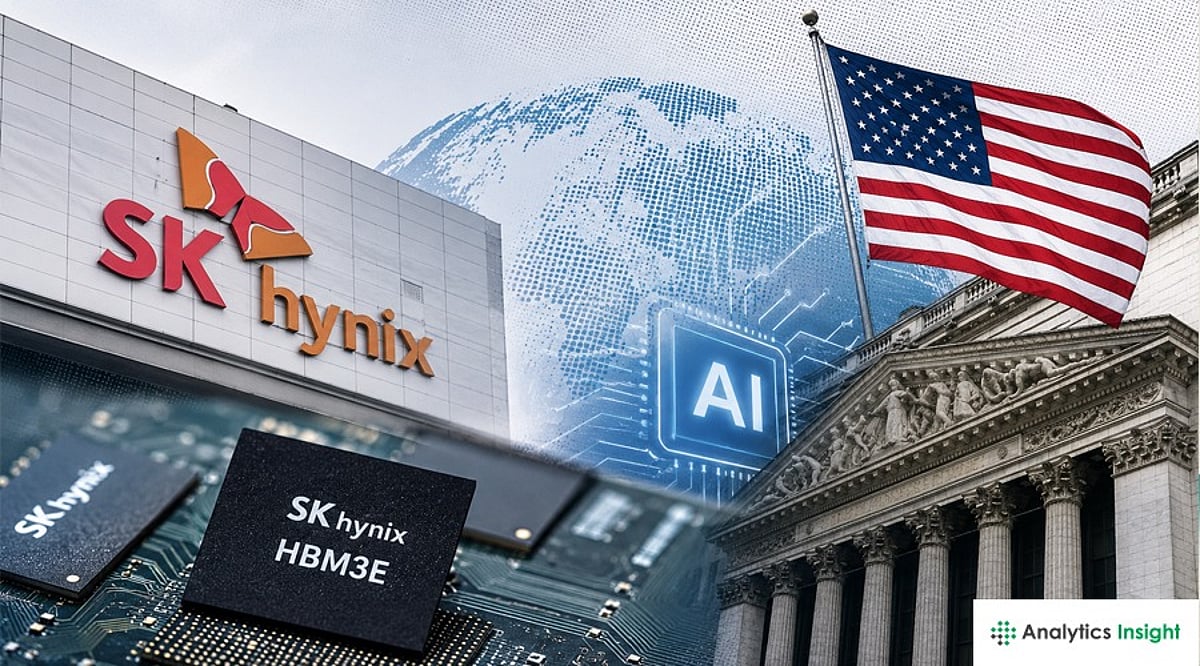

  • SK Hynix Reduces US IPO Ambition to $28 Billion as Memory Volatility Rises

    SK Hynix Reduces US IPO Ambition to $28 Billion as Memory Volatility Rises

    South Korean chipmaker SK Hynix is scaling back its US listing ambitions, trimming its target to roughly $28 billion amid growing concerns about the memory chip cycle. The company plans to offer American Depositary Receipts on the NASDAQ, aiming to raise funds for factory expansion and equipment purchases while the AI-driven demand for high-bandwidth memory continues to evolve.

    According to regulatory filings, SK Hynix will issue 17.79 million new shares via depositary receipts, with ten ADRs representing one common share. The final pricing is expected on Thursday, with trading set to begin Friday. The revised target of about 43.141 trillion won ($28.21 billion) is lower than the earlier estimate of 45.453 trillion won, reflecting recent declines in the company’s Seoul-listed shares, which fell about 4% on Monday to 2,327,000 won. Broader pressure on memory chip stocks and a dip in the KOSPI index have contributed to the cautious outlook.

    If completed, the deal would rank among the largest share sales in history, trailing only SpaceX’s record US listing last month and surpassing major offerings like Saudi Aramco and Alibaba. The proceeds will be used to expand chip facilities in South Korea and acquire advanced equipment, including ASML’s extreme ultraviolet scanners, essential for cutting-edge semiconductor production.

    SK Hynix is a key supplier of high-bandwidth memory to AI infrastructure giants such as NVIDIA and Google. The company’s stock has surged this year, buoyed by AI demand, but investors remain wary of the memory cycle’s mid-stage timing. “We expect better access, but timing of the memory cycle is equally important,” said Sundeep Gantori, chief investment officer of equities at Standard Chartered. Steve Sosnick of Interactive Brokers noted that the US listing would primarily benefit individual and smaller institutional investors seeking momentum in AI-linked stocks.

    The NASDAQ listing is expected to improve access for US investors and potentially narrow the valuation gap with rival Micron Technology. It could also pave the way for inclusion in the Philadelphia Semiconductor Index, tracked by global passive funds. Dave Mazza, CEO of Roundhill Investments, described the move as “more than a liquidity event,” emphasizing that SK Hynix has been a crucial company that most US institutions could not easily own.

    South Korea’s broader semiconductor push, including a $576 billion chip and AI investment program led by President Lee Jae Myung, underscores the strategic importance of such expansions. Lee has urged officials to expedite permits and infrastructure to support the country’s advanced industry ambitions.

  • India’s Semiconductor Ambitions Get a Boost as PM Modi Launches New Chip Plant and Electronics Roadmap

    India’s Semiconductor Ambitions Get a Boost as PM Modi Launches New Chip Plant and Electronics Roadmap

    India’s Electronics Sector Reaches New Heights

    India has solidified its position as the world’s second-largest mobile phone manufacturer, and Prime Minister Narendra Modi is now charting a bold course for the country’s electronics future. On July 4, 2026, Modi inaugurated the CG Semi Outsourced Semiconductor Assembly and Test (OSAT) facility in Sanand, Gujarat, marking a key milestone in India’s journey from assembling phones to producing semiconductors domestically.

    Speaking at the event, Modi emphasized that the plant represents the next logical step in a decade-long electronics revolution, moving the nation up the value chain and reinforcing its role in the global technology supply chain.

    The Shift from Phones to Chips: Key Numbers

    Modi highlighted India’s mobile manufacturing growth as the foundation for this shift. Since 2014, mobile phone production has surged approximately 33 times, making India the world’s second-largest mobile phone manufacturer and exporter. Overall electronics production has increased nearly sevenfold, while electronics exports have grown almost elevenfold over the same period.

    “The expansion of the semiconductor industry in India did not happen overnight. It is the next step in the electronics revolution that has taken place in India over the past decade,” Modi said. “First products, then components and now semiconductors… India is building the entire electronics value chain. This is the roadmap to Viksit Bharat. This is the next phase of Make in India.”

    Inside the Sanand Plant and Production Targets

    The Rs. 7,500 crore CG Semi facility has already begun commercial production of semiconductor packaging, with an initial annual target of 200 million chips. Modi expressed confidence that the plant will quickly scale toward a national goal of 500 million chips annually. Once the Sanand cluster is fully developed, he projected a daily output of 1.5 crore (15 million) chips.

    The Prime Minister credited the project as a collaboration between Indian, Japanese, and Thai industry partners. He also praised the facility’s diverse workforce, which includes women trained in states like Jharkhand, Madhya Pradesh, and Chhattisgarh, with some employees receiving advanced training in Malaysia. Modi called them representatives of a ‘Mini India’ operating within a single plant.

    Broader Make in India Push

    Modi tied the Sanand launch to a broader national roadmap, noting that four operational semiconductor facilities are expected in 2026 alone. The government’s goal is to cover design, manufacturing, packaging, and testing capabilities entirely within India. He framed this as the next phase of Make in India and a building block toward a ‘Viksit Bharat’ (Developed India) vision.

    He also pointed to parallel efforts to secure domestic access to critical and high-tech minerals needed to support long-term chip manufacturing, ensuring a resilient supply chain for the future.

    Political Framing and Reactions

    Modi used part of his address to contrast the current pace of semiconductor investment with what he described as a lack of follow-through on similar plans under previous governments, referencing past proposals that earmarked land near Gandhinagar and Sanand for chip projects but never materialized.

    Union Railway Minister Ashwini Vaishnaw and Gujarat Chief Minister Bhupendra Patel also spoke at the event, reinforcing the state’s positioning as an emerging hub within India’s broader semiconductor mission.

  • Tech Roundup: Samsung Stocks Dip, Indian Startups Thrive Under Digital Rules, Robinhood Unveils Blockchain, and Anthropic Releases Claude Sonnet 5

    Tech Roundup: Samsung Stocks Dip, Indian Startups Thrive Under Digital Rules, Robinhood Unveils Blockchain, and Anthropic Releases Claude Sonnet 5

    Good morning! Here’s your quick roundup of today’s biggest developments across semiconductors, digital policy, enterprise AI, cryptocurrency, and generative AI.

    What’s New Today

    • South Korean technology stocks took a hit after a Nasdaq-led selloff.
    • India’s digital regulatory measures are helping startups scale rapidly.
    • Ford is hiring hundreds of engineers despite the rise of AI automation.
    • Robinhood launched its own public blockchain for tokenized assets.
    • Anthropic released Claude Sonnet 5 with improved agentic AI capabilities.

    Fast-Track Insights

    • Samsung and SK Hynix shares decline amid global tech weakness.
    • India’s digital ecosystem strengthens startup growth.
    • Ford adds 350 engineers to support product development.
    • Robinhood launches a public blockchain for tokenized assets.
    • Claude Sonnet 5 expands AI capabilities with API access.

    Samsung and SK Hynix Shares Fall After Global Tech Selloff

    Samsung Electronics and SK Hynix stocks fell amid an acute selloff in U.S. tech shares on the Nasdaq. The downturn followed rising concerns about valuations tied to artificial intelligence and semiconductor demand. Analysts, however, maintain a long-term growth outlook, citing sustained investments in AI infrastructure and memory chips.

    India’s Digital Rules Strengthen Startup Ecosystem

    An Oxford Economics report indicates that India’s evolving digital regulations are helping startups expand by boosting consumer trust, encouraging innovation, and creating a more predictable business environment. The study highlights that balanced policies are supporting investment, digital adoption, and economic growth, enabling emerging companies to compete more effectively in the technology sector.

    Ford Hires Engineers Despite AI-Driven Automation

    Ford is looking to hire approximately 350 engineers, recognizing that AI cannot fully replace human skills in automobile production. Experts note that while AI can increase productivity, it is not a substitute for human engineering creativity, product design, and safety expertise. The hiring drive reflects the lasting importance of human talent in modern vehicle development.

    Robinhood Launches Public Blockchain for Tokenized Assets

    Robinhood has introduced its own public blockchain, deepening its engagement with digital assets. The blockchain will support tokenized financial products and fast transactions. This development marks a significant step for Robinhood in the blockchain space.

    Claude Sonnet 5 Brings More Agentic AI Capabilities

    Anthropic has launched Claude Sonnet 5, its latest AI model featuring enhanced reasoning, coding, planning, and tool-use capabilities. The model is available through the Claude API, Claude Code, Amazon Bedrock, Google Cloud, and other platforms. Sonnet 5 now serves as the default model for Free and Pro users, while offering developers improved performance at lower API pricing.

  • Apple MacBook and iPad Price Hikes Stir Supplier Tensions; Micron Points to 2023 Pricing Pressure

    Apple MacBook and iPad Price Hikes Stir Supplier Tensions; Micron Points to 2023 Pricing Pressure

    Apple has raised prices across several MacBook, iPad, Apple TV, HomePod, and Vision Pro models, attributing the increases to soaring memory and storage costs driven by AI data center demand. The company announced the broad price hikes on June 25, affecting multiple hardware products while leaving iPhone prices unchanged. According to Apple, the rapid expansion of AI infrastructure has created exceptional demand for memory and storage chips, reducing available supply for consumer electronics.

    CEO Tim Cook described the current market conditions as unlike anything Apple has experienced before. He stated, “There’s less supply at a time when consumers want devices and the memory guys are passing along huge price increases.” Cook also called the situation “unavoidable” and “unsustainable.”

    Market data supports the broader supply trend. Research firms report that memory and storage prices are now roughly four times higher than they were several quarters ago. TrendForce estimates memory chip prices rose by as much as 98% during the first quarter of 2026 and could increase by another 58% to 63% in the following quarter. Those higher component costs have reached consumers: the MacBook Neo increased from $599 to $699, while several MacBook and iPad models received price increases ranging from $100 to $300. Apple also confirmed that the affected devices did not receive additional memory or storage upgrades despite the higher prices.

    Micron Points to Pricing Pressure During the 2023 Downturn

    Shortly after Apple’s announcement, Micron Chief Business Officer Sumit Sadana offered a different explanation for today’s supply constraints in an interview with The Wall Street Journal. He said some major customers pushed suppliers to accept extremely low prices during the memory market collapse in 2023. Sadana stated, “We told a couple of the customers who were being very aggressive with pricing at that time that this is not constructive.” He added that poor pricing and weak margins forced many companies across the industry to reduce investment in new production capacity.

    Although Sadana never identified Apple by name, Apple is widely known for negotiating long-term supply agreements and purchasing large volumes of memory components. During 2023, Micron reported deeply negative margins as the memory market experienced one of its weakest periods in recent years. The company has since recovered, reporting strong quarterly financial results with revenue rising sharply alongside improved profitability. Its shares climbed after the earnings report, while Apple’s stock declined following the announcement of higher product prices.

    Supply Constraints May Continue Beyond 2027

    Industry analysts say both explanations reflect different parts of the same market cycle. AI servers require high-bandwidth memory, which uses far more manufacturing capacity than standard memory found in smartphones and laptops. As more production shifts toward AI hardware, fewer chips remain available for consumer devices. Meanwhile, reduced investment during the 2023 downturn limited the industry’s ability to expand manufacturing before AI demand accelerated. New semiconductor facilities require several years to build and reach full production, meaning additional capacity cannot arrive quickly.

    Apple has reportedly begun seeking additional memory suppliers, including Chinese manufacturer CXMT, to improve future supply. However, Tim Cook said Apple has no plans to enter the memory business itself. Several analysts expect memory costs to remain elevated through at least 2027. Research firms also estimate memory could account for a much larger share of smartphone production costs over the next two years, leading some industry observers to expect future iPhone price increases if current market conditions continue.

    Related Articles

    • Apple Stock Slides 6% After MacBook and iPad Price Hikes Worldwide
    • US Stock Market Today: NASDAQ Falls as Apple Slides Nearly 5% While Dow Surges 598 Points to Record High
    • Micron Stock Surges 16% After $9.8B Revenue Beat and $22B AI Supply Deals
    • US Stock Market Today: S&P 500 Rises as Oil Prices Slide and Investors Await Micron’s Earnings Report
    • US Stock Market Today: S&P 500 and NASDAQ Slide as Micron Leads Global Chip Stock Sell-Off
  • FUJIFILM India Partners with Gujarat Government to Advance Semiconductor Materials Manufacturing

    FUJIFILM India Partners with Gujarat Government to Advance Semiconductor Materials Manufacturing

    FUJIFILM India has signed a Memorandum of Understanding (MoU) with the Gujarat State Electronics Mission (GSEM) under the Department of Science and Technology, Government of Gujarat, to explore opportunities for manufacturing advanced semiconductor materials in the country and strengthen the domestic supply chain. The agreement was formalized during the Vibrant Gujarat Regional Conference in Vadodara.

    The collaboration aligns with India’s goal of becoming a global semiconductor hub. Through the MoU, FUJIFILM India will assess the feasibility of establishing a semiconductor materials production base in Dholera. The initiative aims to work closely with government bodies, industry associations, and private enterprises to build a resilient semiconductor supply chain.

    As demand for semiconductors surges across electronics, automotive, telecommunications, and artificial intelligence sectors, this partnership is expected to boost India’s self-reliance in critical semiconductor materials and enhance its position in the global value chain.

    Koji Wada, Managing Director of FUJIFILM India, stated: “At FUJIFILM India, we have been closely assessing opportunities across the Indian market and evaluating how our diverse businesses can contribute to the country’s long-term growth and innovation ambitions. This MoU marks an important milestone and brings us a step closer to realizing our plans for investment in Dholera. Guided by our Group Purpose of ‘Giving our world more smiles,’ we believe innovation should create meaningful value for society.”

    Abhi Shekhar Singh, National Head – Strategy & Business Development, Electronic Materials Division, FUJIFILM India, added: “FUJIFILM Electronic Materials develops and manages chemical formulations that power the most critical semiconductor processes. We are a diverse global supplier delivering tailored support where our customers need us most. We are now gearing up to introduce our technology to India’s semiconductor ecosystem, supporting today’s aspirational India and guaranteeing tomorrow’s Viksit Bharat.”

    With more than 20 production bases worldwide and deep expertise in advanced materials, Fujifilm Electronic Materials views India as a strategic market. The MoU reflects the company’s support for the Government of India’s “Make in India” initiative through localized manufacturing, technology collaboration, and supply chain development. By strengthening its engagement with India’s semiconductor ecosystem, Fujifilm aims to contribute to a sustainable, future-ready manufacturing infrastructure that supports the nation’s long-term ambitions.

  • Best Energy-Efficient Graphics Cards of 2026: Nvidia, AMD, and Intel Options

    Best Energy-Efficient Graphics Cards of 2026: Nvidia, AMD, and Intel Options

    As power efficiency becomes a top priority for gamers, creators, and enterprise users, the graphics card market in 2026 offers several compelling options that balance performance with lower energy consumption. From mainstream gaming GPUs to professional workstation cards, here are the most energy-efficient graphics cards to consider this year.

    Consumer Gaming GPUs

    NVIDIA GeForce RTX 5060

    Delivers excellent 1080p gaming performance with improved AI features, lower power consumption, and efficient thermal management for mainstream users.

    NVIDIA GeForce RTX 5070

    Balances performance and efficiency through advanced architecture, supporting demanding games, AI workloads, and creative applications with optimized power usage.

    AMD Radeon RX 9060 XT

    Offers competitive gaming performance, efficient power utilization, modern ray tracing capabilities, and excellent value for performance-conscious buyers worldwide.

    AMD Radeon RX 9070

    Provides efficient graphics processing, strong rasterization performance, enhanced AI acceleration, and balanced energy consumption across demanding gaming workloads consistently.

    Intel Arc B580

    Affordable graphics solution delivering respectable gaming capabilities, AI acceleration, media encoding improvements, and competitive efficiency for mainstream desktop users today.

    Professional Workstation GPUs

    NVIDIA RTX 5000 Ada Generation

    Professional workstation GPU delivering exceptional AI computing, rendering performance, advanced graphics capabilities, and optimized energy efficiency for enterprise professionals.

    AMD Radeon PRO W7800

    Professional graphics card balancing workstation performance, AI acceleration, content creation capabilities, and efficient power management for demanding production environments.

    NVIDIA RTX 4000 Ada Generation

    Compact professional GPU offering efficient rendering, CAD acceleration, AI computing, and energy-conscious workstation performance across various industries globally.

    Intel Arc Pro B60

    Professional graphics solution designed for visualization, AI workloads, media production, and reliable power-efficient performance in enterprise computing environments effectively.

    Whether you are building a gaming rig or outfitting a workstation, these energy-efficient graphics cards help reduce electricity costs and heat output without sacrificing performance.

  • Apple Requests US Government Approval for Memory Chip Purchases from Blacklisted Chinese Firm CXMT

    Apple Requests US Government Approval for Memory Chip Purchases from Blacklisted Chinese Firm CXMT

    Apple is seeking approval from the U.S. government to purchase memory chips from ChangXin Memory Technologies (CXMT), a Chinese chipmaker currently on the Pentagon’s 1260H list of companies with alleged ties to China’s military. The move comes as the iPhone maker faces rising component costs and a global shortage of memory chips.

    According to sources familiar with the discussions, Apple has contacted the U.S. Commerce Department and other officials within President Donald Trump’s administration. The company wants clear assurances that future trade restrictions will not disrupt any potential supply agreement with CXMT.

    Why Apple is Turning to CXMT

    Apple is not currently prohibited from buying chips from CXMT. However, the designation on the Pentagon’s list creates political and business risks, even though it does not automatically block commercial deals. The reported talks began more than a month ago, and Apple has since reached out to officials across the administration and influential figures in Washington. The company is seeking government support before adding CXMT to its supply network, as any later restrictions could disrupt production.

    Apple also wants assurances that the Commerce Department will not place CXMT on the Entity List, which would impose strict licensing rules and could limit the Chinese chipmaker’s access to U.S. technology, making it harder for American companies to purchase their products.

    The White House has not publicly stated whether it will approve Apple’s request, and Apple declined to comment on the reported lobbying campaign. It remains unclear whether the company will receive the guarantees it is seeking.

    Product Price Increases Add Pressure

    Apple recently raised prices for Mac computers, iPads, home devices, and the Vision Pro headset, citing higher memory and storage costs. Chief Executive Tim Cook described current memory costs as “unsustainable” and said “everything needs to be on the table” when discussing possible suppliers, suggesting Apple could consider Chinese memory producers where U.S. rules allow such purchases.

    The price increases contributed to a sharp decline in Apple shares, erasing about $263 billion from its market value in one trading session. Investors also sold shares in other technology companies amid concerns that expensive components could reduce demand for consumer devices.

    Memory shortages have affected companies across the technology sector, with several manufacturers increasing prices, adjusting production plans, or looking for alternative suppliers. Apple warned earlier that the shortage could become more severe over the year.

    Political and Security Questions

    Some U.S. lawmakers oppose any arrangement between Apple and CXMT. House China Committee Chair John Moolenaar called a possible partnership a “grave mistake,” arguing that the deal could make the U.S. technology industry more dependent on Chinese supply chains.

    U.S. officials previously raised similar concerns when Apple considered buying memory chips from Yangtze Memory Technologies (YMTC) in 2022. Both YMTC and CXMT were recently restored to the Pentagon’s 1260H list after briefly being removed.

    Apple currently purchases DRAM memory from Micron Technology, Samsung Electronics, and SK Hynix. However, increased demand for high-bandwidth memory used in artificial intelligence systems has reduced the supply of standard memory chips for phones, computers, and other devices.

    CXMT is expanding its position in China’s semiconductor industry and has received approval for a Shanghai listing. Access to its chips could give Apple another source of lower-cost memory. Still, any agreement would depend on U.S. government policy and future trade decisions involving China.

  • Musk and Cook Warn Memory Chip Shortage Could Stifle AI Growth as Prices Soar

    Musk and Cook Warn Memory Chip Shortage Could Stifle AI Growth as Prices Soar

    Elon Musk has publicly backed Apple CEO Tim Cook’s stark warning about an unprecedented memory chip shortage, as surging costs driven by AI data center demand create ripple effects across the consumer electronics and automotive industries.

    Cook described the shortage as a “hundred-year flood,” noting he had not seen a similar cost shock in any sector in over four decades. Musk echoed that sentiment, calling it the “biggest price jump in anything I’ve ever seen.” Both executives are now calling for a massive expansion of production capacity to avert long-term constraints.

    AI Infrastructure Fuels Demand for Advanced Memory

    The rapid expansion of artificial intelligence infrastructure has dramatically increased demand for high-bandwidth memory (HBM) products, which are critical for running AI processors and handling large datasets. Chip manufacturers have shifted significant production capacity toward these higher-value components, creating tighter supplies of standard memory and storage chips used in smartphones, computers, televisions, and game consoles.

    Cook stated that Apple could no longer absorb the full increase in component costs, calling price hikes “unavoidable.” The company subsequently raised prices across several product lines, including Mac computers and iPads, with some increases reaching hundreds of dollars depending on the model and storage configuration. Apple also adjusted prices for its Apple TV, HomePod, and iMac products.

    Microsoft followed suit by announcing higher prices for Xbox consoles, and other electronics manufacturers have similarly adjusted their pricing as memory and storage costs climb throughout the supply chain.

    Tesla’s AI Ambitions at Risk

    Musk warned that the gap between memory demand and production capacity is “insane,” adding that the industry requires significantly higher output to alleviate the shortage. Tesla relies on advanced chips for its vehicles, AI systems, and Optimus robots. During Tesla’s fourth-quarter earnings call in January, Musk indicated that supplier output could constrain the company’s plans.

    He noted that memory could become “an even bigger limiter than AI logic.” While AI logic chips handle calculations, memory chips store and move the data those processors require. Both must be available in large volumes for AI systems to operate effectively.

    Tesla currently works with external manufacturers, including major chip producers in the United States and Asia, but Musk said the company faces risks if suppliers cannot ramp up production quickly enough. The shortage also impacts SpaceX and xAI, both of which require growing computing power for satellite systems, AI training, and data center projects.

    TeraFab Project Aims to Boost Production

    Musk has proposed TeraFab as a potential long-term solution. The project involves Tesla, SpaceX, and xAI, with Intel also announcing its participation. The planned facility would combine logic chip production, memory manufacturing, and advanced packaging, potentially reducing reliance on outside suppliers and supporting future AI and robotics projects.

    However, many details remain unclear. The companies have released limited information about production timelines, financing, and each participant’s exact role. Reports have noted that formal commitments between some parties have not been fully disclosed. Tesla has begun recruiting semiconductor workers with experience in advanced manufacturing, covering chip design, packaging, lithography, testing, and production management.

    Even with new factories, semiconductor facilities take years to build and prepare for mass production. Consequently, current supply pressure may persist as data center operators, automakers, and device manufacturers compete for available chips.

    For consumers, the immediate outcome is higher prices across computers, tablets, consoles, and other electronics that depend on memory and storage components. Both Cook and Musk have urged the industry to invest in new capacity, but relief is unlikely in the near term.

  • Exploring the Frontiers of 2D Materials: MIT’s Latest Breakthroughs in Superconductivity, Transistors, and Quantum Computing

    Exploring the Frontiers of 2D Materials: MIT’s Latest Breakthroughs in Superconductivity, Transistors, and Quantum Computing

    MIT researchers continue to push the boundaries of two-dimensional (2D) materials, unveiling a series of groundbreaking discoveries that promise to revolutionize electronics, quantum computing, and material science. From terahertz microscopes revealing superconducting electron motion to atom-thin transistors grown directly on silicon chips, these advances highlight the immense potential of 2D materials.

    Terahertz Microscope Reveals Superconducting Electron Motion

    For the first time, physicists used a novel terahertz microscope to observe the ‘jiggling’ of superconducting electrons in a fluid state. This breakthrough, reported on February 4, 2026, offers unprecedented insights into the dynamics of superconductivity.

    FabObscura: Turning Everyday Objects into Animated Displays

    On September 10, 2025, MIT introduced FabObscura, a software tool that enables users to design and print barrier-grid animations without electronics. This system transforms household items into dynamic, eye-catching displays, blending creativity with technology.

    Unexpected Magnetism in Atomically Thin Materials

    Physicists discovered and explained unexpected magnetism in an atomically thin material on January 23, 2025. This finding opens a new platform for studying quantum materials and their exotic properties.

    High-Rise 3D Chips: Stacking Transistors for AI Hardware

    On December 18, 2024, MIT engineers unveiled a technique to grow ‘high-rise’ 3D chips, exponentially increasing transistor density. This innovation could lead to more efficient AI hardware by stacking electronic components vertically.

    Non-Abelian Anyons: Exotic Matter for Quantum Computing

    MIT physicists predicted the formation of non-Abelian anyons without a magnetic field on November 18, 2024. These fractionalized electrons could enable robust quantum computing and open new avenues for basic research.

    Superlative Transistor Properties for Broad Electronics

    On July 26, 2024, researchers demonstrated a new transistor made from an ultrathin material that meets or exceeds industry standards. It offers superfast switching and extreme durability, promising broad applications in electronics.

    Superconductivity from Quasicrystals

    On October 11, 2023, physicists coaxed superconductivity from quasicrystals, creating a flexible platform for studying exotic phenomena and potentially leading to new materials.

    Powerful Tool for Tuning Atomically Thin Materials

    An international team reported a powerful tool for studying and tuning atomically thin materials on June 27, 2023. This work could lead to novel electronic applications.

    Atomically Thin Transistors Grown on Computer Chips

    On April 27, 2023, MIT engineers developed a low-temperature growth technique to integrate 2D materials directly onto silicon circuits, enabling denser and more powerful chips.

    Skyrmions: Recipe for Exotic Phenomena

    Physicists predicted new phenomena involving skyrmions on March 17, 2023, offering a recipe for realizing them. These could have applications in future computers and beyond.

    Superconductivity Switching in Magic-Angle Graphene

    On January 30, 2023, a study showed that a quick electric pulse can flip the electronic properties of magic-angle graphene, enabling ultrafast, brain-inspired superconducting electronics.

    Perfect Atom-Thin Materials on Industrial Silicon Wafers

    MIT engineers grew ‘perfect’ atom-thin materials on industrial silicon wafers on January 18, 2023, allowing chip manufacturers to produce next-generation transistors beyond silicon.

    Dresselhaus Lecture on Moiré Quantum Matter

    On December 21, 2022, Professor Pablo Jarillo-Herrero delivered the Dresselhaus Lecture, discussing moiré quantum matter and its potential for investigating strongly correlated and topological physics.

    Expanding 2D Materials: New Measurement Technique

    A new technique reported on November 18, 2022, accurately measures how atom-thin materials expand when heated, aiding the development of faster, more powerful electronic devices.

    Family of Robust Superconducting Graphene Structures

    On July 8, 2022, physicists discovered a family of robust superconducting graphene structures, which could inform the design of practical superconducting devices.