Category: Technology

  • Top Tech Companies by Revenue for 2026: Amazon Tops $742B, NVIDIA Surges on AI

    Top Tech Companies by Revenue for 2026: Amazon Tops $742B, NVIDIA Surges on AI

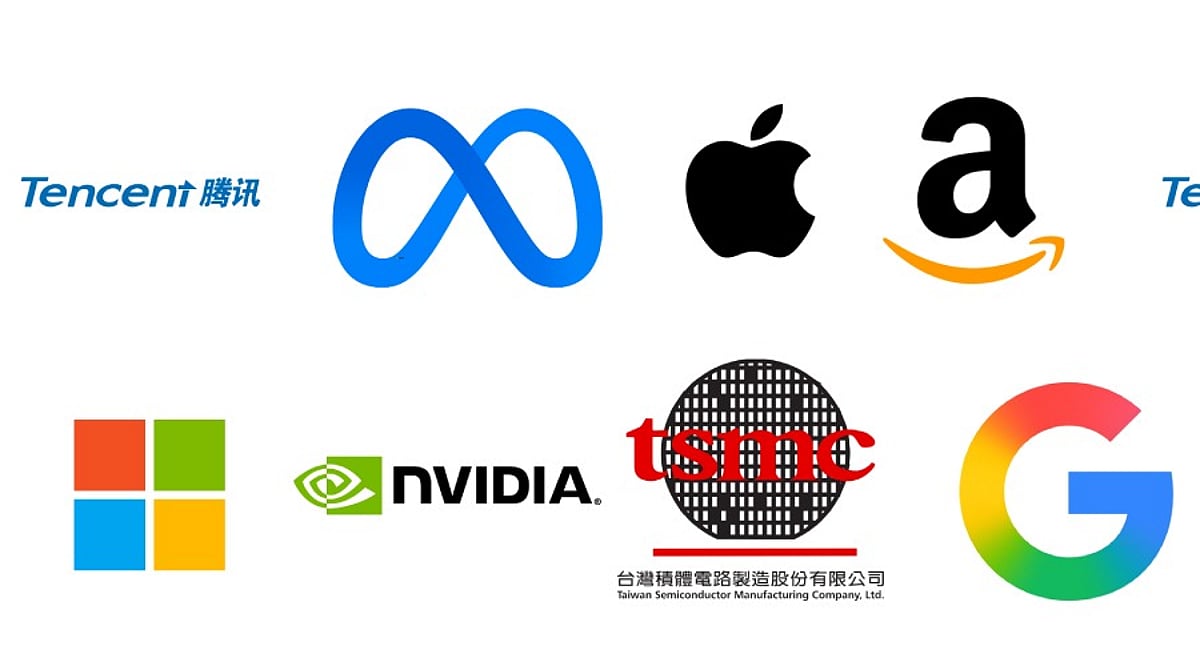
    Amazon leads the 2026 ranking of the world’s largest technology companies by trailing-12-month (TTM) revenue with $742.77 billion, followed by Apple and Alphabet. The list highlights how artificial intelligence, cloud computing, e-commerce, and semiconductors drive massive scale. NVIDIA’s exceptional rise underscores AI’s commercial impact, while Chinese giants JD.com and Alibaba hold strong positions.

    Key Takeaways

    • Amazon tops the 2026 ranking with $742.77 billion in TTM revenue.
    • AI is reshaping tech: NVIDIA’s surge highlights the growing commercial impact of artificial intelligence and data-center demand.
    • Diverse markets drive scale: Retail, cloud, advertising, semiconductors, e-commerce, software, and consumer electronics power the world’s largest technology companies.

    Amazon

    Amazon ranks first with TTM revenue of $742.77 billion. Its business covers online retail, cloud services, ads, devices, and digital products. Fortune also placed Amazon at No. 1 in its 2026 Global 500, with $716.9 billion in fiscal-year 2025 revenue. That reach gives the company unusual scale across several major technology markets.

    Apple

    Apple ranks second with $451.44 billion in TTM revenue. The iPhone remains a central part of its business, while Mac, iPad, services, and other devices add more sales. Fortune placed Apple at No. 6 on the 2026 Global 500, with $416.2 billion in fiscal-year 2025 revenue.

    Alphabet

    Alphabet ranks third with $422.49 billion in TTM revenue. Google Search remains a major source of sales, while YouTube, cloud services, and other digital products add more value. Alphabet also has a major role in artificial intelligence through its products and research. Fortune placed Alphabet at No. 8, with $402.8 billion in fiscal-year 2025 revenue.

    Microsoft

    Microsoft ranks fourth with $318.27 billion in TTM revenue. Its business covers software, cloud services, enterprise tools, games, and artificial intelligence products. Azure produced $101.9 billion in revenue for the fiscal year ended June 2026. Microsoft also reported $281.7 billion in latest fiscal-year revenue. Cloud and AI now hold a major place in its business.

    Samsung Electronics

    Samsung Electronics ranks fifth with $270.94 billion in TTM revenue. Its product range covers smartphones, televisions, home appliances, displays, and semiconductors. This mix gives Samsung several major sources of sales. Fortune placed Samsung Electronics at No. 26 on its 2026 Global 500, with $234.7 billion in fiscal-year 2025 revenue.

    Foxconn

    Foxconn ranks sixth with $261.93 billion in TTM revenue. The company follows a different model from Apple or Microsoft. Foxconn serves as a major electronics manufacturer and supports global brands across the hardware supply chain.

    NVIDIA

    NVIDIA ranks seventh with $253.49 billion in TTM revenue. The company has seen an exceptional rise in sales from artificial intelligence hardware. Its graphics processors and data-center products support large AI systems. Fortune reported $215.9 billion in fiscal-year 2025 revenue, with a 65.5% rise. NVIDIA now holds a much larger place in the semiconductor market.

    Meta Platforms

    Meta Platforms ranks eighth with $214.96 billion in TTM revenue. The company owns Facebook, Instagram, and WhatsApp. Digital ads provide most of its revenue, while artificial intelligence and virtual reality shape its product strategy.

    JD.com

    JD.com ranks ninth with $187.94 billion in TTM revenue. The Chinese company has a major position in online retail and related digital services. Its scale places it ahead of many well-known US and European technology firms.

    Alibaba

    Alibaba ranks tenth with $145.39 billion in TTM revenue. Its business covers e-commerce, cloud services, digital platforms, and other internet products. Alibaba remains one of China’s most important technology companies.

    What the 2026 Data Shows

    The top ten list shows several major sources of technology revenue. Amazon leads with a huge retail and cloud base, while Apple and Alphabet stay above $400 billion. Microsoft sits above $300 billion, while Samsung Electronics and Foxconn each exceed $260 billion. NVIDIA now exceeds $250 billion, while Meta Platforms, JD.com, and Alibaba each exceed $100 billion.

    TTM revenue offers the most current view, while Fortune’s 2026 Global 500 uses fiscal-year 2025 revenue. The two measures should remain separate in a direct comparison. The data also shows how artificial intelligence, cloud services, semiconductors, e-commerce, and consumer devices contribute to the scale of the world’s largest technology companies.

    FAQs

    Which is the largest technology company by revenue in 2026?

    Amazon ranks first, with $742.77 billion in trailing-12-month (TTM) revenue.

    Which technology companies have more than $400 billion in TTM revenue?

    Amazon, Apple, and Alphabet all exceed $400 billion in TTM revenue.

    Why has NVIDIA’s revenue grown so rapidly?

    NVIDIA has benefited from exceptional demand for AI-focused GPUs, data-center hardware, and infrastructure supporting large-scale artificial intelligence systems.

    What is TTM revenue?

    TTM, or trailing-12-month revenue, measures a company’s revenue over its most recent 12-month period, providing a more current view than an older fiscal year.

    Is TTM revenue directly comparable with Fortune’s Global 500 figures?

    Not exactly. TTM figures reflect the latest 12 months, while Fortune’s 2026 Global 500 ranking uses fiscal-year 2025 revenue, so the measures should be kept separate.


  • Top 100W GaN Chargers for Laptops in 2026: Compact, Fast, and Efficient

    Top 100W GaN Chargers for Laptops in 2026: Compact, Fast, and Efficient

    Need one charger for all your devices? The latest 100W GaN chargers are smaller, faster, and more efficient than ever. Here are the top picks for powering laptops, phones, and tablets in 2026.

    Best 100W GaN Chargers for Laptops

    • Anker Prime 100W GaN Charger: Anker’s premium charger offers four ports, ultra-fast charging, and excellent thermal management for everyday professionals.
    • UGREEN Nexode 100W: This compact charger supports USB-C PD 3.1 and can charge multiple devices simultaneously without sacrificing speed.
    • Baseus GaN5 Pro 100W: Featuring intelligent power distribution and a travel-friendly design, it’s ideal for frequent travelers.
    • Belkin BoostCharge Pro 100W: Belkin combines premium build quality with reliable fast charging for MacBooks, Windows laptops, and smartphones.
    • Satechi 100W USB-C GaN Charger: Designed for creators and professionals, Satechi offers premium aesthetics and stable multi-device charging.
    • Spigen ArcStation Pro 100W: A lightweight charger featuring GaN technology for efficient charging while reducing heat generation.
    • INIU 100W GaN Charger: A budget-friendly option delivering impressive performance with multiple charging ports and compact portability.

    How to Choose a 100W GaN Charger

    Look for PD 3.1 support, multiple USB-C ports, thermal protection, and international voltage compatibility to ensure you get the best performance and safety.

  • Anthropic Cracks Down on Chinese Firms Using VPNs to Access Claude AI

    Anthropic Cracks Down on Chinese Firms Using VPNs to Access Claude AI

    Anthropic is tightening access controls for its Claude AI assistant after discovering that Chinese companies have been using overseas entities, VPNs, and personal subscriptions to bypass a strict regional ban. The company explicitly blocks access from unsupported regions, including China, but firms such as Ant Financial and ByteDance reportedly found workarounds to keep Claude available to their engineers.

    Ant Financial provided some employees with corporate Claude accounts through its intranet, linked to a Singapore-based entity. ByteDance allowed engineers to pay for personal Claude subscriptions and seek reimbursement, routing access through VPNs. Microsoft also sold API access to Chinese companies with Singapore entities, enabling mainland engineers to use Claude through internal networks.

    While these methods violate Anthropic’s terms of service, they do not break US or Chinese law. Anthropic stated that it “explicitly prohibits accessing or facilitating access to Claude in unsupported regions, including China” and uses “changing detection systems to find and ban accounts that break its rules.”

    The company is also targeting “transfer station” services that route requests from mainland China through overseas Claude accounts, making access appear to come from supported regions. Smaller users may rely on these services, but larger Chinese AI companies often avoid them due to fears that operators could store, copy, or resell prompts, especially when working with private code and internal data.

    Claude Code has drawn strong demand from Chinese engineers because its coding outputs can support distillation—a process where smaller AI models learn to copy the behavior of stronger systems. This makes the tool valuable for firms trying to improve local models.

    Meanwhile, China’s National Vulnerability Database flagged several Claude Code versions released between April and June, saying they can send user location and identity data to remote servers without clear consent. The database listed versions 2.1.91 to 2.1.196 as affected, describing the issue as “security backdoor vulnerabilities” and a “serious threat.”

    Anthropic rejected the backdoor label, stating that the disputed function was an anti-abuse experiment meant to detect unauthorized users. It denied that Claude Code contained spyware or a tool built for secret surveillance. The dispute now links two separate issues: Anthropic’s effort to block Chinese access and China’s warning over Claude Code. Both sides frame the matter through security, but they point to different risks.

  • Master the Cisco 200-301 CCNA Exam: Proven Preparation Strategies

    Master the Cisco 200-301 CCNA Exam: Proven Preparation Strategies

    Earning a professional IT certification is an excellent way to strengthen your technical skills and improve career opportunities. Among the most respected networking certifications is the Cisco 200-301 exam, which validates a candidate’s understanding of networking fundamentals, IP connectivity, security basics, automation, and network access. Passing this exam demonstrates that you possess the knowledge required to work confidently in networking environments.

    Preparing for the Cisco 200-301 certification requires dedication, structured study, and consistent practice. With the right resources and a well-planned learning strategy, candidates can approach the exam with greater confidence.

    Why the Cisco 200-301 Certification Is Valuable

    Companies keep growing their networks, so people who know networking are always needed. Businesses depend on solid networks to keep things running, whether that’s communication, cloud services, remote work, or handling data. The Cisco 200-301 helps show that you actually know your stuff in areas like network fundamentals, IP addressing, switching technologies, routing concepts, network security, wireless networking, network automation, and infrastructure services. Many employers prefer hiring certified individuals because it demonstrates both technical knowledge and the dedication to learn.

    Understand the Exam Objectives

    One of the best things you can do before you even start studying is go through the official exam objectives. Read through them first to understand what’s coming. This helps you plan your time better and focus more on areas where you’re weak. Instead of memorizing random facts, try to understand how concepts connect. In real networks, everything works together, so it helps to see the bigger picture.

    Build a Structured Study Plan

    Having a plan keeps you consistent and prevents last-minute cramming. A good study schedule should include daily study sessions, weekly topic reviews, hands-on networking practice, practice questions, revision days, and progress tracking. Breaking preparation into manageable sections makes learning less overwhelming and improves long-term retention.

    Gain Practical Experience

    Reading textbooks alone is rarely enough to master networking concepts. Practical experience plays an important role in preparing for certification exams. Candidates can strengthen their understanding by configuring virtual routers, practicing switch configurations, building small network topologies, testing routing protocols, configuring VLANs, and exploring network security settings. Hands-on practice transforms theoretical knowledge into practical skills valuable during both the exam and future employment.

    Practice with Realistic Questions

    Practice tests help candidates become familiar with the format and difficulty of certification exams. They also highlight knowledge gaps that need additional review. Regular self-assessment offers several advantages: improved time management, greater confidence, better understanding of question patterns, stronger recall of technical concepts, and reduced exam anxiety. Candidates should review incorrect answers carefully instead of simply checking the correct option.

    Helpful Learning Resources

    Using reliable study materials can make exam preparation more efficient and organized. Combining multiple learning resources often provides a broader understanding of networking concepts. Consider official Cisco guides, video courses, online labs, and community forums.

    Focus on Understanding Rather Than Memorization

    Networking professionals solve real technical problems every day. Certification exams often evaluate conceptual understanding instead of simple memorization. Successful candidates focus on learning why protocols work, how devices communicate, when to use specific technologies, troubleshooting techniques, and security best practices. A deeper understanding improves both exam performance and workplace readiness.

    Review Weak Areas Regularly

    Every candidate has strengths and weaknesses. Regular review sessions help reinforce difficult topics before exam day. Subjects that often require additional practice include subnetting, routing protocols, VLAN configuration, IPv6 addressing, wireless networking, and network automation. Revisiting challenging concepts multiple times improves long-term memory.

    Develop Effective Exam-Day Strategies

    Preparation extends beyond technical knowledge. Candidates should also practice reading questions carefully, managing available time, eliminating incorrect answers, remaining calm under pressure, and reviewing marked questions before submitting. Strong exam techniques often improve overall performance.

    Continue Learning After Certification

    Passing the Cisco 200-301 exam represents an important milestone rather than the end of professional development. Technology continues evolving rapidly, making continuous learning essential. Certified professionals can expand their expertise by studying advanced routing, cybersecurity, cloud networking, wireless technologies, network automation, and infrastructure management. Continuous improvement supports long-term career growth and adaptability.

    Frequently Asked Questions

    What is the Cisco 200-301 exam? The Cisco 200-301 exam is the certification exam for Cisco Certified Network Associate (CCNA), covering networking fundamentals, IP connectivity, security, automation, and related topics.

    How long should I study for the exam? Study time varies depending on prior experience, but many candidates prepare over several weeks or months using a structured learning schedule.

    Is hands-on practice important? Yes. Practical experience helps reinforce networking concepts and improves problem-solving skills that are valuable during the exam and in professional environments.

    Are practice questions useful? Practice questions help candidates evaluate their understanding, identify weak areas, improve time management, and become familiar with exam-style questions.

    What topics require extra attention? Many people spend extra time on subnetting, routing, switching, security, wireless, and automation. These topics take practice, so it makes sense to slow down and really work through them.

    What happens after you pass? Don’t stop there. Keep learning. Try newer, more advanced topics. Get real hands-on experience too, not just book knowledge. This builds your skills over time and opens up more career opportunities.

    Conclusion

    Getting ready for the Cisco 200-301 isn’t just about reading books and hoping for the best. You need a structured plan, consistent practice, and a willingness to revisit weak areas. Use reliable study materials, get hands-on with configurations, and test yourself regularly. By combining these elements, you’ll walk into the exam with confidence. The skills you develop go beyond passing a test—they prepare you for real networking roles and set you up for long-term career success in IT.

  • Top Budget Gaming Laptops Under Rs. 80,000: Best Flipkart Deals in 2026

    Top Budget Gaming Laptops Under Rs. 80,000: Best Flipkart Deals in 2026

    Gaming laptops under Rs. 80,000 have become significantly more powerful in 2026, offering dedicated NVIDIA GeForce RTX graphics, high-refresh-rate displays, and fast SSD storage. Thanks to competitive pricing and frequent Flipkart discounts, buyers can now enjoy smooth 1080p gaming, content creation, and multitasking without stretching their budgets beyond the mid-range segment.

    Acer Nitro V Offers Excellent Price-to-Performance

    The Acer Nitro V remains one of the strongest value-for-money gaming laptops in this price category. Equipped with Intel Core or AMD Ryzen processors, NVIDIA GeForce RTX 3050 or RTX 4050 graphics (depending on offers), a 144Hz display, and fast SSD storage, it delivers dependable gaming performance for popular AAA and esports titles.

    ASUS TUF Gaming Series Stands Out for Durability

    ASUS TUF Gaming laptops continue to attract gamers looking for reliable performance and rugged build quality. Military-grade durability, efficient cooling systems, high-refresh-rate displays, and modern Intel or AMD processors make these laptops suitable for extended gaming sessions, college work, and professional productivity, especially during Flipkart sale events.

    Lenovo LOQ Delivers Modern Gaming Features

    Lenovo’s LOQ series has emerged as a popular choice among budget-conscious gamers. Featuring capable RTX graphics, responsive keyboards, advanced thermal management, and vibrant Full HD displays, these laptops offer a balanced mix of gaming, streaming, and everyday computing. Flipkart promotions often make LOQ models even more attractive within the Rs. 80,000 budget.

    MSI and HP Victus Provide Strong Alternatives

    MSI Thin and HP Victus laptops offer competitive specifications for gamers seeking affordable performance. With dedicated NVIDIA graphics, fast processors, upgradeable RAM, and SSD storage, both brands deliver smooth gameplay for popular multiplayer and single-player titles. Buyers should compare specifications carefully, as configurations frequently change during online sales and festive offers.

    Compare Specifications Before Choosing Flipkart Deals

    While discounts may appear attractive, buyers should compare graphics cards, processor generation, RAM capacity, display refresh rate, cooling efficiency, battery life, and warranty coverage before making a purchase. A slightly higher-priced configuration with better GPU performance can provide a significantly improved gaming experience and longer usable lifespan.

    Flipkart Sales Make Premium Gaming More Affordable

    Flipkart’s seasonal sales, bank offers, exchange bonuses, and no-cost EMI options continue to make gaming laptops under Rs. 80,000 more accessible in 2026. Choosing a model with the latest processor, dedicated RTX graphics, expandable memory, and efficient cooling can provide excellent long-term value for gaming, content creation, and everyday performance.

  • Why Acquiring Existing Capability Is Fueling the Biggest Telecom Deals of 2026

    Why Acquiring Existing Capability Is Fueling the Biggest Telecom Deals of 2026

    Telecom operators spent 2026 chasing growth without the capital drag of building everything themselves. From Stockholm to Sydney, many of the year’s most visible deals share the same quiet logic. Across each one, operators acquired or leased networks, spectrum and platforms that already existed, sidestepping much of the expense and time involved in building from scratch.

    The reward is faster access to capability without the expense of developing it internally.

    Why buying capability became the growth story of 2026

    Acquiring or leasing existing capability, rather than developing it internally, is increasingly a core growth strategy. The wholesale model alone is expanding fast. According to Future Market Insights, the global market for mobile virtual network operators is expected to grow from around USD 94 billion in 2026 to USD 195.6 billion by 2036, a compound annual rate of 7.6%.

    Two forces are driving the shift:

    • Subscriber growth has slowed in mature markets, so network owners lease spare capacity to lift utilization and add revenue without new customer-acquisition costs.
    • Challenger brands lease tier-1 access to compete on price and experience, sidestepping the billions a national build would demand.

    Dealmaking has followed. PwC’s US telecom deals outlook recorded 37 transactions in the first quarter of 2026, the second-highest quarterly volume in two years.

    Four moves worth watching

    Four deals from the past few months show how differently operators are putting this into practice.

    Telia doubles down on MVNOs in the Nordics

    Telia agreed on 8 April 2026 to acquire Telness, a Swedish mobile virtual network operator, from Nordic Communications Group. At closing, Telia will become the first mobile network operator to run Telness Tech’s Seamless OS platform, a cloud-native system that Telness Tech says already powers more than 24 operators across the US and Europe. Telia, which has around four million mobile subscribers in Sweden, will keep Telness under its own brand inside its business-to-business arm. For Telia, the acquisition adds an established MVNO brand and technology platform without having to develop either in-house.

    Nexfibre pushes for a wholesale challenger to BT Openreach

    In the United Kingdom, the owners of the nexfibre joint venture (InfraVia, Liberty Global and Telefonica) agreed in February 2026 to acquire Substantial Group, the parent of alternative fibre operator Netomnia and the retail brands YouFibre and brsk. The £2 billion deal is expected to unlock £3.5 billion of investment and create a scaled wholesale fibre challenger to BT Openreach. It has not been waved through. The UK Competition and Markets Authority has referred the transaction to an in-depth Phase 2 investigation, with a decision due by mid-December 2026, so the targeted third-quarter completion depends on that clearance.

    Amazon buys its way into satellite connectivity

    Amazon announced on 14 April 2026 a roughly USD 11.6 billion agreement to acquire Globalstar, handing it Globalstar’s low-Earth-orbit satellite network, global spectrum licenses and ground infrastructure. Those assets will feed direct-to-device services on Amazon Leo, extending cellular coverage beyond the reach of terrestrial networks. Expected to close in 2027 subject to regulatory approval, the deal is a reminder that the next wave of competition may arrive from well outside traditional telecom.

    Swoop turns wholesale access into margin

    In Australia, ASX-listed challenger Swoop Holdings signed a mobile wholesale agreement with TPG Telecom on 16 June 2026, giving its Moose Mobile brand access to TPG’s national network. Swoop expects the new terms to improve its gross margin percentage by 50% across FY27 to FY29, while growing its mobile base from about 135,000 to more than 180,000 subscribers over three years. The company is pairing the deal with a new billing platform and an eSIM launch to deepen its relationships with households, complementing its residential nbn plans. Chief revenue officer David Michaels said securing tier-1 terms gives the business ‘the commercial discipline and the network capability to grow mobile profitably’. For Swoop, leasing network capability offers a path to subscriber growth while improving the economics of each customer.

    What these moves share, and where they head next

    So what links a Swedish MVNO buyout, a British fibre deal, an American satellite acquisition and an Australian wholesale agreement? Each one reaches for capability that already exists. Three threads run through them:

    • Capital efficiency, with operators acquiring or leasing capability instead of funding years of construction.
    • A focus on margins and cost per user, so deals are judged on economics as much as coverage.
    • Speed to market, where a ready platform, network or spectrum holding can shortcut years of build and regulatory groundwork.

    For challengers, that shift is encouraging. Access to tier-1 networks, spectrum and turnkey platforms means a well-run brand can compete on value and customer experience without the cost of a national build. The names worth following through the rest of 2026 are the ones turning acquired or leased capability into loyal subscribers and durable margins.

    Marshall Thurlow is Director and Founder of Orion Marketing Pty Ltd. He is a digital marketer with expertise in SEO, website design, content marketing and project management.

  • How Metamaterials Are Revolutionizing 6G and Next-Generation Wireless Communications

    How Metamaterials Are Revolutionizing 6G and Next-Generation Wireless Communications

    Metamaterials are reshaping wireless communication by enabling precise control over radio waves. These engineered materials improve coverage, reduce energy consumption, support terahertz communication, increase network capacity, strengthen security, and unlock advanced services that will define future 6G networks.

    What Are Metamaterials?

    Metamaterials are artificial materials composed of tiny structures arranged in specific patterns. Their unique design gives them properties not found in natural materials. Instead of simply letting radio waves pass through, metamaterials can bend, focus, reflect, or redirect waves in a controlled manner. This ability comes from the shape and layout of their building blocks, offering a completely new way to manage electromagnetic signals in wireless networks.

    Why Metamaterials Matter for 6G

    The success of 6G depends on millimeter-wave and terahertz frequencies, which provide much larger bandwidth than current systems. However, these high-frequency signals lose power quickly, struggle to penetrate obstacles, and weaken in dense urban areas or indoors. Traditional solutions require more base stations and higher power, increasing cost and energy use. Metamaterials offer an alternative by steering signals intelligently, improving communication without massive infrastructure expansion.

    Reconfigurable Intelligent Surfaces (RIS)

    One of the most promising applications of metamaterials is the reconfigurable intelligent surface (RIS). These surfaces consist of thousands of programmable elements placed on walls, ceilings, windows, or billboards. Each element can electronically adjust the direction of incoming radio waves, directing them precisely where needed. This turns random reflections into focused transmissions, eliminating dead zones and improving coverage in challenging environments. Since many RIS designs are passive, they consume very little power.

    Better Coverage and Higher Capacity

    Metamaterials dramatically improve wireless coverage in difficult locations such as offices, underground stations, factories, and crowded city streets. Intelligent surfaces redirect signals around obstacles, reducing dead zones without additional towers. By precisely controlling radio waves, multiple users can share the same spectrum more efficiently, lowering interference and boosting network capacity — even in densely populated areas.

    Energy Savings and Faster Communication

    Energy efficiency is a key goal for future networks. Instead of relying on powerful transmitters and extra base stations, passive metamaterial surfaces redirect signals with minimal power. This reduces electricity usage and operating costs. Metamaterials also enable reliable terahertz communication, which offers enormous bandwidth for ultra-high data rates. Intelligent surfaces guide terahertz signals along optimal paths, overcoming rapid signal loss and making high-speed links more dependable.

    AI Support, Sensing, and Security

    Artificial intelligence plays a crucial role in optimizing intelligent metamaterial surfaces. AI algorithms analyze network conditions in real time, selecting the best signal direction, reflection angle, and phase adjustment. This allows the network to adapt instantly to user movement and traffic changes, creating a smart wireless environment.

    Metamaterials also support Integrated Sensing and Communication (ISAC), a key 6G feature. The same infrastructure can provide both communication and object detection, motion tracking, localization, and environmental mapping. This benefits autonomous vehicles, industrial automation, healthcare, robotics, and smart cities.

    In terms of security, intelligent surfaces direct signals precisely to intended receivers, minimizing leakage. This controlled propagation makes interception much harder, strengthening physical-layer security before encryption.

    Challenges and Future Outlook

    Despite impressive progress, large-scale commercial deployment faces challenges. Accurate channel estimation requires complex calculations for surfaces with thousands of elements. Fast-moving users demand near-instantaneous signal updates. Hardware design, costs, and international standardization still need further development.

    Nevertheless, research is accelerating. New technologies such as active RIS, hybrid RIS, STAR-RIS, and dynamic metasurface antennas aim to overcome current limitations. As these innovations mature, metamaterials will become a cornerstone of 6G wireless networks, enabling faster, smarter, and more reliable communication systems for the future.

    Frequently Asked Questions

    1. What are metamaterials in wireless communication?
    Metamaterials are specially designed materials that control radio waves by bending, reflecting, or focusing them to improve wireless communication.

    2. Why are metamaterials important for 6G networks?
    They solve key challenges like signal blockage, weak coverage, and high energy use while enabling much faster data transmission.

    3. What is a Reconfigurable Intelligent Surface (RIS)?
    RIS is a programmable surface with many small elements that redirect radio signals toward the desired location for better communication.

    4. How do metamaterials improve network security?
    They direct signals toward intended receivers and reduce unwanted leakage, making interception more difficult.

    5. Which industries will benefit from metamaterial-based 6G technology?
    Smart cities, healthcare, autonomous vehicles, manufacturing, robotics, agriculture, and extended reality applications.

  • How AI Is Transforming Phone Calls: Real-Time Transcription, Translation, and Beyond

    How AI Is Transforming Phone Calls: Real-Time Transcription, Translation, and Beyond

    Artificial intelligence is rapidly changing the way we communicate over the phone. From live transcription to instant summaries and real-time language translation, AI is making phone calls more efficient, accessible, and secure. Here’s an overview of the key capabilities and what they mean for users and businesses.

    Live Call Transcription

    AI converts spoken conversations into real-time text, making it easier to review discussions, capture details, and improve accessibility for everyone.

    Instant Call Summaries

    AI automatically creates concise summaries after conversations, highlighting key decisions, action items, and important points without manual note-taking effort.

    Real-Time Language Translation

    AI translates conversations instantly between different languages, helping people communicate naturally without requiring professional interpreters during phone calls.

    Spam Call Detection

    AI identifies suspicious callers using behavioral patterns and known databases, reducing unwanted interruptions and protecting users from scam attempts effectively.

    Smart Voice Assistance

    AI assistants answer questions, retrieve information, schedule appointments, and complete simple tasks without interrupting the natural flow of conversations.

    Sentiment Analysis

    AI analyzes tone, emotion, and speech patterns to identify customer satisfaction, frustration, or urgency, helping businesses improve communication quality consistently.

    Automatic Action Items

    AI recognizes commitments made during calls and generates reminders, follow-up tasks, and calendar events, improving productivity after every conversation.

    Privacy and Security Challenges

    AI processing requires sensitive voice data, making strong encryption, transparent consent, and responsible data handling essential for user trust.

    The Future of AI-Powered Calling

    AI-powered conversations will become more personalized, context-aware, and proactive, offering seamless assistance while balancing convenience with responsible privacy practices.

  • X Launches Built-in Video Editor for iPhone to Encourage Original Content

    X Launches Built-in Video Editor for iPhone to Encourage Original Content

    X has introduced a new built-in video editor for iPhone users, designed to help creators produce original videos without leaving the app. The feature aims to reduce reposted content, enhance creator tools, and strengthen X’s position against competitors like TikTok, YouTube, and Instagram.

    The video editor is now available on iOS, with an Android version expected in the future. It includes basic editing tools such as trimming, adding captions, customizing caption styles, and a green screen option that lets users use a photo from their phone or a post on X as the background. These tools are integrated directly into the app for seamless video creation and posting.

    Video content has become a significant part of user engagement on X, with many popular clips being reposted from other accounts. By making it easier to create original videos within the app, X hopes to shift the focus from reposts to fresh, self-made content. The company wants original creators to receive more attention and value for their work.

    Nikita Bier, Head of Product at X, stated that the company plans to add more features to the video editor over the coming weeks. He noted that many large posts from prominent creators are often copied from others, and X aims to change this habit by providing better tools for original content creation. The update is part of a broader strategy to build a stronger creator platform, similar to TikTok, YouTube, and Instagram.

    This new video editor is a small update but could have a significant impact over time. It demonstrates X’s commitment to original content and reducing reposts, potentially encouraging more users to create and share videos directly on the platform.

  • Morning Tech Roundup: NVIDIA’s New PC AI Chip, Enlife Raises ₹6 Crore, BOI Opens 779 Credit Officer Jobs, and More

    Morning Tech Roundup: NVIDIA’s New PC AI Chip, Enlife Raises ₹6 Crore, BOI Opens 779 Credit Officer Jobs, and More

    Good morning, tech fam! Here are the top headlines you need to know: NVIDIA has launched a new AI chip for personal computers, Enlife Research secured ₹6 crore in seed funding, Bank of India announced 779 Credit Officer vacancies, AI agents are advancing automation, and the Bank of England clarified its crypto policy stance.

    NVIDIA Introduces a New AI Chip for Personal Computers

    NVIDIA has unveiled a new AI chip designed specifically for laptops and desktops. This chip processes AI tasks directly on the device, reducing reliance on cloud services. The company promises faster performance, better privacy, and improved energy efficiency. NVIDIA believes this innovation will bring advanced AI capabilities to everyday PCs, transforming personal computing.

    Enlife Research Raises ₹6 Crore in Seed Funding

    Bengaluru-based deep-tech startup Enlife Research has raised ₹6 crore in a seed round led by Piper Serica VC Fund. The company is developing an AI-based blood test that could detect Alzheimer’s disease years before symptoms appear. The funds will be used to advance research, refine the product, and prepare for broader deployment.

    Bank of India Credit Officer Recruitment 2026: Key Details

    Bank of India has announced 779 Credit Officer vacancies in the GBO stream across MMGS-II, MMGS-III, and SMGS-IV scales. Online applications open from 30 June to 20 July 2026. The notification covers eligibility, age limits, education, work experience, fees, salary, selection process, and the revised exam pattern with English Language and Professional Knowledge sections.

    Future of AI Agents and Autonomous Workflows

    AI agents are evolving beyond simple chat interfaces into tools that can plan, use software, retain information, and complete tasks with minimal human intervention. Enhanced reasoning allows them to solve complex problems step by step. Teams of AI agents can collaborate, improving results. Companies are adopting these agents to save time and increase accuracy while maintaining safety, monitoring, and human oversight for critical tasks.

    Bank of England Says Farage Did Not Affect Crypto Policy

    Bank of England Governor Andrew Bailey stated that a private meeting with Nigel Farage did not result in any policy changes. Bailey emphasized the bank’s ability to recognize lobbying and make independent decisions. Farage had urged the bank to abandon plans for a potential state-backed digital currency. The Bank of England continues to study whether such a currency should be introduced.