Blog

  • Contextual AI vs. Traditional Machine Learning: How Context Improves AI Decisions

    Contextual AI vs. Traditional Machine Learning: How Context Improves AI Decisions

    Artificial intelligence is increasingly woven into everyday life, from movie recommendations to email drafting and customer support. As these systems become more integral, pattern recognition alone is no longer sufficient. AI must also grasp the context surrounding a request to deliver genuinely useful responses.

    What Is Contextual AI?

    Contextual AI refers to systems that use surrounding information—such as past interactions, user preferences, time, location, behavior, and immediate circumstances—to interpret an input and determine the most appropriate response or action. Unlike traditional models that treat each query in isolation, contextual AI assembles relevant data at the moment of generation. For instance, a virtual assistant asked to “remind me about this later” needs conversation history and task details to know what “this” means.

    Contextual AI is not necessarily a separate model type. It can integrate existing AI models with memory, databases, retrieved documents, user profiles, tools, and real-time signals to produce more situation-aware outcomes.

    How Traditional Machine Learning Works

    Traditional machine learning identifies patterns in training data and applies those patterns to new inputs. These models classify information, predict outcomes, or make recommendations based on learned features. For example, an e-commerce platform might analyze a user’s purchase and browsing history to forecast which products they are likely to buy next.

    This approach is effective for well-defined problems, but its outputs depend heavily on the data and features provided. If crucial situational information is missing, the prediction may miss the user’s actual current needs.

    Key Differences: Contextual AI vs. Traditional Machine Learning

    The primary distinction lies in how much surrounding information influences the result. Traditional machine learning might recommend running shoes because a customer previously bought sportswear. A contextual AI system, however, could also factor in that the customer is currently searching for hiking gear, prefers a specific price range, and is planning an outdoor trip.

    While the first approach relies on established behavioral patterns, the second attempts to understand the present situation. Contextual AI enables greater personalization and adaptive interactions by using conversation history as memory, retrieving current information, and adjusting answers as circumstances change. Traditional machine learning, by contrast, is typically built around narrow prediction or classification tasks. The two are not mutually exclusive; contextual AI applications can incorporate traditional ML models as components.

    Where Contextual AI Makes a Difference

    Contextual AI proves valuable across virtual assistants, customer service, recommendation engines, healthcare tools, smart devices, productivity applications, and enterprise software. A customer-service assistant, for instance, could consider a user’s previous support tickets, account details, and the latest company documentation before crafting a reply. A productivity app could use the user’s current task and prior conversation to offer more relevant suggestions.

    Real-time information is especially critical. Context-aware systems can adapt to changing environmental and user data, an already recognized feature in context-aware computing and smart environments.

    Challenges and Limitations

    More context does not automatically mean better AI. When supplied with outdated, incomplete, or irrelevant information, contextual systems can still produce incorrect answers. IBM notes that poorly managed context can lead to confusion and irrelevant outputs.

    Privacy is a significant concern, as context often involves sensitive details about a person’s behavior, location, health, or surroundings. Security, data quality, bias, and transparency become increasingly important as systems collect and combine more signals.

    Conclusion

    Contextual AI represents an evolution rather than a replacement of traditional machine learning. It makes AI systems more aware of their surroundings, enabling them to distinguish between a generic answer and one that truly fits the situation. As AI moves into more personal and business-critical applications, this capability will become increasingly vital.

    FAQs

    1. What is contextual AI?

    Contextual AI uses information surrounding an interaction—history, user preferences, real-time signals, and environmental factors—to produce more relevant responses or decisions.

    2. How is contextual AI different from traditional machine learning?

    Traditional machine learning applies patterns learned from training data, while contextual AI incorporates additional situational information to adapt outputs according to changing circumstances.

    3. Does contextual AI replace traditional machine learning?

    No. Contextual AI can incorporate traditional ML models within broader systems that combine predictions with retrieved information, memory, business rules, and real-time context.

    4. Where can contextual AI be used?

    Contextual AI supports virtual assistants, customer service, recommendation systems, productivity software, smart devices, healthcare applications, and enterprise tools requiring situation-aware responses.

    5. What are the limitations of contextual AI?

    Contextual AI can produce poor results when supplied with inaccurate, incomplete, or irrelevant information. Privacy, security, bias, transparency, and inappropriate assumptions are also key concerns.

  • Files by Google App: Features, Pros, Cons, and How to Use It Effectively

    Files by Google App: Features, Pros, Cons, and How to Use It Effectively

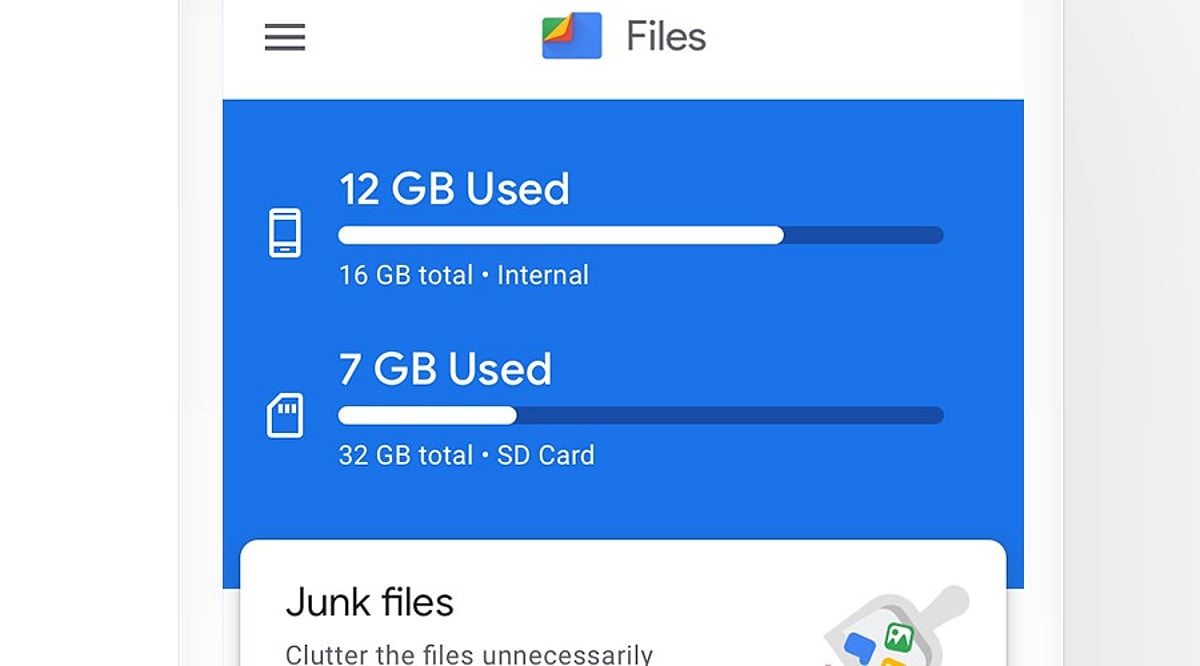
    Files by Google is a free Android file manager that simplifies file organization, storage cleanup, content sharing, and privacy protection. With over 5 billion downloads on the Google Play Store and a 4.3-star rating, it has become one of the most popular tools for managing phone storage.

    What Is Files by Google?

    Developed by Google, this app helps Android users find, move, copy, share, and delete files quickly. Files are neatly categorized into sections like Images, Videos, Documents, and Downloads, making navigation intuitive. A powerful search option lets you locate specific files instantly.

    Key Features

    • Storage Cleanup: Identifies junk files, duplicate content, old screenshots, and large unused files. Users can review suggestions before deleting.
    • Safe Folder: Protects private files with a PIN or pattern, keeping them hidden from the main file list.
    • SD Card Support: Move files to external storage on compatible devices.
    • Quick Share: Send files to nearby devices without email or messaging apps.
    • ZIP Support: Compress files or folders into ZIP archives.
    • Cloud Backup: Back up important files to the cloud.
    • Media Playback: Play stored videos and music directly within the app.

    Where to Download

    Download Files by Google exclusively from the Google Play Store. The app is free, ad-free, and uses less than 20 MB of storage. Official downloads ensure timely updates and security patches.

    Pros and Cons

    Pros

    • Free and ad-free
    • Simple, user-friendly interface
    • Lightweight (under 20 MB)
    • Effective storage cleanup and duplicate file detection
    • Quick Share and Safe Folder features
    • SD card and ZIP file support
    • Cloud backup and media playback

    Cons

    • Limited advanced file controls
    • Some features depend on Android version
    • Users must manually review cleanup suggestions
    • Safe Folder security relies on user-set PIN/pattern
    • Not ideal for users seeking a highly advanced file manager

    How to Use Files by Google

    1. Open the app and browse categories like Images, Videos, Documents, or Downloads.
    2. Use the search bar to find a specific file by name or type.
    3. Go to the Clean section to review and remove junk or duplicate files.
    4. Select a file, tap the menu, and choose Move or Copy to relocate it.
    5. Use Quick Share to send files to nearby compatible devices.
    6. Move private files to the Safe Folder and set a PIN or pattern.
    7. Select files or folders and use Compress to create a ZIP archive.

    Always double-check files before deleting—old photos or documents may still be important.

    Why It Stands Out

    Files by Google focuses on solving everyday storage and file management problems without unnecessary complexity. Its popularity—over 5 billion downloads—reflects its reliability and ease of use. For Android users who want a clean, straightforward tool to keep their phone organized, this app is a practical choice.

  • EV Fire Safety: 7 Essential Rules Every Electric Car Owner Should Follow

    EV Fire Safety: 7 Essential Rules Every Electric Car Owner Should Follow

    Electric vehicles are transforming the way we drive, but with high-voltage batteries comes a new set of safety responsibilities. Fires involving lithium-ion batteries are rare, but they can be intense and difficult to extinguish. Understanding how to prevent and respond to battery fires is essential for every EV owner. Here are seven critical EV fire safety rules to keep you, your passengers, and your property safe.

    1. Avoid Overnight Unattended Charging

    Leaving your EV plugged in and charging overnight, especially inside a garage, is risky. A fault in the battery or charging system can trigger thermal runaway while you sleep, reducing the chance of early detection and increasing the potential for a serious fire. Charge during the day when you can monitor the process whenever possible.

    2. Use Certified Charging Equipment

    Always use manufacturer-approved or certified chargers and cables. Cheap or uncertified adapters can overheat, short-circuit, or deliver inconsistent power, which may damage your vehicle’s battery management system. Investing in quality charging equipment is a simple and effective way to reduce fire risk.

    3. Park Away From Structures

    When parking your EV at home or in a public lot, keep a distance of at least 15 feet from buildings, other vehicles, and flammable materials. This buffer zone helps minimize the spread of fire if a battery incident occurs while the car is parked.

    4. Monitor Battery Health Regularly

    Schedule periodic battery health checks with authorized service centers. Early detection of cell degradation, imbalance, or cooling system failures can prevent dangerous thermal events. Routine maintenance is just as important for your EV’s battery as it is for the rest of the vehicle.

    5. Don’t Charge After Collisions

    After any accident or undercarriage impact, avoid charging your EV immediately. Hidden battery damage may not be visible, but it could short-circuit and ignite during the next charging session. Have the vehicle inspected by a qualified technician before plugging it in again.

    6. Keep a Class D Fire Extinguisher

    Standard fire extinguishers are ineffective against lithium-ion battery fires. Keep a Class D or lithium-ion-rated extinguisher in your garage or vehicle. These specialized extinguishers use agents designed to contain thermal runaway and help prevent the fire from spreading.

    7. Know Emergency Shutdown Procedures

    Familiarize yourself with your EV’s emergency power-off switch or app-based shutdown features. In the event of smoke, unusual heat, or a warning alert while driving, you need to know how to disconnect the battery quickly. Being prepared can make a critical difference in an emergency.

    By following these seven EV fire safety rules, you can enjoy the benefits of electric driving while keeping safety at the forefront. Awareness and preparation are your best defenses against battery-related fires.

  • Essential EV Fire Safety: 7 Rules Every Electric Car Owner Must Follow

    Essential EV Fire Safety: 7 Rules Every Electric Car Owner Must Follow

    Electric vehicles (EVs) are becoming more common on roads worldwide, but with their lithium-ion batteries comes a unique set of fire risks. Understanding how to prevent and respond to battery fires is crucial for every EV owner. Here are seven essential fire safety rules to keep you and your vehicle safe.

    1. Never Charge Unattended Overnight

    Avoid leaving your EV plugged in and charging unattended, especially overnight or in a closed garage. Battery faults can trigger thermal runaway while you sleep, drastically reducing response time and increasing the risk of a serious fire. Always monitor charging when possible and use a timer to stop charging once the battery is full.

    2. Use Only Certified Charging Equipment

    Always use manufacturer-approved or certified chargers and cables. Cheap, uncertified adapters can overheat, short-circuit, or deliver inconsistent power, potentially damaging your EV’s battery management system. Stick to reputable brands and avoid third-party accessories that lack proper safety certifications.

    3. Park Away from Structures and Flammable Materials

    When parking your EV, keep at least 15 feet (about 4.5 meters) away from buildings, other vehicles, or flammable materials. This distance helps minimize fire spread if a battery incident occurs while parked at home or in a public lot. Consider parking outdoors rather than in an attached garage when possible.

    4. Monitor Battery Health Regularly

    Schedule periodic battery health checks with authorized service centers. Early signs of degradation, cell imbalance, or cooling system failures can be detected before they lead to dangerous thermal events. Many EVs provide battery health reports through their infotainment system, but professional inspections add an extra layer of safety.

    5. Do Not Charge After a Collision

    Never charge your EV immediately after any accident or undercarriage impact. Hidden battery damage may not be visible but could short-circuit and ignite during the next charging session. Have the vehicle inspected by a qualified technician before resuming normal charging.

    6. Keep a Class D Fire Extinguisher Handy

    Store a lithium-ion-rated Class D fire extinguisher in your garage or vehicle. Standard ABC or CO2 extinguishers are ineffective against battery fires, which require specialized agents to contain thermal runaway. Make sure all household members know where it is and how to use it.

    7. Know Your EV’s Emergency Shutdown Procedure

    Familiarize yourself with your EV’s emergency power-off switch or app-based shutdown features. In case of smoke, unusual heat, or warning alerts while driving, knowing how to rapidly disconnect the battery can prevent a small issue from becoming a catastrophic fire. Check your owner’s manual for specific instructions.

    By following these seven rules, you can significantly reduce the risk of EV fires and ensure a safer driving experience. Stay informed, stay prepared, and enjoy the benefits of electric mobility responsibly.

  • iPhone 18 Pro vs iPhone 17 Pro: Is the Rs 30,000 Price Gap Justified?

    iPhone 18 Pro vs iPhone 17 Pro: Is the Rs 30,000 Price Gap Justified?

    Apple’s latest iPhone 18 Pro brings a faster A20 Pro chip, a variable-aperture main camera, improved battery life, and additional AI capabilities over the iPhone 17 Pro. However, with a starting price of Rs 1,64,900 in India compared to Rs 1,34,900 for the iPhone 17 Pro (both 256GB), the Rs 30,000 premium raises an important question: is the upgrade worth it for most users?

    Key Differences at a Glance

    The iPhone 18 Pro introduces several meaningful upgrades, but not all of them will matter to every buyer. Here’s a breakdown of the most significant changes.

    Camera: Variable Aperture Steals the Show

    The most notable camera upgrade is the 48MP Fusion main camera with a variable aperture offering ƒ/1.48, ƒ/1.8, ƒ/2.8, and ƒ/4.0 settings, compared to the iPhone 17 Pro’s fixed ƒ/1.78 aperture. This gives you more control over depth of field and low-light performance. Both phones share the same 48MP ultra-wide and telephoto cameras with 4x optical zoom and up to 8x optical-quality zoom. For photography enthusiasts, the variable aperture could be the deciding factor.

    Performance: A20 Pro vs A19 Pro

    The A20 Pro chip delivers roughly 20% faster CPU performance and 40% faster GPU performance compared to the A19 Pro, according to third-party analysis. The 7-core GPU and enhanced neural engine are aimed at demanding AI tasks, gaming, and creative applications. For everyday tasks like messaging or streaming, the difference is less noticeable.

    Battery Life: Three Extra Hours

    Apple claims up to 36 hours of video playback on the iPhone 18 Pro versus 33 hours on the iPhone 17 Pro. While not a dramatic jump, the extra three hours could make a difference for heavy users.

    Display: Minimal Changes

    Both models feature a 6.3-inch Super Retina XDR OLED display with ProMotion and a smaller Dynamic Island that supports up to three Live Activities. There are no major display improvements to justify an upgrade.

    Which One Should You Buy?

    The iPhone 18 Pro is clearly the more advanced device, but the Rs 30,000 price gap gives the iPhone 17 Pro a strong value proposition. If you prioritize the latest camera technology, AI performance, battery life, or up to 2TB storage, the iPhone 18 Pro is the better long-term investment. However, for most users who are satisfied with the A19 Pro chip, ProMotion display, and 48MP camera system, the iPhone 17 Pro remains an excellent choice—especially when retailer or bank discounts are available.

    Frequently Asked Questions

    Is the iPhone 18 Pro worth upgrading from the iPhone 17 Pro?
    The upgrade is worthwhile for camera enthusiasts, AI users, and performance seekers, but unnecessary for everyday users.

    What is the price difference?
    The iPhone 18 Pro starts at Rs 1,64,900, while the iPhone 17 Pro launched at Rs 1,34,900 in India.

    Does the iPhone 18 Pro have a better camera?
    Yes, its 48MP main camera features a variable aperture, offering greater flexibility than the fixed aperture on the iPhone 17 Pro.

    Which iPhone has better battery life?
    The iPhone 18 Pro offers up to 36 hours of video playback, compared to 33 hours on the iPhone 17 Pro.

    Which iPhone offers better value for money?
    The iPhone 17 Pro offers better value, especially when discounted, while the iPhone 18 Pro provides newer hardware.

  • iPhone 18 Pro vs iPhone 17 Pro: Is the Rs 30,000 Upgrade Worth It?

    iPhone 18 Pro vs iPhone 17 Pro: Is the Rs 30,000 Upgrade Worth It?

    Apple’s iPhone 18 Pro introduces several upgrades over the iPhone 17 Pro, including a faster A20 Pro chip, a variable-aperture main camera, improved battery life, and additional AI capabilities. However, with the newer model carrying a significant price premium in India, the upgrade may not make sense for everyone.

    Price Comparison

    The iPhone 18 Pro starts at Rs 1,64,900 for the 256GB model in India, while the iPhone 17 Pro launched at Rs 1,34,900 for the same storage configuration. That puts the difference at Rs 30,000 before retailer, bank, or exchange offers.

    Key Differences

    Camera Gets the Biggest Change

    One of the most significant upgrades is the iPhone 18 Pro’s 48 MP Fusion Main Camera with variable aperture (ƒ/1.48, ƒ/1.8, ƒ/2.8, and ƒ/4.0 options), compared to the iPhone 17 Pro’s fixed ƒ/1.78 aperture. This variable aperture allows greater control over light intake in different shooting conditions. Both models share 48MP main, ultra-wide, and telephoto cameras, with the telephoto offering 4x optical zoom and up to 8x optical-quality zoom.

    A20 Pro Targets Performance and AI

    The iPhone 18 Pro runs on Apple’s A20 Pro chip, replacing the A19 Pro. The newer chip features a 7-core GPU and enhanced neural acceleration for demanding AI workloads. Third-party analysis estimates roughly 20% improvement in CPU performance and 40% in GPU performance. These gains are most noticeable in demanding games, video processing, creative applications, and AI-heavy tasks, rather than everyday activities like messaging or browsing.

    Battery Life

    According to Apple, the iPhone 18 Pro provides up to 36 hours of video playback, compared with 33 hours on the iPhone 17 Pro. While not a massive increase, it may matter for heavy users.

    Display Changes Are Minor

    The iPhone 18 Pro features the same 6.3-inch Super Retina XDR OLED display with ProMotion and a smaller Dynamic Island that supports up to three Live Activities simultaneously. There are no major display improvements that would compel an upgrade.

    Which iPhone Pro Should You Buy?

    The iPhone 18 Pro is clearly superior, but the Rs 30,000 price gap gives the iPhone 17 Pro an edge in value, especially if retailers offer additional discounts. If you prioritize the latest camera technology, AI performance, battery life, or 2TB storage, the iPhone 18 Pro is the better choice. For most daily tasks, the iPhone 17 Pro’s A19 Pro chip, ProMotion display, and 48MP camera system remain more than capable. Ultimately, the decision hinges on price: with a big discount, the iPhone 17 Pro offers better value; if price is no object, the iPhone 18 Pro is the superior long-term investment.

    FAQs

    Is the iPhone 18 Pro worth upgrading from the iPhone 17 Pro?
    The upgrade is worthwhile for camera, AI, performance, and battery improvements, but not necessary for most everyday users.

    What is the price difference between iPhone 18 Pro and 17 Pro?
    The iPhone 18 Pro starts at Rs 1,64,900, while the iPhone 17 Pro launched at Rs 1,34,900 in India.

    Does iPhone 18 Pro have a better camera?
    Yes, its 48MP main camera features variable aperture, offering greater flexibility than the iPhone 17 Pro’s fixed aperture.

    Which iPhone has better battery life, 18 Pro or 17 Pro?
    The iPhone 18 Pro offers up to 36 hours of video playback, compared with 33 hours on the iPhone 17 Pro.

    Which iPhone offers better value for money?
    The iPhone 17 Pro offers better value, particularly when available at retailer discounts, while the 18 Pro provides newer hardware.

  • Understanding MCP: How Model Context Protocol Powers Modular AI Pipelines

    Understanding MCP: How Model Context Protocol Powers Modular AI Pipelines

    As artificial intelligence applications become more sophisticated, they increasingly need to interact with external tools, databases, and services. The Model Context Protocol (MCP) provides a standardized way for AI systems to connect with these capabilities, enabling developers to build modular systems instead of creating separate integrations for every application.

    What Is MCP?

    MCP is an open protocol designed to connect AI applications with external tools and data sources. Rather than hard-coding every connection, developers can use a common framework for exposing capabilities. This simplifies linking models with services that provide useful context or actions, making AI systems more flexible and maintainable.

    MCP Servers Provide Capabilities

    An MCP server can expose tools, resources, and prompts that an AI application can use. For example, a server might provide access to files, databases, APIs, or business systems. This creates a modular layer between the AI application and the underlying service, allowing each component to be updated independently.

    MCP Clients Connect the Pieces

    An MCP client sits inside an AI application and communicates with MCP servers. The client can discover available capabilities and request information or actions when needed. This separation allows developers to change or add services without rebuilding the entire AI application, reducing development time and complexity.

    Modular Pipelines Become Easier

    MCP makes complex AI workflows more modular by separating the model from individual tools and services. Developers can connect different capabilities as required, simplifying experimentation, maintenance, and expansion as an AI system grows. This approach is especially valuable for projects that evolve over time.

    MCP Can Connect Enterprise Data

    Businesses can use MCP to connect AI applications with internal documents, databases, and software tools. This gives models access to relevant business context without building a completely custom integration for every system. Security and access controls remain essential when sensitive information is involved, but MCP provides a clean interface for managing those connections.

    The Future Depends on Secure Adoption

    MCP could become an important building block for tool-using AI systems and agentic workflows. Its modular approach makes AI integrations easier to build and maintain. However, organizations still need authentication, permission controls, monitoring, and careful governance before connecting AI agents to critical systems. As the protocol matures, it may become a standard component of enterprise AI infrastructure.

  • Solana 2026: 7 Key Risks and Opportunities for SOL Investors Amid ETF Growth and Tokenization

    Solana 2026: 7 Key Risks and Opportunities for SOL Investors Amid ETF Growth and Tokenization

    Solana enters September 2026 with stronger institutional participation and expanding real-world use cases. The network is attracting capital through exchange-traded funds, tokenized assets and payments, while technical upgrades have increased capacity. However, SOL investors still face significant competition, macroeconomic pressure and execution risks. Here are seven factors shaping Solana’s investment outlook.

    1. Institutional Demand is Growing

    US-listed Solana ETFs ended August with approximately USD 1.34 billion in cumulative net inflows across nine products. Bitwise’s Solana Staking ETF also became the first US-listed Solana ETF to exceed USD 1 billion in assets, according to the Solana Foundation’s August report. Growing ETF participation provides investors with regulated exposure to SOL without directly managing cryptocurrency.

    2. Real-World Assets Have Crossed USD 4 Billion

    Tokenization represents another major opportunity. Real-world assets on Solana surpassed USD 4 billion in August, distributed across more than 350,000 addresses. The total includes equities, funds, commodities and private credit. xStocks also exceeded USD 500 million in assets under management, while Raydium surpassed USD 4 billion in cumulative tokenized-stock trading volume.

    3. Payments Could Drive Adoption

    Solana is expanding beyond trading. Western Union launched a Visa card backed by USDPT, its Solana-issued stablecoin, across 37 markets. MoneyGram simultaneously introduced infrastructure connecting Solana applications with nearly 500,000 cash locations across more than 170 countries. These integrations could increase Solana’s utility in payments and cross-border finance.

    4. Network Performance is Improving

    Solana reduced its target slot time to 300 milliseconds on August 28, representing a 25% reduction over eight days. The blockchain also processed a record 216 million non-vote transactions in one day, while weekly non-vote transactions reached 1.32 billion during August 17-23. Higher capacity strengthens Solana’s case for applications requiring inexpensive, high-frequency transactions.

    5. Token Supply Remains Important

    Solana validators approved SGP-0002, accelerating the annual reduction in SOL issuance from 15% to 30%. The proposal projects approximately 18.9 million fewer SOL being issued over six years, allowing the network to reach its 1.5% terminal inflation rate sooner. Lower issuance could benefit existing holders, although token demand remains equally important.

    6. Competition and Security Remain Risks

    Solana competes with Ethereum and other blockchains for developers, liquidity and users. Smart-contract exploits, wallet compromises and application vulnerabilities also remain ecosystem-level risks. Strong transaction growth, therefore, does not automatically guarantee SOL price appreciation.

    7. Macroeconomic Conditions Could Pressure SOL

    Crypto remains sensitive to global liquidity. On September 11, the US 10-year Treasury yield approached 5%, while Brent crude climbed above USD 108 amid renewed inflation concerns. Higher rates and bond yields can reduce demand for volatile assets such as SOL.

    Final Thoughts

    Solana’s opportunity increasingly rests on measurable adoption rather than speculation alone. ETF inflows, USD 4 billion in real-world assets and expanding payment infrastructure strengthen its long-term case. However, institutional adoption does not eliminate volatility. Investors should monitor network usage, token issuance, competition and macroeconomic conditions alongside SOL’s price.

    FAQs

    1. What are the biggest opportunities for Solana investors in 2026?

    Solana’s major opportunities include growing institutional ETF demand, tokenized real-world assets, payment adoption and improving network performance. These developments could support greater long-term blockchain usage.

    2. How much value is held in real-world assets on Solana?

    Real-world assets on Solana surpassed USD 4 billion in August 2026 and were distributed across more than 350,000 addresses. These include equities, funds, commodities and private credit.

    3. Why are Solana ETFs important for SOL investors?

    Solana ETFs provide regulated exposure to SOL without requiring investors to directly hold or manage cryptocurrency. US-listed Solana ETFs recorded approximately USD 1.34 billion in cumulative net inflows by August-end.

    4. What are the main risks of investing in Solana?

    Major risks include competition from Ethereum and other blockchains, smart-contract and application vulnerabilities, SOL price volatility and macroeconomic pressures such as higher interest rates and tighter liquidity.

    5. Could lower SOL issuance benefit investors?

    Lower issuance could reduce growth in SOL’s circulating supply, potentially benefiting existing holders if demand remains strong. However, reduced issuance alone does not guarantee higher SOL prices or investment returns.

    Disclaimer: Analytics Insight does not provide financial advice or guidance on cryptocurrencies and stocks. Also note that the cryptocurrencies mentioned/list on the website could potentially be risky. This article is provided for informational purposes and does not constitute investment advice. You are responsible for conducting your own research before making any investments.

  • How AI Agent Wallets Are Enabling Autonomous Crypto Transactions and Machine Commerce

    How AI Agent Wallets Are Enabling Autonomous Crypto Transactions and Machine Commerce

    AI agents are moving from merely recommending financial actions to executing them autonomously. This shift is driving demand for wallets designed specifically for software rather than humans. Agentic wallets give AI-controlled access to funds, allowing software to pay for services, trade assets, or purchase data without human intervention.

    What Are AI Agent Wallets?

    An AI agent wallet is programmable infrastructure that lets autonomous software send, receive, and manage digital assets under predefined rules. Instead of giving AI unrestricted access to private keys, modern systems impose transaction limits and isolate credentials. Coinbase launched Agentic Wallets in February 2026, offering funding, sending, trading, and earning functions with per-session and per-transaction spending caps while keeping private keys separate from the AI model.

    x402: Building a Machine Payment Layer

    A key driver is x402, an open payment protocol based on HTTP’s 402 “Payment Required” status code. It enables software to encounter a paid resource, receive payment instructions, settle on-chain, and continue automatically. Coinbase reports that x402 has processed more than 50 million transactions. In March 2026, the protocol expanded to support nearly any ERC-20 token through Permit2 and gas-sponsorship extensions.

    Real Services Are Accepting Agent Payments

    Agentic payments are moving beyond demonstrations. Coinbase’s SQL API allows agents to purchase blockchain-data queries for USD 0.10 each in USDC without API keys, accounts, or human approval. Exa introduced x402 payments for premium search in April, enabling agents to discover, pay for, and consume search services automatically. Coinbase also announced an AWS integration that lets publishers using CloudFront and WAF accept agent payments.

    Why Stablecoins Fit Autonomous Transactions

    Stablecoins provide programmable, internet-native settlement without requiring traditional card infrastructure. They make micropayments practical, allowing agents to purchase individual API calls, datasets, or computing resources rather than maintaining subscriptions. This could support a machine economy where software pays other software as tasks arise.

    Traditional Payments Are Moving in the Same Direction

    The trend extends beyond crypto. Reuters reported on September 10 that India’s National Payments Corporation is developing a registry to verify AI agents making payments through UPI. UPI processed 24.51 billion transactions worth INR 29.82 trillion in August 2026. India’s framework is expected to begin with small purchases and incorporate spending limits, identity checks, and audit trails.

    What Are the Risks?

    Financial autonomy creates new security questions. An agent could misunderstand instructions, interact with malicious services, or make unauthorized purchases. Wallet providers therefore need strong permissions, spending limits, credential isolation, transaction screening, and reliable audit records. Human approval may also remain necessary for high-value or unusual transactions.

    Why This Matters

    Agentic wallets could change how digital commerce works by allowing software to become an economic participant rather than simply an assistant. If AI agents can securely control limited budgets, they could independently purchase data, computing resources, and services while reducing human involvement in routine transactions.

    Final Thoughts

    AI agent wallets are turning crypto wallets from passive storage tools into programmable financial infrastructure. The technology remains early, but growing x402 usage and integrations across crypto, cloud services, and traditional payment networks suggest autonomous transactions are moving closer to practical adoption.

    FAQs

    What is an AI agent wallet?
    An AI agent wallet is programmable infrastructure that allows autonomous software to send, receive, and manage digital assets. Spending limits and permissions restrict what an AI agent is allowed to do.
    What is x402 in crypto payments?
    x402 is an open payment protocol based on HTTP’s 402 “Payment Required” status code. It enables AI agents and software to automatically discover, pay for, and access online services.
    Why are stablecoins useful for AI agents?
    Stablecoins provide programmable digital payments without requiring traditional card infrastructure. They support small payments for individual API calls, datasets, computing resources, and other digital services.
    Are AI agent wallets safe to use?
    Agentic wallets introduce risks, including unauthorized purchases, malicious services, and incorrect AI decisions. Security measures such as spending limits, isolated private keys, transaction screening, and human approval can reduce these risks.
    How could AI agent wallets change digital commerce?
    AI wallets could allow software to independently purchase data, computing power, and online services within predefined budgets, supporting machine-to-machine commerce where autonomous software conducts routine economic transactions.

    Disclaimer: This article is for informational purposes only and does not constitute investment advice. Cryptocurrencies and related technologies carry risks. Always conduct your own research before making financial decisions.

  • What Is MCP? A Guide to Model Context Protocol for Modular AI Pipelines

    What Is MCP? A Guide to Model Context Protocol for Modular AI Pipelines

    AI applications increasingly require access to tools, databases, and external services. The Model Context Protocol (MCP) offers a standardized way for AI applications to connect with these capabilities, enabling developers to build more modular systems instead of creating separate integrations for every application.

    What Is MCP?

    MCP is an open protocol designed to connect AI applications with external tools and data sources. Rather than hard-coding every connection, developers can use a common framework to expose capabilities, making it easier to link models with services that provide useful context or actions.

    MCP Servers Provide Capabilities

    An MCP server can expose tools, resources, and prompts that an AI application can utilize. For example, a server might grant access to files, databases, APIs, or business systems. This creates a modular layer between the AI application and the underlying service.

    MCP Clients Connect the Pieces

    An MCP client resides inside an AI application and communicates with MCP servers. The client can discover available capabilities and request information or actions when needed. This separation allows developers to change or add services without rebuilding the entire AI application.

    Modular Pipelines Become Easier

    MCP simplifies complex AI workflows by separating the model from individual tools and services. Developers can connect different capabilities as required, which streamlines experimentation, maintenance, and expansion as an AI system grows.

    MCP Can Connect Enterprise Data

    Businesses can use MCP to connect AI applications with internal documents, databases, and software tools. This gives models access to relevant business context without building completely custom integrations for every system. Security and access controls remain essential when sensitive information is involved.

    The Future Depends on Secure Adoption

    MCP could become a critical building block for tool-using AI systems and agentic workflows. Its modular approach makes AI integrations easier to build and maintain. However, organizations still need authentication, permission controls, monitoring, and careful governance before connecting AI agents to critical systems.