Blog

  • How to Use Claude’s Gmail Integration: Connect, Search, Summarize, and Draft Emails with AI

    How to Use Claude’s Gmail Integration: Connect, Search, Summarize, and Draft Emails with AI

    Email management is one of the biggest time drains in the modern workplace. Anthropic’s Claude AI now offers a direct Gmail integration that lets users search, summarize, and draft emails using natural language — all without leaving the chat window. This feature is part of Claude’s broader Google Workspace connector, which also includes Google Calendar and Google Drive. Available on Pro, Max, Team, and Enterprise plans, the setup takes only a few clicks.

    What the Gmail Integration Does

    The Gmail connector allows Claude to search your inbox and pull answers directly from email content. Instead of manually digging through threads, you can ask a question like “What did Sarah say about the project deadline?” and Claude retrieves the relevant message. The system automatically detects when a question requires email information, so there is no need to trigger a search explicitly. This turns your inbox into a searchable knowledge base, cutting the time spent hunting for details buried in old conversations.

    How to Connect Claude to Gmail

    Setting up the integration is straightforward:

    1. Go to Customize then Connectors inside your Claude account.
    2. Find Gmail on the list and click Connect.
    3. Sign in with your Google account and approve the requested permissions.

    On Team and Enterprise plans, an Owner or Primary Owner must enable the integration for the organization before individual members can use it. Companies running Google Workspace may also need an administrator to mark Claude as a trusted app inside the Google Admin Console, otherwise the connection can fail during sign-in. This keeps access controlled at the organizational level.

    Searching, Summarizing, and Drafting Inside Gmail

    Once connected, Claude can search your inbox using plain language — no exact search operators required. It can summarize a long email thread down to key decisions and open questions, or pull scattered details from multiple messages into a single, clear answer. Claude can also compose a reply and save it directly as a Gmail draft, as well as apply or remove labels. This shifts Claude from a general chatbot into a genuine inbox assistant, handling repetitive email tasks while leaving the final decision to you.

    Limitations of the Integration

    Claude does not send emails automatically by default. It drafts a message and waits for explicit approval before anything goes out, though Team and Enterprise owners can allow members to enable automatic sending. Attachment content is not directly accessible through the Gmail connector — only file names and metadata are visible. Some advanced Gmail filters are not supported, and complex queries may require multiple API calls behind the scenes to fully answer a question. Claude works well as a reading and drafting assistant, but it is not designed to fully automate outbound communication without human review.

    Data Security and Privacy

    Anthropic encrypts data at rest and in transit. On consumer plans where chat history is used for training, content copied from Gmail into a conversation may become part of that training data unless the user opts out. Enterprise and Team plans have different data-handling terms. For professionals juggling dozens of emails daily, the integration cuts the mental load of remembering which thread held which detail.

    Conclusion

    Claude’s Gmail integration turns a cluttered inbox into something more manageable, letting you search, summarize, and draft without switching tabs. It is available across Pro, Max, Team, and Enterprise plans, with setup taking just a few clicks through the Connectors menu. The feature has clear boundaries around sending emails and reading attachments, but within those boundaries, it offers a genuinely useful way to reduce time spent on email management.

    Frequently Asked Questions

    1. Which Claude plans support the Gmail integration?
    The Gmail connector is available on Pro, Max, Team, and Enterprise plans, and works within Claude’s broader Google Workspace connector alongside Calendar and Drive.
    2. How do I connect Claude to my Gmail account?
    Go to Customize, then Connectors, find Gmail on the list, click Connect, and sign in with your Google account to approve the requested permissions.
    3. Can Claude send emails on its own?
    No. Claude drafts replies and saves them to Gmail, but waits for explicit approval before sending, unless a Team or Enterprise owner has enabled automatic sending for members.
    4. Can Claude read email attachments?
    Not directly. The Gmail connector only accesses attachment metadata, such as file names and types, not the actual content inside them.
    5. Is my Gmail data used to train Claude’s models?
    On consumer plans, if chat history is used for training, content copied from Gmail into a conversation may be included unless the user opts out. Enterprise and Team plans follow different data-handling terms.
  • How Jensen Huang Built NVIDIA Into the AI Infrastructure Powerhouse

    How Jensen Huang Built NVIDIA Into the AI Infrastructure Powerhouse

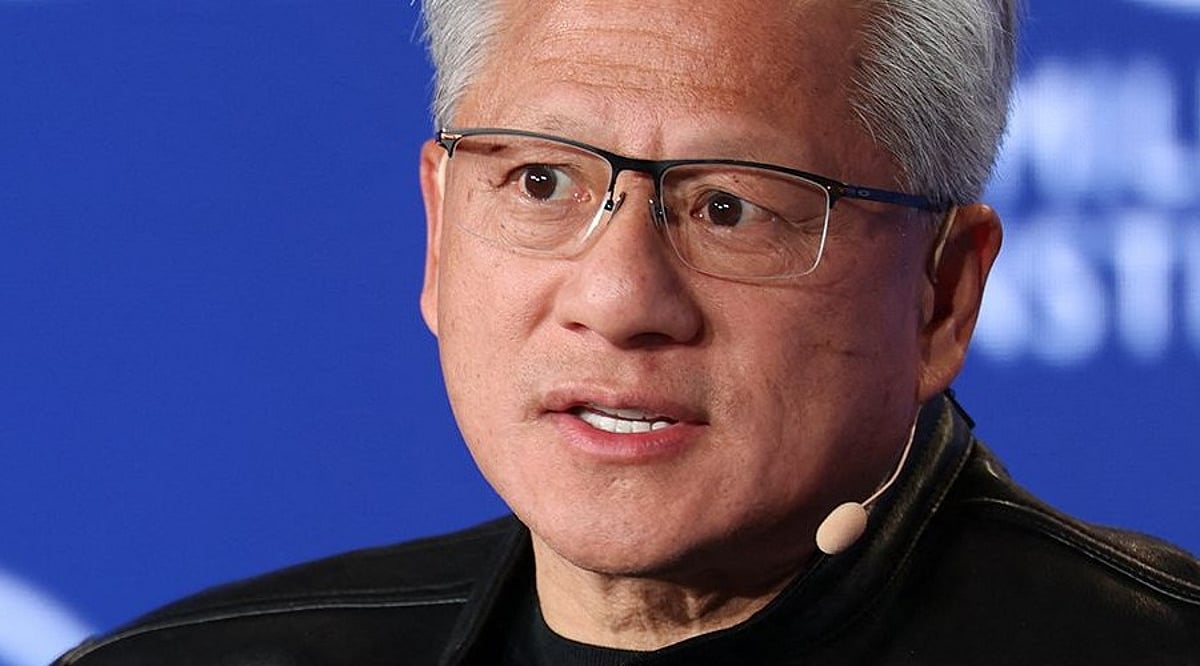
    Jensen Huang, NVIDIA’s founder and CEO, saw early that the AI boom would depend not just on chatbots but on massive data centers packed with chips, memory, networks, and power systems. His strategy turned NVIDIA from a graphics chip company into a foundational supplier for the entire AI economy.

    The GPU Became the Start of a Much Bigger System

    Huang’s key bet was that a graphics processor could do far more than graphics. NVIDIA built CUDA, a software platform that lets developers use its GPUs for advanced computing. That choice gave the company a strong base when AI models began demanding huge amounts of compute.

    For the quarter ended July 26, 2026, NVIDIA posted $96.2 billion in revenue, up 106% year-over-year. Data Center revenue reached $89.0 billion, up 117%. Net income hit $59.7 billion, with a gross margin of 75%. NVIDIA expects $108 billion in revenue for the next quarter and about 70% revenue growth for fiscal 2028, though supply limits still affect that outlook.

    Vera Rubin Turns the Rack into One AI Computer

    NVIDIA’s latest move takes the strategy further. The Vera Rubin platform combines Rubin GPUs, Vera CPUs, NVLink 6, ConnectX-9 network chips, BlueField-4 DPUs, Spectrum-6 systems, and Groq 3 LPX. Several racks can act as one large AI computer.

    NVIDIA says Vera Rubin can deliver 10 times the agent throughput of the Grace Blackwell platform at scale. The platform is designed for AI agents that call tools, search data, write code, and take many steps before completing a task. Such workloads need fast chips, fast memory, and fast links between every part of the system.

    A data center can no longer rely on raw GPU speed alone. Memory, storage, network systems, security, and power all affect the final cost of each AI response. NVIDIA now sells an architecture that connects these pieces.

    Power, Capital and Cloud Capacity Join the Strategy

    Huang has also moved closer to the physical side of AI infrastructure. NVIDIA now treats land, power, and data center space as key resources. In August, the company partnered with SB Energy to secure land, power, and shell capacity at the PORTS-Pike Technology Campus in Ohio. OpenAI will serve as the tenant.

    Capital has become another part of the plan. NVIDIA announced partnerships with Apollo, BlackRock, Blackstone, Brookfield, Goldman Sachs, and KKR. These platforms aim to mobilize more than $500 billion in third-party capital for AI infrastructure over time. The capital does not count as NVIDIA revenue; the goal is to give AI companies and cloud providers access to large pools of long-term infrastructure money.

    AWS and NVIDIA plan to deploy 2 million additional NVIDIA GPUs across AWS infrastructure in 2027–2028. The deal also covers Vera CPUs, network systems, open models, data tools, and robotics.

    NVIDIA has also expanded its reach into software. On September 3, the company agreed to acquire Hugging Face for $12.93 billion. The deal would give NVIDIA a deeper role in the open AI software ecosystem and help expand access to models, tools, and AI infrastructure.

    Huang’s Real Advantage is the Full Stack

    The central idea behind Huang’s strategy is not a single GPU. It is control of the system around the GPU. NVIDIA supplies compute, software, network systems, and rack architecture. It now has a role in power access, infrastructure finance, and developer software as well.

    That model helps explain why the company can grow as AI hardware becomes more complex. Every new AI workload creates demand across several layers at once.

    The next test will come from agentic AI, where one request can trigger hundreds or thousands of steps. That workload can create far more demand for compute than a simple chatbot response. NVIDIA has built Vera Rubin around that shift.

    Huang’s long bet has reached a new stage. NVIDIA no longer sells only the engine for AI. It sets the factory around it, from the first line of code to the data center floor.

  • 10 Product Priorities for CPOs to Build AI-Native Products by 2027

    10 Product Priorities for CPOs to Build AI-Native Products by 2027

    Artificial intelligence has moved beyond the feature stage. A chatbot inside a product no longer marks a strong AI strategy. The bigger question for a Chief Product Officer (CPO) now lies at the product level: can AI change how a product creates value, serves customers, earns revenue, and improves over time?

    That shift sets a clear agenda for product leaders. The strongest AI-native products will not simply add AI to old workflows. They will rebuild those workflows around AI, with clear limits, strong quality checks, and measurable business results. Current CPO thinking also points toward faster experiments, intent-led products, agent-based workflows, and new pricing models.

    1. Build Around AI-Native Value

    A product needs more than an AI feature to qualify as AI-native. The core value should depend on AI. Removing AI should change the product, not just make one task slower. This distinction matters for product strategy. An AI-native product can rethink the full customer journey rather than place a model inside an old process. That approach can create new product categories instead of adding another feature to an existing one.

    2. Shift from Feature Roadmaps to Customer Outcomes

    AI capabilities can change much faster than traditional product plans. A roadmap that locks teams into specific features can lose value quickly. A stronger roadmap defines the customer result first. The product team can then adjust the model, interface, workflow, or technology as new AI capabilities arrive. This approach keeps product strategy tied to customer value rather than a fixed list of releases.

    3. Make Evaluation a Core Product Function

    AI products can produce different results from similar inputs. Standard software tests cannot cover every case. CPOs therefore need strong evaluation systems across accuracy, reliability, safety, edge cases, and output quality. Product teams need clear standards for success before launch and regular checks after release. AI evaluation should sit alongside product discovery, delivery, and business measurement.

    4. Design for Agents and Real Actions

    The next product layer goes beyond assistants that answer questions. AI agents can reason through tasks, call tools, take actions, and hand work back to people when a decision needs human control. This creates a new product responsibility. Every agent needs clear permissions, limits, escalation rules, and recovery paths. Automation and autonomy also need separate treatment. A system can automate a task without receiving full authority to act on its own.

    5. Put Trust into the Product

    Trust cannot sit at the end of the product process. AI products need clear signals that help customers understand what the system did and how much control remains with a person. Confidence signals, source information, permissions, reversibility, and human escalation can all shape that experience. The best design does not promise perfect AI. It gives customers practical ways to check, correct, and control AI output.

    6. Design Around Intent and Context

    Old software often starts with forms, menus, and fixed steps. AI-native products can start with intent. A customer can state a goal, while the product handles more of the path toward that goal. One recent CPO case reported 5–10× faster early exploration after a shift toward intent and context. That change can reduce friction while also opening new product possibilities.

    7. Rethink Product Economics

    AI can change the cost structure of software. A simple seat-based model may not fit a product that completes tasks, runs workflows, or delivers measurable outcomes. CPOs need to examine usage-based, consumption-based, and outcome-based models. The key measure should connect price with customer value and AI cost. AI cost per successful task, gross margin per workflow, and revenue per customer can provide a clearer picture than feature adoption alone.

    8. Treat Multimodality and Feedback as Core Capabilities

    AI-native products can combine text, voice, images, and other input types. They must also learn from user feedback in real time. Building feedback loops into the product allows continuous improvement without requiring manual retraining. This makes the product more adaptive and responsive to customer needs.

    9. Accelerate Rapid Learning Cycles

    AI evolves faster than traditional software. Product teams must shorten their learning loops. Experiment quickly, measure outcomes, and iterate. CPOs should create an environment where hypotheses are tested weekly, not quarterly. This speed is essential to stay competitive in the AI landscape.

    10. Measure Business Impact Directly

    Feature adoption and usage metrics are not enough. AI-native products need to tie every capability to business outcomes. Measure revenue per AI interaction, customer retention linked to AI features, and cost savings from automation. These metrics help justify investment and guide future product direction.

    The CPO 2027 Challenge

    The product question has changed. The old question asked where AI could fit inside an existing product. The stronger question asks what the product could become if AI shaped its core value, workflow, economics, and customer experience from the start. That distinction will separate AI features from AI-native businesses. Product leaders who focus on outcomes, evaluation, trust, agents, economics, and rapid product learning can turn AI from an add-on into the foundation of the product strategy.

    Key Takeaways

    • Build AI-native: Reimagine core product value and workflows around AI instead of simply adding AI features.
    • Prioritize trust and outcomes: Measure customer results while embedding evaluation, permissions, transparency, and human control.
    • Rethink product economics: Align pricing, AI costs, team structures, and success metrics with measurable business value.
  • Workflow Automation Comparison: Zapier vs Make vs n8n vs Pipedream – Which Tool Is Right for You?

    Workflow Automation Comparison: Zapier vs Make vs n8n vs Pipedream – Which Tool Is Right for You?

    Choosing the right workflow automation tool has become more complex as platforms evolve beyond simple task automation. Zapier, Make, n8n, and Pipedream now offer distinct strengths in AI, API access, code support, and pricing. This guide breaks down each platform to help you decide based on your team’s technical level, workflow complexity, and scale.

    Key Takeaways

    • Zapier: Best for non-technical teams needing simple automation and extensive SaaS integrations.
    • Make: Ideal for complex visual workflows with branching, conditions, and granular control.
    • n8n: Leads for technical and AI automation, offering self-hosting and execution-based pricing.
    • Pipedream: Excels for developer-focused API and code workflows with compute-time billing.

    Zapier: Ease of Use and Ecosystem

    Zapier remains the go-to for teams that want fast setup and a large app ecosystem. Its strength lies in simple business automation across sales, marketing, operations, and support. Recent updates embed AI by Zapier directly into the Zap editor, combining normal actions, AI decisions, tool calls, filters, and branches in one flow.

    Pricing starts at free (100 tasks/month), then $19.99/month (Professional) and $69/month (Team). Tables, Interfaces, and Zapier MCP are now included in these plans. However, costs can rise at higher volumes, and AI actions may consume tasks at 1x, 3x, or 5x multipliers.

    Make: Visual Control for Complex Workflows

    Make shines when workflows require multiple paths, conditions, and data transformations. Its Scenario Builder provides a clear visual map of connections. With over 3,000 apps and a credit-based pricing model, it suits automation specialists and operations teams.

    Free plan: 1,000 credits/month. Core: $12/month for 10,000 credits. Pro: $21/month for 10,000 credits. Teams: $38/month for 10,000 credits. Enterprise custom. Make also places AI agents inside the Scenario Builder, with visibility into decisions and tool calls. Maia offers conversational workflow creation, and agent memory, AI web search, and human approval are supported.

    n8n: Technical and AI-Focused Automation

    n8n has transformed into an automation engineering platform. Its strengths include code, APIs, databases, AI agents, workflow control, and self-hosting via the Community Edition. Cloud pricing uses workflow executions: EUR 20/month for 2,500 executions, offering value for multi-step workflows.

    A major update on September 9, 2026, introduced n8n Assistant, which creates workflows from natural-language instructions, requests credentials, runs workflows, and finds errors. This reduces n8n’s learning curve significantly.

    Pipedream: Developer-First Integration Layer

    Pipedream focuses on APIs, webhooks, code, and events. JavaScript and Python support custom logic, and Pipedream Connect helps SaaS products embed integrations. Pricing is based on compute time and memory: at 256 MB, one credit covers 30 seconds. Higher memory uses credits faster. Best for software engineers and product teams needing direct API control.

    Which Platform Should You Choose?

    • Non-technical business teams: Zapier – safe, simple, broad SaaS coverage.
    • Complex visual automation: Make – superior branching and visual design.
    • Technical and AI-heavy workflows: n8n – strongest mix of AI, code, self-hosting, and execution pricing.
    • API-first development: Pipedream – ideal for custom code, webhooks, and integration layers.

    No single tool wins across all scenarios. The best choice depends on your workflow type: simple SaaS tasks favor Zapier, complex visual flows favor Make, technical/AI workflows favor n8n, and API-heavy products favor Pipedream.

    Frequently Asked Questions

    Which automation tool is easiest to use?

    Zapier is generally the easiest, especially for non-technical teams.

    Is Make better than Zapier for complex workflows?

    Yes, Make excels at workflows with multiple paths, conditions, and advanced visual logic.

    Is n8n good for AI automation?

    Yes. n8n combines AI agents with APIs, code, databases, and self-hosting, making it strong for technical AI workflows.

    Should developers choose Pipedream or n8n?

    Pipedream is better for API-first development and custom code; n8n offers broader workflow orchestration and self-hosting.

    Which automation platform is best overall?

    There is no universal winner, but n8n leads for technical/AI automation, while Make and Zapier excel in visual control and simplicity respectively.

  • Indian Equities Open Lower as Crude Oil Surge Pressures Sentiment: Nifty and Sensex Decline

    Indian Equities Open Lower as Crude Oil Surge Pressures Sentiment: Nifty and Sensex Decline

    The Indian stock market opened sharply lower on Friday, weighed down by a continued surge in crude oil prices that dampened investor sentiment. The Nifty 50 index started the session 207.5 points or 0.88% lower at 23,270.30, while the Sensex fell 593.43 points to 74,309.16. The Bank Nifty also opened 501.8 points below its previous close.

    Broader market indices mirrored the weakness, with the Nifty midcap index slipping 0.4% while the smallcap index remained flat. The Indian rupee weakened further, opening 24 paise lower at Rs 95.68 against the US dollar, compared to its previous close of Rs 95.44.

    According to NSE data, foreign institutional investors turned net sellers on Thursday, offloading equities worth Rs 438.24 crore. In contrast, domestic institutional investors remained buyers, purchasing a net Rs 1,025.85 crore worth of Indian shares.

    Sensex Outlook

    Technically, the short-term outlook for the Sensex remains weak, but oversold conditions could trigger a pullback. “For day traders, 74,700 would act as key support zones, while 75,000 would be the immediate hurdle for the bulls. A move above 75,000 could extend the bounce back to 75,500-75,700. Conversely, below 74,700, selling pressure is likely to accelerate, potentially dragging the index to 74,500-74,200,” said Shrikant Chouhan, Head of Equity Research at Kotak Securities.

    Nifty 50 Outlook

    The Nifty 50 formed a high-wave candle on the daily chart with a lower high and lower low, indicating consolidation with a corrective bias. Weakness could extend the recent one-month decline toward the 23,300-23,200 zone in the coming sessions—the 80% retracement level of the prior up move from 23,070 to 24,774.

    On the upside, a pullback is possible if Nifty holds above Thursday’s low of 23,380. “A pullback attempt will face immediate resistance at Wednesday’s gap area of 23,650, with stiff resistance around 23,800-24,000 levels—the recent breakdown zone and the 20-day EMA. The previous support area is likely to reverse its role and act as resistance in the short term,” explained Pabitro Mukherjee, Deputy Vice President-Research at Bajaj Broking.

    Bank Nifty Outlook

    The Bank Nifty formed a small bullish candle on its daily chart in the prior session, but the pattern of lower highs and lower lows persists, signaling consolidation with a corrective bias. The index currently trades near the lower end of its 10-week range of 56,000-58,700. A break below 56,000 could trigger further downside toward 55,300 and 54,800 in the coming weeks.

    “The immediate bias remains down, and only a sustained formation of higher highs and higher lows on the daily chart would signal a pause in the downtrend. Sustaining above 56,000 on a closing basis would indicate a continuation of the 10-week consolidation,” added Mukherjee.

    Disclaimer: This article is for informational purposes only and does not constitute investment advice. Readers are encouraged to conduct their own research before making any investment decisions.

  • Essential Statistics and Data Science Skills for Aspiring Professionals in 2026

    Essential Statistics and Data Science Skills for Aspiring Professionals in 2026

    Statistics forms the foundation of data science, helping professionals understand datasets, test assumptions, measure uncertainty, and make reliable analytical decisions. Programming, mathematics, and machine learning help data scientists build scalable models, process complex datasets, and identify meaningful patterns. Communication and business knowledge allow professionals to turn technical findings into practical recommendations that organizations can understand and use.

    A bank flags a fraudulent transaction within seconds. A hospital predicts which patients need a follow-up call before they end up back in the emergency room. A retailer decides, weeks in advance, how much stock to order for a festival rush. Behind each of these decisions sits a data team working with numbers most of us never see. The field has expanded quickly, and so has the list of things a data scientist is expected to know. Knowing one programming language rarely cuts it anymore. What separates a strong data scientist from an average one is judgment—built on a mix of statistical instinct, mathematical grounding, and enough business sense to know which tool fits which problem.

    Statistics Comes First

    Statistics is where this work begins, and honestly, it never stops mattering, no matter how advanced the tools get. Mean, median, mode, variance, and standard deviation might sound like textbook basics, but they answer the one question every analysis needs first: what does this data even look like? Skip that step, and a fancy model ends up standing on shaky ground.

    Inferential statistics goes a level deeper. Studying an entire population is usually impossible, so analysts work with a sample and stretch their findings outward. Probability distributions, confidence intervals, and the often-misunderstood p-value all live in this territory. A p-value, by the way, does not prove anything by itself. It only tells you how surprising your result would look if nothing interesting were actually happening.

    Hypothesis testing puts all of this to work. An analyst sets up a null hypothesis—usually the dull ‘nothing changed’ version of events—and pits it against an alternative. Depending on the situation, this could mean a t-test, a z-test, a chi-square test, or ANOVA when comparing several groups together. Companies run this exact logic every time they test a new button color or pricing page, comparing outcomes across two groups before rolling anything out widely. Regression and correlation round things off, mapping how one variable shifts when another one moves.

    Where Mathematics Meets Code

    There is a layer of mathematics sitting under every machine learning model that most users never think about. Linear algebra explains how data gets reshaped inside a model. Calculus explains how that model adjusts itself while training. Probability theory ties both threads together. Skip this layer, and a model turns into something you trust blindly—a poor habit for anyone making real business calls.

    Python and R still do most of the heavy lifting in this field, backed by libraries built for cleaning data, plotting it, and training models on it. Writing code that runs is one thing. Writing code that still holds up on a dataset ten times bigger six months down the line is a different skill altogether. Add to this the ability to pull data through an API or query a database—something most job postings assume you already know.

    The Part Nobody Mentions in Interviews

    Real datasets rarely arrive clean. Fields go missing without warning. Dates show up formatted three different ways inside the same file. Fixing all of this—usually called data preparation—eats up far more of a data scientist’s week than most job descriptions admit. Rush through this stage, and the damage tends to surface later, often after a flawed model has already shaped a decision. Companies now pull in data from app clicks, sensors, and dozens of other sources, so comfort with big data tools has stopped being optional. Structured spreadsheets, semi-structured logs, and messy unstructured text all show up within the same week’s work.

    Machine Learning, in Plain Terms

    Machine learning is essentially statistics scaled up and automated. A model tests thousands of relationships at once and keeps the ones that hold up. Supervised learning—where the outcome is already known—and unsupervised learning—where the model hunts for structure on its own—cover most situations. Feature engineering, or choosing which pieces of data actually carry weight, often decides whether a model performs well or quietly fails. Overfitting is the trap worth watching for here. A model that memorizes its training data looks impressive on paper and falls apart the moment new data walks in.

    Explaining It So People Actually Act on It

    A brilliant analysis nobody understands changes absolutely nothing. This is the part technical training tends to skip over. A data scientist needs to sit across from a marketing lead or a hospital administrator and explain a finding in terms that lead somewhere—not confusion. Charts help with this. Plain language helps even more. Understanding the business itself sharpens every question a data scientist ends up asking. Someone who knows why a retail client cares deeply about return rates builds a very different model than someone chasing accuracy purely for its own sake. That context is what keeps analysis genuinely useful rather than just technically correct.

    Final Thoughts

    None of these skills work particularly well on their own. Statistical knowledge without the ability to explain it stays trapped inside a spreadsheet. Programming skill without business context solves problems nobody actually asked about. The people who stand out combine all of it, letting curiosity and careful judgment hold the whole picture together. For anyone starting, order matters less than persistence. Start with statistics—almost everything else builds on it. Bring in programming and data handling next. Keep circling back to communication, since the final job of any data scientist is helping someone else make a better call.

  • Bitcoin Hovers Near $77,081 as CPI Report and Middle East Tensions Test Key Support Levels

    Bitcoin Hovers Near $77,081 as CPI Report and Middle East Tensions Test Key Support Levels

    Market Overview

    Bitcoin steadied near USD 77,081 on Friday, September 11, recovering part of this week’s losses after hotter producer price data and rising Middle East oil tensions fueled caution across risk assets. Today’s US Consumer Price Index (CPI) report, due at 8:30 am Eastern Time, is the market’s key catalyst.

    Ethereum, Solana, and XRP posted modest gains alongside Bitcoin. Zcash surged again, outpacing the broader market by a wide margin on shielded pool demand. Total crypto market capitalization remained near USD 2.61 trillion.

    Bitcoin Price Today

    Bitcoin traded at USD 77,081.66, up 1.5% over the past 24 hours (CoinGecko). Its market cap stood at USD 1.55 trillion. Trading volume reached USD 29.97 billion. Bitcoin gained 4.6% over the past seven days.

    Analyst Commentary

    • CoinSwitch: BTC slipped below USD 77,000 after US producer prices rose 5.4% year on year. A 74% chance of a Fed rate hike this month is priced in. Must reclaim USD 78,000–79,000.
    • Mudrex: Bitcoin extended declines across four sessions, testing USD 76,000–77,000. Nearly USD 190 million in liquidations hit. Support at USD 76,000 must hold.
    • Delta Exchange: Key support USD 75,600–76,200, resistance USD 77,600–78,000. Implied volatility near 40 signals sharp move expected around CPI.
    • WazirX: Broad profit-taking noted. Support USD 76,000, resistance USD 78,000.

    Biggest Gainers and Losers Today

    Zcash led with a 12.4% daily gain, extending its weekly advance past 15%. Hyperliquid rose 5.6%, XRP added 3.1%. No top coin posted a 24-hour decline.

    Crypto News Impacting Prices

    US Producer Prices Fuel Inflation Concerns

    August producer prices rose 5.4% year on year, slightly above forecasts. Fed rate hike odds for this month climbed toward 74%. Bitcoin briefly slipped below USD 77,500.

    Iran-Linked Oil Tensions Keep Crude Elevated

    Crude trading near USD 100/barrel added to inflation worries. Bitcoin remained resilient thanks to steady spot demand.

    CLARITY Act Faces Senate Vote

    The Senate will hold a cloture vote on the CLARITY Act on September 15. A 60-vote threshold is needed. Ethics provisions and stablecoin rewards remain divisive.

    Zcash Rally Continues

    Zcash jumped 12.4% in 24 hours, gaining over 15% weekly. Rising shielded pool adoption and heavy mining demand supported the move.

    Bitcoin Liquidations Near USD 190M

    Bitcoin’s slide toward USD 76,000 triggered close to USD 190 million in liquidations within an hour. Long-term holders’ share of realized profits fell sharply.

    Investor Outlook

    Today’s CPI report is critical. A soft print could ease yields and support a push toward USD 80,000. A hot reading could reinforce hawkish bets and pressure Bitcoin toward USD 75,000. The CLARITY Act vote on September 15 adds a second layer of uncertainty. Desks recommend disciplined position sizing.

    FAQs

    1. What is the Bitcoin price today?

    Bitcoin trades near USD 77,081.66, up 1.5% in 24 hours. Support near USD 76,000, resistance near USD 78,000.

    2. Why is today’s CPI report important?

    The CPI print shapes Fed rate expectations. Cooler reading could support Bitcoin; hotter reading risks hawkish bets.

    3. What is the biggest crypto news today?

    Zcash’s rally past USD 1,000, hotter PPI data, and the CLARITY Act Senate vote.

    4. Which coins are performing best?

    Zcash (+12.4%), Hyperliquid (+5.6%), XRP (+3.1%). No top coin declined.

    5. What should investors watch this week?

    CPI report, CLARITY Act vote, and any escalation in Iran-linked oil tensions.

  • Get Free Diamonds, Skins & Emotes: Free Fire MAX Redeem Codes for September 11, 2026

    Get Free Diamonds, Skins & Emotes: Free Fire MAX Redeem Codes for September 11, 2026

    Free Fire MAX players can claim premium in-game rewards without spending money by using the redeem codes released daily. These codes can unlock weapon skins, character bundles, diamonds, emotes, and other exclusive items.

    New codes are set to arrive on September 11, offering players another opportunity to collect valuable rewards. However, players should redeem them quickly, as the codes are valid only for a limited period.

    Redeem Codes for September 11, 2026

    The active Free Fire MAX redeem codes for September 11, 2026 are listed below:

    Diamonds & Vouchers

    • 4ST1ZTBZBRP9: Free Diamonds / Premium Rewards
    • B1RK7C5ZL8YT: Diamond Royale Vouchers
    • FFDMNSW9KG2: Premium Item Bundle Vouchers

    Weapon Skins & Loot Crates

    • FT4E9Y5U1I3O: Justice Fighter Weapon Loot Crate
    • BR43FMAPYEZZ: Evo Gun Token Packs
    • UPQ7X5NMJ64V: M1014 Underground Howl Loot Crate
    • S9QK2L6VP3MR: Rebel Academy Weapon Skins

    Outfits & Bundles

    • FM6N1B8V3C4X: Street Boy Bundle / Costume pieces
    • FFRSX4CYHLLQ: Combat Vest & Character Outfits
    • FFSKTXVQF2NR: Imperial Rome Weapon / Outfit Set

    Characters & Pets

    • FA3S7D5F1G9H: Chrono Character / Memory Shards
    • FK3J9H5G1F7D: Shirou / Wukong Character Shards
    • FU1I5O3P7A9S: Pet Food / Free Pet Box

    Bundles and Miscellaneous Free Rewards

    • F7F9A3B2K6G8: Universal Fragment / Gold
    • FE2R8T6Y4U1I: Random Emote Crate
    • FFSGT7KNFQ2X: Supply Crate / Bonfire
    • FFCBRAXQTS9S: Cobra Bundle Tokens

    How to Redeem the Codes?

    1. Visit the official Garena Rewards Redemption site.
    2. Log in using your correct account (Facebook, Google, Apple ID, X, or VK).
    3. Enter the code in the space provided.
    4. Tap ‘Confirm.’
    5. Rewards will be sent to your in-game mailbox within 24 hours.

    Important: You cannot use guest accounts. Ensure your accounts are connected before trying to redeem.

    Final Take

    With Free Fire MAX redeem codes, players can get a ton of diamonds, rare skins, and other premium items for free. Before starting their next battle royale round, participants can instantly access these benefits by successfully redeeming a code. To stay ahead of the competition, use the codes on the Garena rewards page and monitor them daily.

  • Ethereum Price Prediction Reaches $3,341 by 2032 as Apeing Presale Accelerates Past 400M Tokens Sold

    Ethereum Price Prediction Reaches $3,341 by 2032 as Apeing Presale Accelerates Past 400M Tokens Sold

    What if the next big crypto story is already unfolding while the market watches Ethereum and Uniswap? That question is putting fresh attention on Apeing, a meme coin project whose presale is already live at $0.0004. With Stage 3 in progress and the next stage priced at $0.0005, the project has entered the spotlight at a time when early-stage crypto is drawing renewed interest.

    Ethereum and Uniswap bring established ecosystems and proven market narratives to the table. Apeing takes a very different path. Its 33-stage presale is built around limited stage allocations, rising prices between stages, community participation, and an upcoming exchange listing. For readers searching for the next big crypto, the contrast is hard to miss: established giants on one side and a live early-entry opportunity on the other.

    Apeing is also adding utility to its meme-driven identity through features such as tiered staking rewards. The combination of culture, community energy, and a structured presale gives $APEING a distinct position among crypto presale opportunities in 2026. With the current stage already moving forward, the chance to access an earlier price may not remain available once the presale advances.

    Apeing as the Next Big Crypto Opportunity

    Apeing is a meme coin brand built around culture, community participation, and utility. Its ecosystem combines meme-driven energy with features such as staking, referrals, and competitive Ape Wars activities. For traders searching for the next big crypto, Apeing is already in motion. Its live presale is progressing through 33 stages, with prices increasing as each stage advances.

    Stage 3, Paper Hand Panic, has a 300 million $APEING allocation and a combined allocation of 650M tokens. The current price is $0.0004, while the next stage is set at $0.0005. The supplied data also records 240 holders and more than $75,000 raised.

    Apeing’s $0.0004 Window Is Already Filling

    The appeal is simple: Stage 3 is live, but its price is temporary. Once the stage advances, the scheduled price moves from $0.0004 to $0.0005. Apeing’s stated listing price is $0.01, giving early buyers a clear benchmark when researching the best crypto presale 2026 opportunities. The project also features tiered staking with advertised rewards of 10%–85%, alongside Ape Referral and Ape Wars.

    A 33-Stage Presale With a Moving Price

    Each Apeing crypto presale stage has a defined allocation and price. That means early participants access an earlier price, while later stages become progressively more expensive. For anyone exploring an early stage crypto project, the current numbers make Stage 3 the key point of focus: $0.0004 now, $0.0005 next.

    What If $APEING Reaches $0.01?

    Purely as a hypothetical example, $2,000 at $0.0004 would buy 5 million $APEING before applicable fees or mechanics. At the stated $0.01 listing price, those tokens would hypothetically be worth $50,000.

    Why Apeing Is on the Early Crypto Radar

    Apeing is an Ethereum ERC-20 token with a fixed maximum supply of 16.75 billion $APEING. Its combination of a live presale, staged pricing, staking, and community mechanics gives it a distinct early-stage profile. For those searching for the next big crypto or a crypto presale 2026, Apeing’s Stage 3 is the current focal point, with $0.0004 available before the scheduled move to $0.0005.

    Ethereum Price Prediction: Established Strength Meets a New Crypto Cycle

    Ethereum remains one of the most established cryptocurrency projects in the market. Its smart contract network supports a huge range of decentralized applications, tokens, and financial protocols. That gives Ethereum a very different market narrative from a young token operating through a presale.

    The supplied Ethereum price prediction data places ETH at $2,617.75 in 2027, $2,748.63 in 2028, $2,886.07 in 2029, $3,030.37 in 2030, $3,181.89 in 2031, and $3,340.98 in 2032. The reference price in the supplied data is $2,493.09. The five-year projection reaches $3,181.89, representing a stated 27.63% increase.

    The short-term Ethereum price prediction data also points toward modest movement. ETH is projected at $2,493.43 on September 10, 2026, $2,495.43 on September 16, and $2,503.11 by October 9. The supplied technical data shows a bearish four-hour signal from the 50-day moving average, while the 200-day moving average is trending upward. RSI remains neutral, with a recent bullish divergence.

    That combination creates an interesting contrast. Ethereum represents an established network with years of development behind it, while Apeing is targeting people looking for an early-stage crypto story. For searches around the next big crypto, the difference between mature market infrastructure and a live token presale becomes especially important.

    Uniswap Price Prediction and the DeFi Market Narrative

    Uniswap has built a major identity around decentralized exchange activity and liquidity. Its UNI token therefore carries a market narrative linked closely to decentralized finance and the wider growth of on-chain trading.

    The supplied Uniswap price prediction places UNI at $6.94 in 2027, $7.29 in 2028, $7.65 in 2029, $8.03 in 2030, $8.43 in 2031, and $8.86 in 2032. UNI is listed at $6.61 in the supplied reference data, while the five-year projection reaches $8.43, also representing a stated 27.63% increase.

    The shorter-term Uniswap price prediction places UNI around $6.61 on September 10 and September 16, 2026, before potentially reaching $6.63 by October 9. Technical signals are mixed. The four-hour 50-day moving average is trending downward, while the 200-day moving average has risen since September 4. RSI remains neutral, while a recent bullish divergence suggests changing momentum.

    The Uniswap price prediction story is therefore tied to an established DeFi ecosystem. Apeing takes a different route. Instead of competing with Ethereum or Uniswap on maturity, the project is positioning itself around culture, community participation, utility, and a live presale. That difference is central to the next big crypto search trend.

    Conclusion

    Based on the latest research and market trends, Ethereum and Uniswap continue to represent established parts of the cryptocurrency landscape, while Apeing is creating a separate early-stage narrative through its live presale. The current $0.0004 Stage 3 price, scheduled $0.0005 next stage, 33-stage structure, staking rewards, and planned $0.01 listing price give the project a distinct position among emerging tokens.

    For readers searching for the next big crypto, Apeing is one project worth watching as its presale progresses. The live Apeing presale can be explored through the official website, while official channels provide the latest stage and pricing information. For anyone hunting for the next big crypto, the current stage represents a live point in the project’s evolving story rather than a future launch waiting to begin.

    Disclaimer: This article is provided for informational purposes and does not constitute investment advice. You are responsible for conducting your own research (DYOR) before making any investments. Cryptocurrencies are highly volatile and may result in total loss of capital.

  • Best Keyboards with AI and Smart Productivity Features for 2026

    Best Keyboards with AI and Smart Productivity Features for 2026

    From customizable macro keys to seamless multi-device switching, today’s keyboards are incorporating smart features that go beyond simple typing. Here are seven keyboards that combine AI-ready functionality and productivity-focused design to help professionals work more efficiently.

    Logitech MX Creative Console Keyboard

    Designed for creators and professionals, this keyboard emphasizes customizable controls to accelerate everyday workflows. Programmable keys allow users to assign shortcuts for frequently used actions, and its software supports personalized configurations. It’s particularly useful for those who regularly switch between creative applications, productivity tools, and other software.

    Microsoft Surface Keyboard

    Microsoft’s offering pairs a clean, minimal design with deep integration across Windows devices. Its strength lies in working naturally within the Microsoft ecosystem, where users can combine keyboard shortcuts with productivity tools and AI-powered features like Copilot. It’s ideal for professionals seeking a familiar typing experience without unnecessary complexity.

    Razer Pro Type Ultra

    The Razer Pro Type Ultra delivers a comfortable mechanical typing experience with features tailored for office productivity. Users can connect multiple devices and switch between them, making it practical for those working across several computers. Its programmable controls and wireless connectivity minimize interruptions when moving between tasks.

    Keychron Q1 Max

    The Keychron Q1 Max appeals to users who want deep customization alongside modern wireless connectivity. Its programmable keys allow shortcuts and workflows to be tailored via compatible software. While it doesn’t rely on built-in generative AI, its flexibility makes it valuable for professionals who prefer creating personalized productivity setups.

    Logitech MX Keys S

    Built around quiet typing, smart shortcuts, and multi-device productivity, the Logitech MX Keys S lets users customize keys through Logitech’s software and easily move between connected devices. Its compatibility with productivity applications makes it a strong choice for professionals who spend long hours writing, editing documents, managing data, or communicating online.

    ASUS ROG Strix Scope II 96 Wireless

    Although primarily designed for gaming, this keyboard brings useful smart features to everyday computing. Its customizable controls, wireless connectivity, and programmable functions support productivity as well. Users who move between gaming and work can create shortcuts for applications, media controls, and frequently performed tasks without switching keyboards.

    Corsair K100 RGB

    The Corsair K100 RGB combines programmable controls with extensive customization options. Its dedicated macro keys can automate repetitive commands and help create application-specific workflows. For professionals handling repetitive tasks, these controls can save time. Its broader appeal comes from giving users greater control over how the keyboard responds to their individual working habits.