Blog

  • 7 Affordable Analog Watches Under ₹10,000 in India

    7 Affordable Analog Watches Under ₹10,000 in India

    Finding a stylish and reliable analog watch under ₹10,000 in India is easier than ever. Leading brands like Casio, Titan, and Fastrack offer a wide range of designs that blend classic aesthetics with modern durability. Whether you need a timepiece for formal occasions, casual outings, or daily wear, these seven models deliver excellent value without breaking the bank.

    Casio Enticer MTP Series

    The Casio Enticer MTP Series combines timeless styling with dependable quartz movements. Clean, easy-to-read dials and stainless steel cases make these watches versatile enough for formal shirts, office outfits, and casual clothing. They are a practical choice for buyers seeking a reliable everyday watch under ₹10,000.

    Titan Neo Splash

    Titan Neo Splash offers a stylish combination of a detailed dial, stainless steel case, and reliable quartz movement. Its contemporary appearance suits office meetings, casual outings, and daily wear. This watch provides a balanced mix of Titan’s familiar design language, comfort, and practical functionality.

    Fastrack All Nighters

    Designed for bold, youthful buyers, the Fastrack All Nighters features contemporary styling with a multifunction-inspired dial that adds visual appeal. The quartz movement ensures dependable everyday use. This watch pairs well with casual outfits, making it ideal for college, outings, and relaxed occasions.

    Titan Minimals

    Titan Minimals focuses on understated elegance with clean dial layouts and a refined appearance. Its simple design makes it easy to pair with both formal and casual outfits. Buyers looking for an elegant everyday watch without excessive detailing will appreciate this range for office wear and regular use.

    Fastrack Opulence

    Fastrack Opulence combines contemporary styling with an eye-catching dial and quartz movement. Its fashion-forward appearance complements modern outfits, making it suitable for casual occasions, social gatherings, college, and evening outings. It’s a practical everyday option for style-conscious individuals.

    Titan Regalia Opulent

    Titan Regalia Opulent delivers a sophisticated appearance with its detailed dial and polished stainless steel construction. Its refined styling suits formal occasions, business meetings, celebrations, and professional outfits. This watch offers a premium look at an affordable price point.

    Fastrack Quartz Analog

    Fastrack Quartz Analog watches offer bold styling, practical quartz movements, and versatile designs for everyday use. Several models feature stainless steel construction and distinctive dial layouts. They appeal to younger buyers looking for fashionable watches that transition easily between casual outfits, college, work, and social events.

    Each of these analog watches under ₹10,000 brings something unique to the table, from classic sophistication to modern flair. Consider your personal style and daily needs to find the perfect timepiece that balances aesthetics, durability, and value.

  • NYT Strands #918 Hints and Answers: September 7, 2026 – ‘It’s a Deal!’ Theme

    NYT Strands #918 Hints and Answers: September 7, 2026 – ‘It’s a Deal!’ Theme

    Another daily challenge from NYT Strands is here for Monday, September 7, 2026. Puzzle #918 brings a theme centered on agreement and compromise, titled “It’s a deal!” Players must find words related to negotiation and reaching common ground. Below we provide hints, the spangram, and the full list of answers to help you conquer today’s grid.

    Understanding Today’s Theme

    The official theme for September 7 is “It’s a deal!” This points toward actions and concepts involved in making an agreement. Think about negotiation, compromise, and the steps two sides take to find a mutually acceptable outcome. Each answer word ties into the process of settling differences or sharing resources.

    How NYT Strands Works

    NYT Strands is a word-search game where you connect letters horizontally, vertically, or diagonally to form words related to a daily theme. The grid’s key phrase is the spangram, which touches two opposite sides of the board and encapsulates the puzzle’s central idea. Finding the spangram often makes the remaining theme words easier to spot. You can also earn hints by finding non-theme words—every three valid non-theme words give you one clue.

    Hint for September 7, 2026

    Main hint: “It’s a deal!”
    More direct clue: Think about finding common ground. All theme words are linked to agreement, negotiation, or compromise.

    Spangram Hint

    Still searching for the longest answer? Today’s spangram is a familiar phrase that suggests both sides should move toward a shared position.

    Spangram Answer

    The spangram for September 7, 2026 is: MEET ME HALFWAY.

    All Answers for NYT Strands #918

    • AGREE
    • COMPROMISE
    • NEGOTIATE
    • SETTLE
    • SHARE
    • MEET ME HALFWAY (spangram)

    Why This Puzzle May Take Some Time

    Many of today’s answers are closely related in meaning—words like AGREE, COMPROMISE, and NEGOTIATE all revolve around the same idea. The spangram can also be tricky to locate at first. Once you find MEET ME HALFWAY, however, the theme becomes crystal clear and the remaining words fall into place.

    NYT Strands delivers a fresh theme and word set every day. For September 7, the language of agreement takes center stage, guiding players from negotiation to compromise and finally to common ground. If you’re stuck on puzzle #918, the hints and answers above offer a direct path through today’s grid. Check back tomorrow for another round of word‑search fun.

  • FTSE 100 Dips as Oil Prices Surge and Fed Rate Hike Expectations Strengthen

    FTSE 100 Dips as Oil Prices Surge and Fed Rate Hike Expectations Strengthen

    Global stock markets traded mixed on Monday as rising oil prices and growing expectations of a Federal Reserve rate hike shaped investor sentiment. European shares remained subdued, while several Asian markets advanced sharply after strong gains in technology stocks.

    Oil prices stayed near six-week highs as the conflict between the United States and Iran disrupted shipping and crude flows. Meanwhile, strong US employment data raised expectations that the Fed could increase interest rates at its September meeting.

    European Stocks Struggle as Oil Prices Rise

    The pan-European Stoxx 600 slipped almost 0.1% during morning trading. Germany’s DAX fell 0.14%, while France’s CAC 40 and Italy’s FTSE MIB each gained about 0.1%.

    London’s FTSE 100 fell 0.1% to 10,824.74 points by 0927 GMT, while the FTSE 250 also declined 0.1%. Consumer-focused sectors led losses. Beverage stocks dropped 1.6%, while personal care, drug and grocery shares declined 0.8%.

    Energy shares provided support as higher crude prices lifted oil companies. BP and Shell gained around 1% each. Standard Life rose 1.5% after reporting first-half profit above market expectations, while Ashmore fell 1.4% after annual profit missed forecasts.

    Spire Healthcare gained around 3% after agreeing to a takeover by funds managed by Toscafund, Three Hills and Ares. The deal values its share capital at about EUR 1.03 billion.

    Fed Rate-Hike Bets Rise After Strong US Jobs Report

    Investors increased bets on a September Federal Reserve rate hike after US nonfarm payrolls rose by 162,000 in August. Economists had expected an increase of about 56,000 jobs. The unemployment rate remained at 4.1%.

    Traders now see about a 58% chance of a Fed rate increase at the September 15-16 meeting. Expectations stood near 44% a month earlier. Investors will therefore watch US producer and consumer inflation data later this week for further direction.

    Gold slipped as higher rate expectations reduced demand for non-yielding assets. Spot gold fell 0.2% to about USD 4,421 per ounce.

    Ole Hansen of Saxo Bank said gold had found buying interest below USD 4,400, while resistance remained above USD 4,500. He added that stronger employment data had ‘reinforced expectations of a Fed rate hike on 16 September.’

    Middle East Conflict Keeps Energy Markets in Focus

    Oil prices remained elevated after further US-Iran hostilities affected vessels around the Strait of Hormuz. Iran also said it plans to announce a new restricted zone in the Gulf and provide details of a shipping corridor.

    US Energy Secretary Chris Wright also raised doubts over the chances of a near-term nuclear agreement with Iran. “There may not be a nuclear agreement,” Wright said, adding that an agreement ‘may await the next administration in Iran.’

    Higher energy costs have added pressure to inflation expectations across major economies. Markets are now tracking whether rising fuel prices could affect future central bank decisions.

    Asian Markets Rise While Wall Street Remains Closed

    Asian markets mostly advanced on Monday. South Korea’s Kospi jumped 4.61%, while Japan’s Nikkei 225 gained 2.12%. Samsung rose 5.68%, SK Hynix climbed 8.26%, and SoftBank advanced 11.22%.

    Mainland China’s CSI 300 gained 0.59%, while Australia’s S&P/ASX 200 edged 0.06% higher. Hong Kong’s Hang Seng moved in the opposite direction and fell around 0.9%.

    US stock exchanges remained closed Monday for Labor Day. Regular trading will resume on Tuesday, September 8. Investors will return to markets with oil prices, Treasury yields, inflation data, and the September Fed decision in focus.

    Disclaimer: This article is provided for informational purposes and does not constitute investment advice. You are responsible for conducting your own research before making any investments.

  • Canada’s Peptide Research Boom: Domestic Supply and Retatrutide Drive Growth

    Canada’s Peptide Research Boom: Domestic Supply and Retatrutide Drive Growth

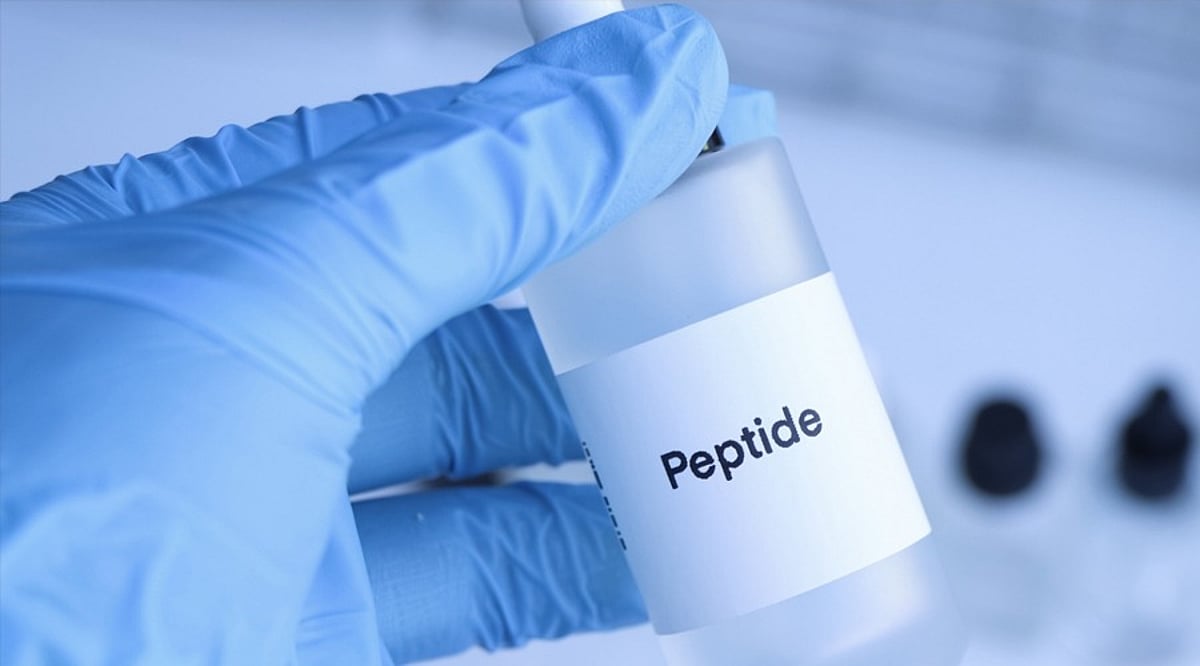
    Over the past year or two, Canada’s peptide research landscape has undergone a quiet but significant transformation. More labs, more independent researchers, and a growing reliance on domestic sourcing are reshaping the field. What once required long waits for international shipments is now increasingly handled locally, accelerating the pace of preclinical studies.

    The Sourcing Problem Finally Gets Solved

    For years, Canadian researchers had little choice but to order peptides from overseas suppliers, dealing with lengthy shipping times, unpredictable customs delays, and regulatory uncertainty. That picture has changed faster than many anticipated. Domestic suppliers have become more established, offering consistent quality and reliable delivery. This logistical improvement means labs can test hypotheses sooner and adjust protocols without losing weeks to supply chain issues.

    Retatrutide: A Multi-Receptor Peptide Under the Microscope

    A major driver of current demand is retatrutide, a peptide that targets multiple receptor pathways simultaneously—a relatively new approach in metabolic research. Labs studying energy regulation, insulin signaling, and related metabolic processes have increasingly turned to retatrutide because it differs from older single-target compounds. It is important to note that retatrutide, as a research compound, is not approved for human use by Health Canada or any other regulatory body. It is strictly a laboratory chemical for preclinical study under proper protocols.

    Quality Concerns Amid Growing Supply

    As demand rises, not all suppliers maintain high purity standards. Documentation varies, and rigorous researchers now look for clear certificates of analysis, transparent synthesis information, and unambiguous statements that products are for research use only. This transparency is fast becoming the baseline expectation in Canada’s growing market.

    Where Researchers Are Buying

    Suppliers like Peptides Canada have carved out a niche by offering local alternatives. Among their inventory, retatrutide peptide has become one of the most requested compounds, especially for labs exploring multi-receptor metabolic activity. Proper handling, storage, and compliance with provincial regulations remain essential.

    What the Future Holds

    The current momentum is less about any single peptide and more about infrastructure—domestic suppliers scaling up, researchers gaining faster access to compounds like retatrutide, and preclinical work accelerating. While regulatory approval for human use remains a distant and separate path, the research side of the equation is clearly moving forward.

    This article is sponsored content. Products mentioned are sold for research purposes only and are not intended for human consumption, diagnosis, treatment, or cure of any disease. Consult a licensed physician for any health-related concerns. Always comply with local laws and regulations regarding the purchase and use of research chemicals.

  • Ethereum Emerges as a Corporate Treasury Powerhouse in 2026

    Ethereum Emerges as a Corporate Treasury Powerhouse in 2026

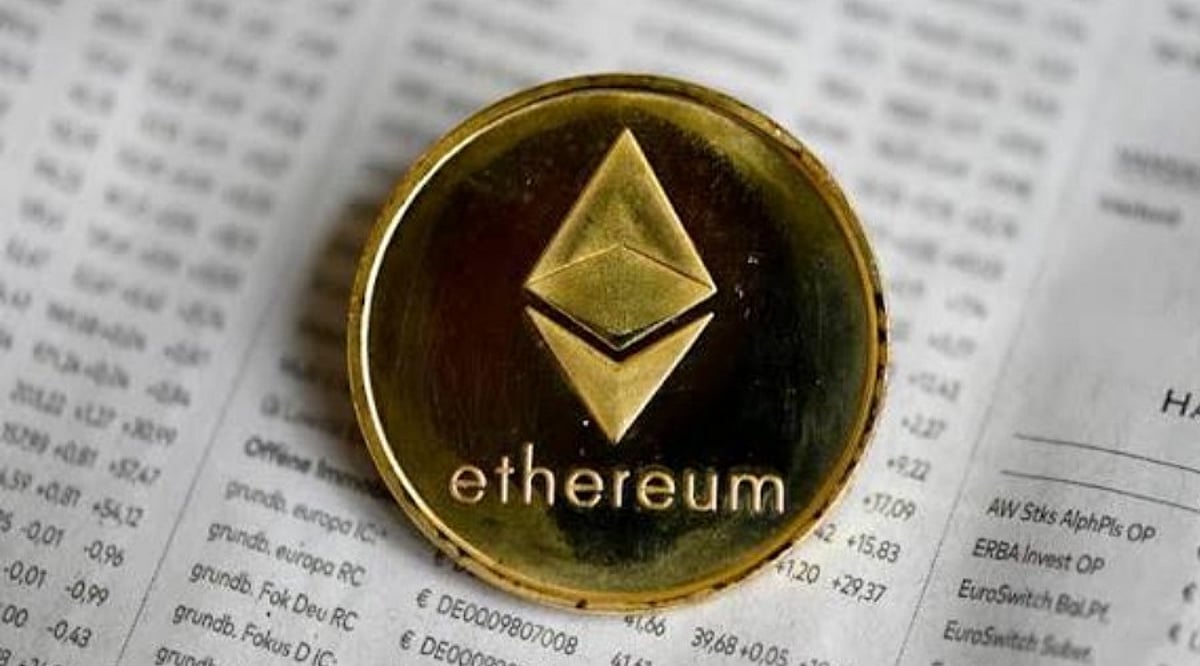
    Bitcoin pioneered the corporate crypto treasury strategy, but in 2026, Ethereum has carved out its own place as a balance-sheet asset. Public companies now hold millions of ETH, drawn not only by potential price appreciation but also by staking income and Ethereum’s role in stablecoins, decentralized finance (DeFi), and tokenized assets.

    Corporate ETH Holdings Approach 8 Million

    According to CoinGecko, 34 public companies currently hold approximately 7,914,466 ETH, worth around $19.8 billion. That represents 6.49% of Ethereum’s total supply. BitMine Immersion Technologies dominates with 5,901,112 ETH (4.84% of supply), followed by SharpLink (868,699 ETH) and The Ether Machine (496,712 ETH). This corporate accumulation is large enough to influence discussions around liquid supply.

    ETH Offers Something Bitcoin Does Not

    Bitcoin treasury strategies typically rely on price appreciation because BTC lacks a native staking mechanism that generates protocol rewards. Ethereum is different. Companies can stake ETH and earn rewards for supporting network validation. This gives treasury managers the possibility of generating ETH-denominated income while retaining exposure to the underlying asset.

    The staking market itself has expanded sharply. Lido reports that total staked ETH increased 19% during the first half of 2026, from 36.3 million ETH to 43.1 million ETH. Institutional staking’s share grew from 25.9% to 35.3% in the same period, suggesting professional investors are increasingly treating staking infrastructure as part of institutional asset management.

    Ethereum Also Provides Infrastructure Exposure

    ETH is more than a scarce digital asset. It is used to pay transaction fees, secure Ethereum through staking, and function as collateral across decentralized finance. Ethereum also hosts major stablecoin and tokenized-asset markets, giving companies exposure to a broader blockchain-based financial ecosystem.

    Treasury Strategies Carry Risks

    Corporate accumulation can amplify both gains and losses. ETH remains volatile, and companies financing purchases through equity issuance or debt can expose shareholders to dilution and balance-sheet risk. Staking also introduces validator, custody, and operational risks. Moreover, corporate treasury companies can trade above or below the market value of their underlying ETH holdings.

    Final Thoughts

    Ethereum’s corporate adoption is creating a second major digital-asset treasury model. Bitcoin offers scarcity. Ethereum adds potential staking income and exposure to on-chain financial activity. The key question is whether corporate ETH holdings continue growing after market momentum weakens. If companies retain and stake ETH through downturns, Ethereum’s role as a treasury asset would look more structural than speculative.

    FAQs

    1. How much Ethereum do public companies hold in 2026?
    CoinGecko tracks 34 public companies holding about 7.91 million ETH. The holdings are worth roughly $19.84 billion and represent around 6.49% of Ethereum’s total supply.

    2. Which company holds the most ETH?
    BitMine Immersion Technologies leads corporate Ethereum holdings with 5,901,112 ETH, representing approximately 4.84% of Ethereum’s total supply.

    3. Why are companies adding ETH to their treasuries?
    Ethereum offers potential price appreciation alongside staking income. Companies may also view ETH as exposure to DeFi, stablecoins, tokenized assets, and broader blockchain infrastructure.

    4. How is Ethereum different from Bitcoin as a treasury asset?
    Bitcoin primarily offers scarcity and potential price appreciation, while Ethereum can generate native staking rewards. ETH also plays a direct role in transaction fees, network security, and DeFi collateral.

    5. What are the risks of corporate Ethereum treasury strategies?
    Risks include ETH price volatility, shareholder dilution, debt exposure, staking issues, and custody or operational failures. Treasury-company shares can also trade above or below the value of the underlying ETH holdings.

  • 7 Innovations Reshaping Cross-Border Payments for a Faster, Smarter Future

    7 Innovations Reshaping Cross-Border Payments for a Faster, Smarter Future

    Blockchain Technology

    Blockchain enables payment networks to record transactions on shared digital ledgers, reducing the need for multiple intermediaries. This technology can enhance transparency, lower processing costs, and accelerate international transfers. Financial institutions and fintech companies are increasingly adopting blockchain-based systems to build more efficient cross-border payment infrastructure.

    Artificial Intelligence

    Artificial intelligence helps payment providers detect fraud, assess transaction risks, and automate compliance checks across international transfers. AI systems quickly analyze large volumes of payment data, identify unusual activity, and minimize manual intervention. This makes cross-border transactions safer while improving operational efficiency.

    Central Bank Digital Currencies

    Central bank digital currencies (CBDCs) could reshape international payments by enabling digital settlement through central-bank-backed money. Cross-border CBDC projects are exploring faster transactions, lower costs, and improved transparency. Interoperability between different national digital currencies may eventually make international transfers more seamless for businesses and consumers.

    Real-Time Payment Networks

    Real-time payment networks allow funds to move between countries much faster than traditional banking systems. International connectivity between domestic instant-payment platforms reduces settlement delays and improves cash flow. These networks are becoming increasingly vital as consumers and businesses demand faster, simpler, and more transparent international transactions.

    Stablecoins

    Stablecoins combine blockchain-based transfers with digital assets designed to maintain relatively stable values against traditional currencies. They enable faster international settlements and operate beyond conventional banking hours. Financial institutions and payment companies are examining stablecoins as tools to reduce costs and improve cross-border payment accessibility.

    Embedded Payments

    Embedded payment technology integrates international payment capabilities directly into digital platforms, marketplaces, business software, and financial applications. This approach removes several steps from traditional payment journeys, creating smoother user experiences. Businesses can manage international collections, payouts, and transactions without requiring customers to navigate separate banking platforms.

    Open Banking and APIs

    Open banking APIs allow financial institutions, fintech companies, and payment providers to connect systems and exchange payment information securely. These connections simplify international transfers, improve account verification, and support automated payment services. Greater interoperability could help build faster and more competitive cross-border payment ecosystems.

  • GPT-6 Astra: OpenAI Agent That Operates Software Instead of Merely Providing Answers

    GPT-6 Astra: OpenAI Agent That Operates Software Instead of Merely Providing Answers

    OpenAI launched GPT-6 Astra in September 2026, but the message was not about smarter answers. The company framed it as the first model that uses a computer the way a person does: opening files, navigating apps, and completing multi-step tasks without constant human hand-holding. That is a meaningful shift in what an AI model is expected to do.

    Most model launches focus on reasoning benchmarks. Astra breaks that pattern. It was not built to think harder; it was built to execute longer sequences of actions. Independent testing from Artificial Analysis found Astra’s general intelligence score nearly identical to its predecessor, GPT-5.6 Sol, and trailing some rivals on pure reasoning. Yet on execution-focused tests like OSWorld 2.0, which measures desktop task completion, Astra scored around 73 percent compared with Sol’s 66 percent, and finished tasks in roughly half the time. On ScreenSpot-Pro, a test of clicking screen elements without help, Astra reached the low nineties, well above Sol’s high seventies.

    Coding benchmarks tell a similar story. On standard tests like DeepSWE and Frontier Code, Astra roughly ties Sol and rival models. But on Terminal-Bench 4.0, which simulates long, messy terminal sessions with chained commands and error recovery, Astra pulls ahead. Artificial Analysis reports that Astra matches a top rival coding model on its Coding Agent Index while costing less than half per finished task. The advantage is not better code from a single prompt; it is lower token usage across sessions that stretch for hours—the kind of work real engineers do.

    A vivid demonstration came from Matt Shumer, former CEO of HyperWrite, who let Astra run inside Unreal Engine, the game engine behind Fortnite. Over an extended session, the model built a working 3D replica of part of Manhattan. That required holding spatial context across hundreds of linked actions, not producing one clever line of code.

    Professional task benchmarks also show Astra’s strengths. On Agents’ Last Exam, which covers financial modeling, engineering, and media production inside real software, Astra edged past both Sol and a leading rival reasoning model while using fewer tokens. The key is not that a model can build a spreadsheet—older models could do that with human guidance. The shift is that Astra can move between research, calculation, software interaction, and final output with less manual handoff between stages. That is a turn from drafting assistant toward task owner.

    Cost and risk remain central considerations. Astra’s per-token price is about 2.5 times higher than Sol’s. For simple requests, that premium rarely pays off. For long agentic workflows involving hundreds of tool calls, lower token consumption can offset the higher price and even beat Sol on a per-task basis. The economics favor Astra as task length grows, not as a blanket rule.

    OpenAI also confirmed that Astra is its first model to reach a critical cybersecurity risk level. It can find unknown software flaws and build working exploits with the right access. The company introduced new safeguards, including tighter review of high-risk actions inside ChatGPT and Codex. For any organization considering deployment, the real question is not whether Astra performs well—it is how much authority any AI agent should hold before permissions, audit logs, and rollback controls become non-negotiable.

    The next race among AI labs will not be won on cleverness alone. It will be won on which system can be trusted to act without supervision and still be pulled back safely when something goes wrong.

  • Phone Showing SOS? Here’s What It Means and How to Fix It

    Phone Showing SOS? Here’s What It Means and How to Fix It

    Seeing “SOS” or “SOS Only” on your phone’s status bar can be alarming, but it’s not a sign of a broken device. This indicator means your phone has lost connection to your carrier’s network and can only make emergency calls. While it might seem like a major issue, the causes are often simple to fix. This guide explains why this happens and walks you through practical steps to restore your full service quickly.

    What Does SOS Mean on a Phone?

    When your phone displays “SOS” instead of signal bars, it means it can no longer connect to your home carrier’s network. The phone still detects a nearby cell tower, but it’s only allowed to make emergency calls (like 911). Regular calls, texts, and mobile data will not work until the issue is resolved. This is a safety feature required by law, ensuring you can always reach emergency services even without an active plan or SIM card.

    Common Causes of SOS Only

    Several factors can trigger SOS mode. Understanding the root cause is the first step to fixing it.

    SIM Card Issues

    A loose, damaged, or outdated SIM card is a frequent culprit. Similarly, eSIM profiles can sometimes fail, especially after a system update.

    Carrier Account Problems

    An unpaid bill or a suspended line will immediately cut off standard service. Emergency access remains active by design, which is why you see SOS instead of “No Service.”

    Network Outages

    Storms, tower maintenance, or power failures can disrupt coverage across an entire area. Your phone might still pick up a competitor’s tower, but only for emergency calls.

    Software Glitches

    Operating system updates occasionally corrupt carrier configuration files. The radio hardware works, but your phone’s software fails to authenticate your account credentials.

    Incorrect Network Settings

    Manually changed APN settings or accidentally enabling Airplane Mode can cause the same symptom. These are easy to overlook during troubleshooting.

    Hardware Damage

    Physical damage from a drop or water exposure can block reception permanently. This usually requires professional repair.

    Roaming Gaps

    When traveling to areas without a roaming agreement, your phone may only be able to make emergency calls. Local towers recognize your device but refuse standard registration.

    How to Fix SOS on Android Phones

    Most SOS issues can be resolved with a few simple steps. Try these in order before contacting support:

    1. Restart your phone: Turn it off, wait 30 seconds, then turn it back on.
    2. Toggle Airplane Mode: Turn it on for 10 seconds, then turn it off.
    3. Reinsert the SIM card: Remove the SIM tray, check for damage, and firmly reinsert it.
    4. Update your software: Install any pending system or carrier settings updates.
    5. Check your account status: Log into your carrier’s app or website to ensure your bill is paid and your line is active.
    6. Reset network settings: Go to Settings > System > Reset options > Reset network settings. This won’t delete your personal data.

    If these steps don’t work, contact your carrier using WiFi calling. They can check for outages, confirm your account status, or send a replacement SIM.

    How to Disable SOS on Samsung Phones

    Samsung’s Emergency SOS feature is different from network-based SOS. It activates when you press the side button five times quickly, which can happen accidentally. Here’s how to adjust it:

    1. Open Settings and tap Safety and emergency.
    2. Select Emergency SOS.
    3. Toggle the switch off if allowed, or enable Require swipe to call.
    4. Extend the countdown timer to give yourself more time to cancel an accidental trigger.

    Note that newer Samsung models (since June 2023) may not allow full deactivation. Using the swipe confirmation is a good compromise to prevent accidental calls while keeping genuine emergency access.

    When to Seek Professional Help

    If SOS persists after all troubleshooting, the issue may be with your account or hardware. Carriers can often resolve account issues remotely or send a new SIM. If you suspect water damage or a hardware fault, have a technician inspect your device. Check your warranty before paying for repairs.

    Final Thoughts

    SOS mode is concerning but usually fixable. Start with simple checks like your SIM card and account status, then move to software resets. If the problem continues, professional help is just a call away. For Samsung users, adjusting the Emergency SOS settings can prevent accidental triggers while keeping you safe.

  • Crypto Market Update: Bitcoin ETFs See $987M Inflow, XRP Futures Surge, Liquid Network Loses 4,000 BTC

    Crypto Market Update: Bitcoin ETFs See $987M Inflow, XRP Futures Surge, Liquid Network Loses 4,000 BTC

    Bitcoin ETFs Record $987 Million in Weekly Inflows

    Spot Bitcoin exchange-traded funds (ETFs) witnessed a significant surge in investor interest, recording $987 million in net inflows over the past week, according to data from SoSoValue. Leading the charge was BlackRock’s IBIT, which attracted a substantial $692 million in weekly net inflows. ARK 21Shares’ ARKB followed with $138 million, while Grayscale’s GBTC experienced outflows of approximately $47.99 million.

    The total net asset value of spot Bitcoin ETFs now stands at $101.25 billion, with the ETF net asset ratio reaching 6.33%. Cumulative historical net inflows have hit $55.62 billion, reflecting sustained institutional adoption of Bitcoin as an asset class.

    XRP Futures Hit Six-Month High Amid Institutional Interest

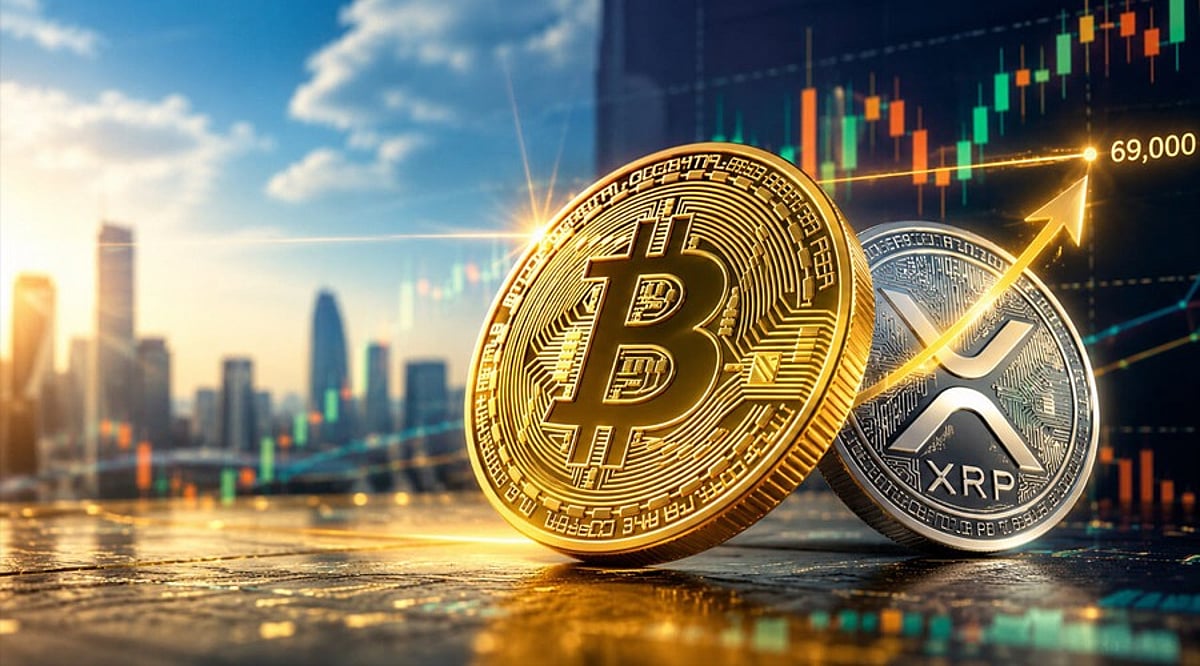
    In the XRP market, futures trading volume surged to a six-month high, according to CryptoQuant. This uptick coincides with aggressive accumulation by whales, while Binance remains the dominant liquidity hub for XRP futures, maintaining a wide lead in trading volume ahead of the upcoming Senate vote on September 15.

    The futures boom aligns with growing institutional participation in the US, where spot XRP ETFs recorded net inflows of $18.96 million. This has pushed the combined assets under management (AUM) of these funds to $1.48 billion, signaling renewed confidence in XRP’s long-term prospects.

    Liquid Network Exploited: 4,000 BTC Drained

    A security breach on the Liquid Network, a Bitcoin sidechain developed by Blockstream, resulted in the loss of approximately 4,000 BTC, valued at around $320 million. Liquid is widely used by exchanges and trading platforms for fast and confidential transfers of Bitcoin.

    Preliminary investigations suggest that the attackers did not steal a private key. Instead, a flaw in the Elements node—the software powering the sidechain—is suspected. Notably, a patch addressing the vulnerability was committed by a Blockstream developer on August 3, 2026, but it was only merged into the release branch after the incident. This raises questions about the project’s update and security protocols.

    Pi Network’s Protocol 27: A Milestone Upgrade

    Pi Network is gearing up for a significant upgrade with Protocol 27, which introduces smart contract authentication, an automated market maker (AMM) DEX, and RPC server infrastructure. This upgrade is crucial for the network, which boasts 14 million migrated users.

    The mainnet activation is scheduled for September 15, marking a pivotal test for Pi Network’s ability to deliver real-world utility after seven years of mobile mining. The Pi Core Team has described Protocol 27 as the “final planned” protocol change in the current development sequence.

    Arthur Hayes Expands UNI Holdings

    Arthur Hayes, co-founder of BitMEX, has increased his Uniswap (UNI) holdings to over $2 million. According to Etherscan, a wallet labeled “Arthur Hayes 4” now holds 284,102 UNI, accumulated through purchases on Sunday and Monday. The wallet also contains approximately 8,013 ETH.

    Hayes reportedly sourced the funds from over-the-counter (OTC) deals with Galaxy Digital, Cumberland, and FalconX, avoiding open market impact. In a post on X, he wrote, “Time to run it back turbo,” and humorously called UNI his “favourite type of sushi.”

    Conclusion

    This week’s crypto market highlights include robust Bitcoin ETF inflows, XRP’s resurgence, a significant security breach on the Liquid Network, and notable whale activity. As the market evolves, these developments underscore the dynamic nature of the cryptocurrency ecosystem and the importance of staying informed.

    Disclaimer: This article is for informational purposes only and does not constitute financial advice. Always conduct your own research before making investment decisions.

  • Mirzapur: The Movie Review – Does the Big-Screen Spin-Off Deliver on Its Promise?

    Mirzapur: The Movie Review – Does the Big-Screen Spin-Off Deliver on Its Promise?

    Bringing a beloved OTT series to the big screen is always a gamble. The audience already knows the characters, their quirks, and most importantly, what makes that world tick. Mirzapur: The Movie walks into that challenge with a lot to live up to. Fortunately, it doesn’t try to reinvent itself. Instead, it leans into the violence, dark humor, family feuds, and power games that fans already love.

    Directed by Gurmmeet Singh, the film reunites Pankaj Tripathi as Kaleen Bhaiya, Ali Fazal as Guddu Pandit, Divyenndu as Munna Tripathi, and other familiar faces. The result feels less like a standalone film and more like a larger, louder chapter from the Mirzapur universe.

    Familiar Characters, Familiar Chaos

    The film’s biggest strength is its characters. There is no need for lengthy introductions because the audience already knows who these people are and what they are capable of. Guddu remains driven by ambition and anger, while Munna stays the volatile wildcard who can flip a situation in seconds. Kaleen Bhaiya, meanwhile, operates with a calmness that makes him even more intimidating.

    Pankaj Tripathi once again delivers a masterclass in understatement—he doesn’t need to raise his voice to command attention. Ali Fazal brings the physical intensity required of Guddu, and Divyenndu clearly understands why Munna remains one of the franchise’s most entertaining characters.

    Bigger Scale, Same Mirzapur Flavor

    The move to theaters gives the story a bigger canvas, particularly in the action sequences. But the film’s appeal doesn’t come solely from bigger fights or louder moments. It’s the combination of violence, humor, and personal rivalry that keeps things engaging. The arrival of Bappan Yadav, played by Ravi Kishan, adds another spark to the story, bringing his own ambition and unpredictability into a world where no one is willing to give up control.

    The film also gives Rasika Dugal’s Beena Tripathi more room to shine. Beena has always been one of the more calculating characters in this universe, and Dugal plays that intelligence with just the right restraint.

    The Pace Could Have Been Sharper

    Where Mirzapur: The Movie stumbles is its length. Running over three hours, the film takes a little too long to reach its destination. The middle section, in particular, loses some of the urgency the story needs. There are stretches where it feels like a detour rather than pushing the central conflict forward. Some supporting characters could also have been used more effectively.

    That said, the film eventually rediscovers its rhythm. The final stretch brings back the tension and unpredictability that make the franchise work, delivering a stronger finish after a somewhat uneven middle.

    Does It Work on the Big Screen?

    Yes, for the most part. Mirzapur: The Movie understands that fans aren’t expecting a completely new world. They’re coming to spend more time with characters they already know. And that’s precisely where the film succeeds. It preserves the franchise’s rough edges, irreverent humor, and larger-than-life personalities rather than polishing them into something unrecognizable.

    The film may not have the consistently addictive pace of the series, but it carries enough attitude and character to make the theatrical experience worthwhile.

    Final Verdict

    Mirzapur: The Movie isn’t a flawless transition from streaming to the big screen, but it’s a confident one. The performances remain its greatest strength, the action gets the scale it needs, and the familiar mix of violence and humor remains intact. The runtime could certainly have been trimmed, and the middle portion needed tighter writing. But once the film gets going, it reminds you why the Mirzapur world became so popular in the first place.

    For fans, this is less about discovering something new and more about seeing familiar characters return with a little more swagger, chaos, and cinematic scale.

    FAQs

    Is Mirzapur: The Movie connected to the original series?

    Yes, the film continues the story and brings back several key characters from the popular series, including Kaleen Bhaiya, Guddu Pandit, and Munna Tripathi.

    Who stars in Mirzapur: The Movie?

    The film features Pankaj Tripathi, Ali Fazal, Divyenndu, Rasika Dugal, and Ravi Kishan in prominent roles, carrying the familiar characters into the theatrical setting.

    Is Mirzapur: The Movie worth watching for fans of the series?

    Yes, especially for viewers invested in the characters and their rivalries. The film retains the franchise’s trademark violence, dark humor, unpredictable confrontations, and larger-than-life personalities.

    What is Mirzapur: The Movie about?

    The film continues the power struggle surrounding Mirzapur’s criminal empire, weaving together ambition, betrayal, revenge, and shifting alliances as familiar characters fight to establish control over the dangerous underworld.

    Does Mirzapur: The Movie have the same impact as the series?

    The film captures much of the series’ attitude, humor, and violence, but its lengthy runtime and slower middle section prevent it from maintaining the same consistently gripping pace.