Blog

  • Bitcoin Holds Near $78,650 as CLARITY Act Vote and Iran Tensions Keep Markets on Edge

    Bitcoin Holds Near $78,650 as CLARITY Act Vote and Iran Tensions Keep Markets on Edge

    Bitcoin traded near USD 78,648.66 in a tight band on Tuesday, with total market capitalization above USD 1.57 trillion. Oil prices climbed past USD 92 a barrel this week as rising US-Iran tensions kept traders defensive across risk assets. Zcash outperformed the broader market, jumping 5.7% as its ETF-driven rally continued into September.

    Bitcoin Price Today

    Bitcoin traded at USD 78,648.66, up 1.1% in the past 24 hours, according to CoinGecko data. Market capitalization stood at USD 1.57 trillion, with 24-hour trading volume reaching USD 23.35 billion. The coin was flat over the past seven days.

    Key Analyst Views

    CoinSwitch: BTC is trading near USD 78,000–80,000 after shifting rate expectations. Holding above USD 79,500 could open a path toward USD 82,000, with USD 85,000 possible if conditions ease.

    Mudrex: According to Prateek Gupta, Head of Business at Mudrex, Bitcoin is holding near USD 78,600 despite oil above USD 92. Spot demand metrics have turned soft. BTC needs to reclaim USD 80,000 to regain momentum, with USD 77,500 as support.

    Crypto Prices Today: Top Coins at a Glance

    Source: CoinGecko, prices as of today’s session.

    Biggest Gainers and Losers

    Zcash led the top ten with a 5.7% gain. Hyperliquid followed with 2.3%, and Solana rose 1.8%. Stablecoins Tether and USDC stayed flat. No coin in the top ten posted a decline.

    Crypto News Today: Top Headlines Impacting Prices

    CLARITY Act Faces Make-or-Break Senate Vote

    The Senate will hold a cloture vote on the CLARITY Act on September 15. This procedural step needs 60 votes to pass. A failed vote could stall comprehensive US crypto rules for years.

    Middle East Tensions Push Oil Above USD 92

    Escalating US-Iran tensions lifted Brent crude past USD 92 a barrel. Higher energy costs risk keeping inflation elevated as the Fed weighs its next policy decision.

    Liquid Network Faces Scrutiny

    A node-level flaw in Liquid Network’s transaction software led to an unusual transfer of Bitcoin reserves. The incident remains under active industry review.

    Harmony Proposes Migrating ONE to Ethereum

    Harmony has proposed shutting down its independent Layer 1 blockchain to migrate its ONE token onto Ethereum for added liquidity and scale.

    Bitcoin and Ethereum ETFs Extend Inflow Streak

    US spot Bitcoin ETFs pulled in close to USD 987 million in net inflows last week, while spot Ethereum ETFs added roughly USD 218 million. Both products have posted inflows for three consecutive weeks.

    Derivatives Leverage Rebuilds as Traders Reposition

    Perpetual open interest across crypto derivatives has climbed sharply this week. Liquidations over the past day remained elevated, with long positions bearing the brunt.

    Investor and Market Outlook

    Today’s session shows a balance between resilient ETF demand and rising macro pressure. Bitcoin faces resistance between USD 80,000 and USD 82,000 heading into next week. A decisive close above USD 80,000, backed by steady ETF inflows, would strengthen the recovery case. Investors should track US inflation data and the CLARITY Act vote closely. Desks recommend disciplined position sizing rather than chasing strength after sharp moves.

    FAQs

    1. What is the Bitcoin price today? Bitcoin trades near USD 78,648.66, up 1.1% over 24 hours. Resistance sits near USD 80,000–82,000, while support holds close to USD 77,500.

    2. Why did Bitcoin move higher today? Steady ETF inflows and resilient institutional demand offset pressure from a cautious macro backdrop.

    3. What is the biggest crypto news today? The CLARITY Act Senate cloture vote, rising oil prices from US-Iran tensions, a Liquid Network exploit, and continued ETF inflows.

    4. Which coins are performing best today? Zcash (+5.7%), Hyperliquid (+2.3%), and Solana (+1.8%). No top-ten coin declined.

    5. What should investors watch this week? US inflation data, the September 15 CLARITY Act vote, and Bitcoin/Ethereum ETF flow data.

    Disclaimer: This article is for informational purposes only and does not constitute investment advice. Always conduct your own research before making any investments.


  • Free Fire MAX Redeem Codes (September 8, 2026): Unlock Premium Skins and Bundles

    Free Fire MAX Redeem Codes (September 8, 2026): Unlock Premium Skins and Bundles

    Garena Free Fire MAX redeem codes for September 8 are now live, giving players access to free emotes, skins, animations, and other cosmetic rewards. Claim the active codes before they expire today.

    Overview

    Garena Free Fire MAX offers redeem codes that allow players to quickly obtain powerful weapons and items without the need for extensive grinding. These 12-to-14-character alphanumeric combinations can be redeemed for rewards. Today’s codes include FA3S7D5F1G9H, 6KWMFJVMQQYG, FF7TRD2SQA9F, and more, granting premium items.

    Codes for September 8, 2026

    If you are looking for Free Fire MAX redeem codes for September 8, 2026, check out the ones listed below:

    • BR43FMAPYEZZ
    • FM6N1B8V3C4X
    • FA3S7D5F1G9H
    • FF7TRD2SQA9F
    • XZDJZE25WEFJ
    • 6KWMFJVMQQYG
    • FZ5X1C7V9B2N
    • FT4E9Y5U1I3O
    • UPQ7X5NMJ64V
    • S9QK2L6VP3MR
    • FK3J9H5G1F7D
    • FU1I5O3P7A9S
    • F7F9A3B2K6G8
    • FE2R8T6Y4U1I
    • FFR4G3HM5YJN
    • FP9O1I5U3Y2T

    All the above codes are active at press time. However, players must redeem them within a specific period before they expire.

    How to Redeem the Codes

    For veteran players, this process is simple. For newcomers, here are the steps to redeem Garena Free Fire MAX codes:

    1. Visit the Garena Free Fire MAX official code redemption site.
    2. Sign in using your preferred method (Facebook, Twitter, or Google). Ensure the game is linked to that account.
    3. Enter the code exactly in the designated text box.
    4. Click the ‘Confirm’ button to submit the code. A confirmation message will appear if the code is valid and successfully redeemed.
    5. Wait 24 hours for the rewards to be credited to your in-game mail.

    Keep in mind that codes must be entered exactly as given. Even the slightest mistake prevents redemption. It is always better to copy and paste the code to avoid issues.

    Key Tips for Players

    • Free Fire MAX codes must be redeemed within 24 hours of being issued. Most expire within 18 hours.
    • Codes are typically redeemed by a specific number of players. To secure rewards, try to be among the first 1,000 to redeem.
    • Guest accounts are not eligible for code redemption. Link your account to social media.
    • Track the official website and follow streamers on Twitch, YouTube, and other platforms for more codes.

    Final Thoughts

    The Free Fire MAX redeem codes system is one of the critical factors behind the game’s growing popularity. While intense battles and powerful weapons are core to gameplay, the appeal of free cosmetics through codes is unmatched. Players should redeem codes promptly before they expire. Once expired, you must wait for the next batch. These codes offer the most convenient way to obtain items without spending real money.

    Also Read: Free Fire Max Weapons Guide: Top 8 Exotic Guns

    Join our WhatsApp Channel to get the latest news, exclusives, and videos on WhatsApp.

  • Ovantica Adds Refurbished iPhone 12 to Its Lineup at Competitive Prices

    Ovantica Adds Refurbished iPhone 12 to Its Lineup at Competitive Prices

    Ovantica is expanding its refurbished smartphone catalog with the addition of the Apple iPhone 12, offering consumers a chance to own a premium 5G device at an affordable price. With multiple storage options, device conditions, and color choices, customers seeking a refurbished iPhone 12 can now find a model that fits both their budget and preferences.

    Premium iPhone Experience at a Lower Price

    The iPhone 12 remains a popular choice for those who want flagship features without purchasing a brand-new model. It boasts a large OLED display, dual cameras, Apple’s powerful A14 Bionic chip, and 5G connectivity. Ovantica’s refurbished units allow buyers to enjoy these high-end specs at a fraction of the cost, with condition grades ranging from Fair to Good to Excellent.

    Quality and Warranty for Greater Confidence

    Reliability is a common concern when buying refurbished electronics. Ovantica addresses this with a rigorous refurbishment process. Selected iPhone 12 listings undergo a 47-point quality check, include a certified quality-control report, and come with a one-year warranty. Additionally, eligible devices offer a seven-day replacement policy. Battery health information is clearly displayed on each listing, helping customers make informed decisions.

    Multiple Storage Options to Suit Different Needs

    The available iPhone 12 models on Ovantica include 64GB, 128GB, and 256GB variants, with pricing varying by storage capacity and device condition. For budget-conscious buyers, the 64GB option starts at approximately ₹18,999. Those who need more space for photos, videos, and apps can opt for the 128GB or 256GB versions. EMI purchase schemes are also available on select items, allowing customers to split the cost into manageable installments.

    A Smarter Way to Buy Refurbished iPhone 12

    Refurbished smartphones offer a cost-effective way to acquire high-quality hardware while reducing electronic waste. Ovantica’s expanded iPhone 12 lineup combines competitive pricing, a variety of configurations, and strong quality assurances. Customers can easily compare models, conditions, and prices to find the perfect device for their needs without stretching their budget.

    With this move, Ovantica is making it easier than ever for consumers to enjoy Apple’s premium smartphone experience at a fraction of the original cost.

  • Amazon’s September Sale: 7 Top Gadgets Under ₹20,000 You Shouldn’t Miss

    Amazon’s September Sale: 7 Top Gadgets Under ₹20,000 You Shouldn’t Miss

    Amazon’s September Sale is here, and it’s the perfect time to grab high-quality gadgets without breaking the bank. From feature-packed smartphones to premium earbuds, smartwatches, and tablets, here are seven must-buy devices under ₹20,000 that offer exceptional value for your money.

    1. OnePlus Nord CE 4 Lite 5G

    The OnePlus Nord CE 4 Lite 5G combines a vibrant AMOLED display, reliable performance, and long battery life, making it an excellent budget smartphone. With fast charging support and a clean software experience, it’s a solid everyday companion. Discounts during Amazon’s September Sale could make this device even more appealing for buyers seeking a balanced phone under ₹20,000.

    2. Samsung Galaxy M35 5G

    The Samsung Galaxy M35 5G is designed for users who want a large display, capable cameras, and strong battery endurance without overspending. Its AMOLED screen enhances streaming and gaming, while Samsung’s software ecosystem adds familiarity. Sale discounts can bring this smartphone comfortably within budget, making it a strong contender for everyday entertainment and productivity.

    3. realme P3 Pro 5G

    The realme P3 Pro 5G targets performance-focused buyers with a capable processor, high-refresh-rate display, and gaming-oriented features. Its combination of performance, battery capacity, and fast charging suits demanding usage. Amazon’s September Sale could make this smartphone particularly attractive for shoppers seeking strong specifications without moving into the premium price segment.

    4. CMF Phone 2 Pro

    The CMF Phone 2 Pro stands out with its distinctive design, capable cameras, and clean user interface. It offers an appealing mix of style and everyday performance for those who want something different from conventional smartphones. During the sale, an attractive discount could make it a strong option for users prioritizing design, display quality, and a smooth software experience.

    5. Nothing Ear

    Nothing Ear wireless earbuds combine distinctive styling with active noise cancellation, quality audio, and useful smart features. They are an appealing choice for users wanting premium-looking earbuds without exceeding the ₹20,000 range. Sale pricing can make them even more compelling, especially for listeners who value sound quality, compact design, and seamless integration with modern smartphones.

    6. Amazfit Balance

    The Amazfit Balance is a feature-packed smartwatch offering health tracking, fitness monitoring, GPS, and a large display. It appeals to users seeking advanced fitness features without paying flagship prices. During Amazon’s September Sale, discounts could place it well within budget. Its impressive battery endurance also makes it attractive for those who dislike frequent charging.

    7. Xiaomi Pad 7

    The Xiaomi Pad 7 offers a large, high-quality display and capable hardware aimed at entertainment, browsing, and productivity. With compatible accessories, it can serve as a lightweight alternative to a traditional laptop for everyday tasks. If the sale brings its price below ₹20,000, it could become one of the most compelling tablet options in this category.

    Don’t miss out on these deals during Amazon’s September Sale. Whether you need a new smartphone, earbuds, a smartwatch, or a tablet, these gadgets deliver excellent performance and features without exceeding your budget.

  • How Dheemanth Reddy’s Hindi Voice Model Won Over Thousands in a Blind Listening Test

    How Dheemanth Reddy’s Hindi Voice Model Won Over Thousands in a Blind Listening Test

    Thousands of anonymous listeners cast their votes on Voice Arena, comparing Hindi voice samples without knowing which company produced them. The result: Dheemanth Reddy’s Maya 2 claimed the top spot for Hindi, surpassing models from ElevenLabs and Cartesia with over 15,000 blind votes. This public leaderboard gave Reddy an independent measure of the naturalness he had been working to achieve.

    Reddy builds voice AI models designed to sound natural in everyday languages. He believes listeners can detect nuances that no product description can capture. A voice may pronounce every word clearly yet still feel foreign because its rhythm doesn’t match how people actually speak. Blind voting placed that judgment directly with native speakers.

    “You do not have to explain natural speech to someone who has spoken the language their whole life,” Reddy says. “They hear the voice and know whether it feels right.”

    Voice Arena removed brand recognition from the comparison, letting each sample stand on what listeners heard. Voters didn’t know which model Reddy had created, so his name and company couldn’t influence their choices. Each response contributed to a record built by people outside his team.

    The ranking also addressed a core question: What does it mean for a machine to sound native? For Reddy, basic intelligibility is just the starting point. He considers how a sentence flows, how delivery affects meaning, and whether the voice sounds like it belongs in the conversation. These qualities matter most when a model is expected to interact, not just read a script.

    “Native listeners can hear when the words are right but the voice still feels unfamiliar,” he says. “That difference matters.”

    Reddy believes the voice AI field has focused too much on English demonstrations that perform well under limited conditions. Success in one language doesn’t automatically transfer to another. A model built around English patterns may struggle elsewhere because each language has its own cadence and expressive habits. Maya 2 was developed with the expectation that Hindi listeners deserve the same level of care.

    This focus separates Reddy’s work from treating additional languages as afterthoughts. His goal is speech that reflects how people communicate within the language itself. That requires close attention to voice sound and the model’s ability to understand meaning. A system can’t sustain a convincing exchange when the voice feels unnatural or the conversation loses direction.

    “The language cannot feel like an added feature,” Reddy says. “It has to feel like the model was built to speak with that person from the beginning.”

    Voice Arena gave Reddy a public test for that standard. Listeners didn’t respond to the model’s size or the organization’s reputation. They heard samples and selected their preferences. More than 15,000 blind votes contributed to Maya 2’s Hindi ranking, giving the result a basis beyond Reddy’s own assessment.

    He doesn’t present the ranking as proof that every multilingual voice problem is solved. It identifies one area where the model performed strongly under public comparison. It also supports his belief that listening tests should play a key role in evaluating naturalness. People who speak the language bring knowledge that can’t be replaced by a company’s description of its own model.

    “Voice is experienced by hearing it,” he says. “The people listening should have a real role in deciding whether the model works.”

    Maya 2 followed Reddy’s earlier work on Maya 1, an open-weights speech model available for developers. The later model faced a different form of outside judgment through blind listener preference. It had to earn votes without depending on Reddy’s explanation of what the audience was supposed to hear.

    Reddy earned a master’s degree in Computing, Entrepreneurship, and Innovation from New York University. He now serves as co-founder and CEO of Maya Research, where he builds models and directs technical work. He was also awarded an Emergent Ventures grant for developing voice AI that sounds native.

    As co-founder and CEO, Reddy is building that work within a company backed by South Park Commons. His earlier Maya 1 model is one of the world’s top open-weights speech models and the only model from India on the Artificial Analysis / Speech Arena leaderboard. His technical experience has also led to roles outside Maya Research, including serving as a judge at the Cerebral Valley AI hackathon.

    The significance of Maya 2’s Hindi ranking lies in the standard it applies. Reddy wants multilingual models to be evaluated within the languages they claim to speak well. A successful English demonstration says little about whether a Hindi voice will sound familiar to someone who hears the language at home. Each language deserves direct testing by listeners who can recognize its details.

    Reddy expects people to use speech for more tasks that currently require typing or navigating menus. Those interactions will depend on whether the system understands the speaker and responds in a voice that feels appropriate. Poor native-language quality can create distance before the conversation begins. A model that sounds natural helps users focus on the task rather than the interface’s limitations.

    Reddy sees the Hindi leaderboard as one public checkpoint in a much longer technical effort. It showed that Maya 2 could compete through blind listening and placed native speakers at the center of evaluation. For him, that is where judgment of a voice model belongs.

    “People should be able to hear the voice and trust their own judgment,” Reddy says. “That is the standard the model has to meet.”

  • Bajaj Finance Invests in TrueFan AI: 5% Stake Acquired Under Finserv Intelligence Initiative

    Bajaj Finance Invests in TrueFan AI: 5% Stake Acquired Under Finserv Intelligence Initiative

    Mumbai, September 8, 2026 – Bajaj Finance Ltd., a subsidiary of Bajaj Finserv Ltd. and India’s largest private sector non-banking financial company, has acquired a 5% stake in TrueFan AI (Hogwarts E-learning Universe Private Limited), an AI-powered video generation platform. The investment is part of Finserv Intelligence, Bajaj Finserv’s group-wide strategic initiative in applied research and innovation focused on developing and supporting high-tech, scalable solutions built in India, for India and the world.

    Through this initiative, Bajaj Finance aims to invest in early-stage technology startups—from seed to Series B—that demonstrate strong innovation and scalability potential in AI, cybersecurity, quantum technologies, fintech, and consumer technology.

    The investment in TrueFan AI builds on an existing commercial relationship between the two companies. Bajaj Finance has already deployed TrueFan’s platform at scale, generating millions of personalized videos for customer engagement and dealer enablement. This supports Bajaj Finance’s broader strategy of deploying AI-led automation and personalization across its digital ecosystem.

    Rajeev Jain, Vice Chairman and Managing Director of Bajaj Finance, said, “As a FINAI company, we are deploying AI at scale across the company. Our investment in TrueFan AI follows sustained, production-scale use of its technology, giving us first-hand experience of the platform’s capabilities and its execution. This investment reflects our commitment to supporting proprietary AI innovation in India and our belief in TrueFan’s potential to drive enterprise adoption of AI-powered communication.”

    Nimish Goel, Co-founder and CEO of TrueFan AI, added, “Bajaj Finance is one of India’s most forward-looking enterprises in AI adoption. There is no stronger validation than seeing one of our largest customers also become a shareholder after experiencing our technology first-hand. It is a strong vote of confidence in the TrueFan AI team and what we have built. We look forward to deepening our partnership with Bajaj Finance and the wider Bajaj Finserv ecosystem.”

    Beyond the equity investment, Bajaj Finance and TrueFan AI intend to expand their collaboration across personalized marketing, video generation at scale, in-app live avatar assistance, AI-powered multilingual communication, dealer communication, learning and development, and digital onboarding. In line with Finserv Intelligence’s value-creation-first philosophy, the partnership will extend beyond financial investment to building technological capabilities and creating long-term strategic value.

    The TrueFan AI platform is built for enterprise-grade deployment, optimized for low-cost inference, high-volume generation, and seamless integration into existing enterprise workflows.

  • Apeing Presale Draws Attention Amid Bitcoin Security Scare and Monero Pullback

    Apeing Presale Draws Attention Amid Bitcoin Security Scare and Monero Pullback

    The cryptocurrency market is experiencing a wave of contrasting movements. Bitcoin is grappling with a major security incident on the Liquid Network, Monero is cooling off after a strong rally, and a new presale project called Apeing is capturing investor interest with its early-stage pricing.

    Apeing Presale: A Low-Cost Entry Point

    Apeing’s presale is already live in Stage 1, known as Banana Drop, offering tokens at $0.0001 with a limited allocation of 150 million $APEING. The project has a fixed total supply of 16.75 billion tokens, with 40% allocated to the presale. The stated listing price is $0.01, meaning early participants could see a theoretical 100x difference if the token reaches that level. The presale follows a staged pricing model, with each subsequent stage increasing the price. This structure creates a clear incentive for early investigation before later stages open at higher costs.

    Bitcoin Faces Security Concerns on Liquid Network

    Nearly 4,000 BTC—worth approximately $320 million—was reportedly drained from Liquid Network, a Bitcoin Layer-2 solution, following an apparent security exploit. The network temporarily paused transactions and disabled bridge nodes while federation members investigated. The attackers posted an on-chain message claiming to be whitehats, but the intentions remain unclear. The incident has raised fresh questions about the security of cross-chain infrastructure and tokenized Bitcoin systems.

    Monero Retreats After Powerful Rally

    Monero’s price dropped roughly 3.6% over a 27-hour period after a strong August rally from around $360 to a high near $557 in early September. The correction appears driven by profit-taking and macroeconomic pressure, including a stronger-than-expected U.S. jobs report that triggered a Bitcoin decline below $79,000 and increased liquidations in leveraged positions. Despite the pullback, Monero’s underlying network fundamentals remain intact.

    Why Apeing Deserves a Look

    While Bitcoin and Monero deal with their respective challenges, Apeing represents a presale-stage opportunity. The project’s fixed supply, Ethereum ERC-20 foundation, and 18-month liquidity lock provide structural elements for potential participants to evaluate. The current Stage 1 price of $0.0001 will not last forever—once the 150 million allocation is filled, the price increases. For investors searching for the next big crypto, this creates a time-sensitive window to research before the entry point disappears.

    Conclusion

    Bitcoin is under scrutiny after the Liquid Network exploit, Monero is correcting after a strong run, and Apeing offers a live presale with a significant theoretical price gap. The Apeing presale is currently at $0.0001 with limited tokens available. Later stages will carry higher prices, making the current phase worth investigating for those looking to get in early.

  • 8 Sci-Fi Technologies That Are Now a Reality

    8 Sci-Fi Technologies That Are Now a Reality

    From Fiction to Function: Technologies That Are Reshaping Our World

    The line between science fiction and reality continues to blur as once-fantastical concepts become part of our everyday lives. From humanoid robots to quantum computers, these eight technologies are no longer just the stuff of movies—they are actively being developed and deployed today. Here’s a closer look at how these innovations are transforming the world around us.

    Humanoid Robots: From Screen to Workspace

    Humanoid robots have made the leap from movie sets to real-world environments, including laboratories, factories, and warehouses. With advances in artificial intelligence, computer vision, and robotics, these machines can now navigate complex spaces and perform tasks that were once thought to be exclusively human. Companies are developing robots that can carry objects, assist human workers, and learn repetitive activities. As these machines become more sophisticated, their eventual integration into homes could revolutionize how we approach daily chores and personal assistance.

    Brain-Computer Interfaces: Mind Meets Machine

    The idea of controlling technology with our thoughts is no longer just a futuristic fantasy. Brain-computer interfaces (BCIs) are making this possible by interpreting neural signals and translating them into digital commands. This technology holds immense potential for individuals with paralysis, enabling them to communicate and operate devices using only their minds. While consumer applications are still a ways off, the medical implications alone could redefine assistive technology and human-computer interaction.

    Self-Driving Cars: The Road to Autonomy

    Autonomous driving has evolved from a science-fiction trope to a technology being tested on real roads around the globe. Modern vehicles are equipped with advanced cameras, sensors, and artificial intelligence systems that assist drivers and perform certain driving functions. While fully autonomous vehicles still face technical, regulatory, and safety hurdles, the ongoing development suggests that transportation will gradually become less reliant on human control, promising a future with fewer accidents and more efficient travel.

    AI Personal Assistants: Your Digital Sidekick

    Fictional computers that can understand and respond to natural language are becoming increasingly realistic, thanks to generative artificial intelligence. Today’s AI assistants can answer questions, summarize information, create content, and perform a variety of digital tasks. As these systems become more capable and integrated with other applications, they are poised to evolve into personalized digital agents that manage schedules, conduct research, facilitate communication, and streamline everyday workflows.

    Quantum Computing: Unlocking Unprecedented Power

    Quantum computing is set to solve complex problems that are currently beyond the reach of conventional computers. By leveraging the principles of quantum mechanics, researchers are developing machines with potential applications in medicine, materials science, optimization, and cybersecurity. Although today’s quantum systems are still experimental and face significant technical challenges, ongoing advances in quantum hardware and error correction are bringing this futuristic technology closer to practical use.

    Artificial Organs: Bridging the Gap in Medicine

    Science fiction has long imagined a world where damaged body parts can be replaced with artificial or laboratory-grown alternatives. Modern medicine is already making this a reality with the development of artificial hearts, advanced prosthetics, tissue engineering, and lab-grown organs. Researchers are focused on making these technologies safer, more durable, and biologically compatible. While fully replacing complex human organs remains a challenge, breakthroughs in regenerative medicine could one day transform transplantation and revolutionize healthcare.

    Augmented Reality Glasses: The Digital Overlay

    Augmented reality (AR) glasses are bringing digital information into our physical surroundings, much like the futuristic interfaces depicted in sci-fi films. Modern AR devices can display navigation cues, digital objects, and contextual instructions while allowing users to interact with virtual content. With improvements in lightweight hardware, displays, sensors, and AI, AR glasses are becoming more practical for use in workplaces, education, entertainment, and everyday communication.

    Conclusion

    These eight technologies are no longer just figments of our imagination—they are real, tangible innovations that are already shaping our present and will continue to define our future. As they evolve and become more integrated into our lives, we can expect to see even more incredible advancements that were once thought impossible. The future is indeed here, and it’s more exciting than we ever imagined.

  • From AutoGen to Agent Framework: The Evolution of Multi-Agent AI Systems

    From AutoGen to Agent Framework: The Evolution of Multi-Agent AI Systems

    Key Takeaways

    • AutoGen is now in maintenance mode, receiving bug fixes, security updates, and documentation rather than new features.
    • Microsoft Agent Framework is the successor, combining AutoGen concepts with Semantic Kernel foundations and production-focused capabilities.
    • New projects should favor Agent Framework, especially when they require workflows, enterprise integration, observability, and long-term Microsoft support.

    Microsoft AutoGen once stood at the center of Microsoft’s multi-agent AI work. Its core idea was simple: several AI agents could take different roles, share messages, call tools, and work through a task as a team. That model helped shape modern agent design, but the current Microsoft roadmap has changed. AutoGen now sits in maintenance mode, while Microsoft Agent Framework has taken its place as the supported platform for new projects.

    AutoGen Still Matters for Multi-Agent Design

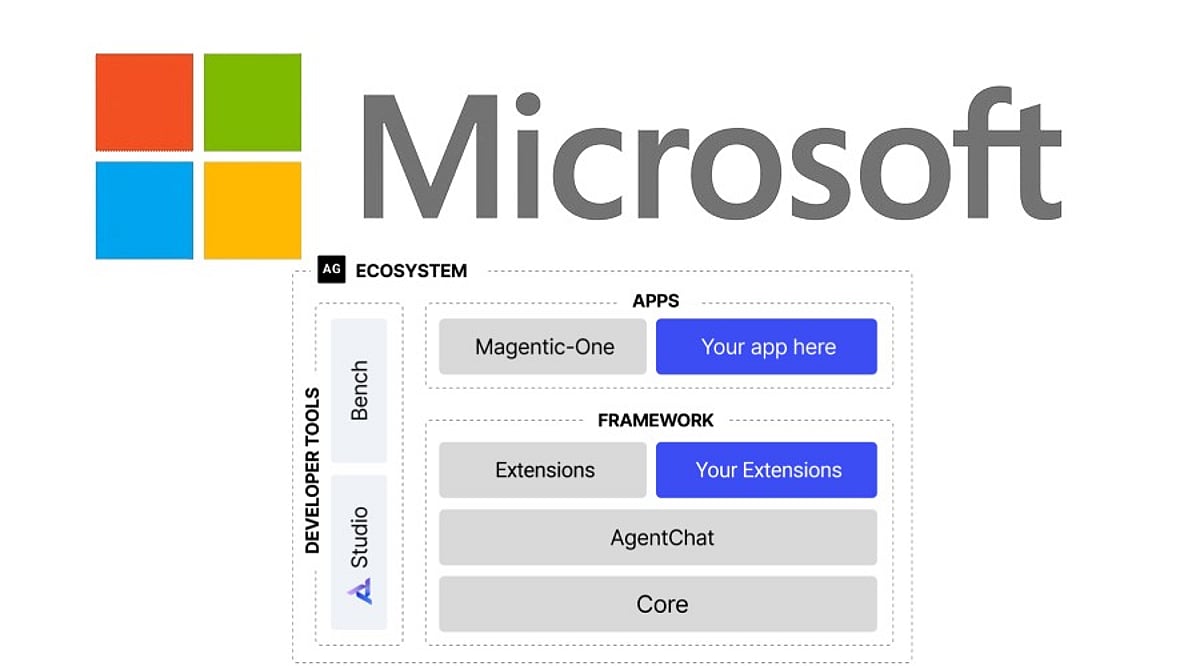
    AutoGen came from Microsoft Research and helped popularize multi-agent orchestration. Its architecture is split into three main layers. The Core API handled message transfer, event-driven agents, and local or distributed runtimes. AgentChat offered a simpler API for common patterns such as two-agent chat and group chat. Extensions added model clients, code execution, and other integrations. AutoGen also included AutoGen Studio, a no-code interface, and AutoGen Bench for agent evaluation.

    AutoGen v0.4 marked a major design step. The release moved toward an asynchronous, event-driven architecture with clearer separation between agents, runtimes, and extensions. That design made multi-agent systems easier to structure at a lower level. Magentic-One also showed what the framework could support: a multi-agent team that could handle web research, code execution, and file tasks.

    Maintenance Mode Changes the Choice

    The key update arrived in 2026. Microsoft now labels AutoGen as a maintenance-mode project. The project will not receive new features or enhancements, and community contributors now handle its development. Work remains focused on bug fixes, security patches, and documentation. Microsoft directs new users toward Microsoft Agent Framework and advises current AutoGen users to follow the migration path.

    That status does not make AutoGen useless. Current applications can continue to run with the AutoGen architecture and tools. The key distinction is project choice: AutoGen remains useful for current systems and for studying multi-agent concepts, while Microsoft Agent Framework is the main path for new Microsoft-based agent work.

    Microsoft Agent Framework Becomes the Successor

    Microsoft Agent Framework reached version 1.0 for both .NET and Python on April 2, 2026. Microsoft describes the release as production-ready, with stable APIs and a long-term support commitment. The framework combines ideas from AutoGen with enterprise foundations from Semantic Kernel. It supports single agents, multi-agent orchestration, multiple model providers, and cross-runtime communication through Agent2Agent (A2A) and Model Context Protocol (MCP).

    The shift also changes the orchestration model. AutoGen paired an event-driven Core with higher-level Teams. Agent Framework places more focus on typed, graph-based Workflows. Data moves across defined edges, and executors act when the required input arrives. This approach gives developers a clearer structure for larger agent systems.

    New Tools Push Agents Toward Real Work

    Microsoft has added several major capabilities around the Agent Framework since version 1.0. At Build 2026, Microsoft introduced Agent Harness, Hosted Agents, and CodeAct. The Agent Harness adds tools, memory, plans, approvals, context control, telemetry, and web search around a model. Hosted Agents provide a managed home inside Microsoft Foundry, with sandboxed sessions, persistent state, observability, and version control.

    CodeAct takes a different route for tool-heavy tasks. Instead of making a separate model call for each tool, CodeAct lets the model write a short Python program that calls several tools in one pass. Microsoft reported a test where CodeAct cut execution time from 27.81 seconds to 13.23 seconds and reduced token use from 6,890 to 2,489. Those figures came from a representative multi-step workload, so they should not serve as a universal benchmark.

    The Migration Path is Now Clear

    Microsoft has a dedicated AutoGen migration guide, updated on August 25, 2026. The guide maps familiar AutoGen ideas to Agent Framework and covers model clients, single-agent features, multi-agent orchestration, and observability. Some concepts stay familiar: agents still use model clients, instructions, and tools. The main change comes in workflow structure, tool APIs, and runtime behavior.

    The result is a clear divide. AutoGen remains a useful foundation for current applications and for the study of multi-agent architecture. Microsoft Agent Framework now holds the stronger case for new systems that need active Microsoft support, stable APIs, enterprise features, and a path toward production. AutoGen therefore does not end with a shutdown. Its ideas have moved into a broader platform that aims to take multi-agent AI from experiments to dependable software.

    FAQs

    1. Is Microsoft AutoGen discontinued? No. AutoGen is in maintenance mode, meaning existing applications can continue using it, but Microsoft is directing new development toward Agent Framework.
    2. What replaced Microsoft AutoGen? Microsoft Agent Framework has become Microsoft’s supported platform for building new AI agents and multi-agent systems.
    3. Should I migrate my existing AutoGen application? Not necessarily immediately. Existing applications can continue running, but migration is worth considering if you need new capabilities or long-term active platform support.
    4. What is the difference between AutoGen and Agent Framework? AutoGen emphasizes event-driven agents and team-based orchestration, while Agent Framework adds typed, graph-based workflows alongside broader enterprise and production capabilities.
    5. Is Microsoft Agent Framework production-ready? Yes. Microsoft Agent Framework 1.0 for .NET and Python was released as a production-ready platform with stable APIs and a long-term support commitment.
  • Bitcoin at $80K Faces Fed Rate-Hike Pressure as September 2026 Inflation Data Looms

    Bitcoin at $80K Faces Fed Rate-Hike Pressure as September 2026 Inflation Data Looms

    The crypto market enters September with monetary policy again becoming one of its biggest short-term risks. Bitcoin has recovered toward USD 80,000, but stronger US employment data, elevated energy prices and rising Treasury yields have revived expectations that the Federal Reserve could raise interest rates this month.

    September Rate-Hike Odds Rise

    US employers added 162,000 jobs in August, comfortably above expectations, while unemployment held steady at 4.1%. The stronger labor-market reading pushed investors toward a more hawkish outlook for the Federal Reserve.

    According to CME FedWatch data, markets are pricing in a 58.4% probability of a 25-basis-point rate hike at the September 15-16 Federal Open Market Committee meeting, up from 52% before the jobs report. UBS also changed its forecast and now expects 25-basis-point increases in both September and December.

    That would take the federal funds target range from 3.50%-3.75% currently to 4%-4.25% by year-end.

    The next major catalyst is August consumer inflation data. UBS noted that July Personal Consumption Expenditures inflation stood at 3.7% year over year, while supply bottlenecks and resilient economic activity have increased upside inflation risks.

    Why Higher Rates Matter for Crypto

    Higher rates can pressure cryptocurrencies as investors receive better returns from comparatively lower-risk government securities. Tighter monetary policy can also strengthen the US dollar and reduce financial-system liquidity available for risk assets.

    Fed Governor Christopher Waller recently argued policymakers should ‘give disinflation a chance,’ temporarily pushing September hike expectations below 50%. Markets subsequently reversed after the stronger employment report.

    Energy prices add another complication. Brent crude recently traded around USD 97 per barrel as geopolitical tensions increased, keeping inflation concerns elevated ahead of the Fed meeting.

    Bitcoin Still Has Support From ETF Demand

    Bitcoin has nevertheless recovered strongly from its 2026 lows. BTC recently completed an approximately 30% rebound and moved back above several major moving averages.

    Institutional demand remains another counterweight to monetary tightening. Spot Bitcoin ETFs recorded approximately USD 987 million in net inflows last week, indicating that regulated investment demand remains active even as rate expectations turn more hawkish.

    This matters as persistent ETF inflows can reduce available market supply and provide buying pressure during periods of macroeconomic uncertainty.

    Final Thoughts

    September is becoming a test of whether Bitcoin’s recovery can withstand tighter financial conditions. A hotter inflation reading could strengthen expectations for another Fed hike, lift yields and pressure crypto valuations. Softer inflation could instead revive expectations for a pause.

    For investors, the Fed decision, Treasury yields, the US dollar and ETF flows may therefore matter as much as crypto-specific developments in determining Bitcoin’s next major move.

    FAQs

    Why are Fed rate-hike expectations important for Bitcoin?

    Higher interest rates can make government bonds more attractive and reduce liquidity available for risk assets. A stronger dollar and higher Treasury yields can also create additional pressure on Bitcoin.

    What are markets expecting from the Federal Reserve in September 2026?

    Markets recently priced roughly a 58% probability of a 25-basis-point September rate hike. Strong US employment data has strengthened expectations that monetary policy could remain tighter.

    How is Bitcoin performing ahead of the Fed decision?

    Bitcoin has recovered to USD 80,000 after gaining roughly 30% from its 2026 lows. BTC has also moved above several major moving averages, although macroeconomic risks remain elevated.

    Are Bitcoin ETF inflows supporting the market?

    Yes. Spot Bitcoin ETFs recently recorded around USD 987 million in weekly net inflows, showing that institutional demand remains active despite renewed concerns about higher interest rates.

    What could move Bitcoin next in September?

    US inflation data, Treasury yields, the dollar and the Federal Reserve’s September decision are likely to be key drivers. Softer inflation could support BTC, while a hotter reading may increase pressure on crypto valuations.