Blog

  • FTSE 100 Opens Lower as Oil Nears $100; Computacenter Profit Forecast Lifts Sentiment

    FTSE 100 Opens Lower as Oil Nears $100; Computacenter Profit Forecast Lifts Sentiment

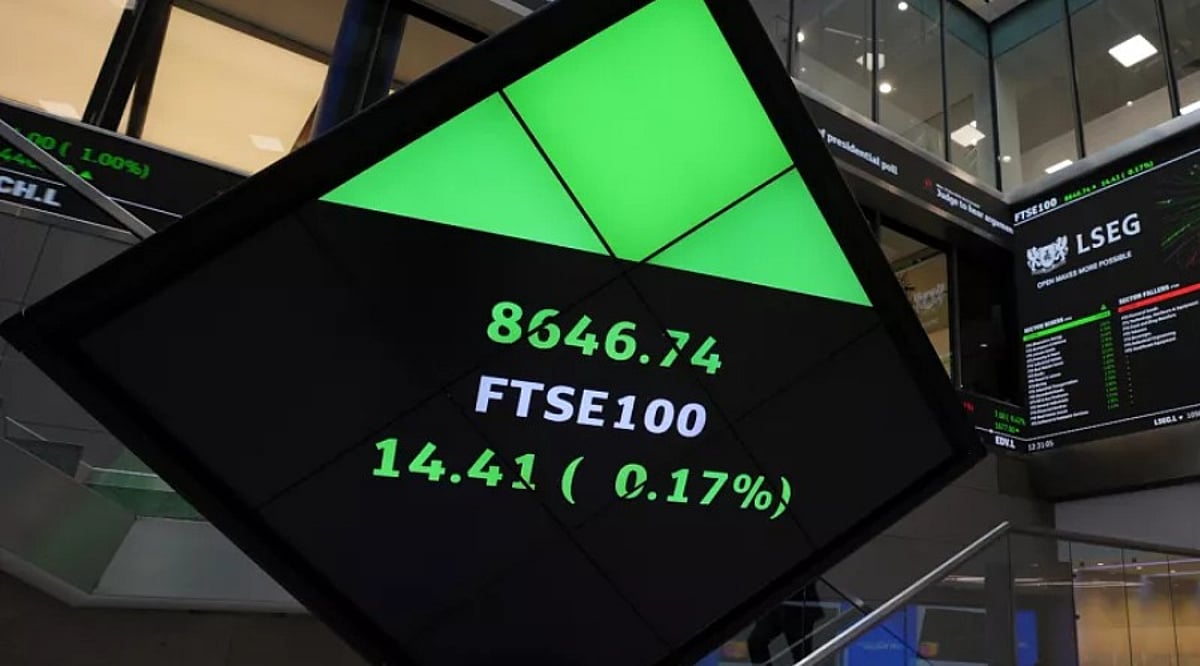
    The FTSE 100 opened 16.06 points lower at 10,806.07 on Tuesday as investors awaited fresh direction from the European Central Bank’s interest rate decision and upcoming US inflation figures. Brent crude futures rose 1.75% to $98.70 per barrel, while US West Texas Intermediate (WTI) advanced 2.89% to $94.12 per barrel.

    Sterling traded at $1.3538 on Tuesday morning, up from $1.3516 at the London equities close on Monday. Against the euro, it slipped to €1.1624 from €1.1638.

    Gainers and Losers

    On the upside, Computacenter climbed 4.64% to 5,860p after upgrading its profit forecast for the second time this year. Auto Trader Group advanced 3.60% to 523.60p, while Antofagasta gained 1.51% to 3,957p. Croda International rose 1.50% to 3,312p, BP added 1.43% to 554.20p, and Glencore increased 1.42% to 612.40p.

    On the downside, HSBC Holdings fell 1.43% to 1,556.40p. Next declined 1.16% to 15,320p, while Whitbread dropped 1.02% to 2,324p. Games Workshop Group slipped 0.71% to 18,270p, Lion Finance Group lost 0.67% to 13,420p, and AstraZeneca edged 0.60% lower to 11,970p.

    Oil Nears $100 Per Barrel

    Oil prices have surged, nearing the $100 per barrel mark. Brent crude gained 1.75% to reach its highest level since July. Reports that Iran-backed Houthis attacked a Saudi energy plant have added fresh pressure on investors. Earlier today, Iran threatened new sanctions on tankers attempting to travel through the Strait of Hormuz.

    Computacenter Increases Profit Forecast

    Computacenter upgraded its profit forecast for the second time this year after its order backlog quadrupled in the last six months. The IT supplier expects to bring in no less than £380 million in pretax profit for the year, well above the previous consensus of £341 million. The order backlog reached a record £9.3 billion, up 323% year-on-year. The group, promoted to the FTSE 100 in the June reshuffle, hiked its dividend by nearly 15% to 27.1p.

    Funding Circle Lifts Profit Forecast

    The boss of Funding Circle has laid out plans for departure as the fintech lifted its profit forecast for the year ahead. Lisa Jacobs, who has led the firm since 2022, will step down as chief executive by no later than September 2027. Revenue jumped 50% to £138 million after loan originations swelled 43% to just over £1 billion. The firm expects profit to reach over £40 million for the year, upgraded from previous expectations of £35 million. Funding Circle also announced a fresh £25 million buyback, bringing total capital returned via buybacks to £100 million since March 2024.

    Global Market View

    In the US, Wall Street was closed on Monday for the Labor Day holiday. In Asia on Tuesday, Tokyo’s Nikkei 225 fell 1.7% to 65,269.33, while China’s Shanghai Composite rose 0.2%. Hong Kong’s Hang Seng declined 0.32%, and South Korea’s Kospi declined 0.58%. In India, both the Nifty 50 and the Sensex fell by 0.54% and 0.59%, respectively.

    Disclaimer: This article is for informational purposes only and does not constitute investment advice. Cryptocurrencies and stocks involve risk. Always conduct your own research before investing.

  • Best Affordable VR Headsets in India Under ₹25,000 (2026 Guide)

    Best Affordable VR Headsets in India Under ₹25,000 (2026 Guide)

    Virtual reality is becoming more accessible than ever, with several budget-friendly headsets now available in India for under ₹25,000. Whether you’re a casual user, a gaming enthusiast, or a drone pilot looking for immersive FPV experiences, there’s a VR headset to match your needs. Below, we round up the top affordable options you can consider in 2026.

    1. DJI Goggles N3

    Designed for FPV (first-person view) drone pilots, the DJI Goggles N3 offers impressive immersion without breaking the bank. Its 1080p Micro-OLED screens deliver sharp, detailed visuals, making it a standout choice for drone enthusiasts.

    2. JioDive JD-004

    The JioDive JD-004 is an entry-level smartphone VR headset aimed at casual users. It works with compatible smartphones and provides an inexpensive introduction to virtual reality—perfect for trying out simple VR apps and 360-degree videos.

    3. Irusu Monster MN01

    Another budget-friendly smartphone VR headset, the Irusu Monster MN01, is designed for beginners. Its simple construction and lightweight design make it suitable for watching immersive videos and exploring basic VR content.

    4. Samsung HMD Odyssey

    Although an older model, the Samsung HMD Odyssey (a Windows Mixed Reality headset) remains a viable option for PC users. Its AMOLED displays deliver vibrant colors and deep blacks, providing an immersive experience for compatible PC applications and games.

    5. Oculus Quest 2

    Even after newer releases, the Oculus Quest 2 remains a capable standalone VR headset for gaming and entertainment. If you can find used or discounted units, this headset offers advanced, all-in-one VR experiences at a price that fits a budget.

    6. Sony PlayStation VR

    For console gamers, the Sony PlayStation VR brings virtual reality to compatible PlayStation hardware. Older bundles or discounted units can offer an affordable entry into VR gaming—especially if you already own a PlayStation.

    7. Other Budget Options

    Several other smartphone-based VR headsets, such as the Lifemusic MM4, DOMO nHance VRF1, and Qwerty 3D VR, provide even lower-cost ways to experience basic virtual reality without a major investment. These are great for curious newcomers.

    With so many choices under ₹25,000, stepping into VR has never been more affordable. Whether you prioritize gaming, FPV flying, or casual media consumption, there’s a headset waiting for you.

  • Selecting Tech Stocks for Long-Term Growth: A Data-Driven Framework

    Selecting Tech Stocks for Long-Term Growth: A Data-Driven Framework

    In the current market, a strong technology company can still be a weak stock pick if the price is wrong. With artificial intelligence (AI) reshaping profit outlooks, capital expenditures, and market expectations, the selection process demands more than just a famous brand or a good product. A truly long-term stock needs a clear path to higher sales, improved profits, and robust cash flow, all while the share price leaves room for future returns.

    Prioritize Real Growth Over Hype

    The first test is the quality of growth. Companies with steady, consistent sales growth are stronger than those dependent on a single demand spike. While revenue is important, profit growth provides a clearer signal of business health. Equally critical is free cash flow (FCF), which shows how much cash remains after operating expenses and capital investments. For instance, State Street notes that major hyperscalers raised their 2026 capital expenditure estimates by 15% from March to $772 billion, and semiconductor earnings are expected to rise 86% in 2026. However, these figures indicate a powerful AI cycle, not that every chip stock is a sound long-term buy. The real question is whether demand can convert into durable profit.

    Identify a Sustainable Moat

    A tech company needs a lasting competitive advantage that rivals cannot easily replicate. This moat can stem from a strong software ecosystem, high customer switching costs, proprietary chip design, a vast cloud network, or a trusted brand. With AI, a new dimension emerges: companies must demonstrate that their technology solves real customer problems and delivers measurable value. As Charles Schwab points out, investors now look for proof that large AI budgets lead to revenue growth, user adoption, or other tangible returns. Cloud growth and margins also indicate whether AI demand can support profit alongside sales.

    Examine Cash Flow Before the Narrative

    Large tech firms now face enormous capital requirements for data centers, chips, and networks. Charles Schwab reports that the Magnificent Seven could spend over $700 billion on capital expenditure in 2026, having already sold more than $130 billion in debt this year, while their free cash flow has fallen sharply from its 2024 peak. Investors must scrutinize whether a company’s spending is efficient and whether its cash generation can sustain such investments without overleveraging.

    Valuation Is a Core Criterion

    Valuation cannot be ignored. Fidelity’s August 2026 tech screen used cash flow growth and long-term earnings growth, while its valuation screen applied forward price-to-earnings (P/E), price-to-cash-flow, and price-to-earnings-growth (PEG) ratios. NVIDIA, Microsoft, TSMC, and Broadcom appeared in the valuation screen, while NVIDIA, TSMC, Broadcom, Micron, and AMD showed up in growth results. A high-quality company can still underperform if its stock price already factors in unrealistic future growth.

    Analyze the Entire AI Supply Chain

    The AI boom extends beyond GPUs to chips, memory, networking, cloud systems, and data center equipment. As workloads become more complex, demand spreads across a wider technology stack. However, this breadth introduces cyclical risks. Semiconductor and memory stocks face sharp cycles and supply shifts, while software companies must show their AI products boost revenue, adoption, and subscriptions. Each segment carries distinct competitive and cyclical risks that require separate evaluation.

    Focus on Durable Returns and Management

    A long-term tech stock needs a business model that supports multi-year growth in sales, margins, and cash flow. Management quality is paramount: a capable team uses capital wisely, maintains a healthy balance sheet, and offers clear guidance. Market concentration adds another concern—Charles Schwab notes that a handful of tech companies now drive more than half of global market earnings growth, heightening concentration risk.

    The best tech stock is not always the fastest grower or the one with the flashiest AI product. The stronger choice combines a durable moat, genuine cash generation, manageable debt, solid earnings prospects, and a share price that doesn’t demand perfection. This standard separates a business with a great future from a stock that has already priced in too much of it.

    Frequently Asked Questions

    1. What should investors look for in a long-term tech stock?
    Investors should assess revenue and earnings growth, free cash flow, competitive advantages, debt levels, capital spending, and valuation.

    2. Is strong AI exposure enough to make a tech stock attractive?
    No. AI exposure can support growth, but investors must determine if that growth translates into sustainable profits and cash flow.

    3. Why is free cash flow important for tech companies?
    Free cash flow shows how much cash a company generates after operating needs and capital investments, helping investors gauge financial strength.

    4. How does valuation affect long-term tech stock returns?
    A high-quality company can still be a poor investment if its stock price assumes extremely high growth, leaving little room for future upside.

    5. Should investors consider the entire AI supply chain?
    Yes. AI growth affects semiconductors, memory, networking, cloud infrastructure, and data centers, but each segment carries different competitive and cyclical risks.

  • Quordle Answers for September 8, 2026: Hints and Solutions for Puzzle #1688

    Quordle Answers for September 8, 2026: Hints and Solutions for Puzzle #1688

    Quordle Today: September 8 Hints, Answers for Puzzle #1688

    Stuck on today’s Quordle puzzle? Put your vocabulary and guessing skills to the test by solving four five-letter words. If you need a nudge, use our hints below before revealing the answers.

    Today’s Quordle Hints

    Players looking for a little help can use these clues to narrow down today’s four answers without spoiling the puzzle immediately:

    • Word 1 (Top Left): Hurled forcefully.
    • Word 2 (Top Right): Daily record of one’s activities.
    • Word 3 (Bottom Left): Bisect.
    • Word 4 (Bottom Right): An allotted place for a ship at a wharf or dock.

    Need one more clue? Here’s a final nudge: The starting letters can give you a useful push as you work through today’s four grids. Look for an F word meaning something was hurled forcefully, a D word for a daily record of personal activities, an H word meaning to divide something into two equal parts, and a B word for a designated place where a ship can dock or a sleeping space on a vessel.

    Answers for September 8

    Spoiler alert: The four answers to today’s Quordle are:

    • FLUNG
    • DIARY
    • HALVE
    • BERTH

    How Difficult Was Today’s Quordle?

    Today’s Quordle features four five-letter words with a mix of familiar meanings and everyday references. The first word refers to something hurled or thrown forcefully, while the second is a daily record of personal experiences, thoughts, or activities. The third means to divide something into two equal parts, and the fourth refers to a designated place for a ship at a wharf or dock.

    The starting letters F, D, H, and B can help you narrow down each answer as you work through the four grids. None of today’s four words contain repeated letters, giving players another useful clue. If you’ve managed to solve all four without checking the solutions, you’ve completed today’s Quordle challenge.

    Also Read: Quordle Today: September 7 Hints, Answers for Puzzle #1687

  • Quantum Computing Threat to Bitcoin: How Close Are Hackers to Breaking BTC?

    Quantum Computing Threat to Bitcoin: How Close Are Hackers to Breaking BTC?

    Bitcoin cannot currently be hacked by available quantum computers, but sufficiently advanced quantum machines could eventually threaten some of the cryptography protecting BTC ownership. The risk is serious enough that researchers are already testing quantum-resistant ways to protect Bitcoin before such computers become practical.

    What Quantum Computers Could Attack

    Bitcoin ownership depends on digital signatures. A wallet uses a private key to authorize spending, while cryptographic mathematics allows the network to verify the signature without revealing that private key.

    The potential problem is Shor’s algorithm. According to StarkWare, a sufficiently capable quantum computer running Shor’s algorithm could work backward from certain exposed public keys and calculate the corresponding private key. An attacker could then create a valid signature and spend the BTC.

    This does not mean Bitcoin’s blockchain itself suddenly disappears. The primary concern is unauthorized spending from vulnerable addresses.

    Which Bitcoin Is Most Exposed?

    Risk varies according to address usage. Bitcoin addresses where the public key has never been revealed have additional protection, as the blockchain initially exposes only a hash of that key. Once coins are spent, however, the public key may become visible.

    Older address structures and reused addresses can therefore present greater long-term concerns. A quantum attacker would still require hardware capable of completing the calculation before the legitimate owner safely moves the funds. Today’s quantum computers are nowhere near that capability.

    A Quantum-Safe Bitcoin Transaction Is Already Live

    Researchers have nevertheless begun preparing. On August 26, StarkWare researcher Avihu Levy demonstrated what the company describes as the first quantum-safe Bitcoin transaction on mainnet. It was confirmed in Bitcoin block 964,199 without changing Bitcoin’s consensus rules or introducing a soft fork.

    The Quantum-Safe Bitcoin method protected a 10,000-satoshi output using a construction designed to remain secure against a working quantum adversary. However, the demonstration was experimental. The transaction was non-standard, required direct submission to MARA Pool, and reportedly cost roughly USD 150-200 when computation and transaction expenses were considered.

    Does This Make Bitcoin Quantum-Proof?

    No. StarkWare itself argues Bitcoin will ultimately need protocol-level changes to provide comprehensive quantum resistance. Existing exposed public keys remain a separate challenge. Bitcoin developers would also need wallets, exchanges and users to migrate before a cryptographically relevant quantum computer becomes available.

    Final Thoughts

    Quantum computing is not an immediate Bitcoin security emergency, but waiting until an attack becomes practical would be dangerous. The recent mainnet experiment shows that researchers can already test defensive mechanisms on Bitcoin itself.

    For BTC holders, the key issue is therefore preparation: developing standards, upgrading wallet infrastructure and eventually migrating vulnerable funds before quantum hardware becomes powerful enough to threaten existing signature systems.

    FAQs

    1. Can quantum computers hack Bitcoin today? No. Current quantum computers are not powerful enough to break Bitcoin’s cryptography. The threat is considered a long-term risk rather than an immediate security emergency.
    2. How could quantum computers threaten Bitcoin? A sufficiently powerful quantum computer using Shor’s algorithm could potentially derive a private key from certain exposed public keys. That could allow an attacker to authorize unauthorized BTC transactions.
    3. Which Bitcoin addresses are most vulnerable to quantum attacks? Older or reused addresses with exposed public keys could face greater long-term risk. Addresses whose public keys have not yet been revealed have an additional layer of protection.
    4. What was StarkWare’s quantum-safe Bitcoin transaction? StarkWare researcher Avihu Levy demonstrated a quantum-resistant Bitcoin transaction on mainnet in block 964,199. The experiment protected a 10,000-satoshi output without requiring a Bitcoin soft fork.
    5. Does the quantum-safe transaction make Bitcoin quantum-proof? No. The demonstration was experimental and does not protect the entire Bitcoin network. Broader quantum resistance would likely require protocol upgrades, wallet changes and migration of vulnerable funds.
  • Why Sensor Fusion and Modular Design Give Yard Robots a Real Engineering Moat

    Why Sensor Fusion and Modular Design Give Yard Robots a Real Engineering Moat

    Most consumer robotics products compete on a spec sheet—more suction, longer battery, a bigger number somewhere. The interesting ones compete on architecture, on decisions made early in the design that are hard for competitors to copy later. In the fast-moving world of autonomous outdoor robotics, the companies building a real technical moat are the ones that got the architecture right, and the modular yard robot is turning into a useful case study in what that actually means.

    The outdoor environment punishes shortcuts. Unlike an indoor robot working on flat, predictable floors, an outdoor autonomous system has to solve localization, perception, traction, and task execution simultaneously, in weather, on slopes, across acres. Getting any one of these wrong makes the product unusable. Getting all of them right, in a way that’s also economically sensible for a homeowner, is the genuine engineering challenge. Here’s how the leading approach tackles it.

    The Localization Problem: Why RTK-GPS Alone Isn’t Enough

    The first hard problem is knowing exactly where the robot is. For an outdoor machine operating without buried boundary wires, positioning has to come from somewhere else, and the somewhere else is usually satellite navigation. But standard GPS, accurate to several meters, is useless when a few inches of error means driving over a flowerbed or off a retaining wall.

    The answer the industry has converged on is RTK-GPS, or Real-Time Kinematic GPS, which uses a fixed base station to correct satellite positioning down to centimeter-level accuracy. That precision is what makes wire-free navigation viable at all. It’s the difference between “somewhere in the yard” and “exactly on the mowing line.”

    But RTK-GPS has obvious drawbacks. Under tree cover, near buildings, or anywhere the sky is obstructed, satellite signal degrades or drops entirely. A system that relies on RTK-GPS alone becomes unreliable exactly where many real yards are most complex. This is the point where architecture separates the serious products from the rest.

    Sensor Fusion as the Real Technical Moat

    The robust solution is not a single better sensor. It’s fusing multiple sensing systems so that the weaknesses of each are covered by the strengths of the others. This is the approach behind Yarbo and its multi-sensor fusion system, which the company calls PPVS.

    PPVS combines RTK-GPS with dual vision cameras and onboard sensors, blending RTK, vision, odometer, collision bar, IMU, and LiDAR (the presence of LiDAR varies by series and version model) into a single continuously updated estimate of where the robot is and what’s around it. When satellite signal drops under a tree canopy, vision and onboard sensing carry the localization load until the signal returns. When vision is challenged by low light or glare, satellite positioning anchors the estimate. The fused system stays reliable in conditions that would break any single sensor working alone.

    This is the kind of engineering that constitutes a real moat, because sensor fusion is genuinely hard to get right. It isn’t a component you can buy off a shelf and bolt on. It’s the accumulated result of tuning how different data streams are weighted, reconciled, and trusted in thousands of edge cases across real terrain. Competitors can buy the same GPS chips and the same cameras. What they can’t easily copy is the fusion logic that makes them work together reliably.

    Traction and Terrain: The Physical Layer of the Problem

    Perception and localization mean nothing if the robot can’t physically go where it needs to. This is where the mechanical architecture matters. Many robotic mowers use wheels, which struggle on slopes and slick or uneven ground. The modular yard robot approach uses tracked mobility instead, distributing weight and gripping terrain in a way that lets the machine handle steep grades and heavy loads.

    The engineering payoff is substantial. Yarbo’s tracked core is rated for slopes as steep as 70 percent and coverage measured in multiple acres, territory that would defeat a conventional wheeled robotic mower. Tracks also matter enormously for the winter use case, where a robotic snow blower has to push through accumulation and maintain traction on surfaces a wheeled machine would simply slip on.

    The Modular Architecture: One Brain, Many Bodies

    The final and most distinctive architectural decision is modularity. Rather than building separate robots for separate jobs, the design centers on one intelligent, autonomous core that accepts interchangeable modules. The same core becomes a robot lawn mower, a snow blower, a leaf blower, or a trimmer depending on which module is attached.

    From an engineering standpoint, this is an elegant separation of concerns. The expensive, complex, high-value parts—the navigation stack, the sensor fusion system, the battery platform, the traction system—live in the core and get reused across every task. The modules handle the mechanical specifics of each job. This means the hard-won intelligence is amortized across many functions rather than duplicated in four separate machines, which is both better engineering and better economics.

    It also creates a compounding advantage. Every improvement to the core’s AI and navigation benefits every module simultaneously. A software update that sharpens obstacle detection makes the mower, the snow blower, and every other configuration smarter at once. That’s a platform dynamic, not a product one, and platforms are notoriously difficult for single-product competitors to catch.

    Why the Architecture Is the Product

    Step back and the pattern is clear. The moat here isn’t any individual feature. It’s the combination of centimeter-accurate fused localization, terrain-capable tracked mobility, and a modular core that turns one hard-won intelligent platform into a year-round fleet of functions. Each of those is difficult on its own. Integrated into a coherent whole that a homeowner can actually operate, they represent exactly the kind of architectural depth that’s hard to replicate and slow to erode.

    In autonomous outdoor robotics, the spec sheet is the surface. The architecture is the product.

  • How Modern Technology Is Making Payments Faster and More Secure

    How Modern Technology Is Making Payments Faster and More Secure

    Technology is transforming the way we pay, making transactions both faster and safer. From real-time settlement to biometric verification, here are the key innovations driving this change.

    Real-Time Payments

    Real-time payment systems enable money to move between accounts within seconds. Services like UPI have made instant transactions practical for everyday purchases, bills, and transfers. This reduces waiting periods and provides immediate confirmation. Businesses benefit from quicker settlements, improved cash flow, and smoother customer payment experiences.

    Biometric Authentication

    Biometric authentication adds an extra security layer by using fingerprints, facial recognition, or other unique characteristics. Instead of relying solely on passwords or PINs, payment systems can verify the person making a transaction. This deters unauthorized access while allowing users to complete transactions quickly without repeatedly entering lengthy credentials.

    Tokenization

    Tokenization replaces sensitive card information with unique digital tokens during transactions. Merchants and payment platforms process payments without directly exposing the actual card number. Even if transaction data is intercepted, the token generally cannot be used like the original card details, reducing risks associated with stolen payment information.

    Artificial Intelligence

    Artificial intelligence helps payment companies identify unusual transaction patterns and potential fraud. Systems analyze transaction behavior, location, device information, and other signals to detect suspicious activity quickly. This allows financial institutions to flag or block potentially fraudulent payments while minimizing unnecessary interruptions for legitimate transactions.

    Contactless Payments

    Contactless payments use technologies like near-field communication (NFC) so users can pay by tapping compatible cards, phones, or wearables. Transactions complete within seconds without inserting a card or re-entering details. Secure authentication and transaction limits provide additional protection, making contactless payments convenient for everyday use.

    Encryption and Security

    Encryption protects payment information as it moves between devices, banks, and payment networks. Modern payment platforms also use secure authentication, fraud monitoring, and layered security controls. These measures help safeguard sensitive financial data from unauthorized access while allowing legitimate transactions to flow efficiently between customers, merchants, and financial institutions.

    Digital Wallets

    Digital wallets bring payment cards, bank accounts, and other payment options together in one application. Users can transact through smartphones or wearable devices without carrying physical cards. Wallets often incorporate device authentication, tokenization, and transaction monitoring, combining convenience with multiple security measures for everyday digital payments.

  • WhatsApp 2026: Usernames, Advanced Privacy, and AI Tools Explained

    WhatsApp 2026: Usernames, Advanced Privacy, and AI Tools Explained

    WhatsApp is undergoing its most significant transformation since end-to-end encryption became standard. With over three billion users, the app is shifting away from phone-number-dependent identity toward usernames, while introducing advanced privacy controls and AI features designed for confidential conversations. These updates, rolling out throughout 2026, are reshaping how users connect, communicate, and protect their data.

    Usernames Decouple Identity from Phone Numbers

    For nearly two decades, a phone number was the only way to identify a WhatsApp user. That changes in 2026. Meta opened username reservations globally on June 29, 2026, ahead of a full rollout later this year. Users can select a username between 3 and 35 characters, and once fully deployed, your phone number will no longer be visible to someone messaging you for the first time.

    However, the phone number remains essential for registration and account maintenance. Usernames simply keep your number hidden from new contacts. Notably, WhatsApp does not offer a public directory for usernames—someone must know your exact handle to start a chat. This keeps the feature more like a quiet introduction tool than an open search system. To prevent impersonation, Meta is reserving usernames for public figures and organizations early in the process.

    Advanced Chat Privacy: Beyond Encryption

    Encryption determines who can read a message. WhatsApp’s new privacy tools address a different question: what can be done with a message after it’s read. Advanced Chat Privacy, available in both one-on-one and group chats, targets conversations that are sensitive even among trusted participants, such as support groups or community initiatives.

    It’s crucial to understand the limits: this setting does not prevent screenshots. It blocks automated actions like chat exports, auto-downloads, and use of your messages in AI features. Manual screenshots remain possible, so it’s not a guarantee of absolute secrecy. This distinction is vital for anyone relying on the feature for confidential discussions.

    Complementing this, the August 2026 security update introduced passkeys. Meta reports that over a billion users have already set up passkeys, replacing traditional codes and PINs with device-bound authentication. This adds a layer of security that’s harder to compromise.

    Meta AI: Private by Design

    The most notable AI update is Incognito Chat with Meta AI, introduced in May 2026. Built on WhatsApp’s Private Processing system, it offers a temporary chat environment that runs in a secure space Meta claims it cannot access. The conversation disappears once the session ends. This addresses a growing concern: people bring health questions, financial worries, and personal decisions to AI, yet most ‘private’ modes on other platforms still let companies see the queries.

    Meta has also planned Side Chat, a feature that would allow you to consult Meta AI quietly within an existing conversation without other participants noticing. Meanwhile, everyday AI tools have expanded: photo touch-ups and drafted reply suggestions arrived in March 2026, followed by Muse Image in July, which lets you generate and edit images directly in chats, rolling out initially in select countries.

    Messaging Management Improvements

    Not every update is about privacy or AI. Some address long-standing annoyances. Direct chat transfer between Android and iPhone is now available, solving a major headache for phone switchers. iPhone users can now run two WhatsApp accounts on one device—a feature Android already enjoyed. Storage management also got a boost: users can delete individual files from a chat without affecting others, a small but welcome fix for one of the app’s most common complaints.

    Final Thoughts

    WhatsApp’s 2026 direction is about separation—decoupling identity from phone numbers, privacy from encryption, and AI from data retention. These layers give users more control, but the real test is how Meta handles full-scale rollout. Will usernames and Incognito Chat maintain their privacy promises as adoption grows? And will the same restraint apply as AI features expand? For now, the updates signal a more thoughtful approach to messaging, one that prioritizes user agency over convenience.

  • Pebble Qore View Review: A Screenless Fitness Band for Accurate Health Monitoring

    Pebble Qore View Review: A Screenless Fitness Band for Accurate Health Monitoring

    The Pebble Qore View is an exceptionally lightweight fitness band that takes a unique approach by prioritizing health analysis over smartwatch-like features. With its compact screen, advanced health score algorithm, full-fledged wellness monitoring, and impressive battery life, this device appeals to users who need precise fitness data without any subscription fees.

    General Specifications

    Here are the key specifications of the Pebble Qore View:

    • Lightweight design
    • Compact screen
    • AI-based health score calculation
    • Full wellness monitoring
    • Long-lasting battery
    • No subscription required

    Pros and Cons

    Pros

    • Very light and comfortable to wear
    • Accurate health tracking
    • No monthly subscription fees
    • AI-powered health score
    • Simple user interface

    Cons

    • Limited smartwatch features
    • Screenless design may not suit everyone

    Final Verdict

    The Pebble Qore View successfully delivers the screenless concept at an affordable price without requiring any monthly plans. The combination of its lightweight build, health tracking capabilities, AI-based health score calculation, and long battery life makes it an excellent choice for daily health monitoring. The simple UI helps users stay focused on fitness rather than being distracted by notifications. If you need an inexpensive fitness tracker that concentrates on health metrics rather than smartwatch features, the Pebble Qore View is a solid option.

    Rating: 4 / 5

  • AI and Laser Automation Reshape Small Manufacturing: A 2026 Outlook

    AI and Laser Automation Reshape Small Manufacturing: A 2026 Outlook

    A visit to a one-man fabrication shop in Ohio reveals the true impact of laser automation. The owner, who spent nine years cutting acrylic signs by hand router, switched to a CO2 laser machine eighteen months ago. When asked what changed, he didn’t mention speed or quality first. He said he no longer dreads Monday mornings.

    That response captures a deeper truth about automation in small manufacturing. It’s not just about output numbers—it’s about what happens when a single operator can take on work that once required a three-person team and still finish by dinner.

    By 2026, the laser machine market has matured to the point where access is no longer the barrier. The real question is how small manufacturers are using the technology and what happens when AI starts guiding the process. OMTech, a laser equipment manufacturer based in Anaheim, California, has tracked these shifts across its customer base, revealing consistent patterns across industries.

    What Laser Machines Actually Do in Small Shops

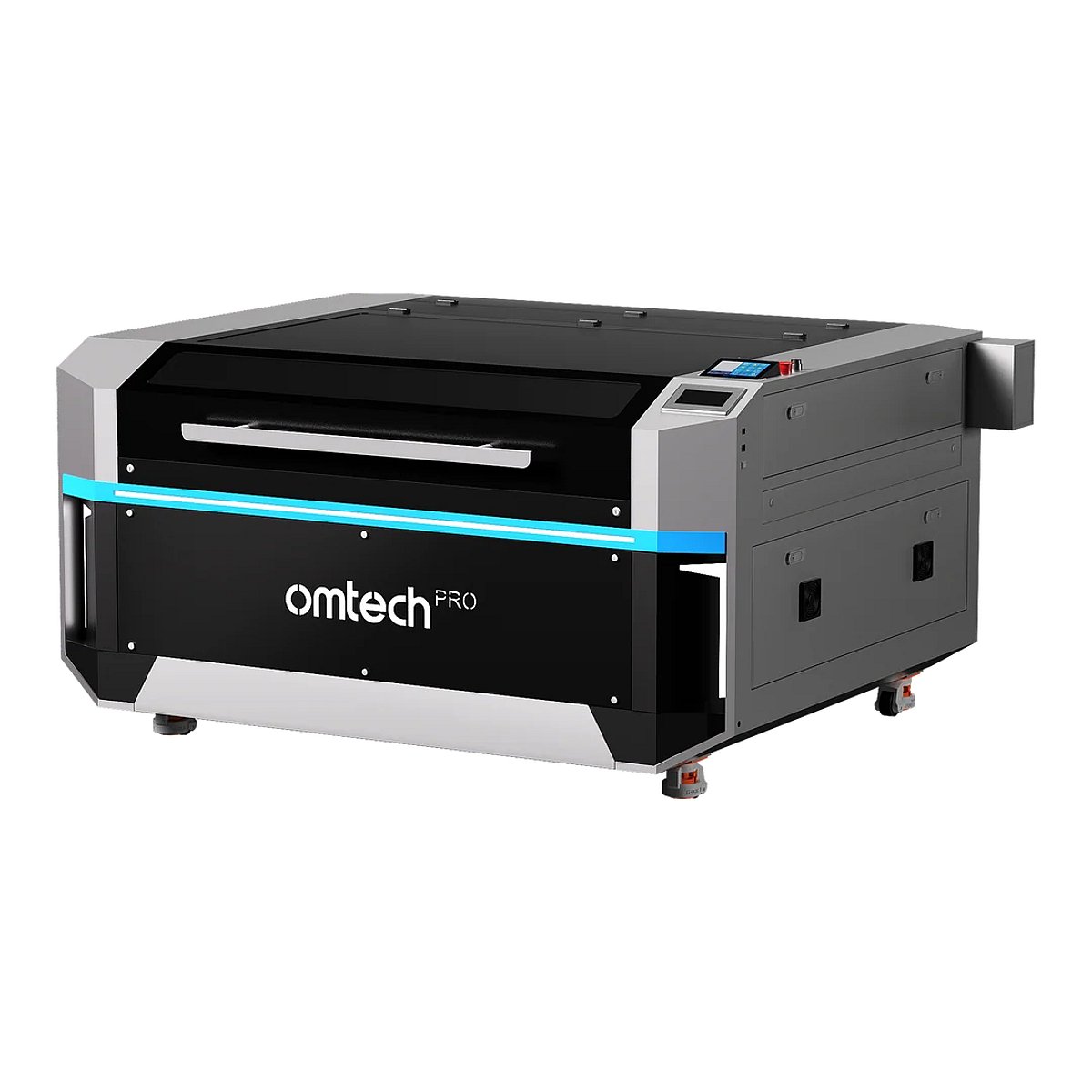
    A laser machine is a precision cutting and marking system that uses a focused beam of light to interact with material. CO2 lasers handle wood, acrylic, leather, and fabric. Fiber lasers handle bare metals. The beam follows a digital design file, so accuracy is as good as the file itself.

    For a small manufacturer, this removes human variability from cutting and marking operations. The machine never has an off day and doesn’t rush at the end of a shift. The five hundredth piece looks like the first one.

    Shops that have integrated laser machines most successfully didn’t necessarily have the biggest budgets. They identified one production bottleneck and targeted it specifically:

    • A sign shop that was routing letters by hand switched to CO2 laser cutting and reduced per-sign labor time from 45 minutes to 8 minutes.
    • A jewelry repair business added a fiber laser engraver and now offers personalization services that account for 40% of monthly revenue.
    • A contract parts supplier added a fiber laser marking machine to bring traceability marking in-house, eliminating $600 per month in outsourcing costs.
    • A home workshop seller on Etsy scaled from 20 orders per month to 180 after switching from hand engraving to a CO2 laser machine.

    Where AI Enters the Laser Machine Workflow

    AI integration in laser manufacturing happens at several levels, many of which aren’t obvious from the outside.

    Automated Material Recognition

    Newer laser systems include sensors and software that automatically identify material type and thickness, then pull recommended cutting parameters from a library. Parameter selection is where most quality problems originate. A beginner operator who once spent two hours on test cuts now spends ten minutes. An experienced operator using AI-suggested parameters iterates faster and wastes less material.

    Nesting Optimization

    Nesting arranges parts on a sheet to minimize waste. AI-driven nesting software now completes in seconds what used to take 15–30 minutes of manual arrangement. Shops report 12–18% reductions in raw material consumption on typical production runs.

    Vision Alignment Systems

    Camera-based alignment systems allow laser machines to position designs on irregular or pre-marked materials without manual measurement. The material goes on the bed, the camera identifies reference points, and the software repositions the design. For businesses engraving on irregular blanks or adding marks to pre-cut parts, this eliminates a step that previously required skill and attention.

    Predictive Maintenance

    Production laser machines now monitor their own operational parameters and flag degradation before it becomes failure—lens contamination, beam alignment drift, cooling system performance. The machine tells the operator what needs attention before a mid-job failure costs time and material. For a small shop with one machine handling all production, unplanned downtime is a serious financial event.

    Emerging Revenue Patterns

    The economic story in 2026 isn’t just about cost reduction. It’s about new revenue categories that were inaccessible before the technology became affordable.

    Personalization at scale is the clearest example. A laser engraver or cutter can produce unique versions of the same product—different names, designs, or text—without changing setups. Personalized products command substantially higher prices. A cutting board that sells for $18 without a name sells for $55–$75 with one.

    On-demand manufacturing allows small shops to produce single pieces or very small batches economically. A customer who needs one custom award or prototype doesn’t need to order fifty to make the economics work.

    Contract services are another pattern. A shop with a laser machine often discovers excess capacity and sells access to other local businesses. Contract laser cutting, engraving, and marking generate revenue from equipment that would otherwise sit idle between production runs.

    What Small Manufacturers Should Evaluate Before Buying

    The laser machine market offers options across price points and capability levels. Before looking at specifications, answer these questions:

    • What materials will you process? CO2 for wood, acrylic, leather, and fabric. Fiber for bare metals. This determines the laser type.
    • What is your realistic production volume? 40-watt for personal/low production; 60–80 watts for most small business needs; 100+ watts for shops running the machine most of the day.
    • What does the full setup cost? Machine price is only the start. Ventilation adds $150–$400. A water chiller for CO2 adds $200–$600.
    • What software does the machine support? LightBurn is the production standard for most CO2 and fiber machines. Verify compatibility before purchase.
    • What support exists? Search the manufacturer name alongside terms like maintenance, parts, and troubleshooting. Active communities and accessible documentation are reliable indicators of long-term ownership.

    The Competitive Reality for Small Manufacturers in 2026

    Businesses not adopting laser machine technology are not standing still—their competitors are. Entry-level production capability has dropped in price to the point where payback is straightforward for almost any shop with a clear application.

    A shop spending $400 per month outsourcing laser work can purchase an in-house system and reach payback in under a year. A shop adding personalization to an existing product line often sees revenue increases that cover equipment cost within six to nine months.

    AI accelerates this: faster parameter development, better material utilization, reduced operator training time. These improvements compound over time. A shop that adopted a laser machine two years ago and has been refining its workflow holds a meaningful operational advantage over one starting today.

    The transformation happening in small manufacturing through laser machine adoption and AI-guided process optimization is not speculative. It is visible in revenue numbers, payback timelines, and the Monday morning attitudes of shop owners who made the switch.

    The technology is accessible. The applications are proven. The competitive pressure is real and increasing. For small manufacturers evaluating their next capital investment, a laser machine with AI-assisted workflow support is one of the clearest paths to both cost reduction and new revenue generation available in 2026.

    OMTech, based in Anaheim, California, designs and builds CO2 laser engravers, fiber laser marking systems, and MOPA fiber lasers for small businesses, production shops, and home workshop users. Their full range of laser engraving and cutting machines is available at OMTech.