Blog

  • BHEL vs NTPC: Why One PSU Power Stock Soared 63% While the Other Fell 13%

    BHEL vs NTPC: Why One PSU Power Stock Soared 63% While the Other Fell 13%

    Over the past six months, two of India’s state-owned power giants have moved in strikingly different directions. BHEL shares surged approximately 63%, while NTPC shares declined by around 13%. According to Kotak Institutional Equities, this divergence stems from contrasting market expectations regarding thermal power capacity additions, renewable energy growth, and future earnings potential.

    BHEL’s Rally Raises Valuation Concerns

    Kotak Institutional Equities noted that BHEL’s impressive share price performance suggests investors anticipate sustained demand for thermal power equipment. However, the brokerage cautioned that the company’s current market valuation—around Rs. 1.48 trillion—implies a much larger thermal capacity buildout than government estimates support.

    Kotak’s analysis indicates that BHEL would need to execute between 150 GW and 300 GW of boiler, turbine, and generator capacity over its lifetime to justify its valuation. Even when assigning 25% of BHEL’s value to non-thermal businesses, the required execution remains demanding.

    “The current market capitalization of BHEL implies 150 GW of life-time capacity execution at a 10 per cent PAT margin, with the ask increasing further to 200 GW at a 7.5 per cent PAT margin,” Kotak stated.

    The brokerage also assessed the potential profit pool from future thermal equipment orders, estimating it could range between Rs. 50,000 crore and Rs. 1 lakh crore—even with stronger equipment pricing. This figure falls short of BHEL’s current market capitalization.

    Additionally, Kotak highlighted BHEL’s historical cash generation, noting that the company produced approximately Rs. 7,100 crore in free cash flow between FY2007 and FY2026, compared with adjusted profit after tax of Rs. 38,300 crore during the same period. “This calculation does not reflect any time value for revenues/profits, which can increase the ask further,” the brokerage added.

    NTPC’s Decline Linked to Slower Thermal Growth

    NTPC shares fell about 13% over the past six months, with Kotak attributing much of the weakness to expectations of slower near-term earnings growth. Reduced thermal capacity additions in recent months have also weighed on the outlook for the state-owned power producer.

    Meanwhile, India continues to expand its renewable energy and storage capacity. Kotak said this growth has introduced uncertainty regarding the pace of future thermal power development, as solar power paired with battery storage becomes increasingly competitive in the electricity market.

    Kotak’s reverse valuation analysis suggests NTPC would need to add approximately 42 GW of thermal capacity over time. In comparison, the Central Electricity Authority expects India to add about 86 GW of thermal capacity between FY2027 and FY2036.

    Private players could capture a portion of that expansion. For instance, the Adani Group has targeted roughly 4 GW of thermal capacity additions annually between FY2027 and FY2032, meaning NTPC would not receive the entire future thermal opportunity.

    Renewable Expansion Shapes the Outlook

    Kotak anticipates India may add around 100 GW of new thermal power capacity over the longer term. The brokerage noted that rising solar generation and battery storage could limit the need for a much larger thermal buildout.

    This scenario creates distinct valuation questions for BHEL and NTPC. NTPC’s valuation reflects expectations for future power generation capacity, while BHEL’s valuation hinges on equipment orders and margins from thermal projects.

    Kotak acknowledged that thermal generation and equipment assets carry uncertain long-term value. However, the brokerage believes BHEL’s current valuation assumes thermal capacity additions that appear higher than government projections.

    The contrasting share price performance underscores the market’s assessment of thermal additions, renewable energy growth, and future earnings. While BHEL has sharply outperformed NTPC over the past six months, Kotak’s analysis reveals that both valuations remain closely tied to India’s evolving power capacity mix.

  • OKX Offers $100K Developer Contest for X Layer and AI Projects Amid Founder Feud with CZ

    OKX Offers $100K Developer Contest for X Layer and AI Projects Amid Founder Feud with CZ

    OKX has launched a $100,000 developer competition known as Dev Day, inviting builders to create projects using X Layer or OKX AI. Applications are open until September 11, 2026, and participants can join either in person or remotely. The contest focuses on real-world asset (RWA) infrastructure, tokenized stock applications, agent APIs, and AI-native products.

    According to OKX, the goal is to drive developer activity around X Layer, its infrastructure for tokenized real-world assets. The prize pool totals $100,000, and the competition is open to remote developers as well.

    Meanwhile, OKX founder Star Xu and Binance founder Changpeng Zhao (CZ) have reignited a decade-old public dispute. The feud resurfaced after Zhao released a memoir written during his prison term, which Xu claims contains inaccuracies about events at OKCoin (the predecessor to OKX) dating back to 2015.

    Xu pointed to a video that he says shows conflicting versions of a contract from that period, accusing Zhao of repeatedly misleading the public. The disagreement centers partly on a contract dispute involving early Bitcoin investor Roger Ver. Zhao wrote that Xu had accused him of forging a contract without warning, an allegation Zhao denied in a May 2015 Reddit post.

    The exchange escalated when Xu questioned Zhao’s marital status, referencing earlier reporting. Zhao responded by proposing a $1 billion wager on whether his divorce had been finalized, giving Xu 24 hours to accept. Xu declined, citing compliance obligations, and asked whether Zhao’s Binance ownership stake underwent a legal separation. Zhao rejected the question, calling the matter private.

    As the public spat continues, OKX is pushing forward with its developer contest, raising questions about whether the platform can maintain focus on innovation amid personal hostilities between two of crypto’s most prominent figures.

  • Pi Network Protocol 27 Upgrade Nears as PI Faces Ongoing Supply Pressure

    Pi Network Protocol 27 Upgrade Nears as PI Faces Ongoing Supply Pressure

    Pi Network is gearing up for its Protocol 27 mainnet activation on September 15, while PI continues to trade well below its 2025 peak amid daily token unlocks. The upcoming upgrade introduces smart-contract authentication, automated market maker (AMM) tools, RPC infrastructure, and decentralized exchange (DEX) features. At the same time, the project is shifting its focus from mobile mining toward utility, developer activity, and broader Open Network usage.

    Protocol 27 Brings New Infrastructure to Mainnet

    Pi Network started in 2019 as a phone-based mining app, years before PI became tradable through Open Network. Since then, 14 million users have migrated to the network, according to provided figures.

    Protocol 27 is the final planned protocol change in the project’s current development sequence. The upgrade will introduce smart-contract authentication, automated market maker liquidity pools, RPC server infrastructure, and decentralized exchange functionality.

    The decentralized exchange attracted 242,000 testers on testnet before the planned mainnet activation. Can Protocol 27 turn Pi Network’s large migrated user base into sustained on-chain activity?

    PI Price Faces Supply Pressure Without Token Burns

    PI closed August at USD 0.0909, more than 97% below the USD 2.99 high reached when Open Network enabled external trading in February 2025. As a result, price performance remains a major part of the current Pi Network discussion.

    Meanwhile, roughly 6.5 million PI unlock each day. Pi Network has never burned tokens, meaning its current supply structure does not include a mechanism that permanently removes tokens from circulation.

    A recent Pi Update post raised the possibility of a transparent token burn in the future. Still, Pi Network has not introduced such a system, so any potential effect on scarcity remains hypothetical.

    Developer Updates Shift Focus Toward Pi Network Utility

    Pi Network presented utility as the project’s next phase now that Open Network is live. The network’s focus has therefore moved beyond collecting tokens through mobile mining toward using PI across applications.

    The additions include local storage support, staking data linked to specific applications, file sharing, video sharing, and updated documentation for developers.

    These developer changes do not alter PI supply, nor do they include a new exchange listing or partnership. Meanwhile, PI already trades on OKX, Bitget, Gate.io, and MEXC.

    Binance has not listed PI despite an 86.8% community vote supporting a listing. Protocol 27 instead centers on network infrastructure as Pi Network prepares for its scheduled September 15 mainnet activation.

  • Harsh Goenka Proposes Tata Sons Chairman N. Chandrasekaran for Key Role in India’s AI Strategy

    Harsh Goenka Proposes Tata Sons Chairman N. Chandrasekaran for Key Role in India’s AI Strategy

    RPG Enterprises Chairman Harsh Goenka has publicly suggested that Tata Sons Chairman N. Chandrasekaran could play a pivotal role in shaping India’s artificial intelligence (AI) strategy and its implementation. The proposal, shared on social media, has sparked a lively debate about the involvement of corporate leaders in national technology initiatives.

    In a post on X (formerly Twitter) on September 7, Goenka drew parallels with previous instances where private-sector executives were brought into public roles. He cited Nandan Nilekani, who led the Aadhaar/UIDAI project, and Pawan Goenka, who chairs IN-SPACe (India’s space regulator), as examples of successful private-to-public transitions.

    “India brought Nandan Nilekani from private sector to lead Aadhaar/UIDAI and now educational reforms and Pawan Goenka to help drive our space ambitions through IN-SPACe,” Goenka wrote. “Why not tap N. Chandrasekaran’s (Tatas) experience to help shape India’s AI strategy and implementation?”

    Chandrasekaran brings decades of experience in technology and corporate leadership. He joined Tata Consultancy Services (TCS) in the 1980s, rose to become its CEO, and later took over as chairman of Tata Sons. Under his leadership, the Tata Group has expanded into semiconductor manufacturing, electronics, data centers, and digital infrastructure—areas that are central to AI development.

    The suggestion has drawn mixed reactions online. Some users echoed Goenka’s sentiment, noting that Chandrasekaran’s expertise could also benefit India’s broader economic growth. One user commented, “Sounds good, not only just about AI strategy and implementation, but also for utilising his expertise for growing Bharat’s economy, GDP and per capita income for everyone.”

    Others proposed alternative candidates. Some argued that Nandan Nilekani’s experience with large-scale public technology projects made him a better fit for leading AI transformation. Another suggested Anand Mahindra could help strengthen Brand India, while a few questioned whether sector-specific specialists should have a larger say in technology policy.

    Chandrasekaran himself has been vocal about AI’s potential. At the India AI Impact Summit in February, he described AI as “the next big infrastructure”—comparable to electricity, steam engines, and the internet. He emphasized the need for widespread access, stating, “Our mission should be to make AI work for every individual and every citizen in this country.”

    For now, Goenka’s proposal remains a public suggestion. There has been no official announcement from the government regarding any formal role for Chandrasekaran in India’s AI strategy.

  • Top 5 Mathematics Career Paths in 2026: From Data Science to Cryptography

    Top 5 Mathematics Career Paths in 2026: From Data Science to Cryptography

    Choosing a Math Career: Start With the Problem, Not the Industry

    Every math graduate eventually faces the same crossroads: a path toward prediction and pattern-finding or a path toward logic, structure, and proof. Most career guides sort jobs by industry, which leads students to choose a sector before understanding the type of thinking the work requires. The five career clusters below fix that by starting with the problem you enjoy solving.

    1. Data Science and Machine Learning

    Modern AI systems depend on vectors, matrices, and probability distributions. A student fluent in linear algebra builds models faster than someone who only knows a programming language. Gradient descent is a calculus problem wearing code as a disguise; backpropagation is the chain rule applied millions of times per second. Data science, business analysis, and AI engineer roles are essentially extensions of applied math, with Python serving as the delivery layer. Entry-level salaries typically range from mid-single-digit to low-double-digit lakhs. The real difference between an average hire and a strong one is whether they can explain the math behind a model—not just run the library that built it.

    2. Actuarial Science and Quantitative Finance

    Actuarial work is built on a formal exam ladder rather than a degree alone. Insurers and pension funds rely on actuaries and economists to price uncertainty using mortality tables and probability models. Professional exams, not a transcript, determine how quickly you rise. Quant roles in trading firms follow a similarly credential-heavy path, rewarding a solid grounding in stochastic calculus over a finance MBA.

    3. Cybersecurity and Cryptography

    Every encrypted message a bank sends depends on a number-theory problem deliberately hard to reverse without a key. Cryptographers design those problems; security analysts and penetration testers defend the systems built on them. A math graduate enters this field with strong discrete structures and modular arithmetic skills—the math behind encryption protocols in banking, defense, and blockchain. Demand has outpaced supply for years, keeping entry-level roles open to graduates without a formal CS background as long as their math foundation is solid.

    4. Quantum Computing Research

    Quantum computing follows an unusually strict education path. Researchers design quantum algorithms, improve hardware, and tackle optimization problems beyond classical computers. Most research roles require a PhD, as the field involves open mathematical problems rather than settled engineering practice. A shorter route exists through quantum-adjacent software roles, but the core research track often stretches eight years or more past an undergraduate degree.

    5. Statistics and Academia

    Statisticians work far beyond the classroom. Pharmaceutical companies rely on biostatisticians to design drug trials and judge when a result is real rather than noise. Government agencies model census data and forecast public spending. Market and operations research teams test which changes actually move outcomes before committing a budget. Teaching offers long-term security that fast-moving tech roles rarely match, but it is one branch among several—not the default path.

    Comparing the Five Paths

    A math degree rarely opens any of these doors by itself. What moves a graduate from qualified to hired is pairing that degree with targeted skills: a programming language, an actuarial exam, or a research publication. Choose prediction, and you head toward data science, defense, or healthcare analytics. Choose structure and logic, and you move toward security, cryptography, or systems research. The same math underlies all of them—only the application changes.

    Final Thoughts

    The best career options for math students in 2026 start with naming the kind of problem you enjoy. As AI, finance, and healthcare rely more heavily on data every year, mathematical thinking remains one of the most transferable skills a graduate can carry between industries.

  • Top 6 UI/UX Courses in 2026 to Launch a Successful Design Career

    Top 6 UI/UX Courses in 2026 to Launch a Successful Design Career

    UI/UX courses in 2026 are no longer just about learning design tools but about building problem-solving, research, and product thinking skills. The right program depends on your experience, career goals, budget, and preferred learning style. Evaluating courses based on curriculum, mentorship, portfolio support, and career outcomes helps you choose a path that prepares you for long-term success in the design industry.

    AI tools have automated repetitive design tasks, raising the bar for what employers now expect from UX candidates. The right course depends on experience level, budget, and career goals, not on ratings or popularity. Strong portfolios and research skills matter far more to hiring managers than the name on any certificate.

    Three years ago, knowing Figma well was enough to stand out. That window has closed. AI design tools now handle a large share of production work, which has shifted employer expectations at every level. Hiring managers want to see real research skills, accessibility awareness, design systems knowledge, and the ability to solve product problems. A certificate from a well-known platform does not demonstrate any of that. A portfolio that reveals how a designer thinks does.

    Most “best UX courses” list programs by star ratings and price. They rarely ask the harder question: who is this course actually built for? This guide answers that for each of the six strongest programs available in 2026.

    What Every Serious Course Covers

    Before committing to any program, verify that it teaches user research, information architecture, interaction design, wireframing, prototyping, usability testing, accessibility, design systems, and AI-assisted workflows. Any program that skips these in favor of software tutorials is preparing learners for a version of the job that the market has largely moved past.

    The 6 Best UI/UX Courses in 2026

    1. Google UX Design Professional Certificate

    Best for: Complete beginners

    Hosted on Coursera, this self-paced program remains one of the most accessible entry points into UX. The curriculum covers the full design process, from empathy mapping and user research to Figma prototyping and usability testing. Monthly pricing keeps the cost low, which is practical for anyone still weighing whether UX is the right direction.

    The course builds foundational thinking well. What it lacks is live mentorship. Learners who want a competitive portfolio will need to go beyond the guided exercises and build independent case studies. For motivated beginners, that extra investment is worthwhile.

    2. Springboard UI/UX Design Career Track

    Best for: Career changers

    Springboard is designed for learners who need structure and accountability. Weekly one-on-one mentorship, portfolio reviews, and career coaching are built into the program from the start, not offered as optional upgrades. Projects simulate real product challenges rather than textbook exercises.

    A job guarantee is part of the offering, but prospective students should read the eligibility requirements carefully before treating it as the main reason to enroll. The real advantage is the continuous feedback model, which helps learners sharpen both their design process and how they communicate it. The cost is steep, and the schedule is demanding. This is not a casual commitment.

    3. Designlab UX Academy

    Best for: Portfolio-focused learners

    Designlab runs on a critique-driven model that closely mirrors working on a real product team. Students do not simply submit assignments and move on. They receive ongoing feedback from experienced designers, iterate on their work, and build multiple portfolio projects across the program. Graduates typically finish with stronger case studies than those who complete self-paced alternatives.

    The workload is heavy. This program suits learners who are prepared to treat it like a professional obligation, not a side activity.

    4. Interaction Design Foundation (IxDF)

    Best for: Self-directed learners and working designers

    IxDF operates on an annual membership model that unlocks a broad library of courses spanning UX research, interaction design, accessibility, service design, psychology, and design thinking. The emphasis on principles over software tutorials makes it genuinely useful for designers who want to understand why good UX works, not just how to execute it.

    There is no structured career support and no portfolio mentorship. Progress depends entirely on personal discipline and the drive to build independent work outside the platform.

    5. Nielsen Norman Group (NN/g) UX Certification

    Best for: Senior designers and UX leaders

    NN/g holds genuine authority in the UX field. Founded by Jakob Nielsen and Don Norman, the program covers advanced topics including usability research, information architecture, and interaction design. Professionals can select individual courses based on their specific goals, making the path highly customizable. The curriculum draws on decades of research-backed practice rather than current trends.

    Premium pricing and no beginner-level support make this a poor fit for anyone entering the field. There is no portfolio development or career placement, as the program is aimed at mid-to-senior professionals already working in UX.

    6. UX Design Institute – Professional Diploma

    Best for: Learners who need a formal credential

    The UX Design Institute holds university accreditation, which sets it apart from most online programs. That recognition carries real value for professionals in industries or regions where formal qualifications carry more weight in hiring decisions. The curriculum covers the full UX process, and students receive mentor guidance alongside portfolio development support throughout the program.

    Assessment relies heavily on a final examination, which suits certain learning styles better than others. Learners seeking advanced UI or visual design training may need supplementary coursework beyond the diploma itself.

    What Hiring Managers Actually Look For

    Recruiters reviewing UX portfolios are not looking for polished screens. They want to understand how a designer approaches a problem. Strong case studies walk through the business challenge, the research process, the decisions made, how those decisions were tested, and what changed afterwards. Designers who back their choices with user insights rather than personal preference consistently outperform those who rely on instinct alone, regardless of where they studied.

    Choosing the Right Path

    There is no single best program for everyone. Beginners who want an affordable, low-commitment introduction will find the Google UX Design Professional Certificate a practical starting point. Career switchers who need mentorship and structured feedback will get more from Springboard or Designlab. Working designers looking to go deeper can do so through IxDF or NN/g. Those who need a recognized formal credential will find the UX Design Institute the clearest match.

    The right choice comes down to where a learner is now and where they need to be, not what ranks highest on a course aggregator.

    Final Thought

    The design industry in 2026 rewards people who can solve real problems, communicate their decisions clearly, and work well across teams. A certificate is a starting point, not an outcome. The case studies built after enrollment, the feedback sought along the way, and the thinking developed through iteration will shape a career far more than the institution that issued the credential.

  • 10 AI-Powered Insurtech Companies Reshaping Insurance in 2026: A Deep Dive

    10 AI-Powered Insurtech Companies Reshaping Insurance in 2026: A Deep Dive

    Overview

    Ten companies made this list on verified deployments, named carrier partners, and reported metrics, not marketing claims. Coverage spans claims computer vision, repair workflows, fraud detection at two different stages, underwriting, actuarial pricing, cyber risk, and full-lifecycle AI insurance. Every figure below traces to a company report, carrier statement, or 2026 industry filing.

    A cyber insurer that stops seven in ten attacks before they land. A claims platform that settles a policy in two seconds flat. These are production numbers from carriers running AI as the core engine of underwriting, claims, and fraud detection, not a support feature bolted onto old workflows. The ten companies below made this list on verified deployments, named carriers, and outcomes anyone can check. A few well-known names got left out, since nothing tied their claims to a specific carrier result or a sourced number.

    What Makes These Insurtechs Leaders in 2026

    Three things separate a genuine leader from a company that simply mentions AI in its pitch deck. AI has to run a core operation, not sit beside it as a support tool. A named carrier, broker, or regulator has to confirm the result in public. And the deployment has to run at scale, across thousands of policies or claims, not a small cohort of early testers. Model sophistication barely matters here. What matters is how much of a workflow AI now finishes without a person stepping in.

    Claims and Damage Assessment: Tractable

    Millions of vehicle and property photos, collected since 2014, taught Tractable’s computer vision system to read collision damage the way a seasoned appraiser would, only faster. The platform reviews car damage with roughly 95% accuracy and turns a photo into a repair estimate in seconds, work that once took 30 minutes. GEICO and 25 of the world’s top 100 insurers now run claims through it, an adoption that pushed Tractable past a $1 billion valuation.

    Claims and Repair Workflow: CCC Intelligent Solutions

    Where Tractable reads the damage, CCC manages what happens next: repair shop, parts, and paperwork between insurer and body shop. Its Mobile Jumpstart tool already initiates 98% of repair estimates for one of the largest multi-store repair operators in the country. This quarter, a top-five insurer became CCC’s biggest customer yet for its AI-based subrogation tool, which automates the reimbursement claims carriers file against each other.

    Fraud Detection After the Claim: Shift Technology

    Claims fraud rarely announces itself, which is the problem Shift Technology’s Paris-built platform was designed to catch. AXA extended its partnership with Shift for five more years to widen fraud detection and underwriting checks across its global business, and Covéa signed on in early 2026 for a fraud framework spanning the entire policy lifecycle. Shift runs its models on Azure OpenAI Service, so carriers get newer AI without losing the compliance layer around it.

    Fraud Screening at the Point of Application: FRISS

    Shift catches fraud after a claim gets filed. FRISS catches it earlier, scoring an application for risk before a policy is even issued. Canadian insurer SGI brought the platform on in January 2026 to flag suspicious requests while speeding up legitimate ones, and a partnership with ForMotiv now folds in behavioral data captured during the application itself.

    Underwriting Built Around Continuous Risk: Cytora

    Commercial underwriting used to work off a single snapshot: an application filled out once, reviewed once, and revisited a year later. Cytora tore that model up with a platform that keeps absorbing broker emails, documents, and calls as new risk data shows up. Zurich Insurance is rolling it out across more than 20 markets over 16 months, and manual triage time there has already dropped from 75 minutes to 15 per submission. Markel and Travelers have adopted it too.

    Underwriting for Workers Comp and Group Health: Gradient AI

    Most insurtechs chase auto or property. Gradient AI went after a line most competitors ignore: workers’ compensation and group health risk scoring. Managing general underwriter BTIS adopted the platform for sharper workers’ comp pricing. One regional carrier running Gradient’s model cut its average quote turnaround from three days to under four hours by pre-scoring every submission and sending only the borderline cases to a human.

    Pricing and Actuarial Modeling: Akur8

    Pricing has always been the hardest place to trust a black box, since regulators expect an actuary to explain exactly why a rate moved. Akur8 built its platform around that constraint, offering machine learning transparent enough to survive review. More than 300 insurers across 40 countries now use it, including AXA, Generali, and Tokio Marine, and over 3,000 actuaries build pricing and reserving models in the system daily.

    Cyber Insurance’s AI-Native Leaders: Coalition and At-Bay

    Cyber risk changes by the hour, which is why Coalition built its ‘Active Insurance’ model around continuous scanning of a policyholder’s exposed systems instead of a one-time application. The company covers roughly 110,000 active policyholders and says they see about 70% fewer claims than the broader cyber market. At-Bay takes a similar approach to early warning. Its 2026 InsurSec Report, built from more than 100,000 policy years, recorded an all-time high average claim severity of $221,000, a figure it now uses to sharpen pricing before renewal.

    The Fully AI-Native Insurer: Lemonade

    No company on this list runs AI through more of the policy lifecycle than Lemonade. Its chatbots take 96% of first notices of loss without a person involved, and 55% of all claims settle from start to finish in seconds. The underwriting side backs that up: Lemonade’s gross loss ratio fell to 62% in the first quarter of 2026, down from 83% two years earlier, an improvement solid enough that the company now keeps more risk on its own books instead of handing it to reinsurers.

    Comparison Table

    Company Focus Area Key Metric Notable Partner
    Tractable Claims & Damage Assessment 95% accuracy, seconds to estimate GEICO
    CCC Intelligent Solutions Claims & Repair Workflow 98% estimates initiated via AI Top-five insurer
    Shift Technology Fraud Detection (post-claim) Extended partnership with AXA AXA, Covéa
    FRISS Fraud Screening (pre-issue) Real-time risk scoring SGI
    Cytora Continuous Underwriting Manual triage: 75 min to 15 min Zurich Insurance
    Gradient AI Workers Comp & Group Health Quote turnaround: 3 days to <4 hours BTIS
    Akur8 Pricing & Actuarial Modeling 300+ insurers, 40 countries AXA, Generali
    Coalition Cyber Insurance 70% fewer claims 110,000 policyholders
    At-Bay Cyber Insurance $221,000 avg claim severity 100,000+ policy years
    Lemonade Full-Lifecycle AI 55% claims settled in seconds Gross loss ratio 62%

    Final Thoughts

    Strip away the branding, and a pattern sits underneath all ten companies. Each one picked a single narrow job — reading a damaged photo, scoring a fraud risk, filing a rate change — and letting AI carry that job from start to finish instead of just assisting the person doing it. Regulators are starting to ask carriers to explain an AI decision, not just report it, and that shift will reward platforms built for scrutiny over ones chasing the broadest AI story. Watch which companies can show their work.

    FAQs

    1. What are AI-powered insurtech companies?

    AI-powered insurtech companies use artificial intelligence to improve insurance operations such as underwriting, claims processing, fraud detection, customer service, and risk assessment. Their technologies help insurers make faster, more accurate decisions while enhancing customer experience.

    2. Which are the leading AI-powered insurtech companies in 2026?

    Some of the leading AI-powered insurtech companies in 2026 include Lemonade, Coalition, At-Bay, Cytora, Akur8, Gradient AI, Tractable, Shift Technology, and FRISS, each specializing in different AI-driven insurance solutions.

    3. How is AI transforming the insurance industry in 2026?

    AI is enabling insurers to automate claims, improve underwriting accuracy, detect fraud in real time, personalize policy pricing, and streamline customer interactions. These advancements reduce costs while improving operational efficiency and customer satisfaction.

    4. What makes an AI-powered insurtech company a market leader?

    Leading AI-powered insurtech companies combine advanced AI capabilities with insurance expertise, strong partnerships, scalable platforms, and proven business impact. Their solutions deliver measurable improvements in risk assessment, claims management, and policy administration.

    5. What are the biggest AI trends shaping insurtech in 2026?

    Key trends include agentic AI for workflow automation, AI-assisted underwriting, computer vision for damage assessment, real-time fraud detection, embedded insurance, and personalized pricing powered by predictive analytics.


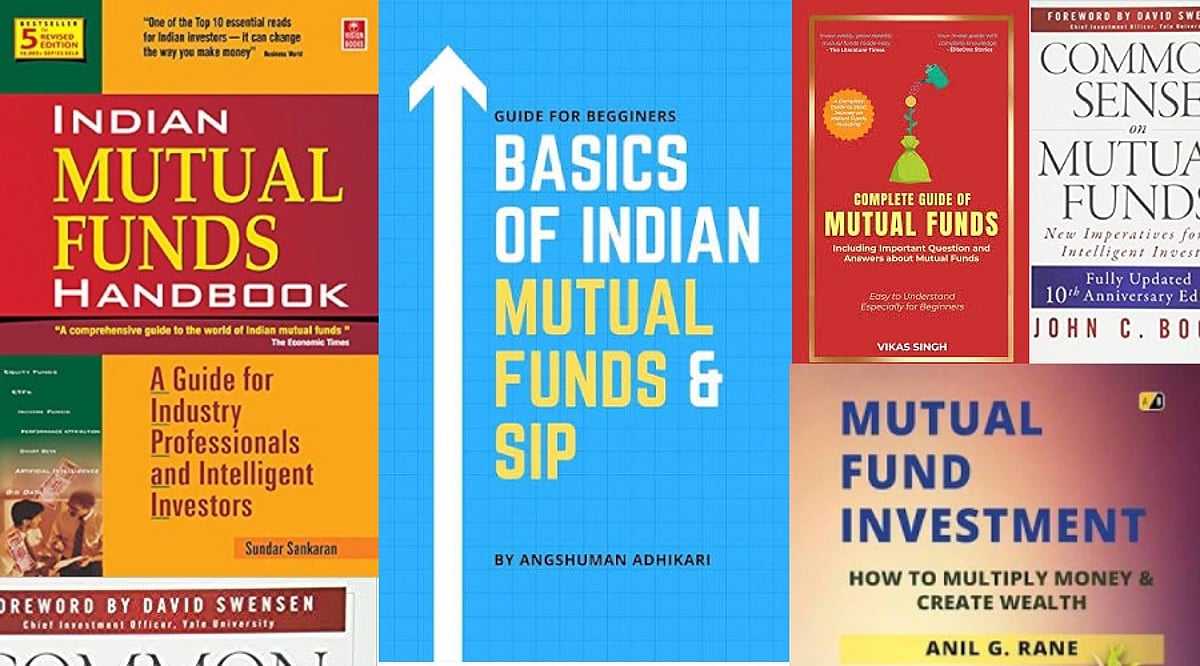
  • 5 Essential Mutual Fund Books to Sharpen Your Investing Skills in India

    5 Essential Mutual Fund Books to Sharpen Your Investing Skills in India

    Building strong mutual fund investing skills begins with the right knowledge. The best books explain fund selection, portfolio construction, and long-term investing using practical frameworks. Following a structured reading roadmap helps Indian investors make informed decisions and build disciplined wealth creation habits.

    Most Indian investors lose money not from picking bad funds, but from investing without a clear framework or process. Five books, read in the right order, build four distinct skills: fund basics, fund evaluation, portfolio construction, and emotional discipline. Books are selected for practical value, Indian market relevance, and principles that hold across market cycles.

    Every market correction produces the same behavior. Investors scan social media, chase last year’s top-performing funds, and reshuffle portfolios on impulse. Months later, many realize the problem was never the fund. It was the absence of a process. One well-chosen book can close that gap faster than years of trial and error. Monika Halan’s Let’s Talk Mutual Funds has done exactly that for a wide range of Indian investors by teaching them how to think before they invest, not after.

    The books in this guide are not ranked by popularity. Each one is chosen for the specific investing skill it develops. Read them in order, and the effect is cumulative.

    The Four Skills That Actually Drive Investment Success

    Good mutual fund investing is not one skill. It is four. First, understand what funds are and how they work. Second, learn to evaluate them without relying on tips or rankings. Third, build a portfolio that fits your goals and risk tolerance. Fourth, stay rational when markets move against you. Most investors develop the first skill and skip the rest. That is where the damage happens.

    Let’s Talk Mutual Funds — Monika Halan

    Skill Built: Fund Basics

    Halan writes for real people, not finance professionals. She explains SIPs, NAV, fund categories, and risk using everyday Indian financial situations. The book is grounded in local regulations and household budgeting realities, which makes it immediately useful for first-time investors.

    Her central point is worth repeating: choose funds based on your goals, not on recent performance tables. Investors who miss this early tend to keep chasing returns for years. The book does not go deep into fund evaluation. That is intentional. It is designed to build a foundation, and it does that well.

    Indian Mutual Funds Handbook — Sundar Sankaran

    Skill Built: Fund Evaluation

    Once the basics are clear, the next step is learning to read a fund properly. Sankaran walks through scheme documents, factsheets, expense ratios, and fund manager assessment with more detail than most Indian investing books attempt.

    This is the reference that helps investors stop depending on third-party rankings and start forming their own views. It pairs naturally with Common Sense on Mutual Funds, which extends the conversation on costs.

    Common Sense on Mutual Funds — John C. Bogle

    Skill Built: Cost Awareness

    Bogle’s argument is direct. Reducing costs does more for long-term wealth than identifying the next top-performing fund. For Indian investors still in regular plans, this insight alone can translate into a material difference over a decade or more. Every percentage point saved in annual fees compounds quietly in the background. Most investors underestimate how much that adds up.

    The Four Pillars of Investing — William J. Bernstein

    Skill Built: Portfolio Construction

    Bernstein moves the conversation away from individual fund selection toward how a portfolio holds together as a whole. He covers diversification, rebalancing, and long-term planning in a way that is structured without being dense. This is the right book to read after fund evaluation is clear but before a long-term portfolio is locked in.

    The Intelligent Investor — Benjamin Graham

    Skill Built: Emotional Discipline

    Graham wrote this for stock investors, but the core lessons apply directly to anyone holding mutual funds through a volatile market. His framing of “Mr. Market” remains the clearest explanation of why reacting to short-term price moves is almost always a mistake. Chapters 8 and 20 carry the most practical value for mutual fund investors and are worth reading more than once.

    Read Them in this Sequence

    Start with Let’s Talk Mutual Funds to build a solid foundation. Move to the Indian Mutual Funds Handbook to learn fund evaluation. Follow with Common Sense on Mutual Funds to understand what fees actually cost over time. Then read The Four Pillars of Investing before constructing a diversified portfolio. Finish with The Intelligent Investor to develop the discipline that separates long-term investors from short-term reactors. The sequence matters. Each book builds on the one before it.

    Final Thoughts

    The investors who hold steady through ten or twenty years of market cycles are rarely the ones who picked the best fund at the right time. They are the ones who built a clear process early and trusted it when things got uncomfortable. These five books do not promise shortcuts. They build the kind of judgment that holds up across market conditions, economic shifts, and personal financial changes. That is what makes them worth reading.

  • Free Fire MAX Redeem Codes for August 8, 2026: Unlock Rare Skins, Bundles, and Free Diamonds

    Free Fire MAX Redeem Codes for August 8, 2026: Unlock Rare Skins, Bundles, and Free Diamonds

    Free Fire MAX players can grab a fresh set of redeem codes on August 8, 2026, to unlock premium in-game items without spending real money. These limited-time codes offer rare weapon skins, character bundles, emotes, diamonds, and other exclusive rewards. Act quickly—codes expire soon after release.

    Free Fire MAX Redeem Codes for August 8, 2026

    The following codes are active today. Enter them on the official Garena Rewards Redemption site to claim your rewards:

    • FF8HG3JK5L0P
    • FF7TRD2SQA9
    • FFF2VC3DENRF5
    • FF6YH3BFD7VTB
    • 1RK7C5ZL8YT4
    • ST1ZTBZBRP9B
    • R43FMAPYEZZU
    • PQ7X5NMJ64VS
    • 9QK2L6VP3MRF
    • FR4G3HM5YJN
    • FFRSX4CYHLLQ
    • FT4E9Y5U1I3O
    • 4N8M2XL9R1G3
    • H8YC4TN6VKQ9
    • 6KWMFJVMQQYG
    • FZ5X1C7V9B2N

    How to Redeem Free Fire MAX Codes

    1. Visit the official Garena Rewards Redemption website.
    2. Log in using your linked account (Facebook, Google, Apple ID, X, or VK).
    3. Enter the code in the designated field.
    4. Tap ‘Confirm’ to submit.
    5. Rewards will arrive in your in-game mailbox within 24 hours.

    Important: Guest accounts cannot be used. Ensure your account is linked before attempting to redeem.

    Final Take

    Free Fire MAX redeem codes let players earn diamonds, rare skins, and weapon upgrades at no cost. Successfully redeeming a code gives instant access to valuable loot before jumping into the next battle royale match. Check the Garena rewards page daily to stay ahead of the competition and build your inventory.

  • Top 10 Personal Finance Books to Master Money in 2026

    Top 10 Personal Finance Books to Master Money in 2026

    Managing money well depends as much on behavior as on financial knowledge. The right books can help build better saving, investing, and spending habits over time. Timeless principles remain valuable even as markets, technology, and personal finance continue to evolve.

    A budgeting app can track spending in seconds. It cannot explain why a person overspends every payday despite knowing better. That gap between knowing and doing is where books still earn their place, and it is wider in 2026 than it was five years ago, with gig income, AI-driven job cuts, and market swings reshaping how people relate to money.

    Here are the ten worth reading, grouped by financial stage rather than ranked by popularity.

    Strongest Starting Trio

    Most readers, regardless of stage, gain the most from three books together: The Psychology of Money, I Will Teach You to Be Rich, and The Simple Path to Wealth. One reshapes how money is understood. One provides a working routine for daily decisions. One builds a durable investing foundation. Together they cover the three most common failure points: poor instincts, no system, and fear of investing.

    For Money Mindset and Behavior

    The Psychology of Money, by Morgan Housel, explains why capable people still make poor financial decisions under stress and social pressure. Rich Dad Poor Dad, by Robert Kiyosaki, reframes how readers categorize assets and liabilities. That shift proves useful even though several of Kiyosaki’s specific claims have drawn criticism from financial professionals over the years. Housel holds up better on rereading and works well as a single starting point for anyone who reads only one book from this list.

    Financial anxiety has become routine for many readers in 2026. Layoffs tied to AI adoption and unpredictable gig income have made that anxiety a daily condition, and no budgeting app addresses it directly. Both books tackle that psychological layer instead of the numbers alone.

    For Budgeting, Debt, and Daily Money

    The Total Money Makeover, by Dave Ramsey, and I Will Teach You to Be Rich, by Ramit Sethi, solve the same problem through opposite personalities. Ramsey favors strict rules: cut up the cards, snowball the debt, and live on a fixed cash plan. It works well for readers who need firm boundaries. Sethi favors automation: build routines that run quietly in the background so willpower matters less. Neither method is wrong. They suit different temperaments.

    Get Good with Money, by Tiffany Aliche, serves a third kind of reader—someone who feels structurally lost rather than simply undisciplined, with no baseline financial education to build from. It starts several steps earlier than the other two, covering credit basics and account structure before moving into strategy. Rigid budgets tend to break under variable income, and gig work keeps growing. Sethi’s automation-first model tends to hold up better for readers without a fixed monthly paycheck.

    For Investing and Wealth Building

    The Simple Path to Wealth, by JL Collins, and The Intelligent Investor, by Benjamin Graham, are both essential but not interchangeable. Collins offers a direct, low-friction case for index investing that a reader could act on within a week. Graham offers a philosophy of value and risk that takes longer to absorb but shapes every future investment decision. Collins builds action. Graham builds judgment.

    Friends that Invest, by Simran Kaur, works as the right entry point for readers who find both intimidating. It skips theory and walks through mechanics instead: opening a brokerage account, choosing a first fund, and understanding fees. Together, Collins and Graham argue for disciplined, low-cost investing over chasing trends, a case that has only grown stronger as AI-driven volatility and a flood of new ETF products make picking individual winners harder.

    For Retirement, FIRE, and Life Design

    Die with Zero, by Bill Perkins, and Your Money or Your Life, by Vicki Robin, share a premise: most people over-save and under-live. They land in different places. Perkins argues for deliberate spending before health or energy declines, treating memories and experiences as assets with their own expiration date. Robin pushes further, asking readers to treat every purchase as hours of life spent rather than dollars traded.

    The FIRE conversation has moved past the question of early retirement itself. Higher borrowing costs and pricier healthcare have made the math harder than it looked a decade ago, shifting the real question toward what retirement is actually for. Perkins and Robin, read together, address both the numbers and the purpose behind them.

    Suggested Reading Order

    Start with The Psychology of Money to reset how money gets evaluated. Move to I Will Teach You to Be Rich for a working routine. Read The Simple Path to Wealth next to build investing confidence. From there, branch based on priority: Die with Zero for life design, or The Intelligent Investor for deeper investment judgment.

    Final Thought

    Reading ten books was never the goal. Applying one lesson from the right book, at the right stage, changes outcomes faster than collecting a shelf of titles that never get opened. That single act of follow-through will matter more in the next few years than it has in the last decade, as financial noise keeps multiplying and genuine signal gets harder to find.