Blog

  • Maximize Productivity in 2026: Microsoft 365 AI Automation Tips for Smarter Workflows

    Maximize Productivity in 2026: Microsoft 365 AI Automation Tips for Smarter Workflows

    Artificial intelligence is transforming workplace productivity, and Microsoft 365 is at the forefront of this shift. Businesses can leverage tools like Microsoft 365 Copilot, Power Automate, and AI-driven workflows to streamline repetitive tasks, enhance collaboration, and reduce manual workloads. According to Microsoft, Copilot is already used by over 1 million organizations, and enterprise adoption continues to grow through 2026.

    Automate Email Management with AI

    Email management consumes a significant portion of the workday. With Microsoft 365 Copilot, users can now summarize lengthy email threads, draft replies, prioritize important messages, and identify action items directly within Outlook. Additionally, Teams can integrate Power Automate to sort emails automatically, schedule follow-ups, and trigger notifications—eliminating tedious administrative tasks.

    Build Workflows Using Natural Language

    One of the most significant AI innovations from Microsoft is the ability to create workflows using natural language prompts. For example, a user can say, “Save email attachments to SharePoint and notify my team,” and Copilot will generate the corresponding workflow. These AI-based workflows are embedded across Outlook, Teams, SharePoint, Planner, and Microsoft Lists.

    Automate Meetings and Collaboration

    Microsoft Teams now offers AI-generated meeting summaries, task extraction, and follow-up reminders. Copilot can automatically highlight key decisions, assign tasks, and produce meeting notes, ensuring distributed teams stay aligned while reducing documentation overhead.

    Connect Power Automate with Business Processes

    AI can be integrated with Power Automate to automate approval workflows, HR onboarding, invoice processing, leave requests, and customer support. By leveraging business rules, scheduled events, file uploads, and emails, AI-powered cloud flows eliminate repetitive manual work.

    Monitor AI Adoption and Performance

    The Microsoft 365 Copilot Usage Report provides administrators with a dashboard to track user engagement, retention, and most-used applications. This insight helps organizations understand productivity gains and optimize adoption strategies.

    Best Practices for AI Automation

    Successful automation starts with identifying repetitive, rules-based processes. Organizations should:

    • Start with high-level manual tasks.
    • Verify AI-generated content before use.
    • Implement role-based security and governance policies.
    • Regularly refine processes based on staff feedback and analytics.

    Final Thoughts

    Microsoft 365 AI automation is about more than completing tasks—it’s about building intelligent workflows. When Copilot, Power Automate, and Teams come together, businesses gain a smoother path to improved collaboration, reduced admin load, and higher efficiency. Teams can move faster with less time spent on repetitive work. Organizations that start automating now will be well-positioned for higher productivity as AI continues to evolve within Microsoft 365.

    FAQs

    1. What is Microsoft 365 AI automation?

    It combines tools like Copilot and Power Automate to automate repetitive tasks, generate content, summarize information, and streamline workflows across Outlook, Teams, Word, Excel, and other Microsoft apps.

    2. How does Microsoft 365 Copilot improve productivity?

    Copilot drafts emails, summarizes meetings, generates documents, analyzes spreadsheets, and suggests next steps, reducing manual work and letting employees focus on higher-value tasks.

    3. What business processes can Power Automate handle?

    It can automate approvals, invoice processing, HR onboarding, leave requests, document routing, notifications, and customer support workflows, integrating with hundreds of Microsoft and third-party apps.

    4. Can Microsoft 365 AI create workflows without coding?

    Yes. Copilot lets users build workflows using natural language prompts—no programming knowledge required.

    5. Is Microsoft 365 AI automation suitable for small businesses?

    Absolutely. Small businesses can automate routine tasks, improve collaboration, and boost productivity without complex IT infrastructure.

  • Top Retail Acquisitions of 2026: How Sysco, eBay, and Couche-Tard Are Reshaping Shopping

    Top Retail Acquisitions of 2026: How Sysco, eBay, and Couche-Tard Are Reshaping Shopping

    Retail dealmaking has accelerated this year, with distributors, brand groups, and marketplaces chasing scale, data, and younger shoppers. From Sysco’s food-service push to eBay’s fashion-marketplace bet, each deal reveals a distinct strategy behind the buying spree.

    Overview

    • Sysco has proposed a $29.1 billion acquisition of Jetro Restaurant Depot, its largest deal on record.
    • eBay has agreed to acquire fashion marketplace Depop for $1.2 billion, targeting younger shoppers.
    • Alimentation Couche-Tard plans to acquire Polish convenience chain Żabka for $8.6 billion.

    Retail acquisitions this year have moved past simple store count expansion. Buyers are chasing something harder to measure: direct access to loyal customers, richer purchase data, and control over how goods reach shelves. This shift explains why a food distributor, a global marketplace, and a convenience store operator have all made headlines with deals worth billions.

    The pattern across these transactions is consistent. Companies are not just buying revenue; they are buying relationships with specific customer groups that competitors cannot easily replicate. Reviewing the largest deals of the year shows how differently that strategy plays out across food service, fashion, and everyday retail.

    Sysco’s $29.1 Billion Bet On Food Distribution

    Sysco has proposed acquiring Jetro Restaurant Depot in a deal valued at $29.1 billion, combining the largest food service distributor in the country with a leading cash-and-carry wholesaler. The transaction would give Sysco access to a higher-margin channel with strong growth prospects and a broader base of independent restaurant customers.

    Why Scale Alone Was Not Enough

    Operating pressure and shifting purchasing patterns have pushed buyers toward deals that solve specific gaps rather than simply adding size. Retail M&A is being shaped by pressure on operating models and increasingly value-conscious consumers, making channel access and data quality more important than raw scale.

    eBay Turns To Depop For Younger Shoppers

    eBay has agreed to acquire Depop, a mobile-first fashion marketplace, for $1.2 billion. The deal reflects how digital retail acquisitions increasingly value audience engagement and customer relationships alongside inventory and infrastructure. Depop’s base skews toward Gen Z and Millennial shoppers, a demographic eBay has struggled to reach through its core platform.

    Convenience Retail Sees Its Own Wave

    Convenience store consolidation has run at a rapid pace this year. Alimentation Couche-Tard has moved to acquire Polish chain Żabka for $8.6 billion, one of the largest deals in the sector this year. Smaller acquisitions have piled up alongside it, with regional consolidators absorbing independent operators across several states.

    Brand Groups Keep Buying Fashion Labels

    Brand management firms have been especially active, treating intellectual property as a standalone asset class separate from store operations. Authentic Brands Group acquired the intellectual property for Lee jeans and a controlling stake in Guess, expanding its portfolio through licensing and brand revitalization. WHP Global acquired Marc Jacobs and a 50% controlling stake in Lands’ End, adding to its growing roster of retail brands.

    Similar moves followed elsewhere in fashion. Marquee Brands acquired a majority interest in Italian fashion house Roberto Cavalli, while Gordon Brothers acquired Chinese Laundry and its footwear portfolio. Each transaction points toward consolidated ownership built for marketing and supply chain efficiency.

    Consumer Health Draws Corporate And Private Equity Interest

    Pharmaceutical companies have been divesting consumer health assets as they narrow focus toward prescription pipelines. Suntory’s $1.6 billion acquisition of Daiichi Sankyo Healthcare reflects strong buyer interest in trusted over-the-counter brands paired with distribution capability. These assets appeal to buyers who can combine brand trust with existing marketing and retail networks.

    Major Retail Deals At A Glance

    [Table of major deals could be inserted here summarizing buyers, targets, deal values, and strategic rationale.]

    What This Means for Shoppers and Retailers

    A few themes stand out across this year’s activity.

    • Distribution channels are commanding premium valuations over simple retail footprints.
    • Brand intellectual property is being separated from operations and traded independently.
    • Younger consumer segments are driving marketplace acquisitions more than legacy customer bases.
    • Consumer health remains attractive as pharmaceutical firms narrow their core focus.

    These patterns suggest shoppers will notice fewer visible changes at checkout, while supply chains and brand ownership shift considerably behind the scenes.

    Final Words

    This year’s retail acquisitions tell a story of buyers refining exactly what they want rather than expanding for its own sake. Sysco’s move into cash-and-carry wholesale, eBay’s bet on Gen Z fashion resale, and Couche-Tard’s international convenience push all target specific customer behaviors that generic growth could not deliver. Brand licensing firms have shown that intellectual property alone can justify billion-dollar transactions, separate from physical retail entirely. As consumer health assets change hands and distribution deals grow larger, the retail sector looks set for continued consolidation, with strategy mattering far more than size alone.

  • Qonto’s Rise: How a French Fintech Disrupted SME Banking Across Europe

    Qonto’s Rise: How a French Fintech Disrupted SME Banking Across Europe

    Qonto’s Rise: How a French Fintech Disrupted SME Banking Across Europe

    Running a small business comes with countless challenges, and traditional banking often adds to the burden. Slow processes, complex paperwork, and services not tailored to their needs are common frustrations for freelancers and small companies. Qonto, a French fintech, recognized this problem and built a simpler solution. Today, it serves over 600,000 customers across eight European markets, offering a comprehensive platform for business banking, expense management, invoicing, and accounting.

    The Problem with Traditional Banking

    Many small business owners struggle with outdated banking systems that were designed for large corporations. Opening an account can take days, managing expenses is cumbersome, and even finding a simple transaction record can be time-consuming. Qonto’s founders, Alexandre Prot and Steve Anavi, experienced these issues firsthand while running their own business. They envisioned a banking service that was fast, transparent, and user-friendly—one built specifically for the needs of freelancers, startups, and small to medium-sized enterprises (SMEs).

    Qonto’s Launch and Mission

    Qonto launched in France in 2016 with a clear focus: serve business customers only. This narrow focus allowed the company to deeply understand the pain points of small firms and tailor its offerings accordingly, rather than trying to be everything to everyone. From the start, Qonto aimed to simplify business banking by combining multiple financial tools into one seamless platform.

    Simplifying Business Banking

    Qonto’s core value proposition is its intuitive online experience. Customers can open a business account, order payment cards, and track spending from a single dashboard. Business owners can also issue cards to team members with customizable spending limits. The platform integrates essential daily tasks—managing bills, invoices, expenses, and account records—in one place. Additionally, Qonto connects with popular accounting software, eliminating the need for duplicate data entry and saving business owners valuable time.

    This user-centric approach set Qonto apart from traditional banks. While legacy institutions often rely on systems designed for large enterprises, Qonto built its service around the realities of freelancers and small teams, who typically lack a dedicated finance department. The result is a suite of tools that are both time-saving and easy to understand.

    Expansion Across Europe

    After establishing a strong presence in France, Qonto expanded into other European markets, including Italy, Spain, Germany, Austria, Belgium, Portugal, and the Netherlands. The company also grew through strategic acquisitions, such as the purchase of German fintech Penta in 2022, which strengthened its position in Germany and expanded its customer base.

    Investor confidence has been robust. In 2022, Qonto raised approximately €486 million (about $552 million) in a Series D funding round led by Tiger Global Management and TCV, cementing its status as one of Europe’s most prominent fintech companies. Over the years, Qonto has helped more than 250,000 entrepreneurs establish their businesses and now employs around 1,700 people across its markets.

    The Road Ahead: Lending and a Full Banking License

    Qonto started with business accounts and payment cards, then expanded into spending, billing, and accounting tools. The company’s next major step is lending. Small businesses often need quick access to capital for inventory, staffing, or new projects, but traditional lenders can take weeks to approve loans. Qonto aims to offer a faster, smoother lending process through its platform.

    Currently operating under a payment institution license, Qonto applied for a full banking license in France in 2025. If approved, this would enable the company to offer a broader range of financial products directly, including loans and other services.

    Why Qonto’s Success Matters

    Qonto’s growth is a testament to solving a specific problem exceptionally well. Rather than attempting to revolutionize banking for everyone, it focused on a segment often underserved by traditional banks: small businesses. By providing clear tools, responsive support, and reduced paperwork, Qonto has transformed from a French startup into a serious challenger in European SME banking.

    Its story highlights that small businesses want more than just an account—they want efficiency, transparency, and tools that simplify their financial lives. Qonto delivers on that promise, and its continued expansion signals a bright future for digital-first business banking.

    Frequently Asked Questions

    1. What is Qonto?
    Qonto is a French fintech company offering digital business banking and financial management tools for freelancers, startups, and small businesses.

    2. Who founded Qonto?
    Qonto was founded by Alexandre Prot and Steve Anavi, who were motivated by their own banking frustrations while running a business.

    3. Which countries does Qonto operate in?
    Qonto operates in France, Germany, Italy, Spain, Austria, Belgium, Portugal, and the Netherlands.

    4. What services does Qonto offer?
    Qonto provides business accounts, payment cards, expense management, invoicing, accounting integrations, and financial management tools. It also plans to expand into business lending.

    5. Why has Qonto become popular among small businesses?
    Qonto’s popularity stems from its simple digital banking, quick account setup, easy expense tracking, and time-saving tools designed specifically for freelancers and small businesses.

  • Top Momentum Stocks to Watch in Q3 2026: AI Memory, Interconnects, Storage, Industrial Chips, and Infrastructure

    Top Momentum Stocks to Watch in Q3 2026: AI Memory, Interconnects, Storage, Industrial Chips, and Infrastructure

    AI-driven memory demand, high-speed connectivity, storage recovery, industrial semiconductor growth, and infrastructure expansion continue to support momentum across multiple sectors in Q3 2026. Strong earnings, improving fundamentals, and identifiable catalysts reinforce these trends. Disciplined risk management remains essential as market leadership evolves.

    What Momentum Actually Means

    A momentum stock has not simply gone up. It needs to show real strength across multiple timeframes — ideally three, six, and twelve months — relative to the wider market. Fundamentals have to move in the same direction: revenue growth, earnings beats, and expanding margins. The stock should trade above its key moving averages, confirming that the trend has staying power. A clear sector tailwind adds durability, and enough liquidity keeps the position tradeable without excessive slippage.

    Micron Technology (MU): The Memory Cycle Nobody Predicted

    Micron sits at the center of the current DRAM pricing upcycle, driven by AI servers and next-generation GPU clusters that need memory faster than the industry can supply it. The company’s fiscal Q3 2026 revenue hit $41.46 billion, a sharp jump from $23.86 billion the prior quarter and $9.30 billion a year earlier. Non-GAAP net income landed at $28.86 billion, or $25.11 per diluted share. Management has confirmed HBM4 is already shipping in high volume to its lead customer, with the next generation already in development. The momentum case rests primarily on continued strength in AI memory demand and favorable supply conditions. Cyclicality remains the risk that matters most — memory pricing can reverse fast if capital expenditure slows or a competitor floods supply.

    Credo Technology (CRDO): Riding the AI Interconnect Wave

    Credo is the highest-risk, highest-reward name on this list. It builds high-speed connectivity solutions for data-center interconnects, a niche that AI infrastructure spending has turned into a genuine growth category. Full fiscal year 2026 revenue tripled to $1.3 billion, with Q4 alone reaching $437 million, up 157% year over year. Management is now guiding for revenue growth above 80% in fiscal 2027, supported by a ramp in optical DSPs. That growth trajectory holds only as long as hyperscaler capital spending stays strong. Roughly 90% of Credo’s revenue comes from its top ten customers, a concentration that magnifies any slowdown from even one major buyer.

    Western Digital (WDC): Storage Recovery Gains Momentum

    Western Digital’s story is different from the AI-driven names above it. NAND flash pricing is recovering after years of oversupply, and enterprise storage demand is climbing alongside it. Revenue rose 45.5% year over year in the most recent quarter, with EPS of $2.72 beating consensus by a wide margin. Bank of America lifted its price target to $732 from $610 in July, citing hard disk drive demand that continues to outpace available supply. The stock has held well above its 200-day moving average through the rally, a sign the recovery has technical support behind it. Competitive pressure from Samsung and SK Hynix in NAND remains the variable worth watching into Q4.

    Microchip Technology (MCHP): Quiet Strength in Industrial Chips

    Microchip trades in a different lane entirely, serving industrial automation, automotive systems, and IoT devices through microcontrollers and analog chips. Inventory levels across those end markets are normalizing, lifting order volumes after a prolonged downturn. Earnings growth accelerated sharply in the most recent quarter, and the stock’s forward P/E of roughly 29.59x sits close to its five-year average of 26.83x. Its valuation remains notably lower than the multiples commanded by many pure AI semiconductor companies, supporting its appeal as a quality momentum stock. This combination — improving demand alongside a reasonable price tag — is what gives this pick its staying power. A slowdown in industrial spending is the clearest threat to the thesis.

    Sterling Infrastructure (STRL): Building What AI Needs to Run

    Momentum in 2026 is not confined to chips. Sterling builds the physical infrastructure that AI companies depend on: data centers, e-infrastructure, and industrial projects. Signed backlog hit $4.3 billion in Q2, up 116% year over year, while combined backlog rose 150% to $5.6 billion, giving the company years of visibility most tech names can only envy. The e-infrastructure segment alone grew revenue 192% in the quarter, with margins holding at 24%. Sterling offers exposure to the AI buildout with less of the valuation risk carried by the chipmakers above it. Project execution remains the key risk to track.

    Trading Momentum with Discipline

    Momentum works as a filter, not a strategy on its own. Check the earnings calendar before entering any position — a single miss can erase weeks of gains overnight. Trailing stops help protect profits if a stock breaks below its 50-day moving average. Spread exposure across themes rather than piling into one. Three names here carry semiconductor risk, so WDC and STRL do real work balancing the group. Exit when the fundamentals stop supporting the price, not when the price simply pulls back. That discipline is what separates traders who profit from momentum from those who just chase it.

    Final Thoughts

    The strongest momentum stocks rarely announce themselves with the loudest short-term gains. They are the companies still compounding earnings and investor confidence together long after the initial excitement fades — which is exactly where the real returns tend to show up.

  • Top 10 Stocks to Watch in August 2026: Strong Earnings and Growth Catalysts

    Top 10 Stocks to Watch in August 2026: Strong Earnings and Growth Catalysts

    August 2026 presents opportunities across AI, semiconductors, fintech, digital infrastructure, and industrials. This curated list of 10 stocks highlights companies with strong fundamentals, earnings potential, and long-term growth prospects while emphasizing diversification, valuation, and disciplined risk management for investors.

    Overview

    Indian equities entered August 2026 with improving earnings momentum as stronger Q1 FY27 results, renewed FII inflows, and a stable interest-rate outlook supported sectors including IT, banking, defence, auto, pharma, and quick commerce. Companies such as TCS, Infosys, LTIMindtree, ICICI Bank, Bajaj Finance, HAL, Sun Pharma, and Swiggy reported key financial milestones, ranging from margin expansion and profit growth to record order books and improving profitability.

    The outlook for these stocks is shaped by upcoming catalysts including large deal execution, banking and fintech expansion, defence order conversion, rural demand, AI adoption, and sector-specific risks such as valuation pressure, regulatory scrutiny, and competitive intensity.

    How the List Was Built

    Each stock combines strong quarterly performance across revenue, margin, and profit with a durable edge over peers, a specific catalyst landing in August, and enough trading volume to enter and exit without friction. Several names on this list still carry Buy or Outperform ratings from major brokerages after their Q1 FY27 results. The goal is not to chase every green number but to isolate the ones that will keep mattering past this earnings season. This selection reflects editorial analysis of public disclosures and works best as a research starting point rather than a fixed ranking.

    The Ten Stocks at a Glance

    TCS: Margin Stability Keeps it Ahead

    TCS remains the steadiest name in the group. Its Q1 FY27 revenue reached Rs 72,275 crore, up 13.9%, and it held a 24% operating margin while peers battled wage-cycle pressure. New order value hit $9.5 billion, with North America contributing roughly half. The soft spot is USD revenue growth of just 2.7%, a sign that offshore pricing remains tight even as deal volumes grow.

    Infosys: AI Demand Continues to Drive Growth

    Infosys sits closer to the center of enterprise AI adoption than any other name here. AI-linked revenue reached 8.2% of the total, and large deal value came in at $3.6 billion with 61% net new business, a stronger mix than Wipro managed in the same quarter. The company trimmed its FY27 growth guidance to 1.5–3%, a sign that discretionary spending across the sector remains cautious even as AI budgets expand.

    LTIMindtree: Fastest Growth Among Large-Cap IT

    LTIMindtree posted the fastest revenue growth among the large-cap IT names on this list, at 17.96%, ahead of HCLTech’s 14% for the same period. Profit rose 17% to Rs 1,469 crore, beating consensus, while trading at a lower multiple than most peers. That combination makes LTIMindtree one of the more attractively positioned large-cap IT stocks in this list.

    ICICI Bank: Profitability Remains the Key Strength

    ICICI Bank posted profit growth among the strongest of India’s largest private lenders this quarter, with return on assets at 2.49%, a figure brokerages flagged as best in class. Its balance sheet improved year on year, though HDFC Bank still posted a lower absolute bad-loan ratio, so ICICI’s edge sits in profitability and returns rather than having the cleanest book in the sector.

    Bajaj Finance: Record ROE Signals Continued Momentum

    Bajaj Finance had one number that stood out above the rest: return on equity crossed 20% for the first time in the company’s history. AUM grew 23.9% to Rs 5.47 lakh crore, and new loan bookings rose 20% to 16.13 million. Profit climbed 28% to Rs 6,081 crore. The stock trades at a premium NBFC multiple, which leaves little cushion if credit costs move against it in coming quarters.

    Jio Financial Services: Rapid Growth with Premium Valuation

    Jio Financial Services had a quieter quarter in absolute size but a sharp one in growth. Profit jumped 156% to Rs 830 crore, and both Jio Payments Bank and Jio Payment Solutions turned operationally positive for the first time. JioBlackRock AMC closed the quarter with Rs 18,412 crore in assets, up 21% sequentially. The business is still young, and its valuation already prices in a lot of that future growth, so any slowdown in scale-up would hit the stock harder than an established peer.

    HAL: Defense Orders Provide Long-Term Visibility

    HAL carries the most visible defense order book in the country, at Rs 2.54 lakh crore, more than seven years of revenue at current run rates and roughly 3.5 times the size of Bharat Electronics’ Rs 72,258 crore book. Results land mid-August and will shape sentiment through the rest of the quarter.

    Mahindra & Mahindra: Rural Demand Supports Growth

    Mahindra and Mahindra grew across every metric that matters, with return on equity at 23%, well past its own target, while kharif acreage points to stronger tractor demand ahead.

    Sun Pharma: Strong Domestic Business, Ongoing Regulatory Watch

    Sun Pharma kept its formulation business growing at double digits, though it still carries an active US FDA warning letter from a 2024 inspection, a reminder that regulatory risk in Indian pharma rarely disappears completely.

    Swiggy: A High-Risk Growth Bet

    Swiggy rounds out the list as the speculative name: Instamart reached contribution-margin break-even in May, a real milestone, but competition from Blinkit and Zepto keeps the stock better suited to a small position than a core holding.

    Reading the List with Discipline

    Ten names span seven sectors, and that spread matters more than any single pick. Position sizes should reflect risk: TCS and ICICI Bank warrant more weight than JFSL or Swiggy. Entries are worth staggering around pending results, HAL most of all. IT already accounts for three of the ten picks, so adding more exposure there raises concentration risk rather than reducing it. Each name deserves a second look once the next quarter’s numbers land, since a single strong print is a starting point, not a guarantee.

    Markets will keep reacting to headlines. Long-term returns come from businesses that keep executing on earnings, margins, and capital allocation quarter after quarter. Every name on this list earned its spot through verified Q1 FY27 numbers, not market excitement.

    Final Thoughts

    The next test for these ten stocks arrives fast. HAL reports mid-August, rate decisions loom for the banks, and IT demand signals for the rest of FY27 will sharpen as the quarter closes. Investors who track execution over headlines, sector by sector, will read the next data set more clearly than the market’s first reaction to it.

  • Free Fire MAX Redeem Codes for August 9, 2026: Claim Rare Skins, Bundles, and Free Diamonds

    Free Fire MAX Redeem Codes for August 9, 2026: Claim Rare Skins, Bundles, and Free Diamonds

    Fresh Free Fire MAX redeem codes for August 9, 2026, offer players a chance to unlock premium weapon skins, character outfits, emotes, diamonds, and other exclusive in-game rewards before the codes expire. Redeem the available codes through the official Free Fire Rewards Redemption website using a linked account to receive eligible rewards safely in your in-game mailbox.

    Along with redeem codes, participate in daily missions, limited-time events, and seasonal challenges to earn additional rewards, level up faster, and expand your Free Fire MAX inventory. Free Fire MAX players can use redeem codes released daily to get premium in-game rewards without spending money. These codes may offer weapon skins, character bundles, diamonds, emotes, and other exclusive collectibles.

    Free Fire MAX Redeem Codes for August 9, 2026

    The active codes for today are:

    • P3LX6V9TM2QH (Diamonds/Skins)
    • RD3TZK7WME65 (Weapon Loot Crate)
    • ZRW3J4N8VX56 (Random Bundles)
    • WD2ATK3ZEA55 (Vouchers)
    • FFPLUFBVSLOT (Gloo Wall/Skins)
    • J3ZKQ57Z2P2P (Premium items)
    • FFWCTKX2P5NQ (Reward varies)
    • TX4SC2VUNPKF (Reward varies)
    • RHTG9VOLTDWP (Reward varies)
    • N7QK5L3MRP9J (Reward varies)
    • J2QP8M1KVL6V (Reward varies)
    • E9QH6K4LNP7V (Reward varies)
    • S5PL7M2LRV8K (Reward varies)
    • Q8M4K7L2VR9J (Reward varies)
    • TFX9J3Z2RP64 (Reward varies)

    How to Redeem Garena Free Fire MAX Codes

    1. Visit the official Garena Rewards Redemption site.
    2. Log in using your correct account (Facebook, Google, Apple ID, X, or VK).
    3. Enter the code in the provided space.
    4. Tap ‘Confirm’ to continue.
    5. Rewards will be sent to your in-game email within 24 hours after completing the process.

    Important: You cannot use guest accounts. Ensure your accounts are connected before attempting to redeem.

    Players can acquire diamonds, uncommon skins, and weapon skins with Free Fire MAX redeem codes without spending a dime. Successfully redeeming a code gives instant access to valuable rewards before jumping into the next battle royale match. Use the codes on the Garena rewards page and check daily to stay ahead of the competition.

  • Top CSE and IT Interview Questions Every Fresher Should Master

    Top CSE and IT Interview Questions Every Fresher Should Master

    Recruiters evaluate far more than technical knowledge in a first CSE or IT interview. They assess problem-solving, communication, coding fundamentals, and project understanding across every interview stage. A structured preparation plan focused on concepts, practical scenarios, and consistent practice helps candidates build confidence and perform better.

    The Question Behind Every Question

    Most freshers walk into their first technical interview expecting a quiz. What they actually face is closer to an audit of how they think. A recruiter asking about linked lists rarely cares whether the definition is memorized. They want to see reasoning happen in real time: how a problem gets broken down, where the logic might fail, and how clearly that thinking gets explained out loud.

    A first CSE or IT interview, whether for a campus placement drive or an entry-level software developer role, usually spans programming, data structures, object-oriented concepts, databases, operating systems, networks, and behavioral rounds. The exact mix shifts with the role. A developer position leans heavily on coding and algorithms, while IT support or infrastructure roles lean more on troubleshooting and systems knowledge.

    Programming: Where Code Quality Gets Tested

    Programming questions reveal how a candidate writes and reasons about code, not just whether syntax gets remembered correctly. Common ground includes the difference between a compiler and an interpreter, how loops and conditionals behave, and how a broken program gets debugged. Interviewers watch closely for whether a candidate clarifies the problem first, writes readable code, and checks edge cases before calling a solution finished. Estimating the time and space complexity of a solution matters here too, even for problems that look simple on the surface.

    Data Structures and Algorithms: Where Efficiency Gets Tested

    DSA questions move the focus from writing code to choosing the right approach. Expect arrays, linked lists, stacks, queues, hash tables, trees, and graphs to come up regularly. A candidate might be asked to detect a cycle in a linked list or compare breadth-first and depth-first search. These questions judge algorithmic thinking and awareness of trade-offs between time and space. Recognizing patterns across problems matters more than memorizing solutions.

    Object-Oriented Programming: Where Design Thinking Gets Tested

    Object-oriented questions assess how a candidate structures software rather than how many terms they can define. Encapsulation, inheritance, polymorphism, abstraction, and the difference between overloading and overriding come up often. A simple example, such as a payment system supporting multiple payment methods, tends to surface how abstraction works in practice. Freshers also face basic version control questions, including the difference between Git and GitHub or how a merge conflict gets resolved. Since most entry-level roles involve collaborative codebases.

    DBMS and SQL: Where Data Modeling Gets Tested

    Database questions check whether a candidate understands how applications store and protect information. Primary and foreign keys, normalization, joins, indexes, and ACID properties form the core of this section. Recruiters ask about normalization to assess scalable database design, not a textbook definition. Writing a basic query or explaining how an index speeds up lookups while adding storage overhead signals genuine practical readiness.

    Operating Systems and Networks: Where Resource Management Gets Tested

    Operating system questions cover processes versus threads, deadlock, virtual memory, and context switching, testing how well a candidate understands resource management. Networking questions typically include TCP versus UDP, DNS, and how to troubleshoot a system that cannot connect to the internet. These areas carry extra weight for infrastructure and cybersecurity roles.

    Real Scenarios: Where Problem Ownership Gets Tested

    Scenario questions reveal how a candidate responds when something breaks. A recruiter might ask what gets checked first when a user cannot log in or how a slow website gets investigated. Developers face similar scenarios framed differently: debugging a failing API or tracing a slow database query. A strong answer follows a clear sequence: identify the issue, gather information, isolate the cause, test a fix, and communicate the result. Many interviewers care more about how a candidate explains an imperfect solution than how fast they reach the optimal one. Online assessments and recorded video screenings now appear before many technical rounds, so coding tests, aptitude sections, and SQL exercises are worth expecting alongside live interviews.

    Coding Round vs Technical Round

    Not every company tests the same way. Service-based companies such as TCS, Infosys, and Wipro emphasize core CS fundamentals, aptitude, and basic coding over advanced algorithms. Product-based companies place far more weight on DSA and multiple rounds of coding interviews. Startups often focus on projects and how quickly a candidate can debug real, messy code. Knowing which category a target company falls into helps direct limited preparation time toward what actually gets tested.

    Projects and Behavioral Questions: Where Ownership Gets Tested

    Project questions separate candidates who understand their résumé from those who simply list technologies. Expect questions on personal contribution, technology choices, and lessons learned from mistakes. The STAR method, covering Situation, Task, Action, and Result, works well for structuring behavioral answers.

    A Preparation Plan That Actually Works

    A focused plan beats scattered revision. Reading the job description first identifies which technologies matter most. Revising one core subject a day, rather than cramming everything at once, builds retention. Solving coding and SQL problems under a time limit builds speed. Rehearsing project explanations aloud builds fluency under pressure. Keeping a short error log, noting each mistaken concept and its correction, turns preparation into a measurable cycle instead of passive review.

    Final Thought

    The candidates who stand out rarely know more facts than everyone else in the room. They connect concepts to real problems, explain their reasoning without hesitation, and treat an interview as a conversation rather than an exam. That shift in mindset, more than any single answer, is what separates a strong first impression from a forgettable one.

  • 10 Free AI Tools That Can Save You Hours Every Week

    10 Free AI Tools That Can Save You Hours Every Week

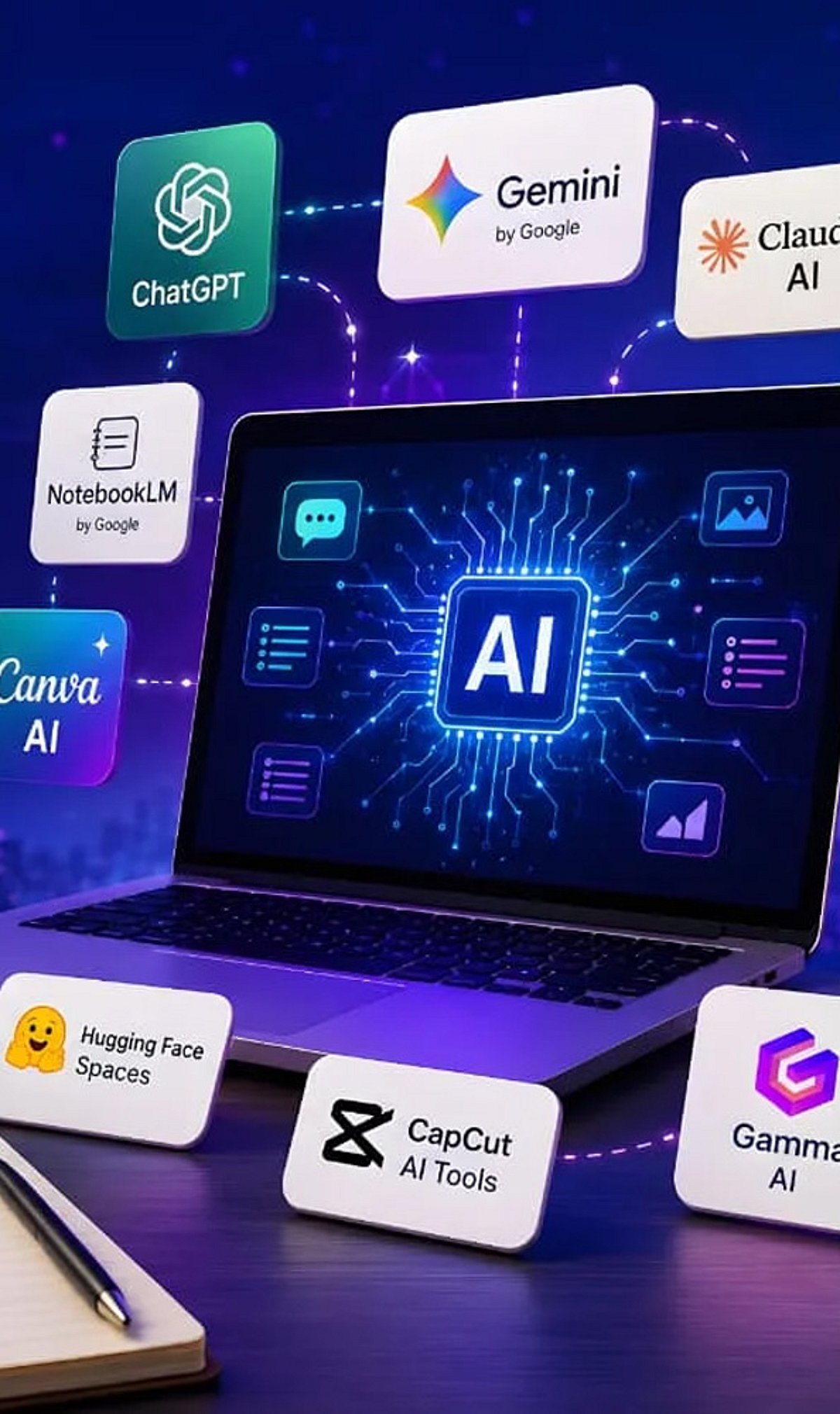
    Artificial intelligence tools have become indispensable for boosting productivity and streamlining workflows. Whether you need to generate content, research a topic, organize documents, or automate meeting notes, there is a free AI tool that can help. Here is a curated list of 10 powerful free AI tools that can save you hours every week.

    1. ChatGPT

    ChatGPT is one of the most versatile AI assistants available. Use it to generate content, brainstorm ideas, summarize documents, answer questions, and automate everyday writing tasks. Its conversational interface makes it easy to get started.

    2. Google Gemini

    Google Gemini integrates seamlessly with Google Workspace to help you research topics, summarize lengthy files, analyze images, and streamline both personal and professional workflows. It’s a great choice for anyone already using Google’s ecosystem.

    3. Microsoft Copilot

    Microsoft Copilot works directly inside Microsoft 365 applications and Windows. Draft emails, create presentations, analyze spreadsheets, and even get assistance with coding—all without leaving your workflow.

    4. Perplexity AI

    Perplexity AI provides accurate, source-backed answers instantly with real-time web search. It makes research, fact-checking, and learning significantly faster than traditional search engines.

    5. Canva AI

    Canva’s AI-powered design tools let you create social media graphics, presentations, videos, and marketing visuals without needing professional design experience. It’s a time-saver for content creators and marketers.

    6. Grammarly

    Grammarly helps improve grammar, clarity, tone, and writing quality across emails, documents, and websites. Its instant suggestions make writing more efficient and polished.

    7. NotebookLM

    NotebookLM by Google is an AI-powered research assistant that helps you organize research materials, summarize documents, generate study guides, and ask questions using your uploaded sources. It’s ideal for students and professionals.

    8. Claude

    Claude is an AI assistant capable of summarizing long reports, writing polished content, analyzing documents, and handling complex reasoning tasks. Its natural, conversational responses make it easy to work with.

    9. Otter.ai

    Otter.ai automatically records meetings, transcribes conversations, generates summaries, and captures action items. It reduces manual note-taking and improves collaboration efficiency for teams.

    10. Additional Bonus Tools

    While the list includes nine core tools, many other free AI applications can further boost your productivity. Experiment with different tools to find the ones that best fit your needs.

    Start using these free AI tools today to reclaim hours of your week and focus on what matters most.

  • Top 7 Altcoins to Watch This Month: ETH, SOL, XRP, BNB, LINK, AVAX, SUI, and More

    Top 7 Altcoins to Watch This Month: ETH, SOL, XRP, BNB, LINK, AVAX, SUI, and More

    Top 7 Altcoins to Watch This Month

    As the cryptocurrency market continues to evolve, investors are closely monitoring a select group of altcoins that show strong potential for growth and innovation. Here are seven altcoins that are capturing attention this month, along with a bonus pick that merges blockchain with artificial intelligence.

    1. Ethereum (ETH)

    Ethereum remains the largest smart contract platform, and it continues to attract developers thanks to its robust DeFi ecosystem, NFT marketplaces, and enterprise adoption. Despite increasing competition from other blockchains, Ethereum’s network effects and ongoing upgrades keep it at the forefront of the industry.

    2. Solana (SOL)

    Solana is renowned for its high transaction speeds and low fees, making it a favorite for decentralized applications, gaming, and meme coin ecosystems. Its performance advantages continue to draw developers and users alike, solidifying its position as a top altcoin to watch.

    3. XRP

    XRP remains under the spotlight due to ongoing regulatory developments and its partnerships in cross-border payments. Its growing role in institutional financial services makes it a key asset for investors monitoring the intersection of crypto and traditional finance.

    4. BNB

    Binance Coin (BNB) powers one of the world’s largest cryptocurrency ecosystems. It offers trading discounts on the Binance exchange, supports DeFi applications, and underpins blockchain infrastructure. BNB’s utility and widespread adoption make it a staple in many portfolios.

    5. Chainlink (LINK)

    Chainlink provides decentralized oracle services that enable smart contracts to securely access real-world data across multiple blockchain networks. As the demand for reliable data feeds grows, Chainlink’s role becomes increasingly critical, making LINK a notable altcoin for investors.

    6. Avalanche (AVAX)

    Avalanche continues to expand through enterprise partnerships and scalable blockchain infrastructure. Its growing decentralized finance applications and focus on interoperability position it as a strong contender in the smart contract platform race.

    7. Sui (SUI)

    Sui is gaining attention for its high-speed blockchain architecture and developer-friendly tools. With increasing adoption among decentralized application builders, Sui is emerging as a promising platform for next-generation dApps.

    Bonus: Render (RENDER) and Artificial Superintelligence Alliance (FET)

    Render combines blockchain with decentralized GPU computing, allowing creators and AI developers to access distributed rendering power efficiently. Meanwhile, the Artificial Superintelligence Alliance (FET) focuses on AI-focused blockchain solutions, drawing attention as artificial intelligence and decentralized technologies become increasingly interconnected investment themes.

    These altcoins represent a mix of established players and emerging projects, each offering unique value propositions. As always, investors should conduct thorough research and consider their risk tolerance before diving into the volatile crypto market.

  • Google’s AI Leadership Reshuffle: Key Changes and Strategic Focus

    Google’s AI Leadership Reshuffle: Key Changes and Strategic Focus

    Google’s AI Leadership Reshuffle: Key Changes and Strategic Focus

    Google has recently undergone a significant overhaul of its artificial intelligence leadership structure, signaling a strategic pivot to accelerate innovation and sharpen its competitive edge in the rapidly evolving AI landscape. This restructuring aims to streamline decision-making, foster collaboration, and place AI at the core of the company’s future roadmap.

    Leadership Reshuffle and Centralized Teams

    In a move to break down silos and enhance coordination, Google has reorganized its AI leadership, assigning key executives broader responsibilities. The company has also centralized its major AI teams under a unified leadership framework. This consolidation is designed to improve collaboration on flagship AI products and reduce operational redundancies, enabling faster progress from research to deployment.

    Emphasis on Gemini AI Model

    Central to this strategic shift is a renewed focus on the Gemini AI model. The leadership changes place Gemini at the heart of Google’s product strategy, underscoring its importance as a foundational technology for future innovations. By prioritizing Gemini, Google aims to deliver more advanced and integrated AI capabilities across its ecosystem.

    Faster Product Delivery and Enhanced Competition

    The restructuring is intended to accelerate the entire AI lifecycle—from research and development to product release. This agility is crucial as Google contends with formidable rivals such as OpenAI, Microsoft, Anthropic, and Meta in the generative AI space. By streamlining operations, Google seeks to bring new AI features to market more efficiently and maintain its competitive stance.

    Expanded Executive Roles and Product Integration

    Senior AI leaders have been given expanded mandates, overseeing research, infrastructure, product integration, and commercialization under a more coordinated strategy. This holistic approach supports deeper integration of AI across Google’s diverse platforms, including Search, Workspace, Android, Cloud, and developer tools, ensuring that AI capabilities are woven seamlessly into user experiences.

    Infrastructure Investment and Long-Term Vision

    Underpinning these changes is a continued commitment to substantial investment in AI infrastructure, custom chips, and computing resources. This investment is critical for supporting larger, more capable AI models and services. The leadership overhaul reflects Google’s long-term vision of making AI the foundation of its products, services, and overall business growth strategy.

    In summary, Google’s AI leadership overhaul represents a decisive move to consolidate its position as a leader in artificial intelligence, focusing on centralized management, product-centric innovation, and robust infrastructure to drive future success.