Blog

  • Flare FXRP Lending Hits $1M in Hours as Bitwise XRP ETF Outflow Sparks Questions

    Flare FXRP Lending Hits $1M in Hours as Bitwise XRP ETF Outflow Sparks Questions

    Flare’s new FXRP/RLUSD lending market saw $1 million borrowed within hours of its launch, while a reported $3.58 million outflow from the Bitwise XRP ETF drew market attention. Available records do not confirm a bearish XRP trade by Bitwise.

    FXRP Lending Demand Quickly Absorbs Initial RLUSD

    FXRP became the first XRP-based collateral approved for Sentora’s institutionally curated RLUSD vault on Ethereum mainnet. The wider vault holds about $280 million in deposits. Flare launched the separate FXRP/RLUSD market with a 5 million RLUSD supply cap. It initially supplied 1 million RLUSD, which borrowers fully used within hours.

    Risk clearance has since approved an expansion of the supply cap to roughly 9 million RLUSD, providing additional capacity if demand continues. Around 150 million FXRP currently circulates across the market. About 34.5 million FXRP already serves as collateral on Mystic Finance, Flare’s native Morpho deployment.

    The Ethereum market operates separately through Sentora. Flare’s FTSOv2 oracle supplies FXRP pricing on Flare, while Sentora uses ChainlinkOracleV2 infrastructure on Ethereum. This structure allows XRP holders to access RLUSD liquidity without first selling their FXRP collateral.

    Bitwise XRP ETF Outflow Reflects Redemption Activity

    Separately, social media accounts reported a $3.58 million outflow from the Bitwise XRP ETF on August 6. The flow reportedly occurred during the August 5 session. Available data supports a net redemption rather than a confirmed directional trade by Bitwise. The trust holds XRP on behalf of shareholders.

    Authorized financial firms handle share creations and redemptions under the fund’s operating structure. Bitwise Investment Advisers sponsors the product. The ETF creates and redeems shares in blocks of 10,000 through authorized participants. Therefore, a net outflow means redemptions exceeded new share creation.

    Does that redemption prove Bitwise expects XRP prices to fall? Public records currently provide no evidence supporting that interpretation. A redemption may result from portfolio rebalancing, liquidity needs, arbitrage, or an investor’s risk decision.

    Fund Records Put Reported XRP Outflow in Context

    Bitwise’s official page showed 293.93 million XRP in the trust on August 4. Those assets carried a value of about $314.39 million. The fund also reported 26.31 million shares outstanding and net assets near $314.37 million. Its net asset value stood at $11.95 per share.

    However, the holdings page had not yet advanced to August 5 when checked. As a result, it could not confirm the reported $3.58 million reduction. The fund’s first-quarter filing also recorded earlier redemptions. It sold about 9.73 million XRP for share redemptions and transferred another 2.69 million XRP through in-kind redemptions.

    Despite those transactions, XRP holdings rose from 131.22 million at year-end to 194.90 million by March 31. Holdings later reached 293.93 million by August 4. XRP traded near $1.07 on August 6, according to supplied market data. Its 24-hour range stood between $1.05 and $1.08.

    The token remained about 70% below its July 2025 record of $3.65. Its market capitalization stood near $67 billion. Bitwise’s fund showed a year-to-date NAV return of negative 41.70% through July 30. Its NAV fell 0.76% on August 4.

    The next confirmation will come from changes in daily holdings, shares outstanding, and net assets. Later SEC filings can also separate cash sales from in-kind XRP redemptions.

    Conclusion

    Flare’s FXRP/RLUSD market recorded rapid borrowing demand, while Bitwise’s reported XRP ETF outflow reflected a redemption rather than a proven bearish trade. Updated Bitwise holdings and later SEC filings should provide clearer evidence about how the August 5 redemption settled.

    Disclaimer: This article is for informational purposes only and does not constitute investment advice. Cryptocurrencies are risky assets. Always do your own research before investing.

  • Redmi K200 Series Leak Hints at Major Naming Shift for Xiaomi’s Flagship Lineup

    Redmi K200 Series Leak Hints at Major Naming Shift for Xiaomi’s Flagship Lineup

    Xiaomi’s sub-brand Redmi appears to be planning a significant change for its flagship K-series smartphones. Instead of continuing with the expected K110 naming, the company has teased that the next generation could be called the Redmi K200 series. The speculation comes as Redmi prepares to launch its K100 series in China on August 11.

    In a recent Weibo post, Redmi product manager Mia Xinxin responded to a fan question about the naming, saying, “Good question, K110 feels a bit strange.” That comment has reignited rumors that the brand may skip the K110 designation entirely and jump to K200 for its successor lineup.

    The upcoming Redmi K100 Pro series includes two models: the K100 Pro and K100 Pro Max. The Pro model is expected to pack an 8,580mAh silicon-carbon battery with 100W wired fast charging, a 200-megapixel primary camera, and a 6.59-inch OLED screen. The Pro Max will run on an octa-core Snapdragon 8 Elite Gen 5 chipset and house a 9,070mAh battery. Both devices target users who want flagship-level performance at a more accessible price point.

    Smartphone brands frequently change product names to mark new eras or make generations easier to identify. If Redmi officially adopts the K200 branding, it would be one of the biggest naming shifts the K-series has seen in years. Until Xiaomi confirms the change, fans and industry watchers will have to wait for more details.

    For now, all eyes are on the August 11 launch of the Redmi K100 Pro series, which will set the stage for what comes next.

  • Huawei Unveils MatePad SE 11 and MatePad 11.5 PaperMatte Edition in India: Pricing and Key Features

    Huawei Unveils MatePad SE 11 and MatePad 11.5 PaperMatte Edition in India: Pricing and Key Features

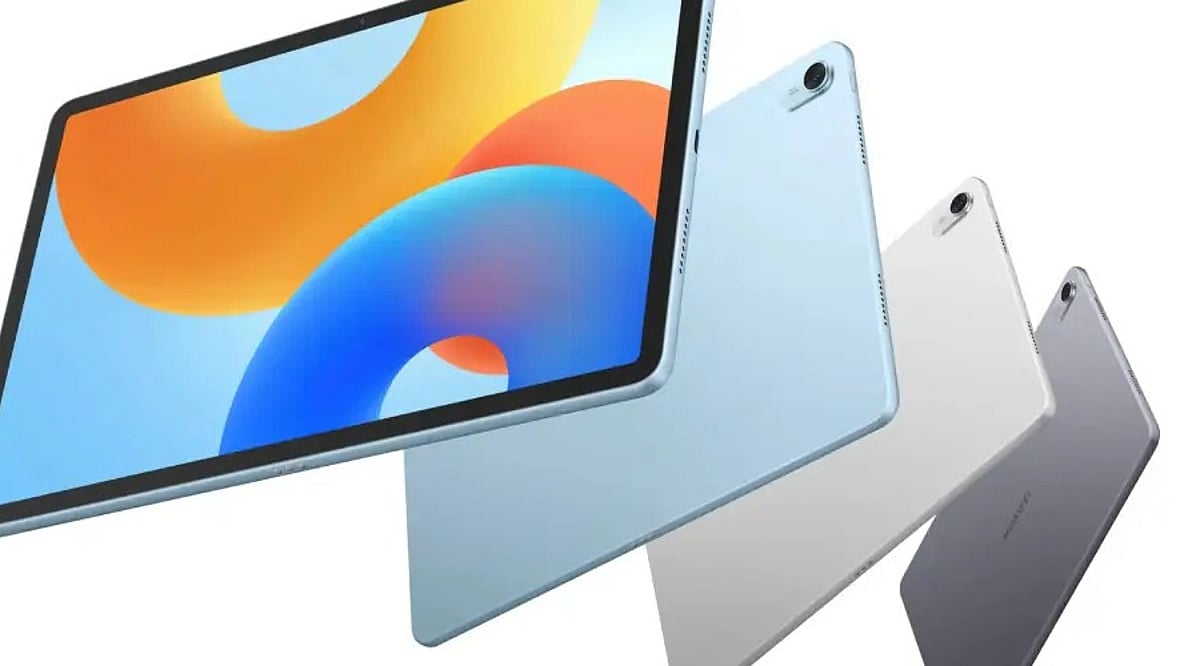
    Huawei has expanded its tablet portfolio in India with the launch of the MatePad SE 11 and the MatePad 11.5 PaperMatte Edition, targeting different user segments. The MatePad SE 11 is an affordable option designed for students and casual users, featuring an 11-inch Full HD Eye Comfort display, a 7,700mAh battery, and HarmonyOS.

    Huawei expanded its tablet lineup in India with the launch of the MatePad SE 11 and the MatePad 11.5 PaperMatte Edition. The two devices cater to different user segments, with the MatePad SE 11 positioned as an affordable entertainment and learning tablet, while the MatePad 11.5 PaperMatte Edition targets professionals, students, and digital creators who prefer a paper-like writing experience.

    PaperMatte Display Headlines the Premium Model

    Huawei MatePad 11.5 PaperMatte Edition features an 11.5-inch 2.2K FullView display with the anti-glare PaperMatte technology. It is designed to reduce reflections and offer a more natural writing and reading experience. The display supports a 120Hz refresh rate, which makes navigation and multitasking smoother.

    The tablet is powered by Huawei’s in-house software ecosystem, which supports multi-window multitasking, Huawei Notes, and PC-level WPS Office. It allows users to work on documents, presentations, and spreadsheets without requiring a laptop for basic productivity tasks.

    MatePad SE 11 Focuses on Everyday Use

    The more affordable MatePad SE 11 features an 11-inch Full HD+ display, quad-speaker setup, and a large battery designed for extended video streaming, online classes and casual gaming. According to Huawei, the tablet is aimed at families, students, and first-time tablet buyers looking for a balance between entertainment and productivity.

    Pricing and Availability

    The Huawei MatePad SE 11 is priced at Rs. 15,999, while the MatePad 11.5 PaperMatte Edition is available for Rs. 45,999. Huawei is now offering introductory discounts, exchange bonuses and no-cost EMI options through selected retail partners.

    The launch comes as competition in India’s tablet market continues to intensify, with brands such as Samsung, Lenovo, Xiaomi and Apple expanding their portfolios across multiple price segments.

  • Bitcoin Miners Offload BTC as Whales and ETFs Drive $1.2B Demand

    Bitcoin Miners Offload BTC as Whales and ETFs Drive $1.2B Demand

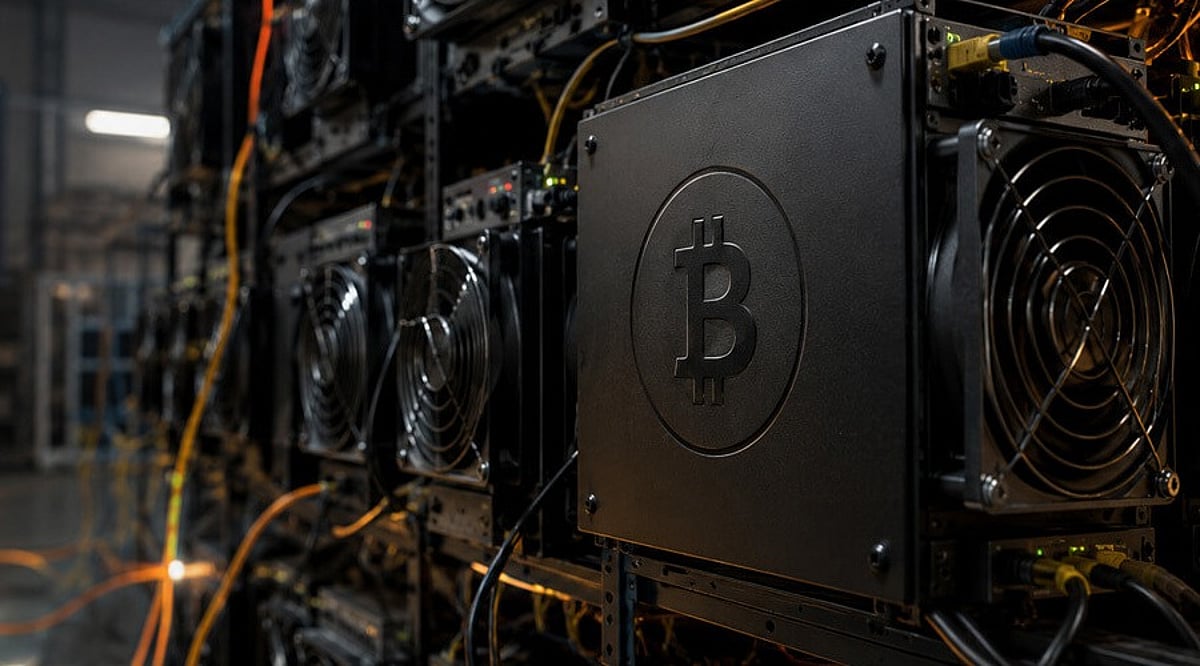
    Bitcoin is holding above $64,000 even as major mining firms send hundreds of coins to exchange-linked platforms. At the same time, large whale wallets and spot Bitcoin ETFs are showing renewed buying interest, creating a clear split between short-term selling pressure and institutional demand.

    Miners Move Bitcoin to Exchange Platforms

    On Thursday evening, MARA deposited 200 BTC to NYDIG, according to Lookonchain. Riot Platforms transferred another 381 BTC, worth roughly $24.5 million, around the same time. These exchange-related deposits can increase available supply if the coins are sold. MARA continues to hold more than $2.3 billion in Bitcoin despite reporting over $600 million in second-quarter losses.

    The latest transfers follow reports that Bitcoin miners sold a record 32,000 BTC during the first quarter of 2026. That period also saw a sharp drop in network hash rate. Smaller mining operations have been under particular strain during the prolonged bear market. Poolin has filed for Chapter 11 protection in New Jersey and is seeking approval for a $52 million sale of its Texas mining properties.

    Whale Accumulation Contrasts With Smaller Holder Selling

    Santiment data shows wallets holding between 10 and 10,000 BTC have accumulated more than 20,000 BTC since July 29. At current prices, that is approximately $1.2 billion. Meanwhile, smaller holders have continued to reduce their Bitcoin exposure. Santiment says this divergence improves the odds of Bitcoin trading above $70,000 and lowers the risk of a drop below $60,000.

    That contrast raises a key question: can growing whale demand absorb sustained selling from miners while Bitcoin remains below a decisive breakout level? Analysts have linked recent price weakness to uncertainty around the CLARITY Act, limited directional movement, and the Coldcard hardware wallet hack, which involved about $120 million worth of Bitcoin.

    ETF Inflows Return While Bitcoin Tests Resistance

    SoSoValue data shows US spot Bitcoin ETFs recorded $754.69 million in net inflows this week. That pace puts the products on track for their strongest week since April. Demand has returned after a difficult June, when the funds saw their worst month since launch. Nexo analyst Liya Kalchev said ETF-related volumes offer an early sign of renewed institutional demand.

    Spot Bitcoin ETFs also received more than $240 million on Wednesday. Kalchev added that the products have attracted more than half a billion dollars during August. Still, Bitcoin has not achieved a decisive upside breakout. Kalchev described the current bid as tactical rather than conviction-driven, with a clear move above $65,000 remaining important. Technical indicators suggest a larger rally could develop if Bitcoin clears resistance. Regulatory developments also remain in focus, with the CLARITY Act unlikely to pass the Senate this month.

    Outlook: Can Institutional Demand Offset Miner Selling?

    Bitcoin faces competing forces near $65,000. MARA and Riot have increased exchange-related transfers, while whales have accumulated more than 20,000 BTC and ETF inflows have strengthened. The market is now watching whether institutional demand can absorb miner supply as Bitcoin tests resistance and investors await regulatory clarity.

  • OpenAI Partners With Jony Ive on a Premium Screen-Free AI Smart Speaker

    OpenAI Partners With Jony Ive on a Premium Screen-Free AI Smart Speaker

    OpenAI is reportedly preparing to enter the consumer hardware market with its first AI-powered smart speaker, developed in collaboration with former Apple design chief Jony Ive. According to Bloomberg, the device will lack a traditional display and instead function as an AI companion driven entirely by voice interactions through ChatGPT.

    The device is expected to launch in 2027 and is likely to cost more than $300. Unlike existing smart speakers like the Amazon Echo or Google Nest, this product is being built from the ground up as an AI-native computer, with no touchscreen interface. Instead, it will rely on cameras, microphones, sensors, and lighting components, along with movable parts that respond to user interactions. The speaker is said to have a doughnut or hockey puck shape, small enough to be carried around the home.

    Jony Ive is playing a leading design role through his hardware startup io, bringing his signature minimalistic aesthetic to the project. The design is not expected to mimic any Apple product, but rather create a distinct identity for OpenAI’s hardware.

    OpenAI has confirmed that it is exploring a family of AI-powered devices but has not yet provided official product specifications or launch timelines. This screen-free speaker represents a significant step toward building an ecosystem of AI-powered consumer hardware, extending ChatGPT beyond smartphones and computers into everyday living spaces.

    If the timeline holds, OpenAI will enter a market currently dominated by Amazon, Google, and Apple. However, rather than competing on smart home controls, OpenAI is betting on conversational AI as the core user experience. The device could reshape how people interact with artificial intelligence at home.

  • Tata Sons IPO Hinges on RBI Decision on NBFC Licence Surrender

    Tata Sons IPO Hinges on RBI Decision on NBFC Licence Surrender

    The Reserve Bank of India (RBI) has retained Tata Sons on its Upper Layer non-banking financial company (NBFC) list for 2026–27, intensifying regulatory scrutiny and keeping the prospect of a mandatory public listing alive. However, the central bank is still reviewing the company’s application to surrender its NBFC registration, a decision that will determine whether the Tata Group holding company must proceed with an initial public offering (IPO).

    Under the RBI’s Scale Based Regulation framework, Tata Sons has been classified as an Upper Layer NBFC since 2022. This categorization subjects large NBFCs to enhanced governance, capital planning, disclosure, and risk management rules similar to those imposed on commercial banks. Upper Layer entities are also required to list their shares on stock exchanges within three years of classification, a deadline that Tata Sons has already passed.

    The RBI has clarified that its retention of Tata Sons on the list does not prejudge the outcome of the deregistration application, which remains under examination. Governor Sanjay Malhotra described the framework as “principle-based,” while the company, a core investment firm controlling businesses in technology, aviation, steel, electronics, and financial services, continues to operate under stricter oversight.

    Tata Sons repaid its debt before applying to surrender its NBFC licence roughly two years ago. The RBI has not provided a timeline for its decision. A source familiar with the regulator’s stance indicated that the central bank is unlikely to enforce the listing rule while the application is pending. Nonetheless, until approval is granted, Tata Sons must comply with all Upper Layer requirements, which apply for at least five years after classification.

    The outcome holds significant implications for shareholders. Tata Trusts, which owns about 66% of Tata Sons, could face changes in ownership structure that affect charitable funding and private investments. The Shapoorji Pallonji Group, holding roughly 18%, is seeking ways to monetize its stake to reduce debt, and a Tata Sons IPO could provide a market route for that exit.

    Tata Sons holds stakes in major listed firms such as Tata Consultancy Services, Tata Steel, and Tata Motors, and wholly owns private entities including Air India, Tata Digital, and Tata Electronics. Of the 17 companies on the RBI’s Upper Layer list for 2026–27, Tata Sons is the only unlisted one, underscoring the high stakes of the regulator’s decision.

  • SAP Halts Hiring and Travel as AI Costs Surge, Prioritizes AI Investments

    SAP Halts Hiring and Travel as AI Costs Surge, Prioritizes AI Investments

    SAP has paused most hiring and internal business travel worldwide as it grapples with rising costs associated with artificial intelligence. The German software giant implemented the measures in July 2026 to control spending while channeling funds into AI products, tools, and acquisitions. According to a current SAP employee cited by 404 Media, the restrictions remain in place.

    The hiring pause does not cover every role. SAP is focusing recruitment on selected positions that support the company’s long-term AI strategy. AI-related jobs, customer travel, development trips, and essential AI training are exempt from the freeze. Internal business travel has stopped under the new spending rules, but customer meetings and trips tied to SAP’s AI development program can continue.

    “Be disciplined in how we spend,” the company told employees, as rising AI costs put more pressure on budgets. SAP noted that AI adoption has increased token usage and related costs across its operations, with more AI services running at scale across the company.

    The company also plans major spending on AI products, internal AI use, and acquisitions involving data and artificial intelligence. A SAP spokesperson said the measures will help direct money toward areas with stronger long-term value, allowing the company to invest in AI while reducing spending in less critical areas.

    The move highlights a growing challenge for technology companies investing heavily in AI. While AI can improve productivity, running large AI systems can also create significant costs. SAP’s decision underscores a clear shift in priorities: AI skills and projects remain vital, while other hiring and spending now face tighter controls.

  • Xiaomi Enters India’s Smart Home Arena with Mijia Brand Launch

    Xiaomi Enters India’s Smart Home Arena with Mijia Brand Launch

    Xiaomi has officially introduced its Mijia smart home brand in India, marking a strategic move beyond its smartphone roots. The launch coincides with the company’s 12th anniversary in the market and positions Mijia as the fourth sub-brand under the Xiaomi Group umbrella, joining Xiaomi (premium), Redmi (mid-range smartphones), and Poco (digital-native products).

    Mijia, which translates to “Xiaomi home,” will serve as the dedicated brand for connected home and lifestyle products. According to Sudhin Mathur, COO of Xiaomi India, the brand will cover a range of devices including smart air purifiers, security cameras, robot vacuum cleaners, and other appliances designed to simplify everyday life. Xiaomi already sells many of these products in India, but consolidating them under the Mijia name aims to create a stronger identity in the smart home space and make it easier for consumers to recognize compatible devices within Xiaomi’s ecosystem.

    India’s smart home market is growing increasingly competitive, with established players like Samsung, LG, Amazon, and Google already offering connected home devices. By introducing Mijia, Xiaomi seeks to capture a larger share of this market through competitive pricing and a comprehensive ecosystem of interoperable products. For consumers, the move promises more choices and better value, as smart home technology transitions from premium gadgets to mainstream household essentials.

  • Sui’s Quantum-Safe Upgrade Preserves Existing Wallet Addresses With Post-Quantum Signatures

    Sui’s Quantum-Safe Upgrade Preserves Existing Wallet Addresses With Post-Quantum Signatures

    Sui is rolling out quantum-safe account security that lets users keep their current blockchain addresses while upgrading to post-quantum cryptography. The network will support ML-DSA-65 for standard accounts and SLH-DSA-SHA2-128s for high-value Move-based vaults, both designed to resist attacks from future quantum computers.

    Address Aliases Enable Seamless Migration

    Normally, switching cryptographic schemes requires creating a new address and moving all assets—a disruptive process for tokens, NFTs, identities, and smart contracts. Sui’s Address Aliases system avoids that entirely. An account can authorize a new post-quantum signer while the original blockchain address remains the transaction sender. Once native ML-DSA support is live, users simply authorize the new signer and later make it the sole authorized signer.

    Users can also derive an ML-DSA-65 key from their existing recovery phrase via a fresh derivation path, eliminating the need for a separate backup. Sui cautions that wallet software must clearly communicate the authority granted when adding an alias.

    Two Cryptographic Systems for Different Needs

    Sui splits quantum protection across two NIST‑standardized schemes:

    • ML-DSA-65 (FIPS 204, NIST Category 3) – a lattice‑based signature chosen for frequent transactions because it balances a strong security margin with practical verification speed.
    • SLH-DSA-SHA2-128s (FIPS 205, Category 1) – a hash‑based system reserved for high‑value vaults, providing a different mathematical foundation so that a weakness in lattice‑based crypto does not compromise all assets.

    This dual approach lets developers replace the vault authentication scheme via smart‑contract upgrades if future cryptanalysis reveals flaws in one family.

    Larger Signatures Shape Deployment Timeline

    Post‑quantum signatures are bulkier than Ed25519: ML-DSA-65 signatures are 3,309 bytes (public key: 1,952 bytes), while SLH-DSA‑SHA2‑128s signatures reach 7,856 bytes. Despite the size increase, Sui notes that ML-DSA verification performance is close enough to Ed25519 that per‑signature network costs need not rise.

    The rollout is staged:

    • Quantum‑safe vaults on Mainnet before end of 2026.
    • Native ML-DSA-65 accounts on Testnet by late 2026 and Mainnet in Q1 2027.
    • Wallet, SDK, and CLI support alongside independent audits and Testnet feedback.

    No immediate action is required from existing users. The migration is additive and optional, with clear warnings about potential scams that ask users to move all assets to a new address.

    Conclusion

    Sui’s quantum‑safe upgrade uses ML-DSA-65 accounts and SLH-DSA vaults while preserving existing addresses via Address Aliases. Users need do nothing now; audits, testing, and phased deployment continue.

  • Alibaba to Monetize Next Open-Source AI Model with Revenue-Sharing for Enterprise Users

    Alibaba to Monetize Next Open-Source AI Model with Revenue-Sharing for Enterprise Users

    Alibaba is preparing to introduce a new monetization strategy for its next-generation open-source AI model, marking a significant shift in how Chinese technology firms are commercializing artificial intelligence. According to a Reuters report, the company plans to require large commercial users of its upcoming Qwen3.8-Max model to share a portion of the revenue generated from AI-powered services built using the technology.

    The move signals a departure from Alibaba’s previous approach, under which businesses could deploy its open-source models in their own data centers without paying licensing fees. Instead, enterprises generating more than $20 million annually from applications based on the new model will reportedly be required to enter revenue-sharing agreements with Alibaba.

    New Licensing Strategy Targets Enterprise Customers

    The announced licensing system is nearly identical to the commercial system that the Chinese AI company, Moonshot AI, uses for its Kimi K3 model. Although small firms and developers are expected to continue using the model without any fees, large companies that generate significant revenue through their AI products will have to pay Alibaba. This approach demonstrates a wider trend of how AI developers seek viable sources of income as the expense of training and implementing foundation models keeps growing.

    Open-Source AI Enters Monetization Phase

    Alibaba unveiled Qwen3.8-Max earlier this week, describing it as its most capable AI model to date. Built with 2.4 trillion parameters using a mixture-of-experts architecture, the model is designed to deliver high performance while reducing computing costs by activating only a fraction of its parameters during inference. Despite maintaining an open-weight approach, the company now appears focused on converting enterprise adoption into long-term revenue, similar to the ‘freemium’ strategies increasingly seen across the global AI industry.

    AI Race Drives New Business Models

    Alibaba’s decision comes amid intensifying competition with OpenAI, Anthropic and a growing number of Chinese AI developers, including DeepSeek and Moonshot AI. As companies invest billions of dollars in model development and cloud infrastructure, many are moving beyond free distribution toward commercial licensing, premium cloud services and revenue-sharing agreements. If implemented, Alibaba’s new policy could reshape how open-source AI is commercialized, allowing developers continued access while ensuring the company captures value from businesses building large-scale commercial products on its technology.