Blog

  • Freedom Holding Corp. Enters Turkish Banking with Acquisition of Turkish Bank A.Ş.

    Freedom Holding Corp. Enters Turkish Banking with Acquisition of Turkish Bank A.Ş.

    Nasdaq-listed Freedom Holding Corp. has completed the acquisition of a 99.32% stake in Turkish Bank A.Ş., marking its formal entry into Türkiye’s banking sector and laying the groundwork for an integrated financial and digital platform. The transaction was executed through its subsidiary, Freedom Finansal Hizmetler A.Ş., and the bank has been renamed Freedom Bank A.Ş. following the transfer of control.

    The Acquisition Is Only the First Step

    The deal was finalized after receiving approval from Türkiye’s Banking Regulation and Supervision Agency (BDDK) and the Turkish competition authority. Freedom Holding plans to strengthen the bank’s capital position, upgrade its IT infrastructure, develop digital channels, launch new products, and improve operational efficiency.

    According to the BDDK, more than 120 million digital bank accounts have been opened in the country, with approximately 85% of the population using mobile banking. Turkish customers are already accustomed to advanced mobile-banking services, meaning the new platform must compete not only on product range but also on app usability, transaction speed, and overall customer experience.

    Türkiye occupies a special place in Freedom Holding Corp.’s global growth strategy. The country serves as a geographical bridge between Europe and Asia and a strategic gateway connecting the world’s largest financial markets.

    Why the Ecosystem Needs Its Own Bank

    Freedom Holding Corp. began building its Turkish infrastructure in 2022 with the establishment of Freedom Finansal Hizmetler A.Ş., created to support investments in banking, insurance, capital markets, payment systems, and other financial-services segments. In 2025, after approval from Türkiye’s Capital Markets Board, Freedom Yatırım Menkul Değerler A.Ş. was formed as the group’s local brokerage platform.

    The bank acquisition complements Freedom’s expansion into Türkiye’s capital markets. The group now has a banking platform on which to build its own ecosystem in the country. Banking services provide regular customer contact through accounts, cards, payments, transfers, deposits, and lending products, placing the acquired bank at the center of the future platform.

    Testing Freedom’s Kazakhstan Model in Türkiye

    In Kazakhstan, Freedom Holding has already built an ecosystem combining banking, brokerage, investment, insurance, payment services, e-commerce, travel, ticketing, and entertainment. The group plans to draw on this experience in Türkiye.

    “In Kazakhstan, we built an ecosystem in which financial and everyday services operate through a single SuperApp, which has become the country’s fastest-growing digital service,” said Timur Turlov, founder and CEO of Freedom Holding Corp. “We are now bringing this model to Türkiye, where customers already have high expectations of their banks. Our task over the next few years is to strengthen the bank’s capital base and technological capabilities so that an ecosystem can develop rapidly around it.”

    The group’s experience in Kazakhstan demonstrates that financial and lifestyle services can be combined on a single digital platform. Türkiye will show how successfully the model can scale beyond the home market.

    Freedom Holding Corp. operates in 22 countries, including Kazakhstan, the United States, Cyprus, Poland, Spain, Uzbekistan, and Armenia, with its principal executive office in New York. Its shares trade under the ticker FRHC on Nasdaq, the Kazakhstan Stock Exchange, and the Astana International Exchange.

    The company strengthened its financial position in fiscal year 2026, which ended March 31. Revenue increased 9% year-on-year to $2.19 billion, while net income more than doubled to $153.3 million from $76.2 million a year earlier. Total assets rose 33% to $13.16 billion. By March 2026, the Freedom ecosystem served more than 14 million customers.

    In June 2026, S&P Global Ratings upgraded the credit ratings of four Freedom subsidiaries to BB- with a Stable outlook, while affirming the holding company’s long-term issuer credit rating at B-, also with a Stable outlook.


  • New Open-Source Tool Makes Enterprise LLM Decisions Verifiable — Kirill Pechurin’s structured-eval

    New Open-Source Tool Makes Enterprise LLM Decisions Verifiable — Kirill Pechurin’s structured-eval

    Gartner recently warned that ungoverned decisions using LLMs will cause financial or reputational loss for enterprises. The fix, Gartner said, is to redesign analytic workflows around a required evaluation stage — a step most AI pipelines skip. Another Gartner prediction estimates that by 2027, 40% of enterprises will demote or decommission autonomous AI agents, with governance gaps surfacing only after a production incident. Strip away the framing, and both predictions describe that AI systems are already making structured, machine-actionable decisions inside enterprises.

    Kirill Pechurin, a senior software engineer at Arctera, has built a way to check whether any of those decisions is correct — the kind of check a pipeline can run before the output reaches the system that acts on it. He built and open-sourced structured-eval, a free tool under the Apache-2.0 license, specifically designed to catch structured LLM outputs that parse correctly but contain wrong values. He also led the development of an LLM-based system for procurement, delivery, and equipment-accounting automation, including a spec-reconciliation tool that cut manual work by roughly 30% and exposed the problem this article addresses.

    Where Hallucination Benchmarks Stop Mattering

    Most conversations about AI reliability center on hallucination rates in open-domain question answering — a chatbot inventing a citation or a search summary getting a fact wrong. Those numbers have improved. But those benchmarks test a model on clean questions and expect an answer in plain sentences, not what most business systems actually ask. In production, a model’s output is often a structured record — a JSON entry written straight into a database, a compliance check, or a purchase order — without a human looking at it first.

    “A mistake doesn’t look like ‘the model said something false’ in a way a reader could notice anymore. It’s now one buried detail, nested deep inside an otherwise correct-looking record, that doesn’t match reality. No one skimming a chat transcript would catch it. But the system downstream will still act on it.” — Kirill Pechurin

    That’s a significant blind spot. A model can pass every open-domain hallucination benchmark and still ship a record with a wrong quantity, a fabricated part number, or fields that contradict each other. Nothing in the pipeline checks individual fields against a source of truth — only whether the output parsed as valid JSON.

    The Procurement Tool That Never Throws an Error

    Kirill ran into this gap in back-office automation at Arctera. His procurement tools included a component that automatically reconciled technical specifications against vendors’ commercial proposals, and another that parsed vendor-supplied equipment specifications into structured records. The system cut manual operations by roughly 30% in a high-frequency decision workflow. But that also matches the risk Gartner warns about: an LLM’s structured output feeding directly into a real business decision, with no human necessarily reading the raw model response before it’s acted on.

    “A reconciliation error doesn’t throw an exception. The tool just quietly matches a spec to the wrong vendor line, and by the time anyone notices, the equipment’s already been ordered.” — Kirill Pechurin

    In such workflows, asking whether the output looks plausible is the wrong question. Asking whether a specific field matches the source document is the right one — and almost nobody had built the tooling to ask it systematically.

    Grading Structured Output Like an Auditor

    Building the procurement system left Kirill with an unsolved problem: the evaluation layer was missing. He built one and released it under an Apache-2.0 license. The result, structured-eval, is a software tool specifically designed to assess the quality of structured JSON or YAML LLM outputs. Instead of stopping at whether the output parsed into valid JSON, it:

    • Compares values field by field at any level of nesting
    • Checks outputs against a source document to catch fabricated or unsupported values
    • Enforces logical consistency across fields through a rules layer built for the purpose
    • Supports running evaluations across a full dataset rather than one output at a time
    • Tests whether a model gives a stable answer when the same prompt is run repeatedly

    “Running the same prompt twice and getting two different structured outputs is routine. Most evaluation tooling doesn’t even ask that question.” — Kirill Pechurin

    The framework is designed to sit alongside existing LLM-evaluation tools such as deepeval and LangSmith instead of replacing them. Pechurin frames the underlying idea: “There’s no such thing as one hallucination score. A quantity field and a description field fail in completely different ways, so each field gets scored with whatever comparison actually fits it, then those get combined.”

    A quantity field might need exact or near-exact numeric matching; a description field might tolerate paraphrase and reward it with a token-level similarity score; a status field might need strict enumeration matching with zero tolerance. Letting each field carry its own comparison method, then combining those into a composite score, is much closer to how a human reviewer actually audits a structured record than a single blended accuracy number ever is.

    What the Fix Actually Buys You

    That kind of infrastructure is the practical answer to the industry pattern. It’s cheaper to build field-level verification into a pipeline once than to discover, after a procurement error or a compliance gap, that nobody was checking. Organizations less likely to face after-the-fact governance failures — decommissioning agents after the damage is already done — are those treating structured-output verification as a first-class engineering problem rather than an afterthought.

    This isn’t the first time reliability work of this kind produced a large, measurable result. Earlier in his career at Consul Group, Kirill redesigned how a 1-million-plus-document Elasticsearch index handled updates, cutting query latency from 5,000 milliseconds to 500 milliseconds — a tenfold improvement. It’s a different problem than structured-output verification, but the same idea: not to assume a system behaves correctly at scale, but to measure it and rebuild the part that doesn’t.

    An LLM can be reliable in general and still be the wrong tool for a procurement pipeline if nobody checks whether its specific fields match the specific documents it was given. Kirill Pechurin built structured-eval to close this gap, giving enterprises a concrete way to check AI-driven procurement, finance, and compliance decisions before they ship.

  • How Khalil Ismail’s ‘Technical Philosopher’ Role Is Shaping the Future of Mind Computing

    How Khalil Ismail’s ‘Technical Philosopher’ Role Is Shaping the Future of Mind Computing

    By Arundhati Kumar

    At Voyage, the founder of the Maison for Mind Computing is building a technical house where engineering, taste, neuroscience, and philosophy belong in the same room.

    Most technology companies know what to do with an engineer. They know what to do with a researcher, a designer, a product manager, or a strategist. The categories are familiar, clean, and useful enough for software, hardware, and much of artificial intelligence. Khalil Ismail thinks mind computing needs a different kind of person.

    At Voyage, the Maison for Mind Computing he founded, that person is called a Technical Philosopher. The title is not decorative. It is Ismail’s answer to a problem he believes has slowed the brain-computer interface field for years: too many people are solving narrow pieces of a challenge that, by its nature, refuses to stay narrow.

    “You cannot build for the mind with only one lens,” Ismail says. “The signal matters, but so does meaning. The object matters, but so does the judgment behind it. The intelligence matters, but so does the person using it.”

    Voyage is launching publicly around a category Ismail calls Mind Computing, with a long-term focus on non-invasive neural interfaces built for real-world use. The product itself is not being publicly launched yet. They are introducing the company’s identity, philosophy, and internal structure: a technology this intimate requires a company culture built to hold science, craft, ethics, and taste at the same time.

    That is why he calls Voyage a Maison. In tech, the word may sound unusual at first. Ismail uses it to describe a technical house, one built around frontier engineering, careful form, philosophical depth, and cultural judgment. His view is that neural interfaces will not become part of ordinary life because they are hidden inside existing objects or made slightly less awkward. The field needs a different operating system before it can build a different interface.

    “The Maison is how we organize the work,” he says. “It means the cultural questions are not added after the engineering. They are inside the engineering brief.”

    That thinking comes from Ismail’s own formation. Imperial College London gave him engineering discipline. The Royal College of Art sharpened his relationship to form, craft, and material expression. Apple, Microsoft, Snap Inc., MIT Media Lab, Harvard, and Oxford each exposed a different part of the same problem: intelligent systems were advancing, but the human interface was still being treated too narrowly.

    The point, for him, is not the prestige of the path. It is the collision between those rooms. At one end were the demands of sensing, computation, product architecture, and model behavior. At the other were questions that do not fit neatly on an engineering roadmap: why would someone trust this, what does the object ask of the person wearing it, how should consent work when the interface becomes more intimate, and what kind of future does the company’s taste make possible?

    “Most fields train people to separate those questions,” Ismail says. “I became interested in what happens when you refuse to separate them.”

    That refusal has become central to Voyage’s hiring language. The Technical Philosopher is the archetype Ismail wants at the center of the company. He sees the role as a builder who can engage with equations and materials, but also with ethics, perception, autonomy, restraint, and cultural meaning.

    In a field often dominated by clinical use cases, invasive implants, laboratory constraints, and science-fiction imagery, that blend is deliberate. Ismail is not dismissive of medical neurotechnology. He believes invasive systems can be incredibly important for clinical needs. His argument is different: the consumer path for neural interfaces requires a different starting point.

    “You cannot assume society will accept intimate technology because it is powerful,” he says. “The first question is not only what the system can do. The first question is what kind of relationship it creates.”

    That question changes the engineering. Non-invasive neural interfaces have long faced skepticism because of sensor quality, noisy data, and the difficulty of building systems that generalize outside controlled settings. Ismail believes the AI era has changed the shape of that problem, especially through reinforcement learning and the possibility of models improving through richer context. But the context cannot come from a lab alone.

    For Voyage, the object has to become habitual. It has to enter real environments, real choices, and real patterns of intent. That makes the company’s attention to form and adoption part of the technical architecture rather than an aesthetic layer added near the end.

    “Data is not floating in the abstract,” Ismail says. “It comes from life. If the interface does not belong in life, you never reach the depth of understanding people keep promising.”

    This is where the Maison structure becomes strategic. Ismail sees historical houses as institutions that shaped more than objects. They shaped how new materials, techniques, and forms entered culture. He points to the idea that a house can create a world around a material before the public fully knows how to name it.

    Voyage wants to do something similar for neural interfaces. The company is trying to move the field away from dystopian imagery and toward a more deliberate model of human-computer entanglement, one where the person remains the author of the interaction. Ismail’s vision is not a future where AI becomes a louder companion with a name, a face, and a personality. He wants ambient intelligence to support intent without taking over the story.

    “The machine should not become the protagonist,” he says. “The person using it should still feel like the author.”

    The early team reflects that same sensibility. Ivan Bokarev and Hiteyjit Singh Gujral joined because they shared Ismail’s impatience with narrow thinking. Their fit was not only technical. It was temperamental. Voyage was being built for people willing to question inherited assumptions about neuroscience, consumer technology, and what a technical company is allowed to value.

    That makes internal culture more than a workplace concern. At the Maison, questions about privacy, consent, trust, form, and human agency belong at the beginning of the work. The Voyage Handbooks are used by every technical philosopher. The handbooks also give space for them to write in and challenge ideas as they work through new challenges.

    “What should a neural interface never do?” Ismail says. “That question matters as much as what it can do. If you do not ask it early, the answer gets decided by accident.”

    That gives Voyage a different posture from the typical frontier technology company. It is not trying to prove that philosophy can make technology sound refined. It is trying to prove that philosophy can change what gets built, who builds it, and how carefully the company treats the human being at the center of the interface.

    Khalil Ismail’s bet is that the next computing shift will require institutions that do not look like the last generation of labs, studios, or startups. Mind computing will need engineers who understand culture, designers who can think technically, and thinkers who are willing to build. It will need people with enough discipline to work inside the hard problems and enough imagination to ask whether the hard problems have been framed correctly.

    At Voyage, that person has a name.

    The title may sound unusual now. That is partly the point. Voyage is being built for a category that does not yet have inherited roles, inherited rituals, or inherited rules. Ismail is not waiting for that language to appear after the field matures. He is putting it into the company from the beginning.

  • Nissan Ariya Electric SUV: Comprehensive Overview of Its Design, Performance, and Market Impact

    Nissan Ariya Electric SUV: Comprehensive Overview of Its Design, Performance, and Market Impact

    The Nissan Ariya marks a significant step in the company’s transition to an all-electric future, blending modern design with innovative technology. As a practical SUV with electric performance, it delivers a premium driving experience. The spacious cabin, intelligent features, and efficient powertrain position the Ariya as a key player in the global electric vehicle market.

    Stylish Design Creates Strong Appeal

    The Nissan Ariya features a futuristic exterior with smooth lines, a bold front fascia, and aerodynamic enhancements. Inside, the cabin emphasizes simplicity and comfort with a minimalist layout. Premium materials, intuitive controls, and clever storage solutions create a relaxing environment for both driver and passengers during daily commutes or longer journeys.

    Electric Performance Meets Everyday Driving

    The Ariya delivers smooth acceleration and responsive handling through its electric powertrain. Various battery configurations offer options for those prioritizing efficiency or stronger performance. Instant electric torque, quiet operation, and balanced dynamics provide an enjoyable ride while maintaining the practicality expected from a modern family SUV.

    Advanced Technology Enhances the Experience

    Nissan equips the Ariya with intelligent driving aids, connected features, and advanced safety systems. Driver-assistance tools boost confidence on the road, while digital displays and smart connectivity add convenience. These technologies underscore Nissan’s commitment to merging electric mobility with modern digital experiences for everyday users.

    Range and Charging Remain Key Features

    Electric vehicle buyers often evaluate range and charging convenience before purchasing. The Nissan Ariya addresses these concerns with efficient battery options and charging support tailored for daily travel. Improved charging networks and home charging solutions continue to make electric SUVs like the Ariya increasingly practical for consumers worldwide.

    Competition Grows in Electric SUV Market

    The electric SUV segment is becoming highly competitive, with models from Tesla, Hyundai, Kia, and others. Automakers are focusing on longer range, better technology, and attractive pricing. The Nissan Ariya competes by offering a compelling mix of comfort, reliability, and electric innovation for those exploring sustainable transportation.

    Nissan Ariya Represents the EV Future

    As electric vehicle adoption rises, models such as the Nissan Ariya demonstrate how traditional automakers are adapting to evolving consumer preferences. With advanced technology, practical design, and electric performance, the SUV reflects the direction of future transportation. Nissan’s continued EV development could strengthen its position in the rapidly changing global electric vehicle market.

  • Infosys and Crocs Forge 10-Year AI-Powered IT Transformation Deal

    Infosys and Crocs Forge 10-Year AI-Powered IT Transformation Deal

    Infosys, a global leader in AI-first business consulting and technology services, has signed a ten-year strategic agreement with Crocs, Inc., the innovative casual footwear brand. The collaboration aims to modernize Crocs’ core business and IT systems using Infosys’ AI-first platforms, simplifying operations, reducing costs, and enabling scalable growth.

    As consumer expectations rise and the retail landscape evolves rapidly, Crocs is investing in a resilient digital backbone. Infosys will deliver scalable solutions across enterprise IT and business operations, breaking down silos, unifying data, and enabling real-time, insight-driven decision-making.

    “As our organization reimagines its IT landscape, we sought a collaborator who could combine deep domain expertise with a commitment to innovation and operational excellence,” said Tom Britt, CIO of Crocs, Inc. “By leveraging Infosys’ proven delivery frameworks and advanced automation capabilities, we will optimize operations, reduce costs, and scale responsibly.”

    Karmesh Vaswani, EVP & Global Head of Consumer, Retail & Logistics at Infosys, added, “The retail industry is at an unprecedented inflection point. Crocs is making a bold commitment to digital transformation. Our AI-first approach will drive purposeful performance improvements, unlock AI value across Crocs’ global operations, and accelerate profitable growth.”

    The initiative will help Crocs address key industry challenges: rising costs, inconsistent processes, and the need for agility. Standardized operations will enable the company to better respond to evolving consumer and market demands.

    Headquartered in Broomfield, Colorado, Crocs, Inc. (NASDAQ: CROX) is a world leader in innovative casual footwear, with brands including Crocs and HEYDUDE, sold in over 85 countries. Infosys (NSE, BSE, NYSE: INFY) employs over 325,000 people and serves clients in 59 countries.

  • Why Onchain Data Verification Is Critical for Blockchain Trust and Security

    Why Onchain Data Verification Is Critical for Blockchain Trust and Security

    Every blockchain data provider claims their product is verifiable. The problem is that few of them mean the same thing, and that gap has become a critical issue as more capital moves through automated systems and smart contracts that rely on accurate onchain data.

    The simplest approach to data extraction involves a team pulling data directly from blockchain nodes via JSON-RPC, extracting blocks, transactions, and logs, then loading them into a custom pipeline. With some human curation—people checking numbers and catching anomalies—this setup works well for small to medium projects. However, it does not scale effectively. When a provider using this pipeline calls its data verifiable, it typically means the numbers can be spot-checked against another source and the methodology is open to manual audit. This is a real capability, but it is far from cryptographic proof and still requires trusting that someone extracted and curated the data honestly.

    That trust gap has shifted from a nuisance to a liability. Most applications accept whatever an RPC endpoint returns at face value, meaning compromised infrastructure can feed convincing but incorrect data into downstream systems. This is not hypothetical. In April 2026, attackers manipulated the RPC infrastructure behind a verification layer tied to KelpDAO, contributing to a loss estimated at around $290 million. No blockchain cryptography was broken. Instead, the trust chain was exploited. As more capital flows through agents and treasuries that execute automatically, bad data becomes a security issue rather than a quality issue.

    Teams requiring stronger verification typically choose among three approaches, and only one fully earns the descriptor without an asterisk.

    1-of-N Trust Model

    The first is a 1-of-N trust model. Instead of relying on a single provider, work is distributed across many independent participants. Correctness becomes contestable: it takes just one honest party to catch bad data and hold the offender accountable. The Graph’s decentralized network uses this model, where Indexers submit Proofs of Indexing, and other participants can challenge results they believe are incorrect. Disputes go to arbitration, and an Indexer caught serving bad data is slashed. The math is compelling. With five participants, each having a 20% chance of using a faulty RPC, a consensus model requiring majority agreement has about a 5.8% chance that the majority is wrong and bad data wins. Under a 1-of-N model, corruption only slips through if all five participants fail simultaneously, about 0.03% risk, making it nearly two orders of magnitude safer. This gap explains why 1-of-N scales better as networks grow.

    However, this model has a flaw. A gateway pulling from multiple Indexers can receive correct data from two sources and bad data from a third. Until the dispute resolves, users may see flickering between correct and incorrect data. Developers often prefer consistently wrong data over visibly inconsistent data, a real tradeoff in permissionless systems that centralized systems typically hide.

    Consensus Model

    The second approach is consensus, which is often confused with 1-of-N. This distinction matters because the two models make fundamentally different bets. Consensus treats majority agreement as a stand-in for correctness, as Chainlink’s oracle network does. The problem is that a majority can be wrong. If enough participants collude or are compromised, the entire agreement mechanism breaks down.

    Verifiable Extraction

    The third approach deserves the term without qualification. Verifiable extraction bypasses the question of whom to trust and instead relies on the blockchain’s cryptographic commitments: the hashes linking every block, transaction, and log in a way that cannot be altered without detection. Edge & Node’s Amp recomputes these commitments during data extraction, before the data becomes queryable, checking Keccak-256 hashes and Merkle Patricia Tries against the block header. If anything has been tampered with, the mismatch appears immediately. StreamingFast’s verifiable extraction for Firehose closes the remaining gap by proving that a specific block belongs to the chain’s actual canonical history, not just that the extracted data matches the header it claims. Together, these cover the full claim: the data is faithful to the block, and the block is real, and anyone can recompute both independently.

    However, this approach has costs. Recomputing commitments and reconstructing proofs requires computational work, so the most rigorously verified data tends to arrive slower than a raw, unchecked feed. The blockchain data trilemma—fast, comprehensive, verifiable, pick your tradeoffs—does not disappear just because a team has chosen the strongest form of verification. Even cryptographic verification has a boundary: it proves data was processed and preserved correctly, but not that the original source was honest. That is a different problem, the oracle problem, and it remains unsolved.

    The real issue is the weight the word is being asked to carry. “Verifiable” is applied to benchmarkable transparency, majority agreement, and cryptographic proof as if they are interchangeable guarantees with different marketing. They are not. They fail in different ways, under different conditions, for different reasons. For anyone building a system where a wrong number costs real money, this distinction is not academic. It is the entire ballgame.

  • Sunsama Daily Planner Review: Intelligent Time Blocking for Better Productivity Management

    Sunsama Daily Planner Review: Intelligent Time Blocking for Better Productivity Management

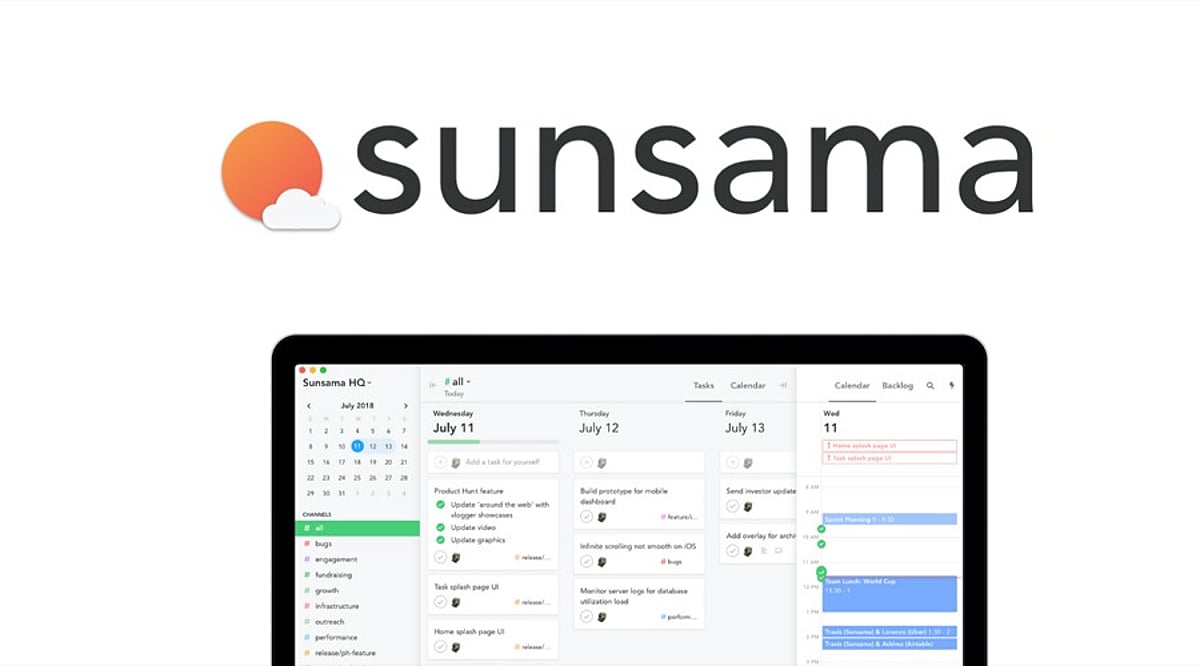
    Sunsama is a daily planner app designed to help users organize their tasks, block time for focused work, and create an intention-driven daily flow. It seamlessly integrates task management with calendar planning, allowing users to drag tasks into their calendar for a visual, structured day. The app emphasizes mindfulness in planning, daily reviews, workload balancing, and integration with popular productivity tools.

    General Information

    • Founded in: 2013
    • Platform Support: Web, Windows, macOS, Android
    • Download: Click Here

    Main Features of Sunsama

    • Organizes daily activities through time-blocking techniques based on calendars.
    • Offers daily and weekly plans, along with reviews.
    • Records scheduled and actual completion time of tasks precisely.
    • Compatible with Asana, ClickUp, Trello, and other productivity software.
    • Includes workload balancing, focus techniques, and daily wind-down.

    Benefits of Sunsama

    • Generates real-time daily plans using time-blocking techniques.
    • Incentivizes mindful planning with workload management and review.
    • Consolidates task information from different productivity apps in one place.
    • Facilitates awareness of working patterns through time tracking.
    • Intuitive design ensures planning is easy and distraction-free.

    Challenges of Sunsama

    • Requires consistent daily planning to get the most out of it.
    • Only allows planning for about two weeks ahead.
    • Does not automatically schedule tasks or priorities for each day.
    • Mobile app lacks some features of the desktop version.
    • No public API for integrations.

    Subscription Information

    Sunsama offers a 30-day free trial without requiring a credit card. The Pro plan includes unlimited planning, integrations, and productivity tools, while the Enterprise plan adds extra security and administration support.

    Support Options

    • Help Center and Learning Resources: User guides, onboarding documentation, productivity tips, planning tutorials, and setup resources.
    • Customer Support: Assistance for account management, billing questions, technical troubleshooting, and platform-related issues.

    Conclusion

    Sunsama is an excellent daily planner for individuals who prefer intentional planning and time-blocking over automated scheduling. With its clean design, thoughtful planning methodology, and useful features, it stands out as a productivity app for those wanting greater control over their daily schedule. Despite requiring manual planning and having a simpler mobile version, it delivers on its core promise effectively.

    Rating: 4.5 / 5

  • Crypto Market Update: Bitcoin ETFs Net $244M, Russia Passes Landmark Crypto Law, Pi Network Rises 10%

    Crypto Market Update: Bitcoin ETFs Net $244M, Russia Passes Landmark Crypto Law, Pi Network Rises 10%

    The cryptocurrency market experienced significant developments this week, with spot Bitcoin ETFs recording substantial inflows, Russia enacting its first comprehensive crypto law, and Pi Network posting double-digit gains. Here’s a breakdown of the top stories shaping the crypto landscape.

    Bitcoin ETFs See $244 Million in Net Inflows

    According to data from SoSoValue, spot Bitcoin ETFs attracted a total net inflow of $244.42 million on the latest trading day. BlackRock’s IBIT led the pack with $196.83 million in net inflows, followed by Ark Invest and 21Shares’ ARKB, which added $37.63 million. On the outflow side, VanEck’s HODL recorded $14.67 million in net outflows.

    The total net asset value of Bitcoin spot ETFs now stands at $79.21 billion, representing an ETF net asset ratio of 6.09%. Historical cumulative net inflows have reached $51.95 billion, underscoring sustained institutional interest in Bitcoin exposure through regulated vehicles.

    Russia Signs First Full Crypto Law

    Russian President Vladimir Putin signed the country’s first comprehensive crypto law on Tuesday, codifying rules for crypto exchanges, custodians, mining, and digital asset issuance. The nearly 300-page Law on Digital Currencies and Digital Rights will take effect on September 1.

    Key provisions include licensing requirements for crypto exchange operators, which must register with a self-regulatory organization and hold minimum capital of 15 million rubles (approximately $187,000). The law also introduces a new category of ‘non-qualified’ retail investors, allowing them to purchase up to 300,000 rubles ($3,800) of approved cryptocurrency per year through a single licensed intermediary and send up to 100,000 rubles abroad.

    Additionally, the Central Bank will oversee new digital depositories to record ownership, mirroring the tracking system used for traditional securities.

    Bhutan Appoints 3iQ to Manage Bitcoin Treasury

    Bhutan has appointed Canadian digital asset manager 3iQ Corp. to oversee a portion of its Bitcoin treasury allocated to Gelephu Mindfulness City (GMC). This marks one of the first publicly disclosed institutional asset management mandates tied to a sovereign Bitcoin reserve, signaling a shift from government-led accumulation to professionally managed digital asset portfolios.

    While the size of the Bitcoin allocation was not disclosed, 3iQ will have discretionary authority to manage part of GMC’s reserve under a long-term investment strategy. The agreement also commits 3iQ to establish a permanent presence in Bhutan and support local digital asset expertise.

    XRP Ledger Proposes On-Chain Cosigner Feature

    Developers Shawn Xie, Zhiyuan Wang, Chenna Keshava B S, and Mayukha Vadari introduced the On-Chain Cosigner proposal in the XRP Ledger standards repository. The initiative aims to modernize multi-signature transaction coordination directly within the network, eliminating reliance on external communication channels and centralized servers.

    Currently, XRPL supports multi-signature transactions but requires off-chain approval collection through manual processes. With On-Chain Cosigner, requests would be stored as native TransactionProposal objects on the blockchain, validating each signature in real time and enhancing security for institutional asset custody.

    Pi Network Price Jumps 10%

    Pi Network’s token gained more than 10% over the past week, trading near $0.0872 after hitting a daily high of $0.0902. The 24-hour trading volume surged 75% to approximately $11.5 million, indicating increased market participation.

    The price recovery is supported by the Protocol 26 upgrade and a new RoboPay integration, which boosted short-term demand. On the 4-hour chart, PI is pressing against the upper Bollinger Band at $0.08824, overlapping with the $0.088–$0.090 resistance zone that has capped several recovery attempts since late July.

    Frequently Asked Questions

    1. Why did Bitcoin ETFs record strong inflows?
    According to SoSoValue, spot Bitcoin ETFs attracted $244.42 million in net inflows, reflecting continued institutional interest. BlackRock’s IBIT accounted for the largest share of the day’s investments.

    2. What does Russia’s new crypto law change?
    The law establishes a legal framework for crypto exchanges, custodians, mining companies, and digital asset issuance. It also introduces licensing requirements and investment limits for retail investors.

    3. Why is Bhutan partnering with 3iQ?
    Bhutan appointed Canadian asset manager 3iQ to oversee part of its Bitcoin treasury linked to Gelephu Mindfulness City, marking one of the first sovereign-backed institutional Bitcoin management mandates.

    4. What is the XRP Ledger’s On-Chain Cosigner proposal?
    The proposal aims to bring multi-signature coordination directly onto the XRP Ledger. It would allow transaction approvals to be stored and verified on-chain, reducing reliance on external communication systems.

    5. Why did Pi Network’s price increase this week?
    Pi Network gained over 10% as trading volume jumped 75%, supported by the Protocol 26 upgrade, RoboPay integration, and increased buying interest near key technical resistance levels.

  • No Limit App Review: Personalized Workout Journeys and Progress Tracking

    No Limit App Review: Personalized Workout Journeys and Progress Tracking

    No Limit App is a fitness application that enables users to attain their desired health and fitness objectives by means of journey-style workouts, training plans, and progress tracking. The app allows users to select fitness training plans according to their proficiency levels, measure their fitness progress via analytics, take part in weekly fitness challenges, and obtain expert coaching services through their paid subscriptions.

    General Information

    • Founded in: 2025
    • Platform Support: Android, iOS
    • Category: Health & Fitness
    • Download: Click Here

    Main Features of No Limit App

    • Gain access to workout journeys that are specially tailored to suit specific fitness needs.
    • Choose from three levels of workouts, depending on your level of expertise.
    • Measure your fitness progress using comprehensive analytical information.
    • Participate in weekly challenges and earn No Limit Points for achievements.
    • Enjoy personalized workout journeys with premium membership.
    • Establish your personal fitness profile.

    Benefits of No Limit App

    • Ensures the user’s regularity in structured fitness programs.
    • Records workouts and improvement in one single place.
    • Provides workouts which suit both beginners and advanced users.
    • Provides motivation through weekly challenges and reward points.
    • Gives personalized guidance to the users through premium subscriptions.
    • Provides flexible options of monthly/yearly subscriptions.

    Challenges of No Limit App

    • Many advanced functions require a subscription fee.
    • Individual coaching can only be accessed by premium subscribers.
    • The free version displays advertisements.
    • Subscription packages may be costly for some people.
    • Internet connection may be needed for some of the functions.

    Subscription Information

    The No Limit App provides a free plan that gives you free access to some selected workout journeys and analytics. The user will be required to pay $24.99 monthly for the standard plan, or $59.99 monthly for the advanced plan in order to enjoy all the benefits mentioned above. Yearly subscription plans are also available.

    Support Options

    • Help Center and Learning Resources: FAQs, fitness journeys, subscription information, analytics guidance, account management, and training resources.
    • Customer Support: Assistance with subscriptions, payments, account issues, technical support, personalized journeys, and general app-related inquiries through email support.

    Conclusion

    No Limit App is one of the most efficient ways to stay fit and healthy as it includes personalized workout journeys, progress tracking, and fitness challenges. Moreover, due to its various options and the ability to change the level of difficulty, the app will suit people with different goals concerning their fitness. However, some of the app’s advanced functions can be unlocked only via subscription.

  • Lisa Su: The Visionary CEO Transforming AMD into an AI and Semiconductor Powerhouse

    Lisa Su: The Visionary CEO Transforming AMD into an AI and Semiconductor Powerhouse

    Lisa Su is an accomplished semiconductor leader who currently serves as Chair and CEO of Advanced Micro Devices (AMD). Under her guidance, AMD has become a global force in high-performance computing, artificial intelligence, gaming, and adaptive computing. Known for her forward-thinking leadership, deep technical expertise, and innovation-driven approach, Su has revitalized AMD’s competitive standing and driven the development of cutting-edge processors and enterprise computing systems.

    Early Life and Education

    Lisa Su earned her bachelor’s, master’s, and doctorate degrees in Electrical Engineering from the Massachusetts Institute of Technology (MIT). Her research focused on semiconductor device physics and Silicon-on-Insulator technology. This strong technical foundation paved her way to influential roles in semiconductor research, development, and advanced computing innovation.

    Professional Career

    Su began her career at Texas Instruments before moving to IBM, where she managed research and development in semiconductors and technology. She later served as Chief Technical Officer and led business operations at Freescale Semiconductor. At AMD, she rose from President and CEO to her current role as Chair and CEO.

    Business Intervention in AI

    AMD harnesses high-performance computing, intelligent infrastructure, and developer tools to accelerate AI. The company consistently uses state-of-the-art CPUs, GPUs, adaptive computing, and open software to create fast, intelligent, and scalable AI solutions. AMD’s EPYC™ Server CPUs provide efficient infrastructure for generative AI, agentic AI, cloud computing, and data center innovations. The company also brings AI closer to data through energy-efficient computing for intelligent retail, 5G, cloud storage, and edge infrastructure. AMD supports AI enthusiasts with cost-effective, secure, and energy-efficient technologies, and offers developers free tools, cloud platforms, mentorship, and training. Within enterprises, AMD drives AI adoption for increased efficiency, productivity, and optimized operations, all while pioneering ethical and responsible AI through scientific research, STEM education, and international collaborations.

    Business Achievements

    Under Su’s leadership, AMD has achieved remarkable milestones with the invention of Ryzen, EPYC, and Instinct processors, building its AI computing capabilities. She forged partnerships with industry leaders such as Microsoft, Meta, and Oracle, helping AMD become a top player in high-performance computing, AI infrastructure, gaming, and adaptive computing.

    Controversies

    No controversies have ever emerged around Lisa Su. She is widely recognized for her strategic leadership, innovations in semiconductors and AI, and for transforming AMD into a key player in the chipmaker industry.