Blog

  • Avatar Legends: The Fighting Game Review – Faithful Bending Action Meets Competitive Combat

    Avatar Legends: The Fighting Game Review – Faithful Bending Action Meets Competitive Combat

    Avatar Legends: The Fighting Game brings beloved heroes and villains from the animated series together in a fast-paced fighting experience. Players can take control of iconic characters like Aang, Korra, Zuko, Toph, and more, each showcasing their signature bending styles and unique combat abilities.

    The combat mechanics are responsive and reward quick reactions, smart positioning, and creative combo execution across every match. Each fighter’s elemental attacks reflect their personality, making fire, water, earth, and air bending exciting, balanced, and visually satisfying during battles. Simple controls help newcomers enjoy matches quickly, while advanced techniques offer experienced players plenty of depth for competitive gameplay.

    Colorful visuals, smooth animations, and authentic character designs recreate the Avatar universe, making every fight feel like an animated episode come alive. The game offers a variety of modes including story, versus, training, and online multiplayer, providing enough content to keep casual fans and competitive players entertained for many hours.

    Minor issues such as a limited character roster and occasional online connection problems slightly reduce the overall experience despite the game’s polished presentation and enjoyable combat. Overall, Avatar Legends: The Fighting Game delivers exciting battles, faithful fan service, and solid gameplay, making it a worthwhile fighting game for enthusiasts.

  • How to Read Market Footprints: Using Price Action, Volume, and Liquidity for Smarter Trades

    How to Read Market Footprints: Using Price Action, Volume, and Liquidity for Smarter Trades

    Financial markets rarely operate without leaving behind evidence. All breakouts, reversals, and trends start long before they become visible in the price action. Professional traders spend time studying the signs that precede a strong rally or sudden crash, while many retail traders only react to the results. These signals—known as market footprints—reveal the positions of other traders (buyers or sellers) and offer clues about where the price is likely to head next.

    Rather than trying to predict the future, market footprints help traders interpret probability by observing market activity.

    What Is a Market Footprint?

    Market footprints refer to the traces left by institutional and retail trading activity. They are not a single indicator but a broad set of factors that influence price action, trading volume, liquidity, market structure, volatility, and order flow. Individually weak, when combined they provide valuable insight into shifting market sentiment.

    For example, if a stock repeatedly tests a resistance level while volume increases, it may signal growing buying interest or accumulation. Conversely, a sudden liquidity sweep—where the price falls below support and then quickly rises—can indicate entry by larger market participants.

    Studies have found a relationship between trading volume and price volatility. According to a study published in the Journal of Financial and Quantitative Analysis, trading volume is one of the first indicators of changing market conditions, as unusual jumps in trades are typically followed by heightened price volatility.

    Why Professional Traders Watch Market Structure

    Experienced traders don’t chase the price after a breakout. Instead, they watch the market’s action just before the move. They ask questions such as:

    • Is trading volume confirming the price move?
    • Have prices moved from low highs to higher highs?
    • Are there any key support or resistance levels forming liquidity?
    • Is volatility picking up after consolidation?

    These questions help traders determine if a move is driven by genuine buying and selling interest or by short-term noise.

    Liquidity is also crucial. According to market structure research, liquidity isn’t only about trade volume—it also includes price impact, bid-ask spreads, and execution quality. In times of high volatility, understanding how liquidity dynamics shift is essential for accurate price interpretation.

    Why This Matters

    Understanding how the market leaves footprints helps traders avoid emotional decisions and adopt a more data-driven, evidence-based approach. By studying price action, volume, liquidity, and market structure together, traders can spot higher-probability trades, manage risk more effectively, and avoid chasing moves that have already played out.

    Final Thoughts

    There is no sure way to predict the next market move. However, by using multiple pieces of evidence, traders can make more informed decisions rather than relying on speculation. Markets rarely announce their intentions—they reveal them through participation, momentum, and liquidity changes. Learning to read these footprints allows traders to adopt a structured, data-driven approach to trading.

    Frequently Asked Questions

    1. What are market footprints in trading?

    Market footprints are subtle signals left by buying and selling activity before a major price move occurs. They include changes in price action, volume, liquidity, volatility, and market structure that help assess market sentiment.

    2. Why is trading volume important when analyzing markets?

    Trading volume shows the level of participation behind a price move. Rising volume often confirms the strength of a trend or breakout, while weak volume may indicate a move lacks conviction and could reverse.

    3. What is market structure, and why does it matter?

    Market structure refers to the sequence of higher highs, higher lows, lower highs, and lower lows on a price chart. It helps traders identify whether the market is in an uptrend, downtrend, or consolidation phase before making decisions.

    4. How does liquidity influence price movements?

    Liquidity determines how easily assets can be bought or sold without significantly affecting price. Areas with high liquidity often become important support or resistance zones where institutional traders may enter or exit positions.

    5. Can market footprints accurately predict future price movements?

    No. Market footprints do not predict the future with certainty. Instead, they help traders evaluate probabilities by combining multiple technical signals, enabling more informed and disciplined trading decisions while managing risk effectively.


  • WhatsApp Adds Poll Deadlines, Anonymous Voting, and @All Mentions to Group Chats

    WhatsApp Adds Poll Deadlines, Anonymous Voting, and @All Mentions to Group Chats

    WhatsApp is rolling out a suite of new group chat features designed to make voting, alerts, and group planning more efficient. The update, announced globally on August 4, includes poll deadlines, anonymous voting, @all mentions, and a faster way to create new groups. The features will be available to users gradually over the coming weeks.

    Anonymous WhatsApp Polls

    Users can now create polls with a fixed voting deadline. Poll creators also have the option to hide voter names for added privacy when needed. Additionally, poll questions can be edited within 15 minutes of posting, allowing users to correct spelling mistakes or clarify questions without creating a new poll. These improvements aim to simplify group decisions and reduce redundant messages.

    Quick Alerts with @all

    The new @all mention feature lets users notify every group member with a single tag. This is particularly useful for urgent updates such as school closures, office changes, event deadlines, or sudden plan changes. For groups with more than 32 members, only admins can use the @all mention. The alert will appear even if the group is muted, though users have the option to mute @all notifications in their settings.

    New Group Chats from Existing Groups

    WhatsApp also allows users to create a new group from an existing group with just one tap. Members can start separate chats for event planning, projects, or private discussions without needing to add everyone again.

    These features are designed to reduce clutter and make large group conversations easier to manage.

  • boAt and Spotify Collaboration Offers 4 Months of Premium Music Streaming with Select Audio Devices

    boAt and Spotify Collaboration Offers 4 Months of Premium Music Streaming with Select Audio Devices

    boAt has announced a new partnership with Spotify Premium in India, offering customers a four-month subscription to the streaming service when they purchase select boAt audio products. The promotion includes ad-free music, offline playback, and enhanced audio quality.

    The deal, revealed on August 4, gives buyers access to Spotify Premium for the first 12 weeks at no extra cost. This offer applies to eligible boAt headphones and other audio devices, though the full list of qualifying products and the promotion’s end date have not been detailed by either company.

    A boAt spokesperson explained, ‘Our partnership with Spotify Premium brings together two essential parts of that experience: immersive sound and uninterrupted music.’ The spokesperson added that the campaign reflects the listening habits of young Indians today.

    To promote the partnership, boAt and Spotify have launched a campaign titled ‘HALF the Experience,’ featuring musician Chaar Diwari. The campaign visually represents an incomplete concert before the full music experience begins, highlighting the value of Spotify Premium.

    Spotify Premium removes advertisements, allows users to download songs for offline listening, and provides higher-quality audio for compatible content and devices.

    This announcement follows several recent product launches from boAt in India, including the Nirvana Eutopia 2 ANC headphones, priced at Rs. 5,999. Those headphones feature noise cancellation, 3D Spatial Audio, Bluetooth 5.4 support, and a claimed battery life of up to 80 hours.

    The partnership enables boAt to add more value to its audio products while giving Spotify a direct channel to reach potential Premium subscribers through device purchases.

  • RBI Holds Repo Rate at 5.25% in August: Key Takeaways for Borrowers and Investors

    RBI Holds Repo Rate at 5.25% in August: Key Takeaways for Borrowers and Investors

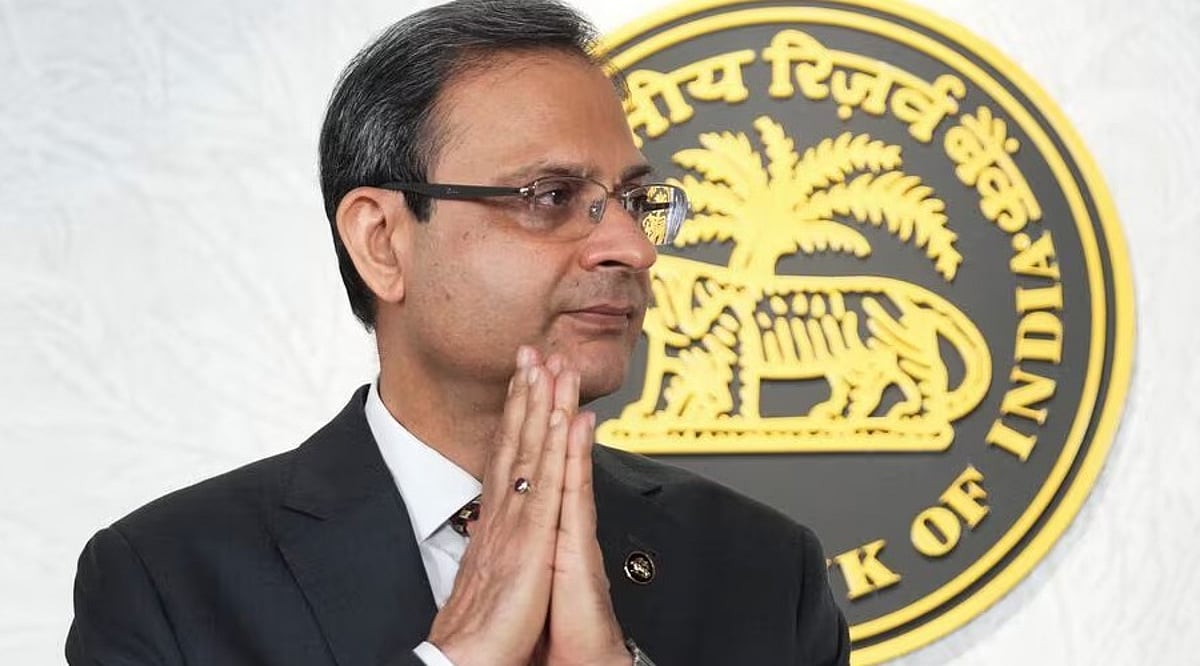
    The Reserve Bank of India (RBI) kept the repo rate unchanged at 5.25% during its August Monetary Policy Committee (MPC) meeting, signaling a cautious approach as inflation eases and global economic uncertainties persist. The central bank also maintained a neutral stance, indicating that future policy moves will depend on incoming data rather than a predetermined path.

    Governor Sanjay Malhotra noted that inflation remains within the RBI’s target range, while domestic growth continues to show resilience despite external risks. The policy aims to balance price stability with sustained economic growth amid ongoing global trade and geopolitical tensions.

    Inflation Forecast Lowered, Growth Outlook Maintained

    A key announcement was the RBI’s revised inflation outlook. The MPC lowered its FY27 CPI inflation forecast by 10 basis points to 5%, while retaining its view that inflation will peak in the third quarter before gradually easing. The central bank projects CPI inflation at 4.7% in Q2, 5.9% in Q3, 5.5% in Q4, and 5.3% in the first quarter of FY28. Core inflation for FY27 is estimated at 4.3%, and core inflation excluding precious metals is expected to remain below 4.3% during the fiscal year.

    At the same time, the RBI retained its GDP growth projection at 6.7%, reflecting confidence in India’s economic momentum. Strong domestic demand, government capital expenditure, and improving rural consumption were highlighted as key growth drivers despite a mixed global environment.

    Liquidity Measures Continue to Support the Banking System

    The RBI reiterated its commitment to ensuring sufficient liquidity in the financial system while maintaining an orderly money market environment. The central bank stated it would use liquidity management measures as needed to keep short-term interest rates consistent with the policy rate. Credit growth remains steady, supported by robust demand from retail and business customers. Banking system strength and ample liquidity levels will help sustain borrowing in key sectors of the economy.

    Global Risks Remain a Key Concern

    While domestic factors appear positive, the RBI warned that global uncertainties continue to pose risks to India’s economy. Key risk factors identified include geopolitical uncertainty, commodity price fluctuations, and changing trade policies of major economies. Capital flow and exchange rate dynamics in light of the evolving global interest rate scenario are also being closely monitored.

    “There is a need for greater clarity to emerge, especially regarding inflation, its path and composition before taking any policy action. Any such action would also have to consider the need for recalibration of policy rates in line with the evolving growth-inflation dynamics, especially the normalisation of the underlying inflation from its benign levels seen hitherto,” Governor Malhotra stated.

    Deficient and uneven Southwest monsoon across the subcontinent was highlighted as a major risk to India’s economy.

    What It Means for Borrowers and Investors

    With the RBI’s decision to keep interest rates unchanged, there will be no immediate changes in rates for mortgages, auto loans, and business credit. For investors, the policy reinforces expectations of rate stability, though future actions will depend on inflation and economic data.

    Analysts believe equity markets may welcome the RBI’s balanced approach, while bond markets could remain sensitive to upcoming inflation readings and global central bank actions. Market participants will closely track inflation trends, festive-season demand, and external developments to gauge the timing of any future policy changes.

  • Visa Layoffs 2026: 2,600 Jobs Cut Globally as Company Shifts Focus to AI

    Visa Layoffs 2026: 2,600 Jobs Cut Globally as Company Shifts Focus to AI

    Visa has announced the elimination of 2,600 positions worldwide, representing approximately 7% of its global workforce, as part of a strategic pivot toward artificial intelligence. The layoffs, which began on July 29, primarily affect technology and product teams, with India—home to over 3,500 Visa employees across Bengaluru, Mumbai, Chennai, and Hyderabad—experiencing significant cuts.

    Employees in India reported receiving sudden layoff emails between 4 a.m. and 5 a.m., with one team losing 10 of its 28 members. Senior staff and managers were not spared. The company has not disclosed the exact number of Indian employees affected in this round, but the move underscores a broader trend of multinational corporations reallocating resources from traditional tech roles to AI-driven initiatives.

    CEO Ryan McInerney has emphasized the role of agentic AI systems that can perform tasks with minimal human intervention, signaling a shift in how Visa’s technology teams will operate. The company aims to reduce costs and redirect investments toward higher-growth areas, with AI at the center of its strategy.

    Former Visa employee Arnab Das shared his experience on X, stating, “My entire team at Visa just got laid off, including my manager.” He noted that his former manager had strong performance reviews and had owned a product from start to finish. The incident highlights growing anxiety among tech workers about AI’s impact on job security.

    The Visa India layoffs add to mounting concerns in the country’s technology sector, where companies like Oracle, Volkswagen, and others have also trimmed staff while increasing AI investments. The trend suggests that technology workers may need to acquire new skills as organizations reshape their workforces around automation and machine learning.

  • Pixel 11 Pro Fold Leak: Google’s HiLight Notification Light Could Make Checking Alerts Easier

    Pixel 11 Pro Fold Leak: Google’s HiLight Notification Light Could Make Checking Alerts Easier

    Google is expected to launch the Pixel 11 series later this month, and a fresh leak suggests the book-style Pixel 11 Pro Fold could ship with a new notification feature called HiLight.

    According to the leak, the rear-facing notification indicator previously rumored as Pixel Glow may officially be called HiLight. The feature is designed to keep users informed while their phone is lying face down.

    “When your smartphone is face down, HiLight discreetly illuminates when your favorite contacts call you, or you chat with Gemini,” the leak notes.

    What Is HiLight on the Pixel 11 Pro Fold?

    HiLight is expected to be a small notification light on the back of the Pixel 11 Pro Fold. It could glow softly for calls, messages, and Gemini interactions, giving users a quick way to see important alerts without lifting or unfolding the device.

    Why It Matters for Foldable Phones

    One of the common annoyances of foldable phones is having to unfold them just to check a notification. Over time, that extra step becomes tedious. An external notification light could fix that by offering a quick visual cue at a glance.

    It could also help preserve battery life, since the main display would not need to turn on as often. If HiLight works as described, it may become one of the most practical additions to the Pixel Fold lineup.

    Other Expected Pixel 11 Pro Fold Features

    • A faster Tensor chip with upgraded AI tools
    • An 8-inch Super Actua Flex display
    • Up to 24 hours of battery life
    • A redesigned rear camera module

    Google Hasn’t Confirmed HiLight Yet

    As with any leak, the details could change. Google has not officially confirmed HiLight, and the final product may differ from these reports. Still, if the rumor proves accurate, it could make the Pixel 11 Pro Fold more convenient for everyday use.

  • Coldcard Firmware Bug Led to $70M Bitcoin Heist, Researchers Say

    Coldcard Firmware Bug Led to $70M Bitcoin Heist, Researchers Say

    Galaxy Research has linked a firmware flaw in Coldcard hardware wallets to the theft of 1,082.65 Bitcoin, worth approximately $70 million. The coordinated withdrawals, which occurred across 1,196 addresses on July 30, took place within just 41 minutes, marking one of the largest reported hardware wallet incidents this year.

    Galaxy Tracks a Coordinated Bitcoin Theft

    Galaxy Research identified a consistent transaction pattern across the stolen funds, pointing to a single attacker behind the operation. However, the firm cautioned that the observed transfers may not include all exposed wallets. Other vulnerable addresses could remain inactive or be moved later. Blockchain records cannot distinguish between theft and a legitimate owner transfer when both use valid private keys, leaving the true extent of the breach uncertain.

    Coinkite Expands Warning Across Coldcard Models

    Coinkite initially warned owners of Coldcard Mk3 devices running firmware version 4.0.1, released in March 2021, that seeds created with the affected software could expose user funds. The company later widened the advisory to include selected firmware versions on Coldcard Mk4, Mk5, and Coldcard Q devices. Emergency updates were issued for every impacted model. Coinkite CEO Rodolfo Novak (NVK) accepted responsibility and apologized to customers, stating that the company’s internal review process failed to catch the defect before release.

    AI-Assisted Analysis Raises New Security Concerns

    Novak suggested that attackers may have discovered the flaw through artificial intelligence-assisted code analysis. Such tools can detect subtle weaknesses faster than traditional manual reviews, creating a growing challenge for software developers. While AI can help defenders inspect code, it also shortens the path from public release to exploitation.

    What Affected Users Should Do

    Coinkite urged affected users to take the following steps:

    • Install the latest firmware version.
    • Create new wallet seeds.
    • Move Bitcoin into new wallets after testing small transfers first.
    • Keep original backups until every transfer succeeds.

    Coldcard wallets store private keys offline, but firmware bugs, supply chain risks, and configuration errors can still create attack paths. Galaxy Research linked the July 30 theft to vulnerable Coldcard wallet seeds across affected firmware versions. Coinkite released emergency updates and told users to create fresh seeds, test new wallets, and transfer funds while keeping original backups until every move succeeds.

  • Steam Cyberpunk Fest 2026 Delivers Up to 90% Off on Cyberpunk 2077, Ninja Gaiden 4, and More

    Steam Cyberpunk Fest 2026 Delivers Up to 90% Off on Cyberpunk 2077, Ninja Gaiden 4, and More

    Steam has kicked off its Cyberpunk Fest, offering discounts of up to 90% on cyberpunk-themed PC games. The sale runs until August 10, giving players a limited window to grab both big-budget and indie titles at steep discounts.

    Featured games include Cyberpunk 2077, Ninja Gaiden 4, RoboCop: Rogue City, Watch Dogs: Legion, Killing Floor 3, and Dead as Disco. There are also several indie titles included in the promotion.

    Here are some of the standout deals:

    • Cyberpunk 2077 — now Rs. 899, down from around Rs. 3,000 (70% off)
    • Killing Floor 3 — now Rs. 800, down from Rs. 1,600 (50% off)
    • Ninja Gaiden 4 — now Rs. 3,299 (40% off)
    • MindsEye — 50% off
    • Ghostrunner — 70% off
    • Luna Abyss — 38% off
    • Dead as Disco — 20% off

    Steam regularly hosts themed sales like this to highlight a specific genre and help players discover games they may have missed. These events often bring older titles back into the spotlight alongside newer releases.

    For players who have been waiting to buy Cyberpunk 2077 or explore other cyberpunk-themed games, this is a good time to act. The discounts will only be available until the event ends, after which prices are expected to return to normal.

  • Pro-Crypto Fairshake-Backed Candidates Win Key Primaries in Michigan and Washington

    Pro-Crypto Fairshake-Backed Candidates Win Key Primaries in Michigan and Washington

    Fairshake-Backed Candidates Score Primary Wins

    Pro-crypto candidates advanced in Michigan and Washington primaries on Tuesday after industry-backed political groups spent hundreds of thousands of dollars supporting congressional campaigns across both parties.

    Huizenga Wins Michigan Republican Nomination

    Republican Rep. Bill Huizenga won his party’s nomination in Michigan, according to the AP elections portal. He will face Democratic Sen. Sean McCann in November. Defend American Jobs, Fairshake’s Republican-focused affiliate, gave Huizenga nearly $512,000, according to Tech Influence Watch. A16z, Winklevoss Capital, and Coinbase also supported his campaign.

    Huizenga has backed clearer federal rules for digital assets. During a March 2025 House hearing, he linked stablecoin legislation with maintaining the U.S. dollar’s reserve currency role.

    Four Fairshake-Backed Candidates Advance in Washington

    Democratic Reps. Suzan DelBene, Kim Schrier, and Marilyn Strickland also won their party primaries in Washington. Republican Amanda McKinney advanced in her district. Protect Progress, Fairshake’s Democratic-aligned affiliate, spent $113,120 for DelBene, $105,040 for Schrier, and $103,020 for Strickland. Defend American Jobs gave McKinney $506,917.

    The results extended Fairshake’s record of supporting candidates from both parties.

    Crypto Policy Remains Central to the Election Cycle

    Fairshake entered the 2026 midterms with $193 million, according to its January announcement. Coinbase and Andreessen Horowitz remain among the committee’s major financial supporters.

    The group previously supported Democratic Rep. Christian Menefee, who defeated longtime Rep. Al Green during a Texas primary runoff in May. Meanwhile, lawmakers continued negotiations over the CLARITY Act. Senate offices worked through committee language, ethics provisions, and anti-money laundering safeguards as Congress faced a crowded calendar.

    The Digital Chamber also arranged meetings between member companies and lawmakers. White House crypto adviser Patrick Witt and Sen. Bill Hagerty expressed optimism about further progress. Still, Senate Agriculture Committee Chairman John Boozman said many lawmakers were learning the proposal. He said that process complicated broader support because his committee controls major parts of the legislation.

    Conclusion

    Crypto-backed candidates advanced in Michigan and Washington after Fairshake affiliates spent heavily across party lines. Their victories came as Congress continued work on digital asset legislation, placing campaign funding and regulatory policy at the center of the 2026 election cycle.