Blog

  • India Proposes MDR on UPI Transactions Above Rs 2,000: What It Means for Users

    India Proposes MDR on UPI Transactions Above Rs 2,000: What It Means for Users

    India’s Unified Payments Interface (UPI) has transformed digital payments by offering free transactions, but it could soon see a major policy shift. The central government has proposed amendments to the Payment and Settlement Systems Act, 2007, allowing banks and payment service providers to charge a Merchant Discount Rate (MDR) on select UPI transactions in the future.

    The final decision is pending, but the proposal suggests an MDR of 0.25% to 0.4% for merchant UPI transactions above Rs 2,000, while person-to-person (P2P) transfers would remain free. Government officials have not set a timeline for implementation.

    Impact on High-Value Transactions

    MDR is a fee merchants pay to banks and payment service providers for processing digital payments. Unlike UPI, credit and debit card payments already include MDR, typically borne by the merchant rather than the customer.

    According to official estimates, only 5% of all UPI transactions exceed the proposed Rs 2,000 threshold. However, these high-value transactions account for nearly 65% of total transaction value, presenting a significant revenue opportunity for the payments ecosystem.

    UPI continues to grow rapidly, facilitating approximately 23.7 billion transactions worth Rs 29.9 lakh crore, cementing its status as one of the world’s largest real-time payment networks.

    An official explained the limited consumer impact: “Even if implemented, 95% of transactions will not face the merchant discount rate. Besides, not all businesses will pass on the fees, which will be a small amount.”

    Long-Term Industry Prospects

    Industry executives believe allowing a limited MDR on high-value merchant transactions could create a more sustainable business model for payment companies. Since UPI currently generates little direct transaction revenue, banks and payment providers argue that additional income would fund technology upgrades, improve payment infrastructure, and support future innovation.

    According to Jefferies’ analysis, merchant UPI transactions above Rs 2,000 represent roughly 67% of merchant payment value despite accounting for only about 4% of transaction volume. The brokerage estimates that introducing MDR for this segment could generate Rs 5,000 crore to Rs 10,000 crore in annual revenue for the digital payments industry, potentially benefiting companies like Paytm and Pine Labs.

    Industry sources expect the government to introduce a cap on the maximum fee charged. As one source noted, “Unlike credit cards, there is no funding cost involved, so it makes sense to have a ceiling once the costs are covered.”

    For now, the proposed amendment only creates the legal framework to enable MDR. The government has not confirmed whether merchant charges will be introduced, what the final rates will be, or when such a policy could take effect. Until then, UPI transactions remain free under the existing system.


  • Harvard Business School Online’s Data Science for Business Course: Build Data-Driven Decision Skills

    Harvard Business School Online’s Data Science for Business Course: Build Data-Driven Decision Skills

    The Data Science for Business course from Harvard Business School Online equips students with essential data science and analytical abilities. Through hands-on exercises and real-world case studies, participants learn to analyze datasets and apply predictive methods to make informed business decisions, bridging the gap between technical expertise and practical business needs.

    What You’ll Learn in This Course

    This course enables learners to:

    • Develop a strong foundation in data science tools, processes, and business applications.
    • Improve decision-making by interpreting datasets, metrics, and visualizations accurately.
    • Build data-driven frameworks, identify gaps, and generate actionable insights.
    • Understand regression models, prediction techniques, and data visualization concepts.
    • Gain basic exposure to coding environments like R to better understand data workflows.

    Accessibility and Value

    The 4-week online course requires 4 to 5 hours of study per week, allowing working professionals to create their own schedule. Priced at $1,600, the program provides a Certificate of Completion. Practical training methods combined with actual business cases teach learners how to use data for business decisions.

    Comprehensive Curriculum

    • Foundations of Data Science: Learn core principles, tools, and models that form the basis of data science in business environments.
    • Data Analysis and Visualization: Understand how to interpret datasets, build visual insights, and avoid common analytical mistakes.
    • Statistical and Predictive Techniques: Explore regression models, forecasting, and prediction methods used in real-world scenarios.
    • Data-Driven Decision Frameworks: Develop structured approaches to decision-making using data insights and hypothesis testing.
    • Practical Business Applications: Apply learning through real-world case studies across industries and business challenges.

    Eligibility Criteria

    The program is designed for both beginners and professionals without advanced technical expertise. It requires an interest in business decision-making, analytics, and data-driven strategies. Familiarity with spreadsheets and business tools is beneficial but not mandatory.

    What Makes This Course Stand Out?

    Harvard Business School Online offers an interactive, business-oriented data science program. Rather than simply using spreadsheets, participants learn to make practical decisions through data analysis. Real-world case studies and training on R software ensure immediate workplace applicability.

    Final Thoughts

    This course gives professionals the opportunity to enhance their data analysis skills and integrate data science techniques into business operations, resulting in effective, data-backed outcomes that can be clearly communicated.

  • ChatGPT Plans Compared: Free, Plus, Pro, or Team – Which Subscription Is Right for You in 2026?

    ChatGPT Plans Compared: Free, Plus, Pro, or Team – Which Subscription Is Right for You in 2026?

    ChatGPT offers four main plans in 2026, each tailored to a different type of user and budget. The Free plan provides a basic ChatGPT experience at no cost. Plus adds higher limits and extra features for daily users. Pro targets professionals who need maximum performance and larger usage limits. Team, part of OpenAI’s business offering, focuses on companies needing collaboration tools, shared workspaces, and admin controls.

    Every plan includes access to ChatGPT, but the experience varies by usage, available tools, and priority access. The right choice depends on your work style, daily usage, and collaboration needs.

    ChatGPT Free vs Plus vs Pro vs Team Comparison

    ChatGPT Free

    The Free plan works well for anyone who wants to explore ChatGPT without a subscription. It includes access to GPT models, web search, voice conversations, file uploads, image generation, memory, Canvas, and basic Deep Research. This plan handles everyday tasks such as writing, learning, quick research, and simple coding.

    The main limitation is strict usage caps. Heavy usage may lead to slower access during peak hours, and advanced reasoning tools are available in smaller amounts. New features also arrive later than on paid plans. Even with these limits, the Free plan offers strong value for students, beginners, and casual users.

    ChatGPT Plus

    ChatGPT Plus costs $20 per month and remains the most popular paid option. This plan offers much higher usage limits, faster response times, and priority access during peak traffic. It also unlocks advanced reasoning models, larger context windows, better memory, higher image generation limits, advanced voice features, and a larger Deep Research allowance.

    Daily work becomes smoother with fewer interruptions. Writers, developers, designers, researchers, freelancers, and office professionals often find enough power in this plan without a large monthly expense. OpenAI also releases many new features to Plus subscribers before they reach Free users, adding extra value throughout the year.

    ChatGPT Pro

    ChatGPT Pro costs $200 per month and targets people who depend on AI for demanding tasks. This plan offers the highest usage limits across ChatGPT. It provides top priority access to OpenAI’s most capable models, the largest Deep Research quota, advanced reasoning capacity, and support for long and complex tasks.

    Heavy research, detailed analysis, software development, large document reviews, and advanced workflows benefit from the extra computing resources. Startup founders, AI engineers, consultants, and research professionals gain the most value from this plan. Regular users may not notice enough difference to justify the higher price.

    ChatGPT Team (Business)

    ChatGPT Team focuses on companies that need collaboration tools, shared workspaces, and administrative controls. Pricing starts at around $25 per user per month with monthly billing, or around $20 per user per month with annual billing.

    This plan includes shared workspaces, shared GPTs, member management, central billing, organization memory, admin controls, and business privacy features. Company data stays outside model training by default. These features help teams manage projects, share knowledge, and keep work organized across departments.

    Which Plan Offers the Best Value?

    Every plan fits a different need. The Free plan gives excellent value for light usage and everyday tasks. Plus stands out as the best balance between price and features, delivering faster performance, generous limits, and access to advanced tools without a premium tag.

    Pro serves professionals who run demanding workloads daily and need the highest limits available. Team works best for businesses that need secure collaboration, centralized management, and shared access across multiple employees.

    Final Verdict

    ChatGPT offers a clear upgrade path in 2026. The Free plan covers everyday needs at no cost. Plus delivers the strongest overall value with faster performance, better tools, larger limits, and early feature access for only $20 per month. Pro targets advanced professionals who require maximum computing power and the highest usage limits. Team adds business-focused features that support collaboration, administration, and organizational security.

    The final decision depends on your daily workload, feature requirements, and budget. Most individual users receive the best balance of cost and capability from ChatGPT Plus. Professionals with intensive AI workflows benefit from Pro, while businesses gain the greatest advantage from Team through shared workspaces and centralized management.

    Frequently Asked Questions

    1. Which ChatGPT plan is best for most users?

    ChatGPT Plus is the best choice for most users as it combines advanced features, faster performance, and generous usage limits at an affordable monthly price.

    2. Is ChatGPT Free enough for everyday use?

    Yes. The Free plan is suitable for writing, learning, coding, web search, file uploads, and occasional AI assistance, though it has lower usage limits.

    3. Who should choose ChatGPT Pro?

    Pro is ideal for researchers, developers, consultants, founders, and power users who rely on ChatGPT daily and need the highest limits and priority access.

    4. What makes ChatGPT Team different?

    Team includes shared workspaces, centralized billing, admin controls, organization memory, and collaboration features designed for businesses and small teams.

    5. Is ChatGPT Plus worth $20 per month?

    For regular users, yes. It provides faster responses, higher usage limits, access to advanced models, better voice and image features, and early access to new capabilities.

  • How to Select the Best Cryptocurrency Exchange in 2026: Key Factors for Secure Trading

    How to Select the Best Cryptocurrency Exchange in 2026: Key Factors for Secure Trading

    Cryptocurrency adoption continues to expand globally, and selecting the right exchange is more critical than ever. Despite ongoing regulatory uncertainty and market fluctuations, India remains one of the fastest-growing markets for crypto trading. According to CoinMarketCap Research, centralized exchanges recorded approximately $4.74 trillion in trading volume in June 2026, highlighting the sector’s immense scale.

    Choosing an ideal cryptocurrency exchange involves more than just comparing trading fees. Key factors include security, regulatory compliance, liquidity, and the ability to safely store and transfer digital assets.

    Prioritize Regulation and Compliance

    The first checkpoint should always be regulatory compliance. Investors must opt for exchanges that adhere to Know Your Customer (KYC) and Anti-Money Laundering (AML) guidelines. In India, exchanges registered with the Financial Intelligence Unit (FIU-IND) offer an extra layer of compliance under local anti-money laundering laws. Leading global exchanges are also obtaining licenses to enhance investor protection through frameworks like Europe’s Markets in Crypto-Assets (MiCA) regulation.

    Evaluate Security Infrastructure

    Security is the most significant differentiator among exchanges. When opening an account, check whether the platform provides:

    • Two-factor authentication (2FA)
    • Cold storage for customer assets
    • Withdrawal whitelist protection
    • Proof of Reserves (PoR)
    • Independent security audits
    • Insurance mechanisms for certain digital assets

    After major exchange failures, Proof of Reserves has become essential, as it allows users to verify that customer assets are fully backed.

    Compare Liquidity and Trading Costs

    High liquidity enables investors to execute trades with minimal price slippage, especially during volatile market conditions. Larger exchanges typically offer tighter spreads, deeper order books, and faster execution. Investors should compare:

    • Spot trading fees
    • Deposit and withdrawal charges
    • Futures funding costs
    • INR or fiat deposit availability
    • Supported payment methods

    While low fees are appealing, they should not be the sole criterion—security and liquidity are equally important.

    Asset Selection and Features

    Investors have varying needs. Beginners may only require Bitcoin and Ethereum, while advanced traders seek features like staking, perpetual futures, margin trading, recurring buys, or institutional custody. Choose an exchange that aligns with your investment strategy rather than one with the largest token list.

    Also Read: BitMart Announces Crypto Exchange Shutdown as BMX Crashes 81%

    Customer Support and Transparency

    Customer support is crucial, particularly during market volatility. Select exchanges that regularly share system status updates, publish clear reserve reports, disclose regulatory licenses, and respond promptly to user complaints. Review uptime history, incident reports, and community feedback to gauge reliability.

    Why This Matters

    With global trading volumes hitting trillions and adoption surging across India, choosing a regulated and secure exchange safeguards your capital against market volatility, cyber threats, and sudden exchange failures in an evolving regulatory environment.

    Final Thoughts

    When selecting the best cryptocurrency exchange in 2026, consider security, compliance, liquidity, and user-friendliness. Despite a strict tax regime, India remains a top country for grassroots crypto adoption. While low trading fees may seem attractive, they should not be the deciding factor. Prioritize platforms with strong reputations, robust regulation, solid security measures, and transparency for long-term success.

    FAQs

    1. What is the most important factor when choosing a cryptocurrency exchange?

    Security should be the top priority. Choose an exchange with two-factor authentication (2FA), cold storage, Proof of Reserves, and a strong history of protecting customer assets.

    2. Are FIU-registered crypto exchanges safer in India?

    FIU-registered exchanges comply with India’s anti-money laundering regulations and KYC requirements. While registration doesn’t eliminate risk, it adds an extra layer of regulatory oversight.

    3. Why does liquidity matter on a crypto exchange?

    High liquidity allows trades to be executed faster with lower price slippage, especially during high market volatility or when placing large orders.

    4. Should beginners use exchanges with hundreds of cryptocurrencies?

    Not necessarily. Beginners often benefit more from exchanges offering major cryptocurrencies like Bitcoin and Ethereum, along with an easy-to-use interface and strong educational resources.

    5. Is the lowest trading fee always the best option?

    No. Low fees are beneficial, but security, regulatory compliance, transparency, liquidity, and reliable customer support are often more important for long-term investing success.

  • Vivo S2 India Launch: Expected Price, Specs, Design, and Everything You Need to Know

    Vivo S2 India Launch: Expected Price, Specs, Design, and Everything You Need to Know

    Vivo has confirmed the launch date of the Vivo S2 in India. The new smartphone will arrive on August 6, 2026, at 12 PM IST. This launch marks the return of the Vivo S series to the Indian market after a long gap. The company has already shared official teasers that reveal the phone’s design and some key highlights.

    Several trusted reports have also revealed important details about the hardware, software, and camera setup. The Vivo S2 aims to attract buyers who want a stylish smartphone with modern features and reliable performance in the premium mid-range segment.

    Expected Price in India

    Vivo has not announced the official price yet. Current reports suggest that the Vivo S2 may start between Rs. 35,000 and Rs. 40,000 for the base model with 8GB RAM and 128GB storage. A second variant with 8GB RAM and 256GB storage may carry a higher price tag. The final price, launch offers, and bank discounts will become official during the launch event.

    Premium Design with Curved Display

    The teaser images reveal the slim and sophisticated design of the phone. The phone has a curved display that gives it a premium look. The back panel has a shiny finish that reflects light from various angles. The phone has a pill-shaped camera layout that contains dual rear cameras and the Aura Light. The company has also revealed color options for the Indian market, namely Black and White. The overall design looks to be minimalist that suits the trends in smartphones today.

    MediaTek Chipset and Android 16

    The smartphone may run on the MediaTek Dimensity 7360 Turbo processor. This chipset promises reliable speed for everyday work, gaming, and multitasking. The expected 8GB RAM should allow users to run multiple apps smoothly. Storage options may include 128GB and 256GB variants for different user needs. Vivo will likely ship the device with Android 16 and the latest version of Funtouch OS. The software may include new AI features along with performance improvements and system enhancements.

    Camera Focus Stays on Portrait Photography

    Photography remains one of the biggest highlights of the Vivo S2. Reports suggest that the phone will feature a 50MP Sony IMX852 primary camera with Optical Image Stabilisation. A 2MP secondary sensor will assist with portrait shots. Vivo will also include its Aura Light, which helps capture brighter and more natural portraits in different lighting conditions. The front may carry a 32MP selfie camera that aims to deliver detailed selfies and clear video calls. AI camera features and night photography modes are also expected to become part of the package.

    Massive Battery Adds Long-Lasting Power

    The Vivo S2 has an impressive battery capacity. It boasts a massive 7,050mAh battery, which is one of the biggest batteries available in its segment. This battery ensures uninterrupted entertainment, gaming, social media, and work for long periods of time without needing to charge often. Also, Vivo is expected to introduce a 44W fast charging feature. This means users will be able to charge their device quickly.

    Strong Build with Modern Features

    The Vivo S2 may arrive with IP68 and IP69 ratings for water and dust resistance. These ratings suggest better protection during everyday use. The smartphone will also support 5G connectivity for faster mobile networks. Combined with the new processor and updated software, the phone aims to deliver a balanced experience across performance, connectivity, and durability. The expected hardware makes the Vivo S2 a strong option for users who value both style and practical features.

    Competition in the Premium Mid-Range Segment

    Vivo S2 is all set to be released in a highly competitive market. Multiple brands provide powerful smartphones in this price range. Vivo wants to distinguish itself via its premium curved display, large battery, camera system focused on portrait photography, stylish design, and new software. These features create a combination that is attractive for consumers who need both style and reliable performance in daily use. The company also aims to strengthen its presence in the Indian smartphone market with the new S series.

    Final Thoughts

    Many important details remain under wraps. Vivo has not confirmed the final India price, complete storage lineup, sale date, or launch offers. The company will reveal every remaining detail during the official launch event on August 6, 2026. Until then, the available information suggests that the Vivo S2 will arrive with a premium design, capable cameras, a powerful chipset, a large battery, and a high-quality display. These features place the smartphone among the most anticipated launches in India’s premium mid-range smartphone category.

    FAQs

    1. When will the Vivo S2 launch in India?

    The Vivo S2 is scheduled to launch in India on August 6, 2026, at 12 PM IST, marking the return of Vivo’s popular S series to the domestic market.

    2. What is the expected price of the Vivo S2 in India?

    The Vivo S2 is expected to start between Rs. 35,000 and Rs. 40,000 in India for the base model, positioning it directly within the competitive premium mid-range smartphone segment.

    3. Which processor powers the Vivo S2?

    The device is expected to feature the MediaTek Dimensity 7360 Turbo processor paired with 8GB RAM, offering reliable overall speed, smooth multitasking, and decent gaming performance.

    4. What are the camera specifications of the Vivo S2?

    It features a 50MP Sony IMX852 primary sensor with OIS, a 2MP portrait lens, Vivo’s signature Aura Light, and a 32MP front camera for detailed selfies.

    5. What is the battery capacity of the Vivo S2?

    The Vivo S2 comes equipped with an impressive 7,050mAh battery for extended power alongside 44W fast charging support, keeping the overall design surprisingly sleek and comfortable to hold.

  • Publicis Sapient: Leading Digital Business Transformation Through Strategy, Creativity, and Technology

    Publicis Sapient: Leading Digital Business Transformation Through Strategy, Creativity, and Technology

    Company Overview

    Publicis Sapient is a dynamic digital business transformation partner within Publicis Groupe, renowned for blending strategy, creativity, and technology. The company empowers organizations to evolve, embrace innovation, and deliver meaningful customer experiences through agile thinking, modern engineering, and intelligent, data-driven solutions in a rapidly changing digital world.

    About the Company

    Publicis Sapient operates as a digital business transformation company focused on helping organizations navigate change and maintain competitiveness. The firm leverages three core business areas—strategy development, product creation, and engineering—to develop solutions that meet current market needs and customer requirements. Its comprehensive approach includes enterprise AI, digital transformation, and legacy system modernization, serving industries such as retail, financial services, automotive, energy, and travel. By building flexible data-driven platforms, Publicis Sapient enables businesses to transform operations while enhancing customer experiences and supporting ongoing expansion.

    Products and Services

    Publicis Sapient offers a wide range of solutions, including:

    • AI platforms and enterprise AI
    • Legacy modernization
    • Content supply chain automation
    • Customer engagement and experience transformation
    • Digital commerce and platform development
    • Data engineering and AI-powered managed services

    These offerings help enterprises scale operations, personalize interactions, and accelerate global product launches efficiently.

    Core Leadership Team

    The company is led by a team of experienced executives who guide its strategic vision and operational excellence. While specific names are not detailed in this profile, the leadership comprises professionals from diverse backgrounds in technology, consulting, and business transformation.

    Revenue Streams

    Publicis Sapient generates revenue through multiple channels:

    • Digital transformation consulting
    • Experience design and data engineering
    • AI-powered managed services
    • Platform development and retail media solutions
    • Outcome-based pricing models
    • Extended enterprise technology partnerships

    These services are offered to clients worldwide, ensuring a diversified and sustainable revenue base.

    Client Segments and Target Market

    Client Segments: Publicis Sapient provides digital transformation, AI platforms, consulting, and engineering services to global enterprises.

    Target Companies: Large enterprises and multinational corporations seeking scalable digital solutions, modernization, and AI-driven business transformation initiatives.

    Target Geography: The company operates globally across North America, Europe, Asia-Pacific, and emerging markets, delivering localized scalable digital solutions.

    Social Media and Contact

    For more information, visit Publicis Sapient’s official website or follow them on LinkedIn.

  • iDenfy Launches Standalone Selfie-Based Age Estimation Tool for Faster Onboarding

    iDenfy Launches Standalone Selfie-Based Age Estimation Tool for Faster Onboarding

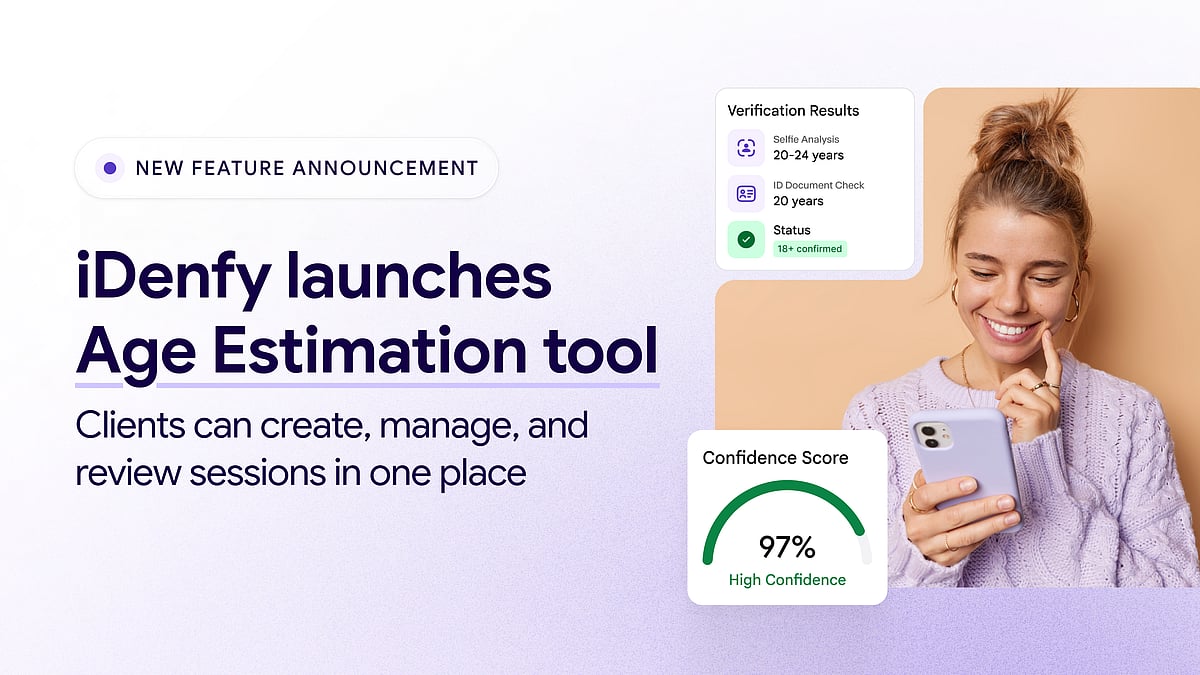
    iDenfy, a global RegTech platform specializing in identity verification and fraud prevention, has announced a significant upgrade to its age verification platform with the introduction of a new Age Estimation tool. This feature allows businesses to estimate a user’s age using a real-time selfie, eliminating the need for an ID document upload in many cases.

    How the Age Estimation Tool Works

    Traditionally, iDenfy’s age verification required users to upload a government-issued ID. With the new Age Estimation add-on, users can simply capture a selfie, and the system analyzes facial features to estimate age within a three-year accuracy gap. Businesses can set a configurable age limit and buffer zone. Users clearly above the threshold pass instantly; those near the limit are automatically routed to a certified ID document check within the same session for final verification.

    Standalone Product with Dedicated Infrastructure

    Unlike a bundled feature, iDenfy has built Age Estimation as a standalone product with its own permission structure, billing model, and API endpoints. This means partners who only need age estimation checks can access it without adopting the full identity verification stack. The dedicated dashboard provides a centralized view of sessions, token generation, and detailed session pages, supported by custom settings and verification URLs.

    Benefits for Businesses and Compliance

    Validated age data reduces the risk of underage access to restricted products while minimizing personal data collection. Because most users pass with just a selfie, companies avoid requiring government IDs from their entire user base. This supports compliance with regulations such as the UK Online Safety Act, EU Digital Services Act, GDPR, and emerging state-level laws in the US and Australia’s under-16 social media restrictions.

    Domantas Ciulde, CEO of iDenfy, commented: “Age estimation only works if the people using it can actually see what’s happening inside each session. We improved our product against disguises such as makeup or a moustache to precisely estimate people’s age and brought it into the dashboard with its own sessions list and detailed view.”

    He added: “Centralizing session creation and results in one dashboard view might sound like a small operational detail, but for partners that run age checks at scale, it removes a lot of manual tracking that used to happen outside our platform.”

    Availability

    The Age Estimation dashboard module is now available to iDenfy partners, who can integrate via API or Dashboard with 24/7 support. For more information, visit iDenfy’s age verification service page.

  • Bitcoin Slides to $62,567 as Sellers Tighten Grip on Market

    Bitcoin Slides to $62,567 as Sellers Tighten Grip on Market

    Bitcoin continued its slide on August 3, 2026, trading near $62,567 after failing to hold onto recent gains. The world’s largest cryptocurrency faced renewed selling pressure, pushing it below key support levels and reinforcing bearish sentiment across the crypto market.

    Key Takeaways

    • Bitcoin remains under pressure after losing support near $63,000.
    • RSI signals oversold conditions, but no confirmed reversal has emerged.
    • Support near $62,500 remains critical for the next price move.

    Market Overview

    Earlier in the session, Bitcoin reached an intraday high close to $63,725 before sellers stepped in and erased those gains. The price later slipped below several nearby support levels and closed near the day’s low, reflecting steady bearish control. The wider crypto market also showed signs of weakness, with fresh caution across global financial markets and uncertainty around future interest rate decisions keeping traders defensive. Recent outflows from spot Bitcoin exchange-traded funds reduced buying support, while large liquidations added pressure across digital assets. Market experts also noted that August often delivers weaker performance for Bitcoin, adding another layer of caution.

    Technical Analysis: Clear Downtrend

    The latest five-minute chart presented a well-defined bearish trend. Bitcoin failed to hold its rally after touching $63,725, then formed a series of lower highs at $63,527, $63,201, and $62,913. This sequence reflected fading buying strength after every recovery attempt. Lower lows also appeared throughout the session, with every fresh decline pushing the price beneath previous support areas, confirming strong selling momentum.

    RSI Signals Oversold Conditions

    The Relative Strength Index (RSI) dropped to 27.5, while its moving average stood near 35.7. An RSI value below 30 often signals oversold conditions, meaning the recent decline was rapid. However, strong downtrends can keep the RSI below 30 for an extended period. Traders typically look for stronger confirmation before expecting a sustained recovery, and the latest chart did not show clear evidence that buyers had regained control.

    Volume Supports Bearish Trend

    Trading volume also supported the current trend. Several large red candles appeared alongside higher-than-average trading activity, suggesting active selling rather than a simple lack of buying interest. Heavy volume during a price decline often reflects strong conviction among sellers. Until buying volume returns with similar strength, the market may continue to struggle near current levels.

    Key Support and Resistance Levels

    Bitcoin’s current trading range places it close to an important support level between $62,550 and $62,600. A break below this support could trigger a move toward the next support zone at $62,400, followed by $62,250 and the ultimate psychological level at $62,000. On the upside, immediate resistance lies around $62,700, with the next significant levels at $62,900, $63,200, and the major resistance zone between $63,500 and $63,700.

    Bullish Recovery Needs Strong Confirmation

    A bullish recovery remains possible, but buyers need several positive signals. First, stable price action above $62,500 must hold. Then, a higher low would suggest selling pressure is weakening. Finally, Bitcoin needs a move above $62,900 and a successful break above $63,200 with healthy trading volume. Those developments would improve confidence and shift the short-term outlook toward a more balanced market.

    Bears Continue to Hold the Advantage

    Bearish pressure remains solid. If Bitcoin falls below $62,500, another wave of selling may emerge, with the nearest downside target near $62,250 and possibly $62,000. The overall market structure favors sellers: lower highs, lower lows, heavy selling volume, and unsatisfactory recovery attempts suggest the current trend is likely to continue. Traders are watching global economic events, Bitcoin ETF flows, and investor sentiment. As long as Bitcoin remains below the crucial resistance of $64,000, significant short-term price moves are unlikely.

    FAQs

    What is the current Bitcoin price?

    Bitcoin traded around $62,567 during the latest session.

    Why did Bitcoin decline?

    Risk-off market sentiment, ETF outflows, liquidations, and interest rate uncertainty weighed on prices.

    What is the key support level for Bitcoin?

    The immediate support zone lies between $62,550 and $62,600, followed by $62,400 and $62,000.

    What does the RSI indicate?

    The RSI stands near 27.5, signaling oversold conditions but not confirming a price reversal.

    What resistance must Bitcoin overcome?

    Bitcoin needs to reclaim $62,900, $63,200, and eventually the $63,500–$63,700 zone to improve short-term sentiment.

    Disclaimer: This article is for informational purposes only and does not constitute investment advice. Cryptocurrency investments carry risk. Always conduct your own research before making any investment decisions.

  • Beyond Cars: Surprising Tesla Innovations You Didn’t Know About

    Beyond Cars: Surprising Tesla Innovations You Didn’t Know About

    Tesla is widely known as a trailblazer in the electric vehicle (EV) market, but the company’s ambitions stretch far beyond cars. From energy storage to robotics and artificial intelligence, Tesla is quietly building a portfolio of products that could reshape multiple industries. Here’s a look at some of the most surprising things Tesla makes that aren’t electric vehicles.

    Tesla Energy Products

    Tesla’s energy division is a major part of its business. The company produces solar panels, the Solar Roof (a roofing material with integrated solar cells), the Powerwall (a home battery), and the Megapack (a utility-scale battery system). These products allow homes, businesses, and utilities to generate, store, and manage renewable energy, reducing reliance on fossil fuels.

    Optimus Humanoid Robot

    First unveiled in 2021, the Tesla Optimus humanoid robot is designed to handle repetitive, dangerous, or physically demanding tasks. Currently being tested inside Tesla factories, Optimus is envisioned for future roles in warehouses, manufacturing, logistics, and even household chores. It represents Tesla’s push into advanced robotics and automation.

    Dojo AI Supercomputer

    Dojo is Tesla’s custom-built supercomputer, purpose-designed to train the neural networks behind its Full Self-Driving (FSD) technology. Instead of relying on third-party hardware like Nvidia GPUs, Dojo uses Tesla’s own D1 chips to process massive amounts of video data efficiently. This specialized architecture accelerates AI model training and gives Tesla greater control over its autonomous driving development.

    Tesla AI Chips

    Tesla designs its own artificial intelligence chips for use in its vehicles. These custom processors handle billions of calculations per second to power features like Autopilot and Full Self-Driving. By developing proprietary silicon, Tesla reduces dependency on external suppliers and optimizes performance for its specific needs.

    Tesla Supercharger Network

    While originally built exclusively for Tesla vehicles, the Supercharger network has evolved into a standalone infrastructure business. Tesla designs, manufactures, installs, and operates thousands of fast-charging stations worldwide. In many regions, non-Tesla EVs can now use Superchargers via compatible connectors, making the network a vital part of the broader EV ecosystem.

    Tesla Solar Roof

    The Solar Roof is a premium product that replaces traditional roofing materials with durable glass tiles that generate electricity. Unlike bulky solar panels mounted on top of an existing roof, the Solar Roof blends seamlessly with the home’s design. It allows homeowners to produce renewable energy without compromising aesthetics.

    Megapack Grid Batteries

    Megapack is Tesla’s large-scale energy storage solution for utility companies and commercial projects. These massive batteries store energy from renewable sources like solar and wind farms, then discharge it when demand is high. Utilities around the world use Megapacks to stabilize the grid, prevent blackouts, and support the transition to cleaner energy.

    Tesla’s ventures into energy, robotics, AI, and infrastructure show that the company is far more than an automaker. These innovations highlight a broader mission to accelerate the world’s transition to sustainable energy and intelligent automation.

  • The Complete Guide to Automated UI Testing: Benefits, Tools, and Best Practices

    The Complete Guide to Automated UI Testing: Benefits, Tools, and Best Practices

    Automated UI testing uses scripts to verify that an application’s interface functions correctly, replacing manual clicking through screens. This approach saves the most time on repetitive tests such as login, checkout, and navigation. Manual testing remains superior for brand-new features and scenarios requiring human judgment. Common challenges include flaky tests and broken locators. Leading tools like Selenium, Cypress, and Playwright cover most needs, while AI-based platforms are closing the maintenance gap.

    What Is Automated UI Testing?

    Automated UI testing checks that an app’s interface behaves as expected without manual intervention. A script performs actions like clicking buttons, filling forms, and navigating screens, then compares the result against the expected outcome. This process covers layout, navigation, and cross-browser behavior, catching bugs early before they reach users.

    Automated vs Manual Testing: Which One to Use

    Rather than an either-or choice, teams should split tasks by nature. Manual testing involves a person checking the app step by step—slow but capable of catching subtle issues that scripts miss, such as a feature that works technically but feels off. Automated testing replaces that person with a script that runs the same steps every time, delivering a pass or fail against predefined expectations. A simple rule: if a test will run more than three times, automate it. If it requires human judgment, keep it manual regardless of frequency.

    Why Teams Move to Automation

    Teams typically automate after a specific trigger: a bug slips into production that testing should have caught, or regression checks before release consume two to three days per sprint. Common patterns include weekly or faster releases where manual checks don’t fit the schedule, developers waiting on QA sign-off, the same 50 test flows checked by hand every week, testing covering more than three browsers or devices, and headcount unable to keep up with the app’s surface area.

    Benefits of Automated UI Testing

    Once tests are in place, benefits appear quickly. A 200-test suite that took three days manually can run in under 20 minutes through CI. Teams shipping weekly can accelerate to daily releases. Bugs are caught earlier because tests run on every code push, not just before release. Early bug detection costs far less to fix than production issues. Cross-browser coverage improves: checking Chrome, Firefox, Safari, and Edge across five device sizes manually requires 20 separate checks, but automated testing handles all in one run.

    Common Challenges Teams Run Into

    Automation isn’t problem-free. Flaky tests—passing once and failing the next time with no code changes—usually stem from timing issues where a page element loads slower than expected. Brittle locators based on page position or auto-generated IDs break when the layout changes; using stable identifiers like data-testid attributes resolves most issues. Maintenance load increases when a shared component change breaks every test that touches it—a quick fix for 50 tests but potentially a full week for 500.

    Types of Automated UI Tests

    A solid testing setup mixes several types based on risk and usage frequency: functional testing (e.g., adding an item to a cart), cross-browser testing across Chrome, Firefox, Safari, and Edge, end-to-end testing covering full user journeys from sign-up to checkout, visual regression testing comparing screenshots against a baseline to catch layout breaks, and accessibility testing for keyboard navigation, screen reader support, and color contrast.

    Best Practices for Reliable Automation

    Teams with stable test suites follow these habits: start with stable, high-traffic flows like login, checkout, and core navigation; skip anything still being redesigned. Keep every test independent—each sets up and cleans up its own data so no test depends on another. Use data-testid attributes for locators instead of CSS classes or page positions; they survive redesigns and refactors. Run tests in parallel: a 200-test suite that takes 40 minutes sequentially can finish in about 8 minutes in parallel. Review tests whenever the UI changes, building it into the design handoff rather than as an afterthought.

    Common Mistakes to Avoid

    Automating everything at once often backfires, creating hundreds of fragile tests that become a maintenance burden nobody wants. Start with 20 high-value tests and grow from there. Skipping mobile is another gap—over half of web traffic is mobile, and touch behavior requires its own coverage. Testing only the happy path misses where real bugs hide: error states, validation failures, and slow networks.

    Conclusion

    Automated UI testing is fundamentally a maintenance problem. Tests written today must survive redesigns, framework upgrades, and new features for months or years. Teams that succeed treat their test suite like product code: stable locators, isolated test data, and a review step built into every sprint. The tools are mature; what separates successful teams is consistency, not the tool they choose.

    FAQs

    What is Automated UI Testing? It’s the practice of using scripts to test an app’s interface instead of manual clicking. The script simulates real actions and checks results immediately.

    Why is UI automation testing important? It catches bugs earlier, before production, and turns a three-day manual regression check into a run that finishes in minutes.

    Which tool is best? It depends on the stack. Cypress fits React and Vue apps well. Selenium covers almost any browser or language. Appium is built for mobile.

    Is Selenium still relevant? Yes. It remains one of the most used tools for web UI testing, supporting Java, Python, C#, and JavaScript across major browsers, though it requires more setup and upkeep than newer tools.

    Playwright or Cypress? Playwright covers multiple browsers from one API, ideal for broad cross-browser coverage. Cypress is built for fast feedback on modern JavaScript apps like React and Vue.

    What is a flaky test? A test that passes once and fails the next time with no code changes, usually caused by timing issues like checking for an element before the page finishes loading.

    Can AI automate UI testing? Yes. AI-based tools can generate test cases from product requirements or screen recordings, run them in CI/CD, and update locators automatically when the UI changes.

    What is the difference between UI and API testing? An API test calls the backend directly. A UI test drives the same flow through the browser like a real user, checking what the user actually sees.

    How often should UI tests run? For high-value flows like login and checkout, run on every code push or pull request to flag bugs the moment they’re introduced.

    Is UI automation expensive? There’s a real setup cost for writing and maintaining scripts, but once in place, they run for free. A team spending two days a month on manual regression can cut that to about 20 minutes with automation.