Blog

  • Redington Shares Surge to Record High on Strong Apple Sales and Q1 Profit Jump

    Redington Shares Surge to Record High on Strong Apple Sales and Q1 Profit Jump

    Redington shares hit a record high on August 3 after the company reported outstanding Q1 FY27 results, driven by robust Apple sales in India and strong performance across multiple technology segments. The stock surged 7.6% to Rs. 346.20 on the NSE during Monday’s trading session, extending a five-session rally of 23%.

    The company posted its highest-ever quarterly revenue of Rs. 34,966 crore, a 34% year-over-year increase. Profit after tax soared 77% to Rs. 486 crore, significantly outpacing revenue growth. India operations were a standout, with revenue climbing 63% and profit rising 60% during the quarter.

    Redington attributed its India growth to large enterprise deals, stronger PC sales, premium smartphone demand, cloud services, and cybersecurity solutions. As a major Apple distributor in the region, the company benefited directly from Apple’s strong performance in India.

    Apple reported June quarter revenue of $109.4 billion, up 16% year over year, with India among the markets recording double-digit growth. IDC India analyst Navkendar Singh noted that Apple’s India business still has a “long runway” as more consumers enter the market, supported by wider retail access, financing options, and local iPhone production.

    International operations also contributed to Redington’s strong quarter. Revenue across the Middle East and Africa rose 15% year over year, driven by demand for cloud services and cybersecurity.

    V S Hariharan, Managing Director and Group CEO, commented that Redington began FY27 with its “highest-ever quarterly revenue and profit,” highlighting stronger demand across technology distribution and profit growth that outpaced revenue expansion.

    The combination of record Q1 results and Apple sales momentum has emerged as the key catalyst behind Redington shares reaching new highs.

  • Alibaba Introduces Qwen3.8 Max: A 2.4-Trillion-Parameter AI Challenger to Anthropic

    Alibaba Introduces Qwen3.8 Max: A 2.4-Trillion-Parameter AI Challenger to Anthropic

    Alibaba has officially unveiled Qwen3.8 Max, its largest and most advanced AI model to date. Announced on August 3, the 2.4-trillion-parameter model marks a major escalation in China’s rapidly intensifying artificial intelligence race and directly challenges Western rivals such as Anthropic.

    A Multimodal Powerhouse

    Qwen3.8 Max is built to handle text, images, videos, and other large files through its multimodal capabilities. According to Alibaba, the model can process up to one million tokens in a single context window, making it well-suited for complex, long-form tasks. The company also reports strong performance in coding, noting that the system independently completed a software project during a 16-day internal test.

    Efficiency Through Sparse Activation

    Alibaba designed Qwen3.8 Max with a sparse architecture that activates only a portion of the model’s parameters for each task. This approach helps reduce computing costs while maintaining high performance, a key consideration as AI models grow ever larger.

    Open Weights on the Horizon

    In a move that could accelerate adoption, Alibaba plans to release Qwen3.8 Max’s weights publicly during the week starting August 10. Open access will allow developers worldwide to download, modify, and build new applications on top of the model, potentially expanding its ecosystem significantly.

    Industry Reaction

    Analysts view the launch as a sign of China’s accelerating AI progress. Ling Vey-Sern, managing director at Union Bancaire Privee, noted, “The gap is probably much closer, and narrowing fast.”

    A More Competitive AI Landscape

    The release intensifies pressure on Anthropic, OpenAI, and other major AI companies. Alibaba also faces stiff competition at home from firms such as Moonshot AI, DeepSeek, Z.ai, and ByteDance. With Qwen3.8 Max, Alibaba is positioning itself as a serious contender in both the Chinese and global AI arenas.

  • Apple MacBook Air Hit by Supply Shortage as AI Memory Chip Demand Rises

    Apple MacBook Air Hit by Supply Shortage as AI Memory Chip Demand Rises

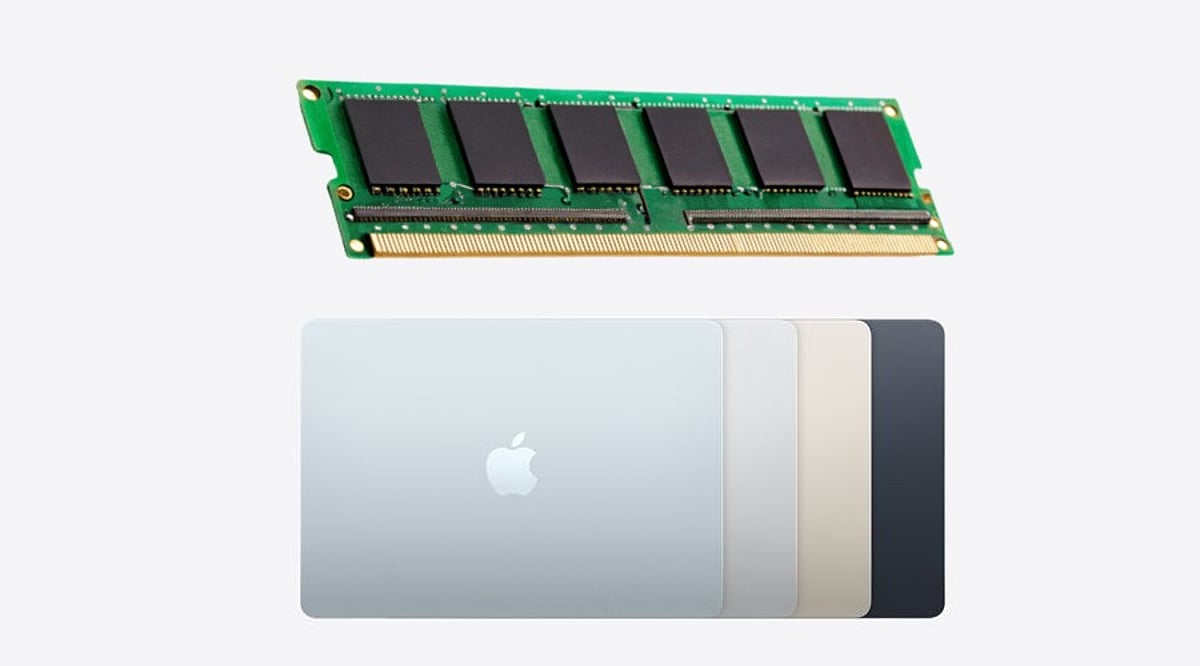
    A new report indicates that Apple is facing supply constraints for its popular MacBook Air due to a global memory chip shortage, which could delay deliveries in several markets.

    According to Bloomberg, the rising demand for memory chips from artificial intelligence companies is straining Apple’s supply chain. Mark Gurman reported that the MacBook Air is now affected, though Apple previously faced similar issues with less popular models like the Mac mini and Mac Studio.

    Customers ordering the MacBook Air through Apple’s official website are now seeing delivery dates pushed into the second half of August. Some configurations may require even longer waiting periods. While Apple has not officially confirmed the shortage, the report notes that the company is directing customers toward the MacBook Pro on its website and in retail stores. Some users have also encountered a disclaimer stating, “MacBook Air subject to availability.”

    Could the Shortage Benefit Windows Laptop Makers?

    Limited availability of MacBook Air models could create an opportunity for Windows laptop brands such as Dell, HP, Lenovo, and Asus, which already offer thin and light competitors. If MacBook Air units become harder to buy, some customers may choose those alternatives instead of waiting.

    However, Windows manufacturers may not be entirely safe. If the memory shortage worsens, they could also face production problems. The company that manages its supply chain more effectively may gain an advantage in the coming months.

    A Reminder That Hardware Still Matters

    The reported MacBook Air shortage underscores how a single missing component can disrupt an entire product line. Even the largest tech companies depend on a steady flow of parts. For Apple, keeping the MacBook Air readily available on store shelves will be crucial as competition in the laptop market continues to intensify.

  • Indian Stock Market Timings Updated: F&O Trading Now Ends at 3:40 PM

    Indian Stock Market Timings Updated: F&O Trading Now Ends at 3:40 PM

    The Indian stock market saw a significant change in trading timings on August 3, as the National Stock Exchange (NSE) and the Bombay Stock Exchange (BSE) introduced new rules for Futures & Options (F&O) trading. Under the updated schedule, F&O trading now concludes at 3:40 PM instead of the previous 3:30 PM.

    The exchanges have also launched a Closing Auction Session for stocks with F&O contracts. This new session is designed to improve price discovery by setting more accurate closing prices and giving traders additional time to manage their positions.

    New Trading Schedule Breakdown

    • Regular trading for F&O stocks: Ends at 3:15 PM
    • Closing Auction Session: Runs from 3:15 PM to 3:35 PM
    • F&O trading extension: Continues until 3:40 PM, providing traders five extra minutes after the auction ends

    Zerodha CEO Nithin Kamath commented on the change via X, noting, “Things get a little more complicated from Monday, August 3.”

    How the Closing Auction Session Works

    The Closing Auction Session will alter how exchanges determine closing prices. During this period, the exchanges collect buy and sell orders from traders. The price at which the highest number of orders match becomes the official closing price. The process begins after regular trading ends at 3:15 PM, starting with a reference price calculation before accepting orders, followed by order matching to determine the final closing price.

    What Remains Unchanged

    • Stocks without F&O contracts: Continue trading until 3:30 PM
    • Trade modification window: Remains open until 4:15 PM

    The new timings mean different market segments will now have varying closing times. Traders must adapt to these changes when planning trades and hedging positions. The system is expected to improve price discovery near market close and reduce sudden price movements during the final trading period.

    For more details, traders can join the Analytics Insight WhatsApp Channel for the latest news and updates.

  • Xbox Series X and Series S Prices Soar in UK and Europe—Microsoft Blames AI-Driven Component Costs

    Xbox Series X and Series S Prices Soar in UK and Europe—Microsoft Blames AI-Driven Component Costs

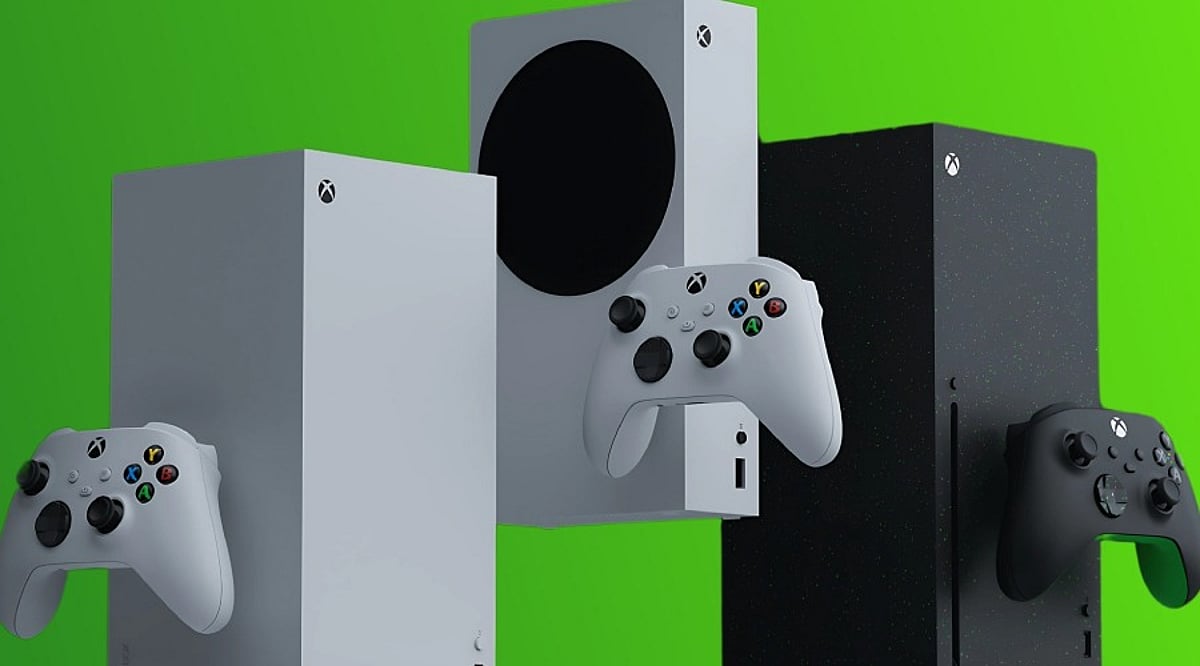
    Microsoft has raised the prices of Xbox Series X and Series S consoles across the United Kingdom and several European markets, with the revised pricing taking effect in early August 2026. The increase, which reaches up to €200 or £170 depending on the model, marks one of the company’s largest console price adjustments to date. Microsoft attributes the move to soaring memory and storage component costs, exacerbated by surging demand from the artificial intelligence industry.

    Updated Xbox Console Prices in the UK and Europe

    The updated pricing affects nearly every current Xbox console. As part of the product lineup changes, Microsoft has also confirmed it is discontinuing the 2TB Xbox model. The price hikes make Xbox consoles significantly more expensive for gamers in these regions.

    Why Microsoft Increased Xbox Console Prices

    According to Microsoft, the increase reflects broader challenges across the technology industry rather than a shift in its gaming strategy. The company stated that storage and memory costs have risen more than 2.5 times compared with previous levels and are expected to remain high through 2027. Increasing investments in AI infrastructure have raised the need for sophisticated memory and storage chips, thereby straining the global supply chain. Microsoft noted that similar cost pressures have affected other consumer electronics manufacturers, leading several gaming companies to revise hardware pricing in recent months.

    What the Price Increase Means for Gamers

    This latest hike follows the third major revision to Xbox pricing in 2025, breaking from the usual trend where gaming consoles become cheaper as they age. While Microsoft will still offer financing and refurbishment of consoles in selected countries, the price increase may deter cost-sensitive customers looking to upgrade or purchase a new Xbox. As the current console generation enters its later years, the revised pricing is expected to play a key role in consumer purchasing decisions, particularly when comparing Xbox with competing gaming platforms.

  • Flipkart Gears Up to Challenge Zomato and Swiggy with Low-Cost Food Delivery

    Flipkart Gears Up to Challenge Zomato and Swiggy with Low-Cost Food Delivery

    Flipkart, the Walmart-owned e-commerce giant, is preparing to enter India’s competitive food delivery market with a disruptive low-commission model. The company is set to launch its service in Bengaluru around August 15, with initial reports indicating that restaurants across the city are already being onboarded onto the platform.

    One of the most striking aspects of Flipkart’s entry is its proposed 10% commission rate for restaurant partners, significantly lower than the 16% to 30% typically charged by established players like Zomato and Swiggy. This aggressive pricing strategy could attract restaurants looking to reduce operational costs and pass on savings to customers.

    Flipkart’s foray into food delivery is expected to shake up a market that has long been dominated by Zomato and Swiggy. Reports suggest that Flipkart is taking a different approach than its competitors, exploring the Open Network for Digital Commerce (ONDC) as part of its long-term strategy to scale its food delivery business. This move aligns with the Indian government’s push for open, interoperable e-commerce.

    Flipkart CEO Kalyan Krishnamurthy has confirmed that the rollout will be phased. The company will first test the service with a limited set of users, gather feedback, refine the offering, and then scale it up. This cautious approach indicates Flipkart aims to deliver a polished experience from the outset.

    Flipkart brings several advantages to the table, including a vast existing customer base, one of the country’s largest delivery networks, and the financial backing of Walmart. These strengths could help the company gain significant traction soon after its launch.

    However, food delivery is a challenging business. Low commissions alone will not guarantee success. Fast and reliable delivery partners, efficient logistics, and excellent customer service are equally crucial. Zomato and Swiggy have spent years building these capabilities. If Flipkart wants to be a serious contender, it must match their operational excellence.

    Flipkart’s entry could inject much-needed competition into India’s food delivery market. If it can deliver both great service and lower costs, it could become a strong alternative for both restaurants and consumers. The coming months will reveal whether this new player can carve out a significant share of the market.

  • Sony Confident Disc-Free PlayStation Future Won’t Hurt Business, Digital Sales Surge to 82%

    Sony Confident Disc-Free PlayStation Future Won’t Hurt Business, Digital Sales Surge to 82%

    Sony has reaffirmed that its plan to discontinue physical disc production for new PlayStation games by 2028 will not negatively impact its gaming business. The company’s confidence stems from the continued rise of digital game sales, which now represent the vast majority of PlayStation software purchases.

    During Sony’s first-quarter FY2026 earnings call, CFO Lin Tao stated that the company has observed no adverse effects since announcing the disc-free transition and does not foresee any in the future. Digital downloads accounted for 82% of full-game software sales on PlayStation consoles in Q1 FY2026, up from 78% for the entire FY2025. This trend validates Sony’s long-term digital-first strategy.

    While production of discs for new titles will end in 2028, Sony confirmed that existing games released on disc before that deadline will continue to be supported, ensuring a gradual transition for players and developers.

    “We are not seeing any impact on our business as of now. Going forward, about the content sales, large part is already digitized. Therefore as a result of the discontinuation of a disc, we don’t see that there will be any negative impact on our business. However, as I already said, the users, the players, have attachments, and we have to think about how to respond to those feedbacks.” — Lin Tao, Sony CFO

    Acknowledging Fan Concerns

    Despite the company’s confidence, the announcement has drawn criticism from gamers, collectors, and industry figures worried about digital ownership, game preservation, and the loss of physical resale options. Tao acknowledged the strong emotional attachment many players have to physical discs and said Sony is considering how to respond to community feedback. However, he emphasized that the broader entertainment industry is rapidly shifting toward digital distribution.

    Sid Shuman, Senior Director of Sony Interactive Entertainment Content Communications, stated in a PlayStation Blog post: “In response to shifting trends in consumer preference, new games will be released on PlayStation Store and at retailers in digital formats only.”

    Competing on Content, Not Discs

    Sony dismissed the notion that physical discs are essential to differentiating PlayStation from PC gaming. The company’s competitive advantage lies in offering curated content, a stable gaming ecosystem, and hardware that remains more affordable than high-end gaming PCs. These strengths, Sony believes, will continue to attract players even as the platform embraces an all-digital future.

    With PlayStation 5 sales surpassing 93 million units and active monthly users growing, Sony remains optimistic that the disc-free transition will support long-term business growth rather than hinder it.

  • OnePlus 16 Leak: Expected Price, Massive Battery, and Camera Upgrade Revealed

    OnePlus 16 Leak: Expected Price, Massive Battery, and Camera Upgrade Revealed

    New leaks suggest the OnePlus 16 could launch later this year with a bigger battery, improved cameras, and flagship hardware at a price close to its predecessor. The company has officially unveiled its next flagship smartphone and said it will focus heavily on gaming performance and flagship-level hardware.

    The smartphone maker revealed that the OnePlus 16 will focus on three gaming-related technologies: Wind Chaser Gaming Core, High Refresh Rate technology, and the E-Sports Triple-Chip System, aimed at improving gameplay and efficiency. Although the company has not introduced the phone to users, speculations suggest that the upcoming model would include the Snapdragon 8 Elite Gen 6 Pro processor to enhance AI capabilities and energy efficiency. It could come with a 165Hz refresh rate for smoother scrolling, animations, and gaming.

    Additionally, the model is expected to have a 200MP periscopic camera and a 9,000mAh battery. The model will arrive later this year in China and is rumored to be around CNY 4,499, which could place the Indian price near Rs. 55,000 to Rs. 60,000.

    OnePlus 16 Comparison with Rivals

    The OnePlus 16 will likely compete with the Samsung Galaxy S27, iPhone 18, Xiaomi 17, Vivo X300 Pro, and Oppo Find X10. All of these phones are expected to offer premium features and powerful processors. However, OnePlus could still have one clear advantage. The rumored 7,000mAh battery is a lot larger than what many flagship phones tend to offer. If it can deliver a long battery life without adding too much extra weight, it might appeal to a lot of buyers. It could also have an edge over some competition in terms of fast charging.

    These details are currently only based on leaks; OnePlus may change the final product at the time of its official announcement. With a bigger battery, better cameras, and a competitive price, the OnePlus 16 could be one of the most exciting flagship phones to watch this year.

  • Bitcoin ETF Outflows, Coldcard Exploit Wave, and Bitget’s Japan Exit: Crypto Market Update

    Bitcoin ETF Outflows, Coldcard Exploit Wave, and Bitget’s Japan Exit: Crypto Market Update

    Bitcoin ETF Outflows Continue as Market Shows Mixed Signals

    Last week, US spot Bitcoin ETFs experienced net outflows of $61.53 million, according to data from SoSoValue. Fidelity’s FBTC led the withdrawals with $85.18 million in net outflows, bringing its total historical net inflows to $9.92 billion. Grayscale’s GBTC followed with $52.63 million in outflows. In contrast, BlackRock’s IBIT saw the largest net inflow of $86.90 million, highlighting investor preference for larger, more established funds.

    The total net asset value of spot Bitcoin ETFs now stands at $76.29 billion, with an ETF net asset ratio of 6.04%. Cumulative historical net inflows have reached $51.32 billion.

    Bitget Withdraws from Japan Amid Regulatory Pressure

    Bitget, a Seychelles-registered cryptocurrency exchange, has announced its withdrawal from the Japanese market. The decision comes as Japan’s Financial Services Agency (FSA) requires crypto service providers to register with the agency to operate legally. Bitget has frozen new registrations for Japan-based users immediately. Existing users who are potential Japanese residents must complete Level 2 KYC verification, including proof of address, by November 1, 2026, to continue using the platform.

    Coldcard Exploit: Fourth Wave Suspected

    Galaxy Research’s head, Alex Thorn, has warned of a likely fourth coordinated attack wave targeting Coldcard users. The exploit, which involves a random number generator (RNG) vulnerability, has already been linked to 1,367.05 BTC stolen from 4,585 addresses across three confirmed waves. Thorn identified 218 transactions between blocks 960,778 and 960,792 that moved over 380 BTC from 462 suspected victim addresses. The transaction rate of 13.8 per block is about 45 times higher than the normal rate of 0.3, indicating a systematic sweep.

    The Smarter Web Company Expands Bitcoin Treasury

    The Smarter Web Company has added 11.89 BTC to its corporate treasury, bringing its total holdings to 2,712 BTC. This purchase moves the company to 28th place in the Bitcoin 100 ranking of public companies by bitcoin holdings. Earlier in July, the company repaid its $11.7 million Smarter Convert instrument nearly two weeks early by selling 177.89 BTC at an average price of $65,762 per coin.

    CLARITY Act Faces Senate Deadline

    The Digital Asset Market Clarity Act, also known as the CLARITY Act, was not on the Senate’s published schedule for Monday, Aug. 3, leaving little time for floor action before the summer break. The Senate is scheduled to begin its state work period on Aug. 10, which lasts until Sept. 11. The absence of the bill from the schedule does not formally block it, but it leaves lawmakers without a confirmed vehicle to advance the legislation before the break.

    Frequently Asked Questions

    How much did Bitcoin ETFs lose last week?

    US spot Bitcoin ETFs recorded $61.53 million in weekly net outflows last week, with Fidelity’s FBTC and Grayscale’s GBTC leading the withdrawals, while BlackRock’s IBIT saw the largest inflows.

    Why is Bitget leaving Japan?

    Bitget is exiting Japan because the country requires crypto service providers to register with the Financial Services Agency. The exchange paused new registrations and requested existing users to complete additional KYC checks.

    What happened in the Coldcard exploit?

    A suspected RNG vulnerability has been linked to multiple coordinated attack waves affecting Coldcard users. The latest suspected wave moved over 380 BTC from hundreds of potentially compromised addresses.

    How much Bitcoin does Smarter Web Company hold?

    The company added 11.89 BTC, raising its total treasury to 2,712 BTC, placing it 28th among publicly listed companies by bitcoin holdings.

    Why is the CLARITY Act deadline important?

    The bill was not included in the Senate’s schedule, limiting time for action before the summer recess. Further delays could postpone consideration until after September.


  • India’s Manufacturing PMI Drops to Lowest Since 2021 Amid Slowing Domestic Demand

    India’s Manufacturing PMI Drops to Lowest Since 2021 Amid Slowing Domestic Demand

    India’s manufacturing sector expanded at its slowest pace in nearly five years during July, as domestic demand weakened and hiring slowed, according to the latest S&P Global HSBC India Manufacturing Purchasing Managers’ Index (PMI).

    The headline PMI fell to 53.5 in July, down from 54.2 in June, marking its lowest level since August 2021. The reading came in below the earlier estimate of 53.9. Despite the decline, the index remained above the 50 threshold, indicating continued growth in factory activity.

    July’s data revealed a clear divergence between domestic and overseas demand. Export orders improved after a sharp slowdown in June, rising at their fastest pace since April, driven by stronger demand from countries including Canada, Egypt, Indonesia, Kenya, Nepal, South Africa, Thailand, and the United Arab Emirates. In contrast, new orders increased at the second-slowest rate in more than four years, with manufacturers attributing the slowdown to weaker client interest and challenging market conditions.

    Factory output continued to grow in July, with the pace of expansion little changed from June, though it remained near the weaker levels seen since mid-2022. Consumer goods producers faced softer conditions, while intermediate and capital goods manufacturers recorded better performance.

    Employment increased for the 29th consecutive month, but hiring grew at the slowest pace in that period, weakening for a third straight month. The trend suggests manufacturers became more cautious as order growth lost momentum. Companies also reduced the pace of input buying during July, though they continued to build inventories as supply conditions improved. Stocks of raw materials and finished goods both increased.

    Supplier delivery times shortened at one of the fastest rates recorded by the survey, indicating that supply chain delays continued to ease. However, renewed tensions in the Middle East have raised doubts about the durability of these improvements. Pranjul Bhandari, chief India economist at HSBC, noted, “The suppliers’ delivery times index rose in July, an encouraging sign that supply chain delays are continuing to unwind. However, renewed tensions in the Middle East have raised fresh doubts about how durable these improvements will be.”

    Input cost inflation slowed to a five-month low in July, with price increases for several raw materials becoming less severe, though transportation costs remained high. Selling prices rose only modestly, as softer demand and strong competition limited manufacturers’ ability to raise prices more sharply. Bhandari added, “Meanwhile, output and new export orders strengthened, pointing to resilient demand, particularly from overseas markets. Input costs eased while output charges increased as firms sought to protect margins.”

    Business confidence improved from June’s recent low, with manufacturers expecting demand, infrastructure projects, and new client enquiries to support activity. The survey covered approximately 400 manufacturing companies across India, measuring output, orders, employment, costs, and business expectations.