Blog

  • SpaceX’s First Earnings Report: Starlink Profits, AI Spending, and Starship’s Future

    SpaceX’s First Earnings Report: Starlink Profits, AI Spending, and Starship’s Future

    SpaceX is set to release its first quarterly earnings report since its blockbuster initial public offering, giving investors a detailed look at whether the company’s financial performance can sustain Elon Musk’s ambitious expansion into artificial intelligence and space technology. The results, due after the market closes on Tuesday, August 4, 2026, are expected to reveal how effectively Starlink’s profits can fund growing investments while justifying SpaceX’s lofty valuation.

    Starlink Remains the Financial Backbone

    Analysts project Starlink, SpaceX’s satellite internet division, will report around $3.82 billion in revenue and $1.42 billion in operating profit for the second quarter, fueled by subscriber growth and expansion into new markets. However, investors are increasingly questioning whether Starlink alone can finance the company’s rapidly rising spending on AI infrastructure and next-generation space projects.

    “Starlink is executing beautifully, but it cannot single-handedly fund a $30 billion annualized AI capex program,” said Will Rhind, founder and CEO of GraniteShares, an asset manager offering ETFs tied to SpaceX stock performance.

    AI Spending and Capital Costs in Focus

    Wall Street will closely monitor SpaceX’s capital expenditure, forecast to reach nearly $14.05 billion during the April–June quarter. A significant share of that investment is tied to AI ambitions, including compute infrastructure, advanced software development, and future data center projects. While analysts expect the AI segment’s revenue to nearly triple to $2.33 billion, many believe profitability could take much longer because of the substantial investment required. Overall, SpaceX is expected to report approximately $6.93 billion in second-quarter revenue but an operating loss of about $1.55 billion.

    “The key question for investors is whether SpaceX can monetize its AI infrastructure through third-party compute fast enough to offset xAI’s extraordinary capital intensity,” said Michael Monaghan, portfolio manager of the Founders 100 ETF (FFF.Z), which holds SpaceX shares.

    Starship Progress Could Shape Long-Term Outlook

    Beyond financial results, investors will also look for updates on Starship, the reusable rocket central to SpaceX’s long-term growth strategy. Starship is expected to support future Starlink expansion, NASA’s Artemis Moon missions, and potential space-based computing infrastructure. Recent tests successfully deployed upgraded Starlink V3 satellites, although the Super Heavy booster did not complete its planned splashdown.

    According to analysts, the future progress of Starship is crucial for SpaceX to retain investor confidence as it balances significant expenses with future growth. Given the questions surrounding AI investments, profitability, and upcoming share lock-up expirations, this earnings report is among the most important events for SpaceX since it became a publicly traded company.
  • Microsoft to Keep Steam Central to Xbox’s PC Gaming Strategy, Report Confirms

    Microsoft to Keep Steam Central to Xbox’s PC Gaming Strategy, Report Confirms

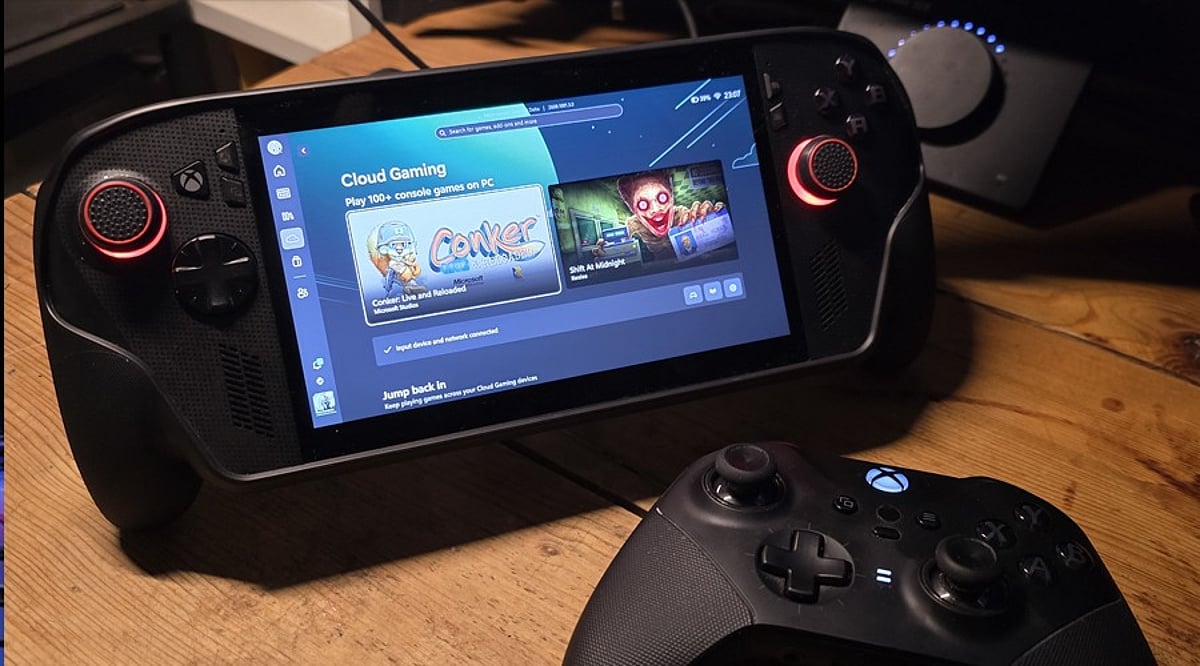
    A new report indicates that Microsoft will continue to rely on Steam as a cornerstone of Xbox’s PC gaming plans, while also expanding the role of Battle.net. Contrary to earlier speculation that Xbox might pull its games from Steam, the report states that Microsoft has no such intention at this time. Instead, the company is making strategic adjustments without removing its titles from the popular platform.

    Battle.net, previously exclusive to Blizzard games, is being opened up to third-party developers. It now includes Activision titles such as Call of Duty, Obsidian’s The Outer Worlds 2, and Avowed. In the future, more third-party developers will be able to distribute their games through Battle.net. Additionally, Microsoft continues to invest heavily in its own PC app.

    Choice for Big Publishers

    Many game companies have shifted their strategies in recent years. Electronic Arts (EA) initially focused on its own launcher but later brought its games back to Steam. Ubisoft also returned many of its biggest titles to Steam after a period of exclusivity on its own platform. Blizzard has followed a similar path—while Battle.net remains important, several Blizzard games are now available on Steam.

    These moves reflect a growing preference among players for more choices and flexibility. Microsoft appears to be adopting the same approach, avoiding platform lock-in and instead focusing on making PC gaming simple and accessible. This could prove to be one of its strongest strategic moves in the coming years.

  • DeepSeek V4-Flash Ignites AI Commodity Debate With Unprecedented Low Pricing

    DeepSeek V4-Flash Ignites AI Commodity Debate With Unprecedented Low Pricing

    The global artificial intelligence industry is witnessing an intense race where affordability is becoming as important as performance. Chinese AI startup DeepSeek has launched V4-Flash, an open-weight AI model designed for coding tasks that delivers competitive performance at one of the industry’s lowest operating costs. The launch comes as AI companies in the US and China continue to compete aggressively on pricing, efficiency, and model capabilities.

    Released under the MIT License, V4-Flash can be freely modified, commercially deployed, and run locally. The model uses a Mixture-of-Experts (MoE) architecture with 284 billion total parameters, while activating only 13 billion parameters during inference for greater efficiency. It also supports a one-million-token context window, allowing developers to process significantly larger datasets and longer conversations.

    AI Prices Continue to Fall

    The biggest highlight of V4-Flash is its pricing. According to Artificial Analysis, the model costs $0.14 per million input tokens and $0.28 per million output tokens, making it one of the world’s cheapest well-known AI models to operate. The research firm estimates that evaluating V4-Flash costs just $0.03 per benchmark test, compared with $0.86 for Moonshot AI’s Kimi K3, $1.86 for OpenAI’s GPT-5.6 Sol, and $3.15 for Anthropic’s Claude Fable 5.

    Despite its low price, V4-Flash remains highly competitive. According to Artificial Analysis, it scored 50 out of 100 on its Intelligence Index, matching Google’s Gemini 3.6 Flash while trailing Meta’s Muse Spark 1.1 and Z.AI’s GLM-5.2 by only one point. Reports also suggest the model outperformed Anthropic’s Claude Opus 4.8 on Arena.ai’s front-end coding leaderboard while costing roughly 99% less for similar coding workloads.

    AI Commodity Debate Gains Momentum

    The rapid decline in AI costs has strengthened the argument that AI models are gradually becoming commodities. As performance differences between leading models narrow, businesses may increasingly select providers based on pricing, flexibility, and deployment options rather than relying on a single AI platform.

    Microsoft CEO Satya Nadella has repeatedly argued that AI will eventually become a commodity. In a recent post on X, he urged organizations to build and retain their own AI capabilities instead of depending entirely on a handful of model providers. Meanwhile, OpenAI CEO Sam Altman said, “We will have so much usage of our models that we do not need to be a gigantically high-margin business to be able to afford model training.”

    Competition is also intensifying in China. DeepSeek now faces rivals including Alibaba, ByteDance, Moonshot AI, MiniMax, and Z.AI, while Alibaba recently introduced Qwen3.8-Max, its largest AI model so far. DeepSeek is also reportedly developing V4-Pro, a more powerful version of its latest model, indicating that the ongoing AI price war is likely to drive even lower costs and faster innovation across the industry.

  • AI Copyright Showdown in 2026: Key Lawsuits, Fair Use Questions, and What’s Next for Creators

    AI Copyright Showdown in 2026: Key Lawsuits, Fair Use Questions, and What’s Next for Creators

    Generative AI has revolutionized digital content creation, but it has also sparked one of the biggest copyright debates in technology. Courts across the US and Europe are determining whether AI companies can legally use copyrighted artworks without creators’ consent to train image-generating models. The outcomes of these cases could reshape AI development, licensing, and digital creation for years to come.

    The legal issues extend beyond ownership of AI-generated images. They also cover fair use of copyrighted material for AI training, whether AI-generated content infringes existing IP rights, and how creators can be compensated when their work benefits AI models.

    Major Lawsuits Defining the Future of AI Copyright

    Several landmark court cases are underway. Artists Sarah Andersen, Kelly McKernan, and Karla Ortiz are testifying in the closely watched Andersen v. Stability AI case. They argue that their copyrighted work was illegally used to train AI image models from Stability AI, Midjourney, and DeviantArt. This case is expected to become a pivotal development in copyright law and a major influence on AI technology’s future.

    Stability AI also faces lawsuits from Getty Images, which claims the company’s AI tool was trained on millions of its licensed photos without permission. Litigation continues in the US, while a UK court previously ruled against Getty’s copyright claims, allowing only a limited trademark ruling.

    Meanwhile, Disney, Universal, and Warner Bros have filed lawsuits against Midjourney for allegedly using their characters—including those from Star Wars, Marvel, and Shrek—without permission in its image generator. Midjourney argues its AI training falls under the “fair use” doctrine, making this one of the most important tests of AI copyright law to date.

    Why These Cases Matter

    These landmark decisions will determine whether training AI models on copyrighted art without permission constitutes fair use. The rulings will redefine future technology development, dataset licensing requirements, and fair compensation for digital creators.

    Copyright Rules Continue to Evolve

    Another major issue is whether AI-generated images themselves qualify for copyright protection. The US Copyright Office has long held that works produced solely by AI are not eligible for copyright, reflecting the traditional need for human creativity.

    By late 2025, industry estimates placed the number of generative AI copyright lawsuits—covering training data, generated graphics, and intellectual property rights—at over 50. As AI image generators grow more powerful and popular in advertising, design, entertainment, and marketing, the debate has become more urgent.

    AI companies say they need massive datasets to train innovative models, but artists, photographers, and media companies argue their copyrighted works should not be used without consent or compensation. As governments and courts interpret existing copyright laws for the AI era, 2026 is emerging as a pivotal year. The decisions made now will likely set the course for training AI models, safeguarding creators, and introducing new copyright laws or alternative licensing systems for datasets.

  • OpenAI’s Astra AI Cracks 10 Enduring Math Problems, Marking a Leap in AI-Driven Research

    OpenAI’s Astra AI Cracks 10 Enduring Math Problems, Marking a Leap in AI-Driven Research

    OpenAI has announced that its unreleased Astra model family has achieved significant progress on 10 long-standing mathematical problems. If independently verified, this breakthrough would represent a major evolution for artificial intelligence, positioning it as a legitimate contributor to scientific discovery.

    According to OpenAI, the Astra model tackled problems across advanced mathematical fields, including high-dimensional geometry, coding theory, arithmetic circuit complexity, group theory, operator algebras, quantum complexity, lattice cryptography, and extremal combinatorics. The company said the AI generated the mathematical arguments, which researchers then converted into formal manuscripts, verifying every logical step using the proof assistant Lean.

    AI Expands Its Role in Scientific Discovery

    OpenAI revealed that producing the solutions required computing resources worth approximately $2,000 at GPT-5.6 Sol API rates, indicating relatively efficient reasoning for such complex problems. The advances include breakthroughs in sphere packing, error-correcting codes, the construction of the first explicit non-sofic group, and new results related to Ehrhart’s volume conjecture, Connes’ rigidity conjecture, and the quantum parallel repetition theorem.

    This announcement builds on OpenAI’s earlier milestone in May 2026, when another unreleased AI model reportedly generated a disproof of the Erdős unit-distance conjecture, an open problem that had remained unsolved for more than 80 years.

    Experts Call for Careful Evaluation

    Researchers are urging caution pending independent verification and peer review. The Leiden Declaration on AI and Mathematics, published in June 2026 and signed by hundreds of mathematicians, flagged concerns about unreliable AI-generated proofs, attribution, disclosure, and research bias.

    Commenting on the debate, mathematician Kevin Buzzard of Imperial College London said, “Mathematicians should find it quite striking that tech companies are suddenly interested in their work. The Leiden Declaration is a well-thought-through response to what is currently happening, as AI continues to disrupt this space.”

    OpenAI acknowledged these concerns, stating, “There are many views as to the role of AI in mathematics, and we have deep respect and understanding for those concerned with its impact.” The company also plans to publish Astra’s reasoning process and recently launched ChatGPT for Academic Researchers, giving 100,000 scientists and mathematicians free access to its latest AI models to support future research.

  • GRAM Token Drops to $1.29 After Brief Telegram App Store Removal

    GRAM Token Drops to $1.29 After Brief Telegram App Store Removal

    GRAM, the cryptocurrency associated with Telegram, fell to $1.29 on August 4 after Telegram temporarily disappeared from Apple’s App Store for several hours. Existing users were still able to use the app, but the unavailability for new downloads sparked panic selling across crypto markets.

    Apple confirmed the removal was due to a safety guideline violation involving prohibited abusive content. The brief outage triggered a sharp sell-off, as Telegram is a critical platform for crypto communities, projects, and trading groups worldwide. Traders feared reduced access could diminish Telegram’s activity and slow GRAM’s broader adoption.

    During the sell-off, trading activity surged dramatically. According to CoinGlass data, GRAM derivatives volume jumped 490% to $123.27 million, while open interest rose 1.2% to $93.28 million. Selling pressure dominated across perpetual contracts, and the Long/Short Ratio fell below one, indicating a bearish sentiment. GRAM’s Relative Strength Index dropped to 38, signaling strong selling momentum, and the token moved below its nine-day moving average near $1.40.

    Telegram returned to the App Store after nearly four hours. The company responded via its official X account, stating, “Reports of my demise are greatly exaggerated.” Apple said the app was restored after Telegram removed the reported content and banned the associated user. This easing of fears helped GRAM recover to $1.38 from its low of $1.29.

    The next price move depends on how quickly market confidence returns. If GRAM can sustain a bullish run above $1.42, it could break resistance at $1.46 and minimize further losses. Investors are closely watching the token’s trajectory as the broader crypto market reacts to the incident.

  • Kamino Launches Solana USDC Yield Vault Targeting 7-8% Returns via Commodity Trade Financing

    Kamino Launches Solana USDC Yield Vault Targeting 7-8% Returns via Commodity Trade Financing

    Kamino has introduced a new institutional yield vault on Solana, offering USDC depositors a target return of 7% to 8%. The product, launched on August 4, comes with a $25 million initial deposit cap and connects Solana-based USDC with short-term commodity trade financing through an approved fund structure.

    Unlike typical DeFi lending, the vault channels deposited USDC into real-world commodity deals rather than crypto-backed loans. A commodity trader can use the funds to bridge the gap between purchasing goods and receiving payment from the final buyer. Kamino describes the platform as “on-chain vault infrastructure connecting real-world, institutional credit markets with on-chain users.”

    Depositors receive kicUSDC tokens representing their share in the vault. The offchain lending activity is managed by a fund structure supervised by the Cayman Islands Monetary Authority. Loans are backed by physical commodities or cash held in escrow, providing a layer of security.

    However, the model introduces different risks than standard DeFi lending. Loan repayment depends on multiple external parties, including traders, banks, insurers, shipping companies, and legal agreements outside the Solana ecosystem. Users can make quick withdrawals as long as sufficient USDC remains in the vault’s liquidity buffer, but larger requests may face delays when outstanding loans must be repaid first.

    The 7% to 8% target return therefore comes with liquidity and counterparty risks. The launch gives Solana a new avenue for connecting onchain stablecoin capital with real-world credit markets. Future performance will hinge on repayment records, withdrawal reliability, and realized returns rather than the headline target alone.

  • Ex-FBI Agent Charged in Alleged $1M Cryptocurrency Theft From Investigative Wallets

    Ex-FBI Agent Charged in Alleged $1M Cryptocurrency Theft From Investigative Wallets

    A former FBI supervisory special agent has been arrested and charged with stealing nearly $1 million in cryptocurrency using access obtained through a national security investigation. The case has sent shockwaves through the law enforcement and crypto communities, raising serious questions about insider abuse of sensitive investigative tools.

    Who Is Patrick Yaroch?

    Patrick Steven Yaroch previously served as a supervisory special agent in the FBI’s Counterintelligence and Espionage Division and also worked in the bureau’s Boston office. His role granted him access to sensitive information about cryptocurrency accounts that were being monitored as part of national security investigations.

    According to court records, Yaroch told a Justice Department employee that he was frustrated the FBI “could not or would not act against adversarial cryptocurrency accounts.” He reportedly said he was upset that he couldn’t do more to disrupt cryptocurrency use by an adversarial nation during an investigation.

    In an FBI affidavit, Yaroch admitted to making “some very poor decisions” and said he “went into FBI systems and found keys needed to transfer money from wallets to himself.”

    How Was the Crypto Allegedly Stolen?

    Court documents allege that Yaroch set up a personal cryptocurrency wallet in late 2024 and obtained passphrases and other wallet-access information through FBI databases. He allegedly completed between 10 and 12 transfers beginning in late 2024 or early 2025, moving digital assets into wallets under his control.

    Federal agents later searched Yaroch’s home in Ashburn, Virginia, where they recovered devices, a hardware wallet, and handwritten notes believed to contain cryptocurrency seed phrases. Authorities eventually transferred approximately $925,000 in cryptocurrency from accounts under his control into government-controlled wallets.

    Plans to Manage the Funds

    Investigators also found conversations on Yaroch’s phone in which he explored ways to invest or manage around $1 million and considered relocating overseas. Recovered records reportedly included material connected to Portugal and plans for international travel.

    An FBI spokesperson said: “The individual has since been fired from the Bureau. We hold our employees to the highest ethical standards, and this conduct is not tolerated at the FBI. We are conducting a thorough investigation in the aftermath, and as this is an ongoing matter, we will have no further comment.”

    Federal Charges and Next Steps

    Authorities said Yaroch eventually disclosed his actions to a former colleague and contacted government officials about his conduct. He now faces federal charges related to interstate transportation of stolen property and receipt of stolen property. The allegations remain unproven, and the criminal case is ongoing.

  • Apple Briefly Delists Telegram from App Store Over Moderation Violations

    Apple Briefly Delists Telegram from App Store Over Moderation Violations

    Apple has temporarily removed Telegram from the App Store in select countries, leaving many users unable to find or download the messaging app on their iPhones and iPads. The action, which took effect on August 3, 2026, was later confirmed by Apple as a response to discovered content violating its strict guidelines on child sexual abuse material.

    According to a statement shared by Bloomberg’s Mark Gurman, Apple said: “We briefly removed Telegram from the App Store after our review found content that violates our strict guidelines prohibiting child sexual abuse material. The app was subsequently restored after the developer promptly removed the content and banned the user who posted it.”

    The removal was not global. Users in India and many other regions still see Telegram normally, and those who already had the app installed were unaffected. The issue only impacted first-time downloads in the affected countries. Google Play, Android’s official store, continues to offer Telegram without interruption.

    This isn’t the first time Telegram has faced such action. In 2018, Apple pulled the app from the App Store globally after inappropriate content was identified. However, this latest incident appears limited to specific markets, likely due to legal requests or regional enforcement.

    Apple’s ability to remove apps stems from its App Store guidelines, which all developers must follow. The company can also act on valid legal requests from governments. Once the offending content is removed and the issue resolved, the app can be reinstated, as happened here.

    For now, Telegram remains available on iOS in most regions, and Android users haven’t experienced any disruption. This incident highlights the ongoing challenge of content moderation on major platforms and the delicate balance between user safety and app availability.

  • Apple’s Camera AirPods Rumored for September 2026 Launch: Visual Intelligence Features Revealed

    Apple’s Camera AirPods Rumored for September 2026 Launch: Visual Intelligence Features Revealed

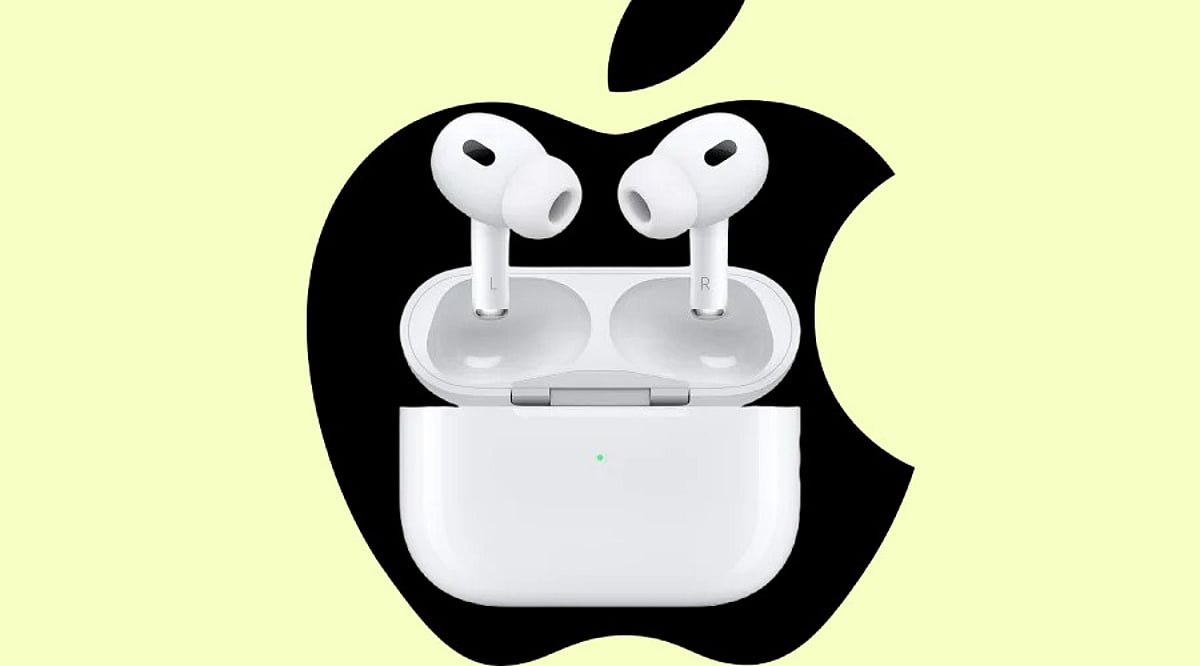
    Apple may launch camera-equipped AirPods as early as September 2026, according to a report from Bloomberg’s Mark Gurman. The earbuds are expected to debut alongside Apple’s next iPhone lineup, though the company has not officially confirmed the launch. The move is part of Apple’s growing focus on AI-powered wearables that use cameras to help Siri understand its surroundings.

    Two AirPods projects are reportedly under development: B790 and B798. The B790 model appears to be further along and could launch in September 2026, while B798 is linked to a later 2027 release. References to B790 in iOS 27 code have added weight to the 2026 timeline.

    The rumored Camera AirPods are not intended for photography. Instead, the cameras will capture visual input for Apple’s Visual Intelligence features, enabling Siri to recognize objects, read text, and identify landmarks. According to Gurman, the cameras “can’t capture media” — they are designed solely to feed information to Siri. The system may also request a second image when lighting or clarity affects recognition.

    The earbuds could feature longer stems to accommodate camera hardware and an LED indicator for cloud data transfers. Apple may use the “AirPods Ultra” name for the high-end product, positioning it above the current AirPods Pro range.

    However, a separate report from TechTimes creates uncertainty around the September timeline. It suggests B790 could instead be a camera-free AirPods update this year, leaving B798 as the main camera-focused model planned for 2027. With conflicting reports and no official confirmation from Apple, the final design, features, pricing, and launch date remain unconfirmed.