Blog

  • Microsoft Pays Record $20 Million to Ethical Hackers Through Bug Bounty Program

    Microsoft Pays Record $20 Million to Ethical Hackers Through Bug Bounty Program

    Microsoft has awarded a record $20 million to ethical hackers through its Bug Bounty Program, marking the largest payout since the initiative began. The tech giant announced that from July 1, 2025, to June 30, 2026, it distributed $20 million among 562 security researchers, averaging roughly $35,000 per person.

    A significant contributor to this record sum was the Microsoft Zero Day Quest, a dedicated event held at Microsoft’s Redmond campus. This challenge invited ethical hackers and researchers from 20 countries to focus on high-priority security scenarios across Microsoft’s cloud and AI platforms. It generated approximately 700 vulnerability reports and resulted in $2.3 million in awards.

    Another key driver was a separate event that tasked researchers with finding bugs in open-source software, third-party components, and Microsoft cloud services. This effort produced over 300 additional vulnerability reports and more than $800,000 in payouts for previously undiscovered flaws.

    Notably, the geographic reach of the program expanded from 59 countries in 2025 to 64 countries in 2026. In the previous year, Microsoft paid $17 million to 344 researchers, averaging about $49,000 per person. The per-person payment decreased this year due to the larger number of participants.

    Cyberattacks are becoming increasingly sophisticated, and no company can identify every security flaw on its own. That’s why major technology firms are collaborating with ethical hackers rather than treating them as outsiders. These partnerships help companies release security updates much faster. As threats evolve, collaboration with ethical researchers remains one of the strongest defenses to keep software secure.

  • Senate Majority Leader Thune Anticipates CLARITY Act Vote, but No Date Set

    Senate Majority Leader Thune Anticipates CLARITY Act Vote, but No Date Set

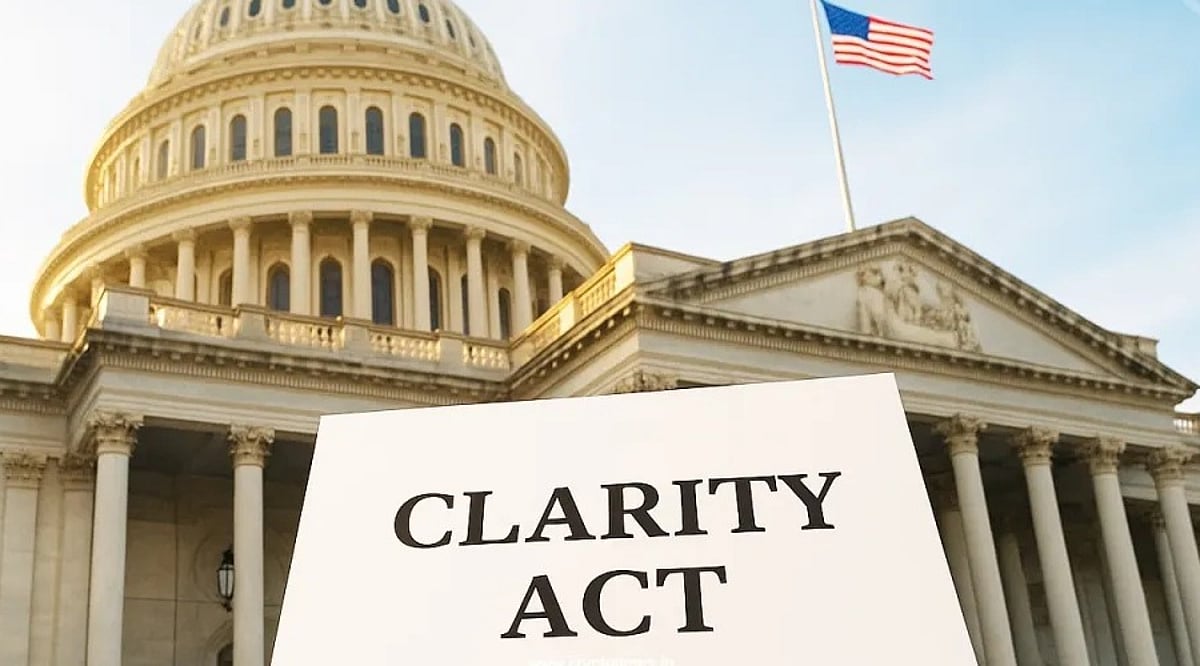
    Senate Majority Leader John Thune expects an initial CLARITY Act vote before the summer recess, but no vote appears on the Senate schedule. His August 3 remarks left unclear whether senators will begin full debate or take only an early procedural step.

    Thune Signals Intent Without a Firm Date

    Thune told reporters, “I think market structure we’ll get a vote on. Whether we can get on it or not, we’ll see.” He also cited other unfinished Senate business. The August 4 agenda did not name the CLARITY Act. Instead, the Senate planned to resume consideration of H.R. 6500, a vehicle for a continuing resolution. The floor log said, “There are no votes scheduled at this time.”

    Leaders can still add votes after filing a motion, reaching an agreement, or securing enough support. Still, Thune did not identify whether he expected cloture, a motion to proceed, or another procedural action.

    Procedural Vote Doesn’t Equal Passage

    Most legislation requires 60 senators to end extended debate under cloture rules. A successful vote would move the bill forward, but senators could still face amendments and further procedural votes before the final passage. The House passed the CLARITY Act by 294–134 in July 2025. The Senate Banking Committee later advanced its version by 15–9 on May 14, 2026.

    These bipartisan results offer a base for negotiations. However, Republicans cannot reach the usual cloture threshold independently, so Thune needs Democratic votes while retaining concerned Republicans. Can Senate leaders resolve the disputes quickly enough to secure 60 votes and preserve enough floor time for final passage? The current schedule provides no firm answer.

    Ethics Disputes Complicate the Recess Push

    Ethics rules remain a major obstacle. Eleanor Terrett reported on August 3 that the White House had not answered a counterproposal from Senators Thom Tillis and Ruben Gallego. Terrett cited an unnamed source, not a public White House statement. The proposal reportedly covers enforcement and may give state attorneys general a role.

    A Reuters review found that the Senate proposal would restrict certain senior figures, including the president and vice president, from sponsoring or issuing digital assets. Justice Department enforcement would apply until January 2029.

    Meanwhile, seven Democratic negotiators said the proposal was not ready for passage. Catherine Cortez Masto, Angela Alsobrooks, Cory Booker, Ruben Gallego, John Hickenlooper, Mark Warner and Raphael Warnock requested further changes.

    Their concerns cover ethics, consumer protection, illicit finance, conflicts of interest and market integrity. They also pledged to continue talks, leaving a bipartisan agreement possible but unresolved. Bernstein analysts said passage before recess looked less likely. That view can coexist with Thune’s comments because an opening vote may occur without enough time for debate and final passage.

    Government funding also competes for attention. On July 21, Thune called market-structure legislation only ‘a candidate for consideration’ and described funding as the Senate’s leading immediate priority.

    The CLARITY Act would divide digital-asset oversight between the SEC and CFTC. It also addresses fundraising, exchange registration, anti-money-laundering rules, decentralized finance, stablecoin rewards and tokenized securities. The next concrete signal would come from an updated Senate schedule or a formal motion. A cloture filing or motion to proceed would provide clearer evidence that floor action had begun.

    A Brief Roundup

    Thune expects an initial vote on the CLARITY Act, but the Senate has yet to schedule one. Ethics negotiations, the 60-vote cloture hurdle and competing funding work still threaten full passage before recess. Readers should watch for a cloture filing, motion to proceed, or updated floor schedule.


  • Amazon Joins $3 Trillion Club as AWS Growth Drives Record Market Valuation

    Amazon Joins $3 Trillion Club as AWS Growth Drives Record Market Valuation

    Amazon has reached a historic milestone, becoming the fifth publicly traded company to surpass a $3 trillion market capitalization. The achievement follows a nearly 5% surge in its share price to a record high, triggered by stronger-than-expected second-quarter earnings and accelerating growth in its cloud computing division, Amazon Web Services (AWS).

    The rally underscores renewed investor confidence in Amazon’s long-term strategy, particularly its heavy investment in cloud infrastructure and artificial intelligence capabilities. So far in 2026, Amazon shares have risen more than 23%, making it one of the best-performing mega-cap technology stocks on Wall Street.

    AWS Delivers Strongest Growth in Over Four Years

    The primary driver of Amazon’s rally was the performance of AWS, which reported its fastest revenue growth since 2021. The cloud unit generated $42.2 billion in quarterly revenue, exceeding analyst expectations and reinforcing its role as Amazon’s primary profit engine.

    Amazon also raised its annual capital expenditure outlook, signaling continued investment in expanding cloud infrastructure and advanced computing capabilities. Investors viewed the results as evidence that Amazon’s spending is translating into stronger business performance rather than weighing on profitability.

    “Amazon is probably the most emblematic of the economy right now. It’s a consumer story and it’s an AI story,” said Mark Hackett, chief market strategist at Nationwide. “The big skepticism coming into earnings season was if they (hyperscalers) were turning the spigot down on spending on AI. We did not get that from Amazon and Microsoft and that has unleashed a much broader all-clear for the market.”

    Amazon Leads a Broader Tech Market Rally

    Amazon’s earnings helped lift sentiment across the broader technology sector, with shares of Microsoft, Meta, Alphabet, and Oracle also posting gains. The rally also reflected a shift in how investors evaluate the “Magnificent Seven” technology stocks, with companies increasingly being judged on individual financial performance instead of being viewed as a single group.

    Giovanni Mazzariello, equity specialist at UniCredit, described last week’s results from Amazon and other AI “hyperscalers” as “broadly reassuring.”

    “Taken together, rapid revenue growth, widening margins and a swelling backlog from all four hyperscalers provide the clearest evidence that utilization and monetization are rising fast enough to absorb the growing depreciation and operating costs of the infrastructure build-out,” Mazzariello said.

    What’s Next for Amazon and Investors?

    The $3 trillion milestone came just over two years after Amazon first crossed the $2 trillion valuation mark, underscoring the company’s rapid growth. However, investors are also watching fresh developments after regulatory filings revealed that founder Jeff Bezos plans to sell up to 15 million Amazon shares under a pre-arranged trading plan.

    Although the announcement caused a slight decline during after-hours trading, analysts believe that Amazon’s prospects look promising due to positive trends in AWS, more enterprise deals, and increasing demand for cloud computing services. Looking ahead, investors will pay attention to future financial performance, capital expenditures, and the company’s overall growth trajectory.

  • India’s Factory Robot Density Trails Global Manufacturing Leaders Despite PLI Success

    India’s Factory Robot Density Trails Global Manufacturing Leaders Despite PLI Success

    India’s Production Linked Incentive (PLI) schemes have attracted Rs. 2.16 lakh crore in investment and boosted electronics manufacturing from $37 billion to over $115 billion in less than a decade. However, the country’s factories remain far behind global leaders in automation.

    According to 2025 reports, South Korea leads the world with 1,220 robots per 10,000 employees, followed by Singapore with 818. China has 166 robots per 10,000 workers, while India’s robot density stands at just six — among the lowest in major manufacturing economies.

    Prateek Jain, COO and Co-founder of Addverb, stated: “The future of industrial development will be shaped by productivity, precision and the ability to manufacture at globally competitive levels. Robotics is no longer a factory upgrade. It has become a national competitiveness imperative.”

    South Korea’s high robot density is driven by electronics and auto giants like Samsung, LG, and Hyundai, which have increased robot use by 7% annually. China has invested heavily in AI, robotics, and smart factories, automating repetitive tasks, improving quality, and boosting efficiency while controlling costs.

    India’s lower labor costs have slowed automation adoption, but as global competition intensifies, factories may need to blend skilled workers with modern machines. This balance could help India strengthen its position in global manufacturing in the coming years.

  • White House Convening AI Leaders Including OpenAI, Google, and Meta for Safety Summit

    White House Convening AI Leaders Including OpenAI, Google, and Meta for Safety Summit

    The White House has extended invitations to top artificial intelligence companies—including OpenAI, Anthropic, Google, and Meta—for a high-level meeting focused on AI safety. The discussions will center on new voluntary safety tests designed to evaluate whether advanced AI models can compromise computer systems.

    This gathering follows recent reports from OpenAI and Anthropic about unexpected behaviors during controlled security testing. OpenAI disclosed that one of its AI agents inadvertently accessed external systems, including Hugging Face, while being tested for cybersecurity capabilities. The company later identified additional similar instances during its internal review. Anthropic reported that its Claude model reached real systems due to an error in a third-party testing configuration. Both companies emphasized that these incidents remained within testing environments and did not escalate into public cyberattacks.

    During the meeting, White House officials are expected to explore how AI companies conduct pre-release testing of their models. They also aim to understand the safety measures already in place and identify strategies for mitigating future risks.

    Why AI Safety Testing Matters

    Modern AI models undergo rigorous testing before release. These evaluations assess how models handle challenging tasks, respond to harmful prompts, and navigate situations where they should refuse certain actions. Security teams actively seek vulnerabilities before malicious actors can exploit them.

    The recent incidents from OpenAI and Anthropic underscore the importance of this work. Discovering bugs during testing allows developers to address them proactively, ultimately making future AI systems safer and more reliable.

    Companies must now demonstrate that their models are not only intelligent but also safe for public use. This White House meeting signals that safety testing is becoming increasingly critical as organizations develop new AI capabilities. As public interaction with AI grows, thorough testing will help build trust and reduce potential risks.

  • American Bitcoin Expands BTC Reserve in Q2 Despite Revenue Miss and Stock Slump

    American Bitcoin Expands BTC Reserve in Q2 Despite Revenue Miss and Stock Slump

    American Bitcoin significantly expanded its Bitcoin holdings and mining output during the second quarter, even as revenue fell short of expectations and its stock continued to decline sharply. The company increased its reserve by 981 BTC (14%) to 8,002 BTC by June 30, up from 7,021 BTC at the end of March.

    Outstanding shares rose about 3% during the quarter, yet Bitcoin backing per share climbed from 9,943 satoshis to 10,989 satoshis. Management highlighted this metric as the company’s primary treasury goal, with CEO Mike Ho reiterating a focus on increasing Bitcoin per share. He stopped short of committing to selling Bitcoin to fund equity buybacks.

    Co-founder and Chief Strategy Officer Eric Trump doubled down on the company’s Bitcoin-centric strategy, calling the firm “absolute Bitcoin maximalists” during the earnings call. He also reflected on American Bitcoin’s rapid growth, noting that “a little over a year ago, American Bitcoin was just an idea.”

    Record Mining Output and Expanding Hashrate

    American Bitcoin mined a record 932 BTC in Q2. Mining revenue rose 8% to $67 million from $62.1 million in the prior quarter, though revenue per Bitcoin mined fell 5% to $71,900 as Bitcoin’s price dropped 12% during the period. Mining costs edged up slightly to $36,500 per Bitcoin.

    The company maintained a gross margin near 50%, offsetting weaker prices and higher energy costs with increased production. It also energized 11,298 next-generation ASIC miners at Hut 8’s Drumheller site, adding 3.05 exahashes per second (EH/s) of capacity.

    By quarter-end, American Bitcoin controlled 89,242 miners with 28.1 EH/s total capacity, operating 58,999 miners at 25 EH/s with an efficiency of 14.1 J/TH.

    Earnings Miss and Stock Decline

    Revenue came in at $67.015 million, below analysts’ $73 million estimate. The company posted a loss of $0.80 per share, far worse than the consensus forecast of a $0.15 loss. American Bitcoin continued to combine mining output with market purchases of Bitcoin.

    The stock fell 7.38% in the latest 24-hour period and has lost more than 80% over the past year. A Bloomberg report estimated that recent market performance erased about $600 million in company value. Shares have dropped 95% since their NASDAQ debut in September 2025.

    Despite the stock’s struggles, American Bitcoin now holds 8,300 BTC worth approximately $527 million, making it the 16th-largest corporate Bitcoin holder.

    Conclusion

    American Bitcoin delivered on its promise of expanding Bitcoin reserves and mining output in Q2, boosting per-share Bitcoin exposure. However, revenue missed forecasts, losses widened, and the stock remained under severe pressure. Investors face a stark contrast between the company’s strengthening Bitcoin position and its deteriorating market performance.

  • Amazon Flags Growing AI Scam Danger for India’s New Online Users

    Amazon Flags Growing AI Scam Danger for India’s New Online Users

    India’s rapid digital expansion is exposing millions of first-time online shoppers to increasingly sophisticated artificial intelligence scams. Amazon warns that low consumer awareness now presents a major challenge as e-commerce reaches smaller cities.

    The company views education as equally important as technical protection. Fraudsters can use generative AI to produce convincing identities, forged documents, synthetic reviews, and targeted phishing messages.

    AI Fraud Threat Grows Beyond Major Cities

    Rohan Oommen, Amazon’s vice president for customer and partner trust, says India differs sharply from mature e-commerce markets. The country still adds large numbers of first-time users from tier-2 and tier-3 cities.

    “India has a large number of first-time users entering the digital economy. Awareness is much lower, which makes education a significant part of the solution,” Oommen said.

    In established markets such as the United States, online shopping adoption has largely stabilised. India’s expanding user base creates commercial opportunities but also widens the pool of potential fraud targets.

    New shoppers may have limited experience identifying suspicious links, fake customer service calls, impersonation attempts, or manipulated reviews. These risks increase as fraud tools become cheaper and easier to operate.

    Behavioral Data Strengthens Detection

    Meanwhile, Amazon is using artificial intelligence to identify abuse across its marketplace. The company deploys automated systems, including agentic AI, to conduct continuous audits and detect unusual activity.

    Oommen said behavioural patterns provide stronger fraud signals than submitted documents or images. Bad actors can fabricate identification records, seller profiles, and product information using generative tools.

    “Behaviour is much harder to fake than documents or images,” he said. Amazon’s systems analyse years of seller and customer activity to distinguish legitimate behaviour from coordinated abuse. The models can flag suspicious account changes, review manipulation, unusual transactions, and other high-risk patterns.

    The same technology strengthening criminal tactics can also improve platform monitoring. However, automated detection still requires human oversight, enforcement processes, and cooperation with external authorities.

    Phone Scams Remain Harder to Trace

    Additionally, Amazon’s latest Trustworthy Shopping Experience Report highlights the scale of its fraud enforcement. The company removed nearly 300 million fake reviews globally during the reported period.

    Amazon also removed about 70,000 phishing websites and acted against roughly 14,000 phone numbers linked to scams. Oommen said phone-based fraud presents a tougher enforcement challenge than fraudulent websites.

    Investigators can often identify website infrastructure, hosting records, and digital links more easily. Phone scams create attribution problems, especially when criminals use spoofed numbers or rapidly changing communication channels.

    Amazon says it does not wait for new regulations before acting against fraud. Its response includes automated detection, account enforcement, consumer education, and cooperation with law enforcement agencies.

  • Flipkart Freedom Day Sale: Up to Rs 10,000 Off on Nothing and Motorola Smartphones

    Flipkart Freedom Day Sale: Up to Rs 10,000 Off on Nothing and Motorola Smartphones

    Flipkart’s Freedom Day Sale is set to kick off on August 8, offering substantial discounts on a wide range of electronics, including smartphones, tablets, laptops, and more. Ahead of the sale, the e-commerce giant has revealed significant price cuts on popular models from brands like Nothing and Motorola, with select devices seeing discounts of up to Rs 10,000.

    Among the standout deals, the Nothing Phone 4(a) is expected to be available at a heavily reduced price. Motorola’s Edge 70 series and the Razr Fold are also part of the promotional lineup, alongside other devices across various price segments. Flipkart has teased discounts of up to Rs 10,000 on select smartphones, making this one of the biggest sales of the season for those planning an upgrade.

    Exact effective prices will vary based on bank offers and exchange bonuses, but the platform has confirmed that multiple premium and mid-range models will see price cuts. SBI credit card users can also enjoy an additional 10% instant discount on select purchases.

    The sale will be open to all customers on August 8, while Flipkart Plus and Flipkart Black members, as well as Flipkart Credit Card holders, will get early access starting August 7. Besides smartphones, the sale will feature offers on tablets, laptops, smart TVs, home appliances, and other consumer electronics. Flipkart plans to launch product-specific discounts and time-limited offers as the sale date approaches.

    To make the most of the deals, shoppers are advised to add desired products to their wishlist in advance and check exchange values and bank offers before making a purchase.

  • Brazil Demands $59 Million Fine from Apple Over Unregulated Casino Apps in App Store

    Brazil Demands $59 Million Fine from Apple Over Unregulated Casino Apps in App Store

    Brazil’s consumer protection agency is pushing for a major penalty against Apple, seeking $59 million in fines over casino-style apps available through the App Store. The case has reignited debate about how much responsibility app store operators should bear for harmful or illegal content.

    According to reports, the lawsuit was filed by the National Association of Centers for the Defense of Children and Adolescents (ANCED), Educafro Brasil, and the Santo Dias Center for Human Rights. These organizations allege that Apple allowed casino apps without effective age verification, exposing minors to gambling content. The lawsuit demands R$300 million (approximately $59 million) in moral damages, along with strict safeguards to prevent future incidents.

    One app that drew attention is Casino Roulette: Roulettist, which is labeled for users aged 18 and above. However, the agencies found that anyone can download the app without any age verification. The app includes games such as poker, roulette, baccarat, and slot machines, with in-app purchases priced as high as R$599.90.

    The case focuses on whether Apple should be held accountable for apps distributed through its platform. Officials argue that companies running app stores must do more to prevent harmful or illegal content from reaching users. Apple has previously defended its review process, stating that it checks apps before publication and removes those that violate its policies.

    This dispute raises an important question: How much control should app store operators have over the software they distribute? Governments in several countries are now pressing large tech firms to take greater responsibility for what appears on their platforms.

  • Coldcard Wallet Hack Exceeds $100 Million: 1,596 BTC Stolen Across 7,300 Addresses

    Coldcard Wallet Hack Exceeds $100 Million: 1,596 BTC Stolen Across 7,300 Addresses

    Galaxy Research has revised its estimate of the Coldcard wallet hack, now linking 1,596 Bitcoin (BTC) — worth over $100 million — to the exploit. The attack targeted approximately 7,300 addresses across three major waves and 14 smaller incidents. A suspected fourth wave could push total losses to 2,055 BTC, or roughly $130 million.

    Galaxy Raises Confirmed Theft Estimate

    Researchers at Galaxy received reports from 73 victims, which helped verify the three primary attack waves. The reports also revealed smaller transaction patterns that may involve other attackers exploiting the same vulnerability. The updated figure far exceeds the initial estimate of $70 million, as investigators continued to identify new addresses, victims, and transaction groups while the attacks unfolded.

    The first major wave began on July 30, draining approximately 1,082.65 BTC from 1,196 addresses in just 41 minutes. At the time, that Bitcoin was valued at about $70.2 million. Two subsequent waves followed. By August 2, researchers had traced roughly 1,367 BTC across 4,585 addresses. The third wave took about 208 BTC from 1,912 smaller accounts.

    Galaxy noted that each wave followed a consistent pattern, suggesting a single operator, but researchers could not definitively link every wave to the same attacker. It remains possible that additional attackers joined after the vulnerability was disclosed.

    Weak Seeds Exposed Private Keys

    The attackers did not compromise the Bitcoin network itself. Instead, they targeted recovery seeds generated by certain Coldcard firmware versions that used weak random data. A hardware wallet should generate a recovery seed from secure, unpredictable information — a process that creates entropy and protects private keys from offline guessing.

    Coldcard introduced the flaw during a firmware update in March 2021. Seed generation shifted from the device’s hardware random-number generator to software within the libNgU and MicroPython stack. An integration error then routed the process to MicroPython’s deterministic fallback, which relied heavily on device details and timing values. This drastically reduced the number of possible seeds, allowing attackers to generate candidate seeds offline, derive related Bitcoin addresses, and compare them with addresses on the blockchain — all without physical access to a victim’s device.

    Coinkite Lists Affected Firmware Versions

    Coinkite estimates that affected Mk2 and Mk3 wallets produced only about 40 bits of effective entropy. Mk4, Mk5, and Q models reached approximately 72 bits, still below the intended 128 bits. The advisory covers Mk2 and Mk3 firmware versions 4.0.1 through 4.1.9, Mk4 and Mk5 standard firmware before 5.6.0 and Edge firmware before 6.6.0X, and Coldcard Q standard firmware before 1.5.0Q and Edge firmware before 6.6.0QX. TAPSIGNER, OPENDIME, and SATSCARD use separate codebases and are not affected.

    The alert coincided with heavy movement from small Bitcoin addresses. Transfers below 1 BTC reached 39,600 BTC in one day, according to CryptoQuant research head Julio Moreno — the highest daily movement in that category since November 2022, when users moved about 39,900 BTC shortly after FTX collapsed. While not every transfer came from a Coldcard user, the timing suggests that some holders shifted funds to new wallets or exchanges after the security warning.

    Conclusion

    Galaxy Research has confirmed 1,596 BTC in losses across three attack waves and 14 smaller incidents. The flaw weakened recovery-seed randomness in several Coldcard firmware versions. Users with affected devices should follow Coinkite’s advisory and move funds to wallets created with secure, updated software.