Blog

  • Crafting Trustworthy Emails That Bypass Phishing Filters in 2026

    Crafting Trustworthy Emails That Bypass Phishing Filters in 2026

    Email providers now rely heavily on AI-powered filters to detect phishing attempts and suspicious messages. Legitimate emails can also be flagged if they contain misleading language or poor formatting. Writing clear, professional, and transparent emails helps improve deliverability, builds recipient confidence, and reduces the chances of your message being mistaken for a phishing attempt.

    Write Honest Subject Lines and Personal Greetings

    Your subject line should accurately describe the purpose of the email without creating unnecessary urgency or using sensational words. Personalizing greetings with the recipient’s name also improves credibility. Avoid generic openings and vague language, as these are commonly associated with phishing emails and may reduce trust in your communication.

    Use Safe Links and Trusted Attachments

    Include only links that direct recipients to official websites, and explain what they can expect after clicking them. If attachments are necessary, use common file formats and mention them in the email body. Unexpected downloads, shortened URLs, or unfamiliar file types often trigger security concerns and reduce recipient confidence.

    Keep the Content Clear and Professional

    Simple language, correct grammar, and proper formatting make emails easier to understand and more trustworthy. Avoid spelling mistakes, excessive capitalization, or unnecessary promotional language. A well-structured email with a logical flow demonstrates professionalism and helps recipients quickly recognize the communication as genuine rather than suspicious.

    Explain Requests With Complete Context

    Whenever you request documents, payments, account verification, or personal information, clearly explain why the request is necessary. Legitimate businesses provide relevant details, identify the sender properly, and allow recipients enough time to verify information instead of creating pressure through urgent or alarming messages.

    Include Verified Contact Information

    Every professional email should end with a complete signature that includes your name, organization, official website, and verified contact details. Providing multiple ways for recipients to confirm your identity strengthens credibility and reassures them that the communication comes from a genuine and trusted source.

    Build Long-Term Trust Through Better Email Habits

    Writing trustworthy emails is not only about avoiding phishing warnings. Consistent communication, strong security practices, and transparency help establish lasting trust with customers, colleagues, and partners. As cyber threats continue evolving in 2026, responsible email writing remains one of the simplest ways to improve digital communication and online safety.

  • Why Pirate Games Still Captivate Players in 2026: Assassin’s Creed Black Flag and Beyond

    Why Pirate Games Still Captivate Players in 2026: Assassin’s Creed Black Flag and Beyond

    Pirate stories have stayed popular for hundreds of years because they offer adventure, freedom, and mystery. Assassin’s Creed brought those stories closer to players by letting them sail the seas, hunt treasure, and live the life of a pirate.

    Pirates have been a part of popular culture for quite some time now. Their stories are still told in books, movies, TV shows, and games. The true age of pirates ended centuries ago, but people are still fascinated by their lives. Stories of hidden treasure, dangerous seas, and fearless captains continue to captivate.

    Games make these stories even more exciting. Players can now be pirates, instead of watching them on the screen. They can sail across great oceans, discover islands, and battle other ships. It makes the adventure feel a lot more personal.

    The Assassin’s Creed series has done the job remarkably. Ubisoft’s gaming series is generally famous for its history and stealth, but Assassin’s Creed IV: Black Flag took a very different approach. It took players to the Caribbean to present a different side of the series. It blended pirate life and historical events with a beautiful open world to explore.

    It’s been more than thirteen years, but Ubisoft’s creation is still regarded as one of the best pirate adventures ever made. Recently, the game received a remake, and its success proves pirate stories still draw gamers’ attention worldwide.

    Pirate Legends Continue to Capture Our Imagination

    Stories about pirates have always been fascinating. A significant part of the attraction comes from the mystery surrounding them. All the legends present these people as creatures who sail in dark seas and loot ships. No one knows where they buried the looted treasures or what happened to the biggest pirates of the centuries. These unanswered questions keep the legends alive.

    History tells us that pirates were dangerous criminals. Popular culture tends to portray them as brave explorers looking for fortune on the open seas. This mix of fact and fiction has ensured that pirate stories have endured for generations. Blackbeard, Anne Bonny, and Calico Jack are still well known today; their lives still inspire books, movies, and games.

    Freedom is another reason we like pirate tales. Pirates were outside the law of society. They could go where they wanted and make their own decisions. While the reality of pirate life was often brutal, the idea of total freedom still has a definite appeal for many.

    Movies such as Pirates of the Caribbean introduced pirate adventures to a new generation. Video games pushed the experience even further. Instead of following someone else’s story, players now create their own journey. This is one reason pirate games continue to remain popular.

    Assassin’s Creed Made Pirate Adventures Feel Real

    The arrival of Assassin’s Creed IV: Black Flag in 2013 opened a new horizon for gamers. Initially, players thought they would get just another Assassin’s Creed game set in the traditional setup. However, it changed with the arrival of Edward Kenway, one of the most favorite pirates players have ever encountered. As the gameplay begins, players take control of the character and eventually become part of the conflict between Assassins and Templars. His journey was filled with battles, friendships, betrayal, and personal growth.

    The biggest attraction that brings players to the game repeatedly was sailing across the Caribbean. The open sea never felt empty. Players could discover small islands, attack enemy ships, rescue survivors, or simply enjoy sailing while the crew sang sea shanties. Every journey felt a little different.

    Players quickly learn the naval battle techniques, and later those become their favorite part of the game. The game allowed them to fire cannons, damage enemy ships, board them, and collect supplies. Winning these battles helped improve their skills, making future fights even more exciting.

    Another part is treasure hunts; that is always one of the best parts a pirate game can present. Players explore the entire in-game world and dive deeper into the seas to find hidden maps. They search through quiet beaches, caves, and forgotten places to locate treasures that have been hidden for decades. Exploration felt natural because there was always something interesting waiting around the next island.

    The in-game world of Black Flag is life-like. Players can find busy ports, changing weather, sea animals, and day-night cycles to make the setting realistic. Players were free to follow the main story or spend hours simply exploring.

    However, Assassin’s Creed IV: Black Flag isn’t the only game portraying an attractive pirate life. There are other gems as well, including Sea of Thieves and Skull and Bones. While the former lets players sail together, search for treasure, and battle rival ships, the latter focuses entirely on naval warfare.

    These games show that players enjoy creating their own pirate stories instead of following a fixed path. Every player explores differently, and that freedom keeps the adventure fresh.

    The Next Great Pirate Adventure Could Be Even Bigger

    Pirate games have certainly evolved over the years, but there’s still lots of room to grow. The introduction of AI in gaming will make the future adventures even more exciting with better graphics and larger game worlds. Players might have more freedom to create their own stories and not just follow one path.

    One thing probably won’t change, even with better technology, and that’s players’ love for adventure, discovery, and life on open sea. Assassin’s Creed IV: Black Flag proved just how much fun pirate games can be when the exploration and storytelling are aligned.

    FAQs

    1. Why is Assassin’s Creed IV: Black Flag so popular? The game combines pirate adventures, naval battles, treasure hunting, and open-world exploration with a strong story.
    2. Why do pirate stories remain popular? Pirates represent adventure, mystery, freedom, and hidden treasure, making their stories enjoyable across different forms of entertainment.
    3. Which Assassin’s Creed game focuses on pirates? Assassin’s Creed IV: Black Flag is the series’ main pirate-themed game and follows Edward Kenway’s journey in the Caribbean.
    4. What other games offer pirate adventures? Popular pirate games include Sea of Thieves, Skull and Bones, and Sid Meier’s Pirates!.
    5. Why do players enjoy pirate games? Pirate games offer freedom to explore, fight naval battles, discover treasure, and create unique adventures in large open worlds.

  • 10 Smart Medical Devices Poised to Revolutionize the Future of Healthcare

    10 Smart Medical Devices Poised to Revolutionize the Future of Healthcare

    Smart medical devices are transforming healthcare through AI-assisted diagnostics, wearable monitoring, robotic surgery, and connected care. These innovations improve early detection, treatment accuracy, patient outcomes, and remote healthcare delivery, making quality medical services more accessible.

    Overview

    Smart devices enable faster diagnosis through connected sensors, advanced imaging, and intelligent medical monitoring technologies. Wearables and home monitoring systems improve chronic disease management while supporting preventive healthcare for millions. Robotics and digital health innovations enhance treatment precision, patient recovery, and healthcare accessibility across diverse settings.

    Healthcare is becoming increasingly connected, giving patients and doctors better access to health information than ever before. Smart medical devices now monitor vital signs, catch diseases earlier, and help guide care both inside hospitals and at home. Some of these tools are already benefiting patients today, while others are expected to become more common in the coming years.

    10 Smart Medical Devices Revolutionizing the Future of Healthcare

    AI-Assisted Diagnostic Imaging

    Modern imaging software helps radiologists review X-rays, CT scans, and MRI images more consistently. It allows them to spot suspicious areas and identify illnesses like cancer, fractures, and stroke faster than before, since the software handles much of the groundwork. However, the final call is always made by physicians, not machines.

    Continuous Glucose Monitors (CGMs)

    Continuous Glucose Monitors have transformed diabetes management by allowing people to track blood glucose in real time, all day long. Typically, the glucose monitor includes a tiny sensor placed under the skin that sends information to a smartphone or a separate receiver.

    Smart ECG Devices

    Wearable ECG devices enable ongoing observation of patients’ heart rhythms, beat by beat. They detect irregularities such as atrial fibrillation and other abnormal timing patterns. The collected data provides crucial insights into the patient’s rhythm behavior.

    Portable MRI Scanners

    Portable MRI scanners make advanced diagnostic equipment available in remote settings where stationary MRI machines cannot be installed. The portable design allows use in emergency rooms and rural clinics.

    Robotic Surgical Systems

    Robotic-assisted surgeries enable doctors to perform complex operations with increased accuracy. Smaller incisions lead to minimal bleeding, reduced infection risk, less pain, and faster recovery, making robotic-assisted surgeries beneficial for various procedures.

    Smart Inhalers

    Smart inhalers consist of two parts: they deliver medication to patients and monitor usage. They track inhaler use, notify patients about missed doses, and provide health information to healthcare providers.

    Wearable Biosensor Patches

    Biosensor patches are wearable devices that continuously monitor patients’ heartbeat, breathing rate, body temperature, blood oxygen level, and hydration. These devices are especially useful for post-surgery patients, older adults, and those with chronic diseases.

    Ingestible Smart Capsules

    The ingestible capsule includes a miniature camera and sensor that travel through the patient’s body to capture images and gather diagnostic information. Newer devices also allow targeted drug delivery to specific parts of the gastrointestinal tract.

    Smart Rehabilitation Exoskeletons

    Exoskeletons assist patients during rehabilitation after conditions such as stroke, spinal cord injuries, and neurodegenerative diseases. They aid movement, help patients regain mobility, and provide therapists with performance data.

    Connected Home Health Monitoring Devices

    Home monitoring devices allow patients to track parameters such as blood pressure, heart rate, oxygen saturation, sleep patterns, and more without leaving home. All collected information is securely transmitted to healthcare professionals.

    Smart Medical Devices at a Glance: Smarter Care, Better Outcomes

    Smart medical devices have significantly changed how healthcare is delivered, making diagnosis, treatment, and continuous monitoring much easier. This technology allows physicians to make well-informed decisions and helps patients take control of their health. Smart medical devices will enhance preventive medicine and improve access to high-quality healthcare in the future.

    FAQs

    1. What are smart medical devices? Smart medical devices use sensors, connectivity, and software to monitor health, assist diagnosis, support treatment, and improve patient care.
    2. How do wearable medical devices help patients? They continuously track vital signs, detect abnormalities early, and share health data with doctors for timely medical intervention.
    3. Are smart medical devices used only in hospitals? No. Many devices, including glucose monitors and health trackers, are designed for home use and remote patient monitoring.
    4. Can smart medical devices replace doctors? No. They support healthcare professionals by providing accurate data and insights, but diagnosis and treatment decisions remain with doctors.
    5. Which smart medical device is widely used today? Continuous Glucose Monitors, smartwatches with ECG features, and connected blood pressure monitors are among the most widely used devices today.
  • BlockDAG Surges as Ethereum and Shiba Inu Stumble: Top Crypto Pick for July 2026

    BlockDAG Surges as Ethereum and Shiba Inu Stumble: Top Crypto Pick for July 2026

    The crypto market is sending mixed signals right now, leaving traders uncertain about which direction to take. Ethereum price remains stuck below a heavy resistance zone, struggling to hold ground even after a solid bounce from June lows. Meanwhile, Shiba Inu price continues to slide as exchange reserves shrink and momentum fades. Both major coins are giving buyers reason to pause before committing fresh capital.

    That’s exactly why many are searching for the best crypto to buy today — something with real momentum instead of stalled charts. BlockDAG (BDAG) is stepping into that gap, with claiming and staking now live, a 7,000 TPS mainnet already running, and a limited-time entry price that has the community moving fast.

    Ethereum Price Faces a Tough Wall Near $2,000

    Ethereum is trading close to $1,880 after bouncing back from June lows around $1,796. It touched a recent high near $1,955 before sellers pushed it down again. The main problem now is the heavy supply zone between $1,980 and $2,080. Many holders bought ETH in this range, so they may sell at breakeven, adding extra pressure on any recovery attempt.

    If buyers can push through and close daily above $2,080, the next targets sit near $2,406 (a CME gap) and $2,773. But if Ethereum price gets rejected again, support at $1,733 comes into play, with $1,510–$1,600 as the deeper safety net. For anyone hunting the best crypto to buy today, ETH still needs a clear breakout before it can prove itself.

    Shiba Inu Price Slips as Exchange Reserves Near $400M

    Shiba Inu is trading around $0.0000048, sitting close to its 20-day and 50-day EMAs. The bigger story is that SHIB’s exchange reserves in dollar value are about to fall below the $400 million mark. Reserves are already near $414 million, and another small drop could break that level.

    This isn’t because whales are pulling coins off exchanges. It’s mostly because each SHIB token is worth less than before. The 100-day EMA at $0.0000050 is the first resistance, while the 200-day EMA near $0.0000060 is the bigger wall. The recent bounce in Shiba Inu price looks more like short-term relief than a real trend change, making it a wait-and-watch pick for buyers scanning for the best crypto to buy today.

    BlockDAG (BDAG): Claiming, Staking, and 7,000 TPS Are All Live

    BlockDAG is quickly turning into the best crypto to buy today, and the timing could not be sharper. Claiming and staking are now live. The wait is finally over, and the next phase of BlockDAG starts today. Holders can claim their BDAG, stake their holdings, and start earning rewards right away. Claims are already open for Batches 1 to 6, while Batch 7 (covering purchases made up to 19 July) goes live tomorrow morning. Everything is moving forward at once, and the community can feel it.

    To mark this launch, the team has unlocked a limited-time community offer that has buyers scrambling. BDAG is available at just $0.00000015, an entry point that feels almost unreal at this stage of the project. The Live Swap is running at 30% below the CoinMarketCap price, giving fresh buyers a chance to grab BDAG at a level well under open-market rates.

    On top of that, BlockDAG X pre-registration is now live. Anyone who registers early locks in a $1,000 credit at launch, ready to use the moment the exchange goes live. It is the kind of stacked opportunity that rarely lines up like this.

    BlockDAG’s 7,000 TPS mainnet is now live, giving it the raw speed that most Layer 1 chains can only talk about. The community is not just watching; almost 10 billion coins have already been staked, showing serious long-term conviction in where this network is going.

    The clock is ticking on this offer, and buyers are rushing in before the window shuts. Between the entry price and a mainnet already firing at 7,000 TPS, it is easy to see why BDAG stands out as the best crypto to buy today.

    Final Word

    The current market is testing patience on both sides. Ethereum price is stuck below tough resistance, and Shiba Inu price keeps sliding as momentum fades, leaving short-term buyers unsure and long-term holders waiting. Meanwhile, BlockDAG is moving in the opposite direction. Claiming and staking are live at just $0.00000015, and the community is stacking positions fast with more than 9.8 billion coins staked.

    On top of that, its 7,000 TPS mainnet is fully running, putting BDAG ahead of most Layer 1 chains in raw speed. The buzz is real, the window is tight, and buyers are rushing in, making BDAG the best crypto to buy today.

    Disclaimer: This article is for informational purposes only and does not constitute investment advice. Cryptocurrency investments are risky and may result in loss of capital. Always do your own research before investing.

  • Harvard Business School Online: Data Science and AI for Strategic Decision Making

    Harvard Business School Online: Data Science and AI for Strategic Decision Making

    Harvard Business School Online has launched a self-paced course designed for business professionals who want to leverage data science, artificial intelligence, and analytics to make evidence-based decisions. Participants gain hands-on experience with AI tools, large language models (LLMs), and data modeling to translate insights into strategic business outcomes.

    What You’ll Learn in This Course

    This course enables learners to:

    • Build a business-focused understanding of data science, machine learning, and generative AI.
    • Understand generative AI systems, large language models (LLMs), and prompt engineering to apply them responsibly.
    • Use LLM-powered analytical tools like Julius to explore, build, and validate data models.
    • Apply unsupervised and supervised learning techniques for pattern recognition, segmentation, and forecasting.
    • Translate data analysis into actionable strategic business decisions and design evidence-based experiments.

    Accessibility and Value

    The self-paced online course requires 20 to 30 hours of study time, allowing students to choose their own schedule. For a fee of $1,850, participants receive both a Certificate of Completion and access to practical business-oriented AI training. The course teaches essential skills through a combination of real-world AI applications, data science methodology, and decision-making strategies.

    Comprehensive Curriculum

    • Foundations of Data Science: The scientific principles of data science establish fundamental concepts that serve as the foundation for analytical methods and data modeling techniques.
    • AI and Machine Learning in Business: The field of AI and machine learning research develops applications for business use through generative AI technology and LLM systems.
    • Experimentation and Strategy: Business experiments require design through experimentation, and companies should base their decisions on collected evidence.
    • Data Modeling Tools: The LLM-based platform Julius provides analytical capabilities and validation functions for data modeling.
    • Applied Business Projects: The applied business projects program requires students to work on practical tasks that demonstrate how AI knowledge can be used to make important business decisions.

    Eligibility Criteria

    • Intermediate-level understanding of business, data analysis, or statistics.
    • Basic familiarity with data-driven decision-making and technology tools.

    What Makes This Course Stand Out?

    Harvard Business School Online offers a distinct educational experience that integrates practical AI and data science applications into business strategy development. The program provides students with practical training in generative AI, LLMs, and analytical tools, enabling them to transform data insights into business solutions. The program uses real projects to help students learn practical skills they can immediately use in their work.

    Final Thoughts

    The course teaches professionals how to use data science and AI for their business decision-making processes. Participants learn to develop real-world skills in analytics, experimentation, and evidence-based strategy through their work with AI tools, data modeling, and business applications.

  • Solana Holds Near $73 as Market Cap Drops to $42.6B; ETF Inflows Return

    Solana Holds Near $73 as Market Cap Drops to $42.6B; ETF Inflows Return

    Solana (SOL) is trading at $73.38 as of Friday, down 0.93% over the past 24 hours, as the token tests the trendline support of a symmetrical triangle pattern on the daily chart. The broader cryptocurrency market remains cautious, with SOL’s market capitalization falling to $42.61 billion and daily trading volume declining 8.64% to $1.63 billion.

    ETF Flows Show Mixed Sentiment

    According to SoSoValue, U.S. spot Solana ETFs recorded net inflows of $403,890 on Thursday, marking the second consecutive session of positive flows. However, earlier in the week, Tuesday saw $18.07 million in net outflows, which were offset by Wednesday’s $19.06 million in inflows. This mixed pattern suggests institutional interest remains steady but cautious amid broader market volatility.

    Derivatives Data Points to Rising Buyer Demand

    Data from CoinGlass shows that Solana’s funding rate has increased to 0.0052%, up from 0.0041% the previous day, indicating growing demand among buyers for long positions. However, trading volume in derivatives has dropped nearly 25% over the past 24 hours to $5.20 billion, while open interest has eased by roughly 1% to $4.36 billion. This suggests a decline in overall activity even as the notional value of active contracts remains stable.

    DeFi Activity Cools Across Major Protocols

    On-chain data from DefiLlama reveals a cooling in Solana’s DeFi ecosystem. PumpSwap saw fees drop 28.1% over the past day and 31.54% over 30 days. Raydium AMM posted a 17.81% daily fee decline and a more significant 35.24% drop over 30 days. Orca DEX was down 50.26% over the past 30 days. Reduced on-chain trading activity typically weakens demand for SOL as a gas and staking asset. However, some protocols bucked the trend: HumidiFi posted a 32.87% increase in fee growth over seven days, while BisonFi surged 145.05% week-over-week.

    Technical Analysis: Symmetrical Triangle Points to Potential Breakout

    Solana maintains a mixed near-term bias as the price moves toward the upper end of a symmetrical pattern on the daily chart. The token is supported by a rising trendline near $72.95, while the overhead trendline coincides with the 50-day Exponential Moving Average (EMA) at $76.07. The Relative Strength Index (RSI) at 43.69 suggests modest downside pressure, and the Moving Average Convergence Divergence (MACD) remains below its signal line, indicating that rallies may be vulnerable.

    On the upside, a sustained close above the overhead cluster near the 50-day EMA at around $76.09 could target $93.61. Immediate support lies near the rising trendline around $72.95. A daily close below this area would expose weakness toward $67.50.

    Frequently Asked Questions

    Why is Solana trading within a symmetrical triangle pattern?

    A symmetrical triangle reflects a period of consolidation where buyers and sellers are evenly matched. A breakout above the upper trendline or a breakdown below support could determine Solana’s next major price direction.

    What do the latest Solana ETF flows indicate?

    According to SoSoValue, U.S. spot Solana ETFs recorded $403,890 in net inflows on Thursday after mixed flows earlier in the week. This suggests institutional interest remains steady despite broader market volatility.

    What does the funding rate reveal about trader sentiment?

    According to CoinGlass, Solana’s funding rate increased to 0.0052% from 0.0041%, indicating that traders are increasingly willing to pay a premium to maintain long positions, reflecting improving bullish sentiment.

    How is Solana’s DeFi ecosystem performing?

    DeFi activity has cooled, with protocols such as PumpSwap, Raydium, and Orca reporting lower fee generation over recent weeks. However, projects like HumidiFi and BisonFi have bucked the trend with strong weekly fee growth.

    What are the key support and resistance levels for Solana?

    Immediate support lies near the rising trendline around $72.95. On the upside, the first major resistance is the 50-day EMA near $76.09. A breakout above this level could target $93.61, while a break below support may expose $67.50.

  • Wall Street Rises as Amazon’s Cloud Surge Offsets Apple’s Weak Outlook After Earnings

    Wall Street Rises as Amazon’s Cloud Surge Offsets Apple’s Weak Outlook After Earnings

    US stocks moved higher on Friday as Amazon and semiconductor shares supported a second day of gains on Wall Street. The Nasdaq led the advance, while Apple’s sharp decline limited the broader technology rebound.

    The session followed several days of sharp market swings. Investors tracked technology earnings, Federal Reserve policy, higher oil prices, and tensions involving Iran. Markets also assessed whether cloud revenue could support heavy artificial intelligence spending.

    Wall Street Opens Higher on Tech Strength

    The Nasdaq Composite gained 0.87% at the opening bell and reached 25,340.71. The S&P 500 added 0.33% to 7,462.13. Meanwhile, the Dow Jones Industrial Average rose 0.05% to 52,235.03. Amazon’s earnings rally provided the main support for the technology-heavy Nasdaq.

    Semiconductor shares also extended Thursday’s rebound. Micron and AMD ranked among the stronger chip stocks during early trading. Microsoft had already lifted the technology sector on Thursday after reporting stronger Azure cloud growth. Its results eased some concerns about large AI infrastructure budgets.

    Amazon Rallies After Faster AWS Growth

    Amazon shares climbed about 13% during Friday’s early session. The company reported second-quarter revenue of $200.6 billion. Amazon Web Services sales rose 37% from one year earlier to $42.2 billion. That marked the cloud division’s fastest growth in 18 quarters.

    The cloud result supported Amazon’s spending plans. Amazon raised its projected 2026 capital expenditure to $220 billion from $200 billion. The company plans to direct much of that money toward data centres, chips, robotics, and other technology. Amazon also reported demand that exceeded its available computing capacity.

    Apple Drops After Weak Sales Forecast

    Apple shares fell almost 9% despite beating quarterly profit and revenue forecasts. Fiscal third-quarter revenue increased 16% to $109.42 billion. Net income reached $29.79 billion, while earnings rose to $2.02 per share. Strong iPhone and Mac sales supported the quarter.

    However, Apple forecast revenue growth of 9% to 11% for the current quarter. Analysts had expected growth of about 12%. Apple cited supply limits tied to advanced chips and memory components. Services revenue rose 12% to $30.7 billion but missed the $31.4 billion analyst estimate.

    Labor Costs Add to Rate Questions

    Meanwhile, the Employment Cost Index rose 0.9% during the second quarter. Wages and salaries increased 0.9%, while benefit costs rose 1%. Compensation costs increased 3.4% during the 12 months ending in June.

    The quarterly increase came in slightly above the 0.8% market estimate. Treasury yields moved higher after the report as traders reviewed the outlook for interest rates. The data followed another week of debate over inflation, labor costs, oil prices, and future Federal Reserve decisions.

    Equity Funds Return to US Stocks

    Investors added a net $11.83 billion to US equity funds during the week ending July 29. The inflow ended two straight weeks of withdrawals. Large-cap funds attracted $11.57 billion, their strongest weekly net purchase since June 24.

    Technology funds received $4.9 billion, while financial funds added $1.96 billion. Mid-cap funds recorded $2.29 billion in outflows. Small-cap funds lost $196 million. UBS investment chief Mark Haefele said, “We remain constructive on the AI growth story.”

    Texas Stock Exchange Completes Rollout

    The Texas Stock Exchange expanded trading to all National Market System securities on Friday. The Dallas-based exchange started live trading in a small group of securities on July 10. It then added thousands of symbols through a staged rollout during July.

    TXSE now competes for trading activity with established Wall Street venues, including Nasdaq and the New York Stock Exchange. The exchange operates premarket, regular, and post-market sessions. It plans to start exchange-traded product listings in September and corporate listings in October.

    Disclaimer: This article is provided for informational purposes only and does not constitute investment advice. Readers are responsible for conducting their own research before making any investment decisions.

  • Founder vs CEO: How Leadership Roles Evolve as Your Business Scales

    Founder vs CEO: How Leadership Roles Evolve as Your Business Scales

    In the early days of a startup, the founder typically makes all the major decisions—from product development to fundraising. That’s why it’s common for the founder to also serve as the chief executive. But as a business grows, the distinction between being a founder and being a CEO becomes increasingly significant. The founder establishes the vision; the CEO is responsible for building an organization that can scale, execute, and sustain that vision consistently.

    As startups grow, leadership evolution is one of the most critical factors influencing success. Growing a business is fundamentally different from founding one.

    Founder: The Visionary Behind the Business

    A founder is someone who identifies a market opportunity and brings an idea to life. In the beginning, founders often wear many hats—handling product development, customer acquisition, marketing, hiring, fundraising, and daily operations. Innovation and problem-solving are core traits of a founder. They set the mission, culture, and long-term direction of the company. Startups make quick decisions with limited information, valuing speed and experimentation over formal processes.

    However, the skills needed to start a business are not the same as those needed to run a large organization.

    CEO: Driving Execution at Scale

    As a company grows, complexity increases. Teams expand, customer bases grow, and investors demand consistent performance. The CEO’s role becomes more strategic and structured. A CEO is responsible for execution, financial results, governance, talent development, and long-term growth. Rather than running every function personally, the CEO builds leadership teams, creates scalable processes, and aligns different functions toward common goals.

    According to Harvard Business Review research, delegation, communication, and organizational alignment become increasingly important as companies move beyond the early growth phase.

    What Changes During Scaling?

    When a business transitions from founder-led management to CEO-led management, several key shifts occur:

    • Decision-making evolves from intuition-based to data-driven.
    • Individual fundraisers become effective leadership teams.
    • Informal workflows are replaced by standardized processes.
    • Growth focuses not only on new products but also on financial metrics, customer retention, operational efficiency, and profitability.
    • Accountability increases through board oversight, compliance, and corporate governance.

    Many successful founders remain as CEO, while others hire seasoned executives to take the company to the next level. Companies like Google and Microsoft have demonstrated both models successfully at different stages.

    The Bottom Line

    Being a founder and being a CEO are complementary but distinct roles. Founders create opportunities and take risks; CEOs bring discipline, strategy, and sustainable execution. While vision is essential, as companies scale, the ability to build systems, empower teams, and deliver consistent results in a competitive market becomes critical.

    FAQs

    1. What is the main difference between a founder and a CEO?

    A founder creates the business idea, defines its mission, and takes the initial risk. A CEO is responsible for managing execution, financial performance, leadership teams, governance, and sustainable long-term growth.

    2. Can a founder also remain the CEO?

    Yes, many founders continue as CEOs when they adapt their leadership style to the needs of a growing company. Success usually requires stronger delegation, structured decision-making, and the ability to manage experienced executives.

    3. Why do some founders hire an external CEO?

    Some founders appoint an external CEO because scaling requires operational, financial, governance, and organizational skills that differ from launching a startup. The founder may then focus on product vision, innovation, or long-term strategy.

    4. How does decision-making change as a company scales?

    Early-stage decisions are often fast and intuition-driven because startups have limited data and resources. As the company grows, decisions increasingly depend on performance metrics, forecasts, customer data, risk analysis, and leadership accountability.

    5. What should founders focus on when transitioning into a CEO role?

    Founders should develop delegation, communication, financial planning, talent management, and governance skills. They must shift from personally solving every problem to building teams and systems that can operate effectively without constant involvement.

  • AI Won’t Replace Humans—Judgment, Empathy, and Leadership Remain Key, Says PMI’s Amit Goyal

    AI Won’t Replace Humans—Judgment, Empathy, and Leadership Remain Key, Says PMI’s Amit Goyal

    Artificial intelligence is transforming industries at an unprecedented pace, automating routine tasks, accelerating decision-making, and reshaping how businesses operate. Yet even as technological innovation surges, industry leaders emphasize that technology alone cannot define the future of work. Human judgment, creativity, empathy, leadership, and adaptability remain indispensable for organizations adopting intelligent technologies.

    In the latest episode of the Analytics Insight Podcast, host Priya Dialani speaks with Amit Goyal, Managing Director of the Project Management Institute (PMI) for South Asia, about why humans—not technology—will ultimately determine AI’s success. Goyal shares insights on the human side of the AI era, essential skills for professionals, workforce development shifts, and the future of education. Key excerpts from the conversation follow.

    Why AI Conversations Must Focus on People as Much as Technology

    “Technology provides options, but people make things happen,” Goyal explains. AI can write reports, analyze data, write code, and even plan projects—but it cannot grasp organizational politics, human emotions, ethics, or nuanced decision-making. Throughout history, the greatest challenge with major technological advances has never been the technology itself but its acceptance. Organizations should not fear AI replacing people; instead, they should focus on how to combine AI with human talent.

    What Gives Humans the Edge in an AI-Driven World

    The true human advantage lies in judgment, empathy, creativity, contextual understanding, and accountability. While AI processes massive datasets at incredible speed, it cannot mediate between conflicting parties, motivate teams during uncertainty, or take responsibility for tough choices. “The challenge is not to race with AI in speed, but to ask better questions, make wise decisions, and connect people toward a common purpose,” Goyal notes.

    Key Skills for the AI Economy

    Professionals who master AI technology should also build AI literacy—understanding how AI works, its benefits, and its limitations. Beyond technical knowledge, project management, communication, critical thinking, flexibility, and a commitment to continuous learning are essential. In a rapidly evolving tech landscape, success belongs to those who learn fast and collaborate effectively with AI, not those who claim to have all the answers.

    Preparing the Workforce for AI

    Organizations must shift from annual training programs to continuous learning as a core strategic element. Adopting AI should go beyond providing new tools; it must include employee training aimed at achieving practical business outcomes, improving customer experience, reducing risks, and boosting productivity. “The successful application of AI won’t be about owning the latest technology, but about training competent people,” Goyal emphasizes.

    Evolving Education for the AI Era

    Education systems should move from exam-driven models to producing practical, job-ready professionals. Real-world experience, industry collaboration, teamwork, project implementation, ethical considerations, and problem-solving must complement theoretical knowledge. AI can provide instant access to information, but learners need to apply that knowledge practically. The focus should be on employability and practice-oriented learning.

    The One Human Skill AI Will Never Replace

    Decision-making will become the most critical ability over the next decade, Goyal predicts. AI can interpret data, present options, and offer confident answers, but it cannot own its decisions. Human judgment will be indispensable when data is incomplete, time is limited, and difficult choices must be made. “Those who succeed will not only master AI but also know when to accept or reject its suggestions and rely on their own judgment,” he concludes.

    The full discussion is available on the Analytics Insight Podcast.

  • Top Notion AI Automations for Maximum Productivity in 2026

    Top Notion AI Automations for Maximum Productivity in 2026

    Notion AI has evolved from a simple note-taking tool into a full-fledged productivity platform that automates writing, meetings, task management, and knowledge organization. The most effective automations reduce repetitive work while seamlessly integrating into existing workflows. Choosing the right automation based on frequency and impact helps teams improve efficiency without adding unnecessary complexity.

    Key Notion AI Automations to Implement

    Draft Generation from Rough Notes

    Turning a scattered bullet list into a structured draft is one of the most reliable time-savers in Notion AI. A writer feeds in fragments from a call or brainstorm, and the tool returns a working draft with logical flow, ready for editing. The real gain is removing the blank-page delay that stalls most drafting work before it starts.

    Meeting-to-Decision Summaries

    A meeting produces value only if its outcomes survive past the call. Notion AI’s Meeting Notes feature converts a transcript into a short record of what was decided, the discussion outcomes, and the responsible stakeholders, without creating executable tasks. This keeps meeting output distinct from execution tracking.

    Task and Priority Generation from Requests

    Incoming requests from chat, email, or meeting records can be converted directly into prioritized tasks. The automation infers intent from the request, prioritizes based on workspace context, and places the item into an existing workflow. Unlike meeting summaries, this one moves work forward rather than capturing what was agreed.

    Recurring Workflow Templates

    Some tasks repeat on a schedule: weekly reports, monthly reviews, and recurring check-ins. Notion AI can generate these from a template automatically instead of a manual rebuild each cycle. This automation is specifically designed for predictable, repeating work.

    Database Metadata and Property Automation

    As a workspace grows, databases accumulate inconsistent tagging and empty properties. Notion AI’s Autofill feature generates metadata, applies tags, and fills properties in bulk, keeping a knowledge base searchable without manual upkeep. Catching near-duplicate entries may still require a workspace automation layered on top.

    Workspace-Wide Q&A and Search

    Notion AI’s Q&A and Enterprise Search features turn scattered pages into a queryable record, citing the source pages behind each answer. Instead of opening a dozen project pages to find a past decision, a team member can ask what was agreed with a specific client last quarter. This removes the manual archaeology that eats into project ramp-up time. Enterprise Search is available on Business and Enterprise plans.

    Cross-Tool Automation with Custom Agents

    A custom agent set to monitor a Slack channel, filtered by keyword, can turn a client issue thread into a Notion task on its own, without a prompt from anyone. That task lands in the relevant project database, and the agent can be configured to generate scheduled status updates from completed and pending items. The value sits in the chain running unattended, on a trigger, without anyone retyping information between tools. Custom Agents are available on Business and Enterprise plans and run on Notion Credits (an add-on cost).

    Final Thought

    The next shift in workspace AI is less about adding features and more about making retrieval and cross-tool memory the default rather than an add-on. As more of a team’s communication, documents, and decisions live inside a connected system, the automations that matter will be the ones quietly keeping that system coherent. Teams that treat automation as infrastructure rather than a novelty will be the ones still running the same workflows, largely unchanged, regardless of which AI platform becomes dominant.

    Frequently Asked Questions

    What are the best Notion AI automations for productivity in 2026?

    The best Notion AI automations include meeting summaries, content drafting, task generation, database tagging, recurring workflow templates, and AI-powered knowledge search. These features help reduce repetitive work and improve daily productivity.

    How does Notion AI improve productivity?

    Notion AI improves productivity by automating tasks such as writing, summarizing documents, organizing notes, extracting action items, and managing project information. This allows users to spend more time on strategic work and less on manual tasks.

    Can Notion AI automate task management?

    Yes. Notion AI can convert meeting notes into actionable tasks, help prioritize work, generate project updates, and support recurring workflows. Reviewing AI-generated outputs before assigning tasks is still recommended.

    Does Notion AI integrate with other productivity tools?

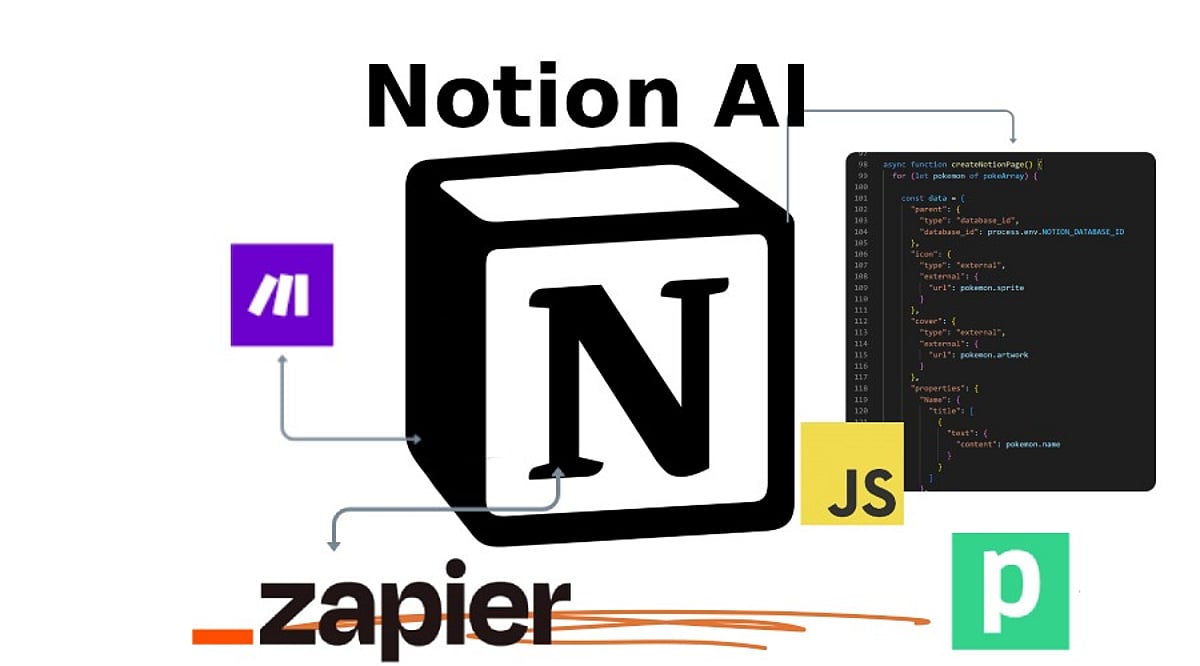
    Yes. Notion integrates with tools such as Slack, email platforms, CRM software, and automation services like Zapier and Make. These integrations create connected workflows that improve collaboration and efficiency.

    Is Notion AI suitable for teams and individual users?

    Yes. Notion AI supports both individual and team productivity by organizing knowledge, summarizing meetings, managing documentation, and keeping projects on track. It helps teams maintain consistency while reducing administrative effort.