Blog

  • FTSE 100 Reaches All-Time High as Earnings and Energy Stocks Fuel July Rally

    FTSE 100 Reaches All-Time High as Earnings and Energy Stocks Fuel July Rally

    London’s FTSE 100 surged to a new intraday record on Friday, propelled by robust corporate earnings and gains in energy and mining stocks. The benchmark index climbed 0.5% to 10,947.73 points by 1003 GMT, marking its strongest monthly performance since February. The mid-cap FTSE 250 also advanced 0.4% during the session.

    Investors focused on a wave of corporate results, following a week that included key central bank decisions and ongoing geopolitical tensions in the Middle East. Strong earnings from several UK-listed companies buoyed market sentiment.

    Mining and Energy Stocks Lead Gains

    Mining shares were the top performers on Friday, with industrial metal miners jumping 2.1% as copper prices rose. Precious metal miners added 0.9%. Energy stocks also provided significant support, with the sector gaining over 15% in July, making it one of the strongest on the index. Heavyweight energy companies added 1.4% on Friday despite oil prices dipping below $90 per barrel, as concerns over potential fuel supply disruptions linked to US-Iran tensions kept the sector in focus.

    Banking Sector Boosted by NatWest Results

    Banking stocks contributed to the broader market recovery. NatWest shares climbed 4.3% after the lender reported first-half operating profit before tax of £4.3 billion ($5.8 billion) and raised its full-year outlook. The positive update lifted the financial sector.

    Corporate Earnings Drive Investor Activity

    UK companies continued to release quarterly and half-year results, with investors closely monitoring earnings and economic data. IG Group shares fell 10.2% after the company agreed to acquire US daily fantasy sports and prediction markets operator Underdog for up to $1.3 billion. In contrast, Sainsbury’s shares rose 2.5% following the sale of Argos for at least £120 million ($161 million). Airline group IAG also reported results, with analysts noting cost controls and lower-than-expected fuel expenses supported its performance.

    Central Bank Decisions and Global Markets

    The market moves followed decisions from the Federal Reserve and the Bank of England, both of which kept interest rates unchanged. The Fed offered limited guidance on future rate adjustments, while the BoE saw three policymakers vote against the decision, more than the expected two. Additionally, strong gains in US technology shares improved global market sentiment.

    The FTSE 100 ended the week supported by earnings updates, commodity-linked sectors, and ongoing attention to global economic developments.

  • South Korea’s Kospi Soars Nearly 18% as Chip Stocks Lead Historic Rebound

    South Korea’s Kospi Soars Nearly 18% as Chip Stocks Lead Historic Rebound

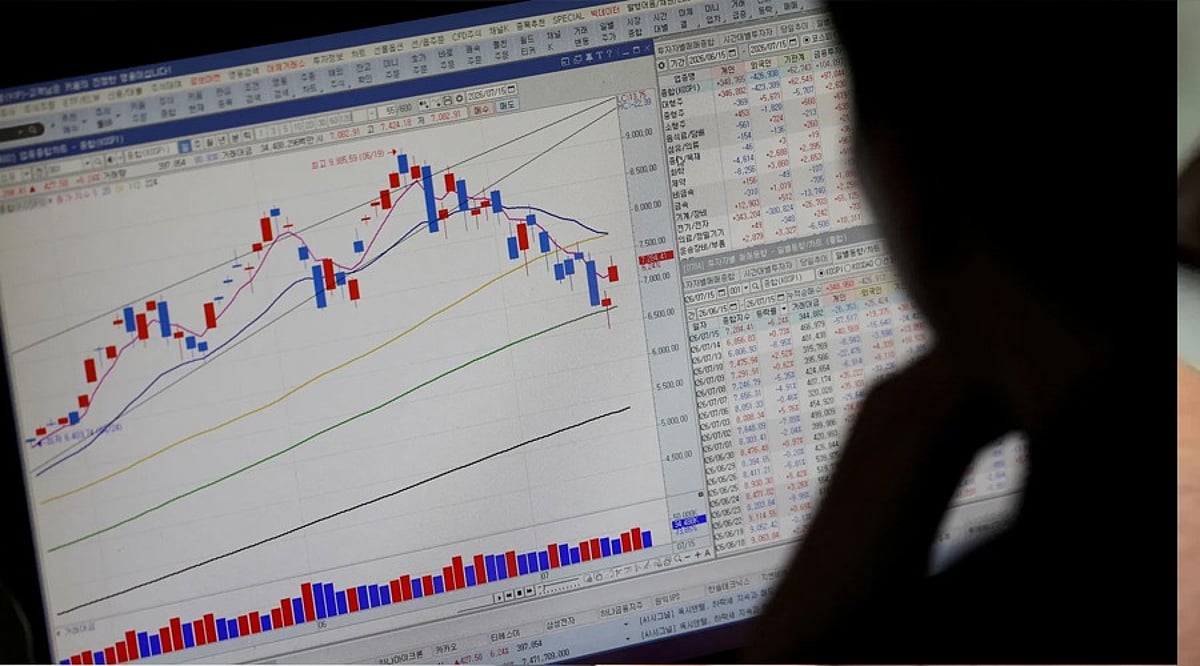
    South Korea’s Kospi index surged nearly 18% on Friday, July 31, heading for its largest one-day gain after three sessions of heavy losses. Chipmakers led the rebound, while Wall Street’s technology rally restored confidence across global markets.

    Chipmakers Drive the Record Kospi Rally

    The Kospi rose 18.27% to 6,615.60 earlier in the session. It later stood 17.9% higher at 6,695.45 as buying accelerated. Samsung Electronics climbed 28%, while SK Hynix jumped 30%. Both companies became the main drivers of the benchmark’s historic advance.

    The rally followed a three-day decline of more than 17%. Investors had sold technology shares amid concerns about an AI bubble and stronger Chinese competition. The Kospi still remained below its June record above 9,000. Before Friday, its largest daily rise was nearly 12% during the October 2008 financial crisis.

    Wall Street Rebound Restores Confidence

    Asian markets followed a strong technology-led session on Wall Street. United States chip stocks recorded their biggest one-day gain in more than a year.

    Microsoft shares surged 15.5%, marking their strongest session in nearly 18 years. Its quarterly profit exceeded expectations and suggested that large AI spending could support earnings. Amazon added 9.5% in after-hours trading following strong results. In contrast, Apple dropped more than 6% after warning that supply shortages could affect sales.

    Nasdaq 100 futures also moved higher after the index ended a six-day losing streak. TSMC gained about 10% and supported the wider Asian market advance.

    Bargain Buying Lifts Global Markets

    Investors returned to technology shares after the steep sell-off created lower entry prices. The renewed demand quickly lifted stocks that had suffered earlier in the week. Japan’s Nikkei 225 climbed 4% to 64,362.02. SoftBank Group advanced 13.8%, while chip equipment producer Tokyo Electron gained 6.2%.

    European markets also opened higher. Germany’s DAX rose 0.7%, France’s CAC 40 added 0.9%, and Britain’s FTSE gained 0.5%. United States futures increased 0.5%. Oil prices resumed climbing after Brent crude had edged lower as shipping conditions through the Strait of Hormuz showed improvement.

    The dollar recovered 0.5% to 160.28 yen after falling sharply overnight. Markets suspected intervention by Japanese and United States regulators near the 160-yen level.

    A Brief Roundup

    The Kospi’s nearly 18% surge followed a sharp rebound in Samsung Electronics, SK Hynix and other AI-linked shares. Wall Street’s technology gains and bargain buying strengthened the recovery. Investors will now watch economic data, oil prices, supply constraints and Middle East developments for signs that the rebound can continue.

  • OnePlus N6x Launches in India with 7,000mAh Battery, 120Hz Display, Starts at Rs 18,999

    OnePlus N6x Launches in India with 7,000mAh Battery, 120Hz Display, Starts at Rs 18,999

    OnePlus has expanded its budget smartphone lineup in India with the launch of the OnePlus N6x, a device that prioritizes endurance above all else. Featuring a massive 7,000mAh battery and a starting price of Rs 18,999, the smartphone targets users who need multi-day battery life without spending over Rs 20,000.

    Key Specifications and Availability

    The OnePlus N6x will go on sale from August 4 via OnePlus stores, Amazon India, the OnePlus Store app, and select offline retailers. Launch offers include an instant bank discount of up to Rs 1,500 and six months of no-cost EMI, effectively bringing the entry price down further.

    Display and Design

    The smartphone sports a 6.8-inch HD+ LCD display with a 120Hz refresh rate, 900 nits peak brightness, and a resolution of 1570×720 pixels. It also carries MIL-STD-810H certification, IP64 dust and splash resistance, and a 13,280mm² vapor cooling chamber to manage thermal performance during extended use.

    Performance and Software

    Under the hood, the OnePlus N6x is powered by the MediaTek Dimensity 6360 Apex chipset, paired with 4GB of RAM and storage options of 64GB or 128GB. It runs Android 16-based OxygenOS 16, which includes AI-powered photo editing tools such as AI Eraser, AI Portrait Glow, AI Unblur, and AI Reflection Eraser.

    Camera, Battery, and Pricing

    The camera setup includes a 13MP rear camera with autofocus and 1080p video recording, along with a 5MP front-facing camera for selfies. The 7,000mAh battery supports 15W wired charging and reverse charging, allowing the phone to double as a power bank. OnePlus claims the battery can last up to 2.5 days under typical usage. The 4GB + 64GB variant is priced at Rs 18,999, while the 4GB + 128GB model costs Rs 20,499 before launch discounts.

  • Google Pay Launches ‘Ask Google Pay’ AI Assistant in India for Smarter Personal Finance Management

    Google Pay Launches ‘Ask Google Pay’ AI Assistant in India for Smarter Personal Finance Management

    Google Pay has introduced a new AI-powered feature called ‘Ask Google Pay’ in India, designed to help users manage their personal finances more intuitively. Powered by Google’s Gemini AI model, the conversational assistant allows users to interact with the app using natural language—either text or voice—to track expenses, gain spending insights, and learn about financial concepts.

    Gemini AI Brings Conversational Finance to Google Pay

    With ‘Ask Google Pay’, users can pose queries about their expenditures without manually sifting through transaction history. The assistant analyzes spending patterns, clarifies financial jargon, offers savings advice, and even helps compare credit card options based on individual spending habits. The feature supports 10 Indian languages, making it accessible to a broader audience across the country. Users can also ask about SIP investments and CIBIL scores.

    Privacy Controls Remain at the Core

    Unlike some AI platforms that are automatically enabled, ‘Ask Google Pay’ is an optional feature. Users must activate it by turning on “Personalisation within Google Pay,” giving them control over whether their transaction history is used to generate personalized recommendations. Google assures that all financial data processed by the assistant stays within the Google Pay ecosystem and is not shared with third-party apps. The company also states that user data is not used to train any Google AI models. However, the assistant may occasionally generate incorrect responses and should not be considered a replacement for professional financial advisors.

    Expanding AI Beyond Payments

    This launch aligns with Google’s broader strategy of integrating Gemini across its consumer products. Google Pay is evolving from a simple payment app into a comprehensive financial companion that not only facilitates transactions but also provides budgeting help, financial education, and personalized recommendations. The feature is currently rolling out to select Google Pay users in India, with a wider release expected soon.

    India remains a key market for Google’s digital payment services, and the introduction of AI-powered financial assistance highlights the growing convergence of fintech and generative AI. As digital payment platforms compete to offer more intelligent budgeting and spending analysis, ‘Ask Google Pay’ positions Google Pay as a leader in personalized financial guidance.

  • Ethereum Price Outlook: Institutional Rotation and Whale Accumulation Signal Bullish Breakout

    Ethereum Price Outlook: Institutional Rotation and Whale Accumulation Signal Bullish Breakout

    Ethereum (ETH) is showing renewed signs of strength as institutional investors increase exposure and on-chain data reveals significant activity from large holders. While recent whale transactions initially raised concerns about selling pressure, the broader market has remained resilient, and derivatives traders continue to maintain bullish positions.

    Institutional Capital Shifts Toward Ethereum

    Recent fund flows indicate a notable rotation from Bitcoin into Ethereum investment products. Over the past week, Bitcoin-based exchange-traded funds (ETFs) recorded approximately $60 million in net outflows, while Ethereum-focused products attracted $20 million in inflows. This shift suggests that some institutional investors are increasing their allocations to Ethereum. At the same time, the network continues to expand its role in decentralized finance (DeFi), stablecoin settlements, and tokenized real-world assets — among the fastest-growing sectors in the digital asset space.

    Whale Transactions Highlight Active Accumulation

    According to Lookonchain, a major wallet withdrew 40,000 ETH worth nearly $76.6 million from Binance in a single transaction. Large withdrawals from exchanges are generally viewed as a bullish signal, as they reduce the readily available supply for sale and may indicate longer-term accumulation. Additionally, ETH’s largest wallets recently redistributed 226,435 ETH valued at around $430 million — one of the biggest surges in whale activity seen in recent weeks. Instead of triggering immediate concerns, the market absorbed these movements while the price held above key support levels.

    Derivatives Market Maintains Bullish Bias

    Data from CoinGlass shows that Ethereum’s OI-weighted funding rate has remained positive for most of July, currently sitting at 0.0022%. This indicates that long traders are paying a premium to keep their positions open. Although the rate briefly dipped below zero, it has since recovered, reinforcing a generally bullish sentiment. The long/short ratio also leans bullish at 0.9904. On Binance, Top Trader accounts show a ratio of approximately 1.78, while Binance overall stands at 2.24 and OKX at 1.66. Overall, investors remain positioned for longs rather than shorts.

    Technical Structure

    Ethereum has strengthened its foundation after forming a double bottom near the $1,550–$1,600 support range and reclaiming the significant $1,900 level. The 200-day Exponential Moving Average (EMA) is starting to decline in the $2,100–$2,200 range, which serves as a key resistance zone with a long-term supply area. If the price breaks above this range, bulls could target $2,500. On the downside, maintaining support above $1,900 is critical. A break below that level could expose ETH to another test of the $1,750–$1,800 demand area.

    With institutions positively adding to their holdings, whale activity remaining bullish, and derivatives traders staying long, Ethereum is entering an important phase that may shape its medium-term price trajectory.

    FAQs

    Why are institutional investors becoming more interested in Ethereum?

    Recent fund flow data shows capital rotating from Bitcoin investment products into Ethereum-focused funds. Investors are also attracted by Ethereum’s growing role in decentralized finance (DeFi), stablecoins, and tokenized real-world assets.

    What does whale accumulation mean for Ethereum’s price?

    Large withdrawals of ETH from exchanges are generally viewed as a bullish signal since they reduce the immediately available supply for selling. This often suggests long-term accumulation rather than short-term profit-taking.

    What do Ethereum’s funding rates indicate?

    According to CoinGlass, Ethereum’s OI-weighted funding rate has remained positive for most of July, indicating that long traders are paying a premium to maintain their positions. Positive funding typically reflects optimistic sentiment in the derivatives market.

    What are the key technical levels to watch for ETH?

    Ethereum has important support around $1,900, while the primary resistance lies between $2,100 and $2,200, where the 200-day EMA is located. A breakout above this zone could strengthen the bullish trend and bring $2,500 into focus.

    What does the long/short ratio suggest about market sentiment?

    The long/short ratios across major exchanges remain tilted toward long positions. Binance Top Trader accounts, Binance overall accounts, and OKX all show more long positions than shorts, indicating that professional traders continue to maintain a constructive outlook for Ethereum.

  • Titan Quest II Early Access Review: Engaging Combat Overshadowed by Loot Clutter

    Titan Quest II Early Access Review: Engaging Combat Overshadowed by Loot Clutter

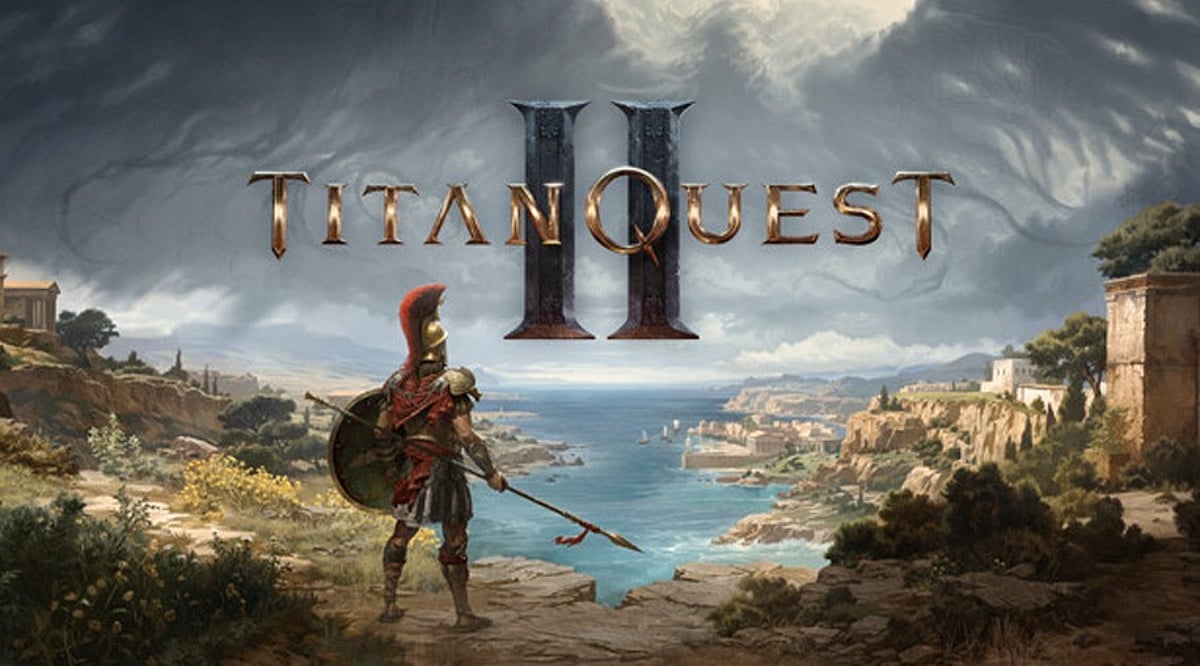
    Titan Quest II revives the mythological hack-and-slash genre with refined controls, dynamic combat, and authentic battlefields inspired by ancient Greek mythology. Currently in early access, the game offers satisfying skill-based combat and exploration, though it struggles with loot overload and a forgettable narrative that prevent it from reaching the heights of top-tier action RPGs.

    General Information

    • Launch Date: August 2025
    • Platforms: PlayStation 5, Microsoft Windows, Xbox Series X|S, GeForce Now
    • Developers: Grimlore Games, THQ Nordic
    • Publishers: THQ Nordic
    • Genres: Action role-playing game, Adventure game, Early Access, Shooter, Fighting game
    • Target Audience: ARPG fans, Diablo enthusiasts, mythology lovers, Titan Quest franchise fans, loot & build optimizers, co-op/multiplayer gamers, open-world explorers

    Key Features

    • Smooth, intuitive controls for accessible gameplay, especially on console
    • Multiple masteries, skills, passives, and modifiers for diverse character builds
    • Fast-paced combat with impactful action and rewarding aggressive strategies
    • Greek-inspired environments, enemies, and bosses for immersive mythological experience
    • Optimized performance on standard hardware without high-end requirements

    Strengths

    • Highly satisfying combat with impactful skill effects and fluid animations
    • Strong build variety through flexible skill and mastery combinations
    • Beautiful visuals and richly detailed Greek mythology settings
    • Great controller support for comfortable gameplay across all platforms
    • Good performance even on mid-range PCs

    Challenges

    • Excessive loot drops cause constant inventory management frustration
    • Weak storyline that feels forgettable and fails to engage
    • Occasional performance stutters during traversal
    • Repetitive vendor trips due to inventory overload
    • Early access limitations with incomplete content and missing features

    Conclusion

    Titan Quest II delivers engaging action RPG gameplay with solid combat, flexible builds, and a rich mythological world. Despite loot clutter and a weak story, it offers enjoyable content for ARPG fans and shows strong potential for future improvements as development continues.

  • Key CFO Challenges in 2026: Navigating Economic Uncertainty, AI, and Compliance in India and Worldwide

    Key CFO Challenges in 2026: Navigating Economic Uncertainty, AI, and Compliance in India and Worldwide

    Chief Financial Officers in 2026 face a complex landscape marked by persistent economic uncertainty, rapid technological change, and evolving regulatory demands. From inflation and geopolitical tensions to AI adoption and cybersecurity threats, CFOs must balance growth with cost discipline while ensuring financial resilience. This article explores the top challenges and trends shaping the role of CFOs in India and globally.

    Navigating Constant Economic Uncertainty

    CFOs in 2026 grapple with ongoing uncertainty driven by inflation, fluctuating interest rates, geopolitical tensions, and shifting consumer demand. Financial leaders must balance growth with cost discipline while maintaining healthy cash flow. Strategic forecasting, scenario planning, and financial resilience have become essential responsibilities for organizations worldwide, including India.

    AI Adoption Brings Opportunities and Risks

    Artificial intelligence is transforming finance through automation, predictive analytics, and smarter decision-making. However, CFOs must evaluate implementation costs, data quality, governance, and return on investment. Managing AI responsibly while ensuring compliance and workforce readiness remains a top priority for financial leadership in 2026 across industries.

    Regulatory Compliance Keeps Growing

    New financial regulations, tax reforms, ESG reporting requirements, and evolving data privacy laws demand constant attention. Indian and global CFOs must strengthen internal controls, improve reporting accuracy, and stay ahead of compliance obligations. Failure to adapt quickly can increase financial risks, penalties, and reputational damage.

    Cybersecurity Threats Impact Financial Operations

    Finance departments increasingly face ransomware, phishing attacks, and data breaches targeting sensitive financial information. CFOs now work closely with technology leaders to strengthen cybersecurity investments, business continuity plans, and incident response strategies. Protecting financial assets and maintaining stakeholder trust have become strategic business priorities in 2026.

    Managing Costs Without Hurting Growth

    Organizations continue searching for efficiency while investing in innovation and digital transformation. CFOs must identify cost-saving opportunities without reducing customer experience, operational quality, or long-term competitiveness. Careful budgeting, productivity improvements, and smarter resource allocation help businesses maintain sustainable growth despite economic challenges and market uncertainty.

    Talent Shortages Challenge Finance Teams

    Finding professionals with expertise in analytics, AI, financial planning, and digital finance remains difficult. CFOs must invest in employee training, leadership development, and technology that improves productivity. Building adaptable finance teams capable of managing modern financial systems is becoming a competitive advantage across global organizations and India.

    Strategic Leadership Defines Modern CFO Success

    Today’s CFO is no longer limited to financial reporting. Modern finance leaders influence business strategy, digital transformation, sustainability initiatives, and investor confidence. Success in 2026 depends on balancing financial discipline with innovation, embracing technology responsibly, and making informed decisions that support long-term organizational resilience and profitable growth.

  • Quordle July 31 Hints and Answers: Solve Today’s Puzzle With These Clues

    Quordle July 31 Hints and Answers: Solve Today’s Puzzle With These Clues

    Today’s Quordle puzzle offers a mix of wrestling-inspired words, common household items, and descriptive vocabulary. Two of the answers contain repeated letters, so careful observation is key to solving all four puzzles. Whether you’re a seasoned player or just starting, these hints and strategies will help you crack the code.

    Hints for Quordle Today

    If you need a nudge without seeing the full answers, here are today’s clues:

    • Word 1 (Top Left): Passion for WWE’s annual championship wrestling event.
    • Word 2 (Top Right): To scorch the surface of something.
    • Word 3 (Bottom Left): Chair without a back or arm support.
    • Word 4 (Bottom Right): Dignified in character or very lofty.

    More Hints

    Still working on it? Here’s additional help:

    • Two of today’s answers contain a pair of repeated letters.
    • The four words begin with the letters M, S, S, and L.

    If you’re still trying to solve the puzzle yourself, this is your final spoiler warning before today’s answers.

    Quordle Today Answers

    Today’s Quordle answers are:

    • MANIA
    • SINGE
    • STOOL
    • LOFTY

    Today’s puzzle offered a nice mix of familiar vocabulary and slightly deceptive clues. MANIA may have been the easiest for wrestling fans thanks to the WrestleMania reference. SINGE required thinking of a light burn rather than a serious one. STOOL was a typical household item, whereas LOFTY might have posed a challenge since it hinted at both noble qualities and being very high. The repeated letters in SINGE and STOOL certainly added extra complexity.

    Quordle Recap

    In today’s Quordle, the winners were those who focused on interpreting the meanings of the clues rather than just looking at letter patterns. The repeated letters in two of the solutions created a trap for anyone not paying close attention.

  • FTSE 100 Surges 84 Points to 10,981.47 as Global Tech Rally Boosts UK Markets; Brent Oil Drops to $87.88

    FTSE 100 Surges 84 Points to 10,981.47 as Global Tech Rally Boosts UK Markets; Brent Oil Drops to $87.88

    The FTSE 100 opened 84.20 points higher at 10,981.47 on Friday, driven by a global rally sparked by strong Amazon earnings and a broad rebound in technology shares on Wall Street and across Asia. Meanwhile, Brent crude futures fell 1.29% to $87.88 per barrel, and US West Texas Intermediate (WTI) declined 1.71% to $82.16 per barrel.

    Sterling held steady at $1.3440, little changed from $1.3439 in the previous session. Against the euro, the pound edged up to €1.1678 from €1.1671.

    Gainers & Losers

    On the upside, Polar Capital Technology Trust surged 4.42% to 638.50p. NatWest Group gained 3.86% to 710.20p, while IMI advanced 3.53% to 3,050p. Anglo American climbed 3.36% to 3,851p, Antofagasta rose 3.21% to 3,823p, and Sainsbury (J) added 3.01% to 366.40p.

    On the downside, IG Group Holdings declined 6.80% to 1,590p. Pearson dropped 3.17% to 1,251.50p, while RELX slipped 1.65% to 2,631p. Unilever eased 1.43% to 4,780.50p, Reckitt Benckiser fell 0.87% to 5,254p, and London Stock Exchange Group edged 0.74% lower to 8,542p.

    Interest Rates Hit Housing Market

    The UK housing market’s summer slowdown extended into July as geopolitical uncertainty continued to pressure interest rates and energy prices. Annual house price growth slowed to 1.8% in July, down from 2.2% the previous month. The average price fell by £551.1 during the month to £277,542, according to the latest Nationwide house price index.

    IAG Shares Decline

    British Airways owner IAG dropped more than 4% to 419p after reporting a 16% decline in profit to €1.4 billion, hurt by soaring fuel prices following disruptions to the oil market from the Iran conflict. Mark Crouch, market analyst at eToro, noted the airline’s resilience: “Higher fuel prices, disruption linked to the Middle East conflict and lower-than-planned capacity all weighed on second-quarter profits, but strong demand for travel and disciplined cost control helped the group preserve one of the strongest margins in the sector. Clear skies are far from guaranteed, particularly if fuel prices remain elevated or geopolitical tensions intensify. However, with bookings holding up and shareholder returns continuing, IAG appears well positioned to keep flying above much of the industry’s turbulence.”

    Intertek Revenue Jumps

    Intertek reported a 6% rise in first-half revenue to £1.8 billion, driven by new acquisitions and strong performance in its corporate assurance business. Pre-tax profit climbed 14% to £145.5 million. Growth was fueled by a 10% revenue increase in the corporate assurance arm and a 6% rise in its health and safety division. Last month, the firm agreed to an £11 billion takeover by Swedish buyout firm EQT.

    Global Market View

    In the US, the Nasdaq surged 2.8% as tech stocks led a comeback, while the S&P 500 climbed 1.7% and the Dow added 1.2%. In Asia on Friday, Tokyo’s Nikkei 225 jumped 4.03% to 64,362.02, China’s Shanghai Composite gained 0.72%, Hong Kong’s Hang Seng advanced 0.12%, and South Korea’s Kospi edged higher. In India, both the Nifty 50 and the Sensex rose modestly.

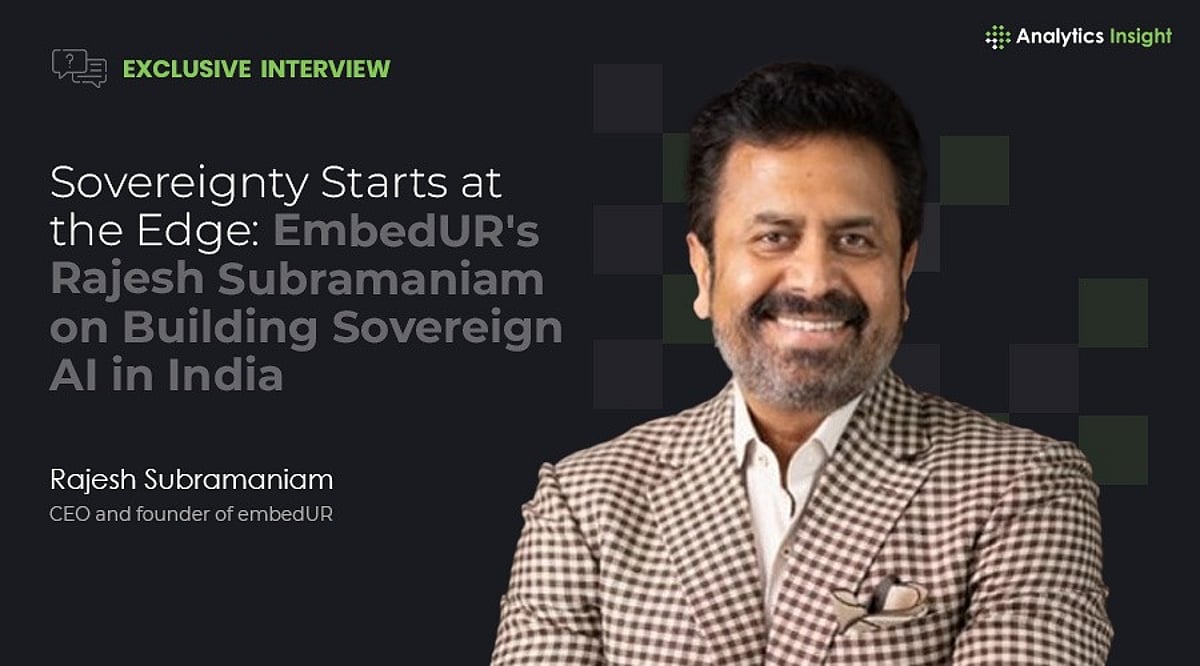
  • Edge AI Is the Missing Link in India’s Sovereign AI Strategy, Says embedUR CEO

    Edge AI Is the Missing Link in India’s Sovereign AI Strategy, Says embedUR CEO

    India’s AI conversation has centered on compute clusters and cloud infrastructure. Rajesh Subramaniam, CEO and founder of embedUR, argues this misses the bigger opportunity. In this exclusive interview with Analytics Insight, he makes the case for edge AI as the missing layer of India’s sovereignty strategy—one that keeps intelligence on factory floors, in clinics, and on farms rather than routed through servers abroad. He also explains how initiatives like IndiaAI Mission, Digital India, and Make in India could converge at the device level, and what enterprises need to do to turn AI pilots into measurable business results.

    Q: Can India truly achieve sovereign AI if intelligence remains concentrated in the cloud while edge deployment is overlooked?

    A: Sovereignty involves more than the location of model training or data centers. If every inference in an Indian factory, hospital, or utility relies on a cloud, often managed abroad, the intelligence layer of the economy remains dependent on external infrastructure, pricing, and policies. True sovereignty requires intelligence to operate where India’s data is generated: on devices, factory floors, clinics, vehicles, and other endpoints. Edge AI keeps data local by default, operates reliably with limited connectivity, and reduces foreign exchange costs associated with large-scale cloud inference. Cloud AI and edge AI are complementary. However, a sovereignty strategy limited to data centers perpetuates structural dependency. India should control both layers.

    Q: Why will sovereign edge infrastructure be critical to India’s long-term AI ambitions?

    A: When we look at India’s AI journey, three factors stand out: scale, resilience, and economics. Let’s start with scale. Our opportunity is massive—AI in India is not just about a few thousand enterprise deployments, but about reaching over a billion endpoints across agriculture, manufacturing, healthcare, energy, and mobility. Relying solely on the cloud for real-time inference at this scale is simply not practical or sustainable. The way forward is clear: embed intelligence directly into our devices, and use the cloud for training, coordination, and data aggregation. This is how we unlock true impact. Resilience comes next. Edge intelligence keeps working even when connectivity drops. For critical infrastructure like our power grids, water supply, and transportation, this is not just a feature—it is essential for national strength and reliability. The third factor is economics. Every time we use the cloud for inference, we pay ongoing costs—often to companies outside India. On-device intelligence, on the other hand, means we invest upfront and update as needed, but the value stays with us. By aligning our semiconductor ambitions with edge AI, we create a powerful ecosystem: chips made in India, models improved locally, and devices built by our own teams. This is how we achieve real independence and drive long-term growth.

    Q: How can Edge AI democratize AI adoption by bringing intelligence closer to where data is generated?

    A: Cloud-based AI demands high-speed internet, ongoing subscriptions, and complex data management. This leaves out a huge part of India’s economy: small manufacturers, rural healthcare providers, farmers, and businesses in Tier-2 and Tier-3 cities. Edge AI changes the game. Affordable, microcontroller-based solutions work offline, cut out per-inference fees, and keep sensitive data local. This is how we bring AI to everyone. Small foundries can now run visual inspections without cloud contracts. Primary health centers can deliver diagnostics on-site. Farmers can control pumps without relying on connectivity. Over the last two decades in embedded software, I have seen firsthand that technology becomes truly accessible when it is built into affordable hardware. As AI models get smaller and fit into MCUs and NPUs, embedding AI in the devices people already use is the most practical and inclusive way forward for India.

    Q: What is the role of embedded systems, edge computing, and intelligent devices in enabling scalable, real-world AI deployment?

    A: Real value comes when intelligence is built into products that ship, survive in the field, and run for years on limited power and memory. Models that stay in demos or data centers never make an impact. The real work is delivering solutions that last. This is the heart of embedded systems. Moving from research to real products means optimizing for the actual chip, integrating with sensors and connectivity, and making sure it works in the real world, not just the lab. Many AI projects get stuck here. The challenge is not building the model, but getting it deployed and keeping it running. This is exactly why we launched ModelNova as an independent company from embedUR. The industry is moving toward production-ready models that are proven on real silicon, so device makers are not left to bridge the gap alone. India has the talent and the drive in embedded engineering and electronics manufacturing. We have a real opportunity to lead the world in this deployment layer.

    Q: How can national initiatives such as the IndiaAI Mission, Digital India, and Make in India converge to strengthen India’s AI ecosystem?

    A: Each of these initiatives tackles a critical layer. IndiaAI Mission is driving our compute capacity, datasets, and model development. Digital India has laid the foundation with robust connectivity and digital public infrastructure. Make in India, alongside the India Semiconductor Mission, is powering up our hardware manufacturing. Where these efforts come together is at the intelligent device—the next frontier for India’s leadership in technology. Building an AI-enabled device entirely in India is within our reach: silicon designed and produced here, models trained on Indian data using our own compute, and seamless deployment and updates over our digital infrastructure. We have already proven our ability to deliver this kind of end-to-end innovation—UPI is a world-class example of how public infrastructure and private ingenuity can leapfrog outdated systems. Now, we have the opportunity to do the same for edge AI. The key is focused policy that brings it all together: incentives for manufacturing AI-capable devices, standards and certification tailored for Indian conditions and languages, and procurement that demands on-device intelligence for public projects in health, agriculture, and infrastructure. When these missions align at the device level, India moves from being a consumer of AI to becoming a global exporter of AI innovation.

    Q: What do Indian enterprises across manufacturing, healthcare, and energy need to do to translate AI innovation into measurable business impact?

    A: Start with the business outcome that truly matters. In my experience, technology earns its place only when it solves a real problem and drives results for the business. Too often, I have seen AI projects lose focus chasing the latest trends. The projects that succeed are the ones that zero in on the numbers that matter: reducing defects, cutting downtime, increasing patient throughput, or minimizing transmission losses. Identify the key metric, then work backward to the simplest AI solution that delivers measurable results. In manufacturing, I always advise starting with a single line. Focus on visual inspection or predictive maintenance for your most critical asset, and track progress against a clear baseline. Once you prove value, scale it across the plant. In healthcare, true impact comes from point-of-care intelligence that integrates directly into clinical workflows, operates on-device, protects patient privacy, and keeps running even when connectivity drops. In energy, drive intelligence to the grid edge, where losses occur and where waiting for the cloud is simply not an option. There are three disciplines that turn pilots into real business impact. First, deploy intelligence where the data is generated. Latency, connectivity, and data privacy challenges often derail cloud-only projects, especially in the realities of the Indian market. Second, treat AI as a product-engineering initiative, not just a data science experiment. Invest in integration, validation, and lifecycle maintenance, because that is where the real value is created. Third, measure relentlessly against your original baseline. If AI cannot deliver results you can show in a quarterly review, it is just a science project. If it does, it becomes a line item your CFO will champion.