Blog

  • Vercel: The Frontend Cloud Platform Powering Modern Web Development with AI and CI/CD

    Vercel: The Frontend Cloud Platform Powering Modern Web Development with AI and CI/CD

    Vercel is a software development company that provides a powerful frontend cloud platform for building, deploying, and scaling modern web applications. With cloud infrastructure, CI/CD automation, and AI coding agents, it enables developers to deliver fast, secure, and high-performance digital products efficiently across global environments.

    About the Company

    Vercel offers developers a robust frontend cloud platform that allows them to easily construct and test web applications before final deployment. The platform provides an efficient way to build fast and scalable digital products through its serverless features, high-performance hosting, and seamless workflow capabilities.

    Vercel develops its platform for developers by combining AI-powered tools with improved build systems and live teamwork features. The ecosystem enables teams to create innovative solutions through support for current frameworks, automatic deployment systems, and intelligent deployment procedures.

    Products and Services

    Vercel offers cloud infrastructure, CI/CD, serverless functions, an AI SDK, a content delivery network, observability, security tools, and deployment automation. These services enable developers to build, scale, and secure high-performance web applications globally.

    Revenue Streams

    Vercel generates revenue through tiered SaaS subscriptions, usage-based billing for compute, bandwidth, and storage, enterprise contracts, AI tool subscriptions, and premium managed infrastructure services that support scalable web applications.

    Client Segments

    The cloud platform provides frontend development capabilities together with serverless infrastructure, AI tools, CI/CD automation, security features, and observability solutions. Target companies include startups, mid-sized businesses, and enterprises that require scalable systems with high performance and developer-friendly features.

    Target Geography

    Vercel allows organizations from around the world to build, deploy, and scale applications to serve their needs.

  • ZoomMate and AI: Redefining Enterprise Collaboration for Indian Businesses

    ZoomMate and AI: Redefining Enterprise Collaboration for Indian Businesses

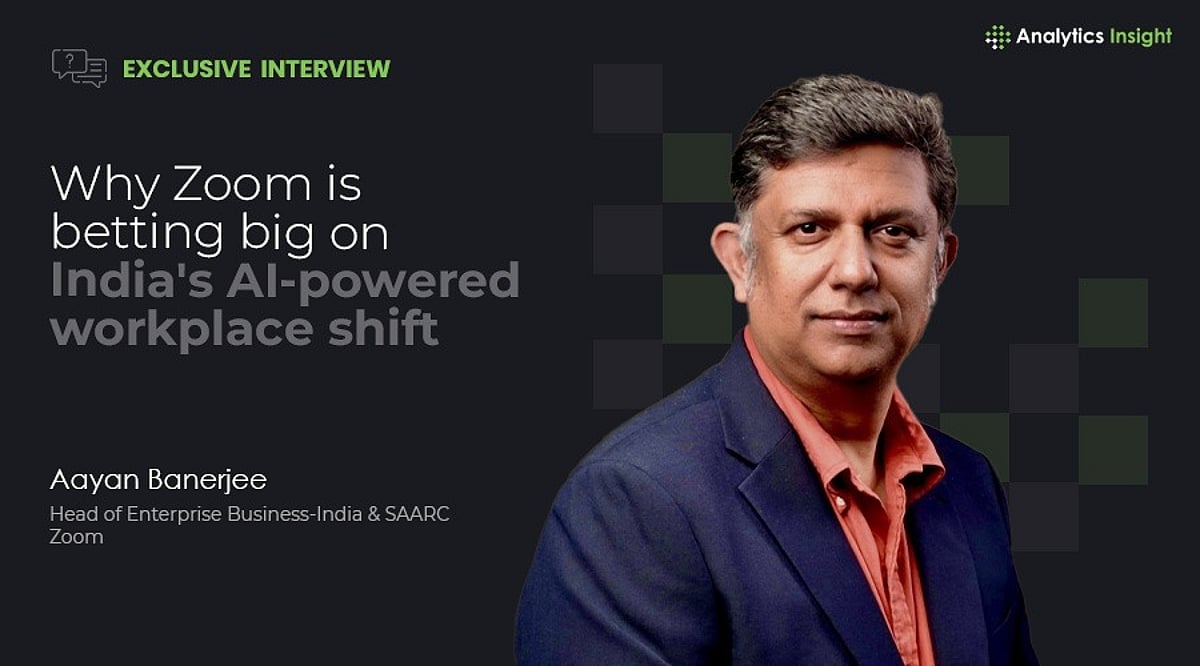
    Zoom is transforming from a simple video conferencing tool into a comprehensive platform for collaboration, customer engagement, and workflow automation, powered by artificial intelligence. In an exclusive interview with Analytics Insight, Aayan Banerjee, Head of Enterprise Business-India & SAARC at Zoom, shares how the company is helping Indian enterprises move from fragmented tech stacks to unified systems that drive real business outcomes.

    Banerjee explains that Zoom is evolving into a ‘system of action’ for modern work, designed to seamlessly blend video, voice, collaboration, and intelligent automation across the customer and employee experience. The focus is on turning conversations into outcomes, whether that means resolving a customer issue, closing a deal, or completing a project.

    Key to this vision is ZoomMate, an agentic AI work surface that helps users find relevant information across systems, coordinate actions, and transform conversations into completed work. Combined with Zoom Phone, Zoom Contact Center, and the Zoom AI Productivity Suite (including Canvas, Slides, and Sheets), organizations can reduce fragmentation and simplify operations.

    In India, Banerjee notes a strong demand for platform consolidation. Businesses are moving away from disconnected communication and customer engagement tools toward unified experiences. This is especially critical in sectors like BFSI and healthcare, where resolution speed is a competitive differentiator.

    Zoom’s AI Companion is embedded across the platform, helping users surface insights and action items. Zoom Phone unifies employee communications, while Zoom Contact Center connects customer interactions across voice, video, messaging, and digital channels. Together, these tools ensure context remains connected, reducing operational overhead and freeing teams to focus on high-value work.

    Banerjee highlights India as a strategic growth market, citing examples like Lenskart, which uses Zoom Contact Center for remote eye tests. Other features like Zoom Revenue Accelerator help sales teams gain conversation intelligence, and Zoom Events enables immersive hybrid experiences. With local phone number support and availability across six telecom circles, Zoom is well-positioned to help Indian enterprises reduce friction and accelerate outcomes.

  • XRP Price Faces Pivotal Test at $1.12 Resistance as Institutional Inflows and Whale Activity Surge

    XRP Price Faces Pivotal Test at $1.12 Resistance as Institutional Inflows and Whale Activity Surge

    Ripple’s XRP is currently trading at $1.07, recovering from a low of $1.04 on July 28 and approaching a critical resistance zone at $1.08. Despite cautious market sentiment, institutional participation is improving, whales continue to accumulate, and derivatives data points to growing bullish positioning.

    Institutional Demand Shows Signs of Recovery

    Institutional interest in XRP has shown signs of recovery. According to SoSoValue, US spot XRP ETFs recorded $584,000 in net inflows on Wednesday and $5.98 million on Thursday, extending the inflow streak to three consecutive weeks. This uptick is partly driven by plans to tokenize the Aviva Investors USD Liquidity Fund on the XRP Ledger (XRPL), following the implementation of the fixCleanup3_2_0 amendment, which is expected to enhance the platform’s appeal for institutional projects.

    Whale Accumulation Continues Despite Market Caution

    Large holders continue to increase their positions. Santiment data shows that wallets holding between 10,000 and 100,000 XRP now account for 11.9% of total supply, up from 11.64% on July 1. Similarly, addresses with 100,000 to 1 million XRP have increased their share to 11.75% from 11.45% in the same period. Retail participation is also rising, with perpetual futures open interest reaching 2.27 billion XRP as traders build positions ahead of a potential breakout.

    Technical Structure Points to Key Levels

    From a technical perspective, XRP remains below key moving averages. The 50-day EMA at $1.127, 100-day EMA at $1.211, and 200-day EMA near $1.405 all point to a broader bearish bias. The RSI stands at 43.66, indicating modest downside momentum, while the MACD line is slightly below zero and flattening, suggesting weakening bearish pressure. Immediate resistance is at the 50-day EMA ($1.127), followed by the 100-day EMA ($1.211). On the downside, $1.000 serves as key psychological support; a daily close below this level could trigger further declines.

    Derivatives Data Shows Bullish Positioning

    The funding rate for XRP has jumped to 0.089%, the highest since July 20, indicating that long traders are willing to pay a premium to maintain their positions. Meanwhile, Binance’s long/short ratio stands at 2.57, reflecting a significant bullish bias.

    FAQs

    1. Why is XRP approaching a critical resistance level? XRP is trading below its key moving averages, with the 50-day EMA around $1.127 acting as the first major resistance. A sustained breakout above this level could improve short-term momentum and shift sentiment in favor of buyers.

    2. What do the latest XRP ETF inflows indicate? According to SoSoValue, XRP ETFs recorded $584,000 in net inflows on Wednesday, followed by $5.98 million on Thursday. The continued inflows suggest that institutional interest in XRP is gradually improving.

    3. Are XRP whales continuing to accumulate? Yes. Santiment data shows wallets holding between 10,000 and 100,000 XRP increased their share of the total supply to 11.9%, while wallets with 100,000 to 1 million XRP also expanded their holdings, indicating continued confidence among large investors.

    4. What do the funding rate and long/short ratio reveal? According to CoinGlass, XRP’s funding rate has climbed to 0.089%, the highest since July 20, showing that long traders are willing to pay a premium to maintain bullish positions. Binance’s 2.57 long/short ratio also reflects stronger bullish positioning.

    5. What are the key support and resistance levels for XRP? Immediate resistance is located near the 50-day EMA at $1.127, followed by the 100-day EMA at $1.211. On the downside, $1.00 remains the key psychological support, and a break below that level could increase the risk of further downside.

    Disclaimer: This article is for informational purposes only and does not constitute financial advice. Cryptocurrency investments are risky and may result in loss. Always conduct your own research before investing.

  • CowryWise Review: Nigeria’s Automated Savings and Investment App for Smart Financial Planning

    CowryWise Review: Nigeria’s Automated Savings and Investment App for Smart Financial Planning

    Overview

    CowryWise is a Nigerian fintech mobile app that helps users automate savings and invest in regulated mutual funds. Licensed by the Nigerian SEC, the platform offers goal-oriented saving, investment opportunities in both Naira and Dollars, and portfolio management tools. It is designed for individuals, young professionals, students, salaried employees, freelancers, families, and long-term investors. The app is available on iOS, Android, and the web.

    Key Features

    • Automated Savings: Set up daily, weekly, or monthly savings plans to build wealth without manual deposits.
    • Mutual Fund Investments: Access professionally managed Naira and Dollar mutual funds tailored to your financial goals.
    • Goal-Based Savings: Choose from options like Emergency Savings, Money Duo, Circle Savings, or custom savings for rent, travel, education, or business.
    • Risk Assessment: Receive investment recommendations based on your financial objectives and risk tolerance.
    • Account Linking & Tracking: Automate bank account connections, recurring payments, portfolio tracking, interest calculations, and access to financial literacy resources.

    Benefits

    • Disciplined Savings: Automated schedules help you meet short- and long-term goals effortlessly.
    • Better Returns: Invest in well-regulated mutual funds that typically outperform traditional savings accounts.
    • High Security: Licensed custodians, SEC oversight, encryption, and anti-fraud systems protect your funds.
    • User-Friendly: An intuitive interface makes saving and investing easy for beginners.
    • Compound Growth: Consistent reinvestment helps build wealth over time.

    Challenges

    • Locked Savings: Funds in locked savings plans cannot be withdrawn before maturity, reducing flexibility in emergencies.
    • Emergency Savings Waiting Period: Withdrawals require a security waiting period, which may be inconvenient.
    • Minimum Contributions: Some plans require minimum deposits that may not suit small savers.
    • Market-Dependent Returns: Investment performance is not guaranteed.
    • Nigeria-Focused: Most services are limited to Nigerian users, excluding international customers.

    Pricing & Subscription

    CowryWise does not charge subscription fees for opening or managing accounts. Users can start saving with minimal deposits; investment products have varying minimums. Returns depend on market performance and the chosen mutual fund, not on subscription fees.

    Customer Support

    The platform offers a comprehensive Help Center with FAQs, security tips, and educational content. Support is available via in-app chat, email, and phone for account verification, savings plans, investments, and withdrawals.

    Conclusion

    CowryWise combines automated savings, regulated mutual fund investments, strong security, and ease of use. User testimonials, domain age, and popularity add to its credibility. While locked savings and market-dependent returns may not suit everyone, the app remains a solid choice for Nigerians seeking effective saving and investing tools.

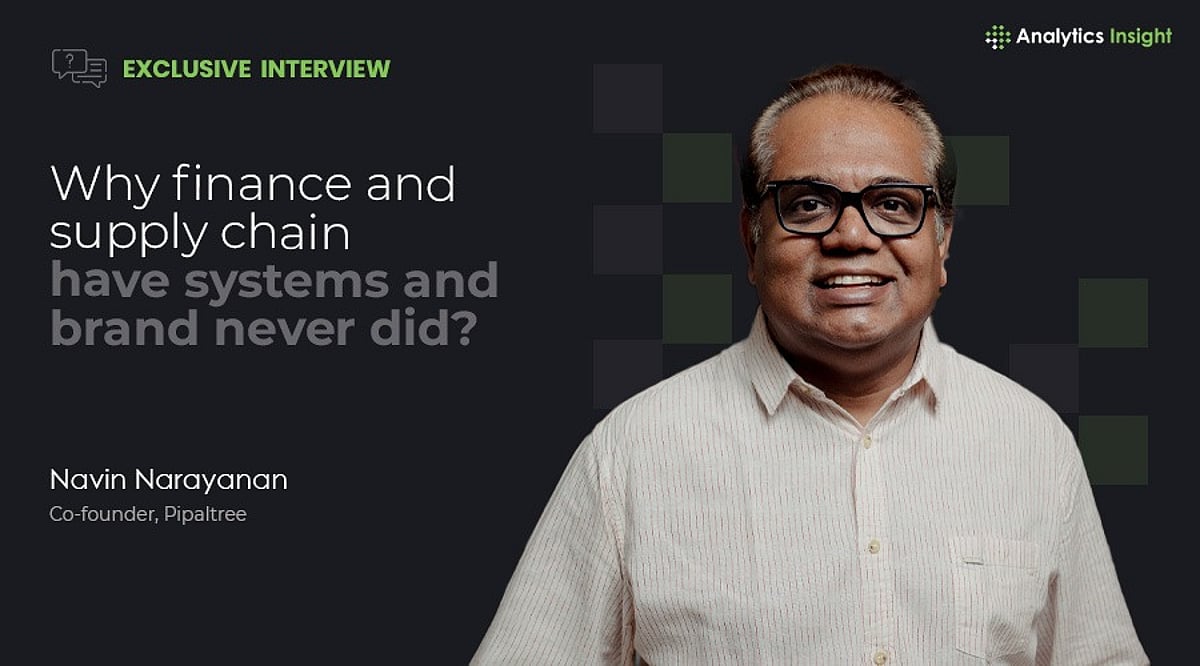
  • Pipaltree Co-Founder Navin Narayanan: Why Brand Measurement Is Broken and How Actionable Brand Intelligence Fixes It

    Pipaltree Co-Founder Navin Narayanan: Why Brand Measurement Is Broken and How Actionable Brand Intelligence Fixes It

    Interview: Navin Narayanan on Reinventing Brand Intelligence

    Pipaltree co-founder Navin Narayanan explains why brand measurement is broken and how actionable brand intelligence helps CEOs drive brand coherence across every touchpoint.

    Q: The brand research and insights industry is crowded — Nielsen, Kantar, Gartner, and countless boutique agencies. Where in this ecosystem does Pipaltree sit? Are you a replacement, a supplement, or something entirely new?

    A: Pipaltree is something entirely new — and the distinction is not about features. It is about what a brand actually is. A brand is a net impression. It is the feeling created in the mind of a customer through every interaction they have with a business — across every touchpoint, every channel, every experience. That feeling is what drives their decisions. The prevailing approach to measuring brand breaks that impression into atomistic attributes and asks people to rate them on a scale. Trustworthiness: 4 out of 5. Quality: 3 out of 5. The problem is not the execution. The problem is the premise. You cannot reconstruct a net impression from fragments. The moment you atomise it, you have already lost the thing you were trying to measure. Pipaltree is built on a different premise that is drawn from clinical psychology adapted for brand management. We capture the net impression as a whole, through real conversations at scale, and synthesise that into intelligence a CEO can act on. Finance has systems. Supply chain has systems. Brand has never had one. Not because no one tried, but because no one started from the right definition of what a brand actually is. That is what we are building.

    Q: Category creation is expensive and uncertain. You’re building “Actionable Brand Intelligence” as a new category. What evidence do you have that this category actually exists in the mind of a CEO, versus being a solution looking for a problem?

    A: We don’t have a survey that proves CEOs want this. We have something more reliable which is what clients do after they start using Pipaltree. Once a team begins using Pipaltree and acting on what it surfaces, the story travels inside the organisation. Other divisions ask for it. Other countries want it. What started in one part of the business mushrooms across it, not because we pitched the expansion, but because the people already using it made the case internally. A significant part of our growth comes from existing clients expanding. That is the evidence.

    Q: At what stage of a brand’s or organisation’s journey does actionable brand intelligence become relevant — and is there such a thing as too early or too late to adopt it?

    A: Pipaltree is not for every brand. If a brand is still defining itself, like at a stage where it is still working out its values or still finding its voice, there is nothing coherent yet to measure. But when a business has multiple touchpoints like customers, employees, partners, channels, brand is the only thing that can hold all of it together. Every one of those touchpoints is forming an impression in someone’s mind. That impression, accumulated across millions of interactions, is what the brand actually is. And yet most businesses have no system to drive it. Finance has one. Supply chain has one. Brand gets a study, once a year, and a deck. Actionable brand intelligence is the system that was missing to help you drive the brand the way you drive every other part of the business, consistently, with real signals.

    Q: How does this industry look at handling data sovereignty, privacy regulations (GDPR, India’s DPDP), and client concerns about sensitive brand data being processed by LLMs or technology?

    A: We designed for privacy before it became a compliance requirement. When we use open-source models, they are deployed on our own servers. The data does not leave our environment. When we use external models like OpenAI, Anthropic, others, the system strips all personally identifiable information before anything leaves the platform. Names, phone numbers, anything that can link a response to a real person is redacted before the data moves. What the external model sees is clean, anonymised conversation. The client’s brand intelligence never touches a public model in a form that could identify anyone. We are watching the regulatory environment closely and building ahead of it.

    Q: What is the future of actionable brand intelligence — and which businesses stand to lose the most by waiting?

    A: The businesses that need this most right now are the ones already managing multiple touchpoints. These touchpoints include customers, employees, partners, channels, where brand coherence is an operational challenge, not just a communication one. But the more interesting shift is happening in categories that never had to think this way. CPG/FMCG brands built their identity through communication. A good campaign, a consistent message, and the net impression formed. That model is no longer holding. The same brands are now building platforms, creating communities, tweaking packaging more frequently, experimenting with variants. They are becoming multi-touchpoint businesses without necessarily planning to be. The world is moving toward multi-touchpoint brand building. The businesses that recognise this early and put a system behind it will have a significant advantage over the ones still treating brand as something you communicate rather than something you drive coherently and consistently across touchpoints.

  • AI as the Default Operating Layer: Pinnacle’s Bimal Patwari on the Future of AEC

    AI as the Default Operating Layer: Pinnacle’s Bimal Patwari on the Future of AEC

    Artificial intelligence is steadily reshaping the Architecture, Engineering, and Construction (AEC) industry, driving automation across design, engineering, documentation, quality control, and project management. While AI adoption on construction sites remains relatively slow, organizations are increasingly integrating intelligent technologies into design workflows, compliance, digital twins, and engineering processes to improve productivity, accuracy, and collaboration.

    As the industry moves beyond experimentation, AI is expected to connect the entire project lifecycle—from design and engineering to construction execution and facility management—creating a unified digital thread powered by predictive intelligence and automation. The convergence of AI, Digital Twins, and cloud-based collaboration is set to redefine how infrastructure projects are planned, delivered, and managed.

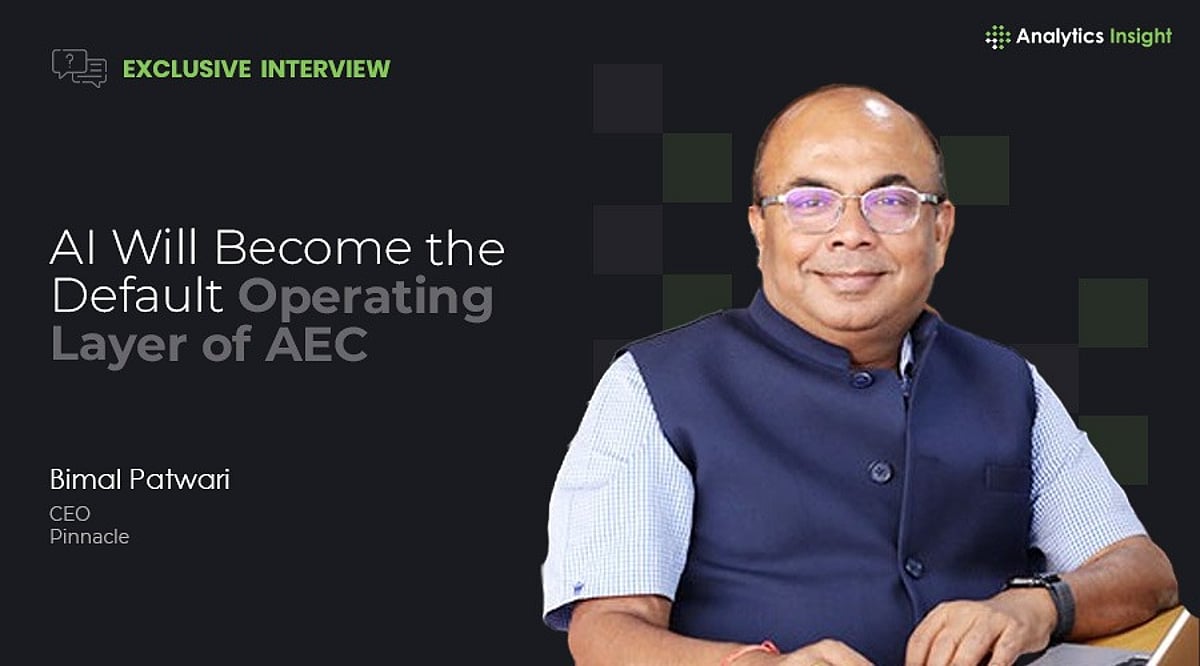
    Bimal Patwari, Founder and CEO of Pinnacle, believes AI should augment engineering expertise rather than replace it. He says successful AI adoption depends as much on organizational culture, digital maturity, and workforce readiness as it does on technology. According to him, companies that invest in structured digital foundations and continuous upskilling today will lead the next generation of AI-driven construction.

    In an exclusive interview with Analytics Insight, Patwari discusses AI adoption in the AEC industry, Digital Twins, generative AI, workforce transformation, enterprise-wide AI implementation, and how Pinnacle is building intelligent engineering and construction workflows. Here are the excerpts from the interview:

    How is AI Adoption Transforming the AEC Industry and What’s Driving its Rapid Growth?

    Overall, automation and AI adoption within the AEC industry remains relatively slow, but the picture varies sharply across the project lifecycle. On the design and engineering side, the pace has somewhat accelerated: major design software providers are now building native AI compatibility into their platforms, particularly through MCP connectors, and leading design and engineering firms are embedding automation and AI into design, modeling, coordination, and documentation workflows as a matter of course. Construction execution, however, tells a very different story: adoption remains markedly slower, with much of the industry still reliant on conventional, manual site processes. This is where the sector’s real digital transformation gap lies.

    At Pinnacle Future Build, closing this gap is a deliberate priority; we see it as the next frontier for AI-driven impact in AEC, not a peripheral concern.

    The AEC Sector has Traditionally Relied on Manual Processes and Legacy Systems. What are the Biggest Barriers Organizations Still Face in Adopting AI at Scale, and How Can They Overcome Them?

    The biggest barriers are rarely technological; they are structural: legacy data trapped in siloed formats, inconsistent standards across teams, and a workforce accustomed to manual sequencing.

    Organizations can overcome this by treating AI adoption as a change-management program, not an IT rollout, pairing every tool deployment with training, clear governance, and visible leadership sponsorship. We addressed this at PFB through a phased, center-by-center rollout with dedicated trial teams, rather than a single enterprise-wide switch.

    At Pinnacle Future Build, our focus on AI implementation extends well beyond BIM modeling alone into the automation of design workflows, AI-led QC verification processes, AI-led design documentation, code compliance reviews, automated engineering design calculations, and AI-led project management practices. Closing the design-to-construction adoption gap is a deliberate priority for us; we see it as the next frontier for AI-driven impact in AEC, not a peripheral concern.

    How will Generative AI Reshape Engineering, Design, and Project Execution Over the Next Five Years?

    Generative AI will dramatically compress the ideation-to-documentation cycle. What once took design teams weeks of iteration will increasingly happen in days, with AI generating first-pass options that engineers refine rather than originate from scratch. This does not diminish the engineer’s role; it elevates it, shifting professionals from repetitive drafting toward judgment, validation, and design intent.

    AI will help expedite repetitive, high-volume work across the design cycle, generating models, supporting clash resolution, performing quality control and code compliance verification, conducting constructability and maintainability reviews, and producing documentation faster, with greater accuracy and consistency.

    On the construction side, AI-assisted Scan-to-BIM can substantially transform site processes, enabling paperless construction, continuous quality control, more accurate schedule management, materials management, and stronger risk analysis across broader project management practices.

    Over the next few years, expect GenAI to act as a genuine co-engineer across architectural, structural, and MEP disciplines.

    How Can Organizations Scale Generative AI from Pilot Projects to Enterprise-Wide Adoption?

    The most effective strategy is sequencing before scaling, proving value on a contained, measurable use case before expanding horizontally.

    We structured our own program as a multi-deliverable pilot, deliberately experimenting with and evaluating solutions from multiple technology providers, combined with 35 years of Pinnacle’s own domain expertise and a skilled internal team, to identify the best available option for each component of the workflow, rather than settling for a single one-size-fits-all platform.

    We deployed a dedicated R&D team to conduct comparative studies across market-available tools and engineer the most efficient combination of solutions for our environment.

    The finalized solution was then handed to a pilot team for real-world trial, surfacing genuine challenges and learnings before we proceeded to an organization-wide rollout. Critically, the entire initiative was led from the top by the organization’s senior-most leadership, ensuring it was treated as a strategic priority rather than a departmental experiment.

    How Can Organizations Balance AI Automation and Human Expertise in Construction and Engineering?

    The right balance is augmentation, not substitution. In knowledge-intensive industries like ours, AI is exceptional at pattern recognition, reading and analyzing documents, and repetitive computation. Still, engineering judgment, constructability and maintainability, accountability for safety, code compliance, and site realities must remain firmly human.

    We anchor this by design: every AI-generated output at PFB passes through a multi-layered quality control process before it becomes a deliverable. That discipline is what allows automation to scale without compromising trust.

    What Role do Data Quality, Digital Infrastructure, and Culture Play in Successful AI Adoption?

    All three are prerequisites, not enablers. Data quality determines whether AI outputs are usable; digital infrastructure determines whether those outputs move seamlessly across project stages; and culture determines whether teams actually adopt what is built for them.

    Most organizations fall short on the third; they invest heavily in tools and platforms but underinvest in the change-readiness of their people, which is ultimately why adoption stalls.

    The Demand for AI-Ready Talent Continues to Grow. How Should Organizations Rethink Workforce Development and Upskilling to Prepare Employees for an AI-Enabled Future?

    Workforce development must shift from one-time training to continuous skill enhancement. We have institutionalized this through a structured training program supported by market experts and a certification sponsorship scheme covering globally recognized credentials, so upskilling becomes a career pathway rather than a compliance exercise.

    Equally important is exposing talent early to AI-augmented workflows during onboarding, so proficiency becomes the norm rather than the exception. The AEC professional of the future will be judged as much on their fluency with AI tools as on technical depth.

    Can AI Adoption Succeed without Strong Digital Foundations and a Broader Transformation Strategy?

    AI adoption cannot outrun digital maturity. Organizations need a coherent digital foundation of structured data, integrated systems, and defined workflows before AI can deliver reliable value; attempting AI without this foundation produces fragmented, unrepeatable results.

    We approached this sequentially: standardized workflows first, multi-layered QA/QC processes, and then layering automation and AI on top of a foundation built to scale.

    How will AI-Powered Digital Twins Transform Infrastructure Planning, Execution, and Lifecycle Management?

    Traditional Digital Twins have been largely descriptive, telling you what exists. AI-enabled twins are becoming predictive and prescriptive, telling you what is likely to happen and what to do about it.

    AI changes that fundamentally: the twin becomes a living, continuously learning asset, ingesting sensor data, performance feedback, and operational history to predict maintenance needs, optimize energy performance, and flag risk before it materializes. For infrastructure projects where assets operate for decades after handover, this shift from a point-in-time model to a self-updating intelligence layer is transformative for long-term lifecycle value.

    Historically, planning, execution, and operations have functioned as three disconnected phases, each with its own tools, teams, and data value generated in design is routinely lost by the time an asset reaches operations. AI-driven Digital Twins finally break this silo, carrying design intent and construction reality forward into a single operational model that facility teams can act on immediately at handover. For infrastructure where operational costs vastly exceed construction costs over an asset’s life, this continuity is where the real financial and safety value of the convergence lies.

    How will AI shape the Future of AEC, and Pinnacle Infotech’s Digital Transformation Role?

    Over the next five years, AI will move from a productivity lever to the default operating layer of AEC delivery, embedded in every discipline, every project stage, and every decision point. Companies like Pinnacle Future Build will contribute by proving that this transformation is achievable at scale, not just in isolated centers of excellence. We operate across four production centers and 14 countries, which gives us a unique vantage point to standardize AI-driven delivery across geographies and disciplines.

    What Automation Initiatives has Pinnacle Future Build Delivered, and What Results have They Achieved?

    Rather than speak in the abstract, we have deployed automation and AI directly into production, including AI-assisted designs, Revit-native MCP / AI-compatible tooling for model generation and coordination, QA/QC, and AI-assisted workflows integrated into our documentation pipeline.

    Early results have shown measurable reductions in turnaround time for routine modeling and coordination tasks, alongside improved consistency in deliverable quality. We track adoption centrally, which lets us quantify impact rather than rely on anecdotes, a discipline I would encourage every AEC leader to adopt.

    How Can AI Connect Design, Engineering, Construction, and Operations into One Digital Thread?

    Too many organizations still treat digital design, digital construction, and digital operations as separate initiatives with separate tools and separate data. The real opportunity is a digital thread, a single, traceable flow of data that begins at design intent and carries forward, unbroken, through engineering, construction sequencing, and into operational asset management via Digital Twins. AI is the connective mechanism that makes this thread possible, continuously translating data from one lifecycle stage into intelligence usable in the next.

    What Advice Would You Give AEC Leaders Who Are Hesitant to Begin Their AI Journey?

    The greatest risk today isn’t adopting AI too early; it’s standing still while competitors compound their learning curve. Leaders who hesitate are often waiting for certainty that will never arrive; AI, like any transformation, is refined through practice, not planning. My advice is to treat the first initiative as a learning investment, not a finished solution; measure it honestly, adjust quickly, and let each cycle build organizational confidence for the next.


  • AI in Logistics: Maersk’s Resham Sahi on Moving from Visibility to Decision Intelligence

    AI in Logistics: Maersk’s Resham Sahi on Moving from Visibility to Decision Intelligence

    Artificial intelligence is reshaping the logistics industry, helping organizations move beyond reactive supply chain management toward intelligent, connected, and data-driven operations. As global trade becomes increasingly complex amid geopolitical uncertainty, demand volatility, and evolving customer expectations, AI is enabling businesses to make faster, more informed decisions that improve resilience, efficiency, and operational agility.

    The convergence of AI with Digital Twins, predictive analytics, cloud computing, Internet of Things (IoT), and intelligent Control Towers is creating a new generation of supply chains capable of anticipating disruptions before they occur. From demand forecasting and inventory optimization to real-time shipment visibility, network simulation, and proactive risk management, these technologies are helping organizations optimize every stage of planning, execution, and fulfillment while reducing operational costs and improving customer outcomes.

    Industry leaders believe the future of logistics lies in connected intelligence, where data flows seamlessly across transportation, warehousing, customs, and fulfillment. By integrating AI-powered insights with digital infrastructure, businesses can move beyond monitoring operations to predicting challenges, automating decisions, and building supply chains that are both resilient and future-ready.

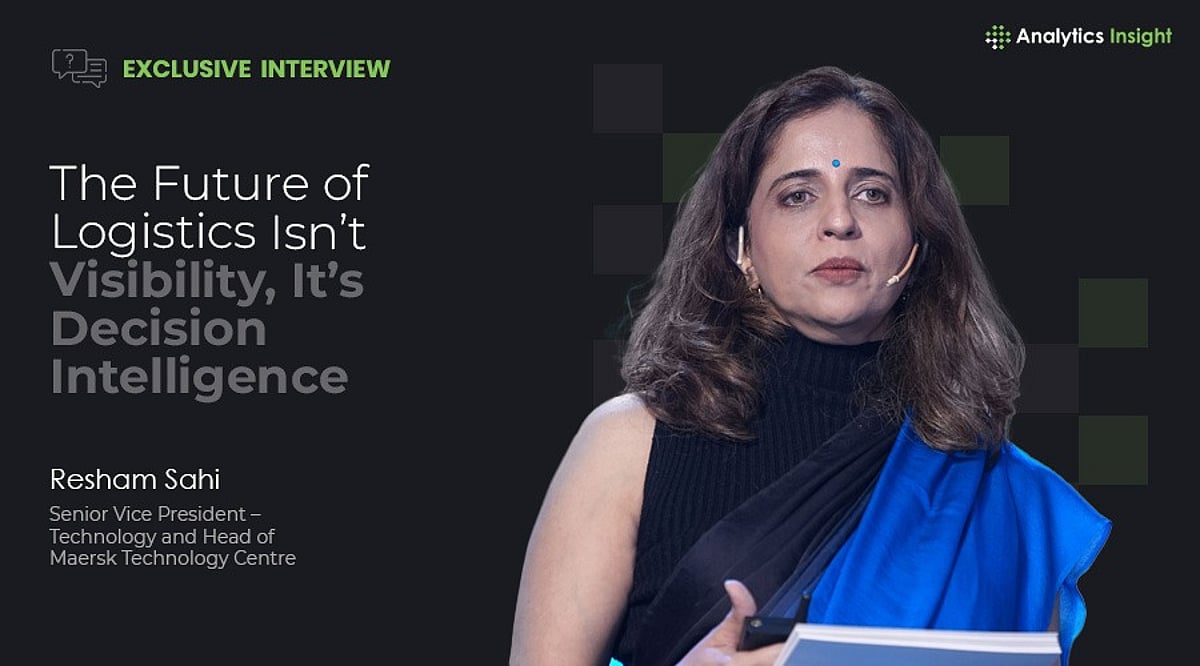
    In an exclusive interview with Analytics Insight, Resham Sahi, Senior Vice President – Technology and Head of Maersk Technology Centre, Bangalore, discusses how AI, Digital Twins, predictive analytics, cloud technologies, and intelligent logistics solutions are transforming global supply chains, strengthening operational resilience, and helping Indian businesses build smarter, more connected logistics ecosystems.

    From Visibility to Decision Intelligence

    According to Sahi, the notable trend is that companies are moving from visibility to decision intelligence. “In today’s environment of demand volatility, geopolitical uncertainty, and evolving trade patterns, resilience increasingly determines how quickly organizations can turn operational data into informed decisions. Companies can generate significant volumes of operational data through their supply chains; however, real value lies in translating data into actionable insights that enable improved planning and execution.”

    Through AI, companies are becoming better at forecasting demand, optimizing inventory, improving ETA, and managing exceptions. For example, Digital Twins allow companies to test different scenarios and assess how operational decisions may affect transportation, warehousing, and inventory positioning before changes are implemented in the physical supply chain. Using AI, Digital Twins can predict certain disruptions before they occur, helping make more informed decisions while reducing operational risk.

    “The true value comes through integration,” Sahi emphasized. “According to our recent Trade Momentum APAC research, although 74% of companies have operationalized their AI capabilities, only 47% have integrated it with their trade compliance and customs platforms, suggesting that many companies still keep their digital initiatives separate.”

    Maersk believes in the connected intelligence future, where decision intelligence will be built across the entire process of planning, execution, and fulfillment.

    AI-Powered Control Towers

    The function of Control Towers is moving from providing visibility to enabling intelligence, helping organizations move from simply monitoring supply chains to making better decisions. “In today’s environment, it is not enough to know the location of a shipment; it is more valuable to be aware of possible risks and implications and to be able to make a decision based on that information,” Sahi said.

    AI-powered Control Towers deliver this by connecting data from all sources—transportation, warehousing, customs, IoT assets, and enterprise systems—into a single view. This information is constantly analyzed through AI, identifying exceptions, forecasting delays, and proposing the optimal next step for operations, such as changing the route, reallocating inventory, or adjusting warehouse capacity.

    “The real value of a Control Tower lies not in aggregating more data, but in enabling faster, more confident decisions across the supply chain,” Sahi noted. By bringing together operational insights in real time, organizations can respond proactively to disruptions instead of reacting after they occur.

    Digital Twins for Smarter Network Optimization

    One of the most significant advantages of Digital Twins is that they can help make better decisions before any changes to the physical logistics network. This is even more important when reacting to disruptions yet to be encountered. For example, using weather data, Digital Twins can identify several vessel berthing options at ports and recommend the best scenarios for maximizing operational efficiency.

    “With increasing interconnectivity within our logistics network, we require more confidence in our decisions when it comes to logistics such as inventory positioning, transportation flows and warehouse capacity, and Digital Twins allow us to do scenario planning in a virtual environment,” Sahi explained.

    Digital Twins can be transformed from being merely simulation tools into intelligent decision support systems once integrated with AI and operational data. Organizations will be able to run different scenarios of the network, optimize asset use, and spot potential bottlenecks before they affect operations. In line with this, Gartner predicts that by 2027, more than 40% of large enterprises will combine simulation, Digital Twins, and AI to optimize operational processes.

    Building Future-Ready Supply Chains in India

    The rising importance of India in international manufacturing is contributing to the increasing requirement for intelligent and interconnected supply chains. As per the Economic Survey 2025-26, Manufacturing GVA increased by 7.72% in Q1 and 9.13% in Q2 of FY26, highlighting the country’s industrial strength. As businesses diversify supply chains and expand their participation in global value chains, logistics is becoming a strategic enabler of growth rather than simply a support function.

    At Maersk, the company is helping customers connect transportation, warehousing, customs, and fulfillment through integrated digital solutions. AI, cloud, and IoT strengthen that connected ecosystem by improving visibility, planning, and execution across the logistics journey. Cloud-based platforms enable customers to unify transportation, warehousing, customs, and fulfillment into one cohesive digital platform, making faster, better decisions possible.

    “AI represents a once-in-an-era shift that can tackle complex problems, provide faster insights, enable proactive, data-driven decisions, and drive effective execution,” Sahi said. “We are putting AI to use by streamlining how frontline teams serve customers by reducing complexity, redesigning workflows, and improving customer access to insights.”

    At the end of the day, Maersk’s focus is on helping customers build connected and resilient supply chains by integrating data across every stage of the logistics journey, rather than optimizing individual functions in isolation. This will help both Maersk and its customers improve cost efficiency, reliability, and outcomes.

  • Google to Launch Global Play Store Age Verification by 2026 via New API

    Google to Launch Global Play Store Age Verification by 2026 via New API

    Google will expand its Play Store age-verification system worldwide by the end of 2026. The company announced the update on July 29 as governments push for improved child safety measures in app stores. The new Play Age Signal API will help app developers verify a user’s age range without accessing personal details.

    The feature will be introduced in India, the United States, Australia, Canada, and other countries. Google will integrate the system with Family Link, allowing parents to select an age range for their children. Apps will receive only the chosen age group instead of the exact date of birth.

    Explaining the new system, Google stated: “The Play Age Signals API is a runtime interface with the Google Play Store.” The company added that the tool shares only the information needed for age-appropriate experiences and safeguards personal identity details.

    Google says the system ensures privacy while helping developers offer age-suitable apps and content. Parents can set age groups such as 13–15 or 16–17, and the range updates automatically as children grow older.

    Some countries may still require users to complete additional age checks. Depending on local regulations, users may need to verify their age with a government ID, credit card, selfie, or another approved method before downloading restricted apps. Google also advised users to complete verification only through the Play Store or Google Account settings to avoid online scams.

    The new tool is optional for developers, so not every app will use it. Privacy experts note that some children may still bypass restrictions by creating another account with a different age. However, the global rollout reflects Google’s effort to improve child safety while maintaining app privacy as online rules continue to evolve.

  • How to Write Human-Like Articles Using DeepSeek AI for Free: A Step-by-Step Guide

    How to Write Human-Like Articles Using DeepSeek AI for Free: A Step-by-Step Guide

    Speed used to be the main selling point of AI writing tools, but that alone no longer cuts it. Faster drafts often produce articles that sound alike—same sentence lengths, same safe transitions, and same forgettable phrasing. DeepSeek AI, a free tool, can generate a solid outline or a full draft in minutes, but the real work begins after the draft is done. The difference between a generic AI article and one that feels human lies in how you edit, verify, and add original insights.

    Building a Prompt DeepSeek Can Actually Use

    Prompt quality heavily influences the output. The biggest mistake is asking for a finished article in a single request. A strong prompt defines four elements: the audience, the objective, the format, and any constraints on tone or length. Breaking the request into stages yields more coherent results:

    • First, ask for an outline only.
    • Second, expand each section individually.
    • Third, run a separate pass to adjust the tone.

    A weak prompt: “Write a 1,000-word article about electric cars.” A staged version: “Outline a 1,000-word article for first-time EV buyers in India, with a conversational tone, one practical example per section, and no promotional language.” DeepSeek retains conversational context within a session, so follow-up prompts can refine the same draft without restarting—for example, by shortening a section or simplifying the language.

    Where DeepSeek Helps and Where It Does Not

    DeepSeek excels at structure and summarization. It organizes complex topics into logical sections quickly and compresses source material effectively. However, it is less reliable without human review when producing verified facts, distinctive opinions, and naturally varied sentence rhythm. It can also generate multiple structural approaches to the same topic, making it useful for exploring outlines before committing to a final direction.

    Editing for Rhythm Instead of Just Correctness

    Left unedited, DeepSeek tends to repeat sentence openers across adjacent paragraphs. For example: “Artificial intelligence is transforming content creation. Artificial intelligence also improves productivity. Artificial intelligence helps writers generate articles faster.” Edited for rhythm, the same idea reads: “AI has transformed content creation, though speed is not its main advantage. It handles repetitive drafting well, leaving writers more time to refine ideas and verify facts.” The information stays the same, but the shape changes—and shape is what readers notice first. A quick diagnostic: if two adjacent paragraphs open with a similar structure, rewrite one.

    Verifying Before Publishing

    Every factual claim, number, or named tool must be checked against current, authoritative sources before publication. A confident-sounding statistic from the model is not the same as a verified one. This step separates an editorially responsible article from one that merely reads well.

    Adding What the Model Cannot

    Structure and phrasing can come from the model, but specific examples, workflow observations, or genuine opinions about where the tool falls short cannot. One reliable method: instruct DeepSeek to leave a placeholder, such as “insert practical example here,” during drafting. That way, the exact spot needing original insight never gets lost in the edit.

    The full workflow is simple: build a staged prompt, expand the draft section by section, edit for rhythm and tone, verify every factual claim, and finish by adding original judgment. Skipping the verification step is the fastest way to publish something confident and wrong.

    Final Thought

    AI may keep improving at drafting, but clarity, judgment, and credibility remain editorial decisions. DeepSeek can accelerate the writing process, yet an article earns a reader’s trust only after a human shapes it with evidence, context, and a distinctive voice.

    Frequently Asked Questions

    1. Can DeepSeek AI write complete articles for free?

    Yes. DeepSeek AI can generate outlines, introductions, and full-length article drafts without cost on its free version. However, human editing is still necessary to improve accuracy, readability, tone, and originality before publication.

    2. How can AI-generated articles sound more human?

    Start with detailed prompts, generate content in stages, vary sentence lengths, replace repetitive phrases, add original examples, and fact-check every claim. Human editing is what gives an article a natural voice and credibility.

    3. Is DeepSeek AI suitable for SEO content writing?

    Yes. DeepSeek AI can help create SEO-friendly outlines, incorporate target keywords naturally, and structure content with headings. Final optimization should include manual keyword refinement, internal linking, metadata, and fact verification.

    4. What are the biggest mistakes when using DeepSeek AI for writing?

    The most common mistakes are relying on a single prompt, publishing without verifying facts, leaving repetitive sentence structures unchanged, and failing to add unique insights or real-world examples that distinguish the content.

    5. Can DeepSeek AI replace human writers?

    No. DeepSeek AI is an effective drafting assistant, but it cannot consistently provide editorial judgment, original experiences, nuanced opinions, or reliable fact verification. Human writers remain essential for producing trustworthy and engaging articles.

  • Alison Review: Features, Benefits, and Challenges of the Free Online Education Platform

    Alison Review: Features, Benefits, and Challenges of the Free Online Education Platform

    General Information

    Alison is a free online education platform launched in 2007 that teaches job-related skills to students worldwide. It offers an extensive collection of courses covering various subjects, allowing millions of users to access self-directed learning programs. The platform helps learners develop new skills, advance their careers, and acquire knowledge at their own pace.

    • Launch Date: 2007
    • Target Audience: Students, job seekers, working professionals, corporate teams & businesses, government & public sector organizations, trainers & educators, entrepreneurs & freelancers, lifelong learners
    • Platform Support: Web, desktop browsers, mobile browsers, Android devices (limited support), iOS devices (limited support)
    • Download: Click Here

    Main Features of Alison

    Below are some important Alison features that give the platform a competitive edge:

    • Offers over 2,500 free online courses across multiple academic and professional disciplines worldwide
    • Provides certificates and diplomas upon course completion through paid upgrade options for learners
    • Features a simple user-friendly interface with clearly categorized learning paths for easy navigation
    • Supports multiple languages including English, Spanish, and French for global accessibility
    • Includes a referral system allowing users to earn free certificates and rewards easily

    Benefits of Alison

    • Access to multiple courses covering different subjects worldwide
    • Intuitive interface enabling new users to navigate without prior experience
    • Various course categories allowing students to explore different subjects and develop professional skills
    • Ability to learn at your own pace by choosing study times according to personal schedules
    • Low-cost certification options compared to competing programs

    Challenges of Alison

    • Advertisements interrupt the learning process, making it difficult to stay focused
    • Certificates and diplomas require payment, limiting access to completely free credentials
    • Limited optimization for iOS and certain mobile devices may hinder the user experience
    • Multiple difficulty levels may not suit advanced or expert learners
    • Occasional technical problems and progress tracking malfunctions interrupt learning

    Subscription Information

    Alison courses are free to access, but premium options remove ads for about $7.99 per month. Certificates and diplomas require additional payment, ranging from €12 to €75. Optional learning paths and ad-free upgrades enhance the overall learning experience for users.

    Support Options

    Help Center: Alison’s Help Center provides FAQs, course guidance, and troubleshooting support. Users can find answers about certifications, payments, account issues, and platform navigation easily online.

    Customer Support: Customer support is available through online resources and contact forms. Alison assists users with technical issues, account queries, and certification concerns, ensuring a smooth learning experience.

    Conclusion

    Alison provides a trustworthy free online education platform that serves as a preferred resource for beginners and learners. The platform offers numerous courses at budget-friendly access, though it displays advertisements and charges for certification programs. It is ideal for students who want to develop their professional skills and personal abilities across various fields.