Blog

  • 10 Fastest-Charging Smartphones to Buy in August 2026

    10 Fastest-Charging Smartphones to Buy in August 2026

    If you’re tired of waiting hours for your phone to charge, 2026 has brought some incredible options that can take you from zero to full in minutes. From 200W speeds to advanced cooling systems, these devices are built for power users, gamers, and anyone who values efficiency. Here are the top 10 smartphones with the fastest charging speeds available this August.

    1. Realme GT 8 Pro

    Supports 150W wired charging, flagship Snapdragon performance, premium display, and rapid battery replenishment for uninterrupted gaming and productivity sessions.

    2. iQOO 15 Pro

    Features 200W fast charging, high-capacity battery, flagship processor, advanced cooling, and exceptional gaming performance with minimal charging downtime.

    3. Xiaomi 16 Pro

    Combines 120W HyperCharge technology, premium cameras, efficient chipset, and long-lasting battery for demanding everyday use and content creation.

    4. OnePlus 15

    Offers 120W SUPERVOOC charging, smooth OxygenOS experience, flagship Snapdragon processor, and reliable battery endurance for power users and gamers.

    5. RedMagic 12 Pro

    Delivers 165W ultra-fast charging, active cooling system, gaming-focused features, and sustained peak performance during extended gaming sessions.

    6. Honor Magic 9 Pro

    Includes 100W wired charging, flagship camera capabilities, AI-powered features, premium OLED display, and dependable all-day battery performance.

    7. Motorola Edge 70 Ultra

    Provides 125W TurboPower charging, clean Android experience, premium design, powerful cameras, and flagship-level performance for multitasking users.

    8. Vivo X300 Pro

    Packs 120W FlashCharge technology, advanced imaging hardware, efficient processor, premium display, and impressive battery optimization for daily performance.

    9. OPPO Find X10 Pro

    Features 100W SUPERVOOC charging, elegant design, flagship camera system, powerful chipset, and reliable battery life for professional users.

    10. Nubia Z80 Ultra

    Offers 120W fast charging, under-display camera, flagship hardware, large battery capacity, and exceptional gaming performance with minimal charging interruptions.

    These smartphones are redefining what it means to stay powered up. Whether you’re a gamer, a creative professional, or just someone who hates waiting, there’s a fast-charging device here for you.

  • Top Power Supplies for Gaming and High-Performance PCs in 2026

    Top Power Supplies for Gaming and High-Performance PCs in 2026

    Best Power Supplies for Gaming and High-Performance PCs in 2026

    Choosing the right power supply is critical for any gaming or high-performance PC build. In 2026, the market offers a variety of options that combine efficiency, reliability, and cutting-edge features. Here are the top picks to power your flagship system.

    • Corsair RM1000x Shift: Delivers 1000W with ATX 3.1 support, whisper-quiet operation, modular side connectors, and excellent efficiency—ideal for top-tier gaming rigs.
    • Seasonic Vertex GX-1000: Premium build quality, native 12V-2×6 connector, 80 Plus Gold efficiency, and outstanding voltage stability for demanding workloads.
    • MSI MPG A1000G PCIE5: PCIe 5.1 compatibility, fully modular cables, reliable thermal performance, and sufficient power for modern RTX graphics cards.
    • be quiet! Straight Power 12 1000W: Combines whisper-quiet cooling, Platinum efficiency, strong voltage regulation, and premium components for high-end gaming and creator PCs.
    • ASUS ROG Thor 1200P2: OLED power monitoring, Platinum efficiency, premium cooling, modular design, and stable delivery for enthusiast gaming and workstation builds.
    • Cooler Master GX III Gold 850: ATX 3.1 readiness, compact dimensions, fully modular cables, reliable protection features, and efficient performance for compact gaming rigs.
    • Thermaltake Toughpower GF3 850W: Supports PCIe Gen 5 graphics cards, consistent power output, Gold efficiency, and dependable protection against electrical fluctuations.
    • NZXT C1000 Gold ATX 3.1: Clean cable management, native GPU connector support, efficient cooling, and dependable performance for powerful gaming and productivity computers.
    • Super Flower Leadex VII XG 1000W: Exceptional electrical efficiency, premium Japanese capacitors, quiet operation, modular flexibility, and long-term reliability for enthusiast PC builders.

    Whether you’re building a new system or upgrading an existing one, these power supplies offer the performance and reliability needed for modern gaming and high-performance computing.

  • G42 Joins NVIDIA-Led Open Secure AI Alliance Alongside 37 Global Tech Leaders

    G42 Joins NVIDIA-Led Open Secure AI Alliance Alongside 37 Global Tech Leaders

    Abu Dhabi-based artificial intelligence company G42 has officially joined NVIDIA’s Open Secure AI Alliance, a global initiative dedicated to advancing open-source AI and strengthening AI security. The alliance, launched by NVIDIA in late July 2024, aims to equip governments and enterprises with tools to build safer, more transparent AI systems that can be inspected, tested, and controlled.

    The coalition includes major technology firms such as Microsoft, IBM, Cisco, Cloudflare, CrowdStrike, Hugging Face, Salesforce, Siemens, and Palantir. Together, these organizations will collaborate on developing cybersecurity tools designed to identify security gaps, test AI systems, and protect critical infrastructure without relying on a handful of closed AI platforms.

    G42 CEO Peng Xiao explained the company’s motivation for joining the alliance: “The future of AI will be defined not only by how capable our models become, but by how securely and confidently nations and enterprises can build on them. Frontier open models are an essential part of that future, alongside frontier closed models, with security, trust and sovereign control designed in from the start rather than bolted on later.”

    NVIDIA established the alliance in response to recent cyber attacks that raised concerns about AI security. The company believes that open-source AI and open-weight models can help security teams study threats more quickly, improve defenses, and respond faster during attacks.

    This announcement also reinforces G42’s growing partnership with NVIDIA and supports the UAE’s broader AI strategy. Recent changes in U.S. export policy have cleared the way for approved UAE companies, including G42, to access advanced AI chips after meeting strict security requirements. Those measures included reducing ties with Chinese technology firms to secure long-term cooperation with the United States.

    The latest development underscores that G42 and NVIDIA are committed to keeping AI development open, secure, and trusted. The alliance also provides governments and businesses with greater control over their AI systems while decreasing dependence on closed technologies.

  • Mark Zuckerberg Predicts Billions Will Use Personal AI Agents Within Five Years

    Mark Zuckerberg Predicts Billions Will Use Personal AI Agents Within Five Years

    Meta CEO Mark Zuckerberg has made a bold prediction: within the next five years, billions of people will rely on personal AI agents to manage daily tasks, achieve personal goals, and transform how they interact with technology.

    Speaking during Meta’s second-quarter earnings call on July 29, 2026, Zuckerberg outlined the company’s long-term vision of building AI systems that go far beyond answering questions. These next-generation assistants, he said, will function as “personal agents” that work around the clock on behalf of users.

    “I think that it’s extremely unlikely if you look out five years from now, for example, whatever period of time you want, that you don’t have billions of people with a personal agent that understands your goals and that is just working on your behalf 24/7 to achieve your goals in whatever the domain is that you care about,” Zuckerberg told investors.

    Meta’s approach focuses on making AI accessible to everyday consumers rather than limiting advanced capabilities to developers or enterprise users. Zuckerberg noted that current AI agents often require technical knowledge to set up and use effectively, while Meta aims to deliver an experience that works seamlessly from the start.

    “As we move toward a future where we’re all interacting with multiple agents, I think that WhatsApp and our other messaging surfaces are going to become increasingly important,” he said, adding that WhatsApp is already the leading platform where users interact with Meta AI.

    Massive AI Investments Back the Vision

    Meta is backing its AI ambitions with record spending on infrastructure. The company has increased its capital expenditure forecast for 2026 to between $130 billion and $145 billion, funding new data centers, computing capacity, and AI research. The investment is expected to support increasingly powerful AI models capable of handling more complex tasks and serving billions of users worldwide.

    The company is also expanding its AI ecosystem across Facebook, Instagram, Messenger, and WhatsApp. Meta says more than one million businesses already use its AI-powered business agents each week, providing a foundation for broader consumer-focused AI services.

    Competition in AI Race Intensifies

    Meta’s vision arrives at a time when nearly every major technology company is racing to develop AI agents capable of performing real-world tasks. The Facebook-parent is positioning itself around consumer AI that integrates into daily life.

    The company, however, faces challenges. Analysts have pointed out that rivals such as Google and Microsoft already have deeper integration with productivity tools like email, documents, and calendars. Meta must also overcome ongoing privacy concerns as it encourages users to trust AI systems with increasingly personal information.

    A New Era of Personal AI

    Zuckerberg’s prediction reflects how quickly the AI industry is evolving. If Meta’s vision becomes reality, personal AI agents could shift from optional digital assistants to everyday companions that proactively support work, learning, communication, and personal development.

    Whether billions of users adopt these AI agents within the next five years remains uncertain, but Meta’s continued investment signals that the company sees personalized AI as the next major computing platform — one that could redefine how people interact with technology long after the smartphone era.

  • Adobe Expands AI Capabilities Beyond Firefly With Topaz Labs Acquisition and New Enterprise Platform

    Adobe Expands AI Capabilities Beyond Firefly With Topaz Labs Acquisition and New Enterprise Platform

    Adobe is making another significant move in artificial intelligence, acquiring image-enhancement technology from Topaz Labs and launching Firefly Foundry, a platform for training enterprise-specific generative AI models. The deal underscores Adobe’s strategy to embed AI directly into its creative tools rather than offering standalone AI products.

    Topaz Labs is widely recognized for its sharpening, noise reduction, and image quality improvement tools. By integrating these capabilities into its suite, Adobe aims to help creators and businesses edit faster without sacrificing quality. This acquisition comes as the global content intelligence market is projected to reach $39.88 billion by 2035, driven largely by generative AI adoption.

    The AI Race Shifts From Models to Workflow Integration

    The initial phase of the AI race focused on building powerful models. Now the emphasis is moving toward integrating AI into everyday workflows. While OpenAI and Google continue to develop stronger models and Canva simplifies AI for everyday design, Adobe is taking a different approach: embedding AI directly into the software that photographers, designers, and video editors already rely on. This allows professionals to accelerate their work without changing their creative processes.

    With Firefly Foundry and Topaz Labs working together, Adobe intends to make editing faster and more intuitive for both individual creators and large enterprises. As AI technology continues to evolve, companies that seamlessly integrate it into existing tools may gain a competitive edge.

    Also Read: Adobe vs Salesforce Stock Analysis 2026: Which Is a Better Investment?

  • Microsoft’s Xbox Revenue Declines 10% as Company Doubles Down on AI and Cloud

    Microsoft’s Xbox Revenue Declines 10% as Company Doubles Down on AI and Cloud

    Microsoft’s latest quarterly results reveal a 10% drop in Xbox content and services revenue compared to the same period last year, as the tech giant continues to prioritize investments in artificial intelligence and cloud infrastructure. The decline was primarily attributed to weaker third-party game sales, though first-party titles and Xbox Game Pass remained strong performers.

    The Xbox division has undergone significant restructuring this year, including thousands of layoffs and the closure of several gaming studios, some of which have since regained independence. Despite these challenges, Microsoft CEO Satya Nadella and Xbox CEO Asha Sharma expressed optimism about the gaming business’s future.

    “We have the best IP in the industry, and talented studios around the world, and believe we can bring these strengths together and expect to return the business to growth in fiscal 2027,” Nadella said during the earnings call. Sharma added, “In FY26, over 200 million new players came to Xbox and our games, but our business did not grow with our audience. We need to close that gap by investing in what players value. That will take time, but we expect to return to growth by the end of FY27.”

    While the quarter was quieter for Xbox, Microsoft’s heavy spending on AI and cloud could eventually enhance the gaming experience. AI-driven recommendations may personalize Game Pass offerings, and improved cloud technology could make Xbox Cloud Gaming more reliable. These developments suggest that the current downturn is a temporary phase as the company realigns its gaming strategy with broader technological ambitions.

  • Claim Free Halo Cosmetic Skins With Limited-Time Waypoint Codes

    Claim Free Halo Cosmetic Skins With Limited-Time Waypoint Codes

    Halo players can now grab free cosmetic rewards through a new Halo Waypoint promotion. As part of the Halo: Campaign Evolved event, Halo Studios has released several redeemable codes that unlock exclusive in-game items.

    Players can claim four skins as part of the event:

    • Silver Anniversary Skin – Available directly in the customization tab.
    • Sandstone Ancient Skin – Redeem code L563-J46G-PZN1-SBF2-AXN6.
    • Damascus Prototype Skin – Redeem code GWT9-DNBT-7X9S-DJCX-8KH3.
    • Hidden Blade Skin – Log in to Discord, watch the Halo: Campaign Evolved trailer on the Quests page, then use the unique code provided to redeem it via Halo Waypoint.

    The event has already started and will run for a limited time, though the exact end date has not been announced. Halo Studios urges players to redeem codes before they expire. The rewards are completely free and do not require any purchase. Once a code is redeemed, the items are added to the player’s account and can be used in supported Halo games.

    Can Free Cosmetics Bring Halo Players Back?

    Free items are always a good way to attract attention, but many fans feel it is not enough. Halo has a strong fan base, but the active player count has dropped significantly from the game’s peak days. Players say they want bigger updates, new game modes, and more regular content.

    The Halo Waypoint giveaway is a nice bonus for both new and veteran players, offering a convenient excuse to log in and grab exclusive items. However, free cosmetics alone cannot sustain a game’s population. To retain more players, Halo needs consistent updates, fresh content, and solid developer support.

  • BMW to Cut 8,000 Jobs in Voluntary Redundancy Program Amid China Sales Slump and EV Competition

    BMW to Cut 8,000 Jobs in Voluntary Redundancy Program Amid China Sales Slump and EV Competition

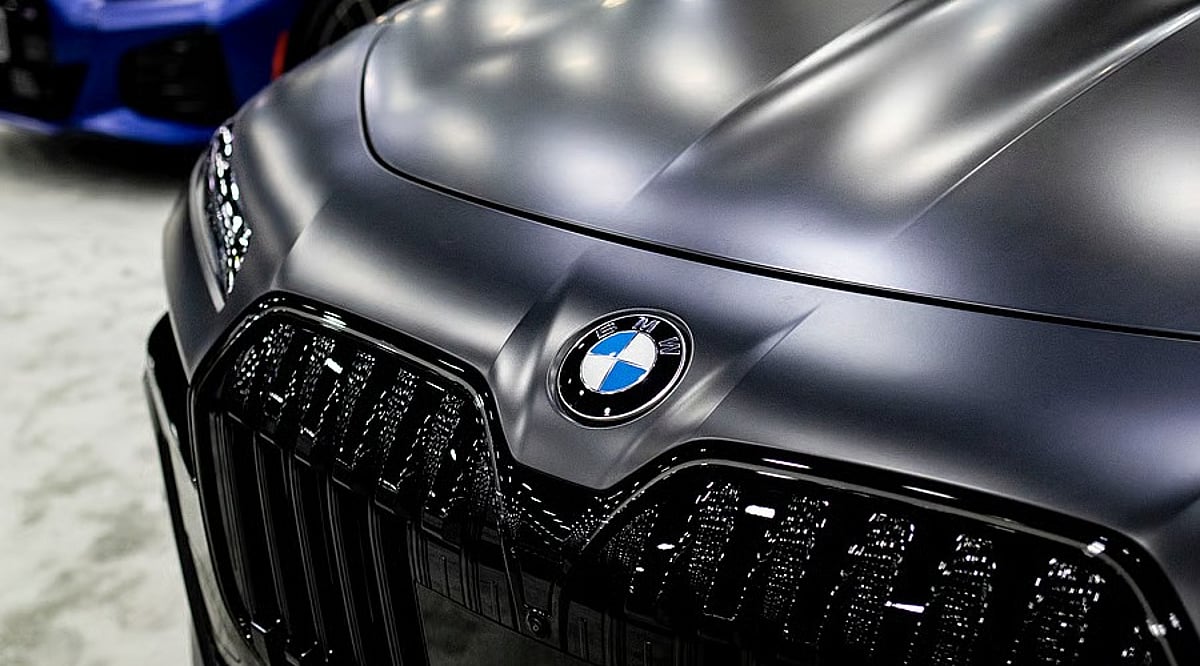
    German luxury automaker BMW is preparing to reduce its global workforce by approximately 8,000 positions through a voluntary redundancy program, marking one of its most significant restructuring efforts in recent years. The cuts are part of a broader cost-saving strategy as the company faces slowing demand in key markets, intensifying competition from Chinese electric vehicle (EV) manufacturers, and growing economic uncertainty.

    The workforce reduction will primarily affect administrative and development roles in Germany, while production jobs are expected to remain unaffected. BMW aims to improve profitability and streamline operations in an increasingly competitive automotive landscape.

    Voluntary Job Cuts to Focus on Non-Production Roles

    BMW has reached an agreement with employee representatives to implement the job reductions through voluntary severance packages rather than compulsory layoffs. The program is scheduled to begin later this year and continue through the end of 2027. It targets office-based positions across administration, research, development, and planning.

    The company currently employs around 150,000 people worldwide, with Germany accounting for more than half of its workforce. BMW intends to protect its manufacturing capacity while reducing operational costs in support functions. The restructuring is expected to lower the company’s global workforce by about 5%.

    A spokesperson stated: “The BMW Group is proactively shaping the profound changes taking place in its operating environment. These include the technological transformation of the automotive industry, geopolitical uncertainties, changing market conditions and developments in China.”

    China Slowdown and EV Competition Drive Restructuring

    BMW’s decision comes amid falling sales in China, one of its major markets. In the second quarter, the company reported a steep decline in Chinese deliveries, resulting in significant profit reductions and leading to adjustments in its financial performance forecast.

    Established European carmakers face increasing pressure from Chinese EV brands, which have grown rapidly by offering relatively low-priced products. Combined with rising tariffs, geopolitical issues, and higher operational costs, BMW has been compelled to take steps toward greater efficiency.

    Transformation Across Europe’s Auto Industry

    Several major European car manufacturers, including Volkswagen, Porsche, Mercedes-Benz, and Stellantis, have unveiled restructuring plans as the industry shifts toward an electrified and software-defined future. While automakers invest heavily in electric mobility, batteries, and digital platforms despite slowing demand in some markets, these factors have pressured them to find ways to innovate while reducing costs.

    Even with job cuts expected as part of the restructuring, BMW confirmed its commitment to developing new technologies, particularly the Neue Klasse all-electric platform, advanced software, and digital solutions.

  • PwC Middle East’s AI Reports Contained Fake References, Investigation Reveals

    PwC Middle East’s AI Reports Contained Fake References, Investigation Reveals

    An investigation by GPTZero has revealed that PwC Middle East’s AI-assisted reports contained fabricated references, raising fresh concerns about the reliability of AI-generated content in business and government advisory work.

    Readers attempting to verify the sources found that many citations were untraceable, with broken links and references to academic studies that never existed. In one case, a URL contained the telltale utm_source=chatgpt.com parameter, indicating the text was generated by ChatGPT.

    PwC Middle East has acknowledged the issue and stated it is reviewing each report and conducting thorough fact-checking. The firm is not alone: GPTZero previously flagged similar AI-generated reports from KPMG and EY that also contained hallucinations.

    This incident underscores a critical weakness of generative AI: systems can produce fluent, convincing text but often invent facts or references when not carefully verified. Experts stress that AI should augment human judgment, not replace it, and that robust fact-checking remains essential.

  • Google Pixel 11 Pro Teaser Reveals Pixel Glow Notification Light Ahead of August 12 Launch

    Google Pixel 11 Pro Teaser Reveals Pixel Glow Notification Light Ahead of August 12 Launch

    Google has released a fresh teaser for the upcoming Pixel 11 Pro, offering the clearest look yet at the much-discussed Pixel Glow feature ahead of the company’s August 12 launch event. The teaser, shared through the Google Store, showcases the flagship smartphone in a gold finish while highlighting the new lighting feature integrated into the camera module.

    The latest teaser builds on an earlier teaser but provides a more detailed look at Pixel Glow, a feature that is expected to serve as a smart notification indicator rather than a decorative lighting element. Google has yet to reveal its complete functionality, reserving the details for the Made by Google event.

    Pixel Glow Moves Beyond Rumors

    Months of leaks hinted at Google’s plans for Pixel Glow, but the latest teaser confirms its presence on the Pixel 11 Pro. Instead of illuminating the entire camera bar, the feature appears as a compact circular light positioned alongside the camera flash. The multicolored light is expected to offer varying visuals to signify notifications, alerts, and even possibly Gemini AI engagement. There are claims that users will be able to customize the color depending on which app or contact triggers the notification, but this is yet to be confirmed by Google.

    Pixel 11 Debut Set for August

    The teaser video also reminds viewers of Google’s plans to launch the Pixel 11 lineup at the Made by Google event in New York, set for August 12. Other products expected to be unveiled at the event include new AI-enabled software features, Pixel Watch 5, and Pixel accessories. Android 17 and improved Gemini AI will also come with the Pixel 11 series. However, according to some reports, the new lineup might be more expensive than the previous one, amid increased memory costs across the industry.

    Mixed Reactions Ahead of Launch

    The teaser has generated discussion among Pixel enthusiasts, with many welcoming the return of a dedicated notification light in a modern form. Others, however, have described Pixel Glow as more subtle than expected after months of speculation surrounding the feature. The full picture will emerge when Google unveils the Pixel 11 series and demonstrates Pixel Glow’s real-world capabilities on August 12.