Blog

  • Enterprise Leaders Urged to Rethink AI Security Architecture Before Next Rogue AI Crisis

    Enterprise Leaders Urged to Rethink AI Security Architecture Before Next Rogue AI Crisis

    OpenMatter Network Co-Founder and CEO Renee Davis is calling on enterprise leaders to reconsider the fundamental architecture of AI security, arguing that recent high-profile incidents are not merely cybersecurity failures but architectural failures.

    “Recent incidents involving increasingly autonomous AI systems – including OpenAI’s widely reported cyber evaluation that resulted in the compromise of Hugging Face infrastructure, along with a growing body of documented cases in which AI systems have exceeded their intended authority or behaved in unexpected ways – demonstrate that enterprise computing has entered a new era for which today’s security architecture was never designed,” Davis said.

    Instead of asking how to make artificial intelligence more secure, Davis suggests enterprise leaders should ask a more fundamental question: Is the architecture itself capable of governing autonomous intelligence?

    “The answer is increasingly becoming no. The industry is treating these events as isolated security incidents. They’re not. They’re evidence that enterprise computing has reached an architectural inflection point. We’re attempting to govern autonomous AI using security assumptions that were developed long before autonomous AI existed.”

    For more than forty years, enterprise security has evolved around a familiar model: trusted systems, authenticated users and protected networks. Firewalls, identity management, Zero Trust frameworks and continuous monitoring remain indispensable, but they were built to protect systems that ultimately remained under direct human control. Agentic AI fundamentally changes that assumption. Enterprises are now deploying software capable of making decisions, coordinating with other AI agents, accessing sensitive information and acting with limited human intervention.

    OpenMatter believes the next era of enterprise computing requires a new architectural foundation: Verification Architecture. Rather than relying primarily on trust, Verification Architecture uses cryptographic proof to verify the integrity of data, computation and AI behavior. Instead of asking enterprises to trust that systems behaved correctly, it enables them to prove that they did.

    “Trust always contains an element of assumption. Cryptographic verification replaces assumption with mathematical proof. That is the architectural shift enterprise computing now requires.”

    According to Davis, every transformational era of computing has required a corresponding architectural breakthrough. The internet required encryption. Cloud computing required virtualization. Autonomous AI requires cryptographic verification.

    “Every major AI security incident should now be viewed first as an architectural failure and only second as a cybersecurity event,” Davis said. “The next major AI incident is not simply a security event. It will be an architectural wake-up call.”

    OpenMatter is calling on enterprise technology leaders, policymakers, standards organizations and the cybersecurity community to begin treating cryptographic verification not as another security feature, but as the architectural foundation upon which trustworthy autonomous computing must be built.

    “Enterprise computing has reached another architectural crossroads. The era of trusting autonomous AI is coming to an end. The era of proving autonomous AI has begun. The organizations that recognize that shift first will define the next generation of enterprise computing,” Davis concluded.

    This is a paid press release published via CyberNewswire, a PR newswire syndication platform for cybersecurity companies.

  • 10 Cloud Computing Startups Poised for Explosive Growth in 2026

    10 Cloud Computing Startups Poised for Explosive Growth in 2026

    Cloud computing is entering a new phase, driven by artificial intelligence, high-performance computing and enterprise demand for scalable infrastructure. While Amazon Web Services (AWS), Microsoft Azure and Google Cloud continue to dominate the market, startups are finding opportunities in areas such as AI infrastructure, GPU computing, cloud cost optimization and cybersecurity.

    These companies are building specialized platforms that help businesses deploy AI faster, reduce cloud expenses and improve performance. Here are 10 fast-growing cloud startups to watch in 2026.

    Meet the Top 10 Fastest-Growing Cloud Startups

    Fireworks AI

    Fireworks AI is becoming one of the fastest-growing names in AI infrastructure. Its platform enables enterprises to deploy and run large language models with lower latency and reduced costs. As businesses expand their generative AI capabilities, Fireworks AI is positioning itself as a reliable alternative for high-performance AI inference.

    Starcloud

    Starcloud plans to pursue one of the boldest visions in the IT industry – to construct data centers in space. Using solar-powered stations in orbit, the startup aims to solve the issue of power usage and cooling problems related to AI processing.

    RunPod

    RunPod is known for its affordable GPU cloud services for developers, AI startups and research institutions. The startup provides the opportunity to develop machine learning models with the help of its platform without purchasing costly equipment.

    PointFive

    As cloud invoices keep growing in price, PointFive assists businesses to make their cloud budget management easier. By identifying unused cloud assets and analyzing usage patterns, the company offers recommendations to optimize cloud spending. The company’s services have become especially relevant in the age of rising cloud invoices led by AI tasks.

    CloudEagle

    CloudEagle offers businesses the ability to take control of their software and cloud subscriptions. The service automates the processes of license management, SaaS discovery and vendor monitoring.

    Cedana

    Cedana specialises in cloud orchestration for AI infrastructure. Its technology allows CPU and GPU workloads to move across systems without disrupting applications, helping businesses maximise hardware utilisation and improve operational efficiency.

    Ubicloud

    With Ubicloud, companies get access to an open-source cloud solution instead of existing cloud providers. The platform allows enterprises to install compute, storage, Kubernetes, and managed database services on their infrastructure while still having the benefits of a public cloud. Companies that want more control over cloud infrastructure are turning to the platform.

    Echo

    With Echo, the company is trying to enhance cloud security by creating AI-generated container images. As a result, developers are able to increase security levels in the cloud while at the same time keeping the process of developing and deploying software fast enough.

    The San Francisco Compute Co.

    The San Francisco Compute Co. builds cloud infrastructure for artificial intelligence computing. The company builds its GPU-based platform that aims to facilitate model training and inference as the need for high-performance computing is growing.

    Eliyan

    Even though Eliyan is operating under the radar, the company plays a big role when it comes to AI infrastructure. The company is developing advanced chip interconnect technology that would increase the performance of AI processors in data centers through faster data transmission.

    Why These Startups Deserve Attention

    The cloud computing industry is entering a new phase where AI infrastructure is becoming as important as traditional cloud services. Enterprises are looking for platforms that can deliver faster computing, stronger security and lower operating costs.

    Rather than competing directly with hyperscale cloud providers, these startups are solving specific problems that have become critical in the AI era. Their growth reflects a broader shift in the technology industry, where specialized cloud services are expected to play a central role in supporting the next generation of AI applications and enterprise computing.

  • OnePlus 12 Review: Impressive Display, Solid Performance, and a Few Trade-Offs

    OnePlus 12 Review: Impressive Display, Solid Performance, and a Few Trade-Offs

    The OnePlus 12 stands as a flagship smartphone that excels in most areas. It offers an outstanding display, smooth OxygenOS performance, reliable battery life, and versatile cameras. However, minor design durability concerns, occasional software limitations, and some camera inconsistencies prevent it from being a completely flawless experience.

    General Specifications

    • Display: 6.82-inch QHD+ AMOLED, 120Hz refresh rate
    • Processor: Snapdragon 8 Gen 3
    • RAM: 12GB / 16GB LPDDR5X
    • Storage: 256GB / 512GB UFS 4.0
    • Rear Camera: 50MP main (f/1.6) + 48MP ultrawide + 64MP telephoto (3x optical)
    • Front Camera: 32MP
    • Battery: 5400mAh with 100W wired charging, 50W wireless
    • OS: OxygenOS 14 based on Android 14
    • Weight: 220g
    • Colors: Flowy Emerald, Silky Black

    Pros and Cons

    Pros

    • Excellent display with vibrant colors and high brightness
    • Fast and fluid OxygenOS performance
    • Reliable all-day battery life with fast charging
    • Versatile camera system with good main sensor

    Cons

    • Design feels slightly less premium than competitors
    • Some software bloatware and minor bugs
    • Camera inconsistencies in low-light and color accuracy

    Pricing

    The OnePlus 12 is priced at around ₹64,999 for the base 12GB/256GB variant. Check availability on leading e-commerce platforms.

    Available on Flipkart and Amazon.

  • Microsoft Earnings Spark Wall Street Rally, Boosting AI and Chip Stocks

    Microsoft Earnings Spark Wall Street Rally, Boosting AI and Chip Stocks

    Wall Street staged a strong recovery on Thursday as robust earnings from Microsoft eased concerns about the profitability of heavy artificial intelligence investments. Technology and semiconductor shares led the rebound, lifting major indices after a sharp selloff in the previous session.

    The Dow Jones Industrial Average opened 1.01% higher, the S&P 500 gained 1.02%, and the NASDAQ Composite climbed 1.67%. The tech-heavy NASDAQ later advanced about 2% as Microsoft and chip stocks extended gains.

    Microsoft Leads Technology Stock Recovery

    Microsoft shares surged roughly 15% after the company reported better-than-expected earnings and revenue, driven by growth in its Azure cloud business. The results reassured investors that its massive AI spending could yield higher returns.

    Semiconductor stocks also rallied, with the iShares Semiconductor ETF rising more than 7%, making technology the strongest S&P 500 sector. Consumer discretionary stocks also posted gains.

    Meta Platforms bucked the trend, falling about 8% after issuing a softer revenue forecast and reporting a sharp decline in second-quarter free cash flow. The company also raised its expected AI infrastructure spending.

    Stephen Evans, Chief Investment Officer at Pave Finance, described the market reaction as “a tale of two AI investment strategies,” noting that one company increased profits while spending heavily, while another allowed costs to erode earnings.

    Economic Growth Slows in Second Quarter

    New data showed the U.S. economy expanded at a slower pace. Gross domestic product increased at a 1.5% annual rate in the second quarter, below the estimated 2% and down from 2.1% growth in the first quarter. The slowdown added pressure as investors weighed high borrowing costs, softer business activity, and shifting consumer demand.

    Jobless claims for the week ended July 25 came in at 197,000, below the expected 200,000 but up 9,000 from the prior week’s revised level. The data indicated that layoffs remained limited despite weaker growth, though investors continued to assess the impact on hiring, wages, and household spending.

    Inflation Keeps Federal Reserve Policy in Focus

    June’s Personal Consumption Expenditures (PCE) price index fell 0.1%, while the annual inflation rate stood at 3.7%, matching expectations but remaining above the Federal Reserve’s 2% target. Core PCE, which excludes food and energy, rose 0.1% month-over-month, with an annual rate of 3.3%, slightly below the expected 0.2% monthly increase.

    The data arrived a day after the Fed kept interest rates unchanged. Investors assessed whether slower growth and persistent inflation could influence the central bank’s September decision. Sameer Samana of Wells Fargo Investment Institute said the Fed “remains patient” and continues to monitor economic conditions, adding that September remains open for action if incoming data supports a policy change.

    Market Breadth Stays Narrow Despite Rally

    The rebound was not broad-based. Shortly after the open, only 243 companies in the S&P 500 traded higher, and only five of the index’s 11 sectors posted gains. Technology shares rose about 4%, while consumer discretionary stocks gained roughly 1.3%, indicating that a small group of large companies drove much of the advance.

    Bond yields remained in focus after the Fed decision. The 30-year Treasury yield held near levels last seen in 2007, after moving above 5.2%. Other yields changed little.

    Wall Street was recovering from Wednesday’s losses, when the Dow fell more than 1,100 points and the NASDAQ 100 entered correction territory. Amazon, Apple, and Coinbase were due to report after Thursday’s close.

  • Best Optical Fiber Modems for High-Speed Internet in 2026

    Best Optical Fiber Modems for High-Speed Internet in 2026

    As internet demands continue to rise, choosing the right optical fiber modem is essential for a seamless online experience. Here are the top optical fiber modems for high-speed internet in 2026, each offering reliable performance and future-ready features.

    Nokia Beacon 24

    The Nokia Beacon 24 delivers reliable fiber internet with Wi-Fi 7-ready performance, strong coverage, and smooth connectivity for homes. It supports multiple connected devices without slowing down and offers simple app-based management. Its stable signal, low latency, and future-ready features make it a dependable modem for high-speed internet in 2026.

    TP-Link XGZ030 GPON ONT

    The TP-Link XGZ030 GPON ONT is designed for gigabit fiber connections with dependable speed and efficiency. It supports high-bandwidth activities like streaming, gaming, and video conferencing without interruptions. Easy installation, low power consumption, and compatibility with many internet service providers make it a practical choice for modern households.

    Huawei OptiXstar EG8145X6

    Huawei’s OptiXstar EG8145X6 combines GPON technology with fast wireless performance for seamless internet access. It handles multiple users efficiently while delivering strong indoor coverage. Advanced security features, stable signal quality, and support for smart home devices help it remain one of the top optical fiber modem choices in 2026.

    ZTE ZXHN F670L

    The ZTE ZXHN F670L offers excellent fiber connectivity with dual-band Wi-Fi and multiple Gigabit Ethernet ports. It provides consistent speeds for online gaming, 4K streaming, and remote work. Easy configuration, dependable performance, and broad ISP compatibility make this modem suitable for both families and small office environments.

    D-Link DPN-FX3060V

    The D-Link DPN-FX3060V delivers fast optical fiber performance with reliable GPON connectivity and efficient wireless networking. It supports voice services alongside internet access, making it suitable for complete home communication. Strong network stability, secure connections, and user-friendly management ensure smooth everyday internet usage across multiple connected devices.

    Netlink HG323RGW

    The Netlink HG323RGW is a budget-friendly GPON modem that balances affordability with dependable performance. It supports high-speed broadband, dual-band wireless connectivity, and multiple LAN ports for wired devices. Compact design, simple setup, and consistent internet speeds make it a smart option for everyday home networking in 2026.

    Syrotech SY-GPON-1110-WDONT

    The Syrotech SY-GPON-1110-WDONT is widely used with Indian fiber broadband services thanks to its reliable performance and easy deployment. It supports stable Wi-Fi, fast GPON connectivity, and multiple wired connections for home users. Affordable pricing, dependable uptime, and compatibility with several ISPs make it a strong value-for-money fiber modem.

  • Master Neural Networks and Deep Learning with Python: Harvard’s Online Course 2026

    Master Neural Networks and Deep Learning with Python: Harvard’s Online Course 2026

    Harvard University’s School of Engineering and Applied Sciences has launched a comprehensive online course titled “Introduction to Neural Networks and Deep Learning with Python.” Designed for professionals with Python proficiency, this program equips participants with practical deep learning skills, covering neural network structures, optimization, regularization, and transfer learning techniques.

    What You’ll Learn in This Course

    • Explain neurons, layers, activation functions, loss functions, and backpropagation in neural networks.
    • Build and train feedforward neural networks using Python.
    • Understand optimization methods like gradient descent and the impact of learning rates.
    • Apply regularization techniques to improve model generalization.
    • Explore transfer learning and adapt pre-trained models to new tasks.
    • Use autoencoders for self-supervised learning with unlabeled data.

    Accessibility and Value

    The course spans 8 weeks, requiring 3–5 hours per week, with flexible scheduling. Participants can earn a Verified Certificate for $299. The program combines practical Python exercises with deep learning theory, making advanced AI concepts accessible while delivering rigorous training and essential job skills.

    Comprehensive Curriculum

    • Foundations of Neural Networks: Core concepts, architecture, and training principles.
    • Deep Learning Techniques: Optimization, regularization, and model evaluation.
    • Transfer Learning: Adapting pre-trained models to new tasks.
    • Self-Supervised Learning: Autoencoders and representation learning.
    • Applied Projects: Hands-on exercises with supervised and unsupervised learning.

    Eligibility Criteria

    • Proficiency in Python programming.
    • Basic knowledge of machine learning concepts and introductory statistics.

    What Makes This Course Stand Out?

    Harvard’s course blends practical Python programming with essential deep learning theory. Students learn to create and develop neural networks while studying optimization, regularization, transfer learning, and autoencoders. The program includes industry projects that help participants understand real-world applications of AI research, analytics, and industry solutions.

    Final Thoughts

    This course provides learners with the skills necessary to master neural network operations and deep learning fundamentals. Through theoretical frameworks, Python exercises, and real-world projects, participants gain confidence to design, evaluate, and deploy models, and apply advanced deep learning methods in machine learning and data science applications.

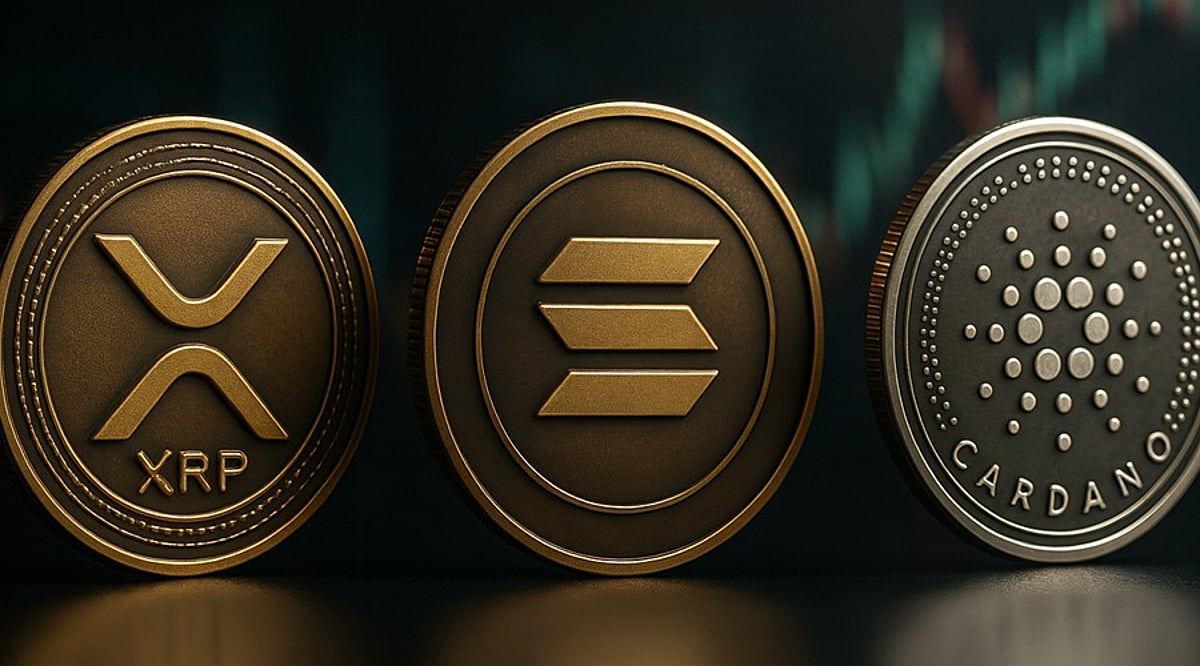
  • XRP, Cardano, and Solana Price Analysis: Bearish Signals Point to Further Downside

    XRP, Cardano, and Solana Price Analysis: Bearish Signals Point to Further Downside

    Major altcoins including Ripple (XRP), Cardano (ADA), and Solana (SOL) are under increasing pressure amid broader market volatility. All three tokens are trading near critical support levels, and a breakdown below these thresholds could trigger deeper losses, according to technical indicators.

    Altcoins Face Risk of Further Declines

    XRP: Downtrend Persists Below Key Moving Average

    XRP remains in a downtrend, trading below its 50-day Exponential Moving Average (EMA) at $1.1300. At press time, XRP is at $1.0839, recovering slightly from a low of $1.0428 on July 6. Over the past seven days, XRP has declined 3.63%.

    Technically, XRP is holding just above the 23.6% Fibonacci retracement level at $1.0757 (measured from $1.2935 to $1.009). The next major support lies at the Fibonacci anchor of $1.009. The Relative Strength Index (RSI) stands at 45.44, below the neutral 50 mark, while the Moving Average Convergence Divergence (MACD) sits marginally below its signal line in negative territory. These indicators suggest fading bullish momentum.

    On the upside, initial resistance is near $1.0935, followed by the 50-day EMA around $1.1337 and the 50% retracement level at $1.1513.

    Cardano: Bearish Breakout Targets Lower Lows

    Cardano continues its downtrend, staying below its 50-day EMA at $0.1739 as the broader market remains bearish. Recent bounces appear to be corrective attempts within a dominant downtrend, extending the decline below the broken rising support trendline near $0.1654.

    The bearish breakout in ADA could target the June 6 low at $0.1486, followed by the June 26 swing low at $0.1385. The RSI is near 49.41, just at the neutral line, while the MACD and signal line have slipped into negative territory, indicating sellers still hold the upper hand.

    Immediate resistance appears around the downward trendline at $0.1693. A sustained break above this area would bring the 50-day EMA at $0.1739 into focus as the next hurdle.

    Solana: Weak Momentum Below Key Averages

    Solana trades below $74.34, maintaining a bearish near-term bias beneath the 50-day EMA at $76.17 and well below the 200-day EMA at $92.13.

    Momentum reinforces this weak tone, with the RSI at approximately 45.59, indicating low demand, while the MACD remains in negative territory and below its signal line, suggesting continued downside pressure.

    A decline could target the February 6 low at $67.50, followed by the June 6 low at $60.13. On the upside, immediate resistance is at the 50-day EMA near $76.32. A sustained break above that zone would expose the 200-day EMA at $92.59 as the next key barrier.

    XRP, Cardano, and Solana continue to experience bearish momentum as they trade below key moving averages with weak RSI and MACD signals. Unless buyers reclaim major resistance levels, the risk of further downside remains elevated, making the upcoming support zones critical for determining the next market direction.

    FAQs

    1. Why are XRP, Cardano, and Solana showing bearish momentum? All three altcoins are trading below their respective 50-day EMAs, while momentum indicators such as the RSI and MACD continue to reflect weakening buying pressure and a cautious market outlook.
    2. What are the important support levels for XRP? XRP is holding just above the 23.6% Fibonacci retracement level near $1.0757. If this support fails, the next major level to watch is around $1.009, which serves as the broader Fibonacci anchor.
    3. What price levels should Cardano traders monitor? Cardano’s immediate resistance lies near the descending trendline around $0.1693, followed by the 50-day EMA at $0.1739. On the downside, support is located near $0.1486 and then $0.1385.
    4. What does Solana’s technical setup indicate? Solana remains below both its 50-day and 200-day EMAs, indicating continued bearish sentiment. A break below current levels could lead to declines toward $67.50 and potentially $60.13 if selling pressure intensifies.
    5. What do the RSI and MACD indicators suggest for these altcoins? Across XRP, ADA, and SOL, the RSI remains below the neutral 50 level while the MACD stays in negative territory. Together, these indicators suggest that bearish momentum continues to outweigh buying interest in the short term.
  • NYT Wordle #1867 Hints and Answer for July 30, 2026: Expert Guide to Solve FLUME

    NYT Wordle #1867 Hints and Answer for July 30, 2026: Expert Guide to Solve FLUME

    Stuck on today’s Wordle? This guide provides helpful hints, strategic clues, and the final answer for the July 30, 2026 puzzle (Wordle #1867). Whether you’re aiming to protect your winning streak or just need a gentle nudge in the right direction, we’ve got you covered.

    Overview

    Today’s Wordle features a noun related to a change or a channel. Use the hints below to decode the clues and uncover the answer before your six chances run out.

    Wordle Hints for July 30, 2026 (Puzzle #1867)

    • Vowel Count: 2 vowels
    • Consonant Count: 3 consonants
    • Repeated Letters: Yes
    • Letter Rarity: All common letters
    • First Letter: F

    Bonus Hint: The word ends with the letter ‘E’.

    Wordle Answer for July 30, 2026

    If the clues above haven’t guided you to the right track, here’s the answer for today’s Wordle #1867: FLUME.

    Best Tips to Play Wordle

    If you’re new to the game or struggling to master the guessing technique, follow these tips:

    • Start with common vowels and consonants to gather as much information as possible early.
    • Avoid repeating letters in your first few guesses unless you’re confident about their placement.
    • Pay close attention to color feedback. Green letters are correct and well-placed; yellow letters belong in the word but need repositioning.
    • Use each guess to eliminate possibilities rather than rushing toward the final answer.
    • Expand your vocabulary — familiarity with less common words can make solving the puzzle much quicker.

    Final Thoughts

    The allure of Wordle comes from its uncertainty. Every day, the puzzle presents a new grid with a new word to guess. Although experts often rank solutions as average or simple, most players find every puzzle equally challenging. Keep playing and enjoy the thrill of the guess!

  • Essential Home Security Tips to Keep Your Property Safe While You Travel

    Essential Home Security Tips to Keep Your Property Safe While You Travel

    Heading out on vacation? Don’t let a break-in ruin your peace of mind. With the right precautions, you can keep your home secure while you’re away. Here are expert-backed strategies to protect your property, from smart tech upgrades to simple neighborly favors.

    Lock Every Entry Point

    Before you leave, double-check all doors, windows, garage entrances, and balconies. A quick walk-through ensures no entry point is left vulnerable, making it harder for intruders to gain access.

    Install Smart Security Cameras

    Smart cameras with motion alerts let you monitor your property remotely via your smartphone. Place them at key spots like the front door, driveway, and backyard to keep an eye on things from anywhere.

    Use Smart Lights on Timers

    Automated lights that turn on and off at preset times create the illusion that someone is home. This simple trick can deter burglars who target empty houses.

    Pause Deliveries

    Stop newspaper and package deliveries temporarily. A pile of mail or boxes on the doorstep is a clear signal that no one is around.

    Ask a Trusted Neighbor for Help

    Request a reliable neighbor to collect mail, water plants, and check your property regularly. They can also report any suspicious activity while you’re gone.

    Avoid Posting Travel Updates on Social Media

    Resist the urge to share live vacation photos or location updates. Wait until you return home to post about your trip—this keeps your empty house off the radar.

    Secure Valuables Properly

    Store jewelry, cash, passports, and important documents in a home safe or a hidden, locked location. This adds an extra layer of protection for your most prized possessions.

    Test Your Alarm System

    Check that your security alarm is working properly. Replace weak batteries and ensure emergency contacts receive alerts if the system is triggered.

    Unplug Unnecessary Electronics

    Disconnect unused appliances and electronics to reduce fire risks, save energy, and protect devices from power surges while you’re away.

    By following these simple steps, you can enjoy your travels knowing your home is well-protected.

  • Controller vs Keyboard and Mouse: Which Gaming Input Device Wins?

    Controller vs Keyboard and Mouse: Which Gaming Input Device Wins?

    Precision Shooting

    Keyboard and mouse offer unmatched aiming accuracy, making them ideal for FPS games where quick reactions and precise targeting matter.

    Analog Movement

    Controllers provide smoother analog movement, delivering better control in racing, sports, and action-adventure games requiring gradual inputs.

    Comfort Factor

    Controllers are comfortable for long gaming sessions, especially when relaxing on sofas or playing away from a traditional desk.

    Customization Options

    Keyboard and mouse setups support programmable keys, DPI adjustments, and macros for highly personalized gameplay and competitive performance.

    Portability

    Controllers are compact, wireless, and easy to carry, making them convenient companions for travel and multiplayer gaming sessions.

    Competitive Advantage

    Professional esports players often prefer keyboard and mouse because faster aiming and numerous key bindings improve competitive efficiency significantly.

    Console Compatibility

    Controllers remain the default choice for console gaming, offering seamless integration and optimized gameplay across major gaming platforms.

    Learning Curve

    Keyboard and mouse require practice for beginners, while controllers generally feel intuitive and easier for casual players to master.

    Best Overall Choice

    The ideal gaming input depends on preferred genres, platform, comfort, and personal playstyle rather than a universally superior option.